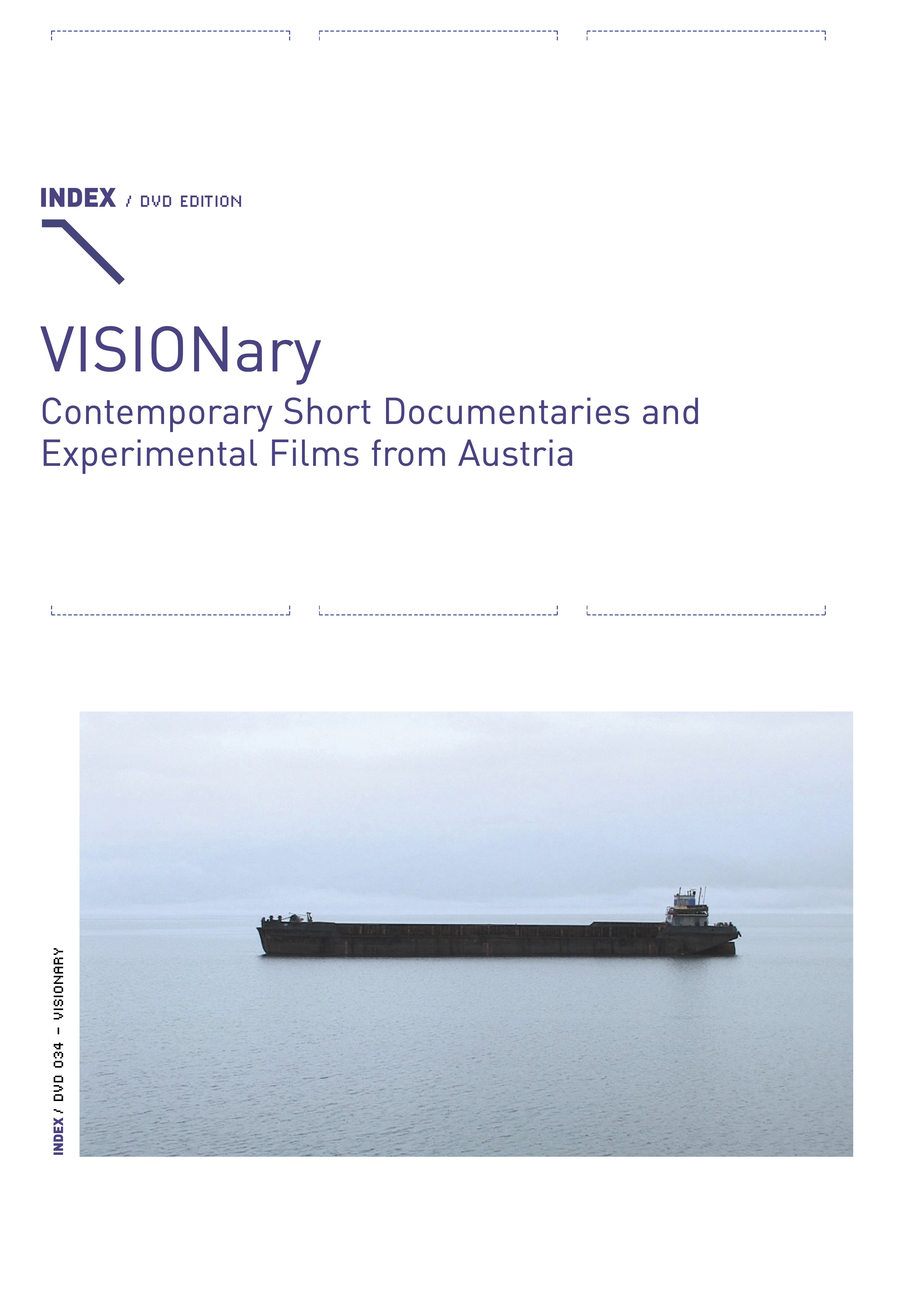
VISIONary: Contemporary Short Documentaries and Experimental Films from Austria (INDEX 034)

VISIONary, the first two-disc anthology to make an appearance on the INDEX imprint, unfolds as a cartography of attention, an attempt to map the outer zones where Austrian documentary and experimental cinema probe the limits of seeing in the early 21st century. Curated by Michael Loebenstein and Norbert Pfaffenbichler, the set demonstrates how short-form filmmaking can bear witness to urgencies and absences, to architectures of power and of memory, to the world as lived and as imagined. How might images carry experience without embalming it, and how might sound reveal structures that narrative alone refuses to name?
Marine und Sascha, Kohleschiffer

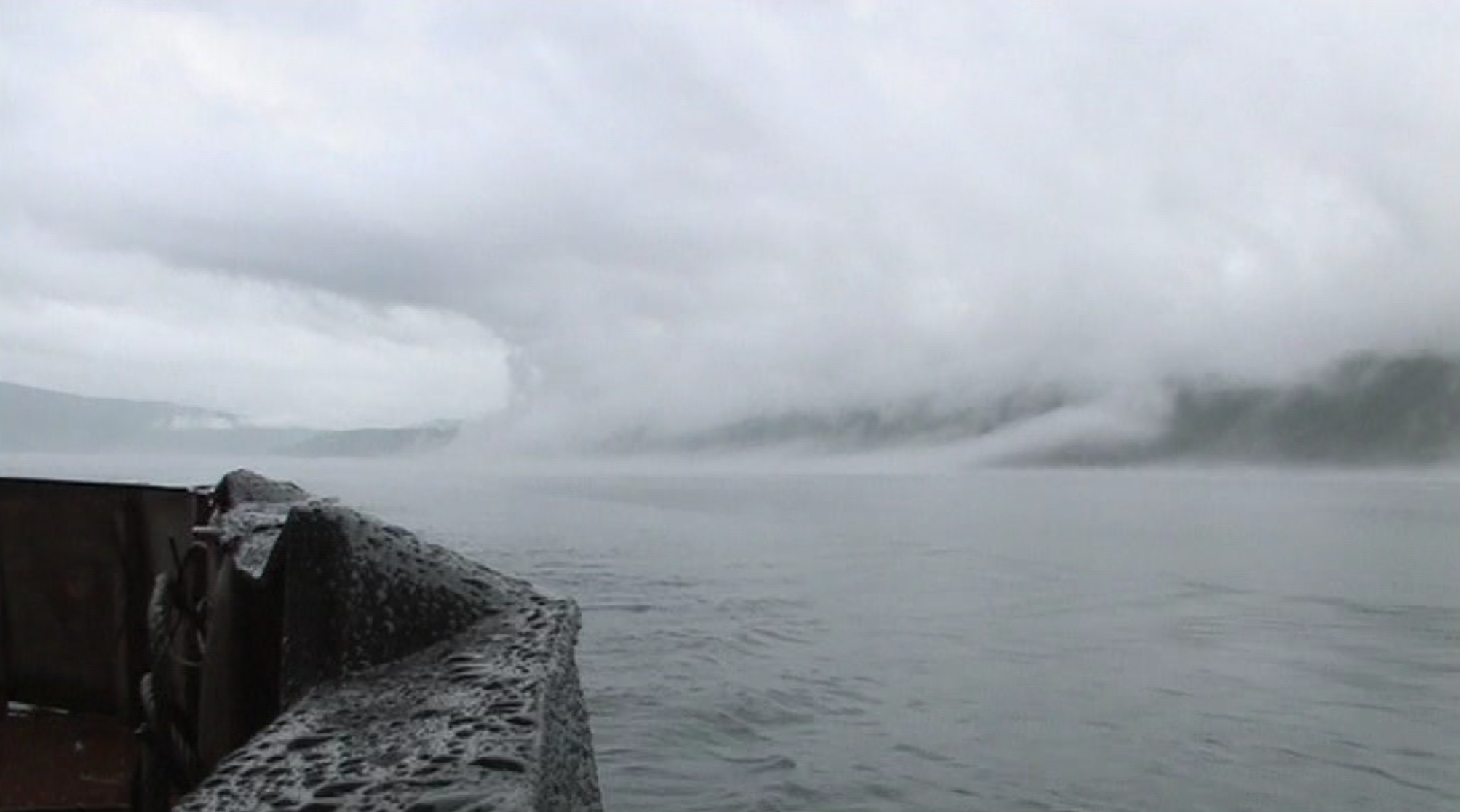
Disc 1 begins by grounding these inquiries in the raw textures of endurance, displacement, and historical rupture. Ivette Löcker’s Marine und Sascha, Kohleschiffer (Marina and Sasha, Coal Shippers, 2008) introduces Lake Baikal’s frozen expanse as a site where labor and longing intermingle. Marina and Sasha wait for the ice to break so they can resume the work that both sustains and confines them. Their conversations drift between dreams and aphorisms, between faith in work and the sense that waiting for God and waiting for employment follow the same spiritual logic. Löcker’s camera listens as their voices echo across a landscape that offers neither comfort nor judgment. When Marina later writes that she and Sasha have left their profession, it resonates with the quiet force of two lives liberated from the time loop that once defined them.

Frauentag

Johannes Holzhausen’s Frauentag (Woman’s Day, 2008) turns from Siberia to the borderlands between Bavaria and the Czech Republic, revealing another kind of stasis. The border becomes a scar that is visible on maps yet continually reopens within remembrance. Through stories of displaced Germans, of lovers separated by territorial chess, and of families caught in the churn of postwar geopolitics, identity becomes a negotiation between inherited pasts and future uncertainties. August 15, Assumption Day, emerges as a memorial in which the land sponges the trauma that language often avoids. What might appear to be a minor observance serves as a reminder of our selective daily amnesia.
Eines Tages, nachts…

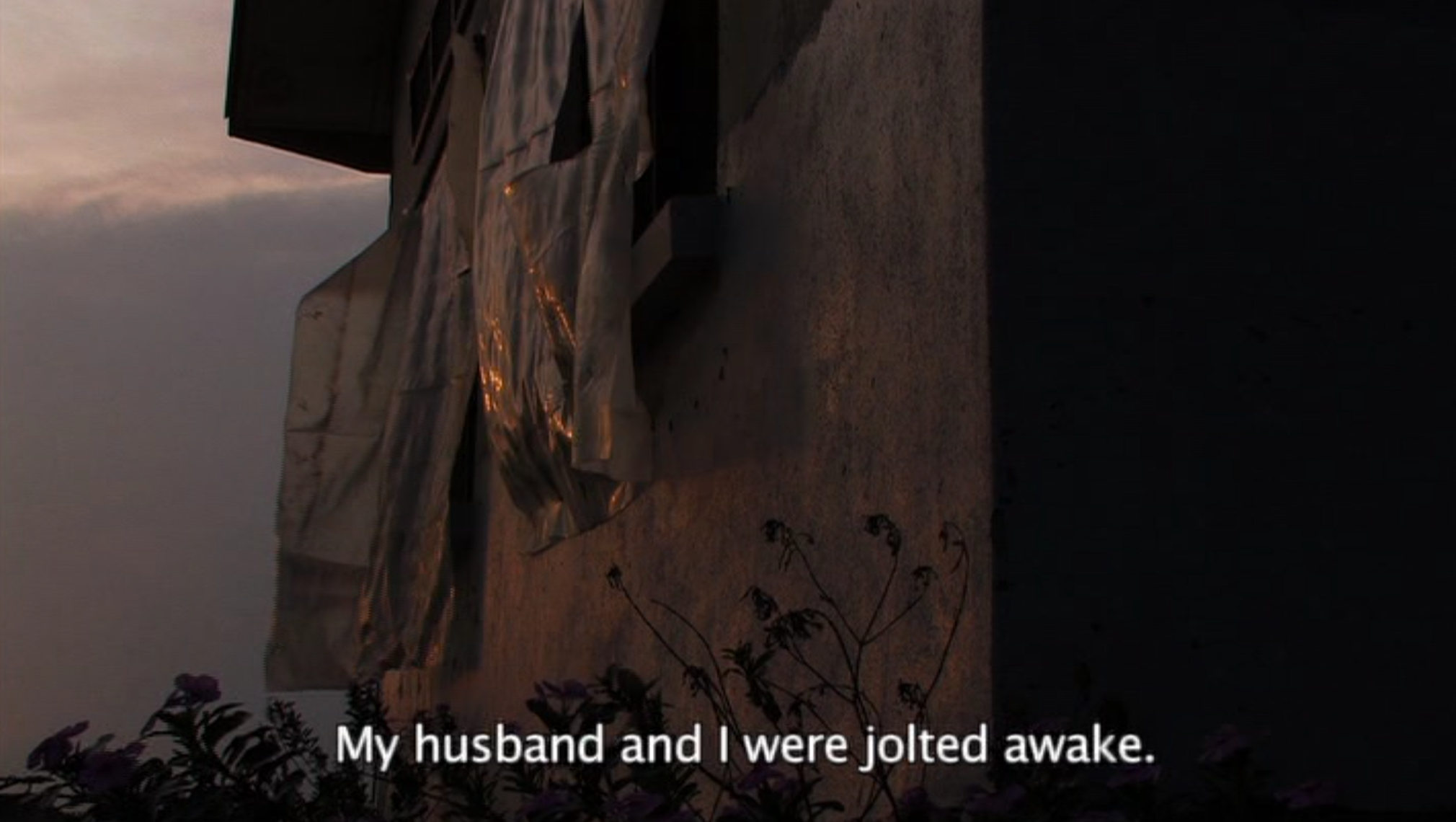
Moral clarity rings forth in Maria Arlamovsky’s Eines Tages, nachts… (A White Substance, 2008). A decade after the First Congo War, survivors speak on rape as a tactic of coercion, even as perpetrators offer evasions, officials shift responsibility, and UN peacekeepers are exposed as yet another predatory force. Lush landscapes collide with testimony that reveals the gulf between surface beauty and lived horror. As doctors describe children violated beyond comprehension, and how those treating them become collateral victims of their trauma, the film refuses to resolve such disorder, holding the viewer in a space where no disclosure can redeem the damage and no political rhetoric can soften its weight.

The disc closes with Klub Zwei’s Phaidon – Verlage im Exil (Phaidon – Publishers in Exile, 2007), which widens the frame to consider diaspora, cultural loss, and the ungraspable residue of ostracism. The story of Phaidon Press, founded in Vienna and driven into exile under National Socialism, becomes a parable of what happens when a country expels its intellectuals and artists. As Karin Gludovatz observes, “Phaidon is an example of the loss of people and of cultural resources that cannot be replaced through ‘reparations’—the voids Austria and Germany caused by National Socialism that must be made apparent.” Thus, the ruins of political upheaval are delineated as broken altars of restoration.

NightStill

Disc 2 offers some escape through abstraction. Michaela Schwentner’s la petite illusion (2006) opens with a cubist shattering of intimacy, portraying a couple through splintered interactions. In contrast, Elke Groen’s NightStill (2007) slows perception to a near-halt within the Dachstein mountains, where light and fog breathe through the landscape, and an electronic hum signals the presence of time itself. Unlike the work of Dariusz Kowalski, to which it might be compared, it has no feeling of menace but of a comforting progression that moves without intervention.

Minot, North Dakota

These shifts in tempo lay the groundwork for Angelika Brudniak and Cynthia Madansky’s Minot, North Dakota (2008), a study of a town sitting above 150 nuclear missiles once built to attack the Russians but which now lay slumbering beneath it. Children’s voices, testimonies from Air Force personnel, and the blank gaze of surveillance cameras mesh in quiet negotiation with catastrophe. The wonderful soundtrack from Zeena Parkins adds an unsettling undercurrent.

In the Mix

Jan Machacek’s In the Mix (2008) offers kinetic release, attaching a camera to a blender so the room becomes a spinning environment through which a dancer moves in playful resistance. The experiment pivots sharply into Siegfried Fruhauf’s Night Sweat (2007), a concentration on dread through lunar silhouettes and throbbing tones, evoking cosmic terror. Dietmar Offenhuber’s paths of g (2006) transforms Stanley Kubrick’s Paths of Glory into pure geometry, maintaining the original sound while turning the tracking shot into a bare-motion trace. War is reduced to a choreography of pixels stripped (but not robbed) of their humanity.
Borgate

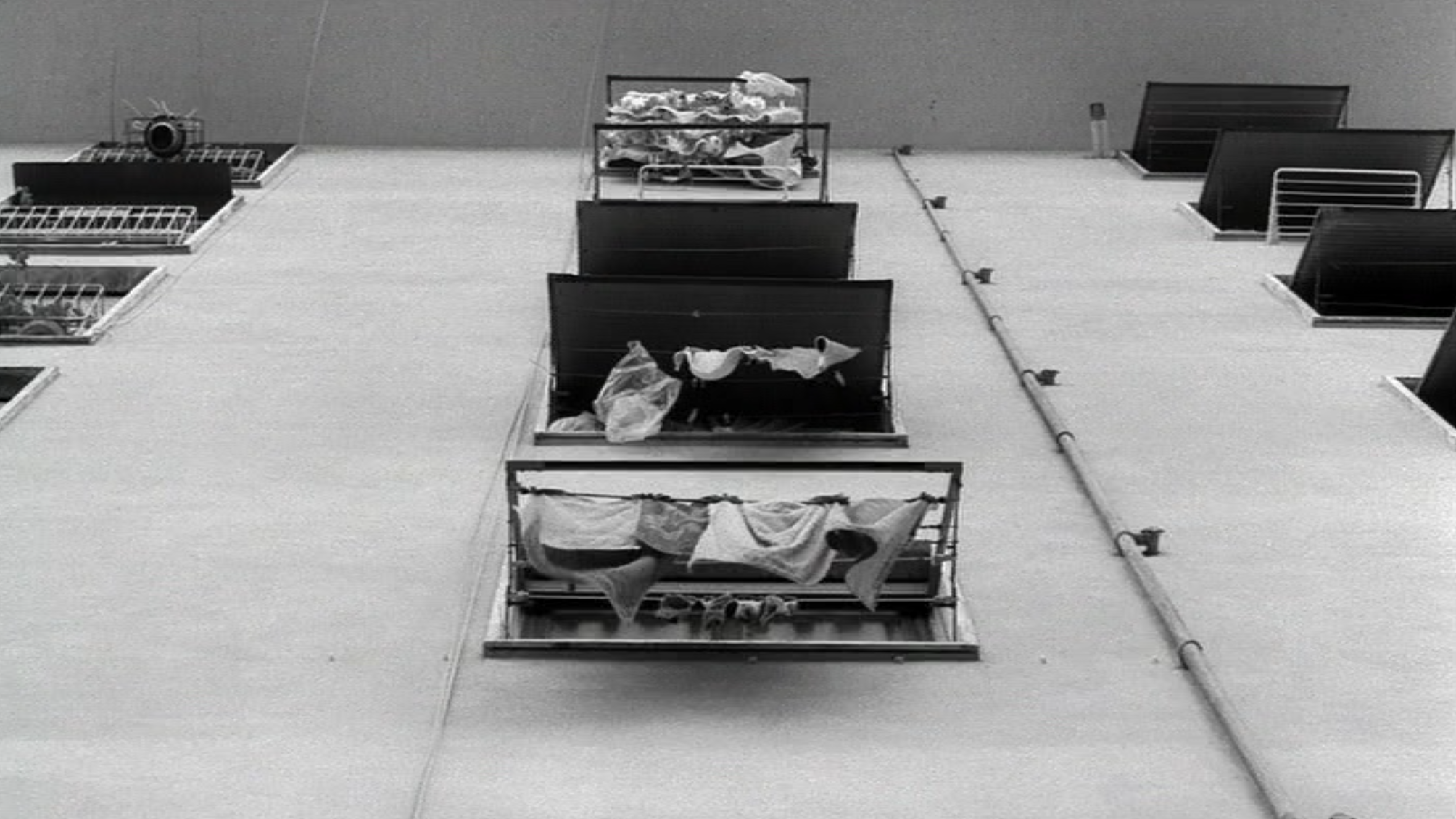
Lotte Schreiber’s Borgate (2008) turns its attention to modernist Italian housing projects now stranded in their own saga. Fascist architecture, appropriated dialogue from Fellini and Pasolini, and crumbling structures combine into a palimpsest of utopian failure. billy roisz’s not still (2008) cuts across the grain with audiovisual glitch in a battle between screens and faces before Josef Dabernig and Isabella Hollauf’s Aquarena (2007) shifts the mode of inquiry toward infrastructure, revealing water systems as choreographies of law, design, and hidden logic. Michaela Grill and Martin Siewert’s cityscapes (2007) refashion archival photographs of Vienna into trembling proto-memories, suggesting that cities sustain themselves in glimpses, not foundations.
visibility of interim~

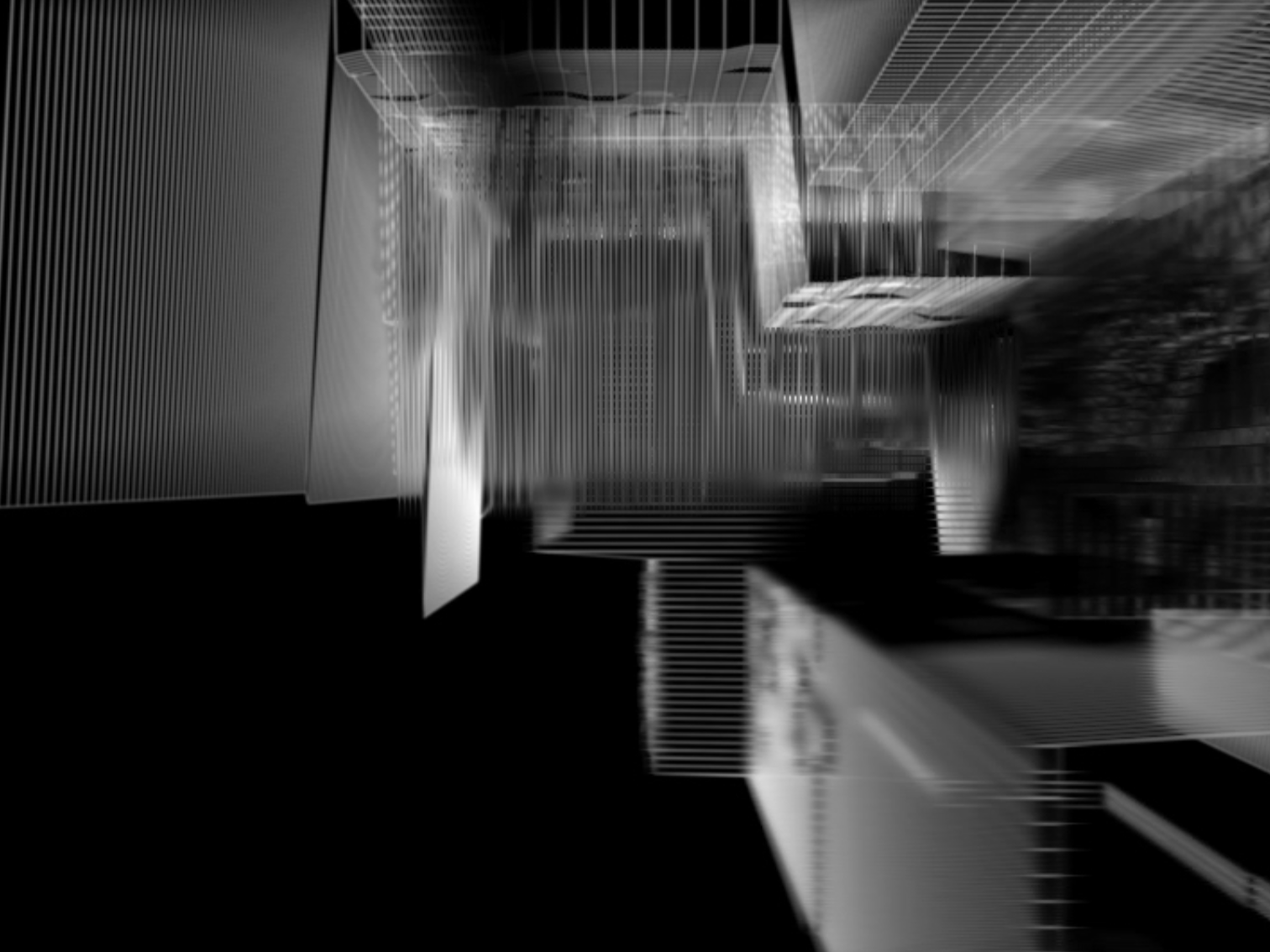
dextro’s 43 (2008) continues this interrogation of form by generating algorithmic white shapes that feel both biological and digital. Martin Bruch and Reinhilde Condin’s home.movie (2008) contrasts with deep intimacy as a camera travels along a track system designed by Bruch for his own mobility. Manuel Knapp’s visibility of interim~ (2007) conjures wireframe architectures that arise and collapse in the same breath, and Barbara Doser’s evolverevolve 01 (2008) concludes the anthology with pulsing neon synaesthesia where light and color find consonance in a kind of primordial signal.

Taken together, the works in VISIONary reveal cinema as a way of diving into the waves of experience. The documentary films remind us that truth is always situated within structures that sustain or wound. The experimental films remind us that vision itself is an invention, a means of producing what reality alone cannot yield. Through both modalities, portraits come to matter not because they are accurate but because they allow the visible to resonate with what we cannot see. In this sense, the anthology lives up to its name, offering not merely a record of the world but a proposition for how it might be perceived anew.

As She Likes It: Female Performance Art from Austria (INDEX 023)

As She Likes It: Female Performance Art from Austria gathers a constellation of works that respond—sometimes gently, sometimes ferociously—to the long shadow of Viennese Actionism, a movement historically dominated by men and their bodies. Here, however, women reclaim the camera, the gesture, the wound, and the joke. The title insists that these artists act not in reaction to but in accordance with interior tempos. Their works are by turns tender, wickedly funny, uncomfortable, ecstatic, pathos-ridden, furious, and quiet. And in their variety, they refuse the narrowness of being “women artists.” They are simply those who take the body as a proving ground and who understand performance as a way of thinking through.

Maria Lassnig and Hubert Sielecki open the compilation with Maria Lassnig Kantate (1992), a jubilant elegy to self sung at age 73. Lassnig dresses herself in religious, painterly, and folkloric symbols, parading them in front of her own paintings while Sielecki’s hurdy-gurdy churns with medieval charm. She compresses her life into stanzas: violent parents, nuns at school, battling with beauty standards, the struggle for artistic legitimacy. “I painted far better than any man,” she proclaims, and she does so not with resentment but with the grin of someone who has finally learned to embrace her own stubbornness. Her lovers betray her, Paris confuses her, America liberates her, Vienna calls her home: notes composing a symphony in the key of play.

Miriam Bajtala’s Im Leo (2003) burns the eye rather than the ego. A woman stands in a doorway, tilting a mirror so sunlight lashes the camera. Each flare triggers a short electronic beep, like a Morse code sent by the sun. The act is simple but devastating: the woman, refusing visibility, weaponizes reflection. She makes herself illegible by blinding the apparatus meant to record her.

Carola Dertnig makes two appearances. Strangers (2003) stages a chain of embarrassments as a passenger disembarks from a train only to discover that a man’s shoe has trapped a strip of red cloth emerging from her pants. As she walks, it stretches across the station like a lifeline or a humiliating tether. The absurdity recalls Karl Valentin and Liesl Karlstadt’s titular 1940 performance, suggesting that embarrassment is universal—even communal—but always gendered in its consequences.

In byketrouble (1998), from her slapstick series True Stories, a woman tries repeatedly to enter and exit an elevator with a bicycle. Each attempt compounds the farce. A businessman intervenes with civility that only makes the scene more excruciating. Dertnig exposes the fragility of female public presence—the fear of being in the way, the desire to disappear.

Kerstin Cmelka’s Neurodermitis (1998) offers intimacy that feels illicit. The artist applies cortisone salve to her eczema while the camera watches impassively. Voyeurism is found not in what is shown but in how long the viewer must sit with it.

Barbara Musil and Karo Szmit respond to pain with the joy of SW–NÖ 04 (2004), a highlight. The two artists wander through the Austrian village of Reinsberg, stepping into postcard-like paintings, stealing a snack from a farm, picnicking, and playfully resisting the distance that tourism usually demands. When a man films them, their battery dies, as if the camera itself refuses to cooperate with the picturesque.

Ulrike Müller’s Mock Rock (2004) finds the artist on a stone mound in Queens, singing, “I am a rock, I am an island…” Müller echoes VALIE EXPORT, affixing herself to the rock as a geological artifact left behind in an urban environment of speed and noise.

Fiona Rukschcio’s schminki 1, 2 + 3 (1998) documents the construction of the feminine face—foundation, lipstick, eyelash curler—interrupted by jump cuts and sound skips. The film ends with a handful of pills and a yawn in a curtain call of exasperation.

The centerpiece of the compilation is Legal Errorist (2004) by Mara Mattuschka and choreographer Chris Haring. It is also one of the most astonishing works in the INDEX catalog. Stephanie Cumming elicits a trance-like disintegration of language and body. She echoes banal conversations, but every phrase catches in her throat. Her limbs jerk as if fighting against the grammar of being gazed upon. She sings “Close to You” with eerie clarity—her one slip into fluency, borrowed from the heterosexual fantasy machine. She speaks of aging, rejection, and the broken machinery of romance. At one point, she stares straight into the camera and says, “What? See?” before thrusting her body toward the lens. “Can you see me?” she reiterates, less a plea than an accusation. The film ends with her receding into darkness, leaving behind the echo of a figure refusing to be reduced.

Finally, Michaela Pöschl’s Der Schlaf der Vernunft (The Sleep of Reason, 1999) is almost unbearable: a single shot of the artist’s face while she is whipped for 14 minutes off camera until she faints. The film is not about pain but about endurance under the pressure of the world’s unseen blows.

The bonus tracks offer various self-presentations, including an unforgettable performance by Mattuschka as “Queen of the Night,” but the compilation as a whole forms the truest chorus in its feminist counter-archive. By shifting its axis inward, it recontextualizes pain beyond the reach of systems that profit from female silence.

Sonic Fiction: Synaesthetic Videos from Austria (INDEX 014)

Sonic Fiction presents a cross-section of Austrian audiovisual experimentation at the turn of the 21st century. It emerges from Vienna’s fertile avant-garde electronic music scene, a milieu where glitch, microsound, live electronics, and improvisation shaped not only what artists heard but how they learned to see. These works do not illustrate music. They poke holes in hierarchies of the cinematic, creating what Christian Höller calls a “sound/image coagulation,” a convergence so intimate that neither medium precedes the other. Perception acts as the substrate across which their interaction unfolds.

In this collection, the early digital moment is not approached as emancipation from materiality but as its reconfiguration. Image becomes particulate, granular, and flickering; sound is subjected to a sculptural pressure. These videos share a fascination with reduction and abstraction, yet each arrives there through different processes, including algorithmic play, photographic reprocessing, digital mutation, and the reanimation of everyday materials. The result is a corpus that privileges meditation over spectacle. The cumulative effect is an ecology of cohabitation experiments.

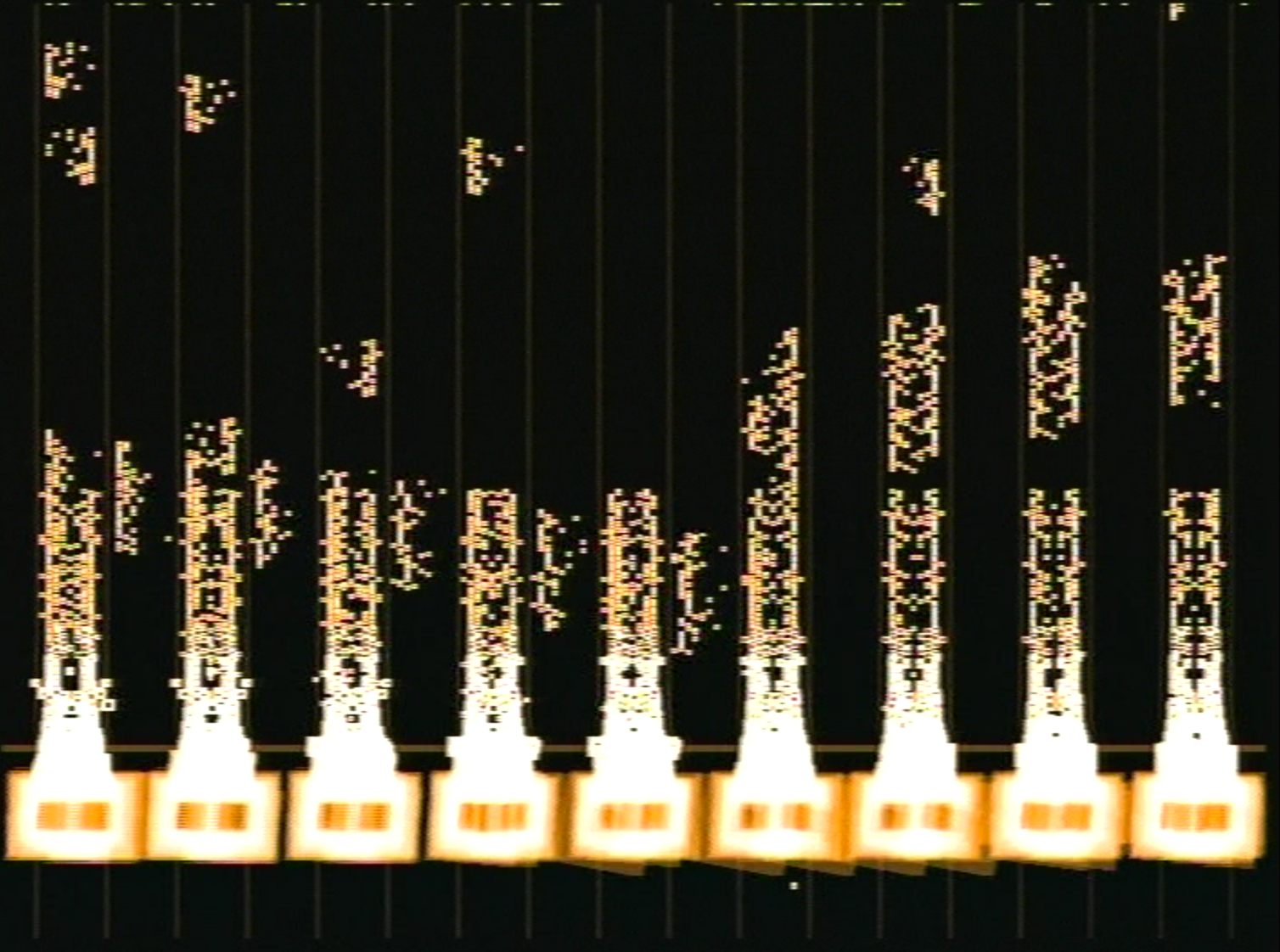
Lia’s hardVideo/G.S.I.L. XIX (2003), with sound by @c, stages this microtemporal sensibility with particular clarity. On dense black grounds, geometric shards loop through cycles of emergence and self-erasure, as if devouring the traces of their own movement. Their fallibility arises from the same molecular field as the sound itself. The piece evokes a logic of survival in hostile terrain—shapes feeding on their own remnants—even as musicality softens its austerity. Erosion as lullaby.

This fascination with elemental processes continues in neon (2003) by Nik Thoenen and Timo Novotny, with Wolfgang Schloegl’s droning soundscape merging into the photographic traces of fluorescent tubes. Filmed installations offer a study of gases igniting and fading, captured on Super 8 at various speeds. The visual beats feel both corporeal and machinic, as though watching electricity remember its birth. A potential industrial detritus transforms into a quiet riff on activation and aftermath.

The shadows of Micaela Grill and Martin Siewert’s trans (2003) imply trees or architecture without ever resolving into legible forms. The viewer is suspended between recognition and disorientation. Siewert’s restrained but incisive soundtrack anchors the images while refusing to explain them, creating a delicate balance between clarity and dissolution. What we are left with is a threshold between the coherent and the barely remembered.

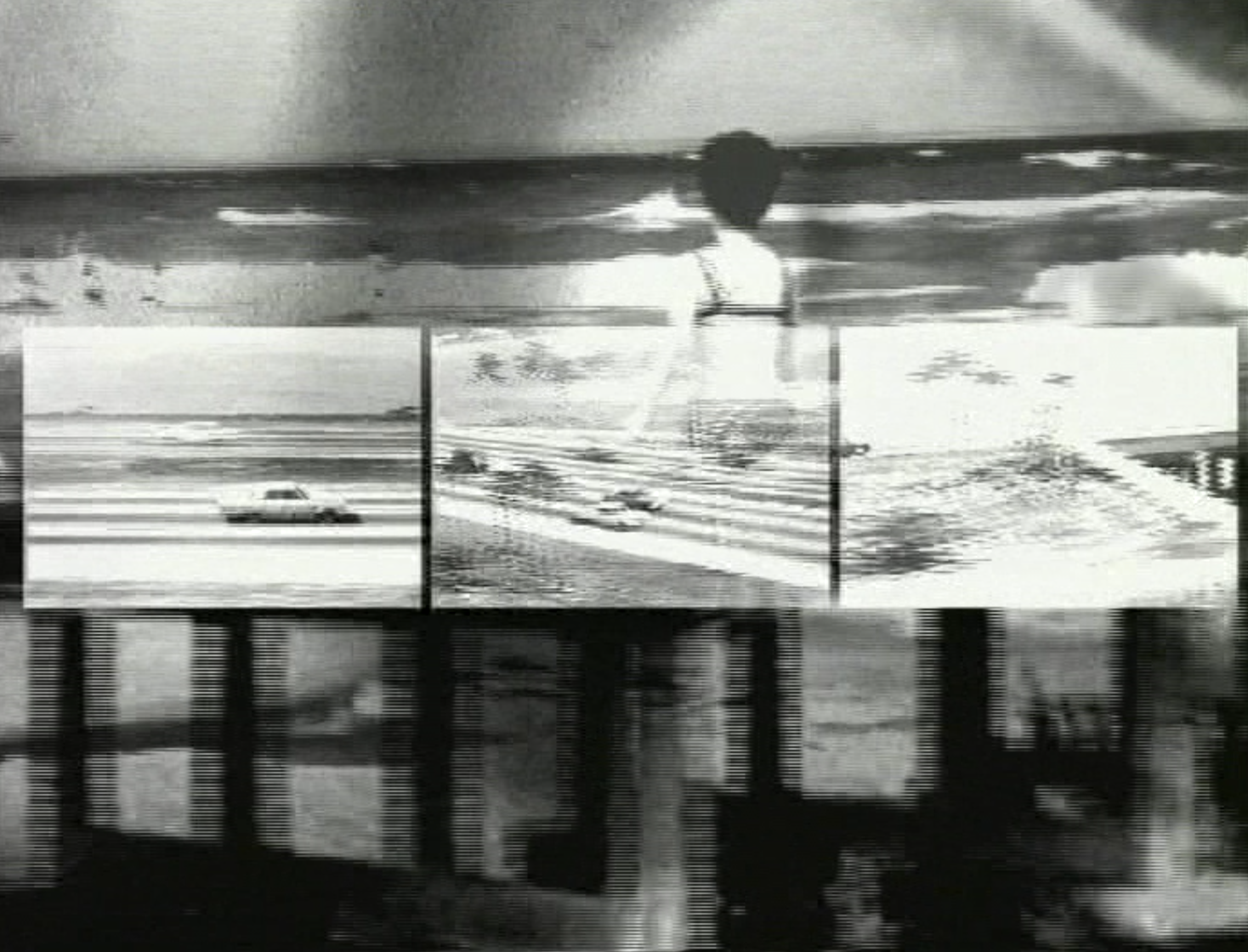
In Thomas Aigelsreiter’s Key West (2002), with sound by Rudi Aigelsreiter, sun-soaked beach footage offers a surface where utopia frays. Vrääth Öhner notes the “persistent fascination of images long succumbed to sound reasoning,” and the video stages this tension of cheerful scenes made uncanny by drones and distortions. The idyllic vision curdles into something fantastic and quietly menacing. Beauty glimmers, then trembles. A Lynchian undertone seeps through the brightness.

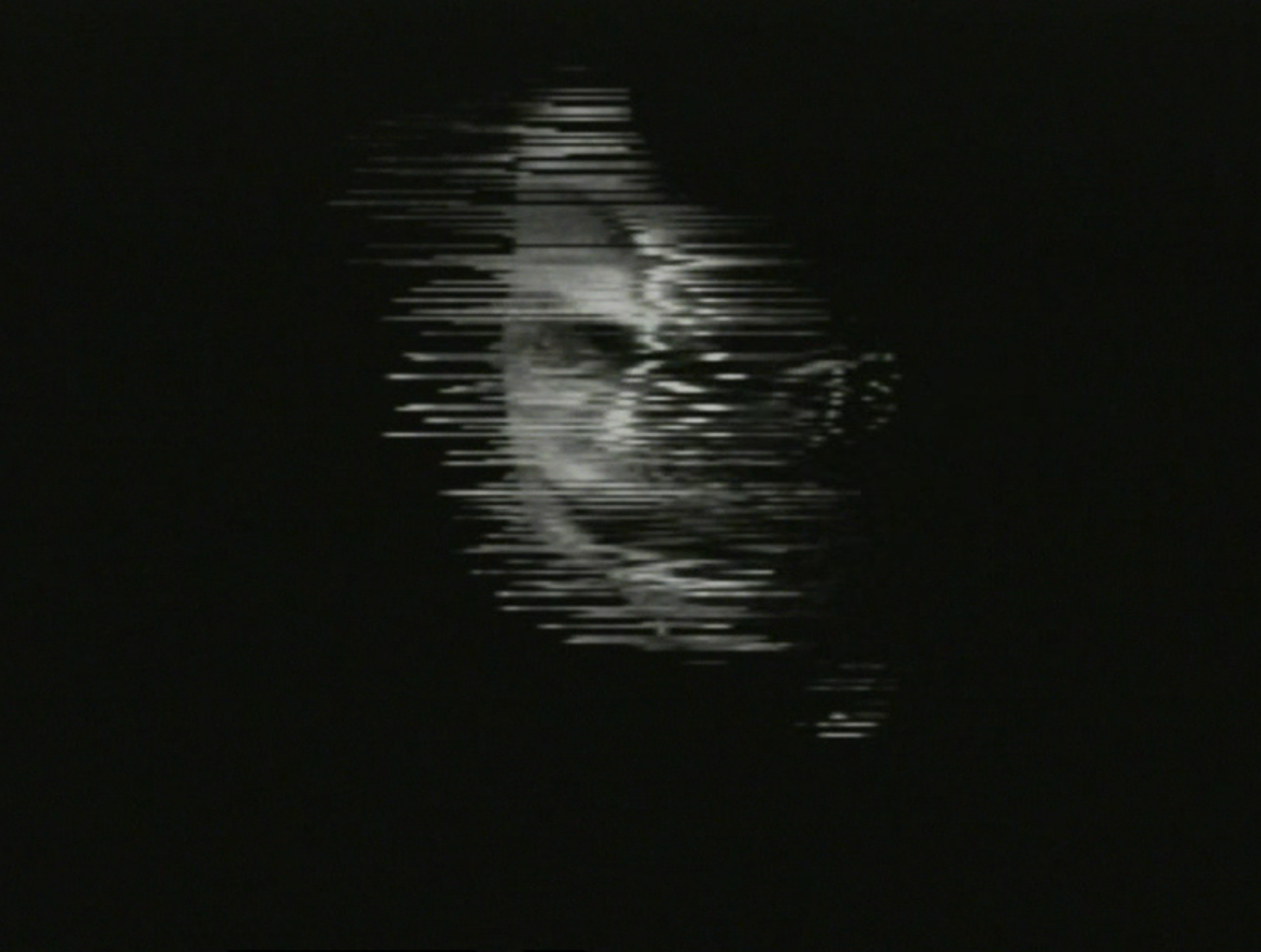
Didi Bruckmayr and Michael Strohmann’s ich bin traurig (i am sad) (2004), with sound by F*ckhead, approaches perception from the inside out. A face mutates through 3D software, unable to settle into a legible expression. Sadness appears as an unstable artifact—never captured, always sliding into new contortions. Subjectivity is fluid, vulnerable to the software’s restless grammar.

Karø Goldt’s falcon (2003), with sound by Rashim, begins with a photograph of a Falcon aircraft but pushes it through waves of chromatic transformation. Garish colors flood the contours until the aircraft lays a field of shifting gradients. Power and mobility dissolve into pure chromatic excess. Each retains a ghostly hint of its origin, but the meaning leaks away, replaced by color in motion.

Billy Roisz’s blinq (2002), with contributions from ten musicians (Burkhard Stangl, Akoasma, Boris Hauf, Dieb13, Sachiko M., Martin Siewert, Christof Kurzmann, Toshimaru Nakamura, Werner Dafeldecker, and el), enacts synaesthesia in structural terms. Roisz translates sound files into visual miniatures. The result is a series of geometries that behave not as illustrations but as co-generated events, coalescing into one of the collection’s most conceptually integrated works. In this small chamber, signals revel in each other’s oxygen deprivation.

In cubica (2002), m.ash and sound artist Chris Janka harness the logic of the classic game Snake, unleashing an autonomous cube-snake system that draws paths through three-dimensional space. The music, recalling the resonant intensities of Zbigniew Karkowski or Z’EV, complements the algorithmic wanderings beautifully.

[n:ja]’s frame (2002), with sound by Radian, turns travel into drift. The work resembles the view from a car window moving through a world of processed lights and blurred structures. The soundtrack’s precision shapes the journey as motion without arrival.

Siegfried A. Fruhauf’s SUN (2003), with Attwenger’s sound, dismantles our nearest star through static shots and associative montage. The sun appears green, stripped of expectation. Isabella Reicher describes the effect as “looking the sun in the eye.” The piece constitutes a folk abstraction, a playful yet uncanny engagement with an object that resists representation.

reMI’s zijkfijergijok (2003) turns religious instruction into flashes, softening doctrine with corrupted impulses. Iconography collapses under the weight of technological instability. The churn is frightening: faith rendered as glitch, belief as a system buckling under its own mediation.

Michaela Schwentner’s Jet (2003), with Radian’s soundtrack, closes the circle by dismantling an object of military power. A fighter jet appears only in fragments—tail, cloud, edge—before pixelation consumes it. A struggle for coherence yields to entropy, resulting in a powerful rumination on the fragility of representation in the digital era.

Sonic Fiction is neither exclusively music video nor visual art. Rather, it occupies a diurnal terrain where media co-produce perceptual events. Through reduction, repetition, mutation, and delay, the artists discover a mode that is anything but dematerialized. It is not fiction in the narrative sense but in the perceptual one, a way of imagining through frequency over representation. What it asks of us is minimal. What it gives in return for lack of expectation is incalculable.