

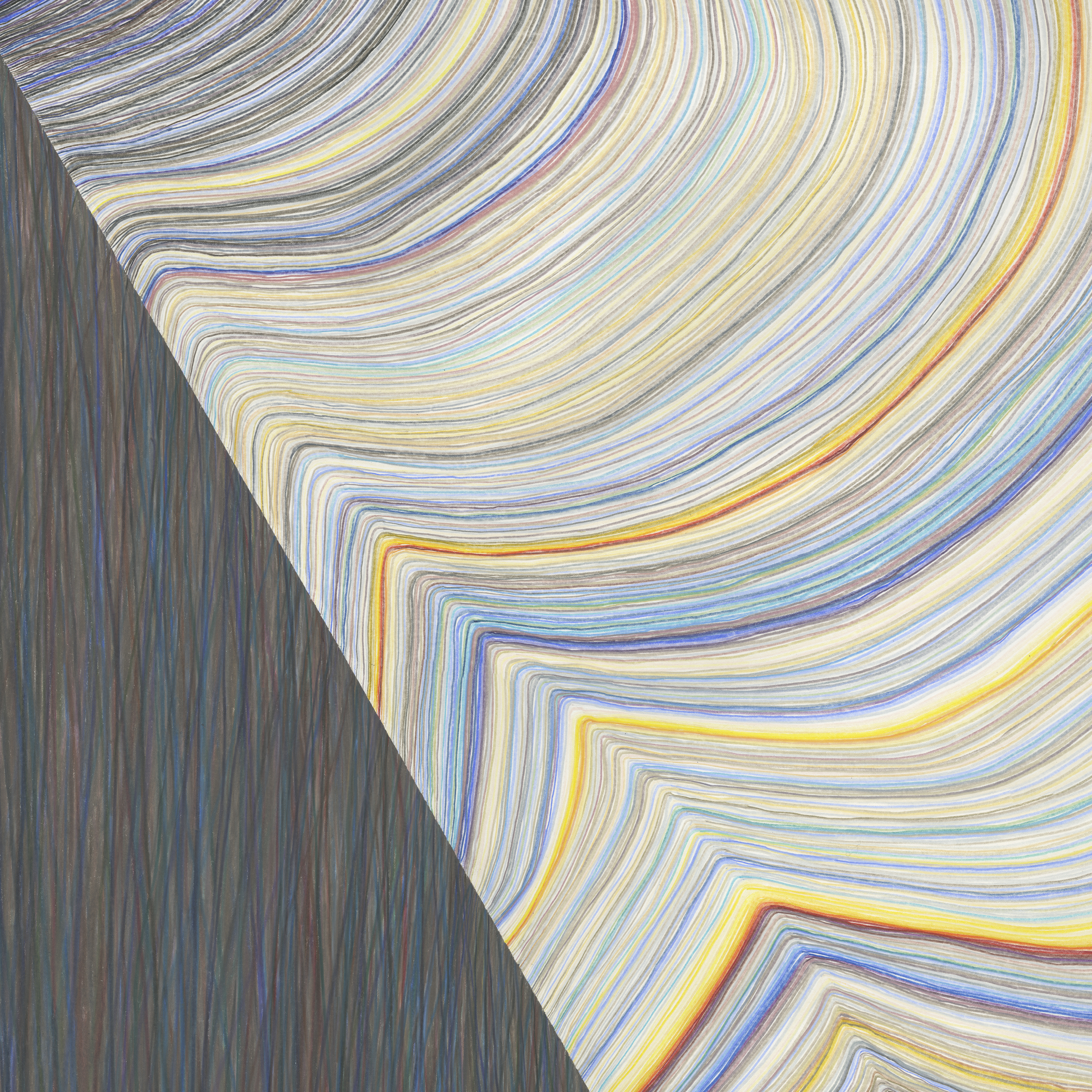
With Breaking the Shell, the sixth release from the groundbreaking Red Hook label, producer Sun Chung has offered not merely a trio but a quietly seismic realignment of possibility. Electric guitar (Bill Frisell), pipe organ (Kit Downes), and drums (Andrew Cyrille) form a constellation that feels, paradoxically, at once unprecedented and long familiar, like discovering a new moon only to realize its gravity has pulled our tides all along. Chung, having cultivated relationships with all three musicians through previous ECM projects, sensed a convergence before any of the participants could name it. As Philip Watson writes in his liner notes, the trio exists “in a deep state of not-knowing,” a phrase that might just as easily describe the listener’s condition of being suspended between recognition and estrangement.
Recorded at St. Luke in the Fields in New York’s Greenwich Village, the music bears the acoustics of a space built for a resonance of spiritual persuasion. Here, sound doesn’t merely travel outward but returns, circling back like a question that grows more meaningful the farther it wanders. The trio treads honestly without ever falling over, even as it allows trips and stumbles to become part of its gait. There is no fear of imbalance. Instead, there is trust in the materials of the moment. And while one could easily linger on the rare combo or the grandeur of hearing the pipe organ in a chamber-like setting, once the album begins, such considerations dissolve. The instruments become porous vessels for a collective intuition.
The opening track, “May 4th,” emerges in a slow-rolling fog, the organ releasing a detuned drone that tilts gently against the ear. Higher notes graze the air with the soft certainty of fingertips tracing an old, half-forgotten symbol. Frisell and Cyrille enter as if waking from the same dream, their gestures swelling and receding in a space where time loops back on itself. The music feels exploratory—not in the sense of searching for what is missing but in allowing what is already present to unfold without resistance.
From there, the trio slips into “Untitled 23,” a meditation that cycles through scenes like a zoetrope, each revolution shifting character just enough to remind us of the fragile illusions we call continuity. The trio invites the imagination to wander alongside them, not as spectators, but as co-conspirators in the act of making sense of the flickering.
The journey then turns extraterrestrial with “Kasei Valles,” named for the vast valley system etched across the Martian surface. The music reaches outward with similar breadth: Downes’s organ stretches into horizonless zones while Frisell’s guitar, distorted into an adventurous rasp, scratches the underbelly of atmosphere. One can almost sense distance itself, not only as measurement but as emotional terrain.
On “El,” cellist Lucy Railton joins the ensemble, her tone a shaded river cutting through the organ’s cathedral-like glow. The track breathes with the warmth of a melody as an offered hand rather than a distant signal. Cyrille’s brushes sketch spontaneous star paths, while Frisell’s detailing elicits messages whispered from within.
The mood deepens further with “Southern Body,” perhaps the album’s most quietly radiant piece. It is an earth swell of potential energy, the sound of something enormous choosing rest over detonation. Downes releases ocarina-like tones from the organ’s upper registers that seem to summon the wildness nestled in even the most domesticated corners of ourselves.
The first of two traditionals, “Sjung Herte Sjung,” arrives as a turning point. Translating from the Norwegian as “Sing Heart Sing,” it mirrors the ethos animating the entire project: a willingness to let the voice rise unforced. Frisell’s modal wanderings feel like steps taken along an ancient footpath, one that continues to reshape itself beneath each traveler.
Between these landmarks lie hints of discovery, including the swirling interplay of “Two Twins,” whose energies braid together like strands of DNA before dissolving in a delicately percussive fade. “July 2nd” is a drifting lantern, its tender, fluttering textures slipping briefly into an electronic-sounding mirage, as if a synthesizer were dreaming of being an organ, or vice versa.
Cyrille’s own “Proximity” appears near the album’s end, its tender-footed steps guided by the composer’s trademark sensitivity. The brushes move not to clear a path but to reveal it. Finally, another traditional, “Este a Székelyeknél” (“Evening in Transylvania”), closes the circle. Its Hungarian melody (one that passed under Bartók’s orchestrating hand) dissolves into the trio’s shared air, a cultural imprint carried forward not by preservation but by transformation.
By the end of Breaking the Shell, the title reveals its shape. What breaks is not the world but the hard surface of clinging to familiar forms. Frisell, Downes, and Cyrille do not present answers, nor do they ask us to seek them. Instead, they remind us that unknowing can be a place of shelter, and that music—when allowed to move through its players rather than be moved by them—can form a thematic circle in which every beginning contains its end, and every ending nods softly back to the beginning.
Here, in this luminous setting, the shell breaks not with force, but with attention. And what slips out feels like truth.






 Between Sound and Space: ECM Records and Beyond