Thomas Adès: Illuminating from Within (YAN.005)

05_Cover

Thomas Adès
Illuminating from Within

Winston Choi piano
Recorded 2015 by Nicolas Baillard at Studios La Buissonne
Produced by Marc Thouvenot & La Buissonne
Release date: October 30, 2015

If ever there was a composer who worked in light, it would be Thomas Adès. As the subject of this recital by Canadian pianist Winston Choi, he comes across as someone interested not so much in the metaphysical as the metaphorical. Traced Overhead (1995/96), for one, takes its inspiration from the iconography of angels, and in drawing that connection molds transcendence and ascension as motifs worthy of articulation at the keyboard. Such heavenly associations, however, remind us of flesh’s sinful tendencies and of the material world that keeps its desires running smoothly. As two relatively shorter movements shift into a protracted third, in which the scratch of thorns blood-lets a sacred disembodiment, the dichotomy of inner/outer ceases to be real. The Three Mazurkas (2009) that follow are brimming with detail. Originally written for Emanuel Ax and tipping their shared hat to Chopin, they showcase a full integration of sound, color, and environment even as dance steps are obscured through the filter of personal expression.

Thrift (A Cliff Tower) (2012) begins a chain of standalone works. Its roiling textures, viewed (and heard) as if from a precipice, are an appropriate prelude to Darknesse Visible (1992). This nervous translation of John Dowland’s “In darkness let me dwell” is strangely bright. The end result is no longer a song but something else entirely. Still Sorrowing (1992), also rooted in Dowland, lights a decidedly nocturnal stove. Muted strings and plant-like forms grow in honest profusion. All of which makes the Concert Paraphrase (2009) feel like a masochistic slap. This free transcription of Adès’s first opera, Powder Her Face, is dramatic, halting, and intensely physical. Between fiercely lyrical asides and gently tumultuous arias it strings tightropes of Weimar-era cabaret, romanticism, and fantasy. More real than anything, for nothing is real without a little makeup to offset the truth.

Samuel Sighicelli: Etudes pour piano & sampler (YAN.004)

04_Cover

Samuel Sighicelli
Etudes pour piano & sampler

Samuel Sighicelli piano, electronics
Recorded October 6-8, 2014 by Gérard de Haro at Studios La Buissonne
Mastered by Nicolas Baillard
Produced by Marc Thouvenot & La Buissonne
Release date: February 28, 2017

Pianist Samuel Sighicelli, known to La Buissonne Label listeners as a key member of Caravaggio, presents what this album’s press release calls a “bionic piano.” More than an amalgamation of flesh, metal, and wood, it is a meta-compositional tool. Sighicelli started this project by recording improvisations at home on the piano, treating curated selections therefrom as seeds for heavily constructed pieces. From this a series of 12. Though originally intended for two loudspeakers, he reworked them for live performance using digital sampling, thus allowing him to invoke the prerecorded material via electronic keyboard.

“Signes/Course” combines elliptical motifs with splashes of cold water, string treatments, and backward glances. If such descriptions feel vague, it is only because the music is so precise, and to capture it in like manner risks limiting its interpretive possibilities. So begins a psychological character study of psychology itself. The mix of submarine signals and deserted expanse that is “Carcasse dans la neige” haunts the brain. Upon hearing it, we immediately realize we lack the necessary equipment to interpret the pattern as a message. Instead, we flounder in our need for communication: isolated, undiscerned, voiceless. Those pulses continue to echo across the waters of our conscious mind in “L’horizon comme vouloir,” even as they find purchase in the piano’s physical body.

The more these pieces evolve, the more the sampler becomes integrated into the piano itself, as if it were hybridizing with the very instrument from which it emerge. Along the way, we are exposed to sound bites of human voice (“Édifices”), sinister ruptures (“Brèches”), sacred spaces (“Monolithe”), futuristic body scans (“Départ dans le bruit neuf”), and even the lull of cricket song (“L’âge du faire”). And when the keys sing to us from within minimal clothing, as in “Dernier regard” and “Presque l’aube,” the effect is startling. It is akin to being sonically operated on to disentangle us from an incursion of microscopic entities, each wielding a knife so small that every slash is felt only in dreams.

Daniel D’Adamo/Thierry Blondeau: Plier-Déplier (YAN.003)

03_Cover

Daniel D’Adamo
Thierry Blondeau
Plier-Déplier

Béla Quartet
Julien Dieudegard
violin
Frédéric Aurier violin
Julian Boutin viola
Luc Dedreuil violoncello
Recorded, edited, and mixed in 2012 by Gérard de Haro at Studios La Buissonne
Mastered by Nicolas Baillard
Steinway prepared by Alain Massonneau
Produced by Marc Thouvenot & La Buissonne
Release date: November 19, 2013

Plier-Déplier (Folding and Unfolding) is the title piece, jointly composed by Daniel D’Adamo and Thierry Blondeau, of this fascinating program of string quartet music. Played with astonishing (meta)physical accuracy by the Béla Quartet, it comes across as three-dimensional and tangible. Prerecorded snippets allow insight into the preparatory elements of these constructions. Some are distant, others intimately close. Such extremes give credence to the between-ness of things, just as the rising and setting of the sun confirms our allegiance to the day. Though nearly all of these 19 pieces average two minutes in length, there’s a sense of expansion at play from one to the next. Silence is as much employed for its notecraft as scored action. Calling these vignettes therefore feels grossly inaccurate, as they are no less narrow in scope than a haiku. So-called extended techniques become the norm, while traditional bowing serves to insist on the contrivances of measured speech, directed emotion, and impositions of time. In the present context, urgency of clarity becomes a disruption to the comforts of a given instrument’s tessitura, stretching the limits of possibility as naturally as blinking. Implications abound in the creak of a tuning peg, the scrape of an un-vocalized string. Contrasts of breezes and gales coexist in a fluttering storm, while harmonics resound like sirens of the heart, coaxing themselves to shore.

Blondeau and D’Adamo each offer a solitary composition as postlude. Where the former’s Last Week-End on Mars evokes air raids and space travel, using electronics to enhance the vagaries of time, the latter’s Découper – petite passacaille touches the edges of its own vocabulary—not with the tongue but with the fingertips. The quartet’s delicacy, interspersed with forthright expulsions of air, gives a taste of the meal that never reaches this proverbial table. Instead, it leaves us to ponder the empty plate before us as if it were our own life, scarred by years of silverware and unthinking consumption.

Ivan Fedele: Musica della luce (YAN.002)

02_Cover

Ivan Fedele
Musica della luce

Pascale Berthelot piano
Recorded in 2012 by Gérard de Haro at Studios La Buissonne
Edited, mixed, and mastered by Nicolas Baillard
Steinway prepared by Alain Massonneau
Produced by Marc Thouvenot & La Buissonne
Release date: November 19, 2013

The pianistic literature of Ivan Fedele is the subject of this recital by Pascale Berthelot, which follows her CUICATL debut. The program opens with the Italian composer’s Études boréales (1990). Meant to evoke the icy climate of Finland, it requires the performer to dig into the keyboard like a mountain climber might ascend by means of a pick. Such sharp attacks are resolutely luminescent, while the slower sections are murmurings of shadow. Internal resonances are beautifully enhanced in the third and fifth etudes, as if in a frozen cave exhaling its own voices across the valleys. The harmonics of the fourth are the tones of icicles falling from their state of overhang.

Études australes (2002/03) shifts to warmer, more forgiving spaces. Subtitles of individual etudes (Tierra del fuego, Cape Horn, etc.) suggest polar geographies but also the genera (e.g., Aptenodytes) and species of birds who inhabit them. With no pedal indications to lead the way, Berthelot is left to interpret the duration of every note cluster as if it were its own hybrid, jumping from sparkling cliffs into oceanic depths.

The Toccata (1983, 1988) is an ode to the composer’s own youth and the revelry of practicing at the piano. That feeling of repetition, of evolution and involvement, is omnipresent. Insistence and flowery ornamentation go “all in” throughout this fascinating and unabashedly honest music.

Cadenze is a set of nine aphorisms composed over a 25-year period (1983-2008). Though short, they practically insist on lingering long after being uttered. Thus, the markings of each are as much linguistic as environmental. Some particularly striking examples are numbers III (a psychic rush), VI (a dance that never gets off the ground), and VIII (a lullaby for DNA).

Nachtmusik (2008) concludes with a piano-only section from the longer Deu notturni con figura, itself for piano and electric piano. As the most brooding narrative at hand, it pulls itself through a thick emotional transference, ever aware of its age.

Fedele’s oeuvre is a collective study of contrasts in the same planetary body. Just as the Earth’s axis suggests two tilts—one toward the sun and the other away from it—it balances light and dark, warmth and cold, art and science. This is neither a treatise or a manifesto, but a short story collection rolled into a ball and kneaded until its words are no longer distinguishable.

Morton Feldman: Triadic Memories (YAN.001)

01_Cover

Morton Feldman
Triadic Memories

Pascale Berthelot piano
Recorded and mixed in 2009 by Gérard de Haro at Studios La Buissonne
Mastered by Nicolas Baillard
Steinway prepared by Alain Massonneau
Produced by Marc Thouvenot & La Buissonne
Release date: November 19, 2013

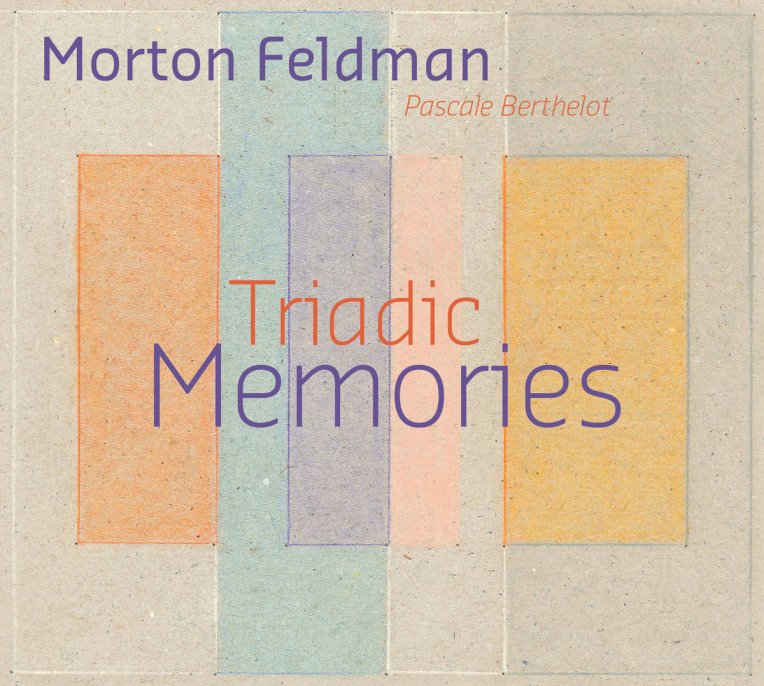
Around fifty solo piano pieces are attributed to composer Morton Feldman (1926-1987), whose relationship with the instrument was like that of light to prism. This studio recital by Pascale Berthelot, recorded in 2009 by Gérard de Haro at La Buissonne, marks the inaugural release in the studio’s CUICATL imprint, dedicated to documenting world-class performances of contemporary classical material.

Triadic Memories, written for Japanese pianist Aki Takahashi in 1981, is a cartography not only of triads and memories as self-contained entities but also of the ways in which each informs the other. Arpeggiated chords mark ephemeral borders; motifs are recycled and transformed. Every shade comprises a vocabulary of solitary travel. In the words of Feldman himself: “In this regularity (though there are slight gradations of tempo) there is a suggestion that what we hear is functional and directional, but we soon realize that this is an illusion; a bit like walking the streets of Berlin—where all the buildings look alike, even if they’re not.” Thus, Feldman’s interest in duration over rhythm (or, as Louis Goldstein puts it, “[h]is concern with how a musical composition sounds, rather than how it is made”) takes precedence, just as one’s footsteps might give the illusion of regularity yet, upon closer scrutiny, reveal endless possibilities. Like a child learning how to walk yet whose comportment speaks of an innate knowledge passed down genetically, cosmically, from body to body (if not soul to soul), Triadic Memories recalibrates the parameters of our attention span until we no longer feel present in ourselves. And just as we are about to get stuck, we find our equilibrium restored, over and over, until only beauty remains to show for our passage.

One of the missions of CUICATL is to include pieces appropriate for conservatory students to learn and play. In this case, it is Feldman’s Piano Piece of 1952. Despite its more rigid structure and shorter duration, it feels less welcoming than Triadic Memories. Premiered by David Tudor in 1959, it has been rarely recorded since. Its score suggests not melodies but organisms. These we can hold as one might hold a newborn and watch them grow in a space where the air shapes itself as a sentient, physical substance. This is character of Feldman’s music: its willingness to let contradictions speak as the fully formed individuals they are rather than stand before the court of our scrutiny as selves divided between prosecution and defense.

Ketil Bjørnstad: A passion for John Donne (ECM 2394)

2394-front

Ketil Bjørnstad
A passion for John Donne

Håkon Kornstad tenor saxophone, flute, voice
Ketil Bjørnstad piano
Birger Mistereggen percussion
Oslo Chamber Choir
Håkon Daniel Nystedt
conductor
Recorded live March 2012, Sofienberg Kirke, Oslo
at the Oslo International Church Music Festival
Engineer: Jan Erik Kongshaug
An ECM Production
Release date: October 24, 2014

Batter my heart, three-personed God; for, you
As yet but knock, breathe, shine, and seek to men;
That I may rise, and stand, o’erthrow me, and bend
Your force to break, blow, burn, and make me new.

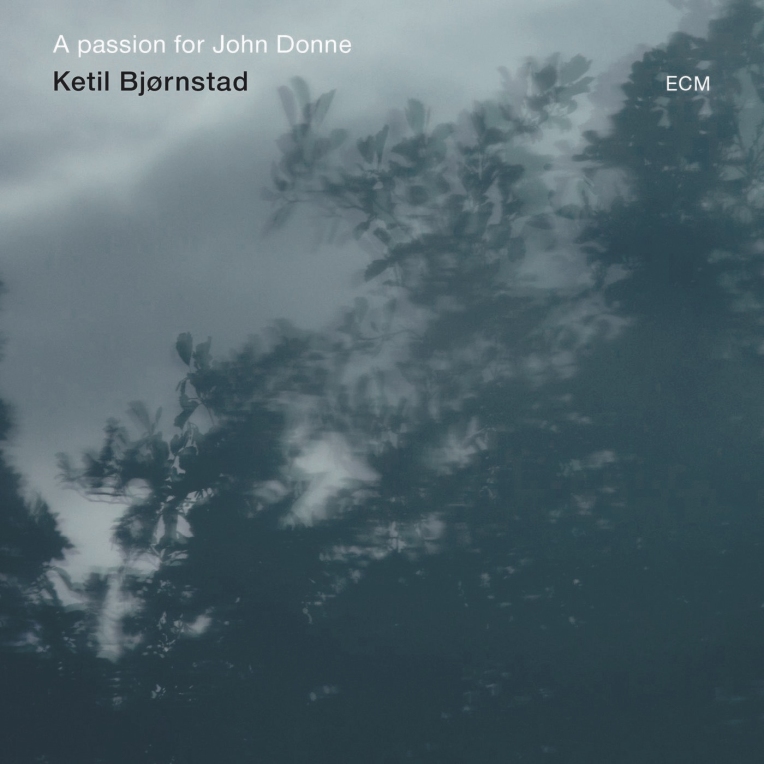
Pianist and composer Ketil Bjørnstad has sailed some of ECM’s purest waters. Yet while many of those journeys have been instrumental, he has with increasing frequency turned to the human voice as a candle from which to exude a melodic glow. True to metaphor, much of 2008’s The Light represented a major engagement with English poet John Donne (1572-1631), whose verses are the backbone of the present recording. Written for the Oslo International Church Festival and given its premiere in March of 2012 (the very performance heard here), Bjørnstad’s A passion for John Donne features Håkon Kornstad (tenor saxophone, flute, voice) in his ECM debut alongside percussionist Birger Mistereggen, the Oslo Chamber Choir under the direction of Håkon Daniel Nystedt, and the composer himself at the keyboard.

An Introitus gradates this hymnal piece into existence with a gong before piano and choir pull back the curtain of night to reveal a dawn-lit choral arrangement of “Thou hast made me.” As Kornstad’s tenor weaves through the undergrowth of these self-reflective intonations, unfolding one wordless implications after another, a silent heart of reverence is illuminated. Kornstad also sings, lending sanctity to “A fever” and “Farewell to love” as Bjørnstad shelters him like a church would a believer.

The writing for choir is sweeping yet intimate, most notably in “Death, be not proud” and “A nocturnal upon St. Lucy’s Day, being the shortest day,” the latter an atmospherically rich tapestry of waning moons and withdrawn souls. “A valediction, forbidden mourning” is another memorable passage, its use of marimba laying a supple path for Kornstad’s reed and voice to wander.

Each poem enacts a laser-focused concentration of mortality, distilling years of life into single words and phrases. This scriptural quality lends itself well to the piece’s concept as a “passion,” which by virtue of its promises of everlasting life through the doorways of death and love gives rise to a grander meaning in the texts. Like the benediction for incorruptible blood with which it ends, its prayerful mold feels more ripe than ever to be filled with our submissive will.

Konstantia Gourzi: Music for piano and string quartet (ECM New Series 2309)

Gourzi

Konstantia Gourzi
Music for piano and string quartet

Lorenda Ramou piano
Ensemble Coriolis
Heather Cottrell
violin
Susanne Pietsch violin
Klaus-Peter Werani viola
Hanno Simons violoncello
Recorded July 2012, Himmelfahrtskirche, Munich
Engineer: Stephan Schellmann
Produced by Manfred Eicher
Release date: October 10, 2014

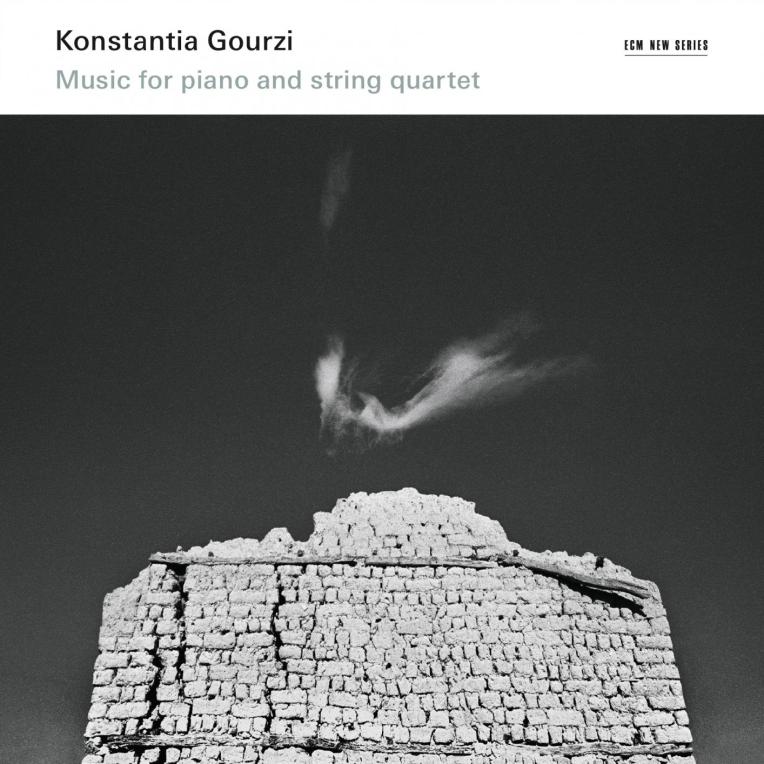
Greek composer Konstantia Gourzi’s approach to time plus ECM’s approach to space equals the most whole of sonic numbers. Said whole consists of intimate minutiae, each the corner of a photograph otherwise hidden by the downturned palm of history. The transubstantiation of Eine kleine Geschichte, op. 25 (2005) for solo piano epitomizes this feeling of obscurity. Notes fall neither like rain nor like teardrops, but more like a maple copter in slow motion, yearning for the touch of soil. After such a liminal experience, the opening proclamation of the String Quartet No. 2, op. 33/2 (2007) indeed feels like a bear hug of gravity. Titled P-ILION, neun fragmente einer ewigkeit (the latter meaning “nine fragments of eternity”), it is a fitting description of the molecules that inform Gourzi’s atmospheres. A powerful river in which to drop one’s ears like stones, its currents teem with reminiscences and fantasies alike. Whether groveling in a heavenly day or dancing in a pagan night, the sheer breadth of evocation herein is staggering. As the cloth of familiarity frays at the shards of stories yet to be told, this piece elicits a lyricism so deep that it can only end where it began. Moods are darker in the String Quartet No. 1, op. 19 (2004). Bearing the title Israel, it begins with the mortal urgency of Henryk Górecki and the playfulness of Claude Debussy before morphing into a lone voice, orphaned but for its spiritual genealogies traceable back to Abraham’s near-sacrifice.

The program gives us a cross-section of Gourzi’s writing for piano. From the seven miniatures that make up „noch fürcht’ ich”, op. 8 (1993), an early opus that is her first for the instrument alone, to the similarly aphoristic Klavierstücke I-V, op.24 (2004) and the eclectic Aiolos Wind, op. 41 (2010), we encounter jazz, folklore, and hypermodern cartographies. The moment we find something to hold on to, it slips away and offers a substitute made of an entirely different material. When piano and string quartet combine in Vibrato 1, op. 38 (2009/10) and Vibrato 2, op. 38 (2010), Gourzi creates the soundtrack to a tracking shot, one footstep at a time.

I cannot fathom how this album slipped past my radar for so long. Though of only recent discovery, it has already earned a top spot among my favorite New Series discs. And while these compositions may sit comfortably beside those of György Kurtág and Helmut Lachenmann, there’s something distinct about Gourzi that is to be found not in her last name but in her first. Konstantia, which means “steadfastness,” is precisely the quality of which her music is possessed, moving ever forward as a way of polishing us like mirrors held up to the past.

James Ilgenfritz: You Scream A Rapid Language

YSARL

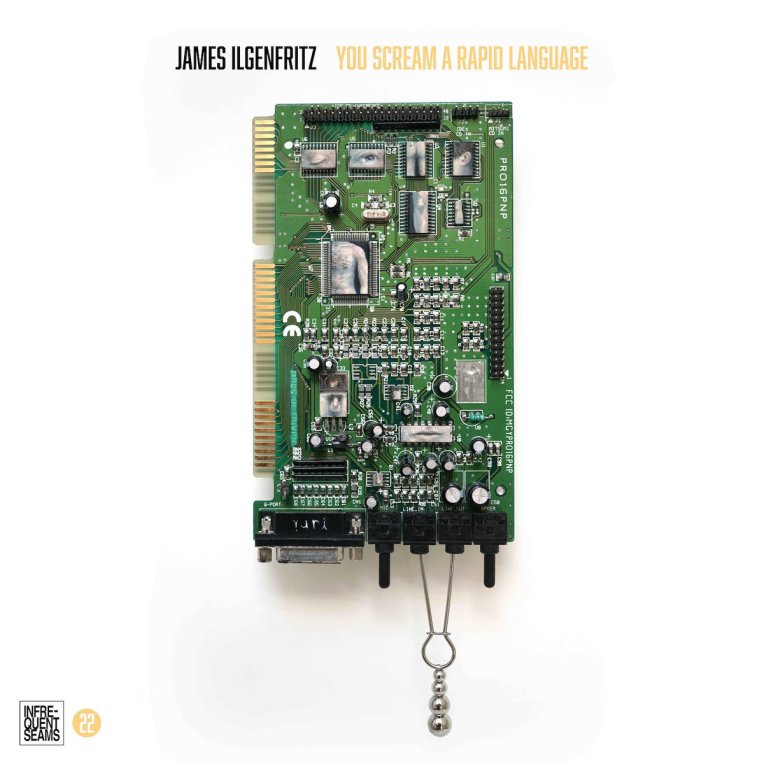
Bassist/composer James Ilgenfritz is rare for running lines of transfusion between jazz and classical bodies while keeping them equally alive. In that spirit, he presents this chamber program of formidable subtlety and feeling that travels comfortably between (and beyond) genres.

The combinations of instruments provide constant fascination, starting with the pairing of violin (Pauline Kim Harris) and double-pedal bass drum (Alex Cohen) in Terminal Affirmative. By turns primal and futuristic, this music frays the edges of such contradictions to the point of unity. It’s worth noting that this piece is based on observations of Ovid, who emphasized the power of water droplets to erode stone over time as an organic illustration of persistence. This philosophy seeps into everything that follows, but especially in Apophenia III: The Index. This trio for piano (Kathleen Supové), guitar (James Moore) and violin (Jennifer Choi), based on a short story by J. G. Ballard, asks the musicians to build a grander narrative out of through-composed fragments. Thus, what first seem to be aphorisms take on a coherence all their own.

Apophenia IV: A Bell In Every Finger sets poetry by the late Steve Dalachinsky (on Muhal Richard Abrams and Cecil Taylor, no less) for baritone (Thomas Buckner), piano (Joseph Kubera), percussion (William Winant) and Ilgenfritz himself. Buckner lends his falsetto to this garden of delights and darkness, contrasting hauntingly with the album’s masterstroke: How To Talk To Your Children About Not Looking At The Eclipse. Here flutist Margaret Lancaster breaks down breath to its most linguistically pure elements and makes them sing.

Tempting as it is to call this album intermittently assaultive, it is perhaps better described as possessed of a fierce intimacy. As in the concluding Fanfares For Modest Accomplishments for two violins (Pauline Kim Harris and Conrad Harris), it uses brevity to bring our attention to expanse. Such dichotomies are difficult to maintain, but these musicians do just that with unwavering strength.

(This review originally appeared in the April 2020 issue of The New York City Jazz Record, a full PDF of which is available here.)

Heinz Holliger/György Kurtág: Zwiegespräche (ECM New Series 2665)

Zwiegespräche.jpg

Heinz Holliger
György Kurtág
Zwiegespräche

Heinz Holliger oboe, English horn, piano
Marie-Lise Schüpbach English horn, oboe
Sarah Wegener soprano
Enresto Molinari bass clarinet, contrabass clarinet
Philippe Jaccottet recitation
Recorded June 2018, Radiostudio DRS Zürich
Engineer: Andreas Werner
Philippe Jaccottet was recorded August 2017
in Grignan by Nicolas Baillard, Studios La Buissonne
Executive producer: Manfred Eicher
Release date: May 24, 2019

Swifts turn in the heights of the air;
higher still turn the invisible stars.
When day withdraws to the ends of the earth
their fires shine on a dark expanse of sand.
–Philippe Jaccottet

If it comes as no surprise that Heinz Holliger and György Kurtág, perennial names in the ECM New Series roster, studied composition under Sándor Veress (cf. ECM 1555), then neither should the inevitability of blending their artistry in one of the most seamless programs to grace the imprint in recent years. Holliger, for his part, found a kindred spirit in Kurtág from day one: “Every note he writes is essential; there is never an idea of small talk…of wanting to please somebody or an audience.” The overarching title Zwiegespräche (“dialogues”) accurately describes the music. For indeed, when their works are placed side by side, a distinctly conversational rapport grows. These dialogues, however, extend beyond the composers themselves and into realms of texts, other musicians, and spaces of interpretation, so that in the listener’s walk from one end to the other, it becomes difficult to tell where Holliger’s terrains end and Kurtág’s begin.

If both are melodic composers, a memorial heart distinguishes a significant portion of Kurtág’s output. Most poignant in that regard is his …Ein Brief aus der Ferne an Ursula (2014) for oboe solo. Written just days before the death of Holliger’s wife Ursula (see, e.g., Lieder ohne Worte), it’s a loving tribute that wants to dance but instead curls into itself. The follow-up …für Heinz… (2014) is scored for piano, left hand, thus symbolizing Ursula’s absence. Its dissonances rest in brief catharsis.

A brighter pairing finds itself represented in both composers’ settings of the same text by 17th-century mystic and poet Angelus Silesius. Dating from 2010, they feature soprano in the leading role. Where Holliger adds oboe, English horn, and bass clarinet, Kurtág pairs the voice with English horn only. Holliger’s version was written while in hospital, where he challenged himself to write a madrigal each day during his recovery. Kurtág’s likewise pulls on inner filaments of mortality.

A standout of the album is Holliger’s Berceuse pour M. (2015), performed on English horn by his pupil Marie-Lise Schüpbach. Like her teacher, Schüpbach displays immaculate breath control and a balance of light and shadow. Holliger’s interpretations of seven poems by Philippe Jaccottet are equally moving. Each is read by the poet himself, and the words, written beneath corresponding notes in the score, are matched by oboe and English horn in extractions of hidden messages. The piercing altissimo of “Dans l’étendue…” and vocal inflections of “Je marche…” are especially visceral. Even the programmatic touches of “Oiseaux” feel more than reactive: they are cocreators in an extra-linguistic process.

Back in Kurtág’s world, a sequence of dedicatory aphorisms unfurls. Of these, the most naked are those written for contrabass clarinet solo. Schatten makes delicate use of key clicks and barest breath, and Kroó György in memoriam, written for radio editor and music critic György Kroó, rarely transcends a whisper. At more than six minutes, the latter feels like a novel compared to the short stories that surround it. The Hommage à Elliott Carter (for English horn and contrabass clarinet) and In Nomine – all-ongherese (Damjanich emlékkö) for English horn solo are vibrantly noteworthy as well.

Holliger finishes with his solo oboe Sonate. Composed in 1956/57 and revised in 1999, it is recorded for the first time here, after 63 years of sitting on paper since he penned it for Veress’s composition class. In it we can hear Veress’s influence on the younger composer, if not also Holliger’s on the older. From the leaping Präludium to the virtuosic Finale, ponderance of nature outweighs the nature of ponderance, leaving us with nothing short of a masterpiece.

We live in a world of motion and distance.
The heart flies from tree to bird,
from bird to distant star,
from star to love; and love grows
in the quiet house, turning and working,
servant of thought, a lamp held in one hand.