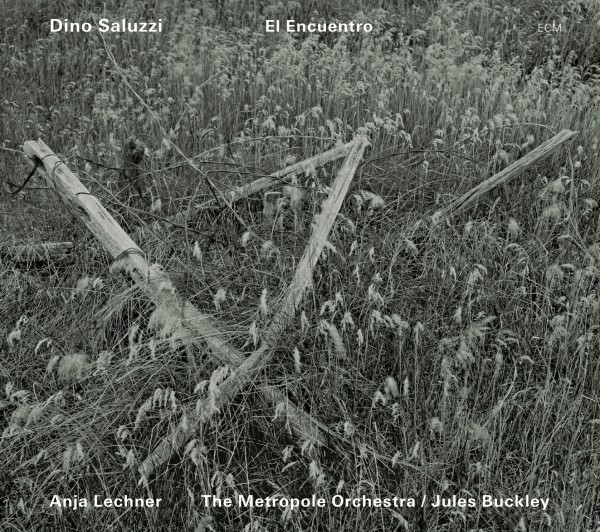
Dino Saluzzi: El Encuentro (ECM 2155)

El Encuentro

Dino Saluzzi
El Encuentro

Dino Saluzzi bandoneon
Anja Lechner violoncello
Felix ‘Cuchara’ Saluzzi tenor saxophone
The Metropole Orchestra
Jules Buckley conductor
Live recording February 13, 2009 Muziekgebouw aan ’t IJ, Amsterdam
Music supervisor: Gert Jan van den Dolder
Recording engineer: Gert de Bruijn (Dutchview)
Assistant: Per van der Zande (Dutchview)
Mixing engineers: Gert de Bruijn and Ronald Trijber (Dutchview)
Concert production and executive producer for the NPS: Gustavo Pazos
A production of NPS Radio in collaboration with ECM Records

El Encuentro depicts Dino Saluzzi as a composer willing to go wherever the stream of consciousness takes him. In this, his first live album, the bandoneón maestro joins Anja Lechner (cello) and brother Felix (tenor saxophone) before the Metropole Orchestra, under the direction of Jules Buckley, for a varicolored quatralogy. Because the bandoneón is practically an orchestra unto itself, pairing it with strings feels like an implosive rather than explosive stroke of sonic fortuity. This introspective dynamic is heightened by the asymptotic relationship between the soloists, who are fully present in Plegaria Andina. This piece revisits thematic material from 1988’s Andina in a braid of wind, branches, and leaves: each strand a traveler from a different corner of the world. Even when silent, the soloists float like an oar-less vessel bobbing to the pulse of tide. The ruminations of this piece are thus deeply aquatic and equally representative of the clouds they reflect.

The relationship between bandoneón and cello is the album’s main anchor, and takes root in deepest reef in Vals de los días. Like the program as a whole, its moods and melodies are in constant flux, its themes as fleeting as the air in Saluzzi’s bellows, the touch of horsehair on Lechner’s strings. Assailed by dances and memories, their vessels keel and spread their melodic passengers far and wide. There is abundance to be felt here, plucked like ripe fruit from a branch, squished between the toes like wet sand, and dunked like the baptized body into holy river’s flow.

Despite its massive proportions, the title piece comports itself with the delicacy of a spider. It is the most brooding piece of the four—one which, despite its peaks and gorgeous finish, wallows in a pool of shadows. Its final jubilations pick at a lone thread of light, unravel the tapestry of the night, and weave a new one into the Miserere that follows. The strings, robust yet tentative in their dynamic recession, are servants to the bandoneón, the latter a messenger sent from above. Its lungs exhale only peace, leaving no doubt that Saluzzi’s is a spiritual art.

Despite the number of musicians gathered here, El Encuentro is one of Saluzzi’s most intimate realizations, compressing the sweep of an epic film into the eye of a spyglass. Because the title means “The Meeting,” it is tempting to read the album as one large cycle. Closer listening, however, reveals the self-awareness of the compositions therein. They are not cardinal points on a compass, but rather corners of a world that share a plane only in maps. Their yearning is more than physical; it is environmental. They meet only in dreams, drifting farther out to the sea with every heave. Were it not for the applause, we might blissfully remain so, never to feel the touch of shore beneath our soles.

(To hear samples of El Encuentro, click here.)
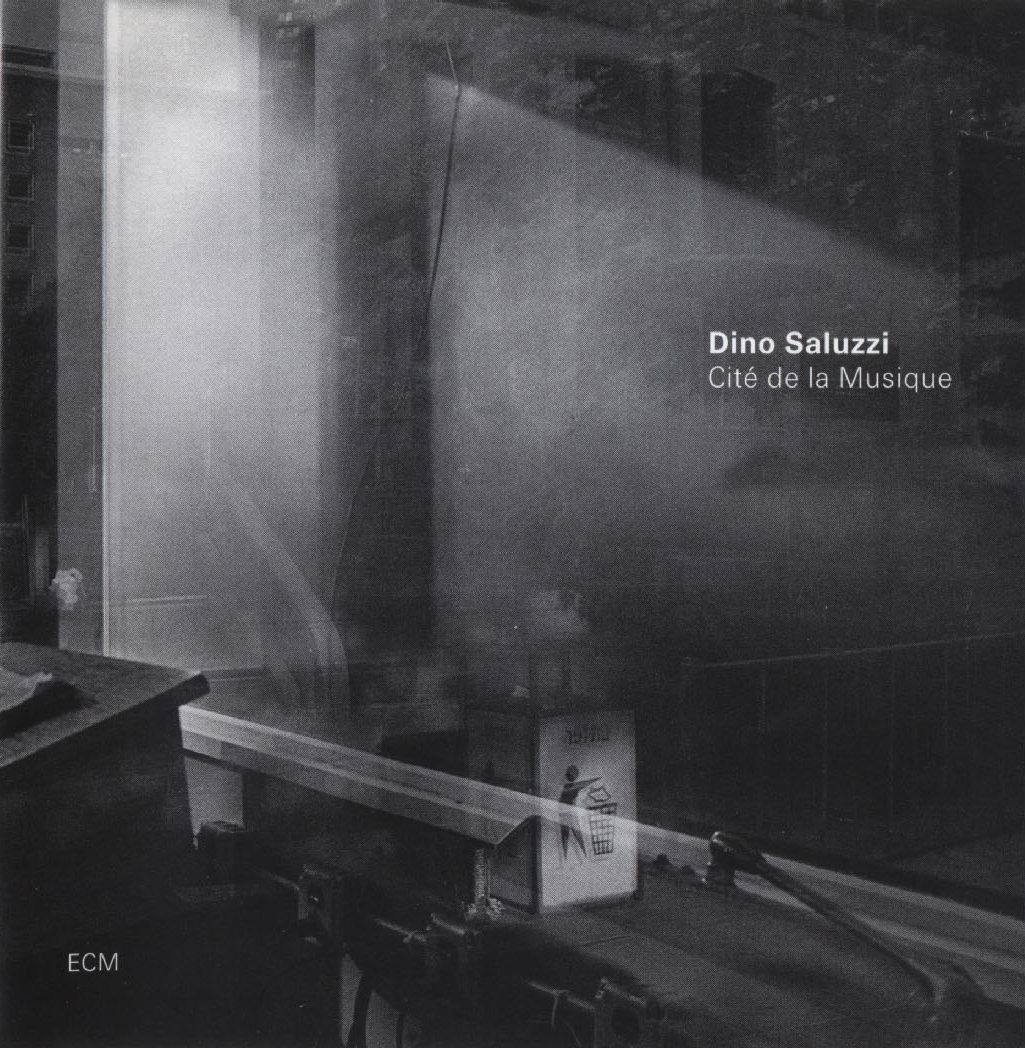
Dino Saluzzi: Cité de la Musique (ECM 1616)

Dino Saluzzi
Cité de la Musique

Dino Saluzzi bandoneón
Marc Johnson double-bass
José Maria Saluzzi acoustic guitar
Recorded June 1996 at Rainbow Studio, Oslo
Engineer: Jan Erik Kongshaug
Produced by Manfred Eicher

While my rummaging through ECM’s back catalogue has produced a substantial body of personal discoveries, it has also deepened my admiration for artists with whom I was already familiar. One of these is Dino Saluzzi, the Argentinian bandoneón player who enhances his instrument with a mastery that is undeniably sincere. For this trio date he joins his son, guitarist José Maria, and bassist Marc Johnson, ever the idiomatic chameleon, for a set of nine pieces. All bear the compositional stamp of Saluzzi, save for a heartfelt rendition of Earl Zindars’s “How My Heart Sings.” The album also contains two dedicatory pieces. First is the lilting “Gorrión,” for Jean-Luc Godard, which melts our hearts like an Anna Karina close-up and transplants us gently into the soil of “Coral para mi Pequeño y Lejano Pueblo.” Written for an unnamed childhood friend, it ends the album in an eddy of fond memories that practically jump from his keys. On the way to these Saluzzi leads us down a path dusted by careful footprints. Johnson takes an early lead in the title track, while José adds flowering touches to “Introduccíon y Milonga del Ausente,” each pluck liberating a petal from its soft hub. Saluzzi’s playing here recalls Milhaud’s Prélude No. 1 and proves the reach of his art. “El Rio y el Abuelo” introduces whispers of rhythm before Johnson’s swirling airflow lifts the bandoneón ever higher. “Romance” is an endearing duet between father and son, and gives voice to their admirable restraint. Even at his most plaintive, Saluzzi is always warm, which makes “Winter” all the rarer for its icy depths. The guitar’s rounded tone grinds every shadow’s blade into soft light, revealing the hopeful core within.

With nary a single note for mere effect, Cité de la Musique sings to us as a wolf might howl to the night, which is to say: instinctively, without judgment, and without fail.

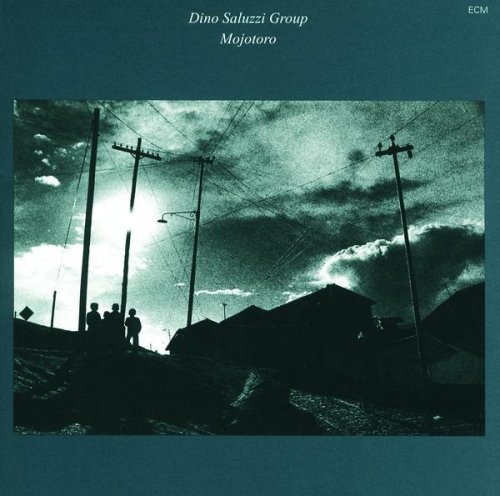
Dino Saluzzi Group: Mojotoro (ECM 1447)

Dino Saluzzi Group
Mojotoro

Dino Saluzzi bandoneón, percussion, voice
Celso Saluzzi bandoneón, percussion, voice
Felix “Cuchara” Saluzzi tenor and soprano saxophones, clarinet
Armando Alonso guitars, voice
Guillermo Vadalá electric bass, voice
José Maria Saluzzi drums, voice
Arto Tuncboyaci percusson, voice
Recorded May 1991 at Estudios Ion, Buenos Aires
Engineer: Jan Erik Kongshaug
Produced by Manfred Eicher

On this wonderful date from the early 90s, Dino Saluzzi joins brothers Celso (doubling Dino on bandoneón), Felix (on saxophones and clarinet), and drummer José for a true family effort. Fleshed out by guitar, bass, and percussion, the so-called Dino Saluzzi Band strikes out with a solid session from start to finish. Even in such a populated setting, Saluzzi’s characteristic backward glance is as intimate as ever, threading every needle on the horizon with voices from a valued past. His bandoneón bubbles from a fissure of memory as Felix’s gravelly tenor waxes mythic across the plains, but finds its purest sentiment in “Tango a mi padre.” One of my all-time favorite Saluzzi songs, this time it is augmented by a buttery soft soprano. This segues into “Mundos,” which finds Felix back to tenor over rolling hills of percussion and reedy drones. “Lustrin” is circumscribed by singing children, drawing us into a wall of nostalgia, at the center of which stands the personable guitar of Armando Alonso. Dino pairs with Felix yet again (this time on clarinet) in the mournful “Viernes Santo” for a track that wouldn’t feel at all out of place on an Eleni Karaindrou soundtrack. One of Dino’s best, to be sure. “Milonga (La Puñalada)” is a more dance-like number, which with a shake of the hips and the wag of a finger leads us into “El Camino,” a straight path into the beyond, where the past reigns anew.

Dino Saluzzi’s salt-of-the-earth sound enchants, the power of his inspiration all the greater when activating an already fine band of musicians. There can be no room for gimmicks; only song.

<< Tamia/Pierre Favre: Solitudes (ECM 1446)
>> Cherry/Åberg/Stenson: Dona Nostra (ECM 1448)

Dino Saluzzi: Andina (ECM 1375)

Dino Saluzzi
Andina

Dino Saluzzi bandoneón, flute
Recorded May 1988 at Rainbow Studio, Oslo
Engineer: Jan Erik Kongshaug
Produced by Manfred Eicher

Each title on Andina, Dino Saluzzi’s second solo album for ECM, describes a different facet of the bandoneón prodigy’s creative process. He is the forlorn sonic architect, using melody to construct a world of indelible impressions, and perhaps nowhere more so than in “Memories,” which in both concept and execution seems the culmination of his notecraft and the spirit on which it thrives. Saluzzi makes an organ of his instrument, suspending a new ornament from every echoed moment, each a forgiving step into a shaded past. And in that past we encounter a life in miniature. A lively “Dance” introduces us to the music’s silver screen, on which rich insights flicker like a trailer for all that follows. “Winter” leaves a chain of cautious footsteps imprinted on the blanketed landscape. The promise of a warm hearth quivers in a single lit window, a beacon in the snowdrift. We feel this domestic comfort in every key change, in every “Transmutation” that balances agitation with resignation. The overwhelming solitude then splits into the eerie “Tango Of Oblivion,” moving with light footwork across heavy sentiments into “Choral.” This slow hymn-like progression is the one of the album’s most endearing, sounding like an organ touched by the fingers of a lone Kapellmeister, whose only muse is the absence of light. In contrast, the chording of “Waltz For Verena” twirls joyfully like a gymnast’s ribbon. And if by the time the title piece unleashes its emotional reserves you aren’t fully immersed, then you may want to get an EKG.

Another quiet stunner from Saluzzi, Andina is lovingly recorded, allowing perfect separation between both sides of the bellows. His leading lines in the right hand move like ice skaters across the blackened surfaces of the left. And while an unaccompanied squeezebox recital may not sound like everyone’s idea of a good time, Saluzzi holds rapt attention through a constantly metamorphosing array of moods, melodies, and atmospheres. Nothing short of magical.

<< Eberhard Weber: Orchestra (ECM 1374)
>> Werner Bärtschi: Mozart/Scelsi/Pärt/Busoni/Bärtschi (ECM 1377 NS)

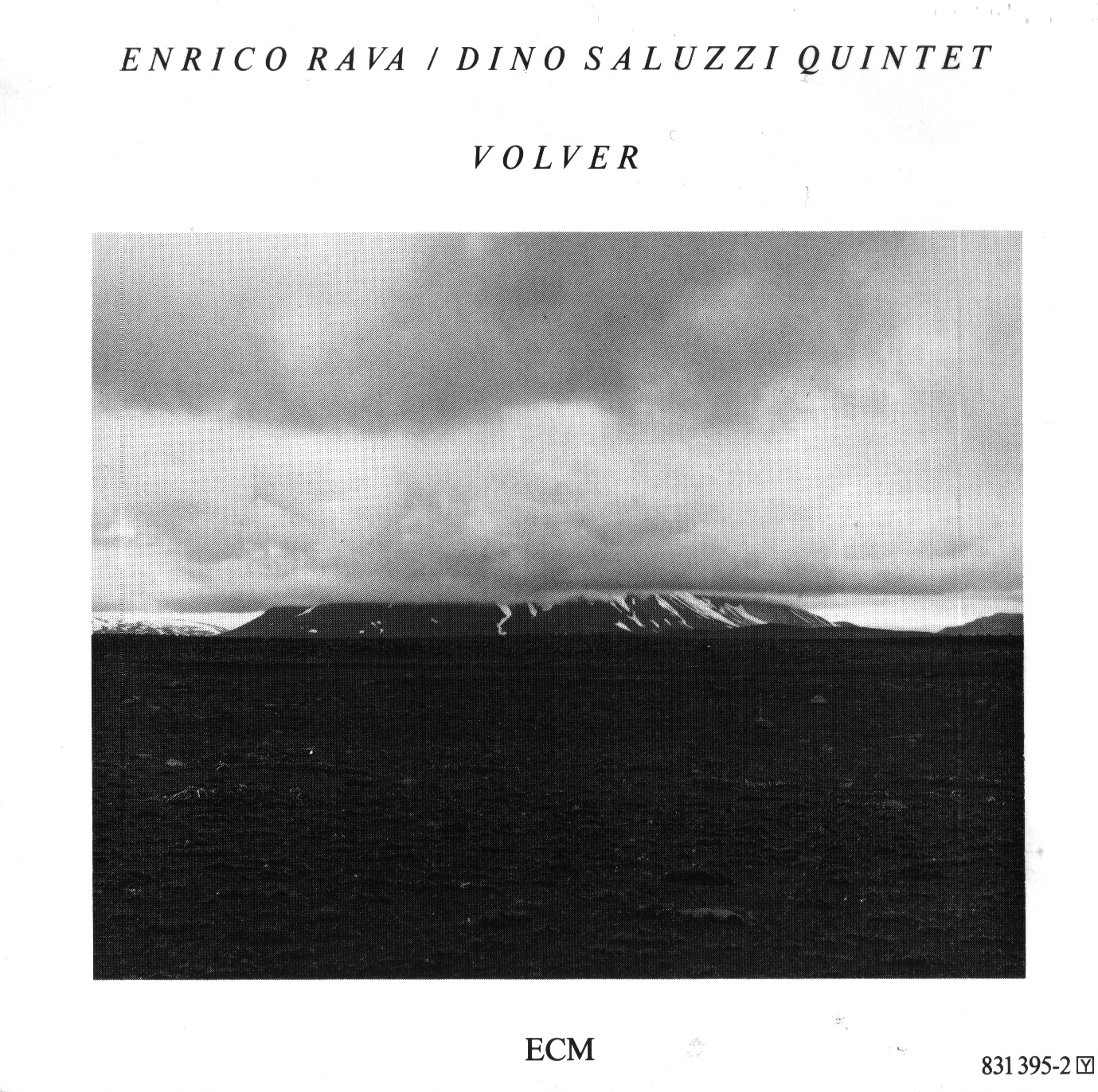
Enrico Rava/Dino Saluzzi Quintet: Volver


Enrico Rava
Dino Saluzzi
Volver

Enrico Rava trumpet
Dino Saluzzi bandoneón
Harry Pepl guitar
Furio Di Castri bass
Bruce Ditmas drums
Recorded October 1986 at Tonstudio Bauer, Ludwigsburg
Engineer: Martin Wieland
Produced by Manfred Eicher

Before the title of Volver (Spanish: to return; to come back) graced Pedro Almodóvar’s colorful 2006 film, it found a home two decades previously on the cover of this most intriguing date from bandoneón master Dino Saluzzi, who joins the roving Enrico Rava Quartet. Harry Pepl starts things off right with a plaintive guitar in “Le But Du Souffle,” providing a yielding surface for Saluzzi to carve his ethereal shapes. Add to this the earthbound bass of Furio Di Castri and Rava’s heavenly blowing, and you get a formula for pure sonic bliss. This typically rubato ECM intro smoothes into the jaunty territories of “Minguito,” which form a unique sound brought to fervent life by Bruce Ditmas at the kit. After a killer thesis statement, Rava draws from a single note an ever-flitting butterfly of a solo. Pepl follows in his wake with effervescence, plowing that same field of perpetual energy before Saluzzi arcs forward with the album’s most resplendent solo. The rhythm section builds to fervor underneath him, as if pointing fingers skyward in want of flight. “Luna-Volver” is a lilting piece for bandoneón alone, which in this resonant space develops like a sepia-tinted photograph, a tender prelude to the ecstatic expression of audible love in “Tiempos De Ausencias.” A slab of free jazz awaits us in “Ballantine For Valentine,” which from a wrenching Bill Frisell-like guitar throws delicious textures to the wind before the dark spiral of “Visions” catches the light of finality as if on a glassine edge.

The band gives plenty of space to contemplate each section, taking long, deep breaths between solos. Like a tree, the results maintain rootedness, no matter how high they climb. Rava is the sap through its veins, Saluzzi the sunlight in the branches. The two make for quite a pair, and it’s a shame they never conversed more often. My only caveat is the mid-heavy production. While normally I like being drowned in reverb, in this case it’s just a bit too plush for its own good. It obscures some of the finer gradations of the musicianship and forces a final fadeout into premature silence.

<< Christy Doran: Red Twist & Tuned Arrow (ECM 1342)
>> Keith Jarrett: Book Of Ways (ECM 1344/45)

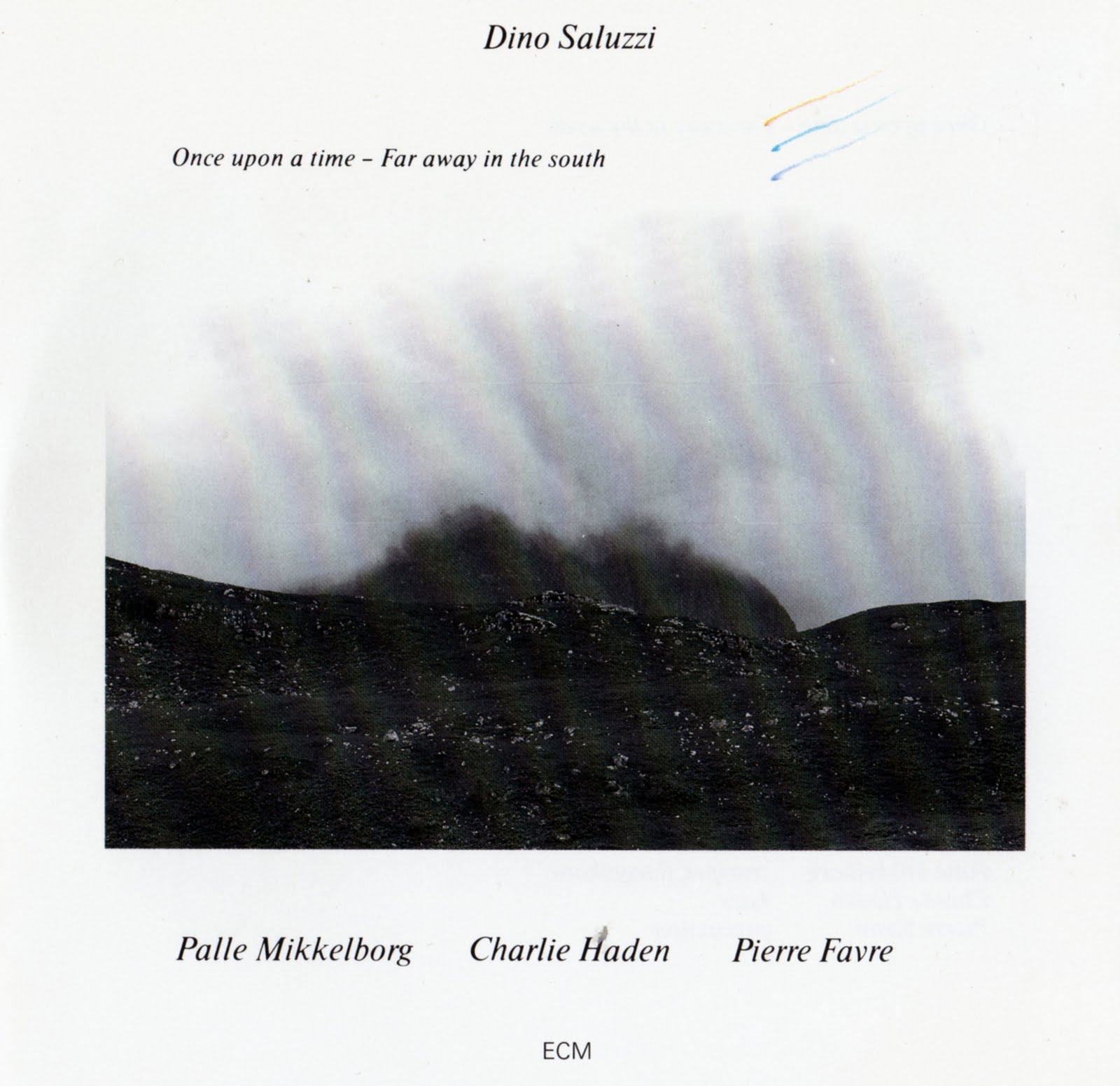
Dino Saluzzi: Once upon a time – Far away in the south (ECM 1309)

Dino Saluzzi
Once upon a time – Far away in the south

Dino Saluzzi bandoneón
Palle Mikkelborg trumpet, fluegelhorn
Charlie Haden bass
Pierre Favre percussion
Recorded July 1985 at Tonstudio Bauer, Ludwigsburg
Engineer: Martin Wieland
Produced by Manfred Eicher

There is an effusive quality to bandoneón virtuoso Dino Saluzzi’s art, one that speaks of the past, which through slogs of time becomes recoverable through the hope of performance. Listen to the sonic photograph that develops in “José, Valeria And Matias” this becomes clear. Every face is a memory incarnate, speaking with the voices of a hundred. Bassist Charlie Haden and trumpeter Palle Mikkelborg round out the album’s histories, along with percussionist Pierre Favre, whose rustlings shake a metallic tree of its own. Mikkelborg proves himself more than adaptable to these uncharacteristic circumstances, and Haden, as ever, is no mere accent but a living, breathing songster, ever open to the resonance of harmony. The titles of each track tell stories in and of themselves while also telling a larger narrative together. “And The Father Said… (Intermediate)” strings a contemplative (and what about this album isn’t?) duet between Saluzzi and Haden (who broadens the reflections that so deepened “José…”) before Favre’s earthly drums draw us upright into “The Revelation (Ritual).” Over a swelling gong and skipping snare, Mikkelborg and Saluzzi spin a frantic spell. “Silence” is a heartening solo from Saluzzi that ebbs like the tide and saunters into the verdant landscapes of “…And He Loved His Brother, Till The End.” Mikkelborg’s sensitivity swings in slow motion here from Haden’s tether. Favre returns in “Far Away In The South…,” painting the empty spaces with his embracing nature. In this 16-minute saga of intimate proportions, we get the album’s most dynamic changes, a mosaic of improvisatory energy, a sometimes-playful excursion into recollection. The quartet finishes with “We Are The Children.” The sun of this anthem burns away the rain, bringing together each signature in a field recording of children at play.

Once upon a time… is a language unto itself, a study in movement and matter. This recording is also a testament to ECM’s meticulous production values. Guaranteed to wash your soul clean.

<< Shankar/Caroline: The Epidemics (ECM 1308)
>> Chick Corea: Trio Music, Live In Europe (ECM 1310)

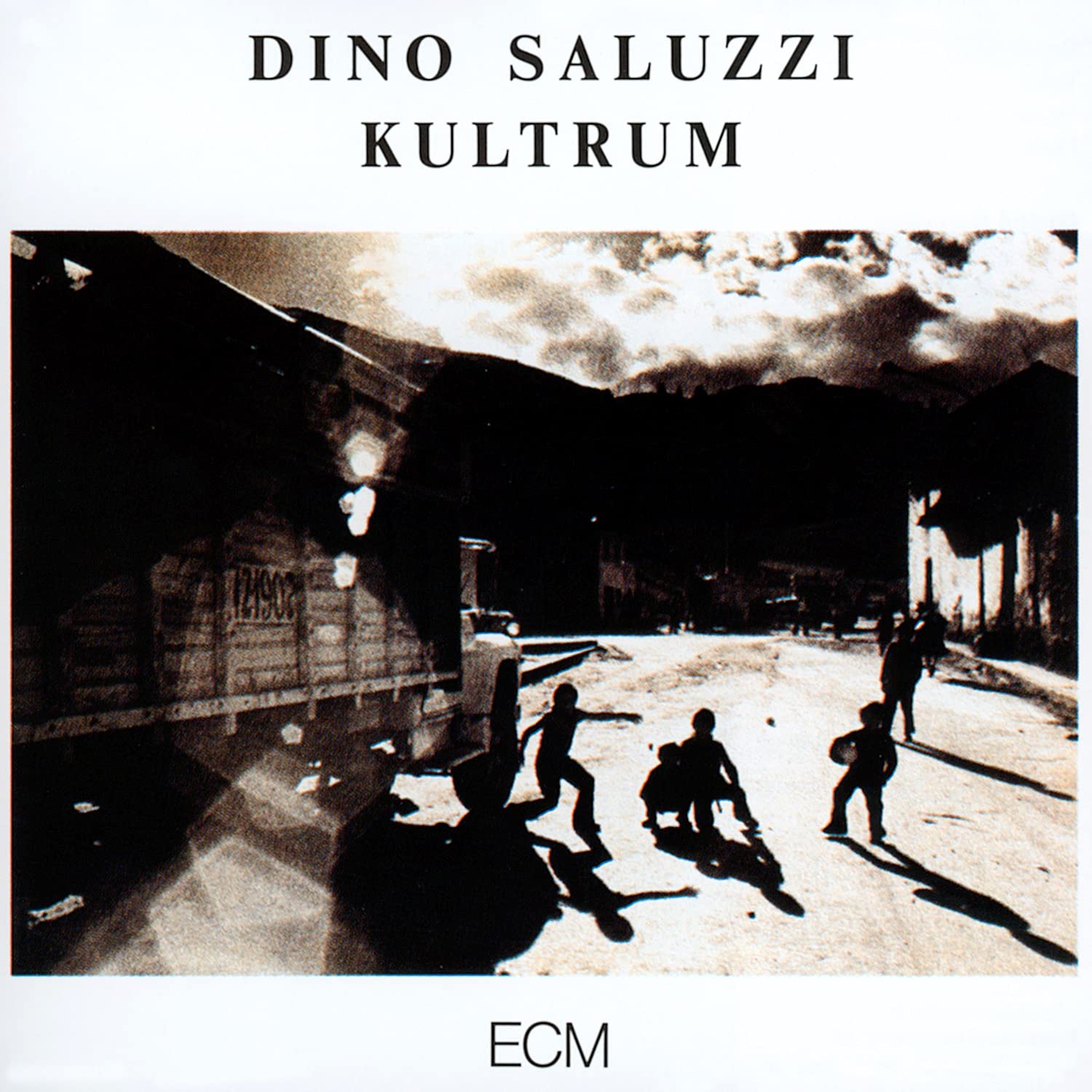
Dino Saluzzi: Kultrum (ECM 1251)

Dino Saluzzi
Kultrum

Dino Saluzzi bandoneón, voice, percussion, flutes
Recorded November 1982 at Tonstudio Bauer, Ludwigsburg
Engineer: Martin Wieland
Produced by Manfred Eicher

This album, not to be confused with the ECM New Series effort of the same name, was Dino Saluzzi’s first for the label. Using only his two hands, the bandoneón master brings out the multifarious qualities of his instrument as no other can. In this music we feel decades upon decades of history compressed into every squeeze of the bellows, and find ourselves surrounded by yearned-for lands and traditions. Into these we are ceremoniously welcomed through “Kultrum Pampa – Introducción Y Malambo” (Introduction And Malambo). Flute and drum draw us out from the cave of our ignorance and into the rising dawn, where nothing but an open circle awaits us with the promise of life. A voice chants, lifting a feather with every word and dropping it into our memory. We disavow the codes that divide our skins and minds, that bind our resolve to ideology, that whisk away our honor and truth to false idols. This blending of chant and song enhances the sacredness of both. It is one of three longish pieces on the album, which include the stunning “Agua De Paz” (Water Of Peace), one of the most gorgeous Saluzzi has ever recorded, and the rushing current of “El Rio Y El Abuelo” (The River And The Grandfather), in which he brings his veritably orchestral sound to mountainous light. There are moments in this piece that, especially around the 3:10 mark, sound exactly like the penultimate fade of Erkki-Sven Tüür’s Illusion. Such unintended moments of confluence merely hint at the reach of Saluzzi’s playing. Similarly, the handful of shorter pieces on Kultrum seem to flirt with their own watery reflections, coming to a head in the three-part suite “Ritmo Arauca” (Arauca Ritual). This life cycle is woven in earth and ice by a shuttle of elemental percussion. What was once the ceremony now becomes all-knowing life, a landscape where towering figures mingle with those too small to imagine, where the wind and the sunlight share a common yarn, where the elevation of a human life depends solely on how it falls. Again, Saluzzi’s voice emerges alone, as much soothsayer as it is curious child. Fans of Ken Fricke’s Baraka will also recognize here the shared Andean roots of Inkuyo’s “Wipala.” At last, “Pasos Que Quedan” (Steps That Stay) calls us back into the smoke where we began, where only our selves await, purified by sky and song in “Por El Sor Y Por La Lluvia” (For The Sun And For The Rain).

This album proves Saluzzi’s value not only as a musician, but also as a living heart of which music is blood. He is a master in the truest sense, which is to say that he pours forth through his instrument, as his instrument, showing us that the only way down his musical path is to close our eyes and let our feet guide us. Without question, one of ECM’s top 10 of all time.

<< Ralph Towner: Blue Sun (ECM 1250)
>> Pat Metheny Group: Travels (ECM 1252/53)

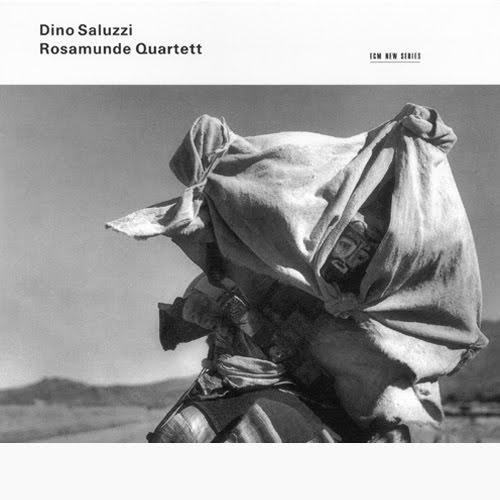
Dino Saluzzi/Rosamunde Quartett: Kultrum – Music for bandoneón and string quartet (ECM New Series 1638)

Dino Saluzzi
Rosamunde Quartett
Kultrum: Music for bandoneón and string quartet

Dino Saluzzi bandoneón
Andreas Reiner violin
Simon Fordham violin
Helmut Nicolai viola
Anja Lechner cello
Recorded March 1998, Propstei St. Gerold
Engineer: Markus Heiland
Produced by Manfred Eicher

The relationship between Argentinian bandoneónista Dino Saluzzi and ECM’s mainstay Rosamunde Quartett has produced some of the most intriguing cross-culturalisms the label has yet to offer. Not so much a coming together of genres as it is an unraveling of possibilities within them, Kultrum manifests much of the latent orchestrations lurking within Saluzzi’s compelling solo outings of years past. The inaugural “Cruz del Sur” is utterly emblematic of the project’s fecundity, cutting strings from the cloth of Saluzzi’s distinctive sound and winding them into a singular amalgamation of rustling and stillness. At once dolorous and laudatory, the sound strays ever so gently into the ecstatic harmonies of “Salón de tango,” in which sparks of confluence abound at every turn. Here, as in much of the album’s hour-long recollection, Saluzzi asserts his rhythmic and melodic authority with a humble joie de vivre. Generally, the music dons solemn clothing, as in its most potent moments between Saluzzi and Rosamunde cellist Anja Lechner, giving us a foretaste of their untouchable Ojos Negros session some eight years later. Every color they mix is rendered lighter by the surrounding musicians. Brief dissonances either slide with ease or are slowed to the point of non-existence. “Miserere” provides brittle catharsis in a brewing fugal storm. Pizzicato statements flash like lightning without thunder. “El apriete” wrings the heart of its sympathy and rehydrates it with renewed life, as if to shield us from the mournful edge of the album’s remainder, which erases thin lines from a darkening periphery before folding in on itself to end.

Much like Ástor Piazzolla, of whom he is heralded as the only legitimate successor, Saluzzi cuts an unmistakable form in any auditory context. His reach is already so orchestral that the present expansion seems only nature. And while the musical talents thereof are as high as one would expect in an ECM recording of this caliber, the compositions themselves are the real stars here, leading said talents into new directions. This is an album that inhales in black and white, but exhales only color. Assuming we are able to approach it with a blank canvas in mind, who knows what images might come of it?


Alternate cover (?)