Crystal Silence: The ECM Recordings 1972-79 (ECM 2036-39)

ECM 2036-39Crystal Silence: The ECM Recordings 1972-79

Gary Burton vibraphone
Chick Corea piano

The vibraphone and piano combine to make one of jazz’s most potent instrumental combinations, and nowhere so invigorating than at the hands of Gary Burton and Chick Corea. To say that the possibilities between them are limitless is to ignore the immediacy of their abilities, in which we may now bask to the utmost content in this timely reissue. Jazz’s most singular duo in a set of three albums on four CDs. Now those are some positive integers.
1024 X

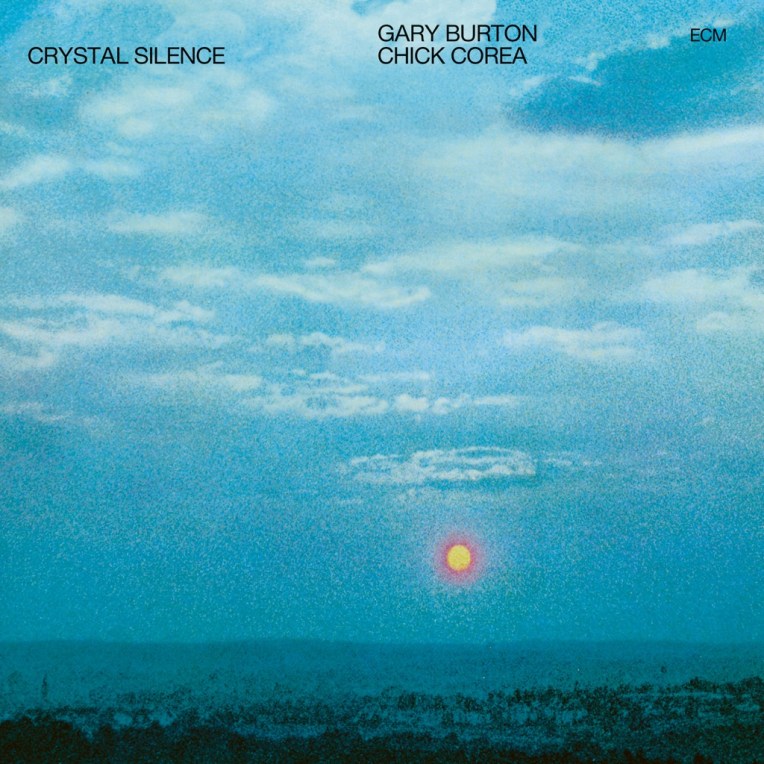
Crystal Silence (ECM 1024)

Recorded November 6, 1972 at Arne Bendiksen Studio, Oslo
Engineer: Jan Erik Kongshaug
Produced by Manfred Eicher

It all begins here, with Crystal Silence. The title says it all: silence crystallized into dazzling melodic gems, each its own prismatic doorway into improvisatory translucence. Corea offers a fine set of five compositions (the most notable being the slick opener “Señor Mouse”), along with three beautifully realized tunes by bassist Steve Swallow (“Arise, Her Eyes” being a personal favorite), and another by Mike Gibbs (the somber “Feelings And Things”). In spite of the variety of voices represented here, the album grows like one long, extended story, a dynamic that seems to shadow the musicians wherever they set foot. The title track, reprised and extended since its inaugural appearance on Return To Forever, is a subdued tour de force in style, presentation, and content. “Falling Grace” (Swallow) is one of the shorter pieces on tap, but what it lacks in time it makes up for in exhilaration. We end with an instrumental version of another Return classic, “What Game Shall We Play Today.” Each piece is rendered with such dynamic sensitivity that one can immediately recognize the effect Crystal Silence must have had when originally released, and no doubt continues to have to this day. Connected as they are by the same mellow fuse, these tunes need hardly a spark to set them to glowing.

This essential album constantly skirts the line between destitution and celebration, rebuilding as many structures as it tears down. The pianism soars, and one could never praise Burton enough for providing the intuitive right hand to Corea’s metronomic left. Above all, this is a masterful exhibition of improvisation around strong thematic material that breaks through its own generic conventions, and is another indispensable example of what ECM has done to enrich and enlarge the landscape of jazz music from day one.

<< Paul Bley: Open, To Love (ECM 1023)
>> Ralph Towner with Glen Moore: Trios/Solos (ECM 1025)

… . …
ECM 1140

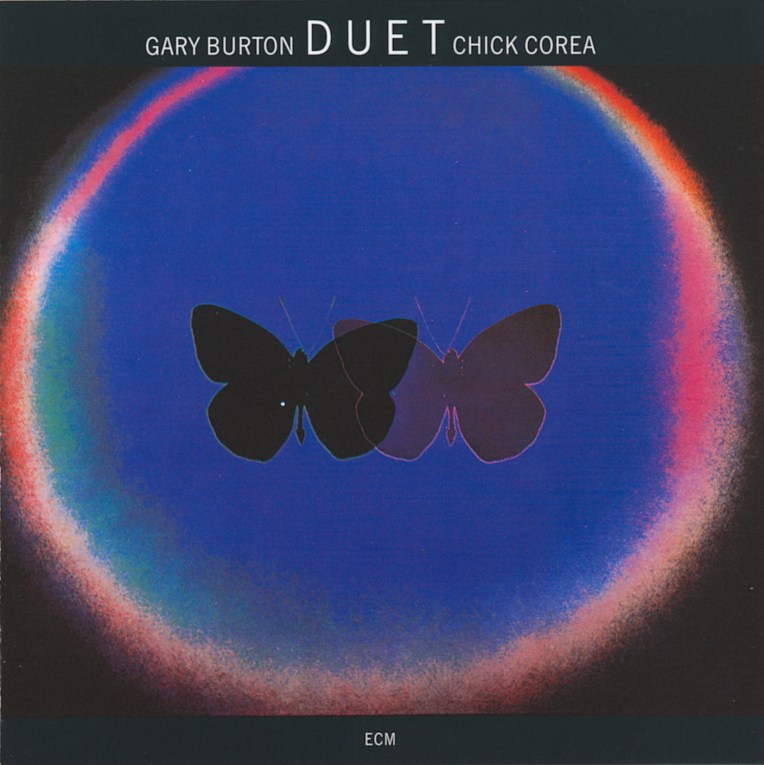
Duet (ECM 1140)

Recorded October 23 – 25, 1978, at Delphian Foundation, Sheridan/Oregon
Engineer: Bernie Kirsh
Produced by Chick Corea and Gary Burton

If Crystal Silence is the Corea/Burton universe writ large, then the “Duet Suite” that opens this follow-up album is its densest galaxy. Buoyant grace, turn-on-a-dime syncopation, and an abiding sense of direction make every moment an experience to savor and relive as many times as a single lifetime will allow. More than a lasting mosaic of what either of these musicians is capable of, the suite overflows with so much energy that it could easily have gone on to fill the entire album. And in many ways, it does, being a meta-statement of all to come. The lovingly arranged selections from Corea’s Children’s Songs that follow expand fourfold the brief glimpse into this masterwork afforded us in the project’s debut. These otherwise intimate excursions sparkle like film stills sped into viable movement. The hip nostalgia of “Radio” (Swallow) plunges us into the past, even as it directs our eyes to the future, reeling through its motifs with head-tilting abandon. Burton’s staggered rhythms make for an ecstatic crosshatching of polyphony. At last, we come to Corea’s seminal “Song To Gayle.” Soon to be a staple in the outfit’s traveling songbook, this fluid conversation is almost blinding in its agreement. Duet is rounded out by the ever so exquisite “Never” (Swallow) and “La Fiesta,” a Corea original that brings the album’s most enthralling moments into focus.

<< Mick Goodrick: In Pas(s)ing (ECM 1139)
>> George Adams: Sound Suggestions (ECM 1141)

… . …
ECM 1182_83

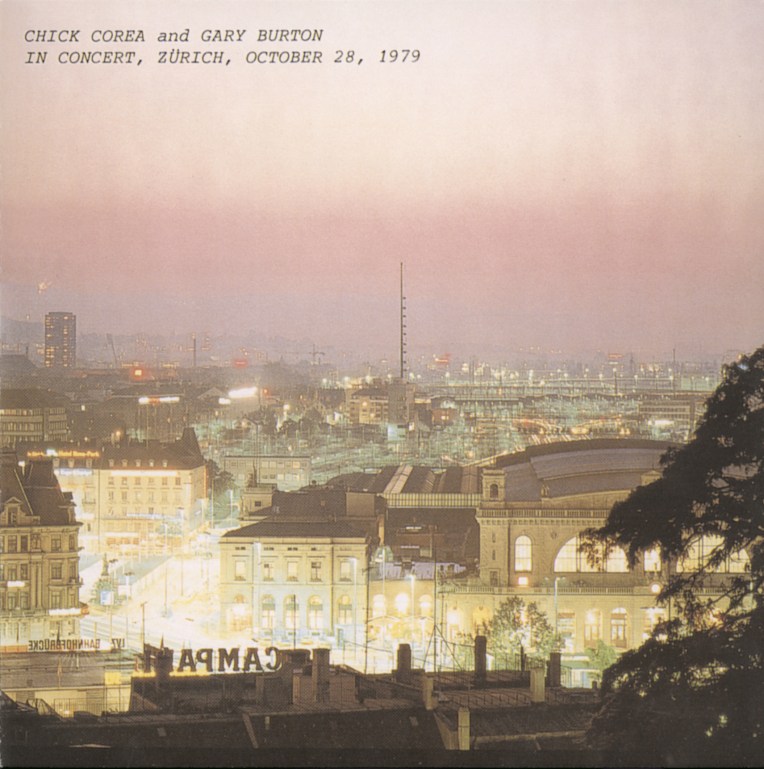
In Concert, Zürich, October 28, 1979 (ECM 1182/83)

Recorded October 28, 1979 at Limmathaus, Zürich
Engineer: Martin Wieland
Produced by Manfred Eicher

The Zürich live album is the clear standout of this collection and a real treasure among many in the ECM catalogue. All the classics are here, gloriously reincarnated for new and veteran listeners alike: a sweeping rendition of “Crystal Silence” flows with the power of a river during spring thaw, “Falling Grace” becomes strangely uplifting, “Song To Gayle” sparkles, and Corea’s improvisational turns during a vivacious “Señor Mouse” have all the makings of a hallmark triumph. These actually outdo themselves in live form, plain and simple. But they are only half the fun. Lest we forget the wealth of other material in the set, the duo delights us with “Bud Powell,” Corea’s pitch-perfect tribute to the bebop pioneer. The man at the piano can’t help but sing along as he negotiates one fluid key change after another. We also get some mesmerizing virtuosity from Burton, which makes us want to join in the applause at home. Another high point is “Endless Trouble, Endless Pleasure” (Swallow), which ends the show with a spicy half-step glory. But the real treasures here are the onetime C-Sides making their ECM digital debut at last. Each gives the respective musician his moment alone. Burton’s tender evocations of the Swallow standards “I’m Your Pal” and “Hullo, Bolinas” flit like a ballerina across the stage, while a lush 15-minute interpretation by Corea of his own “Love Castle” pulls his pianism into utterly new territories.

Live energy brings inexpressible wonder to these pieces. With each listen, they show their colors by an increasingly visible logic, extending solos here and shortening graces there, until the whole picture begins to make intuitive sense.

Once in a great while, there are combinations that simply cannot fail. Chick Corea and Gary Burton embody one of them. Their supporting articulations are sometimes so delicately applied that one cannot help but become an extension of the other. They seem to find in each other a new vision of life, which they bring to every note. They also really know how to introduce a piece. Rather than lead us patronizingly into their sound-world, they drop us directly into its liquid center, so that while coming up for air we begin to understand the music from the inside out. These are two wirewalkers at the height of their creative talents, yet who have since forgone their balance bars in favor of more airborne travels. This is quite simply music for the ages.

<< Pat Metheny: 80/81 (ECM 1180/81)
>> Gary Burton Quartet: Easy As Pie (ECM 1184)
 

Enrico Rava: The Pilgrim And The Stars (1063)

ECM 1063

Enrico Rava
The Pilgrim And The Stars

Enrico Rava trumpet
John Abercrombie guitar
Palle Danielsson bass
Jon Christensen drums
Recorded June 1975 at Tonstudio Bauer, Ludwigsburg
Engineer: Martin Wieland
Produced by Manfred Eicher

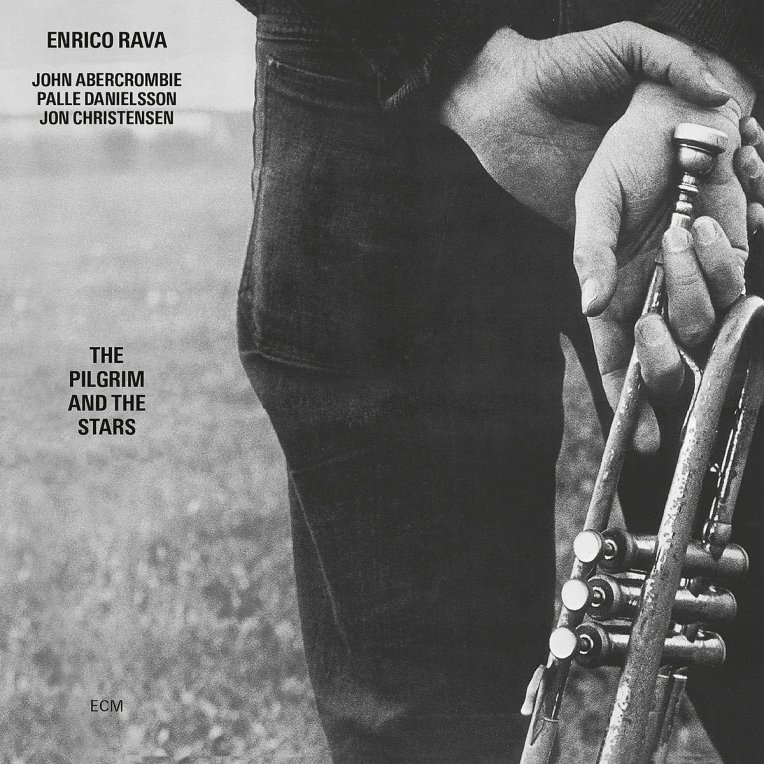
In today’s wealth of commercially visible jazz trumpeters, one pines for vintage brass at the lips of musicians for whom “creativity” is more than just a brand. And while I’m the first to admit to having a soft spot for the likes of Chris Botti, there’s nothing like an Enrico Rava experience to wipe your slate of appreciation clean and start you on a fresh path. From the striking cover to the synergistic musicianship, Rava’s ECM debut is an album to return to time and again. Joined by a dream team of John Abercrombie on guitar, Palle Danielsson on bass, and Jon Christensen on drums, Rava reaches for the sky with this one, and succeeds.

The title track brings the album to life in raspy exhalation. This whisper turns into full-blown speech as Abercrombie takes the rhythmic wheel. He steers us into “Parks,” in which we find Rava at his most incisive. In a lively duet with acoustic guitar, he lays down a smooth melody filled with a nostalgia you never knew you had. This is a fantastic track, and one of Rava’s brightest moments. Next is “Bella,” which lays down a gentle groove before Rava flexes his lungs like wings, setting every note to flight. Christensen brings on the frenzy, to which Rava adds his own, yet with a delicacy that never leaves him. An intense guitar solo of soaring and piercing clarity follows. A rare whoop from Christensen knocks things up a rung or two, and a very present Danielsson cuts to the quick before ending on a glorious reinstatement of the theme from Rava. The lead melody of “Pesce Naufrago” coalesces out of the slow-motion big bangs that birth much of the band’s gravity. “Surprise Hotel” is a wilder affair, with energetic runs all around in a confined space. “By The Sea” offers wonderful reinforcement in the bass as Abercrombie circles overhead with distant cries. We end with “Blancasnow,” in which Rava floats his trumpet in the murky waters of his rhythm section. After a free and easy introduction, he pulls us toward even greater melodic destinations.

What’s amazing about these musicians in that they conduct so much creative electricity from such quiet musical circuits. Rava is, as per usual, variously a raging fire and a delicate flicker, straying as far from the wick as possible while remaining tethered by the thinnest of flames. The band is miked in a nice full spread, drums and trumpet at center, bass in the mid-right channel, and guitar anchored hard left. This leaves plenty of room for us to walk among them and enjoy the sounds as if they were our own.

<< Collin Walcott: Cloud Dance (ECM 1062)
>> Keith Jarrett: The Köln Concert (ECM 1064/65)

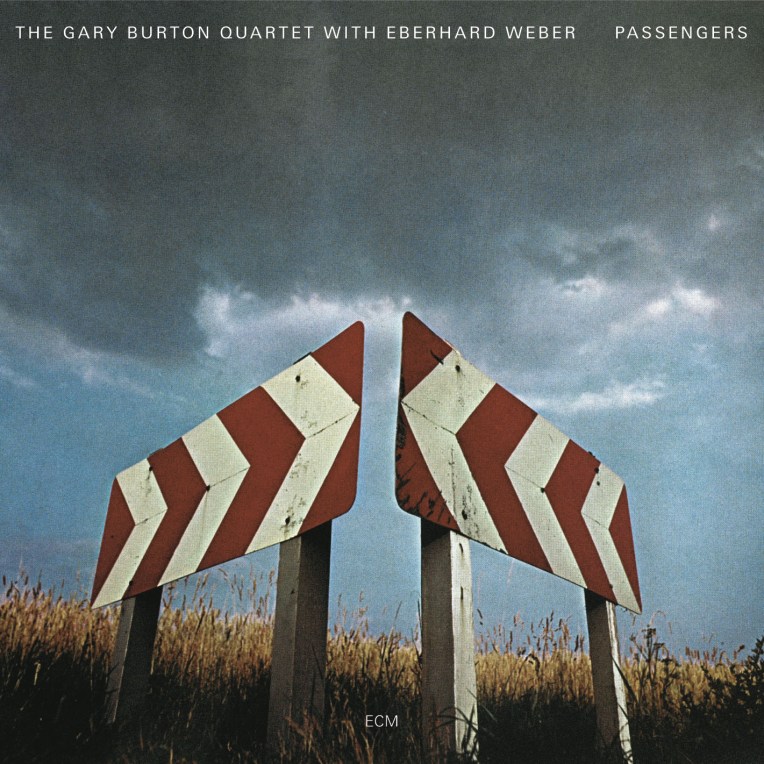
The Gary Burton Quartet with Eberhard Weber: Passengers (ECM 1092)

ECM 1092

The Gary Burton Quartet with Eberhard Weber
Passengers

Gary Burton vibraharp
Pat Metheny guitar
Steve Swallow bass guitar
Dan Gottlieb drums
Eberhard Weber bass
Recorded November 1976 at Talent Studio, Oslo
Engineer: Jan Erik Kongshaug
Produced by Manfred Eicher

Gary Burton’s Passengers has it all: its frontman’s incomparable mallets, Dan Gottlieb keeping the beat, the unmistakable bass of Eberhard Weber paired with the equally unique stylings of Steve Swallow, the fluid fingers of guitarist Pat Metheny (who would soon go on to front his own super group with Weber and Gottlieb), and the all-important bow of ECM’s attentive production. Not enough to whet your appetite? All the more reason to buy it.

Chick Corea’s “Sea Journey” opens with the floating exuberance that Burton carries off like no other. Weber pulls out all the stops here, proving to be perfect complement to Burton’s sound. A stunning piece of work with a heightened groove-oriented trajectory. This is followed by three Metheny compositions. In the subtle ballad “Nacada,” vibes rest on a gentle surface tension of flowing bass, guitar, and brushed drums. “The Whopper” locks into more upbeat strides. Weber’s bass is as bright and attractive as it gets, while Metheny’s solo dances on a pinhead. Listeners will recognize “B & G (Midwestern Nights Dream)” from his seminal Bright Size Life, its fractured rhythms maintained beautifully here. The quiet background supports a glowing solo from Weber, not to mention another from Metheny himself. “Yellow Fields” (Weber) is another exuberant number, and features the album’s most incredible vibe work. The bittersweet farewell of Swallow’s “Claude And Betty” contorts its hands in shadow puppets, backlit as if by a sad and lonesome dream.

Mindfully recorded and expertly executed, the melodies of Passengers come alive with unpretentious joy. The synthesis of players forms a palette in the truest sense, its colors already artfully arranged before they are ever mixed and applied to canvas. An essential addition to any Burton library, and a must-have for any Weber fan looking to complement his brooding, handsome meditations with something more uplifting.

<< Keith Jarrett: Staircase (ECM 1090/91)
>> Jan Garbarek: Dis (ECM 1093)

Kuára (ECM 2116)


Kuára

Markku Ounaskari drums
Samuli Mikkonen piano
Per Jørgensen trumpet, voice
Recorded May 2009

The Republic of Karelia is a pocket of land nestled between Finland and Russia. It was ceded to the Soviet Union via the Moscow Peace Treaty of 1940, resulting in the forced relocation of over 400,000 Karelians—essentially the entire population—into Finland. Since then, Finno-Ugric folksongs have become for them a powerful nostalgic tool, looking back on the homeland while tinged with the grief of inhabiting another. Primary among these is the itkuvirsi, or lament, whereby Karelians are able to bridge past and present, forging new identities in the process. Enter Kuára, an album of kindred spirit that is as much homage to contested borders as it is a look toward a self-determinable future.

Recent ECM listeners may recognize the name of Markku Ounaskari, the Finnish percussionist who, providing nascent but vital details for Sinikka Langeland’s recent Starflowers, so impressed Manfred Eicher that the label’s producer asked him to lead his own project. Drawing on Russian psalms and the folksongs of Finland’s displaced Karelian, Udmurtian, and Vepsian populations, the resulting Kuára is, in Ounaskari’s poetic estimation, “like a journey through the night.” Already widely known in Finnish jazz circles, Ounaskari gained notoriety for his folk-inspired work with the group Piirpauke. Up-and-coming pianist Samuli Mikkonen and Per Jørgensen (a familiar label name through projects with Jon Balke, Michael Mantler, and Miki N’Doye) round out the trio of this intensely focused program. Jørgensen paves a steady avenue through the others’ winding streets, and provides the most halcyon evocations of the album’s source material. Mikkonen would seem the perfect foil in this regard. Once described as “the most Finnish-sounding pianist of his generation,” he clearly recognizes the locality of musical language. A transnational reach has led him from the neutral zones of the Anders Jormin Trio, with whom he regularly plays, to the aleatoric battlegrounds of John Zorn’s formidable Cobra. Says Ounaskari, “Both of us, Samuli and I, are very interested in folk music of the different Finnish related Ugri-cultures and tribes that are living, at the present, in Russian territory,” referring to the many Finnish Karelians who, after perestroika, have reversed their tracks in search of roots.

Karelians share linguistic lineage with Finnish and a valuation of the pagan mysticism that informs their heritage. The latter may have been quelled by Christianization, but many of its practices hold fast. As such, they lend themselves well to the equally mystical art of improvisation, situated as they are among the ghosts of communism. And so, when Eicher suggested including Orthodox Russian psalms as a counterbalance, the idea resonated well with Ounaskari, who is of paternal Russian heritage. It was an opportunity to draw a line of Slavic continuity between the sacred and the secular, enlarging the scope of both in the process.

The group’s acoustic focus is a refreshing shadow in the light of popular electronic augmentations: three generations of musicians coalescing into one poignant sound, a new direction drawn from ruins. The album’s title means “sound” in Udmurtian, and clues us in to its central aesthetic: namely, the word made life. Thus do we get a refracted triptych in the form of three “Introits,” each a strand of connective tissue animating a languidly beating heart. We begin, however, with “Polychronion,” a Slavonic liturgical chant birthed in the piano’s gaping cavity. Mikkonen hits the lowest strings within, reenacting a mythological birth into discernible chords. Brushed drums and soulful trumpet emerge into visibility: a holy figure rising to its feet, every fold of its vestments captured in fluid detail. “Tuuin Tuuin” introduces the album’s first Karelian turn. Its beautifully articulated theme springs from the surrounding waters like a fish in slow motion. Jørgensen wrenches from his instrument a mournful animal cry against a spate of hand percussion, at times doubling the lead piano line with an unsteady, almost mocking keen.

Traditionally, the singer or musician’s take on a Karelian song text has always been more important than the replication of a standard. The music is resuscitated upon the lips of each practitioner, who adds new ideas and adornments. The parallels to jazz are obvious, and make for a smooth transition into the present arrangements. “Aallot” (“Waves”) invokes its eponymous motions with controlled abandon, lifting its voices through the snare’s roiling foam, while the Udmurtian “Soldat Keljangúr” features Jørgensen’s wordless vocalese and skyward cries. Even “Psalm CXXI” which consummates the album’s dip into Orthodoxy, locates itself on land: I will lift up mine eyes unto the hills.

In “Sjuan Mad’” one hears the Jørgensen that has inspired a generation of trumpeters, Nils Petter Molvær not least of all. His popped expulsions of breath are shaped by a gentle mute into an outward spiral of thematic ascendency. More doublings of the piano set aloft the latter into its own gorgeous flights of fancy. It is also a short piece, showing the group at its concentrated best. The final “Sjuan Gúr,” with its funereal drums, sets forth like a vessel into darkening waters. Jørgensen’s ecstatic cries once more cut to the bone, bearing rounded fangs against the exposed nape of lost time. The music breathes with as much inauguration as finality, working its slow passage through the marrow of a lumbering deity, whose footfalls raise mountains.

A smattering of originals rounds out the program. “The Gipsy’s Stone” draws airy pianistic lines between pointillist percussion, while “Mountain Of Sorrow” abides by an altogether different gravity, made all the more palpable for the elusive playing that turns it into focus.

Jazz has always been a music of diaspora and self-preservation. Hence, its passage to the Baltic states, where it has fused into the current project. In this respect, Kuára is the genre at its most contemplative. It is an album as poignant as it is enigmatic, an intimately realized mosaic rendered with due ceremony. For a project grounded in displacement, it comes across as markedly apolitical, a soothing burst of cool air in an otherwise heated world. These are not the “imaginary communities” of postmodernism, but the familiar and the stable topographies of private continents. A recording like this is a sobering reminder that, at some level at least, all music is fusion—be it of the intention of the performer with the location in which she/he is situated; of the blending of disparate styles; or simply of the indeterminacies that any place inculcates upon the music or performance at hand. Despite the arbitrary divisions we human beings impose upon each other and our works in the name of misguided notions of superiority, imperial expansion, and economic ascendancy, we can be sure the music that animates them will always follow less prescriptive paths. To merge onto one of them, we need only slip this disc into our player of choice.

[Author’s note: This review was first published by RootsWorld online magazine, and may be viewed in its original form here, where you can also hear a sample track.]

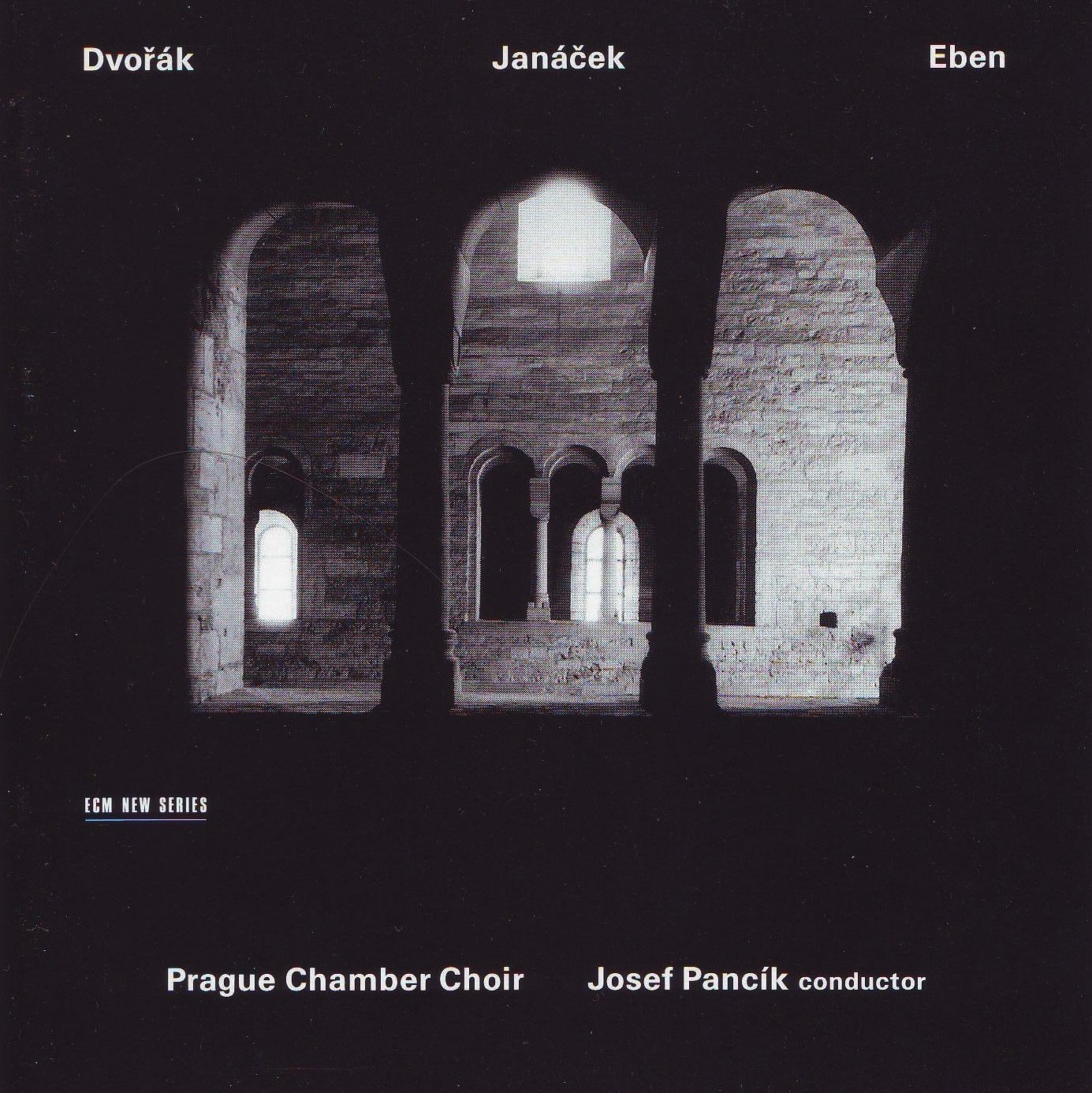
Prague Chamber Choir: Dvořák/Janáček/Eben (ECM New Series 1539)

Prague Chamber Choir
Dvořák/Janáček/Eben

Prague Chamber Choir
Dagmar Masková soprano
Marta Benacková alto
Walter Coppola tenor
Peter Mikulás bass
Lydie Härtlová harp
Josef Ksica organ
Josef Pancík conductor
Recorded November 1993 at Rudofinum/Dvořák Hall, Prague
Engineer: Markus Heiland
Produced by Manfred Eicher

Formed in 1990, and emergent in the newly independent Czech Republic, the Prague Chamber Choir offers in its only ECM appearance this harmonious program of Bohemian church music. In the accompanying liner notes, Antonín Pešek draws our attention to the thriving Catholic pulse beneath what was then a topical spread of patriotic provincialism, and in so doing allows us to contextualize the music as part of an auditory archive. The three works on this program are like a spectrum of light, gradating from ultraviolet to infrared in the space of an hour.

Antonín Dvořák may not have been primarily known as a choral crafter, but his “honorary” Mass in D major, op. 86 (1887), through which the composer pays homage to the ruins of the past without succumbing to the “progressive” tendencies of their rebuilding, has an allure all its own. The Kyrie is a lovely opening, each vocal line clearly articulated in a loose macramé of faith. Glittering moments from the tenors crash like the crest of a wave over a sandy organ. Four soloists arise from this dense tide, of which the soprano is arrestingly emotive. The Gloria provides an exuberant change of pace, again set aloft by a gorgeous tenor section. The 10-minute Credo, on its own a masterful composition, is perhaps a touch saccharine and longwinded, even if it makes the Sanctus all the more jewel-like for its brevity. The latter’s exuberant opening, transcendent organ solo, and mounting volume coalesce like an unforgettable memory. The famous, often singled-out Agnus Dei remains the high point of the piece, a lullaby in spiritual clothing.

Leoš Janáček’s humble offering is Our Father (1901), a sensitively set Creed with an unmistakable harp ostinato and lush organ writing. The insightful tenor solos stick to the mind like glue, bonding love and awe through a single human voice. Says Pešek of this piece: “The calls for bread reflect the feelings of the defiant plebian, who does not demand the ‘consecrated bread of tradition,’ but the daily bread of true humanity.” And indeed, we find in it as much secular as spiritual solidarity. Janáček’s protean understanding of the human voice was entirely his own, and comes through in the physical shape in which every note seems to be described. Arousing in its flavors and unique in its textures, the shattering Amen at the end rings in the head and in the heart long after its resonance fades.

The Prague Te Deum (1989) of Petr Eben is a fitting cap to this fountain of vocal wisdom. Eben’s ode to renewal after oppression has a somewhat antiphonal structure and pays strict attention to the rhythms of its text. Like the sociopolitical about-face that undergirds its creation, the music vacillates between dissonance and harmony, if not embodies both simultaneously, as it basks in the glow of an uncertain future. The upward-looking ending revels in its own sound in the face of a God whose silence is music.

This is a proclamatory album representative of a significant trajectory in European history, but one often obscured by ECM New Series heavyweights. The music is cumulative, the performances committed, and the sound crystalline. A worthy addition to any choral enthusiast’s collection.

<< Azimuth: “How it was then…never again” (ECM 1538)
>> Heinz Holliger: Beiseit/Alb-Chehr (ECM 1540 NS)

Bach: Six Partitas – Schiff (ECM New Series 2001/02)


Johann Sebastian Bach
Six Partitas

András Schiff piano
Concert recording, September 21, 2007, Historischer Reitstadel, Neumarkt
Engineer: Stephan Schellmann
Produced by Manfred Eicher

After completing his highly praised Beethoven cycle, pianist András Schiff returns to Bach in this spot-on live recording of the Six Partitas. Though published as his Opus 1, the Partitas were Bach’s last compositions for keyboard. Both reasons make it a keystone in the mythical Bach pantheon. Although “partita” is essentially a euphemism for “suite,” in Bach’s hands the form was opened to a freer and more complex sense of infrastructure and performative demands.

The introductions show both composer and performer at their best. The Praeambulum of Partita V is a tour de force of rhythmic urgency and dynamic control. The Fantasia of Partita III is another astounding inauguration, its resplendence cluing us into the genesis of the music to follow. The meditative Praeludium of Partita I contrasts sublimely with the Sinfonia of Partita II, the latter a stately lead-in to the courtliest of the Partitas. The accompanying Allemandes overwhelm with their sparks, conflagrating our souls into rapt attention. The pacing throughout is nothing short of extraordinary. Schiff’s sprightly Correntes glisten like rain-drenched leaves, tempering their surrounding flames with a quiet power.

Schiff truly excels in his ornaments. Take, for example, the heart-stopping trills of the Partita III Tempo di Minuetta, his detailed graces in the Passepied of the same, and the half-step motions of his Partita I Gigue. The Partita II Gigue provides some especially enlivening moments in which the right hand goes high and left hand carries the rhythm downward. Such motions broaden the expanse of the music into epic territories, which is all the more amazing for music that is so closely confined to the arm span of a single performer. Not to be outdone by his own passionate spirit, Schiff finesses his way through the Sarabandes of Partitas I and IV with the gentle persuasion of an aristocrat stripped to the naked heart. Also of note are the flowing syncopations of the Partita II Rondeau, played here to perfection in one of the performance’s most glorious turns. The following Capriccio pirouettes its way through a deft and vivacious choreography.

Schiff’s ordering—V, III, I, II, IV, VI—is conscious, moving in ascending keys from G major to E minor. It also carries us into the most heartfelt pieces therein. Partita VI is the castle of these sprawling grounds. Its lofty spaces give ample breathing room for the loveliest Sarabande of the collection, not to mention a strikingly forward-looking melody. Moving with a delicate ease and supreme comfort, it primes us for the epic Fugue through which all comes to a rousing close.

I have no interest in staking a claim in the already bristling ground of musical criticism as to whether Schiff is the better interpreter. All this humble admirer knows is that, like the other superstars to which one might compare him, he is unafraid to show us how he “feels” Bach. It’s not as if he accesses some pure core of the music that others do not, for he plays it as if it were his own. Whether or not one agrees with his stylistic choices, his commitment to them is undeniable. And perhaps said commitment is a more profound measure of the performer. If we consider some of the greats in this regard—Glenn Gould, Rosalyn Tureck, Sviatoslav Richter, and Tatiana Nikolayeva—we find in each a style without regret, an allegiance to a particular historical moment (or possible transcendence thereof, in the case of Gould), and a total lack of interest in relativity. Each performance is not an ingot to be judged against the quality and density of others, but is a reflection of the musician’s own creative makeup that is beyond petty comparison. Rather than look at how and why interpretations differ, as listeners we can only find the differences they bring out in ourselves. And are we not also contributing to the uniqueness of the performance? For the same music can change with our moods and circumstances. And so, when we approach the Partitas, perhaps it benefits the music more to consider what we have to bring to the experience that no other listeners can bring, just as we might expect the same for the musician performing it. For me, the strength of Schiff’s playing is that it duly reminds us of our role on the other side of the piano, foregrounding our engagement, which is the music’s lifeblood. We see this in Schiff’s Beethoven cycle, his Schumann, and his Goldberg Variations. And now, with the Partitas we are given a greater responsibility to provide that “live” feeling ourselves in whatever private chambers we inhabit, or with whomever we might share it. This music is always there for us.

Like Bach’s other masterworks for solo instruments, the Partitas have a distinctive aura of completeness about them, which is to say they feel entirely self-satisfied. And it is this satisfaction Schiff brings to his playing: not a sign of arrogance, of professed authority, nor even of excellent musicianship, but rather the consummation that the music invites in the performing and in the listening. This is the genius of Bach: not the music itself, but in knowing our ability to hear in it forgotten pieces of ourselves. It may not be universal music, but so help me if it isn’t universally musical.

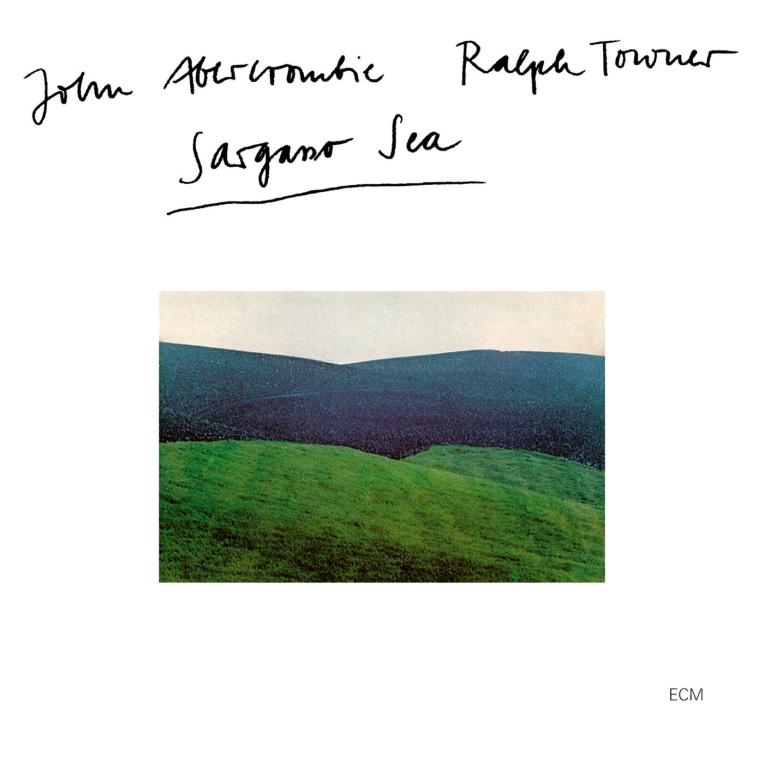
John Abercrombie/Ralph Towner: Sargasso Sea (ECM 1080)

ECM 1080

John Abercrombie
Ralph Towner
Sargasso Sea

John Abercrombie electric and acoustic guitars
Ralph Towner 12-string and classical guitars, piano
Recorded May, 1976 at Talent Studio, Oslo
Engineer: Jan Erik Kongshaug
Produced by Manfred Eicher

It was often raining when I woke during the night, a light capricious shower, dancing playful rain, or hushed muted, growing louder, more persistent, more powerful, an inexorable sound. But always music, a music I had never heard before.
–Jean Rhys, Wide Sargasso Sea

Given the contrasting but strikingly compatible talents of John Abercrombie and Ralph Towner, this album was bound to happen sooner or later. The aptly titled “Fable” best describes what these two musicians achieve together, for theirs is a tale that sounds as if it were written long ago, coalescing out of life’s improvisations into a memorable narrative. Its pairing of Towner’s 12-string with Abercrombie’s electric represents the duo in its most melodically satisfying comfort zone. We get more of the same in the title track, an uncertain travail with hints of soliloquies caressing our ears from either side, and in the relatively explosive moments of “Elbow Room.” Abercrombie opts for an echo effect here, the pulse of which dictates the piece’s rhythmic trajectory. And while I do think the effect weakens the track as its pathos becomes clearer, Towner compensates its contrivance with some flamenco-like body taps. “Staircase” features classical guitar and Abercrombie’s more directly amplified electric in the album’s most carefully realized blend of sound and circumstance. Towner then leaps to his 12-string amid Abercrombie’s own ascendant doodling. A few all-acoustic tracks enliven the mix, of which “Romantic Descension” is the loveliest. The final track, “Parasol,” is a triangular affair between 12-string, electric guitar, and Towner’s overdubbed piano.

Sargasso Sea is an enchanting reverie that has stood the test of time, and with an attractive patina to show for it. Like a kiss in deepening twilight, it loses its physical shape and becomes pure sensation, lost in the placation of a distant slumber.

<< Jack DeJohnette: Pictures (ECM 1079)
>> Art Lande: Rubisa Patrol (ECM 1081)

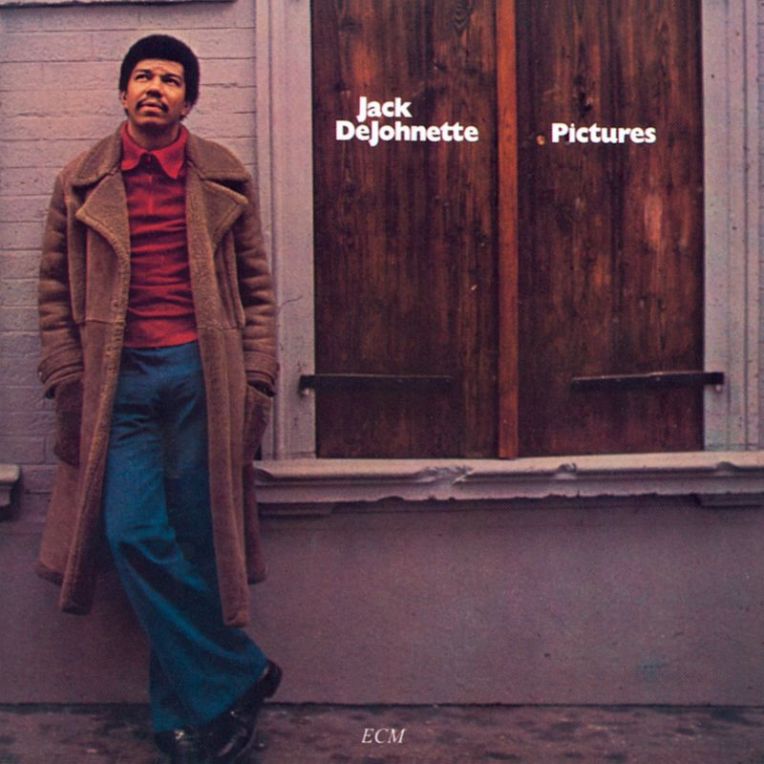
Jack DeJohnette: Pictures (ECM 1079)

ECM 1079

Jack DeJohnette
Pictures

Jack DeJohnette drums, piano, organ
John Abercrombie electric and acoustic guitars
Recorded February, 1976 at Talent Studio, Oslo
Engineer: Jan Erik Kongshaug
Produced by Manfred Eicher

Hot on the heels of his stellar Directions debut, drummer Jack DeJohnette settled down in the studio for this cool duo album with guitarist John Abercrombie. Less a side project than a chance to open the mind to more introverted images, Pictures is the spark behind the fire.

The steady beats of “Picture 1” grow in scope with every new added detour. What at first seems a drumming exercise quickly turns haunting as an organ rises up from the earthen tide. After the ode to toms and cymbals that is “Picture 2,” the following three Pictures feature Abercrombie’s improvisatory accents, which range from meandering to cathartic. But the real pièce de résistance is “Picture 6.” As its temperate piano introduction works its way into a swell of gongs, we begin to see the melody behind the fire. It is a Keith Jarrett moment if there ever was one, the Ruta and Daitya that could have been.

Like any good picture, DeJohnette’s curious little project has everything it needs in frame. Nothing extraneous; stripped-down music-making for its own sake, offered up to the listener with humility and respect. This is not an album meant to titillate or to excite or to make any sweeping statements on the nature of its own becoming. It professes to be nothing beyond the space implied, never the sum but the equation laid bare. Get this album for its stunning closer, and open yourself to its other intimacies. Pictures gives us unique insight into the craft of a musician more widely known for his equally arousing timing and delivery.

<< Enrico Rava: The Plot (ECM 1078)
>> John Abercrombie/Ralph Towner: Sargasso Sea (ECM 1080)

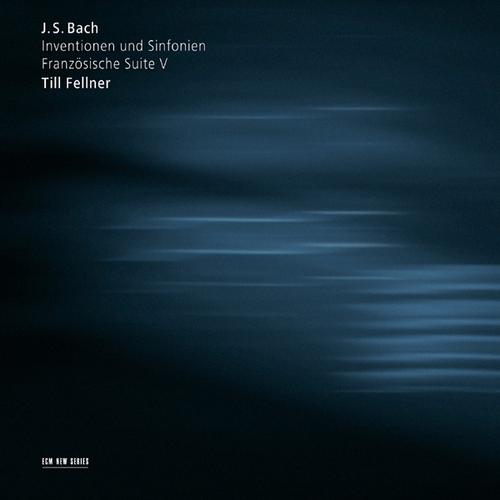
Bach: Inventionen und Sinfonien/Französische Suite V – Fellner (ECM New Series 2043)


Johann Sebastian Bach
Inventionen und Sinfonien/Französische Suite V

Till Fellner piano
Recorded July 2007, Mozartsaal, Wiener Konzerthaus
Engineer: Markus Heiland
Produced by Manfred Eicher

What is a “Bach interpreter”? Is it someone who draws from creative reserves to put as unique a spin as possible on much-performed repertoire? Must s/he be selfless and allow the music to “speak for itself”? After a four-year wait, Austrian pianist Till Fellner follows up his humble ECM debut recording of Bach’s Well-Tempered Clavier with the often overshadowed Two and Three Part Inventions, through which he answers these questions with one of his own: However Bach is painted, what is the image being maintained?

From note one, this is a clearer, more present album than Fellner’s somewhat murkier (and no less affecting) WTC. He holds up every piece to his jeweler’s eye, that we might better see its overall prismatic nature. His rhythms are protean and proper, giving the faster movements just enough pep to gain savory traction while lacing the slower ones with a luxuriant sweetness. As with his last studio effort, Fellner shows a profound ability to draw out the denser implications of the latter (particularly Inventions No. 6 and No. 7; Sinfonias No. 2, No. 6, and No. 7). The more rapid flights are so clearly separated in his fingers that one never gets lost in their overload of grace. From the gravid yet fluid treads of Inventions No. 4 and No. 8 to the trill-infused menagerie of No. 10 and the invigorating No. 13, each instructive development unfolds a new page in this evolving book. Two Sinfonias—No. 11 and No. 15—grow especially more complex with each new listen. Their aquatic transparency and sweeping runs bow like a servant at court to a faceless monarch of sound. Fellner caps the program with a spacious rendition of Bach’s French Suite No. 5. Showing again his supreme pacing in the opening Allemande, he continues through a must-stop-whatever-you’re-doingly gorgeous Sarabande on his way to a winged Gigue.

Intended as the Inventions were as mere didactic exercises, their lines are unmitigated and succinct. Yet for all their brevity, a macrocosm of chords swings between its molecular monkey bars. Fellner plays utterly pianistically, and in doing so makes no qualms about the newness his style can bring. The variable volume of the instrument is taken full advantage of by Fellner, who allows choice notes to ring out and descend. In doing so, he manages to pull off an astounding feat: reinvigorating Bach with utter complacency. Says Fellner of these pieces: “Literally every note counts.” But when he plays, it all comes down to one.