Muthspiel/Colley/Blade: Tokyo (ECM 2857)

Wolfgang Muthspiel
Scott Colley
Brian Blade
Tokyo

Wolfgang Muthspiel guitars
Scott Colley double bass
Brian Blade drums
Recorded October 2024 at Studio Dede, Tokyo
Engineer: Akihito Yoshikawa
Assistant engineers: Ryuto Suzuki and Yo Inoue
Mixing: Michael Hinreiner (engineer), Manfred Eicher, and Wolfgang Muthspiel
Bavaria Musikstudios, Munich
Cover photo: Juan Hitters
Album produced by Manfred Eicher
Release date: September 26, 2025

For its third studio outing, the trio of guitarist Wolfgang Muthspiel, bassist Scott Colley, and drummer Brian Blade lays down its most complex and adventurous session yet, fittingly recorded amid the electric calm of its titular city. The band achieves simpatico liftoff from the start in its swinging take on Keith Jarrett’s “Lisbon Stomp.” With a forthright delicacy that is hard to come by these days, they make the music come alive with fluid precision, every note free yet placed right where it needs to be. The plane lands on a more unsettled note with Paul Motian’s “Abacus,” for which Muthspiel slips into echoing distortions for a crunchier sound. Blade taps directly into Motian’s painterly attention to detail, his wider palette eliciting a tactile commentary, while Colley’s solo unpacks every shadow he casts.

Between these two telephone poles, the filaments of Muthspiel’s originals stretch, each charged with varying intensities of voltage. The moods are as distinct as the writing is strong. From the lyrical balladry of “Pradela” to the tongue-in-cheek angularity of “Weill You Wait,” he evokes a spectrum’s worth of times, places, and moods. The latter piece, with its oddly captivating contours, shows just how deeply the guitarist is willing to dive to find his voice.

His wingspan feels broadest when the melody becomes a form of searching, reaching toward something far beyond what the eye can see. This is most evident in “Flight,” which turns the proverbial landscape below into a resonating instrument. Its aerodynamic theme rides one thermal to the next without so much as a wing flap. The blend of acoustic and electric signatures gives the track a rare three-dimensionality.

At just two and a half minutes, “Roll” is the album’s briefest cut but also among its liveliest. With a nod to Weather Report, it radiates that same exuberant sense of living in (and for) the moment. Like the album as a whole, it foregrounds Muthspiel’s talents without stepping on the toes of his bandmates. Colley and Blade are not accompanists but equal protagonists in a story that emerges chapter by chapter into a shared narrative.

“Christa’s Dream” lingers as the most haunting turn, full of transcendence and half-existence, visible yet intangible, like a ghost in the light of day. It gives way to “Diminished and Augmented,” wherein oblique acoustic stylings blossom with playful grace. There’s a hint of Ralph Towner in its balance of leaping precision and sliding ease.

“Traversia” ventures farthest into unconventional harmonies, taking cues from Messiaen’s bold colors while achieving near-Renaissance purity of tone through the use of a capo. Originally written on a children’s guitar, it retains an innocence even as it matures in real time, the arco bass weaving a thread of quiet majesty through it all.

The folk-inspired “Strumming” pays deference to Bob Dylan and Leonard Cohen, refracted through a seamless idiom. Muthspiel’s ember-infused guitar rides atop Blade’s locomotive brushes, creating a boundless sense of space where synthetic and human energies meet. It’s a song of rudimentary joy and quiet surrender, a reminder that sometimes the simplest gestures have the deepest resonance.

In the end, Tokyo feels less like a document and more like a meditation in motion of three travelers translating memories into sound. What Muthspiel, Colley, and Blade achieve here is an equilibrium between structure and spirit. It is jazz as weather: unpredictable, fleeting yet timeless.

Dobrinka Tabakova: Sun Triptych (ECM New Series 2670)

Dobrinka Tabakova
Sun Triptych

Maxim Rysanov viola
Dasol Kim 
piano
Roman Mints 
violin, hurdy-gurdy
Kristina Blaumane 
violoncello
BBC Concert Orchestra
Dobrinka Tabakova
 conductor
Fantasy Homage to SchubertOrganum LightSun Triptych
Recorded July 2021 at Watford Colosseum
Engineer: Neil Varley
Assistant engineer: Joe Yon
Whispered LullabySuite in Jazz StyleSpinning a Yarn
Recorded August 2020 at Meistersaal, Berlin
Engineer: Rainer Maillard
Mixed January 2025 by Manfred Eicher, Dobrinka Tabakova, and Michael Hinreiner (engineer) at Bavaria Musikstudios München
Cover: Fidel Sclavo
Album produced by Manfred Eicher
Release date: September 26, 2025

British-Bulgarian composer Dobrinka Tabakova returns to ECM with her second full program, following String Paths. That 2013 debut left an indelible mark, establishing her voice among many new listeners as one of immense humility intertwined with fortitude. Selections from the album were even included in the films Adieu au langage (Goodbye to Language) and Le livred’image (The Image Book), both directed by longtime ECM affiliate Jean-Luc Godard. But beyond these connections, it was clear that Tabakova was creating a world unto itself, a parallel dimension of sorts where chance operations and heartfelt intentions danced with graceful strength. All of which leaves someone in my position with the not-so-graceful task of trying to capture the breadth of her sound in the confines of the screen you are reading now. Not coincidentally, she begins her liner note for the present recording as follows: “Writing music and writing about music are distant cousins at best.” And yet, her melodies have a way of bridging the gulf between them with purposeful unfolding.

Violist Maxim Rysanov and pianist Dasol Kim open with two distinct chamber pieces. From the indrawn breath of Whispered Lullaby (2005), the viola opens its octave as a pathway into the piano’s flowering spirit. What starts as a whisper, however, develops into a robust expression of lucidity. Having been originally written for a children’s opera titled Midsummer Magic, it takes on that feeling of an incantation—a clue, perhaps, into its evocative intensity. Suite in Jazz Style (2009) represents the third suite written for Rysanov, following Pirin and Suite in Old Style, the latter of which appeared on String Paths. It’s also a natural homecoming, if you will, for a composer who started her journey as a child improvising on the piano. Its tripartite structure begins with “Talk,” a prime showcase for Rysanov’s mastery that proves him to be one of Tabakova’s most fervent interpreters, having known her since their shared time as students of the Guildhall School. There is a delightful freedom to the interpretation, which, despite its precision (if not because of it), makes the proceedings feel spontaneous. In the interplay between him and Kim, listening and speaking become one in the same.

After this upbeat introduction, “Nocturnal” spreads the charcoal dust of its balladry in thicker strokes. There is, nevertheless, a continuation of that same playfulness, a wry smile in the viola that is self-aware, if now a touch mournful. As the bow travels between sul ponticello and sul tasto gradations, it opens itself to fresh meanings in the piano’s embrace. Kim is the ever-attentive partner, rendering context as faithfully as a saxophonist wandering the streets of a rainy city after a gig. And in “Dance,” which eases into eartshot with percussive tapping, the impulse to move takes on a desire of its own to love and be loved. There is a vibrant microtonal approach here that feels sinewy and thoroughly connected, stepping into folkish territory one moment as easily as it leaps into modernism the next. Rysanov navigates these gymnastics with a rooted sense of architecture, swaying with every tectonic movement to protect the structural integrity at hand.

The Fantasy Homage to Schubert (2005) for strings presents a recontextualization of Schubert’s Fantasy in C major for violin and piano, transfigured and otherworldly. The metaphor is not arbitrarily chosen, either. One could easily imagine it as a lost soundtrack selection from 2001: A Space Odyssey, each shift of light and celestial body revealing both the alien and the familiar. Tempting as it is, I hesitate to call this “haunting,” as this would imply there was someone around to be haunted. Rather, it feels disembodied, having nowhere to go but outward, forever echoing into the depths of the universe. And yet, somehow, we are privy to its secrets. The appearance of violin and cello (soloists Nathaiel Anderson-Frank and Benjamin Hughes, respectively) is a slow-motion transmission from an extinct Earth finding its way to us in hypersleep.

Organum Light (2000), also for strings, places Tabakova at the helm of the BBC Concert Orchestra. Originally for five singers, it takes its inspiration from the viol consort pieces of Gibbons and Purcell. Despite a deep, rich pulse, sliding harmonics in the strings open our hearts to its truths.

Spinning a Yarn (2011) for solo violin and hurdy-gurdy features its dedicatee, Roman Mints, on both instruments. A ligament between past and future, it leaves us to walk the present on the resulting tightrope. The playful unpredictability of the hurdy-gurdy provides a tactile foundation for the violin’s storytelling. All of it feels incidental to some scene from centuries ago brought to life in moving pictures. One can almost see the fields being planted, the animals being kept, the children being raised. It also has a rocking motion that makes its consonances sing all the more sweetly.

Last is the album’s title piece for violin, violoncello and string orchestra. Composed in 2007, it first took life as “Dawn,” which Tabakova wrote for the 10th anniversary of Kremerata Baltica and in celebration of Gidon Kremer’s 60th birthday, later adding two further movements. Mints is retained here alongside cellist Kristina Blaumane, fronting the BBC Concert Orchestra under the composer’s hand. The sheer depth of sonority is wondrous, at once frightening and comforting. “Day” is an arpeggiated crystal of which each facet reveals a slightly different perspective. A Philip Glass-like architecture opens itself to adventurous harmonies, ending in a hush that slides without pause into “Dusk.” Here, the mood is more meditative, stretched to reveal the spaces in between the notes. Even in slumber, it knows the sun will return to give life once again, even if there is no one around to enjoy it.

At the end of her liner note, Tabakova writes: “I’d like to think that in the silence that follows music, there may be a fleeting sense that the internal world has spoken – not in certainty, but in presence, however fragile or incomplete.” And if there is anything to be found in the silence that follows this album, it is surely the need to fill it once again with what we have just heard, lest the linearity of time remind us that, one day, we will all stop singing.

John Taylor: Tramonto (ECM 2544)

John Taylor
Tramonto

John Taylor piano
Marc Johnson double bass
Joey Baron drums
Concert recording, January 2002
CBSO Centre, Birmingham
Engineer: Curtis Schwartz
Cover photo: Jean-Guy Lathuilière
An ECM Production
Release date: September 19, 2025

As a dedicated ECM listener, few things excite me as deeply as seeing a neglected catalog number filled (in this case, 2544) and the unvaulting of an archival recording from a musician no longer with us. To have both in one release is a cause for rejoicing. 

Pianist John Taylor (1942-2015) has a storied history on ECM, having made his label debut on 1977’s Azimuth with Norma Winstone and Kenny Wheeler, and since appearing on projects with John Surman, Peter Erskine, and Jan Garbarek, among others. The present recording, captured live in January of 2002 at the CBSO Centre in Birmingham during a Contemporary Music Network Tour, predates the classic Rosslyn with the same trio by only a few months. In fact, “Between Moons” is shared between the two. The bandleader’s ballad walks amiably from shadow to streetlight, letting its thoughts wander as they will to places and people yearned for. With a tenderness only visible behind closed eyes, it slides into delicate propulsions without a hint of force.

Yet it’s in “Pure and Simple,” another Taylor original, where the concert begins by throwing us into the deep end. The title is an ironic one, as there’s nothing pure and simple about it. This chameleonic tune changes colors and faces at the drop of a hat, dancing its way through a gallery of scenes, influences, and moods. The interplay is cosmically telepathic, treating every shift as a stage of development in an organism that still feels like it’s growing all these years later. Johnson manages to both stay within the lines and leap beyond them with great joy, while Baron anticipates every move with fluid precision.

Steve Swallow’s “Up Too Late” is the set’s juicy center. An epic romp through boppish territory, it finds Taylor exuberantly balancing play and rigor. Despite the robustness of its dramaturgy, there’s a masterful restraint that holds its own in the first act before the keyboard unleashes a deluge of liberation. This inspires Baron to unpack his snare like a bag of rattlesnake eggs as Taylor defenestrates his allegiance to form and Johnson sings through his arco vibrato.

The title track by Ralph Towner, first heard with its composer and Gary Peacock on 1994’s Oracle, brings us back to center with Johnson plucking by his lonesome before Taylor emotes his way into frame. The resulting carpet is unfurled one careful turn at a time, a plush and forgiving surface on which to travel toward the 15-minute juggernaut that is Taylor’s “Ambleside.” Opening with finger-dampened strings and percussive tapping, it courts us with understated allure before the theme introduces itself forthrightly. The resulting groove inspires playful turns from all concerned. Baron is on point with his hand drumming, leading the trio into a most delicate and ethereal finish.

Fans of Taylor shouldn’t even hesitate to make this album a part of their collection.

Arvo Pärt: And I heard a voice (ECM New Series 2780)

Arvo Pärt
And I heard a voice

Vox Clamantis
Jaan-Eik Tulve
 conductor
Recorded 2021/22
at Haapsalu Cathedral, Estonia
Engineer: Margo Kõlar
Cover: Fidel Sclavo
Produced by Manfred Eicher
Release date: September 5, 2025

For we [are] strangers before thee, and sojourners, as [were] all our fathers: our days on the earth [are] as a shadow, and [there is] none abiding.
–1 Chronicles 29:15

Building on more than 25 years of working alongside Arvo Pärt (whose relationship with producer Manfred Eicher spans nearly twice that length), Vox Clamantis and conductor Jaan-Eik Tulve present a new recording of choral works drawn from sacred texts. Their last recording, The Deer’s Cry, was a watershed moment in the Estonian composer’s discography, as it simultaneously narrowed the frame and opened up wider possibilities of interpretation.

Although the program is varied in direction, it is wholly centered around a theme of humility, and nowhere more so than in the opening Nunc dimittis (2001). Its setting of Luke 2:29-32 tells the story of Simeon, who holds the baby Jesus in his arms, knowing that God’s promise to see Christ revealed before his death has been fulfilled. What begins as an intimate supplication, however, turns into a vast theological chordscape of meditations on the openness of God’s grace freely given to all. What is so striking about the voices is not only the shapes through which Pärt guides them in the score but also the depth of power in their fragility. When alone, they waver ever so slightly; when aligned with others, they fix their gazes heavenward. 

O Holy Father Nicholas (2021), taken from the Orthodox Prayer Book, was written for the opening of St. Nicholas Greek Orthodox Church and National Shrine at Ground Zero in New York City. Like the Bible itself, its covers grow worn with time; words wear off from handling yet remain unchanged, living and without contradiction. In seeking intercession, the choir allows the light of forgiveness to shine upon human depravity. The singing walks two distinct paths, each passing through like a pilgrim to destinations promised yet unseen. Such tensions reveal the shape of our sin, beautiful from a distance but gnarled and festering at close inspection. This contrast is a sobering one that places life at the center of an infinitely complex structure, of which belief lays the cornerstones.

Each of the Sieben Magnificat-Antiphonen (1988), recently heard arranged for strings on Tractus, speaks to a different manifestation of Christ. From the tender “O Weisheit” (O Wisdom) to the highs of “O Schlüssel Davids” (O Key of David), a full range of vocal and incarnational possibilities is examined through the lens of sound. Buried among them is “O König aller Volker” (O King of All the People), in which rhythmic circles reveal caesurae for glory to slip through like a quiet legion of angels. The stepwise movements that characterized the Nunc dimittis are to be found here in denser but no less translucent configurations.

Für Jan van Eyck (2019) is a rendering of the liturgical Agnus Dei (Lamb of God) based on the same section of the Berliner Messe and written for the restoration of the altarpiece of the van Eyck brothers’ Adoration of the Mystic Lamb, which was reopened in the Ghent Cathedral. Accompanied by Ene Salumäe on organ, it allows us a spell of awe before the magnitude of Christ’s sacrifice. So begins a sequence of shorter yet no less rich works that continues with Kleine Litanei (2015), which pays respect to Irish Benedictine monk, theologian, and philosopher St. Virgil (c. 700-784). Its fragments of traditional prayers shift between harmony and dissonance, evoking the tension of seeking spiritual comfort in a secular world. Last is the album’s title composition, And I heard a voice… (2017). It is, so far, the only Scripture that Pärt has set in his mother tongue. Based on Revelation 14:13, it concludes appropriately on an eschatological note, where the promise of eternal rest—a life without pain and suffering—is offered amid the wrath of the end times, leaving us with a most undefiled sense of hope.

Faith is not determined by the strength of one’s convictions but rather by the truth and integrity of what it worships. We can assert all the faith in the world in thin ice, but it will inevitably crumble beneath our feet. By the same token, we can have little faith in thick ice, and it will hold as we make our way safely across. Much of that truth comes alive in this music. As Christ says in Luke 17:6, “If ye had faith as a grain of mustard seed, ye might say unto this sycamine tree, Be thou plucked up by the root, and be thou planted in the sea; and it should obey you.” Let these choral works each be a mustard seed waiting to be watered by the listener’s tender regard.

Rolf Lislevand: Libro primo (ECM New Series 2848)

Rolf Lislevand
Libro primo

Rolf Lislevand archlute, chitarrone
Recorded 2022-23
at Moosestudios, Evje, Norway
by Rolf Lislevand
Mixed October 2024
by Manfred Eicher, Rolf Lislevand, and Michael Hinreiner (engineer)
at Bavaria Musikstudios
Cover photo: Fidel Sclavo
Produced by Manfred Eicher and Rolf Lislevand
Release date: August 29, 2025

Nearly a decade after his last appearance on ECM, early music specialist Rolf Lislevand returns to the New Series with another solo program, shifting focus now from the court of Louis XIV to 17th-century Italy. The album’s title is a nod to Il libro primo, a musician or writer’s first volume of works that, as Lislevand notes in the album’s booklet, “can often hold the most inspired and radical creations of an artist.” Like the more formalized Opus primum, it carries a certain creative charge, affording listeners a glimpse into the artist’s most foundational thoughts in a realm of lively experimentation and recalibration of existing rules.

It’s also an exciting realm to explore for proving that the lutenist’s repertoire is far more vast and varied than the fairweather listener may mistake it to be. Take, for example, the program’s two opening works by Johann Hieronymus Kapsberger (c. 1580-1651) and Giovanni Paolo Foscarini (c. 1600-1647). Whereas the former’s Toccata terza greets the dawn like eyelashes fluttering into wakefulness, the latter’s Tasteggiata is its nocturnal other, revealing a strikingly modern atmosphere that Lislevand likens to the French impressionists and even to Carla Bley. Neither characterization is misplaced, given the improvisational elements incorporated into the present renderings, which allow for something ethereally raw to spring forth.

And what of the fantastical arpeggios that open Kapsberger’s Toccata sesta, added by Lislevand and seemingly drawn from the same well? In them is the promise of life and love, all unraveled with a meticulous sort of freedom. The mid-tempo feel of Kapsberger’s Toccata quinta strikes that same balance of flourishing and nourishing, never letting go of the Baroque’s architectural sensibilities.

A highlight is the Corrente con le sue spezzate of Bernardo Gianoncelli (d. c. 1650). Despite being the latest work on the program in terms of publication, dating to the end of his life, it is a veritable flower of a tune. With a clear bass line as pistil and sparkling ornamentations as petals, it sways to the wind of Lislevand’s organic touch. It also epitomizes the nuove musiche approach of the times, which went against the polyphonic grain of the Renaissance by favoring deeper rhythmic interplays through which staid motifs were recontextualized. One might liken such a movement to Hollywood’s propensity to remake its own cultural products, an impulse that (profit motives aside) points to the seemingly universal need to repackage the past in the aesthetics of the new so that audiences can connect to the same emotional content on more immediately relatable terms. 

Thoughtful inclusions are to be found in two Recercadas by Diego Ortiz (c. 1510-1576). Despite their spatial and temporal differences, Lislevand places Ortiz and Kapsberger on the same shelf for their syncopations and expressive colorations. Each spins increasingly complex relationships from deceptively simple beginnings, growing fractally with every reiteration.

Yet the pinnacle for me is Lislevand’s original Passacaglia al modo mio, which is at once a distillation and loving expansion of the passacaglia form. It combines many of the elements found in its surroundings, including a robust “left hand” in the bass and a lithe “right hand” in the overlying melody. It also changes faces multiple times from start to finish, its improvisational layers paying homage to Barbara Strozzi, Bach, Beethoven, and Keith Jarrett. All the while, it maintains a haunting sense of familiarity, especially in the concluding progression, which invites us into its circularity like a child comforted by a mother’s embrace.

Special mention must be made of the recording, captured in a barn in northern Norway by Lislevand himself, engineered by Michael Hinreiner, and mixed by both Lislevand and Hinreiner alongside producer Manfred Eicher in Munich. Although the archlute is primary, some of the pieces originated on the Baroque guitar and chitarrone (or theorbo), which is also played here and distinguished by its darker, more rounded tone. Instead of enveloping these instruments in a wash of artificial sound, the reverb draws out their inner essence with tasteful details of wood and strings.

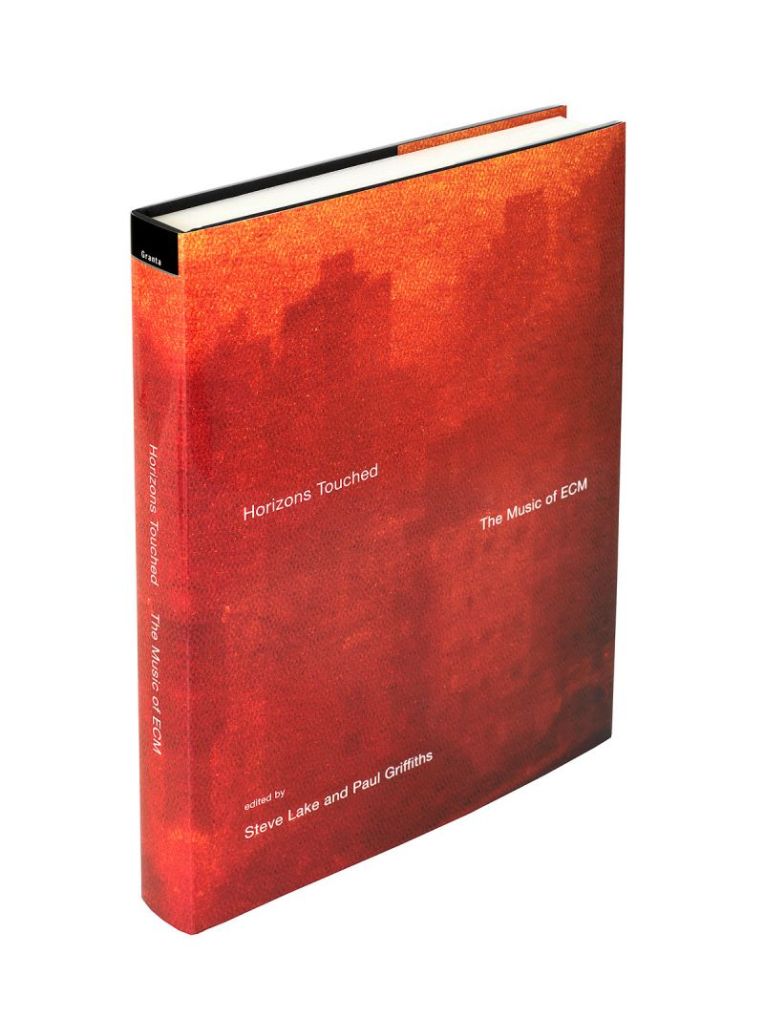
Windfall Light: The Visual Language of ECM

Windfall Light

“You wish to see, listen; hearing is a step towards vision.”
–Saint Bernard of Clairvaux (ca. 1090-1153)

The act of looking has long been likened to that of listening. Visual art, by no mere coincidence, is often spoken of in compositional terms, as great paintings and sculptures may be likened to symphonies in complexity and coordination. In music itself, sight reading is the quintessential form of looking as listening: The studied mind can track attention across a score and hear the music without a single musician present. But what of listening as an act of looking? Such has been the ethos of ECM Records since its inception.

Although the label has come to have a certain “look” to its admirers, it achieves in its aesthetic presentation not a look but a sound. One listens to an ECM album cover—be it a somber black-and-white photograph, an abstract painting, or a typographic assembly—by hearing it through the eyes. Although the images themselves are not necessarily reflective of the music, and only occasionally of those performing it, they do provide a framework for the disc sheathed within. As was already demonstrated in this book’s predecessor, Sleeves of Desire: A Cover Story, an ECM album is a liminal reality in which the self before and the self after find cohesion at the intersection of life and art.

In the case of ECM, it’s not the cover that necessarily provides insight into the music but, if anything, the music that provides insight into the cover. One example that comes immediately to mind is the montage that graces Pat Metheny’s New Chautauqua:

What could Dieter Rehm’s photo of the Autobahn between Zurich and Munich have to do with such a distinctly American sound? Perhaps nothing when viewed from that POV. But flip the telescope around, turning it into a microscope, and the open road now becomes a universal call to nomadism and to the magnitude of the unknown, of which Metheny’s music is a maverick flagbearer. And herein lies the attraction of the ECM-album-as-object: It invites us to step outside our skins as a way of more fully inhabiting them.

“In terms of the gaze,” writes Jean-Luc Nancy, “the subject is referred back to itself as object. In terms of listening, it is to itself that the subject refers or refers back.” It may feel natural to separate these two acts. Still, the full package of an ECM album turns closed circuits into open ones, reconnecting us with something childlike, primal if you will, by allowing us to feel that tingle of excitement every time we press PLAY and, after five seconds of anticipation, are thrown into some of the most beautiful dislocations imaginable in recorded music. As La Monte Young once put it to Tony Conrad: “Isn’t it wonderful if someone listens to something he is ordinarily supposed to look at?” Indeed, we can be sure of reuniting with that same wonder when experiencing the unusual harmony that can only be found between such a counterpoint of sound and image. For how can one behold Jim Bengston’s stark monochromatic landforms on Lachrymae and not want to traverse them with Paul Hindemith’s Trauermusik as guide?

Not only is there a relationship to be found between covers and the albums they grace, but there is also much to discover in new juxtapositions. Because the images in Windfall Light are presented somewhat thematically, whether by photographer or visual motif, we are invited to explore associations we might not otherwise have made. One noteworthy spread, for example, pairs Robert Schumann: In Concert with Angel Song, thereby stimulating our curiosity for the unseen electricity between them.

Furthermore, the book contains five richly varied essays to immerse ourselves in.

In “When Twilight Comes,” German journalist Thomas Steinfeld dutifully expresses the viability of ECM’s visual identity as necessarily open-ended: “None of these pictures is an illustration in the narrow sense of the word. None of them refers to either the music or the musicians as a decoration. None of them pretends to give an interpretation or even to be interpreted on its own.” They are, rather, accompaniments. “Each is a hieroglyph,” he goes on to say, “free from much of its potential meaning, a work of dreamlike qualities, taken from nothing, a sudden objection against the profane and its often inescapable presence.” Steinfeld also notes the prevalence of water in ECM album covers—not as a reflective but a dynamic force—in addition to abstracts, street scenes, and less definable paeans to silence. Regarding the rare portraits of the actual featured musicians (Paul Motian, Meredith Monk, Keith Jarrett, the Art Ensemble of Chicago, Charles Lloyd, etc.), he wonders: “Is this an accident, an honor, a matter of circumstance, or devotion?”

Author and museum curator Katharina Epprecht goes a step further in evoking the term “Transmedia Images.” By the title of her contribution, she means to suggest that ECM’s covers possess an interdisciplinary adjacency. Rather than being tautological loops, they are part of a “vast puzzle,” each a doorway into other senses and materialities. Thus, it is not the image’s ability to illustrate the music but rather “the immensely refined way that it handles unexpected shifts of meaning” that any listener will inevitably encounter. And while the images may be “based on correspondence to the character and quality of the music,” they are not beholden to it. Hence their potential as catalysts for personal transformation. “[T]he carefully packaged silver discs,” she waxes most literally, “are light and portable companions through life, motivating us to engage in contemplation, to pause for a moment.” In that respect, they allow us to understand more about our place in the world by questioning the many borders we draw around, through, over, and under it. Epprecht even provides a quintessential example of her own in Re: Pasolini:

Of this cover, she observes the following: “All of the gracious Virgin Mary’s senses are concentrated on her child, while the ears of the donkey unconsciously and reflexively register every sound. The instinctive perception of animals is unbiased and undeviating. I can think of no other picture that more touchingly elevates maternal attentiveness and unadulterated hearing to a metaphor.” Therefore, it’s as much the choice of image as its content that inspires us to regard the old as new, and vice versa.

British writer Geoff Andrew takes us yet another step deeper into intersectionality in “Leur musique: Eicher/Godard – Sound/Image.” Here, the concern is with the cinematic awareness that has long been at the heart of producer Manfred Eicher’s approach to mise-en-scène. Because both he and filmmaker Jean-Luc Godard are fond of “juxtaposing, combining and mixing up elements which most people in their respective fields would never dream of bringing together,” it was only natural that Godard’s work would come to be associated with such seminal recordings as Suspended Night, which features a still from his mangum opus, Histoire(s) du Cinema, and Soul of Things, which references Éloge de l’amour:

Where the latter film also gives us Norma Winstone’s Distances, we have the former to thank also for Words of the AngelMorimurRequiem for LarissaSongs of Debussy and Mozart, and Voci.

Perhaps not surprisingly, these are already borrowings from other sources—quotations of quotations (and is not classical music the same?). Other Godard touchpoints include Notre musique for Asturiana and Passion for Cello and Trivium.

And let us not forget the soundtracks of Godard’s own Nouvelle Vague and the above-mentioned Histoire(s) du Cinema.

One could hardly imagine such a book as Windfall Light without including the perspective of at least one ECM musician, and in pianist and composer Ketil Bjørnstad, we are given a most suitable ambassador. In “Landscapes and Soundscapes,” he looks not at the spatial but at the temporal. In speaking of the timeless quality of the covers, he notes a preference for monochrome and Nordic landscapes and atmospheres. “Being produced by Manfred Eicher is a purification process for a musician,” he reveals. In so doing, he leaves an implied question hanging in the air: Does a cover photograph or painting also undergo a sort of purification process? When disassociated from its original context, does not the image open itself to infinite possibilities? Bjørnstad again: “Just as great composers and painters are recognizable down to the smallest phrase or brushstroke, ECM’s music and visual world are recognizable without the slightest danger of anyone calling this stagnation.” Thus, the more this recognition settles in our gray matter, the more we come to equate the landscape with the soundscape.

Last but certainly not least is “Polyphonic Pictures” by Lars Müller, whose publishing imprint has given us this fine volume. His offering is a relatively zoomed-out perspective on the questions at hand. Going so far as to describe the covers and music of ECM as “libertarian”—at least in the sense that they elide the intervention of power structures that all too often infect recorded media—he characterizes them as “afterimages of memorized circumstances far more than they are depictions of things that have been seen.” In that sense, they grow with listeners in connection to lived experience. This take resonates with me at the deepest personal level, as even one glimpse of a beloved album cover invokes a reel of memories, associations, and impressions. Rather than their technical aspects, it is their eventfulness, their movement in stillness, and their visceral foundations that make them come alive. And so, in his ordering and layout of the images, he has created for us a self-avowed “visual score.” Ultimately, they are only as delible as the paper they’re printed on, and so they can only live on in the mind’s eye, which, if it’s not obvious by now, is more accurately depicted as an ear.

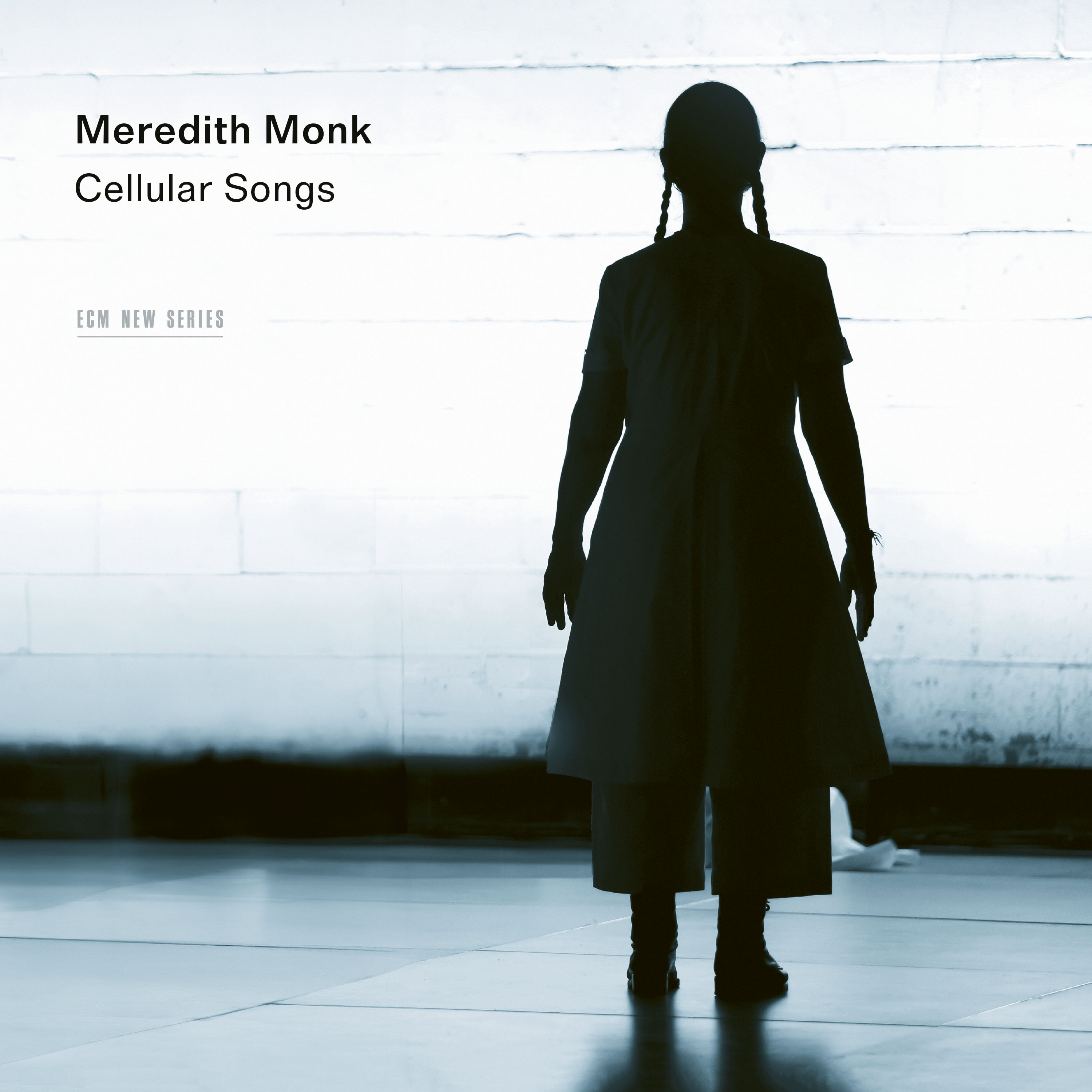
Meredith Monk: The Recordings (ECM New Series 2750)

In November of 2022, ECM released this boxed edition compiling all 12 of Meredith Monk’s New Series discs to celebrate her 80th birthday. The set also includes a 300-page book reprising the original liner notes, along with new texts and interviews, photographs, archival documents, press quotes, and more. The result is more than a commemoration but a testament to the strength of the human spirit to make itself heard even in the face of inevitable entropy.

Manfred Eicher speaks of two important organs in the composer and singer’s oeuvre: their inspiration and their visual quality. In both, she finds a perfect partner in the producer, who has honed this approach across the territories of other singular artists, though none with quite the same combination of whimsy, ritual, and universalism.

In his essay, “The Worlds of Meredith Monk,” Frank J. Oteri characterizes the music as follows: “It paradoxically feels as if it was created at the very beginning of time and yet sounds completely new.” And while the works recorded here are scores in their own right since so much of her output defies standard notation, there is, he observes, a consistency that transcends the frameworks of their articulation. As part of a “living repertoire,” they seek out our ears as if they were extensions of themselves, thoughts on opposite sides of the brain spinning a seemingly impossible neural connection across oceans of time.

In an artist statement titled “The Soul’s Messenger,” Monk speaks of what the voice was able to reveal to her in the absence of its cultural reference points:

“Sometime in the mid 1960s, as I was vocalizing in my studio, I suddenly had a revelation that the voice could have the same flexibility and range of movement as a spine or a foot, and that I could find and build a personal vocabulary for my voice just as one makes movement based on a particular body. I realized then that within the voice are myriad characters, landscapes, colors, textures, ways of producing sound, wordless messages. I intuitively sensed the rich and ancient power of the first human instrument and by exploring its limitless possibilities I felt that I was coming home to my family and my blood.”

In other words, the voice was no longer an expression of the physical; it was physicality incarnate. “I began playing with what a vocal gesture would be,” she continues. “How would the voice jump, spin, spiral, fall? How would I abstract the sound of a laugh, of sobbing, of shouting, into a musical phrase?” Since then, her ”daily work” has not been to refine her singing so much as open it to its unadulterated imperfections, for in them are veins of possibility. These “gifts from a larger and wiser realm” are dug up like archaeological discoveries after long periods of waiting, each an old world made new.

At the age of three, Monk was diagnosed with strabismus, whereupon her mother enrolled her in a Dalcroze eurhythmics program, a technique that integrates music with movement. This experience, she recalls, “influenced everything I’ve done. It’s why dance and movement and film are so integral to my music. It’s why I see music so visually.” It’s also why the body has figured so viscerally in her live performances. Movement, dance, and shaping of sound all come across in the studio, not least of all because of Eicher’s attention to detail and Monk’s willingness to see where it leads. Without the shadow of infirmity hanging in the balance, questions of perfection become self-fulfilling prophecies.

Nowhere is the beauty of being off kilter expressed with such genuine poetry as in 1981’s Dolmen Music. In an excerpt from an interview by Ingo Bierman for his video series ECM50 | 1969-2019, Monk describes working with Eicher on this seminal session and how, after laying down Gotham Lullaby, she recorded a second take after concerns over her voice cracking in the first:

“It was technically perfect, but it really didn’t have that spirit, the kind of magic that the first take had. I have always respected Manfred for recognizing that, because you can edit yourself out of existence and get everything right, but there is something about the emotional continuity that communicates more deeply.”

The chamber program of which it is a part is quite varied and offers as full a portrait of Monk as you’re likely to find in one place. From the koan-like humor of The Tale to the 24-minute title piece, a larger narrative unfolds in almost liturgical fashion, each a step toward mortal awareness, with dashes of urban morbidity thrown in where it counts.

A touching piece of ECM lore worth mentioning is that Collin Walcott was a dear friend and frequent collaborator of Monk early on. He was, in fact, responsible for introducing her to Eicher and served as co-producer for Dolmen Music (playing violin and percussion on the album as well), which, along with Turtle Dreams, was thus shepherded into the ECM New Series stable after the imprint was created.

Speaking of Turtle Dreams, it makes for an enchanting companion. Although Monk’s performances used to confuse critics for their equal incorporation of dance, theater, and music, this 1983 follow-up shows her ethos to be based in the sounding body. Where this album’s predecessor regarded primordial realities, this one reflects the dissonance of living in the city through what she calls “Manhattan folk music.” Its intimate combination of keyboards and voices is nonetheless grand in its emotional scope, a dance with silence that sustains itself on contradictions and their resolutions and leaves room for what she calls “places to breathe, live, and play.”

All of this feels like a prelude to Do You Be. Released in 1987, Monk’s third album for ECM contains a melange of pieces from The Games: a science fiction opera and Acts from Under and Above, while the album’s title piece is from Vessel: an opera epic. Its incorporation of explicit words rather than the liminal spaces of and between feelings with which she was normally concerned places us at the center of a quiet storm of communication. The culminating effect is one of the voice as an instrument of memory, a beacon of futures that come to us as warnings.

Not coincidentally, Book of Days (1990) expands on that metaphor with even greater intensity in reimagining the incidental music to Monk’s film of the same name. Having seen the film, I can confirm its sense of dislocation and engagement with the human condition writ large. The story, set in Medieval times, tells of a young Jewish girl named Eva who is transfixed by visions of the modern world. Finding little comfort in her grandfather’s Torahic interpretations, she seeks solace in a local madwoman before her entire village succumbs to the plague. At the end, workmen who inadvertently unearth the village centuries later find Eva’s clairvoyant drawings of humanity’s demise. More than a soundtrack, the album is cinema in and of itself, morphing into weighted pathos.

Such ruminations of desolation were even more firmly on Monk’s mind when, at the end of 1989, while in residence at the Leighton Artists Colony in Banff, Monk found herself looking out her window at the Canadian Rockies. Despite being there to work on her opera ATLAS, she took inspiration from the scenery and produced a set of a cappella pieces that would become Facing North (1992). Conceived as a duet for her and Robert Een, it is a reflection of a place of cold uncoverings. The opera itself also made its way onto ECM. Over the course of three acts, ATLAS (1993) tells the life of Alexandra Daniels, an explorer who learns that the real journey is internal. This ambitious piece shows a transparent approach to instrumentation. Unlike the bombastic walls of sound that can dominate canonical opera, its accompaniment emerges from within instead of being forced from without. Interestingly, Eicher and Monk decided to cut the opera’s conclusion. “In the live performance,” she admits, “it was a crucial part of the whole. In the audio form, it became more of an epilogue, which seemed to both of us to make too much of a closure instead of letting the listener remain in motion at the end of the journey.” Such is the quintessential expression of movement through music, and how the soul breaks through the cracks in our voices is indicative of the necessity of imperfection to reveal self-worth.

Said cracks run even deeper in Volcano Songs (1997). As manifestations of human archetypes, these metaphysical pieces pay deference to Monk’s ongoing ethos of “always trying to explore forms that balance rigor with freedom.” Her melding with singer Katie Geissinger is astonishing to behold. Another program of strong variety, it includes such vital works as New York Requiem and Three Heavens and Hells, both of which deal with the transience of life and our regard for human suffering. Similar themes are explored in mercy (2002) and Songs of Ascension (2011), both of which represent collaborations with sculptor and installation artist Ann Hamilton. Whereas the former is built around the idea that the mouth can harm as much as heal, the latter was originally performed in an eight-story tower designed by Hamilton. In both, the instruments are just as vocal as the voices (and vice versa) in their explorations of fragility. As I wrote in my original review of mercy, “Monk’s is not a world in which the voice is primary but rather a voice in which the world is primary.” I stand by that statement and would point to these as Exhibits A and B. Nestled between them is 2008’s impermanence. A distinctly chromatic work, it eschews standard narrative in favor of a feeling, a connection to somewhere beyond the immediacy of experience.

Piano Songs, released in 2014, is a remarkable cross-section of Monk’s life and career, with purity and sameness through difference in mind, containing such touchstones as Paris, a piece from 1972 that marks her return to the piano after focusing intensely on the voice, and Ellis Island from 1981, which ties history and memory into one inexorable package. Last is On Behalf of Nature (2016), which speaks for the voiceless, the abused, and the forgotten. It has the most connective tissue of all, bleeding as much through the leaves as from the soil in which they are born.

If any red thread can be said to run through the above tapestry, it is that selves were made to expand. However, part of being human is realizing that with that expansion comes the responsibility of charting our way through all the extra space. With Monk at our side, we can feel sure of placing our feet on loving ground.

Synchronicity (Part 3)

Life has a way of reshuffling priorities from time to time. Since my last “synchronicity update,” I have abandoned academia to pursue a career as a full-time editor for a digital marketing firm, welcomed a third and fourth child into my growing family, mourned the death of my father-in-law (and the near-death of my father), and, most recently, moved house. All told, I have found it especially difficult to review—let alone listen to—new music with any degree of consistency during the past few years. However, after getting all of my ducks in a row, I am glad to report that as of today, I am once more caught up with ECM in my writing endeavors. I continue to be humbled not only by the label’s staggering output but also by the attention and kindness you have all shown me. Whether you have been reading this blog from the beginning or are newly exploring the catalogue, I can only hope that my reactions and ruminations can bring you closer to the music and guide you toward enriching discoveries along the way. Keep your eyes peeled for further surprises and changes as I devote more time to updating and refining some of the mechanics of the website for a better user experience. It has been a long and tedious process, but the results will be worth it.

Arvo Pärt: Tractus (ECM New Series 2800)

Arvo Pärt
Tractus

Estonian Philharmonic Chamber Choir
Tallinn Chamber Orchestra
Tõnu Kaljuste
 conductor
Recorded September 2022
Methodist Church, Tallinn
Engineer: Tammo Sumera
Design: Sascha Kleis
Produced by Manfred Eicher
Release date: April 25, 2025

“Fear not that thy life shall come to an end,
but rather that it shall never have a beginning.”
–John Henry Newman

The title of Tõnu Kaljuste’s lovingly curated program of works by Estonian composer Arvo Pärt comes from its leading composition, Littlemore Tractus. Like much of what is presented here, it is somewhat older (dating from 2000) but newly arranged by the conductor (in 2022). Scored for mixed choir and orchestra, it dramatizes words from the 1843 sermon “Wisdom and Innocence” preached by John Henry Newman in Littlemore, Oxford. In it, the English cardinal seeks refuge in the Lord, set apart from a world turning circles around its self-interest. Like a tornado in reverse, Pärt’s rendering transitions from destruction to the calm before the storm, serving listeners with something intangible. Even in the seven Greater Antiphons I-VII, a 2015 string arrangement of the Seven Magnificat-Antiphons from 1988, we can feel the tension between that which is touched and that which is felt. Each is a stained glass window, allowing us insight into that one place where light can only reach by grace: the heart. The last of these, “O Emmanuel,” is the magnificence of holiness distilled.

Cantique des degrés for mixed choir and orchestra (1999/2002) is a dynamic setting of Psalm 121, in which David looks to the Lord, ever sustaining and filled with life. Its parabolic structure, from internal to external and back again, ascends the steps to the Temple of Solomon, but casts a final look backward for want of other souls to save. The choir is recessive, never dominating the foreground even at its most glorious. This is followed by Sequentia for string orchestra and percussion (2014/2015). Originally written as part of the Robert Wilson production, Adam’s Passion, it offers a subliminal meditation on Christ’s death, burial, and resurrection. These Words… (2008) is scored for the same combination of instruments. No less expressive for its lack of text, it quotes Pärt’s own Psalom (last heard on 1996’s Litany) as an inward-looking catalyst.

L’abbé Agathon for soprano and string orchestra (2004/2008) is reprised from its appearance on Adam’s Lament in 2012, led by soloist Maria Listra in a much more intimate and contemplative interpretation. Based on a legend from the fourth century regarding an encounter between the Abbot Agathon and a leper (who is really an angel in disguise come to test his faith), it tells the story with programmatic flair, replete with a string-heavy transfiguration as the angel ultimately ascends heavenward.

The album ends with two supplications. Where Veni creator for mixed choir and orchestra (2006/2009) is a deep cry for forgiveness, Vater unser for mixed choir, piano, and string orchestra (2005/2019) sets the Lord’s Prayer. Thus, wisdom and innocence are shown to be things that none of us possesses except by the cross.

This is not music that one discovers but that one welcomes as a gift. From depth to depth, it anoints with the oil of understanding that God is indeed with us, wrathful yet forgiving of the harm we have inflicted upon his creation.