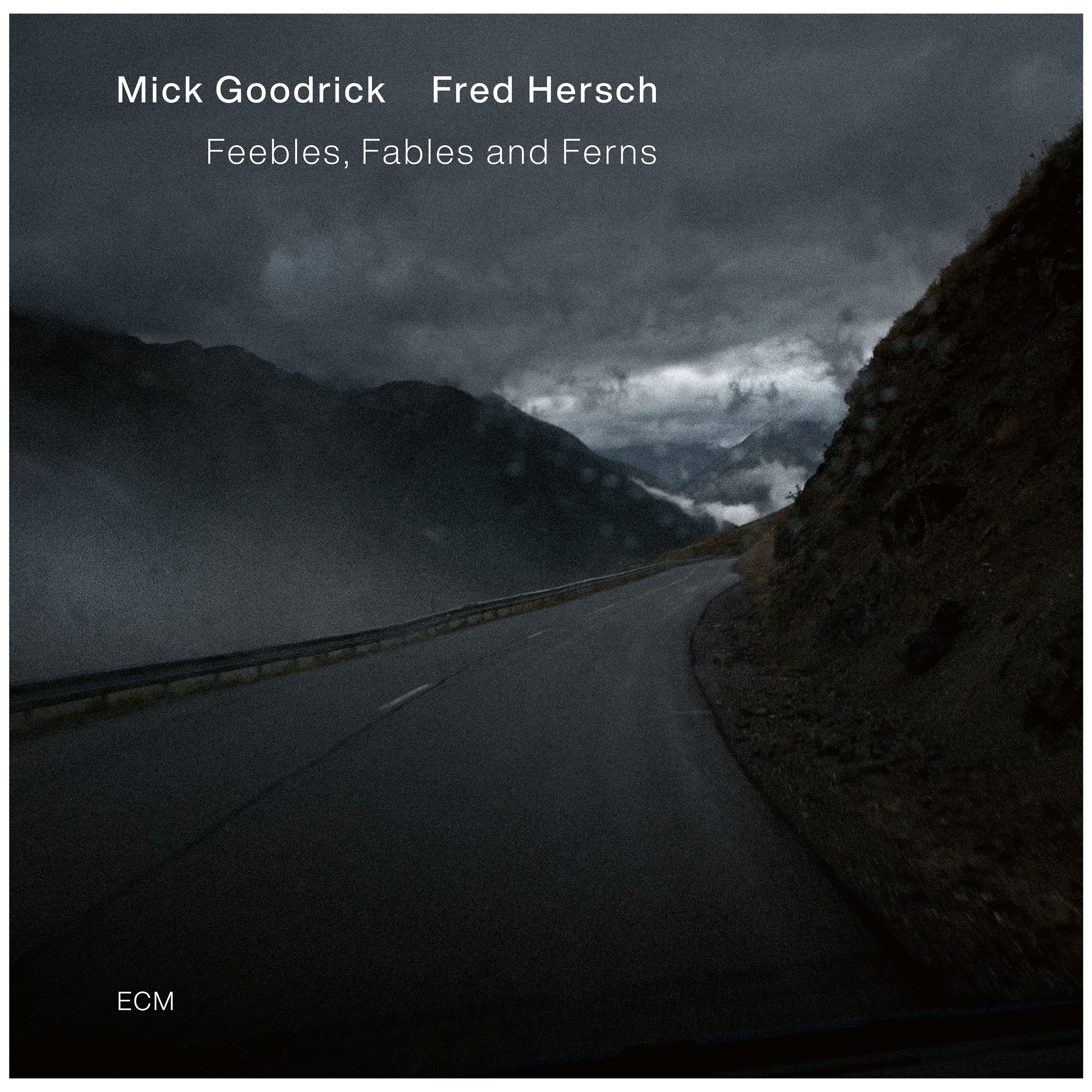
Mick Goodrick/Fred Hersch: Feebles, Fables and Ferns (ECM 2876)

Mick Goodrick/Fred Hersch
Feebles, Fables and Ferns

Mick Goodrick guitar
Fred Hersch piano
Recorded August 1988 at Classic Sound Studio, NYC
Engineer: A. T. Michael MacDonald
Remixed 2025 by Chris Allen
Original recording produced by Fred Hersch
Cover photo: Jean-Guy Lathuilière
An ECM Production
Release date: June 19, 2026

Recorded at Fred Hersch’s New York studio in August 1988, Feebles, Fables and Ferns documents the only recorded meeting between Hersch and guitarist Mick Goodrick, then fellow fixtures of Boston’s jazz community. Historical circumstance provides the frame, yet the deeper distinction resides in the remarkable ease of their exchange. The session carries almost none of the dust normally associated with an archival recovery. Its present tense remains intact, sealed within every pause and sudden melodic turn. Both musicians develop ideas in real time without crowding the music or steering it toward predetermined conclusions. Their attentiveness suggests a shared space in which each voice can enter fully while leaving the other unclaimed. Goodrick, an influential teacher whose sparse discography never adequately reflected his stature, is especially compelling. His quietly inventive improvising reveals why Julian Lage, Pat Metheny, Wolfgang Muthspiel, and so many other guitarists have regarded him so highly. He seems able to bend a phrase around the interior of a thought, decorating its walls without obscuring their mystery.

That rapport animates a lively program of originals, standards, and one open improvisation. Goodrick’s title composition, first heard on 1979’s In Pas(s)ing, emerges here as a compact study in interlocking lines. Hersch and Goodrick’s melodic phrases remain tight yet fluid, while rhythmically astute changes seem to discover their destination only upon reaching it.

“Falling Grace,” one of two Steve Swallow tunes in the set, brings a livelier angle to that exchange. Retaining its composer’s crooked smile, it folds playfulness into sardonic self-awareness while maintaining considerable lyrical poise. Hersch answers that wit with buoyant precision, while Goodrick phrases across it from oblique vantage points, tugging at the seams without tearing the fabric. Swallow’s “Amazing” later enters through Goodrick’s “Away 10,” moving through dimly illuminated memories that appear to recognize us before we recognize them. What was laid down casually in a studio nearly four decades ago has acquired meanings unavailable to its creators, proving that music can continue thinking after its makers have left the room. Time has not merely preserved these performances but has collaborated with them.

Within that expanding temporal space, “Five Excursions” unfolds as a surreal yet welcoming chain of improvisations. Its tentative beginnings resemble a constellation being plotted by instruments uncertain of the sky behind them. A few pinpointed tones establish provisional coordinates, after which the music opens into interlocking geometries. Hersch and Goodrick appear to reverse-engineer causes for effects already hovering in the air. Silence becomes a working material rather than an interruption, allowing each idea to cast a longer shadow.

As Johnny Green’s “Out of Nowhere” blossoms into the foreground, the album enters a region of crystalline wit evocative of Chick Corea’s ECM classics. Clever syncopation and deft motivic interchange make the performance feel perpetually on the verge of levitation. Hersch rearranges the tune’s internal gravity while Goodrick sends bright phrases skimming along its altered surface, each musician alert to the comic potential inside sophistication.

Hersch’s “Heartsong” draws the session toward a more openly radiant center. The composition pumps richness through its chambers, yet its emotional amplitude remains governed by a profound introversion. Goodrick understands how much the tune contains and resists the temptation to excavate everything at once. Even during his fastest lines, every note retains a private place in the larger design. Hersch, for his part, stays within reach, grounding uplift in touch and harmonic clarity.

Mal Waldron’s “Soul Eyes,” originally written with John Coltrane’s sound in mind, offers a final field of inquiry for instruments far removed from that conception. Guitar and piano open from within, allowing secrets to emerge as subtle alterations of perspective. Goodrick homes in on details that another improviser might treat as mere filler. Minute changes in the harmonic terrain acquire enormous consequence beneath his attention, with a bent inflection or delayed resolution suddenly becoming the axis around which the piece turns. Hersch’s lyricism operates simultaneously inside the drama and beyond its frame. He inhabits the melody while quietly altering the conditions under which it can be understood.

Feebles, Fables and Ferns stands as an unusually intimate portrait of two restless musical minds meeting on equal terms. Its archival unearthing offers more than access to a lost session; it returns a form of attention that now feels almost radical. Hersch and Goodrick listen without attempting to absorb one another, preserving difference as the very substance of communion. Their duetting gradually becomes a demonstration that freedom can deepen when another consciousness is fully present.

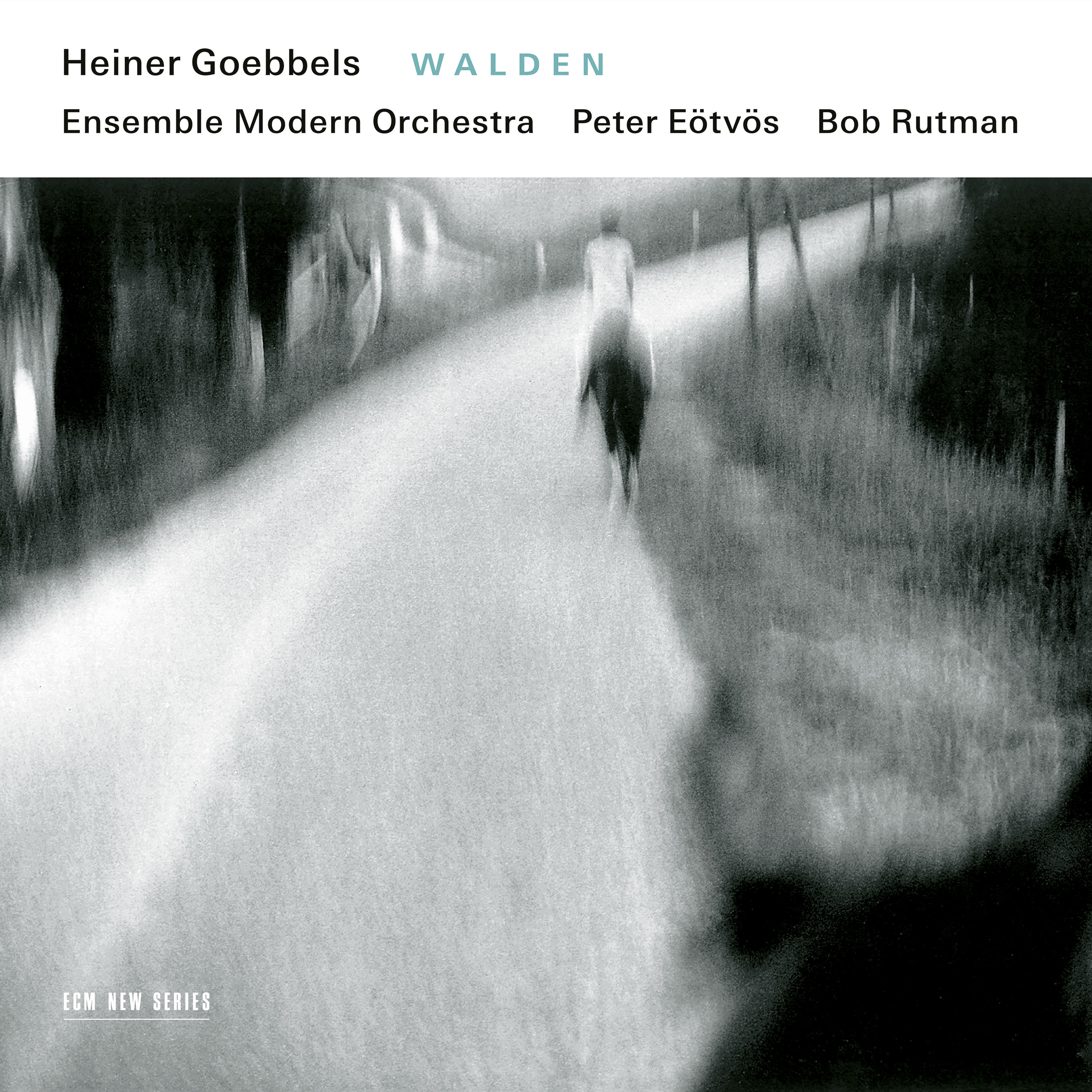
Heiner Goebbels: Walden (ECM New Series 2878)

Heiner Goebbels
Walden

Ensemble Modern Orchestra
Peter Eötvös
 conductor
Bob Rutman voice
Recorded November 1998
at Philharmonie Köln and Alte Oper Frankfurt
Engineer: Udo Wüstendörfer
Recording engineer: Wolfgang Packeiser
Cover photo: Gérald Minkoff
Executive producer: Manfred Eicher
Release date: June 6, 2026

A cabin can become a machine for myth. Once built, it gathers meanings faster than wind and rain can darken its boards. The small house Henry David Thoreau raised beside Walden Pond in 1845 no longer exists solely as a physical structure. It has become a subheading under the cultural imagination, a place to which each generation returns carrying its own fatigue. Yet its apparent simplicity conceals privileged contradictions and dependencies. Its solitude was never absolute, its wilderness never untouched. Walden Pond lay close to Concord. The railroad cut audibly across the surrounding landscape, and Thoreau’s retreat unfolded on land owned by Ralph Waldo Emerson. The woods were not another world but a temporary clearing inside this one.

That permeability matters because Walden exceeds both a hymn to nature and a manual for abandoning civilization. Its solitude is crossed as much by steam whistles as by birdsong, by axes and distant human voices. Thoreau withdraws from the town, yet the town continues to arrive acoustically. Its presence enters without knocking, carried through the air. John Cage, for whom Thoreau’s perception of the world became a lasting source of inspiration, recognized in this radical attentiveness a music preceding composition: “Thoreau was a great musician, not because he played the flute, but because he didn’t need to go to Boston to hear a symphony orchestra… His sensitivity to the sounds of nature was probably greater than that of most performing musicians…” The symphony is already taking place; the difficult art is learning how to receive it.

Heiner Goebbels’s Walden emerges from this expanded idea of music. The composer’s modest description of the work as a series of musical sketches inspired by Thoreau’s book is accurate only insofar as a map indicates a location while withholding the effects of erosion and the sensation of becoming lost in the undergrowth. Written in 1998, the score expands the orchestra around a speaker and unconventional instruments. Goebbels releases Thoreau’s ideas into a different millennium, in which the 19th-century woods reappear as a haunted acoustic terrain where memory tangles with machinery and imagination.

Despite Cage’s suggestion that Thoreau required no orchestra, Goebbels returns him to one. Its traditional borders have been loosened to include samplers and keyboards alongside electric guitars. The cimbalom rubs against didgeridoo; koto and harmonium sound against African percussion. Several of Bob Rutman’s steel cellos and bow chimes enlarge the metallic anatomy of the ensemble. Table guitars of Fred Frith’s design lie flat like workbenches for the manufacture of unfamiliar resonances. The daxophone, devised by Hans Reichel, draws creaks and cries from a length of wood, some of them nearly human. These instruments reshape the conventional body and change what it can imagine itself to be.

The Ensemble Modern Orchestra, under Peter Eötvös, accordingly becomes an acoustic habitat. Its openness mirrors the permeability of Thoreau’s cabin, an enclosure that never entirely excludes the surrounding landscape. Within this enlarged body, the contradiction of Waldenbecomes audible. Sampled rhythms and distorted percussion scatter hard metallic light through the orchestral canopy, while horns bend and wail as if carrying the nocturnal breath of a city from somewhere beyond the pond. Goebbels avoids a clean opposition between nature and civilization, allowing them to stain one another.

Rutman commands this unsettled landscape, reciting Thoreau with an oracular force that justifies amplification. His voice travels through the music rather than riding above it. At one moment it emerges like a human figure from fog; at another it hardens into sounding matter. He trades roles with instrument and environment until it becomes difficult to say who is speaking and what is being spoken through.

“Where I Lived, and What I Lived For (Simplify, Simplify!)” acts as a prelude, opening with drones drawn from metal and wood threaded with wire. They ferret out inner voices, which the older folktales understood far better than their modern Disneyfied counterparts. Those voices are inherently dark. The tangle of horns and multiphonics draws out an inward knowledge we fear to express openly: human thought naturally tilts negative. Thoreau’s asceticism reflects an awareness that we are filthy inside, as expressed by the sounds of rattling bottles and other detritus of life under the banner of technology, turned over and shaken until all our loose change falls out.

This slinks into the jazzier depths of “The House,” where Rutman’s narration, with its enchanting Herzogian lilt, breaks down the walls of the collective unconscious. A slinky guitar and restless trombone widen the emotional register, their exchange revealing Goebbels’s microscopic care for color.

In “The Ponds,” Goebbels entwines plugged and unplugged technology with a strange hopefulness. The croaking of giant toads and lyrical strings trade places with plucked piano innards and bending electric guitar. The water’s surface is frighteningly evoked like a distant, exotic thing, dirty in today’s parlance yet all the more alluring for its nostalgic whiff. As Rutman interacts with the amphibiousness of his own soul, splashed through the netting of Thoreau’s masticatable prose, we emerge worn and suspended in wonder.

Drop it! he then commands in “Reading,” a movement built on less imperative forms of communication. Atmospheric mystery and noir-ish smoke gather as the music saunters through city streets, recalling a vanished possibility before the trees threw down their arms and scooped our souls up ahead of the flood. Hammered dulcimer and slick drums reflect a social mirth that outlives them.

History has altered the charge of “The Ice List” (a title that resonates far differently in today’s sociopolitical climate), in which Thoreau describes the commercial ice harvesting operations on Walden Pond. His account of hundreds of laborers cutting and shipping thousands of tons of ice to the American South and India turns commerce into a meditation on human intellect and the enduring purity of nature. Goebbels adds touches of faraway climates to show us what places seem to those who have never actually been there. Through them, the colonial gaze embedded in that commerce gradually surfaces while the music retains its ambiguity.

At just under 14 minutes, “Spring” is the gargantuan epicenter of this slow-motion sonic earthquake. Theremin-like tones and floating dissonances introduce a flanged sample of 80s-esque rhythm guitar. Cymbals and horns house creepy-crawly things, turning the season into a cage yearning to open and unleash itself upon an unready world. That sardonic promise curdles in Rutman’s recollections of cold and hardship, as “Winter Visitors” gives its plectrum-centered language over to a mind ready for self-destruction. A Shostakovich-like string quartet rears its deformed head, letting mice of circumstance run through the corridors of our hearts.

In “The Beanfield,” which throws an oboe onto a heap of discarded shopping carts and other unwanted vehicles of commercialism, reading becomes the surest way to reckon with oneself, precisely the task Thoreau avoided at first during his stay. This music threatens to take us away from the flesh, as embodied by the drum machine. The final movement, “The White Pond,” presents a glassine mirror disturbed by little more than a breath exhaled in fitful sleep. The drone returns, and Rutman’s animalistic onomatopoeia offers the sole indication that human hands ever touched the ground on which we stand.

Recorded during the work’s November 1998 premiere performances at the Philharmonie Köln and Frankfurt’s Alte Oper, the album preserves its elusiveness as an event. Thoreau becomes a living disturbance in Goebbels’s hands, his text producing new forms long after its world has disappeared. Perhaps we return to the woods because distance sharpens buried frequencies. Goebbels leads us toward that imagined clearing, then fractures it beyond recognition, crowding it with pieces of the very civilization it was built to resist.

And so, American Transcendentalism acquires material weight, a heavy-laden basket filled with the unfinished stories that make up our lives.

Ayumi Tanaka: Windflower (ECM 2859)

Ayumi Tanaka
Windflower

Ayumi Tanaka piano
Thomas Morgan double bass
Thomas Strønen drums
Recorded May 2025, Studios La Buissonne
Engineer: Gérard de Haro
Mixed by Manfred Eicher and Michael Hinreiner (engineer)
in Munich, 2026
Cover photo: Nadia F. Romanini
Produced by Manfred Eicher
Release date: August 21, 2026

The central tension on Windflower arises from our instinct to separate composition from improvisation, a distinction the music quietly renders distant. Japanese pianist Ayumi Tanaka is joined by American bassist Thomas Morgan, while Norwegian drummer Thomas Strønen completes a trio new in configuration yet deeply immersed in a shared exploratory language. Their pieces carry the poise of chamber music without surrendering jazz’s reflexive instincts. Each sound enters as a proposal whose meaning depends upon the answer it receives. Eight tracks were created spontaneously, while the bandleader’s “La Source” is opened like a book being read for the second time.

The title track gathers itself from fragrance and air, an entity whose roots appear to descend into a realm just beyond sight. The musicians stretch the frame until its concealed margins become visible. Strønen’s broad percussive sweep clears a path for Morgan, whose bass advances with the grave patience of footsteps crossing an abandoned interior. Tanaka occupies the unstable space between them. Her notes become shadows cast by objects that have not yet entered the room, and time loses its familiar sequence beneath her touch. Human narrative briefly falls short of consummation, leaving an opening through which another consciousness might discover the courage to live without inherited conclusions.

“La Source” enters that opening and converts it into a wellspring. Tanaka moves through a landscape of paper and ink, revealing the literary temperament at the center of her playing. Her phrases possess character development without characters; their plots become aware of themselves midway through unfolding and quietly revise the conditions of their existence. The trio moves as one body, viscous enough to retain memory yet open enough to admit illumination. Morgan gives the music a subterranean grammar, while Strønen punctuates its margins with marks written in disappearing ink. Above them, Tanaka touches the bellies of clouds only briefly, allowing us to experience descent as a slow-motion revelation.

The arboreal density of “From Us, To You” initially complicates the generosity promised by its title. Its canopy has grown thick with intervals and crosscurrents, yet nothing within it feels oppressive. The track offers shelter through bewilderment, inviting the listener to relinquish the fantasy that clarity must precede belonging. Strønen brushes against the bark of the piece, Morgan works among its roots, and Tanaka sends new shoots into an unseen height. Their revelry remains disciplined by an almost ceremonial attentiveness. When the ending bends toward the blues, it offers a secret door inside an old wound.

“Tree of Stars” passes through that door and discovers the canopy opening onto a vast celestial field. The title collapses the distance between root and constellation, giving the heavens a dark trunk through which their light can travel. Morgan’s sleepwalking bass acquires an oneiric eloquence, wandering without losing the invisible thread that binds it to the ensemble. Tanaka offers the melodic calm of a lullaby remembered by someone who never heard it in childhood. Along the periphery, Strønen’s accents shape time through delicate pressure, preventing repose from becoming stasis. The trio seems to understand that tenderness requires structure, since even a dream needs a body sturdy enough to contain its impossible architecture.

“Weaving” carries this architecture into finer and stranger materials. Its web refuses symmetry, behaving instead as a stained-glass window whose only pigment is air. There is no fixed center. Meaning travels across the strands whenever an opportunity for nourishment draws the whole design into sudden focus. Strønen’s delicate yet restless brushing becomes the vibration of a trapped insect transmitting distress through an instrument of extraordinary beauty. Within that signal lies a stubborn promise of life. Tanaka answers with fragments that catch the light, while Morgan lends anchorage to a structure built from near-weightlessness. The performance turns fragility into a method of perception: what trembles most intensely may also be what understands its surroundings best.

That sensitivity reaches a more turbulent form in “The Sea Is Still.” Strønen’s gift for color and texture rises to the surface, inspiring richly unsettled pianism from Tanaka. The title’s stillness becomes an irony too immense to remain verbal. Every wave appears to contain its own disappearance, and Tanaka follows each crest toward the point where motion begins to erase its maker. Morgan descends beneath the agitation, sounding out depths the piano can reveal only through pressure. The waters eventually yield treasure without value, an object freed from commerce because no language can decide what it is.

“Spring” turns the album’s flowing imagery toward ambiguity. Its title hovers between season and source, while the music inhabits both meanings without selecting one. Renewal emerges as pressure beneath the surface, a force searching for the smallest fissure through which to become visible. Tanaka’s phrases rise with lucid delicacy, then disperse before their outlines can be claimed. Morgan and Strønen give the piece an earthen resistance, ensuring that every emergence retains some knowledge of what confined it. In the final droplets, a rock formation appears bereft of foothold. Suspension becomes a destination in its own right, a ledge constructed from the absence of ground.

“Driftwood” begins with Morgan’s lumbering bass calling the other instruments into earshot. The image develops at the pace of an old film learning to adapt to new projectors. Energy accumulates until a nearly grooving current takes hold, though settlement remains impossible. Tanaka wanders across it with sovereign uncertainty, resisting every invitation to make the track more obedient than it wishes to be. Her independence never fractures the ensemble. Instead, it gives the shared motion a deeper integrity, since togetherness here depends upon each musician preserving the solitude from which genuine response becomes possible. Driftwood carries a history of forests without remaining a tree. The trio similarly allows form to remember its origins while releasing any obligation to return to them.

“The Dissolving Sun” brings the album’s inquiry into its most tender and unsettling light. Tanaka’s beautifully angular pianism loosens by degrees. A forlorn finality hovers at the fringe of consciousness, prepared to extinguish itself before the moon can formulate an objection. Morgan gives the vanishing body a final gravity, while Strønen traces the delicate perimeter where radiance relinquishes its name. Yet dissolution here carries no promise of transcendence. Instead, it must give itself over to the possibility that its veracity depends on another’s awareness.

In that surrender, Windflower reveals an ethical dimension within. Improvisation becomes the practice of entering another person’s uncertainty without colonizing it, while composition offers a structure strong enough to protect that encounter. Perhaps every life arrives as written material and survives through the ways others decline to play it exactly. The trio’s deepest lesson concerns neither freedom nor fate alone, but the care required to touch an incomplete statement without deciding how it must end.

For the Record: An ECM Rarities Update

As those of you subscribed to this humble blog have likely noticed, I’ve recently been working my way through a small mountain of ECM rarities: out-of-print anthologies, obscure compilations, promotional samplers, and other releases dwelling in the margins of the label’s already expansive catalogue. Some are deep cuts in the truest sense; others seem determined to remain off the record altogether.

I’ve wanted to tackle these elusive items for a long time. If Between Sound and Space is to come as close as possible to being the complete archive I intended for it to be from the start, then these odds and ends deserve their place in the mix. The familiar albums may carry the melody, but the rarities provide a vital counterpoint, filling in a few of the spaces between the sounds.

As far as I can tell, I have now documented every such release I know about (you can see the full list at the bottom of the “By Catalogue #” page). “Every,” of course, is a dangerous word in the world of collecting: just when you think you’ve reached the top of the ladder, another hidden rung reveals itself. It is therefore entirely possible that something has escaped my notice. If you know of a compilation, sampler, promotional release, or miscellaneous ECM curiosity (including anything produced by Manfred Eicher that wasn’t released on ECM) that I have inadvertently glossed over, please drop me a line. I’ll be delighted to add it to the list and, so to speak, set the record straight.

I must also give a special shout-out to Bernd Webler, whose ECM collection is the most comprehensive I have encountered and whose generosity was largely responsible for giving me access to so many of these hard-to-obtain gems. Without his help, a number of them might have remained silent entries in the catalogue. Bernd is also a wonderful visual artist in his own right, so please take a moment to explore his artwork here if you have the chance.

My heartfelt thanks to him for helping this archive sound a little fuller and for proving that, sometimes, the most beautiful sound next to silence is a collector saying, “Yes, I have that one.”

ECM 40 Years

The ECM 40 Years collection originated as a special promotional compilation released in 2009 with Issue #200 of the Greek magazine Jazz & Τζαζ. Compiled by Giorgos Charonitis with evident care, it considers how ECM reshaped modern jazz and contemporary classical music through minimalist restraint and the intimacy of “chamber jazz,” while freeing improvisation from inherited borders. Across these 16 selections, the label’s history becomes a study in passage. Musicians cross between idioms while melodies migrate through cinematic and private imaginations. Even silence appears to be traveling, carrying contraband from one consciousness into another.

Thresholds and Revisions

The Astounding Eyes Of Rita (ECM 2075) introduces percussionist Khaled Yassine as a revelation through Anouar Brahem’s “Al Birwa.” He reads every motion as choreography, painting his entrances with the care of light breaking through cloud. Oud and percussion converse in an absorbent language whose pauses contain submerged replies. The Dave Holland Trio answers with a different elasticity on Triplicate (ECM 1373), where “Four Winds” brings the bassist together with Steve Coleman and Jack DeJohnette to make delicacy feel structurally immense. That piece opens a threshold into Wait Till You See Her (ECM 2102), where John Abercrombie’s “Anniversary Waltz” retains violinist Mark Feldman and drummer Joey Baron while introducing the young Thomas Morgan, making his ECM debut in place of Marc Johnson. Even at its most swinging, the quartet preserves a cautious fusion of reflection and fire.

Intimacies and Older Gods

Through “Tango a mi Padre,” Ojos Negros (ECM 1991) makes lineage tangible in the hands of Dino Saluzzi and Anja Lechner. Lechner weaves herself so completely into his quivering bandoneón that authorship becomes a shared bloodstream. Saluzzi shapes a melody whose warmth hurts, drawing it from a creative wellspring that resembles a dark iris suspended in a red-veined expanse. Their rare partnership gives sound the elasticity of gently disturbed water. Dona Nostra (ECM 1448) reaches its high point when Don Cherry and Bobo Stenson enter the austere communion of “What Reason Could I Give,” whose question widens whenever either player approaches an answer. With A Biography Of The Rev. Absalom Dawe (ECM 1528), John Surman travels farther backward through “Druid’s Circle.” Pagan feeling saturates the texture while time turns ceremonial, as though the saxophone were translating inscriptions from stones rendered by forgotten hands.

Cinema Behind the Eyes

On ECM New Series 1570, Eleni Karaindrou’s “Dance – Ulysses’ Gaze” belongs to a soundtrack that links the personal with the political through a red thread pulled taut by Kim Kashkashian’s wrenching viola. Another cinematic expanse opens within Litania (ECM 1636), where Tomasz Stanko adds dedicatory color to Krzysztof Komeda’s Rosemary’s Babytheme in “Sleep Safe And Warm,” the last of the album’s three versions. January (ECM 2019) turns toward Ennio Morricone through the Marcin Wasilewski Trio’s “Cinema Paradiso,” brightening its silver-screen pulse. Wasilewski’s pianism nearly floats away, although nostalgia has already sewn a razor into its hem.

Clarity Under Pressure

The title track of Witchi-Tai-To (ECM 1041) rises from the rhythm section’s windup into Jan Garbarek’s solos of soulful conviction. His tone possesses visionary clarity, each phrase polished until its interior flame becomes visible. Miroslav Vitous seeks a more volatile lucidity within Remembering Weather Report (ECM 2073), particularly during “Surfing With Michel.” French clarinetist and new-music advocate Michel Portal joins the group with a papercutter’s instinct for negative space. Watercolors (ECM 1097) offers departure through Pat Metheny’s “Oasis.” The harp guitar glows through sympathetic strings while a mournful electric voice sings at the center, sheltered by an unrequited acoustic embrace. Rhythmic variation keeps its suspensions from hardening into danger.

Flight, Transition, and Testimony

Mostly Coltrane (ECM 2099) draws Joe Lovano into the Steve Kuhn Trio for “Welcome.” Kuhn unpacks his solo one breath at a time, softly mapping the road ahead, while Lovano reaches the summit of his sentimentality. Joey Baron circles the beat with Paul Motian hidden in his shadow. At another altitude, Stone In The Water (ECM 2080) sends Stefano Bollani through “Un sasso nello stagno,” an aerial flyby whose plunges and ascents reveal years of disciplined navigation. Chaser (ECM 1303) condenses an entire crossing into Terje Rypdal’s “Transition,” whose keening embrace allows the guitar to pull a wound through an electrical keyhole. And in the title track of Lift Every Voice (ECM 1832/33), Charles Lloyd paints constellations while preserving their human grain, reminding us that all shapes need a mind to appreciate their beauty.

The Music of ECM

Jazz & Τζαζ, the prominent Greek monthly founded by Giorgos Charonitis in 1993, chronicled the Greek and international jazz scenes for 245 issues before ending in July 2013. Each issue carried a compilation CD, turning the magazine into both document and doorway. Released in 2006 with Issue #160/61, The Music of ECM gathers 10 recordings from a catalogue whose silences have always seemed as consequential as its fills. Heard together, these pieces form a folded atlas of interior territories.

Migration and Moral Light

Eleni Karaindrou treats the events of The Weeping Meadow as births, nurturing them until they acquire new flesh and political consciousness. Issued as ECM New Series 1885, the soundtrack sends its eponymous theme down a river-run exposition whose source seems older than the story containing it. History enters quietly in the guise of an accordion, wearing the face of desire. Charles Lloyd approaches another history on Lift Every Voice (ECM 1832/33), where his reading of “What’s Going On” permits Marvin Gaye to flicker between realms in an arrangement radiant with earthly consequence. Lloyd loosens the song’s familiar coordinates without diluting its moral urgency; protest deepens into meditation while retaining its teeth. His saxophone draws out the ache inside the title until its question addresses both society and the portion of the soul that remains awake before suffering.

Countries Made of Breath

The title piece of Khomsa (ECM 1561) places the oud of Anouar Brahem amid accordionist Richard Galliano, pianist François Couturier, bassist Palle Danielsson, and drummer Jon Christensen, with Jean-Marc Larché’s fluid soprano saxophone casting a long shadow across the ensemble. Every musician seems to occupy a private cell of the same silence, slowly opening small doors through which the others may pass. The passage narrows further when Night (ECM 1769) reaches its slow-motion dream sequence, as inhabited by Misha Alpherin and cellist Anja Lechner. Their tender duet absorbs breath in lieu of exhale. Each vanished note leaves a vacancy that continues vibrating, as though revising the object it had sworn to preserve.

Shadow Theaters

The Tomasz Stanko Quartet opens the first variation within Soul of Things (ECM 1788) by entering through a film-noir aperture. One can almost hear raindrops ticking against gabardine as Stanko’s protagonist steps from the first curl of fog, his trumpet bearing the scorched elegance of someone who knows the answer but remains loyal to the question. Slawomir Kurkiewicz attends to the scene with extraordinary patience, finding fertile ground in Marcin Wasilewski’s pianism while Michal Miskiewicz marks the perimeter with faint points of contact. ECM 1703, In Cerca Di Cibo, gives Gianluigi Trovesi and Gianni Coscia a more mischievous theater in John Lewis’s “Django (Donadona).” Mourning discovers frivolity hidden inside its coat. Clarinet and accordion preside over a tiny kingdom where sorrow repeatedly misplaces its crown, yet darkness remains attached to every bright gesture. Their narrative arc teaches grief a more intricate form of movement.

Matter, Pressure, and Dream

Changing Places (ECM 1834) turns gentleness into a material state through the Tord Gustavsen Trio’s “Melted Matter.” Its melody imposes itself with the quiet force of grass bent beneath wind, while solos surface so naturally that their crocodilian eyes are visible before the submerged bodies can be sensed. Gustavsen gives each phrase room to acquire a private afterlife; Harald Johnsen and Jarle Vespestad shape pulse and depth behind closed eyes. A denser transformation takes shape within Achirana (ECM 1728) as Vassilis Tsabropoulos joins Arild Andersen and John Marshall for “Diamond Cut Diamond.” Tsabropoulos begins with whispered clusters that conjure a ribbon loosening at the nape and a thought suspended between memory and premonition. Andersen’s heavy quavers become immense arrows in darkness, their shafts hewn from fallen trees and feathered with itinerant dreams. Marshall tests the structure’s hidden joints while preserving its buoyancy. Under such pressure, the gem becomes consciousness sharpened against itself.

The Ethics of Intimacy

The concert preserved on In Montreal (ECM 1746) returns Charlie Haden and Egberto Gismonti to the Magico songbook through “Palhaço,” a Gismonti trio staple in which Gismonti’s astonishing pianism balances florid biospheres against ponderous asides, cultivating whole ecologies before following a single root into darkness. Haden drafts the terms of endearment by which every page turns. His bass places ancestral weight beneath airborne flourishes. Their intimacy depends upon mutual permission, the freedom to become briefly impossible within a world built for that impossibility. Carla Bley brings this movement to completion through “Utviklingssang,” which 4X4 (WATT/30) entrusts to Andy Sheppard’s whispering tenor in what may be the finest arrangement of the beloved tune. Bley’s simple line turns once and exposes an unsuspected dimension; Sheppard enters it without claiming ownership. The collection’s hidden geography has been ethical all along, a province created whenever one consciousness makes room for another. ECM’s deepest proposition may concern attention as shelter: music decides what within the world will be permitted to keep real.

15 Jahre ECM Works

Released by ECM in 1984, 15 Jahre ECM Works has become a largely forgotten branch of the “Works” series, whose better-known volumes offered compact portraits of individual artists. This compilation widens the aperture across the label’s first 15 years, arranging nine recordings into an oblique self-portrait.

Keith Jarrett opens with “Country,” housed on My Song (ECM 1115). His piano and Jan Garbarek’s tenor saxophone establish the theme with lucid conviction, while bassist Palle Danielsson and drummer Jon Christensen circulate beside the melody instead of supporting it from below. Jarrett grounds the performance without fastening it to the earth. The harmony folds inward as the melody opens its arms, and Garbarek carries the pale brilliance of something remembered before it has happened. Joy already understands loss here, though sadness gains no authority over it. Egberto Gismonti’s “Raga” shifts this suspension toward personal ritual. On Sol Do Meio Dia (ECM 1116), his custom 8-string guitar remains resolutely beat-driven, yet rhythm behaves as an opening rather than a boundary. Collin Walcott’s tabla turns repetition into a revolving passageway. A kalimba surfaces from beneath their exchange; shrill fluting tears a ribbon through the air. Technique burns away its passport and speaks in the grammar of an unnamed country.

A more guarded chamber appears in Gary Burton’s “Olhos De Gato.” Within The New Quartet (ECM 1030), Carla Bley’s melody pursues a nocturnal logic, prowling the margins of visibility while a seedy current moves beneath the polish. Burton’s vibraphone provides an immaculate exterior, but each note leaves a faint fingerprint upon the next. Mick Goodrick’s guitar loosens the arrangement’s joints without disturbing its elegant stealth. That secrecy combusts when Gateway (ECM 1061) supplies Jack DeJohnette’s “Unshielded Desire.” John Abercrombie tears a fissure through the music’s floor, while DeJohnette reorganizes each eruption into kinetic exegesis. Desire assumes physical properties and changes skins. Their exchange discovers a form of thought beyond language, provided the body is willing to become the sentence.

Pat Metheny’s “(Cross The) Heartland” carries another conception of motion. By the time of American Garage (ECM 1155), the Pat Metheny Group had forged its identity through years of touring, with Metheny and Lyle Mays’s work alongside Joni Mitchell further sharpening their partnership. The tune carries that knowledge without displaying the labor behind it. Metheny moves with bright purpose while Mays opens harmonic distances around each melodic turn, and the ensemble makes precision breathe. The heartland becomes a method of traversal, an interior expanse transformed through return. Chick Corea approaches discipline from another direction in “Addendum,” the buoyant conclusion to Children’s Songs (ECM 1267). Cellist Fred Sherry and violinist Ida Kavafian cast backward glances to reveal previously invisible chambers, while sudden turns keep the equilibrium at hand pleasantly endangered.

Questions of origin grow more elusive in Jan Garbarek’s “Folk Song,” which opens Folk Songs (ECM 1170). Garbarek joins Egberto Gismonti and Charlie Haden in winding the traditional melody into a helix of tender consideration. His saxophone carries the grain of a human voice stripped of words; Gismonti places luminous fragments beneath it, and Haden lets the bass become nostalgia’s dark handwriting. Eberhard Weber’s “Touch” extends this idea through ensemble contact. At the entrance to Yellow Fields (ECM 1066), piano and bass begin a groove-oriented exchange before synthesized strings enlarge the field. Charlie Mariano’s soprano carries a bright current as Jon Christensen supplies a flexible spine. Weber governs through the room he grants the others, turning touch into distributed authorship. The quick fade feels deliberate, as though the groove has wandered beyond the microphone’s jurisdiction.

That distant horizon becomes tangible in “Waves,” the title piece of Terje Rypdal’s Waves (ECM 1110). Rypdal suspends guitar and synthesizer above Sveinung Hovensjø’s six-string electric bass while Christensen’s drums redraw the lower boundary. Palle Mikkelborg sends his fluegelhorn through a ring modulator until brass enters a mineral state, gleaming with intelligence evolved under enormous pressure. Each line acquires temporary gravity before entering another orbit. Rypdal’s phrases burn routes through the ensemble’s coordinates, and every sustained tone contains the possibility of becoming a horizon.

Together, these recordings transform an anniversary into a question about duration. Fifteen years becomes the interval required for sound to loosen its attachment to creation and enter communal memory. Each selection opens a passage that the next refuses to close, preserving ECM’s identity as a disciplined approach to the edge where vocabulary fails. Every performance carries decisions made by absent hands, then deposits a question inside future bodies: what will you do with the freedom someone else learned how to hear? Attention, practiced intensely enough, changes the moral anatomy of a person. A promotional sampler can therefore conceal a private revolution, revealing consciousness as borrowed acoustics, an instrument briefly entrusted to whoever happens to be awake.

Music from the North

A brief promotional CD surveying ECM’s March 1992 releases, Music from the North gathers six pieces from three albums and arranges them into a meditation on vanishing. Its title names a region, but the sequence turns northward through consciousness rather than geography.

Jon Balke w/Oslo 13 begins by demonstrating how abundance can cultivate restraint. The big band assembled for the pianist and composer’s first ECM album as leader might promise monumental force, yet Nonsentration (ECM 1445) draws its power from precision and withheld weight. “Disappear Here” moves on a groove anchored by his synthesized bass line, above which trombonist Torbjørn Sunde plays with superb poise. Balke’s piano enters through delicate chordal punctuations, leaving the brass-heavy foreground room to keep changing its internal proportions. Nothing crowds the frame. Each gesture understands that space is an active participant, capable of bending a phrase merely by remaining empty beside it. The title contains a quiet paradox, designating a place whose purpose is erasure. Rhythm plants a flag there, only to discover that the ground has begun withdrawing beneath the fabric. From this populated field, Invisible Storm (ECM 1461) leads Edward Vesala’s Sound & Fury through the narrow aperture of “In The Gate Of Another Gate.” Reeds carry much of the color, with bass clarinet descending toward the deep cello underneath. At just over 90 seconds, its duration makes the piece a hinge with a pulse, compact yet swollen with transitional power. One gate opens inside another until passage itself becomes the destination, and the grander narrative seems to move through the interlude without ever revealing its face.

Sidsel Endresen enters through “Dreamland,” one of the darkly luminous chambers inside So I Write (ECM 1408). She exchanges light for shadow, turning the residual innocence of a lullaby into a private mantra. Nils Petter Molvær’s lyrical horn comments on each stirring from a respectful distance, bringing the contours of what occurs behind closed eyes onto the other side of their lids. His phrases grant the dream edges without presuming to interpret it. Endresen’s voice moves with the unsettling intimacy of thought overheard before it has chosen words. The compilation then returns to Vesala’s Invisible Storm through “The Haze Of The Frost,” a reprieve whose softness still carries claws. Flutes alone render a chain of snow-owl talon prints, each mark appearing briefly before whiteness absorbs its evidence. Absence gains agency, and silence quietude the fine skeletal structure of a wing folded somewhere beyond sight.

A second opening into So I Write arrives with “Spring,” whose abstraction refuses easy renewal. The season becomes a theater curtain pulled aside to reveal an empty stage, its spotlight fixed on a character who moves an idea of retribution through chaos. Endresen inhabits the scene without stabilizing it. Her voice keeps the drama suspended between confession and incantation, while the arrangement turns emotional consequence into a set of shifting rooms. Here, rebirth carries a difficult intelligence. Every emergence remembers what had to be buried to make room for it. The collection eventually circles back to Jon Balke, allowing Nonsentration to provide its closing statement in “The Art Of Being.” A muted trumpet dances in slow motion above a congregation of its other halves, gathering fragments of itself from the surrounding ensemble. The piece’s simplicity has immense absorptive power. It enters beneath the skin and settles in a dermal archive where sensation stores what language cannot classify.

“New Music” Series (1975-76)

Promotional samplers are made with an expiration date hidden inside them. They announce new releases, then yield to the next campaign. The four rare ECM/Polydor records gathered under the “New Music” banner have resisted that planned obsolescence. Originally pressed for radio stations and in-store programming, they now reach us as documents of a label defining the dimensions of its own voice one release at a time.

Each track has been lifted from its native sequence and asked to speak in unfamiliar company. That displacement creates a second composition at the level of curation, with affinity and friction doing the work of continuity. These compilations let us hear taste becoming history while it is still provisional and curious, with surprise left in its bloodstream. Their scarcity explains the collector’s interest; their deeper fascination lies in the changed terms of attention they demand. Music, once selected to guide a purchase, has become a route back to the act of choosing itself.

New Music From ECM (SA 011)

John Abercrombie’s Timeless (ECM 1046) gives the sampler its deepest charge. In “Red And Orange,” Bach seems to have slipped into the 1970s under cover of jazz, his contrapuntal discipline concealing a private pulse. “Love Song” begins the collection’s exquisite conversation between piano and acoustic guitar. After the organ has furrowed the listener’s attention, the piano arrives as release, giving the guitar room to ripen inside its glow. The sampler proceeds by association rather than decree, each excerpt opening a door that the next quietly declines to close.

Steve Kuhn’s Trance (ECM 1052) draws that inward motion tighter. The elegant title track compresses an epic spell into an impossibly modest span. Beneath it, a prominent bass line lays down an airy ostinato, as Kuhn prises open the music’s molten center. “Something Everywhere” turns toward a hip electric idiom, with Steve Swallow carrying much of the argument. Kuhn briefly seizes the floor through quick key changes while Jack DeJohnette keeps every seam alive.

The Gary Burton Quartet’s Ring (ECM 1051) contributes “Unfinished Sympathy,” more than a verbal wink and a gorgeous vessel for Goodrick’s rolling solos. A recurring guitar motif circles an idea it cannot quite complete, preserving the tenderness of a thought still getting to know itself. On Paul Motian’s Tribute (ECM 1048), “Victoria” entwines flowering classical guitar with tenderly placed percussion beneath Carlos Ward’s smoldering alto. The scene feels nocturnal and urban, its darkness holding messages that refuse translation.

Dave Liebman’s Drum Ode (ECM 1046) gives us “Loft Dance.” Richie Beirach’s electric piano and John Abercrombie’s lively guitar feed the saxophonist’s infectious rhythms. Gene Perla supplies the ballast, while whistles loosen the music’s gravity. Baked to a crisp and scathingly uplifting, the performance keeps its feet in the soil even as its upper frequencies test the air above it. That tension prepares the freedom explored by the next sampler.

Duets/Collaborations From ECM (SA 012)

The cover of Duets/Collaborations From ECM (SA 012) includes Luminessence (ECM 1049), although no selection from it appears on the record, presumably because of a printing error. That small absence suits a collection devoted to the charged space between musicians, where what remains unsaid can shape the encounter.

Art Lande and Jan Garbarek’s Red Lanta (ECM 1038) folds Edvard Grieg into jazz improvisation and gentle abstraction. Lande’s writing seems to yearn for larger arrangements, yet the intimacy of piano paired with flute or reed gives the music its lucid charm. “Waltz for A” begins the sampling; “Meanwhile” and “Quintennaissance” gaze forward through a past-inflected vocabulary. Garbarek’s flute on the last is bucolic and whimsical without surrendering melodic purpose.

Keith Jarrett and Jack DeJohnette renegotiate balance in “Sounds of Peru / Submergence / Awakening,” selected from Ruta and Daitya (ECM 1021). Piano and hand drums settle into the groove they have been seeking. Jarrett grants DeJohnette greater room, inviting the percussion out of the margins and into the music’s living center. His delighted coos prepare a passage in which grinding bass notes contend with the running right hand.

On Chick Corea and Gary Burton’s Crystal Silence (ECM 1024), “Desert Air” and “Falling Grace” reveal a partnership capable of hearing thought before it becomes gesture. Their exhilaration gains depth from the shadows they articulate. Gary Burton and Steve Swallow’s Hotel Hello (ECM 1055) offers another kind of intimacy. “Chelsea Bells (For Hern)” opens a shaded affair whose distant promise of love glints across a watery surface, while “Sweet Henry” carries the genial polish of a seventies television theme with precisely enough kitsch to sharpen its smile.

Ralph Towner and Gary Burton complete the arc with Matchbook (ECM 1056). Their pared-down “Icarus” reveals fresh paths through Towner’s familiar composition, Burton’s metallic fervor pressing against the softer piano version on Diary (ECM 1032). For the title track, Towner weaves a matchbook into his guitar strings. A humble object becomes the hinge of an exchange whose precision never curbs its mischief.

New Music For Guitar From ECM (SA 014)

After the conversational poise of the duets, New Music For Guitar From ECM (SA 014) brings the instrument’s many selves into focus. Ralph Towner’s Solstice (ECM 1060) begins with “Nimbus,” where a transcendental 12-string solo receives gentle dimensional support from Eberhard Weber. The piece opens into flutes and drums before a bowed bass cries with the grating fluidity of a sarangi. Garbarek’s saxophone enters with harmonious fire, and the overdubbed flutes briefly unfurl before retreating. “Piscean Dance” gives Towner’s 12-string a supple rhythmic partner in Jon Christensen, while “Winter Solstice” narrows the field to classical guitar and Jan Garbarek’s soprano saxophone, each voice illuminating the grain of the other. Towner gives resonance a second life, allowing it to hover at the edge of every phrase.

Bill Connors approaches solitude more directly on Theme To The Gaurdian (ECM 1057). Having left Chick Corea’s Return to Forever in 1974, he exchanged electric force for acoustic concentration and recorded his first solo album with virtually no classical training. That history lends the performance an air of self-invention. Connors overdubs his way through a soulful set of guitar-scapes, his gossamer tone supported by melodic lines that remain purposeful yet elastic. “Song For A Crow” sets dissonant chords against emotionally fervent playing, its tactile details bearing Connors’s unmistakable touch. The title track gathers time-worn motifs until their cumulative form appears one mosaic tile at a time.

On Gateway (ECM 1061), John Abercrombie joins Dave Holland and Jack DeJohnette as “Sorcery 1” moves from tentative unscriptedness toward a ring of fire, with the guitar serving as a possessed medium. “Back-Woods Song” inhabits murkier ground, foreshadowing a mood later associated with Bill Frisell. Holland’s solo ricochets off the cymbals after Abercrombie’s wonderfully unsettling turn. This is viscous jazz, opaque and alive with unseen motion, a fertile darkness beneath the guitar sampler’s polished surface.

New Music From ECM Volume IV (SA 015)

New Music From ECM Volume IV (SA 015) turns outward without surrendering inward detail. Eberhard Weber’s Yellow Fields (ECM 1066) begins with “Touch,” a groove-oriented game between piano and bass. Synth strings enlarge the field and anticipate Weber’s later orchestral collaborations. Charlie Mariano’s soprano carries bright energy as those strings turn into trembling sirens, while Jon Christensen gives the music its spine. Weber remains subdued, allowing Mariano to guide the piece toward a quick fadeout whose incompletion feels deliberate.

The title track of Weber’s The Colours Of Chloë (ECM 1042) turns to a more spectral register. An ethereal ocarina circles into Rainer Brüninghaus’s resplendent piano solo until color seems almost audible. Two selections from Keith Jarrett’s classical crossover album In the Light (ECM 1033/34) extend that spectrum. “Fughata For Harpsichord,” played by Jarrett on piano, cuts sharp angles through a gospel-Baroque pastiche. “Short Piece For Guitar And Strings,” with Ralph Towner on nylon strings, reveals a quieter depth in Jarrett’s creative reach.

Terje Rypdal’s magnum opus Odyssey (ECM 1067/68) yields “Darkness Falls,” whose plangent cry moves through a terrain of emotional clarity without settling into a single contour. “Over Birkerot” is punchier, Rypdal standing firm amid a chain of horn blasts before a cathartic rock-out sends the piece beyond restraint.

Enrico Rava’s The Pilgrim and the Stars (ECM 1063) brings the journey to its most human scale. In “Blancasnow,” his trumpet floats above the murky pull of the rhythm section, then draws the music toward richer melodic ground. “Parks” finds him at his most incisive, his lively exchange with acoustic guitar carrying a nostalgia whose origin cannot be named. Rava never treats lyricism as retreat. His tone keeps a blade beneath its warmth, and the guitar answers by turning accompaniment into a second line of inquiry. Their dialogue leaves the sampler poised in alertness rather than repose.

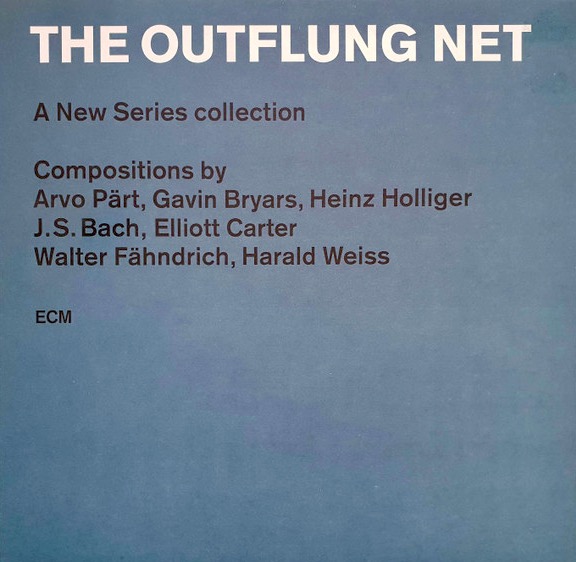
These records were conceived as arrows, each one pointing beyond itself toward the full albums it advertised. Time has reversed their direction. The promotional object now commands attention precisely because no one expected it to need an afterlife, and its former disposability has become part of its aura.

That reversal exposes something quietly unsettling about preservation. We tend to imagine an archive as a defense against loss, yet it can preserve an object while allowing the form of attention it requires to disappear. Vinyl can survive inside a sleeve; patient listening has no such shelter. It must be remade each time someone consents to the duration of a phrase or hears curation as a creative act rather than an interruption of one.