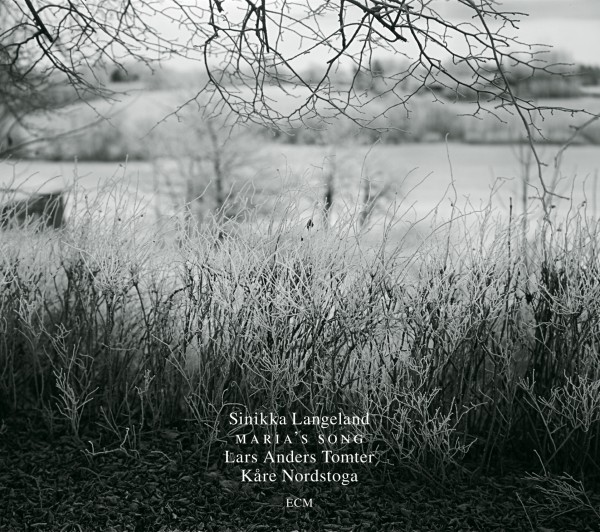
Sinikka Langeland: Maria’s Song (ECM 2127)

Maria's Song

Sinikka Langeland
Maria’s Song

Sinikka Langeland voice, kantele
Lars Anders Tomter viola
Kåre Nordstoga organ
Recorded February 2008, Nidaros Cathedral, Trondheim
Engineer: Ove Berg
Editing: Ove Berg, Jean Lewis (Suite, Chaconne)
An ECM Production

ECM may be nominally dedicated to contemporary music, but Johann Sebastian Bach has been a vital touchstone in its classical recordings. Whether acting as a foil to modern works in Thomas Demenga’s multi-album traversal of the Cello Suites or as the exclusive subject of fresh interpretations by Keith Jarrett and András Schiff at the keyboard, Bach has either existed as a point of reference or as a master being reckoned with anew toward the asymptote of definitive interpretation. Only Christoph Poppen has gone a step further, weaving Bach into the work of Anton Webern (as Webern himself had done) and exploring hidden chorales of the solo violin literature. That was, until Maria’s Song, which is by far, and may always be, ECM’s profoundest reckoning with Bach.

Previously for the label, Norwegian folk singer and kantele (15-string Finnish table harp) virtuoso Sinikka Langeland had recorded Starflowers and The Land That Is Not, both of which sought to explore the shared heart of folk and jazz around the heliocenter of Langeland’s full-throated voice. This time she is joined by Lars Anders Tomter, previously of Ketil Bjørnstad’s The Light, who plays a Gasparo da Salò viola made in 1590, apparently one of the world’s finest examples of the instrument. With them is Kåre Nordstoga, playing the 30-register Baroque organ of Trondheim’s Nidaros Cathedral. Nordstoga is the principal organist at Oslo Cathedral and a Bach specialist, having performed two complete traversals of the composer’s organ music over 30 Saturday recitals in 1992 and 2000.
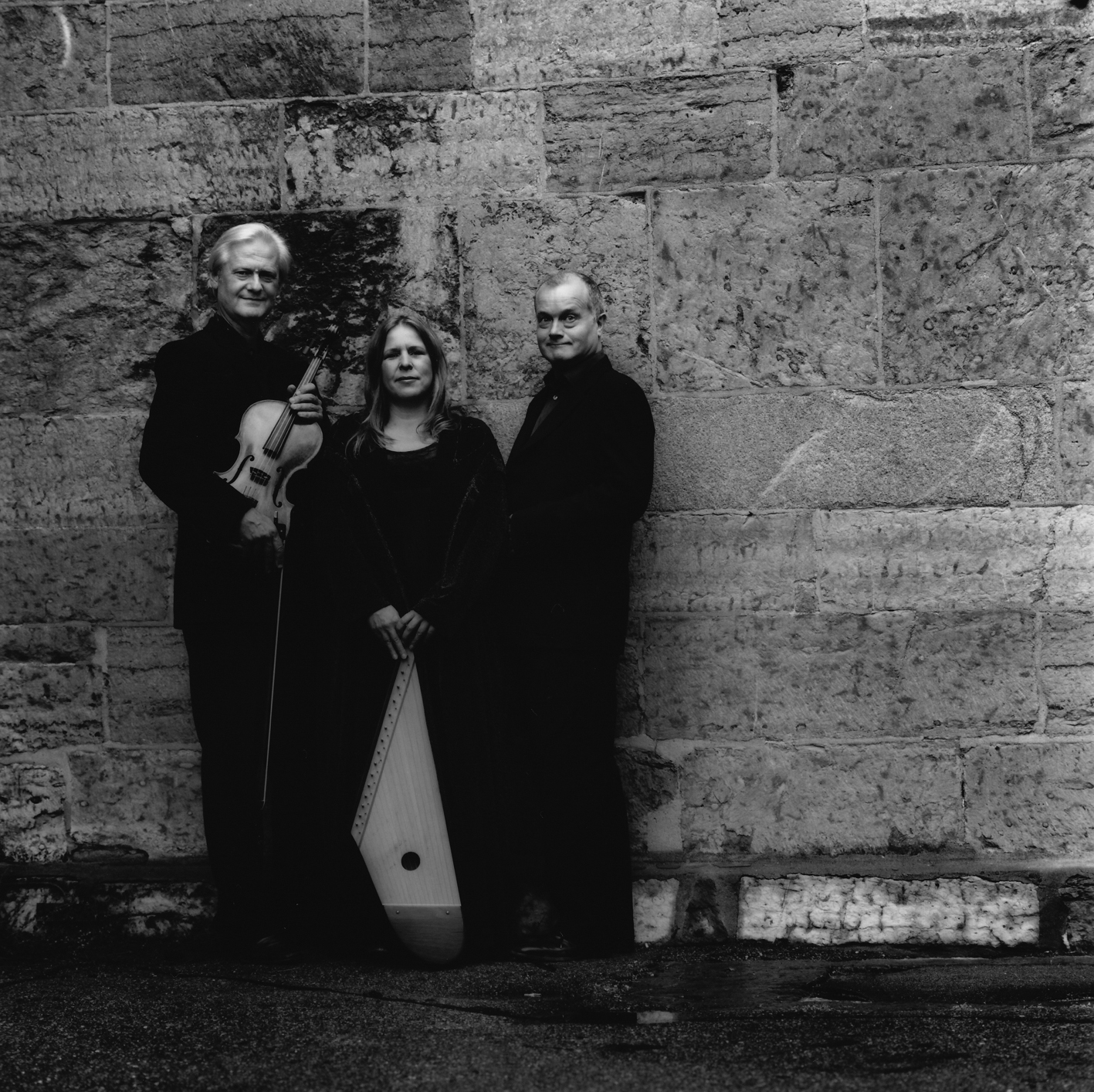
Langeland Trio
(Photo credit: Morten Krovgold)

The program is a mixture of Marian texts from Luke set to folk melodies and medieval ballads, then threaded through the loom of Bach’s hymns (and the Concerto in d minor, BWV 596) at the organ. In addition, Tomter plays viola arrangements of the Solo Cello Suite No. 1 in G major, BWV 1007 (played an octave higher) and the Chaconne from the Solo Violin Partita No. 2 in d minor, BWV 1004 (transposed to g minor). A few things make this a remarkable project. First is Langeland’s immensity of knowledge, on which she draws to assemble a program of such originality that it feels as seamless as its pairings of word and melody. Second is her voice. Possessed of a luminescent, youthful energy, her intonation makes scripture feel like a sheaf of grain distilled into something digestible by the soul. Last is the utter respect with which the musicians perform, respect that emits a sacred light of its own. And no wonder, considering that the spirit of these texts was at one time forbidden in Norway, where the Reformation of 1537 disbanded monasteries and consigned church relics and artifacts, including depictions of Mary, to state storehouses. Worship of the Virgin thus became the stuff of hidden messages and codes, and in these songs Langeland has enacted their recovery.

“Lova lova Lina” is the first encoding of Mary and, like many of Langeland’s segues throughout the disc, is sung with only the cathedral’s resonant air as accompaniment. Along with the “Ave Maria,” it reappears transformed. At times, Langeland’s fingers find their way to the kantele, both as support for the voice and as a voice unto itself. A reprise of “Lova lova Lina” is especially potent for marrying the two. Narratively inflected singing throughout makes of the shuffled program something of a passion play, in which dialogues between Heaven and Earth come to define the natural order of things. One might expect the viola to brighten Bach’s solo cello writing, when in fact it casts a deeper, more spectral shadow. The feeling is distinctly cyclical, as emphasized by the vocal surroundings, and reaches open-gated confluence in the mighty Chaconne, over which the “Ave Maria” is dutifully papered. The organ, too, sings as it speaks, lifting Langeland in “Vom Himmel kam der Engel Schar,” BWV 607 and, on its own, ascending the spiral staircase of the “Fuga sopra il Magnificat,” BWV 733 at hub of it all. Even the Concerto transcription unleashes the Holy Spirit at an intersection of past and future. As Langeland recalls in her liner notes, “While we played our way through time, the Nidaros Cathedral reflected the spiritual currents of a thousand years. The large Russian icon stared at us as we began to record. The dawn light poured through the huge rose window as we finished the night’s recording.” To be sure, we can feel all of these things…and more.
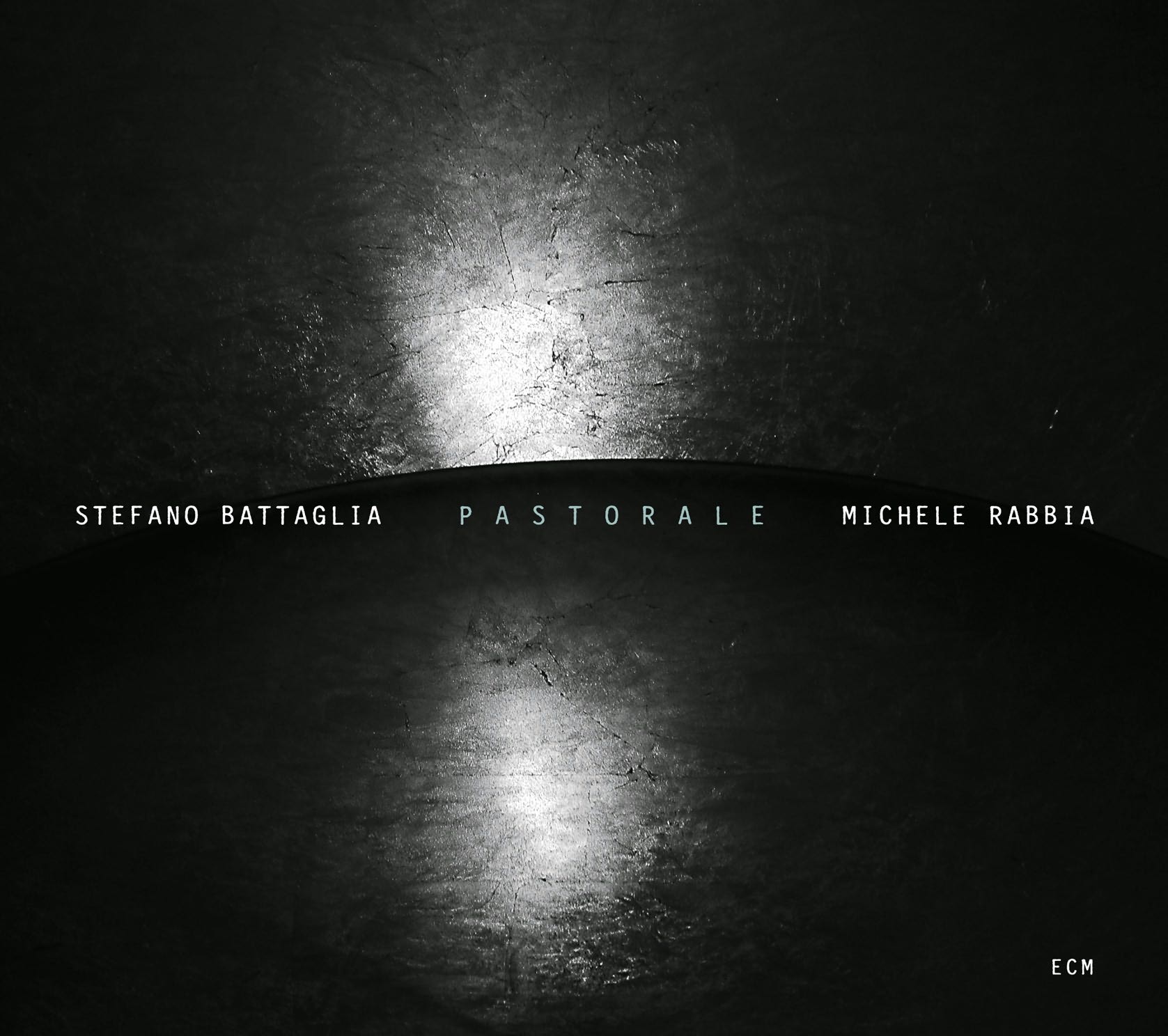
Stefano Battaglia/Michele Rabbia: Pastorale (ECM 2120)

Pastorale

Pastorale

Stefano Battaglia piano, prepared piano
Michele Rabbia percussion, electronics
Recorded September 2008 at Artesuono Studio, Udine
Engineer: Stefano Amerio
Produced by Manfred Eicher

An album of piano and percussion duets may seem unusual, but, by the time of this recording, pianist Stefano Battaglia had been playing with the form for well over a decade. With Michele Rabbia he has spun a core thread, but always in the tapestries of his ensemble projects. With the release of Pastorale, that thread blossoms into a quilt of its own making. Most fascinating about the duo, in this context, is a mutual willingness to expand their sound into digitally enhanced territories.

Coincidentally or not, Rabbia’s organic electronics haunt only the religiously titled tracks. “Monasterium” walks a tightrope between light and dark toward a perfect balance of the two in a way demonstrated also by the album as a whole. The mesh of foregrounded piano and metallic overlay in “Oracle” hints at a wealth of introspection in the distance, visible but unreachable. “Spirits of Myths” furthers this marriage of the living dark, burning low, muted preparations of the piano in the sun and sparkle of Rabbia’s circuitry, conferring a shared inner core as Battaglia and Rabbia become distortions of themselves. Over time, they seek reflection in dialogues between light and metallic surfaces: the clasp of an old Bible; a doorknob polished by decades of turning; a ring that, once worn, is never taken off. By contrast, the atmosphere of “Kursk Requiem” is thick and submarine. The piano marks the procession of technological voices in high-pitched feedback whispers, looping even as they fragment. Even the album’s opening “Antifona libera” (dedicated to Enzo Bianchi, Prior of the Monastic Community of Bose in northern Italy) with its resonance hints at a mercy as resolute as it is mysterious.

On that note, the track “Metaphysical Consolations” might just as well have yielded the album’s title, for it best describes the processes of communication it entails. As it stands, the actual title track practices more than it preaches. Its prepared piano nets drums and gongs, rumbling and singing by turns, seeking flesh through abstraction and in that flesh a feeling of divine order. In this instance alone, it seems, Battaglia’s dissonance is more an expression of tactility than of distortion, giving the ears purchase in a crumbling scene, his right hand the insistent traveler whose map grows with each fearless step. In similar exploratory spirit, the duo mines folk veins in the smoother, jazzier “Candtar del alma” and the modally inflected “Sundance in Balkh.” Even the fully improvised “Tanztheater,” named for the style created by its dedicatee, choreographer Pina Bausch (also the subject of a 2011 documentary by Wim Wenders), carves tunnels beneath the driven architectures above, and with them the possibility of caving in at any moment. Such proximity to destruction confers on the music an emblem of honesty that reduces the act of creation to a skeleton and composes its blood anew.

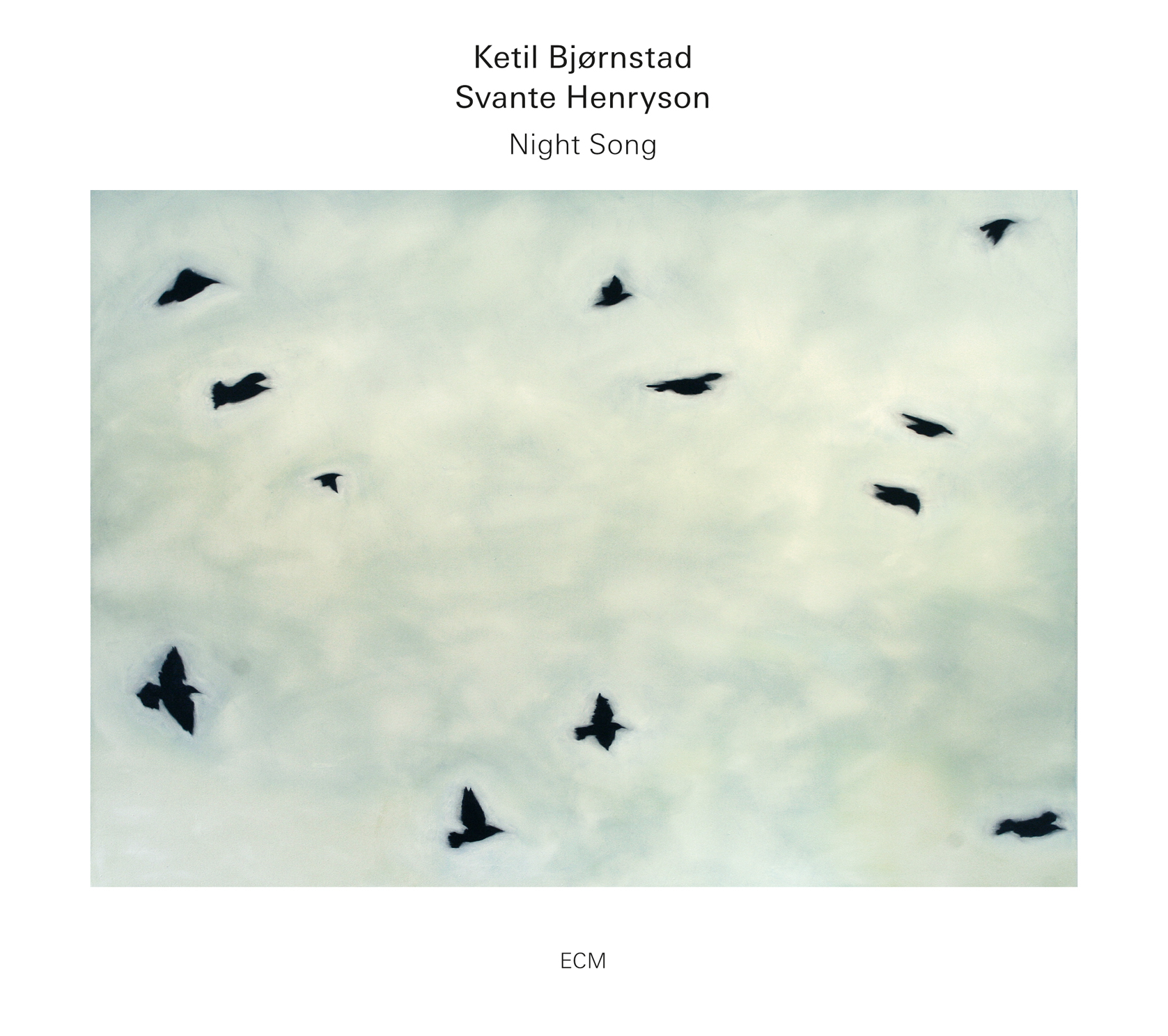
Ketil Bjørnstad/Svante Henryson: Night Song (ECM 2108)

Night Song

Night Song

Ketil Bjørnstad piano
Svante Henryson violoncello
Recorded January 2009 at Rainbow Studio, Oslo
Engineer: Jan Erik Kongshaug
Produced by Manfred Eicher

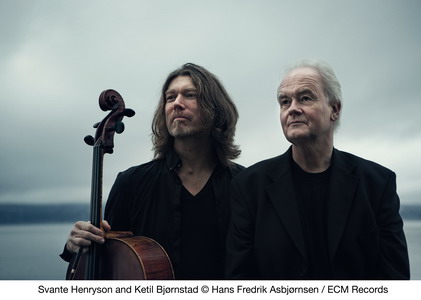
Pianist, composer, and author Ketil Bjørnstad has been long obsessed with Schubert, going so far as to sneak into his school gymnasium as a teenager to play him. “Schubert’s almost naïve openness, his existential sense of wonder and his emotional passion make him at the same time both concrete and mythical,” says Bjørnstad in his liner text. Hence Night Song, which pays tribute to, and engages in dialogue with, the Austrian great. For this project he is joined by Svante Henryson, a multi-instrumentalist and musical chameleon who plays cello alongside Bjørnstad. And by “alongside” I mean exactly that, for the two musicians recorded, at producer Manfred Eicher’s request, as closely as possible, so as to avoid the divisive tendencies of headphones and glass partitions. Bjørnstad: “It is always special for a musician when an ECM production evolves through a dialogue with Manfred Eicher from the very beginning. It can perhaps be compared to what an actor feels, when working with a film director.”

Ketil Svante

The nature of this piano-cello pairing is, however, rather distinct from Bjørnstad’s acclaimed collaborations with cellist David Darling, despite the identical instrumentation. Like Darling, Henryson is a gentle-minded musician, one who whispers more than he sings in the title track, which bookends the album with an “Evening Version” and “Morning Version.” There is, however, in his own music (Henryson pens four of the album’s 16 tracks), an altogether idiosyncratic grace. His arpeggios are of the same planar existence as our own, whereas Darling’s seem to float up from the very earth. Songs (for that is indeed what they are) like “Fall” and “Tar” inhale light and exhale pure, cinematic description—which is to say, by means of a music as visible as it is audible. Henryson’s pizzicati in “Reticence” and “Melting Ice” add further layers of breath, activated by a brooding play of shadows.

Due to the Schubert connection (crystallized in the thinner air of “Schubert Said”), one might think that Night Song would sound more romantic, but like much of Bjørnstad’s chamber music it emotes from a heart seemingly teleported from the late Renaissance. The transitions marked out by tracks like “Visitor” and “Share” from inward prayer to full-throated incantation tickle the senses. To better manifest these transitions, Bjørnstad substantially expands his coverage of the keyboard (note the low range of “Edge” and, by contrast, the glittering rays of “Sheen”). Wherever he may be on the spectrum, he always performs with forgiveness. Henryson, too, unravels coils of life force in the hopeful “Serene” and, in the album’s most songlike turn, “Chain.” His precision in the latter is astonishing for its balance of trepidation and peace.

Bjørnstad’s music begs image, movement, and reconsideration of time. In this sense, Night Song may just be his most intimate recording yet, a gem of expression clawed in silver and carefully polished until it is worthy of being slipped on the finger of a hidden muse.

(To hear samples of Night Song, click here.)

Tord Gustavsen Ensemble: Restored, Returned (ECM 2107)

Restored, Returned

Tord Gustavsen Ensemble
Restored, Returned

Tord Gustavsen piano
Tore Brunborg tenor and soprano saxophones
Kristin Asbjørnsen vocals
Mats Eilertsen double-bass
Jarle Vespestad drums
Recorded January 2009 at Rainbow Studio, Oslo
Engineer: Jan Erik Kongshaug
Produced by Manfred Eicher

Restored! Returned! The lost are borne
On seas of shipwreck home at last:
See! In a fire of praising burns
The dry dumb past, as we
Our life-day long shall part no more.
–W. H. Auden, “Warm are the Still and Lucky Miles”

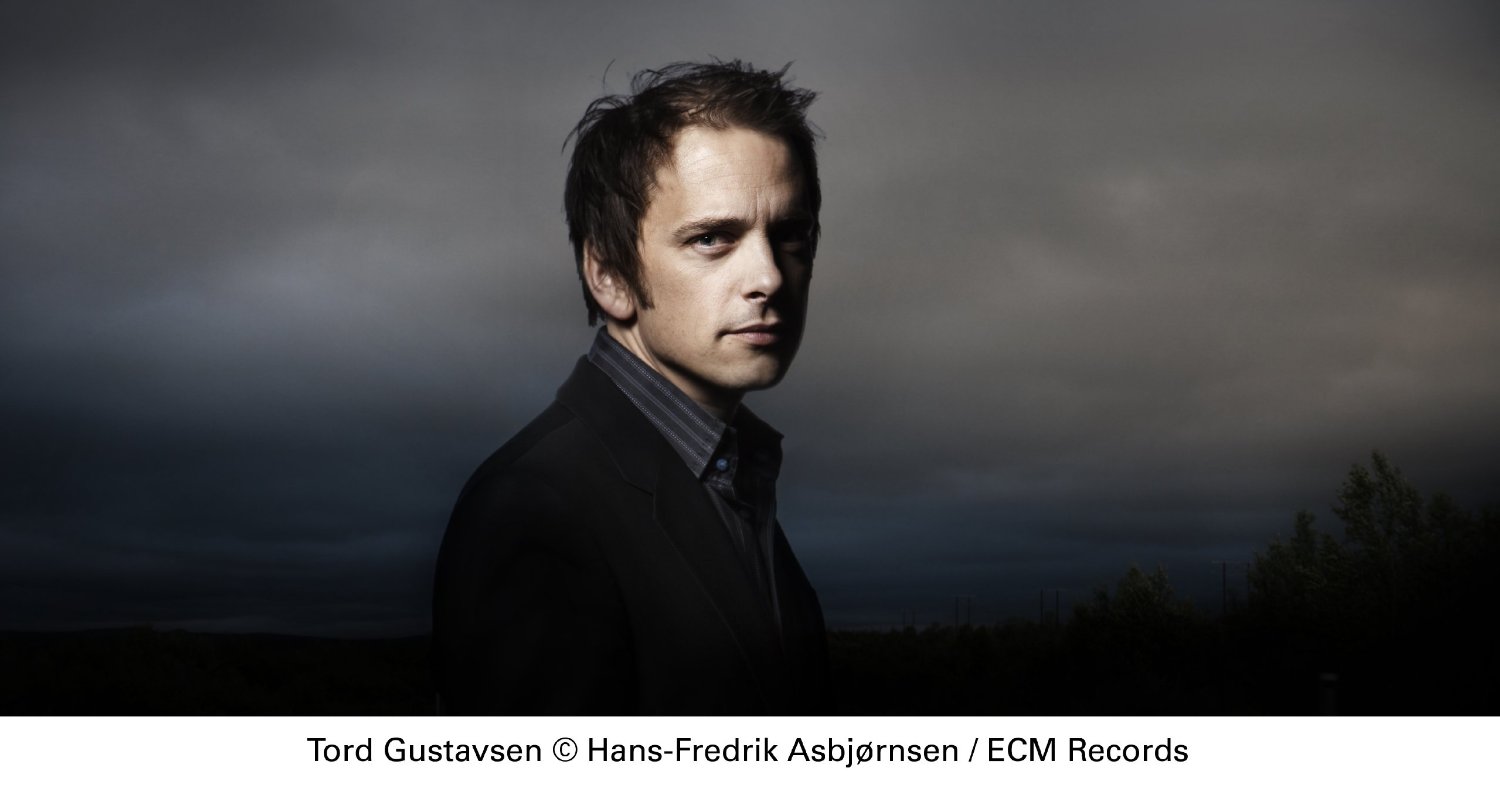
Norwegian pianist Tord Gustavsen, who prior to Restored, Returned released three of ECM’s most beloved trio albums, now adds to that tapestry the lyrical threads of saxophonist Tore Brunborg and, in her first appearance on the label, vocalist Kristin Asbjørnsen. Gustavsen, who additionally switches out bassist Harald Johnsen for Mats Eilertsen and holds on to drummer Jarle Vespestad, styles the album as a “collection of cherished memories” rather than as a unified whole and consequently backgrounds himself a little in order to let his collaborators glow unobstructed.

Tord

Although a fascinating addition to the Gustavsen nexus, Asbjørnsen’s rendering of poetry by W. H. Auden may guide listeners down forking paths. Her tone is closest to Sweden’s Karin Dreijer Andersson (best known for her associations with Röyksopp): which is to say, an enchanting mixture of childlike vulnerability and strength beyond her years. With the very balance of clarity and mystery that Gustavsen attributes to Auden’s verses, Asbjørnsen engenders a chain of invitations to higher understandings of the same. Which is perhaps why the album more frequently concerns itself with wordless poetries in the form of intimate cradlesongs. Some, such as the three so-called “Left Over Lullabies,” are more obviously of this kind. In them, Asbjørnsen emerges gently, organically, gathering nebulous strands into themes, which Brunborg then unpacks in riverbed flow. In these instances, Asbjørnsen’s grammar is entrancing and works best when she adlibs with Gustavsen alone, crafting melody out of her own stardust rather than ink on the page. Other lullabies—namely, “The Child Within,” “Spiral Song,” and “The Gaze”—have reeds in mind. In all three, the piano spins a cocoon of introduction, letting Brunborg’s motives break wing of their own accord.

The surrounding songs dip forthrightly into the poetic font. Whether in the gospelly “Lay Your Sleeping Head, My Love,” the folkish diptych of “The Swirl / Wrapped In A Yielding Air,” or the fully developed “Your Crooked Heart,” Asbjørnsen’s throaty delivery feels grounded in love at every moment. She embraces daybreak through Auden’s words, touched by supporting musicianship that finds power not in strength but nuance of force, a force by which the expressive minutiae of experience drink sun without fear of cloud. The title track is likewise a stirring of photosynthetic impulses, growing by a season that abides by its own philosophy of recovery.

For those new to Gustavsen, start at Changing Places and work your way here. Like the fully improvised instrumental “Way In,” his art builds doorways of entry one cell at a time, so that by the time the full body is born, we are already a part of it. The songs may indeed be isolated, but they also yearn for continuity with past and future voices, holding scriptures on the tongue for grace of unity. This journey is far from over.

(To hear samples of Restored, Returned, click here.)

Georg Friedrich Händel: Die Acht Grossen Suiten – Smirnova (ECM New Series 2213/14)

Die Acht Grossen Suiten

Georg Friedrich Händel
Die Acht Grossen Suiten

Lisa Smirnova piano
Recorded May 2007, May-June 2008, and Feburary 2009 at Schloss Goldegg, Austria
Engineer: Jens Jamin
An ECM Production

This is not the first time that music from Georg Friedrich Händel’s Suites de Pieces pour le Clavecin (a.k.a. the “Eight Great Suites”) of 1720 has appeared on ECM. Pianist Keith Jarrett recorded for the label’s New Series imprint a selection of suites by Bach’s near contemporary in 1993, and with it endorsed an affirmative reassessment of these exceptional works. Several complete recordings have since been issued, and many more predate it on vinyl, so the press release’s claim that these pieces are “too rarely brought together on disc” is, in fact, moot. Paul Nicholson’s cycle for Hyperion, recorded on harpsichord a year after Jarrett and distinguished by its highly embellished repeats, was a notable companion. Two further accounts have been issued this year (2014) alone. The first, by Richard Egarr for Harmonia Mundi, also opts for harpsichord, while the second, by Danny Driver for Hyperion, joins this 2012 release from Vienna-based Russian pianist Lisa Smirnova as a formidable contender for piano renditions. Smirnova would seem to marry the best of those recent followers, combining Egarr’s charm and Driver’s vibrancy with idiosyncratic success.

Smirnova

Although Händel humbly called these pieces “lessons,” their exact purpose is unclear. Their difficulty is, however, anything but and comprises an earthly counterpart to J. S. Bach’s heavenward considerations at the keyboard. For Smirnova, it is timeless music all the same, as attested by the five years of preparation and careful study she poured into it before a single studio microphone was switched on. Just as intriguing and well considered as her performance of the suites is the order in which she plays them, beginning as she does with the Suite No. 2 F Major HWV 427. A subtle yet bold choice of introduction, it lowers us into Händel’s pond so that we might see the ripples for what they are: as beautiful disturbances brought to life by a human touch. In the latter vein, the suite highlights Smirnova’s technical prowess: her syllogistic approach to the binary Adagios, balance of fluttering trills and steady pacing in the Allegros, and exquisite pedaling throughout.

The suites are full of idiomatic variety and avoid formal suite structure altogether. Consequently, Smirnova’s immediate jump to the Suite No. 8 F Minor HWV 433 makes as much sense as the composer’s elision of a Sarabande in the same (this peculiarity also marks the set’s most Baroque Suite No. 1 A Major HWV 426, which Smirnova places second to last). Thus foregrounded, this final suite elegantly flaunts its darker, more mature wardrobe. The extraordinarily lovely Allemande exemplifies both Händel’s sensitivity as a composer and Smirnova’s as a performer, legato phrasings and all. The concluding Gigue, too, shows us her grace and her ability to be fortuitous without tripping over prosody.

The Suite No. 4 E Minor HWV 429 and Suite No. 5 E Major HWV 430 are the only consecutive pairing. The echoing beginnings and sportive finish of the one sit comfortably alongside the dreamy core of the other. Next, the Suite No. 3 D Minor HWV 428 proceeds with gusto. The fantastic keyboard coverage of its Prelude recalls the grandeur of Bach’s organ works and opens a multivalent interface toward the gargantuan Courante. Simple in design yet expansive in effect, its octave voicings in the left hand and spurring trills in the right keep the final Presto in its sights, inspiring some of the set’s most virtuosic control of dynamics. By contrast, the Suite No. 6 F Sharp Minor HWV 431 portions itself more conservatively, keeping its inner fire audible but in constant check.

Händel mixes things up yet again in the Suite No. 7 G Minor HWV 432, for which he adapts the Overture of his cantata Clori, Tirsi e Fileno HWV 96. Here Smirnova puts on the air of a harpsichordist, her style brisé lending bite to every tantalizing swerve. This fullest of the suites is a veritable summation of the whole. From the salon-like Andante to the affirmative Passacaglia, it draws on many autobiographical roots until a new tree is born. Smirnova may be just one of many leaves on its ever-growing branches, but among them holds the sun in frame, her heart glowing green against cloudless sky.

(To hear samples of Die Acht Grossen Suiten, click here.)

Dario Castello/Giovanni Battista Fontana: Sonate concertate in stil moderno (ECM New Series 2106)

Sonate concertate in stil moderno

Dario Castello
Giovanni Battista Fontana
Sonate concertate in stil moderno

John Holloway violin
Lars Ulrik Mortensen harpsichord
Jane Gower dulcian
Recorded June 2008 at Propstei St. Gerold
Engineer: Stephan Schellmann
Executive producer: Manfred Eicher

John Holloway has charted a veritable history of the Baroque violin across the waters of ECM’s New Series, but perhaps none so tantalizing as the selections he has assembled for this benchmark recording. Holloway notes a special affinity for Dario Castello (1590-1658) and Giovanni Battista Fontana (1571-1630), composers whose works he played as interludes in vocal music concerts early on in his career. Now, nearly four decades later, he allows them the full force of center stage.

This program’s featured sonatas denote a time when the violin was coming into its own as a melodic lead (where before it was merely a consort instrument) and the portability and projection of the fagotto, an early incarnation of the bassoon known also as the dulcian, replaced the viola da gamba as the bass line in chamber ensembles. Historical bassoon specialist Jane Gower plays the dulcian alongside Holloway—with whom, as always, is harpsichordist Lars Ulrik Mortensen. It’s a formidable trio playing formidable music, but with a graciousness born of knowledge and experience.

Holloway Mortensen Gower

In her book Desire and Pleasure in Seventeenth-Century Music, musicologist Susan McClary brilliantly describes Dario Castello’s instrumental pieces as latching onto “a succession of impulses—some ordered with respect to goals, to be sure, but others producing extended passages of hovering.” Such a characterization might easily carry over into the concerto, to which this music represents a transitional link. Castello’s distinctly Venetian ornaments and flair for ecstatic denouements make of the listening—and, one can only imagine, the performing—a rewarding experience. The album is bookended by six sonatas from his two massive books of the same. All but two, the Sonata Prima à Sopran Solo and the Sonata Seconda à Sopran Solo, feature the dulcian. Those without boast a staggering variety of speeds, dynamics, and textures. Holloway and friends negotiate transitions between slow, reflective stretches of beauty and their cathartic outbursts with ease, and by those changes underscore a grand (but never grandiose) sense of development. Sonatas with the dulcian outweigh the potential complexities of the combination with awareness of line and form. Like masterful Celtic knotters, composer and musicians attend to every curve. Gower’s contributions (note especially the Sonata Ottava à due. Sopran e Fagotto) add depth of character to Mortensen’s sparkling frame, while Holloway enlivens the music’s cyclicity with meticulous intonation. The concluding Sonata Ottava à due. Sopran e Fagotto indeed brims with dramatic finality and, for its quick-witted arpeggios and filigreed structure, is the most virtuosic of them all.

It’s only natural that the music of Giovanni Battista Fontana, closest in style to Castello’s, should occupy the program’s center. Here we are treated to seven of his concerto sonatas, of which four do without the dulcian. To these Holloway brings a rustic energy by means of his bow, yielding and dancing in a veritable profusion of flora and fauna. Fontana, it might be said, was even more of an expository composer than Castello, as evidenced by tactile Sonata Terza Violino Solo and flowing tempi of the Sonata Sesta Violino Solo. Even more so with the dulcian in tow, as in the charged interactions of the Sonata Decima Fagotto e Violino. If these pieces seem more temperate, however, it’s only because the transitions between subdivisions are less explicit, marking as they do a time of great invention in the Italian sonata, so dutifully preserved for our own desire and pleasure for countless years to come.

Duo Gazzana: Poulenc, etc. (ECM New Series 2356)

2356 X

Duo Gazzana
Poulenc / Walton / Dallapiccola / Schnittke / Silvestrov

Natascia Gazzana violin
Raffaella Gazzana piano
Recorded June 2013, Auditorio Radiotelevisione svizzera, Lugano
Engineer: Markus Heiland
Produced by Manfred Eicher

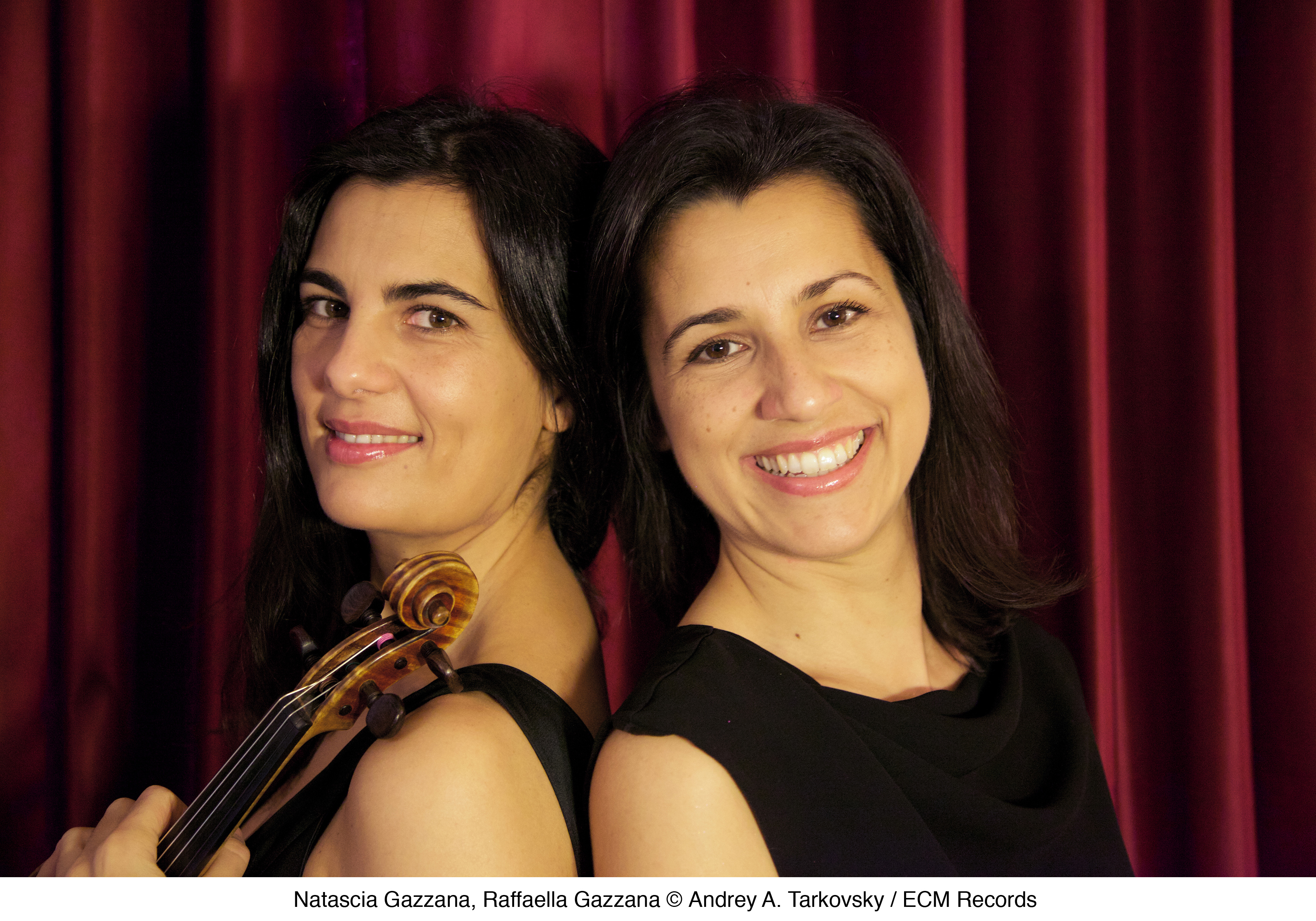
In 2011, pianist Raffaella Gazzana and violinist Natascia Gazzana, better known as Duo Gazzana, made a quiet, if colorful, splash with Five Pieces, their first record for ECM’s New Series imprint. Navigating a recital comprised of works by Takemitsu, Hindemith, Janáček, and Silvestrov, the Gazzana sisters, in close collaboration with producer Manfred Eicher, demonstrated an acute sense of programming, technique, and integrity. Despite the title of their debut (named for the Silvestrov composition of the same name), which contained only four pieces, Silvestrov’s Hommage à J.S.B. (2009) comprises the heart of this truly pentagonal sequel. The Ukrainian composer offers three short movements: two Andantinos and one Andante, each the band of a deeper and more nuanced spectrum. The end effect is one of suspension. Although originally written for Gidon Kremer, the Hommage is uniquely informed here by the Gazzanas’ attention to detail. “The music of Silvestrov is not difficult in terms of notes,” Raffaella tells me in a recent interview, “but it’s so particular. In a way, you have to isolate yourself from the noise of life. He’s a composer who belongs to another time, bringing these beautiful melodies, as if from the past.” Indeed, as Wolfgang Schreiber observes in his album notes, the Gazzanas share in the spirit of the music they have selected, which like them finds newness in the old. Their unwavering commitment to urtexts only serves to emphasize what is unwritten in them, thus coaxing out hidden messages and spirits.

Gazzana Portrait

Radiating outward from the Silvestrovian center are two richer, denser works: Poulenc’s Sonate pour violon et piano (1942/43, rev. 1949) and William Walton’s Toccata for violin and piano (1922/23). Dedicated to the memory of Federico García Lorca, the Poulenc sonata is, in Raffaella’s estimation, a product of its time, as is clear in the first in third movements, designated “Allegro con fuoco” and “Presto tragico,” respectively. These are extroverted, almost flailing. Stravinsky looms large in the final, especially, but there are also—unwitting, perhaps—nods to the late Romantics and Ravel as the piece nears its enigmatic coda. “After expressing the suffering of the war,” Raffaella observes, “Poulenc wanted to finish with this dreamy catharsis. This was his character, shy but also enjoying life. He was, I think, a very elegant man, and in this sonata you can hear that.” Poulenc purists take note: the Gazzanas’ interpretation corrects mistakes left in the original French edition prepared by Max Eschig, which elides key signatures in the last page. After careful study of the facsimile, they believe to have arrived at the definitive version.

Although more obscure, Walton’s Toccata was the subject of Raffaella’s dissertation and is no less possessed of elegance. Nataschia’s opening proclamation stirs the piano’s waters with relish and fortitude, giving way to a virtuosic and starkly exuberant foray, pocked by haunting, probing depressions. Although written in the composer’s 20s, it smacks of maturity and daring-do. Raffaella: “I am always impressed by the piece’s improvisational elements. At the time he was working on it, Walton was planning a jazz suite for two pianos and orchestra. Although it never panned out, you can hear this influence throughout the Toccata. The beginning contains no tempo or bar divisions. You just have to go with it.”

Two further works draw the album’s outer circle. First is Schnittke’s Suite in the Old Style. Originally composed for two 1965 films (Adventures of a Dentist and Sport, Sport, Sport) by director Elem Klimov, Schnittke arranged these five selections for violin and piano in 1972. Its moods are crisp and compelling. Especially moving are the Minuet and the spirited Fugue. Only the final movement, marked “Pantomime,” has the surreal touches one might expect of the composer. Still, it is playful and fragile, ending with a mystery.

Tartiniana seconda (1956), by the 20th-century Italian composer Luigi Dallapiccola, concludes. Referencing Tartini, this divertimento spreads a beautiful carpet across its four Baroque-inspired movements. “This piece enjoys great popularity in Europe,” Raffaella explains, “especially in Italy. It makes exclusive use of canons, pastorale, and variations: all forms that belong to the past.” At times ponderous and lyrical, at others swirling with ornament and invention, it culminates with a set of emphatic statements from both musicians. Of all the pieces on the album, it is the most architectural. This is no coincidence: “It helps to have the score in hand when listening, because it’s as much for the ears as it is for the eyes. In the opening Pastorale, for instance the piano plays the violin’s lines exactly, but staggered and in reverse, while in the second Variation, it plays the exact reverse, bar for bar.” The Tartiniana also gives contrast to the freer forms of Walton, lending finality and flourish to this exquisite sophomore program.

Coinciding with the release of this disc was the Duo Gazzana’s North American concert premiere when, on May 2, they performed as part of 2014’s Look & Listen Festival in New York City. For this performance, they chose the Silvestrov and Poulenc pieces from the new album, and enchanted the audience with their grace, sensitivity, and mutual resonance. Hearing this music live brought home a vital point in relation to the album’s core philosophy. Because the nature of past and future is immaterial, the only true reality of this music can be the here and now of performance and listening. On this point, Raffaella has the final word: “Chamber music has ever been one of the most beautiful expressions of liberation, one that tests the ability of performers to listen to one another in dialogue. These peculiarities attract us and in our interpretations we try to emphasize them. All the study we put into these pieces is just the grammar. But grammar must be spoken to come to life. Nowadays, it’s easy to speak without caring what other people think. Chamber music ensures we never fall into that trap. Sure, there are good performers, but it’s obvious when they’re performing only for themselves. Chamber music is, quite simply, enjoyable. It’s so beautiful to share it with such a caring musical partner, and with the listener in turn. When you do something out of love, you transmit this love to others. And people can hear this.”

(See this article as it originally appeared for Sequenza 21. To hear samples of this album, click here.)

David Virelles: Mbókò (ECM 2386)

Mbókò

David Virelles
Mbókò

David Virelles piano
Thomas Morgan double bass
Robert Hurst double bass
Marcus Gilmore drums
Román Díaz biankoméko, vocals
Recorded December 2013 at Avatar Studios, New York
Engineer: James A. Farber
Assistant: Akihiro Nishimura
Produced by Manfred Eicher

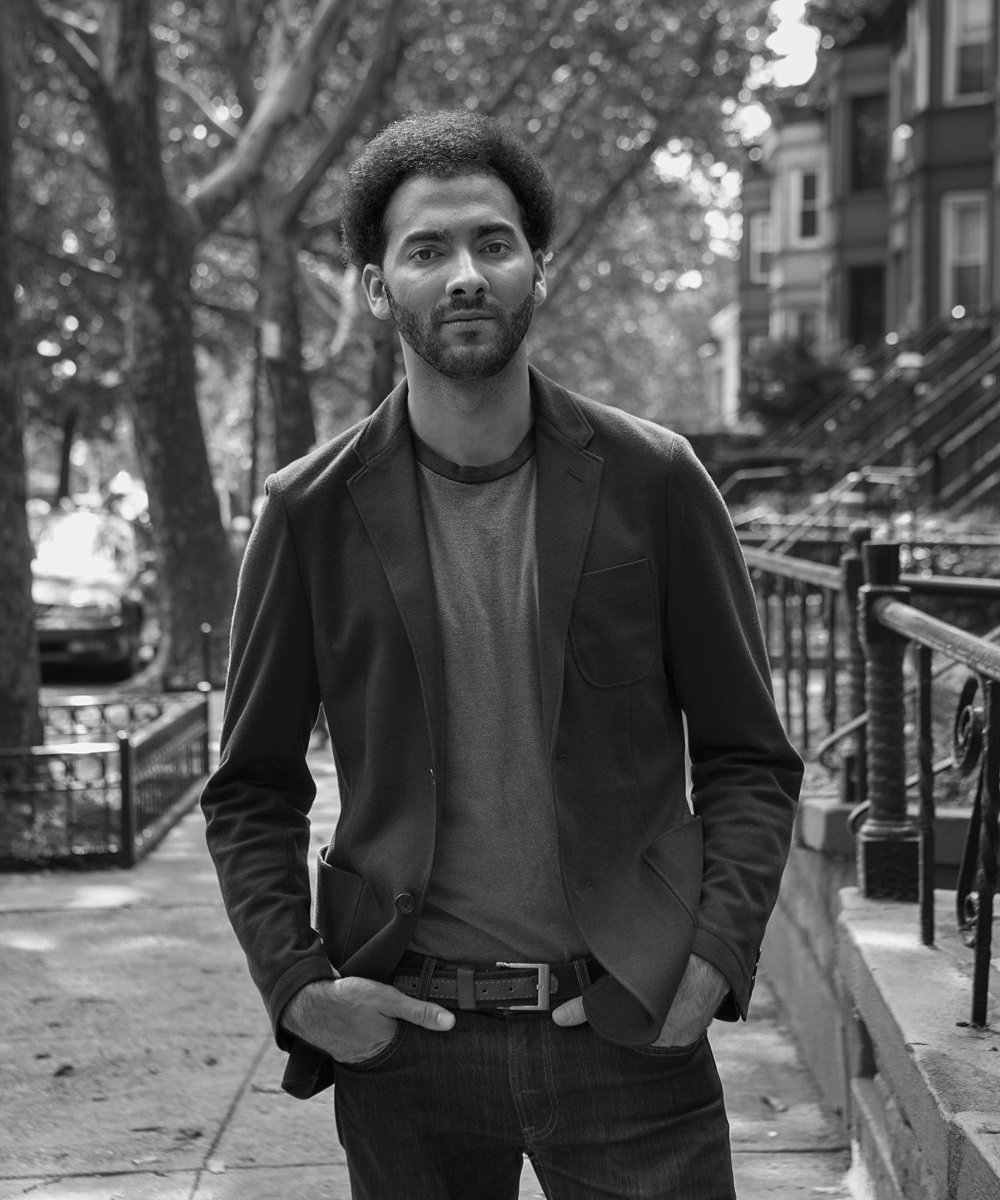
David Virelles first dipped his oar into ECM waters from the vessel of Chris Potter’s phenomenal The Sirens and, more apparently, on Tomasz Stanko’s Wisława. The 30-year-old pianist, born and raised in Santiago de Cuba but now headquartered in Brooklyn, cites a range of musical influences, from Afro-Cuban sounds to Bach to Thelonious Monk. On Mbókò, his first leader date for the label, he taps even deeper origins. The album’s subtitle—“Sacred Music for Piano, Two Basses, Drum Set and Biankoméko Abakuá”—points to those origins while also disclosing its unique instrumentation. The biankoméko is a four-drum ensemble (also including sticks, cowbell, and shakers) of the Abakuá, a fraternal secret society of Cuba with West African roots. Around this ritual core Virelles enlists the services of Thomas Morgan and Robert Hurst on basses (heard left and right of center, respectively), Marcus Gilmore on drums, and Román Díaz on the biankoméko. As an integral participant and circle-maker of the album, Díaz brings his especial knowledge of a talking drum known as the bonkó enchemiyá to spinal effect, around which the nerves of Virelles’s piano parts took organic paths during the music’s genesis. It is a language more ancient than speech, one that flowers through the ritual power of improvisation and makes itself known like a puppet lifted by its strings.

Virelles (Photo credit: Juan Hitters)

Because this album’s multivalent title is its sunrise and sunset, I use its three distinct meanings to divide this review as follows.

Fundament

The Abakuá faith derives from Carabalí beliefs, by way of southern Nigeria. Most Abakuá rituals are known only to initiates, and may involve purification and communion with the dead. According to Professor Alan West-Durán, the Abakuá accommodate two orders of drums—one more symbolic, the other the biankoméko heard here—in their religious practice. The latter are typically associated with dances of the Íremes, a reincarnated soul believed to be present during ceremonies or, in the case of occasional public rituals, with the demonic Ñáñigos. And yet, as William Luis elaborates in his book Culture and Customs of Cuba, the Abakuá Society, contrary to being discriminated as a supposed gang of thieves, is “a religious and mutual aid organization that works in the interest of its members.” Any secrecy surrounding the Abakuá is fundamentally a defense mechanism, a means of protecting their spiritual beliefs in a state of indefinite displacement. The Abakuá identity, in fact, goes as far back as 1836, although Carabalí presence in Havana dates further to the eighteenth century, when the Middle Passage uncoupled thousands of Nigerian slaves from their homeland and plugged them into the Cuban trade circuit.

Sugar cane

The music of the Abakuá—and, by extension, Virelles’s reimagining of it—wears masks. It does so not as a means of assumption or transposition, but to deepen the experience of self-expression. “Wind Rose (Antrogofoko mokoirén),” for instance, begins in the piano’s depths, a dream of the unconscious given voice through instrumental contact. It’s an awareness of enmeshment in all things, the knowledge that somewhere beyond any personal radius is another world, one step away. We may hear this in the percussion, which gives ground to the piano’s flotation. Only these two forces—ivory and skin—establish a perimeter of mood. Inside becomes outside. Like the sugar cane, the communication between Virelles and Díaz unites stalk and root. It is profound for having no interest in profundity. It steps from the shadows into candlelight in “The Scribe (Tratado de Mpegó),” where a fluttering beat gives rise to our first encounter with bass. There is an impactful solemnity to this triangle. It would seem to allude to an ancient past in which the mind was a force of nature—was, in fact, nature incarnate—and needed only blink to find its meal. Virelles brings an astonishing level of detail to the keyboard in this space. His smallest gestures move mountains. The split bassing of “Transmission” later in the set reveals even more such gestures, each the messenger of an underlying pulse. The splash of hard-won pianism that intros “Biankoméko,” too, lends gravity to the subtlest shadows. At the same time, it’s a sound that stirs the waters until ancestral currents are released, shaping rock and soil by the scraping of divine fingernails. The rhythmic waterfall of “Antillais (A Quintín Bandera)” allows Gilmore to unleash the most mindful color he has to offer, while “Aberiñán y Aberisún” clears a path for Díaz to sing. Although his voice recedes as quickly as it emerges from the surrounding forest, his ripple effect is such that all notions of unity are forever altered. This welcoming of spirit slips behind the unopened eye, leaving the sunrise bereft of reflective surface. In its place, the lush flora of “Seven, Through The Divination Horn” stretch their unbreakable vertebrae in the dawn, warm and acknowledged. “Stories Waiting To Be Told” gives us Virelles the Storyteller. The dream-walk of his inaugural solo lays a jagged, horizontal path, intersecting the vertical with sprawling rhythms and winding improvisations: the inhale to the others’ exhale. In light of this, giving praise to “The Highest One” paints not in upward but inward strokes. It is the opening of self to the selfless, or of the known to the unknown, as in the 40-second track, “Èfé (A María Teresa Vera),” that closes this ceremony as it began, our brothers of the keys and the drum pulling the already and the yet-to-be into the now.

The Voice

Abakuá initiates praise the Divine Voice. For them, sound is a sacred energy to be worshipped. Its highest leaders carry memory of the Voice within. Such responsibility is written in the energy of belonging. It bespeaks a love of private knowledge, an affirmation that just because one is relegated to the margin doesn’t mean one can’t also redefine that margin as its own territory. Mbókò is thus a record of the peacekeeper, of the knowledge-bringer, of the one who holds a mirror to the world as the surest way of preserving it.

(To hear samples of Mbókò, click here.)

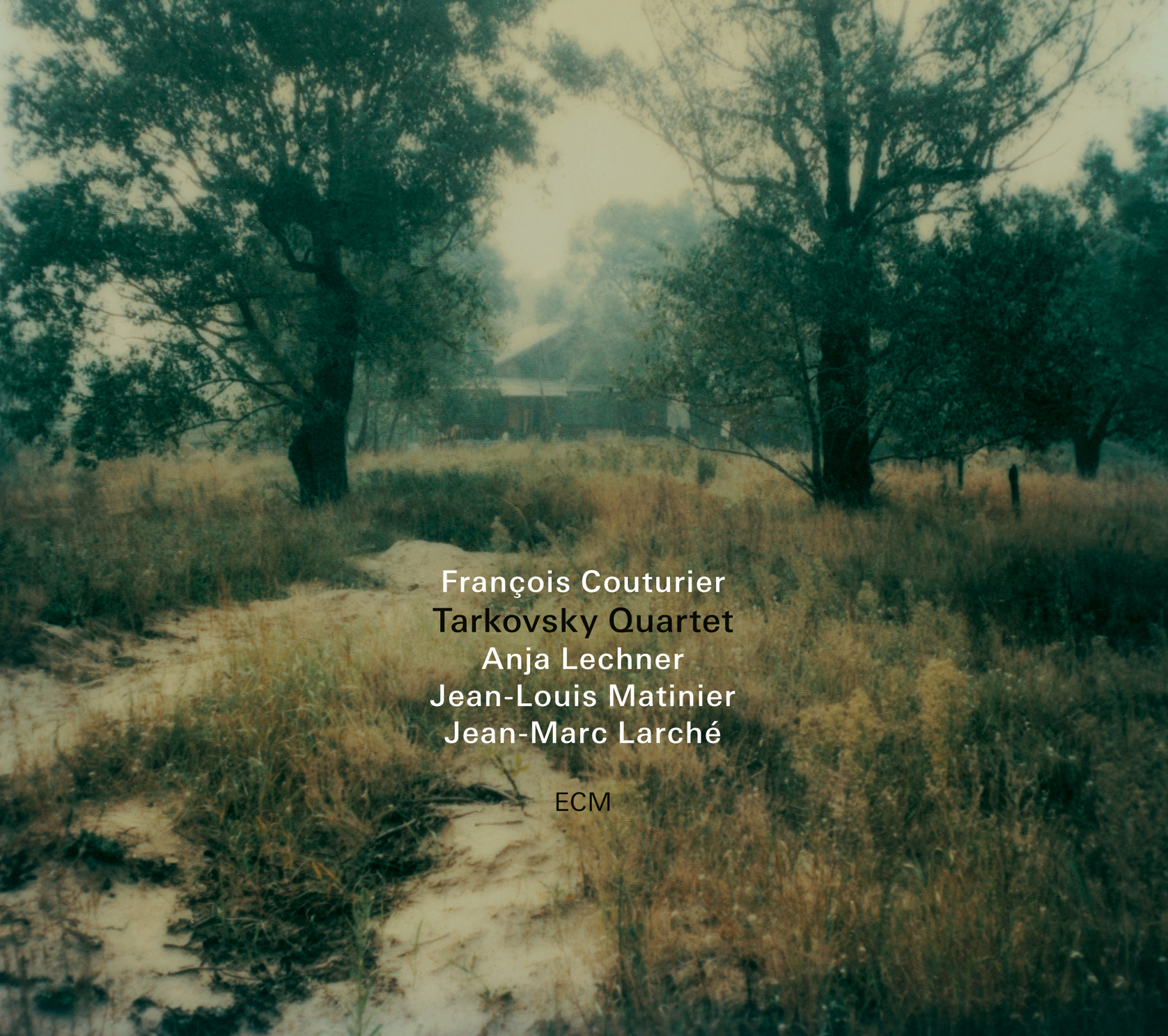
Tarkovksy Quartet: s/t (ECM 2159)

Tarkovsky Quartet

Tarkovsky Quartet

François Couturier piano
Anja Lechner violoncello
Jean-Louis Matinier accordion
Jean-Marc Larché soprano saxophone
Recorded December 2009, Auditorio Radiotelevisione svizzera, Lugano
Engineer: Markus Heiland
Produced by Manfred Eicher

“What she thought about death was childish, but what could never have touched her in the past now filled her with poignant tenderness, as sometimes a familiar face we see suddenly with the eyes of love makes us aware that it has been dearer to us than life itself for longer than we have ever realized.”
–Georges Bernanos, Mouchette

Forever striking about the cinema of Andrei Tarkovsky is its commitment to silence. Whether unfolded in the inner expanse of Solaris or cupped like the candle in Nostalghia, it breathes. For Tarkovsky, the latter sequence was indeed a representation of human existence: birth as inhale, and life as a flame trembling in protracted exhale. Likewise exhaling is this self-titled album from François Couturier’s Tarkovsky Quartet, which completes the pianist’s envisioned trilogy for ECM around the work of the master Russian filmmaker. More than a tribute, it is a tribune, quietly defending the right to sing without words as a way of opening the heart. Flipping through the aortal pages of its namesake, this album treats every concerted pump as a point along a line, from which dangles twelve tracks encased in solemnity.

TQ

The title of “A celui qui a vu l’ange” (A person who saw the angel), being carved on Tarkovsky’s tombstone, begins with the end. Couturier’s introduction discloses a ponderous reel of undeveloped film that unspools to the keystrokes of accordionist Jean-Louis Matinier and the threading of cellist Anja Lechner. Soprano saxophonist Jean-Marc Larché completes the image even as he unsettles it, startling the flow like a bird landing on a pond filled with broken bottles, scrap metal, and sharp stones. If such imaginings already feel cinematic, it is because they speak as much in a language of light as of sound—word and image made flesh through the divinity of direction.

That being said, the shape of this Tarkovsky Quartet is primarily rendered through the sculptor’s press of improvisation. Three pieces—“San Galgano” (which names the setting of Tarkovsky’s 1983 film Nostalghia), “Sardor” (a film for which he wrote the screenplay but never realized), and “La main et l’oiseau” (The hand and the bird), which points to The Mirror—are, in fact, entirely adlibbed, each a tangled web of signs stretching tundra for the feather brush. Like “Sardor,” a good portion of the album references people or places that never stood before his camera. “Mychkine” (named for the protagonist of Dostoyesvsky’s The Idiot, a subject Tarkovsky often spoke of cinematizing) is a remarkable dip into psychological pools. Matinier floats over surrounding fields of cello and piano, a lone blackbird lured by distant sparkle. Thomas Mann’s novel “Doktor Faustus” (which, again, Tarkovsky never filmed), on the other hand, remains grounded like a tree in this stark musical treatment. Tarkovsky’s favorite Bresson film, “Mouchette,” inspires an affectionate cordoning of the piano while the other instruments fragment the center. Even the ostinato backing of “La passion selon Andreï,” the original title of Andrei Rublev, would seem to articulate a parallel universe.

Two tracks snap living family photographs. “Tiapa” (a nickname for Tarkovsky’s youngest son) builds a lighthouse as Lechner underlies the waves before giving way to accordion and soprano, the second of which casts its own melodic torch so far that it becomes indistinguishable from the lighthouse beam, traveling far beyond the boats and never once looking down until the glow of a distant noon becomes visible. “Maroussia” (another nickname, this for Tarkovsky’s mother) splits the piano like a branch, connecting footprints toward a fiery clearing.

Throughout the program, musical nods to Bach, Pergolesi, and Shostakovich cut ghostly figures. Yet the deeper nods go to fundament and firmament. “L’Apocalypse,” for one, draws from the Book of Revelations, the cautions of which occupied Tarkovsky’s later films. This jagged yet somehow dancing music is a deconstructed cross. In the same spirit(uality), “De l’autre côté du miroir” opens with a tender solo from Lechner, whose interest in interstices makes for compelling listening. Couturier draws a slow-motion current, a tracking shot across centuries of growth in a single compression. The other instruments are echoes, ciphers lost on their way to salvation.

Here is a beacon for those who have only experience of the night.

(To hear samples of Tarkovsky Quartet, click here.)