John Surman: Proverbs and Songs (ECM 1639)

Proverbs and Songs

John Surman
Proverbs and Songs

John Surman baritone and soprano saxophones, bass clarinet
John Taylor organ
John Surman
Howard Moody conductor
Recorded live at Salisbury Cathedral, 1 June 1996
Engineer: Mike Walter
Produced by Derek Drescher and Manfred Eicher

Multi-reedist John Surman returns to his chorister roots and lays bare his compositional prowess with this oratorio commissioned by the Salisbury Festival and premiered in June of 1996. The Salisbury Festival Chorus, founded in 1987 by Howard Moody (of whose compositions the Hilliard Ensemble and Trio Mediaeval have been strong proponents) approaches its Old Testament sources as the composer sets them: that is, with panache, a flair for syncopation, and raw intensity. Add to this pianist John Taylor in an unexpected turn on cathedral organ, and you’ve got a recipe for one of Surman’s most intriguing catalogue entries to date.

Despite the forces assembled, it is he who dominates the palette. The “Prelude” immediately places his cantorial baritone amid a wash of organ in a free-flowing Byzantine mode, thereby establishing a rich narrative quality from the start. Our first foray into choral territory comes in the form of “The Sons,” a robust piece that works men’s and women’s voices in an iron forger’s antiphony toward genealogical harmony. At first, the thicketed singing feels more like a shoreline along which reed and pipes crash in pockets of light and bas-relief. Yet as the “The Kings” soon proves, it is capable of the jaunty togetherness at which Surman excels. “Wisdom” has its finger most firmly on this pulse of greater fellowship, for there is a wisdom of Surman’s own in the brushwork of his soprano, which dances for all the world like the world.

This being a live BBC Radio 3 recording that was later mixed down at Oslo’s Rainbow Studio, the quality is rather compressed. Then again, so is the music, the message of which is as dense as its King James texts. The album’s space is left to Taylor, its images to the voices, its method to Surman’s winds. There is a rusticity to the album’s sound that matches the unadulterated emotions of the music. We hear this especially in “Job,” which like its scripture upholds divine reason in the face of hardship. The chanting here is a form of punctuation, the snaking baritone lines its restless grammar.

“No Twilight” continues to unravel the sopranic weave in what amounts to the heart of the album, both in spirit and in execution, and places the voices at the slightest remove to haunting effect. Surman’s streaks of sunlight—here the voices of reason—add depth of field to this vision, so that the whimsical shallows of “Pride” emphasize the frivolity and fragility of their eponym. The truth comes out in the ruminative organ solo that epilogues the piece. “The Proverbs,” with its ominous recitation, is the freest and builds eddies of judgment and self-reflection (note Surman’s brilliant evocation of the dissenter) until the rays of sacrifice blind with “Abraham Arise!”

In light of the stellar body of choral work that ECM has produced, Surman’s forays into the same are not life-changing, if only because they are about unchanging life. True to the lessons at hand, it is more descriptive than it is aesthetic. Its juxtaposition of distinct sonic color schemes is pure Surman, and represents not a detour from but a dive into the kaleidoscope of his discography…and one well worth taking, at that.

<< Dino Saluzzi/Rosamunde Quartett: Kultrum (ECM 1638 NS)
>> Keith Jarrett: La Scala (ECM 1640
)

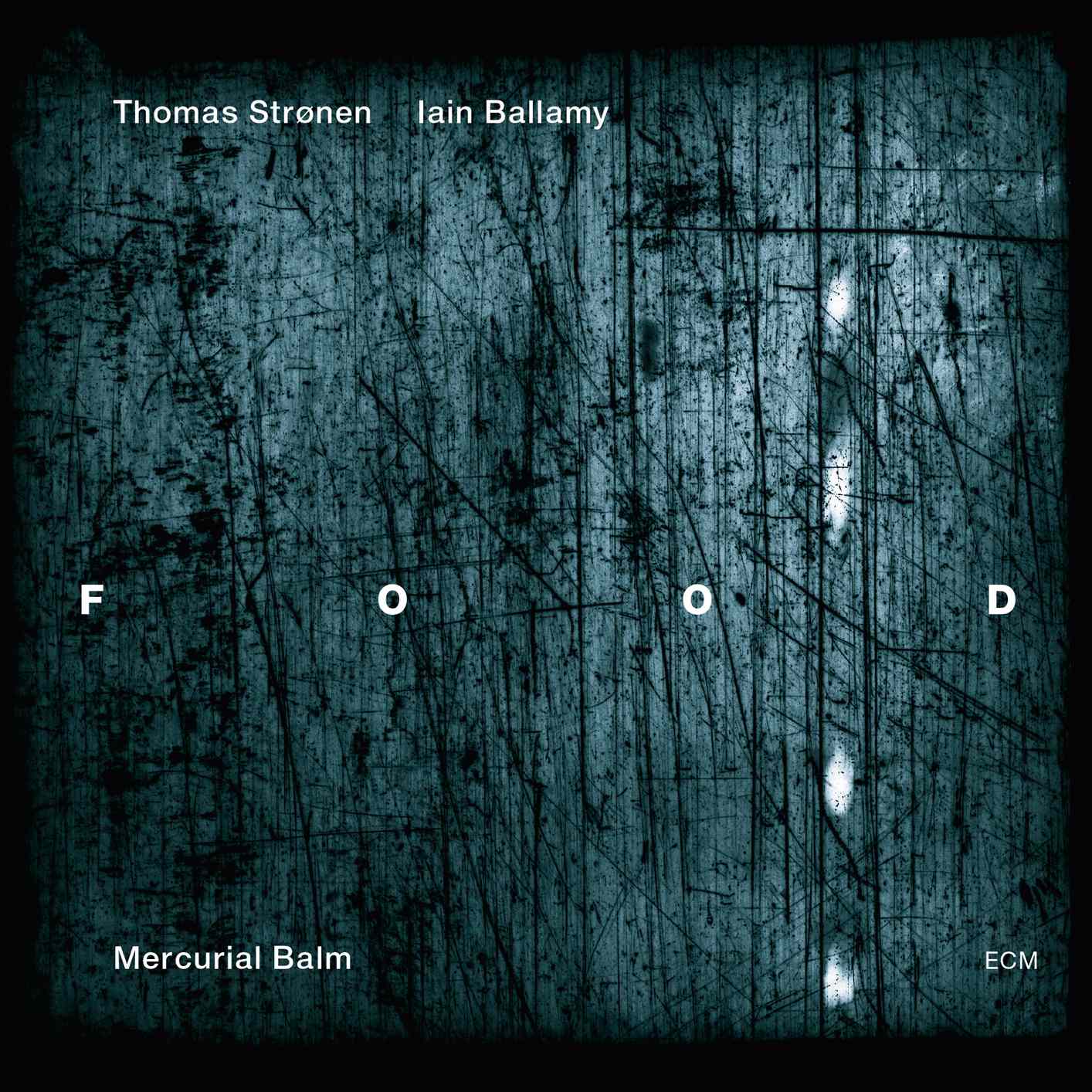
Food: Mercurial Balm (ECM 2269)

2269 X

Food
Mercurial Balm

Iain Ballamy saxophones, electronics
Thomas Strønen drums, electronics
Christian Fennesz guitar, electonics
Eivind Aarset guitar, electronics
Prakash Sontakke slide-guitar, vocal
Nils Petter Molvær trumpet
Recorded 2010 and 2011 at Rainbow Studio, Oslo, Cheltenham Jazz Festival and Victoria National Jazz Scene, Oslo
Mixed at Rainbow Studio by Jan Erik Kongshaug and Manfred Eicher
Produced by Manfred Eicher and Food

Mercurial Balm is not only the second ECM outing for saxophonist Iain Ballamy and percussionist Thomas Strønen, a.k.a. Food, but is also the continuation of an exciting new direction begun in the outfit’s Quiet Inlet. Lest these musicians get roped in by their instruments, they also bring an assortment of technology to the table to expand the possibilities of their immediate means. With trumpeter Nils Petter Molvær and electronics stalwart Christian Fennesz at their sides once again, along with new guests Prakash Sontakke on slide-guitar and vocals and Eivind Aarset (recently of Dream Logic) on guitar and electronics, their sound takes a leap of evolution.

As if to drive this analogy home, the malleted gongs of “Nebular” trace the helix of a tense and creaking code, building a genetic slide for the tenor’s slow awakening. Samples of those same gongs slip in and out of earshot, blending ash and ore into the traction of “Celestial Food,” which overlays bright reed lines over a subtly propulsive beat. It is the language of travel personified, the depth of communication demonstrated, the uplift of flight conveyed. Those distant drums brush forward in a digital splash, adding contrast to Fennesz’s temperate climates in “Ascendant.” Solace need not apply, for Ballamy’s is an elemental divination, casting its oracle bones into the ether in hopes they might never land.

“Phase” can therefore be seen as a living segue, wormhole into the deeper biology of “Astral.” From its percussive swamp arises a more naked guitar, its pacing humming with ancient energy. This sets off the tenor and soprano in tradeoffs of augury toward an echoing finish. “Moonpie” unravels fairytale synth textures, over which Molvær breathes his sepia song. Sontakke looses his pliable self in “Chanterelle” and in the title track. He inspires Ballamy to more extroverted heights in the former, and in the latter offsets the ticking of cymbals with spider-webbed guitar. “Magnetosphere” glows with paler fire, an aurora borealis compressed to the size of a match head and lit by the mere act of gazing upon it. Echoes of the opening gongs return and pose us for the “Galactic Roll” that ends the album with Strønen’s own magnetosphere, sparked to life with a gallery of thoughts, each hooked by a god’s pinky and sworn to shine. Glittering and tumbling like a billiard ball dropping into a black hole, it sinks without sound.

In this flowing landscape there are distant footsteps. Plunging and resonant, they cry for sun, forever separated from the giants that produced them. There is in this atmosphere indeed a nourishment of which to be partaken, a diary to be coveted. Its clasp may be gold, its binding weathered, but its text is transparent and fresh.

(To hear samples of Mercurial Balm, click here.)

Trio Mediaeval: A Worcester Ladymass (ECM New Series 2166)

A Worcester Ladymass

Trio Mediaeval
A Worcester Ladymass

Anna Maria Friman voice
Linn Andrea Fuglseth voice
Torunn Østrem Ossum voice
Recorded February 2010, Propstei St. Gerold
Engineer: Peter Laenger
Produced by Manfred Eicher

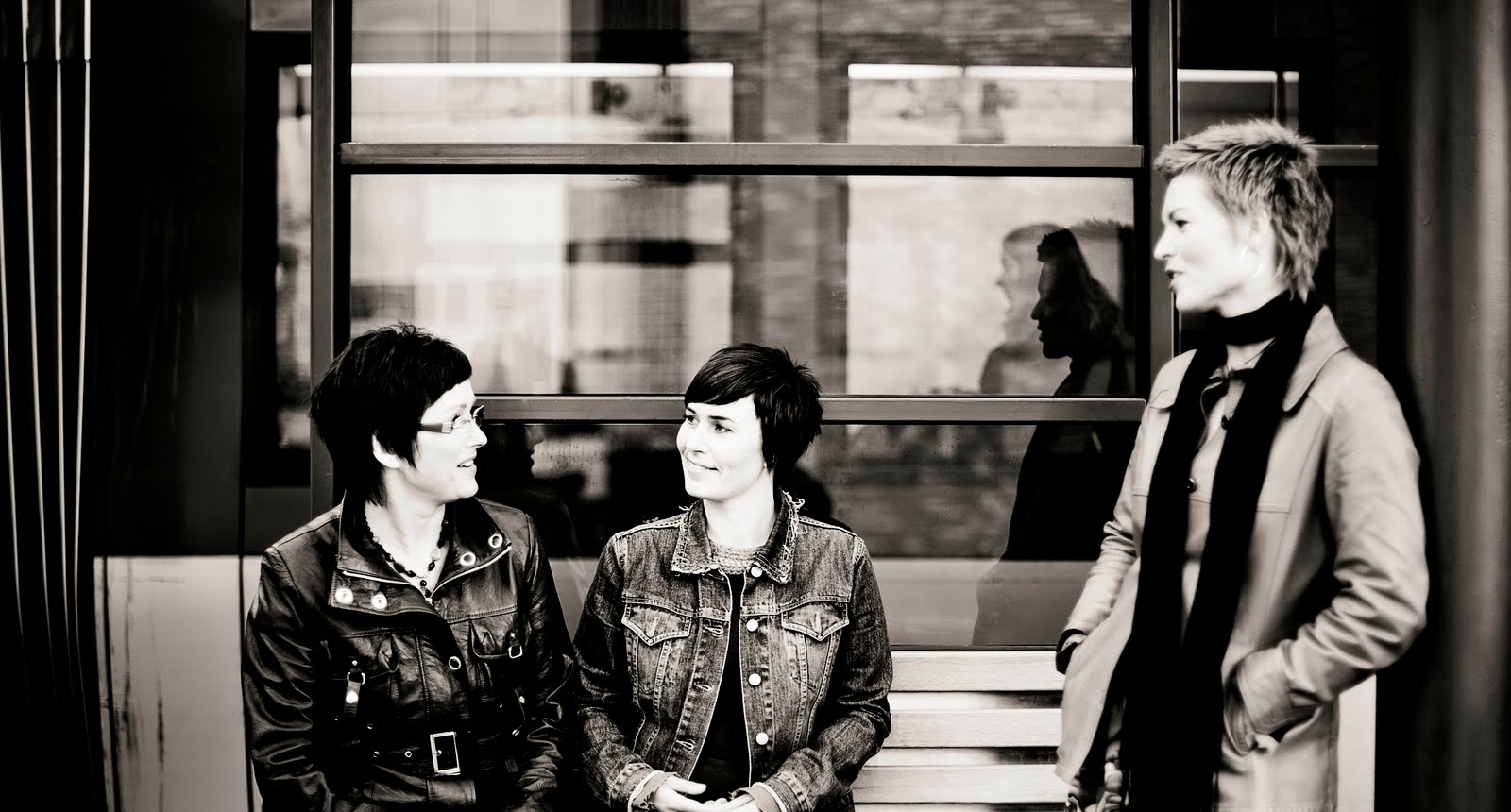
It’s astonishing to reflect on the breadth that Oslo’s Trio Mediaeval has represented in just four albums. From sacred choral music of the 14th and 15th centuries to the more contemporary yet kindred writing of Ivan Moody, Sungji Hong, and Gavin Bryars, not to mention a visceral account of Norwegian folk songs, sopranos Anna Maria Friman, Linn Andrea Fuglseth, and Torunn Østrem Ossum have, since their 1997 debut, been at the forefront of a style of vocal blending that also distinguishes the Hilliard Ensemble, under whom they studied to bring out the finest of their abilities.

TM
(Photo: CF-Wesenberg)

For this, their fifth ECM New Series album, they return to their namesake with a 13th-century Mass to the Virgin Mary, reconstructed from manuscripts found in a Benedictine Abbey in the English Midlands. When looking through the Worcester fragments—which survived Henry VIII’s purging sweep in the 1530s only because they were used to bind other codices—the singers found no Credo, and so commissioned Bryars to rectify their absence by contributing one, along with a Benedicamus Domino. As Friman further notes, today interpretation of music from the middle ages is at the whim of the performer and can be far removed from the religious bonds of its genesis. She and her cohorts embrace this severance wholeheartedly as a path to fresh performance, producing music not meant for concert audiences that breathes with its own flair (if not flare).

From the lilting cadence of the opening Salve sancta parens, it is clear that Trio Mediaeval has sculpted a sound-world all its own. In so gathering their winds together, the singers spin a theme for the ages that is at once entrenched in and severed from time. Most significantly, theirs is a space that listeners can inhabit. As two voices lock into a drone for the plainsong of a third, we can already sense the depth of technical achievement required to produce such seamless atmospheres. It is in this respect that A Worcester Ladymass stands out: in these three throats its technical attentions become, like those of the Hilliards, a fully embodied practice. One notices this in the meticulous pacing throughout. Striking enviable balance between interruption and pause, the gaps between phrases are neither contrived nor jarring. This is especially true of the Munda Maria, a vocal round that cleanses us from the inside. In such cyclical pieces as this and the Gloria, our three angels enact a Derridean sort of reiteration—which is to say, not mere repetition but rather a constant reformation of context. The same holds true of the Bryars Credo, which places a gentle stopper on the clock hands of their art, spinning one hand backward and the other forward. And while Byrars does craft a slightly dissonant edge, his changes are no less unexpected than, say, those in the Grata iuvencula of eight centuries ago.

Another remarkable feature is the fluid extension of syllables in the O sponsa Dei electa and the De supernis sedibus. Without falling into these open-mouthed traps, the Trio draws from them new webs of meaning. The brief addition of organ in the Benedicta / Virgo Dei genitrix and Agnus Dei only intensifies the celestial nature of those connecting lines. All of this makes the shorter pieces stand out in greater relief. Together, they form a sonic rondelle, which is illuminated by the light of the Mass interspersed among them. Much of that light is centered in the holy Sanctus. It serves the text as one might pray: kneeling and alone.

A Worcester Ladymass brings me back to the many early music recordings that enticed me as a novice listener. It finds its essence not in consolidation but through fragmentation, so that each section becomes a votive service unto itself. If the transcendence of the Sponsa rectoris omnium can be said to be representative of the whole, it communicates with an intuitive awareness of temporality that hovers in midair, not quite of heaven or of earth. For ages philosophers have tried to espouse the arbitrariness of the sign, but music such as this proves that the sign is life itself.

(To hear samples from A Worcester Ladymass, click here.)

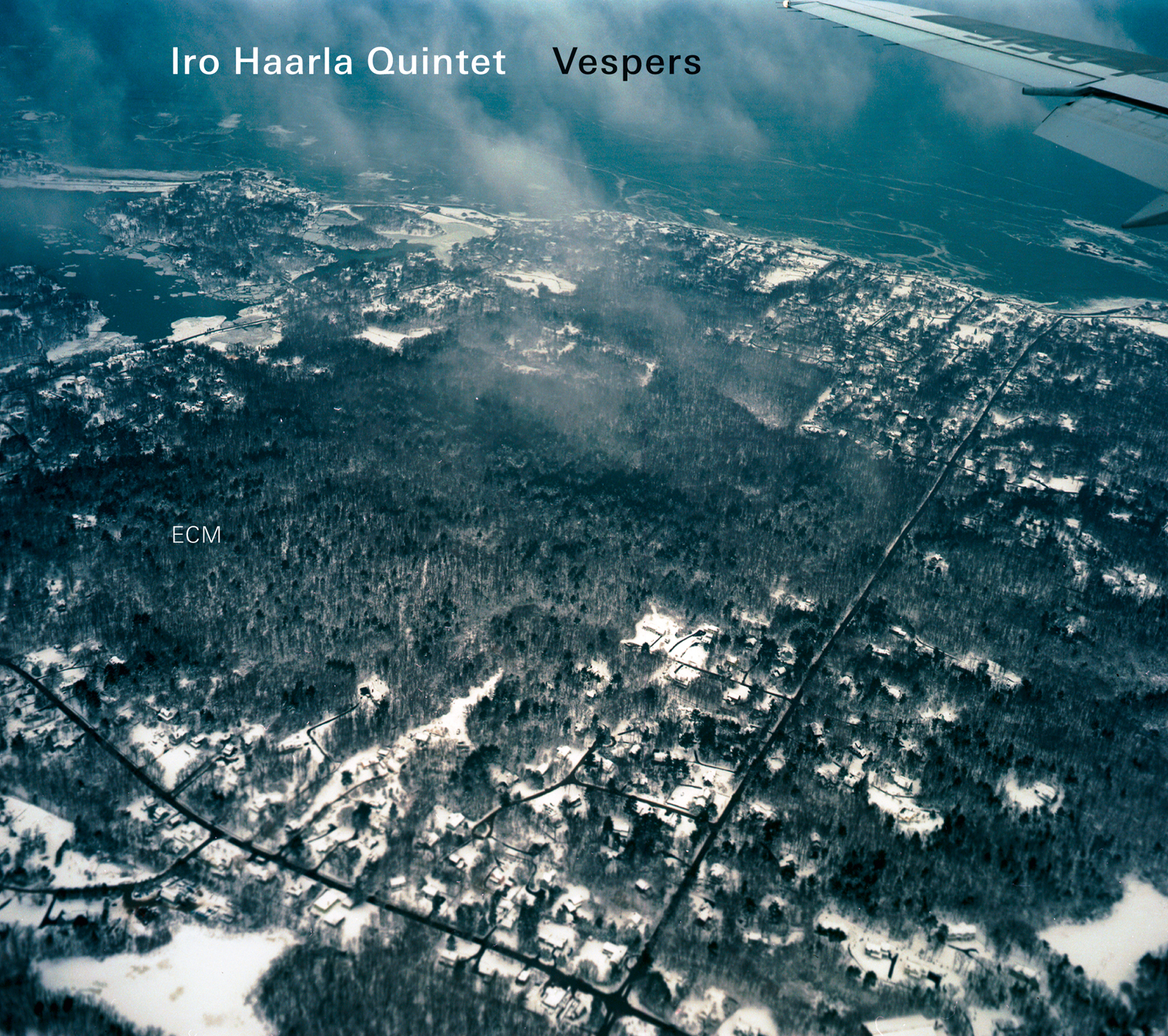
Iro Haarla Quintet: Vespers (ECM 2172)

Vespers

Iro Haarla Quintet
Vespers

Iro Haarla piano, harp
Mathias Eick trumpet
Trygve Seim tenor and soprano saxophones
Ulf Krokfors double-bass
Jon Christensen drums
Recorded February 2010 at Rainbow Studio, Oslo
Engineer: Jan Erik Kongshaug
Produced by Manfred Eicher

Out of her long association as arranger and orchestrator for Edward Vesala, harpist Iro Haarla showed listeners the breadth of her compositional powers in Northbound, which was but the springboard to all that awaits us in Vespers, her second leader date for ECM. Joined again by bassist Uffe Krokfors of Vesala’s influential Sound & Fury ensemble, saxophonist Trygve Seim, drummer Jon Christensen, and trumpeter Mathias Eick, she offers a set of nine originals.

Haarla

Haarla’s harp is like the clip of wing we see on the album’s cover, which lends context for the perspective we are so humbly granted. Her presence is equally atmospheric, every sweeping arc of light bringing us closer to the romantic blood that nourishes her themes. She combs our fears of flying from tangled minds, eschewing outright virtuosity for melodic integrity. The slowly turning mobile of “A Port On A Distant Shore” is a fine example in this regard. Seim’s tenor heightens the aerial sensibilities, each turn a children’s song resurrected by the lips of memory. The title track in the singular is more of the same. Dedicated to Haarla’s father, it stews in the nocturnal air of its eponym and unfolds the art of travel as if it were an accordion book. Both horns are a touch mournful here and through the keys link a chain of paper and ink, of action and word. Seim stretches his throaty limits and wails across the sky, ever the nomad holding his possessions to a body as slim as they are. Eick cries as if singing, sliding down a slope of ice and forgotten temptations into the view of “A Window Facing South.” Plush swells of harp strings accented by spark of cymbal and wick of bass breed color in the brass. The dialogue between Haarla and Eick here is remarkable—one a watery shimmer, the other a mermaid frolicking beneath. Meanwhile, Krokfors plays the part of a transient artist who commits bold lines to his sketchbook, drawing us into “The Warm Currents Of The Sea.” Much of that warmth is found in Haarla’s skeletal pianism. She paints impressionistic waves of sorrow and fondness in equal measure, lingering on notes as if they were incantations, the horns rolling over one another in foamy tide. The album’s highlight is by far “Satoyama.” The title is a Japanese term that refers to the area between mountain and flat land, and symbolizes the meeting of topographies at work in the album’s every tune. Seim now converts to soprano, trading flight patterns with trumpet over a snowy landscape. “The Shimmer Of Falling Stars” is a time-lapse photograph given life through music and shares the throne with its predecessor. Strained highs from Seim create a plangent emotional effect. Yet the journey must end, “Returning Home” in a slow drizzle nonetheless stirred by a need to move forward. The luscious, John Taylor-esque pianism and diaristic bass solo exhale the final “Adieux,” as much beginning as end. Eick carries us out, if not down, returning us to Earth for a soft and bittersweet landing.

Vespers feels like a winter’s morning. When you first walk into it, the air is frigid and still. One deep breath, however, and its crisp freshness invigorates. You are awakened. You are ready.

(To hear samples of Vespers, click here.)

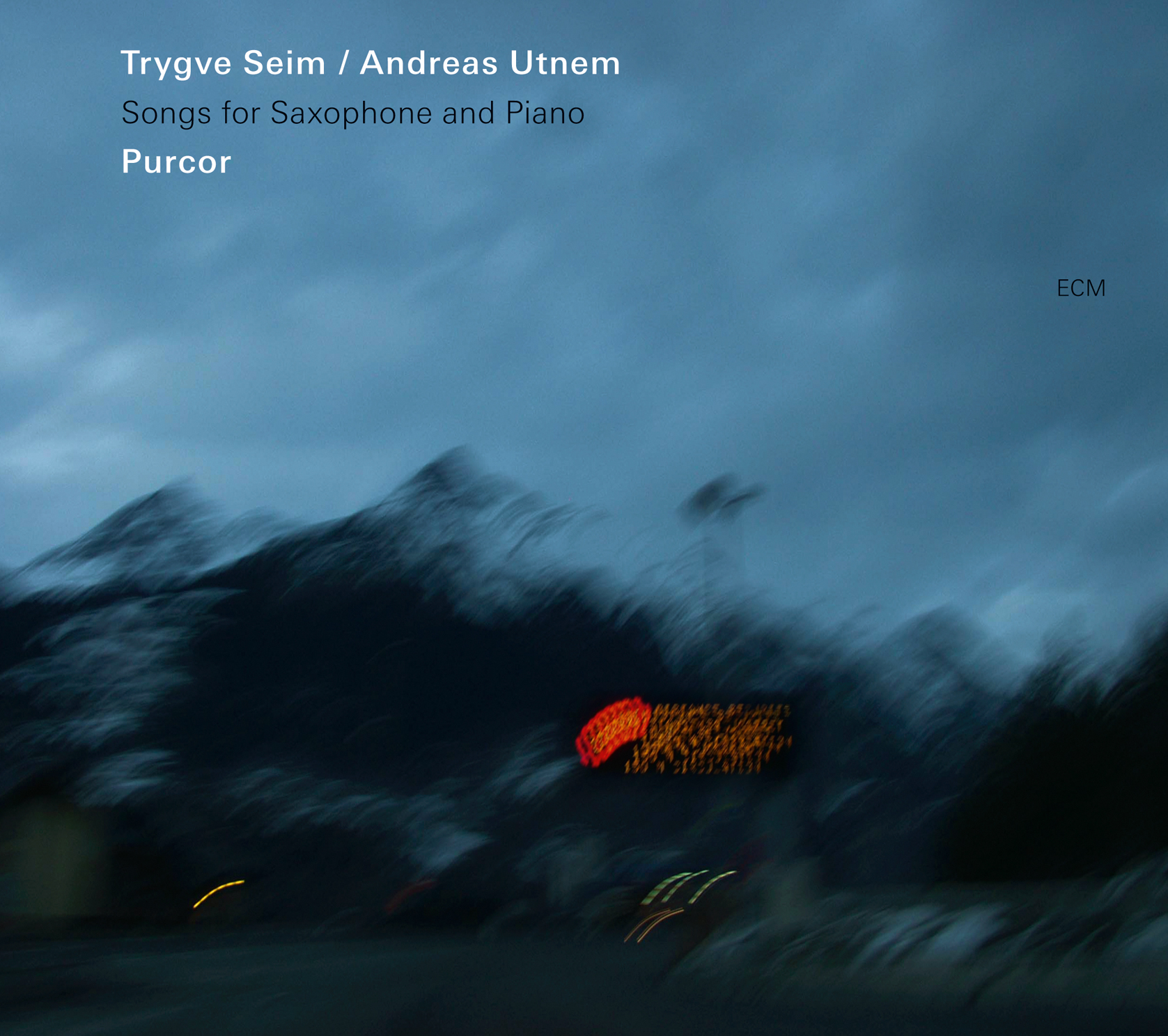
Trygve Seim/Andreas Utnem: Purcor (ECM 2186)

Purcor

Trygve Seim
Andreas Utnem
Purcor

Trygve Seim tenor and soprano saxophones
Andreas Utnem piano, harmonium
Recorded May 2008 at Tøyen Kirke, Oslo
Engineers: Jan Erik Kongshaug and Peer Espen Ursfjord
Mixed at Rainbow Studio, Oslo by Jan Erik Kongshaug, Manfred Eicher, Trygve Seim, and Andreas Utnem
Produced by Manfred Eicher

After a 13-year odyssey of collaboration, the duo of saxophonist Trygve Seim and keyboardist Andreas Utnem at last plays under ECM’s microphones in Purcor. Dubbed “Songs for Saxophone and Piano,”  Utnem calls more rightly calls it a program of “improvised church music.” In 1997, Utnem, a practicing liturgical composer, invited Seim to participate in select services under the auspices of Norway’s Church City Mission foundation. The result was a relationship that persisted and which manifests an intimate knowledge of context and practice in this session of 14 pieces that include settings of the Mass Ordinary, music for the stage, improvisations, and a reimagining of “Bhavana,” originally of Seim’s Different Rivers.

A beautiful and intimate album that belongs right alongside Stella Malu, Purcor strains its sentiments through a reductive mesh that distills only the purest extract of each melody. Seim’s breathy tone carries experience in its pockets, which it drops in methodical, dripping handfuls in the opening “Kyrie.” Feathered like the edge of an avian dream, it lisps at the edge of a time when mouths wandered in search of tongues. The album’s splintered Mass is therefore less a structural element than it is the air that gives said structure meaning to begin with. It is the space it inhabits, the climate from which it shelters its inhabitants, the words spoken in its chambers. From the beautiful counterpoint of the “Credo,” through the John Surman-esque sopranism of the jubilant “Gloria,” and on to the heartwarming gentility of cause in the “Agnus Dei,” the duo establishes a devotional yet ecumenical atmosphere, a shroud that reaches forth like arms of light and wraps its sacred conscience around secular means. A “Responsorium” switches piano for harmonium, lending the feeling of an organ hymn. Along with the “Pater Noster,” it is a reflecting pool of the soul whose contemplation is naked before all in Heaven. Such are the wounds that give weight to the meaning of struggle—not threads but veins: vast internal networks, compact and held together by the skin of the Word.

One almost hears the bending of a bass note at the start of “Nu Seglar Vi Inn,” a whalebone of time stretched to its snapping point. The album’s folk roots are first fleshed here, though nowhere so deeply as in the “Praeludium,” which untangles those roots and partakes of the celebratory nectar that flows through them. Likewise in the “Postludium,” for which Seim elicits a bamboo sound from his instrument, a specter of the earth walking toward a horizon aflame. The album ends on a likeminded note with “Når Mitt Øye Trett Av Møye,” laying us like lanterns on the water and splashing us into dusk.

Intensities of contrast abound, moving from whisper to exultation in a few sweeps of a grandfather clock’s second hand. Seim and Utnem’s playing, more akin to painting than to performing, blurs color as if by brush of dream. Like the title track, the program as a whole is a fleeting, primordial lament, a fusion tears into laughter, diamonds into coal, coal into dust, and dust into prayer.

From cover to engineering to sequencing (note especially the placement of the solo harmonium “Solrenning”), this is a quintessential ECM production.

(To hear samples of Purcor, click here.)

Nik Bärtsch’s Ronin: Llyrìa (ECM 2178)

Llyrìa

Nik Bärtsch’s Ronin
Llyrìa

Nik Bärtsch piano
Sha alto saxophone, bass clarinet
Björn Meyer bass
Kaspar Rast drums
Andi Pupato percussion
Recorded March 2010, Studios La Buissonne, Pernes-les-Fontaines
Engineers: Gérard de Haro and Nicolas Baillard
Produced by Manfred Eicher

Sometimes philosophies are not written but sounded. Nik Bärtsch and his renegade Ronin quintet demonstrate an assemblage of both. In taking the art of jazz to such internal heights, the Swiss pianist and band mates Sha (reeds), Björn Meyer (bass), Kaspar Rast (drums), and Andi Pupato (percussion) autopsy the body of the score and turn it into a netted form of improvisation: with each element carefully measured and weighed, one cell osmoses into the next. Thus are Bärtsch’s numbered “Moduls” nurtured through understated rhythms and potent denouements. This third album for ECM establishes new precedent in Ronin’s ongoing development, working seedlings into a softer mush.

Ronin

Cycles of extro- and introversion are ingrained into every motive. And while their overall structure has loosed its seams in comparison to past efforts, the spaces within it allow wider avenues of un-driven soil. The modular approach still applies, now more germinative than prescriptive. The contrapuntal flavors of “Modul 48” between reed and keys draw moods with parallel lines, while the walking bass adds nostalgic perpendiculars, holding each tick of the metronome like a gumdrop on the tongue and letting it dissolve just a little bit before biting into its sweetness. Subliminal reed work diagrams a dance that is too old to be forgotten yet too new to be remembered. The subtle crosshatching that marks every tune is particularly apparent in “Modul 52.” In this more playful piece, the interactivity that Bärtsch shared with Sha in the previous track now grafts onto Meyer in similar fashion. Threading the needle with neon, peaks shine all the more against whispering strings and other delicate infusions.

Llyrìa is a marked departure, for while it still lays into the hipness that brought the band to such prominent attention, there’s an almost quantifiable level of development and maturity, especially in “Modul 55,” of which drums and bass mark the passage of time with affectionate, cinematic quality. “Modul 47” embodies another transformation, for while most carry over briefly into sparkling fulcrums, here the fulcrum becomes the introductory drop and poises us immediately at the lip of a melodic abyss, which rather than staring back at us listens back at us, gauging our reactions in real time and pressing our faces into the illusions we so dearly know. With a propulsive grace, the group flowers forth in “Modul 53” with a gentle, sauntering gravity that lets go until all that’s left is suspension. A remainder of balladic energy seeps into “Modul 51” with darkened edges. Things take a more propulsive turn a third of the way through and betray new percussive synapses at every turn. “Modul 49_44” ends the set with a redux of Holon’s Model 44. Its contrast of density and sparseness works a veiled magic with light intact, despite its reliance on shadows.

In case you’re wondering, the album’s title refers to a bioluminescent deep-sea creature that has so far defied biological classification, but which nevertheless thrives on currents dark and far from our ken. Like Ronin’s moniker, it is masterless and carves its own path of dedication beyond death. Although the pieces are for the most part precisely notated under Bärtsch’s pen, here they take on aquatic lives of their own. The slightest twitch blossoms from within each instrument, making for a picturesque flip of the postmodern tail. With such soulful and intimate chaos reigned in by shifts of regularity, the tessellation can do naught but sing.

(To hear samples of Llyrìa, click here.)

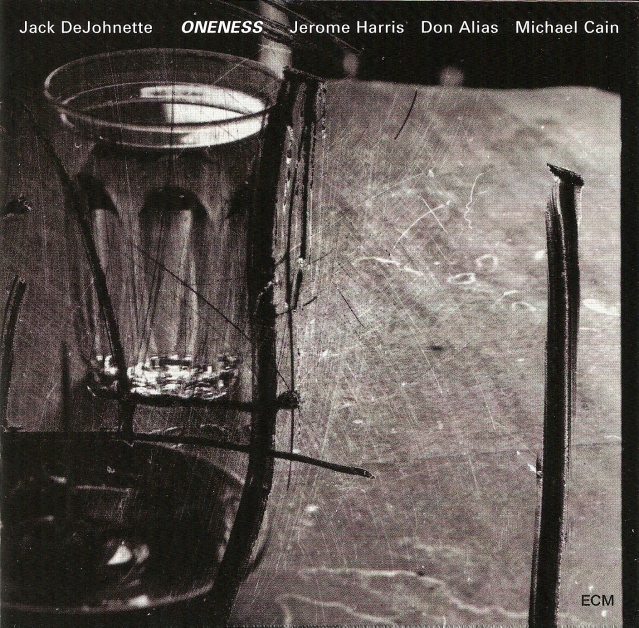
Jack DeJohnette: Oneness (ECM 1637)

Oneness

Jack DeJohnette
Oneness

Jack DeJohnette drums, percussion
Jerome Harris electric guitar, bass guitar
Don Alias percussion
Michael Cain piano
Recorded January 1997 at Right Track Recording Studios, New York
Engineer: Tom Mark
Produced by Manfred Eicher

It’s safe to say that drummer Jack DeJohnette has not only changed the face of modern jazz, but has long been one of its greatest physiognomers. While his earlier and more eclectically minded Special Edition has received due (re-)recognition with an Old & New Masters box of its own, be sure to follow its trajectory to the Oneness of both group name and album title. Fellow percussionist Don Alias fleshes out DeJohnette’s already rich sound, joining Michael Cain, whose lyrical pianism graces his own leader date for ECM, Circa, and bassist Jerome Harris, whose collaborations with Sonny Rollins (through which he first met DeJohnette), Bill Frisell, and George Russell have lent a likeminded universalism to his sound.

The percussion-only “Welcome Blessing” says it all: here, in the heart of music-making, lies an empty floor just waiting for the kaleidoscopic patter of feet and light to make its creaks and imperfections known. These are the spaces that seem to fascinate DeJohnette, who makes of each a full-handed gesture. The brevity of this blessing is also its message: that, in a world where freedom of speech runs rampant, sometimes the shortest statement is the strongest. At the other end of the spectrum is “From The Heart / C.M.A.” This nearly half-hour diptych closes the album with an album, and proves that even the broadest sentiments can have the simplest philosophy. Carrying over some of the delicacies of preceding tracks while also blending the protracted testimonials more familiar to a Keith Jarrett session, Cain’s jigsawed pianism undoubtedly draws influence from DeJohnette’s longtime band mate in characteristic progression from a low, earthy drawl to sparkling dandelions of exposition. If there is oneness to be had, it is here in DeJohnette’s mind-meld with Harris, each providing as much rhythm as melody. The surprise entrance of acoustic bass guitar lends tactile flavor.

In the liminal tracks, we find ourselves first “Free Above Sea.” Evanescent and hopeful, DeJohnette’s steadiness here insures that the roiling pianism finds its path. The free-flowing “Priestesses Of The Mist” reveals the heartbeat of DeJohnette’s craft. It begins with a whisper, a wind, a sweep of the minute hand. The pianism is ever so fragile here, moving weaver’s hands through strings as invisible as they are audible. “Jack In” is a smoother train, gliding along tracks of felt-lined hand drums and cymbals. Cain soars, open-throated, and inspires the album’s grooviest passages, especially in Harris’s picking.

A free and easy session that is equally comforting to listen to, Oneness makes no demands. It is a calm breeze flowing within and a huge step in the progression of DeJohnette’s sound, for it is he who maintains the most color and downright melodic sensibilities. He is the music’s conscience. Thus defined, each piece billows like tattered cloth with stories to tell, histories emanating from every fray.

This is one of DeJohnette’s most personal. You can feel it.

<< Tomasz Stanko Septet: Litania (ECM 1636)
>> Dino Saluzzi/Rosamunde Quartett: Kultrum (ECM 1638 NS
)

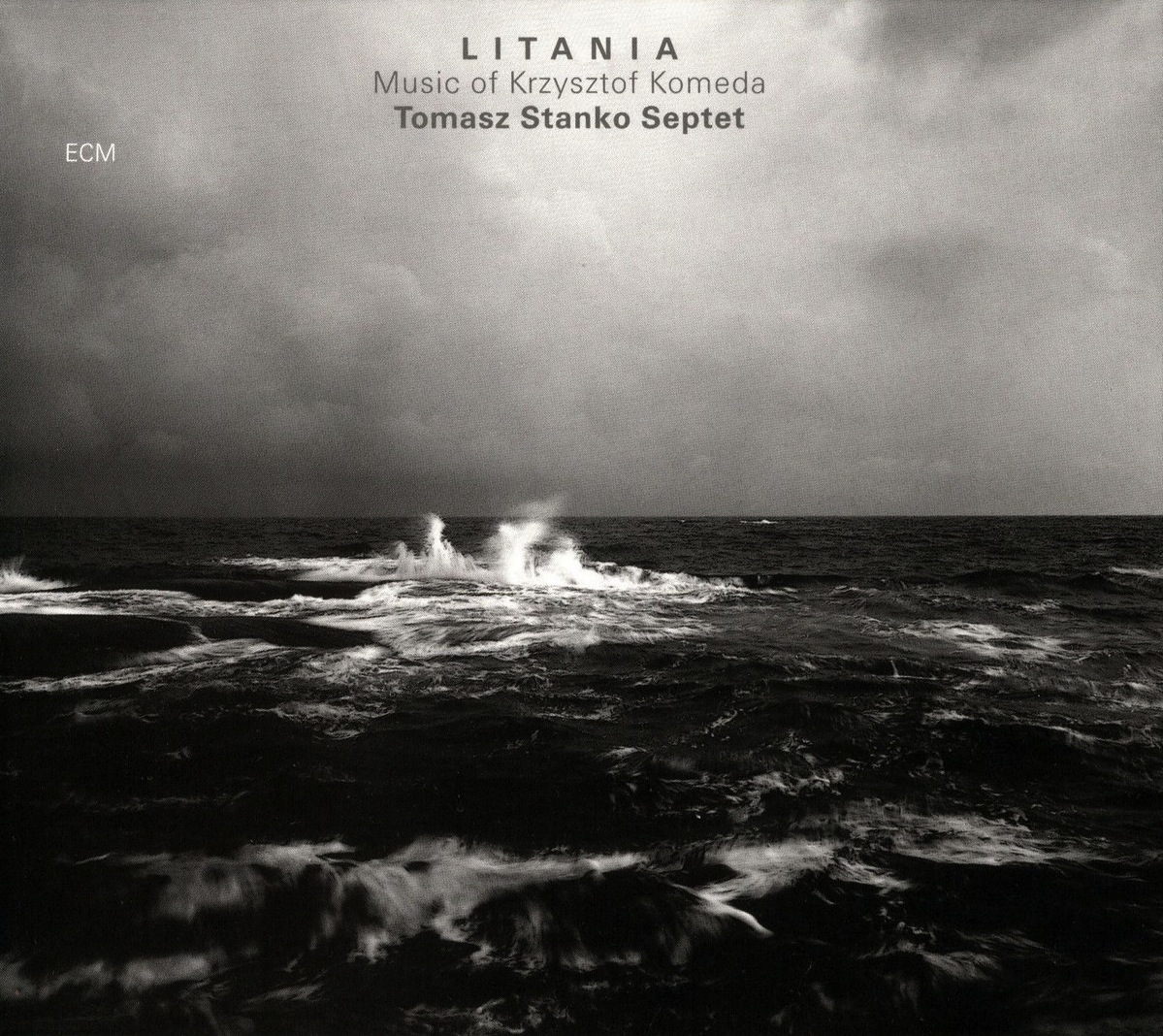
Tomasz Stanko: Litania (ECM 1636)

Litania

Tomasz Stanko
Litania – Music of Krzysztof Komeda

Tomasz Stanko trumpet
Bernt Rosengren tenor saxophone
Joakim Milder tenor and soprano saxophones
Terje Rypdal electric guitar
Bobo Stenson piano
Palle Danielsson double-bass
Jon Christensen drums
Recorded February 1997 at Rainbow Studio, Oslo
Engineer: Jan Erik Kongshaug
Produced by Manfred Eicher

Film composer and jazz pianist Krzysztof Komeda (1931-1969) is the subject of trumpeter Tomasz Stanko’s fourth ECM date as leader, following BalladynaLeosia, and Matka Joanna. The latter’s nod to cinema is further defined on Litania. Best known stateside for his collaborations with Roman Polanski, scoring such classics as Rosemary’s Baby and Knife in the Water, Komeda was more importantly one of the great pioneers of Polish jazz. Developing his music at a time when the Communist government condemned such “bourgeois” activity, Komeda—incidentally, a protective stage name—brought his fascinations into reality with the Komeda Sextet, whose performances paved the way for modern jazz in Poland and soon caught the attention of filmmakers. The festival circuit, however, was where his ideas truly fomented—so much so that a young Stanko would form the Komeda Quartet with saxophonist Zbigniew Namysłowski, bassist Roman Dyląg, and percussionist Rune Carlsson, each of whom took Komeda’s inspiration duly to heart. Before that, however, Stanko would collaborate with Komeda himself for the 1965 album Astigmatic, considered one of the most important in European jazz history. This record seeks to revive the Komeda of apartment jams and night club gigs, the Komeda who set the hearts of Stanko and so many of his generation aflame with a love of free expression, the Komeda both on and off the silver screen.

The Litania project is the result of producer Manfred Eicher’s abiding interest in music-cinema connections more broadly, in Komeda’s sound-world more specifically, and in seeing it realized by the composer’s closest musical associate. The fit couldn’t be better, as Komeda was one similarly interested in expanding the sound of jazz in ways typically reserved for classical music and its instruments.

His compositions have the distinct quality of retaining a somber edge at their most upbeat and a sparkling hope at their most ponderous. Case in point: the heavy yet pliant theme of “Svantetic,” (dedicated to Svante Foerster, friend and Swedish poet) which opens the program with a flirtatious eye. The group’s legato nodes of thought speak through some healthy soloing on keys (Bobo Stenson) and tenors (Bernt Rosengren and Joakim Milder). An intimate drum solo from Jon Christensen engenders squealing final words from Stanko, who leads the band to a brighter, more tumultuous sea and establishes a palette for all to follow. After a viscous intro, “Night-Time, Daytime Requiem” (dedicated to John Coltrane) floats the piano down a river of its own resonance. Horns and drums to take up the call, wavering with dark urban energy before opening into a tenor solo that flicks like a lighter, a flint to stone. Notable here is the interaction between Stenson and bassist Palle Danielsson, their hearts aflutter with the dedication of their charge, if not the charge of their dedication. The album’s most cinematic moments come from Stenson, especially in the latter half of this epic track, dark and roiling yet somehow captured in stasis like the cover photograph. Stanko’s pointillist exchange with tenor foils a peaceful, ruminative finish. The breezy rhythm section of “Ballada” (Knife in the Water) makes for another memorable Stanko vehicle, while the title track, its edges tinted like the pages of a well-read book, features more powerful understatements from both tenors. But Stenson’s waves just keep returning and his breakers of “Repetition” dissolve on shores of stagnant memories, given voice through wind and reed. With Charles Lloyd-esque contemplation, “Ballad for Bernt” carries its melodies across fuzzy dreams and even fuzzier borders of intimation. This tune is dedicated to Bernt Rosengren, a pivotal figure in Sweden, where he and Don Cherry invigorated the local jazz scene.

Although the album header says “Tomasz Stanko Septet,” this is in fact a sextet album, with guitarist Terje Rypdal guesting only on the last two tracks. That being said, he adds a mosaic of haunt to “The Witch,” which begins like a Jan Garbarek excursion before Rypdal drizzles his electric in reams of sparkling shadow. He adds dedicatory color also to “Sleep Safe And Warm” (Rosemary’s Baby), the last of three versions that anchor these waters.

Stanko enters these waters not like a diver, but rather like a crocodile, sinking unawares and peeking above the surface only when necessary. Unblinking, alive, and considered, his heartfelt arrangements ensure that the Komeda legacy breathes afresh. The result is muscular jazz with a crystal-clear sense of direction. It knows exactly where it’s going, because it’s already been there. Says Stanko of Komeda, “He showed me how simplicity is vital, how to play the essential. He showed different approaches, using different harmonies, asymmetry, many details. I was very lucky that I started out with him. Would he have approved of this record? I hope so.”

As you will know once you listen to it, no hope is needed.

<< Charles Lloyd: Canto (ECM 1635)
>> Jack DeJohnette: Oneness (ECM 1637
)

Arild Andersen: Hyperborean (ECM 1631)

Hyperborean

Arild Andersen
Hyperborean

Tore Brunborg soprano and tenor saxophones
Bendik Hofseth tenor saxophone
Kenneth Knudsen keyboards
Arild Andersen double-bass
Paolo Vinaccia drums, percussion
Cikada String Quartet
Odd Hannisdal violin
Henrik Hannisdal violin
Marek Konstantynowicz viola
Morten Hannisdal cello
Recorded December 1996 at Rainbow Studio, Oslo
Engineer: Jan Erik Kongshaug
Produced by Manfred Eicher

“What was I to do when I saw him soar through the air in broad daylight and walk on water and go through fire slowly in foot?”
–Cleodemus

If you think the title of Hyperborean sounds enchanting, wait until you hear the music. Arild Andersen’s evocation of the Greek mythological race plies the shimmering backdrop from which its thread comes unraveling and weaves an entirely new one in its place. Like the chariot of Apollo, who rides to the north three months out of the year to join the Hyperboreans, it marks the sky with seasonal precision. Such is the backstory of this 1995 Norwegian Molde Festival commission, which sought a large-scale suite from the bassist. Andersen took the opportunity to expand his sound, writing for string quartet for the first time. After the success of the concert, Andersen returned to the material and appended “Patch Of Light,” which introduces the album. Andersen: “In general, the role of the strings in the music was strengthened and improved by Manfred Eicher’s input. He had a lot to add in terms of phrasing, dynamics and emphasis, and in the relationship of the string writing to the jazz improvising in the mix.” Eicher’s fingerprints are apparent every step of the way and represent a particularly successful marriage of engineering, behind-the-scenes thought, and performance. He also brought in the Cikada String Quartet for the first of many label collaborations. Saxophonists Tore Brunborg (longtime member of Andersen’s Masqualero outfit) and Bendik Hofseth (who appeared on his earlier Sagn) make for an organic counterpoint of styles. Italian-born but Oslo-based drummer Paolo Vinaccia, who replaced Nana Vasconcelos in Andersen’s “folk” group in 1993, has also made notable appearances on Terje Rypdal’s Q.E.D. and Skywards. Danish pianist Kenneth Knudsen is a longtime friend of Andersen and draws on his background both with Miles Davis and Palle Mikkelborg.

“Patch Of Light” is indeed a thread, a hand-span of strings that exposes its core as would a Gavin Bryars chamber work. Welcoming the night as if it were its own body, it sheds starlight in place of skin. So it is with the title track, which draws finer alloys from these beginnings and holds them like tuning forks to Andersen’s bass, which though contemplative brings meteoric streaks of implicit fervor. Meanwhile, Vinaccia’s delicate patter is the tick of a train whose tracks are laid by the art of soliloquy. And just when you think this landscape might not be populated, in strides “Duke Vinaccia” with saxophonic servants in tow. The heights are stratospheric, yet we feel them in the gut, hanging from the jungle gyms of our rib cages like children. Pianistic echoes from Knudsen, microtonal and gentle, blow off the foam of life’s new quaff before sipping the ale beneath. “Infinite Distance” is a more upbeat affair, delightfully syncopated and brimming with soul from tenor, a robust link in a minimal chain of solos. “Vanishing Waltz” evokes a fadeout into the distance, as if it were the train of the Duke’s procession, a band of merry subjects floating into the sunset. The plush beginnings of “The Island” cradle a heavy tenderness from Andersen, whose instrument has by now become a cognizant body. Trembling and untouched, it bids us to listen to its “Invisible Sideman,” to see things through a translucent veil in the window, billowing to the rhythm of dreams. “Rambler” is Hofseth’s purview. Quivering with lovely agitation and tunefulness (one may feel tempted to compare him to Garbarek, but we find here a more restless brilliance), it dances among Vinaccia’s pincushioned plains. These curves continue their journey in “Dragon Dance” and on through to “Stillness,” where we get the album’s most soulful saxophonism. Last is the heartfelt “Too Late For A Picture,” a forlorn and credit sequence, an epilogue for the ends of the earth.

The strings are our ever-present reminder of peace, rungs on a ladder of light that must be scaled and descended simultaneously to reach any sort of destination. The prevalence of space and “unbeing” names Hyperborean as an intangible reality where perhaps all music begins and ends. Like a jellyfish, it needs ocean to express its proper shape. And what better place to swim than in our hearts?

(Incidentally, since making this record, Andersen formed a trio with Brunborg and Vinaccia improvising on this album’s material. You can see my review of the latest incarnation of that trio, with Tommy Smith in place of Brunborg, here.)

<< Brahms: Sonatas for Viola and Piano (ECM 1630 NS)
>> Stephan Micus: The Garden Of Mirrors (ECM 1632
)