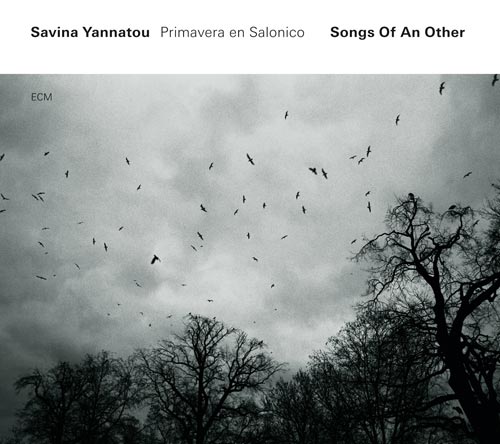
Savina Yannatou & Primavera en Salonico: Songs Of An Other (ECM 2057)

Songs Of An Other

Savina Yannatou
Primavera en Salonico
Songs Of An Other

Savina Yannatou voice
Kostas Vomvolos qanun, accordion
Yannis Alexandris oud, guitar
Kyriakos Gouventas violin, viola
Harris Lambrakis nay
Michalis Siganidis double-bass
Kostas Theodorou percussion, double-bass
Recorded October 2007 at Sierra Studios, Athens
Engineer: Yannis Baxevanis
Edited and mixed by Manfred Eicher, Yannis Baxevanis, Kostas Vomvolos, and Savina Yannatou
Produced by Manfred Eicher

Songs Of An Other marks the third point of contact between Greek singer Savina Yannatou, along with Primavera en Salonico, and ECM. The program is more geographically varied than ever and emphasizes the interpretive prowess of its musicians. Much of that prowess breathes through Primavera’s superb control, for while the album boasts moments of sportive extroversion, it upholds the music first and foremost as a model for emancipation.

Indeed, Songs Of An Other shows this collective at both its most animated and its most delicate, oftentimes within the same song. Both the slack-stringed “Za lioubih maimo tri momi,” which comes by way of Bulgarian Macedonia, and “Radile” (from Greece) run the line of straight-up folk and all-out jam. In the latter vein, two new tunes based on Greek sources add another line to the project’s résumé. “O Yannis kai O Drakos” is a dragon-slaying song replete with fanciful colorations, paroxysmal gasps, and subtly frenetic bassing. “Perperouna,” a call for rain, explores the gravelly pits of Yannatou’s voice, embraced by the windy brine of nay and kalimba, all moving in a Celtic knot of rhythm toward an adlibbed comet’s tail. Even the “Albanian lullabye” becomes a ritual of ululations and incantations, honing a mysterious and strangely accessible edge.

For much of the album, however, the musicians tread a delicate path, adapting to every dip in Yannatou’s tightrope along the way. From the dulcet “Smilj Smiljana” (Serbia) to the Italian olive-harvester’s song “Addio amore,” they emote lucidly. Combinations of flute, violin, and accordion cloud like ink in water in “Sassuni oror” (Armenia); dances take the night by the hand in “Dunie-au” (Kazakhstan); and the 16h-century Yiddish traditional “Omar hashem leyakoyv” is practically translucent in sentiment.

The greatest accomplishment of Songs is the fullness with which it romanticizes, as is clear in “Sareri hovin mermen” (Armenia). Given the “Eastern” feel, one might easily read into it an alluring sway. Likewise, “Ah, Marouli,” a Greek song about sponge-divers on the island of Kalymnos, sashays with seeming invitation. And yet, these arrangements are so emotionally (and physically) complete that they hardly need even these words to convey to the uninitiated listener the magic of their self-assurance. And that’s the thing: every step and element of this audible alchemy is as lucid as the light that illuminates the talents of these fine instrumentalists, Yannatou tracing them all the while as a wave might shape an Aegean breeze.
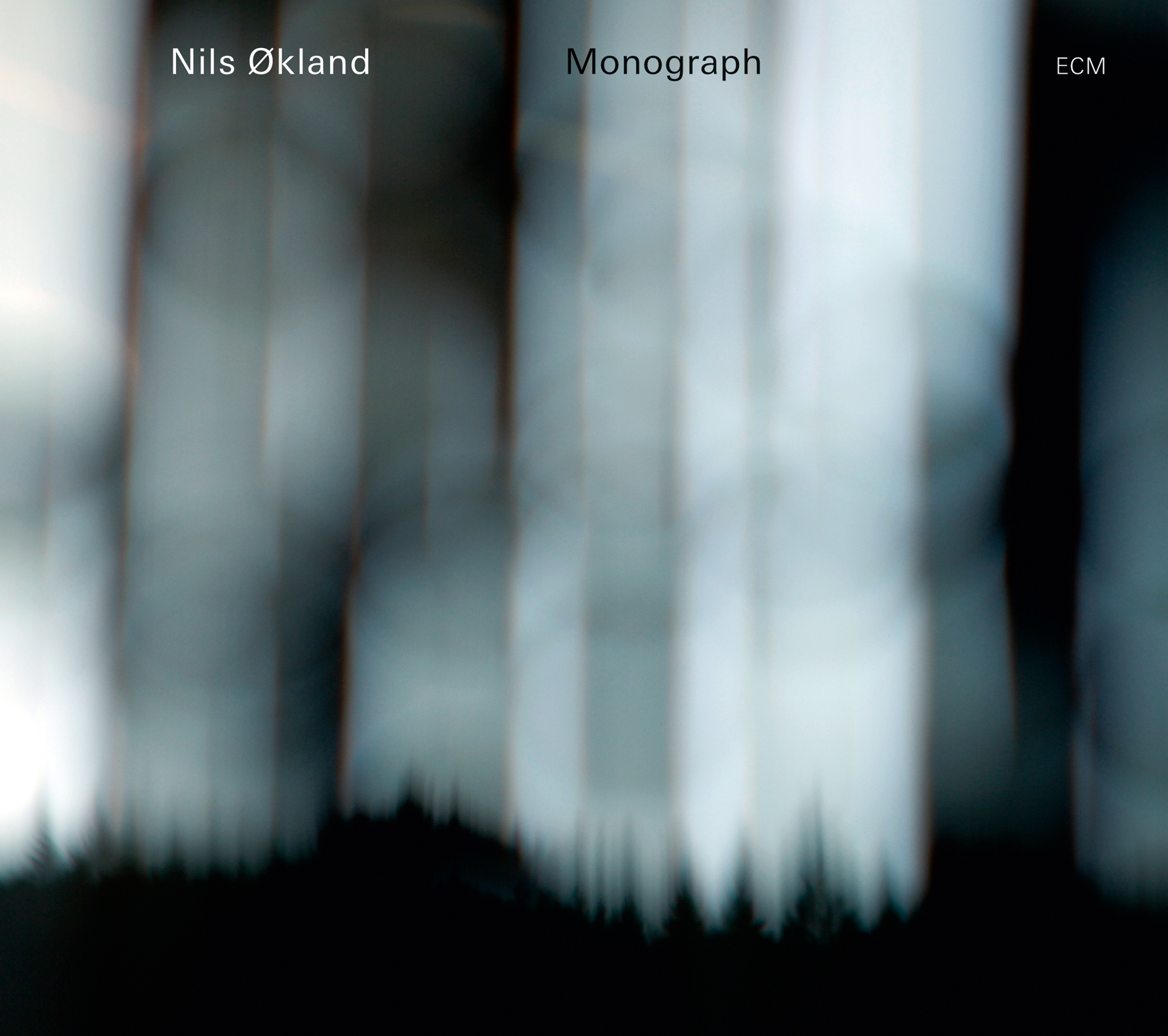
Nils Økland: Monograph (ECM 2069)

Monograph

Nils Økland
Monograph

Nils Økland Hardanger fiddle, violin, viola d’amore
Recorded July 2007, Olavskirken, Avaldsnes (Norway)
Engineer: Audun Strype
Executive producer: Manfred Eicher

From the caverns of Christian Wallumrød’s Sofienberg Variations and A Year From Easter, Norwegian violinist Nils Økland emerges with his first ECM leader date, a solo album of fully original design and character. The composing may be his own, but like the playing it has roots in many times and places. And yet, the album’s sense of the here and now trumps the need for reference and allows even those unfamiliar with Nordic fiddling traditions and their modern developments alike to appreciate the spirit of Økland’s craft in the raw. Sometimes bucolic, at others streamlined, it is always moving.

nils ¿kland nov 04 foto: lars o.
(Photo credit: Lars O. Flydal)

Monograph wears its title well. Over a 13-track traversal, its comprehensive program expounds on multiple combinations of string and bow. The Hardanger fiddle, a national instrument of Norway of which Økland plays three on the album, lends a sandy, hurdy-gurdy-like texture to five tunes. Between the urgent cycles of “Kvelartak” and the shifting harmonies of “Skimte,” the instrument sprouts a forest’s worth of leaves. Versatility reigns in between the dancing shadows of “Mono,” and the pliant highs of “Snor.” In each of these is the mineral taste of soil, chased by the cleanliness of air.

For the album’s three violin tracks, Økland plays a centuries-old instrument. “Rite” circumscribes the space in spirited dance, “Seg” sings in charcoal pigments, and the wing beats of “Nattsvermer” (the album’s closer) would seem to reference Paul Giger’s emotive solo work on ECM. Sounding almost improvised, it rests on a blade of poetry.

Rounding out are some pieces played on the resonant viola d’amore. Hints of Irish pasture braid Nordic currents in “Mønster,” vividly opening the disc. Similar geographical conversations abound in the syllogistic “Dialog,” while “Pas de deux” and “Ø” bring tender, even forlorn, images into frame, touching and separating like a dragonfly and its reflection.

All of which is to say that Monograph is ultimately more than a solo album. Økland’s sound is so rich, it sings in the voices of many with a talent surpassed by few.

Quercus: s/t (ECM 2276)

2276 X

Quercus

June Tabor voice
Huw Warren piano
Iain Ballamy saxophones
Recorded live March 2006 by Paul Sparrow
Edited by Mike Mower
Mixed at Rainbow Studio, Oslo by Jan Erik Kongshaug and Manfred Eicher
Produced by Manfred Eicher, Iain Ballamy, and Huw Warren

Quercus names both the debut album and trio composed of folksinger June Tabor, pianist Huw Warren, and saxophonist Iain Ballamy. The word is Latin for “oak,” but the image implies more than rootedness, embodying the full arboreal essence of this somber collection. Indeed, Tabor’s voice is the very wood of the forest, and invites the instrumentalists along its democratic path of music making.

Quercus Photo

All that I have endured
Lassie my dearie
Here in thine arms is cured
Lassie lie near me

These words, by Scotland’s national poet Robert Burns, ease us into a running theme: love as a salve for all ills. From the last line comes the title of the song, which Tabor sings with little affectation, save the emotional veracity of her diction, while Ballamy harmonizes, doubles, and cradles her by turns. He and Warren carry on the melody, unraveling finer implications behind the text with understated precision. This formula proves effective hereafter and works especially well in the iambic pentameter of Shakespeare’s “Twelfth Night,” from which is excerpted the lyrics of “Come Away Death,” in Ballamy’s own arrangement, and for which Tabor digs into her chest voice to tease out the Bard of Avon’s gravelly truths. It is a quality she employs selectively, as in her unaccompanied version of “Brigg Fair,” turning a normally airy song into ash. Ballamy further provides music for “Near But Far Away,” in which he seems to channel jazz legend Charles Lloyd in this melodious, if cautionary, tale that is one of the album’s finest. “As I Roved Out” completes the selection of traditional songs. Like a fantasy made actual and turned back into fantasy, its scrim bears the scars of transformation:

And at night when I go to my bed of slumber
The thoughts of my true love run in my mind
When I turn around to embrace my darling
Instead of gold sure it’s brass I find

“The Lads In Their Hundreds” couches the WWI poem by A. E. Housman in music of English composer George Butterworth. With the austerity of a Ken Loach film, it draws black where only green once thrived. The musicianship brings an eerie sense of calm and offsets morose imagery of young soldiers going off to war, only to die as anonymous placeholders of unwritten glory. To this elegy Warren responds with “Teares.” The John Dowland-inspired piano solo blends pointillism and sustain, for all a windswept pasture. Subsequent vignettes evoke faraway deserts (“Who Wants The Evening Rose”), the naïveté of love’s first kiss (“This Is Always”) and, in “A Tale From History (The Shooting),” the drama of remembrance. The latter, a true song of songs, features words and music by Irish singer-songwriter David Ballantine. Tales from history line our breath, goes the rhyme. Start with passion, end in death. The promise of retribution lingering in these mor(t)al variations finds fulfillment in the closing “All I Ask Of You,” by American spiritual leader and hymnist Gregory Norbet. Here Ballamy’s introductory soliloquy strikes a balance of prosody and poetry, and holds on to its melody as one in prayer might grasp a rosary. The flowing changes in instrumental color unexpectedly come together with Tabor in the final moments, oneness above all.

Like the three Robin Williamson discs before it, Quercus expands ECM’s unique interpretive folk niche. Although recorded live at The Anvil in Basingstoke in conclusion of a 2006 UK tour, it wasn’t released until 2013. The seven-year lag seems appropriate, for the trio had been together seven years before turning the microphones on. It’s as if the songs were doubly aged so that they might reach our ears at peak flavor and consistency, pushing us along the way into the darkest crannies of the human experience even as they lift us from those depths in want of light. Each is the shadow within the shadow, a space where dreams and realities intermingle until one cannot be pulled apart from the other.

(See this article as it originally appeared in RootsWorld online magazine, where you may also hear a sample track.)

Quercus review in RootsWorld

Another new review for RootsWorld online magazine. This one details the self-titled ECM debut of Quercus, a trio consisting of folksinger June Tabor, pianist Huw Warren, and saxophonist Iain Ballamy. Click the cover to read the article and hear a sample track.

2276 X

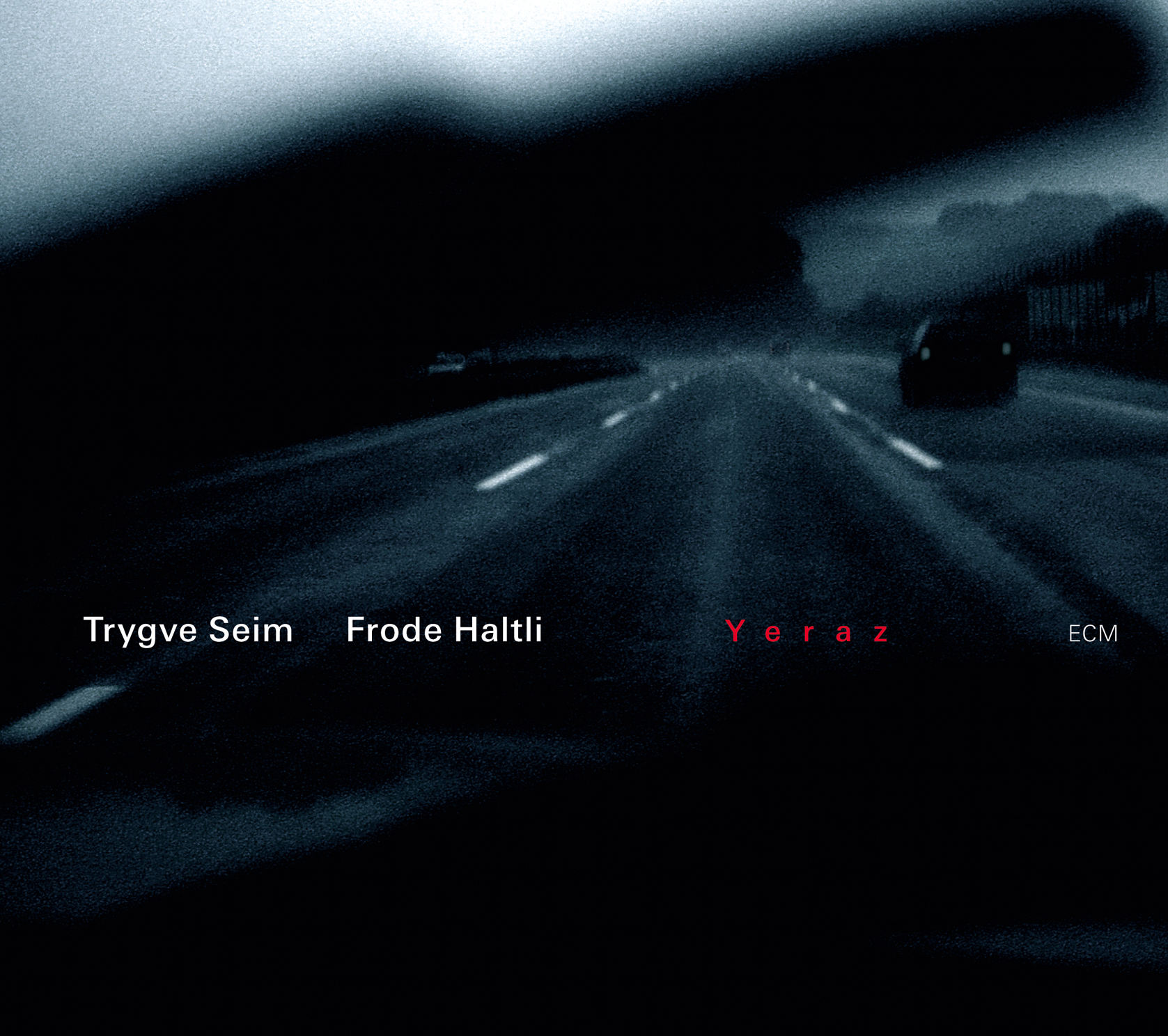
Trygve Seim and Frode Haltli: Yeraz (ECM 2044)

Yeraz

Yeraz

Trygve Seim soprano and tenor saxophones
Frode Haltli accordion
Recorded June 2007 at Rainbow Studio, Oslo
Engineer: Jan Erik Kongshaug
Produced by Manfred Eicher

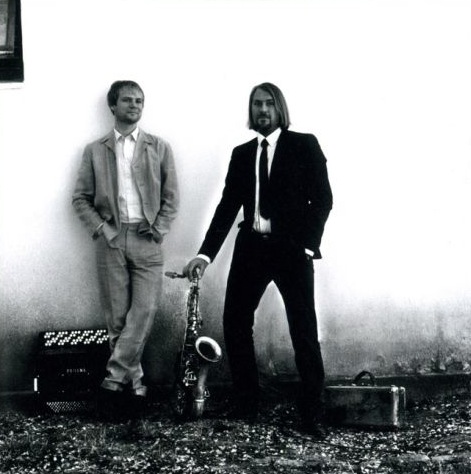
Saxophonist Trygve Seim and accordionist Frode Haltli, both children of the Norwegian jazz scene and frequent collaborators who have grown into some of that scene’s most genre-defying proponents, pair up for an intimate songbook of frequencies that wraps the duo’s minds around an erudite program of mostly Seim-composed pieces. Exceptions include the haunting and windswept Armenian traditional song, from which the album gets its name, and the seemingly bipartite “MmBall,” penned by Seim’s go-to drummer, Per Oddvar Johansen. Seim and Haltli further explore two melodies—“Bayaty” and “Duduki”—by spiritual guru G. I. Gurdjieff (1866-1949), who, since Keith Jarrett’s 1980 Sacred Hymns, has been a ghostly presence on a handful of ECM projects.

Seim Haltli
(Photo credit: Morten Krogvold)

Compared to past recordings, Haltli treads more carefully across the accordion’s polar ice caps, his touch as pliant as ever. With the slightest pitch bend or intervallic quaver, the accordion’s inner heart speaks with utmost profundity, especially in the lower range, which despite a seemingly tenuous hold on notes lays foundations of its own. Seim proves an ideal partner, not only sonically—both are reedmen of sorts—but also in musicality. Nowhere more so than in their interpretation of Bob Marley’s “Redemption Song,” for which the instruments blend so well they sound like extensions of one another, regressions and evolutions linking toward plush, resolute skies. In the Gurdjieff pieces, too, the duo feels like a splitting of the same consciousness. Seim’s duduk-like sound reveals tonal mastery, painting a cathedral from the steeple down to Haltli’s throaty bedrock.

As for Seim’s pieces, each is possessed of its own physical property. From the slow-moving liquid of “Airamero” to the cinematic grain of the Tom Waits-inspired “Waits for Waltz,” his writing engenders a joyous but never boisterous sense of play and understated virtuosity. Other Seim notables: the less inhibited brushwork of “Fast Jazz” and the accordion solo “Bhavana,” for which Haltli’s transcendent highs evoke the Russian bayan or, perhaps, the Japanese shō.

Holding the disc together are the freely improvised “Praeludium” and “Postludium,” each a beginning and an end in and of itself, waiting to redraw the circle. Thankfully, the PLAY button allows us to do just that.

Luciano Berio: Voci (ECM New Series 1735)

Luciano Berio
Voci

Kim Kashkashian viola
Vienna Radio Symphony Orchestra
Luciano Berio conductor
Robyn Schulkowsky percussion
Recorded November 1999, ORF Studio, Vienna; May 2000, Teldec Studio, Berlin
Engineers: Josef Schütz and Peter Laenger
Produced by Manfred Eicher

The interest of Italian composer Luciano Berio (1925-2003) in folk music runs as deep as the grooves in his scores—trenches, rather, through which performers have been backpacking their talents since the latter half of the 20th century. In them are remnants of decay and sound intermingling with fantastical re-creations. Much of said interest has flowed through those earthly scars outward into other lands. French, Italian, Armenian, Azerbaijani, and American sources were all fair game in the path of his net, reaching notable culmination in his Folk Songs of 1964. The range of this touchstone composition places unenviable demands on the singer, who must convey respective flourishes and qualities as if they were her own. The brilliance of the piece lies less in Berio’s settings, per se, than in his decoupling of songs from their provenance. This act of displacement lends their motives clarity and reliability (an idea that would surely have been fresh for one who had just relocated to America for a series of teaching appointments). We can therefore assume that the settings were no mere archival gesture (two of the Folk Songs are his own), but rather a vibrant shuffling of idioms. In that world we encounter a roving gallery of maidens, fishermen, even a nightingale, and in each there is a new message. It is something of a comfort to know that, in the midst of this politically charged period, Berio remained true to roots as he saw them, even when they were not his own. The folk song was thus for him a found object. Like his contemporary Italo Calvino (who would write two librettos for the composer), Berio was an interdisciplinary storyteller who meshed experimental and traditional impulses, and in the process saw fit to fit what he saw.

Voci (1984) continues the thread first spun in Folk Songs, but stares deeper into the looking glass. As the center of this exemplary recording from ECM’s New Series, it radiates with warmth and tactile force. Its focus is on the sights, sounds, and smells of Sicily, and in them finds a suitable color palette from which to sketch and paint. Its inaugural gesture of bells and viola is not unlike the solo introduction to Ravel’s Tzigane in its thorough physicality. The analogy stops there, however, for Voci is anything but a showpiece. It rings in the air like the street calls, lullabies, and folk tunes that inspired it, minimally dressed. Violist Kim Kashkashian and the Vienna RSO are ideal and formidable interpreters, bringing renewed variety to the piece’s inherent textures as compared to the reference recording by Aldo Bennici (for whom it was written) fronting the London Sinfonietta. Kashkashian carries full orchestral weight in her bow, keening her way through the piece’s epic travels with confidence. Fragmentary dances and incantations trade hands, carving circuitous paths around an elusive center. The colorful blend of percussion (courtesy of the great Robyn Schulkowsky), winds, and strings surrounding her form a pastiche of rusticity that brims with practically excessive totality. This is not the careful revelry of the attentive archivist, but rather the unrest of the enraptured interpreter, translating, transforming, and deconstructing.

In a fitting stroke of programming panache, producer Manfred Eicher includes five field recordings from the very regions that so entranced Berio. Of these, the lament is especially magnetic. Mournful though it is, it also undergirds a heavy weight of realization: the folk song is no fleeting thing. Rather, it continues to sing itself into existence even in the absence of voices, working its way into the very soil and thrumming among the dead. This makes Kashkashian’s performance all the more worthy of praise, for she does what many singers have done before her with a shaft of hair, rosin, and four strings.

After this dive into “agro-pastoral” authenticity, we return to land in Naturale (1985), which combines the composer’s own song recordings with viola and percussion. Although more than a mere Voci redux, its effects are nearly identical, drawn as they are from the same starting point. The intimacy factor is higher, the mirror more polished, the sun lower in the sky.

As Berio would have been the first to admit, the “cannibalization” process by which these strains made their way into his meticulous constructions remain free from romantic visions of preservation and speak to a process of linear progression in the continued search for new directions through the fusion of disparate paths. We can be thankful that some of those paths lead straight into our ears.