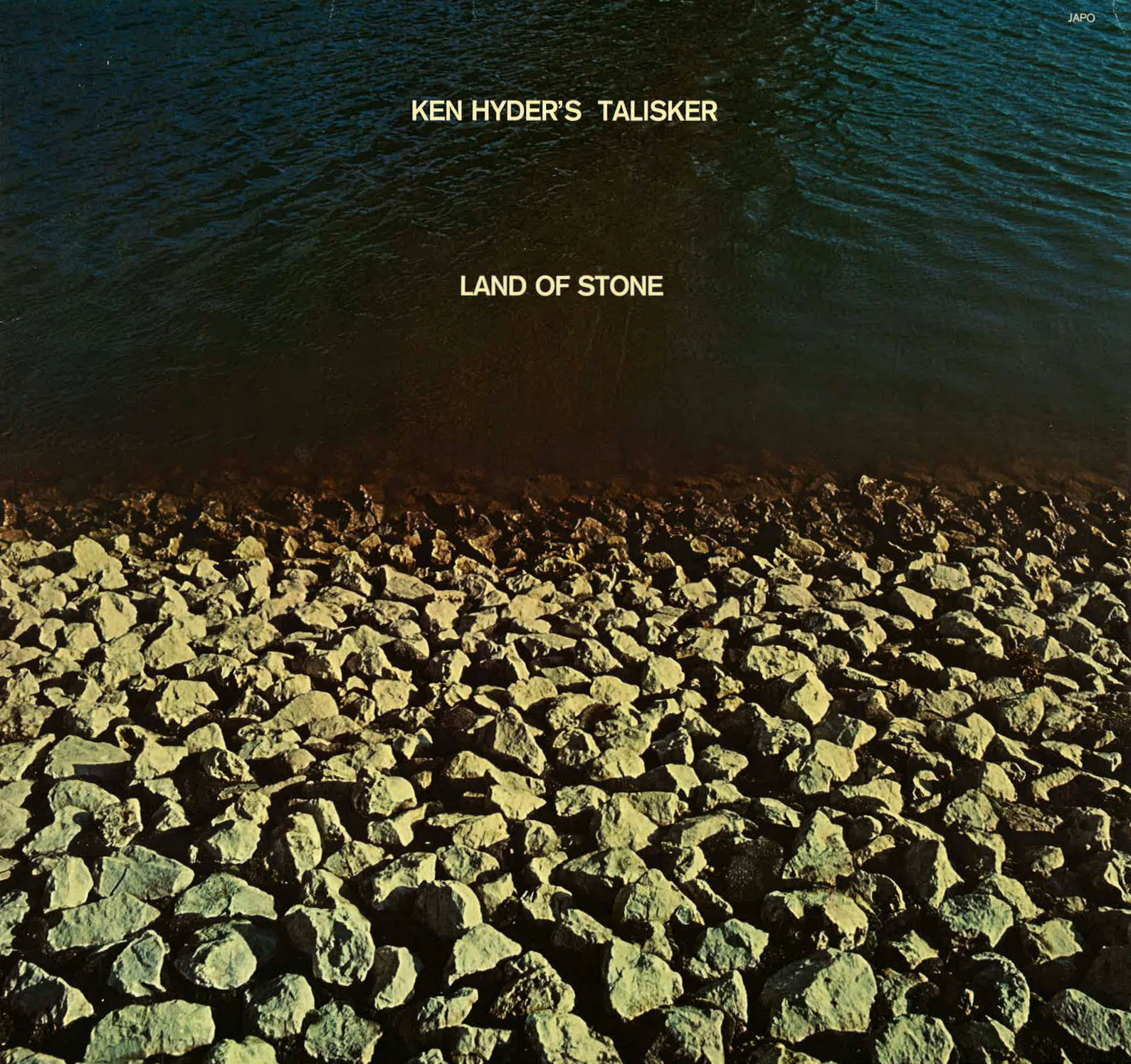
Ken Hyder’s Talisker: Land Of Stone (JAPO 60018)

Land Of Stone

Ken Hyder’s Talisker
Land Of Stone

Ken Hyder drums
John Lawrence bass
Marcio Mattos bass
Davie Webster alto saxophone
John Rangecroft tenor saxophone, clarinet
Ricardo Mattos soprano and tenor saxophones, flute
Brian Eley vocals
Frankie Armstrong vocals
Phil Minton vocals
Maggie Nichols vocals
Recorded April 1977 in London
Engineer Martin Wieland
Produced by Thomas Stöwsand

Over a career spanning more than four decades, Scottish percussionist and vocalist Ken Hyder has developed a strong body of work, though perhaps none so robust as his Talisker outfit. Combining Celtic and jazz influences, Talisker debuted in 1975 with Dreaming Of Glenisla on Virgin Records. Yet as Hyder’s musical interests began to expand to traditional Irish music and further to Asian monasticism, his sound opened itself to a world of possibilities. Enter album the second, Land Of Stone, which found a home on the JAPO label two years later.

“The Strathspey King,” a strangely swinging ode to Scottish master fiddler James Scott Skinner (1843-1927), sets a homegrown tone. Clarinetist John Rangecroft proves to be a vital presence in this increasingly enigmatic session, adding swagger aplenty. Like a young hopeful decked out in fresh threads and money in the pocket, he tricks the heart into thinking that harm is a while away. Hyder’s militaristic drum solo intercepts street-side, as if offering free samples of reality before a chorus of bidders drops into view with its haunting brand of Hebridean choral music in “The Men Of Barra Know How To Drink, But The Women Know How To Sing.” A boisterous and colorful chain, its syllables become actions, teetering like drunken instruments into “Close The Window And Keep It Down.” This likeminded island song is an onomatopoetic excursion into the inner lives of house wares and propriety. The latter quickly disintegrates as bonds loosen their friction and slide from grasp in screeching ululations, courtesy of ECM margin-bearer Maggie Nichols. The color wheel darkens further in “See You At The Mission, Eh, If It’s No’ Full,” in which a brood of instruments strains unison phrasings through an upturned colander. Bass and drums form a knot of support, eyes in a flowing wood grain. In the wake of these dirt-caked fingernails, “Derek Was Only A Bairn” rides into the dawn, a smooth caravan lead by Ricardo Mattos on flute and horse’s trot.

Hyder insists that improvisation was a vital component of Scottish bagpipe playing, and in a tripartite pibroch he explores the crossover from the Highlands to the fringes of American free jazz, dedicating parts respectively to the MacCrimmons (a notable family of pipers), John Coltrane, and Albert Ayler. After a microscopic dialogue between bassists John Lawrence and Marcio Mattos, soprano saxophone masquerades as bagpipe in piercing shepherd’s call. Hints of a jig rise and fall from deeper drones, a sky behind mountain silhouettes. Over the click of cymbal, dense voices weave in and out of earshot, taking solid presence in the loam of memory, to slumber and to molt. The banshees return with gentle persuasions, their ashen hair and earthward grins blistered by the rub of their limbo. Yet with the coming of rhythm they achieve communication somewhere on the other side of fear, ecstatic totems each passing through sea and grain until the wind puts fingers to lips and blows.

Cleaning off the dust of age, Talisker shakes out tunes old and new, and with the chaff pieces together charcoal fields as would a cobbler hammer a sole. Or is it soul? There’s plenty to be had in this land of stone.
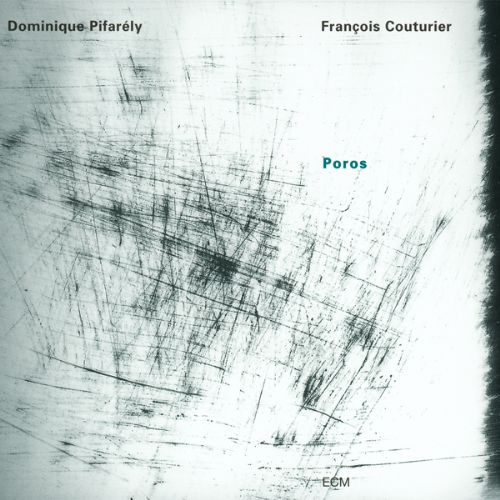
Dominique Pifarély/François Couturier: Poros (ECM 1647)

Poros

Poros

Dominique Pifarély violin
François Couturier piano
Recorded April 1997, Festburgkirche, Frankfurt
Engineer: Markus Heiland
Produced by Manfred Eicher

Dominique Pifarély—violinist and former co-leader of clarinetist Louis Sclavis’s acclaimed Acoustic Quartet—and pianist François Couturier—who since Anouar Brahem’s Khomsa has recorded a string of varied albums for ECM—team up for this unique collaboration. The resulting admixture of folk and modern classical influences finds the duo charting waters that might have otherwise remained glassy and still without the cut of their oars. The image is no mere metaphor, for the album’s title comes from French philosopher Sarah Kofman, who characterizes the concept in precisely these oceanic terms: a path through aquatic expanse that is just as vulnerable to erasure as it is to discovery. Its trailblazing implications rest on a blade of uncertainty, and therein lies their beauty.

One might be hard-pressed, however, to read any of this into the music in the absence of such a setup. The listener is instead confronted with a tantalizing, if restless, chain of events. “Trois images” awakens in a fit of pique, only to realize that the object of its scorn has already fallen away like the house of cards that is any dream. The musicians seem to run frantically trying to rebuild it before it gives up the ghost of reality. In other pieces like “Retours,” “Vertigo,” and the title piece we encounter an even more gnarled grammar. It is a dialectical assemblage of action and thought, of secrecy and exposition. The album is a constellation of references whose stars belie hues of the French modernists, free improvisation, and Bartók, among others. We therefore never rest for too long on one idea. The occasional locks stand out for their beauty, only to drown in a sea of cat cries prancing into blackout. What with the bubbling streams of “Labyrintus” and the grinding gears of “La nuit ravie” there is far more going on below and within, locked away behind a shell of almost ritual design. Pifarély brings the occasional jazzy inflection to the arc of his swing, most notably in Mal Waldron’s “Warm Canto” (from his 1961 album, The Quest), in which he blends tiptoeing pizzicato into explosive resonant chords in a chromatic whirlwind. “Gala” offers a pileated ending.

As on the album’s cover, the duo crosshatches incidentals in a knitted bruise. Pifarély trembles with the motion of a leaf obsessed with the fear of falling. His attention to detail and the precision of his agitations are thus remarkable. Couturier’s intricate astrology calls strangely from below, goading that leaf into decomposition. Only then do we see that the forest has been there all along, tilting, spinning, blurring into a looming mask of greens and browns. Traction is hard to come by, paths invisible. Our mind becomes the score, the stand on which its pages are turned, the sound dying to be released from within it. In thinking we believe, and in believing we know.

<< Giya Kancheli: Trauerfarbenes Land (ECM 1646 NS)
>> Michael Mantler: The School Of Understanding (ECM 1648/49
)

Tomasz Stanko New York Quartet: Wisława (ECM 2304/05)

Wislawa

Tomasz Stanko New York Quartet
Wisława

Tomasz Stanko trumpet
David Virelles piano
Thomas Morgan bass
Gerald Cleaver drums
Recorded June 2012 at Avatar Studios, New York
Engineer: James A. Farber
Assistant: Charlie Kramsky
Produced by Manfred Eicher

They call it: space.
It’s easy to define with that one word,
much harder with many.

The verse comes from the poem “Before a Journey” by Nobel Laureate Wisława Szymborska, whose legacy gives color to a starry tribute from trumpeter Tomasz Stanko. Given the snapshot ethics of Szymborska’s visual language, one could find no better musical interpreter to put this epigraph to the test. For though words may indeed fall short of expressing these swaths of infinitude we call “albums,” the language of instruments in the right hands can accomplish the impossible.

Wisława Szymborska
Wisława Szymborska (1923-2012)

One need hardly expound the virtues of Stanko’s new allies, each handpicked from the profuse garden of the New York City jazz scene. Pianist David Virelles brings a robust gentility to the table that meshes effortlessly with Stanko’s own. Bassist Thomas Morgan and drummer Gerald Cleaver—rhythm section to Craig Taborn’s trio—offer their dark synergy in kind. The proof, as they say, is in the pudding, and over the thickly whipped concoction of this 2-disc set it reaches our ears at the peak of flavor and consistency.

True to inspiration, Stanko and company derive wry upsweep from sentiments that, while unspoken, nevertheless dance in the spaces between. Of those spaces we encounter many, though of a markedly different cast from Stanko’s past ECM joints with the Polish quartet. Those expecting the aching, cool moroseness of that past may marvel at the prevalence of fire. The band swings with the best of them in “Tutaj – Here,” a track that takes its name, like a handful of others, from Szymborska’s final collection. Stanko leaps, as he does also in “Assassins,” at the fortuitousness of this meeting of word, feeling, and expression. He makes us aware of the here and now, as if we were there in the studio with him. Yet while the band is busy running all sorts of virtuosic errands in these dizzying soundscapes, we know that the finery is as thick as the souls it clothes.

The restless grooves of “Metafizyka” and “Mikrokosmos” find the band in a more down-tempo mood, though no less beguiling for melodic accuracy and Stanko’s unchained asides. Further allusions refract in “Faces” and “A Shaggy Vandal,” both highlights, taking their cue from Symborska’s poem “Thoughts That Visit Me on Busy Streets.” Stanko is at the top of his lyrical game in the former, trading off artfully with the others in cells of interpretation, to which Cleaver adds a vivid soliloquy of his own, while the latter is a well-oiled machine that blends influences into a postmodern mélange of rhythmic beastliness.

Despite these dips into upbeat waters, creature comforts reveal a heart whose petals have only grown fuller with the blush of time. Still, lurking in the album’s tenderest moments is an emotional heaviness. This is apparent in the fine patchworks of surplus and deficit that are “Dernier Cri,” in which the ghost of Miles is felt tenfold, and the wistful, floating “Song For H.” For another, “Oni” summons with smooth ritual, showing restraint while inviting us all the same with its beguiling atmosphere: the hallmarks of any good Stanko tune. Though its charm may be as deceptive as its title (if indeed the Japanese meaning of “demon” is intended), we are better equipped for it to wander into “April Story,” which opens nostalgia like a love letter forgotten in the back of a sock drawer. It is a raindrop forever hanging at a leaf’s trembling tip, a tear that never falls but which is sucked back into the eye, whereupon it tells the others: Not today.

Stanko NY Quartet

The title track and its 13-minute variation hug the set with dreams made real. Here the microscopy of the band is at full magnification. Stanko is the stain beneath Cleaver’s brushed cover slide, while Morgan and Virelles provide light and adjust the focus. Morgan’s especially contemplative soloing leaves us suspended before the blade of Stanko’s brass snips that thread and lets us drop into the quiet waters below. Notes linger, bringing us back to wistful ambiences of long ago.

Stanko wields his pen as surely as ever. His younger partners bring all the maturity needed to relay his torch with a grasp that lets everything slip through but the finest crystal. Tuneful to the core, each solo is a holistic admixture of heritages on the one hand and on the other elicits the satisfying crack of new eggs onto the frying pan. Do not go into this album expecting the lofty spaces of Lontano or Suspended Night. These songs are cruder oil to those past efforts’ refined, and all the more enchanting for it. Here the levels are grounded, not airborne. Denser and tenser is the name of the game. But let us not fall deeper into the trap of comparison, for Wisława possesses its own stage and protagonists. In this play there are no villains, only messengers of progress whose abilities precede them and whose reputations burgeon in golden light. Verily, verily so.

Promo video:

(To hear more samples of Wisława, click here.)

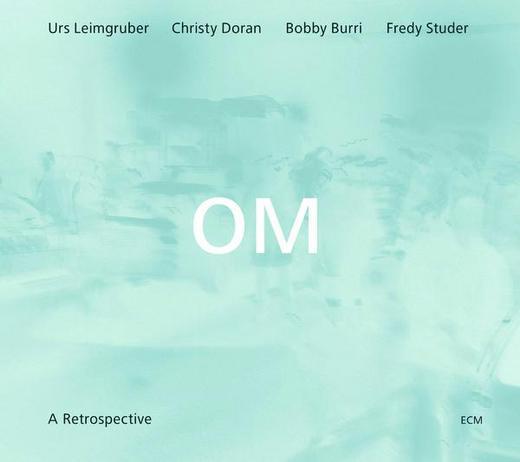
OM: A Retrospective (ECM 1642)

OM

OM
A Retrospective

Urs Leimgruber soprano and tenor saxophones, flutes, percussion
Christy Doran guitars, guitar synthesizer
Bobby Burri double-bass
Fredy Studer drums, gongs, percussion
Dom Um Romão percussion, berimbau
Erdman Birke accordion
Recorded 1975-80
Compiled by OM

The iconoclastic group known as OM (after John Coltrane’s album of the same name) took root in the musical wilds of Lucerne, Switzerland in 1972, and for the next decade filled its cup with an idiosyncratic blend of rock and free improvisation. Thus branded, its members launched into the electric jazz universe with comets blazing. Their brilliance had lain dormant in the Land of Out of Print for far too long until this program caught the ECM bug at last and made its way into the open. The current program, chosen by the band from its four JAPO releases, reflects an evolution that is both chronological and elliptical.

OM

From Kirikuki (JAPO 60012) we get two representative tracks, with “Holly” firmly establishing OM’s spaces of conviction. The skittering drums of Freddy Studer, restless bass of Bobby Burri, punctuation of guitarist Christy Doran, and prophetic run-ons of reedist Urs Leimgruber bind a unique sonic book of ever-widening proportion. Leimgruber also plays flute, adding a flavor of incantation to “Lips.” Nourished by Doran’s metallic cries, he plants nostalgic flowers in trodden fields, whipping up a rustic and genuinely direct aesthetic.

From Rautionaha (JAPO 60016) comes the title track, of which the interaction between soprano and guitar is of special note. OM’s penchant for highly controlled insanity, its funneling of whistles and stomps, is elsewhere hardly more apparent. The power of making music together comes alive here. “Rautionaha” also boasts a memorable turning point when Doran unleashes a fluid dentist’s drill that sends the rest spiraling into a quiet, more introverted cause. From angular to curved, the contours turn in on themselves in an epic of sheer improvisatory credence.

Om with Dom Um Romao (JAPO 60022) also yields a single track: the enigmatic “Dumini.” Again, soprano and guitar lay out the welcome mat. Cymbals give them a trajectory to follow, a destination forever invisible because it calls from deep within. The flanged guitar cuts through the din like butter, melting the pain away.

Despite the forthrightness of the playing, many of the album’s moments remind us that even the most aggressive heat shelters a coolly beating heart, which is perhaps why Cerberus (JAPO 60032) makes it into the retrospective fully intact. “Dreaming for the People” begins its formula in much the same way as the previous two examples, only here Doran takes a decidedly fragmented approach, flinging packets of salt into the stew. Mystical turns abound thereafter in “Cerberus’ Dance” and “Asumusa,” each showing the breadth of OM’s sensitivity. “At my Ease” elicits watery textures from Doran as the rhythm section inspires some headstrong lyricism from Leimgruber on tenor. The guitarist’s moment in the sun, however, comes in the company of “Earworms,” a masterful hatching of dots and dashes in swirling pools of Morse code. Yet there is nothing so insightful as the final “Eigentlich wollte Johann auf dem Mond den andern Jazz kennenlernen.” This viscous fever dream, filled with galactic whale songs and lost answers, welcomes accordionist Erdman Birke into the fray for a haunting excursion into the soul. With the persistence of a flare drowning in an electronic swamp, it awakens hidden feelings. A radio blurs in and out of vision, intimations of faraway lands and rituals, painstakingly whitewashed until they bow in deference to the ether. In this music we can trace a satellite’s path.

Cerberus

To listen to OM is to witness an evolutionary process in biological time. This superbly assembled collection of music we can taste, smell, and touch, then, holds the key to its own reveal. It has a tinge of ash, a starchy texture, and licks like fire in a burning house, abandoned except for the music that has inhabited it for so long. Its magic has nothing to do with mystery, for it speaks with voices we already have in mind. Whether or not we recognize them is of no consequence. They know us inside and out.

<< Brahem/Surman/Holland: Thimar (ECM 1641)
>> Maya Homburger/Barry Guy: Ceremony (ECM 1643 NS
)

Eberhard Weber: Résumé (ECM 2051)

Résumé

Eberhard Weber
Résumé

Eberhard Weber electric double bass, keyboards
Jan Garbarek tenor and soprano saxophones, selje flute
Michael DiPasqua drums, percussion
Recorded in concert 1990-2007
Recording engineers: Walter Speckmann and Gert Rickmann-Wunderlich
Produced by Manfred Eicher

There’s a reason why songs on a CD are called “tracks.” Each takes us on a journey somewhere, and no jazz bassist sports the conductor’s hat in quite Eberhard Weber’s way. Over the course of 1000+ concerts with the Jan Garbarek Group, the German bassist/composer has for decades enthralled listeners with unimaginable pathways, all the while defining and redefining a sound for the ages. Each of those concerts featured a solo entr’acte, wherein fomented some of his most extraordinary ideas. Résumé consolidates a cohesive selection of these in a fresh program of eternal ideas. More than mere interludes, each is a marker of the respective location that titles it.

Weber 1

Weber devotees will recall his 1988 Orchestra (link), half of which placed him in a solo spotlight. If that memorable record gave early and lasting insight into his uncompromising ear for melody, then Résumé furthers the crucible’s purpose in boiling down to the essence of who he is. This is Weber in the flesh, in no way obscured by the spontaneous loops, forged in real time, that issue from his electronic paraphernalia. Aside from these ghostly selves, his is not truly solitary endeavor throughout, for he also has a sprinkling of help from drummer Michael DiPasqua and saxophonist Jan Garbarek, the latter also on the selje flute. The overtones of this Norwegian folk instrument add blush to the canvases of “Karlsruhe” and “Bath.” The first paints arco flight paths like the steps of cranes lingering in the scent of freshly harvested rice paddies. The second is angular and playful, and finds Weber tying his bow into an assortment of harmonic knots before darkening into a heavy drone.

Such contrasts can be found as much within tracks as between them, though nowhere more acutely than in “Liezen.” The program’s opener is a window into the heart of a man whose artistry is heart incarnate. Lush chords usher us down a gallery of warm emotions, its walls decorated by the vibrant palettes of wife Maja that grace so many of his past album covers. Swinging from delicate pizzicato branches, Weber strings more robust vines through a germinating landscape. Keyboards scatter like windblown blossoms as Weber dances into the crowning night. The profundity of his intuition comes to fruition in “Heidenheim,” which weaves DiPasqua’s sparkle through looped matrices, each a world in a pocket fed to us in a trail of crumbs. Percussion and strings crosshatch again in “Amsterdam” and “Bochum.” Both of these, with their Steve Reichean marimba pulse, provide rich textural detail and irresistible propulsion. “Lazise” brings us out of the tunnel and into a wintry countryside, where a carnival of the mind awaits our arrival.

Garbarek’s reeds haunt the murkiest coves, fully a porpoise coaxed toward the setting sun while schools of fish swim spirals in the briny deep. With a presence like light through leafy shadow, he drops some of his most mystical sopranism on record into “Tübingen.” Here the feeling is of song, of evocativeness.

Weber’s fingers are feet, their paths still radiant all these years later. His traveler’s mind brings photographic clarity to every locale. Of Santiago we see the snowcapped mountains and spired churches, feel the swoon of star-crossed lovers whose bodies meet only under cover of dreams. In “Wolfsburg” we skim across water and technology, ending on a high signal cast into the world at large. Like its namesake, “Marburg” is a towering architectural node, leaving “Grenoble” nestled in its Alpine settlement, where cinematic strings blend us into terra firma.

Weber 2
(Photo by Jörg Becker)

This is more than a résumé in the sense of being a mere list of past accomplishments, for it engenders new ones through our experiencing of them. Like the crowd whose voices occasionally appear, we can only show our appreciation from far below, reading familiar shapes into every passing cloud.

(To hear samples of Résumé, click here.)

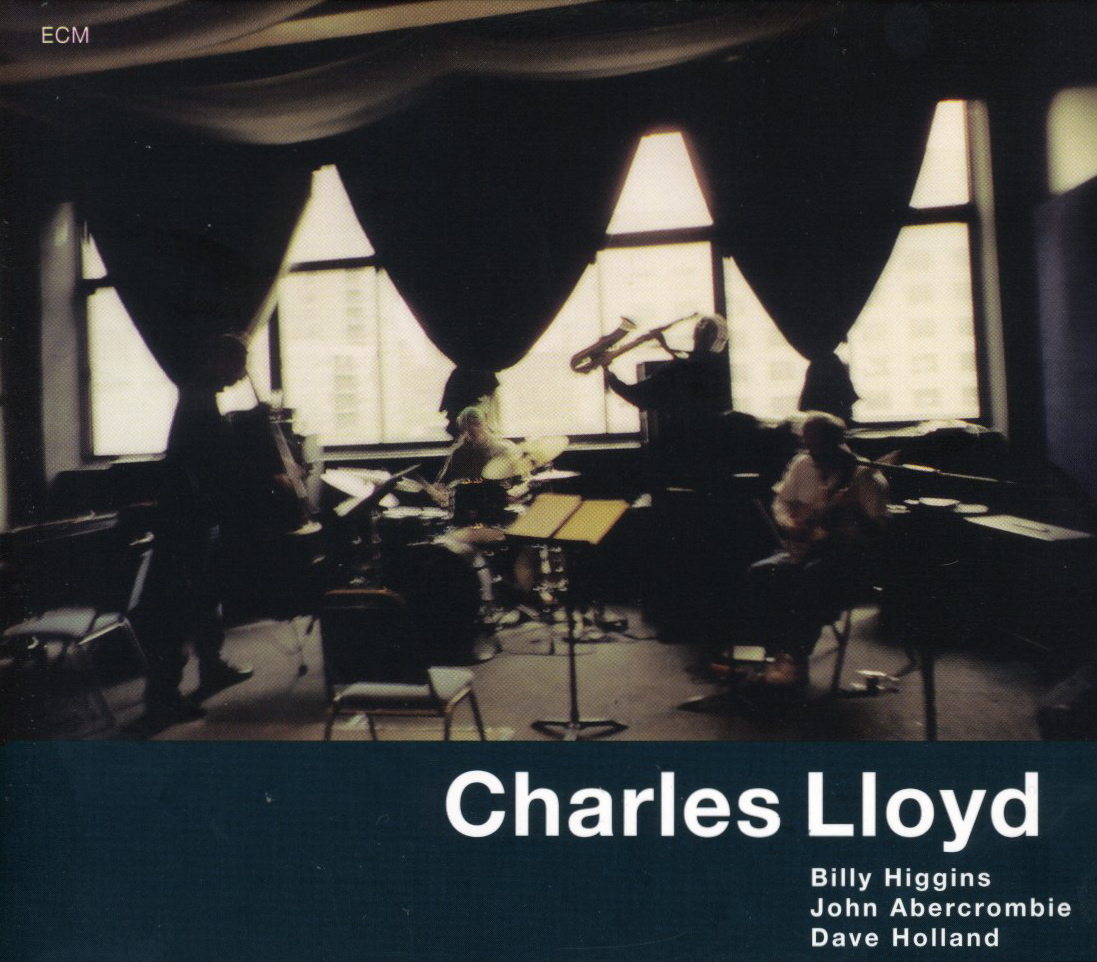
Charles Lloyd: Voice In The Night (ECM 1674)

Voice In The Night

Charles Lloyd
Voice In The Night

Charles Lloyd tenor saxophone
John Abercrombie guitar
Dave Holland double-bass
Billy Higgins drums
Recorded May 1998 at Avatar Studio, New York
Engineer: James Farber
Produced by Manfred Eicher

First loves never die. When it comes to jazz, Voice In The Night was mine. Not only was it the first proper jazz album I ever purchased, but it also introduced me to a tenor sound that had me at note one and has yet to let go. Memphis-born but California-spirited, Charles Lloyd has expanded the sweep of his instrument in incalculable ways by means of an unerring willingness to surmount every obstacle that stands in his way. After jumping the pond for a handful of (re)defining sessions, including the unmissable All My Relations and Canto, this fish out of water kept stateside, recording in New York’s Avatar Studios with a crew of new and old alike. By the time of this record, he and drummer Billy Higgins had had a history stretching back to the mid-1950s. Bassist Dave Holland and guitarist John Abercrombie were mixed recruits—Holland having shared a festival stage or two with Lloyd, Abercrombie fresh on the boat. Abercrombie had been especially astonished by Lloyd’s depth and phrasing, and the introduction of the former to the latter’s milieu was a masterstroke.

This album bears prime witness both to Lloyd’s songcraft and to the wonders it inspires in his band mates. His restless arpeggios are more than just that. Like emotional tics he can’t (and need never) shake, they constitute a grammar all their own, each a subtle unpacking. They flow throughout the title opener with such soul-to-soul intrepidity as to turn each gesture into a different shade of charcoal. With said charcoal this intensely laid-back quartet draws a bold landscape of shadows and dreams. Some ring more fancifully, such as a topflight rendition of the Elvis Costello/Burt Bacharach tune “God Give Me Strength,” given here a full and chromatic treatment that pushes Higgins into the foreground with the inevitability of April wind. Lines of the eponymous tune reverberate in the playing:

And I don’t have anything to share
That I won’t throw away into the air

If Lloyd is the voice in the night, Abercrombie brings out the stars, calling forth a fluid artistry in what just might be his best date since Timeless. His soft, midrange-heavy tone flows like rain down a window. Standout moments abound in “Requiem” and in “Homage,” the second a hip display of acrobatic proportions. With fingers flying and solos enchanting (the homage can only be to Coltrane), in addition to a bubbling drum solo at the fulcrum, there’s much to savor in repeated listening.

Other dreams, such as “Dorotea’s Studio,” read more impressionistically. Abercrombie’s extended solo here inspires the rhythm section to build the melodic frame into which Lloyd eases his way and dances amid a collection of artifacts. Carved wood, painted canvas, developing film: these vestiges of impulse come to life in the absence of their creators. This is an emblematic track for its unforgettable vamp and organic shifts in key, all working toward a flick of an ending, abrupt and sincere.

Lloyd is so known for his personal reflections, and in this regard “Island Blues Suite” represents a return to roots. This multifaceted track blends backyard jam aesthetics and weaves through them, by way of Abercrombie’s strings, a chain of uninhibited dances. Subtle soloing from Holland and a keening guitar are icing on the cake. Lloyd takes the deepest dip into his canon with a newly re-imagined “Forest Flower” (this one goes back to the 1967 live album of the same name). The bossa nova undercurrent sets Abercrombie on a fruitful improvisatory path, while Holland’s whispers reveal the set’s dynamic charge. These interactions smooth into a long play-out before Billy Strayhorn’s melodic strength blossoms in “A Flower Is A Lovesome Thing,” in which Lloyd lays heavy tenderness over a Saharan pulse until earth and sky change places.

As a whole, the band maintains a steady river without the need for waterfalls. The fact that Voice is also a melodic tour de force for Lloyd in particular only sweetens the pot. His is a clarifying presence that brings lucidity to the current with so much vision, it’s almost blinding. James Farber’s rounded engineering gives us the clearest sense possible of the importance of space in the tenorist’s songcraft. The result is lyrical music-making at its best. Classic to the bone.

<< Erkki-Sven Tüür: Flux (ECM 1673 NS)
>> Keith Jarrett: The Melody At Night, With You (ECM 1675
)

Brahem/Surman/Holland: Thimar (ECM 1641)

Thimar

Thimar

Anouar Brahem oud
John Surman bass clarinet and soprano saxophone
Dave Holland double-bass
Recorded March 13-15, 1997 at Rainbow Studio, Oslo
Engineer: Jan Erik Kongshaug
Produced by Manfred Eicher

The moment’s depth is greater than that of the future.
–Rabia of Basra (714-801)

Oudist Anouar Brahem brings his passion for past and future together in the present recording with reedist John Surman and bassist Dave Holland. Although he has singlehandedly revived the oud as a solo instrument, collaboration has always been at the heart of his craft, whether between himself and the spirit that moves him or with the muses of others. Most of the material on Thimar is Brahem’s and its lack of chording and bar lines in the scores presented Holland and Surman with new and fruitful challenges. One would hardly know it from the fluidity of the session. The album’s title means “fruits” in Arabic and, like those on a tree, the tunes it designates aren’t so much blended as connected by bark, water, and minerals. The press release cites recent musicological research which suggests that jazz may have its roots in the Middle East, for the West African musical traditions it mined were already syntheses of Islamic influences. This is not a “fusion” project. It is an illumination of roots.

Brahem also brings a love of Surman and Holland’s work, introduced to him by way of producer Manfred Eicher, notably through Road To Saint Ives and Angel Song. We might not be wrong, then, in shelving Thimar alongside those ECM gems. The latter of the two is especially ripe for comparison, as it likewise pushes jazz envelopes in an intimate, percussion-less setting. Only here, the added element of Brahem’s keen restraint breeds an enchantment of a different order. Despite his centrality in the program that unfolds, it is some time before he enters the stage. Instead, “Badhra” opens with an adaptive, harmonium-like drone from Holland and Surman’s buttery soprano wafting in the breeze. Holland melts into a solo that rises from the earth, soil made flesh. One might say he treats his bass like an oud, so that when Brahem appears at last it feels like a natural extension—youth to ancestor—and renders Surman’s intonation all the more calligraphic for its contours.

Surman is formidable in this setting, not by means of technical flourish but more so by the movement of his playing. He scribbles masterfully in “Mazad,” bringing an ever-deepening sense of destination to perhaps the most recognizable soprano in recorded sound. That singing reed has hardly sounded better. He further provides a lone interlude in “Waqt,” and one original, “Kernow” (Old English for “Cornwall”), in which his bass clarinet shadowdances with oud.

Holland’s contributions are equally profound. His walking lines in “Kashf” inspire a unified sermon from the trio and plunk like amplified raindrops from leaf to leaf in “Houdouth.” He is an accommodating and adaptable soul, especially in “Talwin,” where his drum-like sensibilities bring rhythmic drive (as they did in Angel Song) to the exchanges swirling around him.

For all the highs and lows, Brahem remains the ultimate truth of these proceedings, our guide on a journey he defines as he goes along. The heart-to-heart tunefulness of “Uns” pins the album’s ethos on its sleeve, evoking villages and bustling metropolises alike. In “Qurb” he adds metallic taste to Holland’s protracted Brew and sings into the tunnel. His “Al Hizam Al Dhahbi,” with its fluid doublings and harmonies, is the session’s crown, a memory in the making. There is a locomotive circuitry in his writing that runs all the way through “Hulmu Rabia” (Rabia’s Dream), signing off elegiacally with a nod to the first female mystic of Islam.

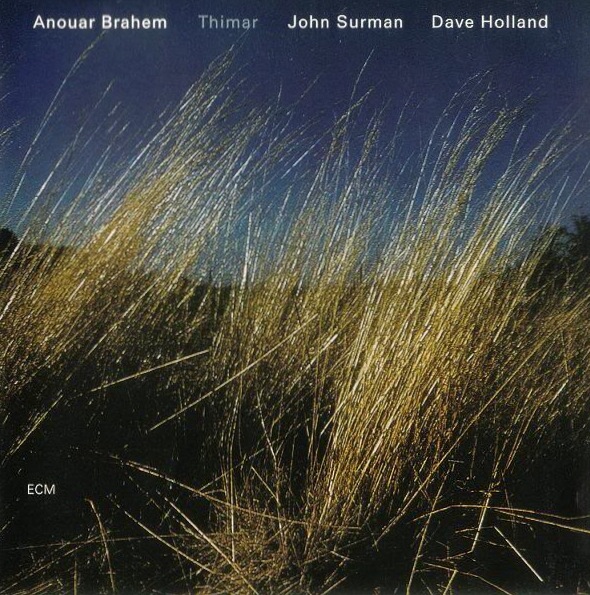
Thimar holds a coveted place in my listening life, for it was my first time hearing each of its three musicians. Separately, they are powerhouses of influence in their respective fields. Together, they are like the cover photograph: Holland the silhouetted land against Surman’s gradated sky, and Brahem the strings hatching their meeting at dusk.

<< Keith Jarrett: La Scala (ECM 1640)
>> OM: A Retrospective (ECM 1642
)

Charles Lloyd/Jason Moran: Hagar’s Song (ECM 2311)

Hagar's Song

Hagar’s Song

Charles Lloyd alto and tenor saxophone, alto and bass flute
Jason Moran piano, tambourine
Produced by Charles Lloyd and Dorothy Darr
Recorded April 2012 at Santa Barbara Sound Design
Engineer: Dominic Camardella
Mastering: Bernie Grundman
Executive producer: Manfred Eicher

Speaking of an ECM production in terms of engineering is like speaking of a Van Gogh painting in terms of brushstrokes: the two are so intimately connected as to make their parsing arbitrary. Still, it bears mentioning that with Hagar’s Song the label has taken a fresh direction due to the insistence of its artists on a naked sound. We hear it from breath one in Billy Strayhorn’s “Pretty Girl,” which under the fingers of the album’s protagonists—saxophonist Charles Lloyd and pianist Jason Moran—awakens to a new dawn. We hear it in the close miking of that unmistakable tenor, in Moran’s pillow of chords filling the recording space with the close-knit statements befitting of the duo dynamic. Let this be a cue, then, to witness the growth of these kindred hearts, whose cause is just getting warmed up. So begins a helping of Lloyd’s personal favorites, which include many familiar tunes re-spun by the patina of his lyrical edge. His bold evocation of every theme reveals an artist funneling his attentions into hard-won integrity.

Charles and Jason
(Photograph by Dorothy Darr)

Lloyd’s notecraft is a spectrum of infatuation and rests comfortably in Moran’s edgy blend of styles. To characterize the latter as a blend of the old and the new, however, gets us off on the wrong foot. His nostalgia is of a different order. The feeling of entrenchment intensifies the more he works with Lloyd, who gives him both a context and the freedom to run around it. Moran’s balance is one of seeking and restraint, of plangent cry and heartfelt whisper. Whether in the old-time swing of Ellington’s “Mood Indigo” or the haunting manifestations of the Gershwin classic “Bess, You Is My Woman Now,” his roots remain strong and attract all sorts of wonders from the horn that inspires him. This would seem to inspire Lloyd in return. From the way he frames an octave before dropping into it all sorts of knots to be untangled to the skirting poetics of his angular original, “Pictogram,” his artistry gazes, bare and unblinking. For a concise summary of that very evolution, listen no further than “All About Ronnie.” Here: a prism with its own light.

We do a disservice in calling these renditions “soulful,” as if the tunes were not already so. Their timeless inherency is already set, leaving the patient duo to build whatever spontaneity is needed to bring their messages home. We hear this especially in “You’ve Changed,” which from the lips of Lady Day to George Michael has over the years settled in our bones, and for which Lloyd carries a unwavering torch of freedom through the forest of Moran’s discipleship. You’ll find no stone in this “Rosetta” (Earl Hines), because no translation is needed when caught up in the swing of things.

The session’s centerpiece, the five-part “Hagar Suite,” is dedicated to Lloyd’s great-great-grandmother. Taken from her parents and thrown into slavery at age 10, she was one of countless nameless faces in a river that has yet to dry. In Lloyd’s flute resides the quivering of her undying heart. It is the seed of protest, quiet, known only to those in whom it grows. The winds of change fan it like a flame, jumping from one ribcage to another until it sings. Like Moses in his basket, its melodies come from a land of fragments, of bodies broken and rejoined by the power of will. Moran matches Lloyd’s power of incantation with a ceremonial tambourine, which he plays in the hands or, in the painful lyricism of Part III, “Alone,” lays on the piano’s lower strings. It is the tinkling of a faraway dream, a cicada calling to the sands as if every granule were an eye. Through a veil of patience, the duo molds soil into something upright, that it might wander of its own volition from sea to shining sea in search of the wisdom of age…if not the age of wisdom.

If “Hagar Suite” is the album’s multi-chambered heart, then “I Shall Be Released” is its blood. The genius of this Bob Dylan tune has never run so thick as it does here. The same holds true for “God Only Knows.” This insightful look into the mind of Brian Wilson pays homage to Lloyd’s session work with the Beach Boys in a spatial epilogue that carries us far over the horizon to a place where children are forever safe and their parents shed tears only by way of joy, knowing they have everything they need in each other.

Because of the nature of this project, talking about the musicianship in terms of “solos” is moot. Lloyd and Moran are two pans of the same scale, the chain of which hangs from a tall, tall hand of justice. Hagar’s Song not only shows great technical intuition, but also a multifarious instinct for programming. In assembling this set, they have handpicked from the best and added to it, living in the shadows of the originals as much as in their light, and through it all with a love clear as sky.

This is jazz at its most embryonic, the fulfillment of wishes standing the test of time. Like Lloyd’s offshoots, it never strays from the core of what needs to be said. No room for poker faces; only the genuine rake it in.

(To hear samples of Hagar’s Song, click here.)

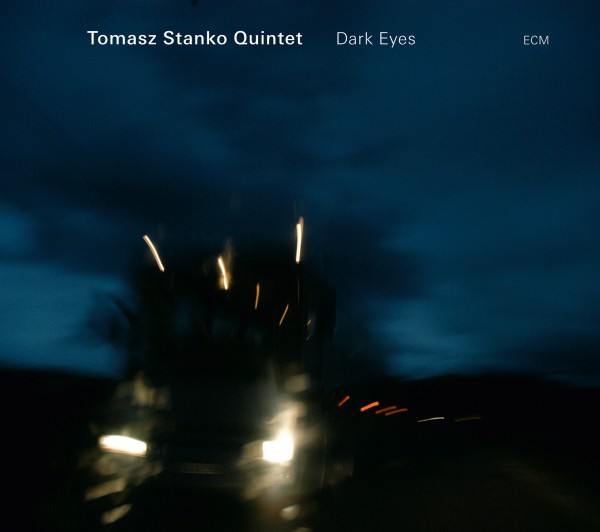
Tomasz Stanko Quintet: Dark Eyes (ECM 2115)

Dark Eyes

Tomasz Stanko Quintet
Dark Eyes

Tomasz Stanko trumpet
Alexi Tuomarila piano
Jakob Bro guitar
Anders Christensen bass
Olavi Louhivuori drums
Recorded April 2009, Studios La Buissonne, Pernes-les-Fontaines
Engineer: Gerard de Haro
Produced by Manfred Eicher

Dark Eyes marks the studio debut of Polish trumpeter Tomasz Stanko’s quintet with two Finnish musicians—pianist Alexi Tuomarila and drummer Olavi Louhivuori—and two Danish—guitarist Jakob Bro (previously heard on ECM as a member of Paul Motian’s Garden of Eden band) and electric bassist Anders Christensen.

Whereas Lontano explored Stanko’s artistry to its most vertical depths, this project seeks the horizontal in the sweeping arc of a surveyor’s compass and finds itself enamored of a life “So Nice.” The selfsame opener is still concerned with space, but in a more immediate way than its predecessors. We still have that same bejeweled interior, which for all its value lives in the heart of shadow, but in it is a lesson: gentility is a privilege that must be earned.

Right off the bat, Bro’s electric adds fresh tonal color to the Stanko sound-world, and continues to bring soft focus and shine to “Terminal 7.” This quintessential travel song puts Stanko in the pilot’s chair, even as Bro emerges from the earth below as a hypnotic, thermal squall. Lesson: the past can only be dead if we are not alive.

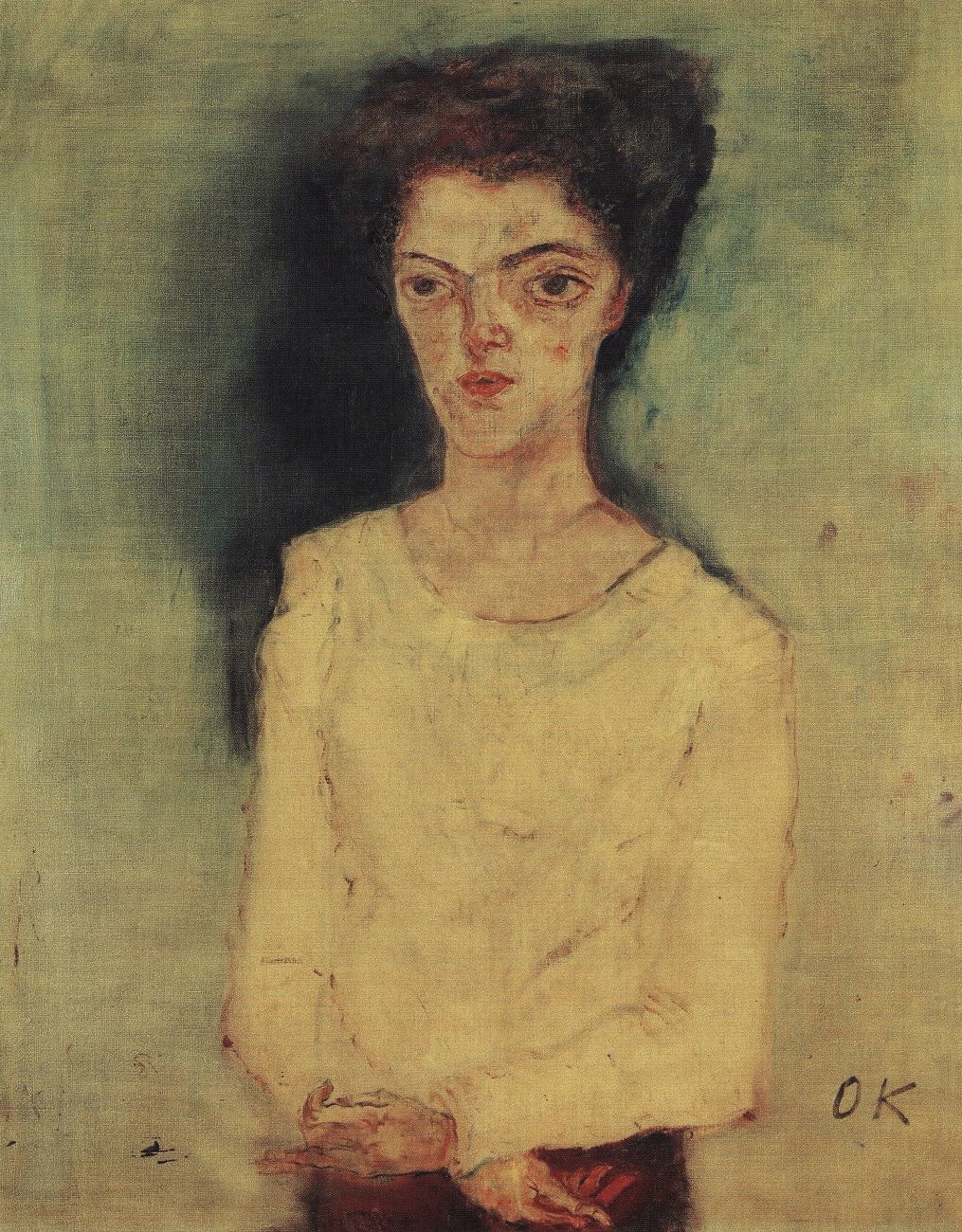
“The Dark Eyes Of Martha Hirsch” takes its inspiration from a painting by Oskar Kokoschka. It hangs at New York’s Neue Galerie, where Stanko found himself transfixed by the image. The theme works like a stitch, which is to say it entails an over and an under, a visible and an invisible. Of the album’s ten tunes, this is the most soundtrack-ish, bleeding from one scene into the next at Christensen’s prompt while throwing in some hot and heavy for good measure. Bro lays on the magic again, at one moment coordinating with a snare hit so organically that the latter seems to ring with it—prelude to a hip round of solos, of which Tuomarila’s is particularly fit. Lesson: speed gets you nowhere faster if you tame it with expectation.

Dark Eyes Painting
Martha Hirsch (Dreaming Woman), 1909

“Grand Central” is among Stanko’s more memorable themes and brings together an appropriate combination of nostalgia and bustling poetics. Tuomarila takes the roll of bassist, providing the throb behind every gesture. Lesson: always remember where you’re going.

Another metropolitan tribute follows in “Amsterdam Avenue,” which after a thematic tradeoff morphs into a forlorn portrait of the city, where the artist’s brush has only rain and smoke to choose from on his palette. Lesson: even when you remember where you’re going, try a new route to getting there.

“Samba Nova,” a diary from the quintet’s trip to Brazil, begins in a cellular vein, where a life of street music and mountain songs rolls in a quiet avalanche. Buoyant playing from Bro and foot-paddling propulsion from Tuomarila give Stanko all the room he needs to blow freely and easily. Lesson: never forget where you’ve come from.

Stanko pays homage to Krzysztof Komeda, ever a touchstone in his musical career, in a nocturnal incarnation of the jazz pioneer and composer’s “Dirge For Europe.” Its bass line stands out for imbuing Stanko’s song with more than enough starlight. Tuomarila’s ebony-and-ivory arithmetic makes as many subtractions as additions. Lesson: listen to the land, and it will tell you mournful things.

Our interlude shines in the “May Sun.” A gentle breeze of piano, a dreamy bass, the murmuring of drums. Lesson: brevity is the key to life.

“Last Song” takes a page from the book of Balladyna in a deft revaluation. This time its ink is of a deeper hue, its edge twinned by looking back. Lesson: everything is new.

And with the gentle “Etiuda Baletowa No. 3,” also by Komeda, the set closes on a whisper, a sigh, a sliver of moon. Here we lie, wrapped in the folds of slumber…to sleep, perchance to dream. Lesson: the words have found us; only the music needs to catch up.

Whereas Stanko’s previous Polish outings floated beyond any curtain, here they stand firmly onstage (more literally in the cases “Terminal 7” and “May Sun,” both incidental music for playwright Lars Norén). We could compare them all, but wouldn’t that spoil all the fun of exploration? Try it, be moved, and realize that Stanko testifies to something unrecoverable yet which feels closer than in anyone else’s hands.

(To hear samples of Dark Eyes, click here.)