Keith Jarrett Trio: Whisper Not (ECM 1724/25)

Whisper Not

Keith Jarrett Trio
Whisper Not

Keith Jarrett piano
Gary Peacock double-bass
Jack DeJohnette drums
Recorded July 5, 1999 at Palais des Congrès, Paris
Engineer: Martin Pearson
Produced by Manfred Eicher

Following his intimate comeback from an illness that might have barred him from the keyboard forever, pianist Keith Jarrett closed another gap with Whisper Not, the first live album with his standards trio in three years. Once the needle of “Bouncin’ with Bud” drops, however, it’s as if there’d never been a skip in the record. Jarrett seems unable to contain the joy of being once again in his element, so that his chording behind Peacock’s first solo feels like a bird circling, waiting to dive: not in for the kill, but for the sheer thrill of his clip. And dive he does, navigating DeJohnette’s thermals with expert care, thus marking a triumphant return to the fold. That said, when later Jarrett comes into his vocal own on “Hallucinations,” he proves that this concert is more than that: it’s a reframing of what always was, and ever will be, a profound talent.

That the trio’s sound is brighter and more focused will be obvious to any longtime listener. There’s a special, scintillating quality to this album notable already in the title track, which opens with a characteristically wood-knotted intro before locking into a welcoming gait. Yet Jarrett positively fluoresces in the more downtempo turns. “Chelsea Bridge,” for one, moves with the magical fortitude of a classic fairytale—only this music is undeniably real. Some tender unpacking from Peacock sets the pianist to the delicate task of sorting those artifacts to heartwarming effect. His vivid approach to melody stands out further in “All My Tomorrows” and “Round Midnight,” both deep gazes inward that light candles in a post-storm blackout: not with fire but with an inextinguishable love for the musical process.

From “Wrap Your Troubles In Dreams” to George Shearing’s “Conception,” the set’s more upbeat turns have a tenderness all their own. On the same note, “Groovin’ High” might as well be the name of a school, for the trio’s performance of this Dizzy Gillespie tune is a master class in exposition. Peacock revels in the sound to which he is able to contribute so intelligently, while DeJohnette elicits visceral exchanges, ligaments to this as-yet-infallible body. “Sandu” further proves why Peacock and DeJohnette comprise one of the most intuitive rhythm sections in the business. They flow so organically, and with such unforced conviction, that it seems impossible to listen outside their spell. Each has his master moment: the bassist’s in “Prelude To A Kiss” and the drummer’s “Poinciana.” The latter is one of the most brilliant in the trio’s recorded output, of which only this concert’s encore, “When I Fall In Love,” has made it to disc before. Even more beautiful than one could hope for, it’s the perfect way to end a new beginning.

Welcome home.

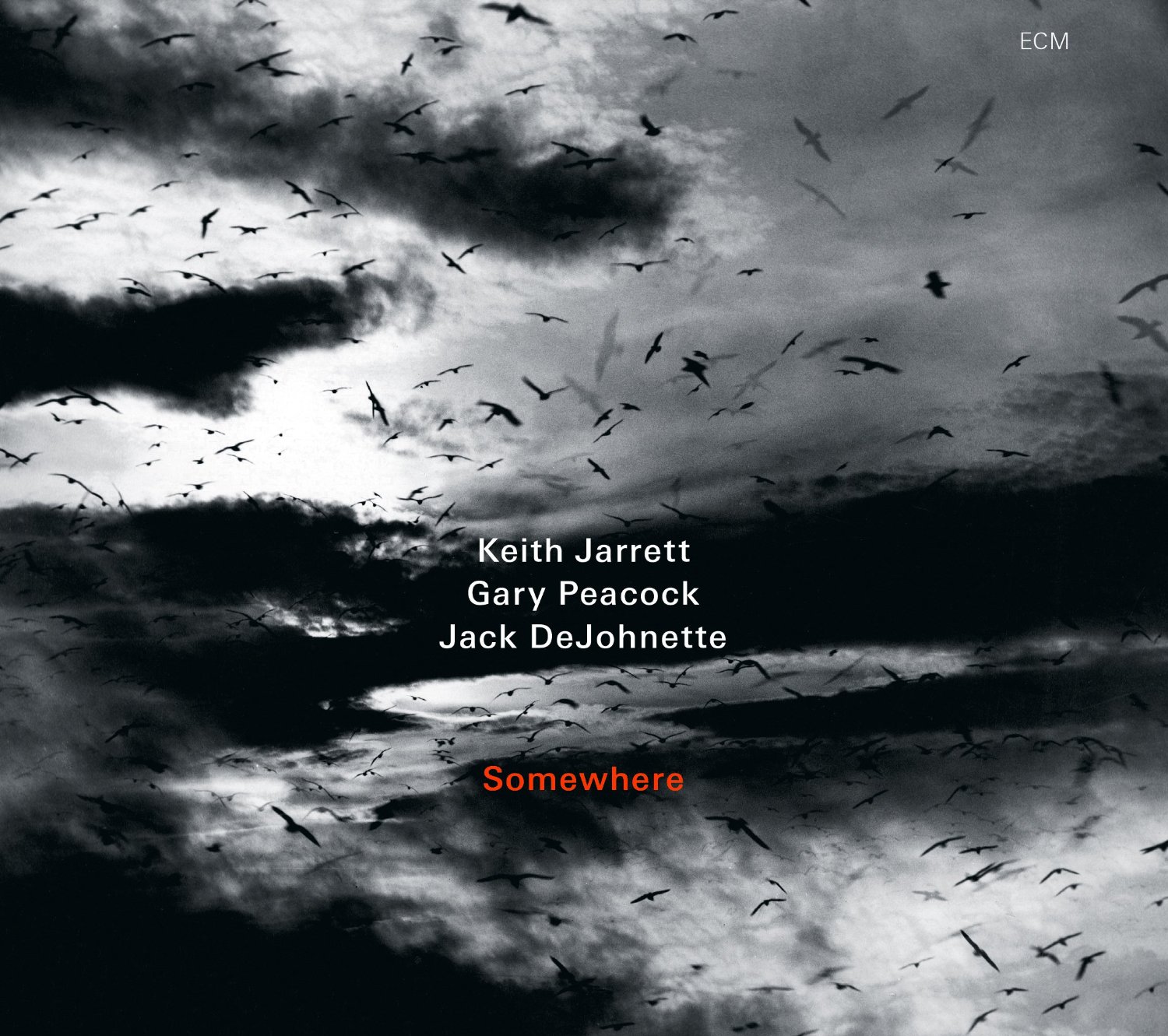
Keith Jarrett Trio: Somewhere (ECM 2200)

Somewhere

Keith Jarrett Trio
Somewhere

Keith Jarrett piano
Gary Peacock double bass
Jack DeJohnette drums
Recorded live July 11, 2009 at KKL Luzern Concert Hall
Engineer: Martin Pearson
Produced by Keith Jarrett
Executive producer: Manfred Eicher

In the same way that 2012 gave Keith Jarrett fans reason to celebrate with the awakening of Sleeper, so does 2013 bring light, placing us at the center of things in a magical new record from his nonpareil trio with Gary Peacock and Jack DeJohnette. More than any other, this joint proves they are no mere instrumentalists but also singers, each in his way.

Somewhere was recorded—not live but alive—in Lucerne, Switzerland in July of 2009. Though it comes to us after a four-year steep, it is as fresh as the day it hit the ether. Jarrett opens with “Deep Space,” a protracted solo that leads into the Miles Davis classic “Solar.” If the transition between the two reveals anything, it is that these three souls, lit as they are by unwavering musical pilot lights, have traveled so far together for so long that the album’s title might as well be “Everywhere.” A feeling of openness and suspension emphasizes the three decades’ worth of magic that came together for this performance, each note a glow-in-the-dark star that still phosphoresces when the lights go down. Lest we get lost in the pitch of night, Jarrett lays down his runway particle by particle, giving his band mates all the guidance they need to fly. Peacock elicits a highlight or two in this 15-minute wind-up, flapping through changes like one among the album cover’s flock.

Jarrett is, while a technical genius, above all a connoisseur of melody. As if to prove this, “Stars Fell On Alabama” gives voice to the dark side of the moon for a beauty that needs no sun to shine. Here Peacock swings from Jarrett’s vines into the loosely woven “Between The Devil And The Deep Blue Sea,” in which now DeJohnette stokes the fire. In the process, he does the impossible: emoting impressionistically with clearly delineated strokes. This only inspires Jarrett to passionate heights, every cluster from his fingers dotting the landscape with fresh flowers. Peacock’s ligament keeps us on track to a whimsical ending.

A 20-minute exposition of “Somewhere,” one of two tunes culled from West Side Story, finds every facet of its theatrical quality realized in the Jarrett addition “Everywhere.” Peacock moves like a throbbing heart in an early solo. Meanwhile, Jarrett’s left hand maintains a gentle metronome as the right tells its stories in the second person. The trio takes its second dip into the Bernstein songbook with a sparkling take on “Tonight.” Jarrett’s fingers dance up a storm, cascading into a rich solo from DeJohnette that leaves us floating along the strains of “I Thought About You,” which flows tenderly, sweetly, as it should.

Somewhere isn’t so much a homecoming as it is a shoring up of a structure that has already held firm against many tides. Jarrett’s ever-evolving pianism provides the aluminum siding, Peacock polishes the freshly installed hardwood floors, and DeJohnette fits new windows into every frame with until the house thrums with the presence of its longtime tenants. Being somewhere locates one not only in space, but also in time, and the album’s clip reminds us that improvisation is a luxury never to be taken for granted. In this spirit they sound more with it than ever, due in no small part to the recording, which stands comfortably at the lip of the stage and twirls with delight. The result is an album that holds its own alongside Still Live as one of the trio’s absolute finest.

KJT

(To hear samples of Somewhere, click here.)

Keith Jarrett: The Melody At Night, With You (ECM 1675)

The Melody At Night

Keith Jarrett
The Melody At Night, With You

Keith Jarrett piano
Recorded 1998 at Cavelight Studio
Engineer: Keith Jarrett
Produced by Keith Jarrett and Manfred Eicher

The Melody At Night, With You was my first Keith Jarrett solo album. And perhaps it was in a way for Jarrett, too. It interprets some of the greatest names in the American songbook—Duke Ellington, the Gershwins, Oscar Hammerstein and Jerome Kern, Oscar Levant, among others—yet tells their stories as if we’ve never heard them before. More than just another standards album in absence of his trio, this is the pianist at his purest. He approaches the music as a composer approaches a blank staff: which is to say, with wonder.

At the time of this recording, Jarrett was diagnosed with what was then known as fibromyalgia, a condition that variously affects muscles and nerves, leaving sufferers chronically fatigued. This meant that Jarrett was unable to perform, and for a while his fingers never touched a key. This in the wake of his highly successful Tokyo ’96, released after the affliction had taken root. Yet surely nothing could staunch the pilot light from which he had borrowed so much flame in his career, and it was this, along with his love for wife Rose Anne (to whom the album bears dedication), that informed his return to playing. To call this album intimate would be an understatement, recorded as it was under cover of darkness, gently, sweetly. Skin thus shed, he is a cause without a rebel, open to the vision of love that holds us in our darkest hour.

The album divides songs internally, balancing contradictory impulses in elegant weave. Gone are the transcendent moonwalks of yore. In their place are gravid statements of purpose. From the contact of “I Loves You Porgy,” the physicality of his playing is immediately apparent as every stretch of sinew and bone works itself back into flexible life. Treading a fine line between linear melody and cloudbursts of chords, between song and circumstance, it is the Rosetta Stone for all that issues from its stirrings. “I Got It Bad And That Ain’t Good” similarly mixes ecstasy into regret, thereby revealing a contradiction of love that cannot be shaken. Jarrett’s voice emerges, the groan of a waking giant. “Don’t Ever Leave Me” balances uncertainty and conviction by way of his fall-off-the-bone storytelling.

“Someone To Watch Over Me” sits at the fulcrum. An unadulterated gaze into the heart of things, it opens a window with every note and breathes light into the “Meditation” that flows from his touching rendition of “Blame It On My Youth.” With this one realizes, if not already, that something profound is going on—not only for the miraculous tinge of recovery that permeates, but also because of the way it emphasizes the vitality of music, as if it simply must be heard. This would also seem to be the message encoded into “Something To Remember You By.” Here the balance is of silt and crystal, while in “Be My Love” it is tears and laughter. “I’m Through With Love” ends on a bittersweet note, a fleeting coda that is anything but in its scope. Jarrett fleshes out the program with a pair of traditional favorites. In both, he pours his soul in the endings. What with the chromatic appliqué in the descending tail of “My Wild Irish Rose” and the string game of the heart that is “Shenandoah,” there is nothing more to do than close one’s eyes and breathe.

In this respect, The Melody At Night, With You is also a love letter to the songs themselves, for by the end the gift of performance gets lost in the billowing curtain of time, lingering as the memory of a dream, now dispelled in the morning light for an intensity that would otherwise obliterate us.

If this is where Jarrett’s heart lives, may it never die.

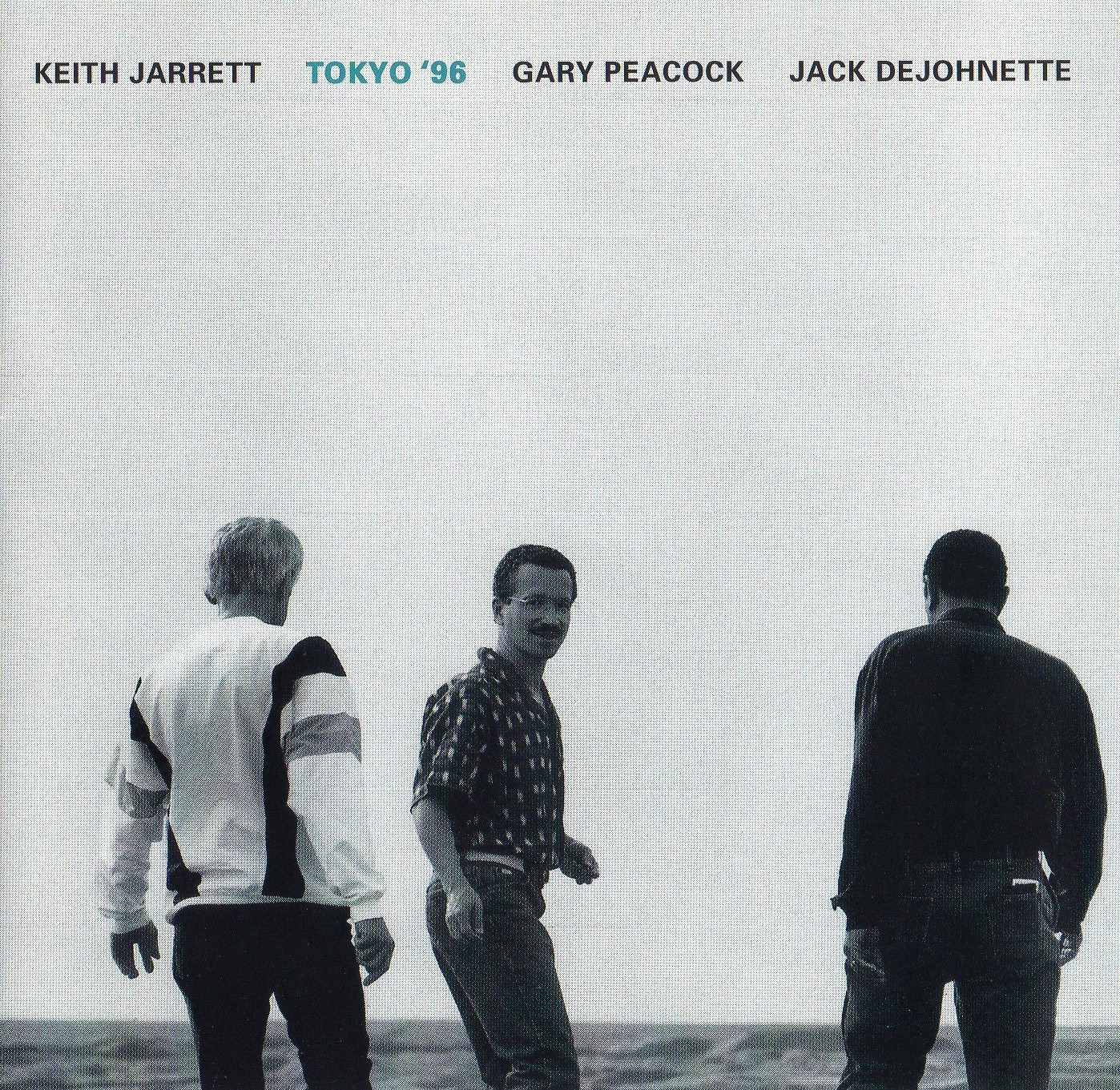
Keith Jarrett Trio: Tokyo ’96 (ECM 1666)

Tokyo '96

Keith Jarrett Trio
Tokyo ’96

Keith Jarrett piano
Gary Peacock double-bass
Jack DeJohnette drums
Recorded March 20, 1996 at Orchard Hall, Tokyo
Engineer: Toshio Yamanaka
Produced by Manfred Eicher

Keith Jarrett’s trend-setting standards trio returns to Japan in celebration of its 15th year in this commanding live recording, which from bare pianistic threads spins an up-tempo version of “It Could Happen To You” to kick things off just right. With DeJohnette’s brushes flying and Peacock likewise enamored, free and easy exchanges abound. At this point we’re already hooked, so that “Never Let Me Go” becomes a mantra to guide us through the rest. There’s so much tenderness from Jarrett here, it’s a wonder he can emote with so little vocal breach. This, along with Peacock’s soulful slides, makes for one of the most heartwarming tracks in the trio’s output. Peacock’s early lepidopteran solo in “Summer Night” traces Jarrett’s masterful story arc word for word and shifts into high gear for “John’s Abbey” in a chain of powerful music-making. The trio’s sparkling rendition of “Billie’s Bounce” is a splash of cold water on the face. Jarrett’s right hand slaloms through the left’s gentle punctuations before a concluding solo from DeJohnette puts the icing on this positively exuberant cake. It’s one of a few standout moments from the drummer, who relays hand percussion and hi-hat in “I’ll Remember April” and leads the trio into an organic fadeout. All of which makes the relatively brief “Mona Lisa” a magical moment. Painting with a dark and bar-lit hue, its grandeur is obscured, embraced, inhaled.

Two tracks find Jarrett drawing improvised pieces from the energies at hand. “Last Night When We Were Young” blends into “Caribbean Sky,” while “My Funny Valentine” morphs into “Song.” In each there is a hip nostalgia, Jarrett’s sweeping gestures the perfect foil for every tectonic shift the rhythm section brings topside. Like a mountain shadow looming in the twilight, the latter offers especial solace, standing as a vestige of times we have yet to know. DeJohnette’s quiet rumblings are a distant thunder, even as Peacock’s restless song offers the promise of a new day.

Were it not for the due process this trio brings to every verdict, it might be easy to let these live recordings blend into one another. Yet these are cases without perpetrators, whose crimes are absolved the moment they are committed. Like a virus that adapts to vaccinations, their creativity spreads with an all-consuming will to be felt. Only here, rather than pain and decay, there is affirmation, resurrection, and spirit. We encounter this most vividly in “Autumn Leaves,” which in addition to being one of the trio’s signatures finds delicate balance here through Jarrett’s anticipatory style. Jarrett makes block chords blossom with melody, just as he deepens the single note. In the wake of such marvel, perhaps only this rhythm section can sustain the flame with the skill that Peacock and DeJohnette possess in spades. DeJohnette’s brushes in particular keep up with every roll, while Peacock’s excitations somehow ring contemplatively.

Jarrett and his band mates carry a tune without ever letting us forget that they wouldn’t be here without that tune to begin with. Whether through bold, linear lines or atmospheric touches, the trio puts melody over matter, because in the end melody is all that matters.

Keith Jarrett: La Scala (ECM 1640)

La Scala

Keith Jarrett
La Scala

Keith Jarrett piano
Recorded February 13, 1995 at Teatro alla Scala, Milano
Remixed at Rainbow Studio by Jan Erik Kongshaug and Manfred Eicher
Executive producer: Manfred Eicher

February 13, 1995 marks an historic event. It was the first time that Milan’s Teatro alla Scala allowed a jazz musician to headline. Yet Keith Jarrett is, of course, more than his moniker and brings a wealth of music that is no less operatic that what normally graces its stage. For in the same way that opera embodies a flowering intersection of text, acting, and sound, Jarrett unapologetically translates vibration, feeling, and commitment through the lens of the body until their collective prism opens like an eagle’s tail. So begins another of his improvised piano concerts, which in this case augurs a twitch in the skin of space-time until it bleeds.

The melodious unfolding of Part I is a self-fulfilling wish. I cannot help but read shades of childhood into its 45-minute sweep that materializes before our ears. I feel it in the parental awe of the more delicate moments; in the expulsion of air that, with the flick of a pedal, comes tumbling forth with sepia; in the self-referential diamonds sparkling within: shades of Köln, of Gurdjieff (though here he seems to be doing more “writing” than “reading”), of monuments yet to be discovered. Jarrett keeps his hands close together at first, as if to embrace the intimacy taking shape between them, caging a bird whose flight is still a dream. His fingers move in gradations in much the same way that sunlight changes its constitution according to the passage of clouds. As the density grows into a veritable corn maze, Jarrett wraps his mind around a solution and strains that path through the voice. He mixes his breath into those of everyone in attendance, rotating on an axis of love. The feeling of pasture is profound. Like sand between the toes, it is rare and welcome. Finger rolls paint window boxes with the lingering light of day, planting a summer’s worth of flowers in a single cluster. When they wilt, they are but one stem. Caught in the pondering flame that borrows them from sight and reworks their scent into something audible, their continuity is a magic unto itself, a sutra without words. Part I ends in stasis, flipping by gentle degrees the plane of its existence until a full and impenetrable sphere is left behind, which, while translucent, steels itself against the vagaries of interpretation, spinning until it can sing again.

Part II holds a microscope to an eddy of schisms. Brief touches from pedal and tight flowering runs culminate in a fast-forward ball bounce. The music accelerates, is compressed. Meticulously detailed explorations of the piano’s upper register unchain a host of fresh impressions. Particle by particle Jarrett builds a raincloud and flicks its contents in fingerfuls of inspiration. Ever so gradually, his left hand bespeaks a deeper gravity, tumbling over rocks and smoothing into the glassine surface of a faraway lake. There something of life lingers and the kiss of death feels as far away as the horizon. This melts into one of Jarrett’s deepest tunnels of light. He soars in a Gershwinian mode, coating the land with stardust before playing us out to stealthy footsteps, the wake of an unbridled tide.

Jarrett paints worlds of transitions, if not transitions of worlds. Each moment is the fragment of a larger meteorite, whose face can only be heard yet never seen, whose tears can be tasted but never shed. This makes his decision to conclude with a rendition of “Over the Rainbow” far beyond touching. And a rendition is what it truly is, for it must be worked through the body like breath itself until it expands. It is all the more heartwarming for the storm of bravos that drenches its fields before they’ve even had a chance to dry.

La Scala stands out in the Jarrett archive for becoming more absent as its intensity builds. He flushes out unspoken rhythms with stomping feet, painting not external vistas but intimate anatomical diagrams, so that when the chording becomes denser and the music more fully resolved, it feels like dissolution. The relationship between sound and effect, then, is not causal. Just because these styles inhabit the same music doesn’t mean they inhabit the same body. It’s more that Jarrett allows himself to be attuned to their shuffling, inscribing things in real time as if they were self-evident

The brilliance of these solo events manifests not only through the sheer volume of material that flows through him, seemingly translated from some ethereal source, but also through the potency of his melody-making, which at his touch produces a songbook that is timeless and can only be accessed from a place of wonder.

Another La Scala
(Alternate cover)

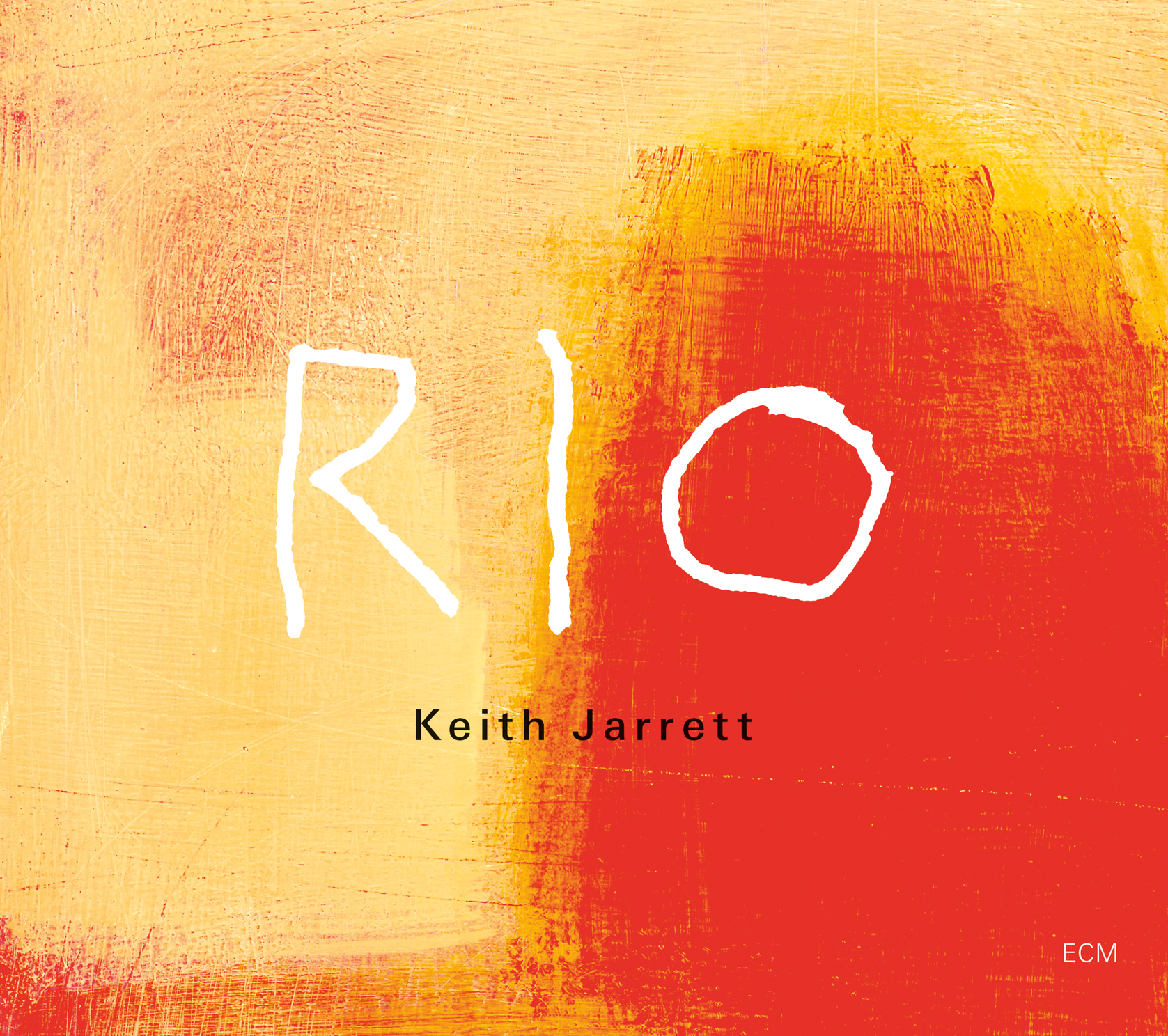
Keith Jarrett: Rio (ECM 2198/99)

Keith Jarrett
Rio

Keith Jarrett piano
Recorded live April 9, 2011 at Theatro Municipal, Rio de Janeiro
Engineer: Martin Pearson
Rio concert produced by OGM (Guillermo Malbrán/Augusto Tapia) and dell’arte (Myriam Dauelsberg/Steffen Dauelsberg)
Executive producer: Manfred Eicher

On 9 April 2011, Keith Jarrett took the stage at the Theatro Municipal in Rio de Janeiro for a concert of improvised music at the piano. Under any other artist’s name, this formula might ring as flat as the disc it’s printed on, bat Jarrett’s fingertips those keys do something unknown even to him. Like a marionette that comes to impossible life in the hands of a master puppeteer, an instrument before Jarrett is a broken circle waiting for its final arc. Rather than hang that circle as one would a mirror on the wall, he rolls it as a child would a hoop down the street. Such is the spirit of abandon that opens his every note like laughter at something intangible, and points to a destination so far away that it returns to its origin.

On Rio, he crosses 15 short bridges to get there, mapping a spectrum of interlocking terrains along the way. Still, the serial infrared beginnings are something of a surprise on his way to ultraviolet. Over a knotted, postindustrial dream, they reveal a spontaneous imagination at play. A wall rises before us. On one side is the melancholy we might come to expect of the musician who brought us wonders at Köln, Paris, and Kyoto. The listener cannot help but feel it in the rapt attention of the audience, which acts as spinner for the many fibrous experiences that had to come together to create such a shimmering veil of beauty. On the other side of that wall is the bluesy pointillism that never seems far away when Jarrett is near. Yet the more we listen, the more we realize that every brick is its own song, and bonds the spaces on either side with sound and sentiment. Part 4, for example, is a smooth ballad reminiscent of “As Time Goes By” that cracks open a bottle of Gershwin along the way, while the staggered overlay of 5 shows us two hands in fluid independence. Guitaristic flamenco dances change places with the sweeping elegy that is Part 7, one of two major turning points in the concert during which Jarrett and the audience must have known something unprecedented was happening. Its sister moment occurs in 9: sure to still your thoughts. If the concert’s second half seems but meteoric offshoots of the first, it’s only because every mirror has its dark side, so that when the blues returns in Parts 11 and 14, it feels twisted in spite of its enervations; and when Parts 12 and 15 revive those earlier rays of heavenliness, they have grown heavier, wiser. Not that this leaves us in any less a state of awe. Rather, these transmogrifications show us the nature of life, which teaches us that nothing is ever the same.

As the story goes, Jarrett called Eicher after this performance, professing it to be his best. Yet I would appeal to the earlier man, who once said that no night is better than any other. It all comes down to the moment, the experience, the pureness of making music that will forever evade definition. What we hear, then, is neither his “best” nor “worst.” Inhaled and exhaled through the digital lungs by which we have come to measure our listening pleasures, it is what it is: a gift to be lived on as it is fed.

(To hear samples of Rio, click here.)

Jarrett/Peacock/Motian: At The Deer Head Inn (ECM 1531)

Keith Jarrett
Gary Peacock
Paul Motian
At The Deer Head Inn

Keith Jarrett piano
Gary Peacock bass
Paul Motian drums
Recorded September 16, 1992 at the Deer Head Inn
Engineer: Kent Heckman
Produced by Bill Goodwin

By the fall of 1992, Keith Jarrett had already spent 30 years as a notable jazz performer. What better way to celebrate than to return to this record’s eponymous venue in his birthplace of Allentown, Pennsylvania for a once-in-a-lifetime gig? Switching out his usual go-to, Jack DeJohnette, for Paul Motian (no stranger to Jarrett, with whom he’d worked in the 70s), the trio works wonders with the new colors the latter provides. Peacock and Jarrett are both verbose players who manage never to step on each other’s toes. With Motian backing them, they take longer pauses for reflection, listening to the wind as it blows through their leaves. His presence and panache are as palpable as the prevalence of alliterations in this sentence, bringing an irresistible brushed beat to the squint-eyed groove of Jaki Byard’s “Chandra.” That hook keeps us sharp to improvisatory angle and inspires some youthful banter from Peacock, who feeds off those drums like Christmas. Motian excels further in the balance of fire and ice that bubble throughout “You And The Night And The Music.” The band also dips into Miles Davis-era waters with glowing renditions of “Solar” and “Bye Bye Blackbird.” Atop quilted commentaries from the man at the kit, Jarrett’s unpacking of these timeless melodies is the cherry on the sundae. Sweet toppings also abound in the laid-back “Basin Street Blues,” in which, with closed eyes and an open heart, Peacock finds the perfect resolution for Jarrett’s uncontainable fire. All three musicians up the ante in “You Don’t Know What Love Is.” Jarrett negotiates its changes like breathing while Peacock and Motian speak in vocabularies just beyond the radar of feasibility. Before we know it, we’re caught up in a joyous surge and relaxation. By ending with “It’s Easy To Remember,” the trio saves its finest translucent china for last.

The value of ECM as a live archive is proven beyond the shadow of a doubt in this recording. This is where it’s at.

<< Händel: Suites for Keyboard (ECM 1530 NS)
>> Peter Erskine Trio: Time Being (ECM 1532)

Keith Jarrett: Sleeper (ECM 2290/91)

Keith Jarrett
Sleeper

Keith Jarrett piano
Jan Garbarek tenor and soprano saxophones, flute, percussion
Palle Danielsson double-bass
Jon Christensen drums, percussion
Concert produced by AI Music (Toshinari Koinuma) in collaboration with Trio Records/ECM/Bose
Recorded live April 16, 1979 at Nakano Sun Plaza, Tokyo
Engineer: Jan Erik Kongshaug
Mixed 2012 at Rainbow Studio, Oslo by Jan Erik Kongshaug and Manfred Eicher
Produced by Manfred Eicher

Keith Jarrett’s European quartet—with Scandinavian cohorts Jan Garbarek of the reeds, Palle Danielsson of the strings, and Jon Christensen of the sticks—was the missing link to his trio endeavors with Gary Peacock and Jack DeJohnette, finding a happy medium between the latter’s standards-based approach and his marathon improvised performances alone at the keyboard. The quartet boasted not only fine technique and dovetailed sense of timing, but also the fruit of its leader’s compositional labors during a period of career-defining development. Representing the pinnacle of five sporadic years, Sleeper documents a 1979 Tokyo show from the same tour that brought us Personal Mountains. That very tune kicks off this set of amethyst originals, Jarrett and Garbarek comprising the perfect hand-tooled leather for D&C’s riffling pages. Their Niagara pulse splashes this April canvas with blistering watercolor, Garbarek close behind as he leads us by the ear into “Innocence.” For this he adopts a folkish quality against support so synchronous, it’s as if it were responding to something as elemental as wind. And Jarrett likewise, as he pours on the syrup of “So Tender.” This unexpected travelogue proceeds at an inviting clip and features resplendent emoting from Jarrett, who manages to brighten even Christensen’s characteristic glitter. Garbarek both shouts and whispers, riding a wave so robust that every lick feels thematic while also trembling at the threshold of Jarrett’s spontaneous pulchritude. So do we proceed, funneling romance into an “Oasis” that can only be filled by a lifetime of love for music. The nearly half-hour take given here is reason enough to celebrate this record. From the opening Spirits-like incantations, infused with wooden flute and gamelan-like percussion, to the uplifting procession with which they end, Garbarek and Jarrett draw shades of gut-wrenching intensity. Despite its length, this track walks an intimate, ritualistic space. Majestic without being magisterial, it touches us like the energy that sustains it and flavors the waters of its namesake with the promise of restoration. “Chant Of The Soil” locks early and doesn’t let go. Bass and drums work like dolphins to keep us from drowning, enlivening Garbarek’s soulful phrasing with conviction, while “Prism” (another highlight from Personal Mountains) finds itself resurrected here in flowing dialogue before the invigorating circle of “New Dance” gives fresh meaning to the encore.

If ever it were possible for a recording to be even more alive than the day it was laid down, this is it—such is the value of its release. In addition to the symbiotic rhythm section, Garbarek naysayers may find themselves knocked on their rears by the exuberant, life-affirming themes issuing from his bell, each fitting snugly in Jarrett’s pianistic relief. A classic before it ever hit the shelves, Sleeper may just be the ECM event of the year and is, as its title implies, a dream to hear at long last.

Listen to samples here.


(Photo by Terje Mosnes)

Keith Jarrett: Vienna Concert (ECM 1481)

Keith Jarrett
Vienna Concert

Keith Jarrett piano
Recorded July 13, 1991 at the Vienna State Opera
Engineer: Peter Laenger
Produced by Manfred Eicher and Keith Jarrett

“I have courted the fire for a very long time, and many sparks have flown in the past, but the music on this recording speaks, finally, the language of the flame itself.” So writes Keith Jarrett in the liner notes to a stunning account of his solo improvised performance at the Vienna State Opera in July of 1991. In expressing as much, Jarrett articulates what is so difficult to articulate: that intangible source from which he gathers the energy to emote so freely at the keyboard.

Part I begins in solitude before a clearly rapt audience. Its sweet and comforting lullaby draws a paternal curtain around a prelude for the rolling dream to come. Jarrett digs his left hand into the soil, planting with his right a prairie’s worth of flowers, weeds, and wildlife. It is a plodding journey whose trail is brought about by many feet pulled from the muddy undertow and spun from threads of almost obsessive reflection. The comportment of this music plunges deeper even as it arches its neck ever skyward, arms lost and wings gained. Knowledge of how to use those wings is what Jarrett seems after, for the moment he sets feet to ground, he makes of the world a runway for the soul, tumbling his way into learning. His fingers dance in circles, kicking up a cyclone of activity and opening into a sweeping aerial view. He breaks apart the sun and shows us its inner shadows. In the end: only triumph and rapture, a body torn in two to unify the above and below, showing a harp-like touch in those final breaths. Like an expertly shucked cob of corn, it owes its life to weathered hands and grains hungry for mineral earth.

Part II is more suspended, forlorn and characterized by a watery, Byzantine touch. Jarrett plays the piano here as if strumming it, weaving a fairytale’s spell, light through a window whose glass is molten and alive. Tracing smiles through the sky in a swing built for tintinnabulation, he brands a sunset dotted and dashed by recollection. Quiet houses on the horizon, children’s laughter long-faded between them. Sticks that once were swords hunch into gnarled canes. Jarrett’s unfolding flower reaches its peak of sonic pollination and blends into a folk song from afar, from deep within, from inside and outside, from no one and all of us.

At some point, I’ve learned to stop comparing every Jarrett solo concert to the Köln. If the imagery it inspires in me is any indication, each is its own story. His is not a creative life spent climbing a single peak, but one that, by its end, will have left a landscape filled with them for as far as the eye can see.

<< Heiner Goebbels: SHADOW/Landscape With Argonauts (ECM 1480)
>> Meredith Monk: Facing North (ECM 1482 NS)