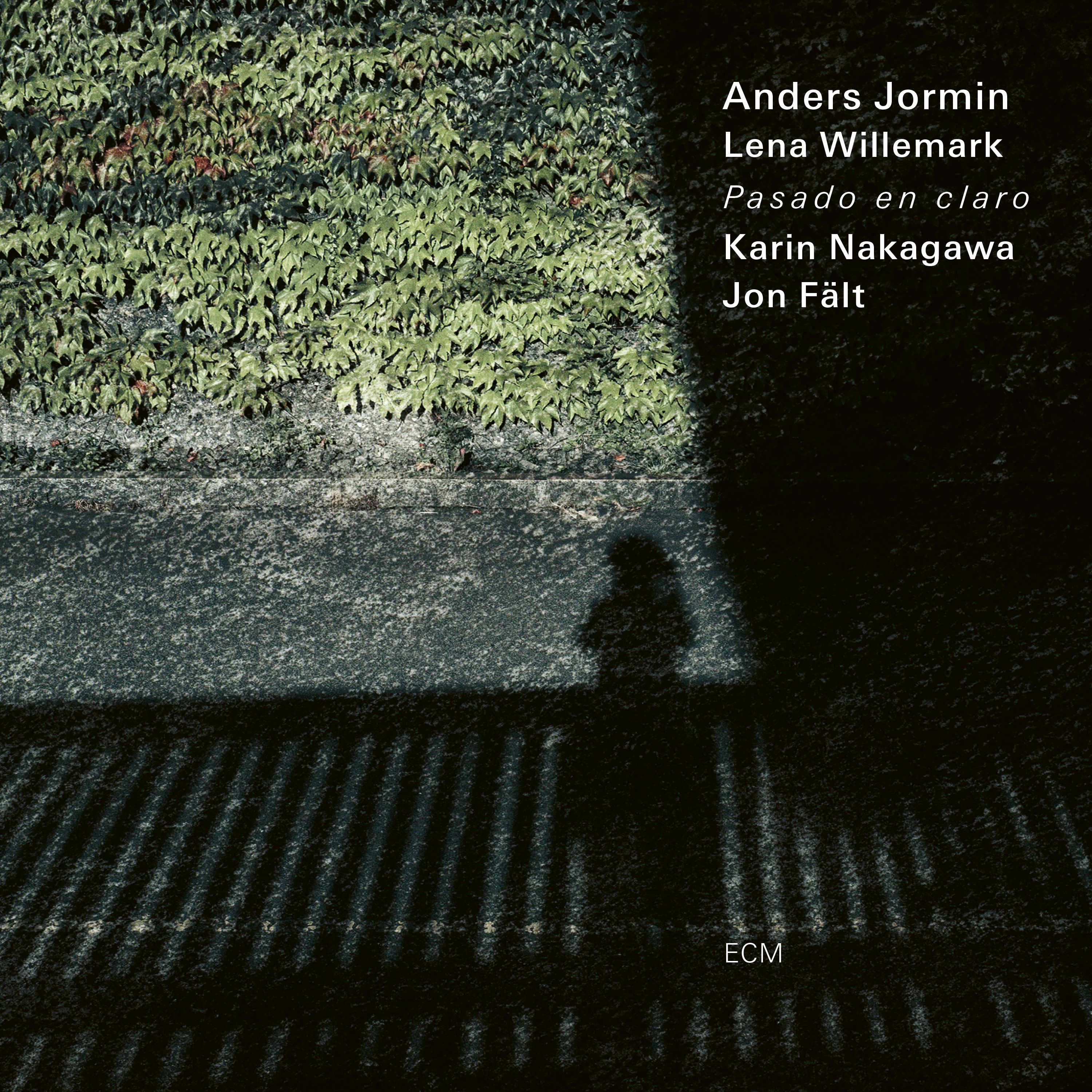
Anders Jormin/Lena Willemark: Pasado en claro (ECM 2761)

Anders Jormin/Lena Willemark
Pasado en claro

Anders Jormin double bass
Lena Willemark vocals, violin, viola
Karin Nakagawa 25-string koto
Jon Fält drums, percussion
Recorded December 2021 at Studio Epidemin, Gothenburg
Engineer and coproducer: Johannes Lundberg
Cover photo: Fotini Potamia
Executive producer: Manfred Eicher
Release date: January 20, 2023

Since breaking ground on 2004’s In Winds, In Light, bassist Anders Jormin and singer/violinist/violist Lena Willemark have charted old and new territories in an increasingly fertile partnership. Their collaboration reached the next stage of development when they welcomed Japanese koto player Karin Nakagawa into their midst on 2015’s Trees Of Light. To that milieu, they’ve added drummer Jon Fält, whose name will be familiar to Bobo Stenson Trio fans. Although Willemark’s roots in Swedish folk heritage and its preservation are at the core of what’s being articulated here, the improvisational packaging has been deepened. The settings touch down on the landing strips of many times and places, including poetry from ancient China and Japan, contemporary Scandinavia, Mexican luminary Octavio Paz (whose “Pasado en claro” gives us this album’s title), and Renaissance humanist Petrarch.

The latter’s Poem no. 164 from Canzoniere, the eponymous subject of “Petrarca,” flickers like a candle flame. It is one of many musical settings by Jormin, whose loose strata give his bandmates plenty of room to look for fossils and regard their shapes melodically. Long before that, “Mist of the River,” his take on Ouyang Xiu (1007-1072), opens with the gentlest shimmer of koto. The poem paints a picture of a fisherman whose cast is obscured by mist and storm, resolving into groovy textures. With the clarity of a statue, Willemark etches the scene one frame at a time until they mesh into a flowing whole. Brushed drums add jazzy touches: water and silver combined. “Glowworm” looks even further back to the 8th century. The tanka by Yamabe no Akahito, rendered here in an evocative Swedish translation, finds Willemark and Jormin’s instruments in a cloudy slumber while percussion and koto yield just enough light to see the contours of their dreams.

Most of Jormin’s tapestries are woven from more recent material. And yet, despite the brief appearance of artifice—as in Jörgen Lind’s “Blue Lamp,” which contrasts hospital buildings against a starkly natural scene—all the modern verses are steeped in an unbroken respect for the organic. This is especially true in “Kingdom of Coldness,” where the haikus of Tomas Tranströmer seep through liquid gongs and arco bass as Willemark’s voice draws maternal lines across Nakagawa’s constellations, and “Returning Wave,” where Anna Greta Wide’s words accumulate against the barrier of closed eyelids.

The remaining tracks consist of original songs by Willemark, who has her bow and throat on the pulse of something so genuinely folkloric that they seem as weathered by time as the rest. “The black sand bears your footprints / trampled by many, but seen by none,” she sings in “Ramona Elena,” forging a scene of heartache, loss, and sisterly love that demands motionless listening. “The Woman of the Long Ice” brings more of that briny sound through her fiddle as she laughs with joy at the power of music to run beneath even the most frozen waters. (This track is also a highlight for its freer playing.) Between the instrumental “Wedding Polska” and the leaping strains of “Angels,” the quartet never loses sight of its roots, which run deep and wide, sustaining forests older than us all.

Gudmundson/Möller/Willemark: Frifot (ECM 1690)

Frifot

Frifot

Per Gudmundson fiddle, octave fiddle, Swedish bagpipes, vocal
Ale Möller mandola, natural flutes, hammered dulcimer, folk harp, shawm, vocal
Lena Willemark vocal, fiddle, octave fiddle, wooden flute
Recorded September 1998 at Rainbow Studio, Oslo
Engineer: Jan Erik Kongshaug
Produced by Manfred Eicher

When I smile my face shines like
Sunlight glittering on the water’s surface,
But when I cry my face is like
A dark pine forest under a cloudy sky.

Frifot are Per Gudmundson, Ale Möller, and Lena Willemark, the holy trinity of Swedish folk revivalism. The name means “footloose,” a word that locates their effortless playing in a realm of dance. Much of that spirit comes through in the handful of diptychs scattered throughout this epic self-titled program. These embody layered juxtapositions of sonority and exposition, of comet and tail, rushing through eons at the touch of plectrum and bow. Of them, the intimate pairing of “I hela naturen / Mjukfoten” (In All Nature / Light-foot) is an album highlight, its Robin Williamsonian waves flowing into the mandola’s rich speech acts. “Silder” (Still Waters), an ode from Willemark’s pen, glitters by kindred harp light and reaches out through the lighter “Bingsjö stora långdans.” From the uplifting polskas of fiddle-hunter Sjungar Lars to the brooding shores of “Om stenen” (The Stone), one feels a tireless will at work. The latter’s text by Swedish poet Bengt Berg paints it true: “Listen to the sound of the sun sinking into the lake.”

Surrounding all this merrymaking is deeply considered soil that takes first nourishment in the a cappella “Abba fader” (Abba Father), a song once preserved only in the memory of Baltic islanders whose Swedish ancestors emigrated to the Estonian coast during the Middle Ages. One hears earthen harmonies in the musicians’ voices, the gravel and scrape of time as it leaves its scars. A hammered dulcimer and rustic fiddle cradle “Stjärnan” (The Star), which evokes the miracle in Bethlehem, holding ancient vigil for those with a willing ear. “Tjugmyren” is composed of herding calls. The nasal, almost Bulgarian-sounding singing shows Willemark’s range of height and density. Calling through windswept grain, she plants her feet in the soil and grows where she stands. “Kolarpolskan” (The Charcoal-burner’s Polska) is another herding tune, this one more uplifting and with a bit of a Sephardic twist.

The listener hardly needs names to feel the stories. This is especially true in “Hemvändaren” (The Homecomer), which from hopeful beginnings spins a tale of bittersweet reunion and attempts to answer how one carries the hardships in the context of the resolution toward which they are endured. Another example of the album’s programmatic acuity is the agitated brushwork of “Fåfänglighet” (Vanity), while Gudmundson’s “Drömsken” (The Dreamer) evokes softer crosscurrents of instrumental expression. Yet another is “Skur Leja.” Written by Möller, it tells of a magically virtuous maiden whose purity puts not so virtuous men in their place and through its telling achieves a tense drama of flesh and intrigue. Other evocative standouts include “Metaren” (The Lazy Fisherman) and “Roligs Per-låtar,” a play on motives of itinerant fiddler and entertainer Roligs Per Persson.

As always, Willemark’s voice rings dependably through this cosmos with a palette like the very planet from which it springs: a swirl of blues, greens, and whites. The accompaniment is so much more than that, flapping as it does with all the conviction of a bird of prey even as it nestles, gentle as a lamb, in pasture. Notable also is the attention paid to selection and song order. Its flow runs deeper than a river in the thirstiest of land.

Lena Willemark album review

Click on over to RootsWorld magazine to read my review of a new album by Lena Willemark on the Swedish label, Country & Eastern. Readers will be familiar with her handful of ECM projects, including the popular Agram. Here she is joined by saxophonist Jonas Knutsson (also featured on Agram) and keyboardist Mats Öberg in a gorgeous folk-inspired program. I further encourage ECM fans to check out Country & Eastern. It is the brainchild of Bengt Berger, whose Bitter Funeral Beer album is among the best of ECM’s outliers.

ADS

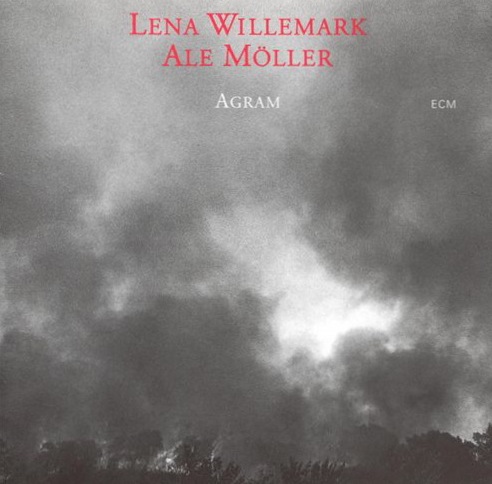
Lena Willemark and Ale Möller: Agram (ECM 1610)

Lena Willemark
Ale Möller
Agram

Ale Möller mandola, lute, natural flutes, folk-harp, shawm, wooden trumpet, hammered dulcimer
Palle Danielsson double bass
Mats Edén drone fiddle
Tina Johansson percussion
Jonas Knutsson soprano and baritone saxophones, percussion
Lena Willemark vocal, fiddle, viola
Recorded March 30–April 3, 1996 at Rainbow Studio, Oslo
Engineer: Jan Erik Kongshaug
Produced by Manfred Eicher

Although Lena Willemark and Ale Möller surely made a lasting first impression with Nordan, Agram was for a long time my only exposure to the Swedish duo. This sequel of sorts finds them carrying the project to new heights (and depths) among a more intimate group. The pared-down roster makes for an open sound and leaves room also for Willemark’s fantastic compositions. In the latter vein is the title piece, which rests her vocal powers on a bed of dulcimer and bowed sentiments. It is the hallmark of an album wrought in soil and breath, and realized in a landscape distant but ever familiar. The soprano saxophone of Jonas Knutsson is a distinct voice throughout, drawing water for the fiddle’s inky swirls in “Syster Glas” and hanging a wreath of tradition on the door of “Sasom Fagelen.” As in the likeminded Dowland Project, the high reed’s presence is welcome one, dovetailing to bagpipe-like effect in “Fastän” and bringing ancestral energy to “Blamairi,” another Willemark original. Arousing percussion from Tina Johansson provides traction for that liberating voice, which, as it rings out across the plains “Samsingen” and “Josef fran Arimatea” (two standouts among ECM’s folkways), tells a story as much with words as through the music that is its shelter. Meanwhile, bassist Palle Danielsson works his own divinations along trails of cast bones. These share the same destination: “Lager och Jon,” an exhilarating chorus of activity that buffs the clouds to invisibility before rushing headlong through a stream of bows and alley-oops. Möller unfolds his shawm’s biting wonders in “Slängpolskor,” leading us into the epic “Elvedansen.” The images here feed on sound, each a chariot of belonging rescued by the hands of “Simonpolskan,” a flowing script of a piece that throws us into comforting waters and closes our eyes, adrift and safe.

In addition to the unfailing music, Agram is yet another benchmark for production and sound quality for the label. It delineates a space where voices and instruments are shadows of one another. Willemark need hardly sing, because even when she stops, her voice lingers.

Lena Willemark & Ale Möller: Nordan (ECM 1536)

Lena Willemark
Ale Möller
Nordan

Ale Möller mandola, natural flutes, folk-harp, shawm, cows-horn, hammered dulcimer, accordion
Lena Willemark vocal, fiddle
Palle Danielsson double-bass
Mats Edén drone-fiddle, kantele
Per Gudmundson fiddle, Swedish bagpipes
Tina Johansson percussion
Jonas Knutsson saxophone, percussion
Björn Tollin percussion
Recorded December 1993 at Rainbow Studio, Oslo
Engineer: Jan Erik Kongshaug
Produced by Manfred Eicher

Medieval Swedish folklore and balladry rise again in Nordan, the first ECM collaboration between songstress Lena Willemark and multitalented instrumentalist Ale Möller. While the latter brings out gorgeous sounds from mandola (i.e., alto mandolin), kantele (plucked zither), hammered dulcimer, and folk-harp, among others, the former lends the session’s most powerful instrument—her earthly voice—to an ensemble of bass (courtesy of regular sessioner Palle Danielsson), drone-fiddle, Swedish bagpipes, saxophones, and percussion. That voice is the central figure of nearly every painting in this gallery, tending to crisp plains in search of traditions and lives buried. It spurs the calls of “Trilo,” an incantation unto the wispy barbs of sentiment that abound therefrom, and calls from more distant pastures in “Gullharpan” and through the watery harp strains of “Mannelig”—these but a few of the many songs one might single out here for their remarkable sense of space and atmosphere. Willemark also proves her prowess on the fiddle for two Polskas, the rustic metalwork of “Hornlåt,” and the jig-like “Jemsken.” Möller has the last word with “Drömspår,” an epilogue for accordion that leads us into less turbulent waters than those depicted on the album’s cover.

The music may sound exotic on paper, but when we hear it we already seem to know Willemark’s stories in intimate detail. We have felt these places before, even if the dirt has long since washed from our feet and been replaced by an alternate future. Like anything in nature, the art of these musicians is never still, a string that vibrates and never dies. In the absence of detailed translations, we can still taste the minerals of which every song is composed and come to know their shapes by heart. This is also made possible by the album’s acoustics and engineering, both stunning. An ECM benchmark and easily within the label’s Top 5 on the folk side of things. This is music measured in hand spans, not footprints.

<< Giya Kancheli: Exil (ECM 1535 NS)
>> Bley/Parker/Phillips: Time Will Tell (ECM 1537)