Arvo Pärt: The Deer’s Cry (ECM New Series 2466)

2466 X

Vox Clamantis
Jaan-Eik Tulve artistic director and conductor
Mari Poll violin
Johanna Vahermägi viola
Heikko Remmel double bass
Taavo Remmel double bass
Robert Staak lute
Toomas Vavilov clarinet
Susanne Doll organ
Recorded September 2013 and 2014 at Tallinn Transfiguration Church
Veni Creator recorded June 2007 at Dome Church of St. Nicholas of Haapsalu
Engineer: Igor Kirkwood, Margo Kõlar (Veni Creator)
Recording supervision: Helena Tulve
Mastering: Manfred Eicher and Christoph Stickel at MSM Studios München
Executive producer: Manfred Eicher
Release date: September 9, 2016

For now we see through a glass, darkly; but then face to face: now I know in part; but then shall I know even as also I am known.
–1 Corinthians 13:12

While in Capernaum, Jesus is invited into the house of Simon the Pharisee. There, a woman, identified in the Scriptures only as “a sinner,” approaches Jesus with an alabaster box of ointment. Much to the astonishment of the house, she washes his feet with her tears, wipes them with her hair, and anoints them. When confronted by Simon about his acceptance of this act, Jesus replies by pointing out the fact that Simon offered no water for his feet or ointment for his head: “Her sins,” he says of the woman, “which are many, are forgiven; for she loved much: but to whom little is forgiven, the same loveth little.” This episode, recorded in the Gospel of Luke 7:36-50 and arranged for choir by Arvo Pärt as And One of the Pharisees (1992), is the spiritual center of a new program dedicated to the Estonian composer. Not only for its illustration of salvation through faith, but also because it serves as a loose metaphor for sacred music today. Like that sinner, Pärt washes our ears against the verbal abrasions of pharisaic intellect, his offerings thus denounced by “wisdom” of the popular yet confirmed by the Holy Spirit. In the present setting, countertenor Mikk Dede provides a vulnerable personification of Simon, while baritone Taniel Kirikal balances the equation as our humbling Savior.

Although Pharisees comes later in the sequence, its seeds are already being watered in the opening title work, The Deer’s Cry (2007). Drawing on the words of St. Patrick, it is a meditation on God’s omnipresence. Here, as in the other a cappella prayers that follow, including the Alleluia-Tropus (2008/10) and Habitare fratres in unum (2012), compact structures embody quiet resolution. Each is a link in a chain of infinite being, a harmonization of flesh and spirit through the Word, touched by graces of which we are unworthy.

Longtime Pärt listeners will notice echoes of the familiar, such as Virgencita(2012), which is eerily reminiscent of Psalom (1985/91), and a version of Summafor four voices, wherein the circle of this seminal 1977 piece is squared. Gebet nach dem Kanon (1997), from the Kanon Pokajanen, is a child wandering in search of purity, only to find himself crying in a world of corruption, his voice ignored by all except the Father whose hand shields him from brimstone. Da pacem Domine (2004/06), too, reads differently from previous ECM appearances. Where the latter felt like a telescope, now it is a microscope.

Rounding out this journey are three works for voices and chamber instruments. In Von Angesicht zu Angesicht (2005), scored for soprano, male choir, clarinet, viola and double bass, said instruments evoke the trembling fear that is the beginning of all wisdom. Pärt takes a lived understanding of that precept by following the rhythms of Biblical recitation. Veni Creator (2006), for mixed choir and organ, hovers on the brink of transfiguration and is one of his most haunting compositions. Sei gelobt, du Baum (2007), for male choir, violin, lute and double bass, is another textual wonder. Its words, by Viivi Luik, praise the tree for its wood, by which violins and organs might be built for His glory, each note released therefrom a spore returning to its creator.

Despite, if not also because, Pärt’s marked shift over the years from inner to outer, there’s an ethic of sharing in these shorter pieces. Now that his music is known worldwide, one tastes in it something grander left for listeners to decide, a piece of a mosaic that can only be completed when all us take the time to see it being made up of us all. That such profundity comes across so directly is testament to Vox Clamantis and director Jaan-Eik Tulve’s willingness to let everything speak for itself.

Trygve Seim: Rumi Songs (ECM 2449)

2449 X

Trygve Seim
Rumi Songs

Tora Augestad vocal
Frode Haltli accordion
Svante Henryson violoncello
Trygve Seim soprano and tenor saxophones
Recorded February 2015 at Rainbow Studio, Oslo
Engineer: Jan Erik Kongshaug
Produced by Manfred Eicher
Release date: August 26, 2016

A natural intersection of musicians, bound by the mysticism of Rumi, Rumi Songs is saxophonist and composer Trygve Seim’s love letter to a poet whose influences broke the world wide open when rendered into English by Coleman Barks, whose translations are used almost exclusively throughout. For this project Seim welcomes accordionist Frode Haltli and cellist Svante Henryson, both members of his larger ensemble, alongside vocalist Tora Augestad.

The introductory “In Your Beauty” sounds like breathing itself. It also establishes the melding of accordion and cello, the purity of Augestad’s singing, and the aching lyricism of Seim’s reed. From this bud emerges the petals of “Seeing Double,” which checks off love, borders of the flesh, and self-questioning: all constant themes in Rumi’s poetry. Although the instrumentation stays the same in number, it widens in scope, as Seim allows his freedom to shine forth without hesitation.

Rumi Portrait
(Photo credit: Knut Bry)

Where “Across The Doorsill” is more playful, detailed, and surreal in that way children might usually be, “The Guest House” has a mature and mournful tinge, as underscored by Henryson’s bow. Linguistically, it speaks in right angles and architectural forms, much like its titular structure, at the same time rounding its back with the skill of an experienced yoga practitioner into one methodical pose after another.

While there are jewels of optimism to be unearthed here, such the droning lullaby of “Like Every Other Day” and the latticed groove of the tango-esque examination of desire that is “When I See Your Face,” the general mood floats somewhere between dreaming and brooding. “Leaving My Self” is the most haunting song of the collection in this respect. A curious rendering of parental sacrifice and interstitial love, its accordion acts as drone for the cello’s snaking lines. Seim is noticeably absent this time, taking in the wind. Even “Whirling Rhythms,” an instrumental inspired by Seim’s pilgrimage to Konya to see Rumi’s tomb for himself, has about it an air of darker contemplation.

In the closing “There Is Some Kiss We Want,” Seim switches to soprano. An enchanting creation, it yields a stanza that best expresses the relationship at hand of sound and text:

At night, I open the window
and ask the moon to come
and press its face against mine
“Breathe into me”

Ketil Bjørnstad: A Suite Of Poems (ECM 2440)

2440 X

Ketil Bjørnstad
A Suite Of Poems

Anneli Drecker voice
Ketil Bjørnstad piano
Recorded June 2016 at Rainbow Studio, Oslo
Engineer: Jan Erik Kongshaug
Produced by Ketil Bjørnstad
Release date: May 18, 2018

Following his song cycles Vinding’s Music and Sunrise, pianist and composer Ketil Bjørnstad expands his ECM presence once again with new settings, this time of words by Norwegian-Danish author Lars Saabye Christensen. Christensen’s verses, written in different hotel rooms and sent to Bjørnstad from around the world, seem destined to take form as the humbly titled A Suite Of Poems presented here.

Bjørnstad’s characteristic feel for texture, mood, and atmosphere is in peak form. In contrast to, say, his duo albums with cellist David Darling, which despite their sparse instrumentation speak of vast landscapes, now the spaces offered to us are astonishingly intimate. Quintessentially so is program opener “Mayflower, New York,” which paints a city recently kissed by rain and the lone tourist moving his pen in its sprawl. Like “Kempinski, Berlin,” it’s filled with small moments, each more personal than the last, as our proverbial traveler balances depth and weightlessness through the music itself. A perennial theme of travel is, of course, explored throughout the album, but so is its inextricable relationship to temporality. In “Duxton, Melbourne,” a tender musing on life’s unstoppable progression, vocalist Anneli Drecker winds her voice around hesitations, missed opportunities, and empty calendars to insightful effect.

A Suite Photo
(From left to right: Lars Saabye Christensen, Ketil Bjørnstad, Anneli Drecker; photo credit: Maria Gossé)

The fatigue of travel is also likened to time passages, and nowhere so poignantly as in “Palazzo Londra, Venice.” Here the narrator looks at his own unrecognizable face in the mirror, unable to connect with the self as he used to. Similar anxieties, as fed through fantastical imagery, haunt “Vier Jahreszeiten, Hamburg.” Ultimately, however, the focus is on details: the lost umbrella of “Mayday Inn, Hong Kong,” the forgotten ashtrays of “Lutetia, Paris,” and the handkerchiefs of “Savoy, Lisbon.”

On the somber end of the spectrum are “L’Hotel, Paris” and “Palace, Copenhagen.” The latter tells of Christensen’s (?) first time stepping into a hotel—on June 23, 1963, to be precise—and finds the boy scared and uncertain of the future. The piano writing is especially passionate, drifting from minor to major as Drecker sings of “the Danish sun behind us whipping up the rain from the cobblestones.” This contrastive dynamic is repeated in “The Grand, Krakow,” the suite’s most hopeful yet shaded turn. Other selections reveal a playful side to Christensen’s wordcraft, and Bjørnstad’s evocation of it. “Astor Crowne, New Orleans” is one whimsical example, in which Drecker navigates a bluesy drinking song.

The suite ends with “Schloss Elmau,” a piano solo that acts as both vessel of remembrance and farewell, a bidirectional portal that inhales the past and exhales the future, all the while praying for respite beyond the reach of any clock.

Alexander Knaifel: Lukomoriye (ECM New Series 2436)

Lukomoriye

Alexander Knaifel
Lukomoriye

Oleg Malov piano
Tatiana Melentieva soprano
Piotr Migunov bass
Lege Artis Choir
Boris Abalian conductor
Recorded February 2002 at The Smolny Cathedral, St. Petersburg
Engineer: Victor Dinov (St. Petersburg Recording Studio)
Recording supervision: Alexander Knaifel
Mastering: Boris Alexeev (engineer)
An ECM Production
Release date: April 20, 2018

As the fourth ECM New Series album dedicated to the music of Alexander Knaifel, Lukomoriye is both continuation and departure from previous discs. In the former sense, it pulls us deeper into the recesses of his faith; in the latter, it engages with more secular—though no less inspired—material. The program’s pillars rise from prayers to the Holy Spirit. Both O Comforter (1995) and O Heavenly King (1994) are written for choir, the second adding to that foundational grammar the punctuation of vibraphone and piano. Like Jeremiah in the pit, they look upward for grace. Their bead-like structure welcomes a thread of spiritual seeking, marking the passage of voices from firmament to soil as if to show us that the opposite trajectory is possible.

This Child (1997), played by pianist Oleg Malov, follows the Gospel of St. Luke. It opens with a single chord, played as if at a far corner of the room, before proximate notes finish the sentence. This sets up the Godly call and prophetic response, articulating questions that can only be answered by salvation. O Lord of all my life (2006), sung by bass Piotr Migunov to Malov’s electronically processed accompaniment, bonds itself with stillness. Through its 16 minutes of rewarding intimacy, Migunov sings with a vulnerability that recalls Sergey Yakovenko in Valentin Silvestrov’s Silent Songs. A prayer of St. Ephraim the Syrian, wherein humility is preached, and a poem from Pushkin, wherein idealism is crushed into a sinner’s prayer, render the sonic equivalent of a two-way mirror.

From the Word to the World, we are invited to A mad tea-party (2007), in which a heavily reverbed piano breaks its own suspension by the delicate play of a more immediate instrument, evoking both the frustrations and excitations of this pivotal scene in Lewis Carroll’s Alice’s Adventures in Wonderland. Such contrasts might be counted as child-like impulses were it not for the conscious use of silence, touches of percussion, and whispers. Kindred details abound in Bliss (1997), wherein the composer’s wife, soprano Tatiana Melentieva, revives Pushkin. Her voice masterfully captures every shade of mythological revelry at hand with barest support from Malov at the piano.As in the title composition (written in 2002 and revised in 2009), even fully formed sentences flit through trees like birds in search of a new dawn, taking on the magic of their surroundings as they travel ever inward.

The ghost of Pushkin lingers in Confession (2003/04). Here Malov intones the words inaudibly, exploring love, carnality, and desire through the keyboard instead, every note as delicate as the balance of flesh and glory that every composer faces, yet few of which channel with such humility.

Carolin Widmann: Mendelssohn/Schumann (ECM New Series 2427)

Widmann Mendelssohn

Carolin Widmann
Mendselssohn/Schumann

Carolin Widmann violin, direction
Chamber Orchestra of Europe
Recorded July 2014, Festspielhaus Baden-Baden
Engineer: Rainer Maillard
Produced by Manfred Eicher
Release date: August 26, 2016

Until now, violinist Carolin Widmann has reexamined mostly chamber territories on ECM. For this disc, recorded in 2014 and released two years later, she leads the Chamber Orchestra of Europe as both director and soloist in a program of two marquee-worthy concertos by Felix Mendelssohn Bartholdy and Robert Schumann.

The opening theme of Mendelssohn’s Opus 64, composed in 1844, in addition to being one of the most recognizable in the Romantic violin repertoire, shines from Widmann’s interpretative sun like the dawn. What follows in this monumental movement, marked “Allegro molto appassionato,” is more than fiery sermon of the bow, but a full narrative rich with character development, conflict, and hyperrealism. As Jürg Stenzl writes in his liner notes, Mendelssohn was caught between something of a rock and hard place, unsure of whether to continue in the virtuosic fashion of Paganini or follow the orchestral persuasion of Beethoven. If anything, he struck an unprecedented balance between the two, allowing the soloist to shine while also giving the orchestra something lyrical and texturally relevant to say. The central movement—an Andante leading into a transitional Allegretto—is a lyrical bridge to the famous finale, across delicate leaps of intuition turn into robust statements of purpose. Playfulness undergirds every chromatic arc and emboldens Widmann’s benchmark performance with a subtle combination of grit and fluidity. That each of these three movements is shorter than the last is indicative of a distilling approach, whereby the composer peels away one unnecessary layer after another until an unblemished fruit remains.

CW
(Photo credit: Lennard Rühle)

Schumann’s concerto of 1853, unlike Mendelssohn’s widely heralded masterpiece, went unpublished until 1937, dismissed as it was along with his late works as insubstantial. How much of that perception was due to musicological analysis and how much to a growing mythos around his mental downfall is difficult to quantify. Following in the immediate wake of his Opus 31 Fantasy, the concerto is both a return to form and an eschewing of it. If Mendelssohn’s first movement was a short story, then Schumann’s is a novella. Yet despite it gargantuan form, taking up nearly 16 minutes of duration in the present performance, it leaves more than enough room for the listener to find solace, reflection, and understanding. And despite its many colors, there’s a certain trustworthiness to its flow, as emphasized by Widmann’s choices of tempo and dynamics. The second movement, designated “Langsam” (slow), nevertheless speaks with urgency, while the restrained third dances but always keeps one foot on the ground. With bolder, more jagged lines, Schumann expands his vocabulary in and through the score. Widmann’s translations thereof make it understandable in any language.

Re: Seoul (ECM 2365)

Re Seoul

Re: Seoul was produced in limited numbers to accompany the 2013 exhibition “ECM – Think of your ears as eyes” in the South Korean capital. A historically rich selection distinguishes it from other compilations, as does its artistic associations. From the Gary Burton Quartet’sSeven Songs For Quartet And Chamber Orchestra (ECM 1040) are unearthed two tracks. “Three” epitomizes that album’s Mike Gibbs focus, serving as a limber vehicle for Steve Swallow’s bassing, while the darker strings of “Nocturne Vulgaire” transition into Swallow’s own “Arise, Her Eyes.” Together, they polish facets of a gem whose occlusions are unlike any other. Because Seven Songs had yet to be reissued on CD at this point, the hard-to-find Seoul disc was even more a treasure.

Even deeper textures await in the opening tracks of Ralph Towner and John Abercrombie’s Five Years Later (ECM 1207). The two guitarists, playing acoustic and electric instruments, respectively, stretch a blemish-less canvas while simultaneously painting it. With a flowing care more commonly associated with string players, they render every phrase in slow, circuitous motion. As if to unmask that metaphor, “Runes,” from Keith Jarrett’s Arbour Zena (ECM 1070), treats its orchestra like some ancient body of water, its surface so reflective that bassist Charlie Haden must walk around it to keep the scene intact, even as Jarrett runs his fingers across it.

Two standouts from the Sam Rivers album Contrasts (ECM 1162), at this point also on the cusp of a reissue, show the saxophonist and bandleader in top form. Both “Circles” and “Solace” represent the album’s freer side and give trombonist George Lewis plenty of room to roam over the rhythm section of bassist Dave Holland and drummer Thurman Barker. This is deeply considered music that erases every footprint it leaves behind. That same description carries over without a skip in the Miroslav Vitous Group’s self-titled album (ECM 1185), from which we are treated to yet another significant unearthing, this time of the bassist’s original “When Face Gets Pale.” Here John Surman unleashes a powerful baritone, while the saxophonist’s own “Sleeping Beauty” lays those tensions to rest. Rounded out by Kenny Kirkland on piano and Jon Christensen on drums, this is a spirited dyad of waking dreams.

Yeahwon Shin’s “Lullaby,” a logical selection from her ECM debut (ECM 2337) that pairs the Korean singer with pianist Aaron Parks in one of the tenderest improvisations in the label’s entire oeuvre, sits comfortably alongside Norma Winstone’s “A Breath Away.” The latter setting of a Ralph Towner tune, taken from Dance Without Answer (ECM 2333), brings us somewhat full circle, best expressing the Seoul exhibition’s subtitle, “Think of your ears as eyes,” for in that sentiment exists ECM’s deepest ethos, one as much inspired by moving imagery as by recorded sound.

Selected Signs III – VIII (ECM 2350-55)

Selected Signs 3D

Selected Signs III – VIII

If a story is determined by its beginning and ending, then this Selected Signs boxed set, specially curated for the “ECM: A Cultural Archaeology” exhibition held at Munich’s Haus der Kunst in 2013, is a narrative of frayed edges. Put another way: an open circuit waiting for the listener’s magnetic field. Whereas the first sounds are from Heiner Goebbels’s Der Mann im Fahrstuhl, a multimedia drama born from technological anxieties, the last shape the lips of bard-among-us Robin Williamson, whose unaccompanied song “The World” examines the flesh’s place in endless creation.

Between these two extremes, as distant as they are connected by the six-CD spectrum they delineate, ECM Records founder and producer Manfred Eicher has gathered 85 sonic beacons all lit within his creative purview. Unlike Selected Signs I and II, both plucked from a younger catalog, the present collection feels more like the conspectus those predecessors never could have been. As such, it’s as close as the label has ever come to representing itself under one title.

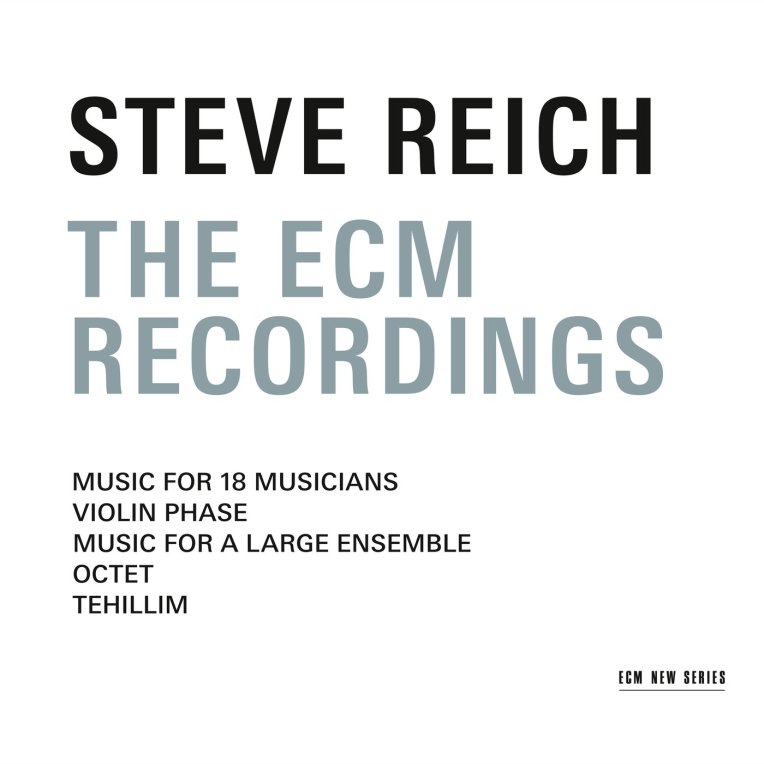
The first disc maps its genetic profile from ECM’s New Series, exploring a variety of topographies, from the temperate zone of Steve Reich’s Music for 18 Musicians and Joseph Haydn’s The Seven Last Words to the peaks and valleys of Arvo Pärt’s Tabula rasa and C.P.E. Bach’s Fantasie für Klavier fis-Moll, while beyond those contrasts tapping into the connective tissue of Tigran Mansurian’s Testament, Betty Olivero’s Neharót Neharót, and Meredith Monk’s Scared Song. The latter, taken from the 1987 portrait Do You Be, is equally concerned with the storytelling impulse to which all humanity is connected by nature. It’s also a neurological masterpiece that realizes an intersection of freedom and intention such as only ECM could forge.

Disc 2 returns to decidedly German territory with a foray into the Hörstücke of Goebbels. This gnarled talisman of voices, orchestra, and saxophone is a jarring yet somehow logical lead-in to Giya Kancheli’s arresting Vom Winde beweint, the first movement of which floats Kim Kashkashian’s fleshly viola on a bodiless current of strings. This is followed by an excerpt of the Funeral Canticle by John Tavener, a composer who has yet to appear on the label. Despite being an outlier (this performance is taken from a 1999 Harmonia Mundi recording by the Academy of Ancient Music), it feels right at home and transitions seamlessly into the String Quartet No. 15 of Dmitri Shostakovich, as played by the Keller Quartet, which in turn opens a doorway onto the Hilliard Ensemble, whose renderings of Arvo Pärt’s Most Holy Mother of God and the 16th-century Spanish song “Tres morillas m’enamoran” (for which they are joined by saxophonist Jan Garbarek) are sandwiched by the Largo of Shostakovich’s Chamber Symphony op. 110. Echoes of that ashen, somber beauty blossom in slow motion throughout two Postludiums of Valentin Silvestrov.

Disc 3 is dedicated almost entirely to composer Eleni Karaindrou. Her music has been a reliable way station along the New Series path for decades. Twelve of the fourteen selections are grafted from Concert in Athens, while the last two are emblematic excerpts from The Weeping Meadow. The sheer depth of feeling in both the writing and the performances prove Eicher’s vision and its ability to embolden others in kind. The most compelling transition comes next via Garbarek’s Dis, the title track of which treats an Aeolian harp as a moving canvas for wooden flute. Closing out this intimate color shift are two songs from Jon Balke and Amina Alaoui’s multicultural Siwan, including the hedonistic “Ashiyin Raïqin,” in which Alaoui sings: “How lucky we are to find this spot for our sojourn.” No sentiment could be truer here. That project’s Iberian roots are echoed in the Passacaglia andaluz II and kindred smattering from Rolf Lislevand’s Nuove musiche.

Things get decidedly cinematic on Disc 4, wherein the ambient touches of Andrey Degatchev’s soundtrack to The Return trace their utterances across physical and metaphysical waters alike. Even the pastiche of Nils Petter Molvær’s seminal Khmer—every track of which, save the last, is preserved—feels like imagery in sound. “Song of Sang II” is transcendent in this and any context, an anthem for all time keening from a past without walls. A new outro is suggested in the spidery “Close (For Comfort)” from Eivind Aarset’s Dream Logic.

As if all of that didn’t already feel like a full-body dip into the ECM font, Disc 5 adds rays to the widening dawn from a range of jazzier persuasions. The Stefano Battaglia Trio regales us first with its 12-minute “Euphonia Elegy,” providing an oceanic set-up for the electronic groove of Food’s “Celestial Food” and the Tord Gustavsen Quartet’s acoustic “Prelude.” What follows takes us all over the ECM map, tracing a red line from the solo guitar of Egberto Gismonti’s “Memoria e Fado” (as well as his magical collaboration with Garbarek and Charlie Haden, “Carta de Amor”) and the vocal honesty of Norma Winstone’s “Like A Lover” to the freer language of the Christian Wallumrød Ensemble and trumpeters Ralph Alessi and Tomasz Stanko. Along the way we also find sacred geometries in the Byzantine renderings of pianist Vassilis Tsabropoulos and cellist Anja Lechner and the Colin Vallon Trio’s appropriately titled “Telepathy.”

Disc 6 chambers the oldest relics, starting with the Jimmy Giuffre 3’s premiere take on the Carla Bley classic “Jesus Maria.” Other archival gems in this final reckoning include “Time Will Tell” (Paul Bley, Evan Parker, and Barre Phillips), “Lonely Woman” (off the 1979 self-titled debut of Old And New Dreams), “Voice from the Past” (title track to Gary Peacock’s outstanding excursion with Garbarek, Stanko, and Jack DeJohnette), and “Kulture Of Jazz” by Wadada Leo Smith. Giving contrast to these precious diamonds are the worldly ores of “Langt innpå skoga” (Sinikka Langeland) and “Psalm” (Frode Haltli). In their dialogue, new orders are suggested, imagined, and liberated.

Because these selected signs, at the exhibition itself, were heard only through headphones or in walk-in listening stations, a strange balance of privacy and openness hovered in the background of their presentation. But like the field recordings interspersed throughout the sequence suggest, they were but itinerant souls in search of a home. And in this box they have found just that, waiting to become a part of yours.

Rolf Lislevand: La Mascarade (ECM New Series 2288)

La Mascarade

Rolf Lislevand
La Mascarade

Rolf Lislevand Baroque guitar, theorbo
Recorded April 2012, Auditorio Stelio Molo, Lugano
Engineer: Stefano Amerio
Produced by Manfred Eicher
Release date: May 20, 2016

Featuring music by Robert de Visée (ca. 1655-1732/33) and Francesco Corbetta (ca. 1615-1681), guitarist-composers in the employ of Louis XIV, this under-the-radar gem from ECM’s New Series finds Rolf Lislevand charting the divergent territories of the theorbo and Baroque guitar in a cross-hatched program.

Lislevand 1

De Visée’s sense of tactility is evident not only in Lislevand’s interpretations, but also in the writing itself. In Les Sylvains de Mr. Couperin and, especially, the piece from which the album derives its name, the theorbo’s emotional reach is fully examined. Their sounds are intimately connected to speech. “The dominant linguistic elements of French,” the performer writes, “are all there: the length of the musical syllables, the accents, created artificially by the ornaments, and above all the short, gestural, interleaved phrases constructed in a very clear rhetorical logic.” In this tongue he speaks semi-conversationally—never debating in the interest of affirmation but rather walking hand-in-hand around a question that chooses not to define its existence by an answer. The Chaconne en sol majeur is a masterstroke in this precise regard, laying down sonic sentences across a bridge of charm.

Lislevand 2

Corbetta, who served as de Visée’s teacher, flits above his own reflection in relatively whimsical yet philosophically inflected journeys. In the brilliant Partie de Chaconne en ut majeur, one can hear shades of the Iberian Peninsula, flamenco-like drama, and heart palpitations in a single strum. The focus on chording over individual voicings lends a dream-like quality. Indeed, whereas de Visée seems concerned with waking fantasies, here the colors are drawn from a whimsical font such as only closed eyes could contain. In this sense, the Caprice de Chaconne manifests the album’s most corporeal interests. Rooted as much in past as in future, it smiles as if to confirm the present moment as a magic of its own making. Not unlike the briefer Folie, it shines most when pausing for effect.

Here and there, Lislevand adds his own tasteful pieces, such as the “Intros” to Corbetta’sPassacaille en sol mineur and de Visée’s Passacaille en si mineur. They exist to strengthen an underlying sense of architecture, as indicative of a meticulous attention to time and its relationship to space. In service of that assessment, engineer Stefano Amerio went to great pains to recreate the halls of Versailles, where every inner detail of these instruments would likewise have blossomed like the hearts of those hearing them. Let those reverberations till the soil of yours in kind.

Eleni Karaindrou: David (ECM New Series 2221)

David

Eleni Karaindrou
David

Kim Kashkashian viola
Irini Karagianni mezzo-soprano
Tassis Christoyannopoulos baritone
Vangelis Christopoulos oboe
Stella Gadedi flute
Marie-Cécile Boulard clarinet
Sonia Pisk bassoon
Vangelis Skouras French horn
Sokratis Anthis trumpet
Maria Bildea harp
Katerina Ktona harpsichord
ERT Choir
Antonis Kontogeorgiou choirmaster
Camerata Orchestra
Alexandros Myrat conductor
Concert production: The Athens Concert Hall
Recorded live November 19, 2010 at Megaron (Hall of the Friends of Music), Athens
Recording engineer: Nikos Espialidis
Assistants: Bobby Blazoudakis, Alex Aretaios, and George Mathioudakis
Edited and mixed March 2016 by Manfred Eicher and Nikos Espialidis
Mastering engineer: Peter DePian
Produced by Manfred Eicher
Release date: November 18, 2016

The theatrical text of Davidcomes to us by way of an anonymous poet from Chios Island. After its rediscovery, it was published in 1979 in a critical edition by Thomas Papadopoulos of the Bibliotheca Vallicelliana, and premiered with music by Eleni Karaindrou the following year. Here it is documented in full from a performance in November 2010, given as part of a three-day celebration in honor of Karaindrou and her work.

Despite a Catholic sheen, Davidis sprinkled with comic touches, popular locutions, and lyricism, as many such stage dramas would have been in the 18th century when it was written. The “Overture” opens the door into a characteristically three-dimensional world. Between the pointillist harp (Maria Bildea) and legato viola (Kim Kashkashian), it describes enough space for the orchestra, flute, harpsichord, and oboe to leave their traces across the sky in a message—as yet wordless—that renders the world beneath it a tesseract for moral transfigurations. From this garden emerges the instrumental flowers of “Repentance” and “Compassion,” which together reveal a pasture dotted with the footsteps of our titular protagonist. The first blush of song comes in the form of “Devils.” In this indulgent tune, baritoneTassis Christoyannopolous frolics through an itinerary of exuberant accomplishments, thus shoring up a house of words against the winds of change about to blow. Through deft use of choir, which magnifies his self-inflation, Karaindrou mirrors the feel of an opera buffa, rifling through scenes as if in an emotional flipbook.

“David’s Entrance” softens the landing of mezzo-soprano Irini Karagianni, whose rounded tone offers solace by contrast in “The Good Things in Life,” a somber reflection on the fleeting nature of our existence. Of all the good that passes by, she sings, may hearts latch on the residue and other virtues let go so calm and slow. This is followed by the beauties of “When I See,” in which Karagianni’s voice reveals a deeper, more dramatic palette that eerily recalls the soundtracks of Zbigniew Preisner. Equally concerned with ephemeral things, its tenderness reverberates in “David’s Lament,” wherein Christoyannopolous and choir link a chain of calls and responses, dripping with regret: Hear my dirge, o woods, listen and sorrow. And at my funeral, trees, grieve and wilt.

In “Psaltes,” the climate darkens into a vesper. Sounding like a Gregorian chant, its concern with wonders balances the depressions that precede it: May these fires burn the spirits; may the arrogance of fear now cease. After a trumpeted “Procession,” we find ourselves swaddled in the beauty of “Angel,” wherein divinely personified virtue takes flight in harp and strings: May your sweet trills make mortals awaken and studiously your company take pains to follow. Even more processional, however, is the grand “Finale.” Here the Holy Trinity is invoked as the choir marches to Jerusalem in search of grace and calmer breezes.

Although one needn’t have the translations at their disposal to enjoy its pastiche, David is best appreciated with the CD booklet in hand, so that its finer nuances leap forthright into the very place where its sounds begin and end: the center of the heart.