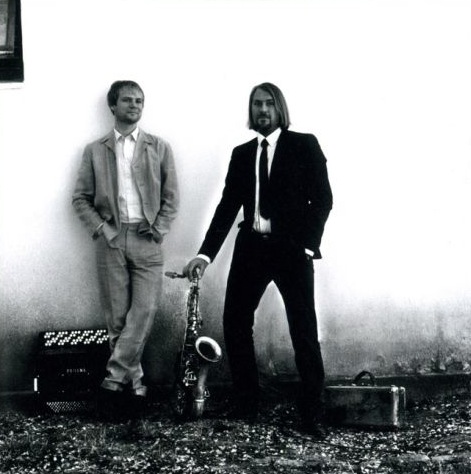
Henriksen/Seim/Jormin/Ounaskari: Arcanum (ECM 2795)

Arve Henriksen
Trygve Seim
Anders Jormin
Markku Ounaskari
Arcanum

Arve Henriksen trumpet, electronics
Trygve Seim soprano and tenor saxophones
Anders Jormin double bass
Markku Ounaskari drums, percussion
Recorded March 2023 at The Village Recording, Copenhagen
Engineer: Thomas Vang
Recording supervision: Guido Gorna
Mixed January 2025 by Manfred Eicher and Michael Hinreiner (engineer) at Bavaria Studios, Munich
Cover photo: Hubert Klotzek
Produced by Manfred Eicher
Release date: May 2, 2025

Arcanum brings together trumpeter Arve Henriksen, saxophonist Trygve Seim, bassist Anders Jormin, and drummer Markku Ounaskari. It is the first album for these longtime associates and ECM luminaries as a standalone quartet, following their previous collaborations with folk singer and kantele virtuoso Sinikka Langeland on StarflowersThe Land That Is Not, and The Magical Forest. In their element here, they look through a prism of shared influences toward something greater than their sum.

Seim’s opening tune, “Nokitpyrt,” is a nod to the greats of Scandinavian jazz (the title is Triptykon backwards, referencing Jan Garbarek’s 1972 watershed recording). It staggers its way forward, but never in doubt of where its feet will land. The horns converse soulfully, as they also do in “Trofast,” Seim’s other contribution to the set. Jormin offers two of his own in the form of “Koto,” a familiar gem that takes on new light through the glorious expanse of Seim’s tenor, and “Elegy,” written with these bandmates in mind on the first day of the war in Ukraine. That the musicians manage to elicit such a wealth of energy in such quietude is nothing short of astonishing. Jormin’s loving arrangement of the Ornette Coleman classic “What Reason Could I Give” and a take on the Kven/Finnish traditional “Armon Lapset” complete the predetermined material. The latter’s bipolar approach, by turns subdued and unbound, allows the band to free-wheel its way into uncharted waters.

And in fact, the lion’s share of the session consists entirely of spontaneous music making. First among these is “Blib A,” a brief yet evocative palate cleanser for the ears that comes second in the set list and once again proves the brilliance of Manfred Eicher in his placement and ordering of tracks into a narrative we can feel. Many of these pieces, such as the softly sunlit “Morning Meditation” and the memory-laden “Shadow Tail,” are almost as brief. Yet what truly impresses in these freely improvised wonders is their subtle and tasteful incorporation of electronics, courtesy of Henriksen. The musicians leverage this extra color to great effect as a bed for soulful sopranism and kindred trumpet (“Lost in Vanløse”), temperance for cymbal scraping (“Polvere Uno”), and tidal pull for distance tenoring (“Fata Morgana”). At any given moment, they are a source of deep comfort and hope.

Ironically, “Folkesong,” despite being ad-libbed, comes across as the most structured and traditional tune by comparison. Ounaskari’s tender brushes add a subtle undercarriage for this train ride, while Seim’s lilting sopranism gives way to Henriksen’s electronically enhanced calls. But even the most flowing tracks, like “Old Dreams” (another ECM reference, perhaps?) and “Pharao” (a highlight for its mind-melded horns), articulate with eye-through-the-needle precision. And in “La Fontaine,” with its late-night streets and evocations of urban solitude, we find ourselves at last coming home, different from when we first stepped out the door.

Arcanum is an experience of new directions born to longstanding impulses that says only what it needs to say—nothing more, nothing less.
Trygve Seim/Frode Haltli: Our Time (ECM 2813)

Trygve Seim
Frode Haltli
Our Time

Trygve Seim soprano and tenor saxophones
Frode Haltli accordion
Recorded June 2023, Himmelfahrtskirche, Munich
Engineer: Stefano Amerio
Cover photo: Thomas Wunsch
Produced by Manfred Eicher
Release date: September 13, 2024

For the past 25 years, saxophonist Trygve Seim and accordionist Frode Haltli have compacted dirt together as musical allies one step at a time. In this successor to 2008’s Yeraz, the duo opens a new door of their advent calendar into a world of freshly tilled land.

The set is pillared by four improvisations, each of which blends into a through-composed selection. Across this spectrum, they carve into introspection and extroversion, and back again. Seim has such an ancient approach to the modern reed, which at his lips sounds like a duduk, as Haltli’s wingflaps take his uplift to heart. Delicacy abounds, along with mature textural contrasts, each of which elicits a mood, a picture, a song. In “Shyama Sundara Madana Mohana,” a North Indian folk song, higher notes seek transcendence, while colors come alive in Igor Stravinsky’s “Les Cinq Doigts No. 5.”

Aside from “Oy Khodyt’ Son, Kolo Vikon,” a traditional Ukrainian lullaby rendered with just as much freedom and love as anything unscripted between them, the album is largely self-composed. From Haltli’s “Du, mi tid” to Seim’s “Elegi,” they plant one careful seed after another, watering with patient listening. The gradualness of their hindsight pays commensurate deference to the subject matters at hand. It is as if theirs was a world of shadows whose existence is discernible only because of the light they carry. Although we cannot know for sure where they are going, the music hints at a destination known only to the subconscious mind. Rising tensions mingle with artful release as the landscape feels warmer and less distant, more human than before. Amid all of this emotional shading, “Arabian Tango” feels like a once-in-a-lifetime joy. The most delicate tenor notes from its composer mesh beautifully with Haltli’s solo of sorts, while the space of the room itself lends a voice to this dance of emergence and recession.

Taken as a whole, Our Time is a mountain compressed into breath and exhaled in words of snow.

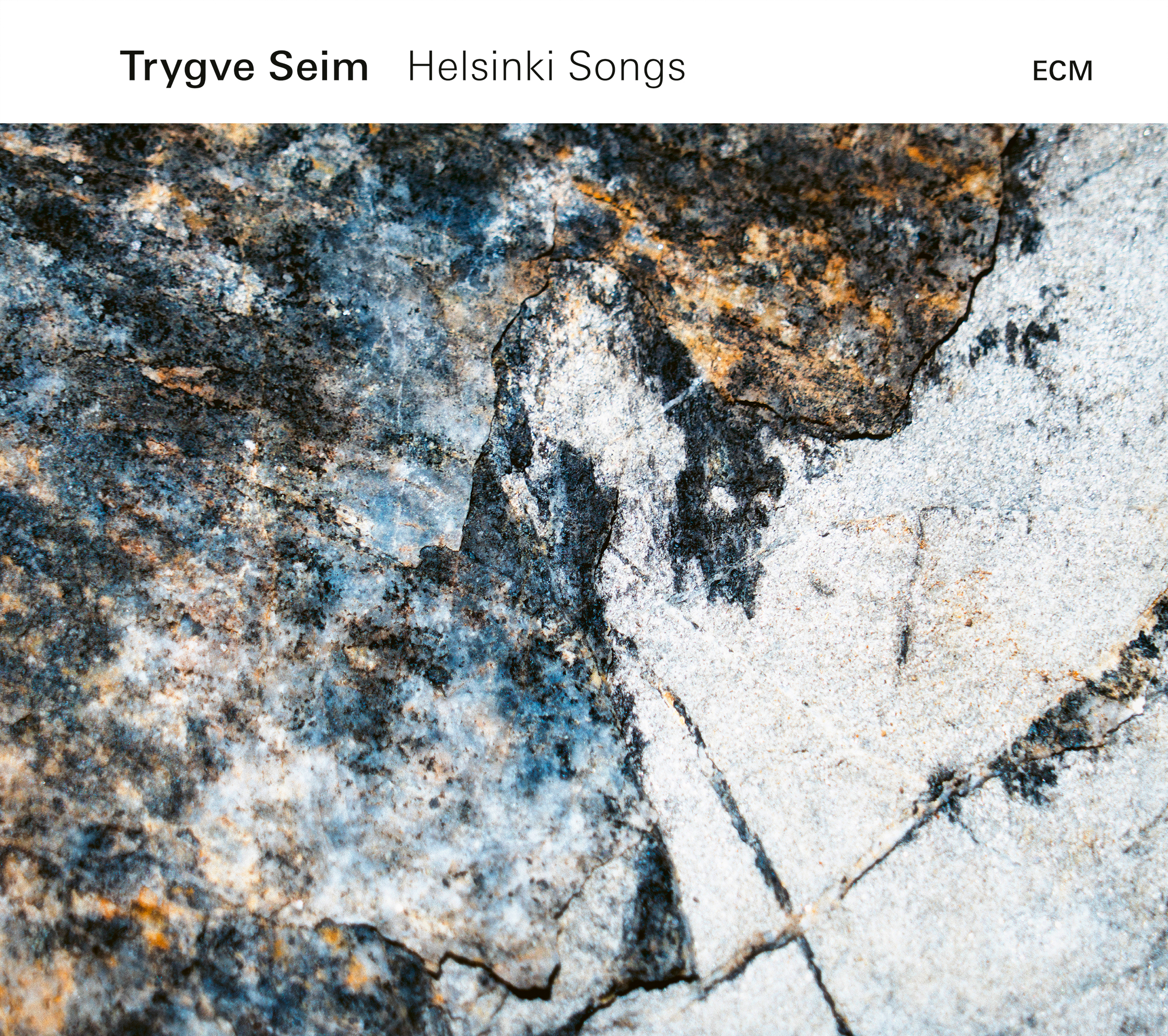
Trygve Seim: Helsinki Songs (ECM 2607)

2607 X

Trygve Seim
Helsinki Songs

Trygve Seim tenor and soprano saxophones
Kristjan Randalu piano
Mats Eilertsen double bass
Markku Ounaskari drums
Recorded January 2018 at Rainbow Studio, Oslo
Engineer: Peer Espen Ursfjord
Produced by Manfred Eicher
Release date: August 31, 2018

Every new release by Trygve Seim is cause for celebration. In this case, a quiet celebration, as the Norwegian saxophonist offers a brilliantly understated program in Helsinki Songs. Despite lacking a single lyric, the keyword here is “songs,” for every track tells a story in its own right, rendered through feeling rather than exposition. Thus, whether laying down a theme or straying freely from it, Seim is as much a singer as a reed player. All of which yields a dedicatoryalbum replete with friendship, love, and communication: the very hallmarks of an artist unafraid to clip his heart on his bell where most would settle for a microphone.

Of especial note are two tracks written for his children. Both “Sol’s Song” (for his daughter) and “Ciaccona per Embrik” (for his son) evoke budding minds whose blossoming is limited only by the amount of sunshine they’re willing to take in. Either melody is an exercise in honest reflection, balancing the anxiety of parenthood with the affirmations of its inarticulable joys. In each, bassist Mats Eilertsen and drummer Markku Ounaskari fill in the cracks of Randalu’s soulful bedrock, so that the way forward remains as smooth as this band traveling across it. “Birthday Song” likewise pays tribute to Eilertsen, whose pivoting therein from drunken haze to self-awareness is its own rejoicing. Other nods include Igor Stravinsky, whose relationship with his first wife is examined in the bittersweet “Katya’s Dream,” Jimmy Webb in the fiercely poetic “Morning Song,” and even a city in “Helsinki Song,” which matches its namesake’s blend of stark originality and hospitality. Another highlight is “Randalusian Folk Song,” which finds the selfsame pianist in a sublime mode, and Seim closest in spirit to one of his deepest influences: Jan Garbarek.

Other connections reveal themselves more in the playing than in the naming. “New Beginning” and “Sorrow March” speak of the emotional depths acquired in Seim’s studies with Armenian duduk virtuoso Djivan Gasparyan. These haunting tunes allow his backing trio to unravel filaments that might be missed as the bandleader cries out, as if from an arid mountain, knowing only the earth might be listening. That same rich soprano chases the setting sun of “Nocturne” and the Ornette Coleman-esque tail of “Yes Please Both.” The last, with its free charm, embraces questions without answers in a space of total clarity. As Seim himself notes, “I’m surrounded in this quartet by players who enable me to really be myself.” And boy, does it show.

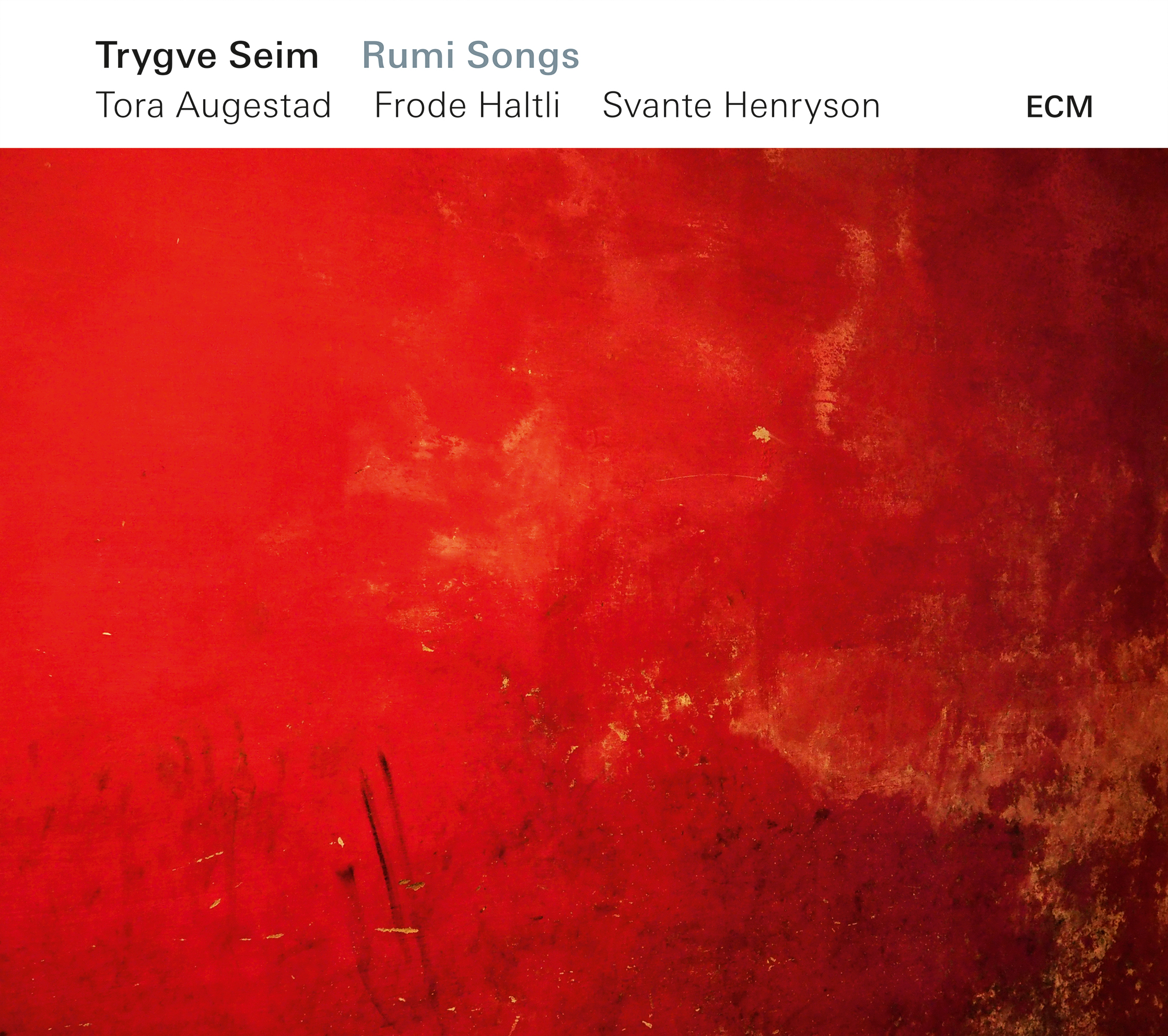
Trygve Seim: Rumi Songs (ECM 2449)

2449 X

Trygve Seim
Rumi Songs

Tora Augestad vocal
Frode Haltli accordion
Svante Henryson violoncello
Trygve Seim soprano and tenor saxophones
Recorded February 2015 at Rainbow Studio, Oslo
Engineer: Jan Erik Kongshaug
Produced by Manfred Eicher
Release date: August 26, 2016

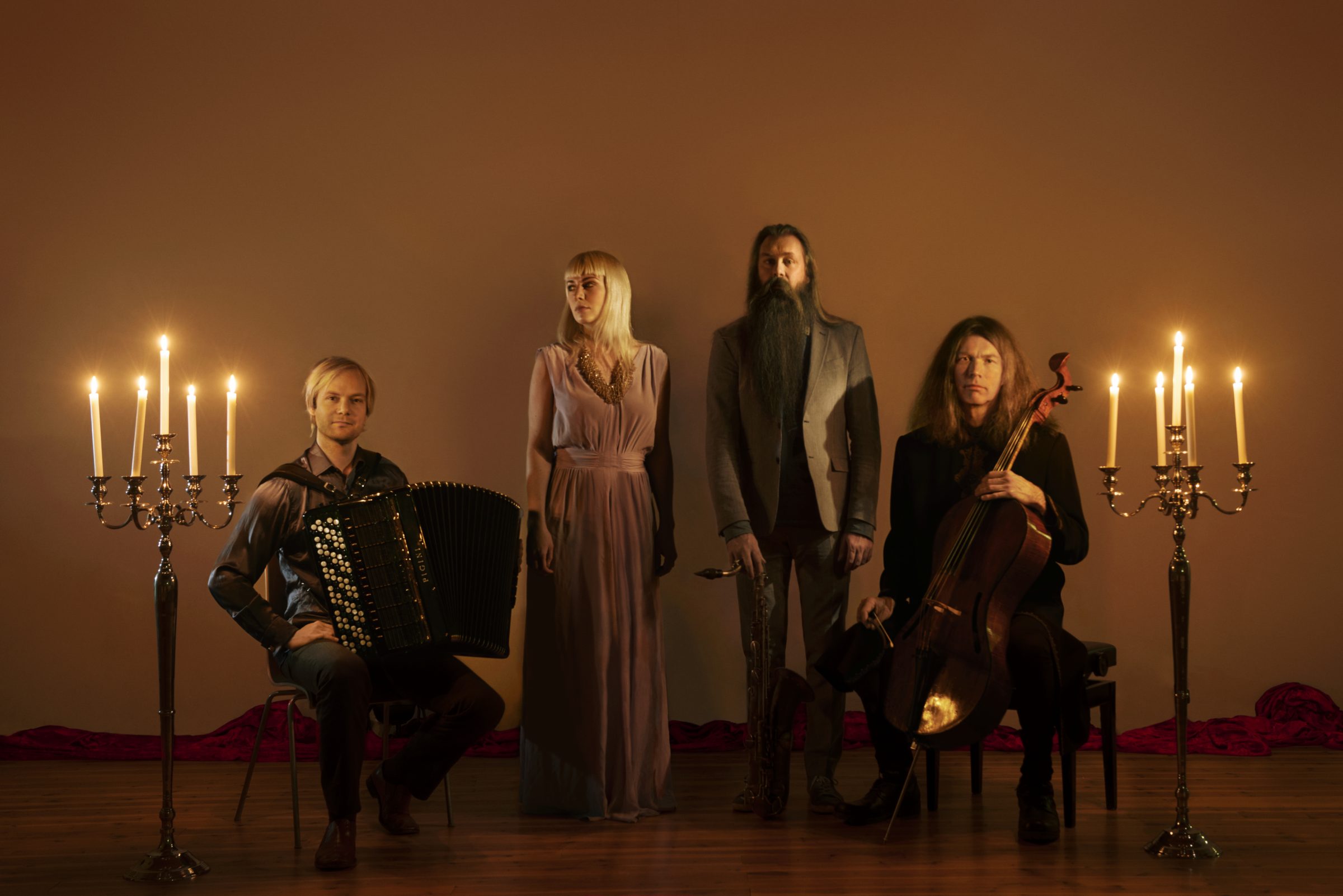
A natural intersection of musicians, bound by the mysticism of Rumi, Rumi Songs is saxophonist and composer Trygve Seim’s love letter to a poet whose influences broke the world wide open when rendered into English by Coleman Barks, whose translations are used almost exclusively throughout. For this project Seim welcomes accordionist Frode Haltli and cellist Svante Henryson, both members of his larger ensemble, alongside vocalist Tora Augestad.

The introductory “In Your Beauty” sounds like breathing itself. It also establishes the melding of accordion and cello, the purity of Augestad’s singing, and the aching lyricism of Seim’s reed. From this bud emerges the petals of “Seeing Double,” which checks off love, borders of the flesh, and self-questioning: all constant themes in Rumi’s poetry. Although the instrumentation stays the same in number, it widens in scope, as Seim allows his freedom to shine forth without hesitation.

Rumi Portrait
(Photo credit: Knut Bry)

Where “Across The Doorsill” is more playful, detailed, and surreal in that way children might usually be, “The Guest House” has a mature and mournful tinge, as underscored by Henryson’s bow. Linguistically, it speaks in right angles and architectural forms, much like its titular structure, at the same time rounding its back with the skill of an experienced yoga practitioner into one methodical pose after another.

While there are jewels of optimism to be unearthed here, such the droning lullaby of “Like Every Other Day” and the latticed groove of the tango-esque examination of desire that is “When I See Your Face,” the general mood floats somewhere between dreaming and brooding. “Leaving My Self” is the most haunting song of the collection in this respect. A curious rendering of parental sacrifice and interstitial love, its accordion acts as drone for the cello’s snaking lines. Seim is noticeably absent this time, taking in the wind. Even “Whirling Rhythms,” an instrumental inspired by Seim’s pilgrimage to Konya to see Rumi’s tomb for himself, has about it an air of darker contemplation.

In the closing “There Is Some Kiss We Want,” Seim switches to soprano. An enchanting creation, it yields a stanza that best expresses the relationship at hand of sound and text:

At night, I open the window
and ask the moon to come
and press its face against mine
“Breathe into me”

The Source: s/t (ECM 1966)

The Source

The Source

Trygve Seim tenor and soprano saxophones
Øyvind Brække trombone
Mats Eilertsen double-bass
Per Oddvar Johansen drums
Recorded July 2005 at Rainbow Studio, Oslo
Engineer: Jan Erik Kongshaug
Produced by Manfred Eicher

Trygve Seim offers a second helping of his eponymous group. True to form, the egalitarian collective redefines parameters, shedding the string quartet from 2002’s The Source and Different Cikadas and focusing instead on the Norwegian saxophonist’s core quartet with trombonist Øyvind Brække, bassist Mats Eilertsen, and drummer Per Oddvar Johansen.

The lion’s share of the writing comes from Brække, who embraces extremes of mood and register. Approaching the set list from the outside in, one encounters the slow burn of midnight oil in “Caballero” (the title, of course, a reference to Don Quixote) and, one layer in, “Water Glass Rhapsody.” Both tracks go down like cold coffee, Eilertsen either flying high or growling, tiger-like, in the depths of abstraction as the horns ready their wings. Deeper mining reveals more upbeat ends of the spectrum, as in the Johansen-centered “Alle Blå De Er.” The drummer, too, shows range in his “Tamboura Rasa.” Through misty cymbals, singing bass, and the crackling kindling of horns, this highly descriptive track paints itself one stroke at a time. Although Seim contributes a single tune (the kinetically astute “Un Fingo Andalou,” a play on Buñuel and Dalí’s 1929 masterpiece Un Chien Andalou), he often carries the full weight of the band in his bell, particularly in Brække’s “Prelude To A Boy.”

The Source furthermore pays tribute to the label it calls home. ECM’s output has been of lasting influence among the band members, and it shows. “Libanera” gives props to its composer, drummer Edward Vesala, in whose last group Seim played. To that fortunate collaboration he gives soulful deference, digging some of his strongest trenches yet. The rhythm section is aptly attuned to his stubborn prosody all the while. The trombonist’s other themes cross even more hatches. “Life So Far” means to evoke Keith Jarrett’s Belonging lineup and comes as a welcome surprise after the quicksand of the album’s first half (it’s also where Seim takes a match to his tenor and reveals the fire behind the smoke). The funkier “Mail Me Or Leave Me” might easily be mistaken for a Dave Holland joint, while the concluding “A Surrender Triptych” is an homage to the golden age of Triptykon. The band even references itself with the Johansen-penned “Mmball,” reprised from its appearance on Cikadas. The resolution of Seim and Brække’s slight dissonances into smooth becomings, in combination with the rhythm section’s lyrical sway, makes for some quintessential soundings.

This is music in primary colors that looks to light and shadow for variation, and crafts along the way a warm welcome for any who might chance to sit down for a spell and listen.

Trygve Seim and Frode Haltli: Yeraz (ECM 2044)

Yeraz

Yeraz

Trygve Seim soprano and tenor saxophones
Frode Haltli accordion
Recorded June 2007 at Rainbow Studio, Oslo
Engineer: Jan Erik Kongshaug
Produced by Manfred Eicher

Saxophonist Trygve Seim and accordionist Frode Haltli, both children of the Norwegian jazz scene and frequent collaborators who have grown into some of that scene’s most genre-defying proponents, pair up for an intimate songbook of frequencies that wraps the duo’s minds around an erudite program of mostly Seim-composed pieces. Exceptions include the haunting and windswept Armenian traditional song, from which the album gets its name, and the seemingly bipartite “MmBall,” penned by Seim’s go-to drummer, Per Oddvar Johansen. Seim and Haltli further explore two melodies—“Bayaty” and “Duduki”—by spiritual guru G. I. Gurdjieff (1866-1949), who, since Keith Jarrett’s 1980 Sacred Hymns, has been a ghostly presence on a handful of ECM projects.

Seim Haltli
(Photo credit: Morten Krogvold)

Compared to past recordings, Haltli treads more carefully across the accordion’s polar ice caps, his touch as pliant as ever. With the slightest pitch bend or intervallic quaver, the accordion’s inner heart speaks with utmost profundity, especially in the lower range, which despite a seemingly tenuous hold on notes lays foundations of its own. Seim proves an ideal partner, not only sonically—both are reedmen of sorts—but also in musicality. Nowhere more so than in their interpretation of Bob Marley’s “Redemption Song,” for which the instruments blend so well they sound like extensions of one another, regressions and evolutions linking toward plush, resolute skies. In the Gurdjieff pieces, too, the duo feels like a splitting of the same consciousness. Seim’s duduk-like sound reveals tonal mastery, painting a cathedral from the steeple down to Haltli’s throaty bedrock.

As for Seim’s pieces, each is possessed of its own physical property. From the slow-moving liquid of “Airamero” to the cinematic grain of the Tom Waits-inspired “Waits for Waltz,” his writing engenders a joyous but never boisterous sense of play and understated virtuosity. Other Seim notables: the less inhibited brushwork of “Fast Jazz” and the accordion solo “Bhavana,” for which Haltli’s transcendent highs evoke the Russian bayan or, perhaps, the Japanese shō.

Holding the disc together are the freely improvised “Praeludium” and “Postludium,” each a beginning and an end in and of itself, waiting to redraw the circle. Thankfully, the PLAY button allows us to do just that.

Seim/Brække/Johansen: The Source and Different Cikadas (ECM 1764)

The Source and DIfferent Cikadas

Trygve Seim
Øyvind Brække
Per Oddvar Johansen
The Source and Different Cikadas

Øyvind Brække trombone
Trygve Seim tenor and soprano saxophones, clarophone
Per Oddvar Johansen drums
Henrik Hannisdal violin
Odd Hannisdal violin
Marek Konstantynowicz viola
Morten Hannisdal cello
Frode Haltli accordion
Arve Henriksen trumpet
Christian Wallumrød piano
Finn Guttormsen bass
Recorded November 2000 at Rainbow Studio, Oslo
Engineer: Jan Erik Kongshaug
Produced by Manfred Eicher

Norwegian saxophonist Trygve Seim presents another facet of his musical diamond with the Source, a band he leads with trombonist Oyvind Brække and drummer Per Oddvar Johansen. Notable for bringing together the Cikada Quartet, of which cellist Morten Hannisdal had already played with Seim on Different Rivers and Sangam, and pianist Christian Wallumrød, along with mainstays Arve Henriksen on trumpet and Frode Haltli on accordion, the present session draws out music of a spongier texture, something more prone to dances than to rituals.

The compositional credits are fairly well distributed, with four coming from Seim’s pen. Generally, his are viscous, pathos-rich becomings. “Organismus Vitalis” puts the world under a microscope and revels in all that wriggles in its enlightening circle. In this regard, and by virtue of its floating sensibilities, one might easily connect the dots to Terje Rypdal’s chamber pieces or even to the diffuse scenography of David Darling’s solo ventures—such are its darkly inflected beauties. The Cikadas ebb and keep on ebbing, inching ever closer to shoreline structures as Johansen’s nuanced descriptions ever so barely edge the frame. An auspicious, postludinal beginning to an album of rich variety.

Seim’s thematic voice achieves deeper traction in such tunes as “Bhavana” and “Obecni Dum.” In both, the strings play a vital role in shaping the contexts in which, respectively, saxophone and accordion find purchase. Whether the slide of Seim’s earthy song or the moth-like pursuit of Haltli’s accordioning, there is in all of it something sacred. Even the restless “Fort-Jazz” brings with it a consistency of atmosphere, a fox hibernating in want of rampant spring.

Johansen brings that thaw with three pieces of starkly agitated character. In both “Mmball” and “Deluxe,” his drums are front and center. The latter especially recalls Hal Russell’s exuberant storytelling, all the while heightening the strings’ integration. Bisecting them is “Funebre,” an excerpt from Witold Lutosławski’s 1964 String Quartet that breathes with much the same looseness of structural integrity. This leaves “Uten Forbindelse,” a jazz spring ever on the verge of uncoiling toward infinity. Brække is the clear winner here, spawning as he does an outpouring of spirited exchanges and merging with Seim until the final trill sets them free.

The trombonist, in fact, edges past his co-leaders with five pieces to his name. Brække’s work lies somewhere between that of Seim and Johnansen, balancing the former’s weathered sound with the latter’s spontaneity to varying degrees. Notables include the whimsical “Flipper,” which takes full advantage of the group’s sound colors, and “Plukk,” which charts a subtle interplay of light drumming, pianism, and pizzicato filigree. “Sen Kjellertango” is another eye-opener, a slinky groove anchored by cello and punctuated by soprano saxophone, trumpet, accordion, and drums to dazzling effect.

Two free improvisations round out the set list. Wallumrød and Johansen touch off “Number Eleven” with their patience, overturning stone after stone, until the promise of subterranean force pushes through like a bud. The surrender is tender and blends into surrounding forest like a hunter. “Tutti Free” brings us back to a winter wilderness, dotted by fresh footprints of escape.

Those who enjoyed Bent Sørensen’s Birds and Bells may want to give this one a test spin. The scenography Seim has constructed here is of the highest integrity and practically assures the bending of a curious ear.

Trygve Seim: Sangam (ECM 1797)

Seim Sangam

Trygve Seim
Sangam

Trygve Seim tenor and soprano saxophones
Håvard Lund clarinet, bass clarinet
Nils Jansen bass saxophone, contrabass clarinet
Arve Henriksen trumpet
Tone Reichelt french horn
Lars Andreas Haug tuba
Frode Haltli accordion
Morten Hannisdal cello
Per Oddvar Johansen drums
Øyvind Brække trombone
Helge Sunde trombone
String Ensemble
Christian Eggen conductor
Recorded October 2002 and March 2004 at Rainbow Studio, Oslo
Engineer: Jan Erik Kongshaug
Produced by Manfred Eicher

Jazz is typically honed through interaction and a sense of shared community. One can also find in its heart a chambered, hermetic science. Trygve Seim’s Sangam validates both conceptions in a seamless infusion of liberatory and deferential impulses. As much a nod to Gil Evans as it is folk music of an undiscovered country, it is in some ways a “jazzier” album compared to its predecessor, Different Rivers, while in others it stretches the mold of that internationally acclaimed ECM debut to a larger yet no-less-defined shape. Accordion virtuoso Frode Haltli is a new voice in Seim’s milieu, as are clarinetist Håvard Lund and Cikada Quartet cellist Morten Hannisdal—all of whom contribute organically and without pretense to this program’s meditative and often astonishing sound.

More than ever, Seim’s atmospheres carry a cinematic charge in their subcutaneous circuitry. The fade-in comes with Lund’s bird-like solo. He introduces the title track with a call to unify, thus opening the brass choir as might the sun tickle the pollen from morning glories. A close-up on the film’s protagonist comes with the sweet, flavorful swing of “Dansante,” in which Haltli’s accentuations set up a handful of dramatic reveals. The camera seems to follow every footstep from childhood to adulthood in “Beginning an Ending.” Trumpeter Arve Henriksen provides the melodic lead, etching a runway for the soul. With these flight preparations underway, we feel ourselves swept up in the potential for winged existence. Hannisdal’s bow articulates a line of sight, a smoke trail fading in the sky like a healing scar, leaving bluest skin behind.

Conductor Christian Eggen (cf. a string of Terje Rypdal crossovers, including Undisonus and Q.E.D.) leads a string ensemble in the four-part suite “Himmelrand i Tidevand.” A film within a film, it acts as a talisman for the surrounding material. The subterranean whispers of Part I trace a sister song to Górecki’s Third Symphony in its upward expansions. Whether or not the similarity is conscious, its effect is strong. Seim’s eastward predilections come fully throated in Part II, emoting flexibly against the drone. Henriksen glows again in Part III through terrain of creek and glen. He guides a poised art from Point A to Point Z. At this point, if not already, we realize something cosmic is going on here as Haltli and Nils Jansen (on bass saxophone) point their telescopes toward a supernova’s quiet domain. Part IV gives us the end-title sequence, tranquil and smooth.

Returning to the narrative proper, a breathy “Trio” spawns quiet reflections from drummer Per Oddvar Johansen. Deeper brass tightens its emotional resolve in the face of impending doom, a gaseous planet in mourning. Hands come together in the concluding (but not conclusive) “Prayer,” a jewel of strings that lifts us beyond the pale of our emotional boundaries. Haltli’s bellows remind us of our earthly lives while brushed drums rustle like the leaves of Heaven: a foundation broken, dissolved, and washed down a throat of silence.

Trygve Seim: Different Rivers (ECM 1744)

Different Rivers

Trygve Seim
Different Rivers

Trygve Seim tenor and soprano saxophones
Arve Henriksen trumpet, trumpophone, vocals
Håvard Lund clarinet, bass clarinet
Nils Jansen bass and sopranino saxophones, contrabass clarinet
Hild Sofie Tafjord french horn
David Gald tuba
Stian Carstensen accordion
Bernt Simen Lund cello
Morten Hannisdal cello
Per Oddvar Johansen drums
Paal Nilssen-Love drums
Øyvind Brække trombone
Sidsel Endresen recitation
Recorded December 1998, January and December 1999 at Rainbow Studio, Oslo
Engineer: Jan Erik Kongshaug
Produced by Trygve Seim, Christian Wallumrød, and Øyvind Brække
Executive producer: Manfred Eicher

Breathe, and you know that you are the world.

Different Rivers marks Norwegian saxophonist Trygve Seim’s emergence from the ECM wings as a leader in his own right. Well versed in the label’s vital documentation of European improvising (not least of all through his life-changing tenure with Finnish drummer Edward Vesala), Seim draws upon those influences to pool his talents for the present disc, which deepens the free spirit of his so-called Trondheim Kunstorkester. Trumpeter Arve Henriksen—notably, a close associate of Christian Wallumrød—and a host of Scandinavian talents round out an ensemble of remarkable depth and poise.

Seim’s three duets with Henriksen are the album’s acupuncture points, each a vitalization of the whole. The breathy meditations of “Bhavana” and the flutter-tongued percussiveness of “Between” both spin on fluid axes, but it is “For Edward” that breaks its gravitational ties and flows outward into the universe. Seim’s shakuhachi tone reveals superb control of his reed, a sound honed by oneness with its source. Like two cranes calling to one another in the night, never able to find a way across the Milky Way between them, he and Henriksen paint bridges of artful listening in lieu of earthly travel. Even when they are surrounded, as in the title track, they are ever swimming toward something galactic.

The trumpeter reveals his vocal skills in opener “Sorrows.” In wispy arpeggios he lurks, stranger among a crowd of consenting instruments. The effect is ghostly, sirened by keening higher reeds. With the exception of “Search Silence” (a curious little flicker of geometry), the album’s remainder samples a likeminded palette. The subconscious beats of “Ulrikas Dans” brush on a light gesso for bolder horn strokes. Seim’s piercing harmonics lend an angelic touch, and his tenoring on “The Aftermath” spins a charm bracelet of wispy melodic cells. This life further into the sun-swept plains of “African Sunrise,” giving name to the aching land. Drummer Per Oddvar Johansen’s flint-strikes incite a conflagration in Seim’s playing, ending on scream. I daresay this and “Breathe” are two of the finest tracks in the ECM catalogue. The latter is a mission statement, a parable on the profundity of simplicity. Amid the band’s resonant atmospheres, vocalist Sidsel Endresen recites a powerful wakeup call. She finds a process in every wing-flap, every sprout and blossom, as blurry horn textures translate word into life.

The strengths of Seim’s compositions, and of those interpreting them, lie in their control and dynamic range. Their roots are as deep as their branches are tall, softly aflame with autumnal themes. Case in point: “Intangible Waltz,” which follows Henriksen’s patterns through thick forest and barren field alike. Its central whisperings between drums, accordion, and trumpet work wonders under the microscope. No matter how calm and thin its layers become, it allows visions of a dancing light to seep through.

Seim’s is a viscous music; don’t expect to swing. Meditative and ashen, every track of Different Rivers feels as if it was recovered from the archives of a lost culture, of which only this music remains to represent it. Let the rebuilding begin.