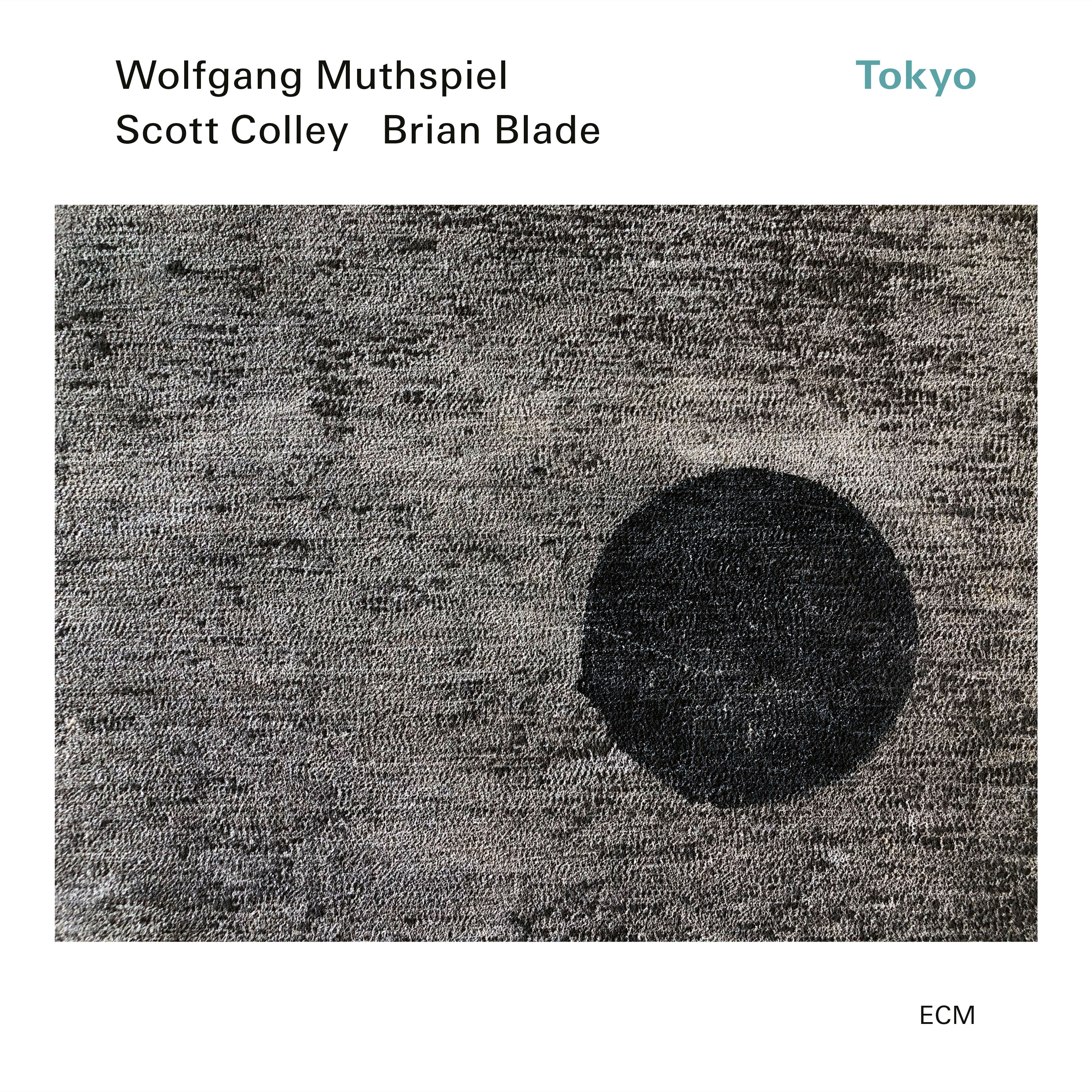
Wolfgang Muthspiel guitars Scott Colley double bass Brian Blade drums Recorded October 2024 at Studio Dede, Tokyo Engineer: Akihito Yoshikawa Assistant engineers: Ryuto Suzuki and Yo Inoue Mixing: Michael Hinreiner (engineer), Manfred Eicher, and Wolfgang Muthspiel Bavaria Musikstudios, Munich Cover photo: Juan Hitters Album produced by Manfred Eicher Release date: September 26, 2025
For its third studio outing, the trio of guitarist Wolfgang Muthspiel, bassist Scott Colley, and drummer Brian Blade lays down its most complex and adventurous session yet, fittingly recorded amid the electric calm of its titular city. The band achieves simpatico liftoff from the start in its swinging take on Keith Jarrett’s “Lisbon Stomp.” With a forthright delicacy that is hard to come by these days, they make the music come alive with fluid precision, every note free yet placed right where it needs to be. The plane lands on a more unsettled note with Paul Motian’s “Abacus,” for which Muthspiel slips into echoing distortions for a crunchier sound. Blade taps directly into Motian’s painterly attention to detail, his wider palette eliciting a tactile commentary, while Colley’s solo unpacks every shadow he casts.
Between these two telephone poles, the filaments of Muthspiel’s originals stretch, each charged with varying intensities of voltage. The moods are as distinct as the writing is strong. From the lyrical balladry of “Pradela” to the tongue-in-cheek angularity of “Weill You Wait,” he evokes a spectrum’s worth of times, places, and moods. The latter piece, with its oddly captivating contours, shows just how deeply the guitarist is willing to dive to find his voice.
His wingspan feels broadest when the melody becomes a form of searching, reaching toward something far beyond what the eye can see. This is most evident in “Flight,” which turns the proverbial landscape below into a resonating instrument. Its aerodynamic theme rides one thermal to the next without so much as a wing flap. The blend of acoustic and electric signatures gives the track a rare three-dimensionality.
At just two and a half minutes, “Roll” is the album’s briefest cut but also among its liveliest. With a nod to Weather Report, it radiates that same exuberant sense of living in (and for) the moment. Like the album as a whole, it foregrounds Muthspiel’s talents without stepping on the toes of his bandmates. Colley and Blade are not accompanists but equal protagonists in a story that emerges chapter by chapter into a shared narrative.
“Christa’s Dream” lingers as the most haunting turn, full of transcendence and half-existence, visible yet intangible, like a ghost in the light of day. It gives way to “Diminished and Augmented,” wherein oblique acoustic stylings blossom with playful grace. There’s a hint of Ralph Towner in its balance of leaping precision and sliding ease.
“Traversia” ventures farthest into unconventional harmonies, taking cues from Messiaen’s bold colors while achieving near-Renaissance purity of tone through the use of a capo. Originally written on a children’s guitar, it retains an innocence even as it matures in real time, the arco bass weaving a thread of quiet majesty through it all.
The folk-inspired “Strumming” pays deference to Bob Dylan and Leonard Cohen, refracted through a seamless idiom. Muthspiel’s ember-infused guitar rides atop Blade’s locomotive brushes, creating a boundless sense of space where synthetic and human energies meet. It’s a song of rudimentary joy and quiet surrender, a reminder that sometimes the simplest gestures have the deepest resonance.
In the end, Tokyo feels less like a document and more like a meditation in motion of three travelers translating memories into sound. What Muthspiel, Colley, and Blade achieve here is an equilibrium between structure and spirit. It is jazz as weather: unpredictable, fleeting yet timeless.
Wolfgang Muthspiel guitars Scott Colley double bass Brian Blade drums Recorded February 2022 at 25th Street Recording, Oakland, California Engineer: Jeff Cressman Mixing: Gérard de Haro (engineer), Manfred Eicher, and Wolfgang Muthspiel Studios La Buissonne Cover photo: Woong Chul An Album produced by Manfred Eicher Release date: September 29, 2023
After clearing a giant swath of land throughout 2020’s Angular Blues, guitarist Wolfgang Muthspiel, bassist Scott Colley, and drummer Brian Blade now construct a series of interlocking structures across it. With “Invocation,” we find ourselves immersed in a sound that is both familiar and forward-seeking. As the mist of spider-webbed guitar and glistening chimes resolves to reveal Colley’s blessing, the trio’s meditations offer glimpses of parallel dimensions before Muthspiel dips into a chord-slung melody, allowing us some oxygen in a suffocating world.
While we might expect a groove from this seeking spirit, more slow building awaits in “Prelude to Bach.” This vaporous studio improvisation surrounds us with memories, each unable to be captured for long before the next takes its place. Before we know it, we’ve morphed into the Bach choral “O Sacred Head, Now Wounded,” which holds together like a fresco and touches the soul with equal lucidity. As inevitable as it was unplanned, it cups a candle whose flame has stood the test of time.
Muthspiel has a natural ability to twist the blinds to let in a different configuration of light at every turn. The polyrhythmic title track likewise changes faces as fluidly as one’s reflection in a disturbed pond’s surface. The acoustic guitar speaks with sagacity and love. Before the final act, Muthspiel and Colley recede into hand claps while Blade applies gold foil to the frame.
“Liebeslied” is one of two cover songs (this from Kurt Weill’s The Threepenny Opera). Muthspiel draws a tessellated swing from within the tune’s many-chambered heart. Colley renders his solo in charcoal while the guitarist sketches in quieter pencil in the background before switching to pastel for a final say.
“Folksong” takes inspiration from Keith Jarrett’s vamp-prone improvisations in the pianist’s Belonging period, exploring a chord progression to the point of melodic bursting, with Americana touches and hints of countless side quests. Muthspiel’s acoustic shows its breadth and cohesion, so much so that Colley’s gestures feel like an extension of the same instrument, giving us that sunlit joy of the mid-1970s when Jarrett was at his most exploratory. “Cantus Bradus” pays homage to pianist Brad Mehldau, last heard with Muthspiel on 2018’s Where The River Goes, and whose chromatism shines as a guiding light through spectral improvisations.
Not a single note feels wasted at Muthspiel’s fingertips. Whether caught up in a dance or bearing down directly on a virtuosic motif, he stands at the edge of a proverbial cliff without ever feeling the need to jump. Instead, he takes in the view and shares it with us all. This is nowhere so clear as in his rendition of Joni Mitchell’s “Amelia,” which closes the set with minimal expansion. Even absent of words, it speaks to the heart. The electric guitar is the softer brush in his artistic toolkit, allowing every bristle to sing. Colley and Blade are his tender allies, each a bearer of melodic and atmospheric truths for posterity.
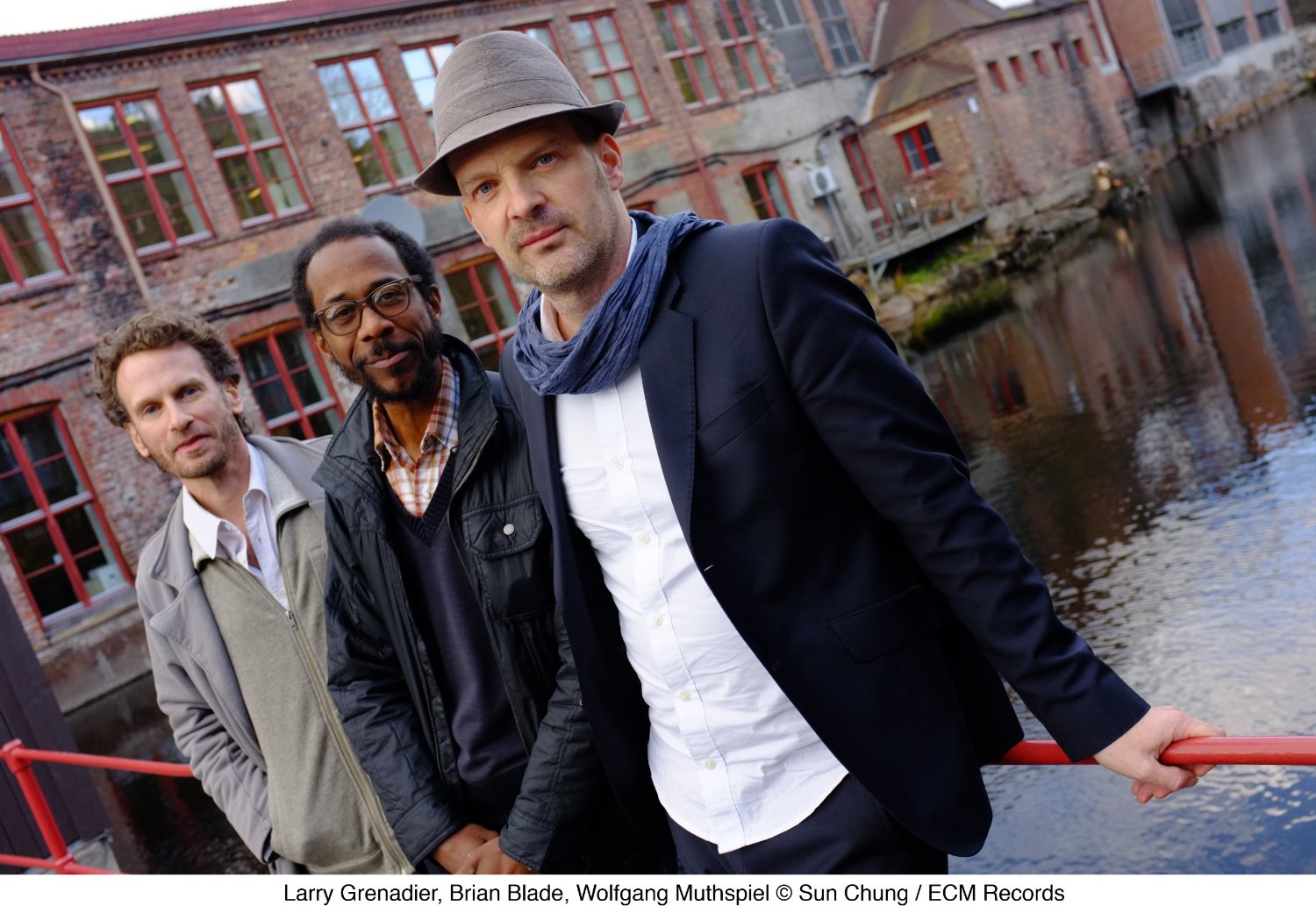
Austrian guitarist Wolfgang Muthspiel is one of a handful of guitarists whose influence is as robust as his humility. Muthspiel began his musical training in classical violin, shifting to guitar in his teens. And yet, while he is now firmly entrenched in jazz-defined spaces, he has never let go of his love for chamber music and the intimate sensibilities required of one to self-express in that genre. Despite the temptation to draw lines of influence between his style and that of others—particularly Mick Goodrick, under whom he studied while at the New England Conservatory before moving on to Berklee—his profile is distinctly silhouetted. After spearheading Material Records in 2000, he began focusing on a series of small-group projects, including the MGT trio with fellow pickers Ralph Towner and Slava Grigoryan. MGT later recorded for ECM, starting an ongoing relationship with the German label for Muthspiel, which has since produced such masterstrokes as Driftwood, his trio album with Larry Grenadier and Brian Blade, and a handful of leader dates, including 2016’s Rising Grace. In the following interview, we dive a little deeper into Muthspiel’s background, interests and aspirations.
Tyran Grillo: Everyone is a work in progress, of course, but if you were to characterize yourself as a musician and as a human being at this point in time, what would you say?
Wolfgang Muthspiel: To define oneself is tricky, but I would say that I have two main playing fields in my life: the music and my small family. To strike the right balance seems to be the key and it is not always easy. But I am grateful to love what I am doing.
TG: In terms of striking that balance between music and family, what have been some of the greatest lessons you have learned along the way?
WM: I guess the lesson is: I want to be really present with music when that is going on and I want to be really present with family when that is going on. It is better to have longer stretches of each without trying to compensate all the time between the two.
TG: You have performed and recorded with some amazing musicians throughout your career. Can you talk about the most gratifying of those experiences?
WM: I learned so much with many great musicians who played with me over the years and lessons are everywhere all the time if one stays open. Musicians who have made a huge impact on me are Gary Burton, my first big sideman gig, and Paul Motian, who embodied so much of the essence and freedom of jazz. He was a modernist with a huge link to the tradition. As such, he offered me a priceless learning experience. But many contemporary jazz musicians that I play with have also been huge inspirations, like Ambrose Akinmusire, Brad Mehldau, Larry Grenadier, Brian Blade and Scott Colley, to name a few.
TG: Was there a “eureka” moment at which you realized that music was going to be your life?
WM: I grew up with classical music but my siblings and I always improvised with each other as kids, long before we knew anything about jazz. When we later found out that improvisation is at the heart of jazz, we were hooked. Coming from a classical tradition and coming to jazz relatively late at age 14 brought its own blessings and challenges.
TG: Can you expand on some of those blessings and/or challenges?
WM: One of the blessings was being able to learn so much about harmony, intonation, practicing, discipline, tone and technique as a young child. One of the challenges was having to do a lot of extra homework later on about time, tradition, jazz language and repertoire.
TG: Who were some of your greatest teachers, musically or otherwise, and how does their dedication continue to inspire you?
WM: My main guy was Mick Goodrick, who was direct, honest and encouraging. I spent two years with him as a student and then we played a lot of duo gigs. He was the perfect teacher for me, the one I was looking for. He is a scientist of the guitar and a philosopher about music. As a kid I had many great teachers, starting with my violin teacher at the age of six. I was very lucky in that regard.
TG: Can you talk a little bit about your artistic directorships and residencies?
WM: I am the Artistic Director of an immersion year at JazzCampus Basel in Switzerland called “Focusyear”. There we invite up to eight players from all over the world to come to Basel for a full year. They are coached regularly by some great artists who come for a week at a time. They record an album, play concerts and get a full scholarship. This year’s coaches are Jeff Ballard, Chris Cheek, Kris Davis, Sullivan Fortner, Larry Grenadier, Guillermo Klein, Ingrid Laubrock, Lionel Loueke, Linda May Han Oh, Aaron Parks, Elena Pinderhughes, Tineke Postma, Jorge Rossy, Becca Stevens, Cuong Vu, Miguel Zenón and myself. I am fortunate to get to invite all these interesting artists and witness the growth of the ensemble throughout the year. As each teacher brings his or her own universe, it is a truly inspiring job.
TG: How would you characterize your composing?
WM: I love composing. For me, it is an act of finding rather than constructing. I love to go on the hunt for a song. It is part of my daily music-making when I am at home. I usually work with concrete people in mind, who I write for. I imagine them in the room with me.
TG: Have you composed for film?
WM: I have scored for a 1931 silent film by F.W. Murnau called Tabu: A Story of the South Seas. The score is for cello, trumpet and guitars and we have performed it live in front of big screens in a few concert halls. There is also the music I made with my [trombonist] brother, Christian, for a film about our father, Kurt Muthspiel [1931-2001], which is called Super 8 Music. It is made from Super 8 home movies and provides a lasting statement about our family.
TG: What is your role as teacher?
WM: I try to encourage the music that is inside my students. I also ask them to get their shit together. I encourage them to go for what they burn for rather than learn everything a little bit.
TG: Can you talk about what it is has been like to work with Manfred Eicher?
WM: I got introduced through Ralph Towner, who brought our trio with Slava Grigoryan to ECM. We did the album Travel Guidetogether and I got to know Manfred. This is when our relationship started. It is a privilege to work with Manfred, who is completely dedicated to the art of recording. His ears and intuition for the flow of music have a big impact.
TG: At this moment, who are some of your most inspiring musicians, artists, writers, etc.?
WM: I owe so much to artists. Be they writers, visual artists, actors, directors or musicians, they make this world rich and deep. They transcend the pragmatic materialistic superficiality and remind us of our souls. It is almost impossible to make a list, but here is a small excerpt. Writers: Thomas Bernhard, Peter Handke, Tobias Wolff, Thomas Mann and Toni Morrison. Painters: Cy Twombly, Agnes Martin and Henri Matisse. Musicians/composers: Witold Lutosławski, Olivier Messiaen, Django Bates and Duke Ellington, but also old masters, including Bach, Mozart and Schubert. Musicians/songwriters: Joni Mitchell, Prince and The Beatles. Jazz musicians: Keith Jarrett and his bands, Miles Davis and his bands, Wayne Shorter and his bands, Billie Holiday, Ornette Coleman and Pat Metheny. Also: Paco de Lucía, Glenn Gould…the list goes on.
TG: What is one of the most meaningful musical experiences you have had?
WM: Once in a while, the music plays itself and when that happens, it is blissful and encouraging. It is a zone one wants to be in all the time. These moments become shining lights and reminders that this freedom exists.
TG: And what is your most profound experience as a listener?
WM: A reoccurring miracle is that we can enter the world of music as listeners so fully and truly live in it. This is a completely different world than our earthly world. I believe that many listeners have this experience. When the piece is over, we return to our physical existence. Where were we before? And every time I enter certain pieces, I have the same experience— in some cases, the same experience as 40 years ago.
TG: Is there anything in particular you have yet to do musically that you hope to accomplish someday?
WM: I would love to play at the Village Vanguard because it is soaked in vibrations of great music.
TG: On a similar note, is there anyone you wish to work with that you haven’t already?
WM: I am open for new adventures and don’t have a list of people I want to work with. But, in my fantasy, I would have loved to play with Joni Mitchell and Miles Davis.
TG: Do you think being a musician today means anything different than a few centuries ago?
WM: I feel that a few centuries ago, you had to be of a certain class, race and gender to even be considered. In that way, it is more open now. At the same time, we also live in a time of shorter attention spans and so much information that a good musician can be overlooked or undervalued easily.
TG: What is the most meaningful comment someone has ever made about your music?
WM: Whenever I realize that there are people out there who live with my music, I am incredibly motivated to give them the best I can give. To have listeners is so valuable. However, I believe that it is healthy not to listen too much to comments about your own music and just keep going with it.
TG: If you could travel back in time and meet yourself when you were just starting out as a professional musician, what would you say to yourself?
Wolfgang Muthspiel guitar Scott Colley double bass Brian Blade drums
Recorded August 2018 at Studio Dede, Tokyo
Engineer: Shinya Matsushita
Assistants: Yuki Ito and Akihito Yoshikawa
Mixed at Studios La Buissonne by Manfred Eicher, Wolfgang Muthspiel, and Gérard de Haro (engineer)
Mastering: Nicolas Baillard
Album produced by Manfred Eicher
Release date: March 20, 2020
On Angular Blues, Wolfgang Muthspiel revives the format of his 2016 ECM leader debut. Rejoined by drummer Brian Blade yet inviting bassist Scott Colley in place of Larry Grenadier, the Austrian guitarist serves a full course of originals with a couple of surprises added to taste. The members of this trio share what Muthspiel calls a “love of song” and perhaps no more succinct a term could so accurately describe their rapport. Longtime listeners won’t be surprised that Muthspiel has brought together players who understand the value of space: how to shape it, to be sure, but more importantly how to let oneself be shaped by it in kind.
The narrative impulses of the opener, “Wondering,” harness the flexibility of Muthspiel’s acoustic playing, which in this context meshes with bass while kissed cymbals draw the z-axis of a three-dimensional sound. Moods cycle between gentility and insistence and shades between. The title track is aptly named for revealing a delicately virtuosic side to the energies at hand. “Hüttengriffe” follows with a soft-hewn anthem.
The remaining tunes find Muthspiel plugged-in, jumping into the amorphous body of his electric guitar. In “Camino” he is equally at home, his fingers free to engage in metaphysical play. As a thinly veiled tribute to the late John Abercrombie—not only in style but also in the way Muthspiel drafts his solo—it’s a highlight that deserves close listening. Others include “Kanon in 6/8,” which shows the trio at its deepest level of synergy (it’s also offset by the digitally enhanced “Solo Kanon in 5/4”), and bebop-influenced “Ride.” Two standards fill in the gaps. Where Cole Porter’s “Everything I Love” moves vertically, “I’ll Remember April” ends this worthy set on a horizontal plane.
(This review originally appeared in the April 2020 issue of The New York City Jazz Record, a full PDF of which is available here.)
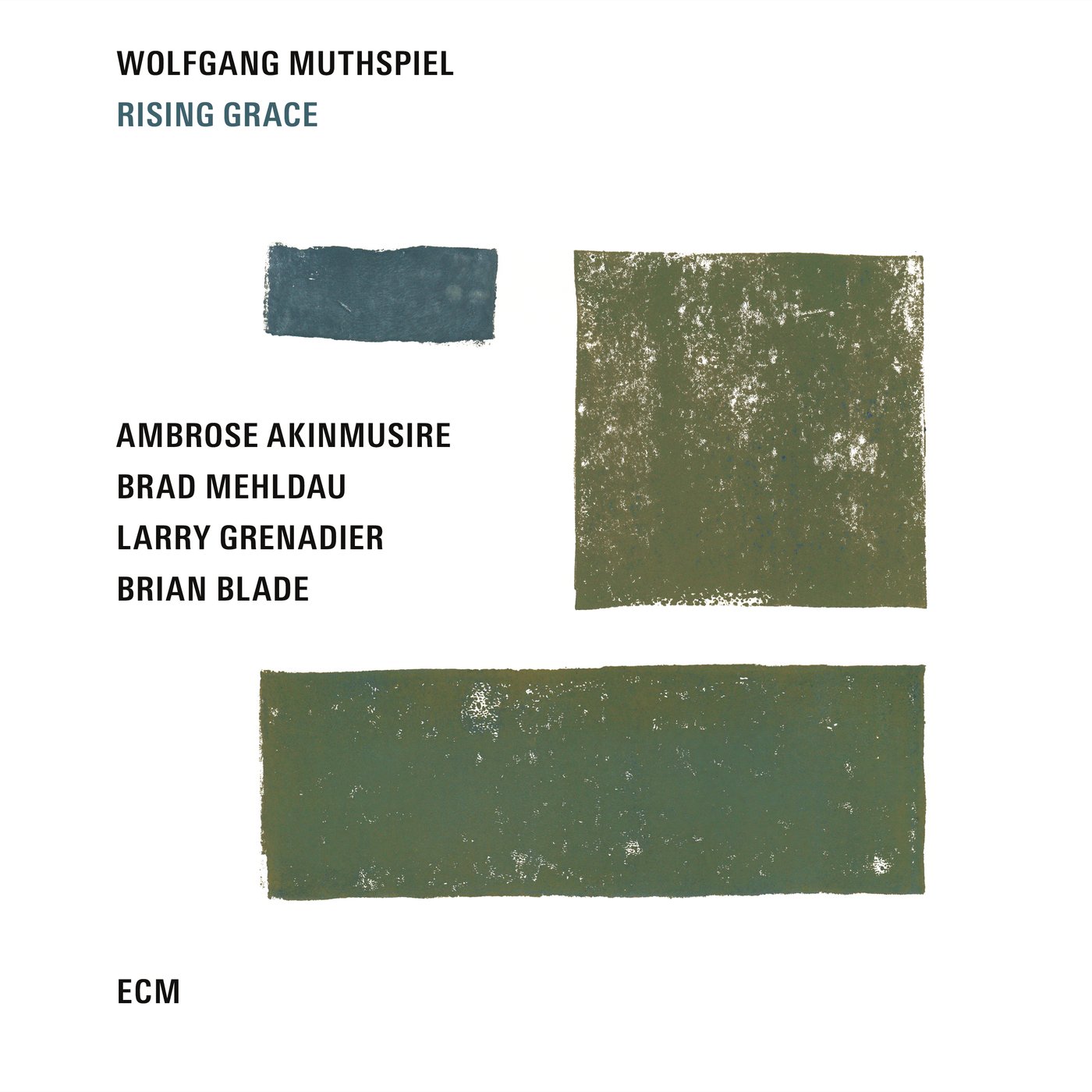
Wolfgang Muthspiel guitar Ambrose Akinmusire trumpet Brad Mehldau piano Larry Grenadier double bass Brian Blade drums
Recorded January 2016, Studios La Buissonne, Pernes-les-Fontaines
Engineers: Gérard de Haro and Nicolas Baillard
Produced by Manfred Eicher
Release date: October 28, 2016
Nearly three years after making his ECM leader debut with Driftwood, Austrian guitarist Wolfgang Muthspiel returns to the studio, expanding that trio into a quintet. Carrying over bassist Larry Grenadier and drummer Brian Blade, he adds the potent variables of pianist Brad Mehldau and trumpeter Ambrose Akinmusire. The result is exponential.
Muthspiel is that rare artist who makes arpeggios sound like melodic leads rather than backbones. Cases in point are the title track and “Triad Song.” In both, the band attracts character traits that are to define the album’s master narrative. Muthspiel and Grenadier move in lockstep, while Akinmusire keens, Mehldau sings, and Blade shines like gold in the morning sun. Their flowing sound, studded with occasional peaks, catches the glow of a humbly creative lighthouse.
As composer, Muthspiel focuses on the little things, and in so doing makes them feel all-encompassing. Such highlights include “Intensive Care” for Muthspiel’s nylon-stringed questions and Mehldau’s lyrical answers, “Supernonny” for Akinmusire’s robust exposition, and “Boogaloo” for its riskier details.
The set is fleshed out by dedicatory masterstrokes. “Father And Sun” examines a relationship that is earthly, spiritual, and uncontainable. Its atmospheric integrity, domestically inclined, finds heartfelt analogue in “Den Wheeler, Den Kenny.” This loving tribute to trumpeter Kenny Wheeler especially references 1976’s Gnu High, a longtime inspiration for Muthspiel. Here, the soaring of that classic album is met with an elegiac crawl across a barren landscape. “Wolfgang’s Waltz,” a tune written by Mehldau specifically for this album, finds its own father soloing with a storyteller’s grace between the binding of an adhesive groove. All of which makes Rising Grace a gracious (indeed) experience filled with love, hope, and extended kinship.
Wolfgang Muthspiel guitar Ambrose Akinmusire trumpet Brad Mehldau piano Larry Grenadier double bass Eric Harland drums
Recorded February 2018, Studios La Buissonne, Pernes-les-Fontaines
Engineers: Gérard de Haro and Nicolas Baillard
Produced by Manfred Eicher
Release date: October 5, 2018
Where The River Goes doesn’t so much pick up where Rising Grace, guitarist Wolfgang Muthspiel’s second leader date for ECM, left off as add sub-chapters and interludes to its story. Drummer Brian Blade is replaced here by Eric Harland, while core band members Ambrose Akinsmusire (trumpet), Brad Mehldau (piano), and Larry Grenadier (bass) are carried over in the creative equation. While each musician has leveled his own combination of power and grace in respective projects, in this configuration a certain ease of expression prevails, allowing them to luxuriate in the resonance of an exclusive spirit.
The title track introduces the strengths of each player in turn. Muthspiel’s ability to establish a framework of quiet integrity is demonstrated in his unaccompanied intro. Mehldau’s unparalleled lyricism eases into frame with the tenderness of a child awakening in Saturday-morning sunlight. Grenadier likewise transitions from whisper to declaration, lubricating every joint for want of a healthy body. Harland treats cymbals like drums and drums like cymbals, lending warmth to a frost-kissed scene. Akinmusire, for his part, is like a daytime moon: almost surreal yet an undeniable reminder of celestial forces at work beyond the firmament. The more hauntingly rendered “Clearing,” a group improvisation, is another example whereby layers of space and time are delicately upended in favor of a democratic relativity.
Harmonically speaking, this album’s core spins by the magnetic give and take of Muthspiel and Mehldau, whose dialogic interactions in “For Django,” “Descendants,” and “One Day My Prince Was Gone” evoke fantasy and reality in equal measure. Mehldau’s lone compositional offering, “Blueshead,” triangulates that relationship with Grenadier’s muscular refereeing, and gives Akinmusire air through which to soar. Indeed, the trumpeter’s voice soars highest in the present milieu, although there are passages, such as “Panorama,” in which the bandleader duets with Harland, and the nostalgia-brimming “Buenos Aires,” which holds the guitar alone, thus reminding us that no organism can function without a neural network to archive its experiences, ready for recall at a moment’s notice, when communication matters above all.
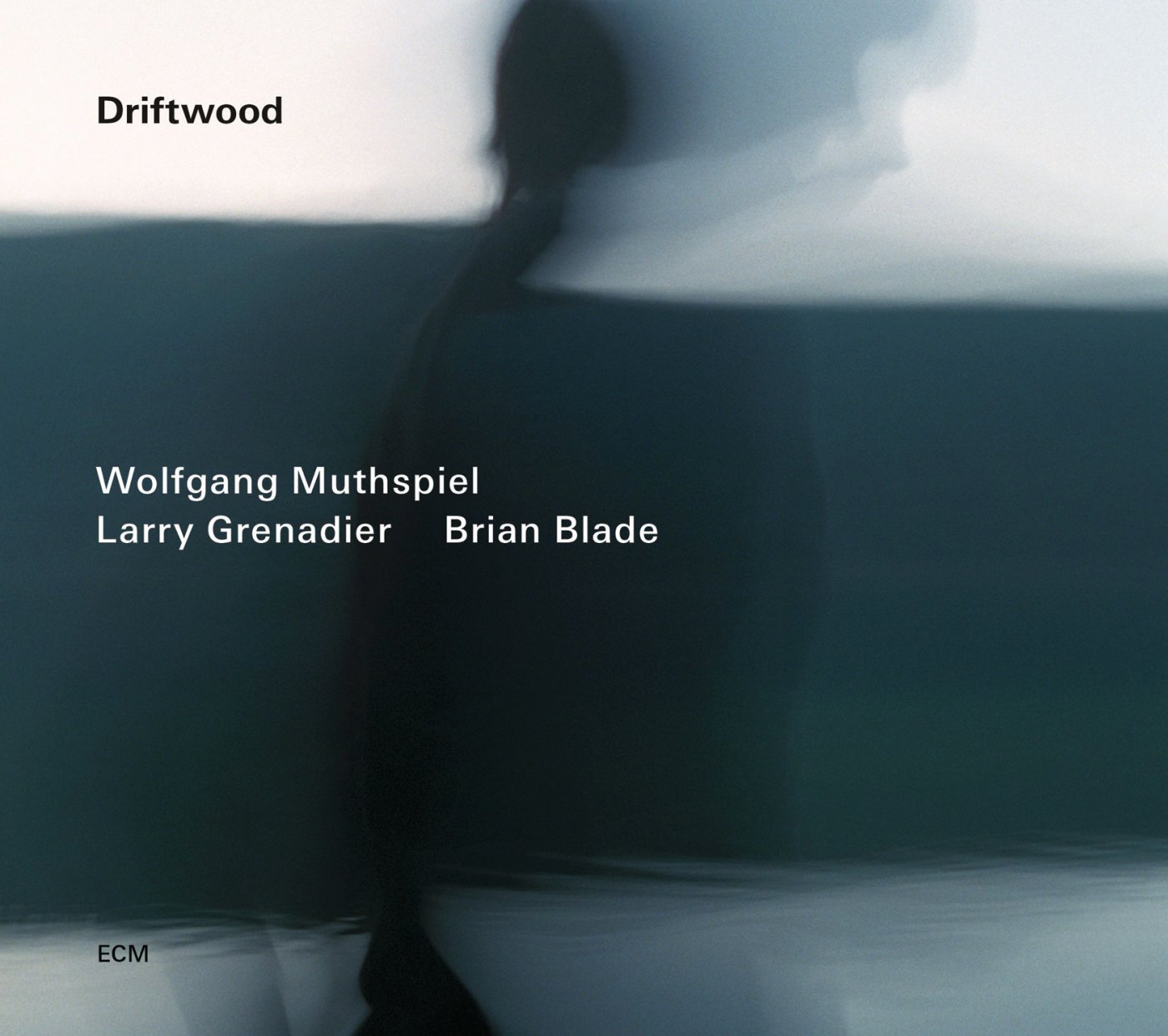
Wolfgang Muthspiel guitar Larry Grenadier double bass Brian Blade drums
Recorded May 2013 at Rainbow Studio, Oslo
Engineer: Jan Erik Kongshaug
Produced by Manfred Eicher
After making his ECM debut in the company of Ralph Towner and Slava Grigoryan on 2013’s Travel Guide, Austrian guitarist Wolfgang Muthspiel takes on his first leader date for the label. And with good cause, because its sounds have been an important part of his evolution as an artist, not least of all through his studies with the great Mick Goodrick. With such a background to go on, it should be no surprise that Muthspiel is a suitable fit for, while also expanding the exploratory mission of, ECM. And in the fine company of bassist Larry Grenadier and drummer Brian Blade, his star shines even more brightly.
Excepting the regenerating spiral of the instantaneously composed title track, all tunes are from Muthspiel’s pen, artfully shuffled between electric and acoustic leads. The former bookend the set, starting with the tracery of “Joseph”—in the center of which Muthspiel exploits a range of effects, from grunge to echoing parabolas in single turns of phrase—and ending with “Bossa for Michael Brecker,” an appropriately marbled tribute to the late, great saxophonist. Its opening gestures paint the dotted center line down a road that continues even after the album nominally ends. Muthspiel sails across its pavement toward a classic unity. The electric guitar glows with subconscious hues in the pastel-colored “Highline,” in which its overdubbed ghost keens distantly as the rhythm section gathers momentum for a runway jam that seems about to lift off at any moment but is content in dancing with the anticipation of doing so. And in “Lichtzelle” (Light cell), that same guitar joins drums in a duet of seeking points and lines.
“Uptown” starts off the acoustic selections in groovier territory and, from the underlying pulse and slightly dissonant borders, reveals a touch of Towner. Between the delicious syncopation and a nimble solo from Grenadier, it turns out to be one of the most unforgettable tracks to come from ECM in a long time. “Cambiata” is a uniform, laid-back piece of cinematic beauty, while “Madame Vonn” is the album’s consummate ballad. As the ponderous shadow of “Uptown,” it has a classic—if also melancholic—skin.
Driftwood may be a study in contrasts, but is ultimately one of enmeshment. It shows a musician not at the top of his game, but embodying the game itself, working his fingers into the strings with meticulous freedom until each scores a quiet, melodic goal without the need for fanfare.





 Between Sound and Space: ECM Records and Beyond