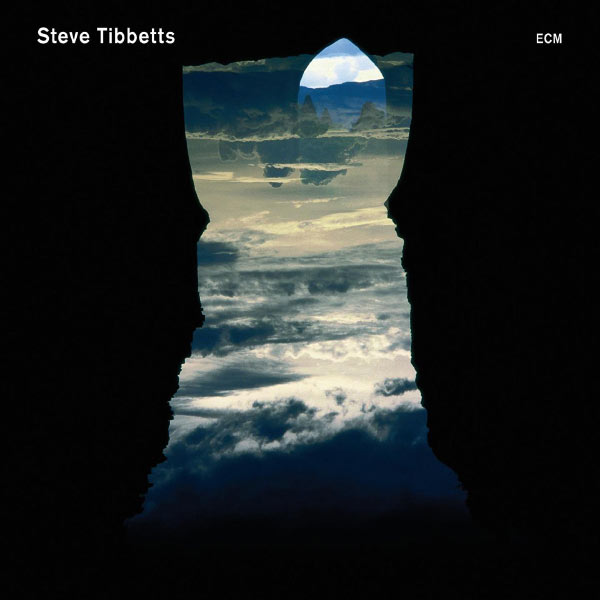
Steve Tibbetts: Natural Causes (ECM 1951)

Natural Causes

Steve Tibbetts
Natural Causes

Steve Tibbetts guitars, piano, kalimba, bouzouki
Marc Anderson percussion, steel drum, gongs
Recorded 2008 in St. Paul
Engineer: Steve Tibbetts
An ECM Production

If ever there was a case for quality over quantity, Steve Tibbetts is it. A full eight years after A Man About A Horse, the Minnesotan guitarist returns with his most intimate statement yet. Alongside percussionist Marc Anderson, collaborator of over three decades, Tibbetts crafts a geography so inward-looking that it becomes a parallel world. Tibbetts originally flirted with the idea of releasing Natural Causes as one single track. Were such the case, listeners would feel no less aware of its science. Either way, its 13 tracks are not variations on a theme, even if they do play with the theme of variation. He calls them, rather, “complex little cathedrals,” building them as he does stone by stone, if not string by string. Indeed, his trusted 12-string guitar is possessed of something divine, its frets pared down to almost nothing over years of playing, so that fingers glide freely.

In a rare turn, Natural Causes is nearly all acoustic and accordingly finds Tibbetts playing piano, kalimba, and bouzouki to flesh out the palette. In addition to these, he employs a midi interface, by which he triggers samples of gongs and metal-key instruments collected during his travels. Of these, “Lakshmivana” is the fullest integration of plugged and unplugged. Told in the language of prayer—i.e., of human artifice embracing sacrality—it is an astonishing meditation that is only deepened by the story told in “Chandogra.” Here the periphery is barely noticeable. Instruments peek from the shadows, seemingly incidental, and fade at the instant of regard.

From the back-porch motif that introduces “Sitavana,” the album’s gateway, and through the burgeoning field that follows toward the solo “Threnody,” it’s obvious that Tibbetts’s attention to detail has grown like the preceding metaphor. His playing, mellifluous as ever, establishes global reach with tracks like “Padre-Yaga,” in which Anderson’s hand drumming leaves trails on the beaten plains. It develops, as does the album as a whole, in distinct cells, every pause linking the body to the less tangible impulses that make fingers ache for the fretboard.

There is an almost keening quality to Tibbetts’s portamento. “Attahasa,” for one, is a tree shedding spores. For another, “Sangchen Rolpa” wavers on the precipice of some great abyss. Across that expanse Tibbetts extends brief, tender bridges, paved with inner fire. Between them, the album’s groundswells reveal texture and breadth.

Although this is Tibbetts’s most inward-looking record, it is also his farthest reaching. His art is as honest as the landscapes that inform it, changing form and color as he moves from one riverbank to the next. Whether you choose to walk with him or listen upon him from above, just know there is a home for you here to which you may always return.

Stephan Micus: on the wing (ECM 1987)

on the wing

Stephan Micus
on the wing

Stephan Micus sattar, mudbedsh, classical guitar, nay, shō, hné, suling, Tibetan cymbals, gongs, hang, 14-string guitar, steel string guitar, shakuhachi, mandobahar, sitar
Recorded 2003-2006 at MCM Studios

For his 17th ECM album, multi-instrumentalist and world traveler Stephan Micus maps further paths along soft geographical borders. Whereas on his last trek, 2004’s Life, Micus sprouted vines around a Japanese Buddhist kōan, here the voice of the man behind the means comes through his playing rather than his singing. The narrative arc is yet firm beneath his step, even if its location remains undisclosed at the final breath. Indeed, breath is by no means less operative herein, flowing as it does through a wealth of reed instruments, including the Iraqi mudbesh, the Egyptian nay, the shō (Japanese mouth organ), the Balinese suling, and the Burmese hné. From them issue the voices of this 10-part suite of sentiment, from which a peaceful core unspools.

Much of the music occurs in intimate settings. Part 1, from which the album gets its name, threads the mudbesh through two droning sattar, a bowed instrument favored by the Uyghurs of western China. As is his way, Micus obscures the origins of these instruments by floating them on idiosyncratic currents. The wind of the mudbesh captures spirit and pulls it through tree leaves, each a feather trembling on a skeleton without direction or need, floating and falling in an unwritten cycle. “Winterlight” bolds the underlying silt with three sattar, trembling like a dream that clings to the body in a scrim of frost. There is something medieval, even Nordic, about the sound that leaves wolven footprints in snow. A sleek form trudges along the riverbanks, eyes glistening with a gold that can never be obtained without destroying the soul. And so, it hides behind a cloak of dawn, the tender glow of which outshines even the rarest mineral treasure.

“Gazelle” follows with a pairing of nay and classical guitar. The latter, for all its lilting hold on pitch, becomes koto-like in Micus’s hands. It seems to embody the comfort of a life lived on the ground, while the nay circles overhead in search of possible dangers in the open plains. Resigned to those dangers, its heart beats on, anticipating the moment when it will no longer sound its drum. In that alertness there is harmony, a certain calmness of mind that casts itself to the elements of which it is but a shred. This is not, despite my attempts at wording, a purely descriptive track. Its title, like all on the album, is a stepping-stone toward less overt associations.

Forces build through the reed-thickened “Blossoms in the Wind” (for 2 sattar, shō, 3 hné, and 2 suling) to the fulcrum of “The Bride.” One of two larger “ensemble” pieces (this for Tibetan cymbals, Korean gong, Burmese gong, 3 hang, 14-string guitar, steel string guitar, mudbesh, shakuhachi), its reed work draws folding lines across the sky in preparation for its origami transformation. The breathy shakuhachi slides its way into frame center, even as it magnifies the edges in kind. Thus united, the flutes ride waves of without fear, their sole cargo a dowry of ether.

“Ancient Trees” lessens the forces with 6 shakuhachi, 2 sattar, and 4 mandobahar (a rare Indian stringed bass) even as it seeds possibilities. Here the shakuhachi is the agency of the drone, climbing trees like stairways into cloud. “In the Dancing Snow” again fronts the shrill mudbesh, now over 3 sattar, in a dance of ice and flame.

In the shadow of such greatness, the intimacy of “The Gate” is astonishing. This sitar solo is decades in the making, for it would take as long before Micus felt comfortable enough to commit something like this to record, and shows the fruits of his efforts to tame its overwhelming web by paring it down to two strings. Every bend holds a key to entry and ushers the listener into a world of ghosts with lingering attachments, each with a story endlessly repeated in the hopes that someday, someone will hear it and grant peace. It is further proof that Micus’s most powerful pieces are unaccompanied. That said, we are left with the album’s second major expanse, “Turquoise Fields” (2 steel string guitars, 3 hné, 2 suling, 3 sattar, 3 nay), which is an astonishingly immersive experience. As strums of guitar shift like wind through barley, a chain of solos from sattar and high reeds marks the transfusion point between the sacred and the profane. Last is “Morning Sky,” a congregation of five hné in a dance of farewell, but also of greeting. Which is to say that it welcomes us even as it sends us on our way.

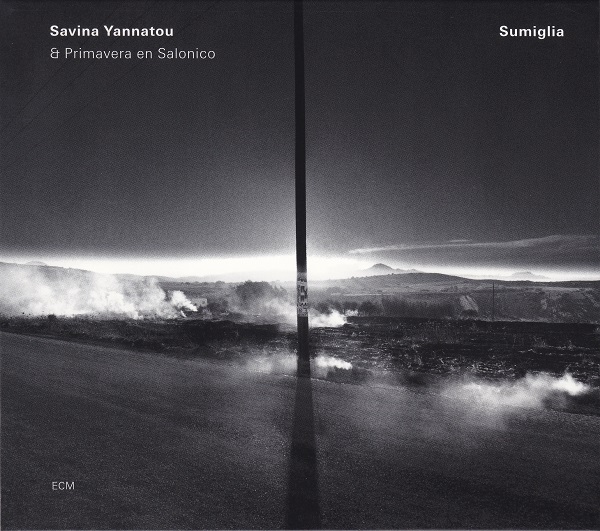
Savina Yannatou & Primavera en Salonico: Sumiglia (ECM 1903)

Sumiglia

Savina Yannatou
Primavera en Salonico
Sumiglia

Savina Yannatou voice
Primavera en Salonico
Kostas Vomvolos accordion, qanun, kalimba
Yannis Alexandris tamboura, oud, guitar
Michalis Siganidis double-bass
Kyriakos Gouventas violin, viola
Harris Lambrakis ney
Kostas Theodorou percussion
Recorded May 2004 at Rainbow Studio, Oslo
Engineer: Jan Erik Kongshaug
Produced by Manfred Eicher

Two years after the release of her ECM leader debut (although really a preexisting live recording repackaged as such), Savina Yannatou returns with her first album recorded under the label’s auspices at Rainbow Studio in Oslo. Sumiglia is at once a departure from and a deepening of the Greek singer’s extraordinary gifts, bound by nothing save her own imagination. Flanked as always by Primavera en Salonico, a band of dynamic expressive power, Yannatou graces another characteristically eclectic program of folk songs. Her voice is like a head of hair: thicker in some places, thinner in others, containing a wealth of reflections and colors, but always rooted and growing. Her wisdom is thus animated, blowing in winds from a thousand isles.

In spite of the studio comforts, one experiences Sumiglia as if a live recording, pulsing as it does with only thinly mitigated vibrancy. Like its predecessor, this album begins with a violin solo—a modest introduction that betrays nothing of the ensuing profusions. “Evga mana mou” thus opens with a nod to Yannatou’s homeland, a bridal song of farewell to family and friends. Adopting a tone that is delicate as a butterfly yet sharp as the bird that hunts it, the singing navigates a droning landscape with free surety. Other Greek songs include the tender, spring-like “Yanno Yannovitse” and the beautifully arranged “Ela ipne ke pare to,” which walks with a light kalimba step and a slight Arabic curl, further proving that sometimes the most bone-humming singing is that which is on the verge of fadeout. Within this frame, listeners are whisked away on a carefully sequenced journey. From the droning of Spain (“Muineira”) through the forests of Ukraine (“Ta chervona ta kalinonka”) to the twists of Albania (“Smarte moj”), there’s something for nearly everyone to grasp along the way.

Regardless of the roles she adopts, Yannatou remains painterly and self-aware. In the Moldavian song “Porondos viz partjan,” for one, she takes on the voice of an orphaned child, her evening wanderings matched step for step in arco starlight. In the Sicilian “Terra ca nun senti,” for another, she darts through mazes of war-weary angst. Other flybys of the Mediterranean yield the gravelly, fairytale affectations of “Orrio tto fengo” and the whimsical romanticism of “Sta kala lu serenu,” both from Italy. A stopover in Corsica in the album’s title track draws Yannatou’s voice like a thick rope through darkness, heaving histories and mysteries in equal measure. We feel that depth of mourning for times past.

The album’s delights take us inland and beyond. “Sedi Yanna,” a well-known Bulgarian folk song, receives an invigorating treatment, with just the exact amount of lilt and forward motion. It is also a perfect representation of the band’s clarity, which despite the density of its execution remains crystal clear. The lyrical fire of “Ganchum em yar ari,” from Armenia, warms us to “Tulbah.” This last is a Palestinian song that shows the Primavera at its chameleonic best. Whether riding the wave or swaying to the rhythm of calmer currents, the band adapts.

In addition to its many other virtues, Sumiglia is yet another feather in the cap of engineer Jan Erik Kongshaug. Known, of course, for his spacious treatments of various jazz configurations, here he brings an immediacy that serves the music as much as it serves us. A bravura showing from every angle.

Stephan Micus: Life (ECM 1897)

Life

Stephan Micus
Life

Stephan Micus bagana, Balinese and Burmese gongs, Bavarian zither, bowed bagana, dilruba, dondon, kyeezee, maung, nay, shō, Thai singing bowls, Tibetan chimes, Tibetan cymbals, tin whistle, voice
Recorded 2001-2004 at MCM Studios

Life takes its inspiration from a Zen Buddhist kōan. The function of a kōan, or riddle, is to test one’s resolve in the face of doubt, the latter born from overdependence on worldly logic (think “What is the sound of one hand clapping?). The goal is not to “solve” but to become the riddle. In this particular kōan, a monk and his master discuss the meaning of life, and through his usual array of diverse instruments and singing (here entirely in Japanese), Micus does just that. He becomes what he performs. Distinct to the riddle of life is its elliptical reasoning: it begins and ends with the same answer. Micus chooses to express this distillation by moving from complex to barest arrangement.

Micus listeners will know many of the instruments through which he speaks: Bavarian zithers, shō (Japanese mouth organ), Thai singing bowls, nay, Tibetan chimes and cymbals, and the sarangi-like dilruba. For Life he adds to his palette the maung (Burmese gongs) and the bagana, an Ethiopian lyre that produces a uniquely entrancing buzz by way of leather strips threaded between its strings.

Narration One And The Master’s Question
A monk, looking for the essence of life, left his monastery at a young age to travel through China. After many years, on his return to the monastery, his old master asked him, “What is this life?”

The bagana extends the album’s thickest spokes, and through its subterranean chirring sets the wheel slowly spinning. Mouth organs cross canvas like floating-world clouds, allowing just enough of the scene to take shape before our eyes, that our ears might take in the Micus voice, magnified ten times over. Despite the wheel metaphor, in this cycle there is no center, only a diffuse matrix of breath and contact. An Irish tin whistle unspools its birdlike call by means of a language that is as ephemeral as its understanding of eternity. The voices grow, turning into feet whose steps—indicated by Bavarian zithers—seek a horizon of intimate hope.

The Temple

Like its namesake, this instrumental interlude for (for 5 Thai singing bowls, 2 dilruba, and 2 nay) expresses serenity through perception of barest movement, the force of which is at once cause and effect of a lone figure’s presence. The nays and arco draws turn like lily pads on water, held by unseen tethers as the atmosphere holds a cloud.

Narration Two
The monk said…

Twelve chanting voices, again embracing the buzzing bagana, bear their peace in unison, thus giving space to:

The Monk’s Answer
“When there are no clouds over the mountain the moonlight penetrates the ripples of the lake.”

Here the drone of six dilruba interacts with the voice, authorial but not proselytizing, transcendent but self-aware. The monk’s words bid the listener to look within in order to be without.

Narration Three
The master became angry and said…

The master’s neurological impulses, each a pylon of the mind standing guard over itself, are vocally expanded. Their collective power sweeps a giant yet gentle hand across land and ocean water.

The Master’s Anger
“You are getting old, your hair is gray, you have just a few teeth left and still you have no understanding of life.”

The catharsis of this moment, a cut in the skin of contentment, marks the voice’s tail with jangling footsteps. Through crash of cymbal and beat of drum, internal conflicts are made external and crushed by soles of passing strangers.

Narration Four
The monk lowered his eyes, tears streaming over his face. Finally he asked his master…

The voices, now numbering 17, reach their grandest magnification. These are the album’s droning lungs, etched into being by the bagana, now bowed, in cavernous antiphony. All of which leads us back to:

The Monk’s Question
“What is this life?”

Accompanying himself on Balinese and Burmese gongs, Micus sings more tenderly and with greater resonance, wavering as if a reflection on moonlit pond.

The Sky

Evoked through the solo shō and drawn in wisps vapor, the sky unfolds but also tucks into its deepest indigo.

The Master’s Answer
“When there are no clouds over the mountain the moonlight penetrates the ripples of the lake.”

Hence, the solo voice which ends things by beginning them. Taking comfort in the emptiness of response, the words melt into pure sound, taking with them all the care that would hold us back.

Life Koan

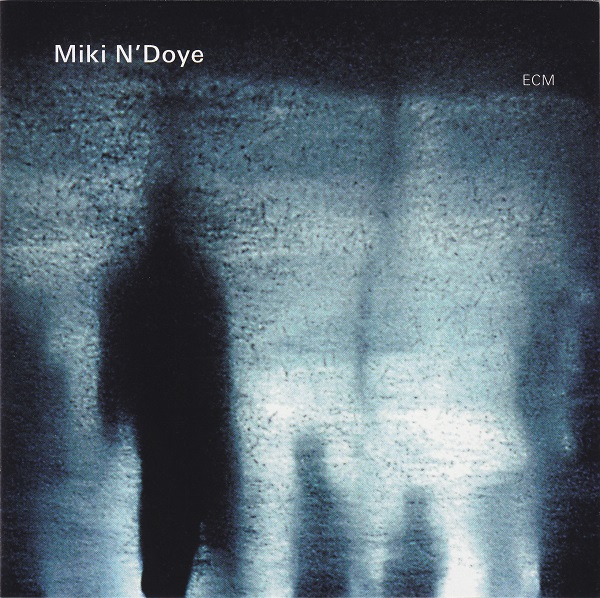
Miki N’Doye: Tuki (ECM 1971)

Tuki

Miki N´Doye
Tuki

Miki N’Doye kalimba, tamma, m’balax, bongo, vocals
Jon Balke keyboards, prepared piano
Per Jørgensen trumpet, vocals
Helge Andreas Norbakken percussion
Aulay Sosseh vocals
Lie Jallow vocals
Recorded 2003-2005 at Rainbow Studio, Oslo
Engineer: Kjartan Meinseth
Mixing: Jan Erik Kongshaug, Kjartan Meinseth, and Miki N’Doye
Produced by Miki N’Doye and Jon Balke

Tuki is the song of one given to many. As the ECM leader debut of master drummer Momodou “Miki” N’Doye, it houses multiple fates under one roof and collates them into discernible rhythms and voices. N’Doye hails from Gambia, where in the mid-70s he met Norwegian musician Helge Linaae. This encounter brought him to Oslo, where, after coming into contact with such influential movers as Jon Balke, his future as shaker in the far north was secured. Later projects led him to the company of Per Jørgensen, as part of the band Tamma. He was also fortunate enough to collaborate with Ed Blackwell and Don Cherry in the twilight of their careers. N’Doye has since lent his signature to a number of sonic happenings, many with Balke at the helm. In the latter vein, one feels his presence most vividly on Batagraf’s Statements. Tuki joins him once again with Balke and associates, adding to those ranks Gambian vocalists Aulay Sosseh and Lie Jallow, also fixtures in the Scandinavian scene.

In spite of the associations one might attach to N’Doye’s traditions, it is important to avoid mythologizing this music. The elements of which it is composed come straight from the ground, as is apparent in the introductory incantation, which enlivens the air with its percussive kalimba framework, a running theme (and sound) throughout the album’s winding path. At this point the music is still a hut without thatch, a stick frame that allows wind to flow through and speaks of habitation before its walls and roof are fleshed. Thus is the album’s space set up and rendered, given shape by hand and mouth.

Indeed, the improvisational song-speech of “Jahlena,” “Osa Yambe,” and the title track follows the sun’s path without deviation, effectively compressing an entire day into few minutes’ time. Yet N’Doye verbalizes most through his kalimba, the buzz and twang of which form a rougher though no less perfect circle throughout. Pay close attention, for example, to “Kokonum,” and you will hear that he plays the thumb piano as if speaking. Communicative impulses come about through every contact of body and instrument. With stamping of feet and drinking of rain, Jørgensen’s trumpet is now a vulture, now a snake, blind yet attuned to every blade of grass. Jørgensen casts similar atmospheric nets wherever he appears, traveling between the musicians with a rounded blade that bonds even as it severs. Balke’s ambience, for the most part, flickers at camp center. His presence meshes best at the piano, pairing intuitively with kalimba—for what is the former if not the latter’s simulacrum?

Intermingling of the acoustic and the electric, which admittedly takes some getting used to, reaches noticeable synergy in “Loharbye.” In its cage one may hear Scott Solter, a little Jon Hassell, and of course Batagraf rattling around to organic effect. Such transmogrifications speak to the power of context to join continents. In light of this, you may want to check out Statements for a broader sense of the possibilities. N’Doye is more of a storyteller than a singer, and his kalimba loops are minimalist at best. That said, in that repetition is a mending impulse, one that takes a broken mirror and makes it whole. All of this to reiterate that Tuki should not be misconstrued as a ceremony for our anthropological scrutiny, but taken rather an invitation to sing, to speak, to dance as we are.

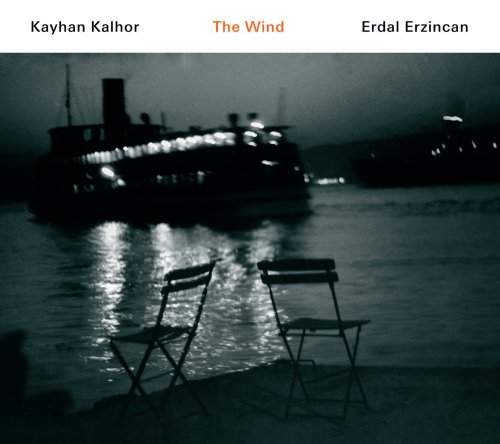
Kayhan Kalhor/Erdal Erzincan: The Wind (ECM 1981)

The Wind

The Wind

Kayhan Kalhor kamancheh
Erdal Erzincan baglama
Ulaş Özdemir divan baglama
Recorded November 2004 at Itü Miam Dr. Erol Üçer Studio, Istanbul
Engineer: Mustafa Kemal Öztürk
Produced by Kayhan Kalhor and Manfred Eicher

The Wind is a significant way station in the travels of kamancheh (Iranian spike fiddle) virtuoso Kayhan Kalhor and baglama (an oud-like Turkish instrument, also known as the saz) master Erdal Erzincan, who under its name are captured on record together for the first time. Ghosting them is Ulaş Özdemir, the musicologist who aided Kalhor in his search for musical material during research trips to Istanbul, and who plays the divan baglama (bass saz) almost like a tambura, stretching a droning sky across which the duo may fly.

Improvisation is of primary importance in Kalhor and Erzincan’s world of sound—so much so that the performance documented here feels like one long freeform variation, divided though it is into 12 parts.The baglama has a haunting insistence about it, which tills soil until Kalhor’s bow comes sprouting through. The latter seems at first like a trick of the ear, for its verbs conjugate by way of a most understated grammar. As it becomes more faithfully inscribed, gathering minnows and courage from every limpid pool, Kalhor’s spirit billows like parachute silk between elements, of which the album’s titular wind is but one of many. Every gust of air keeps him afloat, but also reminds us of the importance of rootedness. And all of this in the album’s first six minutes.

Part II moves in swaying patterns and, like much of what follows, practices the wisdom of restraint even at its most eruptive moments. From here, the album turns fragmentary, dialogic corners, ping-ponging motifs across a divine net according to subtler rules of play. Strum-heavy passages (Part IV) are balanced by holy unions (Part V), marking slow escalation into clouds near to bursting with melody. As territories expand, so too does the capacity for these musicians to breathe. An open circuit in search of a conductor, they unleash electrical charge from the friction of their dance. Erzincan’s fingerwork in Part X inspires Kalhor to just such a lightning bolt of expression, the overtones of which are almost deafening in their affect. Kalhor’s pizzicato action in Part XI spins a different cyclone before the bittersweetness of farewell sets us on our way.

Kalhor and Erzincan inhabit everything they play as bees inhabit a hive, wagging to invisible rhythms and joining the almighty hum that activates every soul to buzz its wings. What we have, then, is the honey.

Ghazal: The Rain (ECM 1840)

The Rain

Ghazal
The Rain

Kayhan Kalhor kamancheh
Shujaat Husain Khan sitar, vocals
Sandeep Das tabla
Concert recording, May 28, 2001, Radio Studio DRS, Bern
Recording engineer: Andy Mettler
Recording producer: Kjell Keller
Edited, remixed, and mastered at Rainbow Studio, Oslo by Kayhan Kalhor, Manfred Eicher, and Jan Erik Kongshaug
Album produced by Manfred Eicher

One cannot become full without first being empty.

In the presence of Ghazal, vicarious though it may be through the medium of a single album, things drain away. There is no excuse for distraction, no reason to hear this music as anything but a portal between states of mind and body. Kayhan Kalhor plays the kamancheh, an Iranian spike fiddle with a sound like the Byzantine lyra, and with it cinches horizons in a cosmic string game. Shujaat Khan plays sitar and sings. Khan comes from a long line of raga masters and has been featured on over 60 albums, though western listeners are most likely to have encountered him via Waiting for Love, released 1998 on India Archive Music. It is his deepest recording yet and one I was lucky enough to discover after buying it at a concert given by its tabla player, Samir Chatterjee. On the subject of tabla, one must acknowledge Sandeep Das, who since debuting at the age of 15 with Ravi Shankar has become one of the greatest living proponents of the instrument and who joins Kalhor and Khan in a timeless performance. Thus, Ghazal’s three sides blend two musical traditions (North Indian and Persian) with one purpose: to send you.

Recorded live in Berne, Switzerland, The Rain is divided into three long-form improvisations on traditional motifs, averaging 18 minutes each. “Fire” opens with a blush of sitar, a splash of sun on the well-worn path of the kamancheh’s tearful song. The expectation in Khan’s singing, indistinguishably potent through throat and string, marks that path with a mapmaker’s intuition. Khan’s voice is almost startling, providing that moment of satori on which everything hinges. Vocal cues are left intact, loosing the birds of Kalhor’s flights from their cages: signals born of moments yet predestined beyond all sense of time. In contrast, the tabla arises from the very earth, its skins mineral-rough against a backdrop of unforced biorhythms.

“Dawn” is a prayer for Kalhor, who awakens, stirring like the forest in early light and coaxing buds from their stems to broaden the promise of spring. His branches survive by means of their own photosynthesis, taking what they need from below to express themselves skyward. Khan’s singing spins air into filament, a thread without a needle unraveling from that seam where sky meets settlement. Such is the pond into which the stone of “Eternity” is dropped. Its ripples manifest a dialogue between heaven (Kalhor) and earth (Khan). The presence of tabla only makes the melodies freer, absolving words from their social sins. The fulcrum of this balancing act comes in the form of a chromatic undulation in the sitar that like a mountain is grounded yet untouchable, pointing toward the gaping mouth of silence from which it was born.

One cannot become empty without first being full.

Belonoga review in RootsWorld

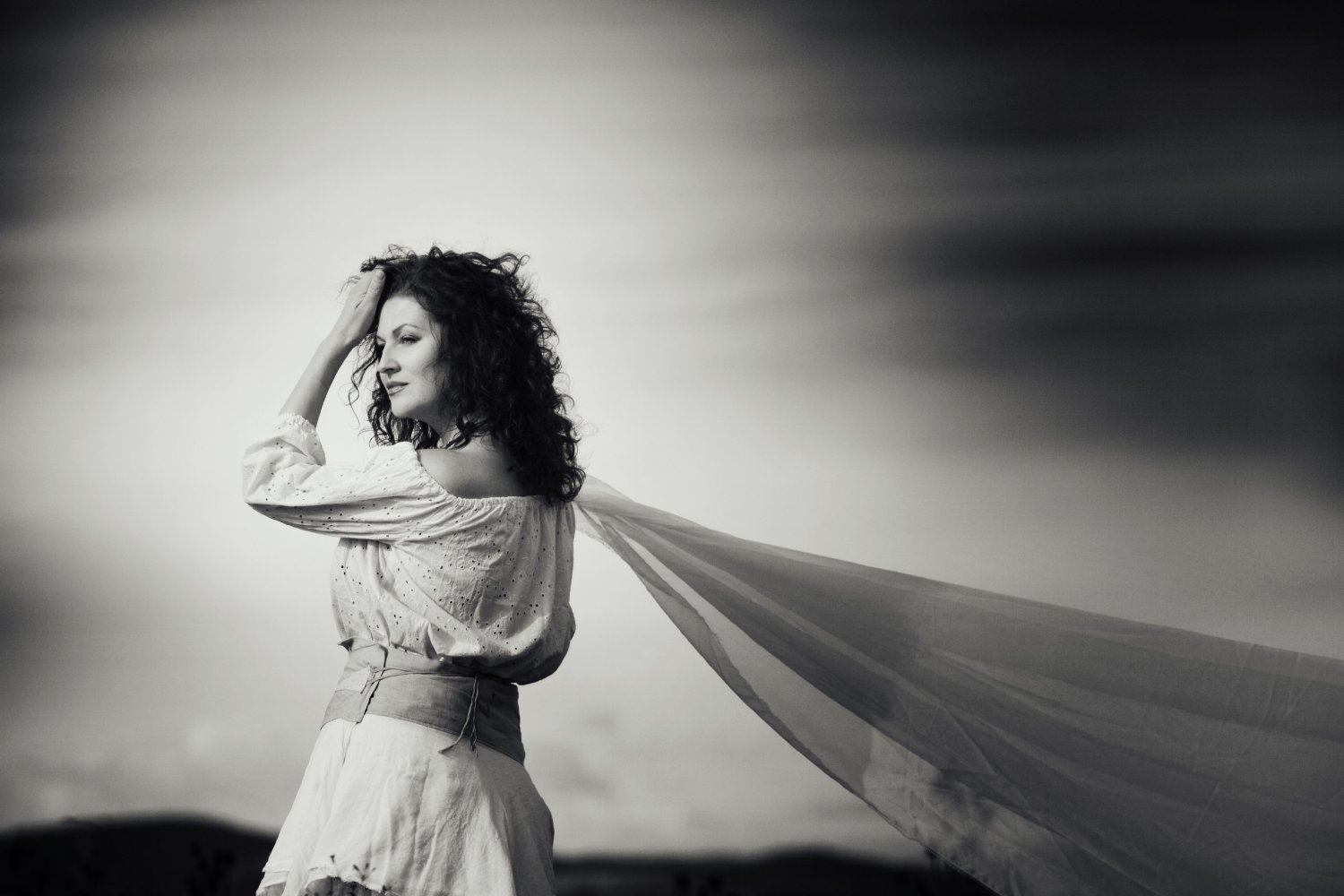
Fans of Le Mystere des Voix Bulgares won’t want to miss the latest album by one of its most distinguished members, Gergana Dimitrova.

Belonoga

Under the moniker Belonoga, she forges otherworlds by means of her studied voice, along with a group of dedicated musicians. The result is a potpourri of styles and traditions, with a fragrance just as intoxicating. Check out my review and listen to samples at RootsWorld here.

Through the Eyes of the Sun