

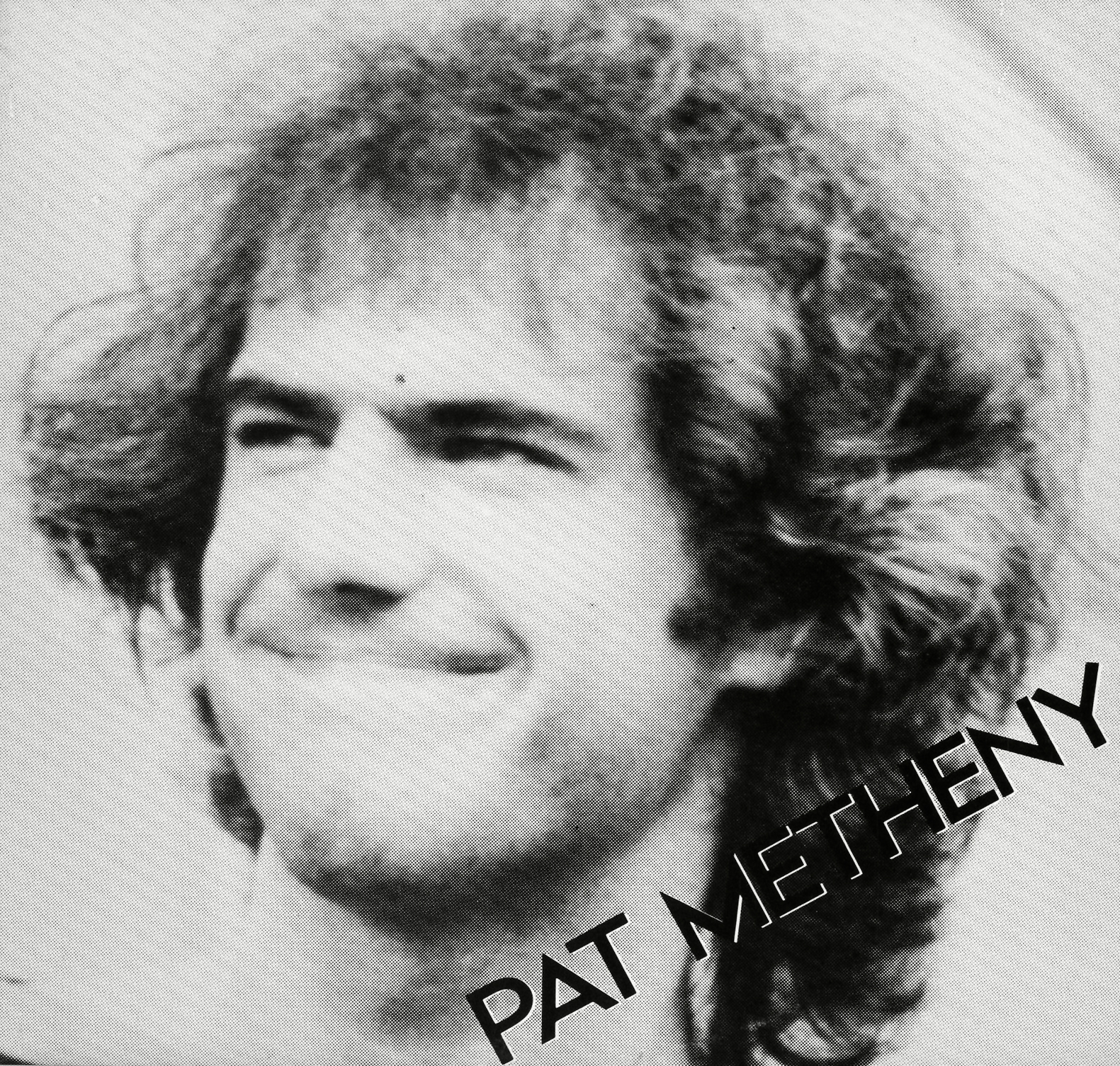
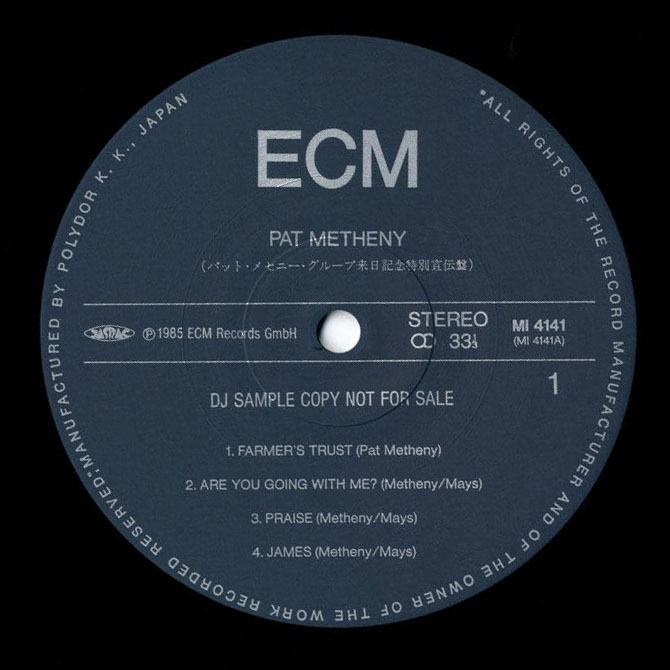
After going through the 10-volume Trio Records ECM Special series, we continue our journey through ECM rarities with another Japan exclusive, a DJ-use-only sampler from 1983. Released in anticipation of a series of Pat Metheny Group concerts held from October 3rd to 10th in Tokyo, Osaka, Shizuoka, and Niigata, it sketches a private map of expectation in melodies already searching for the venues that would receive them. The compilation begins, appropriately, with “Farmer’s Trust” from Travels, whose lyrical introduction opens in the nocturnal hush of bass and piano before brushed drums give the scene a tender pulse. Nana Vasconcelos’s percussion drifts through the edges with uncanny tact, allowing the music to inhabit both soil and apparition. The result is a threshold, not an overture, a place where realism learns to levitate without abandoning the ground.
“Are You Going with Me?” is the first of three tracks drawn from Offramp, each functioning as a pillar in the sequence, though this one feels more concerned with suspension than support. It begins in near-secrecy, wrapped in gentle sway and chordal lushness, before Metheny’s synth guitar pours a warm, liquid radiance across the widening field of sound. The instrument dilates, becoming a luminous nerve stretched across the horizon of the band’s collective imagination. That sensation deepens in “James,” which reaches its highest peaks behind closed eyes, since only the interior can contain its emotional acreage. Steve Rodby’s bass is vital to the group’s robust sound, grounding the ecstatic ascent with a pulse both generous and exact. His presence meshes beautifully with Metheny’s lead lines and Dan Gottlieb’s crystalline drumming, while Lyle Mays, ever the architect of internal skylines, turns his protracted solo into a room whose walls keep moving outward. “Eighteen” introduces a more animated charge, its upbeat undergroove threaded with tasteful synth work from Mays beneath Metheny’s restless brightness.
Two tracks from First Circle also make an appearance, broadening the sampler’s emotional geometry. “Praise” carries an atmosphere of loving affirmation, one so abundant that the tune seems to step beyond optimism into a stranger province, where sincerity becomes almost avant-garde by virtue of its refusal to apologize. Pedro Aznar’s wordless vocals intensify the nostalgic charge with an affection that never curdles into sentimentality. “Yolanda, You Learn” extends this radiance with shinier contours and a buoyant sense of motion, while the title track from American Garage brings a rougher grain to the proceedings, adding swagger and dust. Gottlieb commands the spotlight here, driving the music through its changes with muscular precision. Even at its most exuberant, the band retains its elegance, that rare ability to make propulsion feel hand-carved.
Rounding out the collection is “Phase Dance,” from the Pat Metheny Group’s self-titled debut. With characteristic wit and serious chops, the melody works its way into the head and heart while refusing to settle for either address. There is a longing here for fragile continuities, for vernacular threads stretched across distance and given the dignity of speech. The group rarely sounded more subtly cohesive than it does in this music, where each instrument seems aware of the others through some deeper telepathy of form. Heard in the context of this sampler, “Phase Dance” becomes the earlier inscription beneath the later map, the buried ink that explains why the whole journey was ever begun.
What makes this sampler so compelling is not only its rarity, nor even its usefulness as a promotional artifact from a specific moment in time. Its value lies in how it compresses a band’s evolving language into a single sequence without making that language feel summarized. Metheny’s guitar often appears to lead, yet the music’s true protagonist may be the space between the players, where discipline turns into mercy and virtuosity forgets its own reflection. The strangest thing about this sampler is that it was made for use, but survives as a relic of readiness. It reminds us that some music does not belong to performance or memory alone. It belongs to the instant before arrival, when a destination has not yet become an event, and the map, still folded, already knows the shape of the hand.
 Between Sound and Space: ECM Records and Beyond