Front and Tenor: Redman/Mehldau Duo Live Report

Joshua Redman / Brad Mehldau Duo
Bailey Hall, Cornell University
October 16, 2011
8:00 pm

Two peas in a pod. Cut from the same cloth. Peanut butter and jelly. Use whatever fatigued cliché your heart desires, but none comes close to describing neither the synergy, nor the marked shades of difference, shared by saxophonist Joshua Redman and pianist Brad Mehldau. Born a year and a half apart on opposite sides of the country, these two prodigious musical lives first converged in New York City in the nineties, when they began testing their musical conductivity in Redman’s early quartet. As a son of the great Dewey Redman, Joshua doesn’t so much live in his father’s shadow as throw a light on it. Having been raised by his mother, he grew up a step removed from the legacy into which it is so tempting to place him. But Redman sees himself foremost as a listener, not a protégé, and it shows. Music has always been for him, quite simply, a release, the surest way to unmitigated expression.

Mehldau is in no greater need of introduction, having ploughed a fertile sonic path whose lush crops bear little resemblance to those of a world filled with wilting farmlands. Whereas his recent Birdland live joint for ECM with legends Lee Konitz, Charlie Haden, and Paul Motian showed a penchant for sparkling and open paths, tonight he detoured into far more secluded glens. His notable flipping—playing ostinatos in the right hand and providing “bottoms” with the left—worked its selective magic on a couple of tunes, but for the most part flitted comfortably through the back alleys of expectation.

In the long run, however, one wonders just how significant these biographical details are, for perhaps the best communication we can offer is the listening ear—one that hangs, suspended in the darkness of the concert space, and gives in return the voice of its appreciation, not speculation. Take Mehldau, for example, who has been much praised for his eclectic palette, which includes healthy daubs of jazz, pop, and classical alike. Yet these idioms, too, seem arbitrary when caught in the throes of the music into which they are blended. What matters is not where these paints come from, but that they share the same canvas.

It was in this vein that, from those first few notes at the piano, the expanse of Bailey Hall collapsed under Mehldau’s touch, his right hand at full sail from the mellifluous and living wind of Redman’s tenor—so that by the time they reached their second number, the continent was already far behind us. Here, it was as if Redman had ended their last by drawing in a lungful of the tenor’s fog and exhaling it through this ballad’s cool, shipwrecked soprano, while hints of dawn flowered in the lovely, reflective trades on keys. As the music’s architecture intensified, “mesmerizing” was hardly the word. The following tune opened with a tenor lick so slick, there was no point in trying to stand upright. Though somewhat more fractured this time around, Mehldau found traction in a left-handed lead as his right adroitly negotiated two independent lines. After the crystalline highs of the soprano’s final appearance, Redman floated his signature tenor on a wave of velvety arpeggios. These haunting swaths of gorgeousness left us little prepared for an equally enthralling Nirvana medley, which showed Redman at his most animated, Mehldau at his most expansive. Night fell once more in their final piece, the piano lines of which had every mind attuned, and where Redman’s solo filled the hall with smoky caramel. The duo encored with a chromatic knot, unraveled with the utmost sincerity. Mehldau’s Brazilian influences crept through his soloing before bringing us back to shore via an amusing yet moving exchange with his partner.
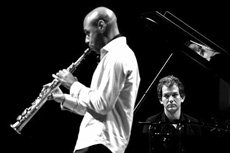
Titles were announced after the fact, but were unnecessary when in the presence of music that was nothing if not already sufficiently interpretable. Like air, their nourishment was invisible and ungraspable by the word, a sound-world in which multiplicity was the language of the moment. By the same token, one could hardly deny the conversational aspect of their playing, for at times details—an ascending motive here, a trill there—joined forces with downright clairvoyant synchronicity. And yet, whenever the two reconvened after their soloing, theirs was never a simple, obligatory recapitulation of the theme, but rather an evolved (and evolving) splitting of light into its hidden colors.

Rarely have I heard such affecting tenor playing. The plasticity of Redman’s notecraft was a vital component of his performance. He explored some of the instrument’s darkest corners, sweeping away the gravel at the bottom of its bell and exposing the burnished surface beneath. His lows were as selective and as artful as those of Mehldau, who positively clarified the already buttery house Steinway. Both were as into each other as we were, and their body language in this respect was a treat to witness.

As a self-proclaimed “apolitical artist,” Redman creates a safe sonic space and, with Mehldau and others, has contributed significantly to his generation’s playbook. His is an ongoing conversation without walls, without message, without agenda. His genius lies in his humility, and in his openness to working with visionaries like Mehldau. And sure, all of the above may be dismissed as shameless pandering by the starry-eyed young listener and newly aspiring jazz saxophonist that I am…that is, unless you were there.

(See this article in its original form at the Cornell Daily Sun.)
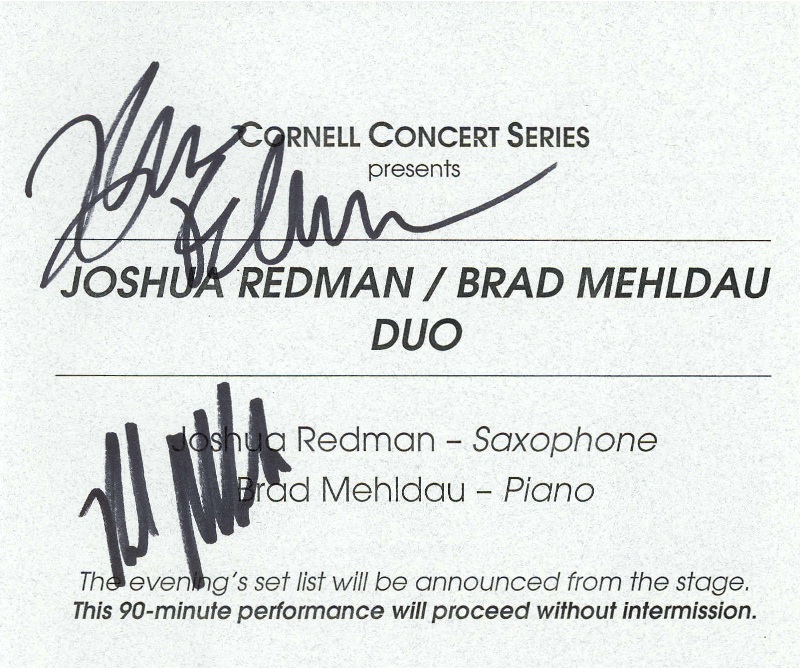

Signed program

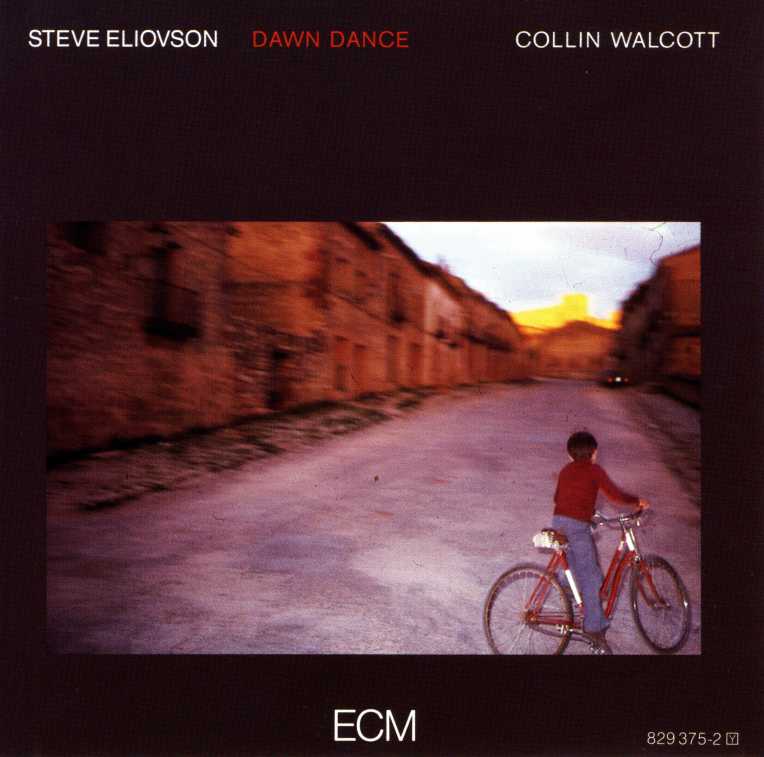
Steve Eliovson: Dawn Dance (ECM 1198)

ECM 1198

Steve Eliovson
Dawn Dance

Steve Eliovson acoustic guitar
Collin Walcott percussion
Recorded January 1981 at Tonstudio Bauer, Ludwigsburg
Engineer: Martin Wieland
Produced by Manfred Eicher

This album is something of a legend in the annals of ECM lore, as it was the only ever recorded by the fantastically talented Steve Eliovson. With Collin Walcott on percussion for support, the since unheard-from guitarist carves lasting impressions that can now be thankfully heard on CD. The experience begins in “Venice” (as in California), where the guitar speaks with tabla like two continents connected by tectonic plates beneath an ocean. Eliovson’s sonorities are pristine, especially in “Earth End” and in “Slow Jazz,” where the precision of finger placement and the occasional bent note add a soulful turn of phrase. The album’s portal is “Awakening,” a submarine communion of gongs that closes one door while opening another. The title track is buoyed by a glimmering triangle and arpeggios from an internal guitar, while the external speaks in tongues with the various percussive accents that flit in and out of its view. “Song For The Masters” and “Wanderer” share likeminded ostinatos, more flexible melodic leads, and the occasional sitar-ish twang. The unambiguously titled “Africa” seems to prance across the map on which we opened, the all-steel sound visceral and true. Two gorgeous closers—“Memories” and “Eternity”—whisper their promises like secrets, falling with the autumn leaves into seasons as yet unnamed.

Sparse anecdotal evidence paints of Eliovson the portrait of a regretful artist, a man who was compelled to sell his worldly possessions (including the instruments of his trade) and return to his native South Africa. Yet we can also take pleasure in knowing that he left this one document, a jewel of quiet magnificence. Better to have been given this single completed journey than a series of false starts.

<< Meredith Monk: Dolmen Music (ECM 1197 NS)
>> Katrina Krimsky/Trevor Watts: Stella Malu (ECM 1199)

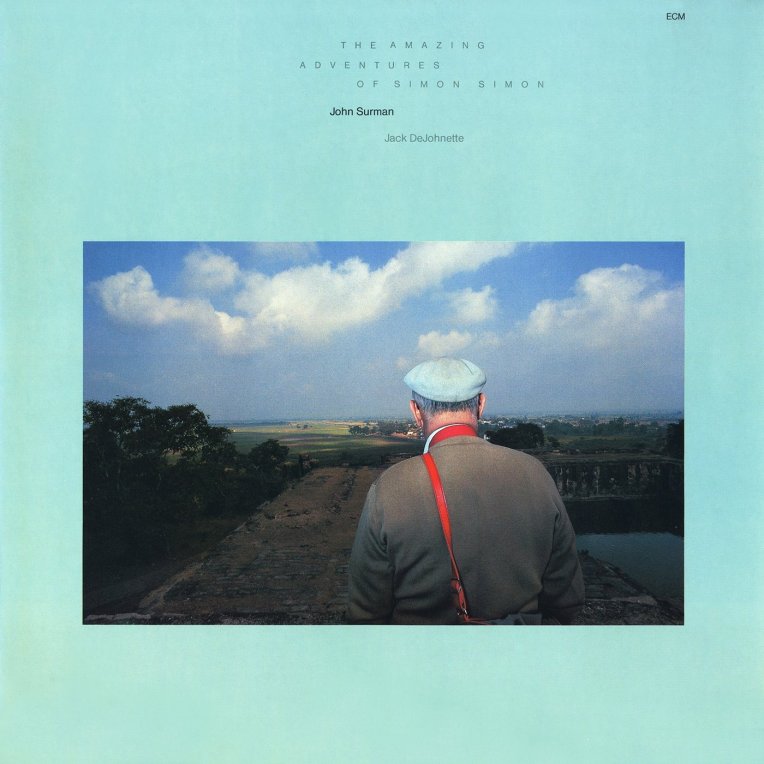
John Surman/Jack DeJohnette: The Amazing Adventures Of Simon Simon (ECM 1193)

ECM 1193

John Surman
The Amazing Adventures Of Simon Simon

John Surman soprano and baritone saxophones, bass clarinet, synthesizer
Jack DeJohnette drums, congas, electric piano
Recorded January 1981 at Talent Studio, Oslo
Engineer: Jan Erik Kongshaug
Produced by Manfred Eicher

When reviewing jazz albums, I tend to abbreviate the word “saxophone” as “sax.” Yet somehow, when describing the music of John Surman, only the full spelling seems appropriate, for he as well as anyone fleshes out the inner architecture of the instrument in whatever form it may assume in his proficient hands. One might say likewise about drummer Jack DeJohnette, whose array of talents fully arches the backbone of the eight originals and one folk tune (the arboreal “Kentish Hunting”) on this curiously titled album. A delicate sequencer washes over us first in “Nestor’s Saga (The Tale of the Ancient)” along with bass clarinet amid awakening drums. Such tonal contrasts are a running thread through “Merry Pranks (The Jester’s Song),” “The Pilgrim’s Way (To The Seventeen Walls),” and the lumbering “Within The Halls Of Neptune.” Like some lost klezmer dream, floating on illumined clouds, these tunes step over vast plains before setting foot upon mountaintops. The finest moments are to be found in the soprano work, featured to varicolored effect in “The Buccaneers” and most engagingly in “Phoenix And The Fire.” DeJohnette holds his hands to the pianistic fire in “Fide Et Amore (By Faith And Love),” each chord a glowing ember beneath the bare feet of Surman’s baritone. “A Fitting Epitaph” mixes two drops of clarity for every one of forlornness and leaves an airy aftertaste in the sequencer’s final rest. This first in a continuing collaboration between two of ECM’s finest has aged well and is a good place to start on this intriguing duo.

<< Rypdal/Vitous/DeJohnette: To Be Continued (ECM 1192)
>> Goodhew/Jensen/Knapp: First Avenue (ECM 1194)

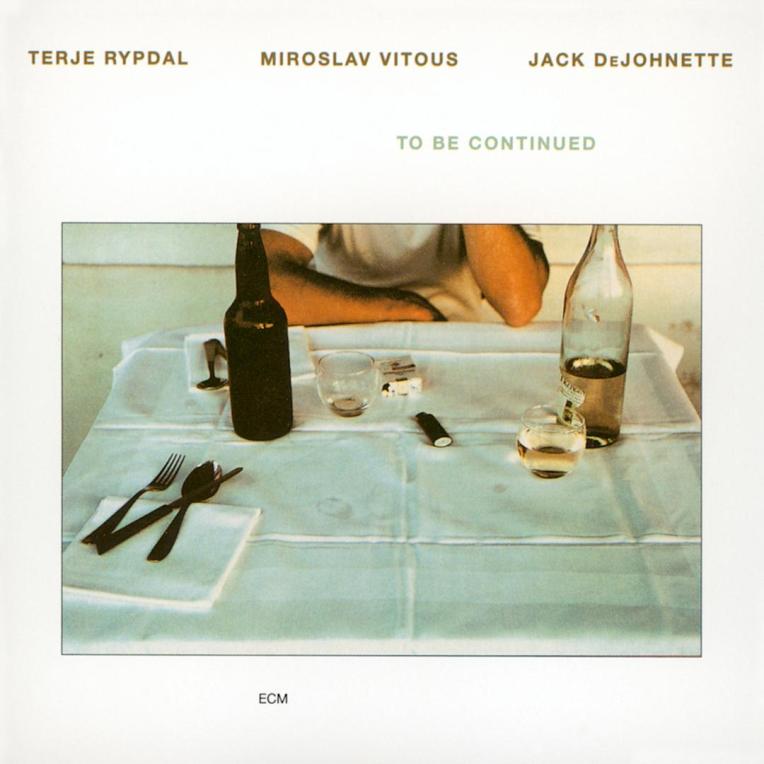
Rypdal/Vitous/DeJohnette: To Be Continued (ECM 1192)

ECM 1192

To Be Continued

Terje Rypdal electronic guitars, flute
Miroslav Vitous acoustic and electric bass, piano
Jack DeJohnette drums, voice
Recorded January 1981 at Talent Studio, Oslo
Engineer: Jan Erik Kongshaug
Produced by Manfred Eicher

Nearly three years after their first collaboration, Terje Rypdal, Miroslav Vitous, and Jack DeJohnette unwrapped the ghostly sunset that is To Be Continued. The most spine-tingling moments therein thrive at half the speed of life. The intensities of “Maya” must be heard to be believed, for in them we see the night sky in negative image. Likeminded pulchritude prevails in “Topplue, Votter & Skjerf” (Hat, Gloves & Scarf), easily one of Rypdal’s most awesome committed to disc. His hands fade as soon as they are laid, leaving only the trace by which he elicits every note.

Don’t be mistaken, however, in thinking this is another lazy morning session. Rather, it dances to the tune of DeJohnette’s propulsion in “Mountain In The Clouds,” to say nothing of Vitous’s fanciful colors in the title track. For “This Morning” in particular, crosshatched by electric bass and flute, DeJohnette seems to want to draw the others into more finely grained conversations, only to get pixilated versions thereof. Yet these unformed images allow us to supply our own dreams, so that by the time we reach the haunting “Uncomposed Appendix,” in which he sings with and through his piano, we are already converted.

Though the album is brimming with sharp production and electronically enhanced instruments, there is something purely elemental about it. Its stew of metal, wood, and air wafts like the scent of plane trees in summer and leaves a taste of copper in the mouth.

<< John Abercrombie Quartet: M (ECM 1191)
>> Surman/DeJohnette: The Amazing Adventures Of Simon Simon (ECM 1193)

Pat Metheny & Lyle Mays: As Falls Wichita, So Falls Wichita Falls (ECM 1190)

Pat Metheny
Lyle Mays
As Falls Wichita, So Falls Wichita Falls

Lyle Mays piano, synthesizer, organ, autoharp
Pat Metheny electric and acoustic 6- and 12-string guitars, bass
Nana Vasconcelos berimbau, percussion, drums, vocals
Recorded September 1980 at Talent Studio, Oslo
Engineer: Jan Erik Kongshaug
Produced by Manfred Eicher

Listening to any Pat Metheny album for the first time is like finding a long-forgotten photograph, interleaved in a dusty book marked to the brim with the marginalia of a past life. And just when one thinks that feeling might dull over time, Metheny whittles from the vast block of wood that is his genius a masterpiece like As Falls Wichita, So Falls Wichita Falls, on and through which the Missouri-born guitarist begins to expand his reach to “global” proportions. His Instrument—with a capital “I”—and his playing of it define supernovas of emotional distance in the most compact lines. From these he unspools spectrums upon spectrums.

Where many of his albums might open with a shout of joy, a heavy acoustic rhythm, or a sweeping grandeur, the 20-minute title track’s genesis lies in the ambience of a field recording. We hear a crowd, a voice chanting taals, the rasp of shakers. Thus (dis)located, Metheny begins to map this human web through the drone of Lyle Mays. Only then, from thunderous rumblings, does his slack guitar take our hand and lead us through the crowds. With a drum machine at his side, Nana Vasconcelos clothes us in local colors. The electronic accents and attentive sense of evocation evoke Steve Tibbetts as the band coalesces into a shimmering, autoharp-laden catharsis. Riding a leviathan of strings, a voice recites numbers, as if in code. With the sounds of children at play still in our ears, the upbeat “Ozark” crests into the wave of extroverted Americana that is Metheny’s standby. Mays at the keys makes this stage, gliding effortlessly along a landscape tessellated by a rainbow of impressions. “September Fifteenth” is as intimate as the last is expansive, a prayer for Bill Evans, who left us on the selfsame date while the album was in session. The pianism of Mays (for whom Evans was a formative influence) could hardly be more fitting. To be sure, it glitters like the rest, only this time with the beads of falling tears. The title of “It’s For You” lends delight to the cover montage. If its colorful combination of sounds is meant to brighten our mood after the mournful turn that precedes it, then it certainly does the trick. Metheny’s signature electric traces in silhouette every footprint leading into the mystical shores of “Estupenda Graça,” where he sketches for us a more diffuse version of street on which we began.

Some have remarked on the “regrettable” cover art and the title that brands it, but I for one believe it to accurately illustrate Metheny’s process. Making or receiving a phone call is a form of travel in itself, for those precious moments of communication seem to collapse the two spaces that both speakers inhabit. And which of us has not, when experiencing something sonically profound, held up a phone so that the person on the other end could get some sense of the experience? “It’s For You” isn’t just a catchy phrase; it’s a thank you for the listener.

<< Jack DeJohnette’s Special Edition: Tin Can Alley (ECM 1189)
>> John Abercrombie Quartet: M (ECM 1191)

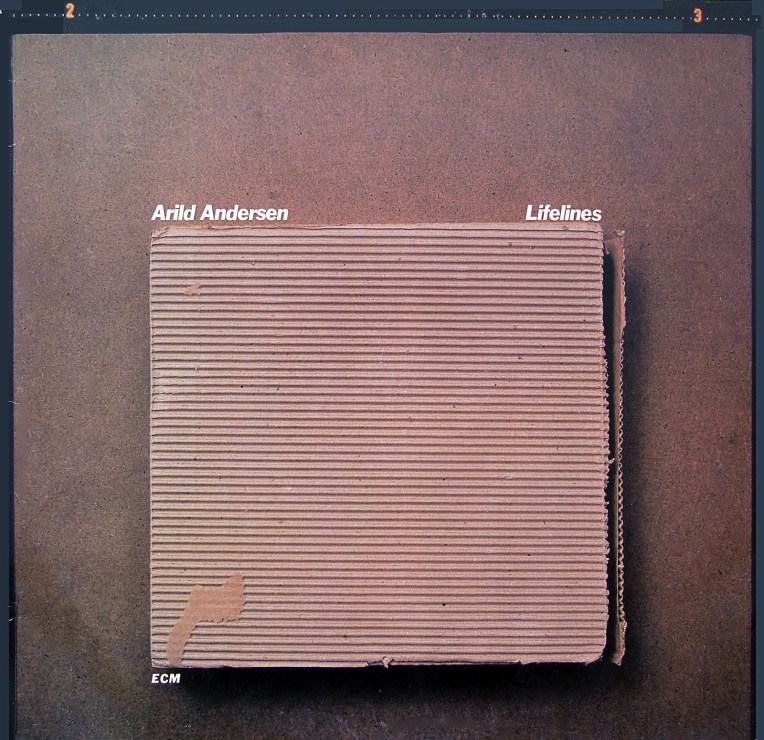
Arild Andersen: Lifelines (ECM 1188)

ECM 1188

Arild Andersen
Lifelines

Arild Andersen double bass
Kenny Wheeler fluegelhorn, cornet
Steve Dobrogosz piano
Paul Motian drums
Recorded July 1980 at Talent Studio, Oslo
Engineer: Jan Erik Kongshaug
Produced by Manfred Eicher

After an explosive introduction, Arild Andersen’s Lifelines kicks us like a soccer ball down the field of “Cameron,” where we are intercepted by Steve Dobrogosz’s swirling keys. Into this hammered storm, Andersen drops his bass, keeping us centered in this staggering opener. And staggering this album most certainly is, resting on a fine edge of airtight cohesion and loosened seams. We find more of the same in the loveliness of “Dear Kenny” and in “A Song I Used To Play,” both teetering on a line drawn to Andersen’s careful scale. Even the ballads seem to flirt with a great precipice. Falling from the haloed clouds of “Prelude” and into the depths of the two-part title piece, we find ourselves smack dab in Enrico Rava territory. The album’s highlight comes in the form of “Landloper,” a 50-second bass solo that sparks the inner fire of “Predawn.” In keeping with his penchant for optimistic endings, Andersen gives us “Anew.” Paul Motian is delightfully frenetic here and matched by Dobrogosz’s erratic song, veiled only by the sustain pedal’s illusory veneer.

What moves me most about Andersen’s approach to the bass is his ability to hold onto a quiet heart even at his most ecstatic moments. Like ECM’s other great veteran, Charlie Haden, he always keeps himself firmly rooted in the melody. Wheeler and Motian prove loyal allies, regaling us like wizened elders with tales of old. The real star of this date, however, is Dobrogosz. In his only ECM appearance, the American-born pianist (now a longtime resident of Stockholm) seems as if he could expound for hours upon every motif and never repeat himself. He is the kindling that keeps this music burning, slow-roasting it to irresistible succulence.

<< Rainer Brüninghaus: Freigeweht (ECM 1187)
>> Jack DeJohnette’s Special Edition: Tin Can Alley (ECM 1189)

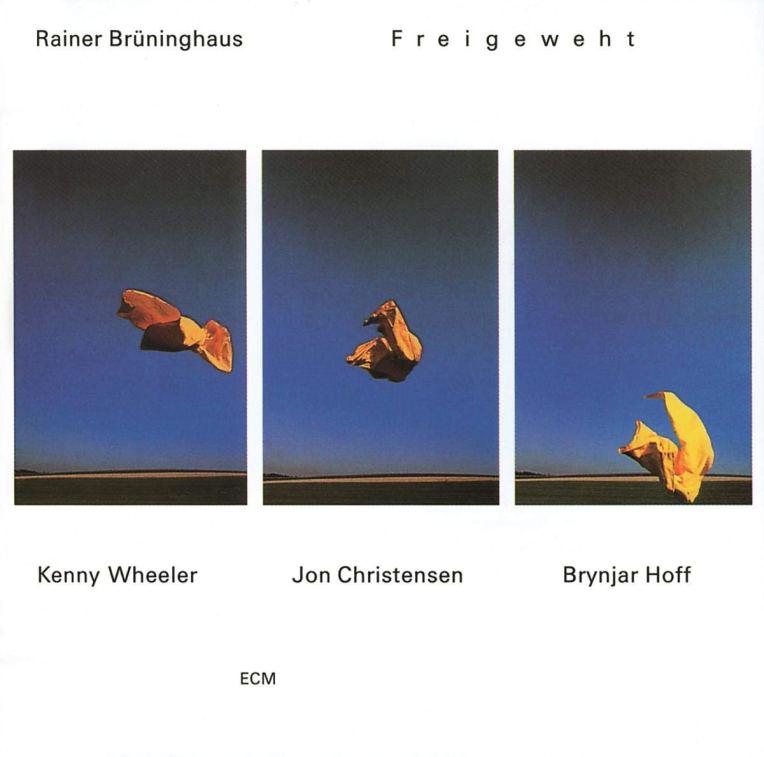
Rainer Brüninghaus: Freigeweht (ECM 1187)

ECM 1187

Rainer Brüninghaus
Freigeweht

Rainer Brüninghaus piano, synthesizer
Kenny Wheeler fluegelhorn
Jon Christensen drums
Brynjar Hoff oboe, English horn
Recorded August 1980 at Talent Studio, Oslo
Engineer: Jan Erik Kongshaug
Produced by Manfred Eicher

After bringing his Midas touch to the projects of Eberhard Weber, it was only a matter of time before Rainer Brüninghaus would be given an opportunity to lead, and did so at last to soaring effect on Freigeweht (Set Free by the Wind) with a group of sympathetic musicians and a compositional aptitude to match. Over the space of six fairly extended pieces, we find the keyboardist in many facets. Whether it’s sharing rhythmic savvy with Kenny Wheeler in “Stufen” (Steps) or swapping runes with Brynjar Hoff on English horn in “Die Flüsse hinauf” (Upstream), his hands abide in every blissful moment. Brüninghaus also makes orchestral use of synthesizers, especially in the airborne “Spielraum” (Elbow Room) and “Radspuren” (Wheel Marks). Wheeler’s chromatic soloing throughout only underscores the feeling of flight, even as a rolling pianism cascades as if down the throat of a thirsty deity. Hoff’s oboe shares the ghostly body of “Täuschung der Luft” (Air Illusion) with a mounting drone, reborn in the sequenced arpeggios of the title track, on which we end. The oboe’s magic abounds, married to its surroundings by Wheeler’s irresistible binding force. As widely cast as Brüninghaus’s net is, the interactions with Jon Christensen delineate his art in clearest relief. These alone are the album’s DNA.

Admirers of Tim Story will find much to please the ears here, as well as be delighted by the gilded edges of improvisatory bliss that only ECM can bring. This is intensely imagistic music that is tangible enough to hold and lose ourselves in slumber.

<< Eberhard Weber Colours: Little Movements (ECM 1186)
>> Arild Andersen: Lifelines (ECM 1188)

Miroslav Vitous Group: s/t (ECM 1185)

1185 X

Miroslav Vitous Group

Miroslav Vitous bass
John Surman soprano and baritone saxophones, bass clarinet
Kenny Kirkland piano
Jon Christensen drums
Recorded July 1980 at Talent Studio, Oslo
Engineer: Jan Erik Kongshaug
Produced by Manfred Eicher

This grouping finds Miroslav Vitous in the company of fine musicians, whose idiosyncratic strengths manage to avoid conflict for an unusually engaging, if inconsistent, set. The Czech bassist’s opening tune, “When Face Gets Pale” grasps the tail of a strong melodic serpent, riding through tall grasses and intermittent sunlight. Along with the lively, Arild Andersen-like lead, we are treated to the animations of Kenny Kirkland at the keys—a sound so burnished that the squeal into being of John Surman’s baritone becomes a rupture to be cherished. A fine place to start. Yet unlike many ECM albums, which begin enigmatically before launching into more patently composed material, this is the other half of that swinging door, starting with a full-on group-oriented sound and unraveling itself inside the freer improvisational architecture of “Second Meeting” (and, later, of “Interplay”). Here, bass clarinet is front and center and plays patty-cake with the rhythm section amid some bubbling pianism. Of the latter, we get more in the Kirkland original, “Inner Peace.” Between bass volleys and fluid gestures, Surman’s throaty baritone again paints its corroded beauty across the sky. Everything Surman touches is beautified, and in his one compositional contribution, “Number Six,” we find the album’s most enchanting cartographies. His soprano grabs hold and never lets go for the duration of its wailing journey, while also giving Kirkland plenty of bounce for a swan dive. Vitous, meanwhile, shows just how nimble he can be in “Gears,” while in “Eagle” his classical training comes forth in fluid arco lines.

Though seemingly at odds with critics, and understandably so for its few false steps, this out-of-printer is still solid. By no means essential, but neither one to pass up should the opportunity present itself.

<< Gary Burton Quartet: Easy As Pie (ECM 1184)
>> Eberhard Weber Colours: Little Movements (ECM 1186)

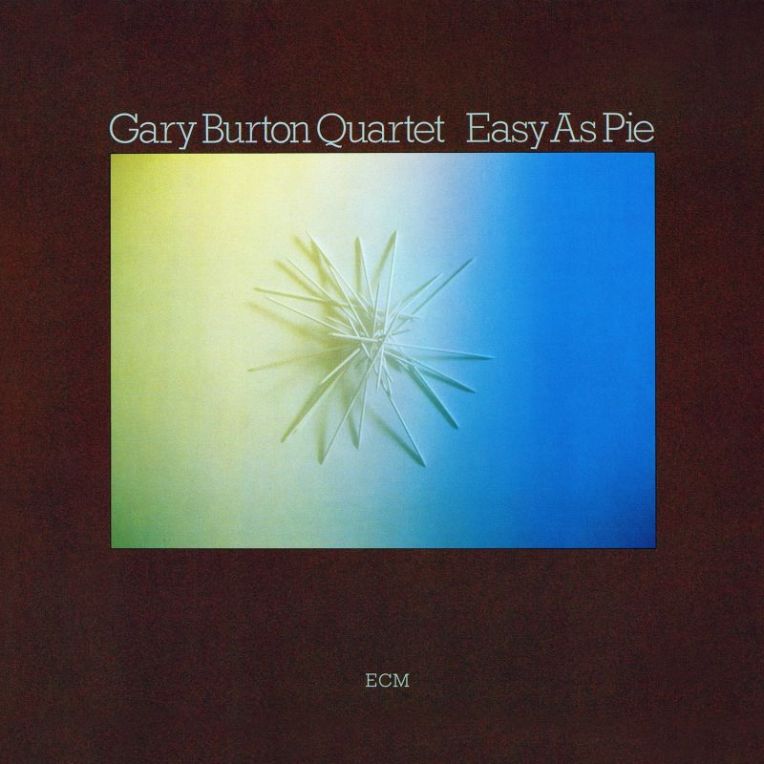
Gary Burton Quartet: Easy As Pie (ECM 1184)

ECM 1184

The Gary Burton Quartet
Easy As Pie

Gary Burton vibraharp
Jim Odgren alto saxophone
Steve Swallow bass
Mike Hyman drums
Recorded June 1980 at Tonstudio Bauer, Ludwigsburg
Engineer: Martin Wieland
Produced by Manfred Eicher

Gary Burton’s involvement in any project guarantees smoothness and melodic robustness, and Easy As Pie is no less promising than one would expect from the mallet master. As the title may imply, the results are generally laid back, but ever virtuosic. From the first licks of “Reactionary Tango” (Carla Bley) we get a taste of the banquet about to be laid before us. Jim Odgren shines on reeds the pages of this developing story, snipping from them a string of paper dolls. As one is swept away by the strains of “Summer Band Camp” (Mick Goodrick)—a fantastic piece that first appeared on the composer’s In Pas(s)ing—one notices just how integral Odgren is to the overall sound. “Blame It On My Youth” (Oscar Levant) is emblematic of what Burton does so well, capturing moments and memories as if in snapshots of living sound. In this solo piece, he sews that feeling of nostalgia into every motivic cell of activity. And further in “Isfahan” (Strayhorn/Ellington), a smoky ballad with plenty of shadow in which to luxuriate unseen, Burton turns that shadow into liquid gold in the throes of his soloing. Just so this joint doesn’t weigh us down with too much dark energy, two Chick Corea tunes, “Tweek” and “Stardancer,” give us plenty of beat to chew on and highlight Steve Swallow’s unstoppable groove. Between the kaleidoscopic drum solo from Mike Hyman and Odgren’s storybook endings, there is more than enough color to go around.

The members of Burton’s quartet work like kilned clay, which must be scored before being fit together to survive the heat with which it is imbibed. If this is dinner jazz, then prepare to be stuffed.

<< Corea/Burton: In Concert, Zürich, October 28, 1979 (ECM 1182/83)
>> Miroslav Vitous Group: s/t (ECM 1185)