Dreaming of Waking: Moments in Time with Muriel Louveau

Oh, come to me in dreams, my love!
I will not ask a dearer bliss;
Come with the starry beams, my love,
And press mine eyelids with thy kiss.
–Mary Wollstonecraft Shelley

Disrupted: that is what we are at this moment in history, a time when roads extending from places both dark and bright cross in a divisive tangle of possible avenues. In such a mess, it can be difficult to know which trajectory to follow, which promises hold water, and which means of metaphorical transportation will get us to a place of rest. Music, however, has offered and sustained a viable way of navigation, if only because its territories are more often intangible and therefore primed for the lanterns of interpretation. Wherever we choose to hang those lanterns, we know there will always be shadows hungry for their illumination.
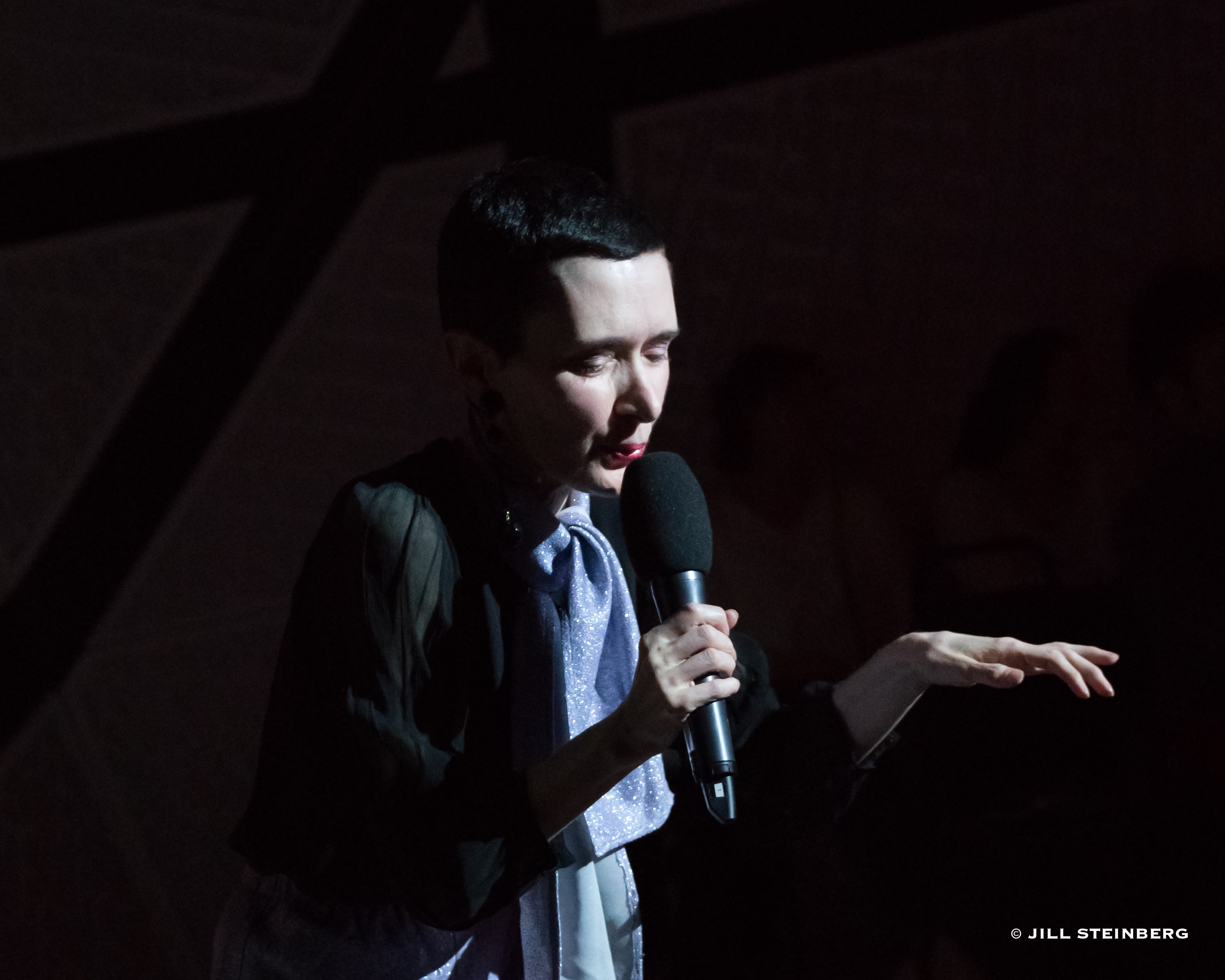
This is what it feels like to wander the nuances of The Waking Dream, the latest album by French singer Muriel Louveau. Based in Paris, Louveau grew up on a farm in Brittany, where she dove into fascinations with literature, singing, and poetry. Having since worked in a variety of mediums, including theatre, modeling, and music, she has treated every stage of development as an opportunity for self-reflection and, more importantly, development of a language uniquely hers. Thus, her vocal work takes on as much in the way of the body as of the soul. Regardless of her chosen outlet, music has always been the blood of symbiosis running through its veins.

Although Louveau’s influences range from Kathleen Ferrier to Le Mystère des Voix Bulgares, the flora she cultivates can be found in no other soil. I recently spoke with her via video chat to gain insight into the multifaceted lens through which she views the world and her place within it. To the question of what currently defines her as a singer, she professed her love of poetry. With all the question marks hanging over our future, it’s one place she can find answers—or, at the very least, more productive interrogations. Her latest album is, in fact, inspired by the writings—poetic and otherwise—of Mary Shelley, whose Frankenstein was penned in 1816, a “year without summer” beset by famine, global pandemic, and the eruption of Mount Tambora in Indonesia.

In addition to quoting Shelley, Louveau weaves extra-linguistic impulses, drawing breath through throat like thread through needle in ambient environments—not necessarily to connect the then and the now, but as an empathetic process. One feels this sense of unease (if not also disease) acutely in the album’s two “Incantations,” wherein water and machinery serve their purposes as the connective tissue of experience. Held in the embrace of a rhythmic chirr, her singing evokes physical contact to relay metaphysical messages (or is it the other way around?). Dancers Mei Yamanaka and Emily Pope have internalized this music to delineate the realm of the self as palimpsest for natural wonder:

“Les Limbes” likewise treats the voice as gravity-laden and the corporeal self as buoyant, turning the vagaries of human experience into a reflection of their own inability to articulate mourning. Hence “Mirroring,” in which the ink of mortality runs dry on the paper of its denial.

“Making this album had a cathartic function for me,” says Louveau. “It was a work of transition, connected to this moment. While the material existed in some form before the pandemic, as I wrote, I took it as an opportunity to dive deeper and explore my fears. Sometimes, artists can have intuition, and in my case it was about feeling tragedies. What pushed me to complete and release this album was the loss of my mother last year. The tsunami of grief that followed prepared me: there was a synchronicity to this loss and external events.”

If fear of pandemic is internal, then this album reflects that inner experience as a mode of living. In “Silent Steps,” for example, Louveau’s breath acts as a cyclic presence, the very foundation of cognizance. Melodies whisper as if to mock us with their unrequited song, a typewriter no longer functioning and thus left to embrace the solitude of quarantine. Even the birdsongs in “What is a poet?” turn the forest into a mirror rather than a doorway, so that we are left regarding our own reflections as reminders of the rivers at our backs.
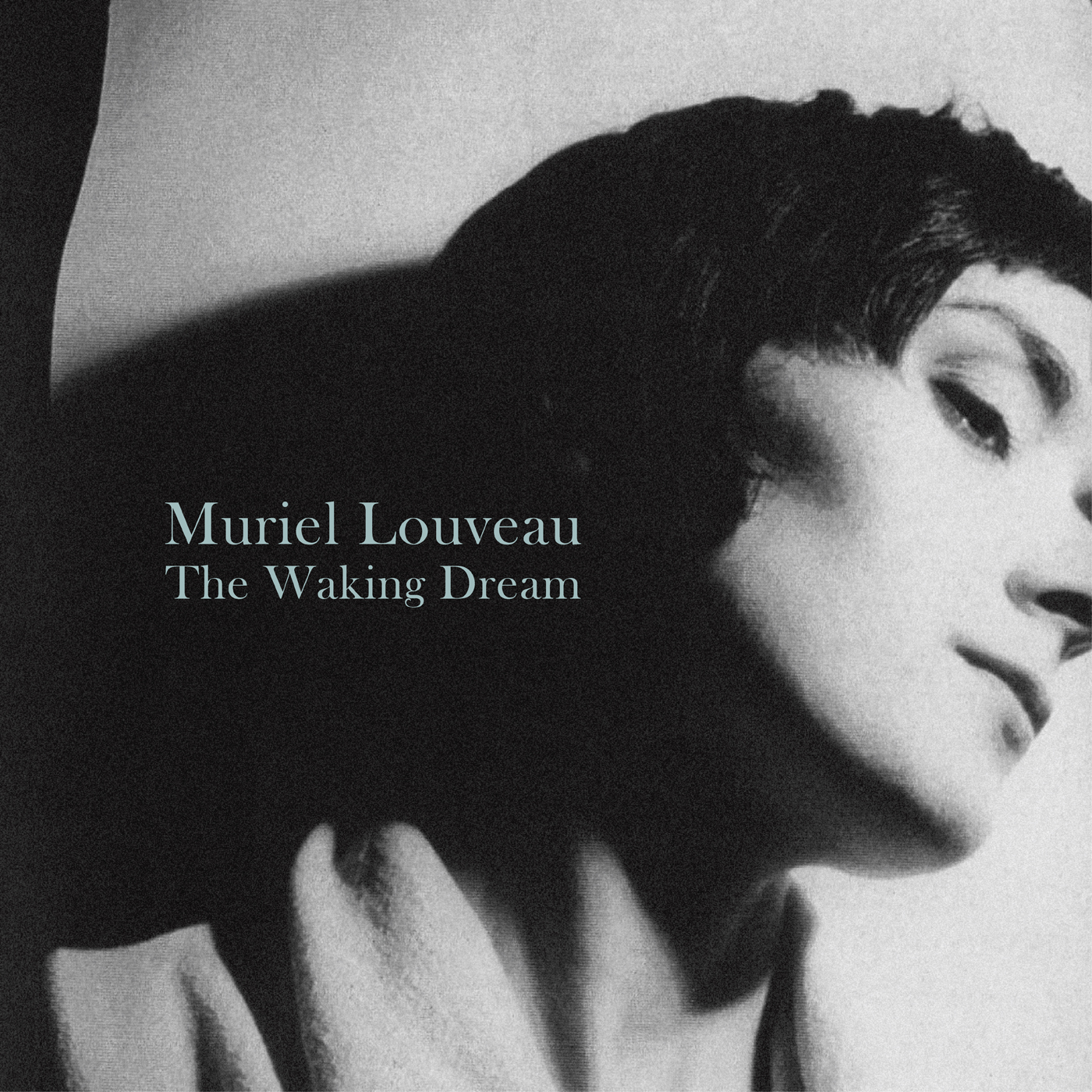
As Louveau says of the creative process, “I sometimes have these premonitions in dreams and don’t always understand them. It takes time to realize the connection with events taking place in reality.” Said mysteries are the figures that populate and animate our subconscious, where the cricket melodies of “Spirits” sing a lullaby for the self, for the world, for the stars without a voice.

The album’s title is therefore a prescient one, as it illuminates in sound what Shelley in words rendered as “Psyche’s lamp.” In its light, feeling dictates language. It is not a matter of being forced by circumstance but allowing old souls to carry the secret of their age in peace. It is also about taking the absence of light seriously. “If you face the sun,” says Louveau, “it can blind and kill you. There is a geography of the dark.” In much the same way, this music is born within and without words. Both are as ambiguous as they are true. And so, in these sounds one can find a home knowing. “Especially now,” she adds, “I don’t think the birds sing differently, but maybe we hear them differently.” Perhaps, then, we can look at these vignettes as more than ephemeral experiments, but as indelible knee-prints of a world deferring to nature. Because silence is also a form of singing.

The Waking Dream is available on bandcamp here. Be sure to check out her 2008 album Skana, which I review here, as well.

New Book of Interest!

For those who have an interest in the legalities of the popular music industry, look no further than this indispensible book on the Music Modernization Act (MMA), one of the most important pieces of copyright legislation to be passed in the last century. I was honored to serve as editor for this project, which I saw from inception to completion, and know the author, E. Maxwell, to be unparalleled in his passion for making the MMA palatable to lay audiences. In these times of social isolation, when the very concept of live performance has been drastically altered, it’s more imperative than ever to fight for what songwriters are owed in light of all the behind-the-scenes efforts they put into creating music that defines culture and history while marking time like breadcrumbs along a trail.

The book may be ordered directly from Amazon here.

Nock/Stuart/Wilson/Zwartz: This World

This World brings together a new quartet of seasoned players. Recorded after a string of shows given in 2019 by Mike Nock (New Zealand, piano, who turns 80 this month), Hamish Stuart (Scotland, drums), Julien Wilson (Australia, tenor saxophone and effects) and Jonathan Zwartz (New Zealand, double bass)—all four of whom are based in Australia—the album glistens with music written especially for this studio session around a core of unmistakable experience. Said experience translates not into mountaintop pontificating for the fortunate few but rather into a grounded message that all can understand. The album’s title, like the Zwartz tune after which it is named, is therefore more than an anthem; it’s a mission statement from a group of musicians content in forgoing the flaunt in favor of the flavor.

Other examples of the bassist’s writing are “And in the Night Comes Rain” and “Home.” Where the latter comes across as being less about being home than about returning to it after a long time away, the former is a highlight of the set for its collective pause in anticipation of a storm. Instead of thunder, we get the gentle kiss of autumn as prelude to a soulful dance that goes from solid to liquid and back again.

These scenes highlight the evocative abilities of Wilson, who adds two parts blues (“Riverside”) and one part groove (“We Shall Rise Again”) to the compositional brew. As performer, the saxophonist renders a painterly wisdom that is fully integrated into its surroundings and is enhanced ever so subtly by an application of electronic effects. Whether lending sparkle and shine to “Any Heart” (a cinematic montage by Stuart in which the drummer’s vacillation between skating and dancing is equally wonderful to behold) or tempering the edges of Nock’s swinging “Old’s Cool,” he excels at unpacking vivid dreams beneath the surface of things.

The pianist, for his part, wields the most multicolored pen of them all, delivering the persistence of “The Dirge” with just as much conviction as he does the blush of “Aftermath” with gentle persuasion. Regardless of mode, he and his cohorts prove that at a time in history when division is the order of the day, four souls crafting melody together can abide by a deeper principle of love and listening.

(This article originally appeared in the September 2020 issue of The New York City Jazz Record, a full PDF of which is available here.)

Sun of Goldfinger: Congratulations to You

Most of the material on this record was captured at the first performance in 2010 by David Torn (guitars and electronics), Tim Berne (alto and baritone saxophones) and Ches Smith (drums and electronics). Known since then as Sun of Goldfinger, this power trio opened a sonic can of worms to be reckoned with that’s only now seeing the light of aural day.

Featuring three tracks of hefty proportion, the album opens with “Bat Tears,” in which alto, sampled in real time and cast into the active volcano that is Torn’s looping guitar, gives way to a skronky baritone, ending in a mix of drone and catharsis. Following this, “Coco Tangle” dances as if its pants were on fire (though, to be sure, this is honest music rendered in tough love). Sampling does the trick again this time around while arpeggiators and percussive accents from Smith fill in every pothole. That said, no roads herein stay smooth for too long and even the thickest tires of expectation will find themselves beautifully compromised by the terrain ahead.

Despite the fact that Sun of Goldfinger can break out the big guns when it feels so inclined, there’s a distinctly meditative heart beating at the center of it all. One hears this especially in the final and title track, where a train crossing signal-like guitar stretches over head-nodding drums before alto kicks in the door bearing gifts of awakening. The sheer depth of coherence that ensues is a balm to behold in these wounded times.

(This article, in its original form, appeared in the September 2020 issue of The New York City Jazz Record, a full PDF of which is available here.)

Charlie Rauh: The Bluebell

Bluebell_Album cover

Stern Reason is to judgment come
Arrayed in all her forms of gloom:
Wilt thou my advocate be dumb?
No, radiant angel, speak and say
Why I did cast the world away;

Why I have persevered to shun
The common paths that others run;
And on a strange road journeyed on
Heedless alike of Wealth and Power—
Of Glory’s wreath and Pleasure’s flower.

These verses, which come to us by way of Emily Brontë and the history woven into her surname, light candles in a shadowy world. She and her sister Anne are the subjects of this wordless tribute, evoked through the strings of Charlie Rauh’s acoustic guitar. Recorded in the very home where he learned the instrument, The Bluebell is more than a collection of miniatures (each track averages about a minute and half) inspired by poetry. Rather, they are devotionals bound by the metaphysical leather of tribute, meditation, and emotional transference.

Two versions of the title track, one drawn from the veins of each sister, are as genetically distinct as they are seamless. Not only do we feel the stem, leaves, and petals of this bulbous hyacinth, but are more importantly lured by its fragrance. Indeed, scent abounds in the source texts, which Rauh inhales as inspiration and exhales through the compact wonders of “Watch Through The Darkest Hours Of Night” with nary an errant note.

Whether channeling doubts of biblical proportion in “Though Weak Yet Longing To Believe” or donning the protection of divine assurance in “Faith Shines Equal Arming Me From Fear,” the sentiments at hand show that such armor, known only to the God in whose name it is worn, is hidden from view, girded as it is about the soul. And so, if the feelings of uncertainty we encounter in “Careless Gifts Are Seldom Prized” are indicative of anything, it is that wisdom is made manifest in holy illumination. And as reflections of time in “We Were Not Once So Few” spread horizontally into the vertical regard of “With Purpose Pure And High,” we find ourselves alone yet unafraid. Only in that state of openness can we accept “A Little And A Lone Green Lane” as a reminder that our flesh is but the garment of pilgrims passing through.

And yet, the bluebell still stands, head bowed as if in prayer, holding on to its hymn of persistence. Thus, these melodies stare poignantly into the eyes of decay and smile as if to say, “It’s easy to hear music in the poetry. Let us never forget to hear poetry in the music.”

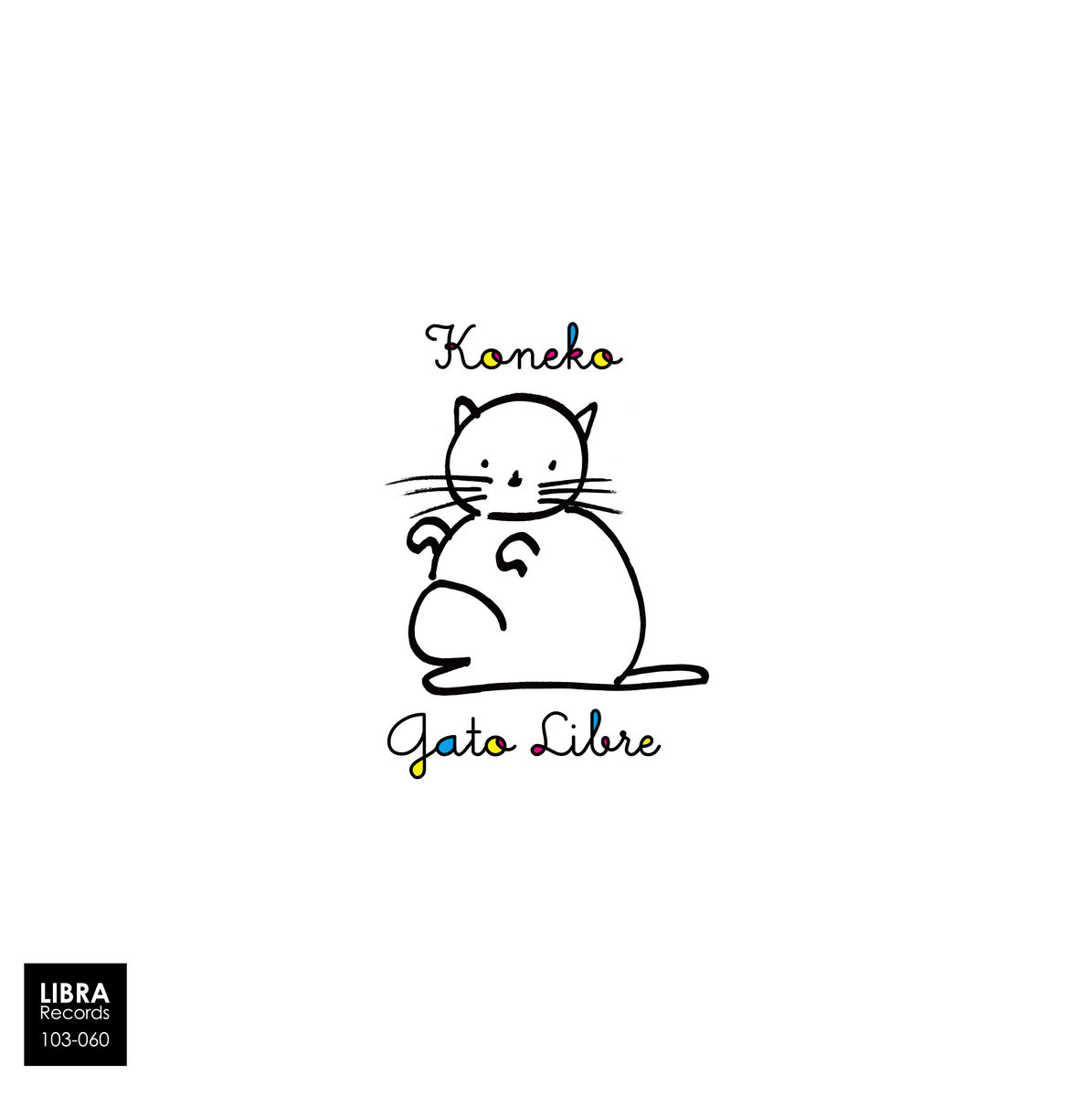
Gato Libre: Koneko

Koneko

The eighth album by Gato Libre, since 2015 a trio consisting of trumpeter Natsuki Tamura (who turns 69 this month), Yasuko Kaneko on trombone and Satoko Fujii on accordion, is a minimal and delightful context for the patient charm of Tamura’s compositions. By turns mysterious and whimsical, improvisational elements bring out the rapport of the trio, one built on deep listening, while prewritten material exploits their ability to hone in on what is most essential.

In that respect, the album’s title (Japanese for “kitten”) gives some insight into the blend of mystique and playfulness one experiences in these eight feline-themed scenes. Each track, in fact, is named for a different kind of cat. On the one hand, we encounter programmatic gems like “Ieneko” (domesticated cat) and “Bakaneko” (silly cat), both of which sport a range of textures and emotions while exhibiting Tamura’s painterly brilliance, as well as the avant-gardism of his formative years. On the other hand, we join the “Noraneko” (stray cat) and the “Yamaneko” (wild cat) on their nocturnal adventures, rendered in exquisite detail by Fujii’s starlight, Kaneko’s slinking motions and Tamura’s restless energy. Together, they wander through favorite haunts in search of sustenance in the spirit of survival. The latter tune feels like a folk song developing in slow motion and finds Kaneko in a particularly soulful mode.

Each musician, but especially Tamura, is content coloring both inside and outside the lines, allowing quiet atmospheres to unravel as they will until the closing “Kanbanneko.” The term refers to a cat that hangs out in a store (often seen sleeping in the window) and is well known by regular customers. Like its namesake, the music seems to insist on being left alone in a corner as the hustle and bustle of commerce hums in the background. And because the recording is only subtly processed, allowing for instruments’ natural reverberations to shine through, we can be sure that every meow is heard.

(This review originally appeared in the July 2020 issue of The New York City Jazz Record, a full PDF of which is available here.)

Marcin Wasilewski Trio/Joe Lovano: Arctic Riff (ECM 2678)

2678

Marcin Wasilewski Trio
Joe Lovano
Arctic Riff

Joe Lovano tenor saxophone
Marcin Wasilewski piano
Slawomir Kurkiewicz double bass
Michal Miskiewicz drums
Recorded August 2019, Studios La Buissonne, Pernes-les-Fontaines
Engineer: Gérard de Haro
Mastering: Nicolas Baillard
Cover photo: Thomas Wunsch
Produced by Manfred Eicher
Release date: June 26, 2020

Too much time, it seems, has passed since pianist Marcin Wasilewski and his trio with bassist Slawomir Kurkiewicz and drummer Michal Miskiewicz graced the studio for our privileged scrutiny, and as soon as “Glimmer Of Hope” tickles the ear drum, we are reuniting with old friends. A glimmer is exactly what we encounter in Wasilewski’s pianism, which opens this tender vision with a play of light and shadow such as only he can render. In turning these movements into song, he opens a new portal through which to step on our way toward musical discovery. But then a new companion in Joe Lovano joins the shoulder-link of arms to block any who would even dream of passing across the double line of expectation. And so we trail behind, absorbing the language of their traversal. Three more selections by the bandleader, including the flowy sojourning of “Fading Sorrow” (a yielding stage for Kurkiewicz’s soloing) and the sparkler-to-fireworks groove of “L’Amour Fou,” along with Lovano’s “On The Other Side,” complete the in-group compositional picture. The latter tune unfurls a veritable tapestry from the tenorist’s bell and pictures the synergy of ears and fingers required to pull off this collaboration. Carla Bley’s “Vashkar” gets two treatments thereby. In keeping with its ever-deepening roots, and nourished by five decades of interpretation, the quartet taps into its historical embeddedness.

If these are the album’s bricks, then its mortar is mixed in freely improvised material. The nine-minute “Cadenza” is the most cohesive of the bunch, metaphysically speaking. Its balance of gentility and strength is downright beautiful, as is the linear unfolding of “Arco.” Where one moment might breed shimmering near-stillness and the next a fibrillation of darkness, neither mood dominates. Instead, the musicians follow where they are led without struggle. One hears it just as vividly in the nocturnal slink of “Stray Cat Walk” as in the restless leg syndrome of “A Glimpse.”

2678_Wasilewski Lovano_PF1

What really distinguishes this record, however, is the apparent gap between the trio’s interlocking poetry and Lovano’s hard-won prose. What at first may seem to be a disjunction actually opens up a space that can only be filled by the listener. By inserting ourselves into the equation, the proof becomes clear: our presence has been desired from inception to execution, our variable the final piece. And with that completion, we emerge on the other side of the equals side having carried the one of experience.

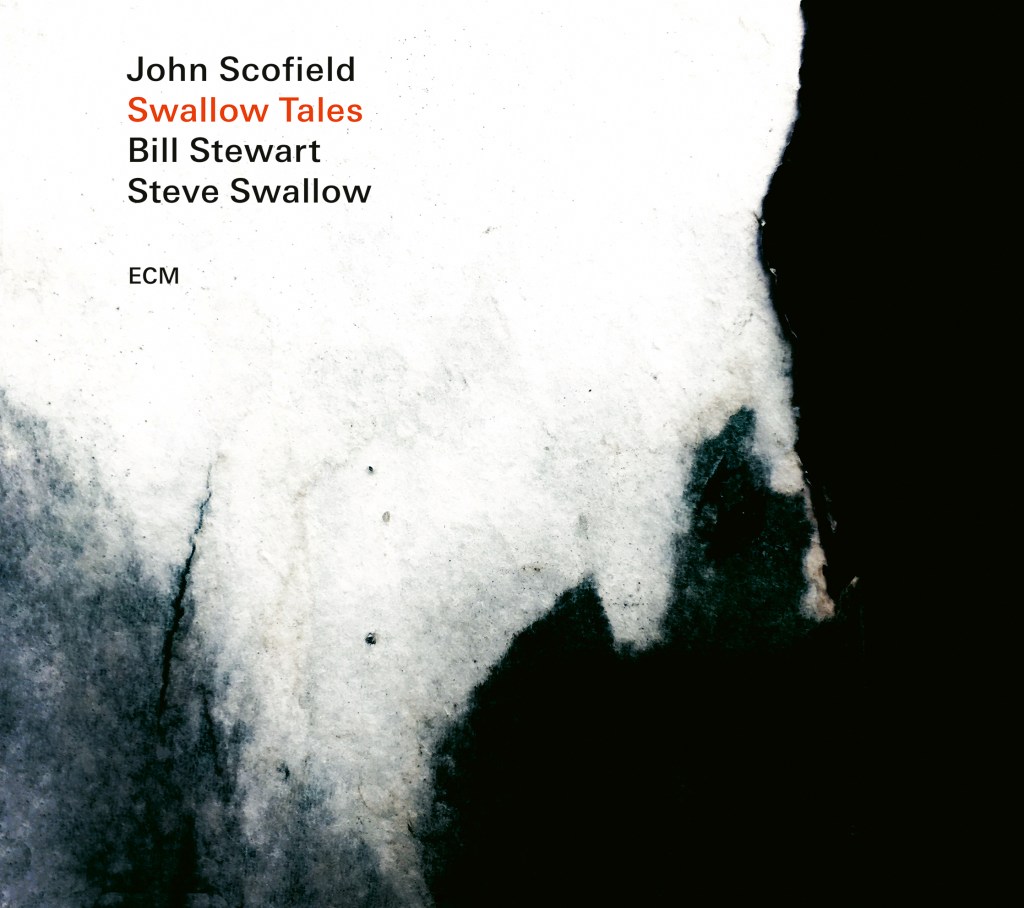
Scofield/Stewart/Swallow: Swallow Tales (ECM 2679)

Swallow Tales

John Scofield guitar
Steve Swallow bass
Bill Stewart drums
Recorded March 2019, The James L. Dolan Recording Studio at NYU Steinhardt, NY
Engineer: Tyler McDiarmid
Cover photo: Max Franosch
Executive producer: Manfred Eicher
Release date: June 12, 2020

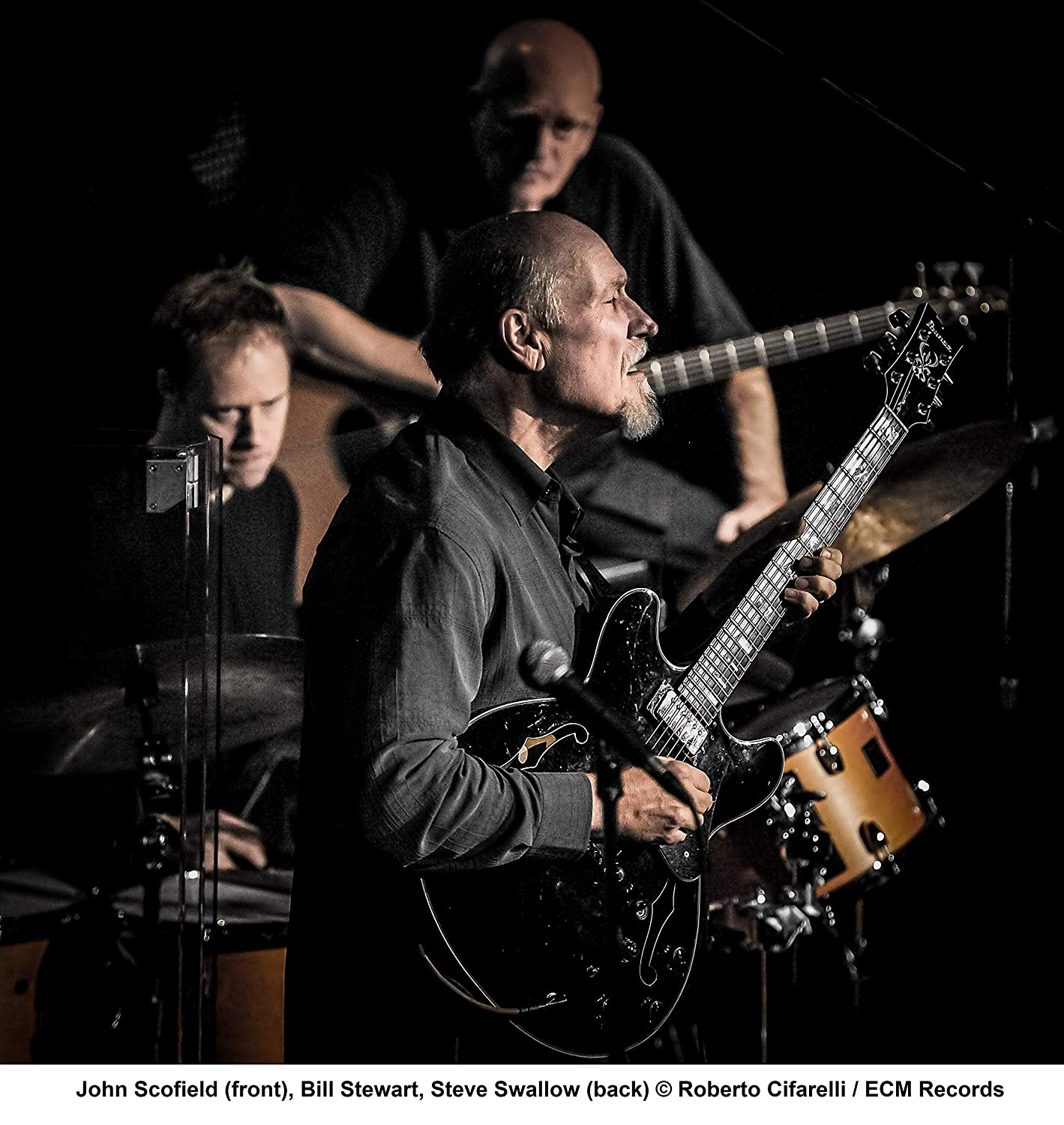
Over 40 years of friendship and collaboration exist between guitarist John Scofield and his mentor, bassist Steve Swallow. But everything that happens here is in and of the moment. Playing the room with drummer Bill Stewart, they slowly unwrap one candy after another in the form of Swallow’s own timeless compositions. About them, Scofield says in this album’s press release: “They’re grounded in reality with cadences that make sense. They’re never just intellectual exercises, and they’re so melodic. They’re all songs, rather than ‘pieces.’ They could all be sung.” And sing the trio does in its own wordless way, drawing out less obvious nuances from familiar melodies and vice versa.

Between the laid-back groove of “She Was Young” and the slicker lockstep of “Radio,” an understated allure wiggles its way into the heart and nods to every beat. Along the way, each musician lays out a personal reflection of his métier. Scofield abounds in contrasts, bringing a hardened edge to the shadows of a ballad like “Away” just as comfortably as he dances light-footedly across the terrains of “Falling.” The latter is also a showcase for Swallow’s unerring sense of purpose and Baroque approach to syncopation, as is “Hullo Bolinas,” in which his soloing embraces retrospective charm.

Scofield Trio

But while the guitarist and bassist are true masters of their craft, it’s Stewart who holds my attention most throughout this swiftly realized session (the result of only four hours in the recording studio). The drummer’s glittering cymbals and rustic snare strike just the right balance, catching every detail of “Portsmouth Figurations” and extending its effect before it fades, luxuriating in a decaf version of “Awful Coffee” (a normally peppier tune), and bringing freshness to “Eiderdown” (the first tune Swallow ever wrote). But his grandest slam is in the opening breaks and leaping denouement of “In F”—a performance only decades of experience could yield.

And while each track comes preloaded with its own history (“She Was Young” being originally sung by Sheila Jordan on 1980’s Home and “Portsmouth Figurations” dating back to 1967’s Duster by Gary Burton), they make new history here in the present arrangement. And here we are, sitting on what feels like the wrong side of the fence, trying to make things right by holding on to that which shines a light on the inside. Thankfully, music like this hands us a match, already lit and waiting for our attention to lend it a fuse.