The Tallis Scholars
Live in Venice
The Tallis Scholars
Peter Phillips director
Recorded in concert July 14, 2017
Basilica di San Marco, Venice
Production: Controcampo Produzioni srl, Venezia
Director: Pierandrea Gagliardi
Cameramen: Paolo Bassi, Claudio Panighel,
Beniamino Fenzi, Pierre Girardi
Video/Audio recording: Flavio Piva,
Antonio Loriga (Waterloo SAS, Milano)
Lighting: Antonio Loriga
Color grading and video editing: Stefano Codin
Audio editing and mastering: Diego Bergamini
Project idea and supervision: Minas Lourian,
Centro Studi e Documentazione della Cultura Armena
Cover photo: Juan Hitters
An ECM Production
Release date: October 9, 2026
My soul doth magnify the Lord,
And my spirit hath rejoiced in God my Saviour.
–Luke 1:46-47
Some music carries its architecture within it; other music waits for a building to reveal the full shape of its thought. In the Basilica di San Marco, every note enters a space crowded with memory, where gold mosaics hold the afterimage of vanished liturgies. The Tallis Scholars’ concert there on July 14, 2017, begins with Palestrina’s Magnificat primi toni. His counterpoint discovers chambers that masonry alone could never contain. Each vocal line retains its identity while yielding part of its solitude to the others. Peter Phillips founded the ensemble in 1973, beginning a relationship with Renaissance polyphony that helped reshape modern hearing of this repertoire. Under his direction, precision serves the music’s spiritual purpose. San Marco’s reverberation gathers the voices after the singers release them, and the building appears to continue the Magnificat on its own.
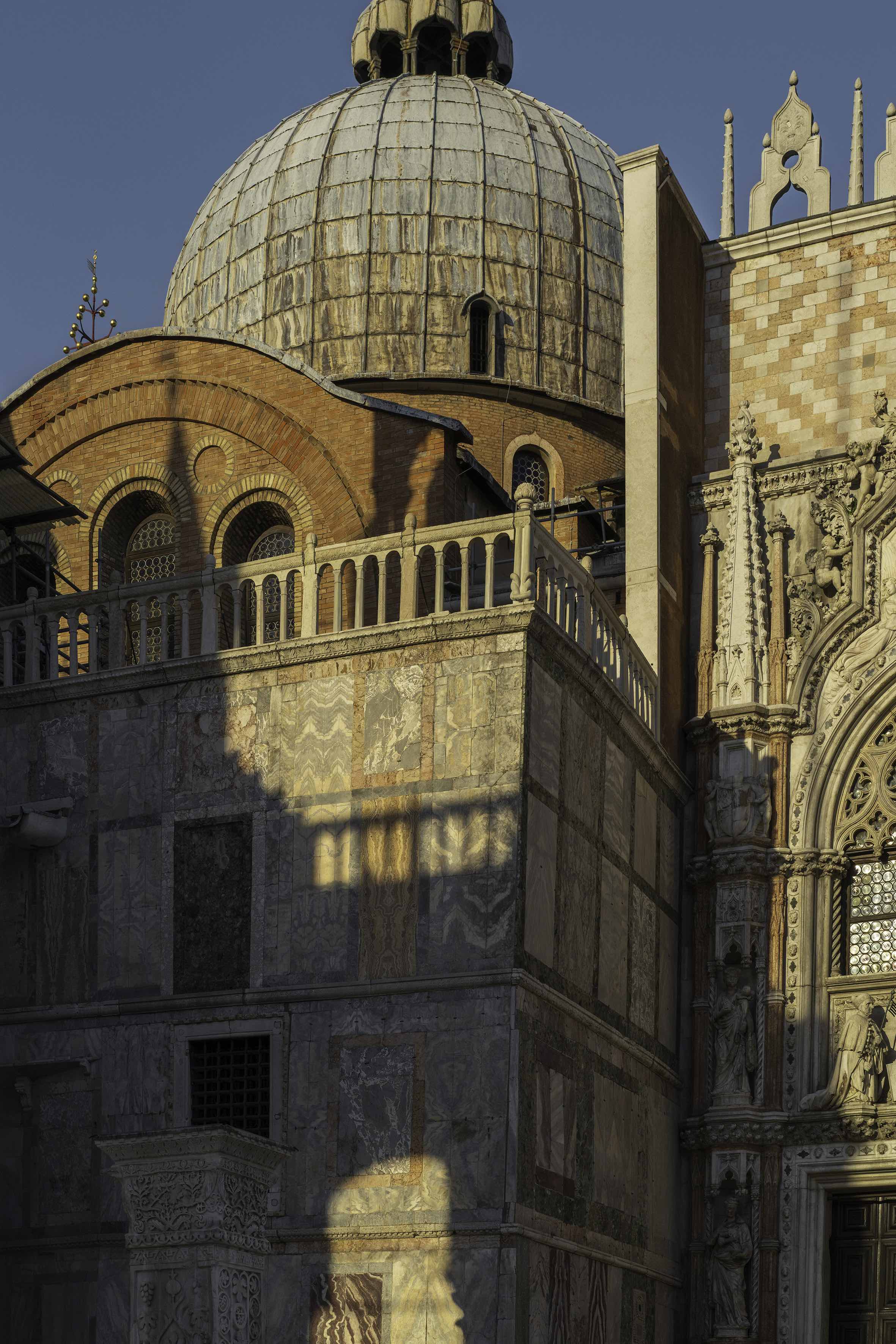
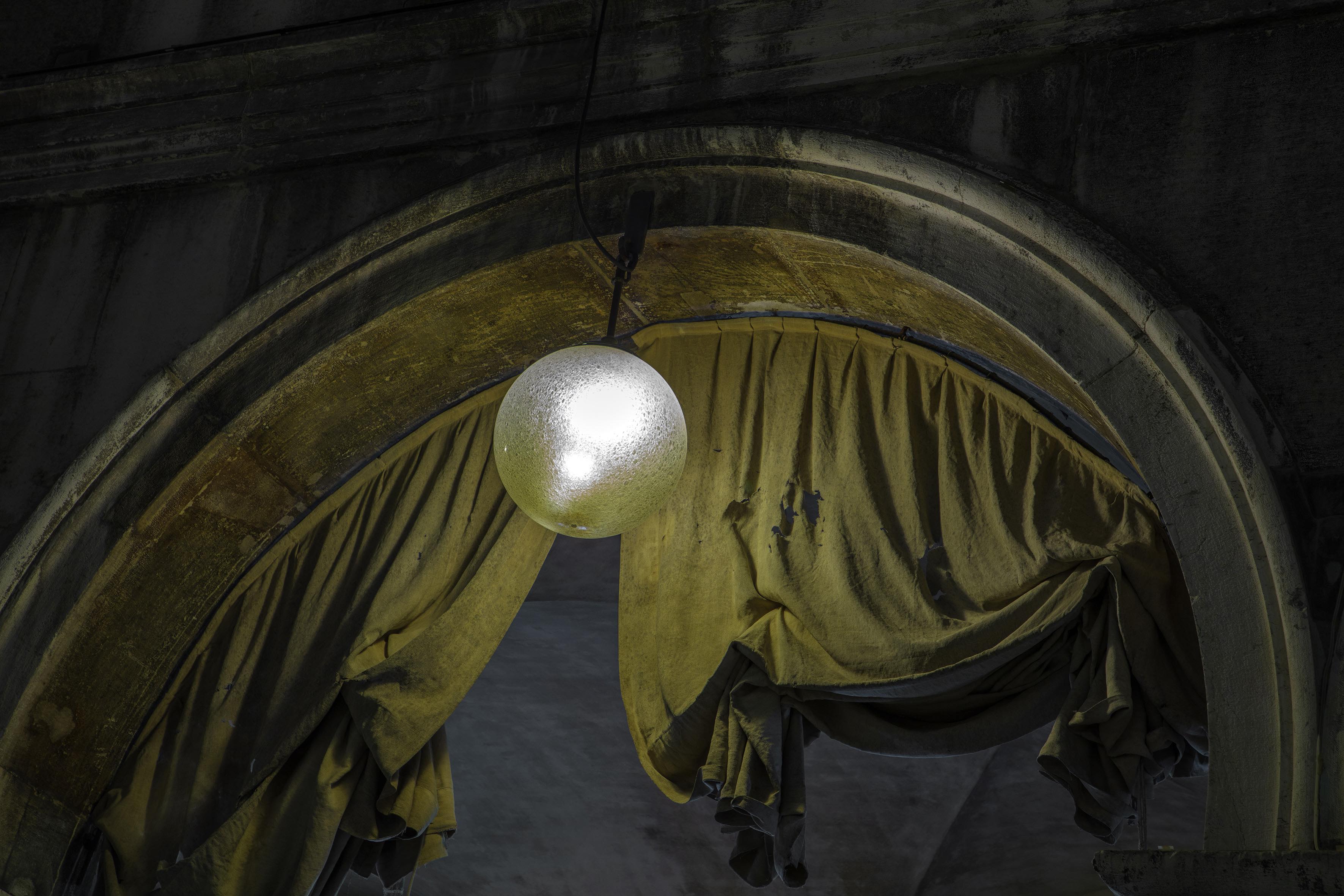
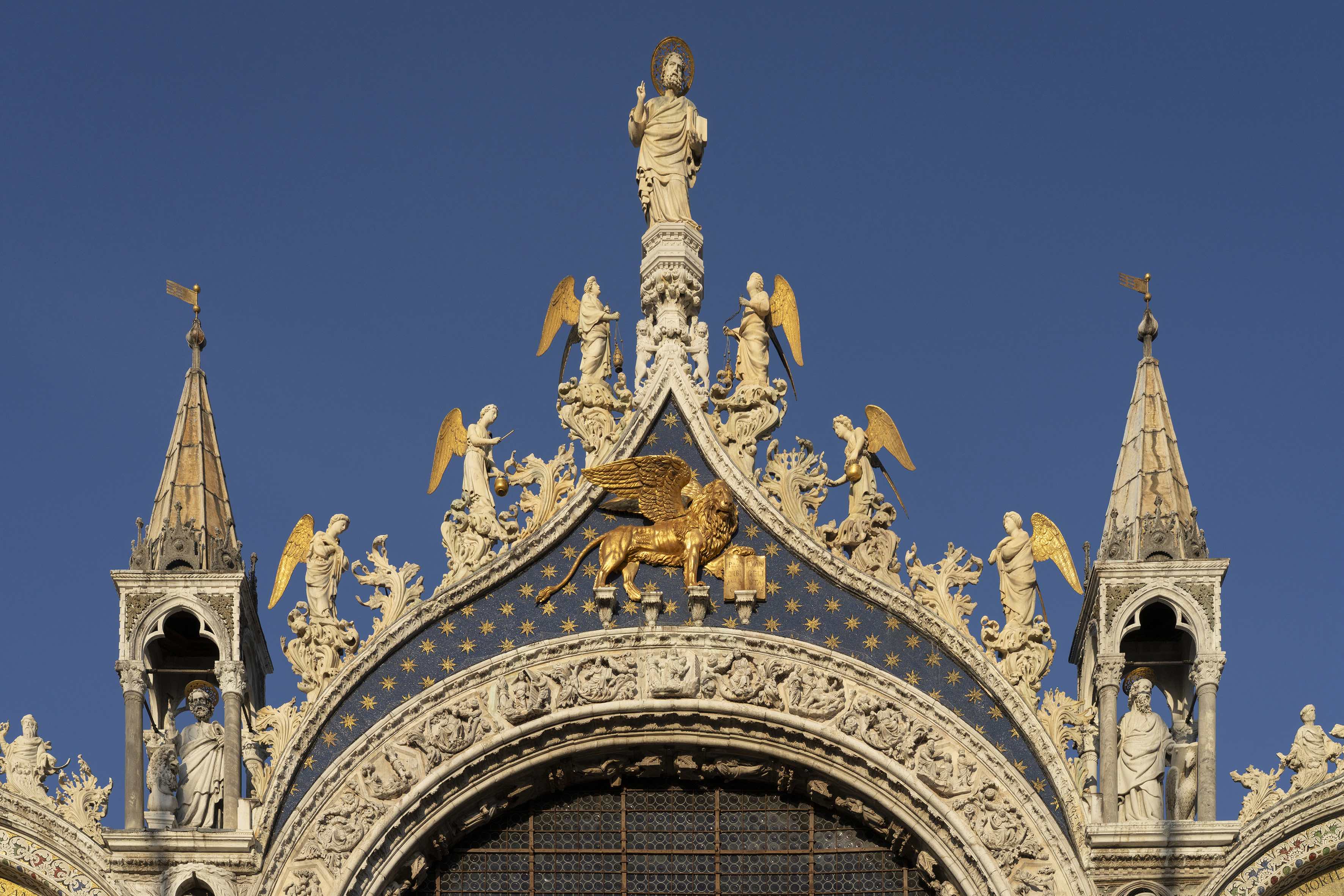
Issued as a CD/Blu-ray set, Live in Venice captures the exchange between human expressivity and consecrated space. The film establishes the basilica’s scale, while the recording follows sound into its temporal depths, and the beautiful photography of Juan Hitters (used here with his permission) zooms in on artful details. Palestrina’s radiance narrows into Arvo Pärt’s Nunc dimittis, composed in 2001 and based on Simeon’s words after he has held the infant Christ: “Lord, now lettest thou thy servant depart in peace.” A single interval seems to contain the old man’s relinquishment, with mortal fatigue resting beside fulfilled promise. The Tallis Scholars honor Pärt’s restraint, allowing every note to cross a wide interior distance before the next appears. Simeon cradles eternity in perishable hands; the choir ushers his farewell in breath that must vanish.
The program marked the 450th anniversary of Claudio Monteverdi’s birth in 2017. Phillips describes it as a meeting of “old favourites and some very new ideas,” though the sequence coheres by its tracing of sacred expression across changing musical languages. Monteverdi stands at the threshold between Renaissance counterpoint and Baroque drama. His Messa a quattro voci da cappella, SV 190, arose during his tenure as maestro di cappella at St. Mark’s, although its date and intended occasion remain unknown. Published posthumously in 1650, the Mass uses the stile antico while admitting the expressive flexibility of a newer age. The singers here reveal that tension without turning the work into an exhibition of control. The Gloria pulls praise upward; the Sanctus opens the upper register into lucid fire. Through the Agnus Dei, harmony searches for the Lamb it already names. Monteverdi preserves the language of liturgy by allowing it to change from within.
Gregorio Allegri’s Miserere mei, Deus carries the program into a penitential theater governed by distance. Composed in the 1630s for the papal choir’s Holy Week services in the Sistine Chapel, this setting of Psalm 51 became famous through a performance tradition whose ornaments were guarded more closely than the written page. Repeated formulas based on the tonus peregrinus alternate plainsong with polyphonic groups placed apart from one another. Allegri’s falsobordone keeps the text clear, giving contrition the severity of a wound without disguise. In San Marco, the separated choirs seem divided by the distance between sin and forgiveness, yet the psalm repeatedly crosses that abyss. Soprano Amy Haworth’s high C arrives as a vertical disturbance, a needle of brightness through the building’s shadow. The note belongs to a version shaped by oral transmission and later reconstruction, rather than a precise preservation of Allegri’s score. And while many people’s reference, including my own, has long been the Tallis Scholars’ recording encountered through the 1980 US release on Angel Records, this rendition possesses a startling immediacy.
Two works by Komitas Vardapet alter the concert’s spiritual geography. Born Soghomon Soghomonian, Komitas was an Armenian priest whose work as a composer and ethnomusicologist preserved his people’s musical inheritance. His music is included in solidarity with Venice’s Armenian community and heritage. Surp-Surp, his setting of the Sanctus from the Armenian Divine Liturgy, draws on the modal contour of chant and surrounds the inherited melody with lucid choral harmony. A droning foundation supports the upper voices as they lift the word “holy” toward a realm beyond possession. Sirt im sasani, or My Heart Trembles, pivots inward. This 13th-century hymn for Maundy Thursday contemplates Judas’s betrayal of Christ. Komitas surrounds the chant with spare, dark-hued harmonies, preserved here in all their tenderness. Christ kneels before the feet of the man who will sell him, suspending judgment within an unbearable act of humility. Komitas brings Armenian sacred memory into the basilica as a living claim upon Christian attention, asking whether worship can approach a wounded past without making suffering decorative.
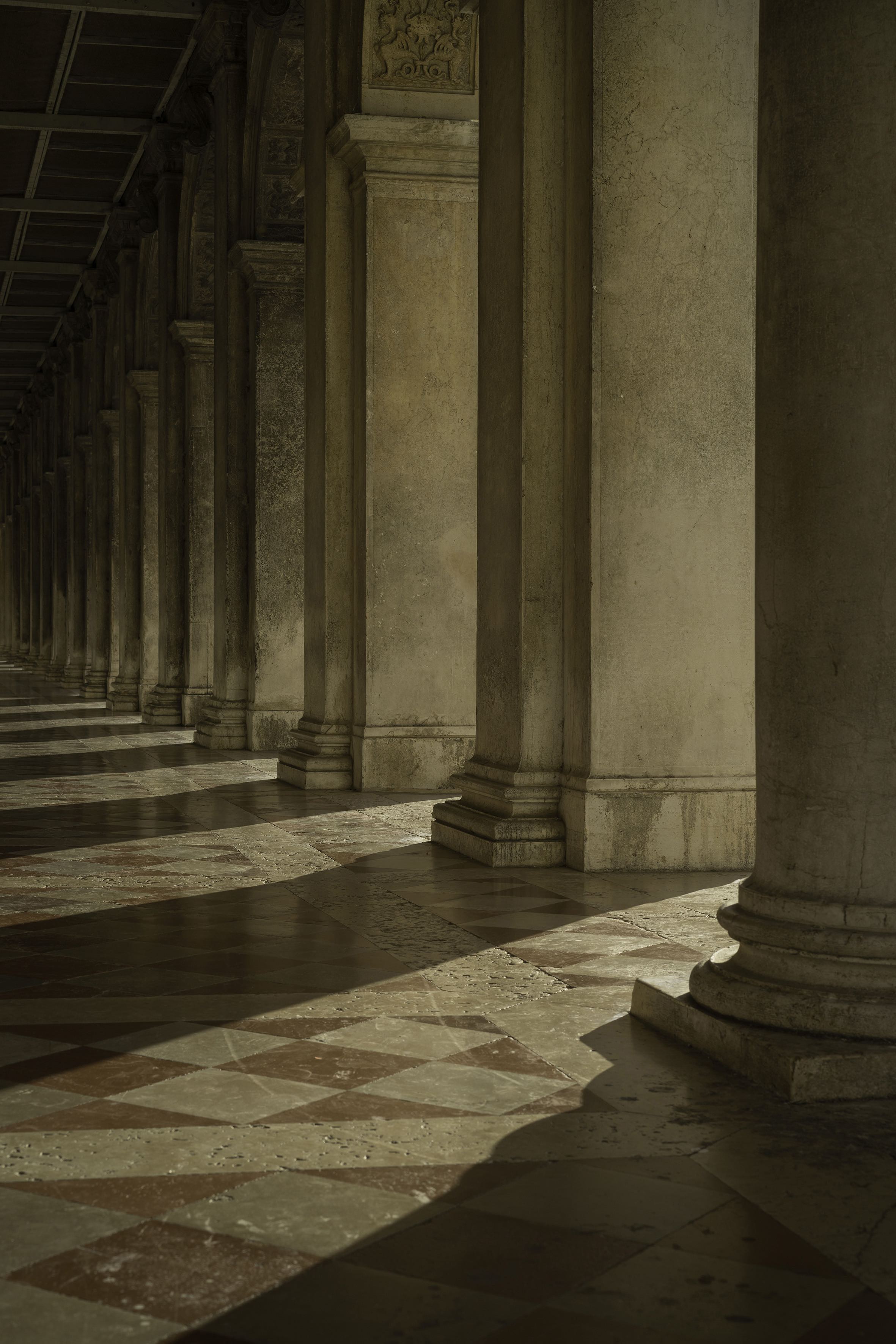
Antonio Lotti, another maestro di cappella at St. Mark’s, extends the Venetian tradition into the 18th century. His Crucifixus à 8, drawn from a Credo in F major, sets the account of Christ’s crucifixion and burial for eight independent voices. Overlapping entries and chromatic movement build pressure across the choir. Suspensions tighten, then resolve only far enough to make the next dissonance more intimate. Lotti’s evocation of grief takes on disciplined physical force, while resurrection remains beyond the piece’s visible edge. Monteverdi’s Crucifixus from Selva morale e spirituale follows with a harder surface, its syllables bearing the weight of the body named by the Creed. Adoramus te Christe turns toward redemption, and Cantate Domino releases a more buoyant energy. The sequence folds praise back into the memory of the cross, keeping crucifixion and resurrection adjacent without blending them.
The program closes with Lotti’s Crucifixus à 10 from the Credo in D minor. Ten vocal lines create a denser field of imitative phrases and suspensions, but Phillips keeps its inner motion clear. The performance makes audible the Christian scandal that divine glory can inhabit a tortured body and that salvation enters history through an execution outside the city wall. Lotti’s final sonority remains answerable to a fallen world. Across the concert, Palestrina’s abundance, Pärt’s relinquishment, Monteverdi’s liturgical drama, Allegri’s plea, and Komitas’s bruised devotion prepare the ear for this unresolved radiance. The music crosses centuries without smoothing their fractures, gathering difference into communion. San Marco presses itself like an ear against the sealed tomb, where new life begins as a change in the acoustics of the grave, already turning absence into an organ of hearing.