
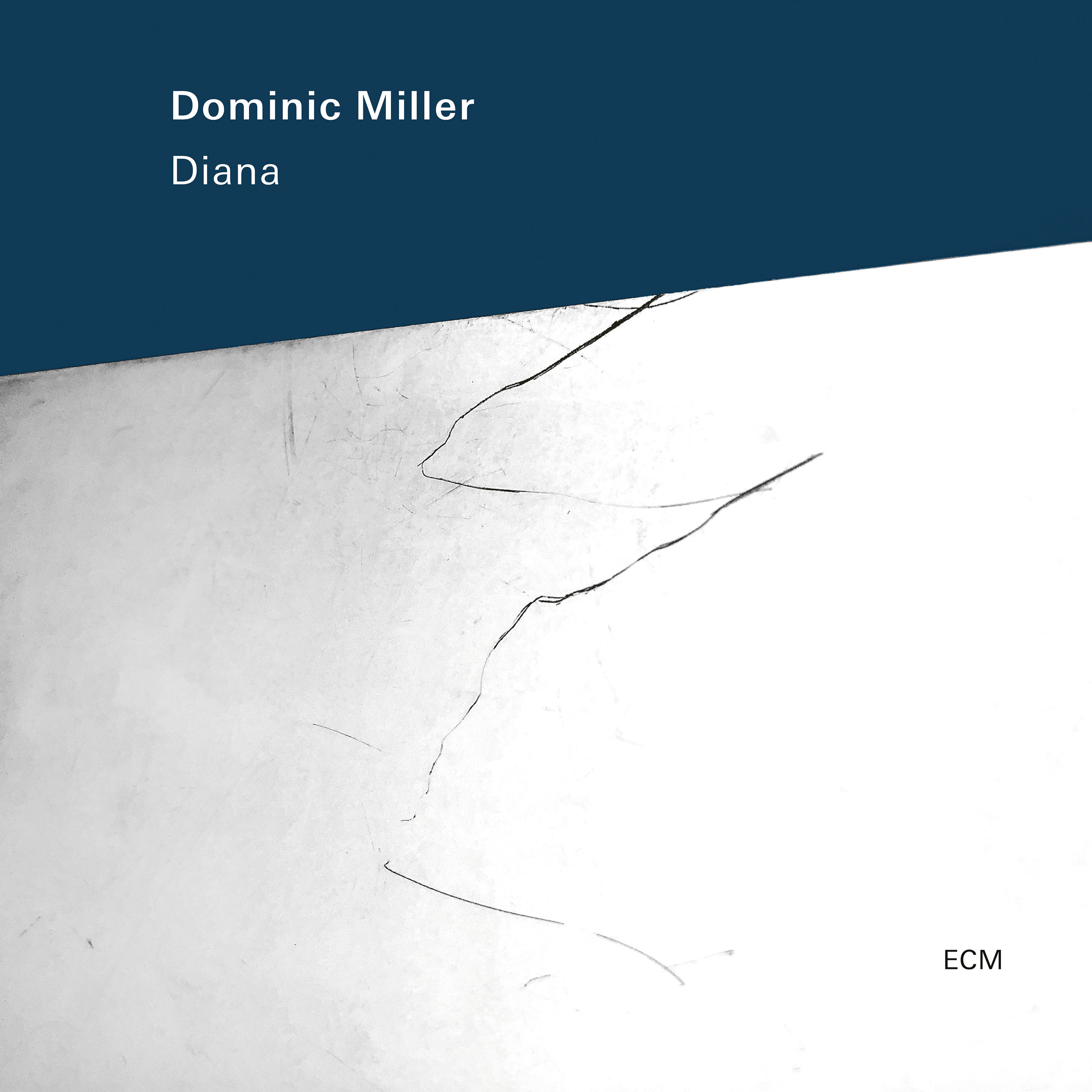
Dominic Miller
Diana
Dominic Miller guitar
Santiago Arias bandoneón
Nicolas Fiszman bass
Ziv Ravitz drums
Recorded December 2024
Studios La Buissonne
Engineer: Gérard de Haro
Mastering: Nicolas Baillard
Cover photo: Max Franosch
Produced by Manfred Eicher
Release date: November 20, 2026
Dominic Miller’s guitar seems to remember as it sings. Diana, his fourth album for ECM, takes its name from his mother, who died in February 2026. Following the dedication of Vagabond to his father, it adds another chapter to a musical autobiography whose most revealing passages emerge through the touch of others. The melodies carry a quiet melancholy, each inviting a response that gives its contours further meaning. Those responses come from musicians who know Miller’s language intimately. Bassist Nicolas Fiszman and drummer Ziv Ravitz return from Vagabond, while Santiago Arias brings the bandoneón previously heard on Absinthe into renewed conversation with the guitarist. Fiszman’s supple foundation accommodates the music’s changing directions; Ravitz works through gesture and texture, loosening the hinges of each tune. Around Miller’s plucked strings, Arias draws sustained lines that seem to contain the breath of an unopened letter. Together, they give private commemoration a body others can inhabit.
Recorded at Studios La Buissonne in southern France in December 2024, Diana also reflects the guiding ear of producer Manfred Eicher. His influence reaches into the musicians’ willingness to venture beyond familiar gestures, with the quartet’s trust making such exploration possible: a phrase can change direction because someone is there to receive it. These carefully formed compositions reveal themselves through the particulars of an encounter, each response altering the proportions of the recording space. Eicher’s sequence, which Miller regards as essential to the album’s coherence, extends that responsiveness across the recording, allowing one piece to illuminate an otherwise invisible doorway in another. Miller’s family remembrance becomes something his companions can carry with him, its weight distributed through the small mercies of attention.
Sparkling waves of guitar open the doors of “Jazz Hotel,” where cymbals scatter light across the bass and bellows. The mood is oceanic and supremely inviting, drawing us into its intimate atmosphere without letting the hard work behind it disturb its ease. Years of effort become effortless in music that dances to the tune of its own heart. Miller’s distinctive sound allows for such delicacy of expression that a plucked string can seem to turn the horizon on its axis. He is a master at creating distinct scenes for the mind’s projection screen, a most private cinema for the seekers of this world. Only this piece and the sparse, slow-motion film of “Rita” surpass the five-minute mark. Their images stretch toward the threshold of disappearance, while the shorter vignettes give us just enough detail to craft our own story in passing. The bandoneón’s sustained breath complicates the guitar’s brief illuminations, giving each moment a duration the clock can only misunderstand.
The reflective spaces of “Alta Loma” seem to transport us to a time and place that might never have existed without memory to keep them alive in the heart. Its feeling is somehow Mediterranean, yet cold stone architecture rises from those same waters, windows opening onto the reverse side of sunlight. Miller gives this impossible geography enough substance to shelter us, while leaving its foundations open to the sea. That doubleness carries into the wistful strumming of “Millionaire,” which brings us into blinding sunlight and allows us to see ourselves reflected in the grander scheme of things, even when the world seems to be ignoring us. Wordless vocals accompany the locomotive drums, sustaining the feeling of pressing on one’s own path while others remain content to stand still. Its organic fadeout loosens the allure of wealth suggested by the title, breaking the spell so that we might love ourselves again.
Miller has a flair for simple yet powerfully evocative titles, and the desert of “Vegas Dreaming” opens beneath stars quietly competing with the city lights. Beyond the bright facades, darkness gathers without needing to announce itself, deep enough to absorb the city’s insistence on being seen. Just when we feel settled, the band picks up its gear and moves on. The crisp turns of “Al Dente” carry the brittle radiance of fall foliage, though its haunting bandoneón draws us toward the roots beneath that brightness. Such endings reveal how much of a composition can reside in the space it leaves unoccupied.
Through the effortless changes of “Only You,” sentiment becomes a form of motion, its tenderness reaching into the dreamlike “Pigalle.” From its moving images, figures step into the audience and occupy the seat beside us. The bass-inflected groove of “Timeless” gives these realm crossings a physical footing, reminding us how readily the body enters territory the mind has yet to name. Miller covers a wide expanse of emotional and textural ground without allowing any scene to harden into a destination. In “Iguazu,” a subtly high spirit gathers those movements into a sun-kissed blanket of comfort.
Miller has never sounded so sparkling and beautiful. The production gives every exchange a tactile immediacy, revealing how much warmth a melody can bear without losing its shape. That warmth acquires a different gravity when we remember that these performances preceded the loss commemorated by their title. A dedication can reach backward, changing the meaning of something already given. The music carries its earlier life within the name of someone who can no longer hear it, and our attention begins to travel in both directions. All that’s left is to ensure there is still a future for retrospection.

