Wolfgang Rihm: ET LUX (ECM New Series 2404)

Et Lux

Wolfgang Rihm
ET LUX

Huelgas Ensemble
Minguet Quartett
Paul Van Nevel director
Recorded February 2014, Augustinus Muziekcentrum, Antwerpen
Engineer: Markus Heiland
Mixed January 2015 in Lugano by Markus Heiland and Manfred Eicher
Produced by Manfred Eicher
U.S. release date: 2 June 2015

ET LUX is an hour-long composition for vocal ensemble and string quartet (2009) by Wolfgang Rihm that situates fragments of the Latin Requiem Mass in cells of sustained chords and spectral wanderlust. Although originally written with the Hilliard Ensemble and Arditti Quartet in mind, the performance here is in more than capable hands. The Minguet Quartett, approved interpreters of the composer’s string quartets, and the Huelgas Ensemble (which doubles the scored voices to eight) illuminate every fiber of this tapestry like sunlight through a castle window.

For a composer so prolific (with over 400 works to his name), it’s only natural that again Rihm should cast once glance backward for every two forward, ending up suspended somewhere between the poles of question and answer, and proving them to be the event horizons of an arbitrary dichotomy. It is music that neither invites nor rejects, but places the listener (and composer) in a space where choices are the only true materiality. Hence the cellular nature of the piece, in which selective phrases serve as requiems unto themselves.

As Paul Griffiths observes in the album’s liner text, “What we have here is not music remembered but music remembering.” Attribution of such sentience to notes on a page is no metaphorical trick. It speaks, on the surface, to the music’s body of antiquity and clothing of modernity, and beyond that to their entanglement among the bramble of performance and the flourishing of listening. In the manner of Alexander Knaifel, the instruments sing as much as the human voices. This, of course, requires a human touch. Still, the inner life of ET LUX is not provided but enhanced by that touch.

The keyword, in both the writing and the playing, is “tactile,” as if both forces were bound by flesh and spirit alike. The quartet breathes, close to silence yet pregnant with words all the same, bringing its own voices to bear upon the passage of time. Each instrument must treat the space as it is treated: as an element of malformed crystal, whose light exists only for as long as it is uttered to be. The effect is such that, even when punctuating the darkness with spikes of pizzicato flash, harmonies merely disperse and regroup, taking on semblance of something newborn.

An astonishing amount of variety pervades a work so slow-moving yet which bypasses pathos toward the development of deep, if sometimes tense, relationships. Moments approaching beauty are inevitably peeled away from expectation, leaving us to reckon with a more true-to-life distortion of textual fantasy. Instead of treating the Mass as a poem or liturgical given, it retraces shards of it until each is self-reckoning. The mystery of faith becomes a reflection of itself.

As the piece goes on, the dynamic between voices and strings becomes mutually divergent, at once developing inward and outward. A prayerful mode gives way to fire, and further to snowy textures. Pulses emerge, morph, and overlap, but disclose little of their intentions. The clearest answer, then, is in the dark, sublime ending; a movement into new beginning, but in which direction is left open to interpretation.

Elina Duni Quartet: Dallëndyshe (ECM 2401)

2401 X

Elina Duni Quartet
Dallëndyshe

Elina Duni voice
Colin Vallon piano
Patrice Moret double bass
Norbert Pfammatter drums
Recorded July 2014, La Buissonne, Pernes-les-Fontaines
Engineers: Gérard de Haro and Nicolas Baillard
Produced by Manfred Eicher
U.S. release date: 2 June 2015

When we left that day
losing sight of our land
all the men with one big sigh
called their women with a cry…

“Exile has always been humanity’s burden and love its faithful companion,” writes Elina Duni in a liner note for Dallёndyshe (The Swallow), follow-up to her ECM debut, Matanё Malit. Once more joined by pianist Colin Vallon, bassist Patrice Moret, and drummer Norbert Pfammatter, Duni presents a compelling new set of jazz-infused folk songs from her birth land of Albania, each wrapping its narrative arms around the primal losses of families and lovers broken by separation. With more lucidity than ever, she uses her voice to weave stories of uncompromising intimacy, a feeling only enhanced by the sensitivity of her bandmates. That said, the roles of her musicians aren’t merely programmatic, but pulse like vital organs of the present arrangements.

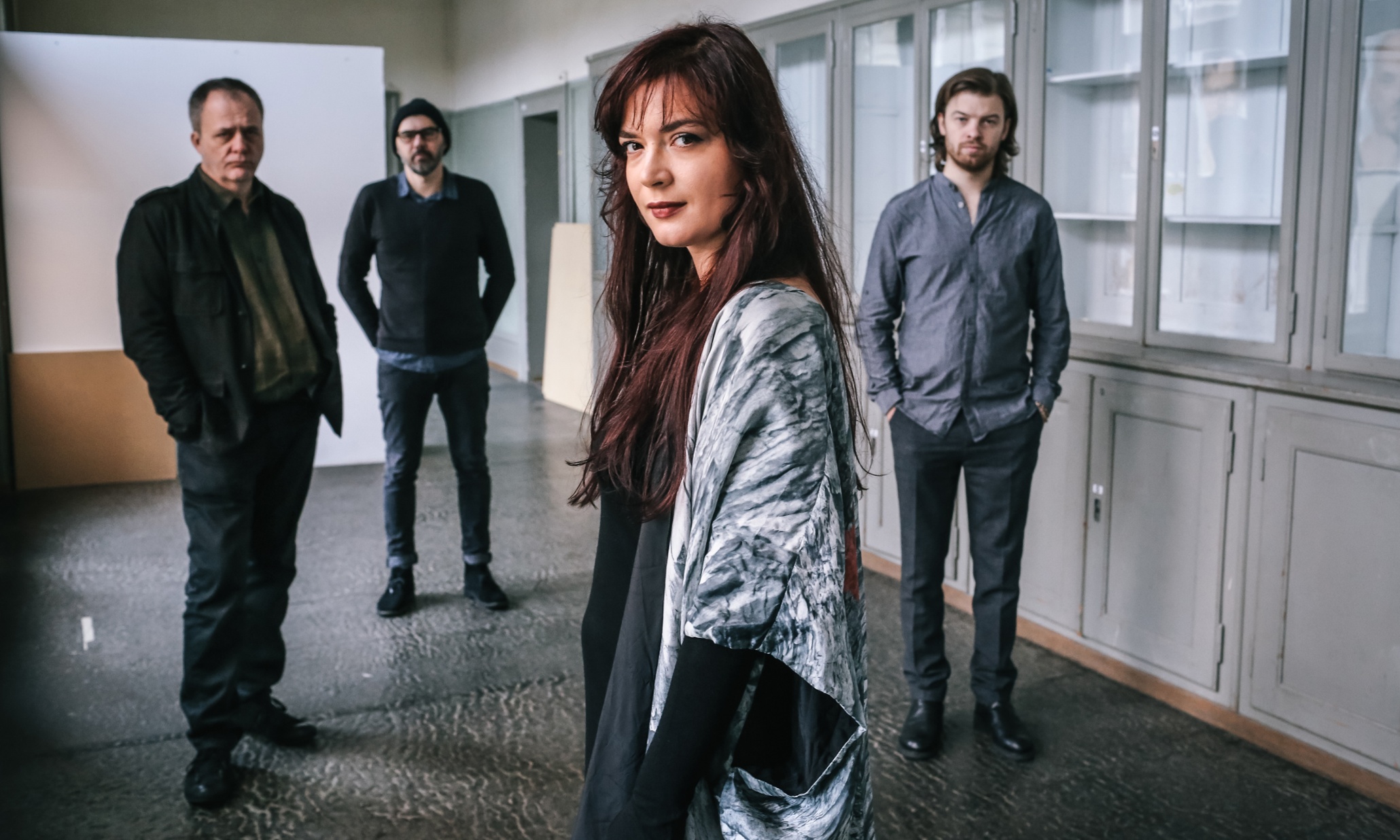
Elina Duni Quartet
(Photo credit: Nicolas Masson)

Much of that vitality is to be found in Vallon’s pianism, which casts its melodic nets far and wide throughout “Ylberin.” The title makes reference to rainbows, a nickname given to men by the women they’ve left behind. By a similarly ephemeral sense of beauty, Vallon expands Duni’s vocal colors to the indefinable gradients between them. As in “Unë në kodër, ti në kodër” (Me on a hill, you on a hill) that follows it, the lyrics only thinly disguise a vehemence toward separation. Through these songs, Duni puts herself in the hearts of those forced into seclusion, cursing the rifts of years as her sorrow approaches a state of ashes.

Pfammatter’s drumming borrows its tools of expression from those same interstices, moving through the Byzantine channels of “Ti ri ti ti klarinatë,” an onomatopoetic gem from the Arvanites of Greece, with the surety of a vine along a wall, and rustling through the brush of “Delja rude” (Sheared Sheep) like an open wind. The latter is an album highlight and points to the cathartic nature of this music. In a press release, Duni indeed claims an affinity with the blues, noting, “One of the fascinating things about music of the Balkans, in a lot of the folk music, is the idea that the pain has to be sung. And in singing you go beyond it.” This feeling of transcendence is especially audible in the bassing of Moret, who binds his pages with openness, whether bringing lucid attention to the gently propulsive “Bukuroshe” (Beautiful Girl) or drawing a bow crosswise to the low drums of “Kur të pashë” (When I Saw You), a traditional tune from Kosovo.

All three musicians tell parallel stories throughout the album, no less lyrical than Duni’s—not only reflecting on the narrative at hand but also drawing connections to times and places beyond observable borders. Yet it is Duni who carries the most potent magic in her satchel, into which she reaches and flings the cloud paintings of two modern songs onto canvas. Album opener “Fëllënza” (The Partridge) was written by singer and poet Muharrem Gurra, a trailblazer of Albanian popular song, and is the most embodied of the set. Like the partridge itself, it survives on barest trills and cautious movements, each more graceful than the last. Here we encounter a maternal voice for the world, seeking to use its hands for protection alone. “Sytë” (The Eyes), with music and lyrics by Isak Muçolli, is another classic, this one made famous by legendary Albanian singer Nexhmije Pagarusha. Duni brings out its innermost qualities in an attempt to part a veil of tears.

Music video for “Sytë” (with English subtitles):

But it is in the older songs where her heart carries the most blood to its destination. Duni stands, for all a melodic tower, in “Unë do të vete” (I am going to go) and “Nënë moj” (O, Mother), around which improvisational gatherings abound, while the whispered frame of “Taksirat” (The Mishap) snakes its way through desert grooves. Yet nowhere is her yearning so tangible as in the title song, which comes from the Albanian diaspora of Italy and treads nakedly to the sole accompaniment of piano. The voice is a landscape all its own, Duni seems to say, and my footprints are all that remain. Each has note value, and your soul will be the next one to sing it.

(To hear samples of Dallëndyshe, please click here.)

Bill Laswell: Bilmawn (Little Village)

Little Village

Out of the seductive world of Jim Jarmusch’s 2013 film Only Lovers Left Alive comes this sonic missive from Bill Laswell, not included on the original soundtrack release.

Like the Moroccan ritual to which it makes reference, it moves in stages, from the spidery guitars that open the circle to the dance of fecundity that closes it. Equations of clay drums trace the halo of a deeper beat science, stretching the mind like a net to catch runaway gods, each of whom carries a torch of some long-forgotten past. There is a drifting—if not also drifter—quality to the music. It is an enhanced trip into someplace far from the ills of the world, populated entirely by beasts from within. A search for truth behind representational costumes, this delicate ornament for your Laswell tree speaks to us with the breath of a thousand continents: A shadow is nothing without the light.

SPARKLER: I Colored It In For You

Sparkler

Bill Laswell’s “Incunabula” is a series of digital-only releases from the M.O.D. Technologies label. It has expanded the bassist-producer’s palette in directions ancient and futuristic, allowing freedom to strengthen his expressive reach. Part of that freedom includes promotion of artists from many walks of life, each highlighting one gradation of an ever-expanding spectrum. An apt metaphor, to be sure, in the context of I Colored It In For You. This debut single by SPARKLER kicks off the latest project from multi-instrumentalist Peter Apfelbaum, of New York Hieroglyphics fame. Having played with artists as varied as Don Cherry and the Grateful Dead, Apfelbaum presents here a 21st-century assembly of Natalie Cressman on vocals/trombone, Jill Ryan on vocals/alto sax, Will Bernard on guitar, Barney McAll on homemade instruments, Willard Dyson on drums, and co-producer Aaron Johnston (of Brazilian Girls) on drums and programming. Together they slide their way through two distinct tracks.

In the album’s EPK, Apfelbaum admits an affinity for extremes, as evident both within and between the song’s bifurcation. Part 1 shakes the night sky free of its galactic mess and uses it as a canvas for fresh, playful songwriting. The lyrics, while seemingly haphazard, reveal the randomness of a relatable mindset. Cressman and Ryan dress declarations of independence like “I’m gonna do it all” in frills of youthful confidence. It’s a whimsical contrast to the slickly crafted road beneath, and just off-center enough to make it endearing. “You make we wanna write ’til my memory is full” is another memorable line that blurs the separation between body and technology. The chorus moves through an honest groove, giving way to smooth horn work from the vocalists. Part 2 is more keyboard-driven and contradicts the previous incarnation with gentler, ephemeral transferences. A less bold and more reflective side of the band, it is an extreme in and of itself.

Rounding out the single is a Mix Translation (dub remix) by Laswell, who emphasizes the dreamy undercurrent, deepening the intro’s spatial qualities while rendering the voices into occasional messengers. A key bass line and drum beat kick things into gear, horns hopping in along the way, as the title phrase emerges in intermittent signals. Laswell crosses the song’s inner arc through gorgeous break-flow, surfacing with coral souvenirs.

It’s just the beginning of a journey, and I’m gonna hear it all.

(For ordering information, please visit M.O.D. Technologies here.)

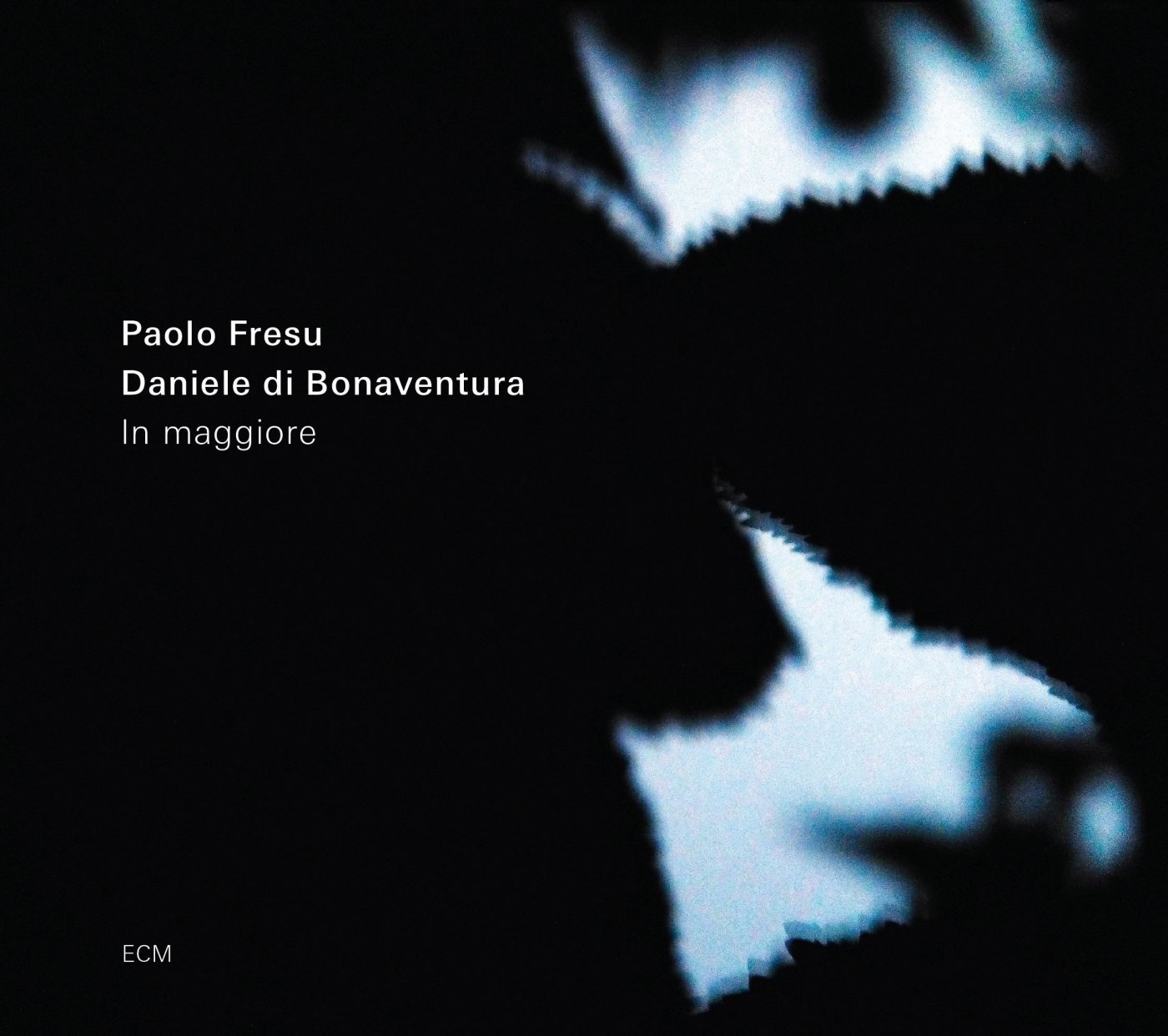
Paolo Fresu/Daniele di Bonaventura: In maggiore (ECM 2412)

In maggiore

In maggiore

Paolo Fresu trumpet, flugelhorn
Daniele di Bonaventura bandoneón
Recorded May 2014, Auditorio Stelio Molo RSI, Lugano
Engineer: Stefano Amerio
Produced by Manfred Eicher
Release date: 20 March 2015 (Europe only)

Trumpeter Paolo Fresu hails from the island of Sardinia, bandoneonist Daniele di Bonaventura from the coastal town of Fermo on the Italian mainland. Water and land may separate their origins, but together they make music so unified that a single landscape is enough to define them in this context. Their first ECM appearance on Mistico Mediterraneo placed their collaboration at the center of a project fusing improvisation with Corsican chant. With nothing but air between them here, they create a chant all their own, a language that breathes in and sings out.

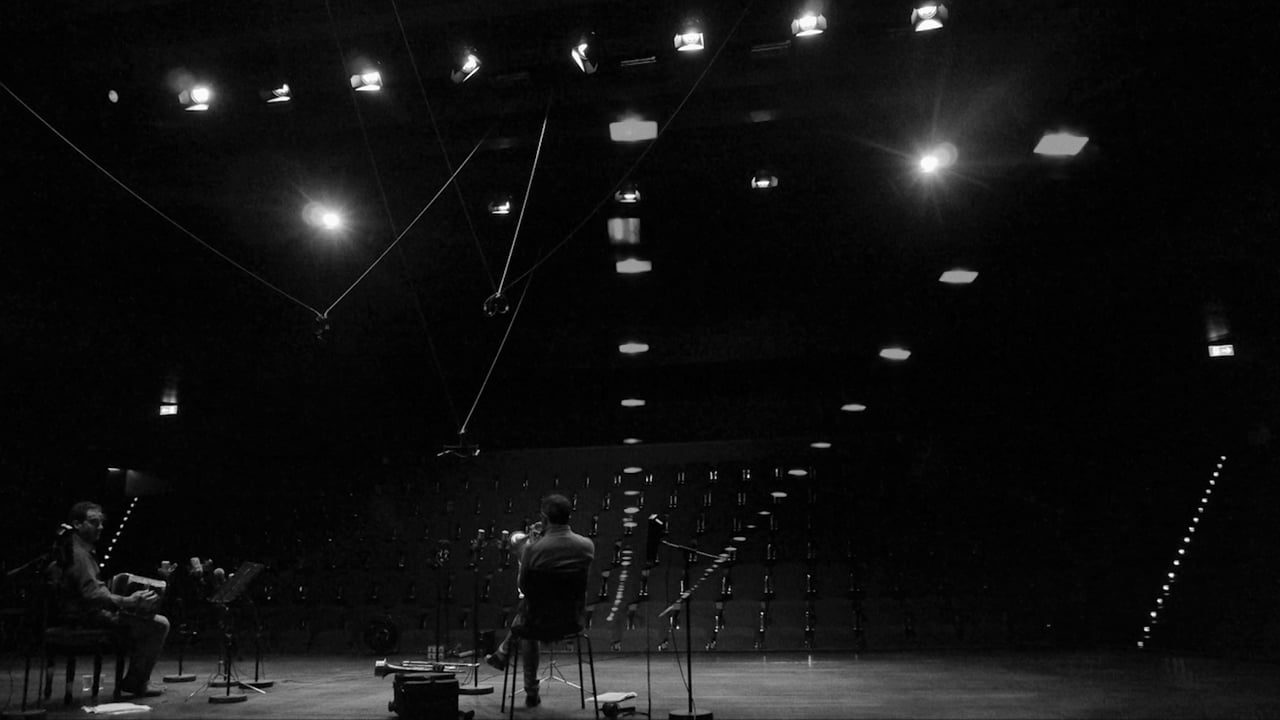
“Da Capo Cadenza” is the first of three tunes by di Bonaventura. Fresu’s lucid colorations cross every tee of the composer’s bellowed writing. The feeling of cinema is so strong here, it’s no wonder that the recording session should be the subject of Italian filmmaker Fabrizio Ferraro’s documentary Wenn aus dem Himmel, which turns the creation of this music into a meditation on spatial crossings.

Wenn aus dem Himmel still

This set opener is also a fine example of flugelhorn virtuosity, not in terms of technical flourish (a given) but of emotional integrity. His way with a horn lends itself to poetry, but versifies with a style that shades any description of it. To experience its atmospheric range, listeners need only immerse themselves in the duo’s take on Brazilian composer Chico Buarque’s “O que será,” last heard on an ECM album of the same name by Stefano Bollani and Hamilton de Holanda. The version here follows a progression that characterizes many on this album, building from caution to confidence as it gathers momentum into the Chilean resistance song ”El pueblo unido jamàs serà vencido” of Sergio Ortega. Despite, if not because of, the delicacy with which Fresu and di Bonaventura breeze through these changes, a raw, underlying power begins to emerge.

Fresu deepens the flugelhorn in three tunes from his own pen, including “Calmo” and the title track, both lyrical highlights. The latter tune closes out a disc that, despite its general quietude, stays on in the memory as a blast of renewable energy. As Fresu’s final note trails into non-existence, it carries into tomorrow the certainty of another sunrise. Other highlights from this darker instrument can be found in the freely improvised “Sketches” and delightful, if somber, take on “Quando me’n vò” from Puccini’s La Bohème. It is music that has lived many lives before, and lives again, as it will ever onward.

Close to center is di Bonaventura’s “Kyrie Eleison,” a wordless solo moves with the quiet strength of a hymn. Beyond it are tracks that employ muted trumpet, which at Fresu’s fingertips invokes early Miles Davis, even as it oozes a distinct charisma. Along with his own “Ton Kozh” and di Bonaventura’s “La mia terra,” Uruguayan singer-songwriter Jaime Roos’s “Se va la murga” stands as an album touch-point. The latter is lovingly arranged and awakens percussive details from within the instruments. By it is revealed an inner pulse that binds their art within the acoustics of the Lugano recording studio in which they find themselves transfixed for this enchanting hour. Di Bonaventura carries enough weight in his bellows to support the grandest sweeps from Fresu and, by the same token, enough airiness to guide his lightest feathers, unbroken, to shore.

More playful elaborations make the four minutes of Neapolitan composer Ernesto de Curtis’s “Non ti scordar di me” (Do not forget me) pass by with the wistfulness of youth itself, thereby enhancing the nostalgic hope of the title. But nowhere does the muted trumpet speak so forthrightly as in “Te recuerdo Amanda.” This aching melody by Chilean songwriter Victor Jara flows through brass like time itself, bypassing layers of history to let its voice be known. And, really, that’s the essence of this music. It is so personal that it becomes relatable on a purely human scale, shed of politics and origins until only the musicians and audiences remain, bound by mutual recognition that life is infinitely more important than its hindrances.

(To hear samples of In maggiore, please click here.)

Suite for Sampler – Selected Signs, II (ECM 1750)

Selected Signs II

Suite for Sampler – Selected Signs, II

This second ECM anthology was released in the spring of 2000, three years after the first, and shows the broadening of the label’s ocean in that short yet productive span. This album’s predecessor sustained itself on breath, featuring as it did a generous helping of Tomasz Stanko, and here too we encounter the clarinet of Gianluigi Trovesi and accordion of Gianni Coscia in the title track from from In cerca di cibo, which opens new contexts still. The tune was originally composed by Fiorenzo Carpi for a 1971 TV mini-series about Pinocchio, and perhaps one can read the stirrings of life in dormant wood passing over Trovesi’s reed. A leafy introduction from pianist Bobo Stenson then draws us into the forested “Polska of Despair (I),” off his trio album Serenity. As bassist Anders Jormin and drummer Jon Christensen fall into frame, the evolution of ECM’s sound practice discloses a yearning for space in jazz structures. The distance applied to Christensen’s drums is especially evident against the foregrounded cymbals and makes for effective contrast within a single instrument.

“Vilderness 2” significantly changes up the palette with Nils Petter Molvær’s electronics-heavy assembly, flowing into a blinding sun with every mechanism shining. The enhancements of guitarist Eivind Aarset add crosswind to the flight, while drum ‘n’ bass thermals puff their sporadic dragons into being. This one is off Molvær’s second ECM leader date, Solid Ether, the title of which produces as much as it describes.

Greek pianist Vassilis Tsabropoulos, a classically trained musician turned jazz architect, made an intensely melodic splash with Achirana, on which he debuted a trio with bassist Arild Andersen and drummer John Marshall. The smoothness of his improvising on the selected sign “Mystic,” which demonstrates the ECM ethos of melody having a life of its own, turns the program in yet another direction. And just when we are about to slip along an atmospheric slope into misty uncertainty, Trovesi and Coscia bring us back to where we started, extolling the virtues of “Django,” by jazz pianist John Lewis. It’s a subdued romp, but one of assertive whimsy.

Epigraphs was the second duo album from pianist Ketil Bjørnstad and cellist David Darling, and from it we encounter a fresh pairing of tracks. The aching “Upland” carries the flow of this compilation even deeper into the rock, while “Song for TKJD” drifts along the currents of Darling’s electric cello and Bjørnstad’s poetic commentary. Lest we get too attached to reverie, the first two movements of Heiner Goebbels’s Suite for Sampler and Orchestra (from the album Surrogate Cities) fragments all expectation with an electro-acoustic blend of cantorial sampling and string swells that recalls John Zorn’s Kristallnacht, ending this album with a reminder that beauty sometimes comes at the price of senseless destruction, and vice versa.

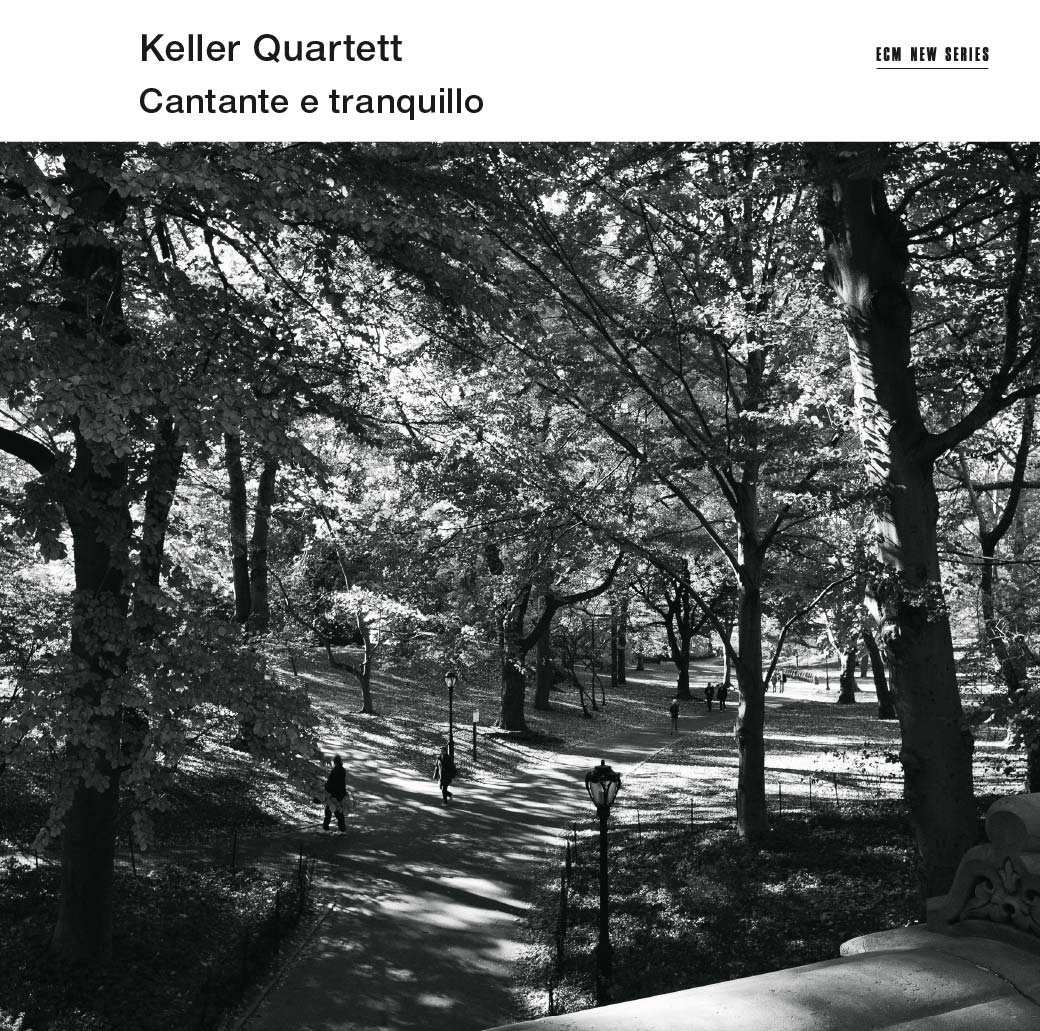
Keller Quartett: Cantante e tranquillo (ECM New Series 2324)

Cantante e tranquillo

Keller Quartett
Cantante e tranquillo

Keller Quartett
András Keller violin
János Pilz/Zsófia Környei violin
Zoltán Gál viola
Ottó Kertész/Judit Szabó violoncello
Alexei Lubimov piano
Recorded 1995-2012
Casino Zögernitz, Vienna
Stadttheater Eichstätt
Radiostudio DRS, Zürich
Engineer: Peter Laenger
Mastered by Christoph Stickel at MSM Studios, München
Produced by Manfred Eicher
U.S. release date: 2 June 2015

Cantante e tranquillo grew out of a conversation between producer Manfred Eicher and violinist András Keller, who envisioned an album of slower sections divorced from longer works. In true ECM fashion, this idea developed into a project all its own, framing previous recordings of Knaifel, Schnittke, Ligeti, and Bach by the renowned Keller Quartett with newly recorded selections from Beethoven’s opuses 130 and 135, and between them shorter pieces by Kurtág. The result is not a compilation but a sculpted entity with shape and sentience.

The concept alone is haunting enough; more so in execution, as ghostly appearances begin to sing once the third movement of Ludwig van Beethoven’s F-major quartet (from which the album gets its name) whispers into life. This rustling of the heart, slowed to feverish pathos and drawn as a brush across absorbent paper, embodies a yearning that, over the course of its awakening, resolves into a style of slumber in which the depth of life is surpassed only by that of death. Unlike the Adagio from the quartet in B-flat major, in inhales rather than exhales, holding all it can before expiring.

György Kurtág is known for his ability to pack surprising amounts of information into minute forms, but the Kellers give us examples of pieces that, despite their characteristic brevity, are spacious and expansive. At times parabolic (cf. the Officium breve in memoriam Andreæ Szervánszky), at others misty (Flowers We Are – for Miyako), and at still others pulsing like a geographic lay line (Aus der Ferne V), his music has no need to seek anything because it is starting point and destination all in one. The final movement of György Ligeti’s String Quartet No. 2, by contrast, sprouts in leaf-like structures that tremble to the rhythms of nervous winds. Unlike Narcissus, its reflection is being constantly disturbed, so that the illusion of a second self never clarifies. By yet further contrast, the stillness implied by “An Autumn Evening” (from Alexander Knaifel’s In Air Clear and Unseen), along with the Moderato pastorale of Alfred Schnittke’s Piano Quintet, breathes with lucidity. The latter’s pianism filters an unrequited dance which, like something out of a Tolstoy novel, twists until it bleeds music.

Anchoring all of this are two selections from one of the Keller Quartett’s finest recordings: Die Kunst der Fuge. Johann Sebastian Bach’s final masterwork is alluded to twice in the program, cycling between gradients of lost and found before ultimately falling in love with exile. A variation of Beethoven’s “Cantante” closes the circle with urgent, pregnant emotion, outlining a keyhole that only shadow can unlock to access the light beyond it.

Listening to this album is like watching the moon rise: if you focus on it long enough, you begin to detect its movement through the sky as if it had a mind of its own. Haunting, yes, but then again this music has no ghost to give up. It has one only to acquire.

(To hear samples of Cantante e tranquillo, click here.)