Joe Lovano tenor saxophone John Scofield guitar Eliane Elias piano Marc Johnson double-bass Joey Baron drums Alain Mallet organ Recorded January and February 2004 at Avatar Studios, New York Engineer: Joe Ferla Produced by Manfred Eicher and Elaine Elias
If you had heard only Marc Johnson’s ECM debut with his Bass Desires quartet, you might be forgiven in thinking that the bassist was an extroverted player by default. Yet, listening to his rounded commentaries on such albums as Rosslyn and Class Trip, it’s easy to see how this, his third leader date for the label, reveals in him a tender heart that holds beauty and integrity in highest esteem. Shades of Jade complements his full sound with an even richer tapestry of carefully chosen bandmates, including the painterly and good-humored Joey Baron at the drums, tenorist Joe Lovano, guitarist John Scofield, and, in her debut for the label, Brazilian pianist Eliane Elias (who also produces alongside Manfred Eicher). The result is something as timeless as the set’s opener, “Ton Sur Ton.” It is, along with the title track, co-composed by Johnson and Elias. Both rock a delicate balance of guitar and sax that is smooth, hip, and subtle. The composers, here and throughout, lay the ground in shaded Morse code. Baron splashes delicately around as Scofield and Lovano complete things, clinging leisurely like sunbeams on water’s surface.
With exception of the epilogue, Johnson and Elias individually compose the album’s remaining tunes. To his own, the bassist reaches back to his defining years will Bill Evans through an artful shuffling of touch and go. He is, for the most part, by his pen deferential, as both “Blue Nefertiti” and “Raise” put Scofield in the spotlight, dancing nimbly through the changes. The latter tune adds the organ of Alain Mallet for some flavor. Yet the highlight, of both subset and album, is his bass solo “Since You Asked.” Accompanied by a whisper of cymbals, it is an utterly personal dialogue between deep and deeper.
It is in the context of Elias’s writing that Johnson comes more overtly into his own. Whether through the deep circulation he provides in the trio setting of “Snow” or in the album’s ballad du jour, “All Yours,” he carves out prime singing space amid Elias’s flowing keys. For her part, the composer gets plenty of shine time in her denser moments, as in “Apareceu,” which calculates an even smoother ratio of bread to butter alongside Lovano’s champagne sparkle, and in the curtains of “In 30 Hours” that billow from the wind of a passing memory.
Shades ends with exactly that in the form of a haunting take on the Armenian folk song “Don’t Ask of Me” (a.k.a. Intz Mi Khntrir). Its echoes burn forlorn afterimages into the night. Droning, keening, dreaming. As if the music alone weren’t enough, the album is an engineering gem, managing to bring out inner warmth while retaining all the immediacy of a live set. And in the end, is not immediacy what jazz is all about?
Tord Gustavsen piano Harald Johnsen double-bass Jarle Vespestad drums Recorded January 2004 at Rainbow Studio, Oslo Engineer: Jan Erik Kongshaug Produced by Manfred Eicher
Norwegian pianist Tord Gustavsen has forged one of the true concept outfits of modern jazz. In the two years since his ECM debut, he, along with bassist Harald Johnsen and drummer Jarle Vespestad, has looked behind the Scandinavian mirror into the roots that feed his spectrum. Navigating a growing network of original tunes, the trio comes into its own on The Ground, a timeless sophomore effort that implies many peripheral constellations even as it brightens the stars of its own.
In a press release interview, Gustavsen has noted the “hymnal” qualities of his music, which over many months of touring have taken on a collective purpose of their own. The end effect seamlessly combines the shape-shifting of opener “Tears Transforming,” which drifts freely between major and minor keys in a balancing act of inner peace, and the title track, which is the longest of the album yet is somehow also the most concise, for it indulges in the pathos of reflection with all the starry-eyed wonder of childhood. Both braid chains of circles and spirals, taking on fresh dustings of pollen, as if the scents of a thousand fields were mingling as one. This is the eponymous ground, where all fertile songs are born.
Johnsen and Vespestad are sidemen only insofar as they complete a triangle to which every side gains integral purchase. Melodically speaking, bassist and drummer contribute just as much color as Gustavsen in “Being There.” As also in its companion track, “Twins,” the musicians take obvious comfort in those nearly imperceptible moments that redefine us with every breath. Although Gustavsen’s status as leader is more than nominal (all the melodies are his) he tugs ever so gently at the reins to shape the flow at given moments. If anyone, it is Johnsen whose tread presses freshest into the soil, leaving Vespestad to brush away the traces, lest their path be followed.
Among its many virtues, The Ground includes such quintessential turns as “Colours of Mercy” and “Token of Tango.” Both play to the band’s blending strengths, while also giving just dues to the blues. Their encroaching sense of nostalgia only deepens as the album’s context grows. In this regard, the two-minute solo piano “Interlude” adds a touch of cabaret, while the dance-like “Curtains Aside”—with its rolling snare, lumbering bass, and bright pianism—breaks the fourth wall between artist and audience.
Above all, The Ground proves once again that Gustavsen’s trio is most assured at its tenderest moments. “Sentiment” and “Edges of Happiness” are but two examples. Each evolves from simple stirrings to windswept reverie, holding its peak only briefly. The lull is grand ruler. And just when you think the trio couldn’t get any gentler, they emit a signal like “Reach Out and Touch It,” and with it the realization that sometimes the most profound epiphanies are those left alone.
Accordingly, this album doesn’t have highlights so much as noteworthy shadows. Like the tune “Kneeling Down,” it offers respect to the art that moves its mind, body, and soul to such sonorous action without needing to proselytize. In the same way that turning a Rubik’s cube offers up endless possibilities yet maintains its shape no matter what schemes its colors take on the surface, The Ground holds true to its geometry even as rainbows ring their way down its skin.
A standout achievement for both the musicians involved and the label that has so graciously involved them.
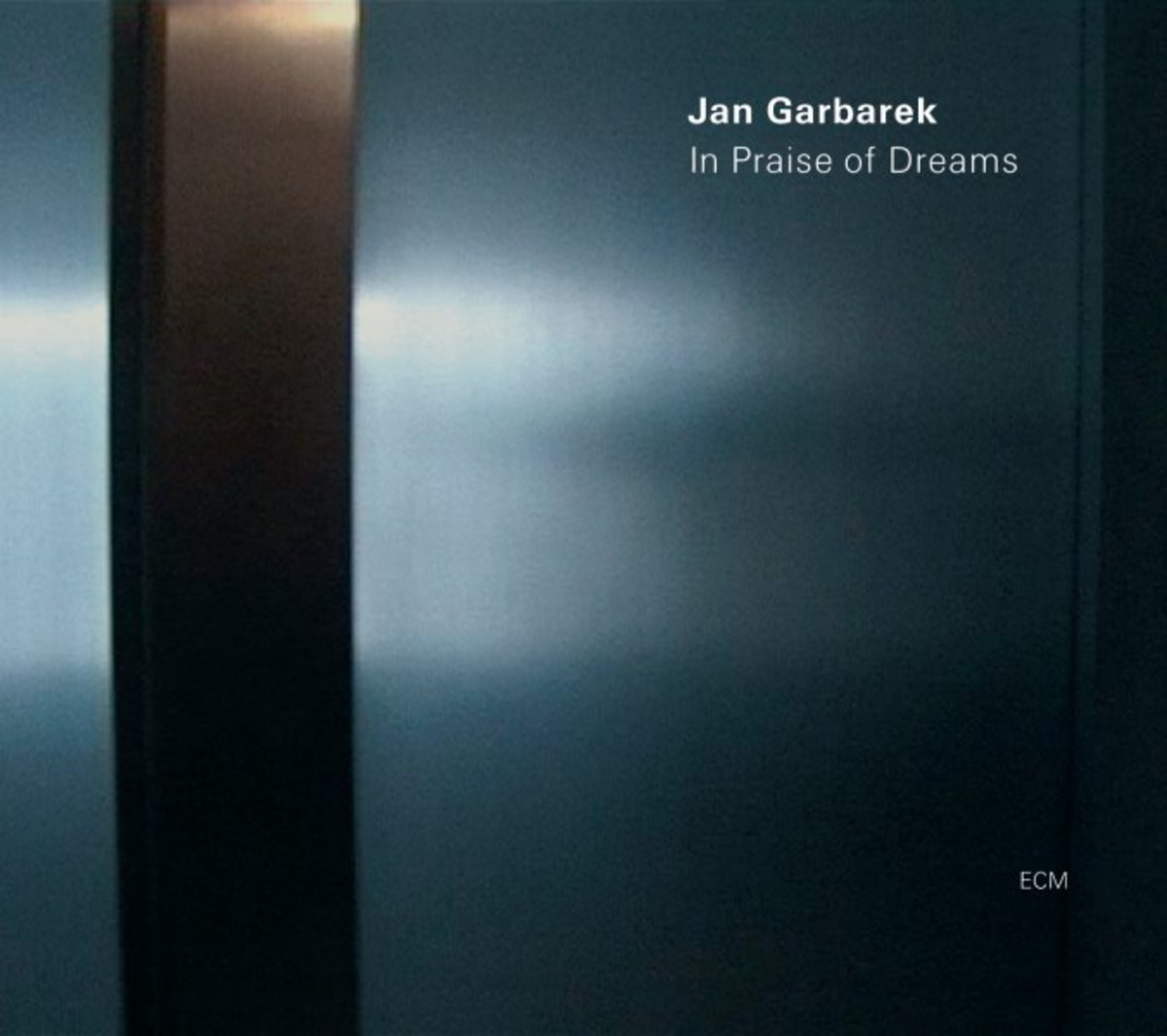
Jan Garbarek tenor and soprano saxophones and/or synthesizers, samplers, percussion Kim Kashkashian viola Manu Katché drums Recorded March and June 2003 at Blue Jay Recording Studio, Carlisle, MA (Engineer: James Farber), A.P.C. Studio, Paris (Engineer: Didier Léglise), and in Oslo Edited, mixed, and completed at Rainbow Studio, Oslo, by Jan Garbarek, Manfred Eicher, and Jan Erik Kongshaug (Engineer) Produced by Manfred Eicher and Jan Garbarek
By the release of In Praise of Dreams, six years had elapsed since Jan Garbarek’s RITES. Where that earlier album was something of a meta-statement for the Norwegian saxophonist-composer, here we get a comforting regression into terrains that are familiar, if drawn with new pigments. Of those pigments, violist Kim Kashkashian is perhaps most striking. More than her tangential associations with composers Eleni Karaindrou and Tigran Mansurian, it is her richness and depth of feeling that make Kashkashian such an intuitive musical partner for Garbarek. Drummer Manu Katché, aside from notable appearances on earlier Garbarek albums (including his definitive Visible World), pours a sensitivity all his own into the mix. Indeed, sensitivity is name of the game throughout this meticulous album, which bows to improvisatory freedoms at select moments of abandon.
Usual Garbarek elements abound: the graceful tone of his horn, a tasteful array of electronics and keyboards, and a feeling of dance turned into song. Yet what makes Praise so worthy of just that is its melodic integrity. Every tune finds its own burrow, where it dreams comfortably of life on a different plain. Between opener“As seen from above,” which overlays tender reed lines over a groundswell of piano and sampled drum riffs, and the concluding “A tale begun,” the latter a congregation of breath and bow that extends one of the most beautiful roots into ECM’s soil, a sense of oneness with nature prevails. The ensuing dramaturgy keeps us ever in sight of Garbarek’s shadow, racing across the ground in birdlike shape toward some illusion of stillness.
Along the way, the listener is treated to a veritable storybook of textures. Kashkashian’s ebony qualities work most cinematically in “One goes there alone” and in the title track. Pulsing beats connect feet to earth as lines of deference are exchanged above. Garbarek melodizes freely with eyes closed, prepared for whatever light or dark may come, while Kashkashian shuffles tension and release with likeminded ease. In this regard, “Knot of place and time” is an emblematic title, marking as it does the spatiotemporal crossroads at which stands so much of Garbarek’s writing, a spirit that needs the translation of recording to make its landscapes seem real.
Sometimes, those landscapes are arid. Long untouched by sole or palm, they nevertheless shine with immediacy. Across them Kashkashian provides the regular curlicues of wind through which Garbarek threads his cries. “Cloud of unknowing,” for one, rests on a harp-like arpeggio and splits unison lines into separate journeys, each spurred by a delicate percussive undercurrent through the dunes into unexpected waters. Other times, as in “Iceburn,” the conditions are wintry, beginning fragmented but arriving at the same crystalline ever after. In these caverns the piano becomes a relic, memory of a time that is no longer with us. Like the carousel of “Scene from afar” and the lyrical train ride into which it morphs, it’s all in the mind.
These are but some of the highlights of a trajectory, flowing from horizon to horizon in a jet stream fully shrouded with intention, that is nothing without the listener’s own secrets. As yet unwritten, they stand in the exact center of a suspension bridge that could bend either way. Take the first step, and see where the next will take you.
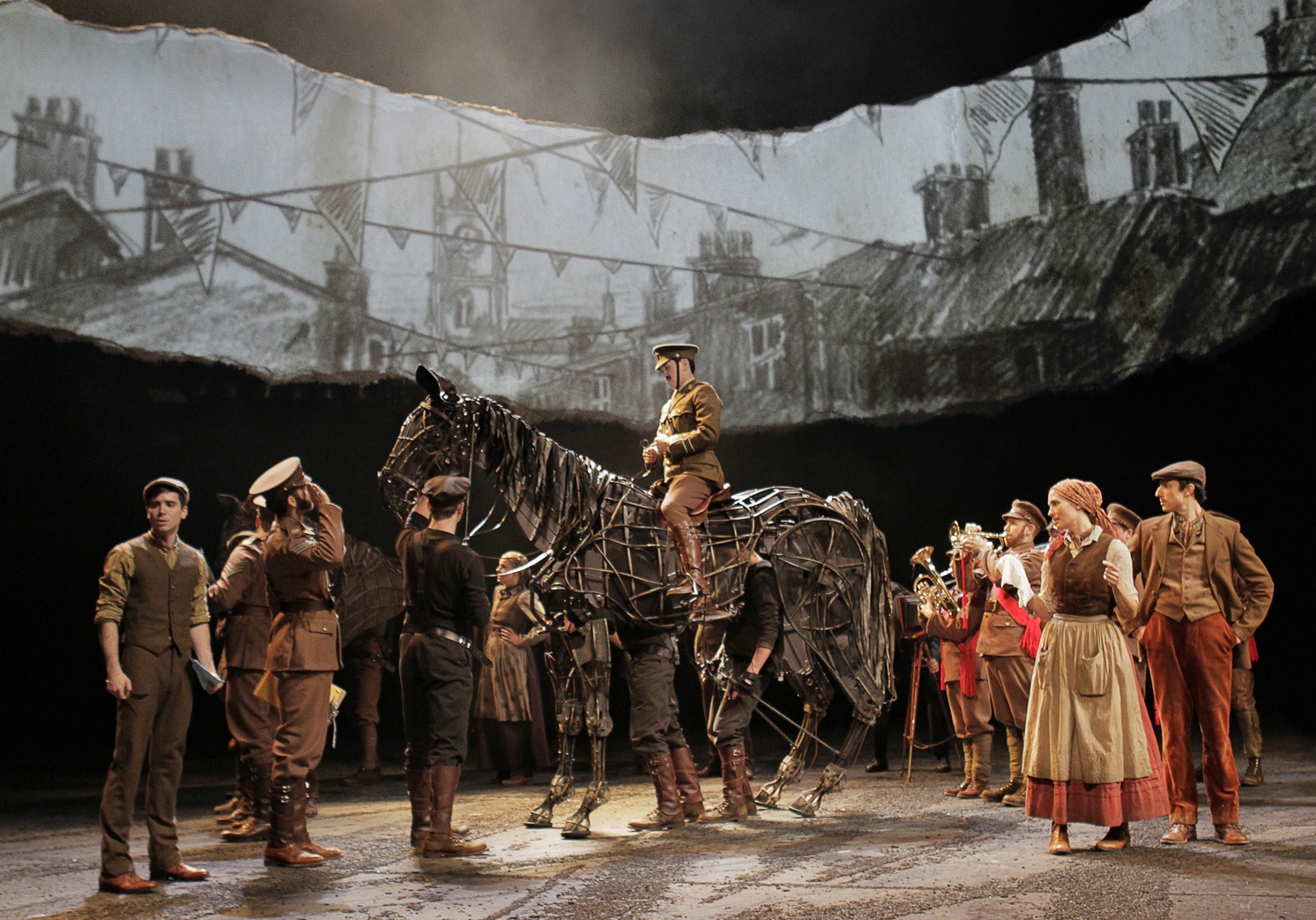
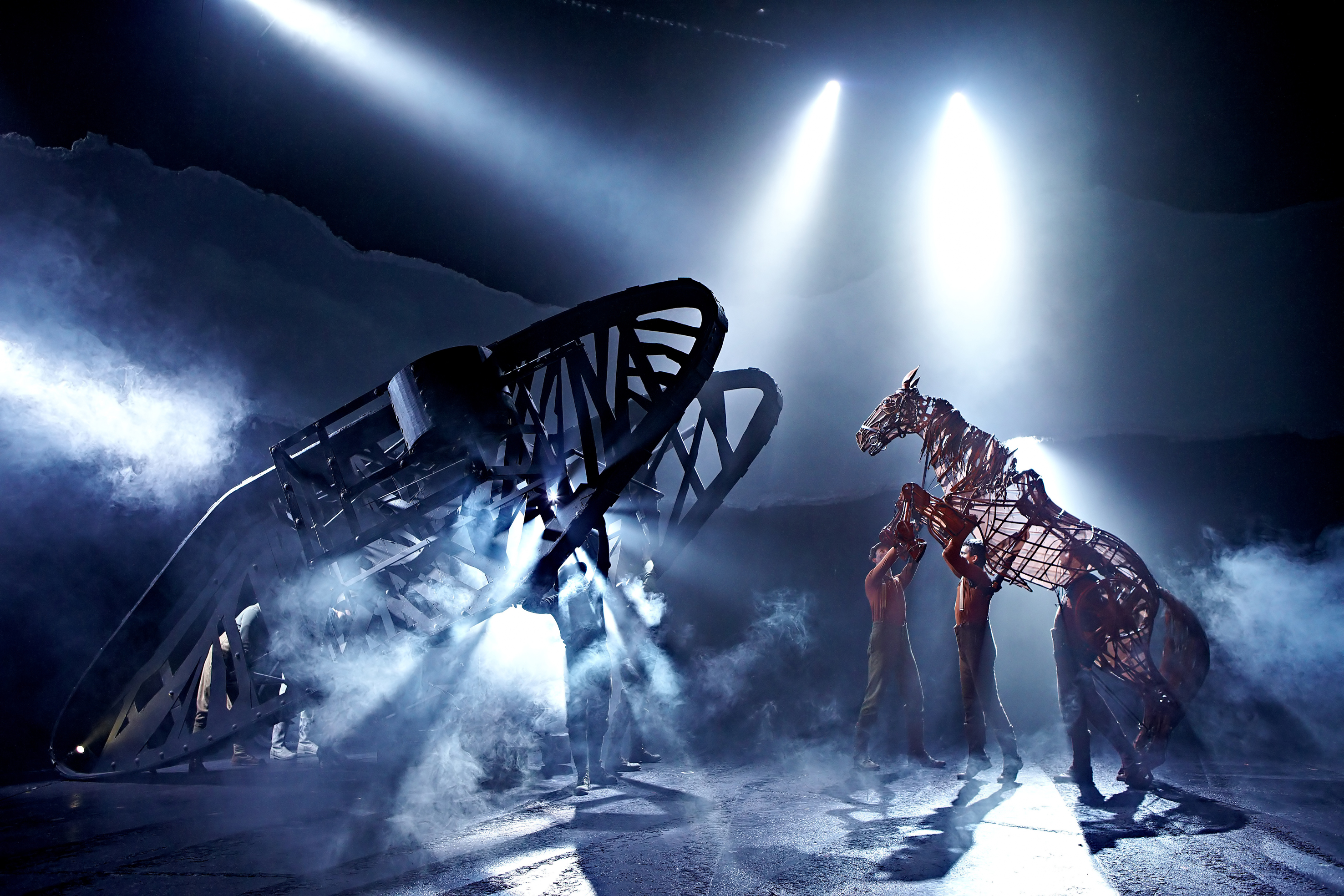
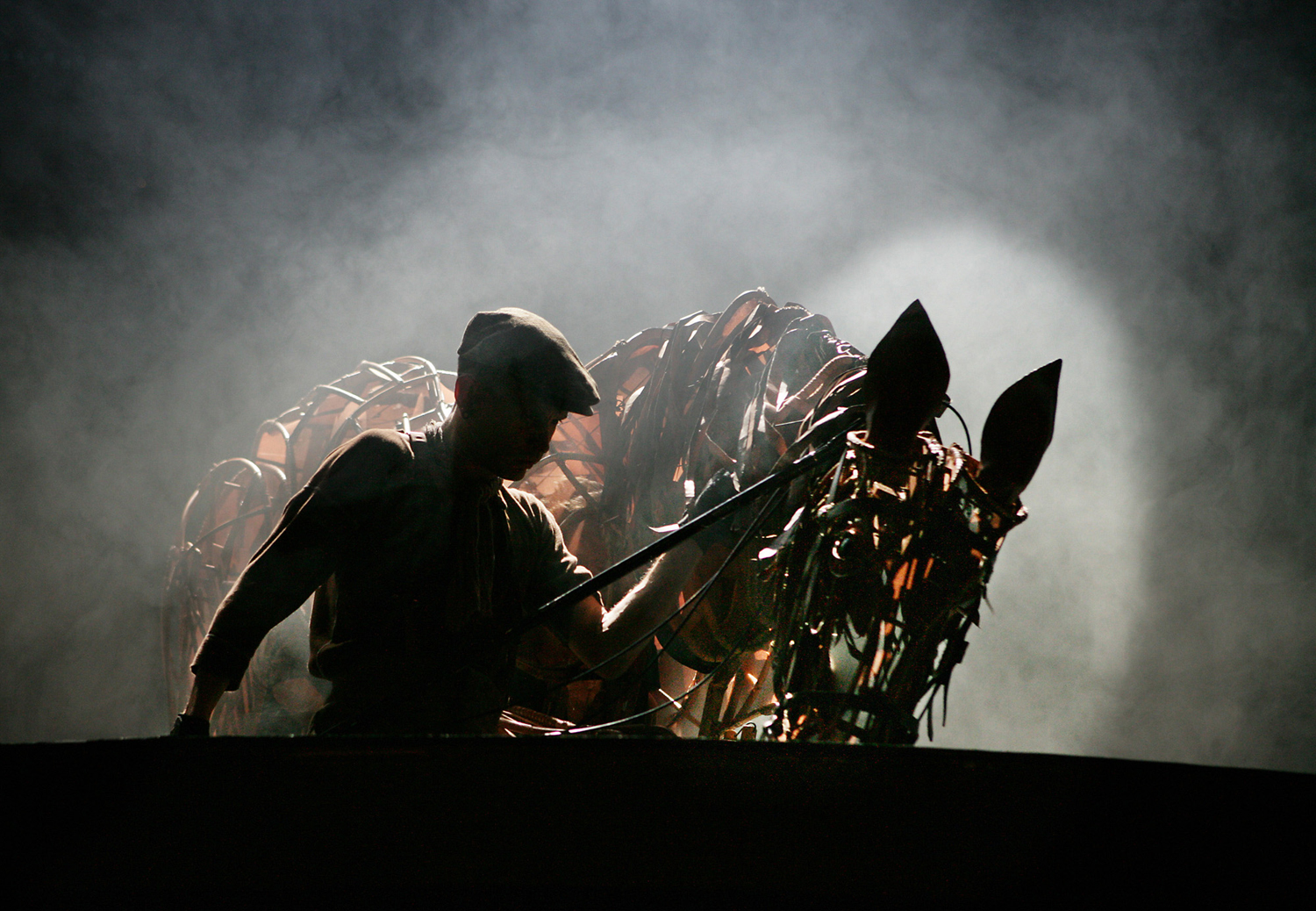
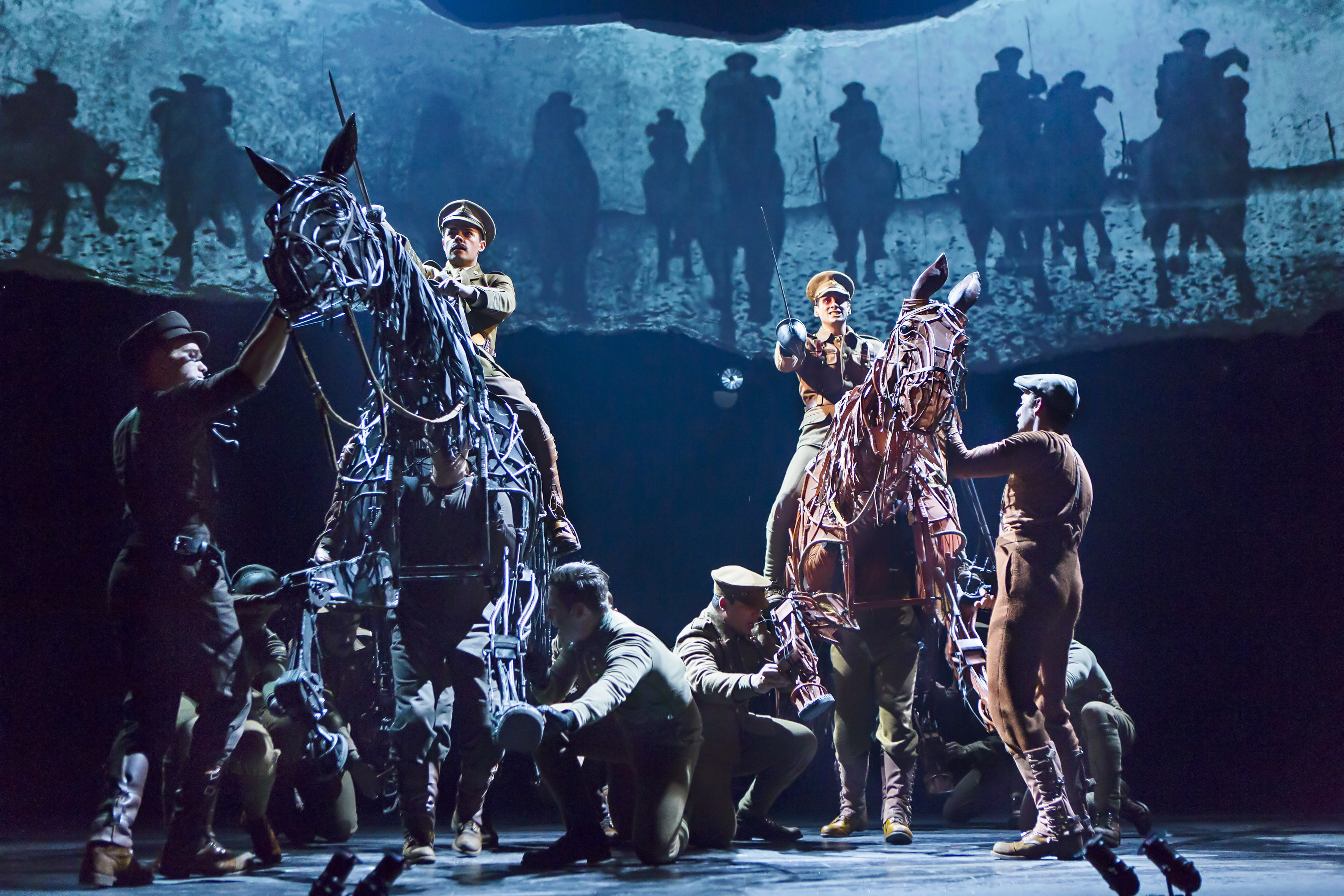
Before War Horse became a Hollywood blockbuster, it began as an internationally successful play. At the center of its popularity was, and famously remains, the phenomenal puppetry which brings the titular horse to life. The result of an intense development process on the part of Cape Town’s Handspring Puppet Company, the War Horse puppets have enchanted theatergoers with their realism and emotional veracity. After several missed opportunities to experience the play in New York City, I was able to see it at last via the London National Theatre’s telecast. While impressed as anyone with its tessellation of story and artistry, I also found myself disturbed.
The following is in no way a critique of the admirable efforts of everyone involved in the London production, nor of author Michael Morpurgo, on whose book the play is based. It is, rather, an attempt to tease out the play’s unwitting reinforcement of anthropomorphism—that ubiquitous psychological malady which places human beings highest on social and evolutionary scales—and its distancing from the animal sentience it nominally seeks to uphold. For while the narrative skeleton is backboned by the horse and his harrowing journey from farmstead to battlefield and back again, the spotlight shines brightest into the heart of the boy who searches for him.
Albert is the son of Rose and Ted Narracott, a family of rural Devon barely making ends meet as World War I looms on the horizon. Father Ted lives up to his reputation as town drunkard when he furiously outbids his brother Arthur for a foal brought to local auction. Ted sees the young horse as nothing more than a trophy of his paltry triumph, and agrees to a bet proposed by his brother: If the horse can learn to plow within a week’s time (a formidable feat, given his hunting pedigree), then Arthur will fork over the auction value as reward. The prospect comes welcomingly to Rose, who is furious at her husband for squandering their mortgage payment on an animal who otherwise serves them little. Meanwhile, Albert has bonded with the horse, who he names Joey. From that moment on the two are linked, heart to heart, their bond secured when Joey wins the bet. Thus his worth, from the beginning, is determined solely by his ability to meet human expectations. It’s a sentiment echoed in the lyrics wafting from an onstage singer’s lips: “Fading away like the stars in the morning…only remembered for what we have done.” It is only humans who will do the memory work required to keep the horse’s valor intact.
Two years later, in 1914, the war has broken. Even as its political machinations foment behind the scenes, anger mounts horses of a different kind in Ted’s mental stable as he prepares to sell Joey to the cavalry for the war effort. Despite Albert’s protestations (“We were born for each other!”), Joey is sold and handed over to James Nicholls, an artistically inclined army major who, by way of introduction, opens the play at his sketchbook. This motif figures heavily and is emphasized by the large torn-paper backdrop that serves as mirror and projection screen throughout. Its surface offers an eye slit of view into both the story’s bucolic overture and the violence of its central acts.
In one of the play’s most disheartening scenes, Major Nicholls prepares Joey for their French deployment by desensitizing him to gunfire. With each shot, Joey learns to overcome his fear until the sound no longer fazes him. Such training proves useless, however, when Nicholls dies in action the moment he hits the field, fatally dominated as he and his comrades are by the Germans’ advanced tanks and guns.
His sketchbook is subsequently sent to Albert, who tears out a picture of Joey and runs away from the farm, determined to find his beloved horse. He lies his way into the army (Albert is not yet 18) and suffers many hardships along the way. After being blinded by tear gas, and reaching the limits of hope, Albert babbles deliriously about Joey just as the equally haggard horse is being led into camp to be put down. Albert whistles for Joey as he always did, and the circle of his journey is closed. Boy and horse make it home safe and sound, painted by the fire of the war’s setting sun.
Story-wise, War Horse is all it’s purported to be—poignant, touching, and triumphantly bittersweet—and manages to refresh its timeworn search-and-rescue theme with panache. By the same token, the Joey puppet renders acceptable certain levels of violence and human-animal segregation in the context of the theater that might not fly so smoothly in the turbulence of the real world. On the surface, such allowance shares much with any politically minded art that seeks to crack the façade of the military industrial complex, if only because it explicitly visualizes the depth of violence it vows to address and, ideally, dismantle. Deeper goings on, however, are at work when Ted whips Joey in a rage over the horse’s initial disobedience. The simple fact that Joey is an assembly not of flesh but of cane and gauze means actors can hit him as hard as they like. This adds realism, yes, but along with its resounding thwack a few questions hover in air.
First: What is the effect of witnessing this violence? Everyone attending the play of course knows that the beating of Joey is a representation, the result of two “dead” objects making sharp contact. The effect is nothing short of cinematic—only where one might normally find a computer-generated victim, here the stand-in is undeniably present. And so, while the violence inflicts no physical pain, it is violence nonetheless, visceral and unrestrained. The master’s tools do not the master’s house unmake.
Second: If the beating of a horse in effigy is deemed worthy of paid admission, what does this say about the fascination with our domination over animals? For indeed, the expressive potential of Joey as character is directly proportional to the level of detail and attention put in by his dedicated puppeteers. Take, for instance, an early scene in which Joey grows from a disjointed, whinnying thing to a full-grown specimen. The intricate choreography required of this transformation speaks more to the power of human invention than to that of animal intelligence or life drive.
Third: Does not the fact that we can feel sympathy for the beaten horse without witnessing the beating of an “actual” horse mean that we are more comfortable promoting a displacement of said beating over the real thing? If we are willing to shell out exorbitant amounts of money just to soak up such imagery in person, imagine what else we might be willing to do to ensure that it never take real form. Of course, the very nature of a play is to suspend our disbelief for the duration of its alternate reality. In the end, we do not accept the violent act as such, but dismiss it as a dramaturgical necessity, a remainder, a glimpse of narrative afterlife. But for whatever it’s worth, I imagine it takes some time to work through and let go of this little trauma.
On the one hand, the War Horse ethos manifests beautifully on the stage. On the other hand, the play ignores the very equine soul that dominates its spotlight. The opening scene again clues us in on the anthropocentric spectacle about to ensue, as from Major Nicholls’s sketching springs forth a blush of fauna. Stick-mounted birds wielded by actors flutter and circle—every nonhuman being an object of craft—and Joey, at this point but a tender, as-yet-unnamed figure, emerges from a tangle of intuitive squiggles. He is at once center and periphery, the rock-hard soul and its mineral dilution. His accelerated growth stands starkly among characters whose lives are destined for premature ends, along the way activating a subtle eugenic undercurrent, as activated by constant debates surrounding Joey’s breeding and, by extension, value: draught vs. thoroughbred, hunting vs. farming, peaceful vs. warring, and so on.
These contradictions are embodied by the title alone: War connotes violence, and Horse the freedom of nature in the raw. One is a fatal self-projection, the other a powerful assemblage of muscles, tendons, and sentience tamable only by surrender. In staging the two simultaneously, there is something of one in the other. In the horse is embedded a history of systematic domestication, one that feeds the very complexes of human superiority that allow his deployment as an instrument of war in the first place. By the same token, the battlefield is rife with exploitations of materials drawn from the land and returned to it plugged into young, decaying bodies.
Fascination with the puppeted Joey is unsettling, for it lies, I argue, not in the majesty of horses but in an inscription of human dominance over them; not in its closeness to nature but in its uncanny mimicking of it. Logistics and questions of animal cruelty bar the possibility of staging War Horse with a live Joey. The downside to this is the possibility of getting lost in a sea of simulacra at the expense of unframed phenomenological experience. By asserting our control over, and defining of, animality, the play reifies the human-animal divide. In less uncertain terms: The closer we get to re-creating nature, the more disconnected from it we become.
As shown in a behind-the-scenes segment shown during intermission of the London telecast, a production note scribbled by Handspring puppeteers reads: The puppet’s work is to live. Those fortunate enough to witness their sheer artistry in real time can hardly deny this mantra (in fact, the first action Joey’s puppeteers learn is making him breathe). Yet, as the play progresses from Joey’s foal-hood to his weaponization on the battlefield, it’s clear that he was always dead to the world, made “living” only the careful art of illusion. In order for the puppet to live, something in us must die. What we’re left with, then, is a funeral pyre on which has been laid our allegiances to nature at large, set to burn by the torch of unanimous critical praise.
Stephan Micus bagana, Balinese and Burmese gongs, Bavarian zither, bowed bagana, dilruba, dondon, kyeezee, maung, nay, shō, Thai singing bowls, Tibetan chimes, Tibetan cymbals, tin whistle, voice Recorded 2001-2004 at MCM Studios
Life takes its inspiration from a Zen Buddhist kōan. The function of a kōan, or riddle, is to test one’s resolve in the face of doubt, the latter born from overdependence on worldly logic (think “What is the sound of one hand clapping?). The goal is not to “solve” but to become the riddle. In this particular kōan, a monk and his master discuss the meaning of life, and through his usual array of diverse instruments and singing (here entirely in Japanese), Micus does just that. He becomes what he performs. Distinct to the riddle of life is its elliptical reasoning: it begins and ends with the same answer. Micus chooses to express this distillation by moving from complex to barest arrangement.
Micus listeners will know many of the instruments through which he speaks: Bavarian zithers, shō (Japanese mouth organ), Thai singing bowls, nay, Tibetan chimes and cymbals, and the sarangi-like dilruba. For Life he adds to his palette the maung (Burmese gongs) and the bagana, an Ethiopian lyre that produces a uniquely entrancing buzz by way of leather strips threaded between its strings.
Narration One And The Master’s Question A monk, looking for the essence of life, left his monastery at a young age to travel through China. After many years, on his return to the monastery, his old master asked him, “What is this life?”
The bagana extends the album’s thickest spokes, and through its subterranean chirring sets the wheel slowly spinning. Mouth organs cross canvas like floating-world clouds, allowing just enough of the scene to take shape before our eyes, that our ears might take in the Micus voice, magnified ten times over. Despite the wheel metaphor, in this cycle there is no center, only a diffuse matrix of breath and contact. An Irish tin whistle unspools its birdlike call by means of a language that is as ephemeral as its understanding of eternity. The voices grow, turning into feet whose steps—indicated by Bavarian zithers—seek a horizon of intimate hope.
The Temple
Like its namesake, this instrumental interlude for (for 5 Thai singing bowls, 2 dilruba, and 2 nay) expresses serenity through perception of barest movement, the force of which is at once cause and effect of a lone figure’s presence. The nays and arco draws turn like lily pads on water, held by unseen tethers as the atmosphere holds a cloud.
Narration Two The monk said…
Twelve chanting voices, again embracing the buzzing bagana, bear their peace in unison, thus giving space to:
The Monk’s Answer “When there are no clouds over the mountain the moonlight penetrates the ripples of the lake.”
Here the drone of six dilruba interacts with the voice, authorial but not proselytizing, transcendent but self-aware. The monk’s words bid the listener to look within in order to be without.
Narration Three The master became angry and said…
The master’s neurological impulses, each a pylon of the mind standing guard over itself, are vocally expanded. Their collective power sweeps a giant yet gentle hand across land and ocean water.
The Master’s Anger “You are getting old, your hair is gray, you have just a few teeth left and still you have no understanding of life.”
The catharsis of this moment, a cut in the skin of contentment, marks the voice’s tail with jangling footsteps. Through crash of cymbal and beat of drum, internal conflicts are made external and crushed by soles of passing strangers.
Narration Four The monk lowered his eyes, tears streaming over his face. Finally he asked his master…
The voices, now numbering 17, reach their grandest magnification. These are the album’s droning lungs, etched into being by the bagana, now bowed, in cavernous antiphony. All of which leads us back to:
The Monk’s Question “What is this life?”
Accompanying himself on Balinese and Burmese gongs, Micus sings more tenderly and with greater resonance, wavering as if a reflection on moonlit pond.
The Sky
Evoked through the solo shō and drawn in wisps vapor, the sky unfolds but also tucks into its deepest indigo.
The Master’s Answer “When there are no clouds over the mountain the moonlight penetrates the ripples of the lake.”
Hence, the solo voice which ends things by beginning them. Taking comfort in the emptiness of response, the words melt into pure sound, taking with them all the care that would hold us back.
Savina Yannatou
Primavera en Salonico Terra Nostra
Savina Yannatou voice Lamia Bedioui voice Primavera en Salonico Lefteris Ahgouridakis percussion Yannis Alexandris oud, guitar, tamboura Kostas Vomvolos kanoun, accordion, caliba, tamboura Kyriakos Gouventas violin Harris Lambrakis nay Michalis Siganidis double-bass Antonis Maratos percussion Tassos Misyrlis cello
Recorded live in Athens, November 2001
Sound engineer: Vangelis Kalaras
Remixing and sound processing: Yannis Paxevanis, Studio “N,” Athens
Editing: Yannis Christodoulatos
Mastering: Chris Hatzistamou and Yannis Christodoulatos, Athens Mastering
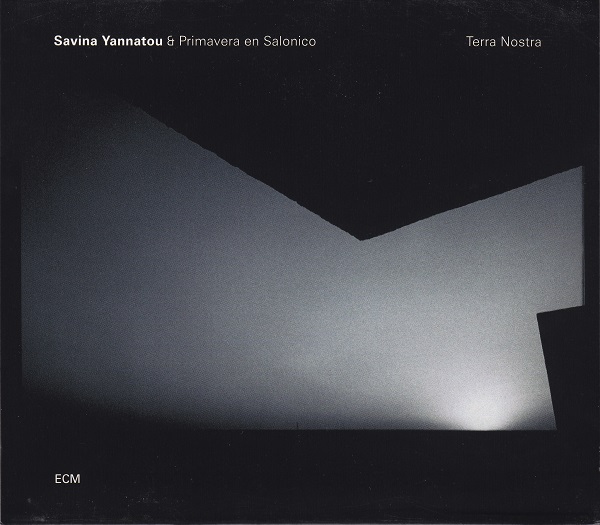
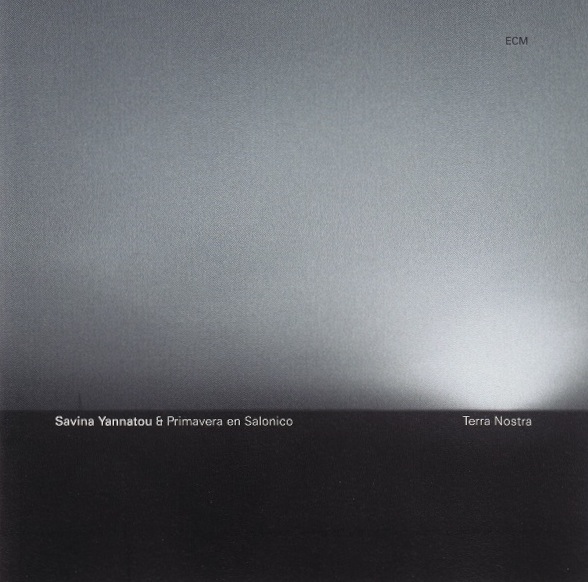
Savina Yannatou is a wonder. As well versed in classical and jazz as in traditional and folk repertoires, the Greek singer turns every melody she handles into an alloy entirely her own. By the time this album was committed to digital in 2001, she had twenty years of acclaimed recordings, performances, and collaborations behind her—five with Primavera en Salonico. From the brilliance of what’s captured on this, her ECM debut (repackaged from its original appearance on Lyra), here’s hoping there will be twenty more.
To describe Yannatou’s relationship with Primavera is to describe the spark of flint and fire. The result is a conflagration that dances with innumerable colors. Some of those colors are easily identifiable as cultural, spanning as they do a variety of locative sources. Others are not so amenable to labeling, for they arise out of Yannatou’s effortless code switching and extended vocal techniques. Among those techniques, we are treated to everything from unadorned lullabies (as in “Adieu Paure Carnavas,” which comes from Provence) and swirling enchantments (“I’ve told you and I say again,” a Greek traditional from Asia Minor) to trance states of speech-song (the Caribbean traditional “Ah Mon Dié”) and cathartic ululations (“El Barquero,” by way of the seaside Spanish village of Asturia). In this vein we have also “Ballo sardo,” a Central Sardinian tune with whimsical touches glinting off an already compelling surface. In it, Yannatou sings, “Be careful, barons, to moderate your tyranny / otherwise I swear to you that you will lose your power,” effectively flagging the shattering power that one sweep of the lips can possess. The pen may be mightier than the sword, she seems to say, but the mouth outdoes them both.
The topography of Terra Nostra is thus varied as the cultures that populate it. The mournful violin that introduces “With the Moon I’m Walking,” a Greek traditional from Kalymnos Island and the concert’s prologue, shifts tectonically beneath Yannatou’s crosscurrents. It’s an appropriate starting point, a place of questioning and cosmos that sets up much of what will soon be answered. Highlights to follow include “Ivan Nadõnka Dúmashe” (Ivan Said to Donka), a song from the Bulgarian province of Eastern Rumelia. The region’s Turkish and Greek minorities can be heard in the kanoun, a Middle Eastern zither that shines starlight across a bed of lyrical regret. Nay virtuoso Harris Lambrakis—of an ensemble rich with instrumental talent—is a noteworthy facet of Primavera’s vibrant sound. His contributions to “A Fairy’s Love Song” (traditional from the Hebrides) and others draw threads of longing throughout.
Since the beginning of the Yannatou/Primavera collaboration, Sephardic music has been a vital part of the group’s programming, and in this performance we are treated to four examples. The upbeat and full sound of such refreshing, if also surreally realized, songs as “Jaco” and “Los Bilbilicos” lends uplift, while the strong percussive drive of “Tres Hermanicas Eran” looses a dream from slumber, made reality by the tactile force of the performance. In these songs we feel Yannatou at the center of crowded streets, where her immediate surroundings curl into a ball at her feet and purr to the tune of her descriptive powers.
Five songs feature co-vocalist Lamia Bedioui, who was born in Tunisia but has been based in Greece for nearly two decades. She brings a likeminded cross-culturalism to the group, beguiling in a handful of Arabic songs, such as the Meredith Monk-esque “Yiallah Tnem Rima” (Let Rim Sleep), a lullaby from Lebanon that carves brief passage through caves and sand with its largely vocal palette, and a rubato version of the undying “Wa Habibi.” She also heads the jangling fragmentations of the Italian Renaissance tune “Madonna de la Grazia” (Italian Renaissance) with equal parts tact and abandon.
What makes this record blossom is the interactive prowess of its musicians. Primavera stays true to its name, gathering all the power of the eponymous season to resurrect these songs from the depths of a long winter. Through clever instrumental pairings (of, for example, oud darting through jazzy bass lines) and juxtapositions of sacred and secular, Yannatou and her band prove that, once everything sprouts, it all becomes one homogeneous field, across which we are bid to run for love of living.
There’s a reason why Pandora starter songs are called “seeds”: each has potential to grow into something magnificent. My first time using said online radio service, I’d created a Cocteau Twins station to maintain my sanity during some rote task or another, and periodically heard a mysterious song for which I was compelled to stop what I was doing and pay attention every time it came on. That song was “Misunderstanding” by Mediavolo, and my life as a listener was never the same. The music of Mediavolo has touched me like that of no other band. In an age where so many songs and their creators ephemerally surface before drowning in an unfathomable data stream, such life preservers are few and far between.
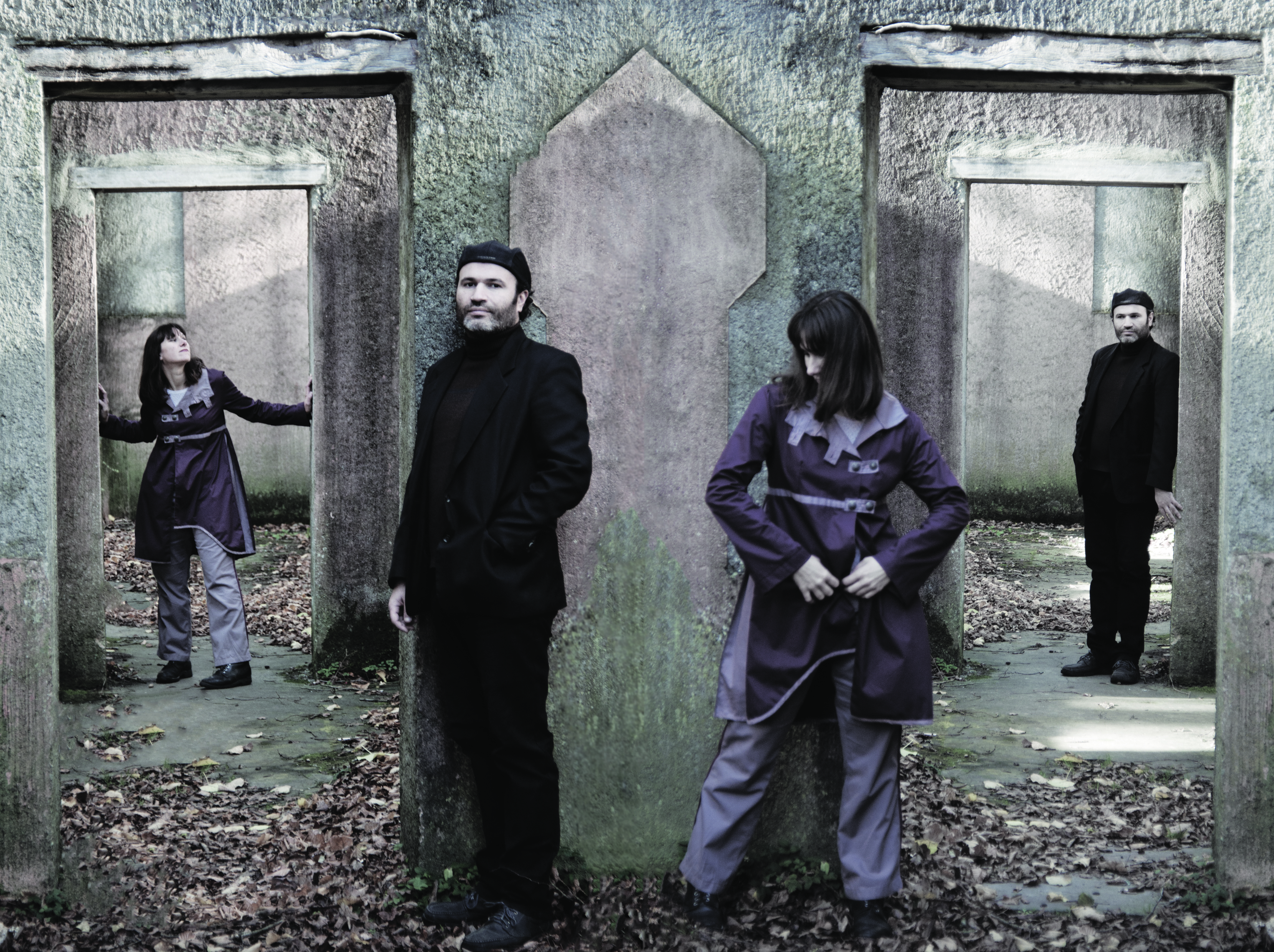
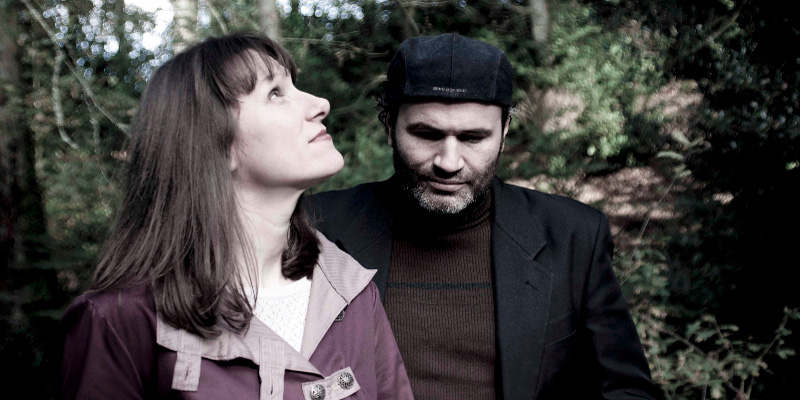
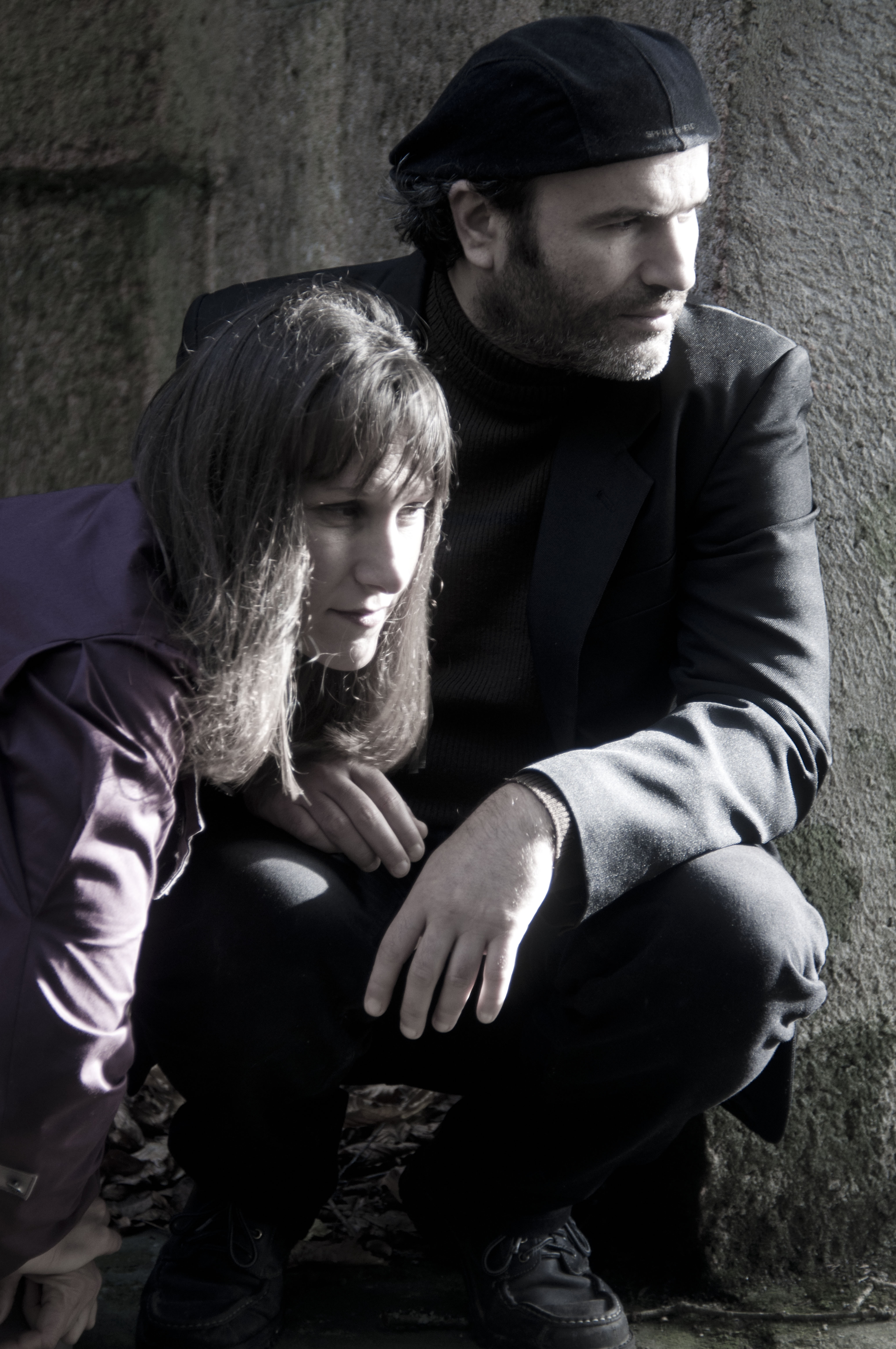
Mediavolo hails from the port town of Brest, in northwestern France. The band has shuffled its cards a few times over the years but, since 2000, Géraldine Le Cocq (who sings and writes all lyrics) and Jacques Henry (who handles all music, instruments, and production) have been its constant aces. Known affectionately as Gé and Jac, they took over officially as a duo in 2004, a binary star pulling other galactic talents into their sessions’ orbits but always shining brightest at the center of them all. Music had always been a vital force in their lives, prompting Jac to pick up a guitar at age six, and Gé the harp at seven. “We met thanks to common musical connections,” Gé recalls. “I joined the band Jac had with his brother and other friends, as it needed a new lead singer, which led to a name change: that’s how Mediavolo was born.” To that name, there is no meaning, save for whatever one brings to it. Naked and clothed alike, it embraces us as we are and slides around the brain until it becomes a single bead of dew on a blade of tomorrow.
Listening to any Mediavolo album is an exercise in pareidolia—that psychological phenomenon by which we see familiar shapes in clouds, stars, and the occasional potato chip. In this manner we may read core influences into the band’s multifaceted sound, including Cocteau Twins, Kate Bush, Blonde Redhead, David Bowie, and various new-wave synth acts of the 70s and 80s. For me, Cocteau Twins looms largest of these (for those keeping score, check out “Resolve,” “To the Eye,” “Fanciest Scheme,” “Up Ahead,” and “Wh”). Are these a conscious homage to the band, or does the affinity come about organically? Jac: “I discovered Cocteau Twins very late, when the band had just imploded. What struck me most, the first time I heard one of their songs, is that I felt at home. I think it’s a bit of both: I’ve an organic link to their music, no doubt, and somehow, I set out to carry on with their music in my own way.” Jac, it bears noting, grew up on a steady diet of Beach Boys and Beatles, neither of which bear out on his compositional world, but whom he credits nonetheless for making him the musician he is today. Whatever the persuasion, Mediavolo is a universe unto itself, where popular footholds are white dwarves at best. As in a kaleidoscope, such elements are fragmented beyond recognition, so that from them a new mosaic emerges.
About my beloved “Misunderstanding” there was much to learn, and proper tutelage came in the form of A Secret Sound.
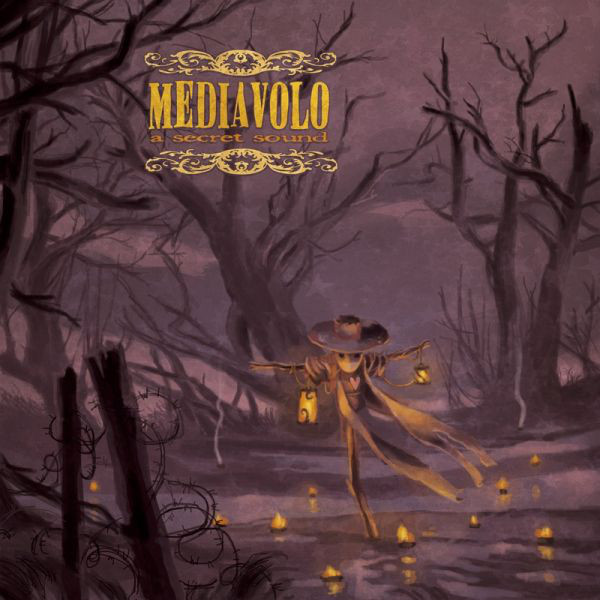
Released in 2006, it securely holds the throne of Mediavolo’s sonic kingdom, taking sustenance from the purple gold dripping down its castle of crossed destinies. Opening gambit “How Does It End?” is as splendid as they come, an anthem of shadows that crosses that clearing in the forest into which we all day must take leave. “Is it fear that sustained us?” Gé sings, balancing each word on the tip of her tongue before it drops into the abyss like the rabbit before Alice. Thus set, the stage of Mediavolo’s masterful songcraft opens its curtains. Resonating through its chemical admixture of sparkle and gloom is a phenomenal distillation, one that functions as something of a meta-statement for the band by way of its evergreen philosophical question.
“Humane & Live” finds an answer. With clear and present vocals (a harbinger of things to come on the latest record, Modern Cause), Gé floats the question “Am I afraid to die?” on post-storm streams, following it down sewage drains where, unwavering as the darkness there, she proclaims, “I’m not afraid to die.” The narrative voice finds further resolve in the track of the same name, which ends wordlessly—each utterance a torch without bearer whose wanderings are masked by the click of hammered leather on cobblestone.
The songs of Mediavolo often assume short story form, but on A Secret Sound the band takes especial care to evoke a poetic mise-en-scène. Gé elaborates: “It is the result of the systematic working method Jac and I had at the time: he wished the lyrics to be linked to the movies in his mind. These he would recount for me to develop an interpretation. It’s actually a storytelling-based process.” An example is the Dickensian nightmare that is “Death & the City.” This visceral nightscape follows Jack the Ripper through the less-than-pretty alleys east of Charing Cross. His is a resolve of a different order, flapping at his shoulders like a cape: a crude farewell to the corpses he leaves behind. His footfalls trail from nefarious transactions behind closed doors, through which bodies pass like so many ghostly matters into the annals of history. The streets of London bleed to the rhythm of Gé’s breathing (heard throughout the song in the right channel), and rebuild themselves in the enchanting synthesizer, which floats away in a nocturnal fog stretching out every final gasp to an unsuspecting dawn. “Hunted” revisits these autopsies and grants asylum, through sheer power of will, to blasts of light intent on clearing away the badness. This is the most hopeful song on the album, an affirmation on stilts.
“Hoary Man” is a true standout and another that feels tugged from some ancient past. As geometric arpeggios from bass drop anchor into ocean of mineral, a vision unfolds of another place where a golem-like figure embraces the narrator as a Venus flytrap closes around its meal. Fungible, smelling of rotting leaves and loam, yet caught in the eyelash flutter of a Frosted Elfin’s wing, the music here describes memory so powerful—of achieving one day fleeting confluence with the cosmos before gasping anew on the shores of reality—where swims the very figure who gave her life.
(“Hoary Man,” directed by Nicolas Hervoches)
Not all stories are pulled from dusty tomes. Touched off by echoing guitar, “Mass Anaesthesia” flanges into a traffic jam as timely as the technology used to record it. Gé floats above it, playing the part of the postmodern angel, dangling the ennui of our age on a string just out of reach. “Such a sight just fills my heart with awe,” she admits of these processions of anonymity. Cars become people and people become wishes, each desire fulfilled at the press of a button, the swing of a door, the click of a heel on hospital linoleum. Likewise the piano-driven “Dripping Mind,” which holds true to itself even as the barometric pressure drops for a spell, Gé’s voice oozing through the mist amid a flurry of banshees pushing its way beyond the pale of a covered moon.
My heart abounds With suns and stars
So avers Gé in “Secret Sound,” emblematic not only for yielding the album’s title but also for so carefully walking the line between sleeping and waking. Its aftereffects oscillate into “Misunderstanding,” bringing us back to where we started. Through its motions the band peels back layers of cloud to expose the invisible heart within. A second voice—the first of a handful—makes itself known, an alter ego singing of need and brokenness.
(“Misunderstanding,” directed by Nicolas Hervoches)
Lest we dwell too long in the shadows, “Hollow Of You” plows a decidedly romantic field. It is a rainbow drained of its color and cinched so tight that it goads the diaphragm into self-expression. Nominally ending things is “Chimera,” which is notable for at one time being the album’s opener and for whimsically including Jac’s voice in the studio just before he lays down the drum track. I ask Jac about this moment, which adds a human touch and reminds us that someone created all that we hear: “If you listen, closely with headphones, to ‘A Day in the Life’ off Sgt. Pepper, a person counting down to the famous violin crescendo can be heard. That’s an accident. It was never meant to be perceptible. At the time, no tool existed to isolate and erase a sound from tape. But it is the type of ‘secret’ a listener loves to discover. In studios today, there’s no such thing as ‘accidents’…merely the will to make a reference to mythical recordings…or let the listener in on the behind-the-scenes process. The latter was my intention.” This train-tracked journey flows through the enigma of silence into a hidden track called “Trapped.” Originally penned by Jac for a play, Gé contributed new lyrics, thereby enabling a grungier, less pulpy hue to the tip of the dragon’s tail.
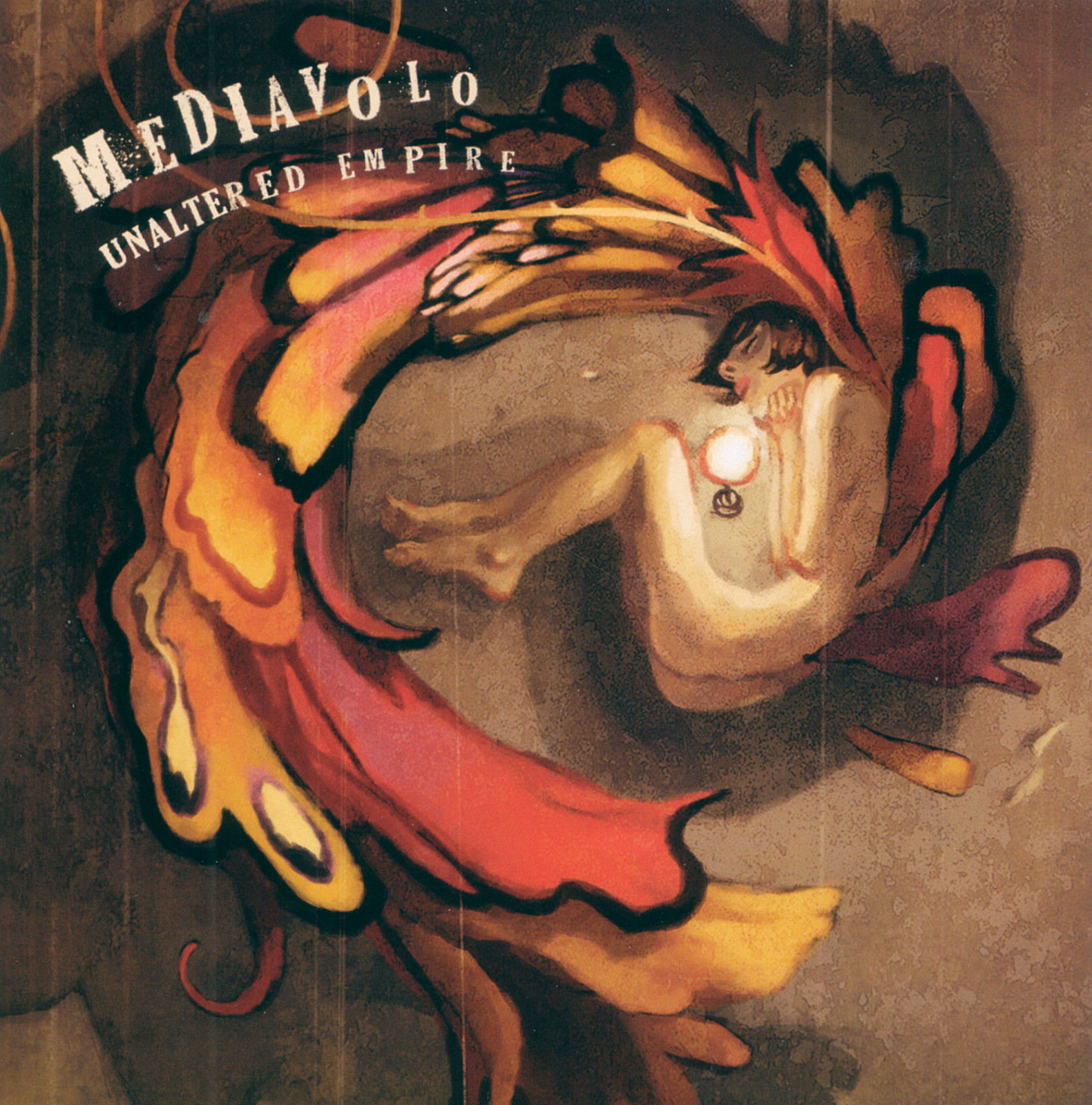
With Unaltered Empire (2008), Mediavolo carried its ethos over into even more visual territory. Its striking cover implies a private room, an almost David Lynchian spiral into a ceiling fixture where inner and outer spaces become one. This leads me to ask: Does the music start with imagery, or vice versa? Jac’s reply: “I remember very clearly traveling through unknown worlds, my head filled with images, while I listened or composed music as a boy. That’s why ‘concept albums’ have exerted a strong appeal for me: Sgt. Pepper, Tubular Bells, Never for Ever—albums developing their own worlds. I’ve always wanted to write albums as such. So it is true that before music or lyrics, come images.” Gé adds, “And Jac took the habit of sharing his images with me. But it is impossible to convey, with lyrics, as many meanings as with images. That’s why the cover art is so important.”
Unaltered Empire takes its inspiration from Kafka’s “The Metamorphosis,” telling instead the story of a young woman’s transformation into a butterfly. Accordingly, it plumbs the depths of our biological minds and pushes Mediavolo into its most cosmic directions yet. Many of the songs play off the storybook nature of Secret, but do so with a biographical lens focused on childhoods. Consider “Treasure Box,” which crosshatches the snow blind of birth with the charcoal of development. Crafting words as photographs, it rewrites a death in the family, throwing light across the blank page by way of the guitar’s golden sunrise. Consider also the denser palette of “Dry and Brave,” in which last night’s dreams are stretched to breaking and repaired as if by watchmaker’s tools. A purging, this is.
The title track, too, is touched by familial magic, adopting a maternal tone that whispers lullabies and wisdoms. It springs before us, a fantasy novel come to life, wielding tongues against the great Silence. Dissolution of allegiances, a cutting of blood ties in favor of the new veins: the songs will outlive us all. Only now do we discover that the titular empire is entirely on the inside. It is carried in the heart, in the hands, in our labyrinthine brains, filling the skull with a vintage that can never be brought to lips.
In some uncanny way, listening to these songs lends exactly the same feeling as a scene in the film Amelie in which the title character, upon finding a trinket box that once belonged to a boy now grown, returns it to him anonymously but watches unnoticed as he cradles the all-but-forgotten storehouse in his hands for the first time in decades. We are thus privileged to know the connectivity of “Black Roses,” to peek inside the time capsule of “Selling Birds,” and to taste the flightless habitus of “The Backroom of My Mind.” And further, the dulcet axis of “Fanciest Scheme,” which splits consciousness into dots and dashes, each signal received on a scratching record that trails a ligament of stardust.
As singer, Gé soars and mires in equal measure. Harboring little interest in adornment, she brings her beauties on this album to three blinding jewels. The first of these is “Cavalry Drum,” a song of conflict rolled until rice paper thin. Jac’s guitar captivates with its radiance, threading a bass line between predator and prey with a nervous excitement. Throughout the song’s interweaving of speech and conscience, Gé patterns mysteries with due clarity. “This song,” she tells me, “is about feeling strongly about simple things. Our world draws us away from nature, from contemplation. We surround ourselves with technology, and feel ‘happy,’ ‘excited,’ ‘contented.’ Can it ever make us feel ‘alive’ as the sun does when it touches our skin?”
(“Cavalry Drum”)
“Dr Quayle” occupies the center of this masterful song trio. Its exacting compositional science heightens the laboratorial feel of the lyrics. A guitar solo sweeps across the night like a patient’s cry, as do Gé’s powerful highs in the final stretch. With such noir-ish granules working their way down the Mediavolo hourglass, it might be tempting to file the band under Gothic or Darkwave. Such designations, however, ring reductively, deferring instead to something more inclusive. “Restraining myself to a channeled kind of music is very difficult,” Jac admits. “I have so many different musical urges that Mediavolo ends up with multiple identities. Labeling our music has always been a problem. That’s why I’d rather it came under ‘indie pop.’ It’s a large enough tag to encompass all of what we do.”
Either way, the good doctor’s tinkering yields the most sublime creation in the Mediavolo archive: “To the Eye.” As the pinnacle of the band’s craft, it heralds a great beyond when music will one day live of its own accord and resound for its sake alone. Which is why the guitar is forthright but also suffused with a child’s wonder, as expressed in Gé’s lyrics:
they say that a star that we get to see has long blown away and died but how can this feel true, that is, to the eye?
An insightful observation, to be sure, of the body’s generative power, but also of its penchant for immediacy. Gé stirs her hands in the overlapping tide of guitar, bass, and drums. From this she plucks her words, fixing each to a constellatory joint and breathing perfect animation with harmony. According to Jac, “To the Eye” takes its cue from The Sugarcubes and The Sundays (another heavenly band that should be of interest if anything herein strikes your fancy), but its winds blow decidedly off planet.
Before moving on to Modern Cause (2011), it bears us well to look at the foundations on which A Secret Sound stands: namely, the two French-language albums that preceded the band’s switch to English.
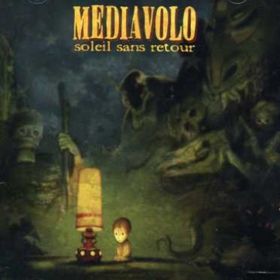
Soleil sans retour (2003) is a self-styled “collection of short stories on the difficulty of living in today’s world.” By way of introduction, the title song orchestrates our inclusion in a sound-world dappled with shadow and the promise of skin-to-skin contact. With its tasteful keyboard accents, this compact drama evokes old discoveries and new nostalgias. As with much of what follows, there is antiqueness at play, a chain of vignettes swimming in increasingly potent fire. “Cryogénie” is a strangely tender crawl inward and spins Gé’s reverbed voice atop a crunchier peak. Touches of mandolin speak of sconce-lit catacombs, while above ground lovers wander, ignorant, through catacombs of their own.
(“Cryogénie,” directed by Nicolas Hervoches)
“Dernière fantaisie” (Last Fantasy) feathers the album’s swan, working its contortions through the instrumental simmer of “Final” and on to the smooth echo chamber of “Wh.” Between their frame lies a treasure trove of faded photographs. From the slices of 70s rock that clasp then release us through the chronological reckoning of “Ma redemption” and “Ballon rouge” to the ever-after wayfaring of “Le Gouffre aux chimères,” we sense reams of trauma with every lyric sweep, but also the marginalia of difference between them (note, for instance, the watery play of harpsichord and vibraphone in “Antichambre”). What distinguishes Soleil is its malleability: just when you’ve pegged a song’s psychological shape, it contorts into something new yet clearly underwritten by the same genetic signature. Furthermore, with “La Fille de Ryan” (Ryan’s Daughter)—a nod to the David Lean film of the same name—it foreshadows Effets Personnels, which takes listeners on a soldier’s “philosophical and surrealist journey” through the First World War.
Effets waltzes its way across fallen soldiers and makes of their last wishes a symphony of flesh hurled toward the horizon in endless catapult. Looking at the sky as if from the bottom of a well, the albumoffers hope in small, unreachable circles—closest perhaps in “C’est écrit dans la glace” (It is Written in Ice). References to war abound. “Mogador,” for one, names a class of French naval destroyer, cutting surf toward the anthemic “Safari” with a heart of darkness in mind. Even the promise of “Le Phare” (The Lighthouse), in spite of its enchantments, is tainted by amnesia. The effect is such that evocative titles like “Un Papillon sur l’épaule” (A Butterfly on the Shoulder) and “L’echo dans la vallée” (The Echo in the Valley) feel all the more claustrophobic for the meticulousness of their arrangements. Memories of open sky and pasture are only that, drawn away as they are in the saddles of emotional horses who recede into afterlife with every clop of hooves, over lullabies and goddess trails before seeking the shelter of “Necropolis,” where materialize and dissolve the echoes of gatherings and family affairs, of victors’ nightmares and victims’ dreams, leaving only the title track to show for their passing. Here is the wonder of birth expressed in sound, pulling the fatal transition of life as a razor across stubble, its wake as bare as our first moments in this unwritten world.
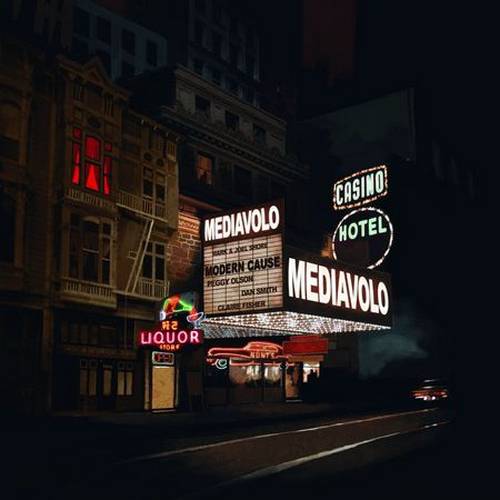
And so, we arrive at Modern Cause, a record that is, in Jac’s words, “a patchwork of moments in life, with no link existing between them.” Its prologue comes in the form of “Dan,” which reiterates some of the backward glances of Empire but with a new age of emotional becoming. I ask Gé if this is a personal song: “It is indeed personal,” she says, “but it does not root itself in reality; it is a projection. That siblings love each other is taken for granted. Family is not immune to implosion, however: small things, slight differences of perception add up, until the wrongs of life reveal them. I drew my inspiration from some of my own family’s words and moves, and tried to imagine what they could lead to in a distant, cold, and love-free environment.” In both this song and “Up Ahead,” she fully embodies the protagonist, as if she has dug up some corroded jewel and polished it as if it were her own creation. Is not singing, then, a form of acting, or is it something deeper? Gé: “I regard singing as acting, definitely. In that respect, I’ve always agreed to embody the male characters of Jac’s brother’s lyrics [on the older albums], and I’ve never attempted to feminize the stories that came to me involving one. It so happened that the emotions of some of them started resonating with my own. ‘Keepin’ out’ is one of those occurrences.”
Indeed, in the indie rock vibe of “Keepin’ Out” Gé converses as if with herself, pulling teeth from the gums of the ego with pliers coated, in her turn of phrase, with “non-secretive scorn.” These machinations charge through an increasingly dense vocal flock until they find neither resolution nor peace, but rather the reality of moving on.
(“Keepin’ Out,” directed by David Carquet)
An exception to this rule is “We Danced Today,” which closes the album’s intimate economy with Jac’s singing: “I was convinced the song fitted Gé’s voice. But when we started recording, we realized quickly something was wrong. The demo vocals I had recorded kept sounding better. We finally understood the musical pitch was that of a male voice. Gé convinced me to take the lead.” His voice lends a historical charge to the song’s lavish—if sparsely populated—ballroom scene. Faces disappear with every twirl and contact, until fadeout draws its curtain near.
From this song alone, one may note the distinct production values of Cause, the result of Jac’s desire to go for a Phil Spector “Wall of Sound” effect, affording less scrutiny of the mix in the interest of overall atmosphere. In this regard, “Latent” is the album’s centerpiece. The anthemic loop thereof trades anticipation for acceptance, ending in a protracted instrumental outro that lures us deeper with every reset. Such structures, Gé notes, informed the lyrics: “There is a clear division in the middle of the song. The first half is tense and anxiety-provoking; the second is luminous and full of hope. To me it evoked those moments when we are confronted with difficulties and the feeling of release when we step out of them. The second part did not need lyrics, the music alone conveys the feeling.” This is especially obvious in the nakedness of the acoustic version:
(“Latent” Acoustic Attack Session)
Although Cause is less specific at the mixing board, it fully discloses its ghosts. Its crucible aesthetic boils down past and future impulses into a here and now of raw vitality. As a result, a heavy nostalgia pervades that was very much a part of the recording process. Says Jac, “When you get older, you sometimes wish to go back to what you once knew. As a matter of fact, the studio in which we work looks very much like the room I had as a boy. Some of my old toys sit on the shelves…” One of the album’s many affordances, however, is that it leaves plenty of room on those shelves for listeners to place their own mementos, be they a set of keys alongside the teenage thrill of“You Wish Mark Steered,” moth-eaten pajamas curled around “It’s Begun,” or glass marbles bending light into “Peggy ’60,” each object follows us like the eyes of a banknote. Their regard anoints us i search for plainspoken undertakers.
The music of Mediavolo may draw its waters from many wells, but nothing tastes quite like it. It does not regard itself in the mirror, but instead acts as a mirror itself, one fit to contain any face that dares approach it with an open ear.












 Between Sound and Space: ECM Records and Beyond