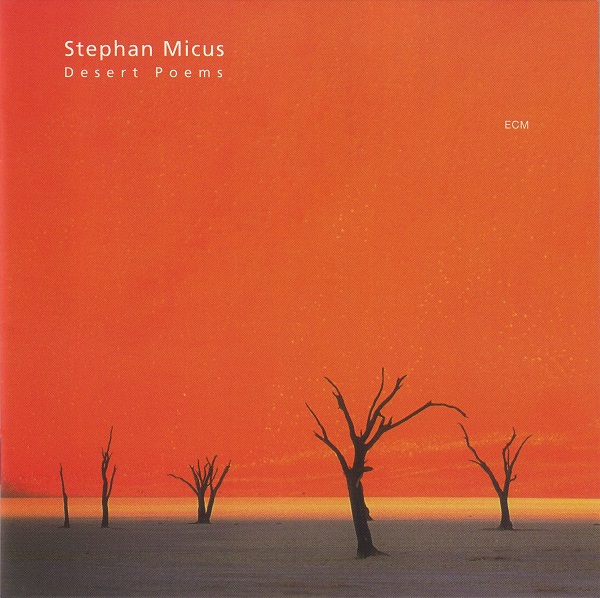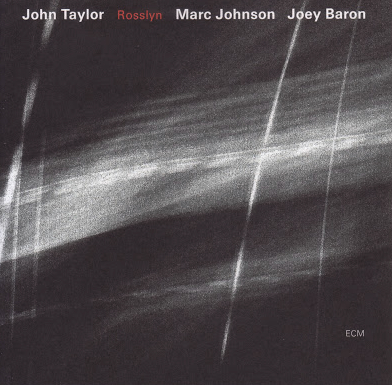
Any fans of Lena Willemark and Ale Möller will want to check out my latest twofer at RootsWorld, where I review albums by Danish New Roots outfit Himmerland and the Ale Möller Band. A fresh wakeup call for your drowsy summer.
Author: Tyran Grillo
Children At Play: s/t (JAPO 60009)
Tom van der Geld vibes, percussion
Roger Janotta reeds, percussion
Larry Porter piano, electric piano, percussion
Richard Appleman bass
Jamey Haddad drums
Bob Gulotti drums
Recorded 1973 at Rennaissance Studios, Maynard, Massachusetts
Engineer: C. Ange
Produced by Tom van der Geld
Vibraphonist Tom van der Geld’s distinct musical wanderings have left behind some of the choicest among ECM’s out-of-print relics. Whether the trio settings of Path or the broader palette of Patience, his sound is at once soft and unbreakable, forthright yet ecumenical. His footsteps also found purchase in the rarer soil of the JAPO sub-label, of which this self-titled date from his legendary group Children At Play was the first. Here van der Geld is joined by Roger Janotta on reeds, Larry Porter on keyboards, Richard Appleman on bass, and Jamey Haddad on drums. Basking in opener “Tamarind,” it’s clear why the ensemble has attained such high status among collectors. This power statement awakens to a wealth of morning light every bit as descriptive as Grieg’s. The brittle bass line that ensues nets a flavorsome admixture of piano, vibes, and soprano sax that positively exudes personality. Between Porter’s grounding keys and a drum circle-like interlude, there is much to take in throughout this 18-minute journey as it pulls down the sun to where it began.
“Wandering I” lumbers further into the album’s storybook scenography, bringing illustrations to life with a hint of whimsy. In addition to the group unity forged in such tracks, Janotta’s reeds work a most vivid magic throughout, but especially in “Sweet My Sweet,” in which he sets up a tropical narrative from van der Geld, trembling and sunbathed, swaying like the album cover’s long grasses. Drummer Bob Gulotti replaces Haddad on “Reason,” a rubato outing of multifaceted inner dimensions. A gnarled, lethargic bass solo paints the picture of sleep before van der Geld’s dreams touch off lens flare accents.
If pushed to find a point of critique regarding this album, I might comment only on the sequencing, for the tracks might have better served themselves in reverse. As the order stands, it’s like starting with an enormous dessert and working one’s way back through smaller main courses. Either way, the album is another beautiful entry in the van der Geld travelogue and finds rich closure in “Patch Of Blue.” The only track not written by the bandleader (this one comes from Porter’s pen), it molds a pastiche of all that came before, combining the time of “Tamarind,” the fantasy of “Wandering I,” the warmth of “Sweet My Sweet,” and the introspection of “Reason” in smooth detail. The feeling is one of sand—not of desert, but of beach—between the toes, honest down to the last grain.
Admir Shkurtaj Trio: Gestures and Zoom
Admir Shkurtaj Trio
Gestures and Zoom
Admir Shkurtaj accordion, piano
Giorgio Distante trumpet
Redi Hasa cello
Released 2012 by SLAM Productions
One of the benefits of my sideline as a music writer is that I receive review copies of albums by artists I might not otherwise have discovered. Through my ongoing contributions to RootsWorld online magazine especially, I have encountered a wealth of fascinating music from all walks of life. One of the most intriguing of these so far is Admir Shkurtaj, an Albanian multi-instrumentalist and composer who first came to my attention when I was asked to review his solo piano effort, Mesimér, for the selfsame magazine. Where that album might be seen as a distillation of his diverse interests, ranging from folk to the avant-garde, this from the same year attests further to his ability to interact, listen, and guide. The dynamic of Gestures and Zoom—for which Shkurtaj is joined by trumpeter Giorgio Distante and cellist Redi Hasa—is markedly different, not only for the flexibility of its means but also for its distinct methodology.
Shkurtaj elaborates on the title concept: “Gestures and Zoom is constructed from a plurality of musical gestures proposed by each of the instruments, in chaotic order. A musical ‘gesture’ means a cell or musical object. In theatrical terms, we would say that a musical gesture is a character within the scene. Each one has/is its own character, fleeting as it is. After several exposures, the ‘zoom’ factor fixes the target of a single gesture to view it more clearly, or, in more musical terms, to develop it in order to enhance its characteristics.” From this dance of physicality and visualization, Shkurtaj and his trio spin a wild photometry indeed.
Despite the delicate madness that follows it, the album’s introductory piece is duly exploratory. Shkurtaj’s tinkering pianism seems to deconstruct as much as it builds. The insightful processes therein foil the slalom course of “Disegni” and “Olmi,” which respectively showcase the tremendously expressive abilities of Distante and Hasa. “Improntrio” is another spiraling ride—the DNA helix as roller coaster—and reaches some dizzying heights of pitch, a ghostly conversation in fast-forward. Moments of deep familiarity do, however, come to the fore, most notably via Albania’s popular traditions as they materialize in “Danza” and “Victoria.” These nodes of locality stand out for their precision. Shkurtaj and Hasa, both of Albanian extraction, carry out the most delicate surgery, while Distante, who hails from Italy’s Apulia region, introduces their stark themes and from them spits out a full speech.
Gestures and Zoom balances improvisation and composition with great skill. Shkurtaj makes it obvious where one begins and the other ends, and so on until the resulting blend finds solidity in an emerging narrative. “The themes of the compositions,” he clarifies, “are structurally similar to jazz standards but have a chamber music character (I am writing for chamber ensembles in a contemporary classical environment). Improvisation is free and based on complex rhythmical frames, such as derivatives of the rhythmical cell 3 + 2/8 (Olmi – Victoria), and sometimes on particular musical gestures decided right from the start (Gestures and Zoom – Disegni).” Whether or not the listener has such vocabulary to make sense of the designs, the blend of their spinning remains clear.
What is challenging yet also enjoyable about this record is the detail of its fire. Nowhere is this clearer than in the title track. In bubbling voices and instrumental scrimshaw, an explicit liberation begins to take shape, making such programmatic gems as “Shi” all the more effective for their simplicity. Shkurtaj: “‘Shi’ in Albanian means rain. I have always listened in silence to the sound of rain. When it falls on metal surfaces it becomes even more interesting. I tried to imitate this through rhythmic counterpoint on the prepared piano.”
Shkurtaj’s is biological music that treats its motives as Petri dishes in which to culture a balance of attunement and free wandering. Between the intriguing little “Duetto” and the culminating “Conduction” the listener may feel a switch flipped at the mitochondrial level. Of this microscopic aesthetic, Shkurtaj says, “For the most part, with the possible exception here of ‘Improntrio,’ the music I write is mono-gestural. The songs are built on a single element or musical idea. This lends itself to feelings of narrow space.”
That said, there’s plenty of room to run around.
when wings become electric: burning the midnight oil with powerdove
powerdove
Do You Burn?
Annie Lewandowski vocals, prepared piano, keyboard, guitar
John Dieterich guitars, bass
Thomas Bonvalet harmonica reeds, six-string banjo, amps, microphones, feet tapping, hand clapping, tuning forks, concertina, guitar, dry poppy pods, whistlings
Released March 2013
Circle Into Square
As the high-pitched distortions of a concertina pierce the ether in “Fellow,” the opening track of powerdove’s latest, Do You Burn?, it’s clear they belong to a music comprised of supernal layers. Like emotional specimens under a microscope, each instrumental slice has its own cover slide. At the risk of belaboring the analogy, we might say that Annie Lewandowski’s voice is the clarifying stain. The Minnesota-born pianist, songwriter, and improviser began powerdove as a solo highway before assembling her current car pool with John Dieterich of Deerhoof and Thomas Bonvalet of L’ocelle Mare. Their barbed tangle of feedback and acoustic guitar almost obscures the patter of raindrops that follows in Lewandowski’s wake, each a step toward fractured closure. The classical enunciation of the words adds glint to the rough lyrical edges in a love song that is both invitation and self-cocooning:
Fellow
you’re inside
mellow
to my aching body
Thus initiated, thus torn in two, the listener leaves one self behind while the other drips into the soil, where the only accompaniment can be found in the stirrings of worms, chiggers, and other stewards of long-rotted crops. In this fecund quilt lies the one perfect square, its fragrance more powerful than a tornado.
There is a feeling here of three itinerant creators, wandering from one abandoned farmstead to another and playing on whatever battered equipment they can find, thus leaving songs as sigils of their fleeting inhabitation. This doesn’t mean that the proceedings are in any way sparse, for as in “Under Awnings,” despite the minimal appliqué of handclaps and muted piano, there is a mortal weightiness that one can only find in the dreaming body.
One last chance for a kiss
run away to another
under awnings of sheet and steel
I lay me down
So, too, the portal of “California.” It is fiercely emblematic of the album’s deceptive simplicity, for what appears to be nothing more than a drinking song is in fact a veiled paean to knowledge-seeking and the ways in which it is inevitably cracked by, and elided from, the creative process in favor of something new. Such abandonment is also readily apparent in “Flapping Wings,” a scenic morsel to feed the gaping mouth of a landlubber’s heart (indeed, there is something of an oceanic brogue about it).
All the leaves blow off
breeze to take the spring seeds on
The title track pulls harder at the album’s frays of memory as the sun watches keenly, nakedly, holding no judgment but our own.
The quavering bellows provide mechanical respiration in the background, the trembling of a newborn locomotive opening its eyes to the tracks. Unlike the latter, however, powerdove does not submit to the promise of coming together that the horizon throws at us. Rather, it maintains its parallels through a voice’s secrecy that we find in “Alder Tree I,” as well as in “Out On the Water,” which enacts another playful approach to perspective and relays between solo accompaniment and homespun groove and treats size as an ever-changing idea to which ears subscribe at random.
listen hear the refrain
listen now the refrain
“Love Walked In” enacts that part of every journey during which the destination, though still a ways away, nevertheless glistens in the mind as if it were a jewel in the hand. Sprightly guitar layers and an optimistic bass dance their way down endless stretch of road. Rhythms recur with the crunch of granola at molar touch.
We run and laugh and
run under darkened skies
“Red Can of Paint” evokes the microscopic attention of William Carlos Williams. Overturned, it acts as a sounding drum for all activity that shares slivers of its perimeter in this pizzicato postcard.
Light from the hall
wash you over
“All Along the Eaves” is by far the album’s truest to form—not only for the subtlety of its traction but also for its admixture of voice, melody, and text. Through songs like this, powerdove asks us, Why separate the chaff when it is still singing? And in this sense they provide an ethical service, documenting swan songs before they are discarded via the guts of machinery and industry.
On my knees I’m weak
three breaths from my coffin
“Out of the Rain” is a beautiful afternoon-laden choir with a thump following close behind: a peg-legged, Björkian nightscape.
Whisper me my name
your hand resting on my face
Lewandowski has beautiful way of repeating words: drinking, sinking, sung, turning them into compact mantras of poetic evocation.
In “Wandering Jew,” which reads like a travelogue of the voice, that repetition finds in the sensitive instrumental accompaniments a wavering sense of corporeal reality, which seeks shade under the beautiful plucked piano of “Alder Tree II,” a windblown leaf that hangs even though its branch is gone.
I hang my head
Although the album barely surpasses half an hour in duration, it cradles countless more of unraveling in its bosom. There is a sheen to its contours that speaks of the dawn as experience’s signature: not an admission of love but a love of admission.
An e-mail interview with Annie Lewandowski
> 1. Can you briefly walk me through the evolution of the album from concept(s) to realization?
In June 2010 I moved to Southampton, England to join my husband, Ben, who had work teaching there. I’d left the Bay Area and also left powerdove, which at that time had consisted of me singing and playing guitar, Jason Hoopes on upright bass, and Alex Vittum on percussion. We’d toured some on the west coast and recorded “Be Mine” (released on Circle Into Square Records) earlier that year. In England I had a lot of time (perhaps too much time…) to myself. No work, no friends. I was inspired by the rain, the grey, the solitude, and very much the landscape. 11 of the 13 songs on “Do You Burn?” were written there, walking along the River Itchen, as sparse arrangements for voice and guitar. Ben and I talked at length about how this next recording might sound. Ben suggested I ask Thomas (Bonvalet) and John (Dieterich) to collaborate. Thomas has a fantastic solo project called L’ocelle Mare that I’d been introduced to in 2006 or 2007 when he toured through Oakland (Thomas is from France). He plays a vast array of instruments—foot percussion, handclaps, reeds, banjo, poppy pods…. He has an incredible sense of rhythm and a fantastic sense of atmosphere. John has been a friend for a long time. He’s an amazing guitarist and imagining his dense guitar sound on this record was thrilling. I invited Thomas to come to a concert I played in Paris in April 2011 to see what he thought about collaborating, and John’s known powerdove’s music since the beginning. Both were on board and we met in Albuquerque to record the album in January 2012.
> 2. How did you come to share the road with John and Thomas? What newness (or antiquity, for that matter) do they bring to the powerdove sound?
Think I answered this in my lengthy response to question one…
> 3. Your lyrics seem personal, at times intensely so. Are they a diary? Are they a travelogue? Are they fantasy?
Yes, the lyrics are intensely personal. Sometimes I’ve worried that they are a bit too personal, but then what else would I write? I don’t think I could do it any differently. I’ve worried about the transparency of the lyrics before, but had a really comical experience a few years back that lead me to believe they maybe weren’t so transparent. I had performed the song “Easter Story” in London and someone came up to me afterwards and asked me if I was a Christian. Another person asked me if the song was about Catholic church child sexual abuse. Needless to say, neither got at what the song means to me.
I’d say that, more than anything, these songs are a diary…things I’ve thought, felt, experienced, that have found their best articulation in music.
> 4. Your music strikes a fine balance between polished and rough ore. Is this balance conscious and, if so, does it arise organically?
I love that you have that experience listening to Do You Burn? This balance is very conscious, and it happens very much organically. At a concert we played in Poitiers in March, someone came up to me after the concert and said they felt like I was the lighthouse in the midst of a storm. I love for the simple clarity of the melody and lyrics to root itself in the bed of sonic wildness that Thomas and John create. It’s exhilarating to sing in the middle of it! I’ve been trying to close my eyes less when I sing but have found it to be impossible. I have to concentrate so completely while I’m singing so as not to get thrown off balance.
> 5. For the most part, the songs feel like they were recorded live in the studio with very little multi-tracking. Was this a practical or an aesthetic decision?
It was an aesthetic decision. We wanted the intimacy and feel of live takes so recorded the album as such. There was a relatively small amount of overdubbing done for this record. We recorded live at John’s house—I was singing in a closet, Thomas was playing his banjo (and other instruments) in the bathroom, and John was in the main room playing guitar.
> 6. Speaking of aesthetics, how would you describe powerdove’s in one word?
jagged
> 7. The song “Wandering Jew” is rivetingly poignant. What does it mean to you?
I wrote “Wandering Jew” after Ben and I had packed up everything in our semi-detached house in Southampton. The movers had taken everything and there was literally nothing left in the house. I’d kept my guitar and wrote it in the days just before moving back to the US. There is a lot about the English landscape in that one, there is a lot about the pain and the exhilaration of having left the religion I was brought up with. It’s my favorite song from “Do You Burn?” I can feel my heart bursting with this complex range of emotions every time I sing it. I owe a lot to John and Thomas for magnifying that feeling in their instrumental parts, which are absolutely exquisite.
> 8. Much of the press surrounding your work talks about geography. How important is landscape to you as a songwriter?
I’ve noticed how much geography figures in my songs, but only in hindsight. So much about water…. I grew up in a small town in Northern Minnesota near the headwaters of the Mississippi. Much of my childhood was spent swimming in the lakes and river in the summer and ice-skating and running around on the frozen lakes in the winter. Maybe after all of those years in and on bodies of water it’s what first comes to mind. Or maybe it’s because I get the lyrics for many of my songs when I’m outside walking and that’s often near bodies of water. We just recorded songs for the next powerdove album and geography still has a presence, but less so than in Do You Burn?
> 9. If asked to cite any musical influences on powerdove, who might they be?
For singing, Nico’s at the front. Instrumentally, all of the wonderful improvisers I’ve had the pleasure of hearing and playing with the last 15 years. And I grew up in and received a lot of my music education in the Lutheran church. When my songs are at their most basic, just me singing and playing guitar, I find they have a lot in common with the hymns of my youth—stark and simple.
> 10. Poetry or prose?
Poetry.
Terje Rypdal: Melodic Warrior (ECM 2006)
Terje Rypdal
Melodic Warrior
Terje Rypdal guitar
The Hilliard Ensemble
Bruckner Orchester Linz
Dennis Russell Davies conductor
Wroclaw Philharmonic Orchestra
Sebastian Perloswski conductor
Melodic Warrior recorded December 2003 at Brucknerhaus, Linz (ORF)
Recording engineer: Alice Ertlbauer-Camerer
Engineer: Alois Hummer
And The Sky Was Coloured… recorded November 2009 at Jazztopad Festival, Wrocław
Recording engineer: Maurycy Kin
Mixed at Rainbow Studio, Oslo by Jan Erik Kongshaug, Manfred Eicher and Terje Rypdal
Album produced by Manfred Eicher
…from the house made of mirage…
…the rainbow rose up with me…
…the rainbow returned with me…
…to the entrance of my house…
…from the house made of mirage…
–excerpted from a Navajo Night Chant
How does one review an album for which one has also written liner notes? This is the challenge I set before myself in the instance of Terje Rypdal’s astonishing Melodic Warrior. Pairing the gargantuan title piece with a younger sibling, it reveals yet another facet of the Norwegian guitarist’s compositional profile, one that has given us such wondrous reflective surfaces as Undisonus and his Lux Aeterna. Where those two works examined sonic temperatures across relatively expansive climates, here the lens cracks in an implosion of voices.
Of those voices we get four prominent stewards in the Hilliard Ensemble, who also commissioned Melodic Warrior from the very ether. Their singing burgeons in a selection of Native American poetry chosen by Rypdal, along with a sprinkle of original words. To the touch-and-go listener it may seem an outlying choice for the Hilliards, unless of course one considers their likeminded reworking of Quechua and Passamaquoddy sources with saxophonist Jan Garbarek on, respectively, Mnemosyne and Officium Novum—in which case the fit could hardly be more intuitive. These are poetries rooted in that which roots us, pouring mercury into the primacy of oral over written expression: the lived knowledge that eternal regeneration is impossible without the fleeting rain.
The instrumental makeup alone chains this magnum opus to an immovable classical altar, surrounding the Hilliards with a full orchestra under the ever-erudite guidance of Dennis Russell Davies. It further bears the scars of Rypdal’s many-hued pools of influence, for his electric guitar bleeds through its movements like fire through lit steel wool, cupping a prog-rock relic or two in its satchel. In light of this, Melodic Warrior would seem to bring together many of his earlier threads into unified fruition—from his supergroup The Dream and on through the defining ECM years (Odyssey, Chasers, and especially Skywards) to the large-scale compositions mentioned above. The end effect is a snake coiled and poised to strike. Yet rather than deploy its secrets as weaponry (the melodic warrior sustains injury in place of others), it holds venom in mind and makes it palatable to the tongue and to the ear. Rypdal’s baying leads are unmistakable in this regard, stringing us as they do along a necklace of vocal cells, each writ large within the itinerant body. That we can at last experience the journey of that body on disc (prior to release, it had been maturing in ECM’s vaults for nearly a decade) is a gift for the soul.
Rypdal’s Opus 79 finds company in his Opus 97, And The Sky Was Coloured With Waterfalls And Angels. Whether coincidental or not, the numerical reversal suggests a kinship. And indeed, despite its wordless topography, the second piece would seem to drink from the same ocean, albeit on a different coast. Fronting now another orchestra and without the company of (human) voices, Rypdal paints bruises of a different kind: these the bursting flowers of a fireworks display. Although not overtly programmatic, those eruptions do materialize in periodic squints, carrying us out on a breath of awe.
It was an honor and a dream come true to contribute liner notes to this release. In solidarity with listeners (and because digital downloads deprive us of the pleasure of holding a booklet), I offer said notes in full below, with ECM’s kind permission.
… . …
Contrapunctus naturalis: Rypdal’s Warriors and Angels
The Chippewa tell a form of picture-story in which silence takes the form of two lines, close but never touching. As the asymptote of all existence, they do more than represent. They enshrine. Surrounding them is a need for self-questioning, for acknowledging the power of the beating drum.
River, nature, vision: these are the tools of the warrior whose flesh stands firm against the tide. Like the stag hanging from a tree—last touched by chipped stone and hunter’s eye, now drained by gravity and sun’s transit—it has an illusory stillness. Somewhere, in another time, the warrior’s legs still run. Terje Rypdal’s warrior is consequently melodic. Protagonist of his magnum opus, he activates a landscape by contact of lyric and pen. Its composer is a river; the voices of the Hilliard Ensemble its fauna; the writhing Bruckner Orchestra Linz, under the baton of Dennis Russell Davies, its flora. Davies adds depth through an abiding passion for living works. He gives voice to the margins, here doubly so, guiding Rypdal’s assembly through a 45-minute epic drawn from Chippewa, Navajo, Pima, and Papago sources. The words came to Rypdal by way of stage director and musician Carl Jørgen Kiønig, who lent him a book of Native American poetry. “Its closeness to nature mirrored my own,” he says, and thus the seeds were planted. Since its 2003 Austrian premiere, this Hilliard commission has taken on a soul that consolidates Rypdal’s many paths.
From his early ECM leader dates onward, including the self-titled 1971 debut and 1974’s Whenever I Seem To Be Far Away, Rypdal has had a hand in multiple idioms. He grew up in a classical home (his father was also a composer) and trained formatively in that sphere before taking to the guitar in his teens. If we can paint anything with these biographical colors, it is not the portrait of a fusion artist, but rather one who walks along dissolving borders. Whether in the chamber music aesthetics of Q.E.D. or the wayfaring 5th Symphony, in the droning lyricism of Undisonus or the flowing textures of Lux Aeterna, through it all persists a consistency of vision.
And what of Melodic Warrior? “The title came to me almost as a vision,” Rypdal recalls. “It felt as if I had planned something like this all my life.” Given the strength of this conviction, one might expect a ruder “Awakening” than what transpires in the eponymous prologue. The first of nine movements, it opens its eyes in high-pitched stasis, an abyss where the fray of human awareness hums above the earth’s surface. The ensuing plunge is cinematic to the core, traveling from cosmos to land, from breath to heart. In it we find the glitter of coastal waters, a veritable Bering land bridge rooted in sea floor and spreading its fingers toward wounded sky. To tread here is to embrace daylight, to feast on it, as the crow takes to carrion.
Storm, leaf, soil: the constellations Rypdal’s electric guitar lives by, echoes from a mythic past, garments donned by our four unmistakable voices when twilight falls around them. Their welcome blessing reveals an organic body, splitting and fusing like water’s flow. As one, they fly. In isolation, they soar. During solos their spirits thread disparate needles, sometimes flirting with call and response, but always with unity in sight. A storm is nothing without its droplets.
Rypdal remains the omniscient lurker, resurfacing across the suspenseful pages of “The Secret File” with script aflame. He envisions this dramatic intermezzo—having used it before in a hard-rock context—as a nod to Western film soundtracks, thereby bearing relevance on the contradictions of the Native American theme. Not until “Song Of Thunder” does he ride lightning into the roiling ash. He weaves stealthily, finding in the curve of a whale’s back, in the sweep of a honeybee’s pollen comb, the natural counterpoint that haunts his oeuvre at large.
The strings of Linz mark the face of this music with laugh lines. Profound shifts in light reveal rivulets and isles of possibility. In “Magician Song” countertenor David James evokes a leaf on that water, the tremble of the branch before its descent, the seed from which that tree burgeoned. Ancestors become stories, backgrounds become foregrounds, as they would in dreams, and close the circle by way of opening another in the light of a morning star.
The flair of Melodic Warrior brings to mind another ECM-represented composer, Erkki-Sven Tüür, whose background in progressive rock buoys a mind meld of fortitude and color. And if we can draw further lines of contact to the work of such 20th-century stalwarts as Górecki, Ligeti, Penderecki, and even a hint of Glass, it is only because Rypdal has mixed and baked his clay from the mineral-rich soil of deep listening.
All of this comprises a challenge to purveyors of modern music who rest on atmospheric crutches in lieu of compelling linear themes. Rypdal points to early conversations in this regard with label mate Ketil Bjørnstad: “We used to talk about how melody in contemporary music was looked down upon. I knew right from the start of my composing that I had to bring back melody…and beauty in general.” His forte embodies the uphill battle of this realization, beholds the world as new parents behold themselves, at once without and within. The polarity makes sense, for what is the guitar if not a bringer of visceral melody? It is a fortuitous compositional tool in the hands of one who wields it properly.
Sky, journey, reflection: the shaman’s initiations. As technician of the sacred, the shaman dismantles mortal designs. He abstains from taste of dust for that of haze. He casts bones through skin, passes mind through matter, and returns with timely prophecy. He visualizes decay, the withering of boundaries. He casts one eye down and the other up. Thus undone, the earth overflows.
And The Sky Was Coloured With Waterfalls And Angels is the receptacle of that excess. More than a landscape, it is another link in the chain of being. The live recording presented here opens a curtain on Wrocław, Poland, where the 2009 Jazztopad Festival (artistic director: Piotr Turkiewicz) is about to set forth on this purely instrumental journey. It is under these auspices that, with Sebastian Perłowski leading the Wrocław Philharmonic and Rypdal poised before six foreshortening strings, the music bubbles with the freshness of its premiere.
The piece was inspired by the 2008 International Fireworks Festival in Cannes and assumes a denser structure than its sibling. It brings to evidence the din of human commerce, technology, and construction, even as it links those rosettes high beyond mundane concern. The violin scratches an itch it cannot quell, unfurls banners of melancholia between explosions. Even a surge of harp brings little hope or heavenliness. It is caked with time, unshaken. Somehow all of this finds peace, such that the sky becomes the cell of another body, and that body the cell of another.
Mirror, vessel, silence: the totems of a composer seeking nectar. Once found, it drips from waterskin, emphasizes imperfections. This music holds a mirror to land, turning every arch into a ring. The counterpoint is more than natural. It is the all-encompassing sight of things created and destroyed. Every instrument sheds a skin.
The horns in particular take on a quasi-Wagnerian role throughout the program, signaling themes and atmospheres as they become intertwined with locations and avatars. At one moment the song of bestial life, swaying the next in bowed waters, they cast crimson lines of intention into a darkening sea. This is the trick of Rypdal’s notecraft: he digs into continental influences with an archaeologist’s eye, persevering where many have quit until that single common vessel is revealed, petrified yet singing.
Tyran Grillo
Hristo Vitchev: A Nomad and His Guitar
Hristo Vitchev is a gem among jewels. Born in Sofia, Bulgaria and now based in San Francisco, the jazz guitarist-composer has nearly 300 original compositions, various articles on improvisation, and even a book on jazz chord theory to his credit. His 2009 quartet debut, Song for Messambria (2009), was released to wide critical acclaim and firmly established Vitchev as an artist to keep an ear on. For indeed, keeping an ear on things is what his music is all about. Thus attuned to the pulse of his path, his is a spiritually focused craft that welcomes all without judgment. Like many independent artists working today, he has achieved this state of mind through no small measure of sweat and determination, but you might never know it from the effortless fluidity of his playing and the accommodating vitality that animates it.
Of that playing, comparisons to Pat Metheny seem inevitable. Vitchev’s penchant for smooth geometries and quick key changes certainly falls in line with the former’s graceful sound. And so, it only made sense to pose this question during a recent interview. Vitchev’s response:
He is definitely one of my heroes. I was first exposed to Metheny’s music around 1999, and the first record I heard was Imaginary Day. I still remember how mesmerized I was by the tonal colors and textures of that album. At the time, however, I was still into rock music and had yet to discover jazz. In a way, the mystery and curiosity that Pat’s music planted in me was one of the forces behind deciding to study and understand this great American art form. Of course, one cannot escape the conscious and subconscious influences of his/her idols, but if I had to compare my style with his, I would say I’m more of an impressionist, blending harmonic and tonal planes to a more finite degree and playing with the smallest nuances. Pianists are among my biggest influences: Tord Gustavsen, Esbjörn Svensson, Brad Mehldau, not to mention Ravel, Debussy, and all the great composer impressionists.
The impressionist angle is an important one to unpack, for it distinguishes Vitchev from others on the scene, who may forego such interest in what he terms “harmonic tapestries” in favor of a less mitigated approach. Yet the patterns with which he concerns himself are truly integral to the sound he has worked to establish. It is a freedom of expression born of unquantifiable practice, performance and, above all, sharing:
There seems to be a lot of travel implied in your songs. The track titles of Song for Messambria in particular contain references to clouds, sky, etc. Is there any conscious geographical or spatial relationship in your music and how do the recording and improvising processes construct or react to that space?
Over the years, I have traveled to many different places and spent a considerable amount of time living on three different continents. Traveling to me is the ultimate way to learn, internalize, and comprehend all the uniqueness of different cultures, traditions, and human diversity. I can affirm that I’m very inspired by geographical places, and by the actual act of traveling. Song for Messambria was inspired by the enchanting city of Messambria (now Nesebar), located on the Black Sea coast of Bulgaria and also one of the oldest cities in Europe. My quintet record The Perperikon Suite was also inspired by a geographical location—the city of Perperikon, also known as the capital of the great Thracian civilization dating back to 5000 B.C. My latest record, Familiar Fields, is inspired by the many emotions I felt returning to Bulgaria many years later (as an adult) to see the homeland of my childhood. Translating this into my music and my sound seems to be a very natural process. When the band gets together and plays the first note of a chart, it is really the beginning of a sonic journey that is responsive and reactive to what each member notices on the way. It is very hard to explain, but in reality playing and improvising music is the same as taking a road trip with your friends and constantly relating to each other’s feelings about the environment around us.
What attracts you to jazz and how has it enriched your life?
My attraction to jazz came rather late in life, but when it arrived it was more intense than any other interest I have ever known. There is something so freeing about its spontaneity. This music is contagious for all its vivid aliveness and constant evolution. Of course, my take on jazz differs quite substantially from the classic definition of the word. For me it is more of a procedure than a style. It is that special and magical element that everyone can embrace and make it his/her own. This music really helped me define who I am as a person, as a musician, as an element of this world and as a spiritual molecule. It is immense.
Overall, is your music consciously autobiographical in any way?
I guess the constant goal of any musician, especially those in the improvisatory arts, is to grow into attaining the ultimate level of emotional expression, one that loses nothing in translation. Straight from the heart and soul. This is also my goal. I work very hard day after day, and hopefully that comes across to the listener. There is nothing more beautiful to me than sincerity and honesty expressed through art.
What kind of music did you listen to growing up?
When I was growing up I first started listening to 80s rock bands. I then transitioned into heavy metal, then progressive rock, fusion, and finally landed in the jazz world in 2000. Of course, being Bulgarian I always had traditional Bulgarian folk music around me as well.
To be sure, Vitchev’s autobiographical impulses are clearly felt on Song for Messambria, which for a debut feels like a step into an already boldly flowing stream. From the first licks of “Waltz for Iago,” the album maps a decidedly itinerant mind, jumping straight into the melodic heart of things. Messambria gets brownie points for featuring acoustic guitar throughout, as well as for its palpable group telepathy. Tracks like “Sad Cloud” and “The Road to Naklabeht” show a quartet in peak form, speaking also to Vitchev’s ability to surround himself with likeminded talent. Bassist Dan Robbins rocks the boat in the whimsically titled “Dali in Bali,” while drummer Joe DeRose keeps us locked into every development with ease. Vitchev clicks most beautifully in the closer, “It Follows.” An emblematic track, it pairs guitar and piano in seeming anticipation of The Secrets of an Angel, his first full duet album with longtime collaborator Weber Iago.
Of that second album, the opening “Waltz by Chance Alone” starts us down a highway to supreme insight. From the intimate and sublime (“Zima’s Poem”) and the delightfully programmatic (“When It Rains” and “Haiuri’s Dance”) to the storytelling vibe of the two-part “The Last Pirate,” there is a continuity of purpose and consistency of color. The final “Leka Nosht (Good Night)” ends like the previous album, closing its eyes on a dream, as if what has just transpired were but a waking memory, a fantasy too beautiful to exist for more than a breath’s duration in this world.
“Waltz by Chance Alone” speaks to unpredictability, to the beauties that can come out of unforeseen encounters. Is your music ultimately your way of reflecting upon the wonder of life’s mysteries?
As an artist, I always thrive to represent my life experiences in sounds without any filters or colorations. As they say: straight from the heart. I’m in love with life and admire and value every single breath, every single day on this planet, and every single emotion felt. I also find the mystery and unpredictability of our human condition to be the most important driving force and reason to move forward and wake up each day. Capturing such emotions in my work is the ultimate goal since there is nothing more beautiful that the sincerity and innocence of living. If the listeners can hear such sensations and qualities in my work and music, then my mission is accomplished.
What made you decide on going acoustic for the first quartet and duet albums? What sparked the shift to electric in the later?
For my first two albums I really wanted to capture the textures and colors of whispering, relating a story in the most delicate and relaxed way possible. In contrast, the material I needed to express on the next three records was a bit more edgy and multidimensional and required the ability to cover a wider dynamic range with my instrument. I’m a true believer that as a composer one has to let the music dictate what it requires to come alive.
How do you approach the duet differently from the larger ensembles?
From the composing to the recording to the playing, the duet records with Weber Iago are so much fun in all aspects of conception. There is something very special about a duo setting. There is this elasticity and immense space for expression for both instruments that is almost impossible to capture in any other format. It also allows for a much deeper and more intense improvisatory experience. I actually love the duet format so much that as we speak I’m finalizing the mixing of my next record: another duo session with Bulgarian master clarinetist Liubomir Krastev. The record’s name is Rhodopa and it covers very old Bulgarian traditional songs which I have arranged in a modern jazz fashion as well as a few original pieces I wrote for the album.
Vitchev’s next major project, The Perperikon Suite, fleshes his sound out to a quintet with the multitalented Christian Tamburr on vibes. The album feels orchestral, almost cinematic in scope, and establishes with “The Stone Passage” a sprawling, living scenery that brings us to “The Palace” by the light of flickering torch. The thematic shapes here are vivid, the music as descriptive as the titles. Tamburr adds reverence to the proceedings, as in tracks like “The Shrine of Dionysus.” All of this comes to a head in the virtuosic ride that is “The Acropolis” before easing us back into the mountains via the backstreets of “The Northern City” and “The Southern City,” through which we float on a bed of string and brush into the sunset.
Conceptually speaking, The Perperikon Suite is your most complex project. But in this day and age of radio airplay, what do you hope the listener will get out of it when s/he encounters it without knowledge of that concept?
That particular record is really a concept album. In a way it is one composition divided into seven different movements that capture the complex sensations and emotions that I felt as I explored the ruins of the ancient city of Perperikon, located in the Eastern Rhodopa mountains. It is definitely hard to grasp and experience the concept, meaning, and intention of the music if one is to hear only one isolated movement from the album, but what can you do. We live in an age and time where instant gratification and short attention spans are the norm.
What is the importance of mythology in your music?
I love history and mythology very much and it is a great source of inspiration to me. Coming from a land where mythology and history interweave, a land of such rich cultural heritage, I almost feel it is my duty to express as much of it through my music as I can.
For his second duo album with Iago, Heartmony, Vitchev builds a mythology of his own. The album is also a stunning showcase for Iago’s lush pianism, offset as it is by both acoustic and electric guitars, often in overdub. This combination is most effective in “Musica Humana,” which aside from being a gorgeous piece of music is also a good descriptor of his craft on the whole. The deeper sound of Heartmony looks outward, as if from a great height, as one can hear in “The Last Leaves Which Fell in the Fall.” Between the poetry of “Crepuscular Rays” and the surprisingly uplifting “The Melancholic Heart,” there is much to soak in and savor.
Heartmony seems to be more extroverted than your first duo album with Iago. Would you agree with this?
Yes, I completely agree with that statement. Out of all my records, Heartmony has the most different style of composing. Usually I use a good combination of ear, theory, and arrangements when I pick the up the pen to write a new composition. For Heartmony I decided to only use my heart in the true essence of the word. I sat down at the piano and just played with no conception for form, harmonic progressions or melody. When I finally reached the point where I felt the story had been completely told, I looked back and there were 11 very interesting compositions already finalized. The rest of the magic was simply playing together with my great friend and musical brother Weber.
You clearly have a deep musical relationship with Weber. How did you meet and what did it feel like to play with him for the first time?
I met Weber in 2007 when we both played in the pop-opera band of a great Italian tenor. From the very first time I heard Weber warm up before a gig and listened to his take on harmony and melody I knew that if I ever could be a pianist I would want to sound just like him. We connected instantly and ever since that date we have worked on every musical endeavor together. His voice on the instrument is truly unique and as a composer he is second to none.
Your albums tend to end on a somber, reflective note, but despite its title, “The Melancholic Heart” ends Heartmony with optimism. Were you trying to show the positivity that can come from sadness?
Yes, a lot of people are surprised when we play that song live. They expect something sad and reflective and in a way it is a very bouncy and uplifting song. I can definitely say that I’m a melancholic person, but when I reflect on the past I often do so in the most uplifting and grateful way. I’m also a true believer that there is something very romantic and beautiful in sadness. It reflects the fragility and innocence of the human condition.
All of these tender sentiments and more seem to have gone into Familiar Fields, Vitchev’s latest effort that lands him again in the trusted company of his quartet, with Mike Shannon replacing DeRose on drums. If any Metheny comparisons are warranted, then let them point to “Ballad for the Fallen.” This groovy, flowing snapshot travels similarly well-worn avenues through a lovely pattern of tension and release. The quartet moves forward with a confidence that is as breezy as it is robust. In spite of his democratic approach, however, Vitchev lures plenty of spotlight his way in “Wounded by a Poisoned Arrow” and “The Prophet’s Daughter,” each a dialogue with the self. Fields feels most familiar when the band lies back, building autumnal susurrations to sparkling summer in “They Are No More” and mortaring galactic staircases in the two-part title tune. Recalls of previous albums also make an appearance. “The Mask of Agamemnon,” for example, harks back to Perperikon, while “The Fifth Season” seems to pick up where Heartmony left off, holding the rhythm section’s wings into the open vistas of “Willing to Live,” whereby this sandy carpet of illusion closes on a philosophical note.
The quartet you have assembled on Familiar Fields is a special one. What does it mean to you to play with these intuitive musicians?
All my musical brothers in the group bring so much to the table. They are simply incredible musicians and improvisers, but most importantly they are my best friends. It is the love and friendship we have for each other and for the music that makes this band so special to me. From the very first note we play, there is only camaraderie and respect in the air. No egos, no barriers. Just the unifying love for exploration and sincere expression. Some people wait an entire lifetime to find a team like that.
What is the concept behind Familiar Fields?
The concept of Familiar Fields actually started a few years ago when I traveled back home to Bulgaria for the first time in 14 years. As the years went by, I kept wondering just how much of my memories was real and how much was imagined. When I finally went back, everything was so different, but in the most fascinating way my memories were more alive than ever. It was the strangest thing. Here I was in a place that I knew close to nothing about, yet everything seemed as if it had been a part of me all these years. It was like I was walking through the most familiar fields yet also discovering new frontiers among them. This was the beginning of the writing process for the record. The music evolved in a very similar way. I had to wait a few years before I knew the music was ready to be put on tape.
Thankfully, you need only wait for the blink of a cosmic eye before the music is your hands…
Nils Petter Molvær: Solid Ether (ECM 1722)
Nils Petter Molvær
Solid Ether
Nils Petter Molvær trumpet, piccolo trumpet, synthesizer, electronics, bass, percussion, sound treatments
Eivind Aarset guitar, electronics
Audun Erlien bass
DJ Strangefruit voices, beats, samples, ambience
Per Lindvall drums
Rune Arnesen drums
Sidsel Endresen vocals
Reidar Skår vocoder
Recording producer: Nils Petter Molvær
Recorded, edited and mixed 1999 at various floors in Oslo, Norway
Mastering: Shawn Joseph, Masterpiece London
Album produced by Manfred Eicher
ECM left an indelible mark in 1998 with the release of Khmer. Trumpeter Nils Petter Molvær’s leader debut spread a royal flush across the table when the music industry least suspected it. Solid Ether marks a return to that trending sonic universe, only now it turns away from the idiomatic sources of its predecessor and looks deeper into the mirror for inspiration. This time around, the layers are more archaeologically striated, servile to a beat-driven cartography. Melodically, the album is rawer, rudimentary, and finds its voice through the detailed care of the arrangements. “Dead Indeed” is but one rhythmically arresting example with an altogether sharper edge: a bolder, well-oiled machine. Molvær’s far-reaching introduction surveys a landscape with hand over eyes before diving into a serpentine Nile of its own making. The grinding drum ‘n’ bass vibe raises the dead with its veracity while singing calls harmonize like ancestors with the living: a mummy reanimated and bid to break-dance like it has never loosed a ribbon before. With a wry smile, it cocks its head and throws a handful of sand into those same eyes, that it might have a moment to fade and leave you wondering if it was all just a dream, a vision gone mad the moment you pressed PLAY. This opening track is also significant for being almost entirely played and programmed by Molvær himself, grafting only guitarist Eivind Aarset’s overdubs for effect.
“Vilderness 1” takes its name from Molvær’s daughter Vilde and boasts a cut-and-paste aesthetic of many masks. It is a porous, geometric picture, of which the throbbing bass is an alizarin crimson-loaded palette knife. “Vilderness 2” doesn’t continue where the first left off but dances through its forest once more, hopping from branch to branch like the lithe warriors of Ninja Scroll. After experiencing this slide of Rubik’s plane as if from the inside, the caress of “Kakonita” feels like a wholly different love. Floating primary-colored blocks of notecraft on a bed of infant foghorns, it reworks cinematic DNA into a golem’s playlist. Sidsel Endresen, with whom Molvær plays on the singer’s two ECM recordings, So I Write and Exile, lends her voice to two iterations of “Merciful.” Joined by Molvær on piano, she cuts moving pictures of intense observation, each a morsel of gesture in a world of stills. Her poetry peels alienation away like a sticker, filling in the remaining ghost as if it were a piece of candy in danger of melting.
“Ligotage” first appeared on a Khmer tie-in single and takes a more congealed form here. Its breathtaking scope and depth of language glistens with sun-kissed brilliance. Audun Erlien’s growling bass flushes the sewers of the mind with its grit, heightening the feeling of alarm until it leaps with the unbridled spirit of a dolphin against Ra’s unblinking eye. Drummers Per Lindvall and Rune Arnesen add similar comfort to the concoction of “Trip,” proving definitively that the feeling created by this hip collective sells the music by virtue of its structural integrity alone. From tripping to skipping, we come to “Tragamar.” Striding a fuzzy border between ballad and lament, it drowns in the title track and its biochemical integers. More live drumming adds punch and bites us in the ear with its head-nodding finality.
There is an indigeneity to Molvær’s art that is as far away from pretension as we are from knowing the truth about ourselves. The music is a stranger in its own land, a king without subjects, a dog without a leash. It has only us to turn to.
Globe Unity Orchestra: Improvisations (JAPO 60021)
Globe Unity
Improvisations
Gerd Dudek soprano saxophone, tenor saxophone, flute
Paul Lovens drums
Günther Christmann trombone
Paul Rutherford trombone
Tristan Honsinger cello
Peter Kowald bass, tuba
Kenny Wheeler trumpet
Evan Parker soprano saxophone, tenor saxophone
Albert Mangelsdorff trombone
Peter Brötzmann alto saxophone, tenor saxophone, bass clarinet
Buschi Niebergall bass
Michel Pilz bass clarinet
Manfred Schoof trumpet
Derek Bailey guitar
Alexander von Schlippenbach piano
Recorded September 1977 at Tonstudio Bauer, Ludwigsburg
Engineer Martin Wieland
Produced by Thomas Stöwsand
Ashes, ashes, we all fall…up? Yes, says the Globe Unity Orchestra. The autonomous improvisation collective was formed in 1966 and has shifted ever since with as much openness to the unknown as the music it unleashes. Over the years, it has seen a veritable who’s who of modern jazz flit through its cage, including Anthony Braxton, Steve Lacy, Enrico Rava, and Toshinori Kondo. Because of the wealth of riches at its employ, the GUO’s eponymous unity undermines the need to dwell on individual talents. All the same, this early JAPO release, recorded in 1977, is an endearing document for, among other reasons, so nakedly marking the early careers of its great improvisers. Whether through Michel Pilz’s visceral baying, Peter Brötzmann’s gurgling of midnight oil, Derek Bailey’s jangly aphorisms, Kenny Wheeler’s playful fancy, or Evan Parker’s sopranic emulsions, the character of every voice remains prominent—astonishing when one thinks of just how many are involved.
Together these musicians are something greater than the sum of their parts, each an integral element in an alchemy that espouses the new by tapping into something that predates all of us. Throughout the album’s four numbered improvisations, the GUO sharpens ears as if they were pencils. With the epic concentration and polar range of Kubrick’s 2001: A Space Odyssey, “Improvisation 1” clings to some alien monolith in pure instinctual discovery, while “Improvisation 2” teeters in the sonic equivalent of a groggy yawn. It pulls every limb from the muck of dreams until it pops with renewed life. The feeling of tension is palpable: plucking, striking, and exhaling into infinity. Yet where the first half seems chained to an alternate reality, “Improvisation 3” taps into those cortical implosions sooner and measures their perimeter before diving headlong into the resulting froth. It is a brilliant percussive mash of banshees and waterfalls.
“Improvisation 4” is the album’s pièce de résistance. Longer than the first three combined, it teases with jazzy beginnings. Like the third, however, it locates the problem early on and unpacks it with guttural aptitude. The more one surrenders to this music, the more it splits into pieces and slides down vocal tracts like children at a playground. The depth of color and texture—of sustained light flecked with disturbing rhythmic shadows—dwarfs all that came before. The intimacy, too, with which it ends is arresting: only cello and bass overlapping to the clatter of a teapot without a whistle, burying themselves as deeply as they can until the bulldozers arrive.
A worthy curio for your cabinet.
Michael Mantler: Songs and One Symphony (ECM 1721)
Michael Mantler
Songs and One Symphony
Mona Larsen voice
Michael Mantler trumpet
Bjarne Roupé guitar
Marianne Sørensen violin
Mette Winther viola
Gunnar Lychou viola
Helle Sørensen cello
Kim Kristensen piano, synthesizers
Radio Symphony Orchestra Frankfurt
Peter Rundel conductor
Songs recorded October 11, 1993, Danish Radio, Copenhagen
Recording engineer: Ronald Skovdal
Mixing engineer: Lars Palsig
One Symphony recorded November 13/14, 1998, Hessischer Rundfunk, Frankfurt
Recording engineer: Thomas Eschler
Mixing engineer: Rainer Schwarz
Album produced by Michael Mantler
I don’t know
anything darker
than the light.
Whatever your spiritual inclinations, you can be thankful that people like Michael Mantler have walked this earth and left behind a sonic trail so intuitively drawn it almost hurts. The Austrian-born composer delivers a subtle yet nonetheless smashing twofer in Songs and One Symphony, pairing his settings of poems by Ernst Meister with the titular symphony.
Songs is performed by the Chamber Music and Songs Ensemble, a group Mantler formed in 1993. Last heard in his masterpiece The School of Understanding, its instrumental signatures are uniquely Mantlerian, including the composer himself on trumpet, Bjarne Roupé on guitar, Kim Kristensen on keyboards, and a string quartet. For the present recording singer Mona Larsen assumes the throne, her wrapping of words the perfect disguise for Meister’s bare bones. Mantler’s ability to draw out melodies from the texts as if they’d always been there is uncanny. The cycle’s smoothness of execution is uniquely moving in this regard, finding traction in every negative space on the page. The connective tissue between “For ever” and “Nothing more,” for example, breathes in the fumes of just-sung sentiments and exhales the fearless drug of circumstantial evidence. Indeed, each slide on the projector roulette bears its own exhibition letter, submitted to the scrutiny of an invisible jury. Their shifting and murmuring implies conclusions but them lets them go in the interlude “How Long Are Our Nights,” from which the cello espouses lachrymose verdicts in kind. Larsen slips through words like a snake through the knotholes of an abandoned shed, carrying in her mouth the minimal shadows required to bleed warmth and misery. She embodies Meister’s “stir of solitude” so unpretentiously that one need know nothing of her pop music roots. Rather, she unearths her art for the first time with every stanza.
One Symphony is the result of a German radio commission. It takes the concept of a symphony in its most rudimentary form—which is to say, as a large meeting of musicians—and represents Mantler’s mounting interest in explicitly notated material. Consisting of four numbered movements, it finds its voice early on with the establishment of a characteristic flow. The harp flirts with the water’s surface like a sunlit dragonfly in Part 1, sucking inkblots from paper as if water from a glass. The shifting rhythms and textures achieve perfect kilter in the final origami fold, looking deeply into the mirror where its cinematic fantasy moves on. Part 2 opens poised before an oncoming train: it hears the signals but heeds them not in the widening funnel of light. The clouds offer little solace, dark and gnarled as their manner is. The feeling of locomotion never completely recedes. It touches the piano keys, flicks its hair in the wind, and swings from brass branches. The honeycombed Part 3 unloads a relatively mechanical shipment of dots and dashes, leaving the aftermath to spawn life of its own will in Part 4. This self-tending garden sustains some of the symphony’s darkest wounds and presses its palm to a cold window until an ephemeral handprint is all that’s left of its ever having been here.