Jean-Marie Machado/Orchestre Danzas: Pictures for Orchestra (RJAL 397033)

Cover

Jean-Marie Machado
Orchestre Danzas
Pictures for Orchestra

Jean-Marie Machado piano
Didier Ithursarry accordion
François Thuillier tuba
Stéphane Guillaume flutes
Jean-Charles Richard saxophones
Cecile Grenier viola
Severine Morfin viola
Guillaume Martigne cello
Elodie Pasquier clarinets
Artistic direction by Jean-Marie Machado and Gérard de Haro
Recording, mixing, mastering, Studios La Buissonne, Pernes-les-Fontaines, France
Recorded October 2-5 and mixed November 12/13, 2018 by Gérard de Haro
Mastered by Nicolas Baillard at La Buissonne Mastering Studios
Piano preparation and tuning by Alain Massonneau
Release date: March 8, 2019

After making his La Buissonne label debut with saxophonist Dave Liebman, pianist and composer Jean-Marie Machado returns with his most personal project to date. Though leading a nine-member ensemble of two violas, cello, winds, accordion, and tuba, he leaves off the roster an important tenth member: improvisation itself.

The set is held intimately aloft by three piano solos, each sweeping and painterly in its own way. The opening “Minhas três almas” is the most nostalgic among them. Like a child taking its first steps, it sparkles with unadulterated delight even as it foreshadows the hardships life is sure to put in one’s path. While some of what comes after is in an exuberant mode—including the Egberto Gismonti-esque greenery of “A água do céu,” the tuba-centric dance of “Trompeta Grande,” and the invigorating encore, “Oriental jig”—the heartbeat of this musical body runs on the electrical impulses of something far more introverted. The space within, it turns out, is grander than any without, for only the mind and soul are equipped to imagine infinity.

Dust and ashes float in the air of “Nebbia,” throughout which a viola sings in its highest registers as a mercy of chronological salvation. Kindred voices extend their loving arms across other terrains. Like the cello drawing moonlight between the quivering branches of “As ondas da vida” or the soprano saxophone grazing cloud in “Circles around,” every gesture has an echo, and every echo is the start of another.

The cumulative effect is an emotionally resilient biography of a life known by no other name than our collective own. Even (if not especially) when Machado arranges the work of Astor Piazzolla (“Vuelvo al sur”) and Robert Schumann (“FW.1855”), we hear our own experiences reflected in every dialogue. All of which accounts for another gem in the La Buissonne catalog.
Andy Emler MegaOctet: A moment for… (RJAL 397032)

Cover

Andy Emler MegaOctet
A moment for…

Andy Emler piano, conductor
Claude Tchamitchian double bass
Eric Echampard drums
François Thuillier tuba
François Verly marimba, percussion
Laurent Dehors tenor saxophone
Guillaume Orti alto saxophone
Philippe Sellam alto saxophone
Laurent Blondiau trumpet
Recording, mixing and mastering, Studios La Buissonne, Pernes-les-fontaines, France
Recorded December 21/22, 2017 and mixed February 28 & March 1, 2018 by Gérard de Haro, assisted by Anaëlle Marsollier
Mastered by Nicolas Baillard at La Buissonne Mastering Studio
Steinway grand piano tuned and prepared by Alain Massonneau
Drums technician: David Grail
Produced by Gérard de Haro and RJAL for La Buissonne and La Compagnie aime l ‘air
Release date: October 5, 2018

Andy Emler returns to both the pianist and composer’s chair with his MegaOctet for a session of fresh, awesome material. Those who’ve followed Emler and his aptly named ensemble’s journey thus far will know that expectations are only made to be surpassed. A moment for… delivers, and then some.

One look at the set list and you’ll notice grammatical particles orphaned after many of the titles. While some, like “5 Series… of,” may seem like incomplete thoughts, there’s nothing incomplete in the album’s balance of airy grammar and deep punctuation. “Move out… if” serves up a smorgasbord of what Emler and friends are capable of at their collective best: rhythmically and melodically satisfying music that grabs us by the hands and swings until left and right become indistinguishable. Percussionist François Verly steps lithely across the marimba like feet over hot coals and sets up the seedier atmosphere of “Dirty Mood… so.” This tune meshes well with Emler’s ability to craft forward-moving vehicles and includes a choice solo by the one and only François Thuillier. The tuba master engages in hi-res expositions in “Move in… or”’ and “Flight Back… and,” the latter noteworthy for its punch of theatrical voices.

The rhythm section of bassist Claude Tchamitchian and drummer Eric Echampard shores up the tide of “Stand-Up and… blow,” the watery feel of which spurs along the vessel of Laurent Dehors’s soulful tenor saxophone. That tides reaches neap status in the title track, where patience and honesty rule the day. This leaves us to devices of “By the Way,” a caravan ride across a desert of horns who build (as they always do) to peak performance.

A moment for… is both music of and about the moment. It’s also significant for showing the MegaOctet at its most synergistic. Working as one body, Emler and his crew do nothing without consideration of the family. This is their mission statement.

Bruno Angelini: Open Land (RJAL 397031)

Cover

Bruno Angelini
Open Land

Bruno Angelini piano
Régis Huby violin, tenor violin, electronics
Claude Tchamitchian double bass
Edward Perraud drums, percussion
Recording, mixing and mastering, Studios La Buissonne, Pernes-les-fontaines, France
Recorded June 19-21 and mixed October 5/6, 2017 by Gérard de Haro, assisted by Annaëlle Marsollier
Mastered by Nicolas Baillard
Steinway grand piano tuned and prepared by Alain Massonneau
Produced by Gérard de Haro and RJAL for La Buissonne Label, and by Solange Association
Release date: March 23, 2018

Continuing where they left off on Instant Sharings, pianist Bruno Angelini, violinist Régis Huby, bassist Claude Tchamitchian, and drummer-percussionist Edward Perraud examine even deeper territory of quiet lyrical intensity. Angelini is the sole composer here, his trifecta of melody, tempo, and dynamics sensitively attuned to every face of this translucent gem.

The album begins and ends with two dedications. The first, “Tree song,” was written in honor of late pianist John Taylor, with whom Angelini shares an affinity for the unpretentious power of lyricism. Trailing half-tone harmonies across the night, it rakes its formless hand across an ether it cannot touch in hopes it will nevertheless be heard. The bassing reminds us that we are still here on solid ground, and that music can still be our bridge into light. The second homage is the three-part “You left and you stay” for Max Suffrin. This cinematic suite unearths its ore in an unrefined state to show us the beauty of that which has been untouched by hands of commerce.

“Perfumes of quietness” is an apt descriptor not only of this tender tune, but also of the quartet’s M.O. (as is “Both sides of a dream” of an innate ability to tell a story with light and dark faces). Angelini’s pianism is airy yet holds on to roots, even as a current of brushed drums threatens to wash it away. The variegated journey for violin that is “Jardin perdu” traverses the same territory over and over yet notices stark differences every time, leaving us unsure of whether it is the landscape or the traveler who changes. Such ambiguity is part of the band’s ability to suspend us over a chasm of uncertainty without fear of falling in. From the continental drift of “Indian imaginary song” to the oceanic motions of “Inner blue,” ambient suspensions serve as inhalations to wordless exhalations. They, like the album as a whole, are indicative of a masterful progression toward humility, a fluid orthography written on paper of the soul.

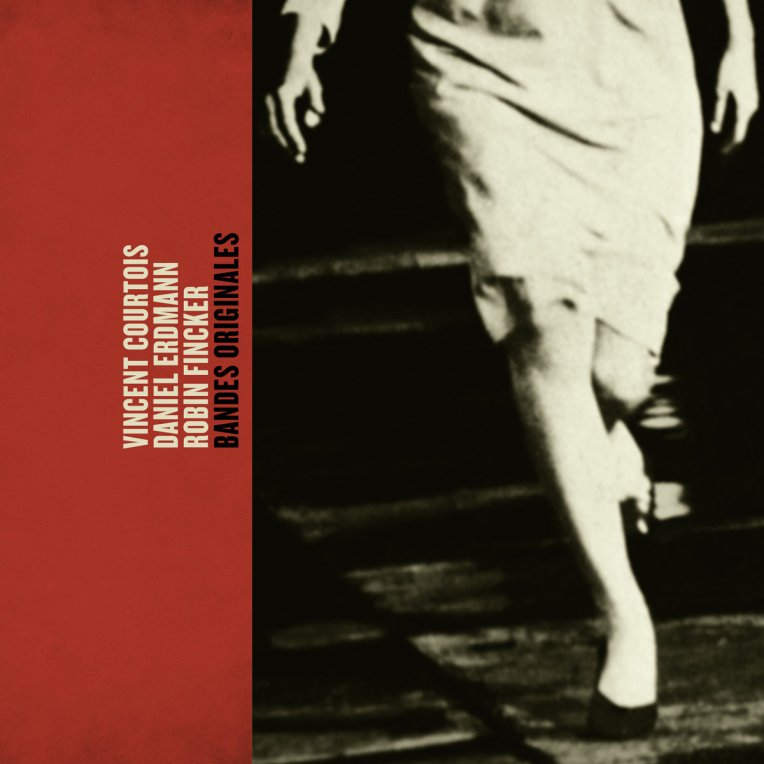
Courtois/Erdmann/Fincker: Bandes originales (RJAL 397030)

Cover

Bandes originales

Vincent Courtois cello
Robin Fincker tenor saxophone, clarinet
Daniel Erdmann tenor saxophone
Recorded live on October 17/18, 2016 at Studios La Buissonne, Pernes-les-fontaines and mixed on November 21/22 by Gérard de Haro, assisted by Anaëlle Marsollier
Mastered by Nicolas Baillard at La Buissonne Mastering Studio
Produced by Gérard de Haro & RJAL for La Buissonne and 22D Music
Release date: October 6, 2017

On Bandes originales, cellist Vincent Courtois, in his imaginative band with reedmen Robin Fincker and Daniel Erdmann, reimagines cinema as a purely sonic art form, wherein characters are instruments and their scripts are woven from notes in real time. The trio’s selections span a range of eras, genres, and geographical locations. Setting the stage is a selection from one of my favorites (and the very first subtitled film I ever saw), Tous Les Matins Du Monde. Director Alain Corneau’s 1991 biopic of Marin Marais comes alive in the composer and viola da gamba virtuoso’s “Le Badinage.” Courtois threads the needle of this forlorn tale, almost unrecognizable as tenor saxophone and clarinet extend it far beyond the time of its construction. This is the beauty and joy of the album at hand: an ability to treat each story, whether based on fact or fiction, as the seed for a hedge that continues to be tended in the present. Most of the allusions that follow reference other pillars of French cinema, including Giovanni Fusco’s theme to Hiroshima Mon Amour (1959, dir. Alain Resnais) and Maurice Leroux’s to Le Ballon Rouge (1956, Albert Lamorisse). These two pair particularly well, as the latter’s reversion to childhood eases the traumas described in the former’s intermingling of love and darkest inhumanity. Nino Rota’s soundtrack to Plein Soleil (1960, dir. René Clément) gets two nods, including the unchained “Tarentelle Meurtrière,” as does Courtois’s own retroactive scoring of the 1924 silent film Paris Qui Dort, directed by René Clair. The twisted retrograde of Eric Rohmer’s 1986 touch-and-go love story, Le Rayon Vert, adds further insight via Jean-Louis Valero’s sunlit melody.

Marvin Hamlisch’s motif for Take The Money And Run (1969, dir. Woody Allen) takes the album’s most surreal (if understated) turns, while Michel Legrand’s The Thomas Crown Affair (from the 1968 Norman Jewison original) ripples lyrically through the trio. The program closes with the nostalgia of John Williams’s timeless E.T. The Extra-Terrestrial (1982, dir. Steven Spielberg). From unassuming beginnings, it pulls a veritable bouquet of multitracked cellos for a lush and dramatic denouement—a reminder that even when film reels stop, the images continue to animate themselves on the projection screens of our minds, as immortal as they are lodged in history.

Trio Zéphyr: Travelling (RJAL 397029)

Cover

Trio Zéphyr
Travelling

Delphine Chomel violin, vocals
Marion Diaques viola, vocals
Claire Menguy cello, vocals
Piers Faccini lyrics and voice on “I Saw the Time”
Recorded between Spring 2016 and Spring 2017 at Studios La Buissonne by Gérard de Haro, assisted by Anaëlle Marsollier
Mixed April 10-12, 2017 at Studios La Buissonne by Gérard de Haro
Mastered by Nicolas Baillard at La Buissonne Mastering Studios
Produced by Gérard de Haro & RJAL for La Buissonne
Release date: November 3, 2017

After what I felt was a tragic misstep in their La Buissonne debut, followed by the triumph of its follow-up, Trio Zéphyr returns with a travel diary in both the physical and metaphysical sense. “Eleï” takes immediate control of this precious journey, as if you have been dreaming for a long time, only to awake and find yourself in a train car headed to an unknown destination. This combination of mystery and anxiety feeds your memories of a life that may or may not have been yours. Melodic and textural details assure you, however, that hope will be waiting on the next platform. In light of this development, “Colline” feels like a photograph kept in your shirt pocket: a portrait of someone familiar yet whose name has left a rectangular blank in the photo album of your mind. Does it belong to your childhood or to that of another? Is it your mother or someone without one?

The lyrics of “I saw the time,” as sung by Piers Faccini, remind you of when watches used to mark more than the passing of hours and days. By their gentle force of suggestion you feel the blood of this music flowing through your veins. Backed by the trio’s own voices, its songcraft turns still images into moving ones, as if unpausing a family movie. Those voices continue in “Kourgane,” plowing through snow and debris, while “Soleil disparu” extends that feeling at a more harmonic level, turning outer movement into inner. Even when taking “Refuge,” you find your soul aching with the need for a shoulder to cry on. Once purged of your grief (for whom you do not know), you bid farewell in “Oumano,” the singing of which writes on the fogged window a letter you read over and over until the temperatures on both sides of the glass equalize. Like the tender interludes that wave at you along the way, it speaks of times past to inspire faith in the future.

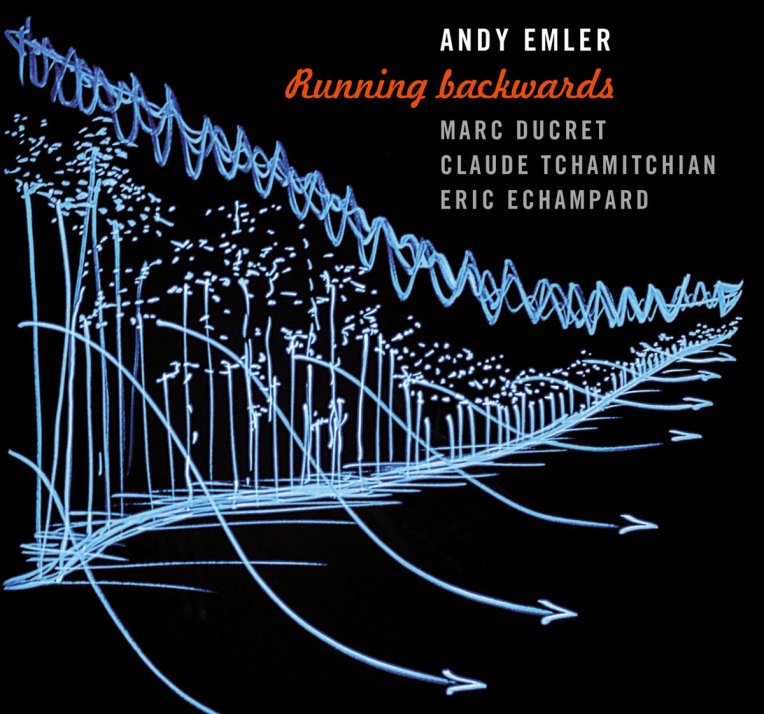
Andy Emler: Running backwards (RJAL 397028)

Cover

Andy Emler
Running backwards

Andy Emler piano
Marc Ducret electric guitar
Claude Tchamitchian double bass
Eric Echampard drums
Recorded live at Studios La Buissonne, Pernes-les-Fontaines, on November 17/18, 2016 by Gérard de Haro, assisted by Anaëlle Marsollier
Mixed at Studios La Buissonne by Gérard de Haro and Andy Emler
Mastered by Nicolas Baillard at Studios La Buissonne
Produced by Gérard de Haro & RJAL for La Buissonne and la Compagnie aime l’air
Release date: May 19, 2017

After two magnificent albums with his powerhouse MegaOctet, pianist-composer Andy Emler strips his adaptive profile down to its essentials alongside guitarist Marc Ducret, bassist Claude Tchamitchian, and drummer Eric Echampard. What he loses in numbers he makes up for in variety, spanning the gamut from ambient to postmodern funk at the flick of a switch.

Ducret is a detail-oriented guitarist whose microscopically attuned improvisations somewhat recall those of Derek Bailey. His, however, are possessed of a uniquely lyrical quality that marks the surfaces of everything they touch with honest fingerprints. His “Sphinx 2” opens the record unaccompanied before the quartet jumps into fine form on the title track. In unison with Emler’s right hand, he exudes quantum energy. Tchamitchian flexes and breathes at the center of it all, while Echampard pulls out all the stops to let every cylinder breathe with combustion. Soloing across the board is confident yet leaves plenty of room for the listener to unplug and unwind. And speaking of unplugging, Ducret himself goes acoustic in “Sad and beautiful” (also the title of Emler’s previous trio outing for La Buissonne) for a delicate yet emotionally direct sound. Here, as in “Marche dans l’autre sens,” guitar and piano banter like siblings, while “Lève toi et… Marc” finds them molding each other into a dynamic rollercoaster—out of water into flame and back again.

As one often finds in Emler’s oeuvre, quiet seeds yield phenomenal trees and vice versa. The hushed cymbals of “Turn around and don’t look back,” for one, predict an interlocking storm. The bass intro of “Watch your back, Darwin… I mean,” for another, tips the band’s finest synergy into a lyrical twist, laying its head in anticipation of sweet rest.

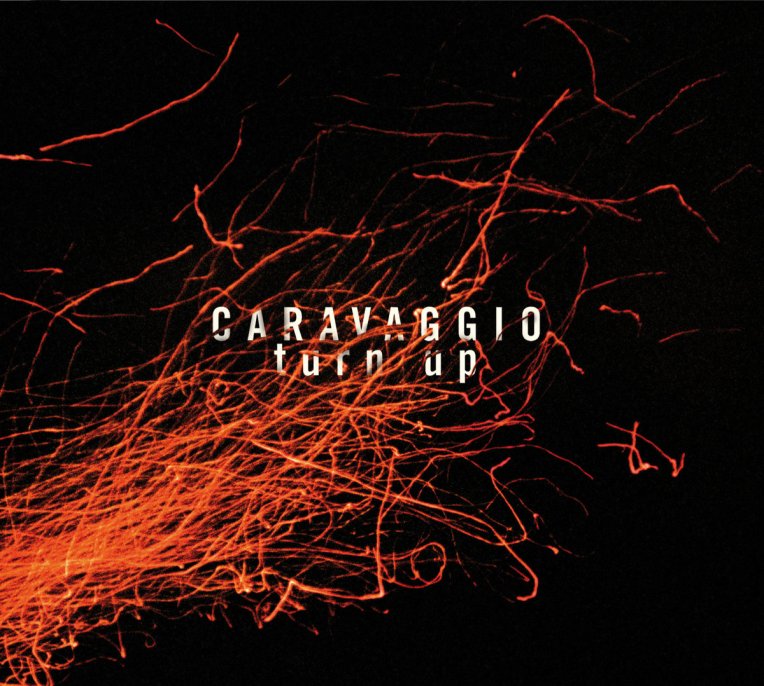
Caravaggio: Turn up (RJAL 397027)

Cover

Caravaggio
Turn up

Bruno Chevillon electric bass, double bass, electronic effects, tambourine, voice
Eric Echampard Tama Starclassic drums, Paiste traditional cymbals, voice
Benjamin de la Fuente violin, tenor guitar, electronic effects, acoustic slide guitar, voice
Samuel Sighicelli Hammond organ, sampler, analog synthesizers (Korg, Dave Smith, Moog), Fender Rhodes, piano, voice
Recorded at Studios La Buissonne in July and November 2015 by Gérard de Haro and Nicolas Baillard
ENCERcléS recorded by Jean-Baptiste Deucher (Studio Acousti, Paris)
Edited by Benjamin de la Fuente and Samuel Sighicelli
Mixed in May 2016 by Gérard de Haro, Nicolas Baillard, Benjamin de la Fuente and Samuel Sighicelli
Mastered at Galaxy by Marwan Danoun
Produced by Gérard de Haro and RJAL for La Buissonne and Sphota
Release date: February 24, 2017

Following their extraordinary La Buissonne label debut, the quartet known as Caravaggio returns with all new music, collectively produced, mostly in the moment. The result is more than, as the press release would have it, an art rock album in the idiom of contemporary experimental music. It’s a giant leap forward in the band’s evolution. After slipping into the electronic bass line of “Tanker Fever”  (courtesy of Bruno Chevillon), it’s difficult to avoid getting swept away by its digital current. Plucked from the DJ rack of some parallel otherworld, it treats hooks, structure, and repetition as journeys rather than destinations, and the groove they imply as the soundtrack for our itineracy. Guitar and drums are the spine and nerve impulses, respectively, but constantly switch places, just as prone to hanging from the unswaying branches of quietude. Other dives into the dark end include “I Wonder (Your Heart is Not in This),” in which sound bites of cinematic terror and despair encircle us, and the quiet dance of signs and cymbals that is “ENCERcléS.”

Much of the album, however, lives in brightly lit climates. Where the percussion-heavy mashup of “Street Art” feels like a video game in fast-forward that ends in a drunken crawl, “1064°C” is a solar flare powerful enough to upset the magnetic field of everything we heard until this point. The most fascinating associations come together in “Blue Crystal.” Its vocal samples and flashes of inner lives stretch far and wide. And if its topography is oceanic, then “Land Art” is the meteorite splashing into its currents, leaving a hush of activity in its wake, sustained for all time yet cut short by the present.

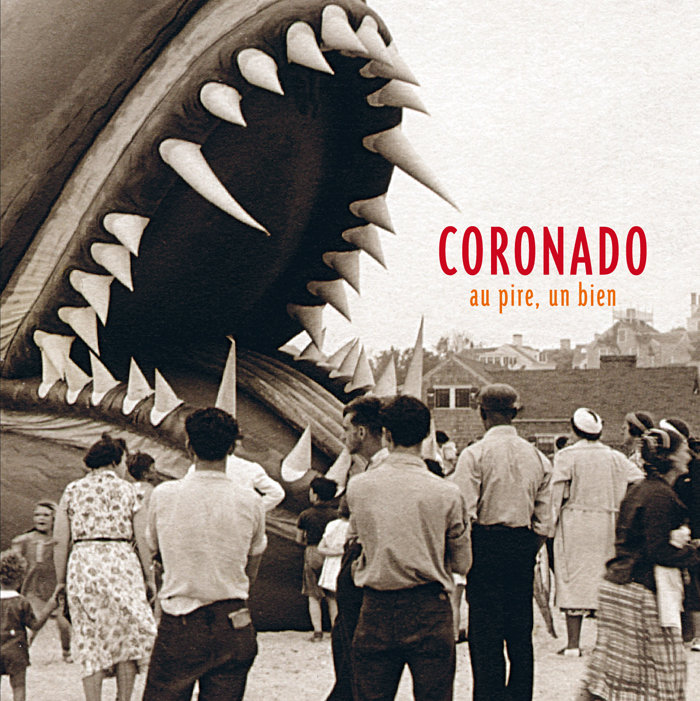
Gilles Coronado: au pire, un bien (RJAL 397026)

Cover

Gilles Coronado
au pire, un bien

Gilles Coronado guitar
Matthieu Metzger alto saxophone, electronics
Antonin Rayon Hammond B3, Clavinet, bass keyboard
Frank Vaillant drums, electronic percussion
Philippe Katerine vocals
Recorded on March 9-11, 2015 at Studios La Buissonne by Nicolas Baillard, assisted by Gérard de Haro.
Philippe Katerine’s voice recorded on March 19, 2015 at Ohm Sweet Ohm by Julien Reyboz
Mixed on April 1-3 by Nicolas Baillard and Gilles Coronado at Studios La Buissonne
Mastered by Nicolas Baillard at Studios La Buissonne
Produced by Gérard de Haro/RJAL and Shreds for La Buissonne
Release date: March 18, 2016

This first nominal leader date of Gilles Coronado places the guitarist in a new outfit among saxophonist Matthieu Metzger, keyboardist Antonin Rayon, and drummer Frank Vaillant. Across a set of seven originals, he navigates an airtight vessel of which every rivet is accounted for. The band’s ability to render atmospheres at once dramatic and proximate is a pleasure to behold, especially in the embrace of headphones.

The steadily mounting trajectory of “La traque” foreshadows the patience of everything that follows. Coronado’s guitar is a mellifluous creature, here and throughout, while Rayon’s organ rolls out an underlying carpet from the depths of the subconscious. Metzger breaks like sun through clouds, yet just as resolutely quiets to a whisper before jumping into a groovier deep end. Metzger indeed strikes the brightest match across this meticulously organized pile of firewood. Between his hard-won cry in the trapezoidal framework of “Des bas debits des eaux” and his skronk-worthy interplay with Coronado in “Wasted & Whirling,” he elicits lights and shadows in equal measure. Rayon’s keyboards are another defining presence, providing bass lines in the space funk of “La fin justifie le début” and choice ambience to the cathartic patterning of “Presque Joyeuse.” Guest vocalist Philippe Katerine joins for the title track, providing an enjoyable departure via an indie pop-ish and semi-satirical tone. Like the album as a whole, it teeters between the introspective and the wild. Slightly off center but never veering off the road, it keeps us in its rearview at all times.

Cholet/Michel/Ithursarry/Lopez: Whispers (RJAL 397025)

Cover

Whispers

Jean-Christophe Cholet piano
Matthieu Michel flugelhorn
Didier Ithursarry accordion
Ramon Lopez drums
Recorded at Studios La Buissonne, December 11/12, 2014 and mixed February 12/13, 2015 by Gérard de Haro
Mastered at Studios La Buissonne by Nicolas Baillard
Preparation and piano tuning by Alain Massonneau
Artistic direction by Gérard de Haro
Produced by Gérard de Haro and RJAL for La Buissonne & Infingo
Release date: April 29, 2016

Jean-Christophe Cholet (piano) and Matthew Michel (flugelhorn) leverage two decades of collaboration and friendship in this recording. Joining them on occasion are Didier Ithursarry (accordion) and Ramon Lopez (drums) for a set of mostly in-group tunes. Exceptions to that rule include “He’s gone.” Written by Charlie Mariano, it first appeared on The Door Is Open, an album by Jasper Van’t Hof’s Pork Pie, released in 1976 on MPS. Though dour in nature, it develops here with a mounting brightness. Another is “Zemer,” a modal piece of drama by Israeli composer Marc Lavry, elsewhere recorded by Daniel Zamir and Satlah on Children of Israel (released in 2002 on John Zorn’s Tzadik label).

Such balancing acts between internal and external forces are best performed by the core duo in “Fair,” through which they crochet an evenly distributed band of colors, Michel adding a tasteful choir of horns toward the end. The quartet weaves its own fantasies, making first appearance in “Rêve.” Its flowing colors can be found dyeing such cloths as “Diss” and “Le tour de Marius,” the latter a bluesy send-off into a hopeful future. The set is rounded out by a solo piano interlude (“Noctambule”) and the lovely duets of “The Fairground” (piano and drums) and “Onnance” (accordion and flugelhorn). Both wrap their fingers around memories threatening to fade while keeping one foot in and out of time, leaving us to tell the story of their passing.