The Jazz Composer’s Orchestra: s/t (JCOA 1)

WATT-1801-front

Jazz Composer’s Orchestra

Don Cherry cornet
Gato Barbieri tenor saxophone
Larry Coryell guitar
Roswell Rudd trombone
Pharoah Sanders tenor saxophone
Cecil Taylor piano
The Jazz Composer’s Orchestra
Michael Mantler
conductor
Recorded on 3M 8-track tape recorders in RCA Victor’s Studio B, New York City
Recording engineer: Paul Goodman
Produced by Michael Mantler

It has been 52 years since the Jazz Composer’s Orchestra dropped its weighty stone into the pond of music history. And yet, its ripples are still rocking the boats of listeners today. Count me among them. Despite having first gotten to know Michael Mantler through his intersections with ECM Records (a personal favorite being The School of Understanding), and having been given a taste of this watershed double LP on Review, I was humbled by the intensity herein. The vital link to that latter compilation is “Preview” (recorded May 8, 1968), which compresses the album’s full magnitude into 3-1/2 minutes via a gut-wrenching solo from Pharoah Sanders on tenor. Over a punctuated ensemble, he gives us much to ponder on the altar of our listening, as if it were the living amalgamation of many deaths before it (if not the dying amalgamation of many lives before it). Not out of any grand level of abstraction or concept but only through a sheer embodiment of execution does it succeed to carry a charge.

While soloists tend to dominate the foreground at any given moment throughout this project, the orchestra itself isn’t something to bat a flaccid eyelash at, either. Sheltering such greats as Steve Lacy, Randy Brecker, Carla Bley, Charlie Haden, Andrew Cyrille, Ron Carter, and Eddie Gomez, it blisters to the touch, and perhaps nowhere no more so than on “Communications #8” (recorded January 24, 1968). Hitting us where it counts with a solar flare, it lights the continents of Don Cherry’s cornet and Gato Barbieri’s tenor with killer instinct. Theirs is a power to be reckoned with. Every breath matters. “Communications #9” (recorded May 8, 1968) is an ember by contrast. But Larry Coryell ensures that the air itself is flammable, and that his guitar is the only logical path toward its combustion. Beneath it all, Bley’s piano chops away at the spine to make way for nerve impulses while droning reeds and five bassists level the earth. Coryell twists his strings until they adhere to inner turmoil. “Communications #10” (recorded May 8, 1968) features a rare introduction from Steve Swallow on upright bass, abstract yet flexible, and for that reason alone lends it archival vitality. So begins a morose and strangely unbreakable chain of inward glances. Trombonist Roswell Rudd is the extroverted soloist moving through viscous oceans before reaching a deserted island where, in dialogue with drummer Beaver Harris, he unravels the stuff of fantasy as if it were his only viable companion. The orchestra swoops in until there’s nothing left but smoke to show for their existence.

All of this leads to the massive diptych “Communications #11.” Spanning nearly 34 minutes, it’s another unrelenting communique. Pianist Cecil Taylor solos the you-know-what out of it like someone on fire in frantic in search for water. His interactions with Cyrille’s percussive details is worth the dive in and of itself. If Part 1 is the freefall, then Part 2 illustrates the landing in gruesome detail. Cyrille and Taylor continue their banter, turning starlight knives, each intent on drawing blood. The energy of their flight is sustained so steadfastly as to bring a tear to the eye, only to dry it with a punch in the cheek. This is where insanity goes for respite. Let it keep you sane.

Bley/Sheppard/Swallow: Life Goes On (ECM 2669)

2669 X

Carla Bley piano
Andy Sheppard tenor and soprano saxophones
Steve Swallow bass
Recorded May 2019, Auditorio Stelio Molo RSI, Lugano
Engineer: Stefano Amerio
Produced by Manfred Eicher
Release date: February 14, 2020

For its third ECM outing, pianist Carla Bley’s trio with saxophonist Andy Sheppard and bassist Steve Swallow mixes up an antidote for these times of uncertainty and quarantine. The title suite is the first of three comprising the program. Given that “Life Goes On” came out of a recent brush with illness, it’s fitting that Bley should begin in the dark whimsy of the blues. Her left hand plows fertile soil before leaving Sheppard and Swallow to sow their thematic crop. Years of experience and collaboration funnel into Swallow’s intimate rapport with Bley and into Sheppard’s unforced, spiritual playing. The latter, whether breathing through tenor or soprano, takes two steps forward for every retreat.

A sardonic humor assumes center stage in the three-part “Beautiful Telephones.” The title, quoting a certain leader of the free world, speaks of dire political circumstances, which, like the dial tone of a nation on hold, keeps us hopeful for something that may never come. The central movement reveals some of the deepest conversations and finds Sheppard in an especially soulful mood. The jagged finish is about as astute a commentary as one could pen on the current state of things without words.

The trio saves its most lyrical for last in “Copycat”, which holds a candle to some neglected parts of the human condition. There’s so much beauty in the opening “After You” that only the vessel of the playful title section is big enough to contain it. Setting a tongue in every cheek, it coaxes us with a promise of better times.

Holding it all together is an almost photorealistic approach to life. Like the score pages above Bley’s face on the cover, time feels suspended at just the right moment to reveal a smile of hope beneath it all.

(This review originally appeared in the May 2020 issue of The New York City Jazz Record, a full PDF of which is available here.)

Tim Berne/Nasheet Waits: The Coandă Effect

The Coandă Effect

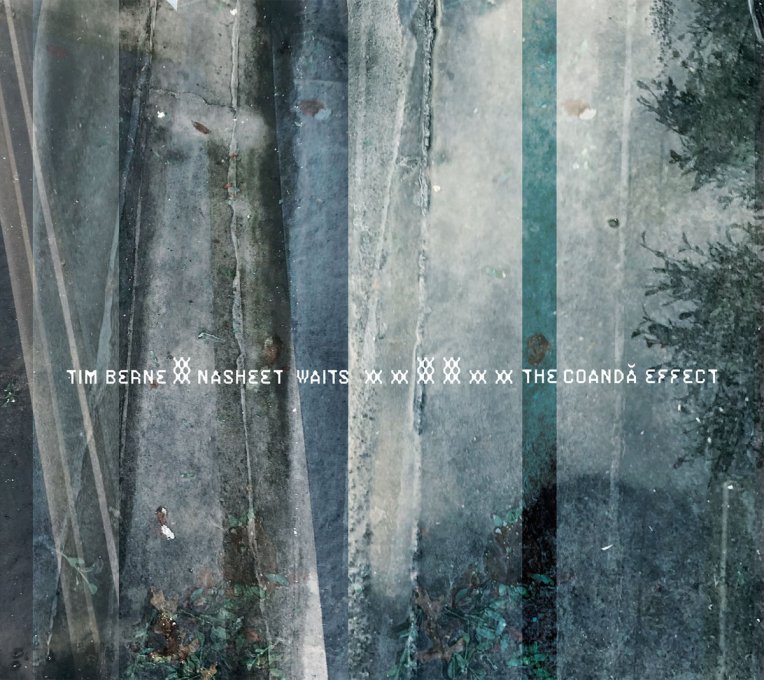
In this 2019 live set from The Sultan Room in Brooklyn, alto saxophonist Tim Berne and drummer Nasheet Waits connect a 49-minute Möbius strip of improvisational wonder. Composed of two free outpours, “Tensile” and “5see,” the performance is a barrage of ideas, which, despite their thickness of description, leave plenty of room for our imagination as listeners to run wild in tandem. With an immense freedom of spirit and catharsis of expression, the duo breaks down one wall after another until all expectations end up in a free box at the side of our mental road. Without a map, we are left to roam the subtler implications of their interactive cause. The ending of each statement becomes the beginning of another, leaving us with a string of words barred access to orthography. The ebb and flow between clarity and obscurity is as cohesive as the connection between bodily organs.

Berne plays with intense lucidity of communication. He tells stories not for the sake of a reaction but in the interest of filling in blanks the rest of us may be afraid to touch in the Mad Libs of life. His incisiveness fires arrows of indisputable meaning into the air. Waits likewise pulls out the rug from under us not out of a desire to break our equilibrium but to reveal an even more stable surface beneath it. Like Peter Pan, he cuts away his shadow in search of a land without rules, only to realize that connections of a higher order can never be broken. Such is the depth of their rapport as each defers to the other until the geyser of creativity grows too hot to contain. And so while we might end up with more questions than answers, we are all the better for having asked them.

(This review originally appeared in the May 2020 issue of The New York City Jazz Record, a full PDF of which is available here.)

Daniel Murray: Universo Musical de Egberto Gismonti (CARMO/18)

CARMO-18-front

Daniel Murray
Universo Musical de Egberto Gismonti

Daniel Murray 6-string and 10-string guitars
Recorded and mixed April 2018 at Visom Digital Studios, Rio de Janeiro
Recording engineer: Guido Pera
Mixed by Guido Pera and Egberto Gismonti
Produced by Egberto Gismonti
Release date: August 23, 2019

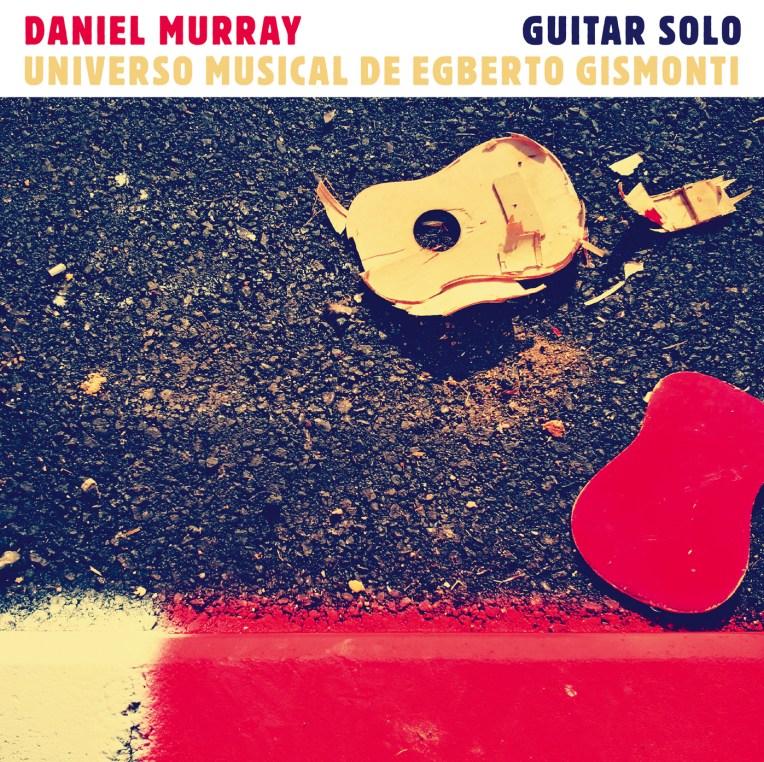
On July 19, 2015, Rio de Janeiro-born guitarist Daniel Murray sat down with one of his greatest musical heroes: Egberto Gismonti. After hours of sharing music, conversation, and dessert, he left the meeting inspired to start arranging Gismonti’s compositions for solo guitar. Gismonti so loved his first such attempt, “Forrobodó,” and the freedom of approach it embodied that he gave his approval for the present recording. The appropriately titled Universo Musical de Egberto Gismonti is filled to the brim with original arrangements of Gismonti’s music, save “Memória e Fado” and “Choro,” both already written for solo guitar.

Murray is an exquisitely talented musician possessed of technical virtuosity and a genuine adoration for Gismonti. But his deepest talent may just be his ability to balance clean, classical execution with open expression. This is most obvious in pieces like “Carmem” and “Memória e Fado,” in which his attention to detail shines. Sul tasto playing and harmonics speak of external ornamentation but of layers within. Some of the most coniferous tunes (e.g., “Água e Vinho” and “Baião Malandro”) are quietly re-clothed with finery, while “Sete Anéis” hides none of the heavy emotional lifting required to move it.

“Maracatu” and “Frevo” are among the more adventurous interpretations. Where the former opens with a flurry of extended sounds working their way into the tune proper, the latter offers its virtuosity in humility, taking on Gismonti’s butterfly effect without fear. And if “Saudações” is a kaleidoscopic wonder, then “A Fala da Paixão” is the lyrical light passing through it, as is the concluding “Palhaço,” in which breath surrenders to beauty.

There is a nocturnal feeling to this session that, in being so close to Gismonti’s heart, emphasizes the sunshine that awaits on the other side of life.

Grazie Wirtti/Matias Arriazu: Caçador de Infância (CARMO/17)

Caçador de Infância

Grazie Wirtti
Matias Arriazu
Caçador de Infância

Grazie Wirtti voice
Matias Arriazu guitar
Recorded September 19, 2018 at Visom Digital, Rio de Janeiro
Engineer: Guido Pera
Mixed September 20, 2018 at Visom Digital, Rio de Janeiro by Guido Pera and Egberto Gismonti
Produced by Egberto Gismonti
Release date: August 23, 2019

Brazilian singer-songwriter Grazie Wirtte teams up with Argentinian guitarist-composer-arranger Matias Arriazu for this, their CARMO debut. The duo was discovered by label head Egberto Gismonti, who invited them to perform as part of a 2017 concert in Buenos Aires before welcoming them into the studio a year later to record Caçador de Infância.

Wirtti:Arriazu
(Photo credit: Ana Luz)

While the set list contains a sizable portion of original songs, a handful of favorites has been daubed onto the canvas. Among the livelier examples of their style are “Moleca Saci” (Breno Ruiz/Paul César Pinheiro), a showcase of distinctly Brazilian rhythms and melodic changes in which Wirtti treats her voice like a guitar, and “Verde Limão” (Andrès Beeuwsaert/Iara Ferreira), a deck of chants shuffled into twirling motifs. On the darker side of things is “Memórias de Valparaíso” by Guto Wirtti. A prayerful evocation of reminiscence, it waters roots that, while severed in the material world, nevertheless thrive in metaphysical soil. And I cannot fail to highlight the epic interpretation of “Eu vou pro Céu,” a public domain gem that tickles the heart with its lyricism and spiritual uncertainty.

In the duo’s own writing we find a lifetime’s worth of moods and interactions. Across both the title song and “Fuga de Trem,” they unfurl imaginative landscapes as yet untouched by the colonialists of maturation. Wirtti’s voice is a force to be reckoned with. Whether squeezing juice from the soul over Arriazu’s fluttering guitar work in “El Dulce Gavilan” or playing with onomatopoeia in “Iarare,” she shares her intimate understanding of presence in the creative act. While capable of quiet reflections, she blossoms when belting her heart out, as in “Gira com Jurema” and “Candombe Santo,” the latter an ornate vessel of geometric guitar oared by a singer who sees the horizon as another beginning—a palimpsest for personal identity.

Silvia Iriondo: Tierra Que Anda (CARMO/16)

Teirra Que Anda

Silvia Iriondo
Tierra Que Anda

Silvia Iriondo voice, percussion
Quique Sinesi guitars
Juan Quintero guitar
Patricio Villarejo violoncello
Mono Hurtado double bass
Mario Gusso percussion
Silvina Gómez percussion
Lilián Saba piano
Mariana Grisiglione voice
Mario Silva birds, water, trump, patagonic wind
Francesca L. Cervi voice
Recorded March/April 2002, Studios Gaucho Records, Buenos Aires
Engineer: Claudio Barberón
Mixed December 2002, Studios ION, Buenos Aires
Engineer: Jorge “el portugués” da Silva
Coproduced by Egberto Gismonti
Release date: May 9, 2005

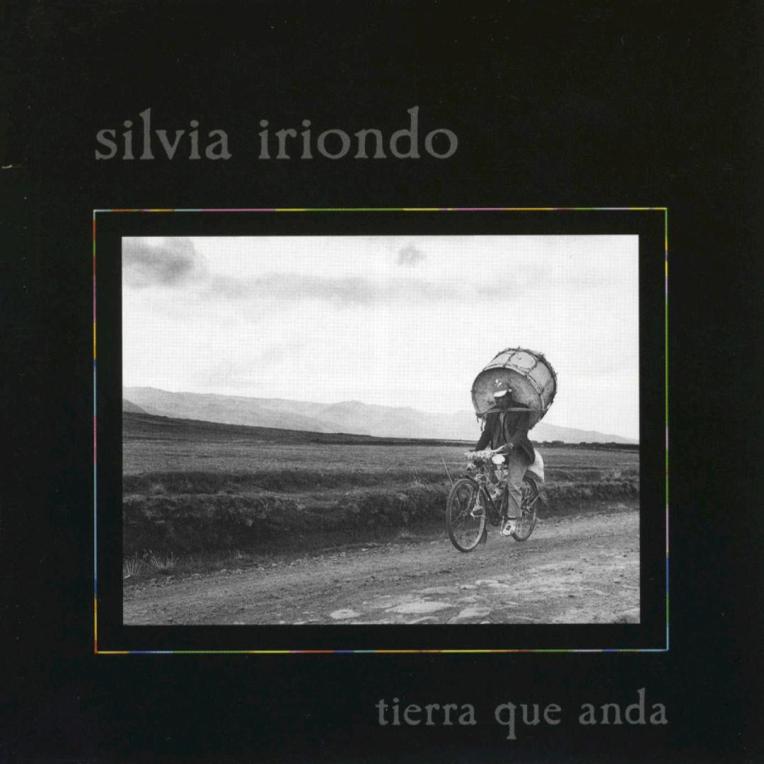
Argentinian singer, songwriter, and ethnomusicologist Silvia Iriondo is one of those rare musical souls who moves like a planet: which is stay, in fixed orbit yet taking in a 360-degree view of the universe along her travels. On a more terrestrial level, her dedication to art, history, and life itself welcomes perspectives from all directions. As put so lovingly by coproducer Egberto Gismonti in an album note: “I sense that your main goal (the music you make) is to have a peaceful relationship with the past and the future, without prejudice.” And certainly we find that timeless instinct sustained from first breath to last. Hence the title Tierra Que Anda, or “Walking Land,” which by its multivalence indicates both the origin and the destination of this self-styled journey across Argentina’s creative spectrum. Rendering popular melodies and songs by greats of her homeland—including Cuchi Leguizamón, Delia Cazenave, and Juan Quintero—while nestled in a band of kindred spirits.

Each song is built around one of a handful of rhythms, many of which were brought over from surrounding lands before settling in Argentina itself. The underlying pulse and feel of “Alas De Plata” (Silver Wings), for example, has Afro-Peruvian roots. By the handiwork of Quique Sinesi on piccolo guitar, it evokes a watery float along terrain where only the soul may tread without breaking tension. Peru is likewise referenced in “La Arenosa” (The Sandy Land). Grounded by the bass of Mono Hurtado and percussion of Mario Gusso, it pushes through layers of time as an archaeologist might dig through strata of sediment: both treat their art as a way of uncovering the dead to speak anew.

Three zambas, including the Quechua-inspired dance of “Vidalero” and the album’s crowning jewel, “Zamba De Ambato” (Zamba For Ambato), heave as shoulders bearing the weight of a collective heritage. Sinesi’s guitar and the cello of Patricio Villarejo move in total attunement, while Iriondo’s voice touches the heavens with its unforced purity. While many such passages evoke broad landscapes, both within and without, the salt-of-the-earth cast of “Vámonos Vida Mia” (Let’s Go My Life), the Mapuche chant of “Weque – Las Barbas De Mi Chivato” (Weque – The Beards Of My Goat), and the Bolivian footwork of “Tun Tun” humble us with their unmitigated expression. As in the farewell of “La Nostalgiosa” (The Nostalgic Song), they square the circle of our listening with dust, bone, and memory.

One of the brightest stars in the CARMO constellation.

Bernard Wystraëte & Group: Strawa no Sertão (CARMO/15)

Strawa no Sertão

Bernard Wystraëte & Group
Strawa no Sertão

Véronique Briel piano
Philippe Berrod clarinet
Jean-Yves Casala guitar
Frédéric Guérouet accordion
Philippe Macé vibraphone
Pierre Strauch cello
Bernard Wystraëte flutes, musical and artistic direction
Guest artist:
Egberto Gismonti piano
Recorded by Philippe Labroue  at May, June, and September 2001 at Studio Labroue in May, June, and September 2001, Paris, and at Auditorium Magne in February 2002, Paris
Edited by Bernard Wystraëte and Philippe Labroue
Co-produced by Egberto Gismonti
Release date: May 9, 2005

Bernard Wystraëte enters the CARMO fold with an album recorded under the banner of his self-titled group. Throughout his career, the composer and flutist has dipped into a variety of fonts, including classical and free jazz, but has always held a special place in his heart for music of the Andes. Naturally, his interests intersected with the work of Egberto Gismonti, from whose work this program is entirely drawn and whose blending of traditional and futuristic streams yields a powerful river on which to invite other vessels strong enough to handle its current. Thankfully, Wystraëte is not only able to navigate those waters, but populates their surrounding ecosystem with flora of his own.

Gismonti gives his sonic seal of approval by joining at the piano for some of his most enduring (re)creations. They also feature the accordion of Frédéric Guérouet, lending his painterly touch to “Sanfona” (named for that very instrument) and the lesser-heard “O Amor Que Move o Sol e Outras Estrelas” (Love that Moves the Sun and Other Stars), a wordless poem that leaps in slow motion toward completion. Even without Gismonti in the studio, his presence is felt in renditions of such evergreens as “Baião Malandro” (Trickster Baião), which adds a jazzier sleight of hand through the vibraphone of Philippe Macé, and the almighty “Karatê,” which blossoms in a version for Bb clarinet (Philippe Berrod), guitar (Jean-Yves Casala), cello (Pierre Strauch), and alto flute. It deserves highest place in the pantheon of Gismonti interpretations. The lead flute makes it flow with even more legato grace than when played on the piano, showing the interconnectedness of every movement like time-lapse photography. Another standout is the album’s title suite, a humorous musical fantasy in five parts that imagines Igor Stravinsky living in the arid lands of Northeastern Brazil. Though two movements of it were featured on Gismonti’s 1997 ECM album Meeting Point, as far as I know this is its only complete performance on record. Dedicated to Wystraëte, it combines rhythms from that same region with others from Rio de Janeiro, dappled with the Russian composer’s fondness for angularity and childlike wonder. Wystraëte goes a step further by improvising on the section called “Cherubin I,” playing the unaccompanied bass flute as if it were the only message that mattered in the moment. Each note is a tender mercy, a memory captured as if by camera, a fire that burns to be remembered.

Rodney Waterman & Doug de Vries: Água e Vinho (CARMO/14)

CARMO-14-front

Rodney Waterman
Doug de Vries
Água e Vinho

Rodney Waterman recorders
Doug de Vries guitars
Recorded between November 1997 and March 1998 by Robin Gray at Allan Eaton Studios
Tracks 4, 17, 20, and 21 recorded by George Butrumlis at Adeney Studios (1999)
Mastering at Estúdio Tom Brasil, São Paulo
Sound engineer: Alberto Ranellucci
Produced by CARMO & Dulce Bressane
Release date: November 13, 2000

This collection of duets for recorder and guitar, played respectively by Rodney Waterman and Doug de Vries, comes two CARMO catalog numbers after the equally engaging duo of Ernesto Snajer and Palle Windfeldt. Breath and string are a natural combination that harks not only to the Renaissance but also to the many folk traditions that grew from such music’s spread throughout the colonized world. As melodies were taken up, transformed, embellished, and added to, they took on lives of their own, birthing entirely new cultures by melding into ancient ones. The duo’s ear for melody steeps us in these histories, lest we forget the pain and struggle often encoded into beauty.

“O ôvo” (The Egg) is one of two selections by Brazilian composer Hermeto Pascoal and references Pascoal’s beloved 1967 debut, Quarteto Novo, which was a harbinger of the very sort of jazz-folk hybrid for which Egberto Gismonti would soon become known. This is followed, appropriately enough, by “Bebê” (Baby). Both assume a refreshing form made evident by the baião rhythms around which they are structured.

Waterman himself is artfully represented by a handful of originals. His “Song of Reconciliation” was written in 1997 in response to the Australian government’s refusal to atone for aboriginal atrocities. Played on the tenor recorder for a more anguished sound, it nevertheless cups its hands around a pilot light of hope. The title of “Xanthorrhoea” comes from the Latin name of a grass tree species native to Australia and takes its cues from nature. Here the guitar is played like a drum, lending a bygone air. “Zana” pays homage to Australian virtuoso Zana Clarke on the very instrument she made famous: the “Ganassi” alto recorder. Accompanied by de Vries on egg-shaker, it is meant to evoke the sunlight of Brazil. “Ade” is inspired by Lazy Ade Monsbourgh’s 1956 album Recorder in Ragtime and incorporates further influences from Pascoal and Gismonti. It is played on soprano recorder and the cavaquinho (a Brazilian 4-string guitar) to effervescent effect.

Gismonti himself shines via six tunes, most of them touchstones of his compositional career. Of those, the duo’s rendering of “Frevo” is possessed of an especial fervor (hence the title) and sports some lively adlibbing in the middle section. The somber “Água e Vinho” (Water and Wine), after which this album is named, exhales without emotional compromise. Other highlights include “Parque Lage,” deepened by the bass recorder, “Lorô,” dancing with avian energy, and the omnipresent “Karatê.” The latter was actually what brought the duo together in the first place when de Vries introduced Waterman to Gismonti’s music via Alma. They even concluded their first concert in July of 1995 with the piece.

“Jorge do Fusa,” by the deeply venerated guitarist and composer Anibal Augusto Sardinha (a.k.a. “Garôto,” or “The Kid”), cleanses the proverbial palate as a prelude to four Catalan folksongs arranged by the duo. Of these, “La Nit de Nadal” (Christmas Night) is achingly nostalgic, while “El Noi de la Mare” (The Son of Mary) warms the heart. Two ricercars by Spanish Renaissance composer Diego Ortiz are just as lovely, along with of de Vries’s own, round out the scene. Where “Chorinho Toccatina” is a solo guitar piece inspired by a trip to Bali evoking forests and wildlife, “May” looks at it titular month from the southern hemisphere’s perspective, on the cusp of winter’s gaze. Let this be our hibernation.

Quaternaglia: Forrobodó (CARMO/13)

Forrobodó

Quaternaglia
Forrobodó

Eduardo Fleury guitar
Fabio Ramazzina guitar
Sidney Molina guitar
Paulo Porto Alegre guitar
Breno Chaves guitar (on “Baião de Gude,” “Lun-Duos,” “Uarekena,” “Quartetinho,” and “Forró”)
Egberto Gismonti synthesizer (on “Um Anjo”)
Recorded September 1998 (“Uarekena,” “Lun-Duos,” “Baião de Gude,” “Quartetinho,” and “Forró”) and December 1999 (“Forrobodó,” “Karatê,” “Escovado,” “Batuque,” “Furiosa,” and “Um Anjo”) at Estúdio Tom Brasil, São Paulo
Sound engineer: Alberto Ranellucci
Produced by CARMO & Dulce Bressane
Release date: November 13, 2000

Following a self-titled 1995 debut and 1996’s Antique (both released on other labels), the Quaternaglia Guitar Quartet intersected with Egberto Gismonti’s CARMO imprint for its third album. With a studied yet organic body language, this São Paulo-based ensemble guides us through its account of four distinct yet complementary composers, each of whom the QGC has worked with closely toward building a defining repertoire. Despite having undergone more than a few changes of roster since its inception in 1992, in this present iteration we have Eduardo Fleury, Fabio Ramazzina, Sidney Molina, and Paulo Porto Alegre. The guitarist whom Alegre replaced, Breno Chaves, joins as special guest on five pieces, adding a fifth layer of virtuosity.

Brazilian guitarist and composer Paulo Bellinati is represented by three pieces. Of these, “Baião de Gude” is one of his best known and, in this interpretation, moves with a filmic quality. I imagine someone on a frantic search for something, only to realize they’ve been in a dream all along once they find it. Before that, the session opens with “Furiosa (Maxixe).” This pleasing mélange of microtonal harmonies sports a robust sense of progression and muted rhythms. The latter impulses cross over into “Lun-Duos,” through which Chaves circulates with increasing fervor, spanning the gamut from shout to whisper and back again.

The pivot comes in “Uarekena.” Written by Sérgio Assad (of Duo Assad fame), it’s a weave of pulsing harmonics and dissonant chords around inviting linear melodies.

“Quartetinho” begins a traversal of works by Egberto Gismonti, whose writing is well-suited to the format of the quartet, who capture his litheness with gusto. Among the perennial classics of his oeuvre to make an appearance are the album’s title piece, which manages to scintillate while still making room for Gismonti’s inchoate shadows in a passage of astonishing detail, and “Um Anjo,” which features the composer on synthesizer. Chaves joins the quartet again for “Forró,” taking on some of Gismonti’s more cynical textures and chord voicings. But it’s in “Karatê” where the quartet’s virtuosity shines for handling such a constantly shifting composition with fluidity. It feels reborn here, played to the strengths of its dissonances.

The program ends with a twofer by Ernesto Nazareth, arranged by Gismonti and adapted by Alegre. Between the familial “Escovado” and the welcoming “Batuque,” a deep and joyous farewell is given in full knowledge that this isn’t goodbye.