Keith Jarrett: A Multitude of Angels (ECM 2500-03)

2500-03 X

Keith Jarrett
A Multitude of Angels

Keith Jarrett piano
Concert recordings October 1996
Modena, Teatro Comunale / Ferrara, Teatro Comunale
Torino, Teatro Regio / Genova, Teatro Carlo Felice
Played, produced and engineered by Keith Jarrett
Mastering: Christoph Stickel and Manfred Eicher at MSM Studio, München
An ECM Production
Release date: November 4, 2016

Fate is retrospective. It lies hidden for any number of years—in this case twenty—before cracking a smile just broad enough to enter our field of vision. Whether courted by demons or offered by angels, events have a way of feeling inevitable when serving as targets of remembrance. In these solo concerts, recorded October 1996 in four Italian cities, Keith Jarrett reminds us that fate can be as beautiful as it can be terrifying. In the album’s liner note, the pianist calls this a pinnacle of his career as a solo improviser. But the keyword there is the indefinite article, for it must be one pinnacle of many in a horizon filled with them. These being the last solo concerts he would give before a then-undefined disease locked his body into temporary submission, they also unlocked a self-awareness that even Jarrett would need time to discover.

Part I of his performance at Modena is so comforting that listeners cannot help but become more deeply aware of their own selves. Like an old friend with whom you pick up right where you left off, it feels immediate and true. Jarrett embraces us with gentle assurance, asking nothing more from us than the same in return. As he transitions into a groovier romp midway through, punctuating the ether with all the experiential knowledge he has in grasp, he whispers of a reverie yet to come. As always, his is the voice of an artist marveling at his own transmission. Part II, as often happens in a Jarrett solo sequences, contrasts flowing lyricism with abstract denouement—no less welcoming than the more hummable forays. His probing nature creates an atmosphere of exploration, of a willingness to scour every last inch of soil in search of archaeological clues to the nature of these sounds. It only feels spontaneous because for being unearthed after so much hibernation.

Part I of Ferrara is one of the most visceral journeys Jarrett has ever recorded. Throughout its 44-minute traversal, we encounter an entire biography, spun and re-spun until shames are filled with virtues. This anthem of the soul paints a twilit dream of such thin altitude that it can only break itself toward fulfilment of knowledge. This is a crowning achievement of alchemy, by which the piano’s tempered steel medium metamorphoses into a golden message of liberation. This is followed by an upbeat Part II, for which Jarrett digs so deep that it’s all we can do to shine a light into the proverbial tunnel to catch a glimpse of his feet as he slips from view.

Torino’s brooding opening reveals a geometric puzzle that can only be solved by mixing it. Through its process of productive error, Jarrett becomes more complete, walking as much as dancing through stages of learning. Part II likewise obliterates introverted theories with extroverted practice, turning complex shapes into universally translatable phrases, hammered into place by stomping feet.

Genova’s first part, freest of them all, is a kaleidoscope turning in the hands of a future self. As Jarrett cascades down the waterfall of his own acceptance of whatever notes may come, he follows rather than leads the way into a river of diaristic currents before Part II travels upstream to the source. An anthem for all time, devoid of time.

This four-disc set might be worthy of the adjective “monumental” if only it wasn’t so intimate. If anything, it’s humility incarnate. This is clearest when Jarrett’s encores take form as tried-and-true melodies. Whether in his loving rendition of “Danny Boy” in Modena or aching “Over the Rainbow” in Genova, he plays to show us who we are at any given moment. Even in the unnamed encores we find something human to hold on to, alive with outstretched hands. Such is this music’s ability to grow as we grow, so that the most timeworn phrase becomes new when we add more pages to the books of our lives.

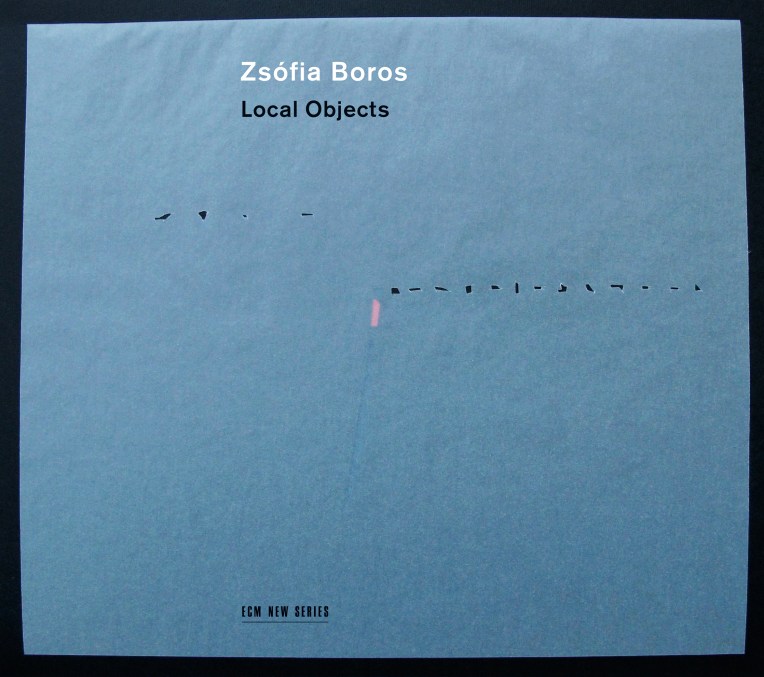
Zsófia Boros: Local Objects (ECM New Series 2498)

2498 X

Zsófia Boros
Local Objects

Zsófia Boros classical guitar
Recorded November 2015, Auditorio Stelio Molo RSI, Lugano
Engineer: Stefano Amerio
Produced by Manfred Eicher
Release date: October 3, 2016

He knew that he was a spirit without a foyer
And that, in this knowledge, local objects become
More precious than the most precious objects of home
–Wallace Stevens

When classical guitarist Zsófia Boros made her ECM debut with En otra parte, she did so not by planting a flag but by opening a door. Where that door led was mostly left to the listener, guided only by the signposts of an internationally minded program. Here, she treats an equally mixed corpus as a movie screen, working with an auteur’s patience to render establishing shots before allowing full scenes to take shape.

The first stirrings of character development come into view with Mathias Duplessy’s Nocturne, which by its depth of suggestion foreshadows a bittersweet ending. So intimate is its approach to darkness that can almost wear it as a cloak of protection against a blinding world. Boros gives a superb technical performance, especially in her application of harmonics, but even more so an emotional performance that turns gestures into possibilities of new lives.

Next, Egberto Gismonti’s Celebração de Núpcias, a harmonious roll of fragrant arpeggios and falling petals that first appeared on 1977’s Dança das Cabeças, is reborn in the present rendering. It’s the first of a few South American touch points that include Jorge Cardoso’swidely performed yet freshly realized Milonga (its familiar bass line a vital narrative fulcrum) and Anibal Augusto Sardinha’s Inspiração. All are bound by a feeling of kinship and inspiration: reminders to be oneself when all else fails.

Carlo Domeniconi’s Koyunbaba, named for a 15th-century Turkish saint, is another concert favorite, which for all its hermitic solitude is alive with movement. Its distant calls of intuition, achingly beautiful Cantabile, and energizing Presto, for which Boros places paper over the strings before leaping into a full-throated cry of tenderness, make for an intensely tactile experience. Against these, Al Di Meola’s Vertigo Shadow and Franghiz Ali-Zadeh’s Fantasie are spirals of geometric endurance in the puzzle of identity. The latter piece leaves room for improvisation in order to make the story the interpreter’s own. Boros floats around every note, drawing an entire garden’s worth of ideas and melodies. Via muted strings, she expresses unmuted emotions.

Our bittersweet ending is realized in Alex Pinter’s Gothenburg. It’s the sonic equivalent of knowing you will never see a loved one again yet also knowing they’ve become an indivisible part of you. Like strings on an instrument, you and they have their own voice and path, yet echo together in the same chamber of existence, waiting for that divine hand to pluck them before fate has its way of silence.

Frode Haltli: AIR (ECM New Series 2496)

2496 X

AIR

Frode Haltli accordion
Trondheim Soloists
Arditti Quartet
Irvine Arditti 
violin
Ashot Sarkissjan violin
Ralf Ehlers viola
Lucas Fels violoncello
Recorded October and November 2014, Selbu Kirke, Norway
Engineer: Sean Lewis
Mastering: Manfred Eicher and Christoph Stickel
Executive producer: Manfred Eicher
Release date: August 26, 2016

AIRmarks a classical return to ECM for Norwegian accordion player Frode Haltli, who now, as on his label debut, offers a program centered around the music of Danish composer Bent Sørensen. For that album’s title piece, Looking on Darkness, Haltli was required to rethink his approach to the instrument in search of softer dynamics and bent pitches, and deepens those quasi-linguistic impulses here.

Sørensen provides the album’s frame tale. It is Pain Flowing Down Slowly on a White Wall (2010), written for solo accordion and string orchestra, feels vulnerable to something beyond grasp of flesh and time. Despite a lack of footholds, if not also because of said lack, the accordion takes on a winged materiality, destined to never touch solid ground. The relationship between it and the strings demonstrates Haltli’s own views on chamber music, of which he writes: “It demands fellow musicians who really listen, and who can move flexibly and playfully between various levels in the music according to what the music is telling you—not musicians who constantly need to be in front.” Indeed, “soloist” becomes a reductive term in the present context, favoring instead a larger whole. Movements of great distance share breathing room with dreams of proximity in a constantly shifting topography, as if the very earth were struggling to hold its shape. And so, when the string players at last trade bows for melodicas, it comes across—ironically enough—as an act of solidarity. Like Sigrid’s Lullaby (2010), adapted for solo accordion from a nocturne, it dips a hand into the font of time and swirls until all colors blend into one.

Between those two poles stretch the telephone wires of another Dane I expect (and hope) to hear more of on ECM: Hans Abrahamsen. His Air (2006) for solo accordion (2006) not only yields the album’s title but more importantly its spirit. A haunting experience that’s difficult to imagine in anyone’s hands but Haltli’s, it narrates texture and space with autobiographical assurance. Its molecules move so slightly, so continuously, as to appear still. Air is also something of a palindrome, beginning and ending in a wash of chords, while in the middle revealing a dance that returns to dust as quickly as it is born from it. And while the instrumental forces of Three Little Nocturnes (2005) for string quartet and accordion feel much more distinct than on Sørensen’s sound-world, they are deeply harmonized in rhythm, each inhaling the other as deeply as it can before the final exhale.

Haltli’s assessment of Abrahamsen’s music, of which he observes, “Not one note is accidental,” applies to the album in its entirety. Not only because these pieces are capturable on paper, but also because they treat that paper as the skin of an individual life.

Mathias Eick: Ravensburg (ECM 2584)

Ravensburg

Mathias Eick
Ravensburg

Mathias Eick trumpet, voice
Håkon Aase violin
Andreas Ulvo piano
Audun Erlien electric bass
Torstein Lofthus drums
Helge Andreas Norbakken drums, percussion
Recorded June 2017 at Rainbow Studio, Oslo
Engineer: Jan Erik Kongshaug
Produced by Manfred Eicher
Release date: March 2, 2018

Since stepping through The Door into ECM bandleader status, Mathias Eick has decorated every room of his new abode with its own character. Where Skala felt like a kitchen filled with organic ingredients and Midwest a study plastered with maps and well-read books, for Ravensburgthe Norwegian trumpeter and composer has built a welcoming family room, as blueprintedin the opening track. For Eick, however, it’s clear that family is more than a question of blood; it’s also the sum of parts greater than what we know from direct experience.

Recalling the puzzles famously produced in this album’s eponymous Southern German town, each tune contributes its own piece, uniquely shaped yet vital to the whole. “Children” is another anchoring corner and adds a new thread to Eick’s sonic tapestry: his singing voice, a natural development for one who always seems to have approached the trumpet as an extension of the throat. In addition to its melodic earworm and nostalgic overlay, this tune fits together the new band’s own seamless puzzle. In the resulting landscape, violinist Håkon Aase is the stream to Eick’s river. Where the latter carves deeper grooves into the earth, the former traces paths through thickly settled forests and other places where a finer trajectory is required. Pianist Andreas Ulvo rolls with the adaptive rhythms of hills and mountains, while drummer Torstein Lofthus and percussionist Helge Andreas Norbakken render every rock and plant with sentient care. Last but not least is electric bassist Audun Erlien, providing the pliant tendons of the far-reaching “Friends” and “August.” The latter’s pianism is also noteworthy for translating the babble of cultural division into a musical language anyone can understand.

“Parents” continues the genetic conversation in fruitful directions, moving with the fortitude of a protector while curling inward in the shape of a lullaby. Eick and Aase trace a helix of improvisational bliss across this sky, further striating the rhythm section’s wonders in “Girlfriend” and “For My Grandmothers,” each a soft arrow shot into the future and the past. But nowhere is the story arc so clearly etched as in the title track, where pulses of dreams crack the egg of reality until its yolk becomes indistinguishable from the sun.

Eick is a rare soul, a musician whose themes are as perennial as they are personal. His politics flow beneath the skin’s surface where no violence may be inflicted by or upon them, thus allowing listeners to come as they are yet leave as they never thought to be.

Roscoe Mitchell: Bells for the South Side (ECM 2494/95)

2494|95 X

Roscoe Mitchell
Bells for the South Side

Roscoe Mitchell sopranino, soprano, alto and bass saxophones, flute, piccolo, bass recorder, percussion
James Fei sopranino and alto saxophones, contra-alto clarinet, electronics
Hugh Ragin trumpet, piccolo trumpet
Tyshawn Sorey trombone, piano, drums, percussion
Craig Taborn piano, organ, electronics
Jaribu Shahid double bass, bass guitar, percussion
William Winant percussion, tubular bells, glockenspiel, vibraphone, marimba, roto toms, cymbals, bass drum, woodblocks, timpani
Kikanju Baku drums, percussion
Tani Tabbal drums, percussion
Recorded September 2015 at Museum of Contemporary Art Chicago by David Zuchowski
Mixed May 2016 at Studios La Buissonne, Pernes-les-Fontaines by Gérard de Haro with Steve Lake
Mastered by Nicolas Baillard
Produced by Steve Lake
Release date: June 16, 2017

To celebrate the 50th anniversary of the Association for the Advancement of Creative Musicians (AACM), Roscoe Mitchell presented a cornucopia of trios at the Museum of Contemporary Art Chicago in conjunction with the exhibition The Freedom Principle: Experiments in Art and Music, 1965 to Now. Said exhibition included percussion set-ups favored by Art Ensemble of Chicago legends Don Moye, Malachi Favors, Lester Bowie, Don Moye, and the reed-favoring multi-instrumentalist himself, all incorporated into the present double-disc recording.

Mitchell is the alpha and omega of this project, spearheading a series of designated trios to explore different organs of his immense compositional body. With Hugh Ragin (trumpet) and Tyshawn Sorey (here on trombone), he offers “Prelude to a Rose,” a somewhat funereal dirge that pops a cathartic blister about midway through.

With Jaribu Shahid (double bass) and Tani Tabbal (drums), Mitchell presents an unabashedly soulful sermon in “Prelude to the Card Game, Cards for Drums, and the Final Hand.” By force of his muscular alto, he punches holes in the time cards printed and cut by Shahid’s thick bowing before Tabbal turns the very concept of time inside out in an extended soliloquy, leaving a brief trio to throw some light at the end of the tunnel. Mitchell continues down that same introspective avenue in “Six Gongs and Two Woodblocks.” For this he’s joined by James Fei (reeds, electronics) and William Winant (percussion) for what may just be the album’s most brilliant turn of events. Its balance of outer and inner is at the very core of what Mitchell does best as a composer.

Even with pen laid aside, as in “Dancing in the Canyon,” a group improvisation with Craig Taborn (piano, organ, electronics) and Kikanju Baku (drums, percussion), he’s still the catalyst for an otherwise impossible chemical reaction. His sopranino dances as if it’s on fire and the only way to keep itself from turning to ashes is to sing until its throat runs dry. The sheer musicality of this unscripted dive inward is lucid to the extreme.

The album’s remainder is as shuffled as its musicians, for throughout it Mitchell recasts his trio actors in new roles and configurations. From the picturesque latticework of “Spatial Aspects of the Sound” to the nearly 26-minute blend of ambience and explosions that is “Red Moon in the Sky,” the latter segueing into the AEC’s calling card, “Odwalla,” played by the entire nonet, sound is substance. Connective tissue along the way spans a world of apparent influences, from Pierre Boulez and Iannis Xenakis to Anthony Braxton and Edgard Varèse. Taborn (electronics) and Shahid (bass guitar) unearth haunting ore in “EP 7849,” while in the title track Ragin slings precise arrows of piccolo trumpet over the “percussion cage” Mitchell created for the AEC and which is resurrected here to wonderous effect by Sorey. But even at its most explosive, as in the drums- and piano-heavy “The Last Chord,” there’s more Genesis than Revelation at play. Let there be music.

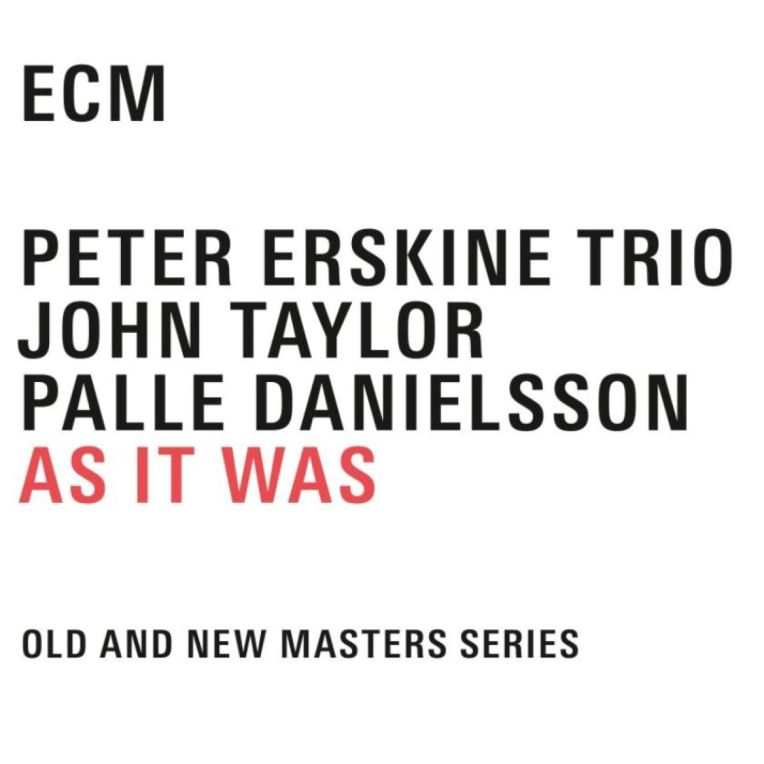
Peter Erskine Trio: As It Was (ECM 2490-93)

As It Was.jpg

Peter Erskine Trio
As It Was

Release date: July 1, 2016

On paper, drummer Peter Erskine might have seemed like an unusual leader for a piano trio, but once the sounds of his collaboration with pianist John Taylor and bassist Palle Danielsson made their acquaintance with uninitiated ear canals, there was no denying their efficacy as a unit. Erskine followed a trajectory all his own to enter the ranks of ECM, having already established his reputation with the Stan Kenton Orchestra, Maynard Ferguson, and Weather Report before breaching ECM waters in sessions with John Abercrombie, Jan Garbarek, and Kenny Wheeler. The latter association brought him into fateful contact with Taylor and Danielsson, and their interactions as a touring band paved the way for the four albums featured on this Old & New Masters set. And so, when it came time to craft his first ECM leader date—1992’s You Never Know—the choice of sidemen was obvious. “Side” being the operative word here, for John Kelman aptly describes the band in his superb liner notes as an “equilateral musical triangle.” By then Danielsson and Taylor were both ECM veterans: the former via landmark recordings with saxophonist Jan Garbarek and pianist Bobo Stenson, the latter via another unorthodox trio with singer Norma Winstone and trumpeter Kenny Wheeler known as Azimuth. Says Erskine in those same liner notes of the band documented here: “The trio seems, by its mathematical and geometric natures, to offer the most possibilities where interaction meets form, and openness meets density.”
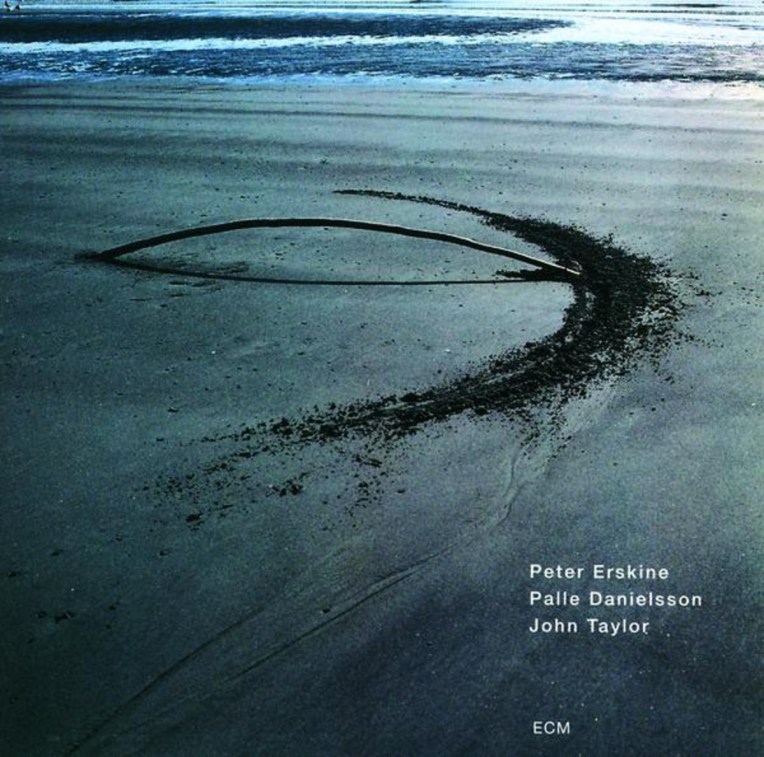
You Never Know

You Never Know (ECM 1497)

John Taylor piano
Palle Danielsson double bass
Peter Erskine drums
Recorded July 1992 at Rainbow Studio, Oslo
Engineer: Jan Erik Kongshaug
Produced by Manfred Eicher

With this first recording in the company of his European trio, Erskine made a lasting, if subdued, statement of intent. Its contours feel familiar, its moods even more so, and its overall feeling is one of peace and quiet passion. Considering the talent girding every corner of this triangle, it might seem unfair to single out one musician above the rest, but Taylor’s richly harmonic style is difficult to leave unpraised. Not only that, but his compositional contributions make up the bulk of a set awash in tuneful elegance. Take, for instance, the nine-and-a-half-minute opener, “New Old Age,” which seems to tell the story of a life in full circle. Taylor’s motive is the album’s heartbeat. Danielsson expands its EKG line and paves the way for Erskine’s airy considerations. This pattern repeats a cycle of experience, spinning the wheel of time and landing on “Clapperclowe.” This lively tune, softened by a montuno twang, features massage-like patter from Erskine. Another Taylor notable is “Evans Above,” a soulful Bill Evans tribute that sets the pianist dancing on clouds as he glides across landscapes past and present. Danielsson’s exquisite solo, flexible as a gymnast, is a glowing centerpiece. “Pure & Simple” might as well be called “Pure & Cymbal” for Erskine’s astute punctuations, each chiseling away at Taylor’s meteoroid on its path of sonorous fire.

Erskine himself contributes one tune: the sublime “On The Lake.” Its still and reflective sheen obscures a bass that moves like an evolutionary mystery beneath Loch Ness, even as home movies of children swimming, lovers canoeing, and friends gathering at the water’s edge flicker to the rhythm of the composer’s brushes. Three ballads by Vince Mendoza (whose tunes were heard to such great effect on John Abercrombie’s Animato) brings out the trio’s tenderest side, as in the 360-degree support of “Amber Waves.” And how can the empathic “Heart Game” not move us? It tugs and never lets go. If synergy is your bag, look no further than the trio’s closing rendition of “Everything I Love.” This Cole Porter joint is a window through smoke and time and practically bursts with effervescence at Taylor’s touch.

You Never Know would seem to have ushered in a new era for ECM, setting standards yet again for quality of recording, performance, and audience consideration. A dulcet and memorable date that lingers like the notes of a home cooked meal.

<< Aparis: Despite the fire-fighters’ efforts… (ECM 1496)
>> Hal Russell/NRG Ensemble: The Hal Russell Story (ECM 1498)

… . …
Time Being

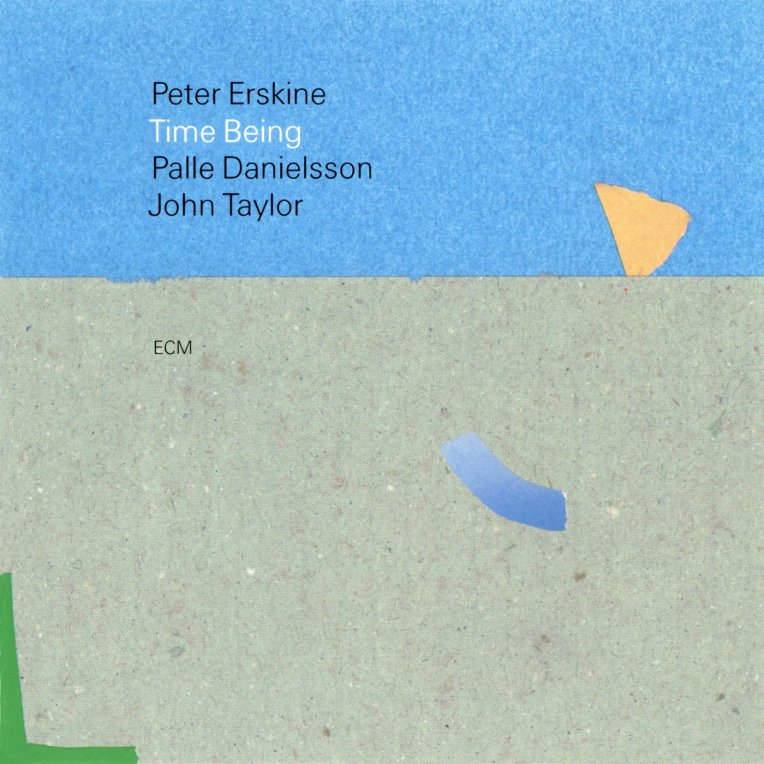
Time Being (ECM 1532)

John Taylor piano
Palle Danielsson double bass
Peter Erskine drums
Recorded November 1993 at Rainbow Studio, Oslo
Engineer: Jan Erik Kongshaug
Produced by Manfred Eicher

Once the lyricism of “Terraces” eases its way into our hearts, we know we’re in for a sublime experience on Time Being. Erskine’s sensitivity behind Danielsson’s equally considered solo, peeking above the horizon like the edge of a flock in silhouette, reveals sensuous technique through the cymbals and butterfly snare of “For The Time Being,” the responsive brushwork of “Phrase One,” and the dance-like movements of “Palle’s Headache” and “Evansong.” Yet it is Taylor, playing the piano as a blind man might touch a face, who makes this date the melodic gem that it is. We hear it in “If Only I Had Known,” sparkling blurrily in a visual language all its own. Taylor continues to take in every movement of leaf and shade in “Page 172,” which feels like a dream an old windup clock might have, a child’s automaton stretching its hands toward darkness. For “Bulgaria” he takes some thematic cues from folk music of the same. The Bobo Stenson feel on this track pays lovely tribute to the milieu from which he has grown. Danielsson paints a complementary impressionism, putting full heart into every brushstroke of “Liten Visa Till Karin” and in the fluid rustle of “Pieds-en-l’air,” ending a cordially realized set.

These images speak to us in indications, each a fragment of a mosaic beyond even the musicians’ comprehension. It is that same font into which all great improvisers dip, a limitless well that proceeds and recedes simultaneously, churning sentiment at the edge of a pond where inhibition ends and light begins. This is jazz of delectable subtlety that will embrace you, and another masterpiece from a trio that grew in leaps and bounds with every release.

<< Jarrett/Peacock/Motian: At The Deer Head Inn (ECM 1531)
>> Gavin Bryars: Vita Nova (ECM 1533 NS)

… . …
As It Is.jpg

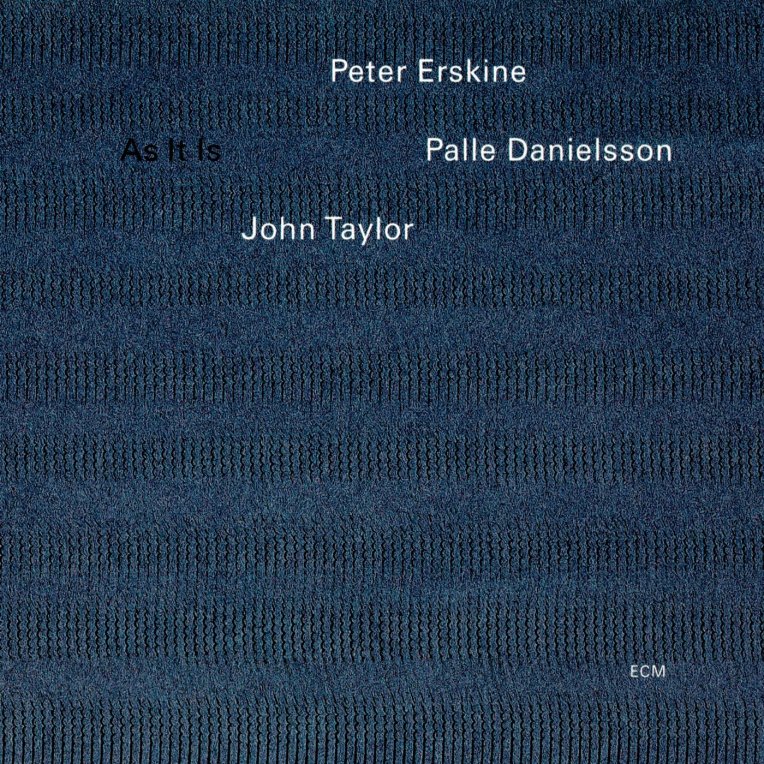
As It Is (ECM 1594)

John Taylor piano
Palle Danielsson double bass
Peter Erskine drums
Recorded September 1995 at Rainbow Studio, Oslo
Engineer: Jan Erik Kongshaug
Produced by Manfred Eicher

In this follow-up date to 1994’s Time Being, Erskine, Danielsson, and Taylor hone their salute to the Bill Evans and Paul Bley schools in their most transcendent short story collection yet. Each of these three narrators lends nuance to the arc. Taylor embodies a sense of perpetual motion quite different from that of Erskine, who in “The Lady In The Lake” evokes with his brushes a quiet train ride. Where the pianism is impressionistic and rounded, the drums are precise and crisp. So, too, in “Esperança,” which through shifting seasons reveals a brocade of sentimental journeys. Danielsson is more than the tuneful support of “Glebe Ascending,” though even in this album opener we get intimations of the interactivity to follow. His engaging filament runs through tunes like “Woodcocks” and “Touch Her Soft Lips And Part,” leaving a trail of footsteps alternating in charcoal and pastel. And what of Erskine? Look to “Episode” for your answer. This urgent piece hits the ground running and stumbles through city streets, whispering of metal and wind and skin. I submit to the defense also “Romeo & Juliet,” which like the classic play begins in innocence before culminating in Erskine’s tragic catharsis of a solo.

As It Is eschews the formulaic, instead kneading instruments and gestures into uniform dough. Just when Taylor seems to launch into an extended monologue, Danielsson rises from the deep to overtake it even as Erskine throws a commentative thread through every loophole. The resulting tumble is fluid and soft. Despite the breadth of its sweep, the music operates at a microscopic level. This is top-flight jazz, recorded, composed, and packaged with artisanal endearment.

<< Ketil Bjørnstad/David Darling: The River (ECM 1593)
>> Franz Schubert: Trio in Es-Dur/Notturno (ECM 1595 NS)

… . …
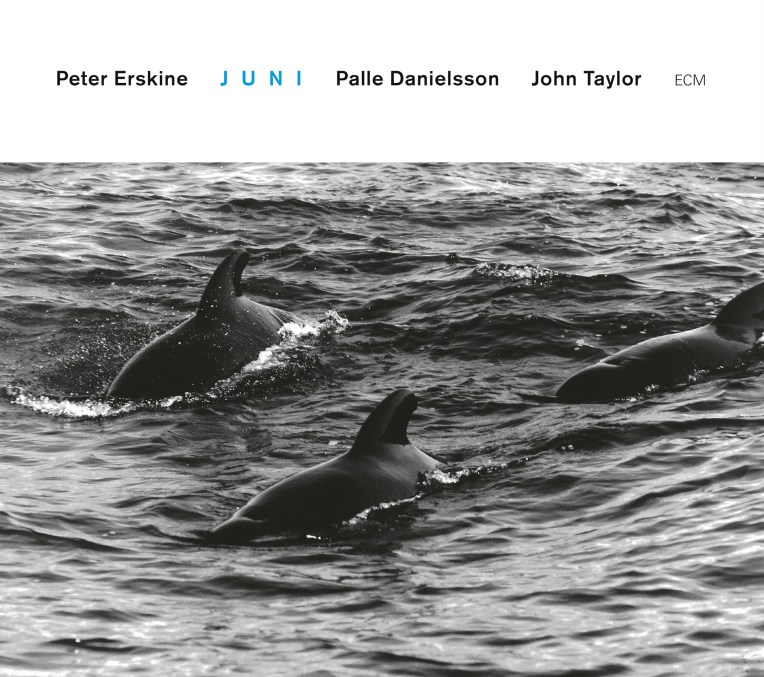
1657 X

JUNI (ECM 1657)

John Taylor piano
Palle Danielsson double bass
Peter Erskine drums
Recorded July 1997 at Rainbow Studio, Oslo
Engineer: Jan Erik Kongshaug
Produced by Manfred Eicher

ECM’s fourth and final album by the Peter Erskine Trio, JUNI best realizes the balance between fullness and sparseness the three had been seeking since their debut. An underlying Bill Evans influence—lifeblood of everything this trio plays—is even more nakedly portrayed. “The forming of this trio was partly a reaction to a lot of stuff that’s out there,” notes Erskine. “There’s so much music that’s just thrown at you, and it’s loud and it has no real dynamic range and all the spaces in the music are filled up. I wanted to oppose that trend.” To that end, if not beginning, Erskine and company enable a delicate asymmetry in which transformation is a necessary condition of life. Whereas before they created epic swaths of watery goodness, this time they concentrate on a subtler array of themes and moods.

Taylor again contributes the most tunes and opens with his wavering “Prelude Nr 2.” Raindrops seem to fall from his fingers in an abstract introduction, dark though chambering a shining heart. “Windfall,” previously heard on Journey’s End by the Miroslav Vitous Group, plots a smoother, Brazilian-flavored journey. Supple flowers grow wherever Danielsson treads, and his rounded solo foils Taylor’s dialogue with Erskine to remarkable effect. “Fable” rounds out the Taylor compositions with a ray of golden light and feathered shadow evoked by him and Danielsson respectively, and strung by the restless air currents of Erskine’s brushes. The latter add paternal love to the plush emotional exchanges of Danielsson’s “Siri,” in which Taylor is the true standout.

Erskine himself counters with a twofer of his own, including the fragmentary and whimsical “The Ant & The Elk” (notable for his subdued yet popping aside) and “Twelve,” from which the album gets its title (jūni means “twelve” in Japanese) and which evokes the barest whispers of swing, maintaining purposeful ambiance even at its most straightforward. “For Jan”—by Kenny Wheeler, for a relative of the same name—reflects Erskine’s work with Taylor in Wheeler-led ensembles. From a skittering drum intro it unfolds into a sparkling anthem with gorgeous slides from Danielsson, who polishes the edges of Taylor’s keys.

Like the second hand of a schoolroom analog clock, “Namasti” (Diana Taylor) passes smoothly through the minutes with precision. Its face may be secular, but its implications are spiritual and take things for the illusions that they are.

JUNI thus brands a perfect yin yang onto Erskine’s résumé. He holds the world on a wire, eliciting a most sonorous gravitation. He is the sun of these sessions. May his light touch your heart.

<< Giya Kancheli: Lament (ECM 1656 NS)
>> The Hilliard Ensemble: Lassus (ECM 1658 NS
)

ECM on Colombian Radio (Spanish)

The editor of my book, Between Sound and Space: An ECM Records Primer, was featured on Universidad Nacional de Colombia radio. Because the program (La Resistencia) is rock-focused, I compiled a playlist of “heavier” ECM material. Between songs, you will hear my editor talking (in Spanish only) more about the book. Click the image below to listen:

Terje_1556825262

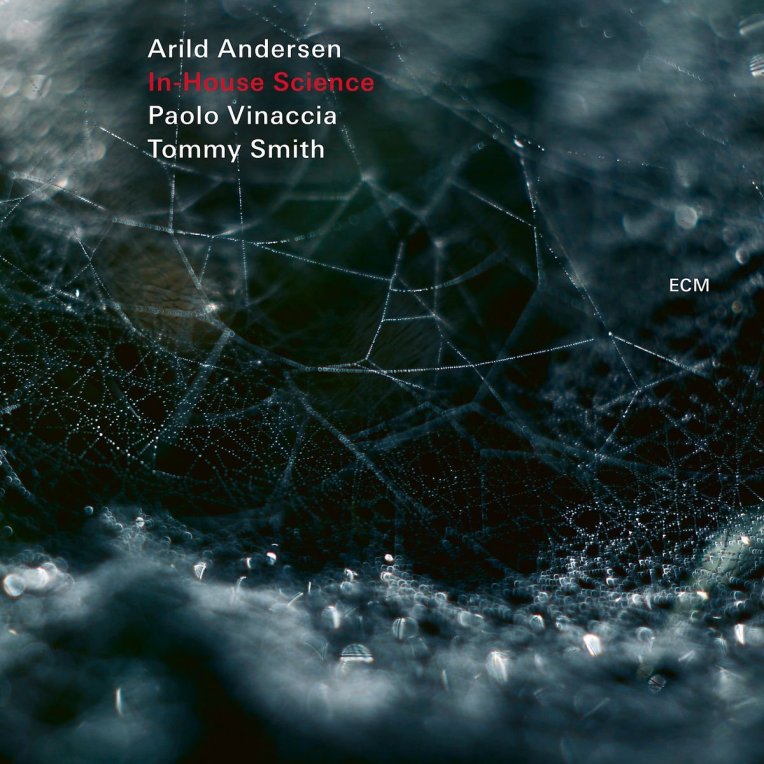
Arild Andersen: In-House Science (ECM 2594)

In-House Science

Arild Andersen
In-House Science

Arild Andersen double bass
Paolo Vinaccia drums
Tommy Smith tenor saxophone
Concert recording by ORF, September 29, 2016
at PKS Villa Bad Ischl, Austria
Recording producer: Michael Radanovics
Engineer: Alios Hummer (Radio Österreich 1)
Mixing/mastering: Jan Erik Kongshaug and Arild Andersen
An ECM Production
Release date: March 23, 2018

The swirling, majestic world of bassist Arild Andersen’s trio with drummer Paolo Vinaccia and saxophonist Tommy Smith is difficult to contain, which is probably why it’s best captured in a live recording. On In-House Science, we’re treated a 2016 performance from Austria. Over the course of six Andersen originals, sensations ranging from reflection to full-blown transformation are handled with equal commitment.

What begins as a soft awakening in “Mira,” courtesy of Andersen’s sunlit tone, turns into a blinding sunrise as Smith unleashes a fiery sermon. Toward the end of the tune, a hint of uplift dies as quickly as it’s born: a signal, perhaps, to remind us that getting inside the heads of listeners is far more vital than making them nod in agreement. That being said, there’s something about the way in which these three powerful characters merge so democratically from the fog of egotistical possibilities. They follow as much as lead, take in as much as elicit, and fall into loose interpretation as much as strict. That they’re able to triangulate them so selflessly all is not only remarkable; it’s downright laboratorial. Hence the album’s title, which is split between two tracks that, together, encapsulate Andersen’s powerful ethos while also expanding its parameters. In “Science,” he and Vinaccia connect to form a Möbius strip of sonic fuse, while Smith traces its endless spark more thrillingly than the possibility of any explosion. The passionate degaussing that follows from Andersen is an album highlight, as much the exhalation to Vinaccia’s inhalation as the other way around. And while “In-House” builds on similar principles, its fluency is deepened by Smith’s growling ruptures of translation. Again, bassist and drummer turn the spotlight inside out, making sure that every particle is given a voice. This is art that fulfills the promise in compromise.

Between those two mountainous zones we get the temperate valleys of “Venice,” “North Of The North Wind,” and “Blussy.” The first is a prize fight between antiquity and modernity, Vinaccia mapping every punch and parry with his kit. The second is an ambient turn inward, its electronically sequenced bass telling a love story between land and water, and the ever-changing border of their contact. The last is a modern classic of Andersenian muscle, and gives Smith more than enough fuel to fly his rocket through the stratosphere without ever losing contact with home base.

I was brought to this album by the yesterday’s sad news of Vinaccia’s passing, for which today has been a time of solemn remembrance yet vibrant listening. May he continue to be heard.