Thomas Strønen: Lucus (ECM 2576)

2576 X

Thomas Strønen
Lucus

Thomas Strønen drums
Ayumi Tanaka piano
Håkon Aase violin
Lucy Railton violoncello
Ole Morten Vågen double bass
Recorded March 2017, Auditorio Stelio Molo RSI, Lugano
Engineer: Stefano Amerio
Produced by Manfred Eicher
Release date: January 19, 2018

Time is a blind guide….
To remain with the dead is to abandon them….
One becomes undone by a photograph,
by love that closes its mouth before calling a name….
–Anne Michaels, Fugitive Pieces

Since its ECM debut in 2015, drummer and composer Thomas Strønen’s “Time Is A Blind Guide” has grown by apparent parthenogenesis into a project of malleable form. On Lucus, that form assumes a variety of shapes, intersecting in the same limpid pool of night. As a treatment of celestial expressions, the material is as much suggested as composed, trusted to flourish in fortifying hands. Strønen kindly explained to me via email TIABG’s continued growth:

“Time Is A Blind Guide has more and more become an autonomic organism with its own musical life. Different constellations (duos, trios, etc.) appear within the ensemble, and the material is treated with more freedom and stronger interplay. Variations in how the pieces are preformed have grown and a stronger personal language has been developed, to the point where we manage to form ideas into our own world, thus allowing us to widen our musical expression.”

Strønen’s sense of widening expression wraps its amorphous arms around “La Bella,” which by its triangulation of violin (Håkon Aase), cello (Lucy Railton), and malleted drums elicits a feeling of circulation given blood by the piano (Ayumi Tanaka). This quiet yet resolute introduction, itself an awakening into moving imagery, embodies a cinematic process: a projection of light onto uniform surfaces where freedom dances to the tune of a faintly outlined script. “Friday” is potent in this metaphorical regard. From its montage of recollections emerges a story to which only listeners may add a beginning and an end. Bassist Ole Morten Vågen taps into the very spine of this music, while Tanaka’s presence, a relatively new addition to the TIABG nexus born from live performances, is magical in these turns of phrase. Her gestures elicit speech without words. And while there are no solos to speak of, save for Strønen’s narrative stroke of brilliance in “Baka” and Vågen’s intro to “Tension,” as organs of the same body, each has its function, singing with the whole in mind.

“Fugitive Pieces,” referring to the novel from which Strønen adopted the band’s name, is an intimate and poetic character study, given wings by instruments of touch. The title track, too, separates filaments of interpretation from emotional moonbeams. So much of what happens in the horizontal regressions of “Release” or the more detail-oriented rhythms of “Wednesday” is built on foundations wrought in the foundry of live performance:

“We have toured a lot over the past year, having played in the US, Brazil, Japan, and Europe. This, combined with rehearsals, has contributed to the way we play today. We knew the material well and recorded the whole album within a day and a half. The music was written with the acoustics of the studio in mind and that has also lead to us wanting to play more concert halls and larger concert rooms than small clubs.”

Producer Manfred Eicher, as always, had a hand in what transpired, giving that extra puff of wind needed to satisfy even the most tattered feathers:

“I wasn’t surprised but rather happy that Manfred had great belief in the record. He also contributed strongly in studio, communicating ideas and details that shaped the compositions. He quickly understood what I aimed for and was a strong force during the recording.”

If inclinations of that force of, and desire for, space weren’t already apparent, they step forth most boldly in “Truth Grows Gradually” and “Weekend,” both of which unfold as stories told out of time. Like the album as a whole, they are a chronology of the soul, wrapped and unwrapped until nothing but truth remains.
ECM Book Giveaway Contest

DSC03281

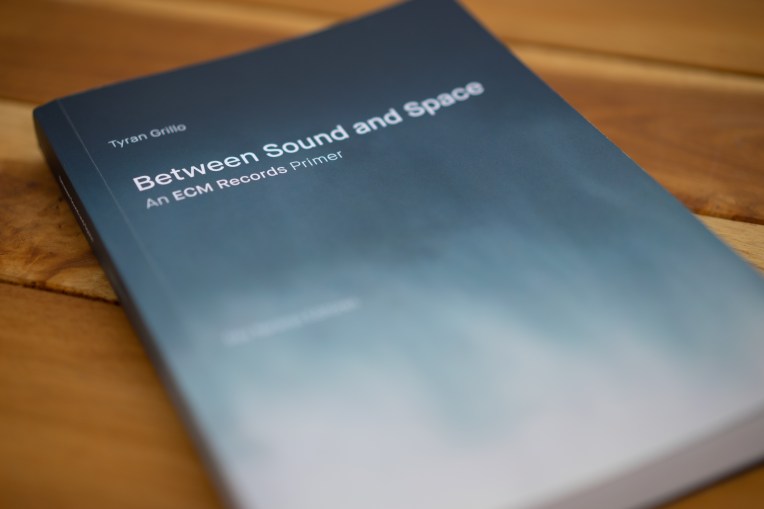
Because it will be some time before my book goes international (it is currently only available in South America), I have decided to hold a giveaway contest for you, my dedicated readers. To be entered, simply comment on this post by telling me about one of your favorite ECM albums and why. The contest will close at 11:59pm one week from now, on June 26, at which time I will pick three winners at random to receive a signed copy of the book. Don’t worry if you can’t narrow down to one album. Feel free to write about a favorite artist or handful of albums that have had some influence on you. Anything will qualify you as being entered into the contest. Looking forward to what you write!

Printed Memories…

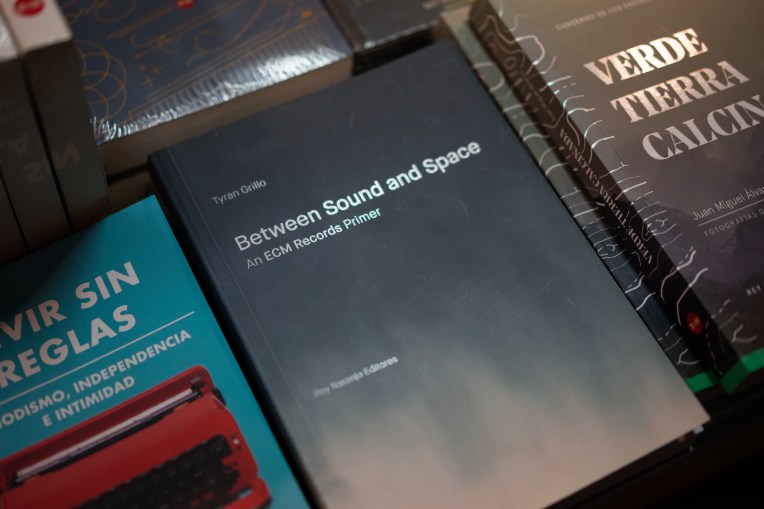
On 10 February 2010, I began this blog with the goal of reviewing every album issued by ECM Records proper and its New Series imprint. Four years ago, I achieved said goal. Within hours of announcing this milestone, I was approached by Raúl Zea of Rey Naranjo, a publisher of fine books based in Bogotá, Colombia. As it turned out, Raúl was a huge ECM fan and had been reading my blog from almost the beginning. His proposal: To publish a book of selected reviews. My answer: When can we start? Fast-forward to 27 April 2019, and I found myself boarding an airplane bound for the annual Bogotá International Book Fair (a.k.a. FILBo) to hold the volume in my hands at last and present its contents to fans and newcomers alike over the course of five days.

DSC03244-Edit

As the book evolved into its present form as Between Sound and Space: An ECM Records Primer, my editors and I felt it necessary to marshal the reviews to speak to a variety of audiences. True to its designation as a “primer,” it is first and foremost intended as a doorway into the label’s manifold wonders. For that reason, inclusion of such classics as The Köln Concertwas absolutely necessary. On the other hand, I wanted to highlight albums that even seasoned listeners might have overlooked. Out of those two extremes emerged 100 specially curated and recrafted essays, rounded out by a smattering of personal favorites: a journey through ECM’s ongoing history that I hope will inspire readers in new directions of listening.

This slideshow requires JavaScript.

Upon arriving at my hotel, I was draped with my FILBo credentials and guided to my publisher’s table. Yet before I could even marvel at a product years in the making, I had to take in the sheer scale of the fair and its throngs of passionate attendees—many of whom, I would discover the next morning, would be lined down the block three hours before opening time.

DSC03352

As I waded through cliques of voracious readers, I at last came face to face with the editor who had made this trip a reality, and with the work of art he and the Rey Naranjo team had labored to print in time for this event.

DSC03214

After a round of introductions, and a sampling of local cuisine (including my first bowl of ajiaco), I was ready to succumb to the toll of travel knowing that my love letter to a life-changing record label now had a life of its own.

DSC03209

The next few days were a promotional whirlwind, including two interviews for Colombian radio, two book talks, an interview with The Bogotá Post, and a video shoot at my publisher’s bookstore, Santo & Seña, for an upcoming crowdfunding campaign in anticipation of the book’s international version (to be released in early 2020). While it was exciting to be the center of so much attention, I also knew that none of it would have taken place without the vital music that had brought me into that center to begin with. Being able to share my knowledge with ECM fans in another country felt like the first step toward a larger conversation that I can only hope my book will provoke and sustain in the future.

DSC03256-Edit

Before leaving the city, I rode a cable car to the top of Monserrate, where Bogotá’s wider embrace became at last apparent.

DSC03310

The long stairway to the very top was a sobering reminder that no journey is possible without the steps required to bring its destination into view. And, like the gradations of mountain and concrete that bid me farewell, nothing we do is possible without the input of untold lives, laboring through cycles of sun and moon until our blessings are indistinguishable from all others.

DSC03321-Edit

For those blessings, I would especially like to thank Raúl Zea and John Naranjo for believing in me from day one, Andrea Salgado for the gracious invitation, Aurélie Radé for navigating the complexities of airline politics, Dulce María Ramos for coordinating interviews and rushing me to every venue on time, Luisa Martínez for her gentle kindness (and the flower), Guillermo Concha and Liladhar Pendse for proving that strangers should never stay that way for long, Juan Carlos Garay and David Roa for enlightening conversations in front of vastly different audiences, and the interpreters, including Ale Bernal, who rendered those conversations into Spanish under tight circumstances.

Bill Frisell/Thomas Morgan: Epistrophy (ECM 2626)

Epistrophy

Epistrophy

Bill Frisell guitar
Thomas Morgan double bass
Recorded live at the Village Vanguard, New York, March 2016
Engineers: James A. Farber and Paul Zinman
Assistant engineers: Own Mulholland and Jim Mattingly, SoundByte Productions Inc., New York
Mixing at Avatar Studios, New York, December 2016: James A. Farber, Manfred Eicher, Bill Frisell, and Thomas Morgan
Produced by Manfred Eicher
Release date: April 12, 2019

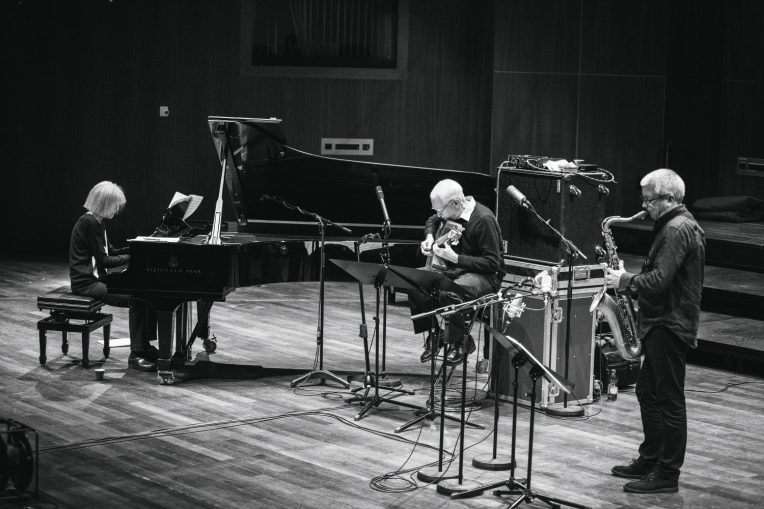
Recorded live at The Village Vanguard in March 2016, Epistrophy continues where the conversation between guitarist Bill Frisell and bassist Thomas Morgan left off on Small Town. In the hands of this duo, a song like “All In Fun” assumes a double meaning. While the pair indeed are enjoying this musical experience, they bring an unforced profundity to the occasion. This tune in particular has what only can be described as a dark buoyancy, a feeling of bobbing along evening waters.

A nod to the folk song “Wildwood Flower” introduces “Save The Last Dance For Me,” which in this context takes on a magical realism. Liberated from their popular associations, tensions emerge in melodic symmetry. Played as lovingly as one could imagine, Paul Motian’s “Mumbo Jumbo” finds Frisell tastefully augmenting Morgan’s psychosomatic filter. The James Bond theme “You Only Live Twice” also gets a heartfelt makeover, its machismo now a quieter drama. And Billy Strayhorn’s “Lush Life” emerges from a series of still images, each further detailing the narrative. The title track and “Pannonica,” both from the Thelonioius Monk songbook, are the set’s core, each a reflection of the other: The former’s sprightly charm and linear paths pair beautifully with the latter’s eddying contemplations. The traditional “Red River Valley” is another key passage of synergy that seems tailor-made for these musicians. Like the Frank Sinatra hit “In The Wee Small Hours Of The Morning” that closes, it activates what is tru- est and purest within them, and in us for being privy to their dialogue.

(This article originally appeared in the June 2019 issue of DownBeat.)

Special Announcement

Cover copy

I am humbled and pleased to announce that my book on ECM is finally coming out this week. Between Sound and Space: An ECM Records Primer is to be published by Rey+Naranjo in a first edition available only to the South American market, then as a global edition early next year (preorders will be available soon).

I have been graciously invited to present two talks at the Bogotá International Book Fair. My first talk will be “ECM Records: Listen, Watch and Remain Silent,” to be given this Sunday, April 28. The second will be “The Collector as Historian,” to be given on April 30th. Please attend and introduce yourself if you’re in the Bogotá area!

More to follow.

Ralph Alessi: Imaginary Friends (ECM 2629)

2629 X

Ralph Alessi
Imaginary Friends

Ralph Alessi trumpet
Ravi Coltrane tenor saxophone, sopranino
Andy Milne piano
Drew Gress double bass
Mark Ferber drums
Recorded May 2018, Studios La Buissonne, Pernes-les-Fontaines
Engineer: Nicolas Baillard
Produced by Manfred Eicher
Release date: February 1, 2019

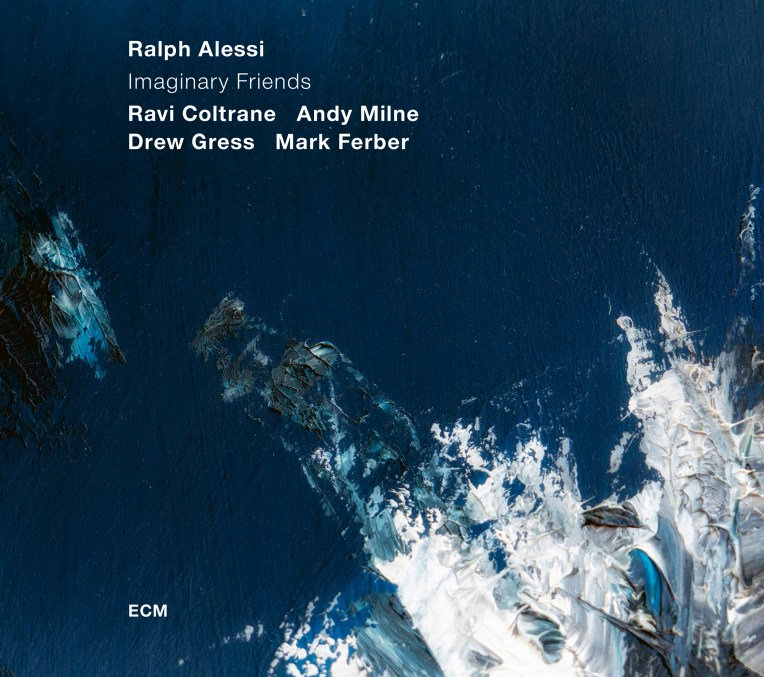
Imaginary Friends marks an ECM threepeat for trumpeter Ralph Alessi. His connectivity with Ravi Coltrane (mostly on tenor saxophone), pianist Andy Milne, bassist Drew Gress and drummer Mark Ferber glows throughout nine originals, of which “Iram Issela” is the heartfelt introduction. Dedicated to Alessi’s daughter (the title is her name spelled backward), it meshes trumpet and piano without a hint of coercion. Coltrane lays low, letting the waves carry him where they will. Alessi’s friendship with him, going back to their student days at the California Institute of the Arts, resonates, as well as in the title track and “Oxide,” one of Alessi’s most exquisite compositions.

Their horns seem to have minds of their own. As free to roam as they are to harmonize, either can take the helm at any given moment, leading to exciting listening. Reflective turns like “Pittance” are all about the trumpet’s emotive powers while “Improper Authorities” allows Coltrane enough room to pave a highway over the rhythm section’s solid roadbed. “Melee” is another compositional masterstroke, which recalls the jigsaw approach of labelmate Tim Berne yet takes on fresh distinction by dint of a calligraphic sopranino. All of this and more funnel into “Good Boy,” a tender quietus.

Most impressive is the relentless spirit of invention. With an average track length of about seven minutes, each tune is a feast for the ears. Indeed, there’s something downright edible about this session, scrumptious from first bite to last and in that proverbial sense dishes out one of the most savory records of the year so far.

(This review originally appeared in the April 2019 issue of The New York City Jazz Record, a full PDF of which is available here.)

Joshua Redman Quartet: Come What May

Come What May

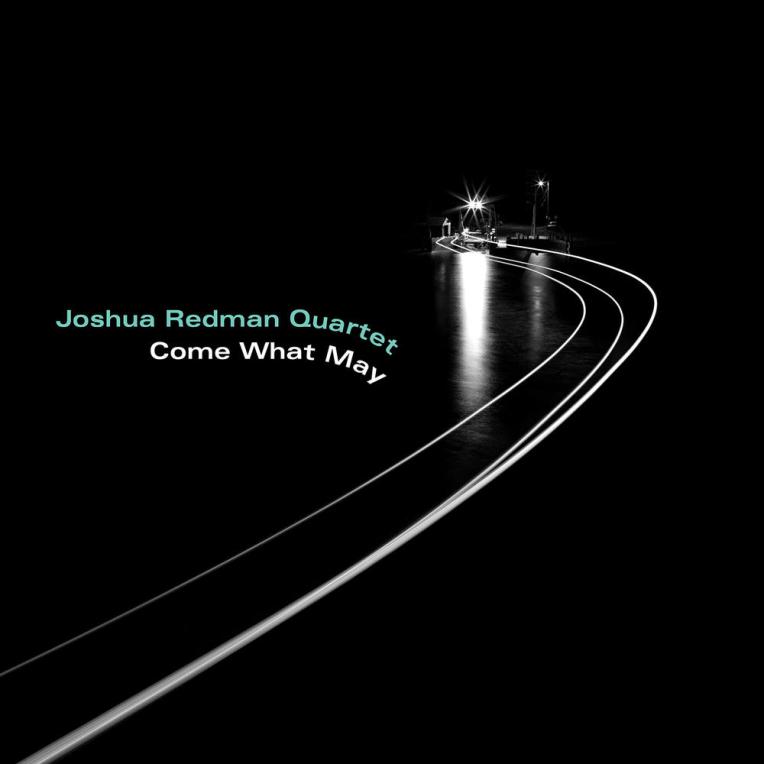
Come What May is the third round for saxophonist Joshua Redman, pianist Aaron Goldberg, bassist Reuben Rogers and drummer Gregory Hutchinson. Like its predecessors, the album presents a spectrum of tunes, working at an even deeper level of maturity. Given that their last studio effort was recorded in 2000, it makes sense that the band should have taken a giant leap in intuition, but such a process is easier said than done and more than a mere consequence of sharing the road and the stage together.

Although varicolored from a thematic standpoint, these seven Redman originals partake of a binding confidence reflective of a conscious willingness to treat medium as message. The title cut and its follower, “How We Do,” are the front and back of the band’s aural business card. In both, Redman and Rogers define and unravel a genuine compositional voice, which resonates through the bandleader’s willingness to explore every idea to its logical end. Goldberg and Hutchinson, for their part, shine in the power walk that is “I’ll Go Mine,” crossing every ‘t’ without a hint of intrusion. These four musicians, whether at their quietest (“Vast”) or most forthright (“Stagger Bear”), would need to expend unfathomable effort not to let their two-plus decades of camaraderie show through. Indeed, “DGAF” sounds like a bunch of old friends finishing each other’s sentences.

That same spirit is reflected in the engineering, which allows every instrument to occupy its own space. While at first this effect feels jarring (there is none of that sense of movement through space only a live experience can articulate), it ultimately leaves it up to the quartet to bridge the gaps between them. The end result is best described as a laid-back adventure, one that is smooth yet grounded enough to withstand the force of expectation.

(This review originally appeared in the April 2019 issue of The New York City Jazz Record, a full PDF of which is available here.)

Valentin Silvestrov: Hieroglyphen der Nacht (ECM New Series 2389)

Hieroglyphen der Nacht

Valentin Silvestrov
Hieroglyphen der Nacht

Anja Lechner violoncello, tam-tam
Agnès Vesterman violoncello
Recorded December 2013, Auditorio Stelio Molo RSI, Lugano
Engineer: Peter Laenger
Produced by Manfred Eicher
Release date: September 22, 2017

Hieroglyphs are visual music. They imply movement, tell stories, and reflect human and spiritual connections. In the hands of composer Valentin Silvestrov, standard notation becomes a hieroglyphic language unto itself. Throughout the sequence of this program, most of it penned in the present century, language fills spaces in absence of utterances. Each composition is a planet orbiting an unspoken sun, thus illustrating the richness of silence as a resonant, vibrational constant. In the same way that zero gravity isn’t the absence of gravity but equal attraction from all directions simultaneously, silence acts upon chamber instruments until their voices emerge as one. The Drei Stücke for two cellos (2002/09) that open the program are proof of that very concept. Two bows move like arms attached to the same body, trailing lines of communication in sand: powerful in meaning yet susceptible to the tide. This dynamic resurfaces in the Serenaden (2002), also for two cellos, which return the evening sky after a day’s borrowing, threading stars like beads on a necklace, while the Lacrimosa for solo cello (2004) pulls them off one by one until their light becomes individual again.

Elegie for solo cello and two tam-tams (1999) treats air as writing surface, exploring layers of impermanence against the idealism of capture. In the first two parts of this tripartite composition, the cello tracks movements of branches with the naked ear, and in the third introduces the metallic breath of struck tam-tams. In this context, the relationship between contact and decay is somehow reversed, so that beginnings prune their wings with conclusive beaks. Lechner thus splits voices in unifying them, yet achieves the reverse in Augenblicke der Stille und Traurigkeit (2003), trading arco and pizzicato dialects with the ease of inhaling and exhaling.

8.VI.1810…zum Geburtstag R. A. Schumann for two cellos (2004) realizes the composer’s goal for a “cello four-hands,” expanding the instrument’s possibilities by turning it inward. A feeling of euphoria locks flesh with shadows. Dances flit by like opportunities for melodic escape, while their after-images seek reciprocation in the listening. Lechner and Vesterman accordingly hang their spirits on easels and mark them with every brushstroke of the bow. Although not sequential, the companion piece 25.X.1893…zum Andenken an P. I. Tschaikowskij (2004) folds twilit landscapes into lyrical dough, kneading the earth until it no longer sticks to the hands.

All of which funnels into the harmonic vessel of Walzer der Alpenglöckchen for solo cello (2004), in which the clicks of stick on string open mountainous doors, behind which smolder long-forgotten hearths, aglow with the possibility of slumber. And yet, while the album may feel like a dream, it’s no more susceptible to the blade of waking up than the nameless figure wielding it.