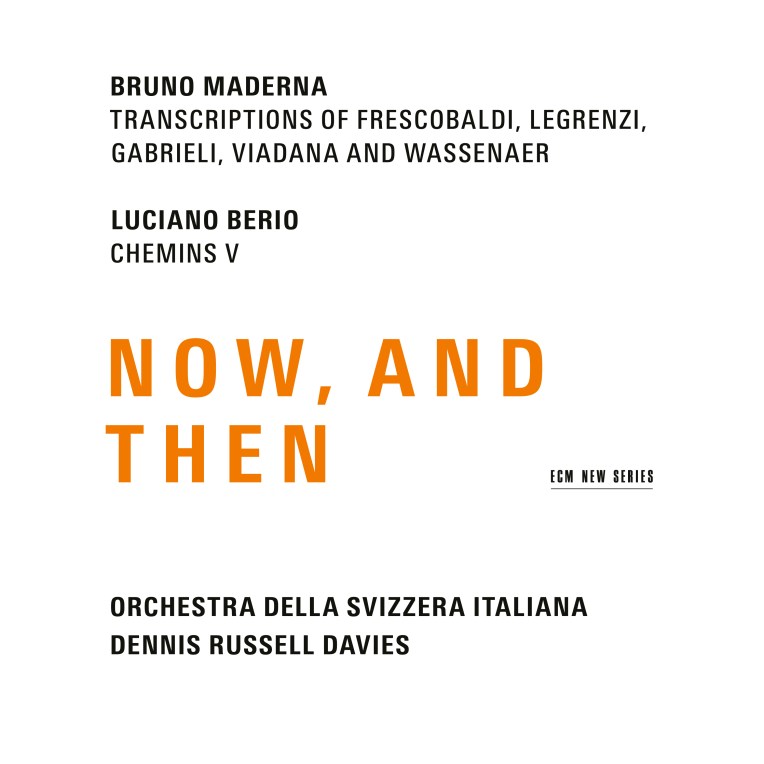
Bruno Maderna/Luciano Berio: Now, And Then (ECM New Series 2485)

2485 X

Bruno Maderna
Luciano Berio
Now, And Then

Orchestra della Szizzera italiana
Dennis Russell Davies
conductor
Pablo Márquezguitar
Recorded August 2015, Auditorio Stelio Molo RSI, Lugano
Engineer: Michael Rast (RSI)
Editing and mixing: Michael Rast and Manfred Eicher
Produced by Manfred Eicher
Release date: October 27, 2017

Bruno Maderna (1920-1973) was an instrumental force in contemporary music throughout the 1950s, when composers of “modern” persuasion were still struggling to at once uphold and break open the secrets of bygone masters. Maderna was no stranger to the past and had a particular fondness for the clarity of the Italian Baroque, as evidenced in his transcriptions of Girolamo Frescobaldi, Giovanni Legrenzi, Giovanni Gabrieli, Tommaso Lodovico da Viadana, and Unico Wilhelm van Wassenaer presented by the Orchestra della Szizzera italiana under the baton of Dennis Russell Davies.

It should come as no surprise that Maderna had a love for the theatre, as these pieces breathe like dramaturgical backdrops to well-studied action. While nearly all of them date from 1952, the sole exception is Gabrieli’s Canzone a tre cori (1969/72), of which Maderna’s recrafting turns glory into lyrical shadow. Frescobaldi’s Tre Pezzi (1952), by contrast, constitute an exercise in contradiction. Robust yet naïve, they move fluidly across and between planes of exposition. The liturgical center, comprised of a brief “Christe” and “Kyrie,” hints at a spiritual undercurrent before deferring to a regal finish. Against this, La Basadonna (1951-52) is a delightful interlude that dances with delicate assurance across this dioramic stage. As heartbeats of golden ages mesh into an elegy for silver futures, Viadana’s Le Sinfonie (1952) reads like an archive of memory. It’s portrait of Italian cities bustles with life and character. Of these, the buoyant “La Venetiana” recalls the programmatic brilliance of Carlo Farina. Last is the “Palestrina-Konzert” (1952) by Wassenaer. Once attributed to Pergolesi, this gorgeous triptych sets up an alluring Vivace through two slower precursors. Enchanting sonorities abound.

From all of these, we know that Maderna understood Baroque music as a giant wheel, sporting a clearly defined center from which regular spokes extended to an more open perimeter. His respect for that underlying architecture reveals its own.

Lodged therein, between the Legrenzi and Gabrieli, is Chemins V, a self-transcription of Sequenza XI (1987-88) by Luciano Berio (1925-2003), with whom Maderna founded Europe’s first electronic music studio, the Studio de fonologia musicale di Radio Milano. This piece, composed in 1992, receives its premiere recording here. Featuring guitarist Pablo Márquez on the instrument for which it was originally written, it’s a deeply psychological journey. Márquez navigates every topographical change with confidence, finding purchase on the narrowest of cliffs and staying grounded on the slipperiest of terrain. Brimming with Berio’s uncanny ability to make the beautiful eerie and vice versa, it treats the guitar as leading voice and internal percussion, ambulating without apparent direction until the subdued, shimmering finale. Worth the price of entry alone, this rare morsel in an already-rich covering speaks to the core of our being as a species at a time when uncertainty rules the day.
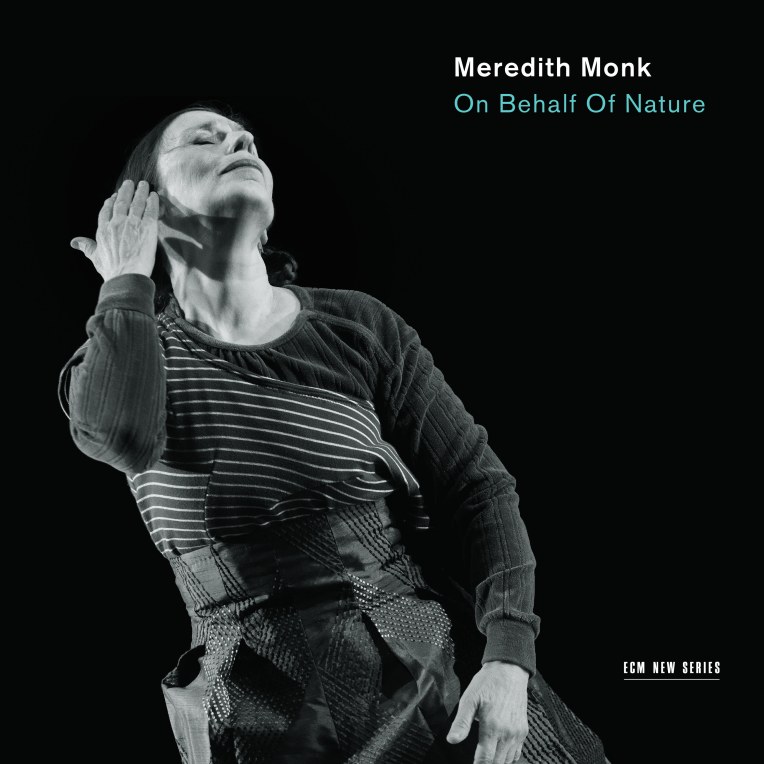
Meredith Monk: On Behalf Of Nature (ECM New Series 2473)

2473 X

Meredith Monk
On Behalf Of Nature

Meredith Monk & Vocal Ensemble
Sidney Chen, Ellen Fisher, Katie Geissinger, Meredith Monk, Bruce Rameker, Allison Sniffin
voices
Bohdan Hilash 
woodwinds
John Hollenbeck percussion
Allison Sniffin piano, keyboard, violin, French horn
Laura Sherman harp
Recorded June 2015 at Avatar Studios, New York
Engineer: James A. Farber
Assistant: Akihiro Nishimura
Produced by Manfred Eicher
Release date: October 21, 2016

Since 1981’s Dolmen Music, Meredith Monk has contributed an integral DNA segment of ECM’s evolution as a label. But at no time in history has she felt as poignant as in On Behalf Of Nature. Tracing echoes of relevance to today’s social, spiritual, and terrestrial climate, the album is a mouthpiece for those who are voiceless, epitomized in the lone wooden flute that opens “Dark/Light 1.” As a call born of its own will to be heard, it flowers by nourishment of an egoless sun. Such can be also said of Meredith Monk and her vocal ensemble, whose own voices shape that same will selflessly, dutifully, necessarily—because opportunities to do so are dwindling more rapidly than can be articulated by breath and touch. By these signs is established a grammar that lives beyond codification, yet which is felt in the body even as it wanders into our dreams.

While the 19 offerings placed on this altar of creative sacrifice belong to the same ecosystem, Monk seems to link them to three distinct streams of consciousness. The most visceral of these is accessible in three pieces titled “Environs,” in which the fearful heart trembling at the core of a scarred earth sheds both light and darkness on injuries in which we would much rather never admit complicity. Deep yet delicate, these are about as honest as music gets.

A second stream is heard flowing through the album’s largest forests, which acclimate themselves in the prepared piano of “Ritual Zone,” the prophetic violin of “Memory Zone,” and the joyful cries of “Harvest.” Further gifts emerge in “Duet with Shifting Ground,” “Evolution,” and “Water/Sky Rant.” The latter’s harp-infused anthem of abuse, recovery, and hope is perhaps the most powerful statement Monk has ever committed to record. Each of these is a chamber of truths that have existed since the dawn of humanity, reminding us that harmony must be chosen, not expected. As by the ligaments of “Spider Web Anthem,” cohesion requires patient work and purpose by which to cultivate it.

Such connective tissue is the mantra enlivening interlinear pieces throughout. Through them flow the base elements of all life, whether natural (“Eon”) or human-made (“Pavement Steps”). Therein beats the heart of a question that cannot be spoken yet whose answer is so clear as to be anxiety-inducing. It is not the planet itself but those on it without the means to communicate their traumas across electronic signals or paper who sing. On Behalf Of Nature, then, is their stage: an album so relevant as to be worthy of beaming into outer space in the hopes of clearing a path to salvific inner spaces.

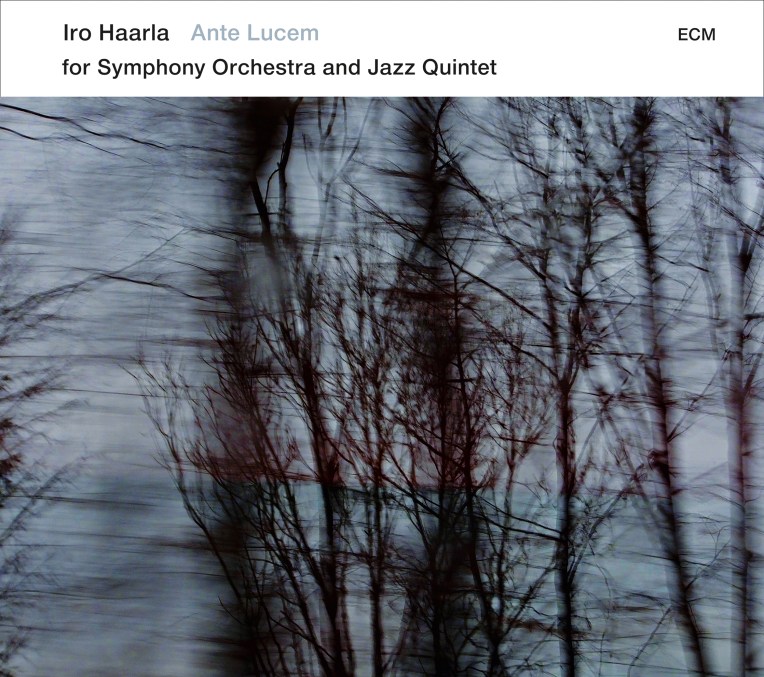
Iro Haarla: Ante Lucem (ECM 2457)

Ante Lucem.jpg

Iro Haarla
Ante Lucem

Iro Haarla piano, harp
Hayden Powell trumpet
Trygve Seim soprano and tenor saxophones
Ulf Krokfors double bass
Mika Kallio drums, percussion
NorrlandsOperans Symfoniorkester
Karin Eriksson
concertmaster
Jukka Iisakkila conductor
Recorded October 2012 at the Concert Hall of NorrlandsOperan, Umeå, Sweden
Tonmeister: Lars-Göran Ulander
Engineer: Torbjörn Samuelsson
Mixed in Stockholm by Torbjörn Samuelsson, Manfred Eicher, and Iro Haarla
Executive producer: Manfred Eicher
Release date: August 26, 2016

Finnish pianist, harpist, and composer Iro Haarla is the only artist to have made that triangle of talents an equilateral one. Five years separate this and her last ECM project, Vespers, carrying over from it a certain allegiance to cold landscapes while erasing a break into the clouds above it to let through spiritual sunrays. Described by Haarla as “the struggle between darkness and light,” Ante Lucem is a house unto itself, inhabited by figures frozen in time yet harboring thoughts of fire. Its doorway is “Songbird Chapel.” Although scored for symphony orchestra and jazz quintet—the latter including trumpeter Hayden Powell, saxophonist Trygve Seim, bassist Ulf Krokfors, drummer/percussionist Mika Kallio, and Haarla herself—this inaugural section treats the orchestra not as a backdrop for improvised cartographies but rather as a body wholly comprised of individual voices. The effect is such that even the distinct soloing of Seim’s tenor feels connected by ligaments to its surroundings.

Cellular metamorphoses abound in “Persevering with Winter,” wherein Krokfors draws an arco thread through icicle-rich forest (an effect recreated by Kallio’s synesthetic percussion) and Powell swells in and out of focus as if caught between perceptions of reality. The third section—“…and the Darkness has not overcome it…”—opens with Seim’s duduk-like tone flexing its bones in the stillness of a setting sun. Here the quintet takes center stage, fleshing out internal conflicts with the fortitude of a theological assembly. Thus we come to “Ante Lucem – Before Dawn…” For this, the orchestra and quintet occupy different bands of the audible spectrum, in what amounts to a musical representation of the Passion, beginning in the garden of Gethsemane and ending with the glory of resurrection.

Throughout, whether on harp or piano, Haarla brings a cinematically binding force to every shift of terrain. Her sense of drama is realistic, of timing precise, and of divinity barely veiled. All of which makes Ante Lucem a resonant statement of faith in a time of faithlessness.

Arvo Pärt: The Deer’s Cry (ECM New Series 2466)

2466 X

Vox Clamantis
Jaan-Eik Tulve artistic director and conductor
Mari Poll violin
Johanna Vahermägi viola
Heikko Remmel double bass
Taavo Remmel double bass
Robert Staak lute
Toomas Vavilov clarinet
Susanne Doll organ
Recorded September 2013 and 2014 at Tallinn Transfiguration Church
Veni Creator recorded June 2007 at Dome Church of St. Nicholas of Haapsalu
Engineer: Igor Kirkwood, Margo Kõlar (Veni Creator)
Recording supervision: Helena Tulve
Mastering: Manfred Eicher and Christoph Stickel at MSM Studios München
Executive producer: Manfred Eicher
Release date: September 9, 2016

For now we see through a glass, darkly; but then face to face: now I know in part; but then shall I know even as also I am known.
–1 Corinthians 13:12

While in Capernaum, Jesus is invited into the house of Simon the Pharisee. There, a woman, identified in the Scriptures only as “a sinner,” approaches Jesus with an alabaster box of ointment. Much to the astonishment of the house, she washes his feet with her tears, wipes them with her hair, and anoints them. When confronted by Simon about his acceptance of this act, Jesus replies by pointing out the fact that Simon offered no water for his feet or ointment for his head: “Her sins,” he says of the woman, “which are many, are forgiven; for she loved much: but to whom little is forgiven, the same loveth little.” This episode, recorded in the Gospel of Luke 7:36-50 and arranged for choir by Arvo Pärt as And One of the Pharisees (1992), is the spiritual center of a new program dedicated to the Estonian composer. Not only for its illustration of salvation through faith, but also because it serves as a loose metaphor for sacred music today. Like that sinner, Pärt washes our ears against the verbal abrasions of pharisaic intellect, his offerings thus denounced by “wisdom” of the popular yet confirmed by the Holy Spirit. In the present setting, countertenor Mikk Dede provides a vulnerable personification of Simon, while baritone Taniel Kirikal balances the equation as our humbling Savior.

Although Pharisees comes later in the sequence, its seeds are already being watered in the opening title work, The Deer’s Cry (2007). Drawing on the words of St. Patrick, it is a meditation on God’s omnipresence. Here, as in the other a cappella prayers that follow, including the Alleluia-Tropus (2008/10) and Habitare fratres in unum (2012), compact structures embody quiet resolution. Each is a link in a chain of infinite being, a harmonization of flesh and spirit through the Word, touched by graces of which we are unworthy.

Longtime Pärt listeners will notice echoes of the familiar, such as Virgencita(2012), which is eerily reminiscent of Psalom (1985/91), and a version of Summafor four voices, wherein the circle of this seminal 1977 piece is squared. Gebet nach dem Kanon (1997), from the Kanon Pokajanen, is a child wandering in search of purity, only to find himself crying in a world of corruption, his voice ignored by all except the Father whose hand shields him from brimstone. Da pacem Domine (2004/06), too, reads differently from previous ECM appearances. Where the latter felt like a telescope, now it is a microscope.

Rounding out this journey are three works for voices and chamber instruments. In Von Angesicht zu Angesicht (2005), scored for soprano, male choir, clarinet, viola and double bass, said instruments evoke the trembling fear that is the beginning of all wisdom. Pärt takes a lived understanding of that precept by following the rhythms of Biblical recitation. Veni Creator (2006), for mixed choir and organ, hovers on the brink of transfiguration and is one of his most haunting compositions. Sei gelobt, du Baum (2007), for male choir, violin, lute and double bass, is another textual wonder. Its words, by Viivi Luik, praise the tree for its wood, by which violins and organs might be built for His glory, each note released therefrom a spore returning to its creator.

Despite, if not also because, Pärt’s marked shift over the years from inner to outer, there’s an ethic of sharing in these shorter pieces. Now that his music is known worldwide, one tastes in it something grander left for listeners to decide, a piece of a mosaic that can only be completed when all us take the time to see it being made up of us all. That such profundity comes across so directly is testament to Vox Clamantis and director Jaan-Eik Tulve’s willingness to let everything speak for itself.

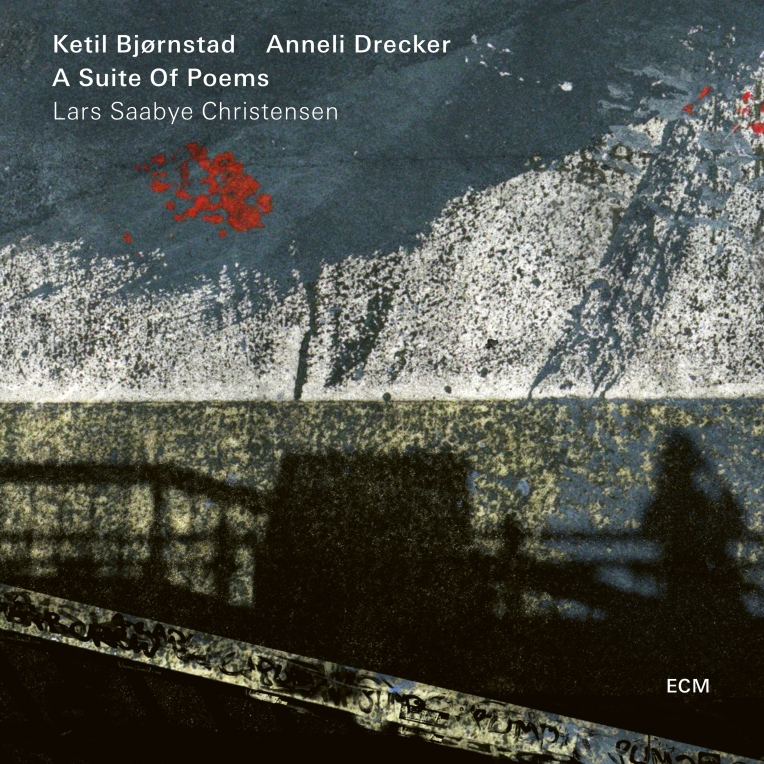
Ketil Bjørnstad: A Suite Of Poems (ECM 2440)

2440 X

Ketil Bjørnstad
A Suite Of Poems

Anneli Drecker voice
Ketil Bjørnstad piano
Recorded June 2016 at Rainbow Studio, Oslo
Engineer: Jan Erik Kongshaug
Produced by Ketil Bjørnstad
Release date: May 18, 2018

Following his song cycles Vinding’s Music and Sunrise, pianist and composer Ketil Bjørnstad expands his ECM presence once again with new settings, this time of words by Norwegian-Danish author Lars Saabye Christensen. Christensen’s verses, written in different hotel rooms and sent to Bjørnstad from around the world, seem destined to take form as the humbly titled A Suite Of Poems presented here.

Bjørnstad’s characteristic feel for texture, mood, and atmosphere is in peak form. In contrast to, say, his duo albums with cellist David Darling, which despite their sparse instrumentation speak of vast landscapes, now the spaces offered to us are astonishingly intimate. Quintessentially so is program opener “Mayflower, New York,” which paints a city recently kissed by rain and the lone tourist moving his pen in its sprawl. Like “Kempinski, Berlin,” it’s filled with small moments, each more personal than the last, as our proverbial traveler balances depth and weightlessness through the music itself. A perennial theme of travel is, of course, explored throughout the album, but so is its inextricable relationship to temporality. In “Duxton, Melbourne,” a tender musing on life’s unstoppable progression, vocalist Anneli Drecker winds her voice around hesitations, missed opportunities, and empty calendars to insightful effect.

A Suite Photo
(From left to right: Lars Saabye Christensen, Ketil Bjørnstad, Anneli Drecker; photo credit: Maria Gossé)

The fatigue of travel is also likened to time passages, and nowhere so poignantly as in “Palazzo Londra, Venice.” Here the narrator looks at his own unrecognizable face in the mirror, unable to connect with the self as he used to. Similar anxieties, as fed through fantastical imagery, haunt “Vier Jahreszeiten, Hamburg.” Ultimately, however, the focus is on details: the lost umbrella of “Mayday Inn, Hong Kong,” the forgotten ashtrays of “Lutetia, Paris,” and the handkerchiefs of “Savoy, Lisbon.”

On the somber end of the spectrum are “L’Hotel, Paris” and “Palace, Copenhagen.” The latter tells of Christensen’s (?) first time stepping into a hotel—on June 23, 1963, to be precise—and finds the boy scared and uncertain of the future. The piano writing is especially passionate, drifting from minor to major as Drecker sings of “the Danish sun behind us whipping up the rain from the cobblestones.” This contrastive dynamic is repeated in “The Grand, Krakow,” the suite’s most hopeful yet shaded turn. Other selections reveal a playful side to Christensen’s wordcraft, and Bjørnstad’s evocation of it. “Astor Crowne, New Orleans” is one whimsical example, in which Drecker navigates a bluesy drinking song.

The suite ends with “Schloss Elmau,” a piano solo that acts as both vessel of remembrance and farewell, a bidirectional portal that inhales the past and exhales the future, all the while praying for respite beyond the reach of any clock.

Erkki-Sven Tüür/Brett Dean: Gesualdo (ECM New Series 2452)

Gesualdo

Erkki-Sven Tüür
Brett Dean
Gesualdo

Estonian Philharmonic Chamber Choir
Tallinn Chamber Orchestra
Tõnu Kaljuste conductor
Recorded February 2014 at The Tallinn Methodist Church
Engineer: Maido Maadik
Edited and mixed December 2014 by Maido Maadik, Manfred Eicher, Erkki-Sven Tüür, and Tõnu Kaljuste
Produced by Manfred Eicher
Release date: September 18, 2015

I die, alas, in my suffering,
And she who could give me life,
Alas, kills me and will not help me…

These words, originally sung as Moro lassofrom the Sixth Book of Madrigalsby Carlo Gesualdo da Venosa (1566-1613), recede to let their notes carry on alone in a transcription for string orchestra by conductor Tõnu Kaljuste. This inward look, by proxy, of a composer whose trespasses have been relegated to an afterthought by his oeuvre newly emphasizes repentance trickling through the historical cracks. Echoes of that repentence, in both melody and metaphor, ripple across Carlo (1997). Written by Australian composer Brett Dean, here making his ECM debut, it marshals the Estonian Philharmonic Choir and Tallinn Chamber Orchestra via compressions of space and time. As displacements of the original seed multiply, we hear fear and trembling emerging from within, gradually pared down to morbid whispers and cries of pain, as if to recreate the crime scene that would define Gesualdo’s life, so that when his polyphony returns, it feels like self-deprecation.

Tüür

Given that Carlo is somewhat reminiscent of Erkki-Sven Tüür’s Requiem (1994), no other composer would feel so well included to round out the program. Tüür’s own arrangement of the motet O crux benedicta spotlights a younger Gesualdo, allowing a slightly more optimistic glow to escape. This is followed by L’ombra della croce (2014), a piece for strings that exists somewhere between Illusion and Passion (both from 1993), and Psalmody (1993/2011). This last piece draws a line back to In Spe, a prog-rock band Tüür led between 1979 and 1982. As a dialogue between electric piano, orchestra, and choir, it speaks more to the flesh than to the spirit, at the same time fashioning youth into a crucible of nostalgias. Throughout its 22 minutes, one encounters a chronology of Tüür’s compositional development, from architectonic tinkerer to mosaic master. There’s even a touch of American minimalism to keep the experience centered, well aware as Tüür is that music bleeds.

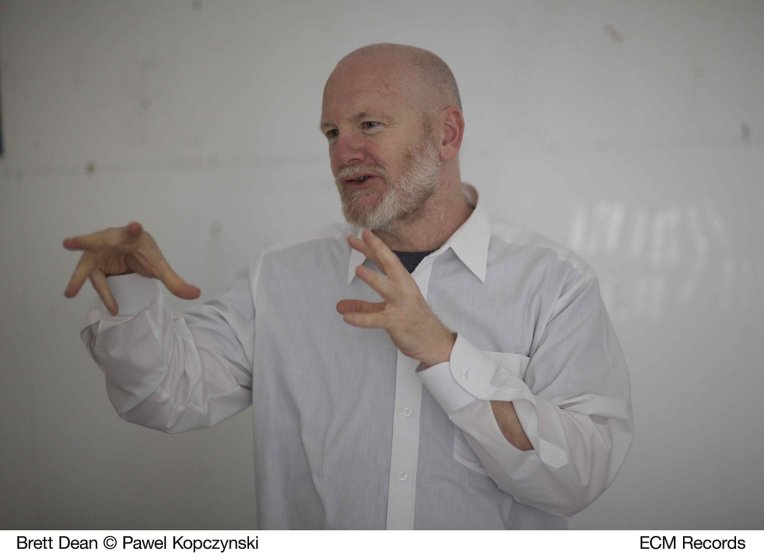
Dean

Because he is one of the ECM New Series’ integral figures, any new Tüür material on disc is cause for celebration. Yet this pairing with Dean exceeds expectation and heralds a true return to form, such that by its end the album reveals itself to be at once a homecoming from, and departure for, a long journey.

…O sorrowful fate,
She who could give me life,
Alas, gives me death.

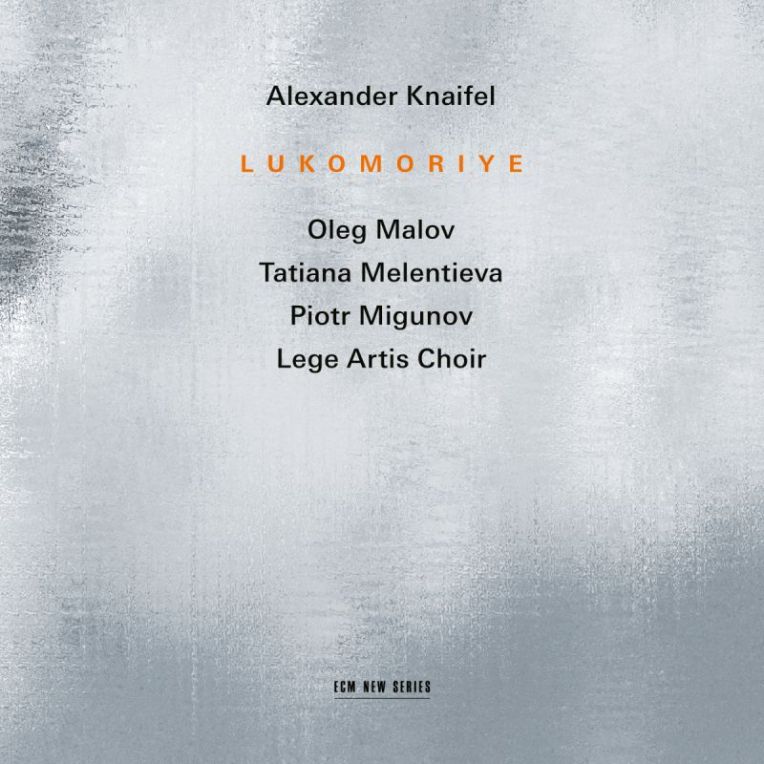
Alexander Knaifel: Lukomoriye (ECM New Series 2436)

Lukomoriye

Alexander Knaifel
Lukomoriye

Oleg Malov piano
Tatiana Melentieva soprano
Piotr Migunov bass
Lege Artis Choir
Boris Abalian conductor
Recorded February 2002 at The Smolny Cathedral, St. Petersburg
Engineer: Victor Dinov (St. Petersburg Recording Studio)
Recording supervision: Alexander Knaifel
Mastering: Boris Alexeev (engineer)
An ECM Production
Release date: April 20, 2018

As the fourth ECM New Series album dedicated to the music of Alexander Knaifel, Lukomoriye is both continuation and departure from previous discs. In the former sense, it pulls us deeper into the recesses of his faith; in the latter, it engages with more secular—though no less inspired—material. The program’s pillars rise from prayers to the Holy Spirit. Both O Comforter (1995) and O Heavenly King (1994) are written for choir, the second adding to that foundational grammar the punctuation of vibraphone and piano. Like Jeremiah in the pit, they look upward for grace. Their bead-like structure welcomes a thread of spiritual seeking, marking the passage of voices from firmament to soil as if to show us that the opposite trajectory is possible.

This Child (1997), played by pianist Oleg Malov, follows the Gospel of St. Luke. It opens with a single chord, played as if at a far corner of the room, before proximate notes finish the sentence. This sets up the Godly call and prophetic response, articulating questions that can only be answered by salvation. O Lord of all my life (2006), sung by bass Piotr Migunov to Malov’s electronically processed accompaniment, bonds itself with stillness. Through its 16 minutes of rewarding intimacy, Migunov sings with a vulnerability that recalls Sergey Yakovenko in Valentin Silvestrov’s Silent Songs. A prayer of St. Ephraim the Syrian, wherein humility is preached, and a poem from Pushkin, wherein idealism is crushed into a sinner’s prayer, render the sonic equivalent of a two-way mirror.

From the Word to the World, we are invited to A mad tea-party (2007), in which a heavily reverbed piano breaks its own suspension by the delicate play of a more immediate instrument, evoking both the frustrations and excitations of this pivotal scene in Lewis Carroll’s Alice’s Adventures in Wonderland. Such contrasts might be counted as child-like impulses were it not for the conscious use of silence, touches of percussion, and whispers. Kindred details abound in Bliss (1997), wherein the composer’s wife, soprano Tatiana Melentieva, revives Pushkin. Her voice masterfully captures every shade of mythological revelry at hand with barest support from Malov at the piano.As in the title composition (written in 2002 and revised in 2009), even fully formed sentences flit through trees like birds in search of a new dawn, taking on the magic of their surroundings as they travel ever inward.

The ghost of Pushkin lingers in Confession (2003/04). Here Malov intones the words inaudibly, exploring love, carnality, and desire through the keyboard instead, every note as delicate as the balance of flesh and glory that every composer faces, yet few of which channel with such humility.

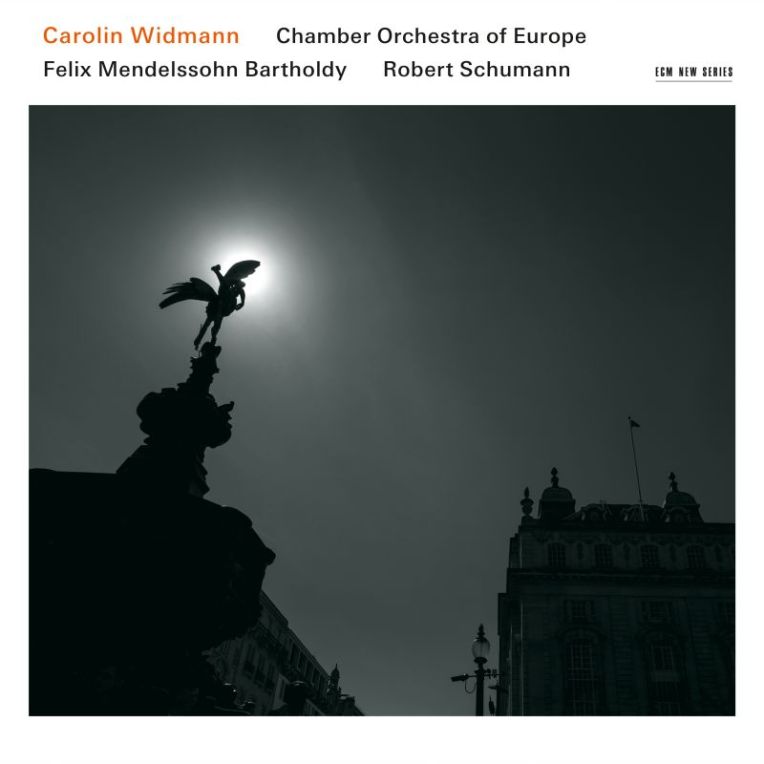
Carolin Widmann: Mendelssohn/Schumann (ECM New Series 2427)

Widmann Mendelssohn

Carolin Widmann
Mendselssohn/Schumann

Carolin Widmann violin, direction
Chamber Orchestra of Europe
Recorded July 2014, Festspielhaus Baden-Baden
Engineer: Rainer Maillard
Produced by Manfred Eicher
Release date: August 26, 2016

Until now, violinist Carolin Widmann has reexamined mostly chamber territories on ECM. For this disc, recorded in 2014 and released two years later, she leads the Chamber Orchestra of Europe as both director and soloist in a program of two marquee-worthy concertos by Felix Mendelssohn Bartholdy and Robert Schumann.

The opening theme of Mendelssohn’s Opus 64, composed in 1844, in addition to being one of the most recognizable in the Romantic violin repertoire, shines from Widmann’s interpretative sun like the dawn. What follows in this monumental movement, marked “Allegro molto appassionato,” is more than fiery sermon of the bow, but a full narrative rich with character development, conflict, and hyperrealism. As Jürg Stenzl writes in his liner notes, Mendelssohn was caught between something of a rock and hard place, unsure of whether to continue in the virtuosic fashion of Paganini or follow the orchestral persuasion of Beethoven. If anything, he struck an unprecedented balance between the two, allowing the soloist to shine while also giving the orchestra something lyrical and texturally relevant to say. The central movement—an Andante leading into a transitional Allegretto—is a lyrical bridge to the famous finale, across delicate leaps of intuition turn into robust statements of purpose. Playfulness undergirds every chromatic arc and emboldens Widmann’s benchmark performance with a subtle combination of grit and fluidity. That each of these three movements is shorter than the last is indicative of a distilling approach, whereby the composer peels away one unnecessary layer after another until an unblemished fruit remains.

CW
(Photo credit: Lennard Rühle)

Schumann’s concerto of 1853, unlike Mendelssohn’s widely heralded masterpiece, went unpublished until 1937, dismissed as it was along with his late works as insubstantial. How much of that perception was due to musicological analysis and how much to a growing mythos around his mental downfall is difficult to quantify. Following in the immediate wake of his Opus 31 Fantasy, the concerto is both a return to form and an eschewing of it. If Mendelssohn’s first movement was a short story, then Schumann’s is a novella. Yet despite it gargantuan form, taking up nearly 16 minutes of duration in the present performance, it leaves more than enough room for the listener to find solace, reflection, and understanding. And despite its many colors, there’s a certain trustworthiness to its flow, as emphasized by Widmann’s choices of tempo and dynamics. The second movement, designated “Langsam” (slow), nevertheless speaks with urgency, while the restrained third dances but always keeps one foot on the ground. With bolder, more jagged lines, Schumann expands his vocabulary in and through the score. Widmann’s translations thereof make it understandable in any language.

Gavin Bryars: The Fifth Century (ECM New Series 2405)

The Fifth Century

Gavin Bryars
The Fifth Century

PRISM Quartet
Timothy McAllister soprano saxophone
Robert Young alto saxophone
Matthew Levy tenor saxophone
Taimur Sullivan baritone saxophone
The Crossing
Donald Nally conductor
John Grecia piano
The Fifth Century was recorded July 2014 at Gould Hall, Curtis Institute of Music, Philadelphia
Two Love Songs was recorded June 2015 at Saint Paul’s Episcopal Church, Philadelphia
Engineers: Andreas K. Meyer and Paul Vazquez (Digital Mission Audio Services)
An ECM Production
Release date: November 18, 2016

A shepherd, soldier, and divine,
A judge, a courtier, and a king,
Priest, angel, prophet, oracle, did shine
At once when he did sing.
Philosopher and poet too
Did in his melody appear;
All these in him did please the view
Of those that did his heavenly music hear:
And every drop that from his flowing quill
Came down, did all the world with nectar fill.
–Thomas Traherne

Before this 2016 release, the last ECM New Series album dedicated solely to composer Gavin Bryars was the 1994 masterpiece Vita Nova. What both discs lack in temporal proximity, however, they make up for in philosophical overlap.

Thomas Traherne’s Centuries of Meditations, written in the 17th century, yields the 2014 title composition. Scored for choir and saxophone quartet, this setting of a long-unknown English theologian distills what he calls the “essence of God” from glorious creation. The fifth and final century of Traherne’s mystical treatise examines relationships between finite bodies and infinite space, knowledge and ignorance, intimacy and grandeur: dichotomies Bryars has explored in And So Ended Kant’s Traveling In This World (1997) and Glorious Hill (1988), among others. The combination of reeds and voices is as seamless as it is variegated, leaving behind a trail so distinct as to feel antique. That said, the saxophone quartet is subdued in its presence and function, serving as guide rather than commentator, and reaching peak integration in the fifth of seven sections. Performed by the PRISM Quartet and The Crossing, under the direction of Donald Nally, these motifs carry enough weight to exist on their own yet cohere like a sacred text in which is wasted not a single word. While the poetry is rich throughout, the first lines of section III epitomizes the spirit of the piece: “Infinity of space is like a painter’s table, prepared for the ground and field of those colours that are to be laid thereon.” This echoes a theme laid out in the opening of Centuries proper: “An empty book is like an Infant’s Soul, in which anything may  be written. It is capable of all things, but containeth nothing.” Bryars evokes this very sense of purity corrupted by flesh in his harmonies, which remind us that dissonance can be beautiful when interpretation is treated as an act of humility rather than pride. And in that humility Bryars, like Traherne, finds joy.

Alongside this cathedral stand the smaller Two Love Songs. These 2010 settings for female choir of sonnets by Petrarch, a personal favorite of the composer, draw a dotted line between the Italian madrigal tradition and the melodic vibrancy of the language itself, which shimmers in the second song, “Solo et pensoso.” Here soloists Kelly Ann Bixby, Karen Blanchard, and Rebecca Siler arise like relics from a receding ocean in a world run dry with passion for want of transfiguration.