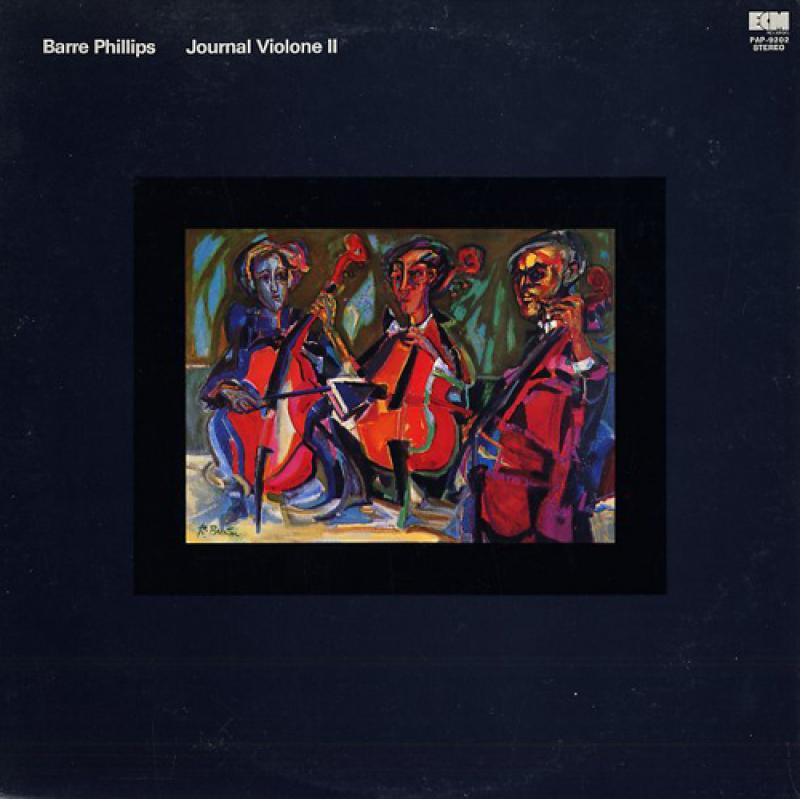
Barre Phillips: Journal Violone II (ECM 1149)

Barre Phillips
Journal Violone II

Barre Phillips bass
John Surman soprano and baritone saxophones, bass clarinet, synthesizer
Aina Kemanis voice
Recorded June 1979 at Tonstudio Bauer, Ludwigsburg
Engineer: Martin Wieland
Produced by Manfred Eicher

Barre Phillips’s music always seems to be more about the obscuring than about what is being obscured. Such a description, I hope, does not merely practice what it preaches, but instead gives insight into his modus operandi. For this suite of six parts, ranging from organic to synthetic and back again, Phillips is joined by frequent collaborator John Surman and vocalist Aina Kemanis. The combination proves to be a formidable one. Phillips brings a delicate intensity to every cell of musical information he divides, especially in the slow buildup of Part III, while Surman threads not a few needles with the bevy of reeds at his disposal. He magnifies our deepest love with an earthy bass clarinet in Part IV. Here, Kemanis’s lilting themes dance with his distanced soprano, painting less jagged lines than she does in Part I. The Brian Eno-esque synths of the latter inject the album with fragrant warmth that Kemanis sustains beautifully with every syllable she sings. Part II harbors the deepest shadows, through which Phillips works his way toward the first lit street he can find. Part V is dedicated to Aquirax Aida, a.k.a. Aida Akira (間章), a music critic and producer deeply committed to free jazz artists like Phillips, leading down a sibilant path toward the final Part VI. This backwater fantasy bounces with the twang of a jaw harp, anchored by Surman’s organic woodwinds and brought home by Kumanis in smooth gradations.

To call any Phillips project “unique” is to commit the commonest of platitudes. His ability to draw a cello’s breath from a bass’s body is nothing short of astonishing. Every inch of his instrument seems to offer up a melody. Were this journal ever to materialize on paper, we would see that it had been written in an erratic but always legible sonic calligraphy.

<< John Surman: Upon Reflection (ECM 1148)
>> Keith Jarrett: Eyes Of The Heart (ECM 1150)

John Surman: Upon Reflection (ECM 1148)

ECM 1148

John Surman
Upon Reflection

John Surman soprano and baritone saxophones, bass clarinet, synthesizers
Recorded May 1979 at Talent Studio, Oslo
Engineer: Jan Erik Kongshaug
Produced by Manfred Eicher

I imagine that John Surman’s first solo album for ECM was something of a revelation when first released. Having already provided his sequined elegance to a handful of productions, the English reedman shows us the breadth of his wingspan in this remorsefully out-of-print pool of limpid brilliance. The sequencer of “Edges of Illusion,” recalling the title cut off Azimuth’s debut album, immediately carries us into a uniquely melodic sound-world. Where some might exploit such a transcendent ostinato as mere atmospheric backdrop, Surman engages with it as an equal partner, experiential in dimension, existential in effect. He adds welcome traction via a gravelly baritone, even as he bores out a winding melodic core with soprano.

Other passages show Surman’s penchant for drawing with folk pigments. Of this, the jig “Caithness To Kerry” and the Nyman-esque geometry of “Prelude And Rustic Dance” and “Filigree” are the clearest examples. More somber moments abound in “Beyond A Shadow” and “The Lamplighter,” both of which feature synths and bass clarinet. Each pulls a distinct string of floss through cosmic teeth. At times delicate, at others cathartic, its sonic plaque streaks like shooting stars into silence. A brief aside of whimsy finds us in “Following Behind.” This lovely fling between baritone and echo chamber wipes the slate clean for the arpeggiated “Constellation” with which the album closes.

From soulful solos to one-man ensembles, Surman does it all with the signature intonation and robotic syncopations that make him one of the finest at the reed. One of the most elegant saxophonists represented on ECM, or on any other label for that matter, he brims with information to be pored through and deciphered with each renewal.

<< Nana Vasconcelos: Saudades (ECM 1147)
>> Barre Phillips: Journal Violone II (ECM 1149)

Nana Vasconcelos: Saudades (ECM 1147)

ECM 1147

Nana Vasconcelos
Saudades

Nana Vasconcelos berimbau, percussion, voice, gongs
Egberto Gismonti guitar
Members of Radio Symphony Orchestra Stuttgart
Mladen Gutesha conductor
Recorded March 1979 at Tonstudio Bauer, Ludwigsburg
Engineer: Martin Wieland
Produced by Manfred Eicher

For his third solo release, first and only for ECM under his name, the extraordinary percussionist Nana Vasconcelos created an album that grows. It has taken me a few uninterrupted sessions to appreciate the depths of Saudades, which continue to reveal themselves with every listen. Vasconcelos fronts the best with “O Berimbau,” a 19-minute ode to the metallic scrapings of its eponymous instrument. Utilizing human breath and strings, he renders a beatific icon with bare means. Breaks yield mock birdcalls for a highly filmic and contextual sound that locates us in living spirit. “Vozes” is simply those, weaving fricatives through a loom of nostalgia-laden strings. A rather different congregation of voices awaits us in “Ondas,” speaking in konnakol. Tablas and melodic rows, plowed by shakers and cowbell, channel irrigation into “Cego Aderaldo.” This, the only non-Vasconcelos piece on the album (by compatriot and musical partner Egberto Gismonti), opens with the liquid guitar of its composer in a precisely syncopated journey of intense focus. “Dado” reprises the berimbau, unaccompanied, fading into a climate of arid reflection.


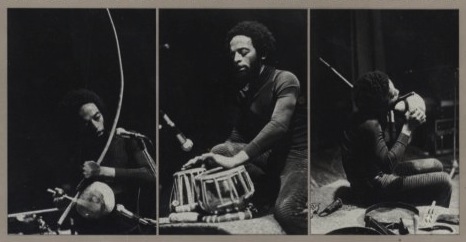
From the back cover of the original vinyl (photo by Roberto Masotti)

Saudades is a self-portrait in sound. Vasconcelos plays as one communicates, with the immediacy of speech and the lingering effects of bodily gestures. This minimal approach yields a broadening territory of fallow lands. His is not simply a musical language but language, period.

<< Double Image: Dawn (ECM 1146)
>> John Surman: Upon Reflection (ECM 1148)

Double Image: Dawn (ECM 1146)

ECM 1146

Double Image
Dawn

David Samuels vibraharp, marimba
David Friedman vibraharp, marimba
Harvie Swartz bass
Michael DiPasqua drums, percussion
Recorded October 1978 at Talent Studio, Oslo
Engineer: Jan Erik Kongshaug
Produced by Manfred Eicher

Double Image was the intermittent project of Davids Friedman and Samuels, whose vibes and marimbas found likeminded company in session musicians Harvie Swartz and Michael DiPasqua on Dawn, the second of only three albums for the group and their only for ECM. Having two jazz percussionists in the same space was something of a rarity in the late seventies, when the album was recorded, and perhaps contributed to its being swept under the carpet over time. What we have, however, is a smooth and airy set of four extended pieces more than worthy of a reissue.

Every gesture therein is artfully considered, as demonstrated to delightful effect in the opening “Passage.” Swartz’s buttery soft bass adds girth to the Friedman/Samuels nexus, where light and darkness walk hand in hand. While DiPasqua baits a hook for every loop, vibe notes hang like keys from a chain, swinging in a steady hand with a pleasant jingle. For the final stretch, marimbas smoke from a flame of cymbals before vibes recap with a sublimely resolute chord. These plaintive measures continue in “The Next Event,” where the marimba broadens its wingspan into “Sunset Glow.” And as that honeyed bass trickles slowly back in, the shaded sound is fleshed out into a colorful fan of sunrays. Swartz beatifies the final “Crossing,” which, over a steadily popping snare, flows with calm virtuosity before breathing down the neck of finality.

This album makes a fine addition to any mallet enthusiast’s collection and proves that, even as its drowsiest, ECM quietly towers above the rest. A personal favorite among the label’s painted covers as well.

<< Miroslav Vitous: First Meeting (ECM 1145)
>> Nana Vasconcelos: Saudades (ECM 1147)

Miroslav Vitous: First Meeting (ECM 1145)

Miroslav Vitous
First Meeting

Miroslav Vitous bass
John Surman soprano saxophone, bass clarinet
Kenny Kirkland piano
Jon Christensen drums
Recorded May 1979 at Talent Studio, Oslo
Engineer: Jan Erik Kongshaug
Produced by Manfred Eicher

Leader Miroslav Vitous is the rare bassist who can negotiate both pizzicato and arco techniques with comparable finesse, bringing the latter to bear upon much of what we hear on First Meeting. The contours of the 11-minute “Silver Lake” epitomize the creative span of the ECM label and its ability to bring together complementary talents that might otherwise never have crossed paths. From its frayed beginnings to the fine braid into which it weaves, Vitous’s passionate anchorage finds perfect foils in Kenny Kirkland’s gorgeous arpeggios, Jon Christensen’s ever-delicate cymbals, and the buoyant stylings of John Surman’s soprano. The latter switches over to a rich, chocolaty bass clarinet for the complementary “Recycle.” Like a memory divided down a drummed middle, it is equal parts regret and hope. Moments of skyward abandon dovetail effortlessly into earthbound runs. Kirkland is especially poignant here, seeming to revel in the feeling of soil between his keys, each a toe pressing into the forgiving earth. This ripple effect spreads to Christensen, who nods a brief solo before Vitous sparks a flowering return. Between these juggernauts thrive two rolling pastures. Surman finds palpable symmetry amid Kirkland’s sublime chording in “Beautiful Place To” and shows off his fluttering delicacy in “Trees.” The ad-libbed title track is more tentative. Coalescing into the barest of grooves, it provides a pleasant conduit into the enchanting bass solo that is “Concerto In Three Parts.” By turns tender and enthralling, it sometimes catches itself in rhythmic hooks, but is mostly content to roam a winding path toward “You Make Me So Happy.” This gorgeous burst of jazz synergy has all the makings of a standard and leaves us basking in sugar.

First Meeting is a breath of fresh light, a testament not only to Vitous’s compositional abilities but also to his sensitivity as a collaborator, and is one of many on a label that continues to abide by the excitement of unimaginable adventures. Each of its facets is a window into a deeply beating heart, where only sound is blood and blood is music.

<< Terje Rypdal: Descendre (ECM 1144)
>> Double Image: Dawn (ECM 1146)

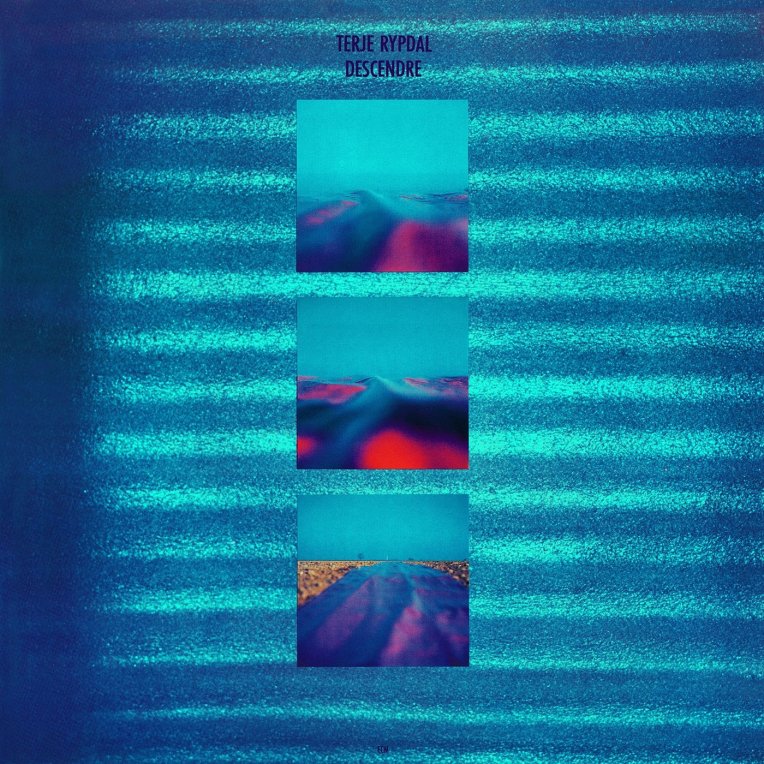
Terje Rypdal: Descendre (ECM 1144)

ECM 1144

Terje Rypdal
Descendre

Terje Rypdal guitar, keyboards, flute
Palle Mikkelborg trumpet, fluegelhorn, keyboards
Jon Christensen drums, percussion
Recorded March 1979 at Talent Studio, Oslo
Engineer: Jan Erik Kongshaug
Produced by Manfred Eicher

Before hearing the opener that lightens Descendre, I believed that the introduction was a thriving art form. Entitled “Avskjed” (Farewell), it works its distant organ, glockenspiel, and muted trumpet through the nocturnal folds of a weightless security. In a mere three minutes, I hear sunrise, worldly virtue, and restraint rolled into a single entity. Rypdal’s palimpsestial motifs grace the edges of dense brass and sudden exhalations. The album is full of such moments, unexpected and eternal. Nestled in the tessellation of Jon Christensen and Palle Mikkelborg, that unmistakable guitar cuts its swath through the swells and squawks of “Circles,” on through the trembling “Men Of Mystery,” and ending on the delicate considerations of “Speil,” where kaleidoscopic keyboards abound. Standouts include the title track, where Christensen’s melodic sensibilities shine forth and Rypdal’s solos brand themselves into our hearts like the icy stares of advertising icons in Blade Runner, and “Innseiling” (Approach), a masterful slice of transcendence that guides Mikkelborg to glorious heights. With every change of light, bright resolutions and shadowy recollections are revealed, betraying the raging fire behind its glacial surface.

An elegy in emotional unrest, Descendre is a must-have for any Rypdal veteran and greenhorn alike. Like its title, it descends with every sonic verb, reminding us that conjugations never end.

<< Leo Smith: Divine Love (ECM 1143)
>> Miroslav Vitous: First Meeting (ECM 1145)

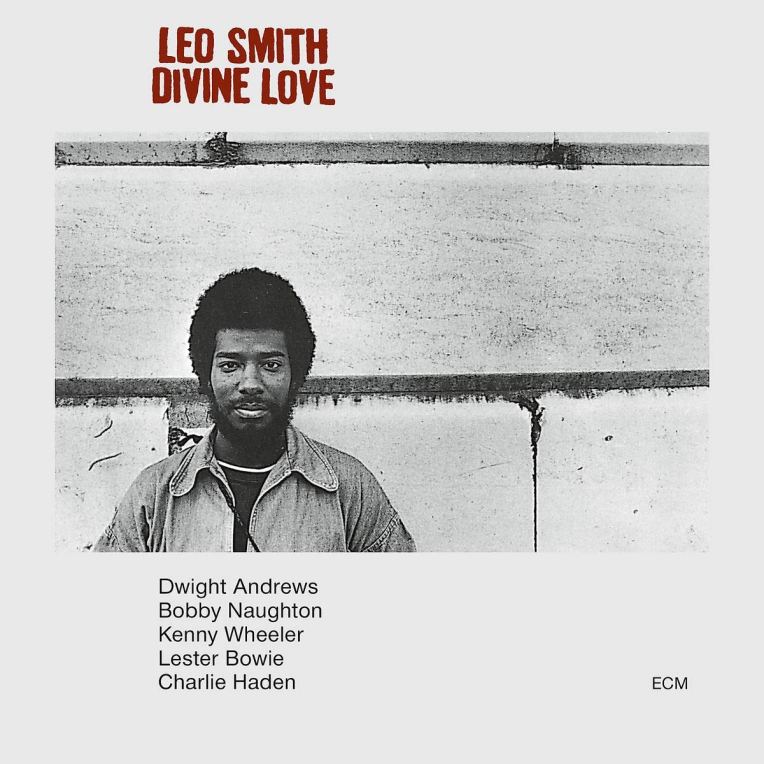
Wadada Leo Smith: Divine Love (ECM 1143)

ECM 1143

Wadada Leo Smith
Divine Love

Wadada Leo Smith trumpet, fluegelhorn, steel-o-phone, gongs, percussion
Dwight Andrews alto flute, bass clarinet , tenor saxophone, triangles, mbira
Bobby Naughton vibraharp, marimba, bells
Charlie Haden double-bass
Lester Bowie trumpet
Kenny Wheeler trumpet
Recorded September 1978 at Tonstudio Bauer, Ludwigsburg
Engineer: Martin Wieland
Produced by Manfred Eicher

Wadada Leo Smith’s Divine Love is one of ECM’s most tantalizing jewels, the result of many years ignoring the label’s advances. I can only speculate this was because the immediacy of his craft might have been adversely affected by the interventions of any svelte postproduction. Thankfully, and not surprisingly, Eicher and company gave this effort all the space it needed to breathe, for breath is precisely what this imaginative session is all about.

Since 1970, Smith has been utilizing two systems of musical production: a) rhythm-units, which balance every note produced with an equivalent unit of silence, and b) ahkreanvention, an amalgamated method of “scored improvisation.” The album’s two bookends exemplify the former, while the latter animates the single piece at their center. This structure gilds the recording with a cyclical feel that deepens with every listen. Drifting through the waves of mallet percussion (courtesy of Bobby Naughton) of the title track, each cry materializes as a vessel of indeterminate origin until we lose ourselves in the eddy of “Tastalun,” where muted trumpets (Lester Bowie and Kenny Wheeler join in here) streak the music’s inner language with deep gashes of spontaneous intent. With “Spirituals: The Language Of Love,” we return to where the album began, sailing forth into waters at once opaque and teeming with unseen light.

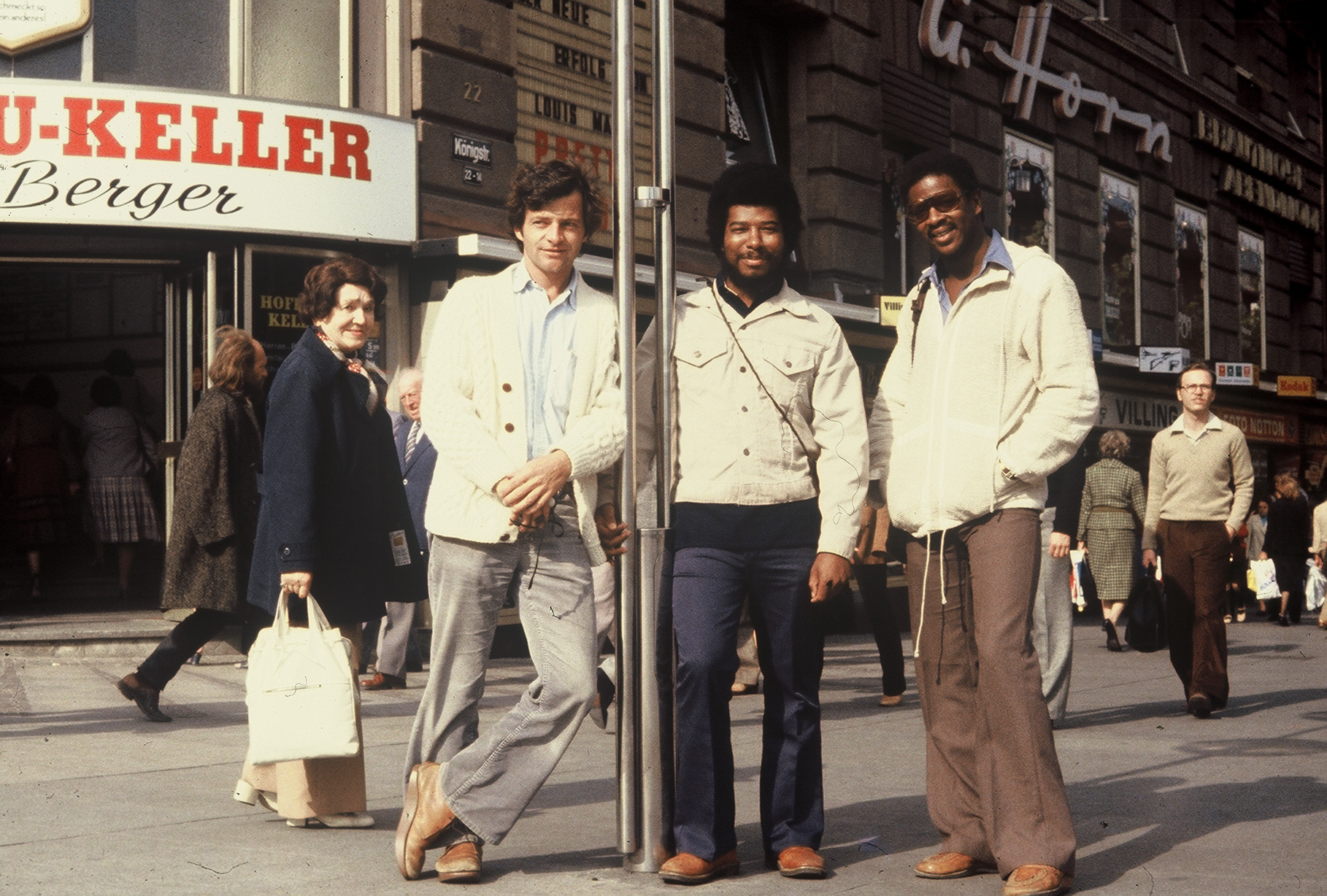
0413512-R1-E002
From left to right: Bobby Naughton, Wadada Leo Smith, Dwight Andrews
Stuttgart, West Germany, September 1978
(Photo by Fridel Pluff)

While Smith’s presence is felt throughout in his wavering horns and percussion, the alto flute of Dwight Andrews is for me the album’s soul. Smith’s pensive collaboration tries not to evoke beauty, but rather to find in the act of invocation an air of repose. Anyone expecting grooves and catchy tunes will find no foothold. This is a long confession spun from discomforting lucidity. In this trying melody called life, divine love is the truest note.

<< Richard Beirach: Elm (ECM 1142)
>> Terje Rypdal: Descendre (ECM 1144)

Richard Beirach: Elm (ECM 1142)

ECM 1142

Richard Beirach
Elm

Richard Beirach piano
George Mraz double-bass
Jack DeJohnette drums
Recorded May 1979 at Tonstudio Bauer, Ludwigsburg
Engineer: Martin Wieland
Produced by Manfred Eicher

Nearly five years after his headlining debut, Eon, pianist Richie Beirach stepped into the studio to leave behind his most indelible mark yet. The graceful momentum of the opening “Sea Priesters” is all we need to know exactly what kind of journey this will be. Beirach’s tone sweeps great distances even as it localizes in handfuls of ecstatic melancholy that manage to keep even the most random memories in peculiar order as the rhythm section of Jack DeJohnette and George Mraz ladles its intuition in modest, unquenchable spoonfuls. “Pendulum,” while more upbeat, is also the most reflective track of the set, if only because its contentment seems to stem from a place resigned to life’s iniquities. Its extroverted deployment only intensifies the depth behind it. Mraz brings a particular edge to the trio’s sound here. This is much in contrast to the compelling balladry of “Ki,” which delicately frames our rest before the effervescence of “Snow Leopard” drifts skyward. DeJohnette divines his cymbals like a man possessed, yet without ever losing sight of his surroundings. This leads us to the final, and title, track. An emotionally direct and majestic stroke of sonic brilliance, it resonates like time itself.

Elm has all the makings of a sleeper hit. It is a burnished kaleidoscope of sound: every turn reveals an unrepeatable flower of symmetry. The music is insightful, frank, and eschews any of the pyrotechnics that might have weighed it down. These are musicians of staunch melodic commitment who live their craft so deeply that they seem to know exactly where they are going at all times, waiting only for us to join them at the end of every path drawn. Beirach’s piano is superbly tuned (all hats off to the technicians on this one) and glows under his touch; the beauty of DeJohnette’s timekeeping abilities throughout (especially in “Snow Leopard”) can hardly be overstated, capping off (along with his New Directions European date) as they do a stellar decade in ECM’s hallowed halls; and John Abercrombie Quartet bassist Mraz brings it all home with loving attention.

This may just be Beirach’s best and represents one missed opportunity among many for the Touchstones series. Though only physically available as an expensive Japanese import, it’s worth every yen, and then some.

<< George Adams: Sound Suggestions (ECM 1141)
>> Leo Smith: Divine Love (ECM 1143)

George Adams: Sound Suggestions (ECM 1141)

1141 X

George Adams
Sound Suggestions

George Adams tenor saxophone, vocal
Heinz Sauer tenor saxophone
Kenny Wheeler trumpet, fluegelhorn
Richard Beirach piano
Dave Holland bass
Jack DeJohnette drums
Recorded May 1979 at Tonstudio Bauer, Ludwigsburg
Engineer: Martin Wieland
Produced by Manfred Eicher

The intensities of Mingus veteran George Adams (1940-1992) took their only dip in the ECM pool with Sound Suggestions. Bringing characteristic fire to every lick, Adams was a force to be reckoned with, as evidenced in his later quartet recordings with Don Pullen for Blue Note. Joined by a stellar cast of label stalwarts, Adams sets alight the fringes of our expectations. His tenor is so luscious in the opener, “Baba,” that we swear we’ve heard it before, the lingering soundtrack to some dream or distant memory. Kenny Wheeler’s flugel paints a high-reaching arc under which Richie Beirach (piano) and Jack DeJohnette (drums) spread their blanket of sand. A lyrical solo from Wheeler bleeds into an equally robust turn from Adams, ending with an exclamation mark. Uplifting themes abound in “Imani’s Dance,” each linked by a mid-tempo groove of finely honed horns. Though head-nodding solos all around make this one a winner, it’s an especially glorious vehicle for DeJohnette’s mastery at the kit. Each of his gestures is one of a base pair, linking into the perfect helix that is “Stay Informed.” Here, a robust tenor gene manifests itself in the album’s most enthralling flight, rendered all the more intense by Beirach’s majestic trails. Segueing into “A Spire,” we find wider spaces, across which both Adams and German reedman Heinz Sauer level their weary songs, all the while backed by chattering cymbals and a rolling snare. The bluesy “Got Somethin’ Good For You” serves up a healthy portion of the voice behind the mouthpiece. Though a knot in the album’s smooth grain, the track is enlivened by a whirlwind of horns.

The musicianship on Sound Suggestions is as tight as the walls at Sacasyhuamán. Adams’s strokes are bold and direct, each a snowflake bronzed and offered to time with ceremonial care. And let us not forget the extraordinary talents of Sauer, whose tenor also graces Adelhard Roidinger’s underappreciated gem, Schattseite. Surely, this is one of ECM’s hottest joints.

<< Gary Burton/Chick Corea: Duet (ECM 1140)
>> Richard Beirach: Elm (ECM 1142)