The Gary Burton Quartet with Eberhard Weber: Passengers (ECM 1092)

ECM 1092

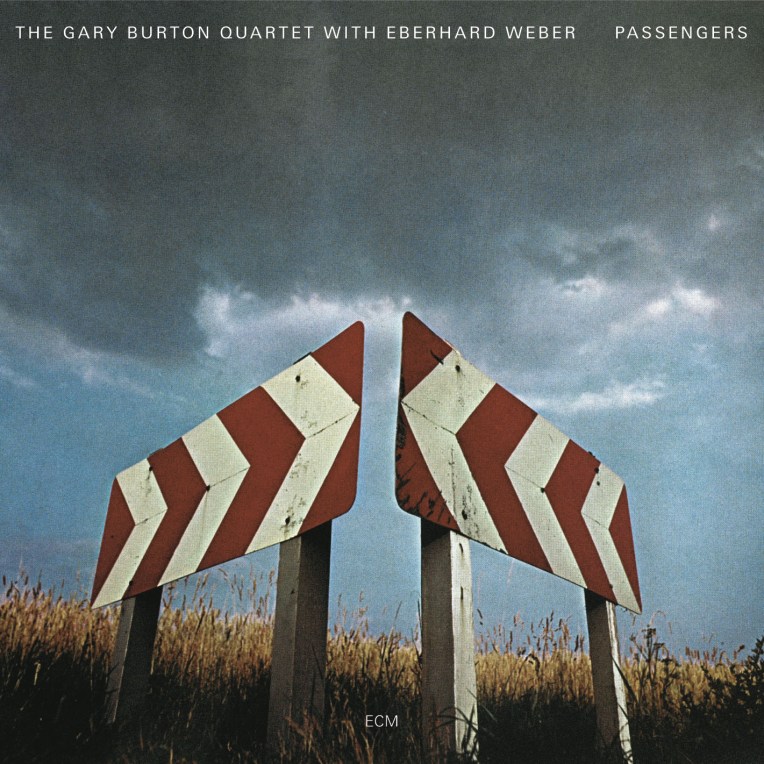
The Gary Burton Quartet with Eberhard Weber
Passengers

Gary Burton vibraharp
Pat Metheny guitar
Steve Swallow bass guitar
Dan Gottlieb drums
Eberhard Weber bass
Recorded November 1976 at Talent Studio, Oslo
Engineer: Jan Erik Kongshaug
Produced by Manfred Eicher

Gary Burton’s Passengers has it all: its frontman’s incomparable mallets, Dan Gottlieb keeping the beat, the unmistakable bass of Eberhard Weber paired with the equally unique stylings of Steve Swallow, the fluid fingers of guitarist Pat Metheny (who would soon go on to front his own super group with Weber and Gottlieb), and the all-important bow of ECM’s attentive production. Not enough to whet your appetite? All the more reason to buy it.

Chick Corea’s “Sea Journey” opens with the floating exuberance that Burton carries off like no other. Weber pulls out all the stops here, proving to be perfect complement to Burton’s sound. A stunning piece of work with a heightened groove-oriented trajectory. This is followed by three Metheny compositions. In the subtle ballad “Nacada,” vibes rest on a gentle surface tension of flowing bass, guitar, and brushed drums. “The Whopper” locks into more upbeat strides. Weber’s bass is as bright and attractive as it gets, while Metheny’s solo dances on a pinhead. Listeners will recognize “B & G (Midwestern Nights Dream)” from his seminal Bright Size Life, its fractured rhythms maintained beautifully here. The quiet background supports a glowing solo from Weber, not to mention another from Metheny himself. “Yellow Fields” (Weber) is another exuberant number, and features the album’s most incredible vibe work. The bittersweet farewell of Swallow’s “Claude And Betty” contorts its hands in shadow puppets, backlit as if by a sad and lonesome dream.

Mindfully recorded and expertly executed, the melodies of Passengers come alive with unpretentious joy. The synthesis of players forms a palette in the truest sense, its colors already artfully arranged before they are ever mixed and applied to canvas. An essential addition to any Burton library, and a must-have for any Weber fan looking to complement his brooding, handsome meditations with something more uplifting.

<< Keith Jarrett: Staircase (ECM 1090/91)
>> Jan Garbarek: Dis (ECM 1093)

Kuára (ECM 2116)


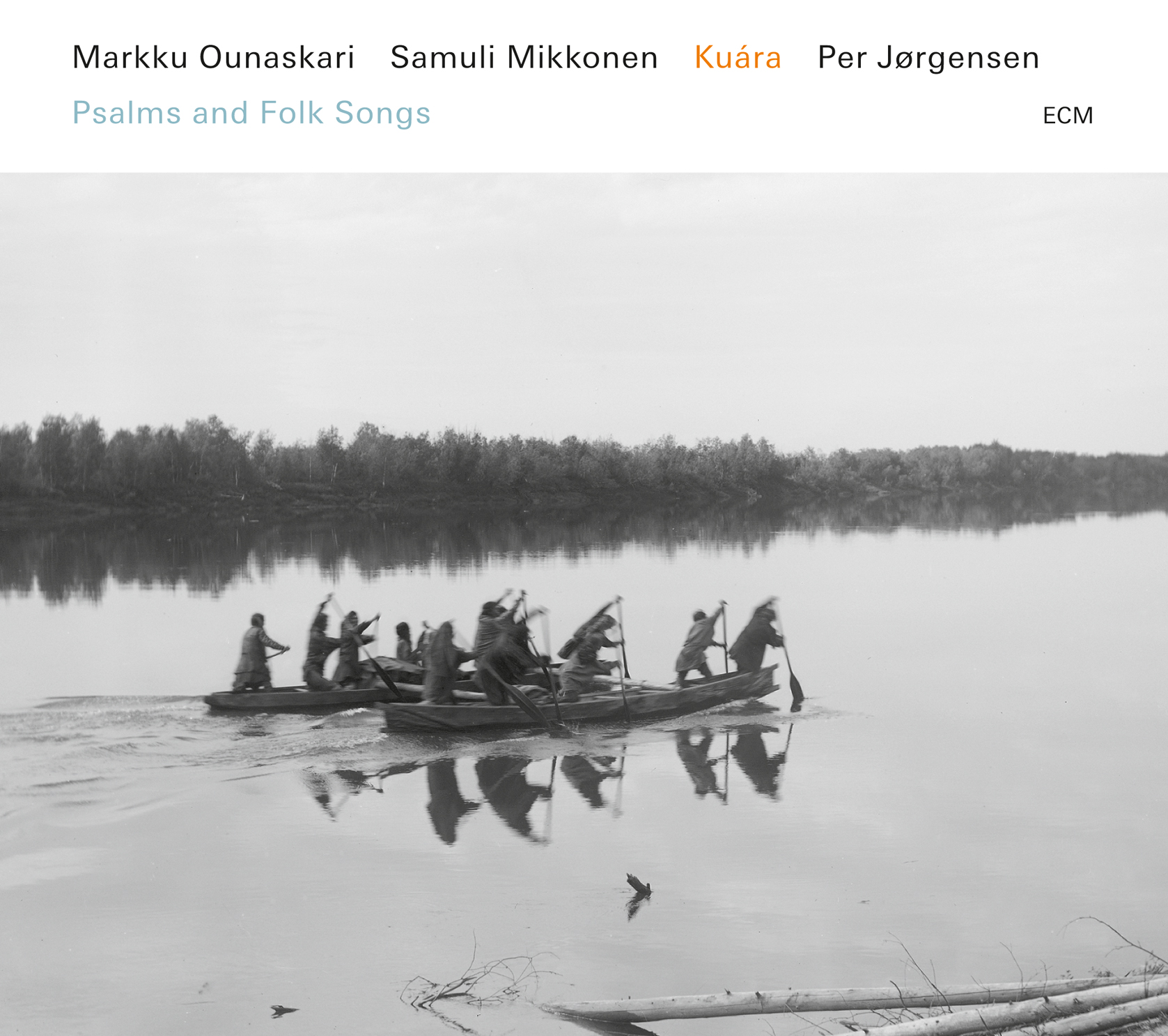
Kuára

Markku Ounaskari drums
Samuli Mikkonen piano
Per Jørgensen trumpet, voice
Recorded May 2009

The Republic of Karelia is a pocket of land nestled between Finland and Russia. It was ceded to the Soviet Union via the Moscow Peace Treaty of 1940, resulting in the forced relocation of over 400,000 Karelians—essentially the entire population—into Finland. Since then, Finno-Ugric folksongs have become for them a powerful nostalgic tool, looking back on the homeland while tinged with the grief of inhabiting another. Primary among these is the itkuvirsi, or lament, whereby Karelians are able to bridge past and present, forging new identities in the process. Enter Kuára, an album of kindred spirit that is as much homage to contested borders as it is a look toward a self-determinable future.

Recent ECM listeners may recognize the name of Markku Ounaskari, the Finnish percussionist who, providing nascent but vital details for Sinikka Langeland’s recent Starflowers, so impressed Manfred Eicher that the label’s producer asked him to lead his own project. Drawing on Russian psalms and the folksongs of Finland’s displaced Karelian, Udmurtian, and Vepsian populations, the resulting Kuára is, in Ounaskari’s poetic estimation, “like a journey through the night.” Already widely known in Finnish jazz circles, Ounaskari gained notoriety for his folk-inspired work with the group Piirpauke. Up-and-coming pianist Samuli Mikkonen and Per Jørgensen (a familiar label name through projects with Jon Balke, Michael Mantler, and Miki N’Doye) round out the trio of this intensely focused program. Jørgensen paves a steady avenue through the others’ winding streets, and provides the most halcyon evocations of the album’s source material. Mikkonen would seem the perfect foil in this regard. Once described as “the most Finnish-sounding pianist of his generation,” he clearly recognizes the locality of musical language. A transnational reach has led him from the neutral zones of the Anders Jormin Trio, with whom he regularly plays, to the aleatoric battlegrounds of John Zorn’s formidable Cobra. Says Ounaskari, “Both of us, Samuli and I, are very interested in folk music of the different Finnish related Ugri-cultures and tribes that are living, at the present, in Russian territory,” referring to the many Finnish Karelians who, after perestroika, have reversed their tracks in search of roots.

Karelians share linguistic lineage with Finnish and a valuation of the pagan mysticism that informs their heritage. The latter may have been quelled by Christianization, but many of its practices hold fast. As such, they lend themselves well to the equally mystical art of improvisation, situated as they are among the ghosts of communism. And so, when Eicher suggested including Orthodox Russian psalms as a counterbalance, the idea resonated well with Ounaskari, who is of paternal Russian heritage. It was an opportunity to draw a line of Slavic continuity between the sacred and the secular, enlarging the scope of both in the process.

The group’s acoustic focus is a refreshing shadow in the light of popular electronic augmentations: three generations of musicians coalescing into one poignant sound, a new direction drawn from ruins. The album’s title means “sound” in Udmurtian, and clues us in to its central aesthetic: namely, the word made life. Thus do we get a refracted triptych in the form of three “Introits,” each a strand of connective tissue animating a languidly beating heart. We begin, however, with “Polychronion,” a Slavonic liturgical chant birthed in the piano’s gaping cavity. Mikkonen hits the lowest strings within, reenacting a mythological birth into discernible chords. Brushed drums and soulful trumpet emerge into visibility: a holy figure rising to its feet, every fold of its vestments captured in fluid detail. “Tuuin Tuuin” introduces the album’s first Karelian turn. Its beautifully articulated theme springs from the surrounding waters like a fish in slow motion. Jørgensen wrenches from his instrument a mournful animal cry against a spate of hand percussion, at times doubling the lead piano line with an unsteady, almost mocking keen.

Traditionally, the singer or musician’s take on a Karelian song text has always been more important than the replication of a standard. The music is resuscitated upon the lips of each practitioner, who adds new ideas and adornments. The parallels to jazz are obvious, and make for a smooth transition into the present arrangements. “Aallot” (“Waves”) invokes its eponymous motions with controlled abandon, lifting its voices through the snare’s roiling foam, while the Udmurtian “Soldat Keljangúr” features Jørgensen’s wordless vocalese and skyward cries. Even “Psalm CXXI” which consummates the album’s dip into Orthodoxy, locates itself on land: I will lift up mine eyes unto the hills.

In “Sjuan Mad’” one hears the Jørgensen that has inspired a generation of trumpeters, Nils Petter Molvær not least of all. His popped expulsions of breath are shaped by a gentle mute into an outward spiral of thematic ascendency. More doublings of the piano set aloft the latter into its own gorgeous flights of fancy. It is also a short piece, showing the group at its concentrated best. The final “Sjuan Gúr,” with its funereal drums, sets forth like a vessel into darkening waters. Jørgensen’s ecstatic cries once more cut to the bone, bearing rounded fangs against the exposed nape of lost time. The music breathes with as much inauguration as finality, working its slow passage through the marrow of a lumbering deity, whose footfalls raise mountains.

A smattering of originals rounds out the program. “The Gipsy’s Stone” draws airy pianistic lines between pointillist percussion, while “Mountain Of Sorrow” abides by an altogether different gravity, made all the more palpable for the elusive playing that turns it into focus.

Jazz has always been a music of diaspora and self-preservation. Hence, its passage to the Baltic states, where it has fused into the current project. In this respect, Kuára is the genre at its most contemplative. It is an album as poignant as it is enigmatic, an intimately realized mosaic rendered with due ceremony. For a project grounded in displacement, it comes across as markedly apolitical, a soothing burst of cool air in an otherwise heated world. These are not the “imaginary communities” of postmodernism, but the familiar and the stable topographies of private continents. A recording like this is a sobering reminder that, at some level at least, all music is fusion—be it of the intention of the performer with the location in which she/he is situated; of the blending of disparate styles; or simply of the indeterminacies that any place inculcates upon the music or performance at hand. Despite the arbitrary divisions we human beings impose upon each other and our works in the name of misguided notions of superiority, imperial expansion, and economic ascendancy, we can be sure the music that animates them will always follow less prescriptive paths. To merge onto one of them, we need only slip this disc into our player of choice.

[Author’s note: This review was first published by RootsWorld online magazine, and may be viewed in its original form here, where you can also hear a sample track.]

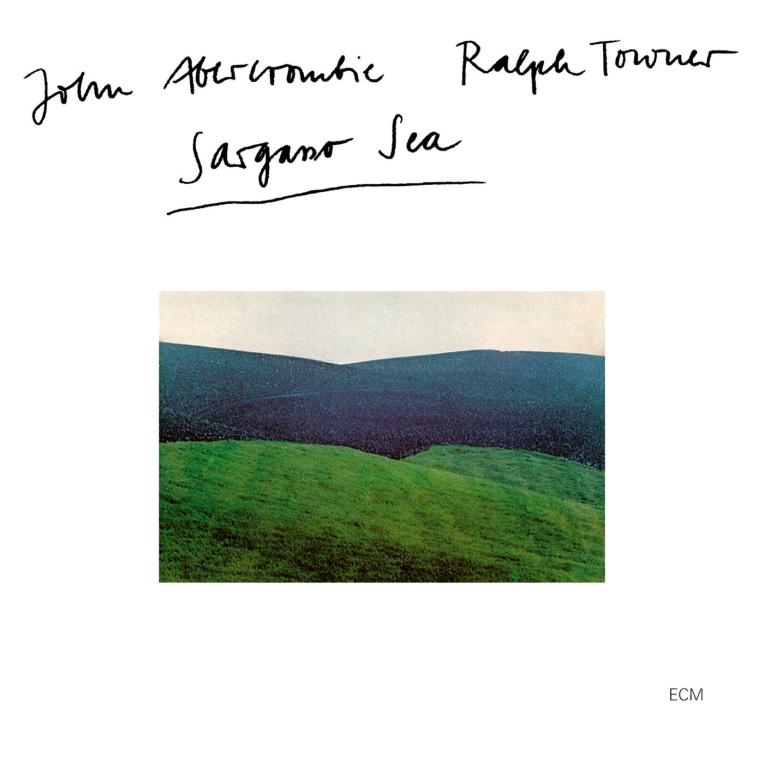
John Abercrombie/Ralph Towner: Sargasso Sea (ECM 1080)

ECM 1080

John Abercrombie
Ralph Towner
Sargasso Sea

John Abercrombie electric and acoustic guitars
Ralph Towner 12-string and classical guitars, piano
Recorded May, 1976 at Talent Studio, Oslo
Engineer: Jan Erik Kongshaug
Produced by Manfred Eicher

It was often raining when I woke during the night, a light capricious shower, dancing playful rain, or hushed muted, growing louder, more persistent, more powerful, an inexorable sound. But always music, a music I had never heard before.
–Jean Rhys, Wide Sargasso Sea

Given the contrasting but strikingly compatible talents of John Abercrombie and Ralph Towner, this album was bound to happen sooner or later. The aptly titled “Fable” best describes what these two musicians achieve together, for theirs is a tale that sounds as if it were written long ago, coalescing out of life’s improvisations into a memorable narrative. Its pairing of Towner’s 12-string with Abercrombie’s electric represents the duo in its most melodically satisfying comfort zone. We get more of the same in the title track, an uncertain travail with hints of soliloquies caressing our ears from either side, and in the relatively explosive moments of “Elbow Room.” Abercrombie opts for an echo effect here, the pulse of which dictates the piece’s rhythmic trajectory. And while I do think the effect weakens the track as its pathos becomes clearer, Towner compensates its contrivance with some flamenco-like body taps. “Staircase” features classical guitar and Abercrombie’s more directly amplified electric in the album’s most carefully realized blend of sound and circumstance. Towner then leaps to his 12-string amid Abercrombie’s own ascendant doodling. A few all-acoustic tracks enliven the mix, of which “Romantic Descension” is the loveliest. The final track, “Parasol,” is a triangular affair between 12-string, electric guitar, and Towner’s overdubbed piano.

Sargasso Sea is an enchanting reverie that has stood the test of time, and with an attractive patina to show for it. Like a kiss in deepening twilight, it loses its physical shape and becomes pure sensation, lost in the placation of a distant slumber.

<< Jack DeJohnette: Pictures (ECM 1079)
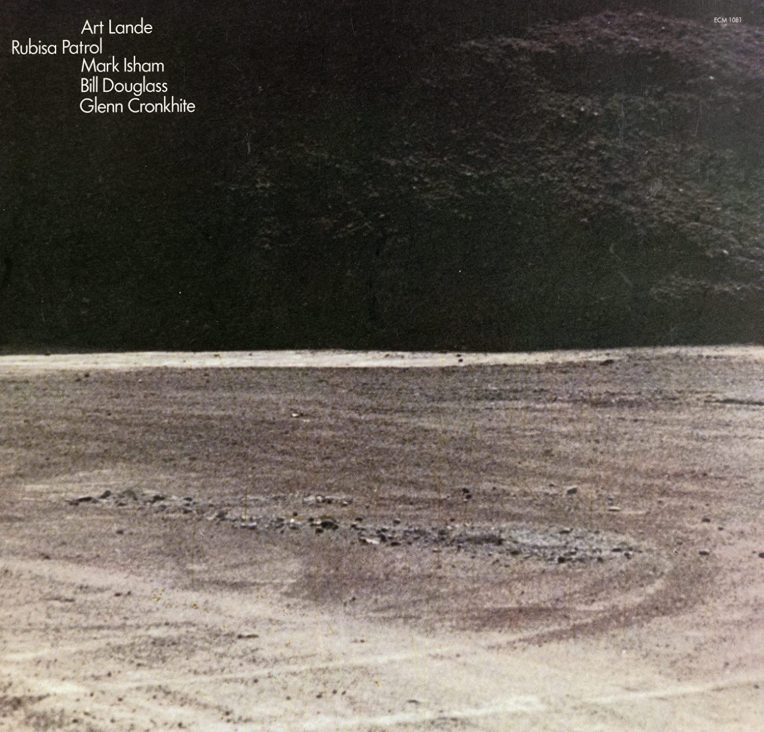
>> Art Lande: Rubisa Patrol (ECM 1081)

Jack DeJohnette: Pictures (ECM 1079)

ECM 1079

Jack DeJohnette
Pictures

Jack DeJohnette drums, piano, organ
John Abercrombie electric and acoustic guitars
Recorded February, 1976 at Talent Studio, Oslo
Engineer: Jan Erik Kongshaug
Produced by Manfred Eicher

Hot on the heels of his stellar Directions debut, drummer Jack DeJohnette settled down in the studio for this cool duo album with guitarist John Abercrombie. Less a side project than a chance to open the mind to more introverted images, Pictures is the spark behind the fire.

The steady beats of “Picture 1” grow in scope with every new added detour. What at first seems a drumming exercise quickly turns haunting as an organ rises up from the earthen tide. After the ode to toms and cymbals that is “Picture 2,” the following three Pictures feature Abercrombie’s improvisatory accents, which range from meandering to cathartic. But the real pièce de résistance is “Picture 6.” As its temperate piano introduction works its way into a swell of gongs, we begin to see the melody behind the fire. It is a Keith Jarrett moment if there ever was one, the Ruta and Daitya that could have been.

Like any good picture, DeJohnette’s curious little project has everything it needs in frame. Nothing extraneous; stripped-down music-making for its own sake, offered up to the listener with humility and respect. This is not an album meant to titillate or to excite or to make any sweeping statements on the nature of its own becoming. It professes to be nothing beyond the space implied, never the sum but the equation laid bare. Get this album for its stunning closer, and open yourself to its other intimacies. Pictures gives us unique insight into the craft of a musician more widely known for his equally arousing timing and delivery.

<< Enrico Rava: The Plot (ECM 1078)
>> John Abercrombie/Ralph Towner: Sargasso Sea (ECM 1080)

Ralph Towner’s Solstice: Sound And Shadows (ECM 1095)

ECM 1095

Ralph Towner’s Solstice
Sound and Shadows

Ralph Towner 12-string and classical guitars, piano, French horn
Jan Garbarek soprano and tenor saxophones, flute
Eberhard Weber bass, cello
Jon Christensen drums
Recorded February 1977 at Talent Studio, Oslo
Engineer: Jan Erik Kongshaug
Produced by Manfred Eicher

If Ralph Towner’s classic Solstice was an overland journey, then Sound And Shadows is a subterranean dream. Featuring the same lineup as its predecessor—Jan Garbarek on saxophones, Eberhard Weber on bass and cello, Jon Christensen on drums, and Towner himself behind an arsenal of instruments—the results are perhaps not as focused. Then again, they don’t need to be.

Amid the spacious 12-string considerations of “Distant Hills,” we cannot help but feel a rich and complex topography curling into slumber above our heads. Weber’s electronic touches here deepen what is already clothed in darkness. The tighter “Balance Beam” is, like its titular object, steady and reassuring yet something to which one must pay respect if one is to navigate it successfully. Garbarek’s sopranic accents teeter across it, bringing with them the idea of light where there can be none. “Along The Way” is a collection of invisible snapshots animated by the life force of the musical gesture. Towner reprises his deft pianism in “Arion.” Caressed by the fluid unity of Christensen and Weber, he unhinges unspoken memories into the soil. “Song Of The Shadows” ends the album in a blend of classical guitar and flute over receding strings.

Along with Garbarek’s open splendor and admirable restraint, Weber’s snake-like pedal points comprise the ideal complement to Towner’s pinpoint metallic precision. Christensen’s cymbal work glistens as ever, proving that rhythm can be just as effective in a whisper. This is an album of sensations without images, one that reminds us that in order to have light, we must have umbrage, and this it brings in great quantity.

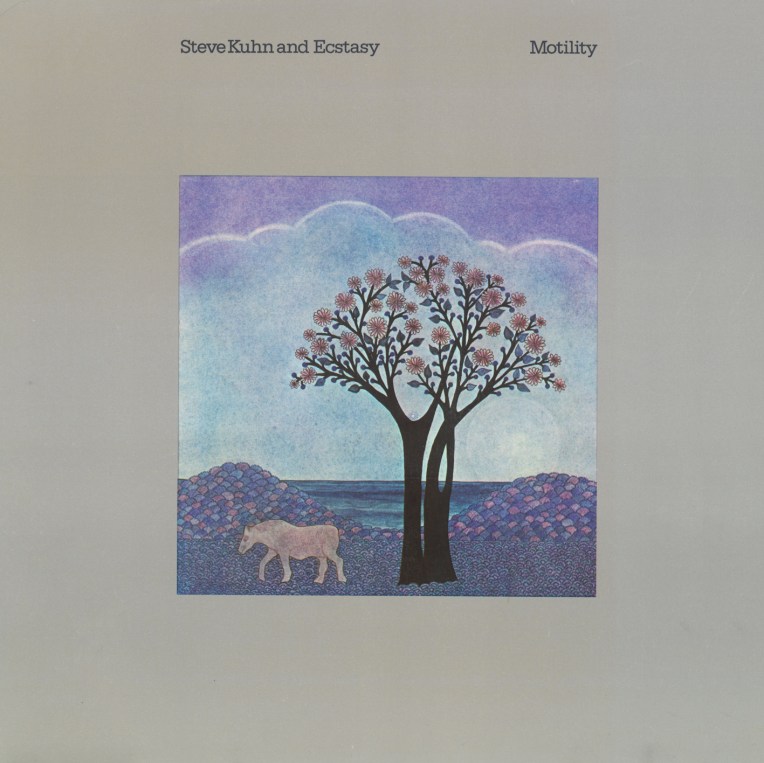
<< Steve Kuhn and Ecstasy: Motility (ECM 1094)
>> Collin Walcott: Grazing Dreams (ECM 1096)

Barre Phillips: Mountainscapes (ECM 1076)

ECM 1076

Barre Phillips
Mountainscapes

Barre Phillips bass
John Surman soprano and baritone saxophones, bass clarinet, synthesizer
Dieter Feichtner synthesizer
Stu Martin drums, synthesizer
John Abercrombie guitar
Recorded March 1976, Tonstudio Bauer, Ludwigsburg
Engineer: Martin Wieland
Produced by Manfred Eicher

In his classic case study of Melanesian cargo cults, Mambu, anthropologist Kenelm Burridge introduced the concept of the myth-dream, which he reduces to “a series of themes, propositions, and problems which are to be found in myths, in dreams, in the half-lights of conversation, and in the emotional responses to a variety of actions, and questions asked.” According to Burridge, what makes any such cult successful is the immediacy with which its figurehead is able to articulate the myth-dream, unleashing a barely conscious longing to know and resolve that which lurks in our mental shadows. The resulting destabilization is a shared process of salvation. I dare to claim the music of Barre Phillips as providing that same function. It embodies a psychological imperative to bring into focus that which inhabits the half-light of our awareness, and fulfills that need through sound. The only difference is that, here, there is neither the promise of salvation nor of migration, but rather the simple need to soak in the immediate essence of wherever one may stand.

Mountainscapes is divided into eight parts of spirit-tugging magnificence, products of a mind that, though only cursorily represented on ECM, has done us a great service in recording his sounds for posterity. Mountainscape I hovers at the margins before unleashing a crackling free groove. The beautifully synthesized sounds and enthralling bass playing, not to mention an absolutely captivating soprano solo from reedman extraordinaire John Surman, give us a rich taste of resolution. It is an unexpected transition, one that jolts the heart into awareness every time. II is a quieter follow-up, enigmatic, peripheral. Like the myth-dream, it lingers just beyond our reach, baiting our desire to know it in full. III is an exquisite piece enhanced by organ and electronics. In IV, the bass becomes a huge rope hefted and swung like a mast cord in a seasoned shipmate’s hands before a saxophonic wind illuminates its sails. The drums never quite stand upright, crossing their feet instead in a continual swagger. V fades in with a synthesized arpeggio. Some sinuous bass notes and a stellar saxophone peek out from the woodwork here. The bass thrums like a groaning in the earth. Meanwhile, a synthesizer bubbles to the surface before fading into transfiguration. VI begins with a lavish wash of electronics embroidered by Phillips’s harmonic threads. It’s a short track, but for me the most effective on the album. VII begins with more pulchritudinous arpeggiation. The sax trails along, trying to place its footsteps in the same imprints as the bass trails not to far behind: the trio as mise-en-abyme. An electric guitar surprises us in the final part, wound by an enthralling sax to feverish heights and playing us out in a gentle finale.

In the end, this is music to be experienced rather than described. And so, I will stop trying.

<< Jan Garbarek: Dansere (ECM 1075)
>> Edward Vesala: Nan Madol (ECM 1077)

Gary Burton/Steve Swallow: Hotel Hello (ECM 1055)

ECM 1055 LP

Gary Burton
Steve Swallow
Hotel Hello

Gary Burton vibraharp, organ, marimba
Steve Swallow bass, piano
Recorded May 13/14, 1974 at Aengus Studio, Fayville, Mass.
Engineer: John Nagy
Produced by Manfred Eicher

The stirring piano and vibes of “Chelsea Bells (For Hern)” open this long-forgotten jewel among ECM’s many fruitful duo recordings. Lithe and nocturnal, its only light can be found in the sourceless reflections of its watery surface. Herein lie the beginnings of a shaded affair that shelters the most distant promise of love. “Hotel Overture + Vamp” pairs vibes with a tight constituent of guitar, bass, and Fender Rhodes for a full sound honed in metal. Swallow assumes a dual identity in the title track, playing both bass and piano. We get the only “un-Swallowed” motif with Mike Gibbs’s “Inside In,” a short and sweet number complete with wah-wah infusions, plenty of changes to keep our ears in check, and some fantastic vibe work to boot. The quaintly titled “Domino Biscuit” is a pleasant segue to the prismatic mood and lyrical bass of “Vashkar.” The most moving piece on the album, it is vividly evocative and honed to a mysterious edge. “Sweet Henry” is a more upbeat, jovial affair, sounding almost like the theme song for a seventies television show sans kitsch (or perhaps with just enough kitsch to satisfy our morbid curiosity). The “Impromptu” that follows is a lovely meditation in which each instrument blends into the other in a swell of monochrome.

Hotel Hello is a unique entry in the Burton catalogue, for it is the only one that feels as if it were painted in black and white. What it lacks in vibrancy (no pun intended) of color, it makes up for, if not surpasses, in its visceral sentiment. We feel this most acutely in the final track, “Sweeping Up,” which faithfully evokes the cleanup that follows any given event, so that no matter how beautiful an experience it is, one is bid to appreciate its refuse.

This is a consistently solid effort and arousing in its many changes. Built on the raw materials of studio trickery, its overdubbed experiments speak to the revelry of both musicians. Burton solos in such a way that while his tone and sound do soar, they always remain firmly embedded and connected to the surrounding thematic motivations. Burton plays on at least three simultaneous levels: anticipating the next note while striking the current one, having already written it in his mind during the one just passed. Swallow is equally exacting and works with a no less expansive vocabulary.

This is an album about alienation and the promise of its demise.

<< Richard Beirach: Eon (ECM 1054)
>> Ralph Towner/Gary Burton: Matchbook (ECM 1056)

Gary Burton Quintet: Dreams So Real (ECM 1072)

ECM 1072

Gary Burton Quintet
Dreams So Real – Music of Carla Bley

Gary Burton vibraphone
Mick Goodrick guitar
Pat Metheny electric 12-string guitar
Steve Swallow bass
Bob Moses drums
Recorded December 1975, Tonstudio Bauer, Ludwigsburg
Engineer: Martin Wieland
Produced by Manfred Eicher

Gary Burton is one of those rare artists whose sound is immediately recognizable, yet who always manages to surprise and delight with his commitment to personal transformation. He is an artist of metamorphosis and of acknowledgment. Like Keith Jarrett, even at his most selfless moments he places each note as one would an important relic on an altar, such that his transitions from improvised to thematic material are hardly noticeable in the grander scheme of things. Fold into this batter of this already delectable recipe the music of Carla Bley, and you get an irresistible cake layered with energy and melody. We see this right away in the title opener, which spreads a thin layer of frosting over this metaphorical confection. “Ictus / Syndrome / Wrong Key Donkey” plays with the frantic jumps at which Burton is so skilled, beautifully accented by Pat Metheny’s electric 12-string. The tender vibraphone solo of “Jesus Maria” cradles the heart with its song, priming us for the gorgeousness that is “Vox Humana,” one of Bley’s crowning statements and interpreted here to perfection. After a modicum of resistance, the aptly titled “Doctor” heals the weary mind like good medicine. Burton shows off more fractured skills here, while Metheny swings in his virtuosic hammock. In spite of its title, “Intermission Music” is hardly a throwaway soundtrack to your break from more important activities. It is, rather, a beautiful flight into melodic skies, a lasting homage to the cinematic screen when it was still silver.

Bley’s tunes, with their chameleonic flair and peerless sense of forward motion, challenge any performer to be at his or her best. With this recording, the present assembly did much more than that by enlivening the music for an unsuspecting audience. As one of her most ardent champions, Burton has taken the soulful sounds of this one-time struggling waitress into that coveted place in our hearts where it belongs. Like skillfully sustained notes on a bowed instrument, Bley’s compositions are drawn in tight circles rather than in straight lines. Burton articulates every nuance, crossing dimensions with the ease of breathing. Metheny and mentor Goodrick are two leaves on the same stalk, each bowing to the wind to let sunlight peek through. Swallow’s presence is tender yet always palpable. And the attentive skills of Bob Moses shine at every rhythmic turn. While each of these musicians is easily spotted in any auditory congregation, they are immeasurably impressive as a collective unit. The album is recorded with ECM’s usual attentiveness, the vibes comfortably embracing the listener from both channels. Bley changed the landscape of jazz, quietly and one vamp at a time. And yet, hers a sound to which many have turned a deaf ear. One could hardly ask for a better wakeup call.

<< Tomasz Stanko: Balladyna (ECM 1071)
>> Pat Metheny: Bright Size Life (ECM 1073)

Jan Garbarek: Dis (ECM 1093)

ECM 1093

Jan Garbarek
Dis

Jan Garbarek tenor and soprano saxophones, wood flute
Ralph Towner 12-string and classical guitars, windharp
Brass Ensemble
Recorded December 1976 at Talent Studio, Oslo
Engineer: Jan Erik Kongshaug
Produced by Manfred Eicher

Debates over the “ECM sound” continue, though thankfully with waning fervor, in attempts to define that which never needed definition in the first place. Meanwhile, critical pundits are missing out on some spectacular music that would easily silence their concern over arbitrary categories. On Dis, his eighth album for the label, Jan Garbarek slipped off his extroverted garments and into a deep look inward. One immediately notices the windharp, one of the last instruments one might expect to hear on an album filed under “Jazz,” and which would make an ECM reappearance on Arvo Pärt’s Te Deum. The windharp anchors the album into place, appearing at its center and outer edges. Added to this are the extended soliloquies of guitarist Ralph Towner, whose unmistakable 12-string graces three of the album’s six tracks. For the rest, he casts longer shadows with nylon. Garbarek plays like a blind scribe, scoring his runes into ephemeral surfaces: water, earth, and air. Garbarek and Towner cover about as much territory as two musicians can. From the somber duet of “Krusning” (Ripple), cradled gently like a breaking tide into which footsteps are pressed and filled again with brine, to the wooden intonations of the title track, Dis enamors with its varied terrain. In the powerful “Skygger” (Shadows), Garbarek alternates between bold gestures and more unified punctuations. A brass section (Den Norske Messingsekstett) adds ceremony and locality. The guitar lifts its weary head and flutters its eyes in the glare of sunset, offering a solitary call for closure.

This album marked a formative transition for Garbarek, who wrings out here a soulful sound that is variously airborne and submerged. Comparing the cover art to his equally captivating Dansere, one is tempted to link them as a complementary pair. Where the latter is firmly planted in a wide and arid plain, Dis is downright oceanic, and questions its own division from the sky. The mystique of Dis puts me in mind of a film like Ron Fricke’s Baraka, in which words are superfluous, and melody and images reign as supreme forms of communication. We are never just listeners, but wayfarers in its deeply internal landscape, where space is no longer a viable marker of location, and only breath comes to define the presence of consciousness.

<< The Gary Burton Quartet with Eberhard Weber: Passengers (ECM 1092)
>> Steve Kuhn and Ecstasy: Motility (ECM 1094)