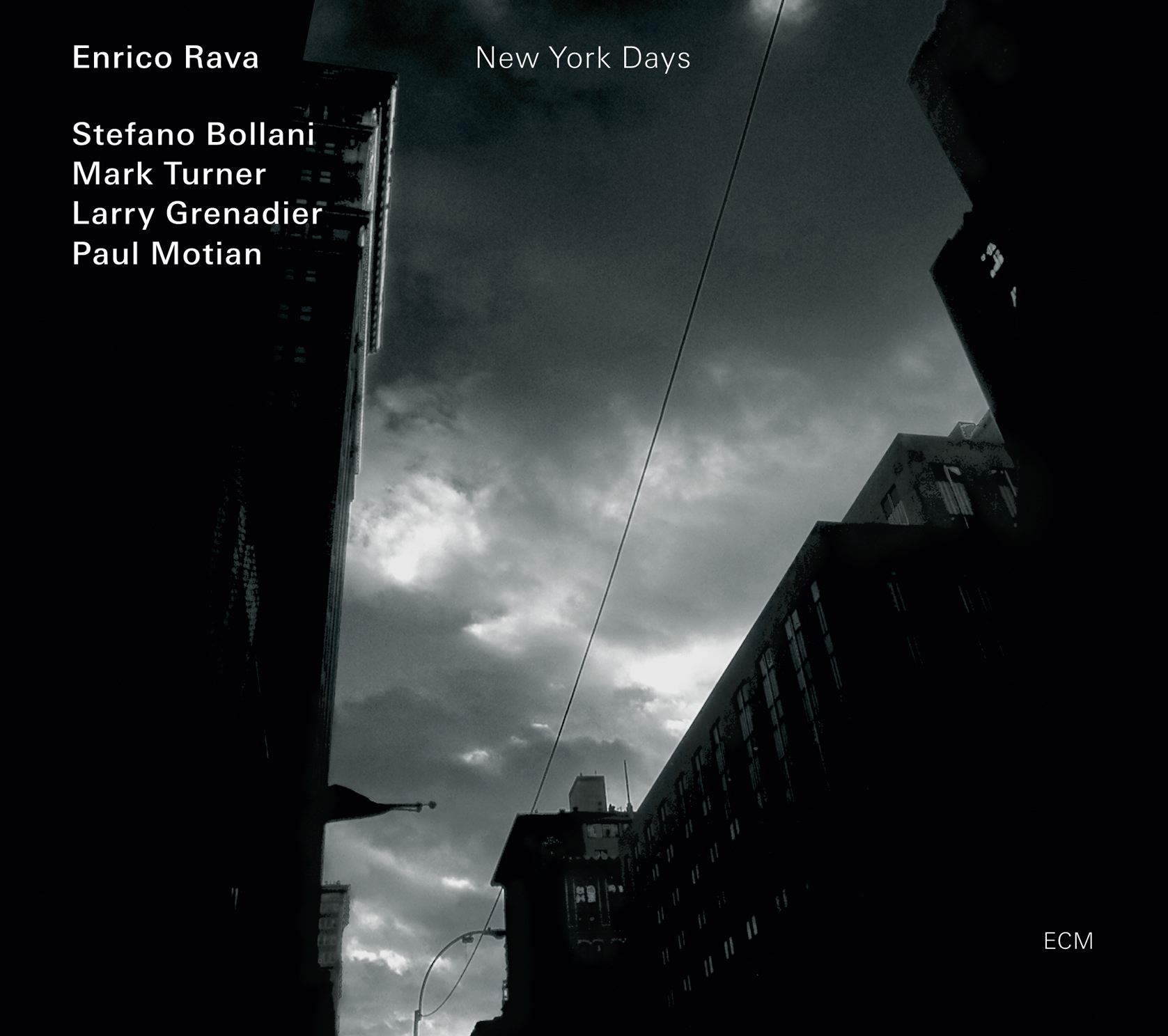
Enrico Rava/Stefano Bollani: The Third Man (ECM 2020)

The Third Man

The Third Man

Enrico Rava trumpet
Stefano Bollani piano
Recorded November 2006, Auditorio Radio Svizzera, Lugano
Engineer: Stefano Amerio
Produced by Manfred Eicher

One cannot necessarily put too much stock in a cover photo as an accurate indication of the album with which it is associated. The Third Man is an exception. We see Rava leaned over a Steinway, at which sits longtime musical partner Stefano Bollani. The trumpeter regards his compatriot with seeming wonder. The pianist, in turn, regards Rava’s wonder with more of the same. We may read further into the image the presence of a producer, of an engineer—people who dedicate their lives to shaping a performance as it is shaped by those who so selflessly yet unmistakably bring it to fruition. All of this and more can be heard in “Estate.” Singer-songwriter Bruno Martino’s jazz standard finds renewal in the combination of instruments and opens an album of peerless shape, an album wherein tower the invisible pillars that hold up the sky and keep our dreams forever bouncing within the shaken snow globe of experience. After such an involved reverie, the freely improvised title track sprouts like a rose among the weeds of Bollani’s plucked strings. Dedicated to Orson Welles, who so wryly embodied the titular character of Carol Reed’s 1949 film, the music brims with film noir atmospherics.

One could almost pick out Rava’s originals by their titles alone. “Sun Bay” and “Sweet Light” speak equally to their composer’s optimism: lush, golden, and brimming with promises twice fulfilled. Both prove there is more to the soloist’s task than evoking a title or story, for such goals are as subjective as the means that inspire them. So while Rava’s clarion arpeggios taste of brine, they also harbor certain darkness, born of an observant soul. Here is a man who melodizes as he speaks: which is to say, from the heart. The tender “Birth Of A Butterfly” breaks chrysalis alongside the jagged architecture of “Cumpari.” Their juxtaposition enacts a coherence of balance through no small display of technical acuity. Although Bollani ties tighter knots as he progresses, and even contributes a tune of his own (the veiled “Santa Teresa”), Rava unravels each with the skill of a sailor, and ties a few in return throughout “In Search Of Titina.”

The duo’s shared interest in South America comes across in two pieces. Antonio Carlos Jobim’s “Retrato Em Branco Y Preto” (which, incidentally, draws inspiration from “Estate”) is almost supernatural in the way it sings, as if it were of another world. “Felipe” (by the late Brazilian composer Moacir Santos) stretches canvas for Bollani’s primer and the swish of Rava’s fan brush. The disc ends with variations on “Retrato Em Branco Y Preto” and “Birth Of A Butterfly,” each the complement of the other: echo, reflection, resolution.

The Third Man sounds like windblown grass, the scurrying of animals in underbrush, the sway of trees in autumn. It feels like the squish of wet sand between the toes, the weight of eyelids before sleep, warmth in the chest of one who remembers love. In such a context, neither is Rava a mere bringer of melody nor Bollani merely his accompanist. They are the music itself.

The profundity of this encounter therefore cannot be overstated. Not because Rava and Bollani ply the listener with any sort of abstract philosophy, but for the simple fact that their art requires that listener to survive. In Rava’s playing is the burn of exerted muscle and the trail of a tear in kind; in Bollani the flow of water and technology. The album is, then, also a portrait of the venue in which it was recorded. Says Bollani of the Auditorio Radio Svizzera, “It’s not like being in a studio…. This recording really has a character all its own.” These words ring truer than their utterance, for the unfolding documented here would never have taken place without the collaboration of spatial and temporal forces above and beyond our range of detection. Let it be your radar, a voice in the night without fear.

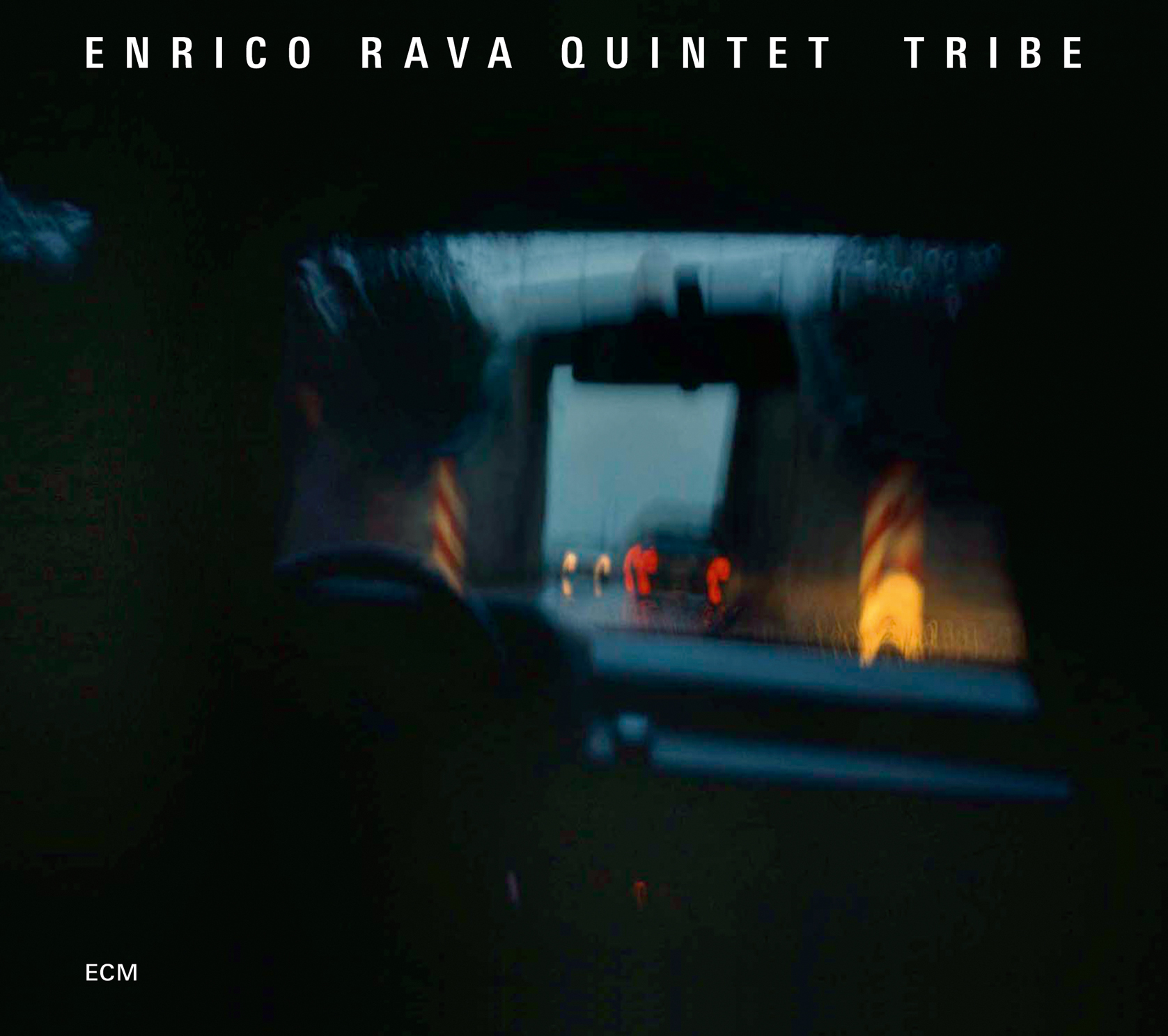
Enrico Rava Quintet: Tribe (ECM 2218)

Tribe

Enrico Rava Quintet
Tribe

Enrico Rava trumpet
Gianluca Petrella trombone
Giovanni Guidi piano
Gabriele Evangelista double-bass
Fabrizio Sferra drums
Giacomo Ancillotto guitar
Recorded October 2010, ArteSuono Studio, Udine
Engineer: Stefano Amerio
Produced by Manfred Eicher

Master trumpeter Enrico Rava deepened his ECM impression with the release of Tribe, a recording that places 12 original tunes on the shelf for the discerning listener’s perusal. The lineup is formidable, as Rava welcomes a reconfigured, all-Italian quintet of standby Gianluca Petrella on trombone, along with newcomers Giovanni Guidi on piano, Gabriele Evangelista on bass, and Fabrizio Sferra on drums.

“Amnesia” doesn’t so much kick as brush things off with rubato waves. It’s just the sort of easy living Rava perfected in his earlier record of the same name, a breadth of atmosphere and intention that breeds lyric after wordless lyric. Although often characterized as a “front line,” Rava and Petrella’s relationship is far more nuanced, overtaking one another as they do here like birds in practice flight. Neither needs a steady beat for guidance, and the band as a unit is content to let them float above the rhythm section’s fibrous thermals. In the title track, too, they retain a playful edge, as also in the closing “Improvisation.”

The sagacity of Tribe lies in the fact that no single theme holds its charge for too long, but instead bows to the whims of organic forces beyond even the musicians’ control. Classics like “Cornettology” provide bursts of focus within the album’s blurry terrain, but these are few and far between. Their shadows cycle through myriad rhythms, moods, and textures—each a testament to their creator’s unflagging spirit. Newer tunes are even more so inflected. Between the glorious, curry-flavored tangents of “Choctaw” and the billowing “Incognito,” Rava works the (mono)chromatic ways of his enigma with style. Guidi’s sparse pointillism is translator to the trumpeter’s code and smoothes things to the tenderest of finishes. Neither can we escape the photographic sensibilities of “Paris Baguette.” With a single click of his shutter, Rava evokes two lovers at an outdoor café, so intently locked into each other’s gaze that an oncoming storm poses no threat to their simpatico. “Planet Earth” emerges in likeminded spirit, a loving hymn to this place we call home, which despite its vagaries blossoms like this very music as a salve against the horrors we sometimes face. Here is also where Sferra shines with playing that is bubbling and spirited.

Guitarist Giacomo Ancillotto sits in with the band on four tunes, adding especial tactility to “F. Express” (reprised from its buried appearance on Opening Night) and “Tears For Neda.” With solemnity and grace, Ancillotto draws subtlest attention to himself. He compresses the power of travel into lyric balladry, drawing strings of light from earth to stars and playing the night air like the soundtrack to a dream. Two shorter pieces, “Garbage Can Blues” and “Song Tree,” round out the set with fresher feelings, burnished like cork and cherry blossom spray. The overall effect is such that any gestures of regularity glow like phosphorous in the session’s emotional mise-en-scène, leaving us with souvenirs unlike any we’ve heard before.

Rava Quintet

Charles Lloyd Quartet: Rabo de Nube (ECM 2053)

Rabo de Nube

Charles Lloyd Quartet
Rabo de Nube

Charles Lloyd tenor saxophone, alto flute, tárogató
Jason Moran piano
Reuben Rogers double-bass
Eric Harland drums
Recorded live April 24, 2007 at Theater Basel
Engineers: Adam and Dominic Camardella
Produced by Charles Lloyd and Dorothy Darr

Rabo de Nube marks the inauguration of a quartet that has come to define Charles Lloyd to the present day. Pianist Jason Moran (making here his ECM debut), bassist Reuben Rogers, and drummer Eric Harland join the tender tenorist for a set of seven recorded live before a rapt Swiss audience in 2007. Anyone who doubts that wisdom comes from experience need only drink in the meditations of “Prometheus” to know the truth of that maxim. Lloyd sparks the 15-minute opener by plucking a thread from the air and pulling the rhythm section’s explosive entrance into being. The ensuing uplift gives juice to his improvisational engine, which purrs all the more for its decades of breaking in.

The melding of playing styles in this quartet is obvious from the start. Moran flirts with rampage through Lloyd’s sunrays. Like a flock of loosed birds, the pianist’s notecraft scatters with purpose and genetic design. To this Rogers brings a fluid approach, redrawing the perimeter in anticipation of a grand return gilded by Harland’s signature delicacies. In keeping with this mood, Rogers intros “Migration of Spirit” humbly, thus priming the stage for Lloyd’s luscious thematizing. Moran is epic here, trailblazing rainbows into ragtime horizons. Those same nostalgic geometries permeate “La Colline de Monk,” which feels like a mission statement for Moran—a student paying homage to teacher. Complex yet never muddied, he holds a lens to the past, working in duet with Lloyd, as if to foreshadow Hagar’s Song. The story deepens.

Another backward glance brings the band to “Sweet Georgia Bright,” a classic that proceeds without fanfare, harking to Voice In The Night and further to the 1960s, when it was written. The rhythmatists are smoldering this time around, leaving Moran with a strong percussive challenge, duly met. This gives way to a drum solo of evolving sensitivity, working from droplets to drizzle to storm.

“Booker’s Garden” (written in memory of Booker Little, a childhood friend) and “Ramanujan” are the album’s only tenor-less departures. The former is a lilting vehicle for alto flute, while the latter fronts tárogató before a mélange of delicate bassing and transcendent pianism. In both is a gentle rendering that, like a skilled pumpkin carver, takes away just enough of the skin to let the candle shine through without puncture: luminescent to the core.

Although Rabo de Nube ends with its title (which translates as “Tail of a Cloud”), it’s a clear beginning: of an era, of a sound, of this quartet as it rides into the future. This tune is the only of the set not penned by Lloyd, coming instead from that of Silvio Rodríguez. It is the tenderest of them all and sustains Moran, who leads the way into terrain that finds abundance in sparseness.

Charles Lloyd’s music evolves like a fractal, from macro- to microscopic patterns. The album is accordingly structured so that little of it involves all band members at once. Each chapter is, rather, a catalyst for character development. The true accompaniment is something beyond even the musicians themselves, a sense of spirit that moves them to act. Through it all, Lloyd remains the familiar stranger. He wanders into town, leaving behind an ashen horizon, from which tendrils of smoke continue to rise, the only remainder of the civilization they once nourished—a civilization preserved in his horn. This album is a dream, ready to birth another.

Louis Sclavis: Dans la nuit (ECM 1805)

Dans la nuit

Louis Sclavis
Dans la nuit
Music for the Silent Movie by Charles Vanel

Louis Sclavis clarinets
Jean-Louis Matinier accordion
Louis Sclavis violin
Vincent Courtois cello
François Merville percussion, marimba
Recorded October 2000, Studios La Buissonne
Engineer: Gérard de Haro
Produced by Louis Sclavis

Louis Sclavis, who had by this point already left indelible footprints in the ECM trail with such memorable recordings as Acoustic Quartet and Les Violences de Rameau, surely surprised many with the release of Dans la nuit. The album foregrounds the French multi-reedist’s visionary composing via incidental music commissioned for a new print of Charles Vanel’s tragic 1929 silent film of the same name. One of France’s last silent pictures, Dans la nuit needed a soundtrack. Says Sclavis of the task, “I had to compose music that takes into account the period, the atmosphere of each sequence and their cinematic aesthetic. The music, at times, should have an angle on the action, an attitude, especially during the dramatic passages, should be almost as it were out of synch, giving it a distance that allows the tempo and the light to play their part. On the other hand there should also be a play of simple proximity to the characters and their feelings, realist or expressionist passages; all of this without too many sudden breaks.” In addition to his meticulously timed score, he included improvised passages in response to the images, thereby underscoring the Vanel’s spontaneous mise-en-scène.

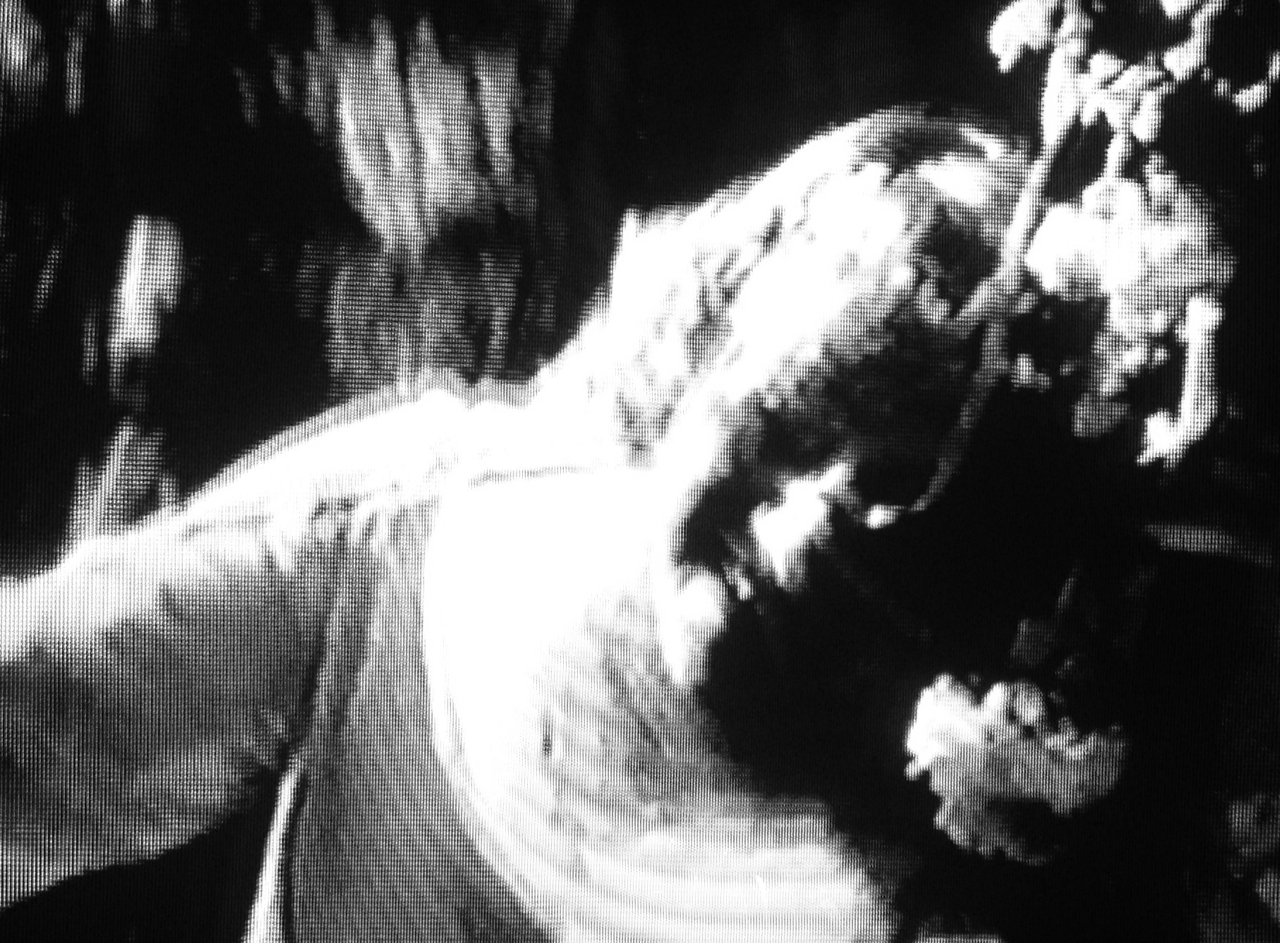
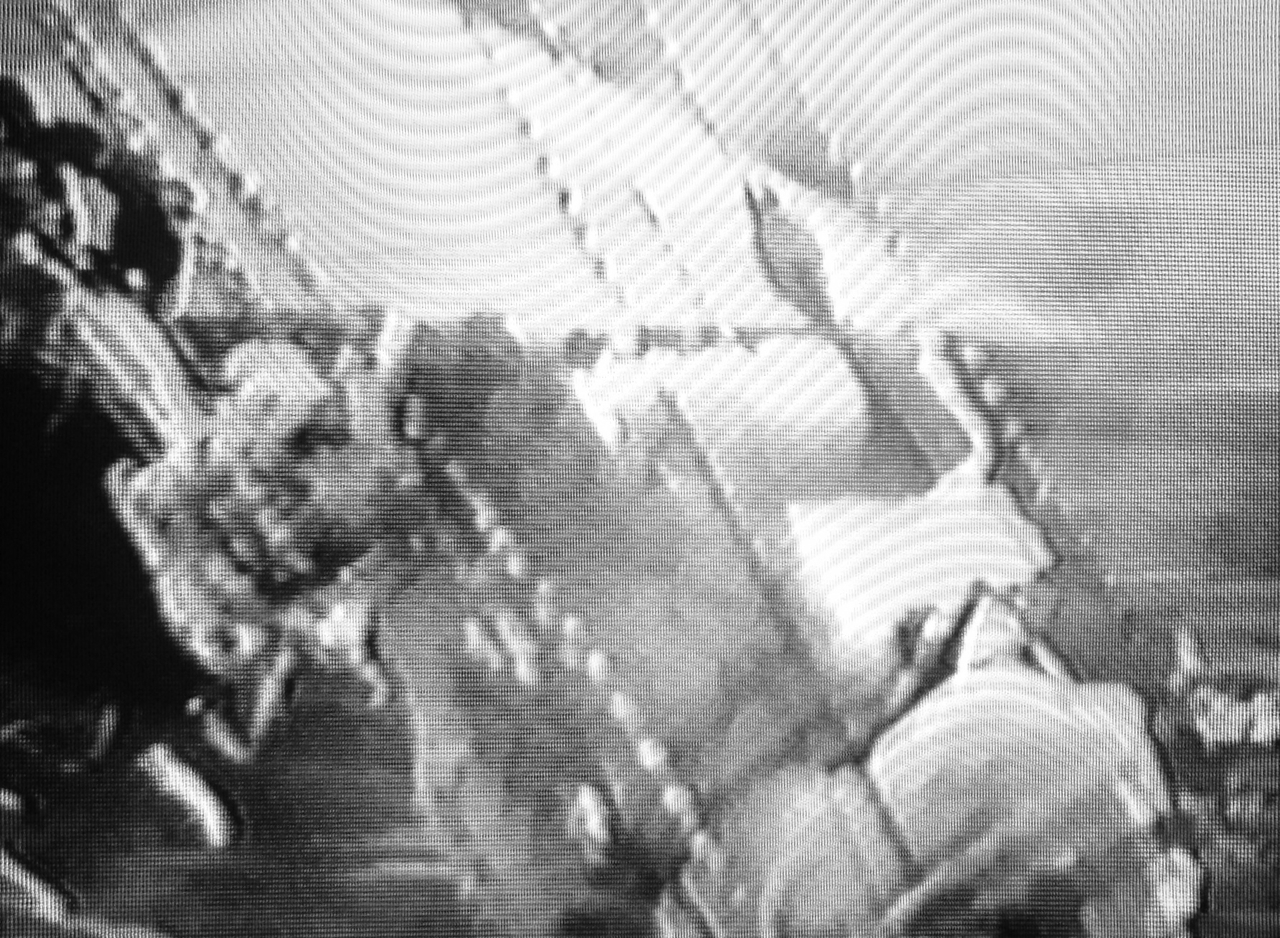
The film itself is an almost forgotten gem of silent cinema, as attested by the intensity of its acting, the expressionism of its lighting, the creativity of its camera work, the brutality of its storyline, and the confrontational ploy of its denouement.[*] Its opening shots introduce us to an unnamed French mining village, a place rife with the very brand of contrast borne out by the protagonists. Scenes of industry clash with the gaiety of a rural wedding party.

IMG_0735 IMG_0737 IMG_0738

Friends and family drink and are merry, their revelry buoyed by the obvious happiness of the newlyweds in whose honor they have gathered.

IMG_0739
Meanwhile…

Recurring shots of an accordion player give Sclavis an easy clue into the album’s instrumental spread, from which Jean-Louis Matinier’s bellows stand out for their fluid narrative power.

IMG_0740
IMG_0742

A dramatic cut sequence, however, upsets the certainty of the couple’s outlook as shots jump between a dolly pan of the wedding party and a crowd of miners headed for the local carnival. It is in the latter’s confines—the cacophony of which is palpable despite the lack of ambient noise—that these two worlds collide, and gives first indication that the husband is, in fact, a miner himself and is enjoying a rare reprieve from his toil. The happy couple rides into town by carriage, throwing bride (Sandra Milovanoff) and groom (played by the director) into a storm of activity. The ensuing whirlwind is expertly and descriptively captured by Vanel. Frantic overheads of swings and other amusements frame the bride in a blur of flesh and flowers, further unsettling her chances at happiness.

IMG_0744 IMG_0745 IMG_0749

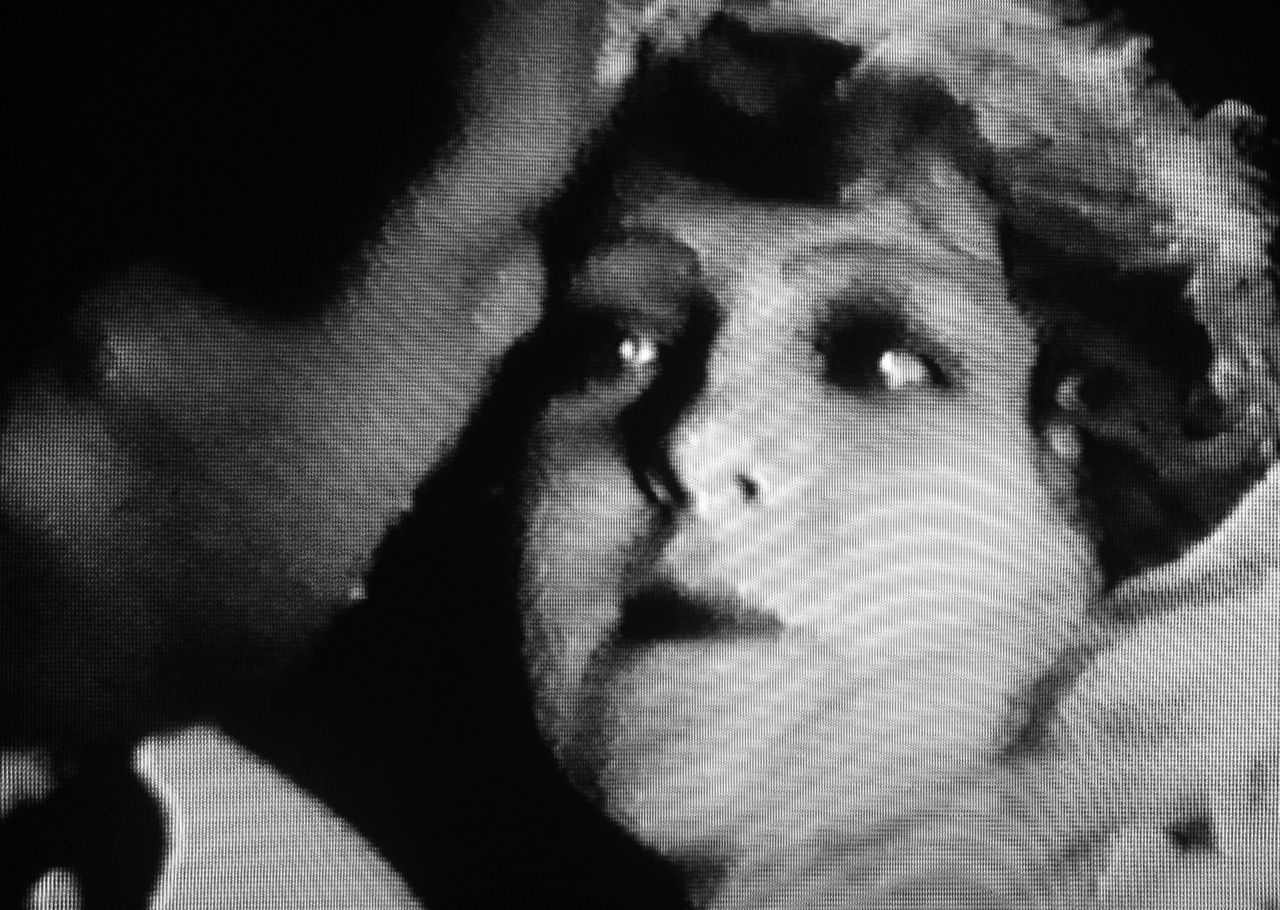
Before the newlyweds consummate their marriage, their faces are singled out by the camera in a montage of longing gazes, each a placeholder for the twist of resolution to be dropped like a lemon peel into the film’s martini glass in the final act.

IMG_0754 IMG_0755

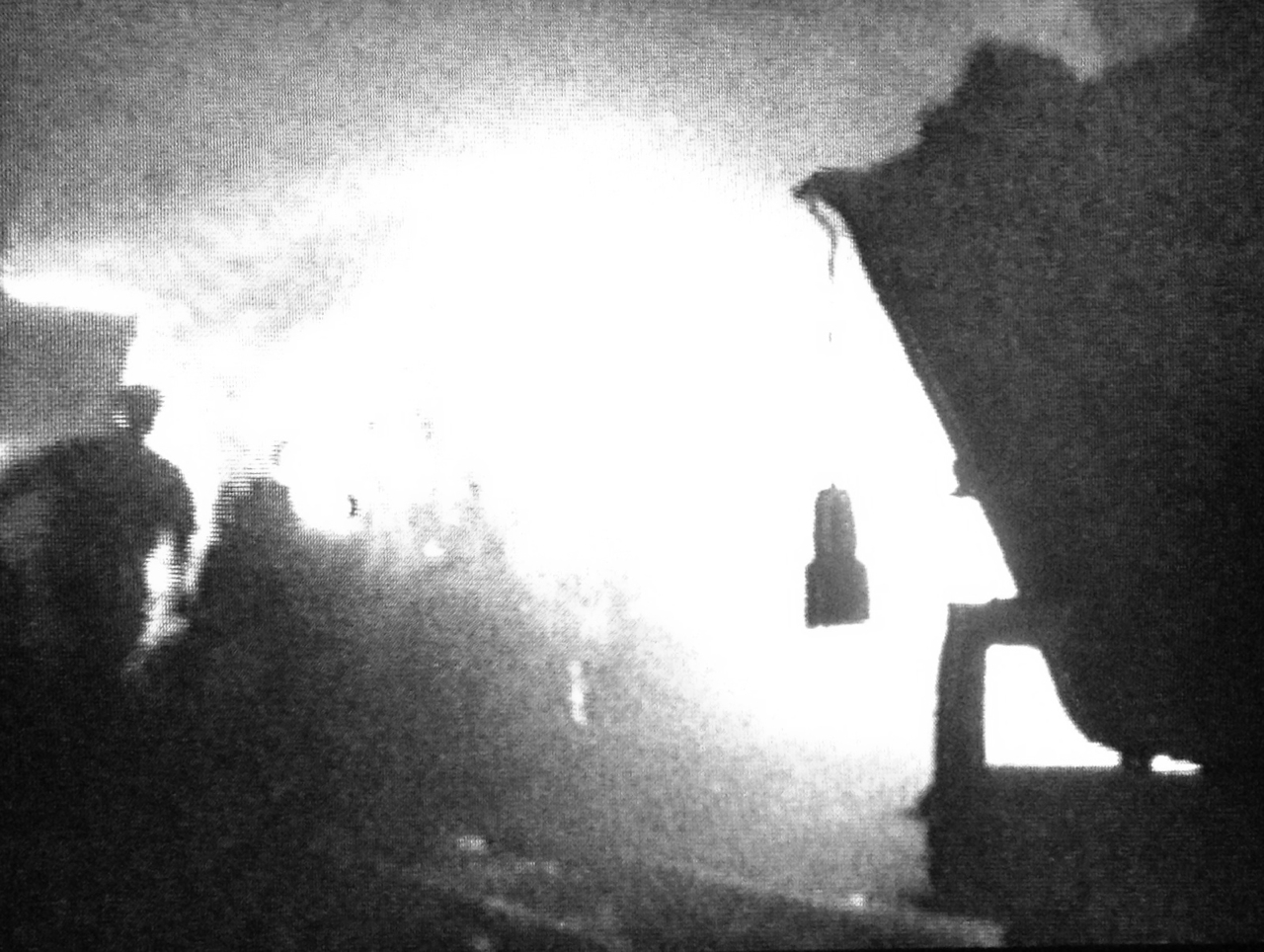
Time passes, and wedded bliss has pervaded the wife’s daily routine. Viscous liquid flows down a sheet of glass placed before the lens, reverting us to the mine, where workers are preparing to dynamite the rock.

IMG_0762
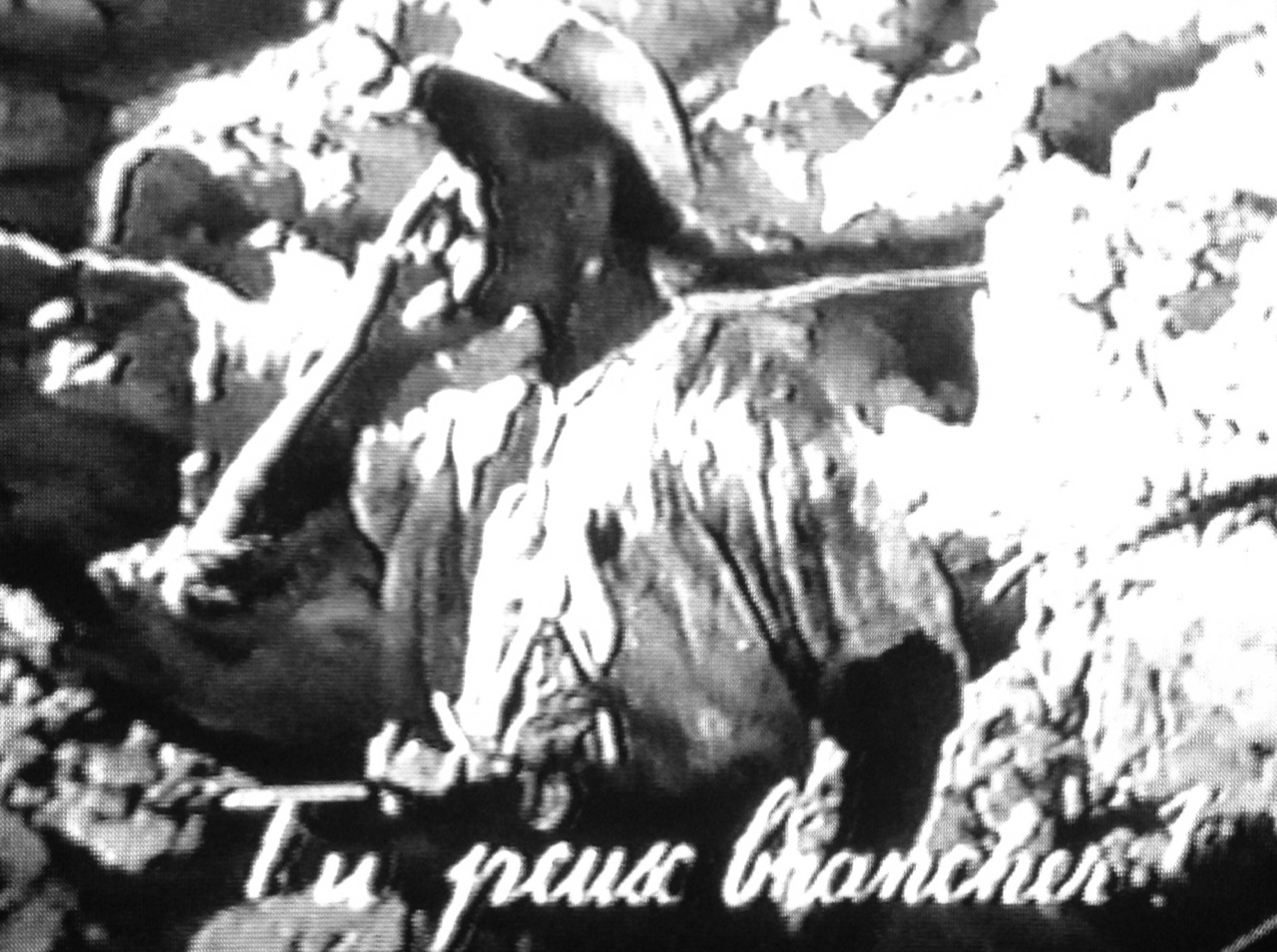
“Fire in the hole!”

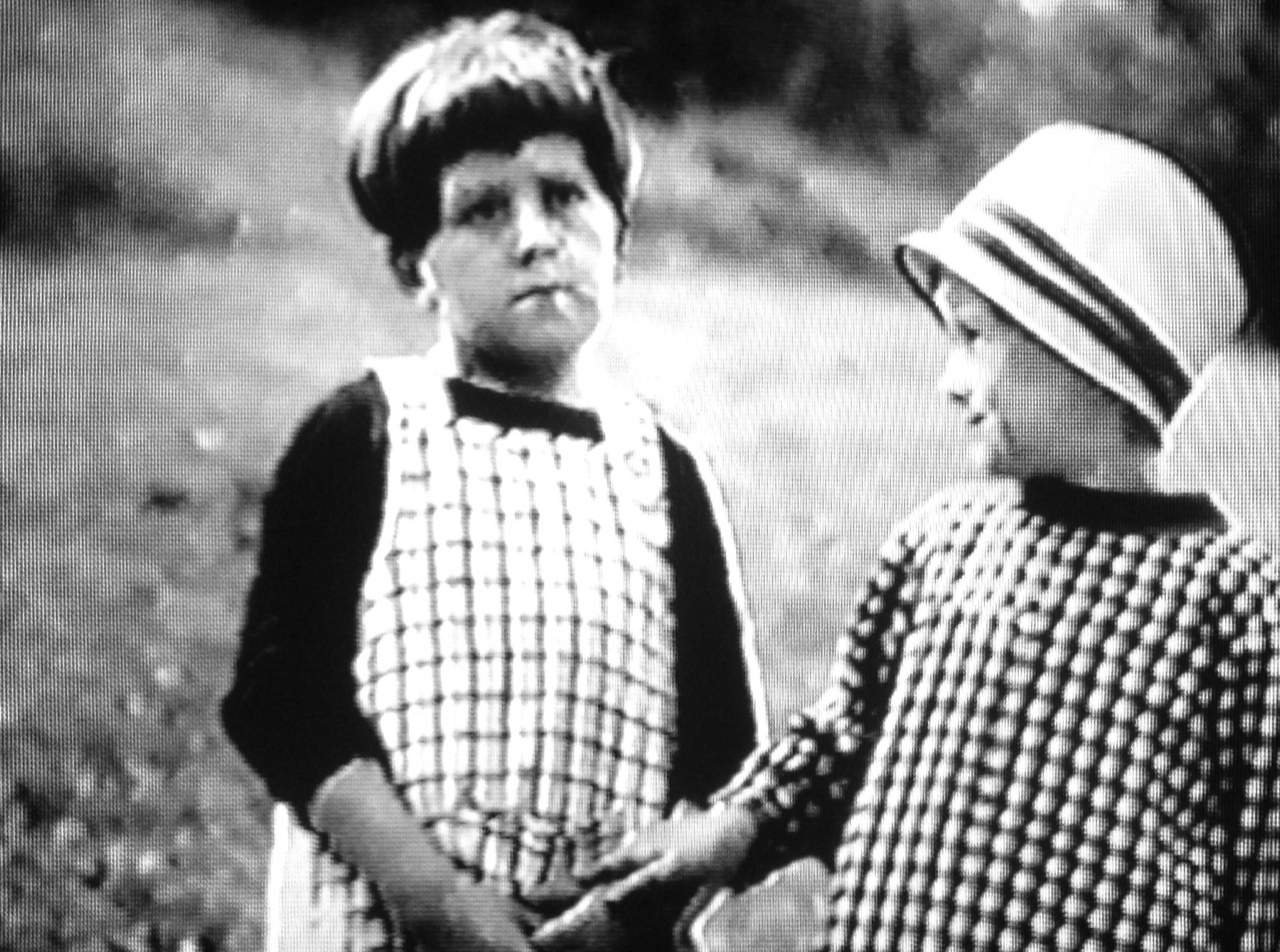
Children play in a nearby field, reinforcing Vanel’s penchant for contrast and painfully letting us in on the inevitable: the husband is buried by rocks dislodged from the blast.

IMG_0765 IMG_0768 IMG_0769

He returns home, a disfigured man.

IMG_0771 IMG_0772 IMG_0774

IMG_0775

He bids his wife to fetch a mask from his belongings, which he wears to give his appearance at least semblance of normalcy. Life wanders on, but so do the wife’s passions, landing her in the arms of an illicit lover. The latter finds another mask (presumably a spare) in her husband’s likeness and puts it on. When the husband comes home unexpectedly early, the two men tussle for her hand. Vanel’s choreography makes it seem as if the husband has been killed. The wife and who she believes to be her lover dump the body, but when they return home, the man reveals himself to be her husband.

IMG_0780
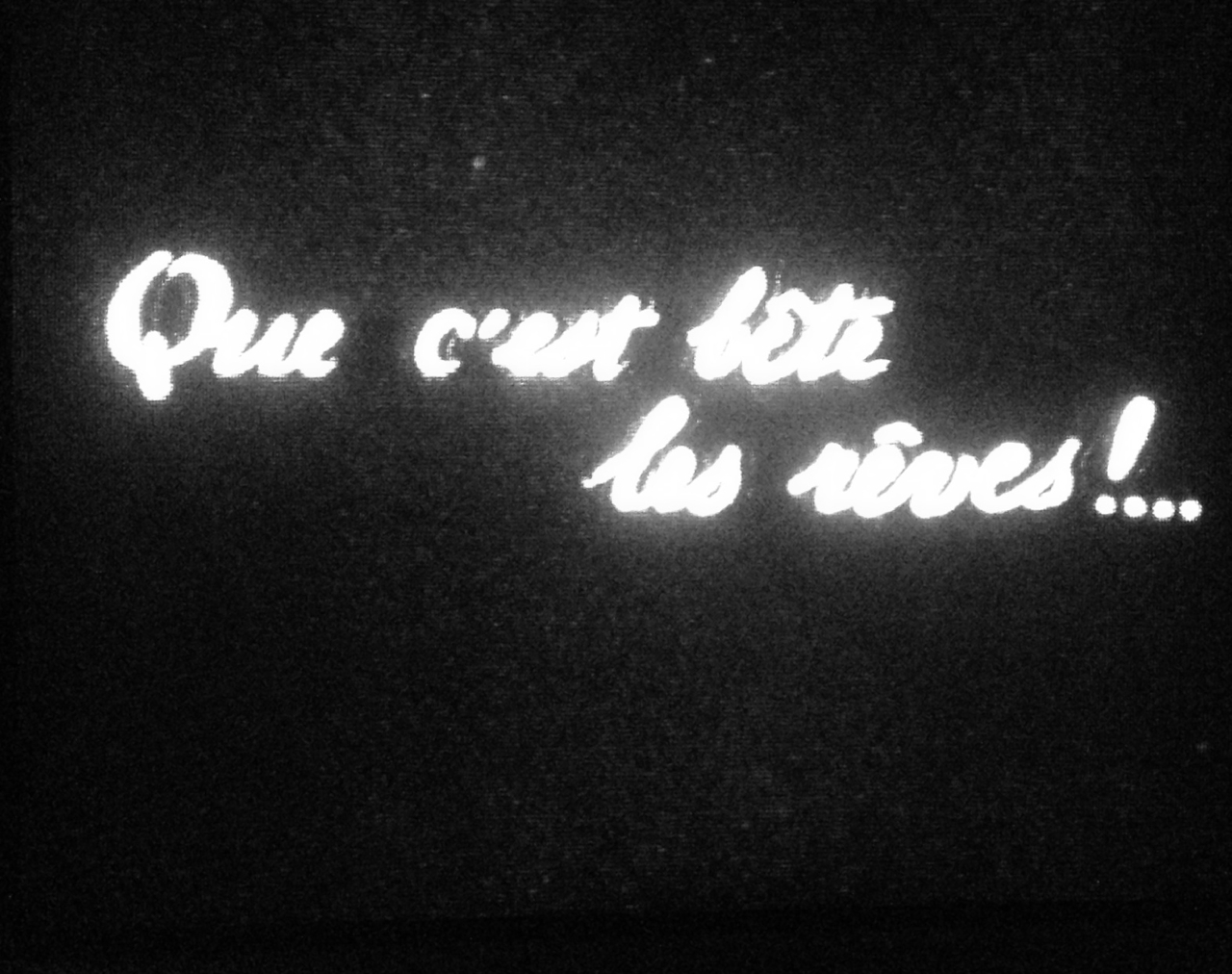
“Yes, it’s me!”

Even as she feels her entire world crumbling around her, she wakes up to find it was all a dream.

IMG_0781

One could hardly dream of a more fitting score for this melodrama. Sclavis has forged no mere accompaniment, but rather a living entity that balances the film’s morbid undertones with a harmonious sheen. Two recurring motifs, “Dia Dia” and the title theme, lend the album a narrative arc all its own. Together, the former’s pairing of bellow (Matinier) and cello (Vincent Courtois) and the latter’s Yann Tiersen-like breezes lend a feeling of symmetry.

The descriptiveness of each tune speaks in the language of cinema, so that François Merville’s light percussive appliqué in “Le travail” gives just a hint of the labor it names. (The stark textures here recall Philip Glass—and indeed, one may wish to explore the American composer’s own scoring for silent films for more in this vein.) “Fête foraine” (Fairgrounds) lays tightly wound strings over martial snare, shifting midway through to mallets before returning to the procession. Such changes beguile throughout. The full import of the wife’s “Mauvais rêve” (Bad dream), for example, finds perfect introduction in the clarinet and cello duet (“Retour de noce”) that precedes it. Fantasy (“Amour et beauté”) changes hands with reality (“Le miroir,” in which violinist Dominique Pifarély sounds like a ghost), excitement (“La fuite”) with comeuppance (“Les 2 visages”).

Two of the album’s finest moments occur in “La peur du noir” (Fear of the dark), which expresses itself through a nervous heart murmur of solo accordion, and in “L’accident,” a two-part fragmentation of the film’s underlying tensions that works its corkscrew into a bottle long emptied of its hope.

Meticulously composed, arranged, and performed, Dans la nuit stands tall in the Louis Sclavis lineup—not because it is relatively “accessible” (which it is), but because its storytelling is so enmeshed with its source. It’s brittle continuity maintains shape even in the emotional push and pull in which it finds itself caught. Like the nameless wife’s nightmare, the music carries in its breast a hint of its own anxieties, reliving them for as long as there are mirrors, smoke, and light…

IMG_0782


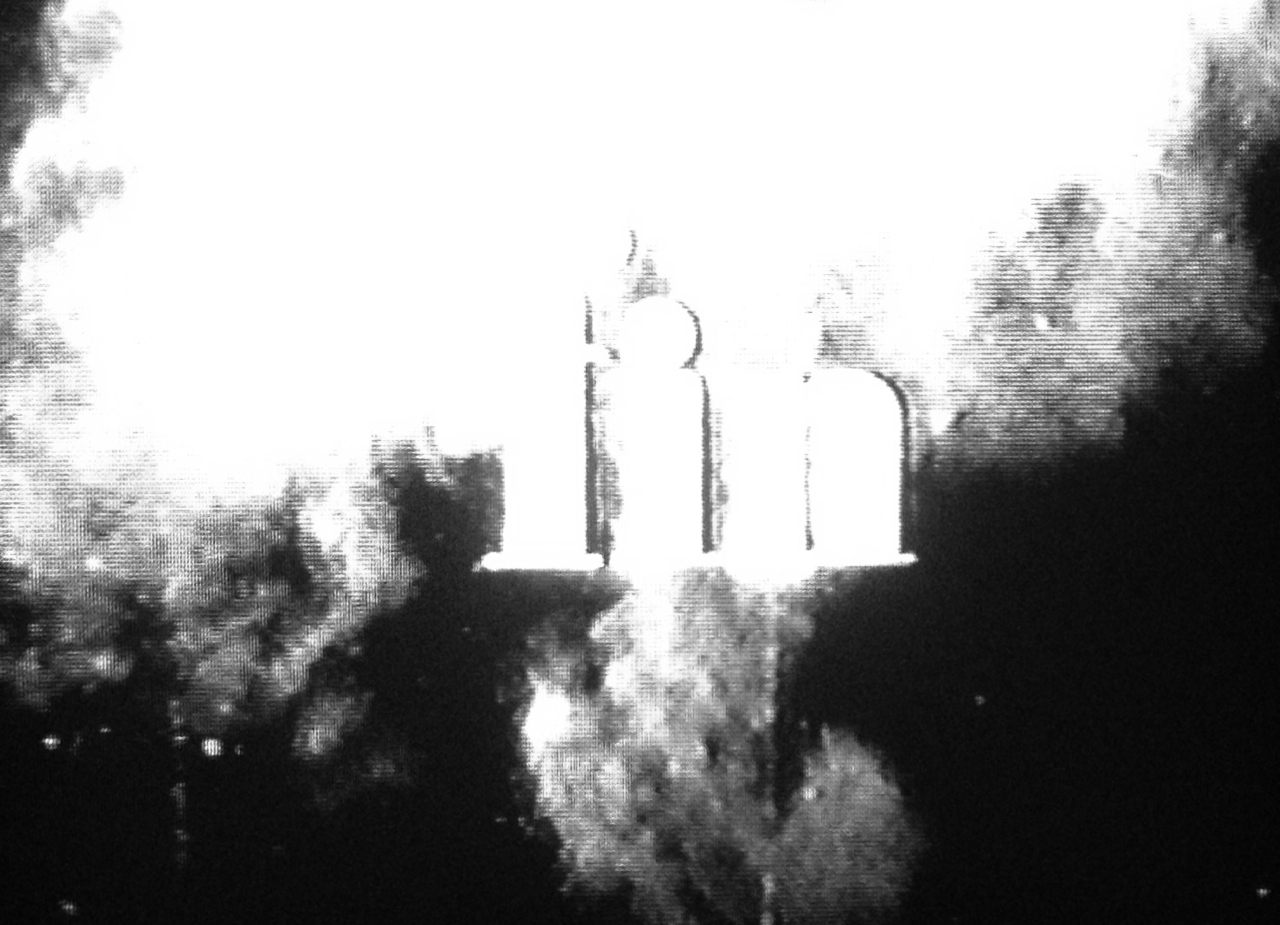
[*] I regret that I was only able to obtain an untranslated VHS library copy of the film, from which I could only extract stills by photographing the screen with my iPhone.

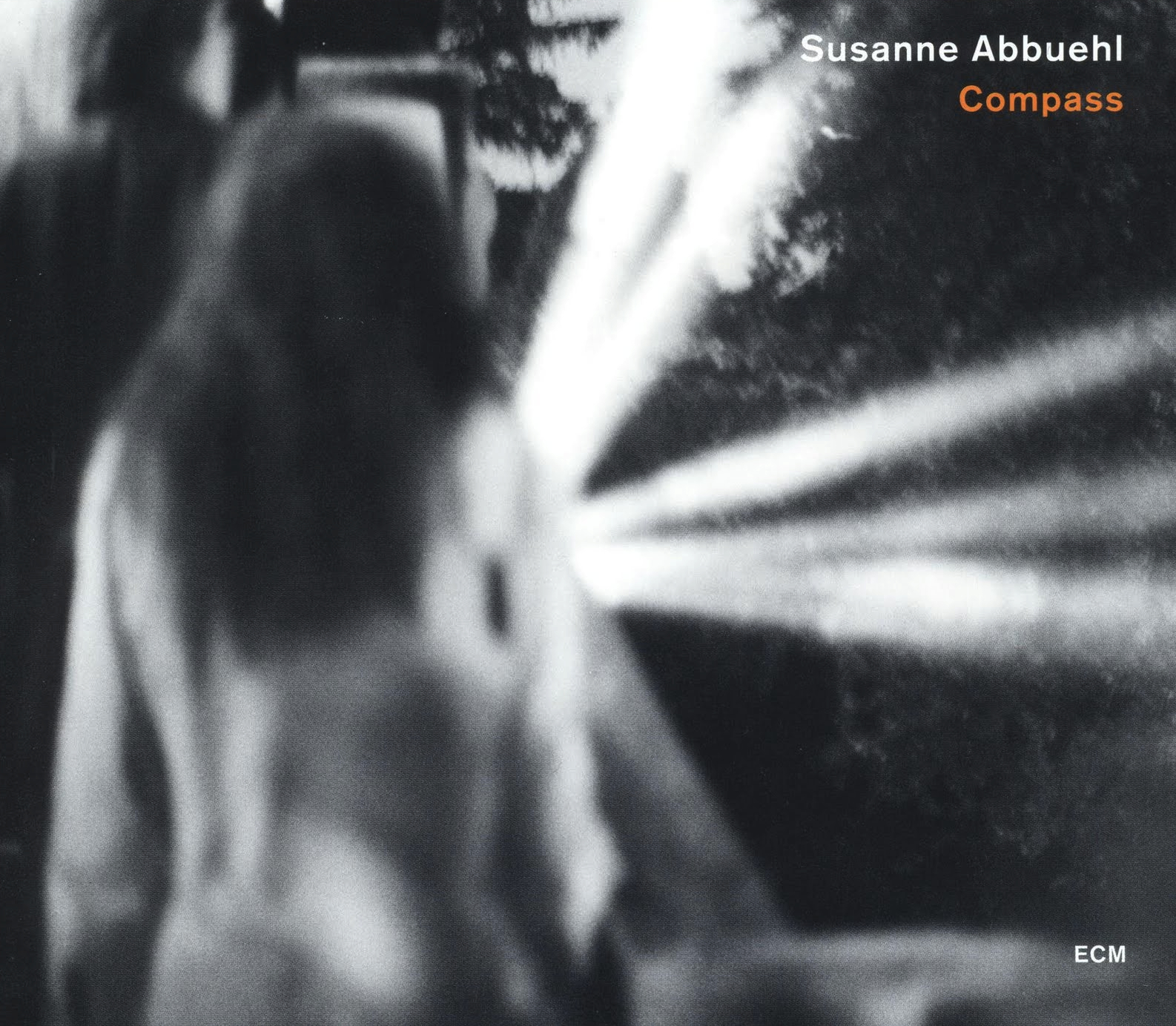
Susanne Abbuehl: Compass (ECM 1906)

Compass

Susanne Abbuehl
Compass

Susanne Abbuehl voice
Wolfert Brederode piano
Christof May clarinet, bass clarinet
Lucas Niggli drums, percussion
Michel Portal clarinet (on two tracks)
Recorded January 2003 and October 2004 at Rainbow Studio, Oslo
Engineer: Jan Erik Kongshaug
Produced by Manfred Eicher

Leave dreams to the dreamers
That will not after,
That song and laughter
Do nothing move.
–James Joyce

Compass is more than the title of Susanne Abbuehl’s sophomore ECM album. It is also a physical manifestation of the singer’s artistry. The compass guides with a needle fluid and true, trembling at the slightest change in direction to indicate north. Aiding Abbuehl in this navigation is pianist Wolfert Brederode, clarinetist Christof May, and drummer Lucas Niggli over a span of 12 songs. The number implies a compass of a different register—the clock—and grander others—the solar system, and by extension the Milky Way (hence, perhaps, the cover of her label debut, April)—which dictate the sweep of the clock’s hands with such precision that mortal instruments can only sample a simulacrum of their taste.

That said, Abbuehl’s originality in a planetary system of so-called “jazz vocalists” spins like an instrument celestial, an undiscovered body whose reflection shines through the introductory telescope of “Bathyal.” The words and music are her own, emerging from a primal bass clarinet, dark as the sun is bright, as a vessel down the piano’s river run. The feeling of water, overwhelming enough to drown out the noise of the world, carries also a promise of depth in nature, its tickling spray a mist of love. “Do not run just yet / Do not hide,” she implores: less a challenge to the listener than it is to her own emotions, without which the album’s remainder would fade along with the salmon in their streams.

Two selections—“Black Is The Color…” and “Lo Fiolairé”—from Luciano Berio’s Folk Songs are subjected to unique investigation. The words are carried along by a rather different current, this of charcoal in the form of two clarinets (Michel Portal provides the second reed). In her bare renditions, Abbuehl underscores the power of melodies to overcome the means of their expression. Tied in a braid of lyrical hair, their elements grow along an ebony trail of origins in strands of night and shadow. The Berio inclusion hints at a less obvious connection to the poetry of James Joyce, whose words the Italian composer set to music in 1953, as does Abbuehl for the new millennium. Here she draws inspiration from the same collection, 1907’s Chamber Music. These revivals come in the form of “The Twilight Turns From Amethyst,” “Bright Cap And Streamers,” and “In The Dark Pine-Wood.” In them lies another version of the album’s eponym: as color wheel in the painter’s hand (yellow, as Abbuehl sings later in William Carlos Williams’s “Primrose,” is not a color, but is among other things a shadow). Their circadian approach to worldly being bleeds through the clarinet’s fleshy overlap, a call for unity through real-time calculations of difference. Brederode’s keyboard—the ever-present messenger, the mournful traveler who finds beauty in rest—carves a hovel in every tree along the way, until only a shell of the journey remains. Joyce breathes also through “Sea, Sea!” This song from Finnegan’s Wake outlines a bridge, a meeting of souls across unfathomable expanse, and weaves a basket of alliterations against Niggli’s earthen percussion.

Chinese poet Feng Menglong of the late Ming dynasty rises from the deep in “Don’t Set Sail,” a love poem that is about as hopeful as the waves it fears—although with Brederode behind her, Abbuehl needs no oars. This song pairs hauntingly with the last track, which in having brought us over water now keeps us from it, under threat of storm and chop. A potent metaphor for the solitary heart. Sun Ra’s “A Call For All Demons” unearths deeper loneliness, washed in mercury, while “Children’s Song No. 1,” comes from Chick Corea’s landmark collection of piano miniatures, turns the Tarot card over to reveal a bluebird’s Empress flight.

Although “Where Flamingos Fly” is a jazz standard (the album’s only), it feels the least familiar in the present company. Its distance is emphasized by the soulful clarinet, of which the rasp of breath and wood runs its fingers along the edge of every utterance. Like the album as a whole, it finds in its source a new seed to sprout. In light of this, to call Abbuehl’s arrangements understated would itself be an understatement. Sparse though they are, their awareness of negative space is as thick as the pitch that holds the stars in place.

John Surman: Free and Equal (ECM 1802)

Free and Equal

John Surman
Free and Equal

John Surman soprano and baritone saxophone, bass clarinet
Jack DeJohnette drums, piano
London Brass
Recorded live June 2001 Queen Elizabeth Hall, London
Recording engineers: Steve Lowe and Ben Surman
Mixed January 2002 at Rainbow Studio, Oslo by Jan Erik Kongshaug, John Surman, and Manfred Eicher
Executive producer: Manfred Eicher

Free and Equal, John Surman’s furtherance of intermingling genres, is its own animal. Under its original title of That’s Right, it was the culmination of a 2000 festival commission and premiered in October that same year. The performance recorded for ECM comes from 2001, giving the work some time to incubate, as did subsequent mixing in Oslo’s Rainbow Studio under the direction of its composer, engineer, and producer.

Nods to classical and jazz modes are a clear and present danger throughout, for the purpose of their coexistence is not to mash them into some new hybrid but rather to flag their common goal: namely, to move listener and performer alike. Surman is joined by drummer Jack DeJohnette (also on piano) and classical stalwarts London Brass in an atmospheric tour de force that departs considerably from such previous experiments as Proverbs and Songs. The instrumentation alone would seem to imply a big band experiment à la Surman’s robust work with John Warren (see The Brass Project), but such is not the case. Neither should the DeJohnette connection, already well honed on Invisible Nature, foster misperceptions of what’s going on here. For as Surman paints the canvas with his soprano oils amid the swells of “Preamble,” it’s clear that freer considerations are at play. DeJohnette’s pianism, heard only occasionally on disc, proves descriptively apt in the follow-up “Groundwork,” which loops bass clarinet through trumpet in an evolving macramé of melody. Here, as elsewhere, Surman finds seemingly impossible paths for his improvisations through growing mazes of gold. Such balancing of the minimal and complex is no small task, and the establishment of that balance highlights their mutuality. It is in this spirit, perhaps, that DeJohnette doesn’t pick up his drumsticks until ten minutes into the album, working into “Sea Change” with the crash of surf in his cymbals, the heave of ocean waves in the brass choir at his back. His moments of abandon are thus kept within sight.

Soloists among the London players strengthen the marrow of this nine-part suite. The tuba soliloquy that opens “Back and Forth,” for one, gives an edible sense of textural contrast. Punctual and enlivening, it signals the first in a series of hardenings and dissolutions, from which trombone throws streams of light and draws Surman’s low reed into an invigorating trio with skins. Likewise, “Fire” traces the multifarious paths of its namesake through a modified trio of drums, trumpet, and bass clarinet. The latter continues its coppery speech in “Debased Line” with a nostalgia and restlessness of spirit that embodies Surman’s passion as a musician. “In the Shadow” evokes Paul McCandless in its sopranism, which floats over a relatively aggressive waltz in the background and sparks an ensemble-wide reaction in the title portion. Virtuosity is on full display as Surman looses his wilder side and fuels DeJohnette’s closing protraction. The drummer cracks many dams in the “Epilogue,” emptying into an open sea of well-earned applause.

Filled with exciting music that creates and maintains its own standard, Free and Equal represents an evolutionary leap in Surman’s compositional thinking. His uncanny ability to be at once joyful and mournful in a single arpeggio has elsewhere never been so explicit. It is music that begs for dancers or the flicker of a cinema screen—a vast, organic machine that runs on the promise of another listen.

Kayhan Kalhor/Erdal Erzincan: Kula Kulluk Yakışır Mı (ECM 2181)

Kula Kulluk Yakışır Mı

Kayhan Kalhor
Erdal Erzincan
Kula Kulluk Yakışır Mı

Kayhan Kalhor kamancheh
Erdal Erzincan baglama
Recorded live February 2011 at Bursa Ugur Mumcu Sahnesi by Emre Teke
Album produced by Manfred Eicher

In his book Global Minstrels: Voices of World Music, author-musician Elijah Wald describes Kayhan Kalhor, Iranian master of the kamānche (spiked fiddle), as a “one-man cultural ambassador.” As revealed in that same text, Kalhor educates as intensely as he plays, peddling music not as cultural snake oil but as an opportunity to cross divides. Through his collaborations with such influential acts as the Kronos Quartet and Yo-Yo Ma’s Silk Road Ensemble, he has continued to hone his sense of global community. Yet none of his journeys have taken him as far as those with Anatolian virtuoso Erdal Erzincan, whose lithe touch on the bağlama (a Turkish long-necked lute) has proven fire to his smoke. The result of their joint ambassadorship is an exchange of musical interests, passions, and respect in selfless conversation.

Their first collaboration, 2004’s The Wind, introduced a duo that could not only think out loud, but also feel out loud. On that landmark document the heritages of both musicians bore hybrid fruit, with behind-the-scenes assistance from musicologist Ulaş Özdemir, in a program that was equal parts thematic portaging and free sailing. From that debut arose an ongoing collaboration, which on Kula Kulluk Yakışır Mı offers hungry listeners plenty more to digest. This follow-up shares its title, which translates as “How unseemly it is to follow anyone slavishly,” with a folk song by Muhlis Akarsu, a modern bağlama hero whose life tragically ended in the 1993 Sivas Massacre. True to Akarsu’s steadfast character, slavishness is farthest from the reality of this performance, recorded live in Turkey in early 2011.

Kalhor and Erdal
(Photo by Todd Rosenberg)

On Kula Kulluk Yakışır Mı, Kalhor and Erzincan deepen their mutual interest in improvisation, sprouting five spontaneous leaves from traditional branches in an hour of uninterrupted playing. The first of those improvisations opens to the bağlama’s unique insistence, its oud-like twang foiling the rasp of Kalhor’s horsehairs before shifting into the folk song “Allı Turnam.” This juxtaposition of the unplanned and the internalized sets the pattern.

Although the improvised portions are distinct from their evergreen counterparts, both draw upon the remembered and the unknown. Classical standbys like “Deli Derviş” and the title track inspire cheers of approval and recognition from the audience. At key moments, the musicians get swept up in the power of it all, building from simple elements to powerful abandon. “Daldalan Barı” is a notable highlight of the concert’s first half in this regard, especially for the way in which Kalhor reaches skyward with his notes in the final stretch. Yet the duo saves its most transcendent moment for last when it blends a revisiting of “The Wind” into the multi-part “Intertwining Melodies,” the latter of which braids Persian and Turkish strands in a masterful summation.

With a single gesture, Kalhor and Erzincan manage to turn the “e” of “effect” into an “a,” filtering the golden light of their encounter into a musical experience so physical it would sprout legs and run if it could. These two sages embrace order, even as they convey the chaos of things, turning night into day.

(See this article as it originally appeared in RootsWorld online magazine. To hear samples of Kula Kulluk Yakışır Mı, click here.)

Keith Jarrett Trio: Always Let Me Go (ECM 1800/01)

Always Let Me Go

Keith Jarrett Trio
Always Let Me Go

Keith Jarrett piano
Gary Peacock double-bass
Jack DeJohnette drums
Recorded April 2001 at Orchard Hall and Bunka Kaikan, Tokyo
Recording Engineer: Yoshihiro Suzuki
Produced by Manfred Eicher and Keith Jarrett

Keith Jarrett is infinity with two hands. Few have ever molded the keyboard into such prosthesis of expression. Yet while he and his nonpareil cohorts—bassist Gary Peacock and drummer Jack DeJohnette—have repeatedly proven affinity for expanding, sometimes breaking down, the borders of many a jazz standard, relatively miniscule in the trio’s archive is its entirely unscripted output. And while we have gotten tastes of that archive in such albums as Inside Out and Changeless, this double-disc release is formidable for being, from start to finish, purely in the moment. One of the beauties of the album, recorded live in Tokyo over two nights, is that the longer pieces (upwards of 35 minutes) are actually the most concentrated, while the briefer ones (the shortest being under four minutes) are spacious and flossy.

At 32 minutes, “Hearts in Space” is a vivid example of the former. Jarrett opens the pathway with some galactic patterning indeed, which his rhythmatists then re-craft into a drum-infused satellite, its circuits frantic yet pure. The bassist is, in fact, the fulcrum of this opener, although Jarrett and DeJohnette do more than simply lob quasars of activity over him. Together these three strands form a braid stronger than the sum of their parts. Through their art, the surrounding air becomes enigmatically complete, so that even as the mood brightens onto a smoother avenue, where Jarrett has crushed the gravel so finely that the shocks of presumption no longer need bounce, one can still feel the storm in the calm. With Peacock’s intimate scaffolding behind him, Jarrett perseveres through some swing into a spontaneous standard, leaving a tailwind to inhale its absence.

Jarrett exhales “The River” with rearview mirror tilted anew. His glassine block chords and trailing chromatics weave a reverie so holy, tender, and mild that it sings without words. Following naturally from this is “Tributaries,” which paints with DeJohnette’s cymbal droplets, Peacock’s broad ripples, and Jarrett’s fairy-steps an image of mythical cast. The musicians’ trembling glitters like gold at the bottom of the Rhine, describing it not as temptation or curse, but out of a love of ignorance, of travel and movement. DeJohnette’s toms ease us onto the spiritual angles of this scene in arching ritual, tightening even as they loosen in shimmering afterglow. The drummer leads further in “Paradox,” pouring copious amounts of bourbon onto Jarrett’s jagged rocks while Peacock savors every sip with mmms of approval. An inherent free spirit works its way through the fissures here especially, manifesting as audible smiles.

Another pianistic reverie rises and falls throughout “Waves” like the chest of personified time. Peacock creeps into frame, his bass neck a periscope in search of land. This it finds, lured by the sun-glitter of cymbals. Once ashore, the trio hits the sand running, gathering provisions and making shelter in the blink of an eye. The end effect, although illusory, bleeds in tectonic shifts and opens dynamic memories across genres and histories. This summary approach takes deepest root in DeJohnette’s explosive wellsprings and rat-a-tatted closing statements and brightens his torch in the consonant admixture of children’s riddles and adult solutions that is “Facing East.” Its island hopping ways spill over into “Tsunami,” which like its eponym begins with imperceptible bubbles and curling undercurrents. By the time one realizes its proportions, its power cannot be avoided. So it crashes, leaving stillness and piles of grief. In the aftermath is “Relay,” a buoyant circumscription of energy that, by virtue of its dotted boundaries, leaves the trio free to roam inwardly to heart’s content where the external world will not allow.

Always Let Me Go may not be to everyone’s liking, but it was undoubtedly gifted with everyone in mind. In it are the dreams of a gentle giant, together a fraction of some unquantifiable composition. Although the giant may stir, the spell is never broken. It waits for that window of slumber to open and welcome us to the fold of its light.

John Abercrombie: Cat ‘n’ Mouse (ECM 1770)

Cat n Mouse

John Abercrombie
Cat ‘n’ Mouse

John Abercrombie guitar
Mark Feldman violin
Joey Baron drums
Marc Johnson double-bass
Recorded December 2000 at Avatar Studios, New York
Engineer: James Farber
Produced by Manfred Eicher

Cat ‘n’ Mouse introduces a streamlined quartet from the ever-extraordinary John Abercrombie. The guitarist is again joined by violinist Mark Feldman, whose peerless fluidity worked wonders on Open Land. In fact, the Abercrombie-Feldman nexus was what set the current project in motion, manifesting that former album’s title with even greater intuition. Flanked by longtime ally Marc Johnson on bass and drummer Joey Baron, the stage is set for a smooth ride through Abercrombie’s rich compositions and freer realization.

Baron’s brushes wax slickly in the waltzing “A Nice Idea.” A blush of cordial introductions reveals the shifting combinations that color the album as a whole. Abercrombie matches Johnson so well that the two seem like brothers from a different mother, while Feldman brings most light to this play of shadows, floating above Johnson’s protracted bounces. Not all is lilt and whisper, however, for “Convolution” speaks to the session’s driving spirit. Using small motifs as stepping-stones, the quartet deconstructs the many paths ahead. Lapses of unity quickly disperse and shed their skins in favor of rhizomatic denouements. Abercrombie ignites the night air, while Feldman rocks the unison motives with panache. “String Thing” is another emblematic tune, bearing traces of producer Manfred Eicher’s suggestions to play without vibrato—that is, in a more “baroque” mode. The end effect is magical. Feldman and Johnson breathe in alluring simpatico, while Abercrombie’s steel-stringed acoustic brings a warm underglow to the ice. “Soundtrack” evokes moving words rather than moving pictures. Johnson’s pulsing solo and Feldman’s emotional edge say it all: life is romance. “On The Loose” is a diptych, annexing blues with a classic quick draw. The rhythm section here lights a bonfire, Feldman more than up for the swing. Noteworthy is Abercrombie’s pianistic roll in the tune. “Stop and Go” casts a Jerry Hahn vibe into the country and draws influence also from Feldman’s own six-year tenure in Nashville. Its jocular grammar evokes Bill Frisell, even if Abercrombie’s inflections speak their own language. Feldman is all over this one like blue on sky, opening to an explosive monologue at the center and sharing crackling follow-ups with Baron. A real knockout.

Cat ‘n’ Mouse includes two entirely improvised pieces. “Third Stream Samba” harks to the Third Stream music of Gunther Schuller and, despite its title, is as far from Brazil as the sun. Its underlying rhythms are nonetheless engaging, spinning a world of diffusions from razor-thin bowing. Feldman is in his element in these open settings, dancing as much as crawling through the music’s evolving architecture. Neither is Baron afraid to whip up the dust here and there, as in “Show Of Hands.” The album’s closer takes its title from the drummer, who abandons his sticks in the final stretch and goes skin to skin. From the violin’s higher register it stretches a thin atmosphere, sounding like an ancient automaton creaking back to life. As the horizon whips its tail back toward the observer, Abercrombie flicks his lighter into the combustible air until all available oxygen spends itself.

<< Misha Alperin: Night (ECM 1769)
>> Alexei Lubimov: Der Bote – Elegies for Piano (
ECM 1771 NS)