Carla Bley: Trios (ECM 2287)

Trios

Carla Bley
Trios

Carla Bley piano
Andy Sheppard tenor and soprano saxophones
Steve Swallow bass
Recorded April 2013, Auditorio Radiotelevisione svizzera, Lugano
Engineer: Stefano Amerio
Produced by Manfred Eicher

As the first leader date by Carla Bley to appear on ECM, Trios is a benchmark event. Having populated the label’s satellite ventures—notably WATT and JCOA—for four decades, there was never any need to shelter the legendary pianist-composer from the rain under the parent umbrella, for her climate is her own and here brings a quiet storm. With bandmates Steve Swallow (electric bass) and Andy Sheppard (saxophones) she hands to the eager listener a thoughtful program of original material that crystallizes decades more of intuitive collaboration.

Bley notes the oddity, if not also the liberation, of recording in the presence of producer Manfred Eicher: “This was the first time in my life that I’d worked under the direction of a producer and I wanted to know what it was like, and what I could gain from it. He had some wild ideas—like starting with ‘Utviklingssang,’ which we’d normally play after a few fast numbers, or as an encore.” Indeed, caught in the spell of the album’s opener, one can’t help but feel welcomed by Swallow’s introductory embrace. Its shape is horizontal but its feel is aquatic, adrift in a vessel fashioned from hammers and reed. Bley’s unity with Swallow is the perfect seascape for Sheppard’s quiet Schooner. The latter’s tenoring is, by turns, unbreakable and thin as winter ice, at times hiding behind a veil of bare audibility, while Swallow’s tone is more rounded and resonant to the core. The Norwegian title of this lilting theme translates as “Development Song,” and is as apt a description as any of Bley’s compositional craft, for this and every piece that follows shows evolution internally and in combination with others.

Although it would be futile to single out any one musician above the others in such an intimate congregation, each player does have moments of peak clarity. Sheppard’s silken soprano, for one, enchants in “Vashkar” with fluid moon-bursts and leaping, yet never overextended, arpeggios. Lightly stitched by Swallow’s skeletal bass line, the unit builds methodical ascent into an attic of potent melodic storage. This is also the album’s oldest partition, well worn by ECM listeners from its appearance on 1975’s Hotel Hello, the classic duo session between Swallow and Gary Burton. As writer Paul Haines, of whom the titular Vashkar was a dear friend, once noted, “Swallow seems always to be playing from within the music,” and one need listen no further than “Les Trois Lagons” for evidence. This triptych of “Plates” draws its inspiration from a 1947 book of paper cutouts by Henri Matisse entitled, appropriately enough, Jazz. That these pieces achieve the album’s deepest traction is due in large part to Swallow’s effortless continuity, which keeps Sheppard’s effervescence from touching sky by holding it to roots. Even when Bley embraces the foreground for a little while, she cannot help but coax the ever-vibrant Swallow from hiding into an interactive fairytale. The central tableau emotes a club feel. One can almost feel the warmth of a glass-enclosed candle flame flickering at the center of a corner table while the din of conversation makes way for the rustle of clothing and nostalgic gazes. Melodically unfolded and deepened by Swallow’s pliant sensibilities into a cocktail of regret and resolution, it stretches the night as if it were made of muscle. The final section boasts a wondrous economy of expression from Bley. Her spiral staircase of block chords ushers in echoes from Swallow and Sheppard and brings dark inflections into light.

The album’s second threefold suite comes in the form of “Wildlife,” which finds the pianist enamored by her artful surroundings and shaded yet fertile atmosphere. Like a child lifting a fallen tree, it revels in the wealth of life squirming beneath. Some moments are bound to remind listeners of early Lyle Mays, simultaneously grounding and singing with unwavering insight. It is the pinnacle of the album’s many achievements.

Last but far from least is one final trilogy, “The Girl Who Cried Champagne.” What begins as a tender groove of introspective proportion turns into an excursion of great distance. With the regularity of ocean surf, Bley paints waves with her eyes closed and by this rhythm Swallow is inspired to adorn the ether with his curvaceous filigree. Along with Sheppard’s language, it forges a nonabrasive ebullience that flows without impediment until the reedman leads the trio with responsive brushwork to a halt, pitch-perfect and smiling.

Trios is the virtuosity of restraint personified and is played with a breeziness that speaks of immense experience and shared knowledge. The music enacts a logical, astute progression—from gas to liquid to solid—that is so open one can lie down and float comfortably into its spell. It’s a level of comfort and freedom that only the most heartfelt journeying can bring, and its first step touches earth the moment you press PLAY.

(To hear samples of Trios, click here.)

Trygve Seim: Sangam (ECM 1797)

Seim Sangam

Trygve Seim
Sangam

Trygve Seim tenor and soprano saxophones
Håvard Lund clarinet, bass clarinet
Nils Jansen bass saxophone, contrabass clarinet
Arve Henriksen trumpet
Tone Reichelt french horn
Lars Andreas Haug tuba
Frode Haltli accordion
Morten Hannisdal cello
Per Oddvar Johansen drums
Øyvind Brække trombone
Helge Sunde trombone
String Ensemble
Christian Eggen conductor
Recorded October 2002 and March 2004 at Rainbow Studio, Oslo
Engineer: Jan Erik Kongshaug
Produced by Manfred Eicher

Jazz is typically honed through interaction and a sense of shared community. One can also find in its heart a chambered, hermetic science. Trygve Seim’s Sangam validates both conceptions in a seamless infusion of liberatory and deferential impulses. As much a nod to Gil Evans as it is folk music of an undiscovered country, it is in some ways a “jazzier” album compared to its predecessor, Different Rivers, while in others it stretches the mold of that internationally acclaimed ECM debut to a larger yet no-less-defined shape. Accordion virtuoso Frode Haltli is a new voice in Seim’s milieu, as are clarinetist Håvard Lund and Cikada Quartet cellist Morten Hannisdal—all of whom contribute organically and without pretense to this program’s meditative and often astonishing sound.

More than ever, Seim’s atmospheres carry a cinematic charge in their subcutaneous circuitry. The fade-in comes with Lund’s bird-like solo. He introduces the title track with a call to unify, thus opening the brass choir as might the sun tickle the pollen from morning glories. A close-up on the film’s protagonist comes with the sweet, flavorful swing of “Dansante,” in which Haltli’s accentuations set up a handful of dramatic reveals. The camera seems to follow every footstep from childhood to adulthood in “Beginning an Ending.” Trumpeter Arve Henriksen provides the melodic lead, etching a runway for the soul. With these flight preparations underway, we feel ourselves swept up in the potential for winged existence. Hannisdal’s bow articulates a line of sight, a smoke trail fading in the sky like a healing scar, leaving bluest skin behind.

Conductor Christian Eggen (cf. a string of Terje Rypdal crossovers, including Undisonus and Q.E.D.) leads a string ensemble in the four-part suite “Himmelrand i Tidevand.” A film within a film, it acts as a talisman for the surrounding material. The subterranean whispers of Part I trace a sister song to Górecki’s Third Symphony in its upward expansions. Whether or not the similarity is conscious, its effect is strong. Seim’s eastward predilections come fully throated in Part II, emoting flexibly against the drone. Henriksen glows again in Part III through terrain of creek and glen. He guides a poised art from Point A to Point Z. At this point, if not already, we realize something cosmic is going on here as Haltli and Nils Jansen (on bass saxophone) point their telescopes toward a supernova’s quiet domain. Part IV gives us the end-title sequence, tranquil and smooth.

Returning to the narrative proper, a breathy “Trio” spawns quiet reflections from drummer Per Oddvar Johansen. Deeper brass tightens its emotional resolve in the face of impending doom, a gaseous planet in mourning. Hands come together in the concluding (but not conclusive) “Prayer,” a jewel of strings that lifts us beyond the pale of our emotional boundaries. Haltli’s bellows remind us of our earthly lives while brushed drums rustle like the leaves of Heaven: a foundation broken, dissolved, and washed down a throat of silence.

<< John Surman/Jack DeJohnette: Invisible Nature (ECM 1796)
>> Morton Feldman: The Viola in My Life (
ECM 1798 NS)

Yves Robert: In Touch (ECM 1787)

In Touch

Yves Robert
In Touch

Yves Robert trombone
Vincent Courtois cello
Cyril Atef drums
Recorded March 2001 at Piccolo Studio, Paris
Engineer: Vincent Bruly
Mixed at Studio Ferber, Paris by Jeff Ginouves, Manfred Eicher, and Yves Robert
Produced by Manfred Eicher

Before In Touch, Yves Robert had inhabited ECM’s wings on only two occasions: as a commentative presence on Heiner Goebbels’s Ou bien le débarquement désastreux and as a pliant sideman on Louis Sclavis’s Les Violences de Rameau. Here the French jazz trombonist dips into the leader pool, emerging with two fascinating sidemen of his own: cellist Vincent Courtois and drummer Cyril Atef—an interdisciplinary combination of instruments, to be sure, but one that lends itself well to the label’s fluid ethos.

Robert gives rise to this self-styled “imaginary baroque” by means of dark seeds and careful germinations. The title piece and its two variations thus triangulate the program, keeping its structure in place, pins of a lepidopteran sound. From first stirrings, the album’s subtitle (“48 Minutes of Tenderness”) makes intuitive sense. Robert’s low animations flow beneath the surface, transporting secrets along breathy avenues toward a non-abrasive core. Passing the extroverted architecture of “Let’s lay down” and on to the introversions of “La tendresse” (incidentally, also the moniker under which the trio performs), this chain of touchstones and drop-off points opens snaking lines from trombone and cello over a rasp of brushed drums. The harmonies are familiar, prelude to the cracks that soon appear, each a bar of light from a venetian blind. Robert’s mastery is full, if subtle, engaging the cello’s central line in a push and pull of harmony. Lungs and fingertips share a dance floor, working their respective crafts with microscopically attuned confidence to Courtois’s bass-like metronome. This inspires scat-like denouement from Robert, at last ending with beautiful duo action between Courtois and Atef that is equal parts Ligeti and Varèse. Colorful drumming further lays down an inspiring primer for Courtois in “L’air d’y toucher,” in which a strong groove emerges with vivid melodic detailing. All of this funnels into the fascinations of “Basculement du désir” and “L’attente reste,” both veils of marginalia floating in the wind.

Bear in mind that In Touch may not be for you. But if you’ve ever found yourself wandering down opaque alleys in search of a haunting, alluring sound, then it may be just what you need.

<< Paul Bley: Solo in Mondsee (ECM 1786)
>> Tomasz Stanko Quartet: Soul of Things (
ECM 1788)

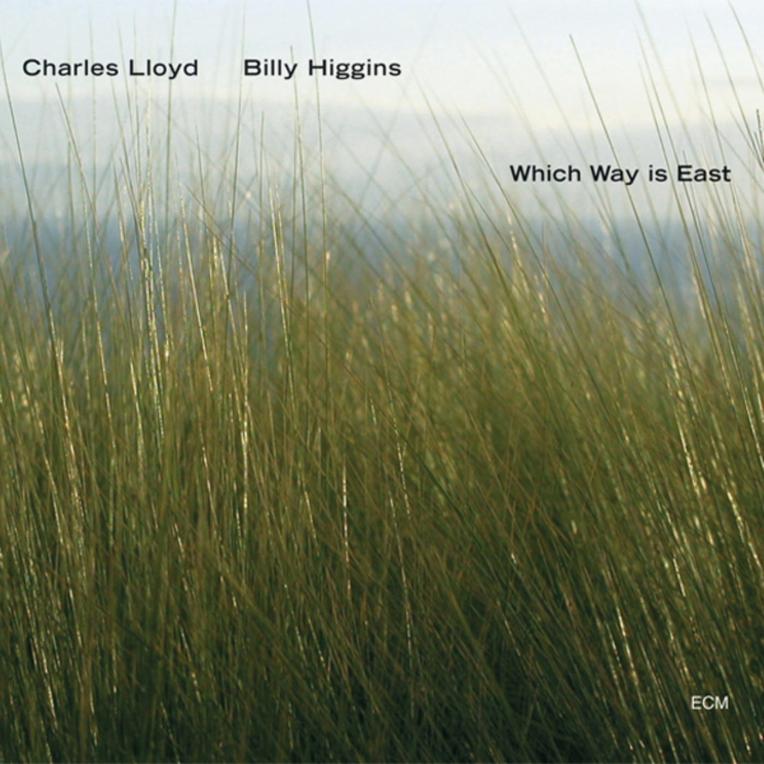
Charles Lloyd/Billy Higgins: Which Way is East (ECM 1878/79)

Which Way is East

Charles Lloyd
Billy Higgins
Which Way is East

Charles Lloyd tenor and alto saxophones, bass, alto and C flutes, piano, taragato, Tibetan oboe, percussion, maracas, voice
Billy Higgins drums, percussion, guitar, guimbri, Syrian “one string,” various Senegalese and Guinean hand drums, Indian hand drum, Juno’s wood box, voice
Recorded January 2001, Montecito, California
Produced by Dorothy Darr and Charles Lloyd
Engineer: Dorothy Darr
Mastered by Bernie Grundman
Executive producer: Manfred Eicher

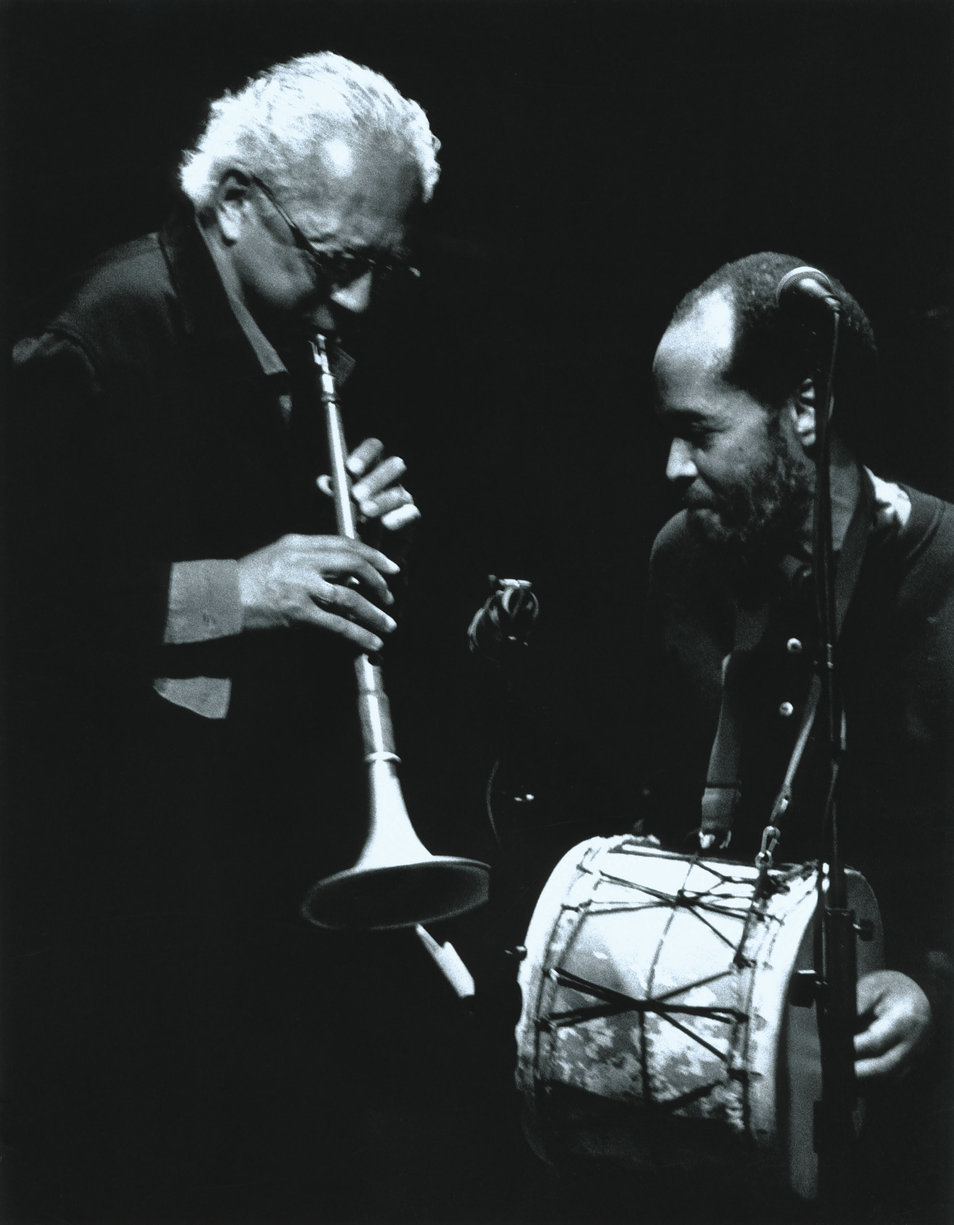
Billy Higgins. A man brother-in-charms Charles Lloyd once described as having the “dance of life.” A soul with whom, in ensemble contexts, the saxophonist forged a relationship so deep it begged to be loosed, unhindered in the week of playing, documenting, and spiritualizing that manifested as Which Way is East. More than a coming together, it is unencumbered unity, testimony to a higher power…. Call it what you will. For Higgins, its path is Islam; for Lloyd, Vedanta. And for the listener? A two-disc, thirtyfold undoing of expectations that is its own begotten magic.

when lightning strikes
sound emerges from the womb:
a cloud in whom the tallest tree
seeks timely renewal

Together, its eight titled suites form a masterpiece in the most literal sense: a piece—a fragment—of mastery, a flicker of the eternity that nourished its becoming. Through its window we might see fields aflame, ices melting, suns and moons weeping. We might also know our past and future selves, a map of this and other lifetimes. The tools at the duo’s disposal speak of itinerant natures, of traveling minds absorbing local melodies like sponges. In this regard Higgins reveals a side until now obscured, a cocktail mixed from Delta waters, godly praises, and love songs. His interest in song draws from a broad palette of instruments—including the guimbri (three-stringed bass lute of the Gnawa), guitar, Syrian “one string,” plus an array of hand drums from across the continents—and languages (English, Arabic, and Portuguese roll off his tongue in kind). Lloyd fans will have come to expect cameos from winds like the Tibetan oboe and taragato, but may be surprised by his turns on alto (Lloyd’s “secret weapon,” according to Higgins) and piano.

in the forest
being and becoming bloom
shedding different seeds
of the same color

The sound of ancestors spreading wings, spinning flesh from sunlight. This is the impression of the opening suite, What Is Man. From blush of flute to strike of drum, from voice of throat to that of string, Lloyd and Higgins establish a sacred circle, scratched and torn like the skin and muscle of a wounded animal. The tenor’s entrance is shock and satori. The effect is such that, when the free improvisational language of Part 3, “Civilization,” enters our ears, it feels unfamiliar and requires a degaussing of the mind by way of adjustment. The beat and the reed: primal core of jazz. Having gone through that rite of passage, we end in a “Sea of Tranquility.” Lloyd’s tender stroll across the keyboard prefaces the triptych of Divans. An opening salutation melts the doors to a sanctuary of twilight. In the central crypt, skeletons find new reasons to live in geometries of breath and movement.

the lost question
floating behind closed eyes
reveals itself to be an answer
to the stars’ twinkling

Over a rocking plectrum, Higgins drenches worship to begin Salaam. Lloyd’s flute melts into alto, loses itself and finds passage into a cloudy heart. Its contours wrap around a statue of invisible strength, every muscle the manifestation of a song. The last panel, “Tagi,” weds Tibetan oboe and hand drums in an act of ontological possession, a disrobing of wasted thoughts, a dawning of shelter.

must the wind hold hands with sky and land?
must the water divide itself?
neither can be the path
for only the pathless will find their destination

All This Is That: a visceral unfolding of free improv, drums one step removed. “Hanuman’s Dance,” the 13-minute first part, dives into the sonic gene pool with alto ablaze, drums igniting the ether in kind before an audience of disembodied souls. Part 2, “Sky Valley,” is another piano solo from Lloyd that borders on impressionism. “Blues Tinges” follows with an organically crafted song from Higgins. It is a call to mercy, a reclusive meditation, an offering so central that it feels composed on the spot. Last is “Atman Alone Abides.” Featuring hand percussion and Lloyd on taragato, its loosely woven tapestry is a patchwork of wandering and proximity as Lloyd crosses the studio into a corner of night, righting wrongs in flesh and in love.

the whole body ensues, ensnares
washes itself of the soil
bathing in tears
drinking the life back in

Disc 2 begins with Desire, another triptych of immense proportions. Grounded in that same elemental force as “Civilization,” Lloyd’s tenoring describes a magical scene. Restless and skittering, its flora wither at the touch of the closing “Chomolungma.” The title here is an old Tibetan name for Mount Everest, and indeed its 13-minute excursion finds deep traction in every upward step, towering its exposition like that fabled peak with snowy veins flowing.

dreams of the sunflower
leave their impressions on clouds
would that I could feel them
press into my back

Devotion takes a more earthen tone with just a touch of grander mystery. The backwater poetics of “My Lord, My Lord” share the air with “Windy Mountain” in a powerful journey of self-discovery and selfless discovery, working a twisted pianistic core.

through surface and tunnel
over and under land
she guides, waiting
on the other side

Light of Love connects a range of dots, from Brazilian love songs (“Mi Corazon”) through barely spoken walkabouts (“Beloved, Chimes at Midnight”) to introspective song (“Take A Chance”). Each is part to a whole, a measuring of time by the breath of a sleeping child.

in a former place
amor becomes armor
dropped down the well
a dragonfly turned to stone

The curls of “Perfume of the Desert” float Lloyd’s tenor on a bed of reed and ash to begin the final Surrender. Across oceans and tributaries, it unties ribbons in every head of hair and with them weaves the soft basket of “Forever Dance” before folding into the wordless pitch of “Bis,” a solitary snap to close the lapel of doubt.

trust that someone is watching
trust that someone is listening
feel the eyes as hands
feel the eyes as ears

Which Way is East is unequivocally the profoundest statement of either musician. It belongs alongside Keith Jarrett’s Spirits as a phosphorescent example of pure expression. So sincere is it, you’ll forget you’re listening to a pair of jazz greats and know instead that you’re in the presence of sagacity beyond the circumscription of any genre. It is, then, more akin to a field recording, cast far like a fishing hook and reeled in bearing the fruit of the river…and a eulogy along with it. Within four months of these sessions, Higgins was gone from this world, though he remains by the power of such audible traces as these. Having once referred to the recording of Which Way is East as “two guys sittin’ on top of a mountain,” he is surely on that mountain now, looking down on us mortal folk from a vantage point higher than a thousand Everests, the dance forever on his tongue.
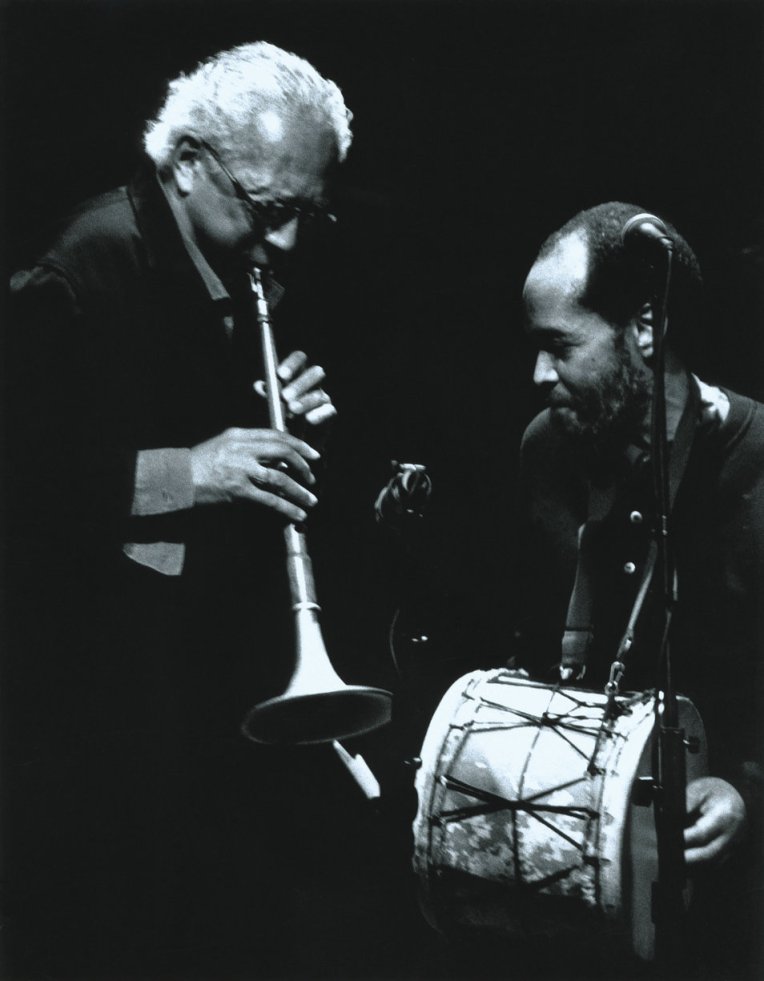
Lloyd Higgins
(Photo by Dorothy Darr)

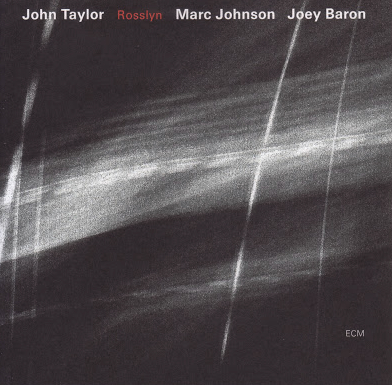
John Taylor Trio: Rosslyn (ECM 1751)

Rosslyn

John Taylor Trio
Rosslyn

John Taylor piano
Marc Johnson double-bass
Joey Baron drums
Recorded April 2002 at Rainbow Studio, Oslo
Engineer: Jan Erik Kongshaug
Produced by Manfred Eicher

Plenty of pianists are capable of technical brilliance, but so few bring selfless mastery to melody and negative space. Bill Evans progenitor John Taylor does just that, and this first leader date is a stained-glass window in sound. Bassist Marc Johnson (a latter-day discovery of Evans) and drummer Joey Baron (formidable veteran of John Zorn’s Masada quartet) join the British pianist for a set of mostly Taylor-penned tunes. From note one, one may note this as a defining ECM appearance by the ever-smiling Baron, whose adaptive style adds just enough color to Taylor’s monochromatic balancing acts.

“The Bowl Song” introduces us to the trio’s pliant sound. Johnson channels Steve Swallow in the album’s first solo, leaving us enchanted and primed for a webbed version of Irving Berlin’s “How Deep is the Ocean,” of which rubbings on piano strings guild the night with deeper secrets of this immortal standard. Taylor proceeds with archaeological care, his voicing stretching one tendril at a time from the brine. Here and throughout, Baron enacts a breezy restraint, his snare poised and patient, letting the groove establish itself without push. Despite, if not because of, the rhythm section’s resoluteness, Taylor spreads a deck of quick changes to keep things interesting. His lovely teetering of chromatism and octave bliss turns the tune into a hardly recognizable form of itself, an entity of spongy texture and purpose.

From amorphous beginnings, “Between Moons” gels another worthy braid. Taylor shows command of effect and affect in equal measure, while Baron’s smooth tom rolls and Johnson’s lantern flame predict a primrose finish. The title track is the session’s galactic sun. Its chambered clockwork reveals a lullaby, a swath of perpetual motion rounded and secured as if by light through a prism of dark and darker.

Nothing in the album’s first half, however, compares to the pulchritude of its second. This is where unity manifests, where the impressionism of Kenny Wheeler’s “Ma Bel” and the balladry of Ralph Towner’s “Tramonto” can walk hand in hand toward the masterful syncopations of “Field Day.” Each is a fully formed pearl, shucked and illuminated with endearing pathos. Like the skipping record of the album’s final chords, it fills a child’s room with safety, so that visions of a broken world cannot help but shed their barbs upon entering.

<< Suite For Sampler – Selected Signs II (ECM 1750)
>> Andersen w/Tsabropoulos and Marshall: The Triangle (
ECM 1752)

Eberhard Weber: Endless Days (ECM 1748)

Endless Days

Eberhard Weber
Endless Days

Eberhard Weber bass
Paul McCandless oboe, english horn, bass clarinet, soprano saxophone
Rainer Brüninghaus piano, keyboards
Michael DiPasqua drums, percussion
Recorded April 2000 at Rainbow Studio, Oslo
Engineer: Jan Erik Kongshaug
Produced by Manfred Eicher

Electric bassist Eberhard Weber, one of the most recognizable depth-sounders of European improvisation, with Endless Days continues the journey charted so boldly across ECM’s fertile map. True to form, he breaks the jazz mold that searches him, instead making use of orchestral sweeps and precisely notated forms. Solos, per se, are few and far between. The only exceptions are “A Walk In The Garrigue” and “Solo For Bass,” the latter of which presages Weber’s sure-to-be-seminal Résumé. With liquid touch, he dances, turns on a molecule, and settles into warmth.

The instrumentation of Endless Days is as intimate as its sound is expansive. Multi-reedist Paul McCandless, keyboardist Rainer Brüninghaus, and percussionist Michael DiPasqua—all longtime allies—comprise a quartet of unveiled lyricism. The seesawing keys of “Concerto For Bass” fade in on a lush vista as only Weber can articulate. Skittering percussion hurtles us across a tessellation of water and land as an oboe cranes its neck, birdlike, in anticipation of a storm. A soft keyboard drone provides ample soil for Weber’s pliant germinations, which in characteristic fashion build majestic tidal waves from mere ripples in “French Diary.” Here DiPasqua and McCandless flank an itinerant piano to the rhythm of an internal clock before ending in a pinprick of light, adding a new star to the shadows of “Nuit Blanche.” This cinematic piece emotes through a sepia veneer of whisky and unrequited love, dripping like a tree after rain. “Concerto For Piano” brings the band up to full speed. Playful touching of the keys adds unexpected angles. The title track has the makings of a folk song unfolding in real time, fashioning from its cellular vocabulary set a full-bodied text. This program of otherwise new material ends with a throwback to Weber’s Little Movements, reworking from that 1980 album its opening composition, “The Last Stage Of A Long Journey.” Flowing arpeggios float the leaves of Brüninghaus’s pianism along an unbroken river and find their angelic alter ego in McCandless, whose soprano saxophone draws a thread from heart to ritual.

Eternally refreshing in Weber’s work is the comfort that titles are immaterial—so evocative is his sound-world that it tells us a different story every time, a story so familiar it seems to emanate from the listener. All that’s left to ask: What stories will it convey to you?

<< Thomas Larcher: Naunz (ECM 1747 NS)
>> Claudio Puntin/Gerður Gunnarsdóttir: Ýlir (
ECM 1749)

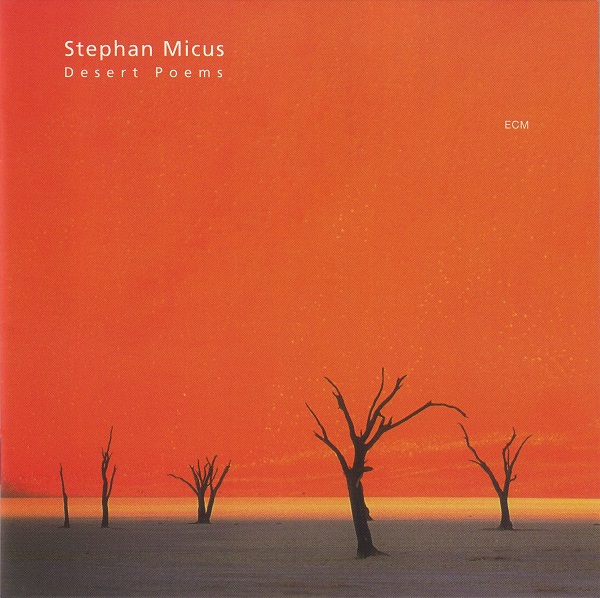
Anouar Brahem: Le Voyage de Sahar (ECM 1915)

Le Voyage de Sahar

Anouar Brahem
Le Voyage de Sahar

Anouar Brahem oud
François Couturier piano
Jean-Louis Matinier accordion
Recorded February 2005, Auditorio Radio Svizzera, Lugano
Engineer: Stefano Amerio
Produced by Manfred Eicher

The music of Tunisian oud virtuoso Anouar Brahem and his trio with pianist François Couturier and accordionist Jean-Louis Matinier is like a magical box of movable type in which the letters form alluring, coherent stories no matter how one arranges them. The printing press this time around may be of similar make to the preceding Le pas du chat noir, but the themes are even more narratively inflected by virtue of the trio’s evolving magnetism. The strength of Brahem’s visual imagination comes strongly to the fore whenever he sings. Although wordless, his voicings on “Les jardins de Ziryab” and “Zarabanda” fold water into sand, painting cycles of intervallic bliss. The chant-like quality of his melodizing buoys Matinier’s soaring exegeses, thus providing an aerial view of the album’s intimate topography. Further whispers abound in the album’s opener, “Sur le fleuve,” which establishes a signature sound of lilting pulse and unseverable braid. As in the gentle persuasions of the title track, Brahem’s suspended steps give his associates just the shade they need to unravel their filmstrips without fear of overexposure. Each of the oudist’s wistful solos is a message in a bottle, Couturier’s chording the foamy currents it rides, and Matinier’s cries those of the recipient standing on a distant shore.

Ensuing atmospheres range in density: from the enigmatic “L’Aube,” as fragile as a mirage, to the restless abandon of “Cordoba,” each samples a different time and space in a sepia-tinted world of streets and blurred visages. Sometimes, the directions are clearer, as in “Eté andalous,” which begins in the mountains and flows down to the mainland. Other times, the music’s robust heartbeat finds balance in meditative poses and parabolic expression. Whether running across the plains of “Nuba”—each dig into the oud’s lower register a puff of kicked-up clay—or drowning in the insomnia of “La chambre,” these are ever-thoughtful alternate realities.

Rounding out the disc are three of Brahem’s most requested tunes, freshly realized. “Vague” and “E la nave va” form a diptych (the former revived from its appearance on Khomsa). With the regularity of a train warning sign, two red eyes alternating winks in the night, it crosses hands until one body is indistinguishable from the other. “Halfaouine” (cf. Astrakan café) is a brief yet luminescent passage of cascading beauty, the swirl of grounds at the bottom of a coffee cup.

The Anouar Brahem Trio wears a skin of gold, sings with a tongue of silver, and moves in gestures invisible. And whatever it chooses to communicate, one can always be sure its language needs no translation.

Charlie Haden/Egberto Gismonti: In Montreal (ECM 1746)

In Montreal

Charlie Haden
Egberto Gismonti
In Montreal

Charlie Haden double-bass
Egberto Gismonti guitar, piano
Recorded July 6, 1989, Festival International de Jazz de Montréal, Salle Marie-Gérin-Lajoie, Université du Québec
Recorded by La Chaîne culturelle de Radio-Canada
Recording and mixing engineers: Alain Chénier and Michel Larivière
Editing and mastering: Denis Leclerc
Recording and mixing producer: Daniel Vachon
Executive producer: Manfred Eicher

Twelve years after it was recorded at the Festival International de Jazz de Montréal, this landmark performance by legendary American bassist Charlie Haden and Brazilian guitarist-pianist Egberto Gismonti at last saw the light of day in 2001. The concert marks the sixth of eight organized by the festival in celebration of Haden’s ongoing legacy. Haden had plenty of experience playing with Gismonti as part of their Magico trio with Norwegian saxophonist Jan Garbarek, yet the distillations offered here are entirely of another plane.

From the Magico songbook the duo plays “Palhaço” (a trio staple by Gismonti), as well as the Haden-penned “Silence.” Both feature Gismonti’s astonishing pianism, balancing florid biospheres with ponderous asides, Haden all the while drafting the terms of endearment by which every page turns. Haden the composer also reveals the set’s deepest piece: “First Song.” Featuring Gismonti on acoustic guitar, its intuition soars for all its quietude. A pleasant street scene, a childhood memory, a favorite scent in the air…exchanging glances in a melodic triangle. Such trade-offs mark the session for its selfless ingenuity. So, too, the jangly undercurrents of opener “Salvador” and “Em Familia,” both of which reference Gismonti’s work with Academia de Danças and, as such, reflect a bold unity of purpose. The latter’s invigoration grabs scruffs and throws us skyward, even as it gives us wings to fly. And fly we do into quiet pockets of cloud, each the eye of a storm where the leaves barely tremble to the tune of Gismonti’s masterful harmonics. Also notably from the Academia repertoire are “Maracatú,” a study in contrasts, and “Frevo,” in which pointillism at the piano inspires dramatic, resonant depths from Gismonti’s partner. “Don Quixote” (previously featured on Duas Vozes with percussionist Nana Vasconcelos) closes with an elegy-turned-anthem, a shifting ocean of temperate love.

Although there is much to admire in Gismonti’s prodigious guitar playing, it’s at the piano where his musicality truly shines. How wonderful to get so much of it here. And no bassist crafts melodies quite like Haden. He keeps the earth in mind, even when there is nothing but sky ahead of us, scaling the ladder from light to dark and back to light while Gismonti filigrees his playing like a frame around a picture. In Montreal is a must-have for fans of these unique talents, who together forge a distinctly “global” sound: not world music, but music for the world.

<< Heino Eller: Neenia (ECM 1745 NS)
>> Thomas Larcher: Naunz (
ECM 1747 NS)

Iva Bittová: s/t (ECM 2275)

Iva Bittová

Iva Bittová

Iva Bittová voilin, voice, kalimba
Recorded February 2012, Auditorio Radiotelevisione svizzera, Lugano
Engineer: Stefano Amerio
Produced by Manfred Eicher

Characterizing the music of Iva Bittová as resistant to definition both describes it perfectly and does it a disservice. The former, because her minimal tools of violin and voice elicit a museum’s worth of colors, moods, and brushstrokes. The latter, because every listener will emerge from that museum with a unique image in mind that is anything but indefinable. Despite her many creative personalities—which encompass acting, performing, and composing—she has achieved notoriety by no small feats of expression. Still, don’t be mistaken: this is no “avant-garde” artist. She’s not upsetting paradigms, but deepening their self-awareness.

“The violin accompanies me all the time,” says Bittová of an instrument that has centered her musical life since the early 1980s. “It is a mirror reflecting my dreams and imagination.” Yet she is, above all, a singer. Whether through vocal folds, bow, or physical gesture, her voice strikes flint to stone and blows a tangle of weed until it glows. So potent is said voice that it inspired fellow Czech composer Vladimír Godár’s Mater (documented most recently in a 2007 release for ECM New Series), a multilayered cantata on women-centered texts of which Bittová is both sun and satellite.

Iva

This self-titled solo album finds Bittová in her element in a series of 12 numbered “Fragments,” and because fragments imply a whole, it makes sense to speak of the album as such. Like a work of masterful anamorphosis, its image emerges only by submitting oneself to its perspective. Twelve is, of course, a mystical number. It defines the modern clock, marks the end of childhood, numbers the Bibical apostles, and zodiacally divides the heavens. Here it is a riddle that harbors many more.

The album begins and ends with her voice slaloming through the delicate signposts of a kalimba. Here and throughout there is harmony and tension, starlight and soil. At one moment, her voice and bow may unify. At another, her feet go their separate ways, divorced from body and destination. Pizzicato gestures seem to pluck hairs from the scalp of the night, while arco gestures get lost in mazes even as Bittová draws them. Sometimes: her voice alone, spoken and then sung, so that incantation becomes chant becomes lullaby in one fluid swing. Sometimes: the violin alone, crossing every bridge without ever touching feet to plank. Sometimes: a river’s flow through black forest, hints of love and travel.

To be sure, ghosts of a Slovakian heritage breach the fabric of time that veils her, but the freshness of her storytelling makes it all feel uncharted. For while she does adapt the music of Joaquín Rodrigo in Fragment VI and sings texts by Gertrude Stein and, notably, Chris Cutler in others (III and VII, respectively), she renders these sources personal and organic through her crafting. Words like “gypsy,” “folk,” and “tradition,” then, might as well be gusts of air, so intangible are they in her sound-world. That being said, her art is certainly rooted in a worldly sense of time and plays with that notion as would a hummingbird flirt with a backyard feeder. Her sound is resilient to climatic damage, for it has already absorbed so much of the oxidation that gives it character, and her tone is never brittle, even at its thinnest. In fact, the album’s strongest moments are to be found in her unaccompanied singing. From gentle cuckoo to shaman’s possession, her voice cycles through many (after)lives and makes this world of social details begin to feel other-cultural.

Here is an artist whose sense of architecture is wholly translucent, whose persona is her crucible, and whose music is an embodied practice, a mimesis personified to the point of healing.

(To hear samples of Iva Bittová, click here. See this review as it originally appeared in RootsWorld magazine.)