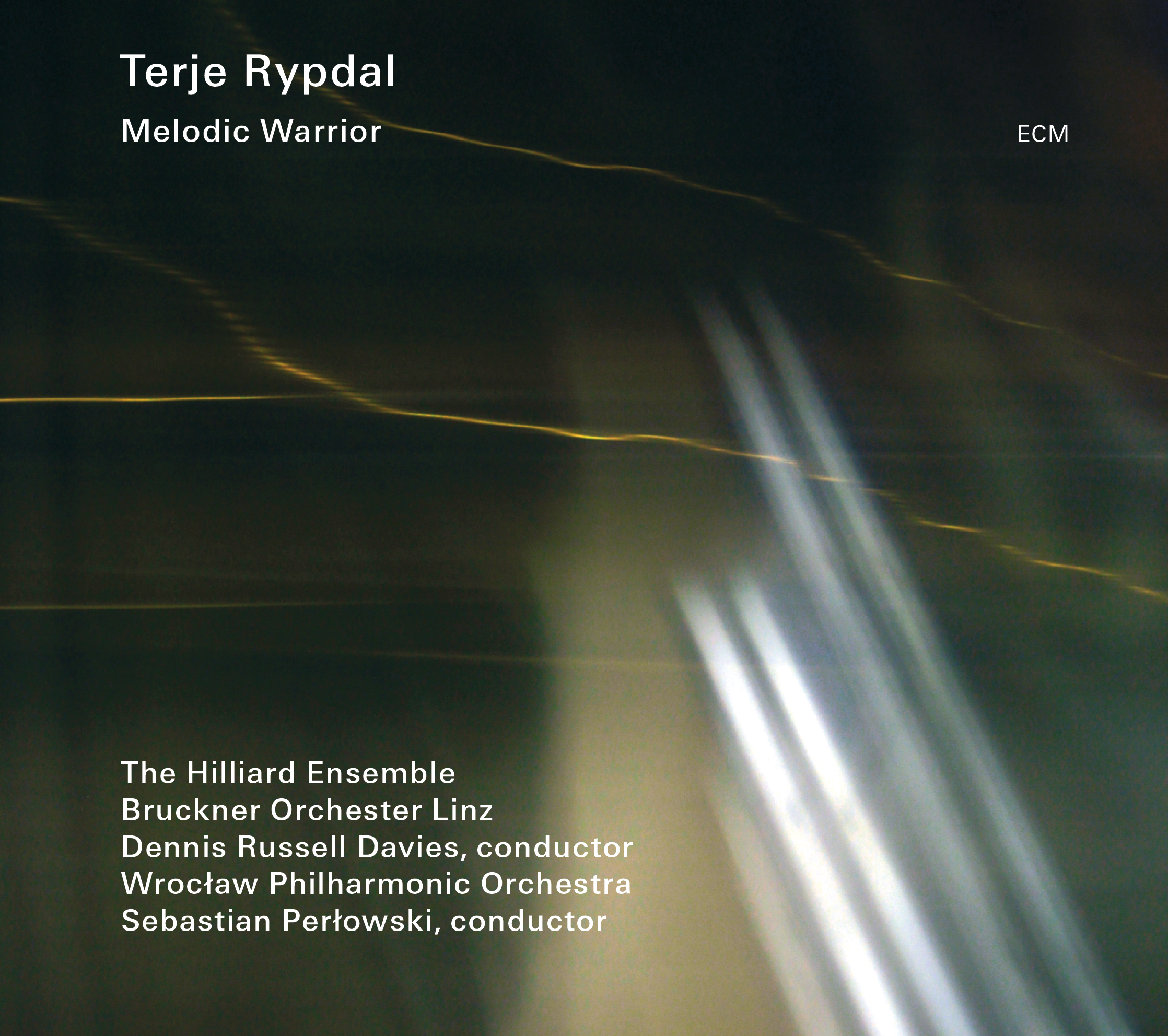
Terje Rypdal: Melodic Warrior (ECM 2006)

2006 X

Terje Rypdal
Melodic Warrior

Terje Rypdal guitar
The Hilliard Ensemble
Bruckner Orchester Linz
Dennis Russell Davies conductor
Wroclaw Philharmonic Orchestra
Sebastian Perloswski conductor
Melodic Warrior recorded December 2003 at Brucknerhaus, Linz (ORF)
Recording engineer: Alice Ertlbauer-Camerer
Engineer: Alois Hummer
And The Sky Was Coloured… recorded November 2009 at Jazztopad Festival, Wrocław
Recording engineer: Maurycy Kin
Mixed at Rainbow Studio, Oslo by Jan Erik Kongshaug, Manfred Eicher and Terje Rypdal
Album produced by Manfred Eicher

…from the house made of mirage…
…the rainbow rose up with me…
…the rainbow returned with me…
…to the entrance of my house…
…from the house made of mirage…
–excerpted from a Navajo Night Chant

How does one review an album for which one has also written liner notes? This is the challenge I set before myself in the instance of Terje Rypdal’s astonishing Melodic Warrior. Pairing the gargantuan title piece with a younger sibling, it reveals yet another facet of the Norwegian guitarist’s compositional profile, one that has given us such wondrous reflective surfaces as Undisonus and his Lux Aeterna. Where those two works examined sonic temperatures across relatively expansive climates, here the lens cracks in an implosion of voices.

Of those voices we get four prominent stewards in the Hilliard Ensemble, who also commissioned Melodic Warrior from the very ether. Their singing burgeons in a selection of Native American poetry chosen by Rypdal, along with a sprinkle of original words. To the touch-and-go listener it may seem an outlying choice for the Hilliards, unless of course one considers their likeminded reworking of Quechua and Passamaquoddy sources with saxophonist Jan Garbarek on, respectively, Mnemosyne and Officium Novum—in which case the fit could hardly be more intuitive. These are poetries rooted in that which roots us, pouring mercury into the primacy of oral over written expression: the lived knowledge that eternal regeneration is impossible without the fleeting rain.

The instrumental makeup alone chains this magnum opus to an immovable classical altar, surrounding the Hilliards with a full orchestra under the ever-erudite guidance of Dennis Russell Davies. It further bears the scars of Rypdal’s many-hued pools of influence, for his electric guitar bleeds through its movements like fire through lit steel wool, cupping a prog-rock relic or two in its satchel. In light of this, Melodic Warrior would seem to bring together many of his earlier threads into unified fruition—from his supergroup The Dream and on through the defining ECM years (Odyssey, Chasers, and especially Skywards) to the large-scale compositions mentioned above. The end effect is a snake coiled and poised to strike. Yet rather than deploy its secrets as weaponry (the melodic warrior sustains injury in place of others), it holds venom in mind and makes it palatable to the tongue and to the ear. Rypdal’s baying leads are unmistakable in this regard, stringing us as they do along a necklace of vocal cells, each writ large within the itinerant body. That we can at last experience the journey of that body on disc (prior to release, it had been maturing in ECM’s vaults for nearly a decade) is a gift for the soul.

Rypdal’s Opus 79 finds company in his Opus 97, And The Sky Was Coloured With Waterfalls And Angels. Whether coincidental or not, the numerical reversal suggests a kinship. And indeed, despite its wordless topography, the second piece would seem to drink from the same ocean, albeit on a different coast. Fronting now another orchestra and without the company of (human) voices, Rypdal paints bruises of a different kind: these the bursting flowers of a fireworks display. Although not overtly programmatic, those eruptions do materialize in periodic squints, carrying us out on a breath of awe.

It was an honor and a dream come true to contribute liner notes to this release. In solidarity with listeners (and because digital downloads deprive us of the pleasure of holding a booklet), I offer said notes in full below, with ECM’s kind permission.

… . …

Contrapunctus naturalis: Rypdal’s Warriors and Angels

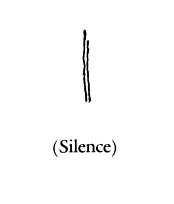
The Chippewa tell a form of picture-story in which silence takes the form of two lines, close but never touching. As the asymptote of all existence, they do more than represent. They enshrine. Surrounding them is a need for self-questioning, for acknowledging the power of the beating drum.

River, nature, vision: these are the tools of the warrior whose flesh stands firm against the tide. Like the stag hanging from a tree—last touched by chipped stone and hunter’s eye, now drained by gravity and sun’s transit—it has an illusory stillness. Somewhere, in another time, the warrior’s legs still run. Terje Rypdal’s warrior is consequently melodic. Protagonist of his magnum opus, he activates a landscape by contact of lyric and pen. Its composer is a river; the voices of the Hilliard Ensemble its fauna; the writhing Bruckner Orchestra Linz, under the baton of Dennis Russell Davies, its flora. Davies adds depth through an abiding passion for living works. He gives voice to the margins, here doubly so, guiding Rypdal’s assembly through a 45-minute epic drawn from Chippewa, Navajo, Pima, and Papago sources. The words came to Rypdal by way of stage director and musician Carl Jørgen Kiønig, who lent him a book of Native American poetry. “Its closeness to nature mirrored my own,” he says, and thus the seeds were planted. Since its 2003 Austrian premiere, this Hilliard commission has taken on a soul that consolidates Rypdal’s many paths.

From his early ECM leader dates onward, including the self-titled 1971 debut and 1974’s Whenever I Seem To Be Far Away, Rypdal has had a hand in multiple idioms. He grew up in a classical home (his father was also a composer) and trained formatively in that sphere before taking to the guitar in his teens. If we can paint anything with these biographical colors, it is not the portrait of a fusion artist, but rather one who walks along dissolving borders. Whether in the chamber music aesthetics of Q.E.D. or the wayfaring 5th Symphony, in the droning lyricism of Undisonus or the flowing textures of Lux Aeterna, through it all persists a consistency of vision.

And what of Melodic Warrior? “The title came to me almost as a vision,” Rypdal recalls. “It felt as if I had planned something like this all my life.” Given the strength of this conviction, one might expect a ruder “Awakening” than what transpires in the eponymous prologue. The first of nine movements, it opens its eyes in high-pitched stasis, an abyss where the fray of human awareness hums above the earth’s surface. The ensuing plunge is cinematic to the core, traveling from cosmos to land, from breath to heart. In it we find the glitter of coastal waters, a veritable Bering land bridge rooted in sea floor and spreading its fingers toward wounded sky. To tread here is to embrace daylight, to feast on it, as the crow takes to carrion.

Storm, leaf, soil: the constellations Rypdal’s electric guitar lives by, echoes from a mythic past, garments donned by our four unmistakable voices when twilight falls around them. Their welcome blessing reveals an organic body, splitting and fusing like water’s flow. As one, they fly. In isolation, they soar. During solos their spirits thread disparate needles, sometimes flirting with call and response, but always with unity in sight. A storm is nothing without its droplets.

Rypdal remains the omniscient lurker, resurfacing across the suspenseful pages of “The Secret File” with script aflame. He envisions this dramatic intermezzo—having used it before in a hard-rock context—as a nod to Western film soundtracks, thereby bearing relevance on the contradictions of the Native American theme. Not until “Song Of Thunder” does he ride lightning into the roiling ash. He weaves stealthily, finding in the curve of a whale’s back, in the sweep of a honeybee’s pollen comb, the natural counterpoint that haunts his oeuvre at large.

The strings of Linz mark the face of this music with laugh lines. Profound shifts in light reveal rivulets and isles of possibility. In “Magician Song” countertenor David James evokes a leaf on that water, the tremble of the branch before its descent, the seed from which that tree burgeoned. Ancestors become stories, backgrounds become foregrounds, as they would in dreams, and close the circle by way of opening another in the light of a morning star.

The flair of Melodic Warrior brings to mind another ECM-represented composer, Erkki-Sven Tüür, whose background in progressive rock buoys a mind meld of fortitude and color. And if we can draw further lines of contact to the work of such 20th-century stalwarts as Górecki, Ligeti, Penderecki, and even a hint of Glass, it is only because Rypdal has mixed and baked his clay from the mineral-rich soil of deep listening.

All of this comprises a challenge to purveyors of modern music who rest on atmospheric crutches in lieu of compelling linear themes. Rypdal points to early conversations in this regard with label mate Ketil Bjørnstad: “We used to talk about how melody in contemporary music was looked down upon. I knew right from the start of my composing that I had to bring back melody…and beauty in general.” His forte embodies the uphill battle of this realization, beholds the world as new parents behold themselves, at once without and within. The polarity makes sense, for what is the guitar if not a bringer of visceral melody? It is a fortuitous compositional tool in the hands of one who wields it properly.

Sky, journey, reflection: the shaman’s initiations. As technician of the sacred, the shaman dismantles mortal designs. He abstains from taste of dust for that of haze. He casts bones through skin, passes mind through matter, and returns with timely prophecy. He visualizes decay, the withering of boundaries. He casts one eye down and the other up. Thus undone, the earth overflows.

And The Sky Was Coloured With Waterfalls And Angels is the receptacle of that excess. More than a landscape, it is another link in the chain of being. The live recording presented here opens a curtain on Wrocław, Poland, where the 2009 Jazztopad Festival (artistic director: Piotr Turkiewicz) is about to set forth on this purely instrumental journey. It is under these auspices that, with Sebastian Perłowski leading the Wrocław Philharmonic and Rypdal poised before six foreshortening strings, the music bubbles with the freshness of its premiere.

The piece was inspired by the 2008 International Fireworks Festival in Cannes and assumes a denser structure than its sibling. It brings to evidence the din of human commerce, technology, and construction, even as it links those rosettes high beyond mundane concern. The violin scratches an itch it cannot quell, unfurls banners of melancholia between explosions. Even a surge of harp brings little hope or heavenliness. It is caked with time, unshaken. Somehow all of this finds peace, such that the sky becomes the cell of another body, and that body the cell of another.

Mirror, vessel, silence: the totems of a composer seeking nectar. Once found, it drips from waterskin, emphasizes imperfections. This music holds a mirror to land, turning every arch into a ring. The counterpoint is more than natural. It is the all-encompassing sight of things created and destroyed. Every instrument sheds a skin.

The horns in particular take on a quasi-Wagnerian role throughout the program, signaling themes and atmospheres as they become intertwined with locations and avatars. At one moment the song of bestial life, swaying the next in bowed waters, they cast crimson lines of intention into a darkening sea. This is the trick of Rypdal’s notecraft: he digs into continental influences with an archaeologist’s eye, persevering where many have quit until that single common vessel is revealed, petrified yet singing.

Tyran Grillo

Silence

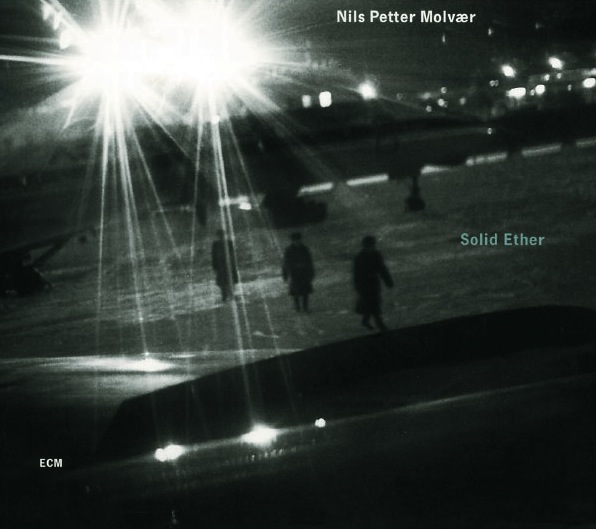
Nils Petter Molvær: Solid Ether (ECM 1722)

Solid Ether

Nils Petter Molvær
Solid Ether

Nils Petter Molvær trumpet, piccolo trumpet, synthesizer, electronics, bass, percussion, sound treatments
Eivind Aarset guitar, electronics
Audun Erlien bass
DJ Strangefruit voices, beats, samples, ambience
Per Lindvall drums
Rune Arnesen drums
Sidsel Endresen vocals
Reidar Skår vocoder
Recording producer: Nils Petter Molvær
Recorded, edited and mixed 1999 at various floors in Oslo, Norway
Mastering: Shawn Joseph, Masterpiece London
Album produced by Manfred Eicher

ECM left an indelible mark in 1998 with the release of Khmer. Trumpeter Nils Petter Molvær’s leader debut spread a royal flush across the table when the music industry least suspected it. Solid Ether marks a return to that trending sonic universe, only now it turns away from the idiomatic sources of its predecessor and looks deeper into the mirror for inspiration. This time around, the layers are more archaeologically striated, servile to a beat-driven cartography. Melodically, the album is rawer, rudimentary, and finds its voice through the detailed care of the arrangements. “Dead Indeed” is but one rhythmically arresting example with an altogether sharper edge: a bolder, well-oiled machine. Molvær’s far-reaching introduction surveys a landscape with hand over eyes before diving into a serpentine Nile of its own making. The grinding drum ‘n’ bass vibe raises the dead with its veracity while singing calls harmonize like ancestors with the living: a mummy reanimated and bid to break-dance like it has never loosed a ribbon before. With a wry smile, it cocks its head and throws a handful of sand into those same eyes, that it might have a moment to fade and leave you wondering if it was all just a dream, a vision gone mad the moment you pressed PLAY. This opening track is also significant for being almost entirely played and programmed by Molvær himself, grafting only guitarist Eivind Aarset’s overdubs for effect.

“Vilderness 1” takes its name from Molvær’s daughter Vilde and boasts a cut-and-paste aesthetic of many masks. It is a porous, geometric picture, of which the throbbing bass is an alizarin crimson-loaded palette knife. “Vilderness 2” doesn’t continue where the first left off but dances through its forest once more, hopping from branch to branch like the lithe warriors of Ninja Scroll. After experiencing this slide of Rubik’s plane as if from the inside, the caress of “Kakonita” feels like a wholly different love. Floating primary-colored blocks of notecraft on a bed of infant foghorns, it reworks cinematic DNA into a golem’s playlist. Sidsel Endresen, with whom Molvær plays on the singer’s two ECM recordings, So I Write and Exile, lends her voice to two iterations of “Merciful.” Joined by Molvær on piano, she cuts moving pictures of intense observation, each a morsel of gesture in a world of stills. Her poetry peels alienation away like a sticker, filling in the remaining ghost as if it were a piece of candy in danger of melting.

“Ligotage” first appeared on a Khmer tie-in single and takes a more congealed form here. Its breathtaking scope and depth of language glistens with sun-kissed brilliance. Audun Erlien’s growling bass flushes the sewers of the mind with its grit, heightening the feeling of alarm until it leaps with the unbridled spirit of a dolphin against Ra’s unblinking eye. Drummers Per Lindvall and Rune Arnesen add similar comfort to the concoction of “Trip,” proving definitively that the feeling created by this hip collective sells the music by virtue of its structural integrity alone. From tripping to skipping, we come to “Tragamar.” Striding a fuzzy border between ballad and lament, it drowns in the title track and its biochemical integers. More live drumming adds punch and bites us in the ear with its head-nodding finality.

There is an indigeneity to Molvær’s art that is as far away from pretension as we are from knowing the truth about ourselves. The music is a stranger in its own land, a king without subjects, a dog without a leash. It has only us to turn to.

<< Michael Mantler: Songs and One Symphony (ECM 1721)
>> Bruno Ganz: Wenn Wasser Wäre (
ECM 1723 NS)

Michael Mantler: Songs and One Symphony (ECM 1721)

Songs and One Symphony

Michael Mantler
Songs and One Symphony

Mona Larsen voice
Michael Mantler trumpet
Bjarne Roupé guitar
Marianne Sørensen violin
Mette Winther viola
Gunnar Lychou viola
Helle Sørensen cello
Kim Kristensen piano, synthesizers
Radio Symphony Orchestra Frankfurt
Peter Rundel conductor
Songs recorded October 11, 1993, Danish Radio, Copenhagen
Recording engineer: Ronald Skovdal
Mixing engineer: Lars Palsig
One Symphony recorded November 13/14, 1998, Hessischer Rundfunk, Frankfurt
Recording engineer: Thomas Eschler
Mixing engineer: Rainer Schwarz
Album produced by Michael Mantler

I don’t know
anything darker
than the light.

Whatever your spiritual inclinations, you can be thankful that people like Michael Mantler have walked this earth and left behind a sonic trail so intuitively drawn it almost hurts. The Austrian-born composer delivers a subtle yet nonetheless smashing twofer in Songs and One Symphony, pairing his settings of poems by Ernst Meister with the titular symphony.

Songs is performed by the Chamber Music and Songs Ensemble, a group Mantler formed in 1993. Last heard in his masterpiece The School of Understanding, its instrumental signatures are uniquely Mantlerian, including the composer himself on trumpet, Bjarne Roupé on guitar, Kim Kristensen on keyboards, and a string quartet. For the present recording singer Mona Larsen assumes the throne, her wrapping of words the perfect disguise for Meister’s bare bones. Mantler’s ability to draw out melodies from the texts as if they’d always been there is uncanny. The cycle’s smoothness of execution is uniquely moving in this regard, finding traction in every negative space on the page. The connective tissue between “For ever” and “Nothing more,” for example, breathes in the fumes of just-sung sentiments and exhales the fearless drug of circumstantial evidence. Indeed, each slide on the projector roulette bears its own exhibition letter, submitted to the scrutiny of an invisible jury. Their shifting and murmuring implies conclusions but them lets them go in the interlude “How Long Are Our Nights,” from which the cello espouses lachrymose verdicts in kind. Larsen slips through words like a snake through the knotholes of an abandoned shed, carrying in her mouth the minimal shadows required to bleed warmth and misery. She embodies Meister’s “stir of solitude” so unpretentiously that one need know nothing of her pop music roots. Rather, she unearths her art for the first time with every stanza.

One Symphony is the result of a German radio commission. It takes the concept of a symphony in its most rudimentary form—which is to say, as a large meeting of musicians—and represents Mantler’s mounting interest in explicitly notated material. Consisting of four numbered movements, it finds its voice early on with the establishment of a characteristic flow. The harp flirts with the water’s surface like a sunlit dragonfly in Part 1, sucking inkblots from paper as if water from a glass. The shifting rhythms and textures achieve perfect kilter in the final origami fold, looking deeply into the mirror where its cinematic fantasy moves on. Part 2 opens poised before an oncoming train: it hears the signals but heeds them not in the widening funnel of light. The clouds offer little solace, dark and gnarled as their manner is. The feeling of locomotion never completely recedes. It touches the piano keys, flicks its hair in the wind, and swings from brass branches. The honeycombed Part 3 unloads a relatively mechanical shipment of dots and dashes, leaving the aftermath to spawn life of its own will in Part 4. This self-tending garden sustains some of the symphony’s darkest wounds and presses its palm to a cold window until an ephemeral handprint is all that’s left of its ever having been here.

<< Karl Amadeus Hartmann: Funèbre (ECM 1720 NS)
>> Nils Petter Molvær: Solid Ether (
ECM 1722)

Dave Holland Quintet: Not For Nothin’ (ECM 1758)

Not For Nothin

Dave Holland
Not for Nothin’

Chris Potter saxophones
Robin Eubanks trombone, cowbell
Steve Nelson vibraphone, marimba
Billy Kilson drums
Dave Holland double-bass
Recorded September 21-23, 2000 at Avatar Studios, New York
Engineer: James Farber
Assistant engineer: Aya Takemura
Produced by Dave Holland

Dave Holland has done for the modern jazz quintet what Keith Jarrett has for the standards trio. Balancing utter control with democratic reverence in a carefully assembled team, he pushes an open agenda of bold yet affectionate creation. In this third and final ECM record of his most proper quintet, he, along with saxophonist Chris Potter, trombonist Robin Eubanks, vibraphonist Steve Nelson, and drummer Billy Kilson cut some of the group’s most flawless diamonds yet. As much a unit as one could ever hope for, their connection as such is more than telepathic—it’s downright genetic. This is all the more astonishing when you think that by the year 2000, when this album was laid down, the group had only been together for three years (even less, seeing as Potter replaced Steve Wilson in 1998).

Of the album’s nine tunes, five have felt the scratch of Holland’s pen. Vital and varietal, they boast the quintet’s signature joy in spades. Unique among them is the reflective “For All You Are,” which begins in a loose weave and proceeds to lay the love on thick. For this one Potter has an especially soulful turn on tenor, gray as a storm cloud and as rainbowed as its aftermath. “What Goes Around” is this session’s vehicle of choice for the horns and also titles the follow-up big band album. This hot ticket is a master class in listening to one’s band mates. The symmetry has to be heard to be believed. The title track is an equally hip penultimatum and finds Nelson shining over break-beat support from the rhythm section. Potter’s soprano adds further bite on two tracks, running like a shawm’s great-great-granddaughter through “Shifting Sands” in anticipation of new settlements and cracking eggs of phenomenal cast in “Cosmosis.” Almost flippant but ever genuine, he charts a magnetic course indeed.

Into Holland’s five the set list shuffles one tune by each remaining member. Eubanks’s “Global Citizen” bolts straight out of the gate freshly laminated. Nelson takes an early lead by a head and carries the quintet swiftly around every bend. Holland navigates this game of Snakes and Ladders all the while, marking a turning point midway through into breezier denouements, which, iced by Kilson’s semisweet drumming, provide plenty of skating surface for the composer’s gliding valves. Potter’s offering is “Lost And Found,” which finds Holland in especially muscled form. Eubanks cuts the cloth with precision, leaving Kilson to rev up the energy to interlocking heights. The drummer’s own “Billows Of Rhythm” dovetails into Holland’s love of jagged syncopation and throws the bassist into an early solo. This gives plenty of breathing room for Potter’s upbeat tenoring in what amounts to the set’s most youthful track. This leaves only Nelson and his sardonically titled “Go Fly A Kite,” which is actually quite forgiving in execution. It paints an evocative picture of sky and cloud, giving the horns more than enough room to soar.

Whether it’s bass and vibes, bass and drums, or sax and trombone, the combinations turn on a dime in constant organic relay. All of which puts the humble reviewer to task in picking sides. For just when Kilson seems to steal the show, Holland overwhelms with its virtuosic flair. When Nelson seems buried under Potter’s effervescent rides, he resurfaces with glittering treasure in hand. Eubanks preens his fair share of feathers as well. All the more reason to just sit back and shake one’s head in wonder at the plenitude.

<< Stephan Micus: Desert Poems (ECM 1757)
>> Enrico Rava: Easy Living (
ECM 1760)

Enrico Rava Quintet: The Words And The Days (ECM 1982)

The Words and the Days

Enrico Rava Quintet
The Words And The Days

Enrico Rava trumpet
Gianluca Petrella trombone
Andrea Pozza piano
Rosario Bonaccorso double-bass
Roberto Gatto drums
Recorded December 2005 at Artesuono Recording Studio, Udine, Italy
Engineer: Stefano Amerio
Produced by Manfred Eicher

The Words And The Days follows Easy Living, which marked the studio return of Italian trumpeter Enrico Rava after a 17-year hiatus. More than the continuation of a comeback, it constitutes a self-contained entity with its own dreams. It is only natural, then, that the title tune should flow like a soundtrack to those dreams. Verdant and sincere, it hangs, as might a contended hand over the side of a boat, cutting a path through the water. Rava seems to paint that vessel’s wake while the intuitive drumming of Roberto Gatto renders every glint of sun thereafter with photorealistic detail. Yet despite these sundrenched beginnings, where Easy Living was warm and fuzzy all over, we generally encounter a cooler sound in this mostly Rava-penned program.

Gatto and bassist Rosario Bonaccorso hold fast to their formidable dual role, at once supportive and pace-setting. Rava is happy to follow wherever they may lead, with often-joyful results. In “Secrets,” for instance, some of his formative Brazilian influences jump from the woodwork. Meanwhile, trombonist Gianluca Petrella puts his enigmatic stamp of things. Although his language can be fiercely chromatic, this time around he moves under the table in search of forgotten crumbs. He works a quiet magic in the Russell Freeman standard “The Wind,” engendering a chain of lilting calls, while in “Serpent” he preens his feathers to the tune of a slick, rubato synergy. Most of that synergy he shares with Rava, reigning clearest in “Art Deco,” a three-minute duet that crosses the straight and the curved and pays tribute to its composer, the great Don Cherry. Petrella and Rava trade more brass arrows in Gatto’s “Traps,” evoking a big band on an intimate scale, balancing the pans with its breezy concentration. As a player, Gatto’s adaptive panache figures centrally in “Bob The Cat.”

Pianist Andrea Pozza, replacing Stefano Bollani from the last session, marks a shift in the group’s sound. His reflective approach adds monochromatic atmospherics to “Echoes Of Duke,” taking the session’s feet from its picturesque murk and washing them anew with a more classically rendered style. Rava digs deepest on this expedition, unearthing a plethora of finely preserved artifacts. In this regard, the bandleader excels highest when he is cut loose, as in the cinematic veils of action and soft-focus drama of “Tutù” and the stretch of empty road that is “Todamor,” which unrolls its horizon after a viscous monologue from Bonaccorso entitled “Sogni proibiti” (Forbidden dreams). Although unpopulated, that horizon is filled with stories. Rava is confident behind the wheel in taking us there, navigating an echoing corridor with superb control of every gear. And as he pulls us into the driveway of “Dr. Ra And Mr. Va,” of which the strangely somber exterior only thinly veneers a fiery heartbeat within, it is clear that the journey has only just begun.

Dave Holland Big Band: What Goes Around (ECM 1777)

What Goes Around

Dave Holland Big Band
What Goes Around

Antonio Hart alto saxophone, flute
Mark Gross alto saxophone
Chris Potter tenor saxophone
Gary Smulyan baritone saxophone
Robin Eubanks trombone
Andre Hayward trombone
Josh Roseman trombone
Earl Gardner trumpet, flugelhorn
Alex Sipiagin trumpet, flugelhorn
Duane Eubanks trumpet, flugelhorn
Steve Nelson vibraphone
Dave Holland double-bass
Billy Kilson drums
Recorded January 2001 at Avatar Studios, New York
Engineer: James Farber
Assistant engineer: Aya Takemura
Produced by Dave Holland
Co-produced by Louise Holland
Executive producer: Manfred Eicher

Bassist Dave Holland widens the span of his guiding hand for his first big band album. At the heart of this defiant session is Holland’s peak quintet with saxophonist Chris Potter, trombonist Robin Eubanks, vibraphonist Steve Nelson, and drummer Billy Kilson, all of whom nestle among an extended family of brass and reeds. Representing nearly two decades of original compositions, What Goes Around dives headfirst into the deep end with a choice tune from 1988’s Triplicate. “Triple Dance” tips its hat into a savvy introductory groove that immediately fronts the delectable baritone of Gary Smulyan. The music tops a perfect pint before sliding it down the bar into “Blues for C.M.” This sweet, low swing evokes the ebony moods of its namesake, Charles Mingus, while yielding half-pikes for Nelson’s self-propulsions and Potter’s compact swing. A tender solo from the bandleader caps off the proceedings with soul. Also from The Razor’s Edge is that 1987 record’s title track, which now unfolds in denser, slicker brilliance, duly reminding us that the effectiveness of a razor’s cut is nothing without the gap in its center, which allows its anchorage and turns danger into utility. Next is the 17-minute title track, which comes to us via the 2001 release Not For Nothin’. As the album’s deepest fantasy, it puts Holland’s bass lines on full display, jumping out as they do from gentle persuasion to grounding digs, the latter inspiring some uninhibited cloudbursts from the horns. Potter unleashes some fierce tenorism early on, outdone only by Eubanks’s proud frenzy. After passing through dense checkpoints of passion along the way, a cathartic spate from Kilson works us into the breakdown. Phenomenal. “Upswing” serves up more hearty baritone, sharing a plate with the crisper articulations of Duane Eubanks on trumpet the tang of gumdrop vibes. Duane flashes back to 1984’s Jumpin’ In with the blush of “First Snow,” which above all spawns a truly masterful solo from Antonio Hart on alto that is worth the price of admission ten times over. Hart sheds his skin again in the sway of “Shadow Dance,” adding flute to the mixture. Amid a palette of rich ochre and lemon highlights, Holland’s ear-catching artery and Potter’s acrobatic embouchure trip us over an explosive drum solo into the final weave of horns and magic.

Get this.

<< Valentin Silvestrov: leggiero, pesante (ECM 1776 NS)
>> Valentin Silvestrov: Requiem for Larissa (
ECM 1778 NS)

Dino Saluzzi & Jon Christensen: Senderos (ECM 1845)

Senderos

Senderos

Dino Saluzzi bandoneón
Jon Christensen drums, percussion
Recorded November 2002 at Rainbow Studio, Oslo
Engineer: Jan Erik Kongshaug
Produced by Manfred Eicher

If you’ve ever wanted to know what thinking musicians sound like, then you won’t want to pass on Senderos. This one-of-a-kind album pairs bandoneón maestro Dino Saluzzi with Norwegian drummer Jon Christensen for a session as spontaneous as it is fascinating. Putting both free improvisations and Saluzzi originals to the test, each of its 14 excursions pushes the limits of disclosure. On the one hand, Saluzzi’s playing is already so rhythmically multifaceted that to expand on it seems as futile as trying to add facets to a perfectly cut diamond. By the same token, Christensen is so sensitive to its surroundings that Saluzzi’s quietude becomes a suitable foil for the drummer’s whispering melodies, and vice versa. Granted, the combination may take some getting used to, less successful as it is in “Vientos” and “Todos los recuerdos,” each a playful scouring of fragmented cities and construction sites. That being said, there is good reason to hold on to these experiments, to trace in their sounding a line of thought developing in real time. We can relate to them as mirrors of vulnerability, of honesty.

The album thus follows a direct chronology, so that by the time they near the halfway point at “Los ceibos de mi pueblo…” Saluzzi and Christensen have begun to realize that rather than try to fill in each other’s spaces, it fares them better to let those spaces breathe. Christensen in particular knows the value of emptiness. The more of it he enables, the more it sings, as is clearest in his solo introduction to “Aspectos.” Saluzzi’s patient entrance unfolds its map without prematurely dancing toward the treasure it indicates. As well in “Huellas…,” where the drums seem to break off from the bellows—never muscling their way onward but marking all that came before. Such selflessness is inspiring to behold and achieves its most organic geometries in “Formas.”

The most lucid moments, however, are in Saluzzi’s four intermittent solos. Each is a soft spot, a blend of yearning and resolution that contorts disarmingly in “Fantasia” yet finds deepest traction in “Allá!… en los montes dormidos.” With an openness to expression that only decades can bring, it breathes, takes pause, reflects and self-reflects. So moved is Saluzzi that he sings toward the end, reminding us that all music begins and ends within.

Dino Saluzzi/Anja Lechner: Ojos Negros (ECM 1991)

Ojos Negros

Ojos Negros

Dino Saluzzi bandoneón
Anja Lechner violoncello
Recorded April 2006, Kulturbuehne AmBach, Goetzis
Engineer: Markus Heiland
Produced by Manfred Eicher

There’s no better way to describe the wondrousness of Ojos Negros than to quote dance historian Sally Sommer: “Tango is self-transformation.” This groundbreaking debut of a duo nearly a decade in the making smacks of Sommer’s insight, works its fingers raw with the labor of its fluid intuition. Tango would be nothing without memory. That bandoneonista Dino Saluzzi and cellist Anja Lechner bring such a level of awareness to every note and space between alike is graspable enough. Less so are the whispers behind their collaboration, the linking impulse through which they sing as one. This can be neither taught nor so adroitly articulated, but can only be imbibed through the music of life itself. The album’s title is therefore no coincidence—black eyes hold in their pools the truth behind all that moves us.

Anyone familiar with Saluzzi’s work will know his skill for shaping a melody so heartwarming it hurts, and know also that his creative wellspring is itself a dark iris floating in red-veined expanse. Except for the title track, an alluring tango by Vicente Greco, all of the material on Ojos Negros is Saluzzi’s. That being said, once Lechner weaves her spirit into the quivering bandoneón of “Tango a mi padre,” it’s clear that it is just as much hers. The rare partnership established at the outset is, like Ryuichi Sakamoto’s pairing with Morelenbaumin Casa, an unusual idea with organic results, so that one can hardly imagine the sonic landscape without their tangent. Thus caught in the lilting kinesis they so delicately render, we move with them, taking on the elasticity of gently disturbed water.

Dino and Anja
(Photo by Luca d’Agostino)

Saluzzi and Lechner tread foregrounds and backgrounds, stage left and stage right, interiors and exteriors with equal resonance, ever aware of the destinations at the heart of their storytelling regardless of whoever takes the lead. This constant give and take is the light in their prism, which shines brightest in the masterful “Duetto.” Its ashen beginnings ignite slumber before drifting back into peace, as if lazing beneath the swaying tendrils of the willow (each a necklace of time) evoked in the album’s title track. Elsewhere, the duo turns the lens a few clicks into softer focus. “Minguito,” for one, offers a stone rounded by decades of water’s passage as it relays pizzicato arpeggios to Saluzzi’s sustained builds. “El títere,” for another, invokes these contrasts afresh. A handful of especially contemplative pieces whittles the session into completion. Among them, the closing “Serenata” stands out for the depth of its emotion, pliant and mountainous.

The music of Ojos Negros is spoken for by the night. True to ECM standards, it is superbly recorded to boot, giving the bandoneón extraordinary breadth to enfold the cello at its center. As one of the label’s finest recordings and a highlight of Saluzzi’s ongoing travels, it simply deserves to be heard. It was also my first encounter with either musician, and if you have yet to open your ears to their command, I hope it may also be yours.