Iro Haarla Quintet: Vespers (ECM 2172)

Vespers

Iro Haarla Quintet
Vespers

Iro Haarla piano, harp
Mathias Eick trumpet
Trygve Seim tenor and soprano saxophones
Ulf Krokfors double-bass
Jon Christensen drums
Recorded February 2010 at Rainbow Studio, Oslo
Engineer: Jan Erik Kongshaug
Produced by Manfred Eicher

Out of her long association as arranger and orchestrator for Edward Vesala, harpist Iro Haarla showed listeners the breadth of her compositional powers in Northbound, which was but the springboard to all that awaits us in Vespers, her second leader date for ECM. Joined again by bassist Uffe Krokfors of Vesala’s influential Sound & Fury ensemble, saxophonist Trygve Seim, drummer Jon Christensen, and trumpeter Mathias Eick, she offers a set of nine originals.

Haarla

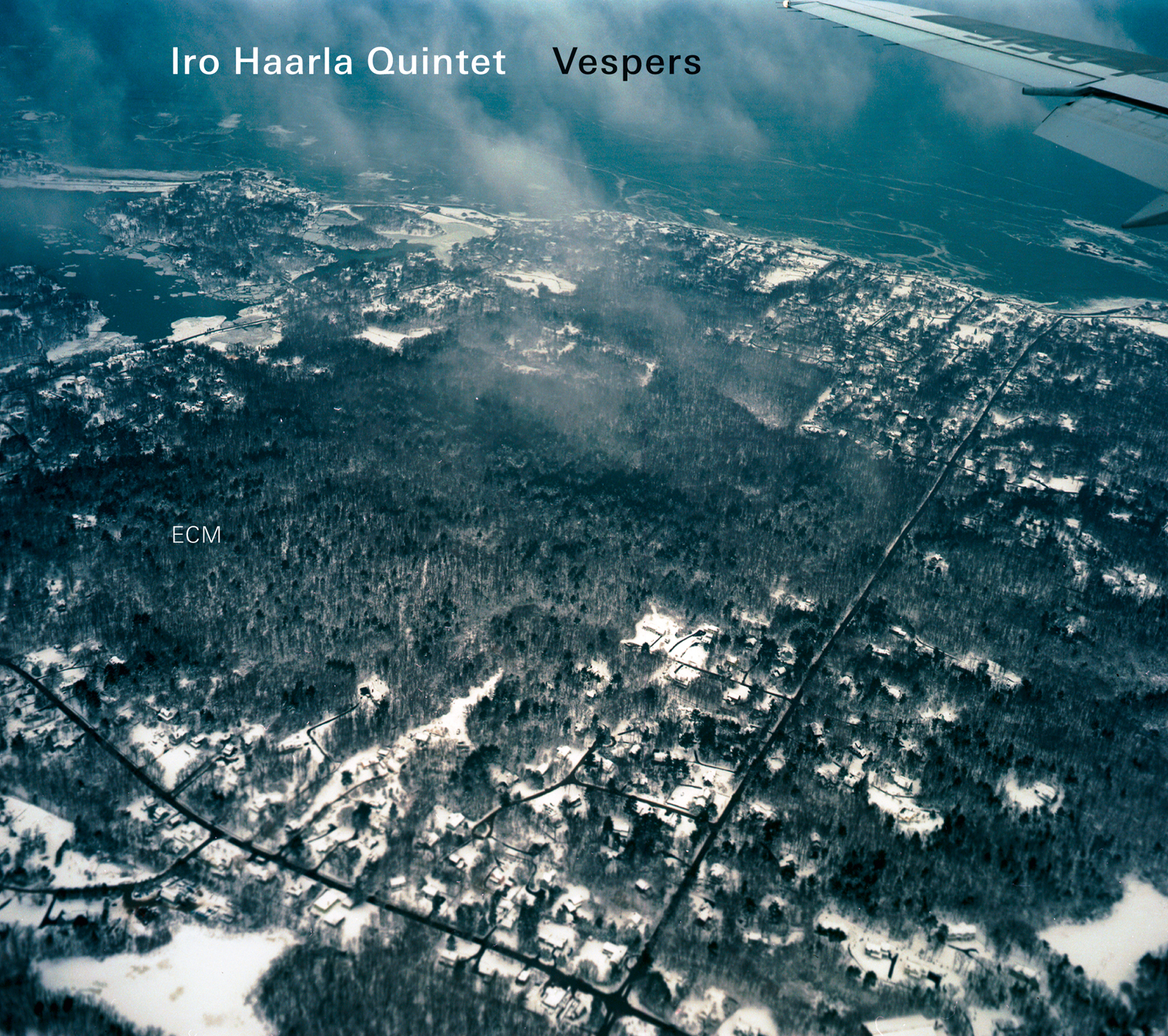
Haarla’s harp is like the clip of wing we see on the album’s cover, which lends context for the perspective we are so humbly granted. Her presence is equally atmospheric, every sweeping arc of light bringing us closer to the romantic blood that nourishes her themes. She combs our fears of flying from tangled minds, eschewing outright virtuosity for melodic integrity. The slowly turning mobile of “A Port On A Distant Shore” is a fine example in this regard. Seim’s tenor heightens the aerial sensibilities, each turn a children’s song resurrected by the lips of memory. The title track in the singular is more of the same. Dedicated to Haarla’s father, it stews in the nocturnal air of its eponym and unfolds the art of travel as if it were an accordion book. Both horns are a touch mournful here and through the keys link a chain of paper and ink, of action and word. Seim stretches his throaty limits and wails across the sky, ever the nomad holding his possessions to a body as slim as they are. Eick cries as if singing, sliding down a slope of ice and forgotten temptations into the view of “A Window Facing South.” Plush swells of harp strings accented by spark of cymbal and wick of bass breed color in the brass. The dialogue between Haarla and Eick here is remarkable—one a watery shimmer, the other a mermaid frolicking beneath. Meanwhile, Krokfors plays the part of a transient artist who commits bold lines to his sketchbook, drawing us into “The Warm Currents Of The Sea.” Much of that warmth is found in Haarla’s skeletal pianism. She paints impressionistic waves of sorrow and fondness in equal measure, lingering on notes as if they were incantations, the horns rolling over one another in foamy tide. The album’s highlight is by far “Satoyama.” The title is a Japanese term that refers to the area between mountain and flat land, and symbolizes the meeting of topographies at work in the album’s every tune. Seim now converts to soprano, trading flight patterns with trumpet over a snowy landscape. “The Shimmer Of Falling Stars” is a time-lapse photograph given life through music and shares the throne with its predecessor. Strained highs from Seim create a plangent emotional effect. Yet the journey must end, “Returning Home” in a slow drizzle nonetheless stirred by a need to move forward. The luscious, John Taylor-esque pianism and diaristic bass solo exhale the final “Adieux,” as much beginning as end. Eick carries us out, if not down, returning us to Earth for a soft and bittersweet landing.

Vespers feels like a winter’s morning. When you first walk into it, the air is frigid and still. One deep breath, however, and its crisp freshness invigorates. You are awakened. You are ready.

(To hear samples of Vespers, click here.)

Trygve Seim/Andreas Utnem: Purcor (ECM 2186)

Purcor

Trygve Seim
Andreas Utnem
Purcor

Trygve Seim tenor and soprano saxophones
Andreas Utnem piano, harmonium
Recorded May 2008 at Tøyen Kirke, Oslo
Engineers: Jan Erik Kongshaug and Peer Espen Ursfjord
Mixed at Rainbow Studio, Oslo by Jan Erik Kongshaug, Manfred Eicher, Trygve Seim, and Andreas Utnem
Produced by Manfred Eicher

After a 13-year odyssey of collaboration, the duo of saxophonist Trygve Seim and keyboardist Andreas Utnem at last plays under ECM’s microphones in Purcor. Dubbed “Songs for Saxophone and Piano,”  Utnem calls more rightly calls it a program of “improvised church music.” In 1997, Utnem, a practicing liturgical composer, invited Seim to participate in select services under the auspices of Norway’s Church City Mission foundation. The result was a relationship that persisted and which manifests an intimate knowledge of context and practice in this session of 14 pieces that include settings of the Mass Ordinary, music for the stage, improvisations, and a reimagining of “Bhavana,” originally of Seim’s Different Rivers.

A beautiful and intimate album that belongs right alongside Stella Malu, Purcor strains its sentiments through a reductive mesh that distills only the purest extract of each melody. Seim’s breathy tone carries experience in its pockets, which it drops in methodical, dripping handfuls in the opening “Kyrie.” Feathered like the edge of an avian dream, it lisps at the edge of a time when mouths wandered in search of tongues. The album’s splintered Mass is therefore less a structural element than it is the air that gives said structure meaning to begin with. It is the space it inhabits, the climate from which it shelters its inhabitants, the words spoken in its chambers. From the beautiful counterpoint of the “Credo,” through the John Surman-esque sopranism of the jubilant “Gloria,” and on to the heartwarming gentility of cause in the “Agnus Dei,” the duo establishes a devotional yet ecumenical atmosphere, a shroud that reaches forth like arms of light and wraps its sacred conscience around secular means. A “Responsorium” switches piano for harmonium, lending the feeling of an organ hymn. Along with the “Pater Noster,” it is a reflecting pool of the soul whose contemplation is naked before all in Heaven. Such are the wounds that give weight to the meaning of struggle—not threads but veins: vast internal networks, compact and held together by the skin of the Word.

One almost hears the bending of a bass note at the start of “Nu Seglar Vi Inn,” a whalebone of time stretched to its snapping point. The album’s folk roots are first fleshed here, though nowhere so deeply as in the “Praeludium,” which untangles those roots and partakes of the celebratory nectar that flows through them. Likewise in the “Postludium,” for which Seim elicits a bamboo sound from his instrument, a specter of the earth walking toward a horizon aflame. The album ends on a likeminded note with “Når Mitt Øye Trett Av Møye,” laying us like lanterns on the water and splashing us into dusk.

Intensities of contrast abound, moving from whisper to exultation in a few sweeps of a grandfather clock’s second hand. Seim and Utnem’s playing, more akin to painting than to performing, blurs color as if by brush of dream. Like the title track, the program as a whole is a fleeting, primordial lament, a fusion tears into laughter, diamonds into coal, coal into dust, and dust into prayer.

From cover to engineering to sequencing (note especially the placement of the solo harmonium “Solrenning”), this is a quintessential ECM production.

(To hear samples of Purcor, click here.)

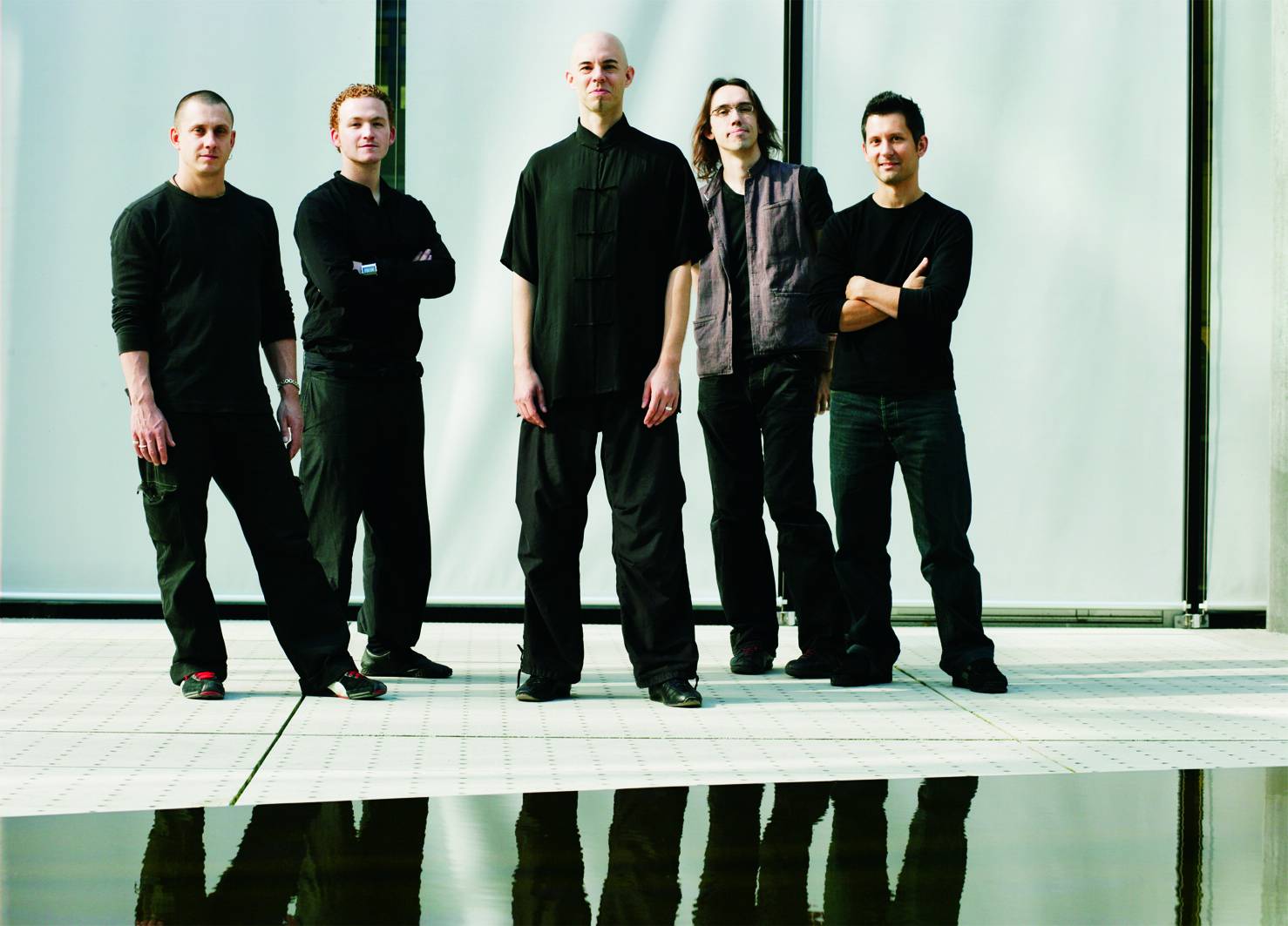
Nik Bärtsch’s Ronin: Llyrìa (ECM 2178)

Llyrìa

Nik Bärtsch’s Ronin
Llyrìa

Nik Bärtsch piano
Sha alto saxophone, bass clarinet
Björn Meyer bass
Kaspar Rast drums
Andi Pupato percussion
Recorded March 2010, Studios La Buissonne, Pernes-les-Fontaines
Engineers: Gérard de Haro and Nicolas Baillard
Produced by Manfred Eicher

Sometimes philosophies are not written but sounded. Nik Bärtsch and his renegade Ronin quintet demonstrate an assemblage of both. In taking the art of jazz to such internal heights, the Swiss pianist and band mates Sha (reeds), Björn Meyer (bass), Kaspar Rast (drums), and Andi Pupato (percussion) autopsy the body of the score and turn it into a netted form of improvisation: with each element carefully measured and weighed, one cell osmoses into the next. Thus are Bärtsch’s numbered “Moduls” nurtured through understated rhythms and potent denouements. This third album for ECM establishes new precedent in Ronin’s ongoing development, working seedlings into a softer mush.

Ronin

Cycles of extro- and introversion are ingrained into every motive. And while their overall structure has loosed its seams in comparison to past efforts, the spaces within it allow wider avenues of un-driven soil. The modular approach still applies, now more germinative than prescriptive. The contrapuntal flavors of “Modul 48” between reed and keys draw moods with parallel lines, while the walking bass adds nostalgic perpendiculars, holding each tick of the metronome like a gumdrop on the tongue and letting it dissolve just a little bit before biting into its sweetness. Subliminal reed work diagrams a dance that is too old to be forgotten yet too new to be remembered. The subtle crosshatching that marks every tune is particularly apparent in “Modul 52.” In this more playful piece, the interactivity that Bärtsch shared with Sha in the previous track now grafts onto Meyer in similar fashion. Threading the needle with neon, peaks shine all the more against whispering strings and other delicate infusions.

Llyrìa is a marked departure, for while it still lays into the hipness that brought the band to such prominent attention, there’s an almost quantifiable level of development and maturity, especially in “Modul 55,” of which drums and bass mark the passage of time with affectionate, cinematic quality. “Modul 47” embodies another transformation, for while most carry over briefly into sparkling fulcrums, here the fulcrum becomes the introductory drop and poises us immediately at the lip of a melodic abyss, which rather than staring back at us listens back at us, gauging our reactions in real time and pressing our faces into the illusions we so dearly know. With a propulsive grace, the group flowers forth in “Modul 53” with a gentle, sauntering gravity that lets go until all that’s left is suspension. A remainder of balladic energy seeps into “Modul 51” with darkened edges. Things take a more propulsive turn a third of the way through and betray new percussive synapses at every turn. “Modul 49_44” ends the set with a redux of Holon’s Model 44. Its contrast of density and sparseness works a veiled magic with light intact, despite its reliance on shadows.

In case you’re wondering, the album’s title refers to a bioluminescent deep-sea creature that has so far defied biological classification, but which nevertheless thrives on currents dark and far from our ken. Like Ronin’s moniker, it is masterless and carves its own path of dedication beyond death. Although the pieces are for the most part precisely notated under Bärtsch’s pen, here they take on aquatic lives of their own. The slightest twitch blossoms from within each instrument, making for a picturesque flip of the postmodern tail. With such soulful and intimate chaos reigned in by shifts of regularity, the tessellation can do naught but sing.

(To hear samples of Llyrìa, click here.)

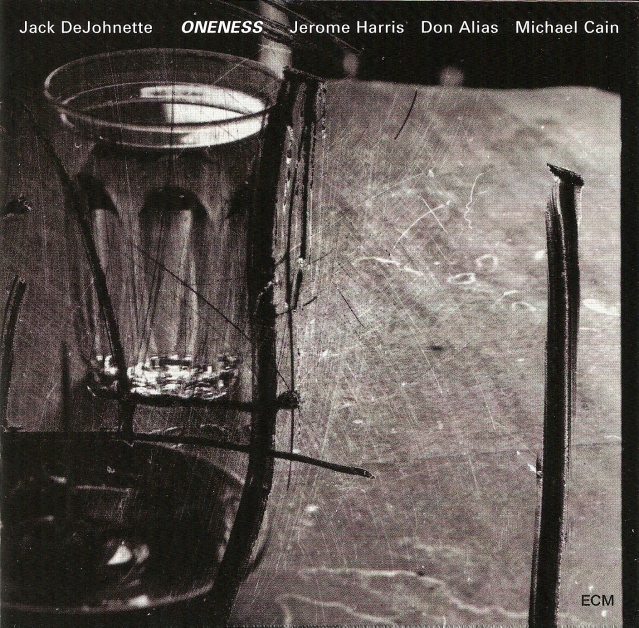
Jack DeJohnette: Oneness (ECM 1637)

Oneness

Jack DeJohnette
Oneness

Jack DeJohnette drums, percussion
Jerome Harris electric guitar, bass guitar
Don Alias percussion
Michael Cain piano
Recorded January 1997 at Right Track Recording Studios, New York
Engineer: Tom Mark
Produced by Manfred Eicher

It’s safe to say that drummer Jack DeJohnette has not only changed the face of modern jazz, but has long been one of its greatest physiognomers. While his earlier and more eclectically minded Special Edition has received due (re-)recognition with an Old & New Masters box of its own, be sure to follow its trajectory to the Oneness of both group name and album title. Fellow percussionist Don Alias fleshes out DeJohnette’s already rich sound, joining Michael Cain, whose lyrical pianism graces his own leader date for ECM, Circa, and bassist Jerome Harris, whose collaborations with Sonny Rollins (through which he first met DeJohnette), Bill Frisell, and George Russell have lent a likeminded universalism to his sound.

The percussion-only “Welcome Blessing” says it all: here, in the heart of music-making, lies an empty floor just waiting for the kaleidoscopic patter of feet and light to make its creaks and imperfections known. These are the spaces that seem to fascinate DeJohnette, who makes of each a full-handed gesture. The brevity of this blessing is also its message: that, in a world where freedom of speech runs rampant, sometimes the shortest statement is the strongest. At the other end of the spectrum is “From The Heart / C.M.A.” This nearly half-hour diptych closes the album with an album, and proves that even the broadest sentiments can have the simplest philosophy. Carrying over some of the delicacies of preceding tracks while also blending the protracted testimonials more familiar to a Keith Jarrett session, Cain’s jigsawed pianism undoubtedly draws influence from DeJohnette’s longtime band mate in characteristic progression from a low, earthy drawl to sparkling dandelions of exposition. If there is oneness to be had, it is here in DeJohnette’s mind-meld with Harris, each providing as much rhythm as melody. The surprise entrance of acoustic bass guitar lends tactile flavor.

In the liminal tracks, we find ourselves first “Free Above Sea.” Evanescent and hopeful, DeJohnette’s steadiness here insures that the roiling pianism finds its path. The free-flowing “Priestesses Of The Mist” reveals the heartbeat of DeJohnette’s craft. It begins with a whisper, a wind, a sweep of the minute hand. The pianism is ever so fragile here, moving weaver’s hands through strings as invisible as they are audible. “Jack In” is a smoother train, gliding along tracks of felt-lined hand drums and cymbals. Cain soars, open-throated, and inspires the album’s grooviest passages, especially in Harris’s picking.

A free and easy session that is equally comforting to listen to, Oneness makes no demands. It is a calm breeze flowing within and a huge step in the progression of DeJohnette’s sound, for it is he who maintains the most color and downright melodic sensibilities. He is the music’s conscience. Thus defined, each piece billows like tattered cloth with stories to tell, histories emanating from every fray.

This is one of DeJohnette’s most personal. You can feel it.

<< Tomasz Stanko Septet: Litania (ECM 1636)
>> Dino Saluzzi/Rosamunde Quartett: Kultrum (ECM 1638 NS
)

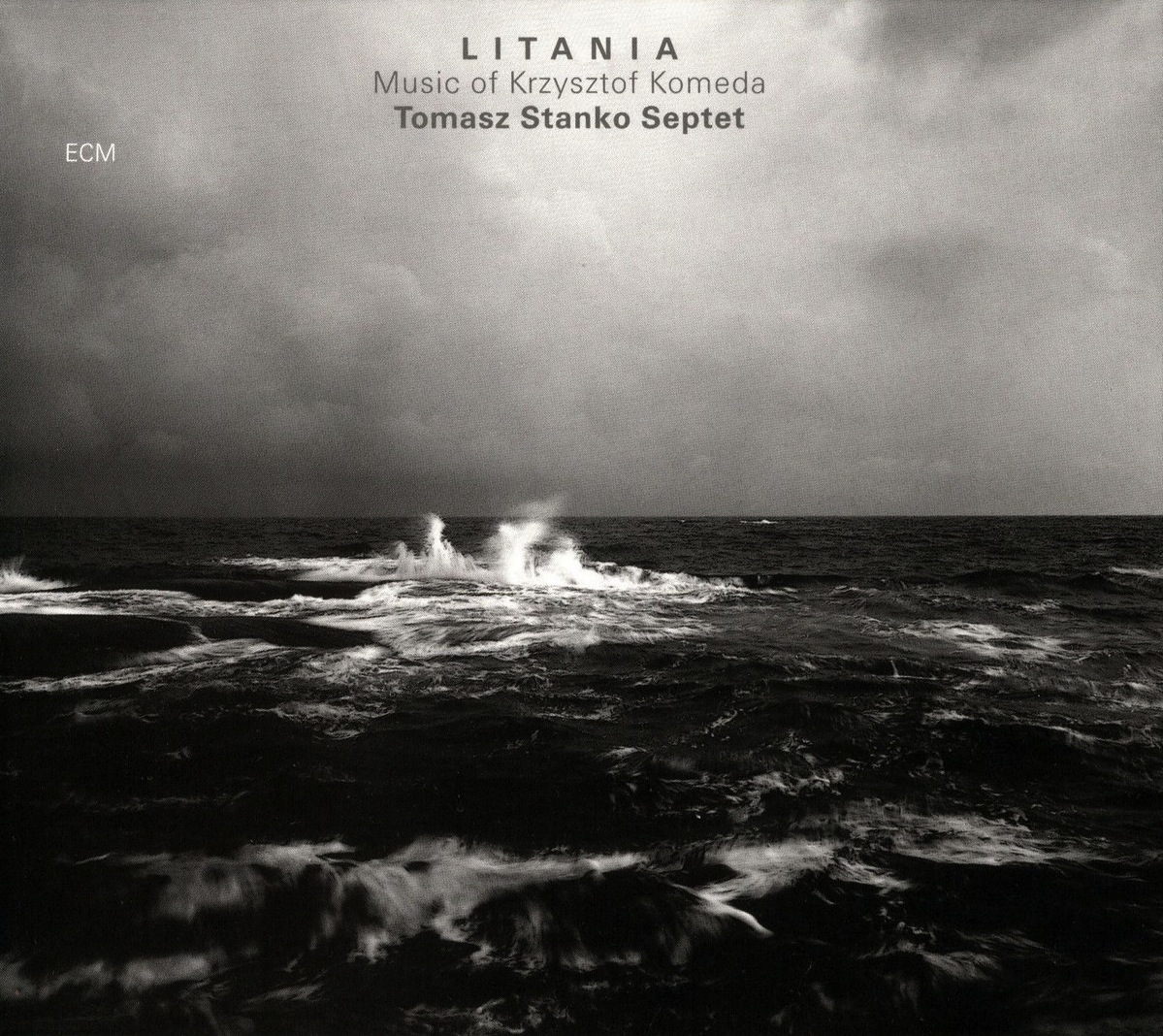
Tomasz Stanko: Litania (ECM 1636)

Litania

Tomasz Stanko
Litania – Music of Krzysztof Komeda

Tomasz Stanko trumpet
Bernt Rosengren tenor saxophone
Joakim Milder tenor and soprano saxophones
Terje Rypdal electric guitar
Bobo Stenson piano
Palle Danielsson double-bass
Jon Christensen drums
Recorded February 1997 at Rainbow Studio, Oslo
Engineer: Jan Erik Kongshaug
Produced by Manfred Eicher

Film composer and jazz pianist Krzysztof Komeda (1931-1969) is the subject of trumpeter Tomasz Stanko’s fourth ECM date as leader, following BalladynaLeosia, and Matka Joanna. The latter’s nod to cinema is further defined on Litania. Best known stateside for his collaborations with Roman Polanski, scoring such classics as Rosemary’s Baby and Knife in the Water, Komeda was more importantly one of the great pioneers of Polish jazz. Developing his music at a time when the Communist government condemned such “bourgeois” activity, Komeda—incidentally, a protective stage name—brought his fascinations into reality with the Komeda Sextet, whose performances paved the way for modern jazz in Poland and soon caught the attention of filmmakers. The festival circuit, however, was where his ideas truly fomented—so much so that a young Stanko would form the Komeda Quartet with saxophonist Zbigniew Namysłowski, bassist Roman Dyląg, and percussionist Rune Carlsson, each of whom took Komeda’s inspiration duly to heart. Before that, however, Stanko would collaborate with Komeda himself for the 1965 album Astigmatic, considered one of the most important in European jazz history. This record seeks to revive the Komeda of apartment jams and night club gigs, the Komeda who set the hearts of Stanko and so many of his generation aflame with a love of free expression, the Komeda both on and off the silver screen.

The Litania project is the result of producer Manfred Eicher’s abiding interest in music-cinema connections more broadly, in Komeda’s sound-world more specifically, and in seeing it realized by the composer’s closest musical associate. The fit couldn’t be better, as Komeda was one similarly interested in expanding the sound of jazz in ways typically reserved for classical music and its instruments.

His compositions have the distinct quality of retaining a somber edge at their most upbeat and a sparkling hope at their most ponderous. Case in point: the heavy yet pliant theme of “Svantetic,” (dedicated to Svante Foerster, friend and Swedish poet) which opens the program with a flirtatious eye. The group’s legato nodes of thought speak through some healthy soloing on keys (Bobo Stenson) and tenors (Bernt Rosengren and Joakim Milder). An intimate drum solo from Jon Christensen engenders squealing final words from Stanko, who leads the band to a brighter, more tumultuous sea and establishes a palette for all to follow. After a viscous intro, “Night-Time, Daytime Requiem” (dedicated to John Coltrane) floats the piano down a river of its own resonance. Horns and drums to take up the call, wavering with dark urban energy before opening into a tenor solo that flicks like a lighter, a flint to stone. Notable here is the interaction between Stenson and bassist Palle Danielsson, their hearts aflutter with the dedication of their charge, if not the charge of their dedication. The album’s most cinematic moments come from Stenson, especially in the latter half of this epic track, dark and roiling yet somehow captured in stasis like the cover photograph. Stanko’s pointillist exchange with tenor foils a peaceful, ruminative finish. The breezy rhythm section of “Ballada” (Knife in the Water) makes for another memorable Stanko vehicle, while the title track, its edges tinted like the pages of a well-read book, features more powerful understatements from both tenors. But Stenson’s waves just keep returning and his breakers of “Repetition” dissolve on shores of stagnant memories, given voice through wind and reed. With Charles Lloyd-esque contemplation, “Ballad for Bernt” carries its melodies across fuzzy dreams and even fuzzier borders of intimation. This tune is dedicated to Bernt Rosengren, a pivotal figure in Sweden, where he and Don Cherry invigorated the local jazz scene.

Although the album header says “Tomasz Stanko Septet,” this is in fact a sextet album, with guitarist Terje Rypdal guesting only on the last two tracks. That being said, he adds a mosaic of haunt to “The Witch,” which begins like a Jan Garbarek excursion before Rypdal drizzles his electric in reams of sparkling shadow. He adds dedicatory color also to “Sleep Safe And Warm” (Rosemary’s Baby), the last of three versions that anchor these waters.

Stanko enters these waters not like a diver, but rather like a crocodile, sinking unawares and peeking above the surface only when necessary. Unblinking, alive, and considered, his heartfelt arrangements ensure that the Komeda legacy breathes afresh. The result is muscular jazz with a crystal-clear sense of direction. It knows exactly where it’s going, because it’s already been there. Says Stanko of Komeda, “He showed me how simplicity is vital, how to play the essential. He showed different approaches, using different harmonies, asymmetry, many details. I was very lucky that I started out with him. Would he have approved of this record? I hope so.”

As you will know once you listen to it, no hope is needed.

<< Charles Lloyd: Canto (ECM 1635)
>> Jack DeJohnette: Oneness (ECM 1637
)

Arild Andersen: Hyperborean (ECM 1631)

Hyperborean

Arild Andersen
Hyperborean

Tore Brunborg soprano and tenor saxophones
Bendik Hofseth tenor saxophone
Kenneth Knudsen keyboards
Arild Andersen double-bass
Paolo Vinaccia drums, percussion
Cikada String Quartet
Odd Hannisdal violin
Henrik Hannisdal violin
Marek Konstantynowicz viola
Morten Hannisdal cello
Recorded December 1996 at Rainbow Studio, Oslo
Engineer: Jan Erik Kongshaug
Produced by Manfred Eicher

“What was I to do when I saw him soar through the air in broad daylight and walk on water and go through fire slowly in foot?”
–Cleodemus

If you think the title of Hyperborean sounds enchanting, wait until you hear the music. Arild Andersen’s evocation of the Greek mythological race plies the shimmering backdrop from which its thread comes unraveling and weaves an entirely new one in its place. Like the chariot of Apollo, who rides to the north three months out of the year to join the Hyperboreans, it marks the sky with seasonal precision. Such is the backstory of this 1995 Norwegian Molde Festival commission, which sought a large-scale suite from the bassist. Andersen took the opportunity to expand his sound, writing for string quartet for the first time. After the success of the concert, Andersen returned to the material and appended “Patch Of Light,” which introduces the album. Andersen: “In general, the role of the strings in the music was strengthened and improved by Manfred Eicher’s input. He had a lot to add in terms of phrasing, dynamics and emphasis, and in the relationship of the string writing to the jazz improvising in the mix.” Eicher’s fingerprints are apparent every step of the way and represent a particularly successful marriage of engineering, behind-the-scenes thought, and performance. He also brought in the Cikada String Quartet for the first of many label collaborations. Saxophonists Tore Brunborg (longtime member of Andersen’s Masqualero outfit) and Bendik Hofseth (who appeared on his earlier Sagn) make for an organic counterpoint of styles. Italian-born but Oslo-based drummer Paolo Vinaccia, who replaced Nana Vasconcelos in Andersen’s “folk” group in 1993, has also made notable appearances on Terje Rypdal’s Q.E.D. and Skywards. Danish pianist Kenneth Knudsen is a longtime friend of Andersen and draws on his background both with Miles Davis and Palle Mikkelborg.

“Patch Of Light” is indeed a thread, a hand-span of strings that exposes its core as would a Gavin Bryars chamber work. Welcoming the night as if it were its own body, it sheds starlight in place of skin. So it is with the title track, which draws finer alloys from these beginnings and holds them like tuning forks to Andersen’s bass, which though contemplative brings meteoric streaks of implicit fervor. Meanwhile, Vinaccia’s delicate patter is the tick of a train whose tracks are laid by the art of soliloquy. And just when you think this landscape might not be populated, in strides “Duke Vinaccia” with saxophonic servants in tow. The heights are stratospheric, yet we feel them in the gut, hanging from the jungle gyms of our rib cages like children. Pianistic echoes from Knudsen, microtonal and gentle, blow off the foam of life’s new quaff before sipping the ale beneath. “Infinite Distance” is a more upbeat affair, delightfully syncopated and brimming with soul from tenor, a robust link in a minimal chain of solos. “Vanishing Waltz” evokes a fadeout into the distance, as if it were the train of the Duke’s procession, a band of merry subjects floating into the sunset. The plush beginnings of “The Island” cradle a heavy tenderness from Andersen, whose instrument has by now become a cognizant body. Trembling and untouched, it bids us to listen to its “Invisible Sideman,” to see things through a translucent veil in the window, billowing to the rhythm of dreams. “Rambler” is Hofseth’s purview. Quivering with lovely agitation and tunefulness (one may feel tempted to compare him to Garbarek, but we find here a more restless brilliance), it dances among Vinaccia’s pincushioned plains. These curves continue their journey in “Dragon Dance” and on through to “Stillness,” where we get the album’s most soulful saxophonism. Last is the heartfelt “Too Late For A Picture,” a forlorn and credit sequence, an epilogue for the ends of the earth.

The strings are our ever-present reminder of peace, rungs on a ladder of light that must be scaled and descended simultaneously to reach any sort of destination. The prevalence of space and “unbeing” names Hyperborean as an intangible reality where perhaps all music begins and ends. Like a jellyfish, it needs ocean to express its proper shape. And what better place to swim than in our hearts?

(Incidentally, since making this record, Andersen formed a trio with Brunborg and Vinaccia improvising on this album’s material. You can see my review of the latest incarnation of that trio, with Tommy Smith in place of Brunborg, here.)

<< Brahms: Sonatas for Viola and Piano (ECM 1630 NS)
>> Stephan Micus: The Garden Of Mirrors (ECM 1632
)

Julia Hülsmann Trio: Imprint (ECM 2177)

Imprint

Julia Hülsmann Trio
Imprint

Julia Hülsmann piano
Marc Muellbauer double-bass
Heinrich Köbberling drums
Recorded March 2010 at Rainbow Studio, Oslo
Engineer: Peer Espen Ursfjord
Produced by Manfred Eicher

For its sophomore ECM outing, the Julia Hülsmann Trio looks deeper into the mirror. The eponymous pianist dovetails with bassist Marc Muellbauer and drummer Heinrich Köbberling for a set of 12 introspective, but never indifferent, tunes. Hülsmann’s past experience with vocalists shows in her composing, as well as in the restraint (engendered by producer Manfred Eicher’s presence) to let lines sing in the absence of extraneous color. Her “Rond point” introduces the lush sound-world before us with a pianism that is gently insistent and provides a soothing sky for some early bass flights. The forested tenderness thereof primes us for the powerful considerations of “Grand Canyon,” which features some of Köbberling’s finest drumming early on in the set. Yet just when we think we’ve found our hook, the attractive spin between Hülsmann and Muellbauer hooks us back. Hülsmann’s stony chords etch a river’s path through eons of thematic searching, settling on an almost prayerful style. Such gives-and-takes characterize a session brimming with sense and unanimity (though nowhere more so than in “Juni”). Even the playful dissonances of “A Light Left On,” coming together and apart like shadows in drawn window shades, feel plush with logic in the wake of their unexpected ending. And while Hülsmann’s blossoms of creativity are bright in “Lulu’s Paradise,” a veritable children’s illustration come to life, it is her Thelonious Monk tribute, “Who’s Next,” that expresses her intuition for thematic mazes to the utmost: the start is also the finish. Another highlight from her pen is “(Go And Open) The Door.” Glowing like embers in a fireplace whose name is youth, it whispers hints of “Frère Jacques” over the music’s surface. With an undeniably oceanic energy, it crashes over shoreline rocks, leaving Muellbauer’s loveliest solo of the set in full lighthouse view before transitioning seamlessly into another from Hülsmann, who stokes the band’s locomotive furnace to heightened momentum. Even at such relative peaks of focus, the trio maintains such depth of control that the full landscape never once fades from view.

JHT
(Photo by Volker Beushausen)

Whether or not because of his history with the instrument, Eicher has culled an especially skillful roster of bassists over the years, to which we can emphatically add Muellbauer. While I hesitate to pick a star out of such a democratically arranged date, it is he who shines with the most varicolored light. Aside from the fluid soloing referenced above, he contributes two originals, of which “Ritual” is the album’s smoothest. It is a masterful track on all counts, and one that would fit hand-to-glove into any Bobo Stenson Trio record. Hülsmann’s gorgeous grounding and engagingly jagged paths make this the standout of the album. Köbberling also offers two of his own, contrasting the heartfelt “Storm In A Teacup” with the porous renderings of “Zahlen bitte,” filled gap for gap by Hülsmann’s unerring ear.

The set is rounded out by an Austrian-German show tune entitled “Kauf dir einen bunten Luftballon.” This 1940s ditty piles on the nostalgia tenfold, wafting through the years like mist after rain. Its abbreviated denouement speaks to the ephemeral nature of life—a subtle and perhaps intended theme, as the song was a favorite of Hülsmann’s late mother. The crystalline recording, courtesy of engineer Peer Espen Ursfjord (whose attention to detail also gives Purcor is breathy edge), allows everything from the brush of dampers on strings to the shifting of the very air to resonate with purpose.

One can interpret the title of Imprint in a variety of ways, but I choose to see it in the psychological sense, whereby living organisms are shaped and influenced by their environment and interactions with others: a fitting analogy for the fulfillment of the piano trio as an emblematic combination of the genre, and for the label that has boiled it down to a science.

(To hear samples of Imprint, click here.)

Enrico Rava: On the Dance Floor (ECM 2293)

On the Dance Floor

Enrico Rava
Parco della Musica Jazz Lab
On the Dance Floor

Enrico Rava trumpet
Andrea Tofanelli trumpet, flugelhorn
Claudio Corvini trumpet, flugelhorn
Mauro Ottolini trombone, tuba
Daniele Tittarelli alto saxophone, flute
Dan Kinzelman tenor saxophone, clarinet, bass clarinet
Franz Bazzani keyboard
Giovanni Guidi piano, Fender Rhodes, toy piano
Dario Deidda bass
Marcello Giannini electric guitar
Zeno de Rossi drums
Ernesto Lopez Maturell percussion
Recorded live 20 May and 30 November 2011 at Auditorium Parco della Musica, Rome by Massimiliano Cervini and Roberto Lioli, respectively
Mixed by Stefano Amerio, Enrico Rava, Mauro Ottolini, and Manfred Eicher
Produced by Manfred Eicher

The story of On the Dance Floor is destined to be a highlight of ECM apocrypha. Following the extensive media coverage of Michael Jackson’s death in 2009, Enrico Rava immersed himself in the King of Pop’s unparalleled songbook. “It became clear to me that for years I had ignored one of the great protagonists of 20th-century music and dance,” says the Italian jazz trumpeter. “A total artist, a perfectionist, a genius.” Going against the grain of mainstream opinion, he discovered an affinity for the relatively recent albums, notably HIStory (1995) and Invincible (2001). All of which makes this set of whimsical arrangements by Mauro Ottolini that much more heartfelt for being rough around the edges and, at times, obscurely chosen. Gone are the autotuned drones of studio-only memorials. In their place is an incendiary performance, recorded live at Rome’s Auditorium Parco della Musica, from which Rava’s backing band gets its name. And in this respect we have something more than a tribute. Indeed, it is a cannonball dive into the popular pool.

Rava“I felt the necessity to delve deeper into Jackson’s music
by adding something of myself to it.”

There is a telling sequence in Spike Lee’s 2012 documentary, Bad 25, during which one interviewee after another is moved to wordless tears when asked about MJ’s sudden passing. It is this poignancy, this inability to express an overwhelming sadness, that keys us into the importance of one man’s contributions to musical art. In light of this, what better way to begin the Rava program than with “Speechless”? The almost funereal piano intro would seem to indicate as much and gives us some moments to reflect on the legacy we are about to encounter, albeit in big band form. Somber horns weave a floating pyre, from which Rava sounds his dedication, accompanied only by harp before Dario Deidda’s bass draws a pliant line of tenderness. Gorgeous, breathy alto work from Daniele Tittarelli forms the lifeblood of a song that in its original form begins and ends with MJ alone:

Your love is magical, that’s how I feel
But I have not the words here to explain
Gone is the grace for expressions of passion
But there are worlds and worlds of ways to explain

Ottolini’s present version dutifully preserves these bookends, only now as a web of brass. This is followed by a sparkling rendition of “They Don’t Care About Us” (also off HIStory), which begins like an Art Ensemble of Chicago excursion before sliding into the Double Dutch chants that so distinctly mark the original. It brings a range of sounds to fruition, from an airy, orchestral sensibility via synth strings (which allude briefly to “Who Is It” from 1991’s Dangerous, otherwise unrepresented) to Dan Kinzelman’s spate of enraptured tenor discourse, and all of it threaded by Rava’s triumphant charge in a steep of delightful Reggae flavor.

From an icily evocative opening, “Privacy” (Invincible) launches into a potent chord progression that recalls Nine Inch Nails’ “Closer” and flows with a swanky grittiness around a thread of electric guitar. The latter provides pulse and vocality to “Blood On The Dance Floor,” from the eponymous 1997 remix album. Yet here is where the project begins to reveal its true character in the lightness of approach, which at moments detracts from the feelings with which seasoned fans will be readily familiar. The rather straight-laced syncopations also eject a few nuances from the original song. Another curious thing happens with “Little Susie,” which, to one who doesn’t know the original, might seem a slow but nevertheless swinging tune, all the while missing out on both its lyrical power and controversial artist Gottfried Helnwein’s accompanying image in the HIStory CD booklet:

Little Susie

Somebody killed little Susie
The girl with the tune
Who sings in the daytime at noon
She was there screaming
Beating her voice in her doom
But nobody came to her soon…

Hints of this tragedy remain in the music box intro before giving way to Rava’s caramel tone, which unleashes washes of sepia and bleeding watercolor. Despite the gothic waltz-like qualities and sensitive subject matter, it breathes here with a far more positive life. Its pairing with “Blood On The Dance Floor” is a clever one, for both feature a Susie as protagonist. In one, she is victim; in the other, she is predator. The obligatory nod to “Thriller” suffers from a similar lack of context, while also acting as a prime vehicle for Rava’s superbly considered acrobatics. The fluidity of his virtuosity—at age 72, no less—is a wonder to behold, as is the trombone solo from the arranger himself. And one can’t help but revel in the free-for-all that erupts before the fanfare.

A surprising turn comes in Deidda’s solo bass rendition of “I Just Can’t Stop Loving You.” This intimate yet playfully inflected look at a classic tune from 1987’s Bad is remarkable, if abbreviated (it elides the middle 8), and paves the on-ramp to a rollicking “Smooth Criminal.” As the song that finally won Rava over to the MJ ethos, it delivers vitality in the soloing, yet one is hard-pressed to explain the blatant note change in the chorus. “History” provides a fitting summation, leaving us with a pleasant aftertaste as we go our separate ways to the tune of Rava’s impassioned extroversion.

Nestled among all of these is his favorite: the Charlie Chaplin-esque “Smile,” which finds the trumpeter at peak soul. One can almost feel the grain of black and white, its old-time charm lifting from the screen in a nostalgic dance. This tune works best of all, if only because it and its source pay homage to something that is beyond them both.

Although I grew up with Thriller in my veins, I concede to Rava insofar as MJ’s later work is far better than it is often made out to be. That being said, it is difficult to oust Bad from the throne it occupies in my listening heart. For lifelong fans like myself, Rava’s redux requires a few spins in order to take the album on its own terms, if only because the originals are so ingrained into our very DNA through years, and countless more to come, of experiential listening. Here one must encounter them anew.

It’s easy for us to talk about artists who lived long ago as if they were somehow among us. And yet, how do we evoke an artist whose absence is still fresh, whose life and work continues to intersect with so many millions of others? With all the MJ tribute albums already out there and those sure to come, drawing compilations of his preexisting or unfinished work, this one takes a newfound love for what drove him and turns it into something passionate and fun.

In the end, On the Dance Floor lacks the voice. By this I mean not only MJ’s phenomenal pipes, but also the words behind them. What distinguishes his later work is its mounting critique against an unforgiving media that searched for every possible opportunity to lambaste one of the most important artists of our time, as well as a more daring interest and insight into the darker corners of the human psyche (“Little Susie” being a prime example). By the same token, in spite of the many tributes which, ethically or not, have capitalized on his passing, here we have something joyous, uplifting, affirmative.

One can therefore see these as translations of a vibrant canon. Like translations, they are enjoyable enough on their own terms, yet how fortunate that the originals are accessible beyond all language barriers, for MJ will forever be a language unto himself.

(To hear samples of On the Dance Floor, click here.)

MJ
R.I.P. (1958-2009)

Christian Wallumrød Trio: No Birch (ECM 1628)

No Birch

Christian Wallumrød Trio
No Birch

Christian Wallumrød piano
Arve Henriksen trumpet
Hans-Kristian Kjos Sørensen percussion
Recorded November 1996 at Rainbow Studio, Oslo
Engineer: Jan Erik Kongshaug
Produced by Manfred Eicher

Of course it hurts when buds burst.
Otherwise why would spring hesitate?
–Karin Boye (trans. Jenny Nunn)

Pianist Christian Wallumrød makes his ECM debut with No Birch, an album of uncompromising melodic integrity and further proof that ECM’s mining of Nordic jazz ore continues to yield sonic jewelry like no other. The press release places the album somewhere between Morton Feldman minimalism and Paul Bley free play, and certainly we can feel a likeminded appreciation for negative space throughout. Yet beyond this lies an active, fluttering heart that is so full of expressivity that it must pace itself in lieu of bursting.

Wallumrød

Wallumrød is the youngest member of the group. From humble beginnings playing piano accompaniment at church (hence the reflective track “Before Church”) to intensive studies at Norway’s famous Trondheim Conservatory, where he developed an abiding interest in composition, he has found under producer Manfred Eicher’s purview the appropriate balance of space and atmosphere to open his emotional floodgates.

Henriksen

Freelance trumpeter Arve Henriksen has collaborated with a number of ECM stalwarts, including Jon Balke, Anders Jormin, and the great Misha Alperin, the latter of whom remains a touchstone of inspiration for this trio.

Sørensen

Take special note that Hans-Kristian Kjos Sørensen is credited as percussionist and not drummer, and you begin to imagine the group’s flavors before note one. Conservatory trained and much sought-after in contemporary jazz and classical scenes, he adds the subtlest edge, his palette elemental in the truest sense.

As a unit, these three friends have been playing since 1996, but what we hear in “She Passes The House Of Her Grandmother” implies generations of affect. Touching its feet to tundra soil as if it were the sun, it is the breath of blood and memory made manifest in the here and now. The unspoken becomes the flower of reality, plucked from the “Royal Garden.” This solo from Sørensen unravels a single cathartic and metallic cry, bowed at the edge of sibilance and time and carried across a landscape that was once pasture, since bordered and named under the banner of rule. It is the pulse of the soil, given light above ground in “Somewhere East,” a representative track that describes its directions only so that we might be aware of the center from which our perspective is realized. So locating us in the moment’s energy, the music sways, rooted. Next is “Travelling” in three parts, and which features some of the most delicate trumpet playing I’ve heard in a long while. Breathy, almost shakuhachi-like, it curls its fingers one at a time around a full glass, which is then tipped and spilled through the veins of “Ballimaran” and “Watering.” In the wake of these flowing sketches, the halting pianism of “Two Waltzing, One Square And Then” and “Fooling Around” cleanses the palette before “The Gardener,” the most somber of the set, refills with bittersweet aperitif.

Wallumrød’s “The Birch” is the album’s red thread, a four-tiered refrain that wipes its theme with the nostalgia of a hand across a foggy window. Tender and seasonally inflected, it brings liturgical wonder to the trio’s sanctity, as deferential as the day is long.

<< Crispell/Peacock/Motian: Nothing ever was, anyway (ECM 1626/27)
>> Rosamunde Quartett: Webern/Shostakovich/Burian (ECM 1629 NS
)