Azimuth: “How it was then…never again” (ECM 1538)

Azimuth
“How it was then…never again”

Norma Winstone vocals
John Taylor piano
Kenny Wheeler trumpet
Recorded April 1994 at Rainbow Studio, Oslo
Engineer: Jan Erik Kongshaug
Produced by Manfred Eicher

Even at rare lackluster moments, the sporadic ruminations of vocalist Norma Winstone, pianist John Taylor, and trumpeter Kenny Wheeler never fail to grow in a depth of sound and color few trios can match. Yet Azimuth, as the group came to be known, was more than a triangular configuration, but a multifaceted statement on music as shapeable material. This exhumation of twilit pasts begins in “How It Was Then,” a survey of long-forgotten cotton fields bowing to the winds of passage. Stars open and close—each an eye on the verge of tears—to the rhythm of Taylor’s string patter. Such evocative touches abound throughout the session, paving stretches of empty road in “Looking On” and stirring up dizzying articulations in “Whirlpool.” As on previous Azimuth outings, Wheeler remains the voice of reason, foiling Winstone’s apparitional poetics with solid chromatics. He is the keystone of “Stango” (Stanko + tango?) and glows in his multitracked rendering of “How Deep Is The Ocean.” For her part, Winstone goes wordless in foggy scenes like “Full Circle,” but always with the tender signatures of Taylor’s plush commentary close at hand. Bobo Stenson’s “Mindiatyr” drops another nod to the ECM matrix, building careful reminiscence and holding us as the mind would cradle a memory. Because it feels so much like an ending, the fibers of “Wintersweet” that follow weave a cloak of epilogue and reprise Winstone’s gorgeous lyrics at the fore.

How it was then… is a genealogy of emotions and places, a tale of winter blooms that hook their stamen onto errant sunrays and uproot themselves into weightless life. Though not as essential as earlier work, it waits all the same with bated breath and open arms.

<< Bley/Parker/Phillips: Time Will Tell (ECM 1537)
>> Prague Chamber Choir: Dvořák/Janáček/Eben (ECM 1539 NS)
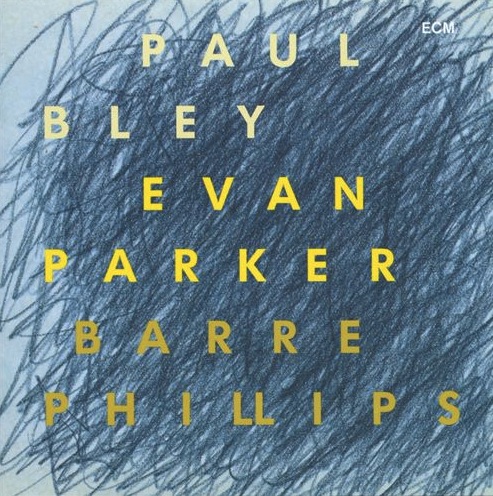
Bley/Parker/Phillips: Time Will Tell (ECM 1537)

Time Will Tell

Paul Bley piano
Evan Parker tenor and soprano saxophones
Barre Phillips double-bass
Recorded January 1994 at Rainbow Studio, Oslo
Engineer: Jan Erik Kongshaug
Produced by Steve Lake

That pianist Paul Bley, reedman Evan Parker, and bassist Barre Phillips had never played as a group before flipping the coin of Time Will Tell matters little. Whether you call heads or tails, you win. The fact that Phillips had played with the two who hadn’t emerges through the sensitive approach he elicits from each. By the same token, one cannot simply say that he tempers what we might be expecting from two powerhouses of the free improv universe. Rather, he spotlights the tenderness already flowing within. The 17.5-minute “Poetic Justice” is proof positive: a meander through darkening trees that breeds not solemnity but a fitful stirring of forest creatures. Parker plays the role of itinerant blues musician mumbling in his sleep. Beyond his chosen paths, the directions are unlimited, their inks varicolored, their maps heavily creased. The trio’s aesthetic borders on beat poetry, pops and whispers taking the place of requisite snaps. With a twang and bend, even a Ravelian shade in the piano, the music soars “Above The Tree Line.” Parker’s soprano, lilting through starlight with immaculate care, forms the top of a pyramid grounded in Phillips’s sands. In this chamber within a chamber, the footsteps of the spontaneous way echo in complex reinforcement. “You Will, Oscar, You Will” is another origami pact of inspiration in which one can almost hear the memory of Paul Motian wanting to join. “Sprung” guides soprano down an ant line of activity, circularly breathing while festooned from galaxies pregnant with impending doom—all making for a sort of agitation that is strangely moving. “No Questions” brings more loveliness into the equation, blowing like a soft curtain through the sunlit room of Andrew Wyeth’s Chambered Nautilus, where only yearning may catch itself from time to time in the reflection of a burnished bedpost. “Vine Laces” and “Clawback” are both wondrous bursts from Parker, who finds respective company with Phillips in one and Bley in the other. “Marsh Tides” promises a smooth jazz number, but instead breaks its fall with measured insight, as honest as it is unplanned, and brings us into “Instance,” another excursion of extended technique between Parker and Phillips, the latter drawing strings of rusted light through “Burlesque.” Shades of late-night happenings end in an abrupt inhalation without repose.

Something grandly intimate is taking place here, for while there may not be much to hold on to in this sound-world of fleeting statements, we are left with an overwhelming amount to mull over. The title of this album is therefore an appropriate one, for only time will tell whether or not its sounds will find a secure place in your listening.

<< Lena Willemark/Ale Möller: Nordan (ECM 1536)
>> Azimuth: “How it was then…never again” (ECM 1538)

Lena Willemark & Ale Möller: Nordan (ECM 1536)

Lena Willemark
Ale Möller
Nordan

Ale Möller mandola, natural flutes, folk-harp, shawm, cows-horn, hammered dulcimer, accordion
Lena Willemark vocal, fiddle
Palle Danielsson double-bass
Mats Edén drone-fiddle, kantele
Per Gudmundson fiddle, Swedish bagpipes
Tina Johansson percussion
Jonas Knutsson saxophone, percussion
Björn Tollin percussion
Recorded December 1993 at Rainbow Studio, Oslo
Engineer: Jan Erik Kongshaug
Produced by Manfred Eicher

Medieval Swedish folklore and balladry rise again in Nordan, the first ECM collaboration between songstress Lena Willemark and multitalented instrumentalist Ale Möller. While the latter brings out gorgeous sounds from mandola (i.e., alto mandolin), kantele (plucked zither), hammered dulcimer, and folk-harp, among others, the former lends the session’s most powerful instrument—her earthly voice—to an ensemble of bass (courtesy of regular sessioner Palle Danielsson), drone-fiddle, Swedish bagpipes, saxophones, and percussion. That voice is the central figure of nearly every painting in this gallery, tending to crisp plains in search of traditions and lives buried. It spurs the calls of “Trilo,” an incantation unto the wispy barbs of sentiment that abound therefrom, and calls from more distant pastures in “Gullharpan” and through the watery harp strains of “Mannelig”—these but a few of the many songs one might single out here for their remarkable sense of space and atmosphere. Willemark also proves her prowess on the fiddle for two Polskas, the rustic metalwork of “Hornlåt,” and the jig-like “Jemsken.” Möller has the last word with “Drömspår,” an epilogue for accordion that leads us into less turbulent waters than those depicted on the album’s cover.

The music may sound exotic on paper, but when we hear it we already seem to know Willemark’s stories in intimate detail. We have felt these places before, even if the dirt has long since washed from our feet and been replaced by an alternate future. Like anything in nature, the art of these musicians is never still, a string that vibrates and never dies. In the absence of detailed translations, we can still taste the minerals of which every song is composed and come to know their shapes by heart. This is also made possible by the album’s acoustics and engineering, both stunning. An ECM benchmark and easily within the label’s Top 5 on the folk side of things. This is music measured in hand spans, not footprints.

<< Giya Kancheli: Exil (ECM 1535 NS)
>> Bley/Parker/Phillips: Time Will Tell (ECM 1537)

John Surman Quartet: Stranger Than Fiction (ECM 1534)

John Surman Quartet
Stranger Than Fiction

John Surman soprano and baritone saxophones, alto and bass clarinets
John Taylor piano
Chris Laurence double-bass
John Marshall drums
Recorded December 1993 at Rainbow Studio, Oslo
Engineer: Jan Erik Kongshaug
Produced by Manfred Eicher

Reedist John Surman has laid much of his ECM path with the polished stones of his solo work. Whatever the setting, he is one who listens to his surroundings, be they atmospheric or human. In the latter vein comes “Canticle With Response,” which opens this wintry quartet date with pianist John Taylor, bassist Chris Laurence, and drummer John Marshall. Its sparse, porous mood is a leitmotif on Stranger Than Fiction. Yet rather than something to which the musicians return, it is something that returns to them, a ghost that finds movement where there is stillness. Like a sage’s hair in twilight, the group’s sound is gray yet aglow, worn to the bone by reflection in “A Distant Spring.” Surman sets his soprano to flight in the watercolors of “Tess,” for which Taylor splashes stories, each a step in river water. Those gray strands continue to bend and stretch, winding around the memorable theme of “Promising Horizons.” This haunting afterimage of Beethoven’s Ode to Joy bows to distillations of baritone and bass.

In this forest, dark with age, one can only travel “Across The Bridge,” guided by Surman’s prowess on the bass clarinet. His improvisations on said unwieldy instrument glisten despite the shadows of which they are composed. “Moonshine Dancer” welcomes us to a nocturnal circus, where performer and spectator number two in the night, their hands and laughter for each other alone, while “Running Sands” flows, like its namesake, at the touch of wind and water. A pliant solo from Laurence lifts us into the clouds, each topped like a sundae with delicious baritone caramel. Everything above funnels into the final “Triptych.” Like a fiber optic cable, it flows through the earth, hidden and dormant until the flick of a creative switch sets its veins thrumming with information—only here, you need nothing more than your ears to cup the light into oblivion.

<< Gavin Bryars: Vita Nova (ECM 1533 NS)
>> Giya Kancheli: Exil (ECM 1535 NS)

Jarrett/Peacock/Motian: At The Deer Head Inn (ECM 1531)

Keith Jarrett
Gary Peacock
Paul Motian
At The Deer Head Inn

Keith Jarrett piano
Gary Peacock bass
Paul Motian drums
Recorded September 16, 1992 at the Deer Head Inn
Engineer: Kent Heckman
Produced by Bill Goodwin

By the fall of 1992, Keith Jarrett had already spent 30 years as a notable jazz performer. What better way to celebrate than to return to this record’s eponymous venue in his birthplace of Allentown, Pennsylvania for a once-in-a-lifetime gig? Switching out his usual go-to, Jack DeJohnette, for Paul Motian (no stranger to Jarrett, with whom he’d worked in the 70s), the trio works wonders with the new colors the latter provides. Peacock and Jarrett are both verbose players who manage never to step on each other’s toes. With Motian backing them, they take longer pauses for reflection, listening to the wind as it blows through their leaves. His presence and panache are as palpable as the prevalence of alliterations in this sentence, bringing an irresistible brushed beat to the squint-eyed groove of Jaki Byard’s “Chandra.” That hook keeps us sharp to improvisatory angle and inspires some youthful banter from Peacock, who feeds off those drums like Christmas. Motian excels further in the balance of fire and ice that bubble throughout “You And The Night And The Music.” The band also dips into Miles Davis-era waters with glowing renditions of “Solar” and “Bye Bye Blackbird.” Atop quilted commentaries from the man at the kit, Jarrett’s unpacking of these timeless melodies is the cherry on the sundae. Sweet toppings also abound in the laid-back “Basin Street Blues,” in which, with closed eyes and an open heart, Peacock finds the perfect resolution for Jarrett’s uncontainable fire. All three musicians up the ante in “You Don’t Know What Love Is.” Jarrett negotiates its changes like breathing while Peacock and Motian speak in vocabularies just beyond the radar of feasibility. Before we know it, we’re caught up in a joyous surge and relaxation. By ending with “It’s Easy To Remember,” the trio saves its finest translucent china for last.

The value of ECM as a live archive is proven beyond the shadow of a doubt in this recording. This is where it’s at.

<< Händel: Suites for Keyboard (ECM 1530 NS)
>> Peter Erskine Trio: Time Being (ECM 1532)

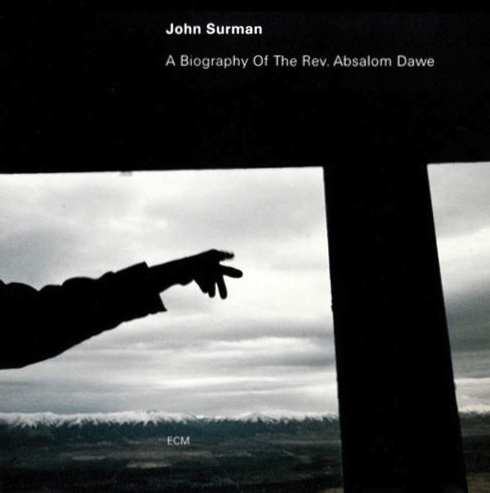
John Surman: A Biography Of The Rev. Absalom Dawe (ECM 1528)

John Surman
A Biography Of The Rev. Absalom Dawe

John Surman alto and bass clarinets, soprano and baritone saxophones, keyboards
Recorded October 1994 at Rainbow Studio, Oslo
Engineer: Jan Erik Kongshaug
Produced by Manfred Eicher

I would venture to say that anyone who has dug into the trove of ECM’s 1980s output has a soft spot for John Surman’s lone outings. The English reedman brings a signature sense of purpose to every musical line he touches, whether it’s by mouth through his favored baritone or by hand, laying down tasteful electronic contexts for looser improvisations. Now well into the 1990s, Surman outdid himself with A Biography Of The Rev. Absalom Dawe, treating listeners to his most deeply realized solo experience yet. Named for a cousin of Surman’s great-great grandmother, Biography employs the usual studio trickery for a sound that is wood-grained, born of earth and sky. “First Light” highlights another preferred tool in his kit—the bass clarinet—and grows from it feathers like no one else can. Following this dawn chorus for one, he plucks out yet another, drawing the needle of his soprano—honeyed but never saccharine—through the diaristic airs of “Countless Journeys.” Moods vary thereafter, cycling through the orthodox (“A Monastic Calling”), the pagan (“Druid’s Circle”), the questioning (“The Long Narrow Road”), and back into the unity of “Three Aspects,” which braids a trinity of sopranos, from which one breaks strays like a firefly to the far side of a darkening field. In addition to these evocative poems, “Wayfarer” and “The Far Corners” are among Surman’s best, the one somehow dancing bass clarinet on the head of a pin, the other paying homage to tone in a soprano solo for the ages. This leaves only “An Image,” refracting baritone lines through an echoing prism.

Surman brings out, especially through this album, a distinct sort of programmatic expression, which through its inflections evokes environments so internal they cannot be rendered, except through the gift of his interpretations.

<< Steve Tibbetts: The Fall Of Us All (ECM 1527)
>> Krakatau: Matinale (ECM 1529)

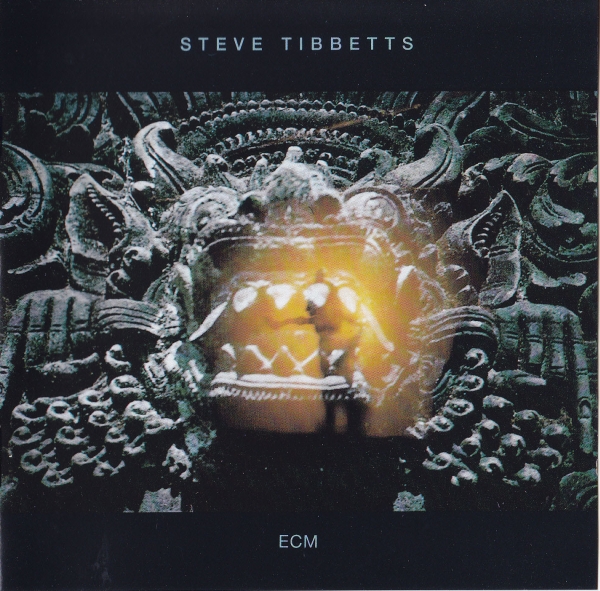
Steve Tibbetts: The Fall Of Us All (ECM 1527)

Steve Tibbetts
The Fall Of Us All

Steve Tibbetts guitars, percussion, discs
Marc Anderson congas, steel drum, percussion
Marcus Wise tabla
Jim Anton bass
Eric Anderson bass
Mike Olson synthesizer
Claudia Schmidt voice
Rhea Valentine voice
Recorded 1990-1993, St. Paul and Boudhanath
Engineer: Steve Tibbetts
Produced by Steve Tibbetts

The Fall Of Us All was my rite of passage into the Book of Tibbetts. The breadth of “Dzogchen Punks” never fails to bring me back to that first precious experience, buried in the solitude of my room under mounds of headphone-induced absorption. Those polyrhythmic drums snatch the hapless listener up in a fiery kiss of technique and experience, one that bears tender fruit in a ribboned middle passage before bleeding itself dry into renewed life. Even in the absence of those percussive footsteps, one always feels them hovering below the skin like a survival instinct. Every flip of the page reveals a new and enthralling illustration. From the steel-wound tassels of “Full Moon Dogs” to the vocal filigree of “Nyemma,” Tibbetts and his intuitive band members arch their backs like cheetahs across a savannah of fire, each the karmic acrobat of a different dream. Surrounded by such ecstatic unrest, we can only “Roam And Spy” until we board a “Hellbound Train” for an arachnid ride that screeches, wheels grinding, into a brimstone station with all the pop of a balloon at a pin’s tip. Cooler temperatures do give us some reprieve, reaching something close to enlightenment in “Drinking Lesson,” a 12-string solo that hangs itself to dry on the psychological fishhooks of “Burnt Offering.” From solemn reflection to full-on walkabout, these coals reignite in “Travel Alone,” becoming one with mindful synths and boundless articulation—a chakra that hits close to home every time.

An organic beat, arid movement, a spiny electric, and a gust of wind nipping at our heels: these are the essential ingredients of Fall. Immaculately engineered and produced by Tibbetts himself, its sound keeps a foot inside and outside this circle of flesh we call the body, sweeping aside mountains with every circular breath. His craftsmanship draws from, even as it defines, the music. We may be aware of individual granules, but in the end we can only cower in the grand ancestral shadow that awakens before us the moment we press PLAY.

Because this was for years my only Tibbetts album, it is the one I cannot do without. But don’t let that stop you from turning every knob he has set for your inner adventurer to discover.

<< Louis Sclavis/Dominique Pifarély: Acoustic Quartet (ECM 1526)
>> John Surman: A Biography Of The Rev. Absalom Dawe (ECM 1528)

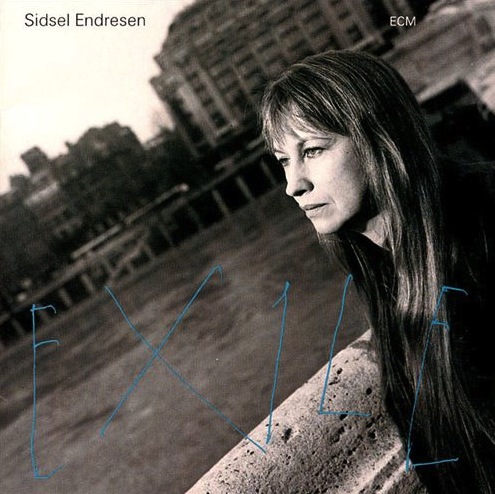
Sidsel Endresen: Exile (ECM 1524)

Sidsel Endresen
Exile

Sidsel Endresen voice
Django Bates piano, tenor horn
Nils Petter Molvær trumpet
Jon Christensen drums, percussion
Bugge Wesseltoft keyboards
David Darling cello
Recorded August 1993 at Rainbow Studio, Oslo
Engineer: Jan Erik Kongshaug
Produced by Manfred Eicher

After an astonishing ECM debut with So I Write, Norwegian jazz vocalist Sidsel Endresen returned to the label with this haunting companion. Like its predecessor, Exile takes an intimate peek into the nature of our burdens, nesting among the virtues of self-reflection. Having already come to know the raw beauty of Endresen’s voice, those familiar with the former album can take pleasure in strolling among the fine musicianship that accompanies her this time around. Of note is cellist David Darling, who makes healthy appearances at key moments during the album’s unfolding story. His interactions with Django Bates at the keys in “Quest” and duet with Endresen in “Theme II” are but two examples of his flowing presence. Bates himself throws pianistic sunlight onto water in such tracks as “Hunger” while overflowing with soul through his tenor horn in “Dust.” But let us not neglect Endresen, whose steady avenues in “Here The Moon” extend from the outset into a cloudy future. Even when singing wordlessly, she captures our hearts with images and trailing thoughts. The title track brings together all of these elements and more in a journey of roads, rivers, and rails; a shift from black and white to color; a tale of solitude, touched by kisses of hope. Yet the greatest seclusion thrives in “Waiting Train,” which dissolves away, awash in cymbals and thoughts of what could have been. We fend for ourselves in this frame, blind to any and all destinations. Hooking sadness onto your arm like an old friend, Endresen leads you from this place, leaving behind a tear-stained letter where you once stood.

<< Federico Mompou: Música Callada (ECM 1523 NS)
>> Jan Garbarek/The Hilliard Ensemble: Officium (ECM 1525 NS)

David Darling: Dark Wood (ECM 1519)

David Darling
Dark Wood

David Darling cello
Recorded July 1993 at Rainbow Studio, Oslo
Engineer: Jan Erik Kongshaug
Produced by Manfred Eicher

In the middle of the journey of our life
I came to myself in a dark wood
For the straight way was lost.
–Dante Alighieri

Cellist David Darling continues where he left off on Cello, furthering the rings and grains of “Darkwood,” a multitracked suite drawn in otherwise acoustic measures, of which the latter four parts appear here. While such name might evoke visions of shadow and deepest night, each part starts its titled sections with anything but. Darkwood IV opens its eyes to the “Dawn” while V passes through “Light,” which marks the “Beginning” VI and illuminates downward to “The Picture” in Darkwood VII. The latter is one of the most heart-tugging pieces Darling has ever recorded, weaving tender threads of thought whose philosophies are drawn from the wayside where others have left their faith. Stained tones cradle us in cloud and wind, leveling stepwise motions into molasses tide, proceeding ever deeper into a monochromatic ceiling, at the center of which a light drives away the spirits of insects whose flights are captured “In Motion.” In the starlit expanse of these dreams, we step on floes of ice, each an eye closed by lids of water as it sinks.

Such are the stories, rising from within rather than falling from without. Plunged into the heavy pizzicato of “Earth,” Darling sparks kindling by torchlight, casting bones into a hearth of sky. In its smoke we find the fantasy of a folksong trembling in wake of sunset. Primal cry in slow motion, harmonic ostinato and trembling alto line—these connect one spirit to another and arch their heads, slingshots at the ready. Only instead of a sudden unleashing we get the meditative crawl of fadeout. “Searching” is the cello equivalent of Paul Giger’s “Birth Of The Bull,” which pries open its mortality to find that in death there is life, and in “Medieval Dance” we feel hands touching and releasing, bodies whirling in smoky midnight, following harvest and offering. This leaves only “Returning,” and the eclipse of “New Morning,” where hints of infinity plough and turn like the soil from which they were born, lustful for nothing but absence.

Ultimately, such (di)visions become as arbitrary as the names ascribed to them, etched as they are in perpetual cosmic change. They skip across the chasm of time, closing their parched lips around morsels of memory along the way. Darling bows his cello as if with a comet’s tail and leaves us similarly alone beneath a stretch of sky, harps at Poseidon’s call, hoping for that next chance encounter between perception and transience.

<< Eberhard Weber: Pendulum (ECM 1518)
>> Demenga/Demenga: 12 Hommages A Paul Sacher (ECM 1520/21 NS)