Trygve Seim: Rumi Songs (ECM 2449)

2449 X

Trygve Seim
Rumi Songs

Tora Augestad vocal
Frode Haltli accordion
Svante Henryson violoncello
Trygve Seim soprano and tenor saxophones
Recorded February 2015 at Rainbow Studio, Oslo
Engineer: Jan Erik Kongshaug
Produced by Manfred Eicher
Release date: August 26, 2016

A natural intersection of musicians, bound by the mysticism of Rumi, Rumi Songs is saxophonist and composer Trygve Seim’s love letter to a poet whose influences broke the world wide open when rendered into English by Coleman Barks, whose translations are used almost exclusively throughout. For this project Seim welcomes accordionist Frode Haltli and cellist Svante Henryson, both members of his larger ensemble, alongside vocalist Tora Augestad.

The introductory “In Your Beauty” sounds like breathing itself. It also establishes the melding of accordion and cello, the purity of Augestad’s singing, and the aching lyricism of Seim’s reed. From this bud emerges the petals of “Seeing Double,” which checks off love, borders of the flesh, and self-questioning: all constant themes in Rumi’s poetry. Although the instrumentation stays the same in number, it widens in scope, as Seim allows his freedom to shine forth without hesitation.
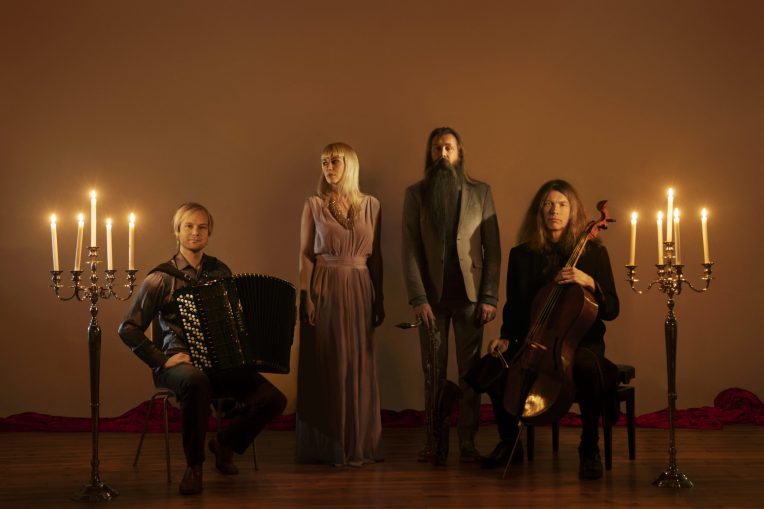
Rumi Portrait
(Photo credit: Knut Bry)

Where “Across The Doorsill” is more playful, detailed, and surreal in that way children might usually be, “The Guest House” has a mature and mournful tinge, as underscored by Henryson’s bow. Linguistically, it speaks in right angles and architectural forms, much like its titular structure, at the same time rounding its back with the skill of an experienced yoga practitioner into one methodical pose after another.

While there are jewels of optimism to be unearthed here, such the droning lullaby of “Like Every Other Day” and the latticed groove of the tango-esque examination of desire that is “When I See Your Face,” the general mood floats somewhere between dreaming and brooding. “Leaving My Self” is the most haunting song of the collection in this respect. A curious rendering of parental sacrifice and interstitial love, its accordion acts as drone for the cello’s snaking lines. Seim is noticeably absent this time, taking in the wind. Even “Whirling Rhythms,” an instrumental inspired by Seim’s pilgrimage to Konya to see Rumi’s tomb for himself, has about it an air of darker contemplation.

In the closing “There Is Some Kiss We Want,” Seim switches to soprano. An enchanting creation, it yields a stanza that best expresses the relationship at hand of sound and text:

At night, I open the window
and ask the moon to come
and press its face against mine
“Breathe into me”
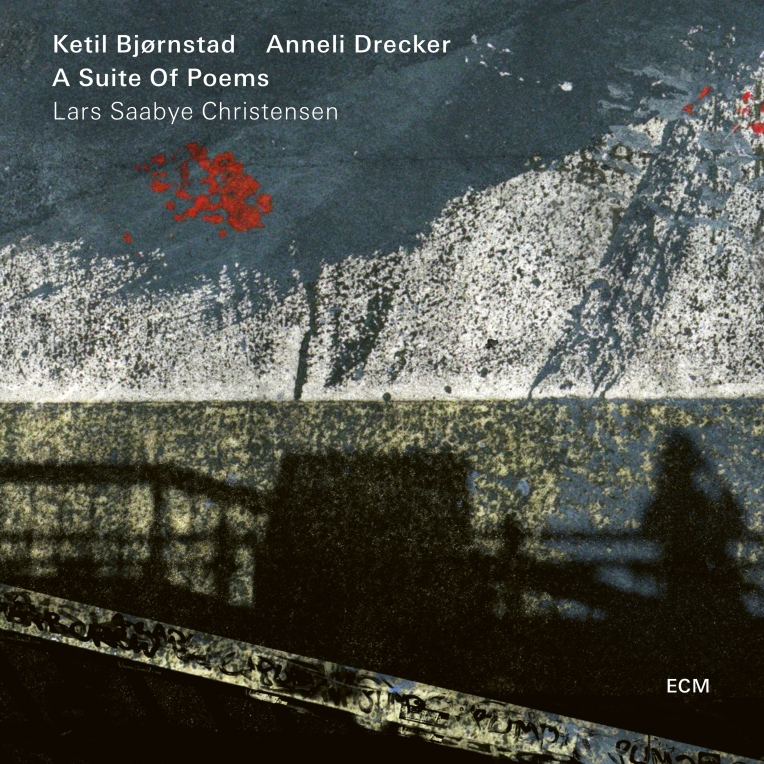
Ketil Bjørnstad: A Suite Of Poems (ECM 2440)

2440 X

Ketil Bjørnstad
A Suite Of Poems

Anneli Drecker voice
Ketil Bjørnstad piano
Recorded June 2016 at Rainbow Studio, Oslo
Engineer: Jan Erik Kongshaug
Produced by Ketil Bjørnstad
Release date: May 18, 2018

Following his song cycles Vinding’s Music and Sunrise, pianist and composer Ketil Bjørnstad expands his ECM presence once again with new settings, this time of words by Norwegian-Danish author Lars Saabye Christensen. Christensen’s verses, written in different hotel rooms and sent to Bjørnstad from around the world, seem destined to take form as the humbly titled A Suite Of Poems presented here.

Bjørnstad’s characteristic feel for texture, mood, and atmosphere is in peak form. In contrast to, say, his duo albums with cellist David Darling, which despite their sparse instrumentation speak of vast landscapes, now the spaces offered to us are astonishingly intimate. Quintessentially so is program opener “Mayflower, New York,” which paints a city recently kissed by rain and the lone tourist moving his pen in its sprawl. Like “Kempinski, Berlin,” it’s filled with small moments, each more personal than the last, as our proverbial traveler balances depth and weightlessness through the music itself. A perennial theme of travel is, of course, explored throughout the album, but so is its inextricable relationship to temporality. In “Duxton, Melbourne,” a tender musing on life’s unstoppable progression, vocalist Anneli Drecker winds her voice around hesitations, missed opportunities, and empty calendars to insightful effect.

A Suite Photo
(From left to right: Lars Saabye Christensen, Ketil Bjørnstad, Anneli Drecker; photo credit: Maria Gossé)

The fatigue of travel is also likened to time passages, and nowhere so poignantly as in “Palazzo Londra, Venice.” Here the narrator looks at his own unrecognizable face in the mirror, unable to connect with the self as he used to. Similar anxieties, as fed through fantastical imagery, haunt “Vier Jahreszeiten, Hamburg.” Ultimately, however, the focus is on details: the lost umbrella of “Mayday Inn, Hong Kong,” the forgotten ashtrays of “Lutetia, Paris,” and the handkerchiefs of “Savoy, Lisbon.”

On the somber end of the spectrum are “L’Hotel, Paris” and “Palace, Copenhagen.” The latter tells of Christensen’s (?) first time stepping into a hotel—on June 23, 1963, to be precise—and finds the boy scared and uncertain of the future. The piano writing is especially passionate, drifting from minor to major as Drecker sings of “the Danish sun behind us whipping up the rain from the cobblestones.” This contrastive dynamic is repeated in “The Grand, Krakow,” the suite’s most hopeful yet shaded turn. Other selections reveal a playful side to Christensen’s wordcraft, and Bjørnstad’s evocation of it. “Astor Crowne, New Orleans” is one whimsical example, in which Drecker navigates a bluesy drinking song.

The suite ends with “Schloss Elmau,” a piano solo that acts as both vessel of remembrance and farewell, a bidirectional portal that inhales the past and exhales the future, all the while praying for respite beyond the reach of any clock.

Re: Seoul (ECM 2365)

Re Seoul

Re: Seoul was produced in limited numbers to accompany the 2013 exhibition “ECM – Think of your ears as eyes” in the South Korean capital. A historically rich selection distinguishes it from other compilations, as does its artistic associations. From the Gary Burton Quartet’sSeven Songs For Quartet And Chamber Orchestra (ECM 1040) are unearthed two tracks. “Three” epitomizes that album’s Mike Gibbs focus, serving as a limber vehicle for Steve Swallow’s bassing, while the darker strings of “Nocturne Vulgaire” transition into Swallow’s own “Arise, Her Eyes.” Together, they polish facets of a gem whose occlusions are unlike any other. Because Seven Songs had yet to be reissued on CD at this point, the hard-to-find Seoul disc was even more a treasure.

Even deeper textures await in the opening tracks of Ralph Towner and John Abercrombie’s Five Years Later (ECM 1207). The two guitarists, playing acoustic and electric instruments, respectively, stretch a blemish-less canvas while simultaneously painting it. With a flowing care more commonly associated with string players, they render every phrase in slow, circuitous motion. As if to unmask that metaphor, “Runes,” from Keith Jarrett’s Arbour Zena (ECM 1070), treats its orchestra like some ancient body of water, its surface so reflective that bassist Charlie Haden must walk around it to keep the scene intact, even as Jarrett runs his fingers across it.

Two standouts from the Sam Rivers album Contrasts (ECM 1162), at this point also on the cusp of a reissue, show the saxophonist and bandleader in top form. Both “Circles” and “Solace” represent the album’s freer side and give trombonist George Lewis plenty of room to roam over the rhythm section of bassist Dave Holland and drummer Thurman Barker. This is deeply considered music that erases every footprint it leaves behind. That same description carries over without a skip in the Miroslav Vitous Group’s self-titled album (ECM 1185), from which we are treated to yet another significant unearthing, this time of the bassist’s original “When Face Gets Pale.” Here John Surman unleashes a powerful baritone, while the saxophonist’s own “Sleeping Beauty” lays those tensions to rest. Rounded out by Kenny Kirkland on piano and Jon Christensen on drums, this is a spirited dyad of waking dreams.

Yeahwon Shin’s “Lullaby,” a logical selection from her ECM debut (ECM 2337) that pairs the Korean singer with pianist Aaron Parks in one of the tenderest improvisations in the label’s entire oeuvre, sits comfortably alongside Norma Winstone’s “A Breath Away.” The latter setting of a Ralph Towner tune, taken from Dance Without Answer (ECM 2333), brings us somewhat full circle, best expressing the Seoul exhibition’s subtitle, “Think of your ears as eyes,” for in that sentiment exists ECM’s deepest ethos, one as much inspired by moving imagery as by recorded sound.

Miroslav Vitous: Music of Weather Report (ECM 2364)

Music of Weather Report

Miroslav Vitous
Music of Weather Report

Miroslav Vitous double bass, keyboards
Gary Campbell soprano and tenor saxophones
Roberto Bonisolo soprano and tenor saxophones
Aydin Esen keyboards
Gerald Cleaver drums
Nasheet Waits drums
Recording producer and engineer: Miroslav Vitous
Recorded March and May 2010, February and March 2011 at Universal Syncopations Studios
Assistant engineer: Andrea Luciano
Executive producer: Manfred Eicher
Release date: June 10, 2016

The bass of Miroslav Vitous has been a hub of creative activity since making its ECM debut on 1979’s collaboration with Terje Rypdal and Jack DeJohnette. In the intervening six years since leaving Weather Report, he had deepened his voice on the instrument, taking his arco dialects into more fluent directions than ever. Unlike its soft companion, Remembering Weather Report, which evoked the feel of his seminal band, this latest redux dives headlong into the cofounder’s originals that made Weather Report shine. Fascinating not only for its audacity, but also for its assembly, it pairs drummers Gerald Cleaver, occupying the left channel with saxophonist Gary Campbell, and Nasheet Waits, occupying the right with saxophonist Roberto Bonisolo. Rounded by Turkish keyboardist Aydin Esen, the sound is best realized on the tune “Seventh Arrow,” in which both sides of this improvisationally free equation flip on a glowing equals sign. Along with “Morning Lake,” which unleashes a quiet army of melodic water skeeters, it references Weather Report’s very first album from 1971 on Columbia.

The music of Joe Zawinul is a touchstone of the program, which opens with “Scarlet Woman Variations” in a necklace of reiterations as threaded by an electronically enhanced Vitous and the clarion sopranism of Campbell. In that same spirit the sextet takes on a reshuffled “Birdland Variations,” wherein joy abounds. Like the two “Multi Dimension Blues” of Vitous sandwiching it, it finds beauty behind closed eyes and open hands. Best described in Vitous’s own words as “two galaxies or universes pulling and affecting each other,” the two tandems therein create more than they replace. Esen’s atmospheric touches in “Birdland” evoke more of the same, only now with a more nostalgic feel that’s still fresh as a sunrise. Wayne Shorter’s “Pinocchio” gets an even freer treatment that traces the present band’s luminescence with astronomical precision.

In “Acrobat Issues,” Vitous rebinds an old book with burnished leather, leaving the gold stamping to the dialoguing tenors and the final stitching to his drummers. Hearing their interplay so beautifully recorded will give those familiar with Weather Report much to celebrate, while to those not it will serve as the eyepiece of a time-honored microscope looking in on a watershed moment of jazz history.

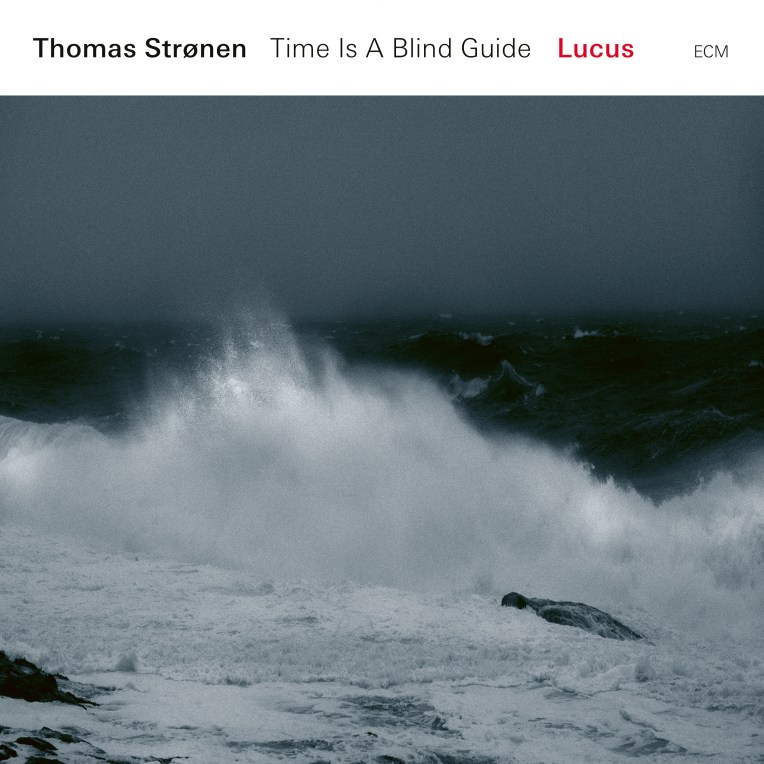
Thomas Strønen: Lucus (ECM 2576)

2576 X

Thomas Strønen
Lucus

Thomas Strønen drums
Ayumi Tanaka piano
Håkon Aase violin
Lucy Railton violoncello
Ole Morten Vågen double bass
Recorded March 2017, Auditorio Stelio Molo RSI, Lugano
Engineer: Stefano Amerio
Produced by Manfred Eicher
Release date: January 19, 2018

Time is a blind guide….
To remain with the dead is to abandon them….
One becomes undone by a photograph,
by love that closes its mouth before calling a name….
–Anne Michaels, Fugitive Pieces

Since its ECM debut in 2015, drummer and composer Thomas Strønen’s “Time Is A Blind Guide” has grown by apparent parthenogenesis into a project of malleable form. On Lucus, that form assumes a variety of shapes, intersecting in the same limpid pool of night. As a treatment of celestial expressions, the material is as much suggested as composed, trusted to flourish in fortifying hands. Strønen kindly explained to me via email TIABG’s continued growth:

“Time Is A Blind Guide has more and more become an autonomic organism with its own musical life. Different constellations (duos, trios, etc.) appear within the ensemble, and the material is treated with more freedom and stronger interplay. Variations in how the pieces are preformed have grown and a stronger personal language has been developed, to the point where we manage to form ideas into our own world, thus allowing us to widen our musical expression.”

Strønen’s sense of widening expression wraps its amorphous arms around “La Bella,” which by its triangulation of violin (Håkon Aase), cello (Lucy Railton), and malleted drums elicits a feeling of circulation given blood by the piano (Ayumi Tanaka). This quiet yet resolute introduction, itself an awakening into moving imagery, embodies a cinematic process: a projection of light onto uniform surfaces where freedom dances to the tune of a faintly outlined script. “Friday” is potent in this metaphorical regard. From its montage of recollections emerges a story to which only listeners may add a beginning and an end. Bassist Ole Morten Vågen taps into the very spine of this music, while Tanaka’s presence, a relatively new addition to the TIABG nexus born from live performances, is magical in these turns of phrase. Her gestures elicit speech without words. And while there are no solos to speak of, save for Strønen’s narrative stroke of brilliance in “Baka” and Vågen’s intro to “Tension,” as organs of the same body, each has its function, singing with the whole in mind.

“Fugitive Pieces,” referring to the novel from which Strønen adopted the band’s name, is an intimate and poetic character study, given wings by instruments of touch. The title track, too, separates filaments of interpretation from emotional moonbeams. So much of what happens in the horizontal regressions of “Release” or the more detail-oriented rhythms of “Wednesday” is built on foundations wrought in the foundry of live performance:

“We have toured a lot over the past year, having played in the US, Brazil, Japan, and Europe. This, combined with rehearsals, has contributed to the way we play today. We knew the material well and recorded the whole album within a day and a half. The music was written with the acoustics of the studio in mind and that has also lead to us wanting to play more concert halls and larger concert rooms than small clubs.”

Producer Manfred Eicher, as always, had a hand in what transpired, giving that extra puff of wind needed to satisfy even the most tattered feathers:

“I wasn’t surprised but rather happy that Manfred had great belief in the record. He also contributed strongly in studio, communicating ideas and details that shaped the compositions. He quickly understood what I aimed for and was a strong force during the recording.”

If inclinations of that force of, and desire for, space weren’t already apparent, they step forth most boldly in “Truth Grows Gradually” and “Weekend,” both of which unfold as stories told out of time. Like the album as a whole, they are a chronology of the soul, wrapped and unwrapped until nothing but truth remains.

Bill Frisell/Thomas Morgan: Epistrophy (ECM 2626)

Epistrophy

Epistrophy

Bill Frisell guitar
Thomas Morgan double bass
Recorded live at the Village Vanguard, New York, March 2016
Engineers: James A. Farber and Paul Zinman
Assistant engineers: Own Mulholland and Jim Mattingly, SoundByte Productions Inc., New York
Mixing at Avatar Studios, New York, December 2016: James A. Farber, Manfred Eicher, Bill Frisell, and Thomas Morgan
Produced by Manfred Eicher
Release date: April 12, 2019

Recorded live at The Village Vanguard in March 2016, Epistrophy continues where the conversation between guitarist Bill Frisell and bassist Thomas Morgan left off on Small Town. In the hands of this duo, a song like “All In Fun” assumes a double meaning. While the pair indeed are enjoying this musical experience, they bring an unforced profundity to the occasion. This tune in particular has what only can be described as a dark buoyancy, a feeling of bobbing along evening waters.

A nod to the folk song “Wildwood Flower” introduces “Save The Last Dance For Me,” which in this context takes on a magical realism. Liberated from their popular associations, tensions emerge in melodic symmetry. Played as lovingly as one could imagine, Paul Motian’s “Mumbo Jumbo” finds Frisell tastefully augmenting Morgan’s psychosomatic filter. The James Bond theme “You Only Live Twice” also gets a heartfelt makeover, its machismo now a quieter drama. And Billy Strayhorn’s “Lush Life” emerges from a series of still images, each further detailing the narrative. The title track and “Pannonica,” both from the Thelonioius Monk songbook, are the set’s core, each a reflection of the other: The former’s sprightly charm and linear paths pair beautifully with the latter’s eddying contemplations. The traditional “Red River Valley” is another key passage of synergy that seems tailor-made for these musicians. Like the Frank Sinatra hit “In The Wee Small Hours Of The Morning” that closes, it activates what is tru- est and purest within them, and in us for being privy to their dialogue.

(This article originally appeared in the June 2019 issue of DownBeat.)

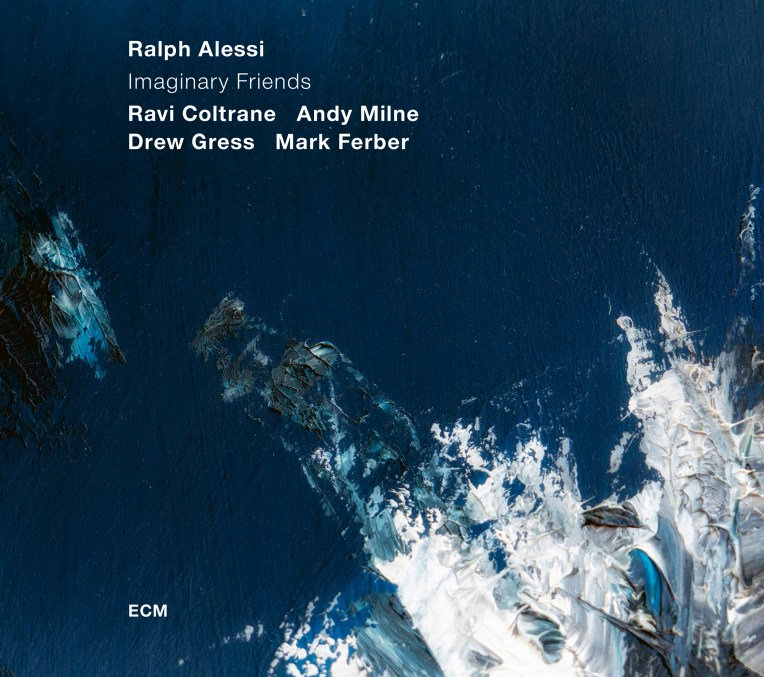
Ralph Alessi: Imaginary Friends (ECM 2629)

2629 X

Ralph Alessi
Imaginary Friends

Ralph Alessi trumpet
Ravi Coltrane tenor saxophone, sopranino
Andy Milne piano
Drew Gress double bass
Mark Ferber drums
Recorded May 2018, Studios La Buissonne, Pernes-les-Fontaines
Engineer: Nicolas Baillard
Produced by Manfred Eicher
Release date: February 1, 2019

Imaginary Friends marks an ECM threepeat for trumpeter Ralph Alessi. His connectivity with Ravi Coltrane (mostly on tenor saxophone), pianist Andy Milne, bassist Drew Gress and drummer Mark Ferber glows throughout nine originals, of which “Iram Issela” is the heartfelt introduction. Dedicated to Alessi’s daughter (the title is her name spelled backward), it meshes trumpet and piano without a hint of coercion. Coltrane lays low, letting the waves carry him where they will. Alessi’s friendship with him, going back to their student days at the California Institute of the Arts, resonates, as well as in the title track and “Oxide,” one of Alessi’s most exquisite compositions.

Their horns seem to have minds of their own. As free to roam as they are to harmonize, either can take the helm at any given moment, leading to exciting listening. Reflective turns like “Pittance” are all about the trumpet’s emotive powers while “Improper Authorities” allows Coltrane enough room to pave a highway over the rhythm section’s solid roadbed. “Melee” is another compositional masterstroke, which recalls the jigsaw approach of labelmate Tim Berne yet takes on fresh distinction by dint of a calligraphic sopranino. All of this and more funnel into “Good Boy,” a tender quietus.

Most impressive is the relentless spirit of invention. With an average track length of about seven minutes, each tune is a feast for the ears. Indeed, there’s something downright edible about this session, scrumptious from first bite to last and in that proverbial sense dishes out one of the most savory records of the year so far.

(This review originally appeared in the April 2019 issue of The New York City Jazz Record, a full PDF of which is available here.)

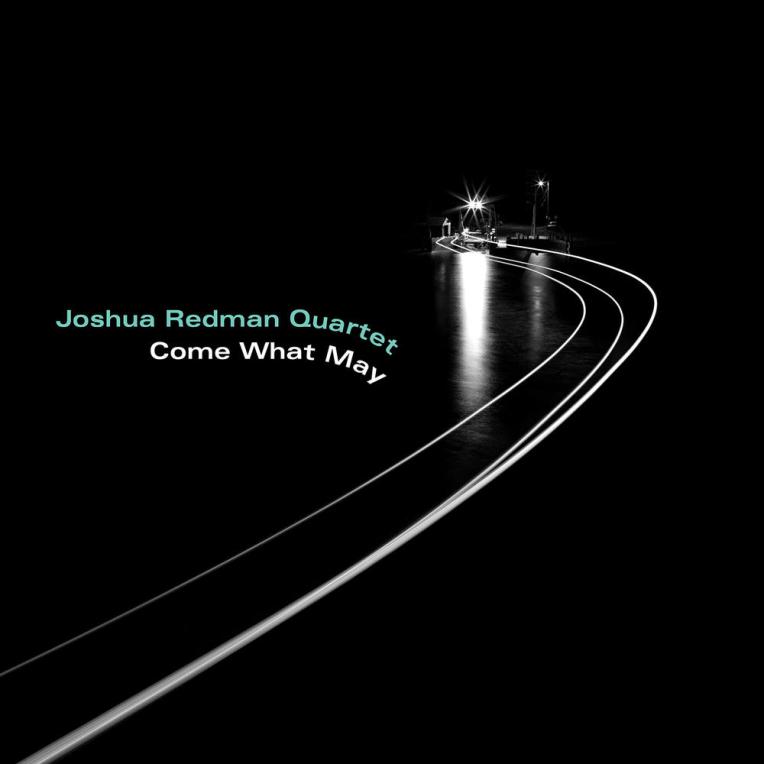
Joshua Redman Quartet: Come What May

Come What May

Come What May is the third round for saxophonist Joshua Redman, pianist Aaron Goldberg, bassist Reuben Rogers and drummer Gregory Hutchinson. Like its predecessors, the album presents a spectrum of tunes, working at an even deeper level of maturity. Given that their last studio effort was recorded in 2000, it makes sense that the band should have taken a giant leap in intuition, but such a process is easier said than done and more than a mere consequence of sharing the road and the stage together.

Although varicolored from a thematic standpoint, these seven Redman originals partake of a binding confidence reflective of a conscious willingness to treat medium as message. The title cut and its follower, “How We Do,” are the front and back of the band’s aural business card. In both, Redman and Rogers define and unravel a genuine compositional voice, which resonates through the bandleader’s willingness to explore every idea to its logical end. Goldberg and Hutchinson, for their part, shine in the power walk that is “I’ll Go Mine,” crossing every ‘t’ without a hint of intrusion. These four musicians, whether at their quietest (“Vast”) or most forthright (“Stagger Bear”), would need to expend unfathomable effort not to let their two-plus decades of camaraderie show through. Indeed, “DGAF” sounds like a bunch of old friends finishing each other’s sentences.

That same spirit is reflected in the engineering, which allows every instrument to occupy its own space. While at first this effect feels jarring (there is none of that sense of movement through space only a live experience can articulate), it ultimately leaves it up to the quartet to bridge the gaps between them. The end result is best described as a laid-back adventure, one that is smooth yet grounded enough to withstand the force of expectation.

(This review originally appeared in the April 2019 issue of The New York City Jazz Record, a full PDF of which is available here.)

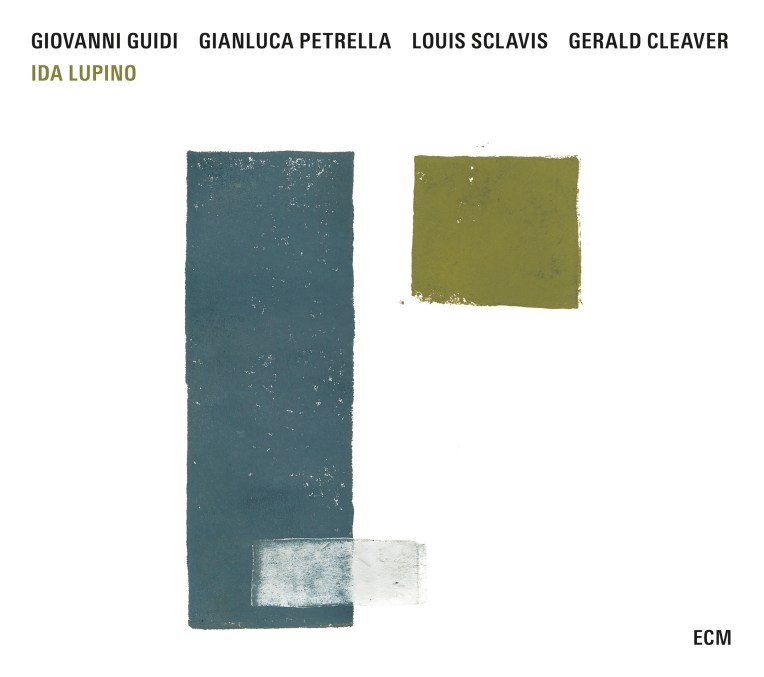
Guidi/Petrella/Sclavis/Cleaver: Ida Lupino (ECM 2462)

2462 X

Ida Lupino

Giovanni Guidi piano
Gianluca Petrella trombone
Louis Sclavis clarinet, bass clarinet
Gerald Cleaver drums
Recorded February 2015, Auditorio Stelio Molo RSI, Lugano
Engineer: Stefano Amerio
Produced by Manfred Eicher
Release date: September 2, 2016

Since making his ECM leader debut with 2013’s City of Broken Dreams, Italian pianist Giovanni Guidi has paved a new path with every release. For Ida Lupino, he convenes Enrico Rava bandmate and virtuoso trombone player Gianluca Petrella, clarinetist Louis Sclavis, and drummer Gerald Cleaver for a set built almost entirely on improvisation. Two exceptions are the album’s eponymous tune by Carla Bley, which here receives an ode-like treatment in celebration of its composer’s 80th birthday, and “Per I Morti Di Reggio Emilia,” a song written by Fausto Amodei in memory of demonstrators who fell victim to police violence on July 7, 1960. The latter’s guttural trombone and persistent cymbals rekindle those political fires as warmth against the frigid climate in which we now find ourselves.

At the heart of this session are Guidi and Petrella, who among the quartet share the longest working relationship. Their spotlight shines brightest in “Gato!” This nearly 10-minute narrative reveals itself one sentence at a time, toeing a line drawn by cymbals with dialogic abandon, before ending in a lullaby of piano. This same combination begins the album in “What We Talk About When We Talk About Love” and ends it in the tactile stumble of “The Gam Scorpions.” Notable for its subtle shadings is “Hard Walk,” throughout which Petrella focuses on breathing over notecraft as primary method of communication. He and Guidi row their most fascinating waters, however, in “Fidel Slow” and “Zweig.” These distinctly three-dimensional duets write their own dictionary as they go.

Sclavis’s reed work, as always, abounds with invention. Whether roaming the desert of “Just Tell Me Who It Was” with plenty of groovy water to spare or exchanging bon mots with Petrella in the witty “Jeronimo,” he treats virtuosity like breathing. Further highlights include the fibrillated “No More Calypso?” and “Things We Never Planned.” The latter might as well have been the title track, showcasing as it does the band’s willingness to go wherever the music leads. Guided by intuition alone, they make no effort to understand anything but the moment, eschewing concrete rhythms for liquid assets.

An altogether worthwhile peek into minds that always seem to be expanding into the next motif before the current one is finished.