Liaisons: Re-Imagining Sondheim from the Piano (ECM New Series 2470-72)

Liaisons

Anthony de Mare
Liaisons: Re-Imagining Sondheim from the Piano

Anthony de Mare piano
All pieces were commissioned expressly for The Liaisons Project, Rachel Colbert and Anthony de Mare, Producers.
Producer for The Liaisons Project: Rachel Colbert
Recording producer and engineer: Judy Sherman
Additional engineer and editing assistant: Jeanne Velonis
Recorded 2010-2014 at the American Academy of Arts and Letters, New York, and Greenfield Recital Hall, Manhattan School of Music, New York.
Backing tracks for “Birds of Victorian England” engineered by Kevin Boutote
“Johanna In Space” backing track provided by Duncan Sheik
Mastering: Christoph Stickel and Steve Lake at MSM Studios, Munich
An ECM Production

Listen to that old piano roll play.
When I hear that old piano roll play,
I just gotta dance,
And what I mean is dance with you.

In her exhaustive biography, Stephen Sondheim: A Life, Meryle Secrest shares the story of an adolescent Sondheim’s encounter with the 1945 film Hangover Square, and within it a piano concerto written by scorer Bernard Herrmann. The music’s bold mix of romanticism and Americana captured Sondheim’s imagination and was to become part of the origins of his intersections with the dramatic stage.

Sondheim has always composed at the keyboard, charting out his scores in great detail, to be orchestrated by (since 1970) esteemed collaborator Jonathan Tunick. Broadway has relied on this formula, which over the decades the duo funneled into surefire productions, but the project lovingly packaged in this three-disc collection from ECM takes Sondheimania to a new level through the intervention of rigorously trained note-smiths, each occupying a band along a spectrum of collaborations from a distance.

The roster of composers, who the behest of new music champion Anthony de Mare wrote new variations on the theme of Sondheim, reveals a depth and variety equaled by the songs they have re-imagined, as William Bolcom, Nico Mulhy, Steve Reich, David Rakowski, Eve Beglarian, Jason Robert Brown, Duncan Sheik, Eric Rockwell, Wynton Marsalis, Derek Bermel, Fred Hersch, Annie Gosfield, Jake Heggie, Kenjie Bunch, Ethan Iverson, Ricardo Lorenz, Paul Moravic, Frederic Rzewski, David Shire, John Musto, Mark-Anthony Turnage, Phil Kline, Bernadette Speach, Daniel Bernard Roumain, Andy Akiho, Ricky Ian Gordon, Nils Vigeland, Rodney Sharman, Gabriel Kahane, Thomas Newman, Jherek Bischoff, Mary Ellen Childs, Peter Golub, Tania Leon, and de Mare himself put a personal spin on the Sondheim songbook that is as true to life as it is to art.

Though Sondheim has historically been averse to being interviewed, in this collection we hear him speaking through the hearts of every composer who has felt his influential hand. In an album note, he himself describes these pieces not as “decorations” but “fantasias” of his songs. Indeed, Sondheim’s recognizable voice has been reworked with such fidelity—one original inspiring other originals to create new originals—that one need hardly peel away any layers of obfuscation to find him. Above all, however, it’s his scarcely rivaled gift for pastiche that resonates by virtue of de Mare’s encyclopedic flair.

According to Mark Eden Horowitz’s extensive liner text, the composers chose their songs based more on the lyrics and their stories than the melodies sung around them. And so, one can listen assured that de Mare’s consummate touch makes room on his metaphorical suitcase to display every sonic sticker of his travels. His dramatic, romping, emotional rollercoaster ride through A Funny Thing Happened on the Way to the Forum (1962), Anyone Can Whistle (1964), Company (1970), Follies (1971), A Little Night Music (1973), Pacific Overtures (1976), Sweeney Todd (1979), Merrily We Roll Along (1981), Sunday in the  Park with George (1984), Into the Woods (1987), Assassins (1991), and Passion (1994) accordingly dwells as much on differences as similarities, bringing to fruition a “global” sound.

Not surprisingly, Sondheim’s masterpiece Sweeney Todd gets the most nods of the program, in addition to yielding a lion’s share of its highlights. One of those is Sheik’s “Johanna in Space.” This atmospheric gem opens with the chimes of a clock emulated on the piano and stretches itself over an electronic backdrop à la Tim Story. Todd’s ill-fated daughter is further subject of Brown’s “Birds of Victorian England,” which requires no small amount of heavy lifting from de Mare. As can be expected, Sweeney Todd engenders ample opportunity for over-the-top dynamics, epitomized in the spiraling density and fluent outcries of Bunch’s “The Demon Barber.” Other fine examples of the protagonist’s crushing pessimism abound, whether through the intimate knowledge of Newman’s “Not While I’m Around” or, in a satirical turn, Lorenz’s “The Worst [Empanadas] in London.” The latter requires a performer of de Mare’s chops to pull off the feel for rhythm and energy on which it subsists. De Mare welcomes the listener by shouting, “A customer!” as if in throwback to the speaking-singing pianist genre of which he was such a foundational proponent through his premiere of Rzewski’s De Profundis. It’s only natural, then, that Rzewski should have a piece included: the elegiac “I’m Still Here.” This and other selections from Follies, such as Wynton Marsalis’s Jelly Roll Morton-infused take on “That Old Piano Roll”, imply a bygone age with plenty of style to spare.

Company inspires a handful of homages as well, including Rakowski’s impressionistic “The Ladies Who Lunch,” through which Sondheim’s love for Ravel shines (as also in Bermel’s “Sorry/Grateful”); Rockwell’s tangible “You Could Drive a Person Crazy,” in which the composer “imagined a pianist trying desperately to catch the attention of rowdy patrons at a cabaret with as wide ranging a series of pastiches as possible”; and Roumain’s “Another Hundred People,” which invokes the troubled crooning of a Kurt Cobain or Thom Yorke.

A Little Night Music lifts its story from the Ingmar Bergman comedy Smiles of a Summer Night, and its comic touches are duly noticeable in Speach’s “In and Out of Love” (a personal album favorite), which shuffles the harmonies of “Send in the Clowns” (see also Iverson’s whimsical take on the same) into a balladic “Liaisons.”

Sunday in the Park gives us Muhly’s minimal yet expansive “Color and Light,” which embodies the pointillism that so fascinated the play’s subject, Georges Seurat. Muhly’s feel for the piano as a textural toolbox translates superbly. Reich’s more compact “Finishing the Hat” is scored for two pianos (de Mare multi-tracks himself) and links a brief yet persistent chain of chords. Sharman’s “Notes on ‘Beautiful,’” on the other hand, originally a duet between Seurat and his mother, no becomes a conversation between the living composer and his deceased mother. De Mare’s rendition of “Sunday in the Park – Passages (encore)” opens a lifeline to possibilities, and makes us feel connected to our own.

Shire’s “Love is in the Air” puts a delightful spin on the original opening number of A Funny Thing Happened on the Way to the Forum, underscoring de Mare’s abilities to evoke the past in a language of the future, while Bolcom’s “A Little Night Fughetta” references Anyone Can Whistle, pushing Bach through a jazzy filter of development. Pacific Overture is another of the less represented but no less effective source texts. Gosfield’s “A Bowler Hat” displays a meticulous feel for deconstruction, while Kline’s “Paraphrase (Someone in a Tree)” paints the first meeting between American and Japanese officials in 1853 with unexpected colors. Merrily We Roll Along gives us León’s “going…gone,” another remarkable highlight that, along with Akiho’s “Into the Woods” is perhaps the most technically demanding of the program. Hersch’s “No One is Alone” is another ode to Into the Woods, this one pentatonic and alliterative. And let me not neglect Beglarian, who pays tribute to Passion in her “Perpetual Happiness.” This striking piece is as real as the music gets on Liaisons, and builds its wings one feather at a time, until flight is achieved.

Doing justice to all of the composers and pieces represented here would be a futile, wordy exercise. Suffice it to say there isn’t a single sour note to be found, and as a whole the album demonstrates that, while Sondheim’s music may sometimes play hard to get, it will love you through and through if you let it, because that’s all it wants to do.

Nils Økland Band: Kjølvatn (ECM 2383)

Kjølvatn

Nils Økland Band
Kjølvatn

Nils Økland viola d’amore, Hardanger fiddle, violin,
Rolf-Erik Nystrøm alto and baritone saxophones
Sigbjørn Apeland harmonium
Mats Eilertsen double bass
Håkon Mørch Stene percussion, vibraphone
Recorded June 2012, Hoff Church Østre Toten, Norway
Engineer: Audun Strype
Executive producer: Manfred Eicher
U.S. release date: April 8, 2016

Since his 1996 solo debut, Blå Harding, Norwegian Hardanger fiddler Nils Økland has charted a range of melodic waters, always docking at the intersection of traditional and contemporary music. His relationship with ECM has produced a series of artistic statements, each more cohesive than the last. His first for the label was 2009’s Monograph, a solo album of great scope that led to 2011’s Lysøen, in duet with Sigbjørn Apeland. And now we have Kjølvatn, for which he has assembled a full band under his own name. Apeland rejoins the fray, here playing harmonium, along with saxophonist Rolf-Erik Nystrøm, bassist Mats Eilertsen, and percussionist Håkon Mørch Stene. Each has lived in that gray area between folk, jazz, and classical, and funnels his unique experiences into Økland’s sound-world like grains of sand through an hourglass.

Having worked with these musicians for years in some configuration or another (all except Nystrøm played on Bris, released in 2004 on Rune Grammofon), Økland revisits a trove of older material with special familiarity. A look at even a few of the tunes shows the breadth of his network. He wrote “Mali,” for instance, after attending a concert by Swedish rapper Timbuktu. The band’s profiles cohere evocatively in this opening piece, as in the album’s title track, a retroactive score for the 1933 Scottish silent film The Rugged Island. “Undergrunn” (Underground), too, feels quite integrated, arising as it did from a collaboration with the London Sinfonietta around folk motifs. Such diversity of origins suggests that Økland’s influences are as complex and fragmentary as life itself.

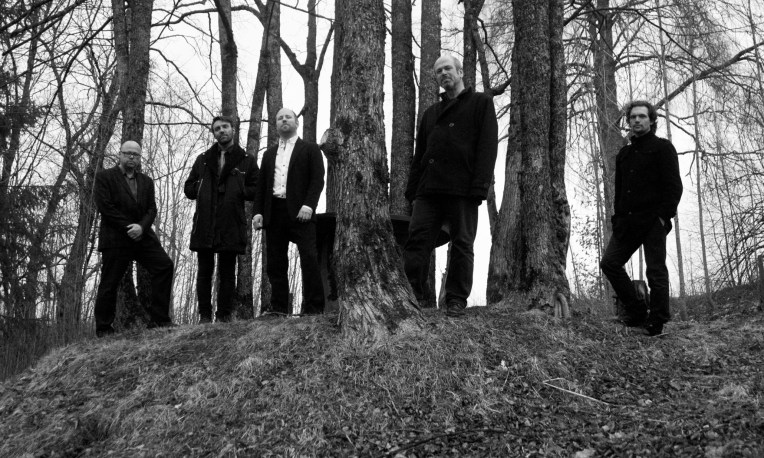
NOB
(Photo credit: Ellen Ane Eggen)

Økland employs a variety of open tunings on the album, each of which has its own special name. The “dark blue” tuning (D-D-A-D) is heard on the processional “Drev” (Drifted), wherein are bolded Stene’s percussive colors, and “Start” the so-called “troll tuning” (B-E-B-D#). In the latter, Økland combines ancient structures and modern minimalism, both of which he sees as relying on short motifs multiplied to form larger structures.

Økland has been increasingly inspired by the viola d’amore, which like his mainstay instrument has extra strings that vibrate sympathetically beneath the main four, and on tracks “Puls” and “Skugge” (Shadow) he draws a darker soul from this cousin. In the former piece, the heartbeat is evoked by Stene on kettledrum, while Eilertsen explores kindred frequencies. Over this, a flight from Økland’s bow touches the ocean with a wingtip in search of nesting territory.

Location matters a lot in Kjølvatn, which was recorded at the Hoff stone church in the countryside of Norway’s Oppland county. Økland’s go-to engineer, Audun Strype, captures the church’s resonant bounce, allowing the rougher, more organic aspects of the performance to exude clarity. One may hear this especially in “Fivreld” (Butterfly), an alluring piece of ambience in which the harmonium breathes like sunlight through foliage. Made for a ballet performance at Haugesund Theater in Økland’s hometown, it veritably dances.

Other references to Økland’s past are found in “Blå harding” and “Amstel.” Earlier versions of both appeared on the aforementioned debut. The first is something of a blues dedicated to his Hardanger fiddle teacher Sigbjørn Bernhoft Osa, while the second, which closes out the album, is greener, its organ-like harmonium reminding us of where we are.

Kjølvatn rarely bubbles beyond a simmer, but its flavors are all the purer for it. It’s a significant move in Økland’s career, and exemplifies an artist who, despite denying any underlying message, understands the value of careful construction. And in a way, that is its practice: to create art for its own sake, devoid of political baggage and free to roam in search of new and welcoming ears.

(See this review as it originally appeared in RootsWorld online magazine here.)

Nik Bärtsch’s Mobile: Continuum (ECM 2464)

Continuum

Nik Bärtsch’s Mobile
Continuum

NIK BÄRTSCH’S MOBILE
Nik Bärtsch
piano
Sha bass clarinet, contrabass clarinet
Kaspar Rast drums, percussion
Nicolas Stocker drums, tuned percussion
EXTENDED
Etienne Abelin violin
Ola Sendecki violin
David Schnee viola
Solme Hong cello
Ambrosius Huber cello
Recorded March 2015, Auditorio Stelio Molo RSI, Lugano
Engineer: Stefano Amerio
Produced by Manfred Eicher
U.S. release date: April 22, 2016

Swiss pianist and bandleader Nik Bärtsch makes no distinction between the old and the new, thriving instead on constant transformation. Freed of evocative titles, he writes in so-called “modules,” each of which combines through-composed and improvised material. This approach has yielded a series of albums for ECM under the name Ronin, but on Continuum he debuts his parallel ensemble, Mobile. Drummer Kaspar Rast and mononymous clarinetist Sha are familiar standbys, while percussionist Nicolas Stocker and a string section are the new recruits. Those familiar with Ronin will recognize certain tics in Mobile’s larger body. I ask Bärtsch to elaborate on their differences.

NB

“Mobile is acoustic and Ronin amplified, resulting in different consequences concerning power, pressure, volume, and listening behavior (for musicians and audience alike). We recorded Continuum in close proximity with each other while the Ronin sessions had us in different rooms. Mobile is also a music ritual group and often plays long concerts of several hours or even days. In Mobile we include rhythmic strategies of contemporary classical music, for example in ‘Modul 5.’ The band’s name refers to a ‘perpetuum mobile,’ while Ronin is a ‘groove generator.’ Mobile creates groove equilibriums and orchestral maneuvers while Ronin attacks with a paradoxical mix of empty meditative roughness and strong rhythmic energy: Zen-funk.”

The ritual foundations of said “Modul 5” reveal the virtuosity of their execution with patience. The same holds true for “Modul 60,” in which strings interlock with their surroundings like stairways in an Escher lithograph.

On Continuum, Bärtsch has taken his craft one step closer to an ideal that, while perhaps unreachable, is more audible than ever. Beyond my own idiosyncratic impressions, however, the music of Mobile is rooted in the presence of its musicians, as anyone who has seen them live can attest. Movement would seem to be central to “Modul 29_14” in particular, a force of suggestion made by its pairing with martial arts in a promotional video:

The binary relationship between Rast and Stocker in this piece unpacks bits of code into full-blown programs. High notes in the glockenspiel, doubling those of the keyboard, activate those programs in one artful sequence after another. Bärtsch, for his part, is careful to keep his own perceptions grounded the physical body. “A musical pattern, rhythm, or resonating structure is a sensual movement,” he says. “Sometimes, when I am practicing intensively, I dream of becoming such a musical being: a pure resonating energy of movement. We are all dancers in the universe.”

And is this dancing indicative of the project’s classical leanings?

“The music might seem more ‘classical,’ since we give the impression of a chamber ensemble. In principle we work the same way as with Ronin: I compose a piece, which in the context of the group develops its own instrumentation and dynamics. But in one respect your reception is probably correct: there is less obvious improvisation than in Ronin, although ‘Modul 12’ is completely improvised, if on the basis of a modular, coherent structure.”

That latter module is remarkable for Rast’s brushwork, by which he smooths out a layer of gravel over Sha’s tunneling contrabass clarinet.

Mobile

While most comfortable on the live stage, in this instance Mobile is uniquely bound to studio parameters. This does not, clarifies Bärtsch, equate to a reduction. “An album is a different genre altogether,” he notes. “It has and creates its own rules. But the group profits from the long-playing rituals, which leave us open to the situation of the recording: a new space-time continuum to be explored and created.”

To my ears, “Modul 18” is a well-rounded example of this brand of creationism. Its elements—metal, wood, air—come to life in a vibrational field of bowed strings against a repeating bass drum, Stocker shining like a constellation in its darker sky. Throughout “Modul 4,” too, the two drummers act as one as a high overlay of notes from Bärtsch foreshadows closure. Listening to such older modules, I can’t help but wonder how they’ve changed. Are they seeds for cultivation or do they become unique entities with every iteration?

“The modular way of composing allows a piece to evolve, while also retaining compositional coherence. The triangle of composition, improvisation, and interpretation should be connected and alive. Usually a pattern, piece, or musical strategy has more potential than you first recognize. You have to explore it for years through playing and observation. I see this as a natural, spiraling development forward into roots.”

Such is the modus operandi of “Modul 44,” in which Rast’s skins serve as palimpsests for musical poetry. The subtlety of his drumming is unexpected from such a robust figure. As in the gradual progressions of “Modul 8_11,” his interaction with the others results in so many orbits that the after-images of their playing form one glowing sphere. Despite the utter precision required to pull off this effect, a free-flowing, interdimensional quality prevails. If any message stays behind, it is Bärtsch’s own: “Trust your ears. They are the most sensitive antennas for the resonating inner and outer world.”

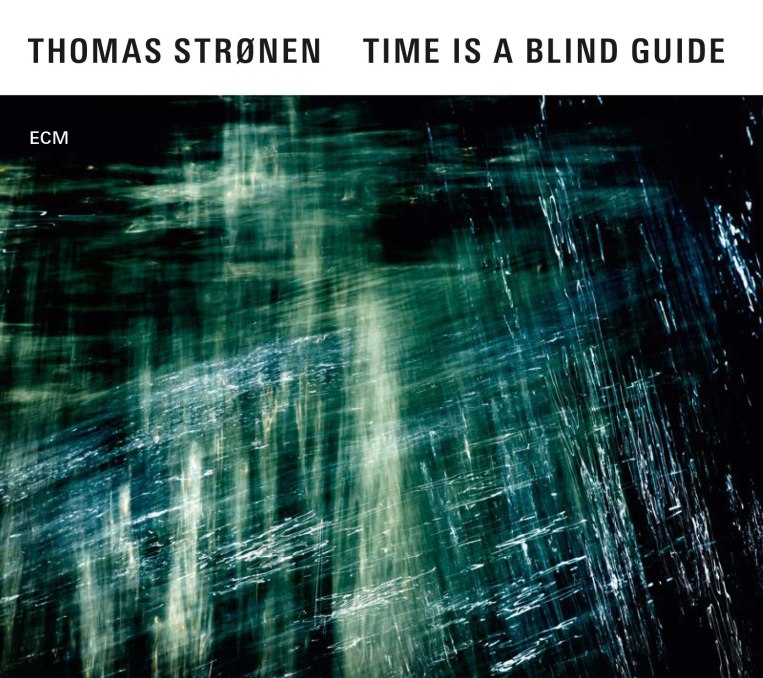
Thomas Strønen: Time Is A Blind Guide (ECM 2467)

Time Is A Blind Guide

Thomas Strønen
Time Is A Blind Guide

Thomas Strønen drums, percussion
Kit Downes piano
Håkon Aase violin
Lucy Railton cello
Ole Morten Vågan double bass
Siv Øyunn Kjenstad percussion
Steinar Mossige percussion
Recorded June 2015 at Rainbow Studio, Oslo
Engineer: Jan Erik Kongshaug
Mixed July 2015 in Oslo by Jan Erik Kongshaug, Sun Chung, and Thomas Strønen
Mastering: Christoph Stickel, MSM Studios, München
Produced by Thomas Strønen and Sun Chung
U.S. release date: November 15, 2015

At night, a few lights marked port and starboard of these gargantuan industrial forms, and I filled them with loneliness. I listened to these dark shapes as if they were black spaces in music, a musician learning the silences of a piece. I felt this was my truth. That my life could not be stored in any language but only silence; the moment I looked into the room and took in only what was visible, not vanished.
–Anne Michaels, Fugitive Pieces

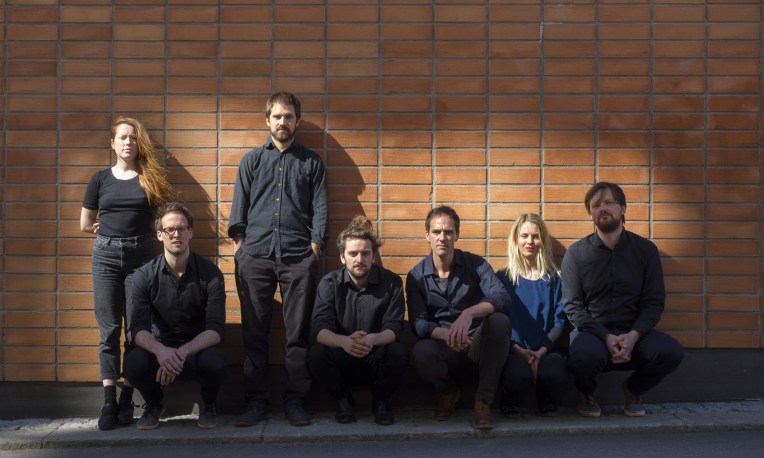
Thomas Strønen follows in the ECM tradition of path-defining artists. Even if that means straying from the path one has already defined. Such is the modus operandi of the Norwegian drummer and composer, whose neural wanderings speak in soft bursts of ideas and creative directions. His relationship with the label began on 2005’s Parish, a leader debut whose acoustics stand apart from the electronic flights of his next three albums—Quiet Inlet, Mercurial Balm, and This is not a miracle—as part of the roving collective that is Food. In a recent interview, I asked Strønen to elaborate on how the band came together for this particular recording.

“The ensemble started when I was commissioned to compose a concert by Fiona Talkington (BBC Radio 3), who at the time was curating a concert series called Conexions. The concept was to bring UK musicians to Norway to collaborate with Norwegian musicians. While brainstorming with Fiona, I landed on these particular musicians. Some of them I knew from before and some of them I had never played with. The plan was always to only play this one concert, but it ended up being something musically new to me, as well as a lovely combination of people, so I decided to continue the adventure.”

Connections indeed nourish the lifeblood of this music, which in the network of its composer’s venation flows through human experiences, and beyond them into experiences of the human. Such flexible dichotomies are fully operational on Time Is A Blind Guide, yet another turn of the Strønen prism that reveals fresh hues of collaboration. Beyond departure, it is also integration, as the bandleader explains to me when I ask about its distinctions:

“This particular ensemble combines three constellations in one: it’s a piano trio, a string trio, and a drum trio. It’s an all-acoustic setting with more through-composed material than any other band I’ve ever played in. It’s a cross between a chamber ensemble and a jazz group, and the music was specially written with these musicians in mind. In a record industry struggling to survive and adjust to new ways of treating music (technically and economically), ECM still manages to be an important voice. To me, the release of Food’s latest record and this one shows how open-minded Manfred Eicher and his label are (and always have been).”

Group Time

Strønen’s characterization of ECM is no small one to consider when approaching Blind Guide as an historical experience. For while it mines some igneous influences, it also draws light from aboveground into its balances. One might, in fact, say it’s his most cosmic record to date—all the more impressive when you consider the acoustic matrix in which it is based. As “The Stone Carriers” breaks the five seconds of silence that begin every ECM album, the sensation is of a comet reversing its trajectory to interstellar origins. From this diffuse texture coalesces a steady bass line, and with it the promise of a full groove going forward. Violinist Håkon Aase is an obvious defining presence from the start, one to listen for as the album progresses.

As one track break sets me up for the next, I can’t help but feel the album’s literary nature. Did Strønen have any particular stories, books, or narratives in mind while making it?

“While writing most of the music for this album I was (re)reading Canadian author Anne Michaels’s novel Fugitive Pieces. It’s a poetically written book in which language is as important as the actual storytelling. I’m not sure how much this affected my actual composing, but it set me in a state of mind and inspired me to use some words and sentences as titles for the pieces. The band name is the book’s first sentence.”

Alternatively, one might call this music cinematic in character, as if it were a soundtrack in search of images. Strønen, in his fashion, is amenable to the idea but also has his own:

“I tend to think less abstractly about my own music, as it is the result of a longer process from drawing board to recording session. The term ‘cinematic’ is versatile, and if the music brings associations to other art forms, I appreciate it. But it means something different to me. When I listen to my own music (something I seldom do), I seek ways to develop and improve. I enjoy working with various media and have been composing for theatre, film, and dance. These are areas I would like to explore more and I would be happy to see this music used in a movie score.”

Beyond associations with extra-musical art forms without context, I am further tempted to place this album in the grander realm of its ECM associations. In particular, I am tempted to draw threads of continuity back to the works of Jon Balke’s Batagraf (cf. the percussive interlude “Tide”) and Christian Wallumrød (“Everything Disappears”). I ask Strønen if these similarities are coincidental:

“My writing carries the weight of my experiences in my (musical) life. ‘Tide’ is a baka, a drum signal like the ones used in West African Wolof music. The difference is that ‘Tide’ compositionally goes through a special combination of time signatures and rhythmic modulations, while the original bakas are less metrical. I got introduced to Wolof music while traveling to Gambia together with Jon Balke and other musicians. I like Batagraf and worked with them in my own drum ensemble, Extended Ground. We have different approaches to drum music compositionally, but share some of the same aesthetics. I grew up listening a lot to European jazz and improvised music in my early years as a player. But I’ve also discovered treasures in the American jazz tradition, Japanese classical music, West African music, electronic music, and European and American minimalism. All of these have inspired me in many ways.”

Despite any lack of overall genre affiliation, artistic intent is the constant glue of Blind Guide. The extreme tactility of tracks such as “Pipa” and “I Don’t Wait For Anyone” invites the listener to be a piece of the puzzle. Melodic currents held by pianist Kit Downes are remarkable, complementing Strønen’s palette with comforting ease. At times, a silver-tongued violin regales with stories of long ago, moving in tandem with bass and percussion toward the attainment of conversational magic. In concert, these instruments move like a Rubik’s cube until colors begin to orient themselves along uniform sides.

Whether activated by chance or circumstance, the motivic gestures of “The Drowned City” feel as inevitable as the progression of time, thus intuiting the project’s title. Watery gongs and other submarine percussion give visuality to a lost civilization, while cascading pianism is the only indication of the grandeur that once thronged its avenues. “Lost Souls” treads a fraternal archaeology, matching the thread of a bowed string with the thicker rope of drums.

In light of these impressions, one may feel like this music is rooted in the ancient past even as it looks to the future. Strønen’s view is humbler:

“The music simply reflects my interests and my ideas of music. If I manage to create something some define as new, that’s great, but I’m not very concerned about having to create something that hasn’t been made before. There’s so much good music being made all the time and the last thing we probably need is more music. Still, we discover new elements or perspectives and many of us have a need to pen them down and try them out. So I guess it’s not a conscious choice, but more of a natural process.”

The title track demonstrates this organic quality in spades. Anchored by percussion, persuasion, and persistence, its steadiness is dotted with details in relief: a flower for every stem. “As We Wait For Time” further engages the subconscious with its thoughtfulness, violin and piano phasing like two reflections in search of the same radiance.

That being said, conscious connections to material lives do matter, as in “Everything Disappears (Pt. 2),” a quiet drum circle that bears dedication to pianist John Taylor, with whom a project was in works at the time of his death. But in the end, it’s the droplets of notecraft in “Simples” that belie the album’s oceanic casting, and unravel its hidden fortress of dreams.

As one immediately involved in both the recording and production of this album, Strønen has touched nearly every aspect of its growth from idea to digital reality. Blind Guide is a Polaroid snapshot of the serendipity that pulses through his musical universe, shaken to the beat of an unseen heart for want of an image that can only be your own.

Anat Fort Trio w/Gianluigi Trovesi: Birdwatching (ECM 2382)

Birdwatching

Anat Fort Trio
Gianluigi Trovesi
Birdwatching

Anat Fort piano
Gary Wang bass
Roland Schneider drums
Gianluigi Trovesi alto clarinet
Recorded November 2013, Auditorio Stelio Molo RSI, Lugano
Engineer: Stefano Amerio
Produced by Manfred Eicher
U.S. release date: April 8, 2016

On Birdwatching, Anat Fort’s third album for ECM, the Israeli pianist and composer proves once again that music is a journey without repetition. I trace this axiom back to her label debut, 2007’s A Long Story, from which “Something ’Bout Camels” carried over into the 2010 follow-up, And If. This time around, another tune from that same record—“Not The Perfect Storm”—makes a reappearance, now re-cloaked by the melodic overlay of Italian reedman Gianluigi Trovesi, who joins her trio with bassist Gary Wang and drummer Roland Schneider for her farthest-reaching record to date. The rumbling pianism of that latter track speaks at once to Fort’s illustrative prowess and willingness to sidestep its clichés. Indeed, beyond the thunder implied in the lower register of her keyboard, the broad wingspan of Trovesi’s alto clarinet speaks of clearer skies. The forces at work are greater than the sum of their parts, which over the course of six and a half minutes emit more light than they absorb.

Moved by this collaboration, I opened a recent interview with Fort by asking about Trovesi’s involvement—a partnership perhaps as inevitable as it was unexpected.

“Unlike with Paul Motian, I was never intimidated by working with Gianluigi. I really loved his work, which I’d known through ECM, and fate brought us together on stage for a jazz festival in Novara, Italy in 2013. A few months later, he joined my trio in Israel. He’s such a gentle and beautiful human being, so there was never any conflict. The only thing that gets in the way is the language barrier, but at any rate we communicate through the music.”

Case in point: “Earth Talks,” which finds them conversing as a duo. Like Fort herself, Trovesi seems to attract entire planetary systems into orbit than be gravitationally pulled into others. His chromatic inflections are the blood flow of her ebony and ivory veins, which pulse with solitude even as they drink in joyful praises. Trovesi walks over, never through, Fort’s articulate themes, so as not to disturb their archaeological integrity. Even when he joins the full trio, as in “Jumpin’ In” or “Murmuration,” his sinewy topography feels like grass in love with the soil. In other words: an affirmation of roots.

Neither does the trio engage with blatant exhibitionism, but finds unity—and utility—in the negative spaces that frame each intimate spectacle. Such alignment to the inner workings of faith gives the quartet all the oil it needs to burn through the collectively improvised “Inner Voices.” Though delicate and exploratory, it never breaks its stare. Such disparate elements reach deepest convergence in two variations of “Song Of The Phoenix,” in which the trio clears a path for Trovesi’s transformation from roaming to mourning. His rougher bending of pitch enhances the emotional gravity at hand. Wang and Schneider reveal themselves to be so much more than a rhythm section, but a listening organ attuned to every gradation. Which is not to say their individual talents are not forthcoming. In the trio-only “It’s Your Song,” Schneider’s drumming is remarkably fluent, moving with the insouciance of an Olympic ice-skater, while Wang’s kinetic solo lends the scene some much-needed heat.

It’s impossible for me to experience such gestures without reading biographical impulses behind each tune. The beauty of this record, as with all of them, is that Fort allows more than enough space for individual interpretation:

“I think that’s how I usually treat my music, or how my music treats me, I should say. It’s a very personal thing. I could even call it a private universe, which of course I’m trying to share by playing and putting out there. This recording is different for having so many short pieces, which wasn’t something we planned to do. But as [producer] Manfred [Eicher] and I started mixing it together, we did more editing than I’ve ever done. It clearly needed to be a story of vignettes. That was a surprise for me, and something that the music initiated, and which we answered collaboratively. As I say in the promo video, the music will convey its own story if you let it.”

Listening to what the music was saying led to Fort to add two improvised piano solos: “First Rays” and “Sun.” Added at the last minute, these became the first and last tracks of the final mix. Within this frame, the album is better able to balance color and monochrome.

On that note of production, Birdwatching marks the first time Fort has worked with Stefano Amerio at the Auditorio Stelio Molo RSI studio in Lugano, Switzerland, thus completing her unintended tour of ECM’s heavyweight engineers, rounded out by Jan Erik Kongshaug in Oslo (And If) and James Farber in New York (A Long Story).

“Each of these experiences has been great,” Fort admits, “and Stefano has a great ear. It was very special to record at the RSI studio, because you record live, setting up on a stage in a very small auditorium without headphones or dividers. It’s really unique to do it that way, and he knows how to record so that it feels live but also clean enough to be crafted.”

One can hear this especially in “Meditation For A New Year,” which boasts some of Fort’s most soulful playing on record, but keeps its expansiveness within reason in search of a major chord. Like “Milarepa,” of which only the first of three parts appears on this album, it indicates a new phase of self-expression, a turning of the ear toward the self to know what may become of love.

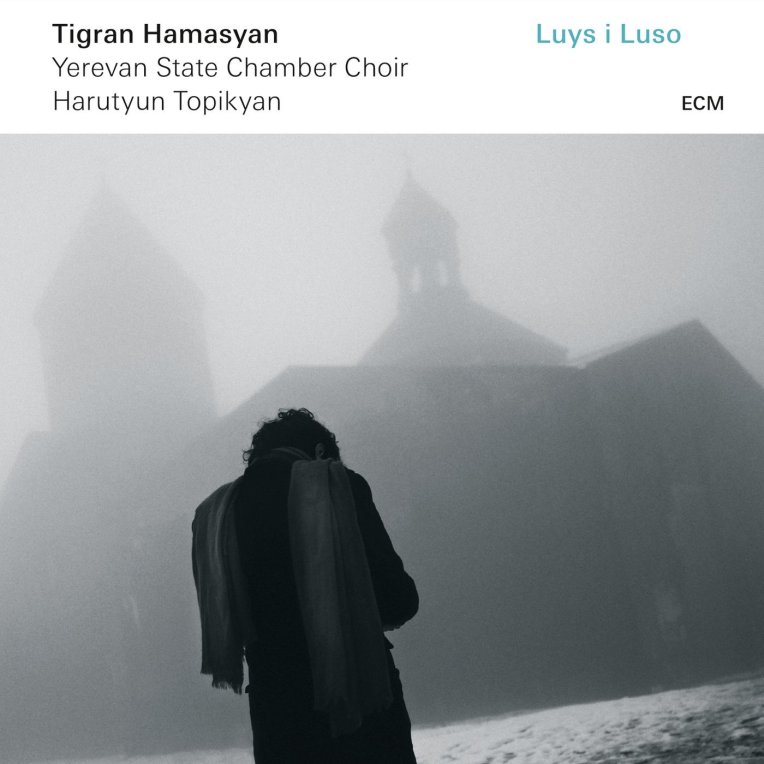
Tigran Hamasyan: Luys i Luso (ECM 2447)

Luys i Luso

Tigran Hamasyan
Luys i Luso

Tigran Hamasyan piano, prepared piano
Yerevan State Chamber Choir
Harutyun Topikyan conductor
Recorded October 2014 at Argo Recording Studio, Yerevan
Engineer: Markus Heiland
Assistant engineer: Armen Paremuzyan
Mixed March 2015 at RSI Studio Lugano by Markus Heiland, Manfred Eicher, and Tigran Hamasyan
Produced by Manfred Eicher
U.S. release date: October 2, 2015

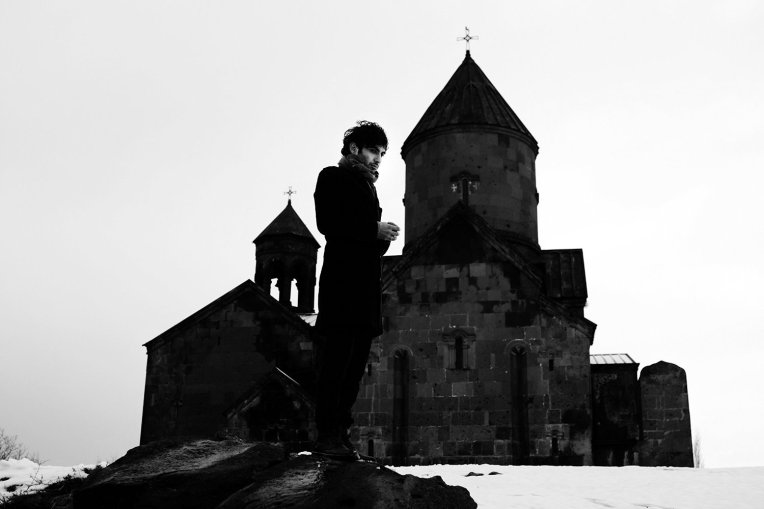
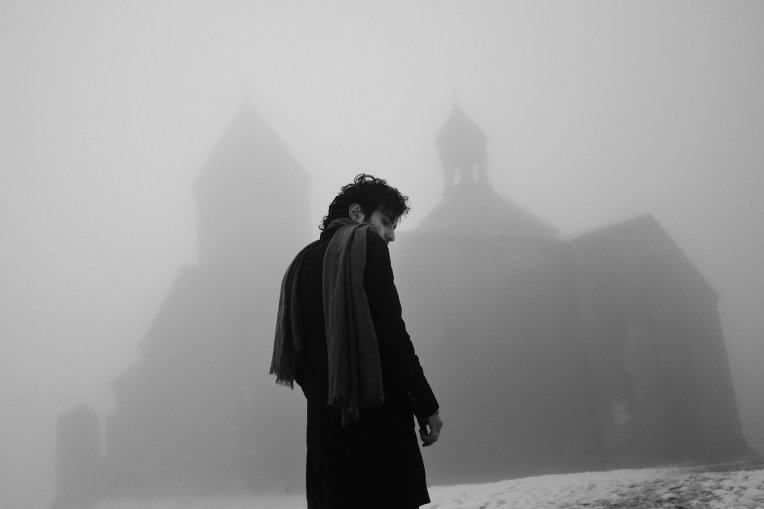
Luys i Luso realizes the dream of Tigran Hamasyan to build an entire album around the sacred music of Armenia. Now based in Los Angeles, the prodigious jazz pianist has held on to the melodies of his homeland with solemnity and patience for this project. The antiquity of much of the repertoire—hymns, sharakans (chants), and cantos, some of which date back to the fifth century—leaves room for improvisation, which evidence suggests has been a part of its living tradition for centuries. Hamasyan takes to this freedom like a wing to wind, using his polyphonic arrangements of monophonic melodies as runways for spontaneous flights. He has intentionally left the piano parts unwritten, so that by following only skeletal structures he is free to move about the score.

Hamasyan 1
(Photo credit: Vahan Stepanyan)

The album’s title (Light from Light) is primarily descriptive, revealing the process of pulling out an interpretive glow from contemporary compositions, and from the older ones embers of bygone devotions. It also signals themes of variation in a program built around multiple incarnations of the core melodies. The preludinal “Ov Zarmanali” (Oh this Amazing and Great Mystery) by 12th-century catholicos and composer Grigor G. Pahlavuni, for example, illuminates the listener’s ears first through a solo piano treatment, like snow falling from the branches of a godly tree, and later in the album in a veritable river of voices. The Yerevan State Chamber Choir’s balance of raw technique and rhythmic precision indicates a vulnerability diminished by numbers. Hamasyan’s pianism takes on a regular role here, sounding its arpeggios with veracity. The modal changes speak to something deeper than beauty, to the heart within it darkened by neglect. Midway through the singers fade and leave the piano to move jazzily through their afterimages, only to return like objects of worship polished smooth over centuries of devotion. “Sirt im Sasani” (My Heart is Trembling!), a canticle by 13th-century canonical writer Mkhitar Ayrivanetsi (c. 1230-1297) also reveals its mercies through two iterations, the second of which is a piano variation of Trinitarian dimension, while the first professes faith through the distant mechanisms of exile. Bass soloist Seiran Avagyan renders a flower of textual identity shedding petals in favor of bodiless light.

Hamasyan 2
(Photo credit: Vahan Stepanyan)

No such project would be complete without Komitas (1869-1935), because of whose efforts much of Armenia’s sacred music has been preserved. His “Hayrapetakan Maghterg” (Patriarchal Ode), a hymnal request to be heard and absolved, takes three forms. In two Hamasyan-only versions, the pianist attends to the words between notes. He is keenly aware of these spaces and gathers strength through their collective presence. Like the pages of a thumb-worn Bible, its gilding has faded through absorption, finding in its choral life a treasure of grace and, in soprano soloist Jenni Nazaryan, a dove clutching sprigs of gratitude. From Komitas’s Armenian Holy Mass we encounter two sections, “Surb Astvats” (Holy God) and “Orhnyal e Astvats” (Blessed is God), each based on melodies from the seventh century. Where the former is driven by forward-thinking improvisation, the latter looks backward by sampling tenor Armenak Shahmuradyan. This 1912 archival recording, made in Paris in the presence of Komitas, defines the palette from which the choir draws its colors over a century later.

Medieval theologian and hymnologist Mesrop Mashtots (c. 362-440) is represented in two chants and a canticle for Fasting Days. The first of these, “Ankanim araji Qo” (I Kneel Before You), is where the choir makes its album entrance—or should I say “in-trance,” for such is its state of being. Therein, singers descend to the bottoms of their linguistic wells, making dervish circles until the shadows are cleansed. Each is a powerful statement of redemption, of the will to drown in transgression so that one might be reborn into sobriety.

For the singly rendered, Hamasyan offers two cantos of the Resurrection, both chanted during Divine Liturgy. “Nor Tsaghik” (New Flower) by Nerses Shnorhali (c. 1102-1173) strikes difference through its use of prepared piano, at which Hamasyan uncovers hidden voices behind the voices, while “Havoun Havoun” (The Bird, the Bird was Awake) by Grigor Narekatsi (c. 951-1003) pairs soprano and piano in the name of faith. Nazaryan’s lone singing barely grazes the belly of the nearest cloud until the nourishment of Heaven comes raining forth, leaving us to drink in what we can.

Those who would write off this recording on the sole basis of its description—Do we really, they might say, need another jazz musician improvising over a vocal ensemble?—may be pleasantly surprised at the level of integration achieved on Luys i Luso. Like Misha Alperin, Hamasyan recognizes the dedication of knowledge required to mesh with equally disciplined singers. Whether broken or healed, each of his selections embodies the fragmentary nature of things as a path to wholeness. The sheer love pouring from that wholeness is proof of concept.

An unexpected masterpiece, and one of ECM’s most astonishing in years.

(To hear samples of Luys i Luso, please click here. Further information about the project is available here.)

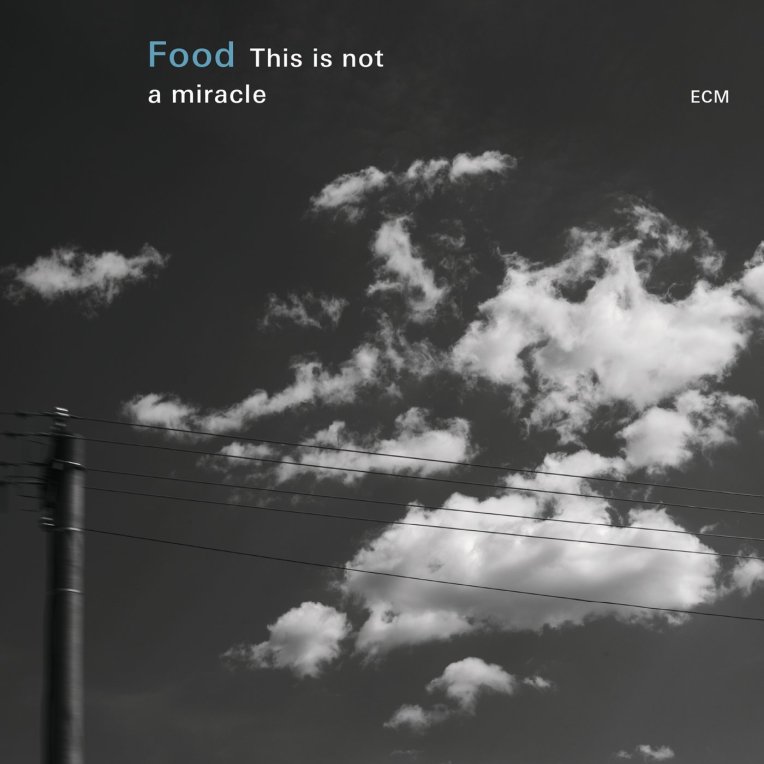
Food: This is not a miracle (ECM 2417)

This is not a miracle

Food
This is not a miracle

Thomas Strønen drums, electronics, percussion, moog, fender rhodes
Iain Ballamy saxophones, electronics
with
Christian Fennesz guitar, electronics
Recorded June 2013 at Holand Sound, Oslo
Recording producer: Thomas Striven
Engineer: Ulf Holland
Mixed February 2015 at Holand Sound, Oslo by Ulf Holand, Manfred Eicher, and Thomas Striven
Mastered at MSM Studio, Munich by Christoph Stickel and Manfred Eicher
An ECM Production
U.S. release date: November 20, 2015

For its third ECM course, the duo of Thomas Strønen (drums, electronics, percussion, Moog, Fender Rhodes) and Iaian Ballamy (saxophones, electronics), known together as Food, serves up its most introspective chunk of nourishment yet. With assistance from Christian Fennesz (guitar, electronics), who last guested on Mercurial Balm, the project burrows even deeper into its lyrical universe with atmospheric phasers set to stun.

Under the creative disclosure of This is not a miracle, Strønen has taken to crafting every piece using elements culled from hours of studio improvisation with the musicians and producer Ulf Holand, whose hand was so gorgeously evident in Nils Petter Molvær’s Khmer. Strønen admits to starting more often with a structural rather than melodic idea before cutting the music, in his words, “to the bone.” Cutting is precisely the word, as linear utterances became spliced, looped, and restructured into fully fledged, standalone grooves.

It would be tempting, once the distorted guitar and muffled bass beats of “First Sorrow” pulse their way into the mind’s ear, to place the origins of this music at a far remove from Earth, when really it is torn from the book of an internal cosmos. Brushed with fire and written in ashes, its pages glow with the allure of a sere orthography in “Where Dry Desert Ends,” making even this unforgiving territory feel like cashmere on winter skin. Drums add their skipping traction to the dunes, while synthesizer and saxophone cut the sky with their cloudless scissors. A marked shift in viewpoint flushes heat as if through an emotional exhaust system of continental proportions, turning the emptiness of sunset inside out as a gift for the coming dawn.

Much of what awakens thereafter draws its nutrients from somewhere between this planet’s surface and its core, a comfort zone of difference and sculpted time. Whether whirling in the title track’s dervish circles or overlapping reeds in “Death Of Niger,” crunching through the detritus of “Sinking Gardens Of Babylon” or drifting over “The Concept Of Density,” just high enough to traverse the highest mountains yet low enough to ingest the detail of every village below, genetics bleed through every joining of head and tail with the power of unifying color.

Whatever the means at hand, lineage remains at the forefront of Strønen’s sound-world. Khmer kinship is strongest in “Exposed To Frost,” of which Fennesz’s biwa-like twangs imply another world within, while the drumming of “Earthly Carriage” and “Without The Laws” has the tuneful attention of label mate Manu Katché. His simple guidance is as shifting as the sand of an hourglass, pulling notes by gravity into mountainous ends. Similarly, “The Grain Mill” seeks the chicken in the egg. This glitch-laden lullaby enables a searing emergence from Fennesz, who tears through the veil of dreams into waking reality, where coronas whip themselves in place of lovers drowning in self-regard.

Whatever poetry This is not a miracle might inspire, it is, as the title implies, a practically molded object. The band has since taken these constructions as cohesive compositions, performing them as such in live concerts. But their democratic foundation remains audibly intact, and is perhaps the greatest force keeping them from being sucked into the black hole of countless other albums vying for your attention. This one tugs as the moon does the ocean, leaving shores refreshed and glistening beneath its light.

(To hear samples of This is not a miracle, please click here.)

Keith Jarrett Trio: Live In Japan 93/96 (ECM 5504/05)

Live In Japan

Keith Jarrett Trio
Live In Japan 93/96

Keith Jarrett piano
Gary Peacock bass
Jack DeJohnette drums
DVD 1
Recorded live in Tokyo, July 25, 1993 at Open Theater East
Director: Kaname Kawachi
Recorded by Toshio Yamanaka
Produced by Yasuhiko Sato
Executive producers: Hisao Ebine and Toshinari Koinuma
DVD 2
Recorded live in Tokyo, March 30, 1996 at Hitomi Memorial Hall
Director: Kaname Kawachi
Recorded by Toshio Yamanaka
Produced by Yasuhiko Sato
Executive producers: Hisao Ebine and Toshinari Koinuma
Concerts produced by Koinuma Music

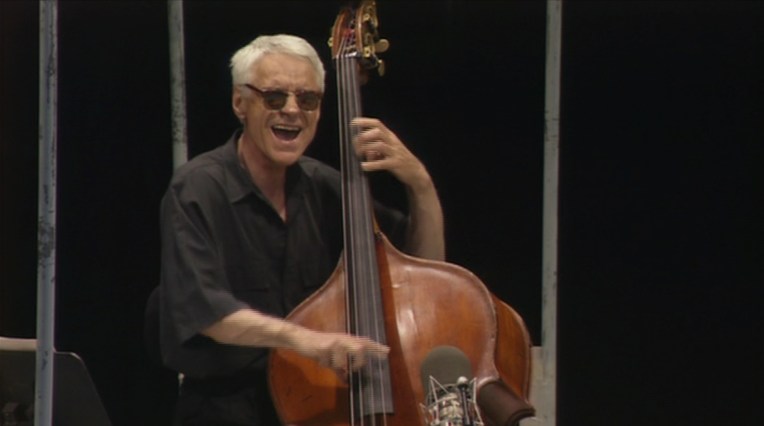
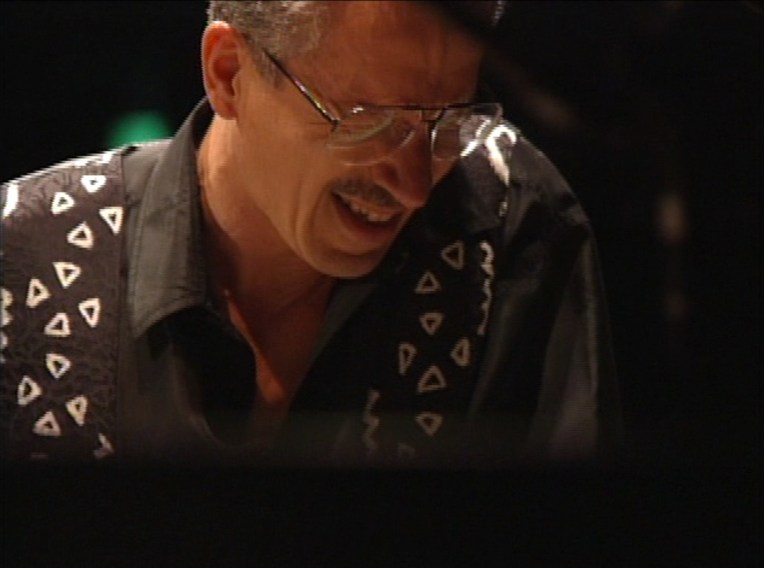
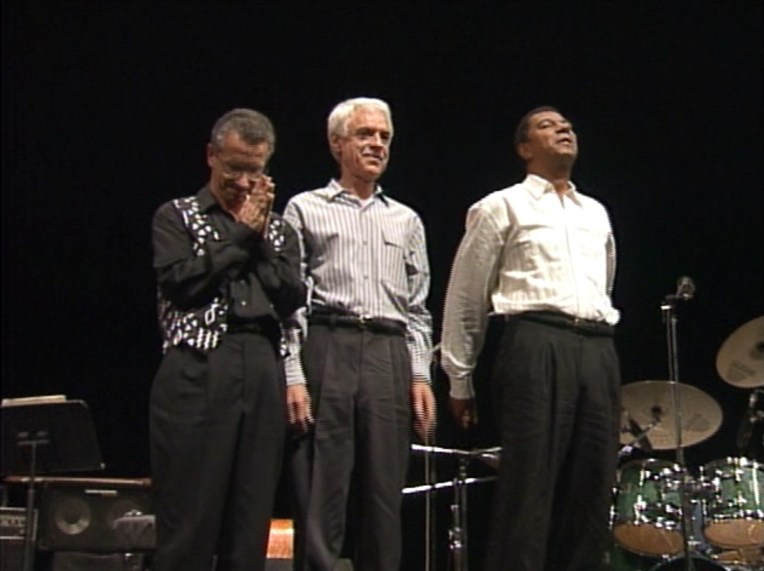
It’s one thing to hear, but quite another to see, the Keith Jarrett Trio in action. For those unable to do so in a live setting, this two-DVD release is the next best thing. Like the Standards I/II set that precedes it, this one was recorded in Tokyo, but puts about a decade between those first Japan performances.

Japan 1

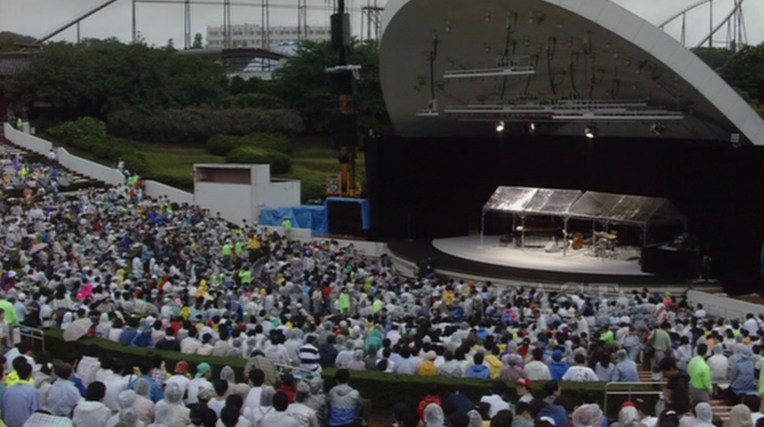
A 1993 gig at Open Theater East takes place in the heart of a sweltering summer. The air shines both with the music and with the rain that forces a large and dedicated audience to listen from beneath ponchos, and the musicians to play from beneath a clear canopy. The video quality is much finer this time around, and despite a rocky start born of technical issues and the weather, captures one of the trio’s finest sets available on any medium.

Japan 2

What separates this concert from the others available on DVD is the openness of the band’s aura. Jarrett more than ever plays for his appreciative listeners because he understands the bond into which nature has pushed them. Perhaps it’s no coincidence that Jarrett’s The Köln Concert also famously began in the least ideal of conditions. Clearly, the pressure set him on an unprecedented creative path. And so, even as the trio struggles to feel out the climate in Dave Brubeck’s “In Your Own Sweet Way” (throughout which Jarrett must often wipe down the keyboard with a towel), all while latecomers snake to their seats, we can feel the groove emerging one muscle at a time. After the worldly touches of “Butch And Butch” and “Basin Street Blues,” we know that things have been set right.

Japan 3

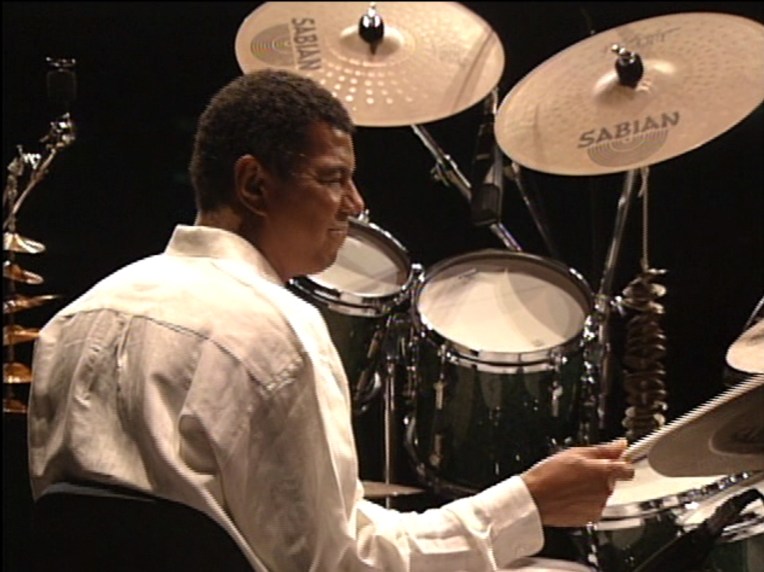
Whereas in the previous Japan documents Peacock proved himself the man of the hour (although, to be sure, the breadth of his architectures in “If I Were A Bell” and “I Fall In Love Too Easily” are as masterful as they come), it’s DeJohnette who produces the deepest hues of this rainbow. His sticks make evergreens like Sonny Rollins’s “Oleo” that much greener, and turn a 26-minute rendition of Miles Davis’s “Solar,” combined with Jarrett’s “Extension,” into a downright sacred space.

Japan 4

As with the 1986 concert on Standards I/II, the trio ends on three encores: “Bye Bye Blackbird,” Jarrett’s “The Cure,” and “I Thought About You.” In all of this one can sense a quiet storm of commitment to the music that flows from within. Melodies breathe, reborn, requiring open hearts to know their graces.

Japan 5

The year 1996 brings us to Hitomi Memorial Hall, where Jarrett and friends jump fully refreshed into “It Could Happen To You.” As always, Jarrett’s lyrical intro reveals little about the mosaics soon to follow. He takes the theme and its surrounding chords as a starting point down densely textured corridors. Which is, of course, what improvisation is all about: dungeon crawling without a map yet knowing that a destination will wrap its arms around you eventually. Jarrett seems to unravel every possible path into its fullest and on through the ballad “Never Let Me Go,” in which the pianist transcends the status of storyteller to that of myth keeper.

Japan 6

“Billie’s Bounce” is a staple not only for its composer, Charlie Parker, but also for Jarrett. As one of his prime expressive spaces, it layers all the bread and butter that make his art so nourishing. But we mustn’t forget that each member of this unit is equally important. In “Summer Night,” Peacock’s gentility is Jarrett’s flame, shining like the moon with a song to sing, and DeJohnette’s opening to “I’ll Remember April” shows a drummer with just as much to say from the bedrock, even as Jarrett evolves in real time through every change in the rapids above.

Japan 7

Other standbys such as “Mona Lisa” and crowd favorite “Autumn Leaves” open as many new avenues as they retread. With a crispness of feeling, Jarrett grabs the spotlight, while lively soloing from Peacock and fancy brushwork from DeJohnette make the picture whole. Even the familiar strains of “Last Night When We Were Young” become something new when they melt into Jarrett’s groovier “Carribean Sky.” It’s what one can always count on with this trio: playing as if for the first time.

Japan 8

The Bud Powell tune “John’s Abbey” commands from the sidelines as Peacock and DeJohnette go from canter to gallop and sets off a rapid-fire succession of closing tunes. A touching rendition of “My Funny Valentine” falls like a tear of quiet joy into Jarrett’s “Song,” in which the musicians open a book you always meant, and at last have the chance, to read again. “All The Things You Are” and Ray Bryant’s lesser-heard “Tonk” end the set with a satiating balance of delights. Nothing added, nothing taken away.

Japan 9

Enrico Rava Quartet w/Gianluca Petrella: Wild Dance (ECM 2456)

2456 X

Enrico Rava Quartet
w/Gianluca Petrella
Wild Dance

Enrico Rava trumpet
Francesco Diodati guitar
Gabriele Evangelista double bass
Enrico Morello drums
with
Gianluca Petrella trombone
Recorded January 2015, Artesuono Recording Studios, Udine
Engineer: Stefano Amerio
Produced by Manfred Eicher
U.S. release date: August 28, 2015

Wild Dance documents yet another chapter in the career of Italian master trumpeter Enrico Rava, who for this outing has assembled one of his most exciting bands to date. Along with guitarist Francesco Diodati, bassist Gabriele Evangelista, and drummer Enrico Morello, he welcomes back into the fold trombonist Gianluca Petrella, whose darker brass has added memorable contrast to Rava’s quintet albums over the past 13 years. Just as many Rava originals, both new and old, populate the set list of this latest ECM collaboration, with a collective improvisation added in for good measure. The latter format, which falls penultimate in the set list, is a good litmus test for any jazz outfit, and in this respect the band succeeds beautifully. Overlapping just enough to yield thematic intimations while allowing each instrument to speak personal truth, it journeys with optimism on its sun-faded sleeve.

All of which makes “Diva” all the more alluring for noir-ish saunter. In keeping with that atmosphere, the band caresses every flutter of Rava’s hardboiled romanticism with austerity. Diodati and Evangelista are this opener’s heart and soul, stretching and tensing by turns as Rava walks the alleyways in search of connections. “Space Girl” continues the thread with similarly half-lit cinematography, by means of which Morello discloses the underlying bonfire of physiological activity required to pull this music off with such smoothness of intuition.

Rava and Eicher
Enrico Rava with producer Manfred Eicher (photo by Luca D’Agostino)

“Don’t” radically changes the album’s exposure, moving with that same swagger but opening up the aperture through Petrella’s delayed entrance. In his hands, the trombone becomes a fully vocal entity that is equal parts storyteller and troubadour. His notecraft bespeaks an itinerancy that never fears the unknown. Whether winding around Rava’s core melody at the end of this tune or jumping headfirst into the animations of the next (“Infant”), he plays with fire as a house cat might a mouse—batting it around just enough to stun without the need for a kill. Such restraint is required of all the musicians under the bandleader’s employ, for even at their most unleashed (as in the up-tempo gems “Cornette” and “Happy Shades”) they make sure to keep a sizable portion of their unity within frame. Further contributions from Petrella are studies in contrast, adding humor to “Not Funny,” liquidity to the title track, and bite to the otherwise smooth “Monkitos.”

Enigma is the name of the game in “F. Express,” which by electronic whispers opens a dialogue of swinging proportions. This also happens to be one of its composer’s finest throwbacks to hit the digital shelves in some time, and is an album highlight—not only for its atmospheric acuity, but also for the archaeological care with which it is unearthed. A lone bass introduces “Sola” at length before the core-tet fleshes its skeleton with dreamlike locomotion. As if talking in his sleep, Rava spills inner secrets with the offhandedness of a sigh. “Overboard,” for its part, recalls the album’s moodier beginnings and finds the band gliding over shifting waters. In tandem with the unmistakable trumpeting, Diodati surprises with a gritty solo that stands out in an album of many standouts.

All of this and more abounds in “Frogs,” which showcases the band’s vibrancy to its fullest. Every instrument sings in this roving gallery of impulses and rhythm changes, making for a fitting closer to one of Rava’s finest.

(To hear samples of Wild Dance, please click here.)