Louis Sclavis: Napoli’s Walls (ECM 1857)

Napoli's Walls

Louis Sclavis
Napoli’s Walls

Louis Sclavis clarinets, saxophones
Vincent Courtois cello, electronics
Médéric Collignon pocket trumpet, voices, horn, percussion, electronics
Hasse Poulsen guitar
Recorded and mixed December 2002, Studios La Buissonne, Pernes-les-Fontaines
Engineers: Gérard de Haro, Gilles Olivesi
Recording producer: Louis Sclavis
Executive producer: Manfred Eicher

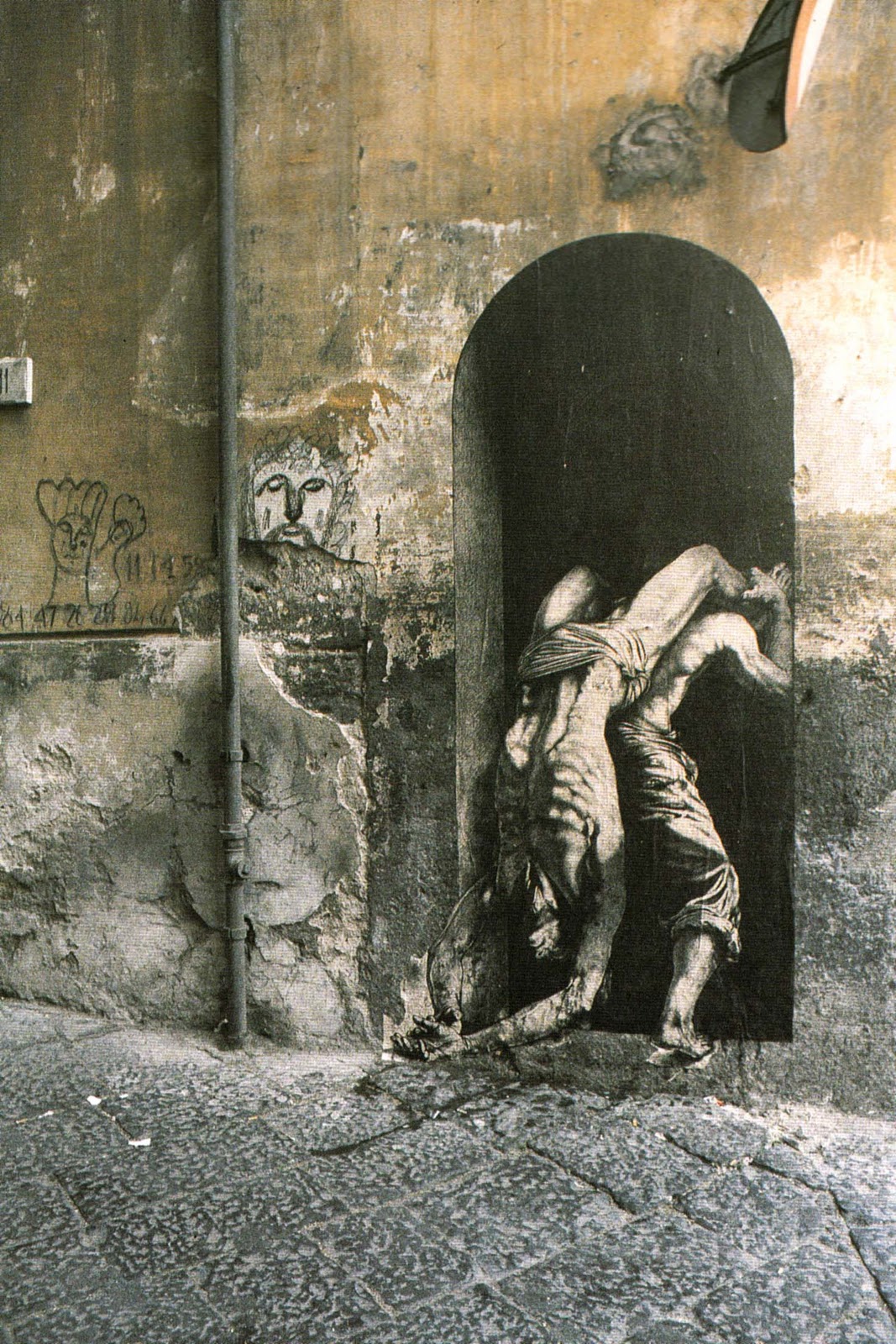
Napoli’s Walls is Louis Sclavis’s reigning masterwork. More than a portrait of its titular city, it’s a city unto itself—an urban web with its own personages, economies, and philosophies. Known for paving future paths even as he redefines the ones he treads at any given time, the French reedist has never sat comfortably in one idiomatic chair. Heavily schooled in free jazz, as attested by the wingspan of his bass clarinet, he also grips his talons comfortably around classical music and, in the context of this album, visual art, taking as a starting point the work of Ernest Pignon-Ernest: a painter who, like Banksy, leaves echoes of his thoughts on streets and buildings, with a fixation on that fine line between integrity and crumbling.

EPE

Cellist Vincent Courtois will be familiar to Sclavis listeners from his last appearance on L’affrontement des prétendants. Less so perhaps are Danish guitarist Hasse Poulsen and Médéric Collignon, who plays pocket trumpet, sings, and provides electronic commentary throughout. The haunting slab of introduction that is “Colleur de nuit” would seem to say it all. It parses the night like some half-lit grammarian, drunk off the infinite possible interpretations of speech. The chamber aesthetic fogs windows accordingly as palimpsests for the hungry, enablers of diffusion for the self-absorbed. The cello is potent in this regard and adds a flavor of wanton necromancy. Percussive jangling and distant whistling recall the folk-infused landscapes of Luciano Berio’s Voci, while bass and drums put a strange sort of traction into play.

The title track is equally and deeply cinematic, laying curiously syncopated soprano lines over a spider’s web of electric guitar and amplified pizzicato from Courtois, building into a screeching pinpoint that punctures new stars into the sky with every lick and flick. This is music of remarkable subtlety that changes organically, following lines of flight long obscured, only now exposed.

Much of the album similarly teeters between ascent and descent, between sacred and secular, choosing instead the truth of entanglement. Two pieces marked “Divinazione Moderna”—one a duet of bass clarinet and cello, the other a prismatic setting for the full quartet—embody this entanglement to the utmost, interested not so much in politics as in the fractured lenses through which we view them. The effect is such that an overt historical reference like “Kennedy in Napoli” rings strangely alien for all its chronological specificity. (How appropriate that, during his 1963 visit to Naples, the President should quote Shelley’s characterization of Italy as a “paradise of exiles.”) Eerie, too, the Django-esque nightmare of “Guetteur d’inaperçu,” replete with torrential baritone and droning undercurrents.
EPE

Other pieces (e.g., “Porta segreta”) combine composed and intuitive elements in a brilliant mélange of feeling and physicality. All of which brings us back to the art of Pignon-Ernest, whose figures are as much a part of the stone into which they fade and from which they appear. In those traces we can find those same dilapidated edges, those same postcard reflections turned to incitements of anarchy at mere touch of mortal instruments. The careful attention paid to production at vital pressure points along the way sets this nervous system aglow, necessarily leaving us with the rough in a diamond, not the other way around.
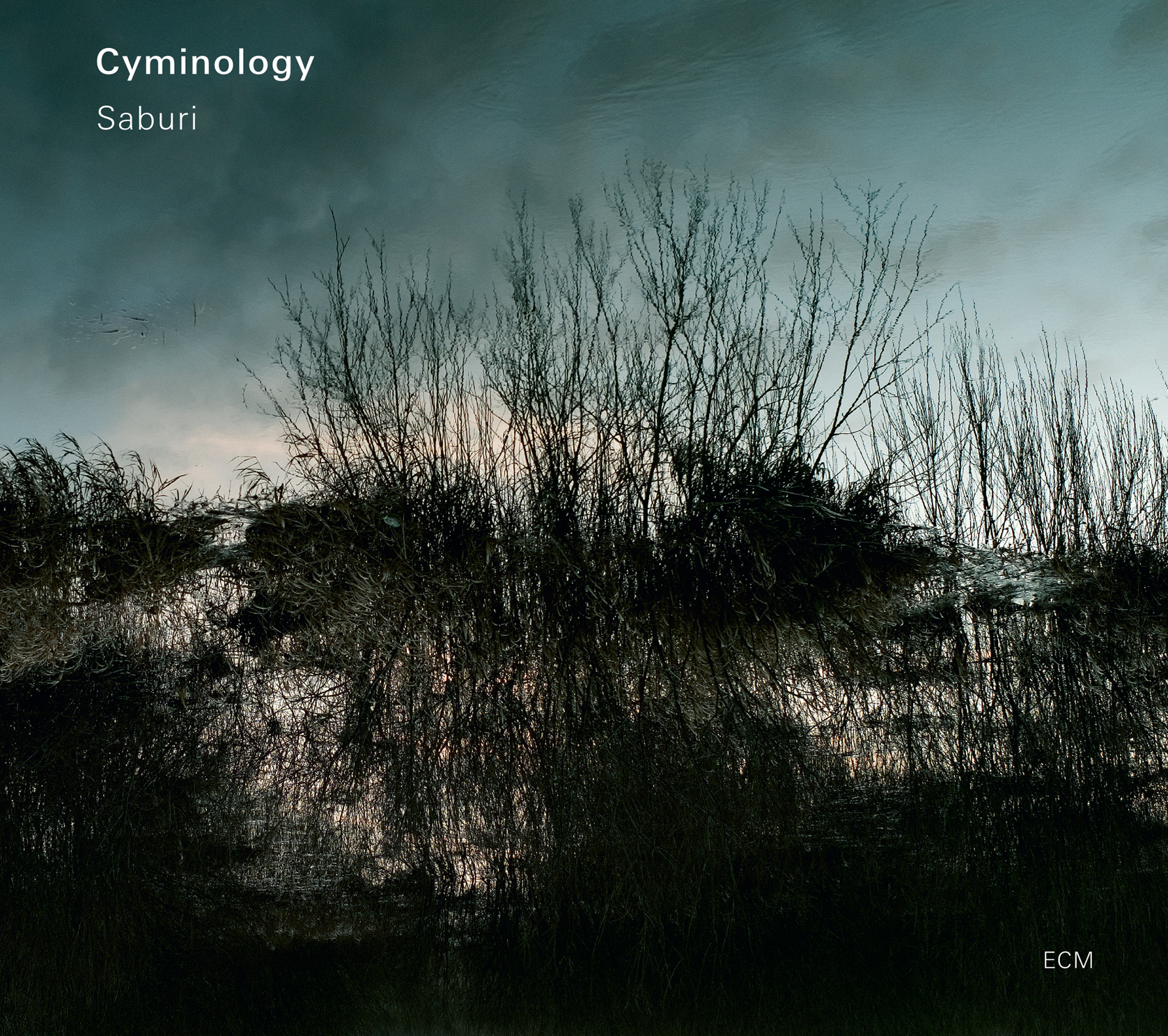
Cyminology: Saburi (ECM 2164)

Saburi

Cyminology
Saburi

Cymin Samawatie vocals
Benedikt Jahnel piano
Ralf Schwarz double-bass
Ketan Bhatti drums, percussion
Recorded January 2010 at Rainbow Studio, Oslo
Engineer: Jan Erik Kongshaug
Produced by Manfred Eicher

Following their 2009 ECM debut As Ney, singer Cymin Samawatie, pianist Benedikt Jahnel, bassist Ralf Schwarz, and drummer Ketan Bhatti tessellate their heritages once again in Oslo’s Rainbow Studio. As Cyminology they thicken the stem sprouted on that first outing, growing new offshoots along the way. From poetry of the past, Samawatie turns her attention to the tectonic plates of allegiance that define our political world in the here and now, using only self-penned words to express her visions of conflict from afar. Yet rather than engage in fruitless proselytizing, the album forges its own continent. Without borders.

The smoothness achieved by this enmeshed quartet is subtly effusive and affecting. Painting with colors imported directly from nature, Samawatie’s fluted vocals shift through Jahnel’s arpeggios in “Sibaai” as would an eel through seaweed, thus starting out the disc with a feeling of current. Jahnel’s contributions are indeed inspiring at every turn. Be they the exquisite harmonies of the title track or the Beethovenian interiorities of “Hedije” (for indeed, the album feels like a chain of unwritten Moonlight Sonatas), he turns water into crystal with every stroke. The same goes for Schwarz and Bhatti, who in the song “Shakibaai” weave a carpet so plush as to shield Samawatie’s barefooted cantoring from the magma below.

As ever, her voice spreads from center to periphery, bleeding through the fever dream of “As maa” and on through the diagrams of “Nemibinam,” in which she reveals a hidden dance. Despite Samawatie’s penchant for textual color, through which she impedes clarity of expression through the mystery of meaning, the wordless singing of “Norma” most forthrightly expresses her art. Named for Norma Winstone, it is truly something special. What’s more, her voice need not even be there to affect us, as shown by the concluding “Hawaa.”

That the album’s title means “patience” is an afterthought to what is already obvious. That such fullness can let the wind through without impediment is testament enough to the group’s meticulousness. Like a pinwheel activated by breath of slumber, its turns in self-hypnosis, that it might see the light of day whenever the skies grow dark.

(To hear samples of Saburi, click here.)

Anders Jormin: In winds, in light (ECM 1866)

In winds in light

Anders Jormin
In winds, in light

Lena Willemark voice
Marilyn Crispell piano
Karin Nelson church organ
Raymond Strid percussion
Anders Jormin double-bass
Recorded May 2003, Organ Hall at Musikhögskolan, Göteborg
Engineer: Johannes Lundberg
Executive Producer: Manfred Eicher

When Anders Jormin was asked to write sacred music for Sweden’s Västerås cathedral, the Swedish bassist went above and beyond, setting verses by Swedish poets Harry Edmund Martinson, Pär Lagerkvist, Johannes Edfelt and Lotta Olsson-Anderberg, as well a smattering of English from William Blake and Jormin himself, in the exploratory cycle In winds, in light. The choice of Lena Willemark to bring those words to life was an obvious one. Having lent her voice to the memorable ECM folk sessions of Nordan and Frifot, here she expands her palette yet again with a unique corpus of source material and sometimes-hallucinatory adlibs. In the latter vein, “Sång 80” finds her in an adventurous mode in some of the album’s starkest territories.  Pianist Marilyn Crispell, organist Karin Nelson, and percussionist Raymond Strid complete the picture.

Although the musicians are no strangers to one another in various combinations in other contexts, here they comprise an ad hoc chamber ensemble like no other. Crispell plays the role of conscience. Whether percussively tracing the periphery of “Choral” or breathing through album highlight “Allt” with vivid involvement, her pianism expresses the complexity of time in simplest language, acupunctured in all the right places. From the other keyboard, Nelson leaps into vast improvisational pools, tracing the arc of her travels in “Flying” to the ashen dip of her “Introitus” in splintered chronology, reaching wondrous peaks of expression with piano and voice in “En gang,” another standout moment. Her organ is a defining presence throughout, at times blasting like a theological furnace, at others whispering secular secrets. Strid, for his part, is the incantation. Hidden and tactile, he fans the flame beneath the snow in “Gryning,” emotes the ritual core of “Each man,” and bows the ether of “Lovesong.” Through it all, Jormin binds with his uniquely textural playing, an approach epitomized in three geologically minded solos: “Sandstone,” “Soapstone,” and “Limestone.” His texts—fitting snugly alongside the literary juggernauts in whose company they find themselves—embody, on the other hand, freeing impulses. The window of “In winds,” for instance, looks out onto a tearful memory, the landscape of which has withered like the soul that once dwelt there and in whose wake is left only a rotted cabin, snow-covered and still.

In winds, in light is giant footprint from the past, filled with the plaster of the present, preserved for the ears of the future. May it flicker still.

Arve Henriksen: Cartography (ECM 2086)

Cartography

Arve Henriksen
Cartography

Arve Henriksen trumpets, voice, field recording
Jan Bang live sampling, samples, beats, programming, bass line, dictaphone, organ samples, arrangement
Audun Kleive percussion, drums
David Sylvian voice, samples, programming
Helge Sunde string arrangement and programming
Eivind Aarset guitars
Lars Danielsson double-bass
Erik Honoré synthesizer, samples, field recordings, choir samples
Arnaud Mercier treatments
Trio Mediaeval voice sample
Vérène Andronikof vocals
Vytas Sondeckis vocal arrangement
Anna Maria Friman voice
Ståle Storløkken synthesizer, samples
Recorded, engineered and mixed at Punkt Studio, Kristiansand, except
Track 1
Recorded live at Punkt Festival, Kristiansand, June 2005
Overdubs recorded at Punkt Studio
Track 2, Part one
Recorded at Samadhisound
Trumpet recorded at 7.de Etage
Additional trumpet recorded at Punkt Studio
Track 10, Part Two
Recorded live at Punkt Festival, Kristiansand, August 2006
Track 11
Recorded live at Stadtgarten, Cologne
Assembled at Punkt Studio
Voice recorded at Samadhisound
Mastered at Audio Virus Lab, Oslo by Helge Sten
Engineered and produced by Erik Honoré and Jan Bang

After lurking as a figural, melodic force on many ECM sessions, at last Arve Henriksen dropped his unique brand of acid with Cartography. Although his place among Norway’s defining trumpeters—including Nils Petter Molvær, Per Jørgensen, and Mathias Eick—had already been firmly established, this leader date gave that badge some spit shine. As with his compatriots, electronics are a vital part of his toolkit, and here the incorporation achieves new levels of organicity courtesy of associates Erik Honoré and Jan Bang, who has contributed equally memorable soundscaping to the work of Eivind Aarset (see his recent Dream Logic), Jon Hassell (a huge influence on Henriksen), and singer-songwriter David Sylvian. In fact, Sylvian appears twice on this disc, bringing his idiosyncratic wordsmithery to bear on some amorphous territory. In “Before And Afterlife,” his speech is split and stitched, flashing cosmopolitan utterances across rural stages. The silvery ebb and flow running through Henriksen’s trailing commentary tilling the soil gently in his wake. “Thermal” further sets Sylvian’s stunning poetry of object-oriented diaspora in motion.

Henriksen
Photo credit: Oliver Heisch

With such evocations of land, (un)settlement, and water, the album’s title might seem an obvious one: the art of mapmaking translated into sound, comprising a trans-idiomatic survey recorded in multiple locations. To be sure, such connotations abound. Whether floating through the gossamer electronic spread of “Poverty And Its Opposite” or hooked by the widening beat of “Migration,” Henriksen moves through thick clouds with surety of calibration. The sense of continuity in his trumpeting evokes a romantic sort of cinema, a feeling of sustained emotional lift and robust physicality.

Henriksen is indeed often the focal center—sometimes of ambient rustlings and digitalia, sometimes tracing the shadows of voices, sometimes diving headlong into them. In the latter vein is “Recording Angel,” which samples the singing group Trio Mediaeval in a half-conscious sleep. The effect is eerily similar to Stephan Mathieu and Janek Schaefer’s Hidden Name (2006, Crónica), which was created using source material from composer John Tavener’s personal record collection. Words waver in and out of consciousness, swapping exigencies and feeling patterns. Through this goopy mixture, Henriken’s lines glide like water snakes, blind yet ever attentive to their food source.

The album also veers into deeply personal spaces, as in “The Unremarkable Child,” a short and dulcet piece with an orchestral backdrop, swaying and mellifluous. “Sorrow And Its Opposite” is likewise inward looking, revealing Henriksen’s warmth to the utmost against a shifting assemblage of upheavals, a ballad for time immemorial, for the enchantment within and the whispers without. A piano turns like an Escherian helix, until only the sounds of footsteps remain. Therein lies the real cartography: a form of travel not across tactile surfaces but through ghosts of mortal ends.

Another one of ECM’s finest.

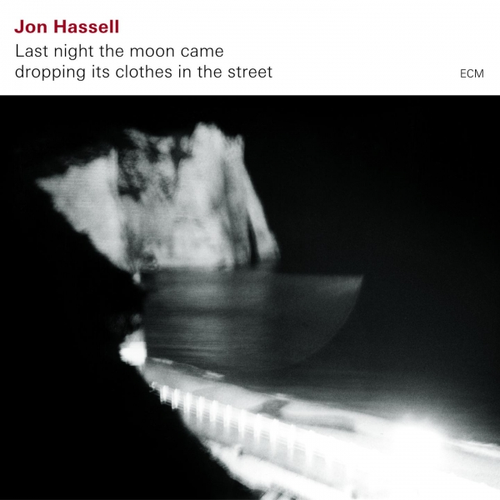
Jon Hassell: Last night the moon came dropping its clothes in the street (ECM 2077)

Last night the moon came

Jon Hassell
Last night the moon came dropping its clothes in the street

Jon Hassell trumpet, keyboard
Peter Freeman bass, laptop
Jan Bang live sampling
Jamie Muhoberac keyboard, laptop
Rick Cox guitar, loops
Kheir Eddine M’Kachiche violin
Eivind Aarset guitar
Helge Andreas Norbakken drums
Pete Lockett drums
Recorded April 2008, Studios La Buissonne, Pernes-les-Fontaines
Engineers: Gérard de Haro and Nicolas Bailla
“Courtrais” recorded live in Courtrais, Belgium
“Abu Gil,” “Northline,” and “Light On Water” recorded live at Kings Place, London, November 2008
Produced by Manfred Eicher and Jon Hassell
Mixed by Peter Freeman in Los Angeles, Nov/Dec 2008

Not only does Last night the moon came dropping its clothes in the street carry the most evocative title in the ECM catalogue, it also closes a 25-year gap between trumpeter-composer Jon Hassell’s first label date, 1986’s Power Spot. About said title, one need only know it comes from the poetry of 13th-century Sufi mystic Rumi to find insight into the music it indicates. Rumi’s embodiment of spiritual evolution is, much like Hassell’s artistry, a parthenogenetic organism: it nurtures itself, grows with and through itself over time.

Last night the moon came… is in many ways the ambient underbelly of Nils Petter Molvær’s Khmer and is sure to enchant fans of the same. The soupiness of his sound is in full effect here, opening to an attunement of the cosmos that uses sun flares as its ink and comet tails as is brushes—a sound honed over eons and realized through the breath of an artist whose own universalism speaks in cosmic, singing electricity. Yet the more we listen to this music, the more we realize it comes from a space within rather than without, a space found not through the telescope but through the microscope.

The presence of violin, for example—courtesy of Kheir Eddine M’Kachiche, whom Hassell encountered on SIWAN—is a deeply biological one. M’Kachiche’s ghostly mitochondria snake their way through an outer-to-inner progression that smoothes within earshot in the introductory “Aurora” and fades from it in the pale of “Light On Water.” At first, the trumpet is tucked safely away in some inter-dimensional pocket, making its first appearance only in the appropriately titled “Time And Place,” a fraternal tone to the violin’s sisterly wisdom. With the music’s x- and y-axes thus established, we have free fall.

Balance of the unplugged and the wired, of matter and ether, continues throughout. The sense of patience is nocturnal indeed, the song of Hassell’s instrument multifaceted and luminous. The overall effect is one of perpetual exhale. Tasteful applications of instruments mark the path with cohesive memories. Sections such as “Clairvoyance” trace their development by the same clock yet spin their tails in more subterranean designs, diurnal and flowering, while the bass of “Courtrais” throbs just overhead, yielding like a suspension bridge during an earthquake. Purely descriptive moments are rare. Rather, the flow proceeds by way of feel. “Blue Period” is perhaps the closest we get to a painterly aesthetic, the height of Hassell’s reach evoking a bird of prey surveying the territory below as if it were its own body, splayed and stretched to the span of a continent. Like the drumming in the album’s concluding steps, it makes fleeting contact with land, shifting from shadow to shadow, half here and half gone.

The word “atmospheric” was invented for music like this.

Andy Sheppard: Movements in Colour (ECM 2062)

Movements in Colour

Andy Sheppard
Movements in Colour

Andy Sheppard soprano and tenor saxophones
John Parricelli acoustic and electric guitars
Eivind Aarset guitar, electronics
Arild Andersen double-bass, electronics
Kuljit Bhamra tabla, percussion
Recorded February 2008, Studios La Buissonne, Pernes-les-Fontaines
Recording engineer: Gérard de Haro
Assistant: Nicolas Baillard
Mixed January 2009 by Gérard de Haro, Manfred Eicher, and Andy Sheppard
Produced by Manfred Eicher

British saxophonist Andy Sheppard’s ECM debut is a phenomenon in sound. A musician of remarkable integrity, Sheppard takes full advantage of the opportunity to broaden his reach farther than ever before. For this project, he indulges in his Indian, African, and Latin affinities, as reflected in the eclectic lineup that shapes this set into something greater than the sum of its parts. Guitarists John Parricelli (last heard on Kenny Wheeler’s A Long Time Ago) and Eivind Aarset weave acoustic and electronic impulses into a yielding web of support throughout; Arild Andersen, a bassist who can do no wrong, brings melodic heft to what might otherwise have been a supporting role; and tabla master Kuljit Bhamra makes his only ECM appearance in a fine showing of percussive breadth.

Sheppard himself likens Movements in Colour to a dream made realizable only through the fit of its talent. In this respect, Bhamra is a revelation. Encounters with tabla in a jazz context are sure to inspire memories of Collin Walcott’s all-too-short career, but here the results are more akin to Charles Lloyd’s powerful Sangam trio with Eric Harland and Zakir Hussain. Bhamra’s entrance in the 15-minute opener “La Tristesse Du Roi” touches off an intimate symphony, more figural than instrumental. Light-footed yet secure, his stitching keeps the sky from blowing away like a cloth in a cosmic sneeze. Gorgeous bassing and keening electric guitar add a dual coat of ash and flame to the eggshell of this freshly hatched bird. Andersen stands out early on, tracing our ears as would a master painter lay down the underdrawing. His contributions continue to shine as fully embodied images, even from beneath the layers of Sheppard’s melodic gifts.

The album’s compositions—fully Sheppard originals—are its lifeblood. “Bing” is a particularly luminescent example. Bhamra and Sheppard play beautifully off each other, while Parricelli adds cosmic sheen. Ghosts of influence haunt this and other tunes. One might trace lines of flight back to Jan Garbarek, whose muscled lyricism echoes in “Nave Nave Moe” and “May Song,” although the music is quintessentially Sheppard’s own. Deeper contacts abound in “Ballarina,” which by virtue of its shaded, waltzing comportment sounds like a Paul Motian sketch.

The final two tracks of the disc, “We Shall Not Go To Market Today” and “International Blue,” give offering to land and sky, respectively. Where one is a patch of sunlight on misty canvas, thus hinting at spring thaw with its celebratory undercurrent, the other floats Sheppard’s insights over Aarset’s wash of electricity. Andersen gives foothold throughout, indicating only barely the wistfulness of things.

Affirmative and healing, Movements in Colour is a collect call from the ether. Sheppard’s virtuosity is such that one hardly feels the focus and effort required to translate the messages thereof. His mastery of the saxophone’s periphery in particular breathes like the rest of us, singing even as it speaks.

By far one of ECM’s best of the new millennium.

Batagraf/Jon Balke: Statements (ECM 1932)

Statements

Batagraf
Jon Balke
Statements

Frode Nymo alto saxophone
Kenneth Ekornes percussion
Harald Skullerud percussion
Helge Andreas Norbakken percussion
Ingar Zach percussion
Jon Balke keyboards, percussion, vocals, sound processing
Arve Henriksen trumpet
Sidsel Endresen text recitals in English
Miki N´Doye text recital in Wolof
Solveig Slettahjell vocals
Jocely Sete Camara Silva voice
Jennifer Myskja Balke voice
Recorded 2003 and 2004 at “Bugge’s Room” by Andy Miteis
Mixed at “7. Etasje” by Reidar Skår
Mastered at “Lydlab” by Ulf Holand
Produced by Jon Balke

Statements represents a leap in intuition for pianist Jon Balke, who by way of his self-styled “private research forum” Batagraf holds a meeting of percussionists Kenneth Ekornes, Harald Skullerud, Helge Andreas Norbakken, and Ingar Zach, along with Frode Nymo on alto saxophone, trumpeter Arve Henriksen, and an array of voices that includes label familiars Sidsel Endresen and Miki N’Doye, the latter making his second ECM appearance (his first: Balke’s Nonsentration) and here not as percussionist but as poet, reciting texts in the language of the Wolof people of West Africa. As one of ECM’s most up close and personal records (there’s hardly any reverb to speak of), Statements unfolds nakedly, transcending the heavy touch of technology in favor of the freer language of acoustic drums. Indeed, language flows through this project like blood, whether through actual or implied speech.

N’Doye is a defining presence early on in the program, which opens with the spliced diction of “Haomanna.” Seemingly engaged in one-sided antiphony, he inhales savanna and exhales urban networks, barely stitching the lines of keyboard and saxophone trading places at the periphery. Nymo’s parasitic reed work locates further hosts throughout, threading needles through the geographical mash-up of “Altiett” and careening freely across the open skies of “Whistleblower.”

Despite its organic charge, Statements occasionally dresses itself in the peculiar fashion of postproduction. The mélange of instruments and distorted speech that is “En vuelo” reveals wires for veins. “Doublespeak” refracts likewise. Less Orwellian nightmare than Aristotelian breakdown, its word choice flirts with impropriety. Another example in this regard is “Pregoneras del bosque,” a bazaar of the mind whose fruit is weighed by the emotion. Electronic beats and croaks share the air with live murmurings of hand on drum. The final triptych, however, forms the pièce de resistance. In “Pajaro” toddling echoes of childhood linger against a din of buzz saws and insects. All of this encrypts the data entry point of “Karagong,” an archival glitch that reveals its skeleton in “Unknown.” Here uncertainty is the norm, a world through which denizens go on teetering for another hit of oxygen. This is the new ecology, a scrape of survival, anointed by fear.

Statements again proves Balke to be one of the most consistently surprising and uncompromising artists in ECM’s stable. Those seeking points of comparison to this particular disc may find them in “Betong,” for which the closest analogue would be the proliferations of the late Bryn Jones (1961-1999), a.k.a. Muslimgauze, bonded as it is by a likeminded politics and disdain for injurious media, spoken through the drum. In both is a misunderstood flag that flaps only when the wind of our attention shifts its way.

Jon Balke/Amina Alaoui: SIWAN (ECM 2042)

Siwan

SIWAN

Amina Alaoui vocal
Jon Hassell trumpet, electronics
Kheir Eddine M’Kachiche violin
Jon Balke keyboards, conductor
Helge Andreas Norbakken percussion
Pedram Khavar Zamini zarb
Barokksolistene
Bjarte Eike leader
Recorded September 2007 and March 2008 at Rainbow Studio, Oslo
Engineers: Jan Erik Kongshaug and Peer Espen Ursfjord
Mixed September 2008 by Manfred Eicher, Jon Balke, Amina Alaoui, and Jan Erik Kongshaug
Produced by Manfred Eicher and Jon Balke

“Siwan” connotes equilibrium. This album of the same name achieves equilibrium through many meetings and intersections: of Norwegian pianist Jon Balke and Moroccan singer Amina Alaoui (in her first ECM appearance), of Baroque and Andalusian musical idioms, of Sufi poetry and Christian mysticism, of dark ages and burning inquisitions. For this studio recording of resolutely live music, Balke doubles as keyboardist and conductor for a veritably intergalactic ensemble that includes Algerian violinist Kheir Eddine M’Kachiche, American trumpeter Jon Hassell, and Norwegian violinist Bjarte Eike’s period group Barokksolistene.

Like Alaoui’s seminal Arco Iris, this project is not a fusion of traditions. It is, rather, a deepening of common ground between them. A work of stunning originality, blending geographies into a single airborne continent, its ecosystem runs on ether. Like the solo violin buoyed by strings in the program’s introductory “Tuchia,” the whole flexes and ornaments itself organically. In that violin is a heartbreaking softness that conforms itself to all manner of densities in what follows. After such a fecund inauguration, it is no wonder that the first proper song, “O Andalusin,” should extol the natural wonders of Al-Andalus. Elegiacally described by poet Ibrahim Ibn Khafaja (1058-1139) as “the Eden of the chosen,” the paradisiacal wonders of its landscape shine forth. Harpsichord claws burrow into ocean floor even as Alaoui unfurls sails, hang-gliders, and other disembodied wings to catch every possible current. From burrowing to dislocation, traveler Abu Abdallah Al-Homai’di (1029-1095) yearns for that “faraway homeland” in his poem “Jadwa.” A filigree of percussion and lute illuminates the night as would gold leaf a sacred manuscript, audible tethers each between body and home. Alaoui’s voice wanders but holds its resolve so tightly to bosom that it slips into the ribcage, where it swings on a perch of belonging. She is positively flute-like in wordless moments, touching off M’Kachiche’s elliptical storytelling against a tense ostinato.

The words of Al-Mu’tamid Ibn Abbad (1040-1095), poet-king of Seville, strangely echo the deposition that would incarcerate him for the last five years of his life. “Ya Safwati” is a romantic verse, a profession of utter surrender to that universal captor known as love. This song fronts Jon Hassell’s signature vocality and falls like a curtain to reveal a bevy of percussion carrying Alaoui like a Sherpa across mountains of history. “Itimad” names the wife of Al-Mu’tamid Ibn Abbad, to whom he slipped this poem through the bars of the neighboring cell. “I am untamable yet you dominate me,” he professes, again echoing the power of emotion to conquer in soul what can never be conquered in flesh. Alaoui moves like a bow and finds herself accompanied by that very object, animated and free, across a burial ground of song. Troubador Martín Codax (13/14th century) is similarly lovestruck in his “Ondas do mar de Vigo,” only here the poet embodies a proto-female who laments the consignment of her loved ones to the Sea of Vigo, whose waves took many in the crusades.

Lope de Vega (1562-1635), a star poet of the Spanish golden age, delights with the phonetic play of “A la dina dana.” Here Alaoui parts the clouds by way of golden, celebratory light, setting up the instrumental contrasts of “Zahori” (featuring lyrical recorder playing in place of text), flowing with all the threat of a poisonous serpent, minus the fangs. The lute’s cross-cultural pedigree comes through most readily and beckons the singing of “Ashiyin Raïqin.” Penned by Abu Abdallah Ibn Ghalib Al-Rusafi (d. 1177), who in her liner notes Alaoui describes as a hedonistic writer, this painterly song indeed strips pleasure of its sin. “How lucky we are to find this spot for our sojourn / with doves cooing for our greater delight”: a sentiment within a sentiment, planted in a garden of mirrors.

Persian-born Sufi mystic Husayn Mansur Al-Hallaj (857-922), who suffered martyrdom on the cross for his profession of godliness and who was a beacon of inspiration for Rumi, outlines the manifold path to what Alaoui calls “a ceaseless transformation through vital alternation.” It is a state of fluctuating being in which the contemplation of silence, if not the silence of contemplation, gives way to discovery. A “stripping bare,” as the poet phrases it, an instinct without a door.

“Thulâthiyat” features Alaoui in narrative mode. She lays her speech on the sands like dry bones of an augury for the here and now. Caring neither for past nor for future, she drinks them for the illusions they are and expels them along with the sweat of the midday heat. Sunlit, too, is the verse-chain “Toda ciencia trascendiendo” (Rising beyond all science) of San Juan de la Cruz (1542-1591). This concluding piece is, in Alaoui’s estimation, one of the finest examples of Christian mysticism. Even without knowledge of text and translation, the present arrangement would have us know its secrets. Here there is a door, forged not of wood-flesh but of heart-mind, an analysis of slumber illuminated from within that records its footsteps for posterity before they are buried by wind and dust.

Alaoui’s melodic settings of these lyrics are so intuitive, it’s as if the notes preceded the words. In combination with the astonishing forces gathered around her, every turning of the tongue unspools a thread into the soul.

One of ECM’s finest releases. Ever.

(To hear samples of Siwan, click here.)

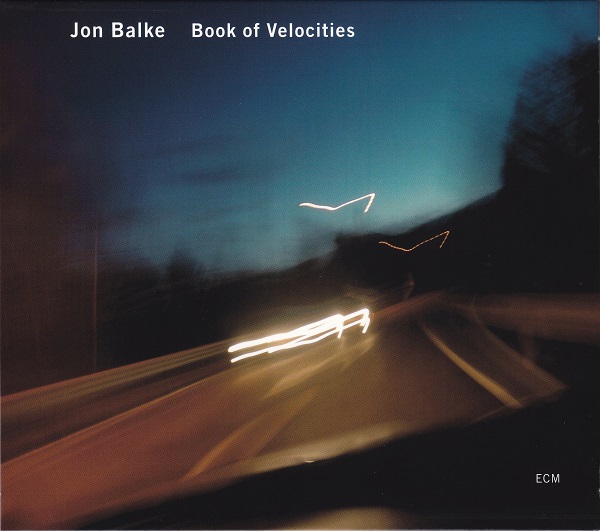
Jon Balke: Book of Velocities (ECM 2010)

Book of Velocities

Jon Balke
Book of Velocities

Jon Balke piano
Recorded September 2006 at Radio Studio DRS, Zürich
Engineer: Markus Heiland
Produced by Manfred Eicher

“We believe that mere movement is life, and that the more velocity it has, the more it expresses vitality.”
–Rabindranath Tagore

Tagore’s statement harbors an implicit question: Does vitality necessarily correlate with velocity? Wittingly or not, Jon Balke would seem to have an answer in this unique album. After a series of memorable appearances on ECM as sideman and group leader (notably, in the latter vein, with his Magnetic North Orchestra), we at last find the Norwegian pianist unaccompanied. The title alone is enough to place the music in a modern tradition of fragmentary collections: Bartók’s Mikrokosmos and Kurtág’s Játékok come most immediately to mind. Yet listening to what Balke has done with both form and instrument, one quickly realizes the profundity of his crafting.

Divided into four Chapters and an Epilogue, Book of Velocities extricates the finer implications of its elements—improvised and composed alike—via thorough examination of the piano itself. By way of introduction, “Giada” flutters between plucked piano strings and dotted punctuations at the keyboard proper. The descriptive cast of “Scintilla” that follows sets the stage for a procession of dreamlike actors, each a cipher for something elemental and transfigured. Other examples in this regard include “Single Line” and “Double Line,” “Gum Bounce,” and the nail-scratched mysteries of “Finger Bass,” the latter droning in Gurdjieff-like meditation.

Many pieces, like the penultimate “Sonance,” exert an organic influence of exhale and inhale, of speech and pause. Indeed, the deepest moments are those least audible, as in the non-invasive contact of “Resilience,” in which one finds the piano’s fantasy life made real. The bodily nature of the music thus shines at carefully selected moments of expression. Whether in the substrate of its own becoming or in the opacity of its outer skin, Balke’s language refashions grammar through every contour. In this respect, the poignant “Drape Hanger” is among the more precious turns of phrase and foreshadows the photorealism of “Scrim Stand,” undulating in real time.

The mirrors of this disc are more than reflective; they are embodied, a dance between beauty and blues. Slowly and surely, Balke turns paths of teardrops into channels of blood flow. This is his art distilled in a crucible of origins until pure feeling remains. It transcends the need for means and returns to the sky whence it came.