

Herbert Joos: Daybreak – The Dark Side Of Twilight (JAPO 60015/ECM 3615)

Daybreak Dark

Herbert Joos
Daybreak -­ The Dark Side Of Twilight

Herbert Joos fluegelhorn, trumpet, cornet
Thomas Schwarz oboe
Wolfgang Czelustra bass, trombone
Strings of Radio Symphony Orchestra Stuttgart
Recorded October 1976 and July 1988 at Tonstudio Bauer, Ludwigsburg
Engineer: Carlos Albrecht
Produced by Herbert Joos and Thomas Stöwsand

German trumpeter and fluegelhornist Herbert Joos’s flirtations with ECM have been few, contributing to the big brass sound of Eberhard Weber’s Orchestra and notably to Cracked Mirrors, a marvelous and, it would seem, overlooked date with guitarist Harry Pepl and drummer Jon Christensen. Yet it was with Daybreak, recorded in the fall of 1976 for sister label JAPO, that the knot of Joos first audibly untied itself alongside Thomas Schwarz (oboe), Wolfgang Czelustra (bass and trombone), and the strings of the Radio Symphony Orchestra Stuttgart.

The emphasis on classical textures will feel familiar to admirers of Keith Jarrett’s likeminded forays, especially In The Light and Bridge Of Light. That being said, the overall effect is shadowy, overhung, though equally honest. “Why?,” for example, answers its own question up front in the very asking. Although an obvious reference to Charles Ives’s The Unanswered Question, its progression spins closure from an interrogative oboe. The normally pastoral associations of the instrument are shed along with lingering symphonic details, such that when Joos’s breath cuts the air with its golden knife, the strings drip like lifeblood from its plane. None of which is meant to suggest that the music is in any way macabre. For what can there be but hope in the cyclical motif that churns during fadeout? “When Were You Born?” asks another question answered by its own sounding. The delicacies of Joos’s high-register playing render far more expansive maps in this instance, touching proboscis to firmament and sampling sunlight until nightfall. “Leicester Court 1440” features Joos in muted soliloquy. Riding a horse of compressed time, he enacts an agitated recession into the title piece. Joos has only his own echo for company before the inward journey is externalized by the dark arrival of strings. Hence, the “Black Trees” looming not far away. Yet despite the title, they actually let down the brightest of the album’s seeds with an approach that gives voice to nature and seeks universal truth in a bird’s nest. Joos’s lines bespeak haughty quest in “Fasten Your Seatbelt.” This playful frolic through arco fabric balances laughter and fearless arpeggios, while scuttling crabs and landlocked others communicate without need for sound. And when the seatbelt fails us, we are thrown into a life of slower motion, lit by “The Dark Side Of Twilight.” The latter appears only on the 1990 CD re-issue (ECM 3615) and, at 15 minutes, is the album’s most brooding texture. Relaying brass-synth and string chorale settings, it walks a broken circle with its head hung in thought, an outlier among the album’s modest population.

The music of Daybreak speaks to children in the language of adults. It photographs the illusion of age and melts it into a sea of numbers. Not every detail will be preserved in that translation, but in the process we come to understand that history and music are sometimes like water and oil. In this chamber of the past, futures hide in corners the light struggles to reach.
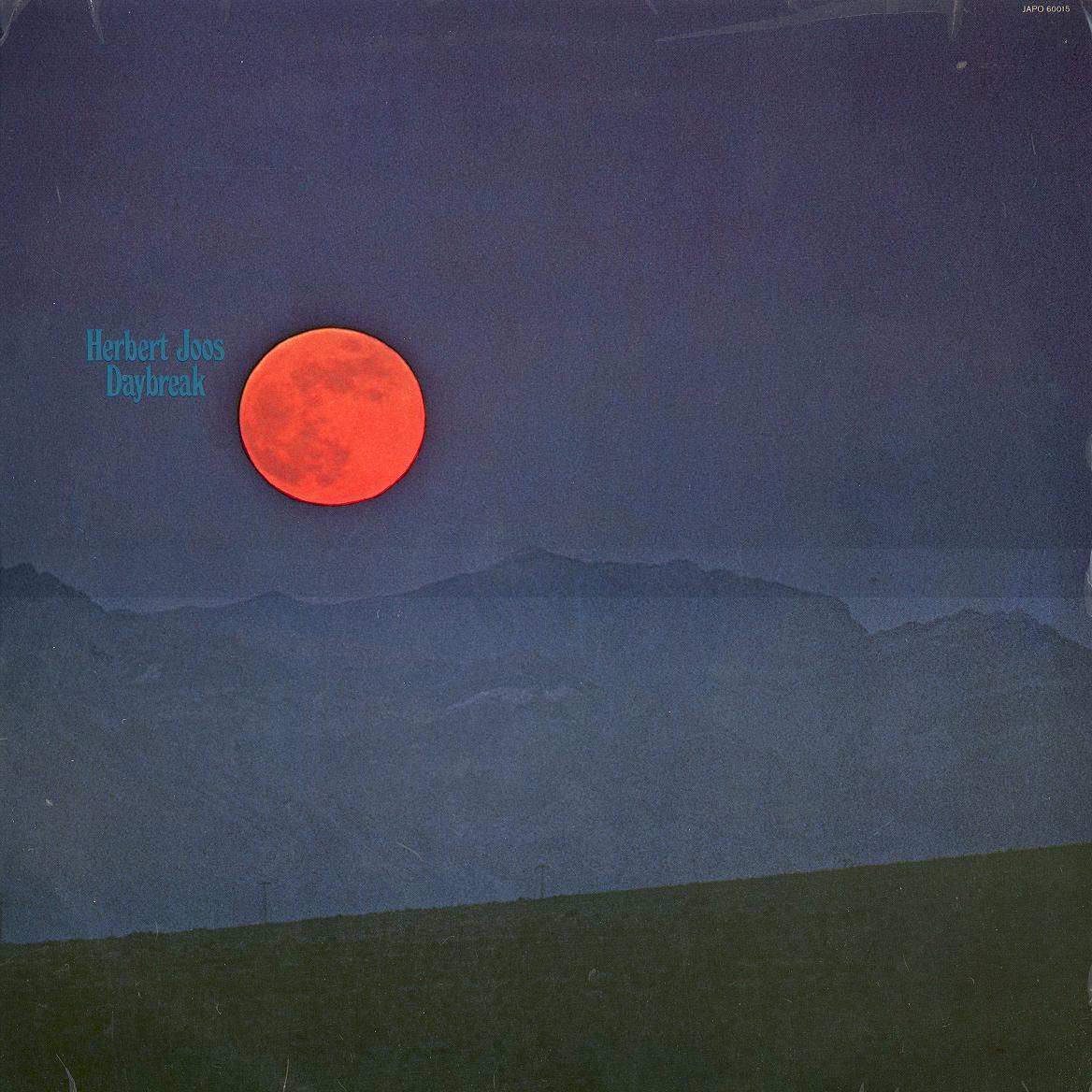
Daybreak
Original cover

Michael Naura/Wolfgang Schlüter: Country Children (ECM 2305 803 SP)

Michael Naura
Wolfgang Schlüter
Country Children

Michael Naura piano
Wolfgang Schlüter vibraharp, marimba
Recorded June 1977 at Radio Bremen
Engineer: Dietram Köster
Produced by Peter Schulze

Oftentimes, when pouring through the back catalogue of any label’s out-of-print releases, one stumbles on a few clunkers before arriving at any forgotten monuments. In my listening experiences thus far, ECM has flipped this dynamic considerably, offering a wealth of musical history to explore and appreciate. Among the ruins, however, is this humble little project, lost to the age of the label’s brief SP imprint, which lasted all of three albums. Country Children brings together pianist Michael Naura, whose music graces most of this set, and Wolfgang Schlüter. Originally trained as a drummer before a knee injury led him to mallet instruments, Schlüter cites Lionel Hampton (who he heard live in Berlin in 1952) and Milt Jackson as early influences. After a stint with the Michael Naura Quintet, which dissolved due to Naura’s illness, he played with the NDR Bigband for three decades. Since then, he has focused on teaching and remains one of Germany’s most formative vibraphonists.

“Ballade für eine Silberhochzeit” is a lush opener, almost the shadow of Gershwin’s “Summertime.” Over a beautiful two-chord ostinato, vibes dance exuberantly in a tightly restricted space, but with resplendent melodic freedom. “Schlafen” is a heavily improvised stem with the occasional blossom of composed material. Whereas its heavily convoluted beginnings might elsewhere seem a turgid dream from which one awakens into consonant resolution, here they imply the opposite: an opening of eyes within in sleep’s promised dream. “Take Us Down the River” is more exuberant, much in the vein of Keith Jarrett in the throes of a re-imagined standard. “Argentina” is alive with urban energy, a subdued elegy for remembered villages and mountains. The piano here is paired with a sprightly marimba, making for a drier and more evocative sound.

A flip of the record to Side B brings us to one of the most heartfelt renditions of Krzysztof Komeda’s theme from “Rosemary’s Baby” you are ever likely to hear. This is followed by the title track, which feels steeped in an unnamed nostalgia. “Sad Queen” is another stunner, and my favorite among the album’s originals. “Variation auf »Abendlied«” is dedicated to Peter Rühmkorf, the highly influential German writer whose voice appears alongside Naura and Schlüter in the first two ECM SP titles. It is another lovely offering, consolatory in its gentle persuasion, a track of subtle boisterousness filled with an abiding energy. The final track, “Call,” ends the album on a bittersweet note.

These musicians are like two halves of the same instrument. Their collaborations are beautifully conceived and executed, and make for a fitting complement to such likeminded pairings as Chick Corea and Gary Burton. It’s a wonder this album has yet to be reissued. I would think that, especially with the nod to Komeda, it would fit snugly alongside François Couturier’s Nostalghia and Tomasz Stanko’s Litania. This is a gorgeous and wide-ranging album, one equally fit as the background to other activities or for relaxed deep listening. An unsung gem, and easily one of my top picks currently vying for freedom from the ECM vault.