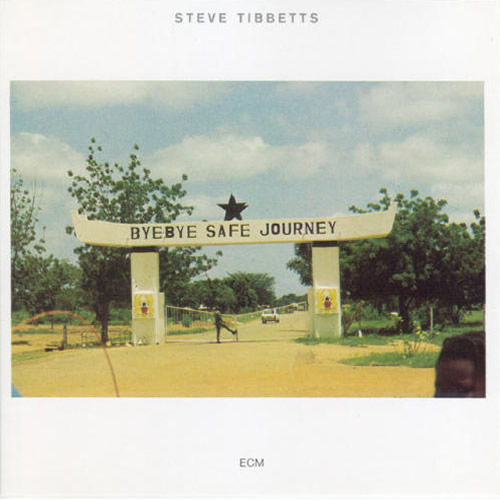
Steve Tibbetts: Safe Journey (ECM 1270)

Steve Tibbetts
Safe Journey

Steve Tibbetts guitars, kalimba, tapes
Marc Anderson congas, steel drum, percussion
Bob Hughes bass
Tim Weinhold vase
Steve Cochrane tabla
Recorded 1983 in St. Paul, Minnesota
Engineer: Steve Tibbetts
Produced by Manfred Eicher

Guitarist Steve Tibbetts exploded our view when ECM introduced the world to the adroit textures of Northern Song. He did so again with “Test,” the doorway onto the enlightening path that winds through Safe Journey. Don’t let its initial stirrings fool you into slumber, for you are sure to be jolted by a guitar that seems to scrape the walls of its harmonic enclosure and expose the burnished paneling within. From humble genesis to almost frightening expanse: this is Tibbetts’s MO. With a minimal assortment of instruments in his coterie, he excavates eras’ worth of sediment. Note the stunning passage where his electric gets caught in echoing loops, while its second self solos over the remnants of what it once was. Such splitting of voices is another trademark, as are the contrasts of “Climbing.” In this quiet cave, Tibbetts sits cross-legged with a kalimba in hand, letting its plunking droplets of sound gild the surrounding stalagmites. Curiously, this track feels less like climbing and more like burrowing. Similarly, the delicacies of “Running” feel like a closing of eyelids, behind which the only feet to touch ground are those of an unfinished dream. A sparkling acoustic guitar, a touch of steel drum and sitar, and the patter of footsteps like rain through a children’s rhyme pull a shade of darkness that plunges us into “Night Again.” Here, the programmatic title holds true in the vastness of sound Tibbetts elicits from his strings as he weaves a lullaby against mounting starlit percussion, for neither does the night abide by arbitrary delineations of territory and bodily space. Eventually, the guitar cuts out, leaving the drone to “solo,” as it were, drifting like the Northern Lights into melodic aftereffects. “My Last Chance” is a swath of nostalgia filigreed by a promising future and opens us to the moral intensity of “Vision.” Tibbetts makes some of the most effective use of taped music one is likely to encounter in a band setting, and especially here. His electric cries like a voice from a cracked egg, breaking with the dawn into blinding intensity, seeming to hold its breath before every note is expectorated. “Any Minute” is another fragile design that wavers in ghostlike existence, never quite resolving the memories so fully fleshed out in “Mission.” Running on the gentle propulsion of a spiritual engine, “Burning Up” humbles itself before a smoldering backdrop, where only the trails of fleeting human figures “Going Somewhere” tell us where we might safely tread home. And it is in the tinkling of starlight that we finally come face to face with our destination, which has been ourselves all along.

With such distinct shades of ambience—all activated by an intuitive sense of ebb and flow—and a incredible group of musicians to give it life, this music glints anew every time. Tibbetts is the perennial traveler whose rucksack contains only the freedom of possibility.

Oh, to have been there, at a record shop when this album first came out. If what I feel now is any indication, I can only imagine the depth of its impact.

Wondrous to the nth degree.

<< Dave Holland Quintet: Jumpin’ In (ECM 1269)
>> Pat Metheny: Rejoicing (ECM 1271)

Charlie Mariano and The Karnataka College of Percussion: Jyothi (ECM 1256)

Charlie Mariano
The Karnataka College of Percussion
Jyothi

Charlie Mariano soprano saxophone, flute
R. A. Ramamani vocals, tamboura
T. A. S. Mani mridangam
R. A. Rajagopal ghatam, morsing, konakkol
T. N. Shashikumar kanjira, konakkol
Recorded February 1983 at Tonstudio Bauer, Ludwigsburg
Engineer: Martin Wieland
Produced by Manfred Eicher

Since 1964 the Karnataka College of Percussion has been committed to its mission of expanding awareness of Indian Classical (especially Carnatic) music. Part of this outreach has involved a number of jazz-oriented and fusion projects through which the institution has spread its affirmative message. Thus do we come to this intriguing, if seemingly forgotten, collaboration with American saxophonist Charlie Mariano, who left us in 2009 at the age of 86. The result is a fluid and respectable blend of cultural signatures that transcends any ties to genre in favor of a purely emotive experience. The voice of R. A. Ramamani figures prominently, as in the ruminative opening track, titled simply “Voice Solo.” She traces long stretches of landscape, one hill at a time, where the dry rolling plains offer up their secrets for the reward of rain. Her prayers are bifurcated through overdubbing, lending both a smile and a promise to the title. In this diffusely lit portal we find only further portals. In “Vandanam” we are regaled with tales of old by Mariano’s rolling flute, gilded by the pleasant jangle of the kanjira and mridangam. Ramamani’s ululations walk hand in hand with flute for a unified sound. “Varshini” and “Saptarshi” are smooth and graceful spaces in which voice is both cause and effect. Mariano’s soprano is a voice in and of itself, caught in flurries of percussion and passionate resolutions. These lively stops give way to the interweaving lines of reed and voice in “Kartik,” which closes on some transportive drumming from T. A. S. Mani on mridangam. Lastly is “Bhajan,” featuring doubled voice and a palpable communication with the beyond. As the drums anchor us, so too do they spring forth to those less definable stretches of land, where only the human voice can wander in its ephemeral laudation, threaded by the twang of the morsing (Indian jaw harp) and dancing a slow and careful surrender.

Without neither pretension nor ulterior motive, Jyothi is a delicacy in the ECM catalogue and a careful coming together of thought and performance to be taken as it comes…and goes.

<< Keith Jarrett Trio: Standards, Vol. 1 (ECM 1255)
>> Barre Phillips: Call me when you get there (ECM 1257)

Steve Tibbetts: Northern Song (ECM 1218)

1218 X

Steve Tibbetts
Northern Song

Steve Tibbetts guitars, kalimba, tape loops
Marc Anderson congas, bongos, percussion
Recorded October 26-28, 1981, at Talent Studio, Oslo
Engineer: Jan Erik Kongshaug
Produced by Manfred Eicher

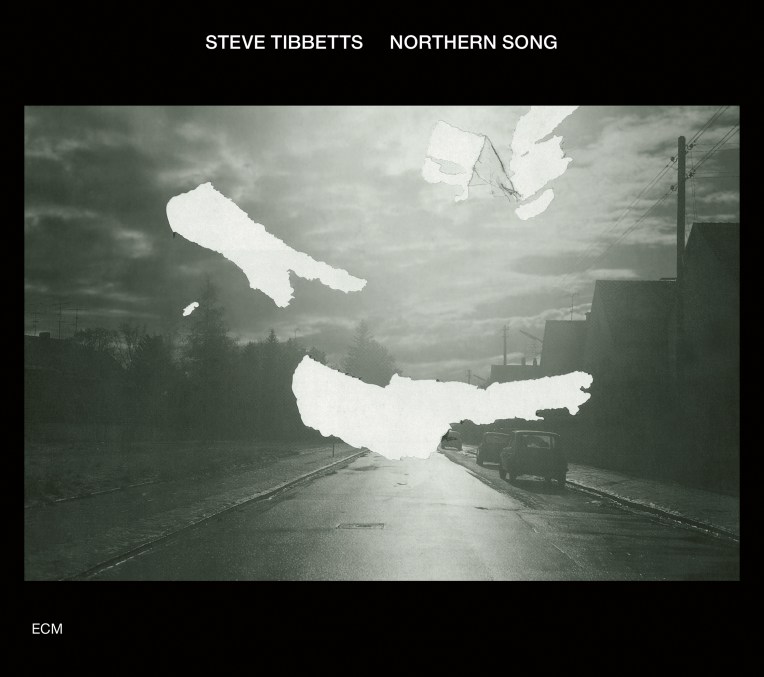
With Nothern Song, Steve Tibbetts made his ECM debut and introduced listeners to what remains one of the label’s most enchanting, if slowly unfolding, maps. The cover seems to tell us everything: silhouettes of islands superimposed on the journey that takes us to them, as if the dream of arrival were potent enough to burn itself across the rearview mirror of our lives. Tibbetts leaves a trail of quiet footprints easily obscured by “The Big Wind,” yet whose direction is not so easily forgotten. With circumpolar affinity and a sensitivity that is for all intents historical, Tibbetts traces the borders of our lives in “Form.” His shimmering guitar finds spirit in Marc Anderson’s verdant whispers. “Walking” continues in very much the same vein, only this time with a more pronounced wash of 12-string steel that eventually lifts us into an “Aerial View.” And because so much of the Northern Song experience is above ground, we are able to slip more intensely into the meditations of “Nine Doors / Breathing Space,” throughout which strings creak like an old house, if not an old body.

Tibbetts lavishes his instruments with respect, strumming them as he might harps of glacial light. In them we hear diaries, voices, and ideas that need never completed to say everything they need to say. And every delicate application of Anderson’s percussion carries us deeper into the overgrowth before we emerge, forever changed, in the dwindling sunlight. This album is an ocean, and we the birds who range its waters.

<< Ulrich Lask: Lask (ECM 1217)
>> David Darling: Cycles (ECM 1219)

Bengt Berger: Bitter Funeral Beer (ECM 1179)

ECM 1179

Bengt Berger
Bitter Funeral Beer

Bengt Berger ko-gyil (Lo Birifor funeral xylophone)
Don Cherry pocket trumpet
Jörgen Adolfsson violin, sopranino, soprano and alto saxophones
Tord Bengtsson violin, electric guitar
Anita Livstrand voice, bells, axatse (rattle)
Recorded January 1981 at Decibel Studios, Stockholm
Engineer: Thomas Gabrielsson
Produced by Manfred Eicher and Bengt Berger

Swedish percussionist Bengt Berger’s deep interest in Ghanaian folk music and Don Cherry’s wayfaring trumpet inform every moment of this stunning record, one of a handful in ECM’s back catalogue to be digitally unearthed, not unlike the site on the cover. In contrast to many likeminded projects since, which seek to augment the “indigenous” with the “ingenious,” in the dregs of Berger’s we encounter something all too rare in the world music market: unforced sincerity. Take, for instance, the song that forms the Kundalini spine of the title track. The eclectic listener will recognize it as the sampled hook in “Hypnoculture” by Tears for Fears frontman Roland Orzabal. While in the latter it adds a touch of the “exotic” where really it isn’t needed (to Orzabal’s credit, the song is, like all on the solo album on which it appears, a sketch of ideas and not meant to be taken as a definitive statement on anything), here it thrives in an utterly organic assemblage. The addition of thumb piano and rooted drumming heighten the sense of immediacy that pervades the album, and not even the reeds of Jörgen Adolfsson feel out of place. The ululations of vocalist Anita Livstrand hit the psyche like the paroxysms of Mary Margaret O’Hara in Morrissey’s “November Spawned a Monster.” The acutely percussive “Blekete” is a walkabout into a land that is as corporeal as it is immaterial. Cherry is the brightest ember in the hearth that is “Chetu,” which continues the trance. The Fela Kuti-like drive of “Tongsi” beckons us with open arms before leaving us in the care of “Darafo.” This funereal dance begins with more pronounced instrumentalism, presenting us not with a mystery to be untangled, but rather a clear set of variables to be re-tangled into the mystery from which they came. The infectious soloing tightens into a record scratch of ecstasy, leaving only the ever-present beat to navigate the inevitable fade.

As with the work of CODONA, Bitter Funeral Beer epitomizes ECM’s pioneering approach to the world music idiom. Integration is the keyword here, collectivity its modus operandi. Each voice is well-fermented, so that one always gets the feeling of listening to a field recording and not a piece of studio trickery. This is music that accepts us as we are and allows us the opposite of escapism: a pure awareness of the cavernous self that defines the open channels of our communities.

One of ECM’s absolute finest and a window into the label’s evolution toward a sound-world without borders. As bitter as this beer is, one sip is all you’ll need to convince yourself that the cup must be drained.

<< Barre Phillips: Music By… (ECM 1178)
>> Pat Metheny: 80/81 (ECM 1180/81)

The CODONA Trilogy (ECM 2033-35)

ECM 2033-35The CODONA Trilogy

Don Cherry trumpet, doussn’gouni, flutes, organ, melodica, voice
Nana Vasconcelos berimbau, cuica, talking drum, percussion, voice
Collin Walcott sitar, tabla, hammered dulcimer, sanza, timpani, voice

When my mother had gone to Canton market to shop, her wallet had unfolded like wings…. She had hunted out the seed shops to taste their lichees, various as wines…. She had dug to the bottom of fabric piles and explored the shadows underneath awnings. She gave beggars rice and letter-writers coins so that they would talk-story (“Sometimes what I gave was all they had, and stories.”)
–Maxine Hong Kingston, The Woman Warrior

The music of CODONA, ECM’s most emblematic creation, invariably puts me in mind of the above passage from Kingston’s classic “memoir.” It describes the author’s mother as, having just received her diploma, she celebrates by spreading what little monetary resources she has. The word that always stands out for me, and which is a theme of the book as a whole, is “talk-story,” for it describes with no uncertain brevity exactly what CODONA enacted in the studio (and on the stage) throughout the four-year span represented on this Old & New Masters trilogy. CODONA’s name—a portmanteau derived from its members’ firsts: COllin Walcott, DOn Cherry, NAna Vasconcelos—melds minds and hearts in the deepest crucible of music making.

With their unique brand of pan-culturalism, CODONA developed an entire sonic landscape without needing to throw itself under the next promising classification to come along. These self-titled gems each plot a unique transition in ECM’s graphic and sonic development, reaching both beyond jazz and more deeply into it for hints of origins and possible futures. The improvisational spirit is very much alive at every turn, while also recognizing the pulse of its own maudlin journeys. There is always a sense that one has arrived at a truth, which through CODONA’s collective spirit(ualism) has transcended the misnomer of “universal” into a far more nuanced and selfless understanding of the relationship of sound to all creation.

Whenever we speak of “universal truths,” we delineate quite the opposite. Rather than tapping into a concept, an energy, or state of being that binds all life in however arbitrary a way, the only purpose of universalism is in fact to make us feel better about ourselves. It treats the human experience as primary target, the standard by which all else comes to be measured. The base concept of universalism implies, through its very anthropocentrism, self-obsession as the only path to connectivity. The music of CODONA remains an invaluable corrective to this assumptive attitude toward human experience. Rather than hide, it transcends its own sense of self into a disembodied sonority.
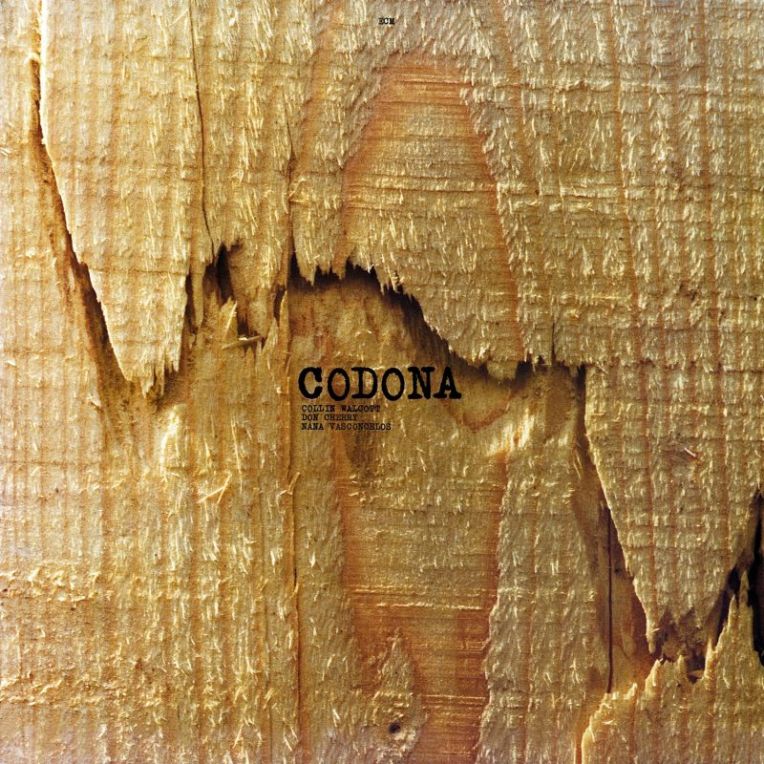
ECM 1132

CODONA (ECM 1132)

Recorded September 1978 at Tonstudio Bauer, Ludwigsburg
Engineer: Martin Wieland
Produced by Manfred Eicher

CODONA’s first album is particularly dear to my heart, for it is the only in the ECM catalog to have been recorded during the month and year of my birth. As such, it lends itself well to my imagination, where it plays as soundtrack to my emergence into this mortal coil. Careful arrangements, spontaneous though they may be, flavor our first taste of CODONA blood in “Like That Of Sky.” From the opening gong, this album enchants with its dramaturgy, in which time and space are one and the same. Against clicks and whistles, a subterranean sitar appears. In it, we hear the grumbling of voices. Cherry fills the vast emptiness with his sung trumpeting, so that the emptiness can only weep in return. Walcott’s sitar is respectfully articulated, ever so subtle in its reverberant twang, providing a gelatinous backbone, such as it is, for Cherry’s more immediate interpretations. From this, we get the tinny call of a clay drum and a flute hooked into every loophole, pulled to expose a more regular core. [This track reminds me very much of the work of the enigmatic duo known as Voice of Eye (especially their 1994 album Vespers), who achieve similarly evocative density from purely acoustic means.] Walcott’s tabla signals the phenomenological urgency with which divine creation takes form, as if finding amid the contact of fluttering fingers along pulled skin the key to unspeakable life. The second track takes the group’s name, and further slackens the threads that keep them bound to this mortal coil. Through an intriguing blend of wooden flute, hammered dulcimer, and some scattered percussive footsteps, the musicians manage to evoke a wide range of special effects from clear and present means. And as the rhythmic rope ladder unrolls itself step by step, we are enticed by its gentle sway into the enlightened space it has drawn for us of wood, metal, and touch. “Colemanwonder” deftly combines Ornette Coleman’s “Race Face” and “Sortie” with Stevie Wonder’s “Sir Duke” in an auditory hodgepodge that is as delightful as it is singular. Given Cherry’s formative history with Coleman back in the late 1950s, this is an important swath of light to note in the album’s otherwise stark shade, made all the more vivid by the grunts, barks, poundings, and knocks issuing from Vasconcelos’s Brazilian cuica drum. “Mumakata” (apparently a favorite of the group’s live shows) features Vasconcelos on berimbau, Walcott on sanza, and Cherry on doussn’gouni. Voices sing, as if evoking the past for past’s sake. Against this tapestry, Cherry breaks out his trumpet for some gorgeous legato phrasings. “New Light” begins with the tinkling of bells and an awakening sitar. We arise from a gentle coma even as we settle into another: from the beauty of awareness to the awareness of beauty. Cherry launches higher flights of virtuosity, underscoring all the more the humility that has led him to this point in the album. Shells hiss like the raspy leaves of a giant palm thrashing in the wind. The dulcimer returns with maraca as Cherry spreads thicker melodies with clarity of tone and posture. A track so nocturnal that it almost glows. Every telepathic moment sparkles before Cherry cracks open a box of blissful high notes and fluttering half-sung hymns, leading us out as dulcimer strings are brushed like a harp by breath without source.

<< Pat Metheny: New Chautauqua (ECM 1131)
>> John Abercrombie Quartet: Arcade (ECM 1133)

… . …
ECM 1177

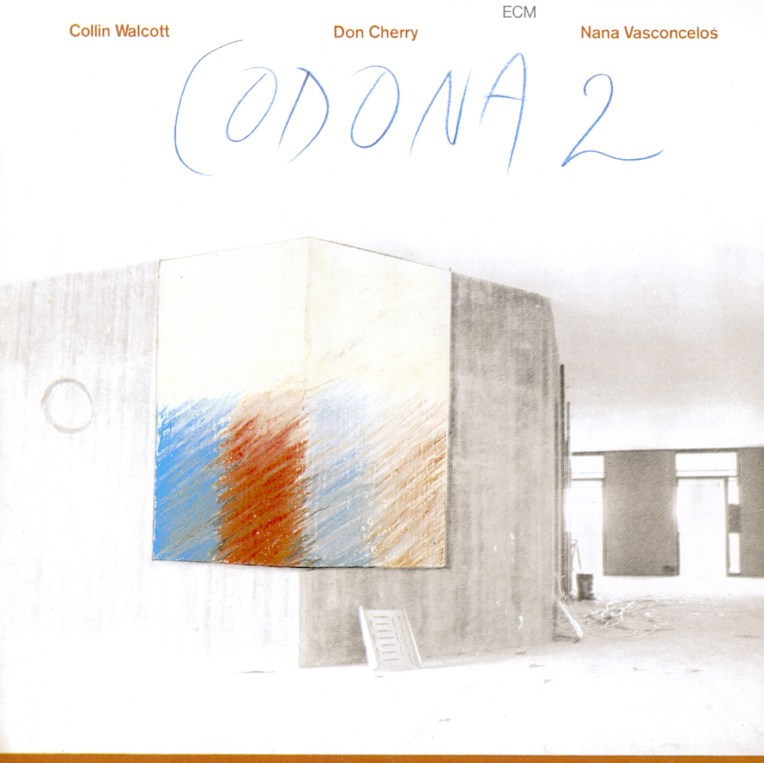
CODONA 2 (ECM 1177)

Recorded May 1980 at Tonstudio Bauer, Ludwigsburg
Engineer: Martin Wieland
Produced by Manfred Eicher

CODONA 2 drops us immediately into a groovier pool with “Que Faser.” Over tabla and sitar, Vasconcelos exchanges tender thoughts with Cherry’s trumpet, traveling from the majestic to the falsettic in one fell swoop. This leads into “Godumaduma,” the briefest track of the collection, and also its most enchanting. What sounds like three overdubbed sitars in a gorgeous transitory interlude configure something akin to Steve Reich’s Electric Counterpoint had it been written for Walcott and not electric guitar. Switching colors from the sandy and windblown to the gravid and architectural, “Malinye” features Cherry on melodica and Walcott on timpani. As the latter tumble over a highly cinematic terrain, a ring of spirits whispers, cackles, and wails. This haunting piece ends in a sanza-led chorus that stretches far beyond the final vibration and into another state of mind. At the halfway point, we find ourselves feeling “Drip-Dry.” Sitar and voice creep around our circle of light, reaching with shadowy hands to grasp the trumpet’s song within. The buoyant “Walking On Eggs” that follows sounds, like all of CODONA’s work, simultaneously composed and improvised. A buoyant piece, it is also as tentative as its title suggests. “Again and Again, Again,” on which we end, might as well be our listening instructions for this most underrated album of the set. Sitar and trumpet provide some vivid runes, of which Vasconcelos makes a sonic rubbing with a string of sounds not unlike a tape in fast forward, if not a dreaming bird. Add to this the plurivocity of a melodica, and one begins to see subtle density and “vocal” qualities that make this one of the group’s most inward-looking statements.

<< John Clark: Faces (ECM 1176)
>> Barre Phillips: Music By… (ECM 1178)

… . …
ECM 1243

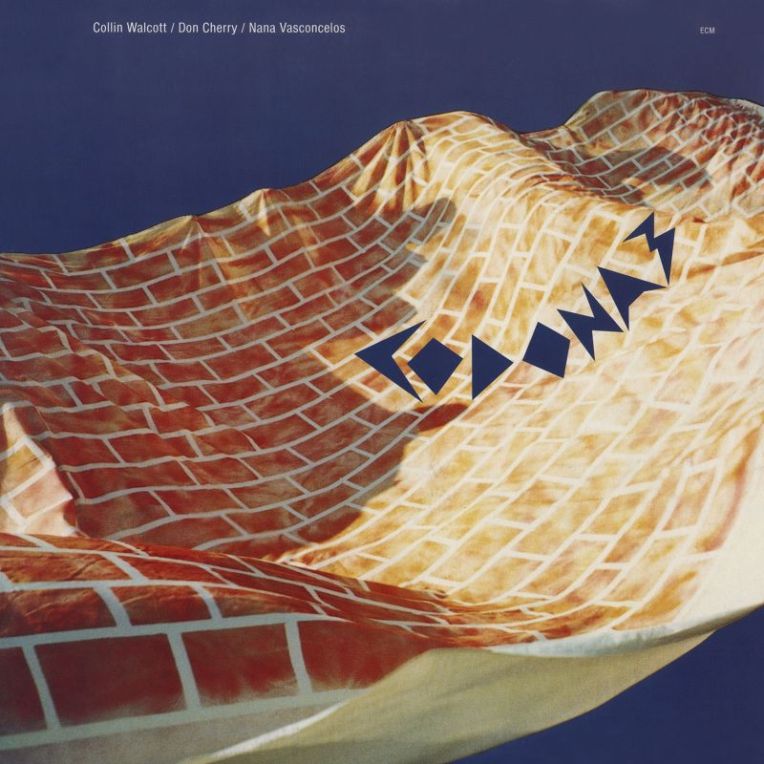
CODONA 3 (ECM 1243)

Recorded September 1982 at Tonstudio Bauer, Ludwigsburg
Engineer: Martin Wieland
Produced by Manfred Eicher

The traditional Japanese “Goshakabuchi” that begins the final leg of this triumvirate turns the mirror just so, flashing a glint into our eyes from a distance. Cherry’s brassy ether drips with sympathetic effect; hammered dulcimer hurls its delicate, insectile hiccups; untold lives tease us with their possibilities. This is perhaps the most haunting and coalescent track in the collection and shows the trio at the height of its signature synergy. Sanza and doussn’gouni back the chant-heavy “Hey Da Ba Boom,” which will adhere to your mind far more than any words I might use to describe it here. “Travel By Night” trailmarks its path with berimbau, sitar, and muted trumpet. Walcott’s arcing tones make for quiet narration. Hooded by the darkened firmament, it practically floats with the practiced steps of a modest caravan fleeing from its own histories. A trio of shorter rest stops follows, of which “Lullaby,” the only moment with Walcott alone, gives us a heartening glimpse into the mind of group’s creative nerve center. “Clicky Clacky” provides a dash of whimsy, a bluesy gem from the mind and mouth of Cherry, complete with train whistle. The final gasp comes from the “Inner Organs,” where the echoes of trumpet and, not surprisingly, organ move in concert like a jellyfish and its tendrils toward open closure.

The music world lost one of its most innovative figures when Collin Walcott perished in a car accident while on a European tour with Oregon in 1984, and the CODONA trilogy is but a flash of what this inimitable project might have further accomplished had he lived on. As rooted as the music is, the edge of time has severed its earthly ties. If jazz had developed from one mystical seed (and who’s to say it didn’t?), then certainly its originary tales would sound very much like the elder’s musings preserved here. Through their own brand of talk-story, these attuned sages brought forth truths of fragmentation, permeability of mind and body, and of the knowledge that nothing matters anymore once sound opens your ears.

Want to see ECM at one of its finest hours? Then set your clocks to CODONA time.

<< Miroslav Vitous: Journey’s End (ECM 1242)
>> Jack DeJohnette’s Special Edition: Inflation Blues (ECM 1244)

Egberto Gismonti: Dança Das Cabeças (ECM 1089)

ECM 1089

Egberto Gismonti
Dança Das Cabeças

Egberto Gismonti 8-string guitar, piano, wood flutes, voice
Nana Vasconcelos percussion, berimbau, corpo, voice
Recorded November 1976 at Talent Studio, Oslo
Engineer: Jan Erik Kongshaug
Produced by Manfred Eicher

Egberto Gismonti’s first ECM appearance is also his most understated. Dança das Cabeças (Dance of the Heads) was to be a solo album, due to the fact that the Brazilian government had inflated travel expenses for he and his band to the questionable figure of 7000 dollars a head. Gismonti was the only among them able to make the journey, but as fate would have it, he met Nana Vasconcelos quite by accident while in Norway to prepare for this recording. According to Alvaro Neder, when Vasconcelos asked him to describe the concept behind this project, Gismonti told him it was “the history of two boys wandering through a dense, humid forest, full of insects and animals, keeping a 180-feet distance from each other.” It was a history the two musicians shared without articulation, and Vasconcelos immediately agreed to join, thereby bringing another visionary into the label’s fold.

“It sounds just like a rain forest!” Perhaps you have heard this assessment being made in reference to many a New-Age album, sporting lush trees on its cover and layered within with preprogrammed synthesizers and wooden flutes. Dança, by contrast, is as far as one can get from the contrived exotica that haunt our commercial soundscapes. We are fully situated in the acoustic benefits of live musicianship, captured in all their immediacy in ECM’s standard-setting clarity. And so, while the birdlike sounds of Part I do indeed evoke a forest practically dripping with fecundity, it is populated with more than a few brightly colored animals. Like Marion Brown’s Afternoon Of A Georgia Faun, its sound is as deliberate as it is organic. From these canopied beginnings, we get some jangly strums from Gismonti’s guitar, slaloming between frenzied hand drums. Rhythms and melodies build to infectious heights, diving into our blood with every fluted moment. The musicians raise their cries, from which Gismonti spins a free-flowing grace, as if to trace lines of varying distance in a vast topographic map. Vasconcelos returns in all his fullness with drums, maracas, and shakers, while Gismonti’s fingers move on in their quiet persistence. Changes in syncopation and a few helpings of dissonant harmonies enact a skeleton dance of sorts, soaring resolutely into the music’s ritual heart. Gismonti’s classical training shines through in Part II, for which he puts his fingers to keys in a spacious and revelatory stroll through Keith Jarrett territory. From this heartwarming nostalgia, built in arcs with only the occasional angles, Gismonti morphs into a bellowed vocalise and storm of handclaps. He returns to the guitar before closing with another pianistic statement in improvised space.

This remains the Brazilian multi-instrumentalist’s most direct effort. In it, we find him without masks. It is the kind of music that makes one glad to be alive, a breath of clarity in polluted air. Essential for anyone who appreciates what music can bring to the heart, mind, and body.

<< Edward Vesala: Satu (ECM 1088)
>> Keith Jarrett: Staircase (ECM 1090/91)