Miki N’Doye: Tuki (ECM 1971)

Tuki

Miki N´Doye
Tuki

Miki N’Doye kalimba, tamma, m’balax, bongo, vocals
Jon Balke keyboards, prepared piano
Per Jørgensen trumpet, vocals
Helge Andreas Norbakken percussion
Aulay Sosseh vocals
Lie Jallow vocals
Recorded 2003-2005 at Rainbow Studio, Oslo
Engineer: Kjartan Meinseth
Mixing: Jan Erik Kongshaug, Kjartan Meinseth, and Miki N’Doye
Produced by Miki N’Doye and Jon Balke

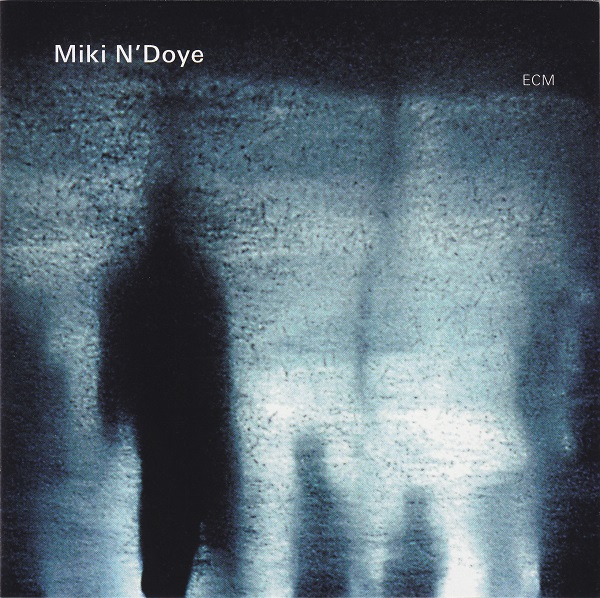
Tuki is the song of one given to many. As the ECM leader debut of master drummer Momodou “Miki” N’Doye, it houses multiple fates under one roof and collates them into discernible rhythms and voices. N’Doye hails from Gambia, where in the mid-70s he met Norwegian musician Helge Linaae. This encounter brought him to Oslo, where, after coming into contact with such influential movers as Jon Balke, his future as shaker in the far north was secured. Later projects led him to the company of Per Jørgensen, as part of the band Tamma. He was also fortunate enough to collaborate with Ed Blackwell and Don Cherry in the twilight of their careers. N’Doye has since lent his signature to a number of sonic happenings, many with Balke at the helm. In the latter vein, one feels his presence most vividly on Batagraf’s Statements. Tuki joins him once again with Balke and associates, adding to those ranks Gambian vocalists Aulay Sosseh and Lie Jallow, also fixtures in the Scandinavian scene.

In spite of the associations one might attach to N’Doye’s traditions, it is important to avoid mythologizing this music. The elements of which it is composed come straight from the ground, as is apparent in the introductory incantation, which enlivens the air with its percussive kalimba framework, a running theme (and sound) throughout the album’s winding path. At this point the music is still a hut without thatch, a stick frame that allows wind to flow through and speaks of habitation before its walls and roof are fleshed. Thus is the album’s space set up and rendered, given shape by hand and mouth.

Indeed, the improvisational song-speech of “Jahlena,” “Osa Yambe,” and the title track follows the sun’s path without deviation, effectively compressing an entire day into few minutes’ time. Yet N’Doye verbalizes most through his kalimba, the buzz and twang of which form a rougher though no less perfect circle throughout. Pay close attention, for example, to “Kokonum,” and you will hear that he plays the thumb piano as if speaking. Communicative impulses come about through every contact of body and instrument. With stamping of feet and drinking of rain, Jørgensen’s trumpet is now a vulture, now a snake, blind yet attuned to every blade of grass. Jørgensen casts similar atmospheric nets wherever he appears, traveling between the musicians with a rounded blade that bonds even as it severs. Balke’s ambience, for the most part, flickers at camp center. His presence meshes best at the piano, pairing intuitively with kalimba—for what is the former if not the latter’s simulacrum?

Intermingling of the acoustic and the electric, which admittedly takes some getting used to, reaches noticeable synergy in “Loharbye.” In its cage one may hear Scott Solter, a little Jon Hassell, and of course Batagraf rattling around to organic effect. Such transmogrifications speak to the power of context to join continents. In light of this, you may want to check out Statements for a broader sense of the possibilities. N’Doye is more of a storyteller than a singer, and his kalimba loops are minimalist at best. That said, in that repetition is a mending impulse, one that takes a broken mirror and makes it whole. All of this to reiterate that Tuki should not be misconstrued as a ceremony for our anthropological scrutiny, but taken rather an invitation to sing, to speak, to dance as we are.
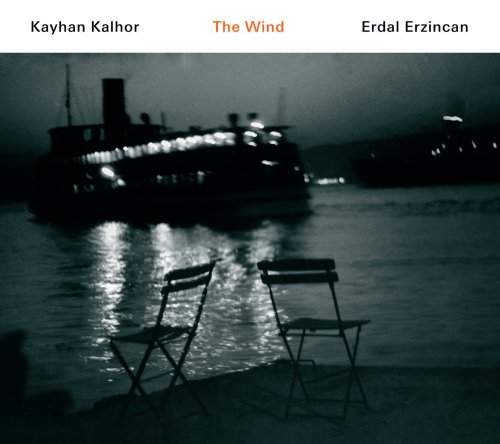
Kayhan Kalhor/Erdal Erzincan: The Wind (ECM 1981)

The Wind

The Wind

Kayhan Kalhor kamancheh
Erdal Erzincan baglama
Ulaş Özdemir divan baglama
Recorded November 2004 at Itü Miam Dr. Erol Üçer Studio, Istanbul
Engineer: Mustafa Kemal Öztürk
Produced by Kayhan Kalhor and Manfred Eicher

The Wind is a significant way station in the travels of kamancheh (Iranian spike fiddle) virtuoso Kayhan Kalhor and baglama (an oud-like Turkish instrument, also known as the saz) master Erdal Erzincan, who under its name are captured on record together for the first time. Ghosting them is Ulaş Özdemir, the musicologist who aided Kalhor in his search for musical material during research trips to Istanbul, and who plays the divan baglama (bass saz) almost like a tambura, stretching a droning sky across which the duo may fly.

Improvisation is of primary importance in Kalhor and Erzincan’s world of sound—so much so that the performance documented here feels like one long freeform variation, divided though it is into 12 parts.The baglama has a haunting insistence about it, which tills soil until Kalhor’s bow comes sprouting through. The latter seems at first like a trick of the ear, for its verbs conjugate by way of a most understated grammar. As it becomes more faithfully inscribed, gathering minnows and courage from every limpid pool, Kalhor’s spirit billows like parachute silk between elements, of which the album’s titular wind is but one of many. Every gust of air keeps him afloat, but also reminds us of the importance of rootedness. And all of this in the album’s first six minutes.

Part II moves in swaying patterns and, like much of what follows, practices the wisdom of restraint even at its most eruptive moments. From here, the album turns fragmentary, dialogic corners, ping-ponging motifs across a divine net according to subtler rules of play. Strum-heavy passages (Part IV) are balanced by holy unions (Part V), marking slow escalation into clouds near to bursting with melody. As territories expand, so too does the capacity for these musicians to breathe. An open circuit in search of a conductor, they unleash electrical charge from the friction of their dance. Erzincan’s fingerwork in Part X inspires Kalhor to just such a lightning bolt of expression, the overtones of which are almost deafening in their affect. Kalhor’s pizzicato action in Part XI spins a different cyclone before the bittersweetness of farewell sets us on our way.

Kalhor and Erzincan inhabit everything they play as bees inhabit a hive, wagging to invisible rhythms and joining the almighty hum that activates every soul to buzz its wings. What we have, then, is the honey.

Ghazal: The Rain (ECM 1840)

The Rain

Ghazal
The Rain

Kayhan Kalhor kamancheh
Shujaat Husain Khan sitar, vocals
Sandeep Das tabla
Concert recording, May 28, 2001, Radio Studio DRS, Bern
Recording engineer: Andy Mettler
Recording producer: Kjell Keller
Edited, remixed, and mastered at Rainbow Studio, Oslo by Kayhan Kalhor, Manfred Eicher, and Jan Erik Kongshaug
Album produced by Manfred Eicher

One cannot become full without first being empty.

In the presence of Ghazal, vicarious though it may be through the medium of a single album, things drain away. There is no excuse for distraction, no reason to hear this music as anything but a portal between states of mind and body. Kayhan Kalhor plays the kamancheh, an Iranian spike fiddle with a sound like the Byzantine lyra, and with it cinches horizons in a cosmic string game. Shujaat Khan plays sitar and sings. Khan comes from a long line of raga masters and has been featured on over 60 albums, though western listeners are most likely to have encountered him via Waiting for Love, released 1998 on India Archive Music. It is his deepest recording yet and one I was lucky enough to discover after buying it at a concert given by its tabla player, Samir Chatterjee. On the subject of tabla, one must acknowledge Sandeep Das, who since debuting at the age of 15 with Ravi Shankar has become one of the greatest living proponents of the instrument and who joins Kalhor and Khan in a timeless performance. Thus, Ghazal’s three sides blend two musical traditions (North Indian and Persian) with one purpose: to send you.

Recorded live in Berne, Switzerland, The Rain is divided into three long-form improvisations on traditional motifs, averaging 18 minutes each. “Fire” opens with a blush of sitar, a splash of sun on the well-worn path of the kamancheh’s tearful song. The expectation in Khan’s singing, indistinguishably potent through throat and string, marks that path with a mapmaker’s intuition. Khan’s voice is almost startling, providing that moment of satori on which everything hinges. Vocal cues are left intact, loosing the birds of Kalhor’s flights from their cages: signals born of moments yet predestined beyond all sense of time. In contrast, the tabla arises from the very earth, its skins mineral-rough against a backdrop of unforced biorhythms.

“Dawn” is a prayer for Kalhor, who awakens, stirring like the forest in early light and coaxing buds from their stems to broaden the promise of spring. His branches survive by means of their own photosynthesis, taking what they need from below to express themselves skyward. Khan’s singing spins air into filament, a thread without a needle unraveling from that seam where sky meets settlement. Such is the pond into which the stone of “Eternity” is dropped. Its ripples manifest a dialogue between heaven (Kalhor) and earth (Khan). The presence of tabla only makes the melodies freer, absolving words from their social sins. The fulcrum of this balancing act comes in the form of a chromatic undulation in the sitar that like a mountain is grounded yet untouchable, pointing toward the gaping mouth of silence from which it was born.

One cannot become empty without first being full.

Jon Balke/Amina Alaoui: SIWAN (ECM 2042)

Siwan

SIWAN

Amina Alaoui vocal
Jon Hassell trumpet, electronics
Kheir Eddine M’Kachiche violin
Jon Balke keyboards, conductor
Helge Andreas Norbakken percussion
Pedram Khavar Zamini zarb
Barokksolistene
Bjarte Eike leader
Recorded September 2007 and March 2008 at Rainbow Studio, Oslo
Engineers: Jan Erik Kongshaug and Peer Espen Ursfjord
Mixed September 2008 by Manfred Eicher, Jon Balke, Amina Alaoui, and Jan Erik Kongshaug
Produced by Manfred Eicher and Jon Balke

“Siwan” connotes equilibrium. This album of the same name achieves equilibrium through many meetings and intersections: of Norwegian pianist Jon Balke and Moroccan singer Amina Alaoui (in her first ECM appearance), of Baroque and Andalusian musical idioms, of Sufi poetry and Christian mysticism, of dark ages and burning inquisitions. For this studio recording of resolutely live music, Balke doubles as keyboardist and conductor for a veritably intergalactic ensemble that includes Algerian violinist Kheir Eddine M’Kachiche, American trumpeter Jon Hassell, and Norwegian violinist Bjarte Eike’s period group Barokksolistene.

Like Alaoui’s seminal Arco Iris, this project is not a fusion of traditions. It is, rather, a deepening of common ground between them. A work of stunning originality, blending geographies into a single airborne continent, its ecosystem runs on ether. Like the solo violin buoyed by strings in the program’s introductory “Tuchia,” the whole flexes and ornaments itself organically. In that violin is a heartbreaking softness that conforms itself to all manner of densities in what follows. After such a fecund inauguration, it is no wonder that the first proper song, “O Andalusin,” should extol the natural wonders of Al-Andalus. Elegiacally described by poet Ibrahim Ibn Khafaja (1058-1139) as “the Eden of the chosen,” the paradisiacal wonders of its landscape shine forth. Harpsichord claws burrow into ocean floor even as Alaoui unfurls sails, hang-gliders, and other disembodied wings to catch every possible current. From burrowing to dislocation, traveler Abu Abdallah Al-Homai’di (1029-1095) yearns for that “faraway homeland” in his poem “Jadwa.” A filigree of percussion and lute illuminates the night as would gold leaf a sacred manuscript, audible tethers each between body and home. Alaoui’s voice wanders but holds its resolve so tightly to bosom that it slips into the ribcage, where it swings on a perch of belonging. She is positively flute-like in wordless moments, touching off M’Kachiche’s elliptical storytelling against a tense ostinato.

The words of Al-Mu’tamid Ibn Abbad (1040-1095), poet-king of Seville, strangely echo the deposition that would incarcerate him for the last five years of his life. “Ya Safwati” is a romantic verse, a profession of utter surrender to that universal captor known as love. This song fronts Jon Hassell’s signature vocality and falls like a curtain to reveal a bevy of percussion carrying Alaoui like a Sherpa across mountains of history. “Itimad” names the wife of Al-Mu’tamid Ibn Abbad, to whom he slipped this poem through the bars of the neighboring cell. “I am untamable yet you dominate me,” he professes, again echoing the power of emotion to conquer in soul what can never be conquered in flesh. Alaoui moves like a bow and finds herself accompanied by that very object, animated and free, across a burial ground of song. Troubador Martín Codax (13/14th century) is similarly lovestruck in his “Ondas do mar de Vigo,” only here the poet embodies a proto-female who laments the consignment of her loved ones to the Sea of Vigo, whose waves took many in the crusades.

Lope de Vega (1562-1635), a star poet of the Spanish golden age, delights with the phonetic play of “A la dina dana.” Here Alaoui parts the clouds by way of golden, celebratory light, setting up the instrumental contrasts of “Zahori” (featuring lyrical recorder playing in place of text), flowing with all the threat of a poisonous serpent, minus the fangs. The lute’s cross-cultural pedigree comes through most readily and beckons the singing of “Ashiyin Raïqin.” Penned by Abu Abdallah Ibn Ghalib Al-Rusafi (d. 1177), who in her liner notes Alaoui describes as a hedonistic writer, this painterly song indeed strips pleasure of its sin. “How lucky we are to find this spot for our sojourn / with doves cooing for our greater delight”: a sentiment within a sentiment, planted in a garden of mirrors.

Persian-born Sufi mystic Husayn Mansur Al-Hallaj (857-922), who suffered martyrdom on the cross for his profession of godliness and who was a beacon of inspiration for Rumi, outlines the manifold path to what Alaoui calls “a ceaseless transformation through vital alternation.” It is a state of fluctuating being in which the contemplation of silence, if not the silence of contemplation, gives way to discovery. A “stripping bare,” as the poet phrases it, an instinct without a door.

“Thulâthiyat” features Alaoui in narrative mode. She lays her speech on the sands like dry bones of an augury for the here and now. Caring neither for past nor for future, she drinks them for the illusions they are and expels them along with the sweat of the midday heat. Sunlit, too, is the verse-chain “Toda ciencia trascendiendo” (Rising beyond all science) of San Juan de la Cruz (1542-1591). This concluding piece is, in Alaoui’s estimation, one of the finest examples of Christian mysticism. Even without knowledge of text and translation, the present arrangement would have us know its secrets. Here there is a door, forged not of wood-flesh but of heart-mind, an analysis of slumber illuminated from within that records its footsteps for posterity before they are buried by wind and dust.

Alaoui’s melodic settings of these lyrics are so intuitive, it’s as if the notes preceded the words. In combination with the astonishing forces gathered around her, every turning of the tongue unspools a thread into the soul.

One of ECM’s finest releases. Ever.

(To hear samples of Siwan, click here.)

Steve Tibbetts: A Man About A Horse (ECM 1814)

A Man About A Horse

Steve Tibbetts
A Man About A Horse

Steve Tibbetts guitars, percussion
Marc Anderson percussion
Marcus Wise percussion
Jim Anton bass
Recorded 2001 in St. Paul, Minnesota
Produced by Manfred Eicher

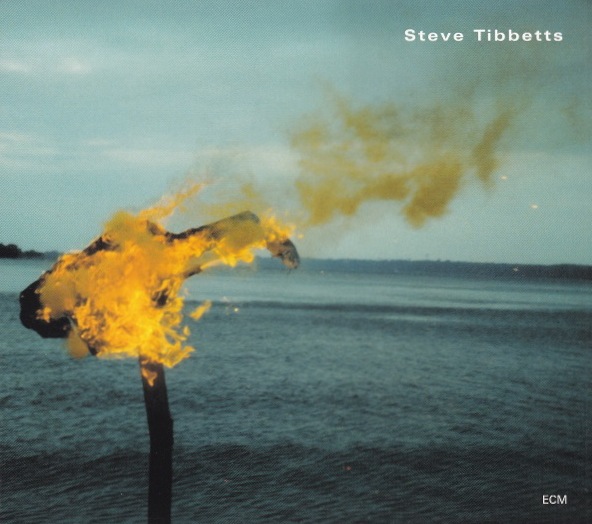
Eight years separate 1993’s The Fall Of Us All and A Man About A Horse, during which time Steve Tibbetts met with an accident that required him to have surgery on his right hand. Before the procedure, the story goes, the reclusive Minnesotan laid down all the guitar parts for A Man About A Horse in his home studio, thus leaving a skeleton as solid as his was uncertain. This apocryphal information matters little, however, once “Lupra” reaches its hands, zombie-like, from the soil. The tap of tabla and twang of acoustic guitar engage in intimate conversation, seeming to diagram hitherto unheard regions of the guitarist’s postmodern terrains. The continental drift of his sound is as tectonically aware as ever: sparkling, sure, and ceremonially poignant like the flames on the album’s cover. This teetering session indeed holds on its kindling shoulders a giant cauldron, in which the listener becomes like the fabled frog, unaware of the lethal heat flowering around him. Spirits beckon from behind the beams of the “Red Temple,” wherein slumber the relics of a nameless saint: the faintest sliver of fingernail, a baby’s-breath of hair…each the element of an alchemy that can only be taught through sound. “Black Temple” magnifies the possibility of transformation by polishing its sole crucible to an ember’s glow. Whether in the earthen percussion or transcendent sustains, echoes of The Fall Of Us All permeate every decorated wall, if in a more contemplative mode.

The ambience intensifies in “Burning Temple,” neither exploding nor imploding but shining like a distant sun in search of a planet. The weight of feet sifting through the crumble leaves tracks and trails, and it is over these Tibbetts and his band trace their peace-bringing hands. The scene is crystal clear, as the title of “Glass Everywhere” would seem to imply. The destruction wrought upon the site is internal, and it is along this emotional landscape that the herds of the musicians’ imagination run like the buffalo. The search for reasons continues, forever one step behind the answers. But there is no charity anywhere in the world to mend the damage done. Rather, the music itself becomes the mechanism by which this assemblage coheres into offering. By now, the heat has become so strong that our little frog legs can no longer kick for all the shock. The raw becomes the cooked: a point of no return.

A way out reveals itself in the twisted metal of “Lochana,” in which an electric guitar cries with all the ache of the prairie. A glass eye in the face of “Chandoha” acts as telescope into the private fears that lurk in the backdrop. The air abounds with fragrance, the guitar a match touched to incense. All of which presses “Koshala” into a diamond of such finality that it’s all Tibbetts can do to keep up with its fluttering heart. The delicacy of tabla and sweeping accents of guitar paint an adobe-hued theory of existence at large. With the very landscape as its brush, it emotes in global self-portraits of light. Here emerges a lone sojourner, one who ranges like the Gunslinger of Stephen King’s Dark Tower, unaware of the tangled web of bodies in which he is destined to be enmeshed. And really, destination is something we can always count on in the Tibbetts experience, for we are there the moment we take our first step.

Stephan Micus: Towards the Wind (ECM 1804)

Towards the Wind

Stephan Micus
Towards the Wind

Stephan Micus duduk, bass duduk, kalimba, steel-string guitars, 14-string guitar, shakuhachi, dondon, sattar, voice
Recorded 1999-2001 at MCM Studios

In the late 1990s, musical nomad Stephan Micus crossed paths with a little Armenian double-reed flute known as the duduk, a mournful instrument with a long history. Micus compares the duduk with the shakuhachi: the two share a spirit of simplicity. In them the breath is audible, almost exaggerated, and sings across species. Yet while the Japanese bamboo flute comes with preinstalled with a rich solo repertoire, the duduk in its many registers is not usually played alone. “Padre,” for example, bears dedication to Micus’s father, Eduard, who passed away during the album’s recording. This duduk solo folds itself into the bittersweet gratitude by which nature abides, a profound translation of breath into memorial. And “Before Sunrise” gives even the bass duduk something to say beyond the droning for which it is typically employed. At Micus’s lips it touches the earth with hands as if they were feet. It walks with renewed balance into a nearby forest, clears a space of prayer among the detritus of a long season, and lights the sky with its campfire. In those embers lie the stirrings of “Morning Breeze,” a kalimba solo that trembles like an eye fluttering into wakefulness.

“Flying Horses” introduces 12 dondon, so-called “talking drums” from West Africa. With them are three steel-string guitars and shakuhachi. The latter dives into a body of water like the frog of Matsuo Bashō’s famous haiku:

The old pond—
A frog leaps in,
And a splash.[*]

The amphibian in question is played by the shakuhachi, which enlightens us to the presence of aliveness itself: mere being, vivid and thrumming. The dondon add a wave of invigoration, a music of distance that lowers us into secret temples. “Birds of Dawn” reveals the crosscurrents of the album’s title by means of a fuller assembly: 2 kalimba, duduk, 6 shakuhachi, 3 dondon, 2 sattar. Yet it doesn’t evoke flight as the cover photograph would imply, but rather a milling about, a wading in the water, talons pressing the earth for sustenance. “Virgen de la Nieve” features the 14-string guitar, an instrument that Micus designed in the early eighties and was last heard on East Of The Night (JAPO’s final release). Its light shines from cloud-breaks after a storm onto a dilapidated castle, while “Eastern Princess” paints for us a memory of the kingdom that once flourished in its walls. This pairing of steel-string guitar and voice reveals the reality behind Micus’s so-called “fantasy language” (he rarely employs lyrics, per se, when singing), an embodied meaning that needs no semantic cage. This is one of his most astonishing creations, if only for the rudiments of its means. He ends with another broad palette, “Crossing Dark Rivers,” which revives the 14-string guitar alongside 3 shakuhachi and 7 duduk, the latter of which make for a cinematic reveal. Before that reveal, the music pulls its feet through thick sediment under cover of night, holding above its head a single bag with a few choice belongings and hoping to pass undetected into personal asylum. The flutes complete the picture as figures emerging from the trees, arms extended in welcome and embracing the solidarity that has made the journey forever worthwhile…for in that refugee slumbers an unborn child whose own crossing has yet to bless this world with its cry.

(For more on the history of this album and its instruments, please check out Mitchell Feldman’s lovely notes on the same, which were an invaluable resource for me in fleshing out this review.)


[*] Trans. Makoto Ueda.

Lloyd/Hussain/Harland: Sangam (ECM 1976)

Sangam

Sangam

Charles Lloyd tenor and alto saxophones, tárogató, bass and alto flutes, piano, percussion
Zakir Hussain tabla, voice, percussion
Eric Harland drums, percussion, piano
Recorded live May 23, 2004 at Lobero Theatre, Santa Barbara, California
Engineer: Dom Camardella (Sound Design Studio)
Produced by Dorothy Darr and Charles Lloyd

“When the spirit is blowing, I know I have to hoist my sails to catch the breeze,” says Charles Lloyd. Indeed, the Memphis-born saxophonist and spiritual walker has left footprints in many a patch of earth, each with its own song to sing. Yet nothing has leveled the playing field of his already vast history with such vitality as Sangam. The name of this fruitful side project, which Lloyd shares with tabla legend Zakir Hussain and prodigious jazz drummer Eric Harland, connotes “confluence, a meeting place, a gathering or coming-together, literally or metaphorically.” This recording—Lloyd’s first live outing for ECM—thus takes the post-Higgins era in a profound new rhythmic direction while also paying homage to the worldliness that Lloyd’s late ally brought to their journeying hearts.

This new trio rides the same wave, shares the same breath, and, as the title of “Dancing on One Foot” implies, moves through the same body. Hussain’s unmistakable groove and Harland’s brushwork set the scene, through which Lloyd wanders with his favored tárogató in hand, stitching the universe. Hussain attends to tuning as would a painter to color, matching tone and thickness to suit each canvas and subject in kind. This is especially apparent in “Tender Warriors,” an emblematic piece for the group that features Lloyd’s all-too-rarely employed alto, as well as in “Nataraj.” In “Guman,” the album’s only tune not written by Lloyd (it is by Hussain), its composer sings hand in hand with flute, weaving and veining the arid plains with the concert’s most intimate pathways.

Also remarkable are the ways in which Hussain and Harland communicate throughout. One might expect, in such a young configuration, that Harland would be feeling his way through the shadow of his fellow rhythmatist, when in fact he meets Hussain in creative brotherhood. Lloyd’s tenoring is, though, a force to be reckoned with, imbuing a range of mountains and valleys with snow and flora, respectively. “Tales of Rumi” is among the more epic statements in this regard, a portal to infinite others. Here the trio enacts a transfiguration, a triangle within a triangle within a triangle: the album’s title made manifest. Through it all, Lloyd fast-forwards through eons of cosmic history (were it not for Hussain’s playful quotation of Rossini’s William Tell overture, we might hardly associate the music with Earth). The title track, too, is a thematic tour de force, sandwiching Lloyd between the drummers with commonality and freedom. Even when Lloyd is invisible, the other senses tell us he is there. “Hymn to the Mother” and “Lady in the Harbor,” each a soulful dirge, handles emotions as if they were fragments of a broken window. Piece by piece, they reconstruct the prism, so that in “Little Peace” they can dance without fear. Theirs is a butterfly effect, whose catalysts are life, love, and laughter.

Three sages light up the night with the memory of a solar flare. Responsive as responsorial, they render jazz at a universal level. Sangam has the power to bleed the offshore accounts of our needless indulgences dry and redirect their provisions to those who need them most. It is an anthem, a tumbling of the social ladder to a horizontal plane.

Three as one. One as three.

Stephan Micus: Wings Over Water (JAPO 60038)

Wings Over Water

Stephan Micus
Wings Over Water

Stephan Micus acoustic guitar, nay, sarangi, voice, flowerpots, spanish guitar, Bavarian zither, suling
Recorded January 1981 at Ibiza Sound Studio and October 1981 at Tonstudio Bauer, Ludwigsburg
Engineers: Manfred Ballheimer and Martin Wieland

Wings Over Water is the third of five JAPO outings—the most by any artist on ECM’s sister label—by Stephan Micus. Featuring a rare turn by the intrepid multi-instrumentalist on that most quotidian tool of accompaniment, the guitar, it spins a web of enchantment across six numbered parts.

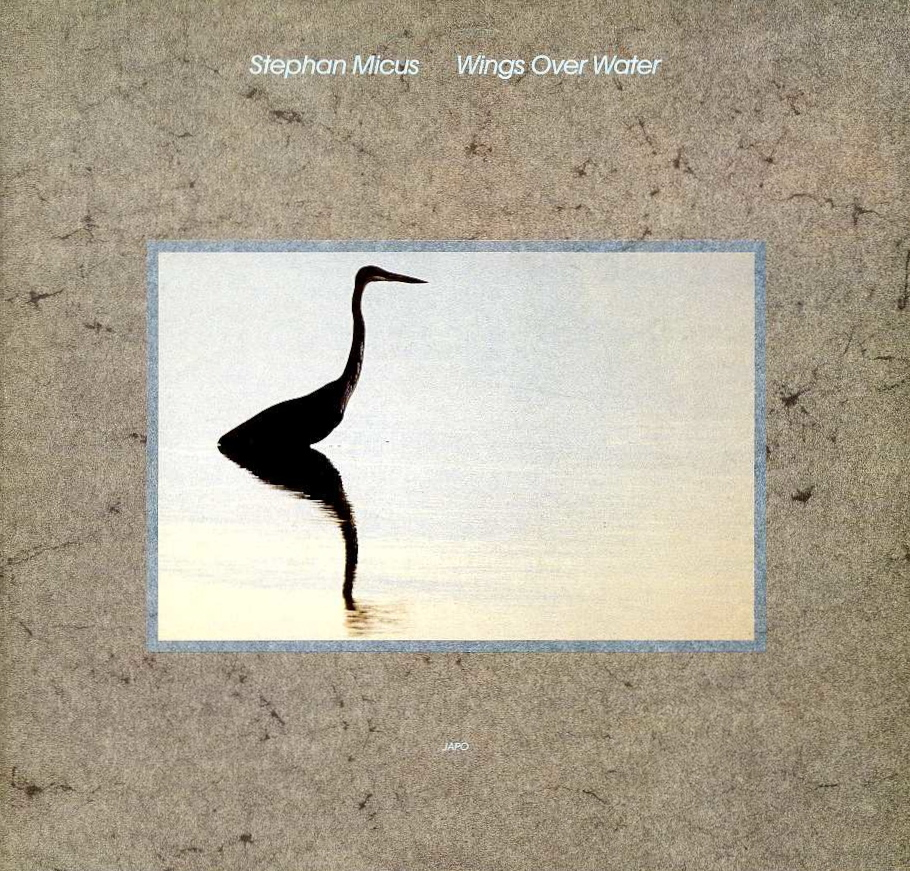
Part 1 uses the guitar to anchor that very web, its strings flexing before a soul-piercing tongue. The ney (an end-blown flute of the Middle East featured prominently in Micus’s work across the decades) is the breath behind it, a servant of the molecules swimming through its porous tunnel. These encirclings open a space into which the listener might step. Thus surrounded in the comfort of these repetitions, s/he may find that the ney’s improvisational flights have similarly taken solace within. Every rhythmic lapse is a micro-phase of organic awareness, attuned to said listener, to the perfect imperfection of things, which like the bird framed in the album cover photograph is austere yet warped in reflection. Gazing and gazed upon, it is self-sufficient, fragile as wind.

Part 2 gives insight into Micus’s unique approach to the sarangi, which in taking on such percussive function provides undulating waves for Micus’s voice and stretches arcs of flight over a ceramic pulse of flowerpots.

Part 3 rises from the mountains through the rusticity of a Spanish guitar and holds in its hands a dimly lit star, hewn in mineral and soil. The guitar becomes an agent of solace, its sound a meditation on meditation—two mirrors held soul’s distance apart and compounded by the interest of infinity. Flowerpots lend their pacing to the skeleton, marrying Sephardic and Southeast Asian influences by way of natural ligaments. The piece ends as it begins: in hermetic garments, tattered yet resilient to the elements, in fact becoming an element unto itself.

Part 4 is a spiritually unbound ney solo, an avian dream that remembers when sustenance was easier to come by, when one could freely roam the air currents to find all that was needed.

Part 5 is an open letter written in the language of flowerpots to the very cosmos. Its paths are as vast and unknowable as Nazca lines, a runway for the ether, embodied in ney and mapped by less visible instruments. Beats rise above the waterline, the breath an unbroken promise of sailing.

Part 6 unfolds, like Part 3, with hints of Andalusian soil. Joining Spanish guitar with Bavarian zither, it unleashes sweeping gardens of profusion, which then quiet to support the lilt of a suling (Indonesian bamboo ring flute) and with it sink into the ocean of forgetting.

An expressly visual journey that skips across rice paddies, this music moves as water strider on pond, and leaves in its wake the promise of a good harvest. It is a vestibule from the rain, a haven where bodies stretch in anticipation of sun.

Kayhan Kalhor/Erdal Erzincan: Kula Kulluk Yakışır Mı (ECM 2181)

Kula Kulluk Yakışır Mı

Kayhan Kalhor
Erdal Erzincan
Kula Kulluk Yakışır Mı

Kayhan Kalhor kamancheh
Erdal Erzincan baglama
Recorded live February 2011 at Bursa Ugur Mumcu Sahnesi by Emre Teke
Album produced by Manfred Eicher

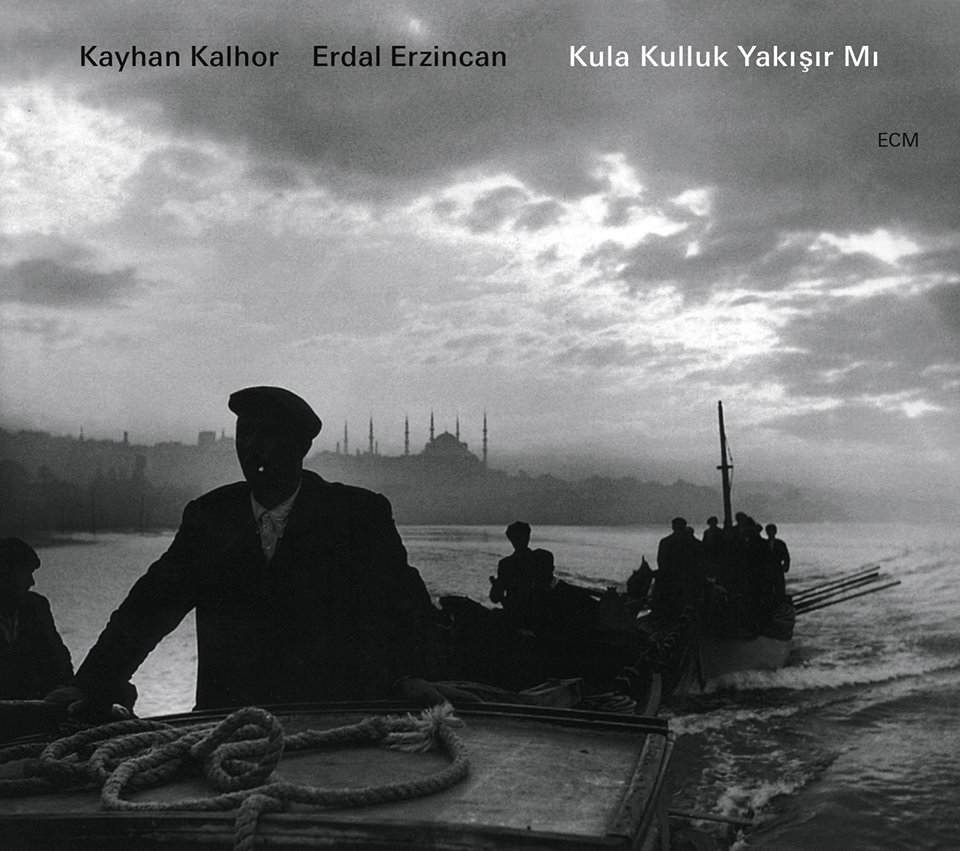
In his book Global Minstrels: Voices of World Music, author-musician Elijah Wald describes Kayhan Kalhor, Iranian master of the kamānche (spiked fiddle), as a “one-man cultural ambassador.” As revealed in that same text, Kalhor educates as intensely as he plays, peddling music not as cultural snake oil but as an opportunity to cross divides. Through his collaborations with such influential acts as the Kronos Quartet and Yo-Yo Ma’s Silk Road Ensemble, he has continued to hone his sense of global community. Yet none of his journeys have taken him as far as those with Anatolian virtuoso Erdal Erzincan, whose lithe touch on the bağlama (a Turkish long-necked lute) has proven fire to his smoke. The result of their joint ambassadorship is an exchange of musical interests, passions, and respect in selfless conversation.

Their first collaboration, 2004’s The Wind, introduced a duo that could not only think out loud, but also feel out loud. On that landmark document the heritages of both musicians bore hybrid fruit, with behind-the-scenes assistance from musicologist Ulaş Özdemir, in a program that was equal parts thematic portaging and free sailing. From that debut arose an ongoing collaboration, which on Kula Kulluk Yakışır Mı offers hungry listeners plenty more to digest. This follow-up shares its title, which translates as “How unseemly it is to follow anyone slavishly,” with a folk song by Muhlis Akarsu, a modern bağlama hero whose life tragically ended in the 1993 Sivas Massacre. True to Akarsu’s steadfast character, slavishness is farthest from the reality of this performance, recorded live in Turkey in early 2011.

Kalhor and Erdal
(Photo by Todd Rosenberg)

On Kula Kulluk Yakışır Mı, Kalhor and Erzincan deepen their mutual interest in improvisation, sprouting five spontaneous leaves from traditional branches in an hour of uninterrupted playing. The first of those improvisations opens to the bağlama’s unique insistence, its oud-like twang foiling the rasp of Kalhor’s horsehairs before shifting into the folk song “Allı Turnam.” This juxtaposition of the unplanned and the internalized sets the pattern.

Although the improvised portions are distinct from their evergreen counterparts, both draw upon the remembered and the unknown. Classical standbys like “Deli Derviş” and the title track inspire cheers of approval and recognition from the audience. At key moments, the musicians get swept up in the power of it all, building from simple elements to powerful abandon. “Daldalan Barı” is a notable highlight of the concert’s first half in this regard, especially for the way in which Kalhor reaches skyward with his notes in the final stretch. Yet the duo saves its most transcendent moment for last when it blends a revisiting of “The Wind” into the multi-part “Intertwining Melodies,” the latter of which braids Persian and Turkish strands in a masterful summation.

With a single gesture, Kalhor and Erzincan manage to turn the “e” of “effect” into an “a,” filtering the golden light of their encounter into a musical experience so physical it would sprout legs and run if it could. These two sages embrace order, even as they convey the chaos of things, turning night into day.

(See this article as it originally appeared in RootsWorld online magazine. To hear samples of Kula Kulluk Yakışır Mı, click here.)