Ketil Bjørnstad/David Darling: Epigraphs (ECM 1684)

Epigraphs

Epigraphs

Ketil Bjørnstad piano
David Darling cello
Recorded September 1998
Engineer: Jan Erik Kongshaug
Produced by Manfred Eicher

Driven into the
terrain
with the unmistakable track:
grass, written asunder.
–Paul Celan, “The Straitening”

Until Epigraphs, the output from Norwegian pianist Ketil Bjørnstad and American cellist David Darling had been explicitly aquatic, as on The River the duo furthered ideas and atmospheres explored on the quartet project The Sea. Here there is a more grounded sense of architecture. And while some of it remains activated by water, for the most part it observes as it feels: on high ground. It is not a boat but an observatory, which allows the eyes to look freely into the heavens where feet and oars may not progress.

The resonance of the recording takes lantern shape. The “Epigraph” theme is its flame. As such, it flickers without ever losing hold of wick, a moment of dance lost as quickly as it fades. Much of this light comes through in song titles alone. There is enough dawn in “Wakening,” for one, to deny the imminence of dusk, so that the draw of “Silent Dream” moves with almost painful self-awareness. “The Lake” looks back through overtly drenched eyes toward a moving rite of passage. “Gothic,” too, sounds like a seed for The Sea that never sprouted, content in being self-contained. One can almost hear those distant cries, swooning electric between the clouds. In the spirit of balance, Darling digs low in “Upland,” reassuring us that Earth is not forgotten. He slips into the topography of Bjørnstad’s playing like a shoe to a foot, which follows wherever the wind may lead. Only at the end does he leap skyward through the narrow eye of a shooting star.

A smattering of Renaissance material by William Byrd, Orlando Gibbons, Guillaume Dufay, and Gregor Aichinger rounds out the disc and reveals itself as the core of everything that Bjørnstad and Darling have molded together. Byrd’s “Pavane” is replete with such gentility in the artists’ touch that one can almost taste the mythological impulses that nourish them. Aichinger’s “Factus Est Repente” ends with stark hymnal energy. Like the fountain pen that flows as long as there is ink, it fades only when the blood has left its poetry.

Epigraphs further yields two important tracks for both musicians and label. First is “After Celan,” which combines the shape of words and the shape of music. Second is “Song for TKJD,” a profound dip into Darling’s whirlpool of multi-tracked pathos. Here the landscape stretches, pixilates into a mosaic of monochrome. Like a lost traveler from his Cello, it comes to us fully bearded with the eternal youth of its message. It is a wavering tapestry in which Bjørnstad somehow finds purchase in the bones, a ladder of pages in absence of binding.

The quiet power of this music is its emphasis of reality over thought. It rounds the edges of our quotidian activities with intermittent variations, leitmotifs, and signposts. Bjørnstad and Darling share an ability to take something melancholy, even morose, and flood it with light to expose a spectrum in darkest hours. From the past to the present and back again, their path ties a loophole in space and cinches it until the moon closes her monocle.

<< John Abercrombie: Open Land (ECM 1683)
>> Jan Garbarek: RITES (ECM 1685/86
)

John Abercrombie: Open Land (ECM 1683)

Open Land

John Abercrombie
Open Land

John Abercrombie guitar
Mark Feldman violin
Kenny Wheeler trumpet, flugelhorn
Joe Lovano tenor saxophone
Dan Wall organ
Adam Nussbaum drums
Recorded September 1998 at Avatar Studios, New York
Engineer: James Farber
Produced by Manfred Eicher

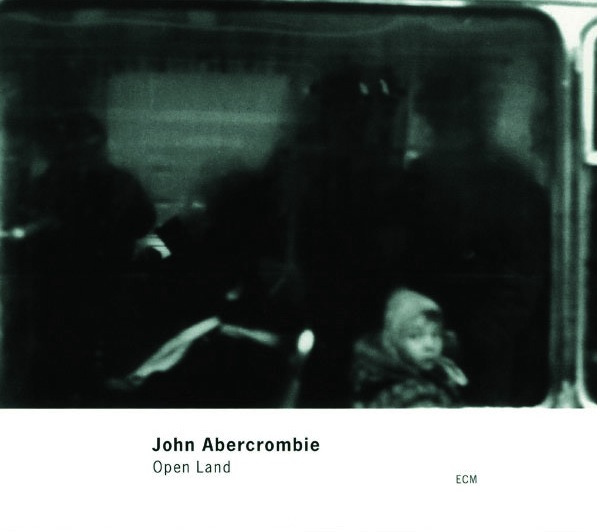
After a string of intriguing albums for ECM, John Abercrombie’s organ trio welcomes violinist Mark Feldman, trumpeter Kenny Wheeler, and tenor man Joe Lovano into the fold for Open Land, a leader-penned session of unusual sound colors and depth. Like all great albums, it reveals more with each listen, so that its augmentations grow more inextricably fused as the music becomes more familiar. From the first lilt of Wheeler’s brass in “Just In Tune,” it’s clear that the increased number of musicians hones the band’s spirit at a microscopic level. To be sure, the rising tide spun by Nussbaum and Wall paints smooth expanse across which Abercrombie stretches his webs—a magic formula that served well in While We’re Young, Speak Of The Devil, and Tactics. By the same token, here the mirage falls inward, catching the phosphorescence of every solo in a jar of fireflies. Even in tracks like the far-reaching “Speak Easy,” Abercrombie builds a tower to the sun but unlike Icarus stops short and looks down at the world for a while, quietly musing to itself before regressing into its core. The lush grooves are still there (“Gimme Five”), as are the featurettes (“Little Booker” and “That’s For Sure”), and the horns coalesce beautifully in tracks like “Remember When.”

Yet it is Feldman whose presence pays highest dividends. A heartfelt take on Felix Mendelssohn’s “Spring Song” gives life to the violinist’s quivering mastication, which breathes anew in the crystalline acoustics of Avatar Studios. This track stands out also for the method of its soloing, which finds each musician echoing another in a perfect circle. Wall is particularly effervescent, bouncing from Abercrombie’s chording like a paddle ball. Feldman sandwiches a crunchy guitar center, sharing bursting thematic lines with downright mitochondrial energy. “Free Piece Suit(e)” is, however, the most fascinating little puzzle of this date and thus finds Feldman in his element, jumping from ecstatic cries to chromatic undertows in the blink of a bow. Nestled in Abercrombie’s network of nerves, he sings a life neurotic as if it were poetry to be savored.

<< Franz Schubert: Sonate B-Dur op. posth. D 960 (ECM 1682 NS)
>> Ketil Bjørnstad/David Darling: Epigraphs (ECM 1684
)

Camping Out with the Daniel Bennett Group

Daniel Bennett Group - Clockhead Goes to Camp - ALBUM COVER

“I was imagining a world of animals, similar to something you might see in a Richard Scarry children’s book,” says Daniel Bennett of Clockhead Goes to Camp, his sixth album as leader. The Manhattan-based saxophonist and composer is joined by guitarist Mark Cocheo, bassist Peter Brendler, and drummer Tyson Stubelek for a quirky and meticulous ride that just might be the first genuine musical equivalent of a Wes Anderson film. In this follow-up to A Nation of Bears (2004), The Legend of Bear Thompson (2008), and Peace and Stability Among Bears (2011), Bennett and his crew move away from the ursine and into a world of sticks, stones, unbroken bones, and a few words for good measure.

This self-styled folk jazz project features mixed meters, a mélange of styles (from surf to American minimalism), and evocative arrangements. Representing over a decade of fine-tuning, the album is meant to recreate the feeling of a live show, and with titles like “Dr. Duck’s Beautiful New Kitchen” and “Last Summer at Camp Creepy,” much is left to the listener’s imagination to flesh the scenes, making for a thoroughly enjoyable listen.

Bennett tends to stick to the higher end of his horn, a decision born as much from his staunch pragmatism as from his brimming optimism: “I feel like the higher register of the alto saxophone sits really well on top of the guitar and bass. The song melodies pop out more to the listener when played in a higher register. Maybe this was also an unconscious departure from the traditional ‘husky’ low saxophone sound that permeates modern jazz.” This preference for brighter, lively melody-making is immediately manifest in “The Old Muskrat Welcomes Us,” which opens the set with smooth, uplifting energy. The turquoise tone of Bennett’s horn and the sparkling accompaniment—replete with Hong Kong handclaps—are all tied in a beautifully syncopated package. As the handclaps carry over into “An Elephant Buys a New Car,” one already notes a tendency in the arranging. Like a party spun by Steve Reich, it mixes a cocktail of structure and paratextual flow.

To be sure, Reich is but one in a long list of influences, which also includes the Smiths, the Cure, Joy Electric, Philip Glass, Ornette Coleman, and illustrators Timothy Banks, Eric Carle (the group performs every year for the Eric Carle Museum of Picture Book Art award show in New York City), and sister Erin Bennett Banks. Musically speaking, Coleman (if through the prism of John Zorn’s Electric Masada) is paramount at various key moments. Of these, “Nine Piglets” is a standout. It features Bennett’s legato flute stylings in a highly engaging wave. If Clockhead were a pop album, this would be its first single. Flute features prominently in a number of tracks, including the nostalgia-laden “Paint the Fence” and “Whatever It Might Be.” The latter surprises us again with a poetry reading by Rimas Uzgiris over a net of flanged support. The recitation is strangely auto-tuned, further indication of the group’s playful spirit. Bennett: “I told MP Kuo, our producer at Lofish Studios, that I needed a robot in this story. Rimas was the only spoken word vocalist on the album, so he became our test subject. We auto-tuned him and he became Robot Rimas!”

The title track deepens the sense of songcraft. Mixing straight-up jazz riffs with offshore touches, its sparkling 12-string dots sun glints onto water. Cocheo cites a list of idols, some of whom will be familiar to ECM listeners: Jim Hall, Wes Montgomery, Pat Metheny, Bill Frisell, John Scofield, Wayne Krantz, Ben Monder, and Scott Henderson. “I am also equally influenced by rock, pop, and classical music,” he goes on. “I believe that by having these other influences, it can bring a whole new world into the music. Although I listen to and practice jazz all the time, I have too many diverse influences to be just a straight-ahead jazz guitarist.” Certainly, in tracks like the waltzing “John Lizard and Mr. Pug,” which also features Bennett on clarinet, and the Buckethead-esque flower that is “Ten Piglets” we feel a soundtrack quality that embraces these influences and more. Cocheo walks a fine line between them, and in the process affords himself the freedom to color with broad intuition.

Brendler meanwhile takes a subtler role in shaping the band’s footprint. Unlike the two leads, he has only a couple of solos on the album. Nevertheless, his playing contributes body, depth, and melodic integrity: “Although different musical settings permit different amounts of bass features, to me, the supportive role of the bass always comes first. Like almost all other bassists, I love players like Scott Lafaro and Jaco Pastorious. My go-to sources for sage bass inspiration, however, are players like Ron Carter and Israel Crosby on upright and James Jamerson and Pino Paladino on electric. These are players much more noted for their ability to support than to solo. That being said, their support is anything but staid and uninspired; quite the contrary, they’re able to deftly walk the tightrope of rock-solid support and boundary-pushing innovation. My state of mind in Daniel’s settings is to be as solid and supportive as possible, providing a firm foundation so the other members of the group can be as exploratory and daring as possible.”

Stubelek, too, brings comparable variety of color to the palette. “One of the things I really enjoy about this band,” he notes, “is how free I am to invent my own approach. I feel music as waves of tension and release. The tune as a whole has a shape, and I always keep an eye on that, but there are also many individual moments throughout in which there is an improvisational dialogue. In these moments we use harmonic colors, rhythmic textures, and various other musical elements to convey artistic intent. My role is to get a feeling of direction from the composed material as a starting point and then participate in that improvisational conversation.” Regarding his choices therein, he goes on, “The ideal is to leave all unrelated baggage behind in the moments before a piece of music begins, and from there respond to it openly and earnestly.”

Bennett’s penchant to have at least one unaccompanied song per album manifests itself this time around as “Sandpaper is Necessary.” The surrounding context of this brief alto solo lends rhythmic insight and allows us to read into it as if the band were still present. It reminds us that at the core of these tunes lies a cellular attention to detail. Each is articulated with deceptive simplicity, which in fact harbors a deep and lasting moral message, a realistic ending, and affirming outlook on life. Like the (seemingly) 80s horror flick-inspired menagerie of “Cabin 12 Escapes into the Night,” it laughs in the face of fear and finds in every shadow a smile waiting to shed its light.

Clockhead Goes to Camp is set to be released on July 10, 2013 by Manhattan Daylight Media Group. More information and samples are available at the group’s website here.
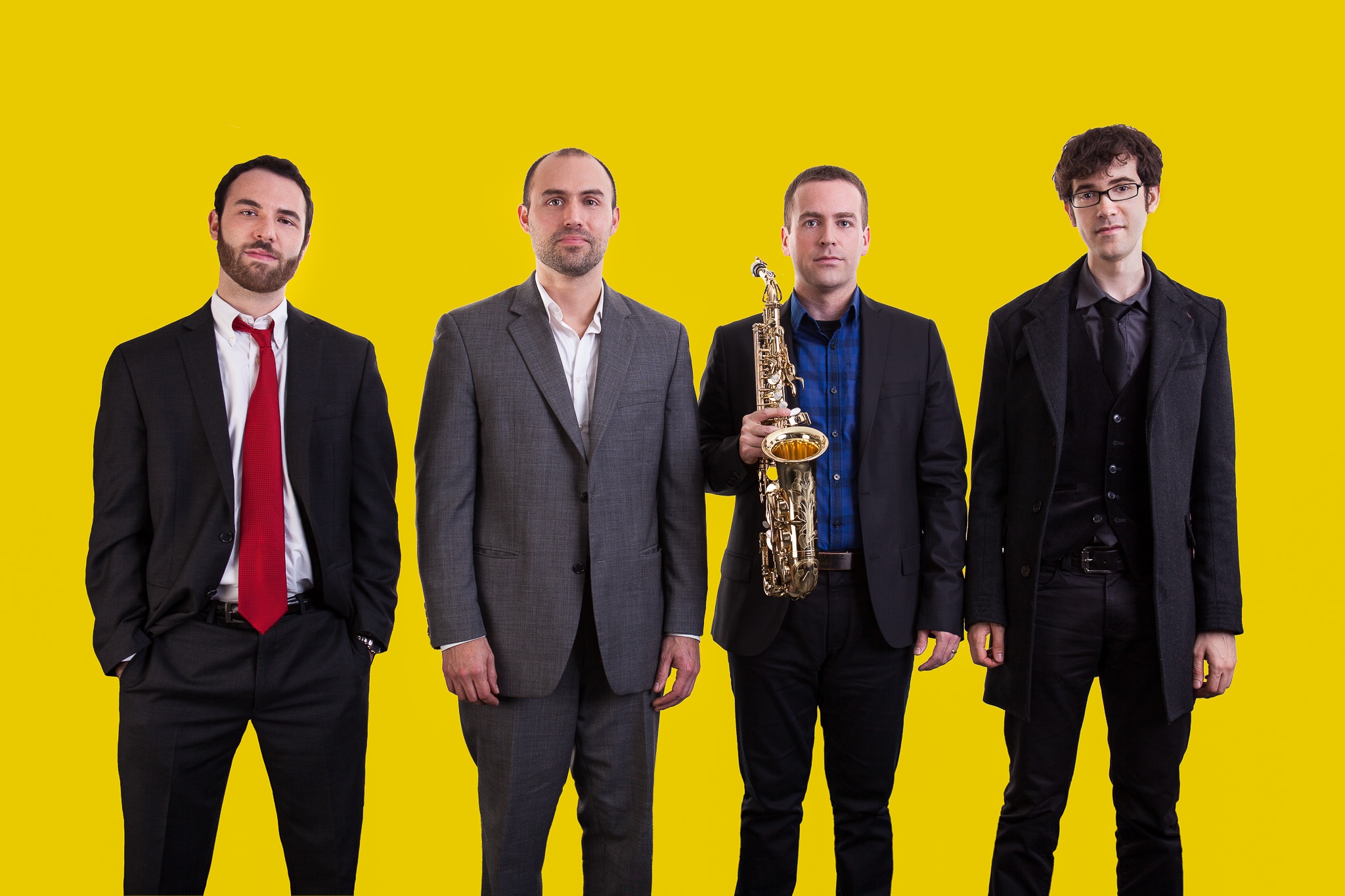
Daniel Bennett Group - Posed in a Line
(Photo by James Bartolozzi)
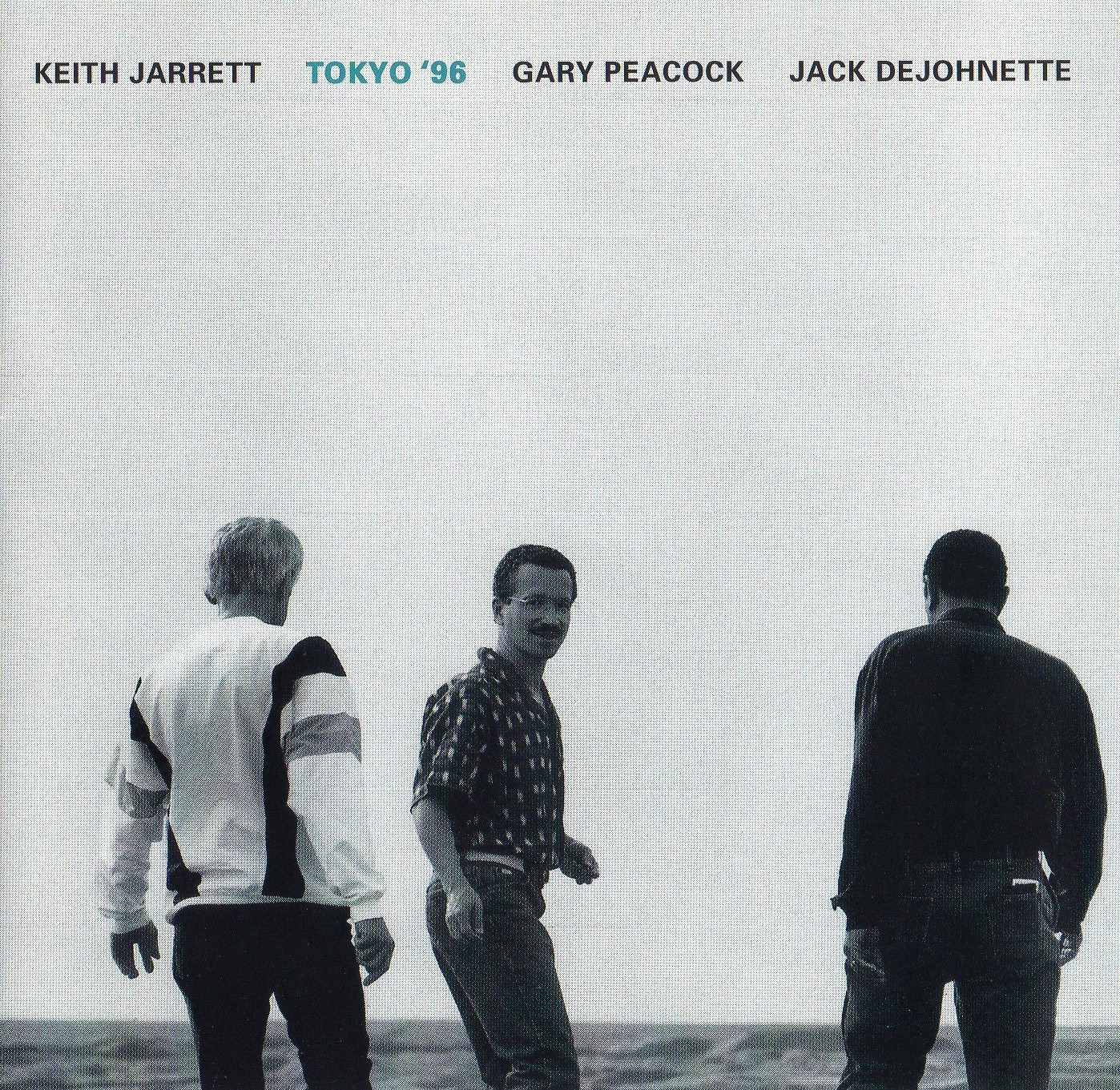
Keith Jarrett Trio: Somewhere (ECM 2200)

Somewhere

Keith Jarrett Trio
Somewhere

Keith Jarrett piano
Gary Peacock double bass
Jack DeJohnette drums
Recorded live July 11, 2009 at KKL Luzern Concert Hall
Engineer: Martin Pearson
Produced by Keith Jarrett
Executive producer: Manfred Eicher

In the same way that 2012 gave Keith Jarrett fans reason to celebrate with the awakening of Sleeper, so does 2013 bring light, placing us at the center of things in a magical new record from his nonpareil trio with Gary Peacock and Jack DeJohnette. More than any other, this joint proves they are no mere instrumentalists but also singers, each in his way.

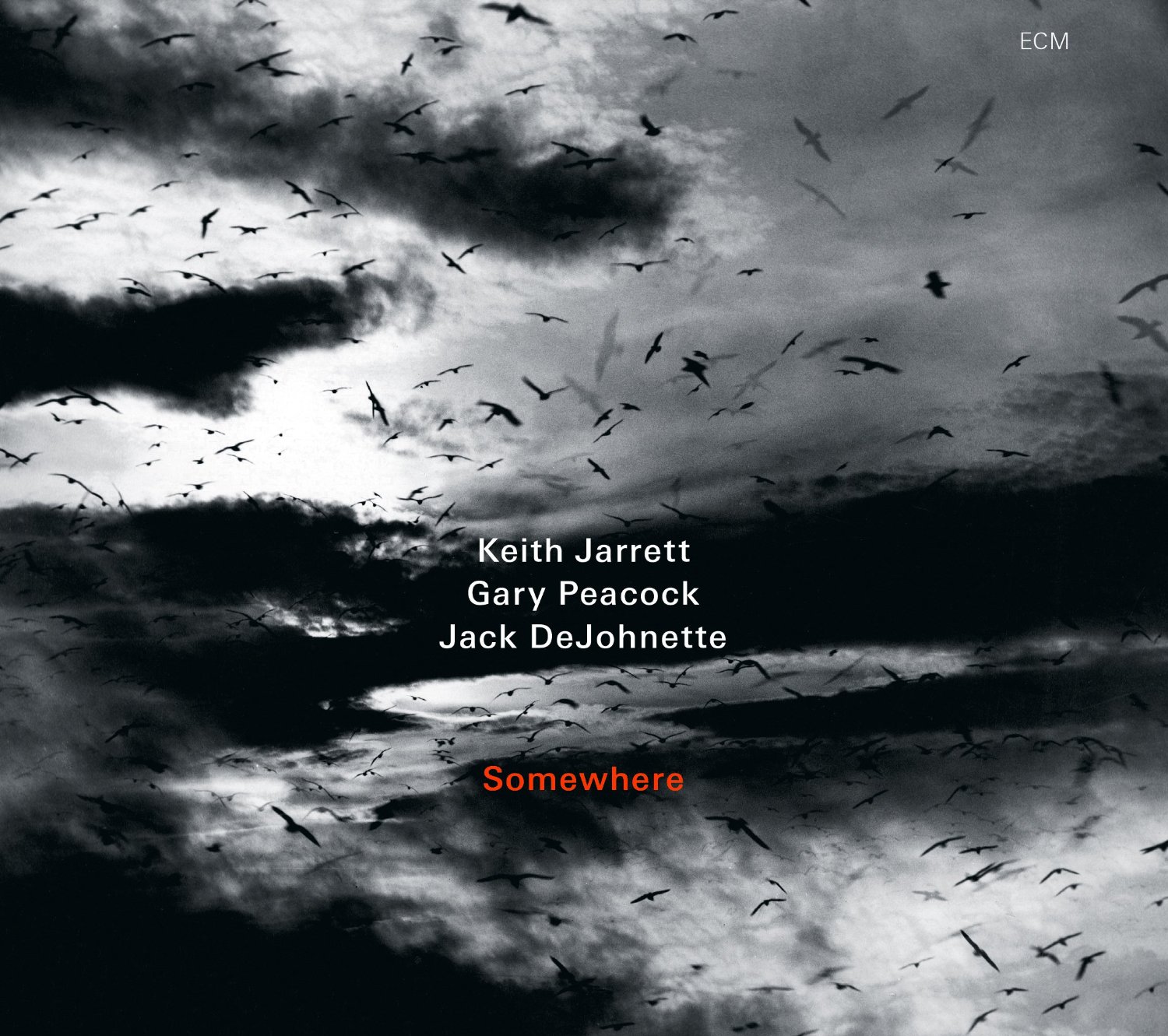
Somewhere was recorded—not live but alive—in Lucerne, Switzerland in July of 2009. Though it comes to us after a four-year steep, it is as fresh as the day it hit the ether. Jarrett opens with “Deep Space,” a protracted solo that leads into the Miles Davis classic “Solar.” If the transition between the two reveals anything, it is that these three souls, lit as they are by unwavering musical pilot lights, have traveled so far together for so long that the album’s title might as well be “Everywhere.” A feeling of openness and suspension emphasizes the three decades’ worth of magic that came together for this performance, each note a glow-in-the-dark star that still phosphoresces when the lights go down. Lest we get lost in the pitch of night, Jarrett lays down his runway particle by particle, giving his band mates all the guidance they need to fly. Peacock elicits a highlight or two in this 15-minute wind-up, flapping through changes like one among the album cover’s flock.

Jarrett is, while a technical genius, above all a connoisseur of melody. As if to prove this, “Stars Fell On Alabama” gives voice to the dark side of the moon for a beauty that needs no sun to shine. Here Peacock swings from Jarrett’s vines into the loosely woven “Between The Devil And The Deep Blue Sea,” in which now DeJohnette stokes the fire. In the process, he does the impossible: emoting impressionistically with clearly delineated strokes. This only inspires Jarrett to passionate heights, every cluster from his fingers dotting the landscape with fresh flowers. Peacock’s ligament keeps us on track to a whimsical ending.

A 20-minute exposition of “Somewhere,” one of two tunes culled from West Side Story, finds every facet of its theatrical quality realized in the Jarrett addition “Everywhere.” Peacock moves like a throbbing heart in an early solo. Meanwhile, Jarrett’s left hand maintains a gentle metronome as the right tells its stories in the second person. The trio takes its second dip into the Bernstein songbook with a sparkling take on “Tonight.” Jarrett’s fingers dance up a storm, cascading into a rich solo from DeJohnette that leaves us floating along the strains of “I Thought About You,” which flows tenderly, sweetly, as it should.

Somewhere isn’t so much a homecoming as it is a shoring up of a structure that has already held firm against many tides. Jarrett’s ever-evolving pianism provides the aluminum siding, Peacock polishes the freshly installed hardwood floors, and DeJohnette fits new windows into every frame with until the house thrums with the presence of its longtime tenants. Being somewhere locates one not only in space, but also in time, and the album’s clip reminds us that improvisation is a luxury never to be taken for granted. In this spirit they sound more with it than ever, due in no small part to the recording, which stands comfortably at the lip of the stage and twirls with delight. The result is an album that holds its own alongside Still Live as one of the trio’s absolute finest.

KJT

(To hear samples of Somewhere, click here.)

Keith Jarrett: The Melody At Night, With You (ECM 1675)

The Melody At Night

Keith Jarrett
The Melody At Night, With You

Keith Jarrett piano
Recorded 1998 at Cavelight Studio
Engineer: Keith Jarrett
Produced by Keith Jarrett and Manfred Eicher

The Melody At Night, With You was my first Keith Jarrett solo album. And perhaps it was in a way for Jarrett, too. It interprets some of the greatest names in the American songbook—Duke Ellington, the Gershwins, Oscar Hammerstein and Jerome Kern, Oscar Levant, among others—yet tells their stories as if we’ve never heard them before. More than just another standards album in absence of his trio, this is the pianist at his purest. He approaches the music as a composer approaches a blank staff: which is to say, with wonder.

At the time of this recording, Jarrett was diagnosed with what was then known as fibromyalgia, a condition that variously affects muscles and nerves, leaving sufferers chronically fatigued. This meant that Jarrett was unable to perform, and for a while his fingers never touched a key. This in the wake of his highly successful Tokyo ’96, released after the affliction had taken root. Yet surely nothing could staunch the pilot light from which he had borrowed so much flame in his career, and it was this, along with his love for wife Rose Anne (to whom the album bears dedication), that informed his return to playing. To call this album intimate would be an understatement, recorded as it was under cover of darkness, gently, sweetly. Skin thus shed, he is a cause without a rebel, open to the vision of love that holds us in our darkest hour.

The album divides songs internally, balancing contradictory impulses in elegant weave. Gone are the transcendent moonwalks of yore. In their place are gravid statements of purpose. From the contact of “I Loves You Porgy,” the physicality of his playing is immediately apparent as every stretch of sinew and bone works itself back into flexible life. Treading a fine line between linear melody and cloudbursts of chords, between song and circumstance, it is the Rosetta Stone for all that issues from its stirrings. “I Got It Bad And That Ain’t Good” similarly mixes ecstasy into regret, thereby revealing a contradiction of love that cannot be shaken. Jarrett’s voice emerges, the groan of a waking giant. “Don’t Ever Leave Me” balances uncertainty and conviction by way of his fall-off-the-bone storytelling.

“Someone To Watch Over Me” sits at the fulcrum. An unadulterated gaze into the heart of things, it opens a window with every note and breathes light into the “Meditation” that flows from his touching rendition of “Blame It On My Youth.” With this one realizes, if not already, that something profound is going on—not only for the miraculous tinge of recovery that permeates, but also because of the way it emphasizes the vitality of music, as if it simply must be heard. This would also seem to be the message encoded into “Something To Remember You By.” Here the balance is of silt and crystal, while in “Be My Love” it is tears and laughter. “I’m Through With Love” ends on a bittersweet note, a fleeting coda that is anything but in its scope. Jarrett fleshes out the program with a pair of traditional favorites. In both, he pours his soul in the endings. What with the chromatic appliqué in the descending tail of “My Wild Irish Rose” and the string game of the heart that is “Shenandoah,” there is nothing more to do than close one’s eyes and breathe.

In this respect, The Melody At Night, With You is also a love letter to the songs themselves, for by the end the gift of performance gets lost in the billowing curtain of time, lingering as the memory of a dream, now dispelled in the morning light for an intensity that would otherwise obliterate us.

If this is where Jarrett’s heart lives, may it never die.

<< Charles Lloyd: Voice In The Night (ECM 1674)
>> András Schiff/Peter Serkin: Music for Two Pianos (ECM 1676/77 NS
)

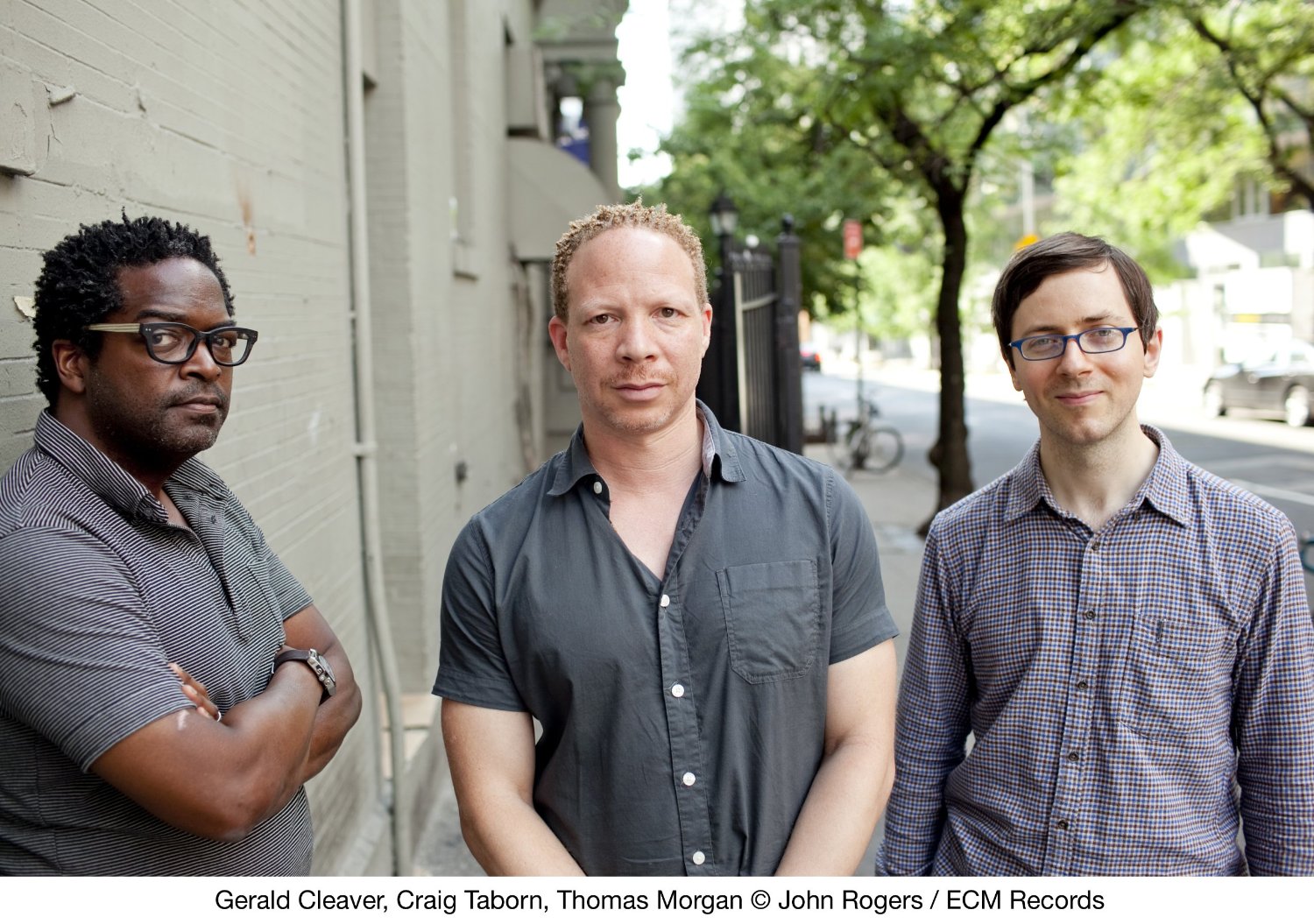
Craig Taborn Trio: Chants (ECM 2326)

Chants

Craig Taborn Trio
Chants

Craig Taborn piano
Thomas Morgan double bass
Gerald Cleaver drums
Recorded June 2012 at Avatar Studios, New York
Engineer: James A. Farber
Assistant engineer: Charlie Kramsky
Produced by Manfred Eicher

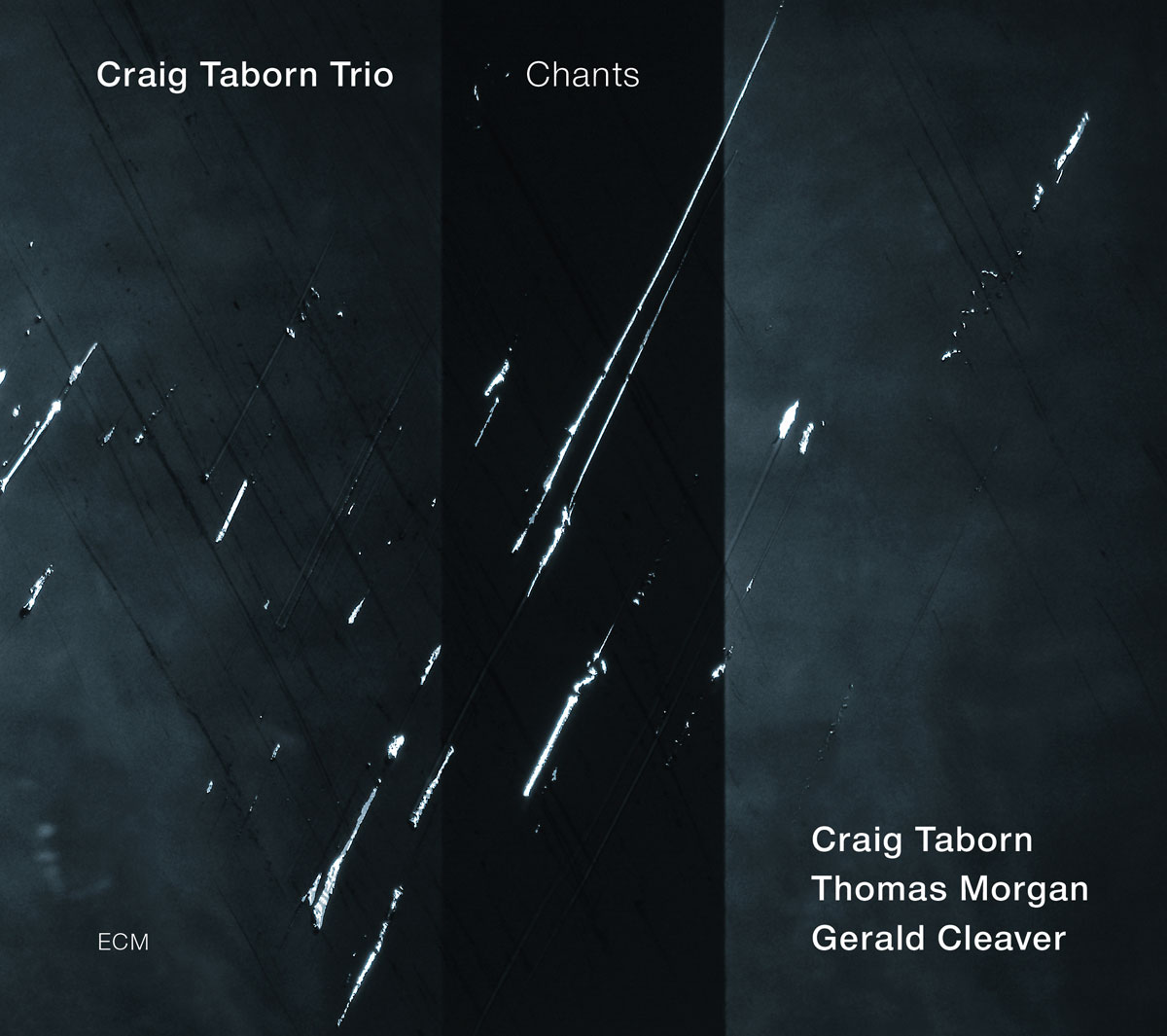
The Craig Taborn Trio is a metronome with a soul. For its debut release, Chants, the pianist’s fearless group carves a niche and fills it with so much creative spirit that no one but the listener can squeeze in for a spell. The album defines a repertoire, extracting from one of the most enviable rhythm sections in the business an elixir for surefire engagement. Bassist Thomas Morgan and drummer Gerald Cleaver know what Taborn is all about. They are never add-ons but are fully immersed atoms in his molecular goings on, nearly a decade in the forming. And if the syncopation of “Saints” is any indication, theirs is an aliveness of unity rare to hear. As in so many of the tracks that follow, there is a winding, slightly off-kilter feeling to its jaggedness. Taborn and Cleaver leave an especially consonant series of markings at the outset, each the half of a poker deck perfectly Farrowed to the tune of Morgan’s deal. The bassist works alone “In Chant,” enacting no mere solo per se but a living tendon between wholes. In those wholes contrasts abound. “Beat The Ground” evokes the blurred foliage of a running warrior’s peripheral vision. His weapons trickle down from the sky in care packages of godly insight, inspiring pulse-driven spirals into resonant fade. The feeling of resolution is as visceral as it is fragile. “Hot Blood,” on the other hand, is as cool as can be. It opens a city’s worth of brainwashed minds and, while flurried, keeps its inner flame in smooth focus.

Taborn Trio

From the tectonic instability of its intro, “All True Night / Future Perfect” congeals like so much stardust. Its evolving Spirograph is toothed with miniscule variations, which though unapparent to the naked eye scream to the naked ear. Like a dislocated joint these connections remain encased in the body proper, hanging in lieu of locomotion. “Cracking Hearts” opens with a scattering of cobwebs from Cleaver before the trio rummages through everything in its attic, upturning memories that were never theirs to begin with yet which ring familiarly. More important than artifacts are the “Silver Ghosts” who haunt the rafters. Theirs is a ponderous song, an ephemeral dotted line of footprints in the dark, conducted by the wings of a trapped and frightened bat. “Silver Days Or Love” clears out the windows, drawing pointillist glyphs by Taborn’s right hand over a steady imprinting of chords from his left. A strangely enchanting bass solo, host to a network of internal gatherings, gives soil to Taborn’s sprigs of blossom. Only when they “Speak The Name” do clouds begin to open their pores to the firmament’s pale blue love.

While the music of Chants is certainly profound, it is, more simply, found. It is as if it had been wandering for countless years in the corners of our minds, each motif a determined mouse waiting for just the right cheese to tantalize its palate. Taborn never lets the intensity of this indulgence overwhelm. He knows just when to turn down the dial, lest the circuit break and leave us altogether unreceptive to signals. His brilliance is all in the music. Rather than go from A to B, he is content going from Q to R, clothing himself in the orbits of another planetary system that operates by its own gravitational and chemical rules. The chant, then, becomes a de-normalizing impulse, a light in the telescope that renders us in our darkest hour strangers even to ourselves.

There is glory and praise in these movements, sacrifice and self-reflection, pockets of expectation filled to bursting with illusions. As in the surgical discoveries of Nik Bärtsch’s Ronin, geometry is paramount, the lifeblood of all orbit. If the Keith Jarrett Trio revitalized the standard, Taborn and his allies have set one.

(To hear samples of Chants, click here, or watch the promo video below.)

Bley/Peacock/Motian: Not Two, Not One (ECM 1670)

Not Two, Not One

Not Two, Not One

Paul Bley piano
Gary Peacock double-bass
Paul Motian drums
Recorded January 1998 at Avatar Studios, New York
Engineer: James Farber
Produced by Manfred Eicher

This album documents a monumental coming together of pianist Paul Bley, bassist Gary Peacock, and drummer Paul Motian, a combination not seen on record since Paul Bley with Gary Peacock, laid down in 1963 and issued 1970 as ECM’s third release. Here the trio picks up where it left off some 35 years before, furthering a journey of deconstruction its members have since charted separately in various combinations. And combinations are really what this session is about, for the trio turns kaleidoscopically throughout, emphasizing certain angles over others in a constant shifting of crystals. One moment finds us mired in the quiet urban fantasies of “Don’t You Know,” in which Bley pours out every last drop from his flask of introspection, while the next tantalizes with “Fig Foot” (“Big Foot” by another name), last heard on Adventure Playground. Bley latterly dances like fire, erratic yet unified by elemental force, following a pattern that is beyond our ken. Peacock is duly inspired in his solo against a delicate swing from Motian, who stays the course with an effervescent washtub beat.

The album’s most notable soundings come from Bley’s pianism, which revels in the depths granted it by studio access to a Bösendorfer. Bley bathes in its open possibilities, moving from a sunny intro in “Not Zero – In Three Parts” to lively reveals of the instrument’s vibrating inner core. This touches off a spate of drums from Motian, whose own soliloquy takes root in the ethereal, and inspires from Peacock a solo that balances integrity with unruliness and ushers in the trio proper with bold progression. Bley’s zither-like touches tip the scales toward all-out swing. “Now” similarly digs low, forming a cascading and complex solo of bridge-cabled intensity. “Vocal Tracked” also finds Bley alone, this time pushing notes like pins into an entomologist’s specimen board. Peacock likewise enchants with “Entelechy,” an elliptical solo track that shows a master at work. He further contributes two tunes: the pirouetted “Intente” and the restless marginalia of “Set Up Set.” Each turns itself like a sentient children’s top, waiting for the moment when its inertia will falter.

Yet together is how the trio shines. In “Noosphere” they work as one amorphous blob, carefree yet passionate. A many-petaled solo from Peacock bespeaks an undaunted hand, thereby flinging the veil of obscurity in favor of transparent expression against Motian’s profound susurrations. And after a luxurious dip in the balladic waters of “Dialogue Amour,” the trio tightens the drawstring with “Not Zero – In One Part,” a brief and burrowing coda.

These three sages of modern jazz neither break down borders nor blaze trails. Rather, they ignore those borders altogether and shape their music as it comes: bare yet flavorful enough to shock your taste buds into bliss.

<< Giya Kancheli: Magnum Ignotum (ECM 1669 NS)
>> Zelenka: Trio Sonatas (ECM 1671/72 NS)

Keith Jarrett Trio: Tokyo ’96 (ECM 1666)

Tokyo '96

Keith Jarrett Trio
Tokyo ’96

Keith Jarrett piano
Gary Peacock double-bass
Jack DeJohnette drums
Recorded March 30, 1996 at Orchard Hall, Tokyo
Engineer: Toshio Yamanaka
Produced by Manfred Eicher

Keith Jarrett’s trend-setting standards trio returns to Japan in celebration of its 15th year in this commanding live recording, which from bare pianistic threads spins an up-tempo version of “It Could Happen To You” to kick things off just right. With DeJohnette’s brushes flying and Peacock likewise enamored, free and easy exchanges abound. At this point we’re already hooked, so that “Never Let Me Go” becomes a mantra to guide us through the rest. There’s so much tenderness from Jarrett here, it’s a wonder he can emote with so little vocal breach. This, along with Peacock’s soulful slides, makes for one of the most heartwarming tracks in the trio’s output. Peacock’s early lepidopteran solo in “Summer Night” traces Jarrett’s masterful story arc word for word and shifts into high gear for “John’s Abbey” in a chain of powerful music-making. The trio’s sparkling rendition of “Billie’s Bounce” is a splash of cold water on the face. Jarrett’s right hand slaloms through the left’s gentle punctuations before a concluding solo from DeJohnette puts the icing on this positively exuberant cake. It’s one of a few standout moments from the drummer, who relays hand percussion and hi-hat in “I’ll Remember April” and leads the trio into an organic fadeout. All of which makes the relatively brief “Mona Lisa” a magical moment. Painting with a dark and bar-lit hue, its grandeur is obscured, embraced, inhaled.

Two tracks find Jarrett drawing improvised pieces from the energies at hand. “Last Night When We Were Young” blends into “Caribbean Sky,” while “My Funny Valentine” morphs into “Song.” In each there is a hip nostalgia, Jarrett’s sweeping gestures the perfect foil for every tectonic shift the rhythm section brings topside. Like a mountain shadow looming in the twilight, the latter offers especial solace, standing as a vestige of times we have yet to know. DeJohnette’s quiet rumblings are a distant thunder, even as Peacock’s restless song offers the promise of a new day.

Were it not for the due process this trio brings to every verdict, it might be easy to let these live recordings blend into one another. Yet these are cases without perpetrators, whose crimes are absolved the moment they are committed. Like a virus that adapts to vaccinations, their creativity spreads with an all-consuming will to be felt. Only here, rather than pain and decay, there is affirmation, resurrection, and spirit. We encounter this most vividly in “Autumn Leaves,” which in addition to being one of the trio’s signatures finds delicate balance here through Jarrett’s anticipatory style. Jarrett makes block chords blossom with melody, just as he deepens the single note. In the wake of such marvel, perhaps only this rhythm section can sustain the flame with the skill that Peacock and DeJohnette possess in spades. DeJohnette’s brushes in particular keep up with every roll, while Peacock’s excitations somehow ring contemplatively.

Jarrett and his band mates carry a tune without ever letting us forget that they wouldn’t be here without that tune to begin with. Whether through bold, linear lines or atmospheric touches, the trio puts melody over matter, because in the end melody is all that matters.

<< Bent Sørensen: Birds and Bells (ECM 1665 NS)
>> Schönberg/Schubert: Klavierstücke (ECM 1667 NS
)

Bent Sørensen: Birds and Bells (ECM New Series 1665)

Birds and Bells

Bent Sørensen
Birds and Bells

Christian Lindberg trombone
Oslo Sinfonietta and Cikada
Christian Eggen conductor
Recorded October 1997 at NRK Studio, Oslo
Engineer: Audun Strype
Produced by Manfred Eicher

Visual practitioners have experimented with processes of decay for centuries. Their art has even become subject to it over time in varying degrees. Those working with sound, however, face different challenges in evoking the same. Electronic musicians have perhaps been most successful in this regard. Mike Sandison and Marcus Eoin, better known as Boards of Canada, often subject their creations to a sort of virtual oxidation whereby the music loses its sheen and welcomes blemishes and distortions into its fold. William Basinski inadvertently took this one step further when he captured the process live while recording what came to be known as the Disintegration Loops. And now we have Bent Sørensen, whose quasi-spectralist sound-world dons the ECM New Series cloak in this program of instrumental works.

Bent Sørensen

Most of the program places soloists inside an ad hoc group under the moniker Cikada Ensemble. The Lady and the Lark (1997) centers on viola amid a spray of other colors. And yet this series of five miniatures (the longest at three minutes) turns soloist into periphery, dotting a mandala-like framework with textured bodhisattvas. Amid fluttering intentions and water-drip effects, woodblocks touch the night with their toad-throated vibrations. Like paintings subjected to X-ray, they reveal underlying sketches. Such attention to microscopic detail further shapes the Funeral Procession for violin, viola and 6 instruments (1989), which similarly pulls up the carpet from the forest floor and shines a flashlight on all that squirms beneath. Like an astronomer, it focuses on the negative space as much as the stars, each nothing without its limpid backdrop.

By contrast, while The Deserted Churchyards for violin, cello, flute, clarinet, percussion and piano (1990) designates no central instruments, piano and flute act as quasar to its gaseous system. Their transcendent relays render invisible fissions audible. A tubular bell bends to the will of a shifting wind and drowns in a wisp of distance. From the title alone, one might imagine a still and neglected scene. We instead encounter a microbiome of scuttling activity. Desertion does not mean death; it means the freedom of kinesis to run its course unimpeded, except by its own zeal.

The Bells of Vineta for solo trombone (1990) dips freely into the Uncanny Valley. Christian Lindberg is the soloist, and his presence throughout is almost disturbingly vocal. With every muted slur he walks the line between cartoonish mockery and cathartic mourning. He travels with an eerie persistence in the tripartite title composition. Composed in 1995, it drops him into the larger palette of the Oslo Sinfonietta under the baton of Christian Eggen, who elicits a viscous, bleeding mosaic with wounds that sparkle from the touch of a healing ear. Each grows a tiny hand of light, plucking thorns of shadow from its own luminescent skin. Lindberg again animates his playing vocally, closing and separating to the pulse of a larger body. The result is a Doppler effect of the soul, the tinnitus of collected verses that make up any life. The occasional rhythmic passage cuts through the fog, each a tadpole swimming in the piano’s darkened well, a place where reality and childhood intermingle like ink and water, respectively. References to George Crumb, Gideon Lewensohn abound inside these cellular whispers, dreams yet to be dreamt and whose realization flowers with the tide’s recession.

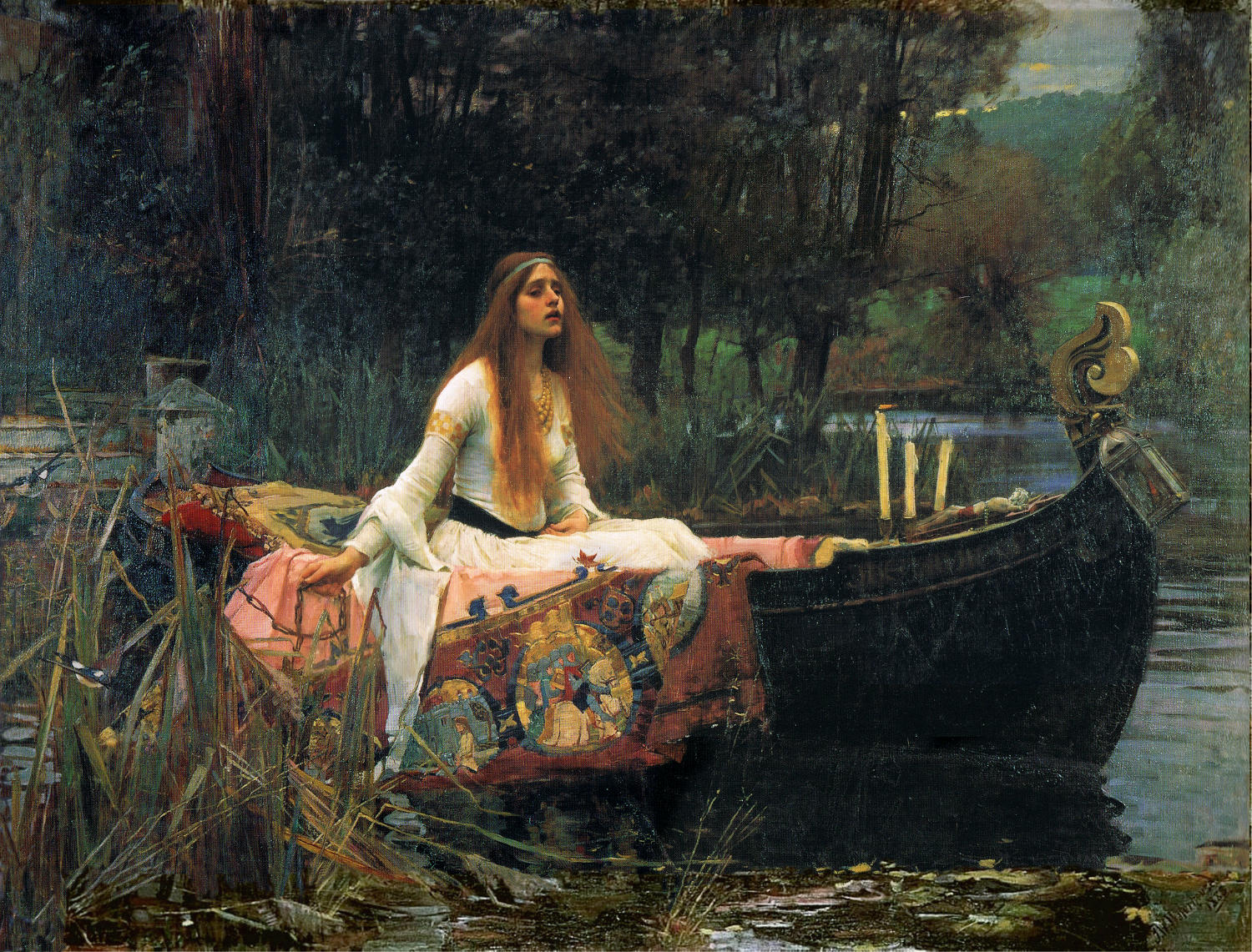
The Cikada Quartet draws a curtain with The Lady of Shalott (1993), which allows us to feel water and glass as if they were the same. Yet the cut of its passage is less like the boat in the famous John William Waterhouse painting…

Waterhouse Lady of Shalott

…and more like the threads in William Holman Hunt’s rendering, spilling from their loom with all the profusion of Christmas yet clipped by cerebral destruction. These are the paths we have taken, and they lead us all to where we began.

WHH Lady of Shalott

And on that note, these pieces, if only by virtue of their programming, exist as part of a phosphorescent whole. They arch their backs along the edge of a crescent moon, feeding off the oscillation of the night. By the humble touch of a fingertip to string and bone, their effect births as much as it dissolves. Though the foliage may change, the branches pulse in synapses of life. There is destiny in these leaves and it quivers with every verdant breath. In this music, sun and moon can touch each other without the slightest hint of destruction, for in that contact they acknowledge having been spun from the same breath.

<< Misha Alperin w/John Surman: First Impression (ECM 1664)
>> Keith Jarrett Trio: Tokyo ’96 (ECM 1666
)