Amina Alaoui review in RootsWorld

The folks over at RootsWorld online magazine have just published a review by yours truly of Amina Alaoui’s fabulous new ECM release, Arco Iris. Truly one of the finest albums from the label in years. Don’t pass this one up.

For the review, click here. And while you’re there, you can check out my older review of Kuára among RootsWorld’s enviable assortment of world musics.

Bringing Down the House: Tia Fuller and Her Angelic Warriors

Tia Fuller Quartet
Bailey Hall, Cornell University
September 14, 2012
8:00 pm

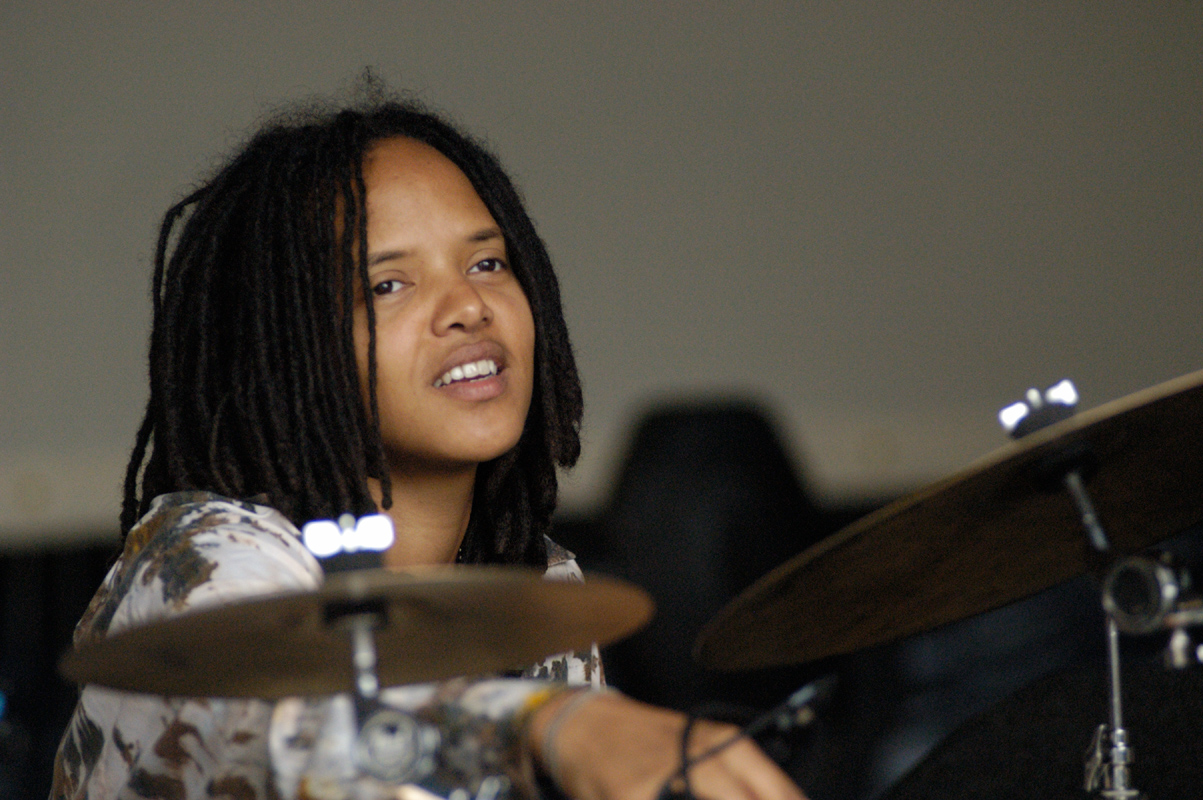
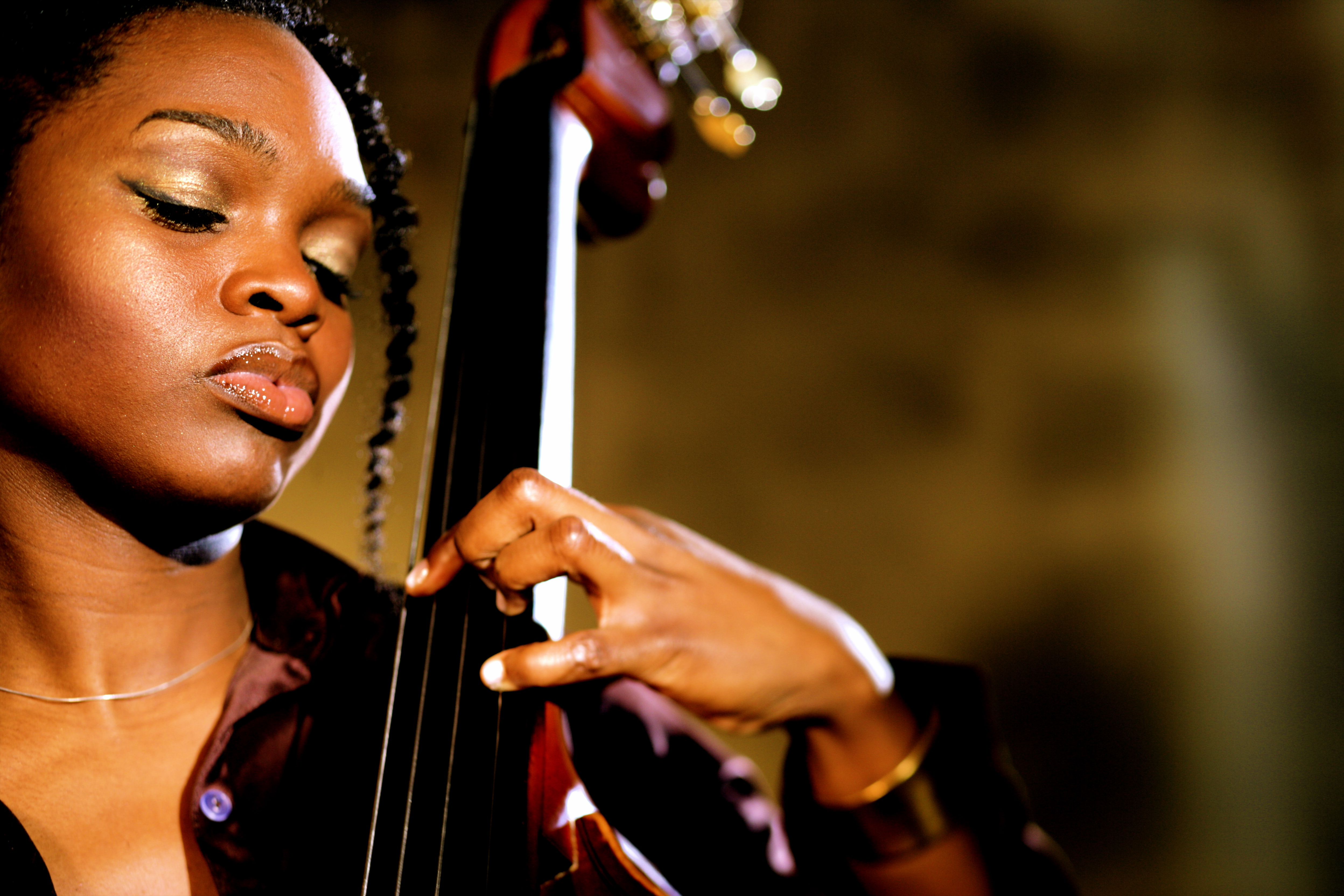
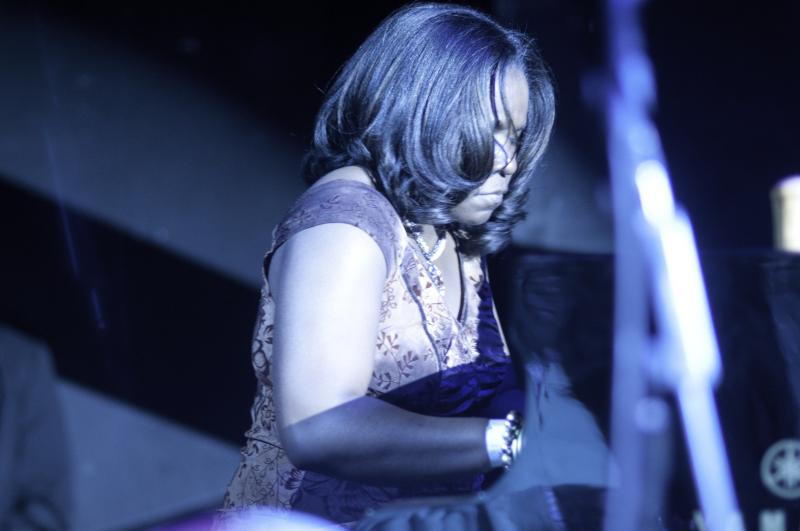
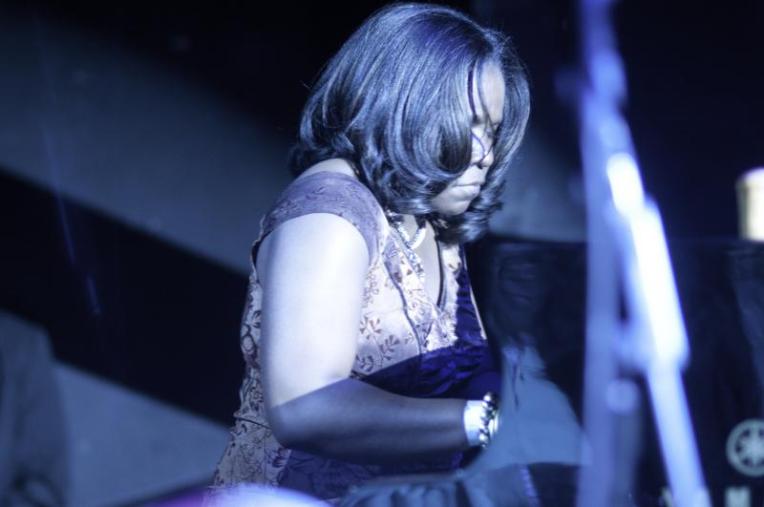
Tia Fuller brings it all to the table. As a composer, bandleader, teacher, and touring member of Beyoncé’s all-female band, the Colorado-born saxophonist wears many hats. Drawing on her experiences growing up in a musical household, Fuller shared the stage for the first time in a revamped quartet with sister/pianist Shamie Royston, bassist Mimi Jones, and drummer Terri Lyne Carrington. Feel free to take a walk down the gender road if you like, but you’ll have to do it alone. I’d rather step off that beaten way and just listen, for in the swelter of the moment their bodies were catalysts for a spontaneity blind to such things. Music is to biology as apples are to oranges, and for this kickoff to the Cornell Concert Series 2012-13 season Fuller and company wore it like a smile: that is to say, beamingly.

Our leader took to the stage with soprano slung forward, following its inertia into the deep end of “Angelic Warrior,” the title cut off her new joint (due out September 25 on Mack Avenue). Sporting a pair of high heels with enough sparkle to make Dorothy jealous, she and her robust tone cut through the grime of a tiring week with the power of Dawn. This prime groove found Royston flying, while Jones rocked the house like a cradle on fire over comparably blazing timekeeping from Carrington. The latter proved to be a shining star of the set. A protégé of Jack DeJohnette and legend in her own right, her style was palpable, organic, and rich with color. She was her own 5-hour ENERGY, finding all the room she needed to bring her solos to bear across every tune (a rarity in some jazz settings, which only swing the spotlight a drummer’s way for the finale).
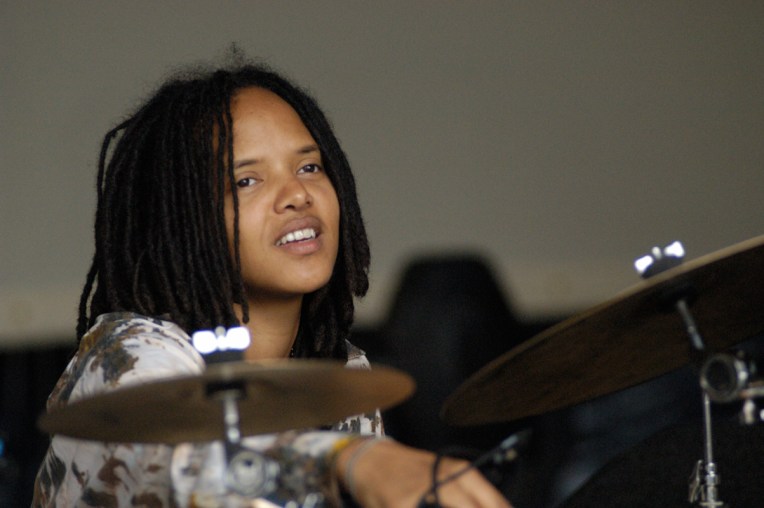
The same went for all in what amounted to a truly democratic sound. Ever the acrobat, Fuller switched over to her mainstay alto for “Descend To Barbados.” Here Royston’s pianism cascaded like the waters of its namesake, leaving Jones to wring out an ocean’s worth of intimacy, heavy as the sky at midnight.
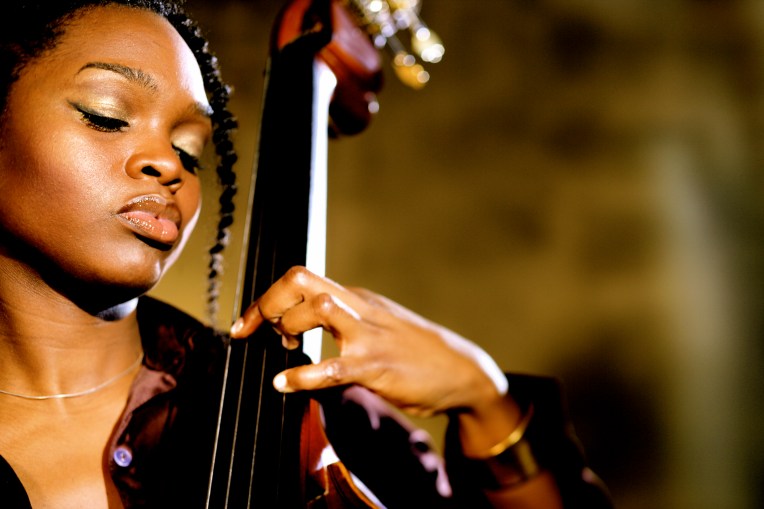
Waters of a different kind reflected Fuller’s selflessness in “Katrina’s Prayer,” drawing us into a prayerful mood before “Ebb and Flow” brought on a catharsis in funk. If Jones’s syncopations were life in all its obstacles, then Royston (here tripping the keys electric) and Fuller showed us perseverance in spite of. Combining the polish of a studio session with the raw immediacy of the most in-your-face venues, the band rolled on through a smattering of mid-tempo tunes to “Royston Rumble,” a clear winner that culminated in some enthralling crosstalk between reed and sticks.
Instrumentalists, we may concede, are storytellers whose challenge is to draw connections between themselves and listeners in the absence of words. Yet these four formidable fashionistas had plenty of words to share in their celebration of honor, of life, and of the divine in all of us. It was also a celebration of family, a point brought home as Tia welcomed father Fred Fuller to the stage. The bassist brought a fluid sound to bear on his “Watergate Blues,” putting a timely cap on an evening brimming with rhythm and soul. There was not one pretentious star to be found in its galaxy, but only endearing music making, straight from their hearts to ours. The old with the new, the light with the shadow, the meek with the strong: these the angelic warrior embodies to the fullest, recognizing that creation is never one-sided. It was a message to carry forth as we wandered back into the world, leaving not just on a high note, but also on high.

(See this article in its original form at the Cornell Daily Sun.)

Ralph Towner: Lost And Found (ECM 1563)

Ralph Towner
Lost And Found

Ralph Towner classical and 12-string guitars
Denney Goodhew sopranino, soprano, and baritone saxophones, bass clarinet
Marc Johnson double-bass
Jon Christensen drums
Recorded May 1995 at Rainbow Studio, Oslo
Engineer: Jan Erik Kongshaug
Produced by Manfred Eicher

2001 was a difficult year. Aside from the tragic political tightrope we all were walking, I’d just come out of a relationship for which I’d uprooted myself, was now living in a place where I knew no one, and had taken to spending much of my time making friends online. One of these—an artist and socialite from Bali—and I became especially close through a shared love of music. At the time, the dividing cell culture that was my CD collection boasted about 1000 albums (400 of which were ECM), hers twice as much. One day I casually mentioned to her that I was listening to Ralph Towner’s Lost And Found. There was a pause in our chat window before she admitted that she’d been listening to the very same. Since then Lost And Found has lodged itself in my memory through the sheer (im)probability of this coincidence.

The music is equally rich with coincidence, drawing intersections between Towner’s classical and 12-string guitars, Marc Johnson’s upright, Jon Christensen’s palette of the drum, and the many reeds of Denney Goodhew in a surprise appearance—his first (and last) for the label since 1981’s First Avenue. Compositional credits are fairly well spread over fifteen dreamy tracks, with Towner taking half. The rounded insistence of “Harbinger,” for one, is a welcome introduction to his unique solo language, while the full quartet sound of “Élan Vital” pulls its simple carriage through a chain of emotional way stations. “Scrimshaw,” for another, describes his art in another word, for like its namesake it is a quiet and etching pursuit. Towner blows this dust into “Midnight Blue…Red Shift,” among an eclectic dash of Goodhew tunes that also includes his jaunty “Flying Cows” (insight into the cover’s land-bound pig, perhaps?). Johnson’s contributions are some of the session’s deepest. Whether it’s the shimmering refractions of “Col Legno” or the homeless groove of “Sco Cone,” his bare presence speaks to Towner’s all-inclusiveness. In the end, though, the guitarist’s waters run purest, flowing through descriptive scenes like “Tattler” on the way to “Taxi’s Waiting,” thereby ending the set with everyone accounted for.

An album to take on the road, for it is a road in and of itself—one that bridges gaps of solitude and, to this soul at least, whispers a small hope that we might all still be connected in this fallen age.

<< Gateway: Homecoming (ECM 1562)
>> Robin Schulkowsky/NPM: Hastening Westward (ECM 1564 NS)

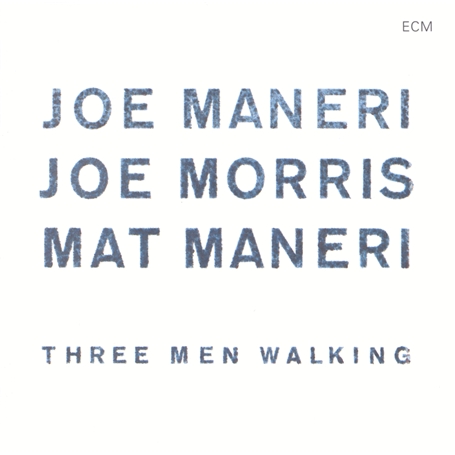
Maneri/Morris/Maneri: Three Men Walking (ECM 1597)

Joe Maneri
Three Men Walking

Joe Maneri clarinet, alto and tenor saxophone, piano
Joe Morris electric guitar
Mat Maneri electric 6 string violin
Recorded October/November 1995, Hardstudios, Winterthur
Engineer: Martin Pearson
Produced by Steve Lake

Joe Maneri (1927-2009) was something of an overnight success story. A musician of eclectic training, charting waters as varied as Dixieland and Second Viennese School dodecaphony, he consolidated years of life experience and sensitive listening into his development of a formidable microtonal system that divides the octave 72 times over. Another portion of that life experience forged a powerful working relationship with son Mat Maneri, who on this first ECM outing joins his father and guitarist Joe Morris for a uniquely delectable set of free improvisation that pushed father Maneri into the spotlight. The result is a sound that doesn’t so much read as embody between the lines, unfolding swooning tones we’ve all but forgotten in the throes of tempered convention.

The strangely feathered and flightless “Calling” inaugurates a chain of fourteen vignettes, each more beguiling than the last. Yet this blissful confusion is exactly what we crave, for once we open ourselves to it we see there is a vast internal logic at work in every twitch of embouchure, bow, and pick. Each is a bridge to the other, so that by the end we are left with an Escherian conundrum—only here the illusion is real. Maneri the elder may be the central voice, but he speaks even when he sits out for a spell. Maneri the younger emotes in drips and drabs, yet with such potency that quality reigns over quantity. The dark combinations he engenders in “What’s New” make of us still fixtures on the wall of an abandoned workshop, scraping rusty tools and unfinished projects as if they were alive and new. Morris, too, bends to the will of the moment, most notably in “Deep Paths.” The session’s longest take, this nine-minute excursion unearths geodes of pointillism toward a fluttering conclusion.

Three Men Walking wouldn’t be complete without a pinch of solos for good measure. The prickly cactus of Morris’s in “If Not Now” further lures us into his art, churning and squirming alongside the worms it has just disturbed. In the melting portrait of “Through A Glass Darkly” we explore the electric violin’s deeper coves, while “Diuturnal” writhes through a morphing alto in a state I can only describe as inevitability. To make the package even fuller, the late Maneri dedicates a razor-thin piano solo to Josef Schmid, one of Alban Berg’s first students and an influential teacher of the sage at the keys.

As if the above weren’t enough, this intimate date is suitably recorded and engineered in an enclosed space. We can therefore thank Steve Lake not only for revealing this pliant jewel through his production, but also for showing us that resonance is where the heart is. These are musicians who tell you what they’ve seen, how they’ve seen it, as they’ve seen it. All too often I submit to the convenience of the word “conversational” to describe the effect of great improvising, yet in the wake of such free jazz integrity as this there is something far greater still at work. Whatever that something is, it slumbers like the heat in our mitochondria. This is music that writes itself, living at the edge of sacrifice.

<< Misha Alperin: North Story (ECM 1596)
>> György Kurtág: Musik für Streichinstrumente (ECM 1598 NS)

Misha Alperin: North Story (ECM 1596)

Misha Alperin
North Story

Misha Alperin piano
Arkady Shilkloper French horn, flugelhorn
Tore Brunborg tenor saxophone
Terje Gewelt double-bass
Jon Christensen drums
Recorded September 1995 at Rainbow Studio, Oslo
Engineer: Jan Erik Kongshaug
Produced by Manfred Eicher

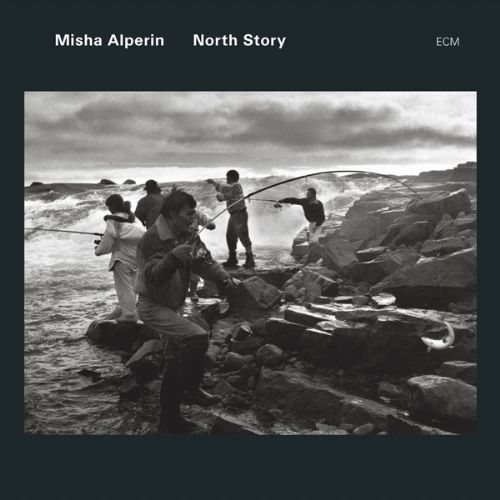
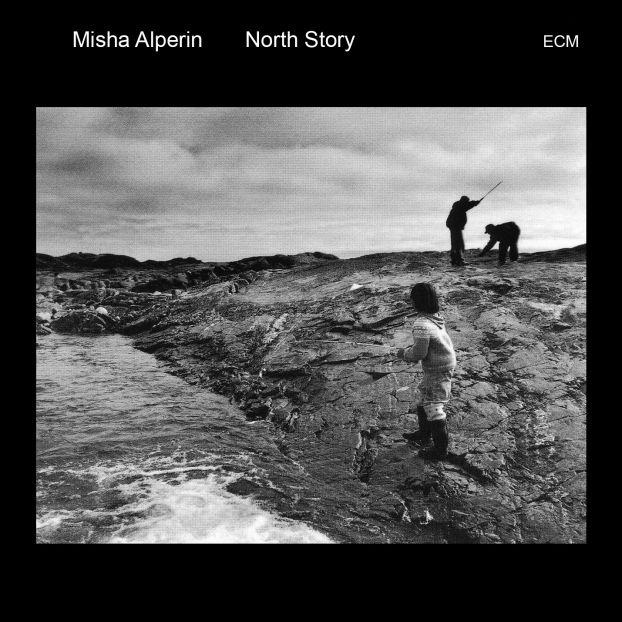
Simultaneously drawing on his folk roots and paying homage to European jazz music’s openness to cross-cultural dialogue, Ukraine-born pianist and composer Misha Alperin gives us North Story, his paean to the selfsame region where fermented the vivid contributions already so well documented on ECM. Classically trained brass player Arkady Shilkloper, who became acquainted after hearing snatches of Alperin at practice from an open apartment window, joins the group on French horn and flugelhorn. Saxophonist Tore Brunborg, bassist Terje Gewelt, and drummer Jon Christensen round out the quintet. And what a quintet it is, for it is quite clear that this set of eight originals positively glistens under the breath, feet, and fingers of master craftsmen. That being said, the rewards require patience and an invested heart. Alperin’s painterly ways move as if in slow motion, taking in details and finding even more within them. Everything in the light of “Morning” takes shape by contrast, so that what may seem at first sluggish blossoms in hindsight of Alperin’s delicate fortitude. Shilkloper follows similarly delicate arcs in the two-part “Psalm” and “Ironical Evening,” each a prize of organic denouement so fine that it passes through fishermen’s nets unnoticed. The title track gives us a deeper version of the same, Christensen building his tracings into full-blown sketches as Brunborg’s erases in swaths of negative space. “Alone” finds Alperin just so in a lulling piano solo, providing reprieve from fitful slumber on the way to “Etude,” a lovely duet with Shilkloper that sounds like a lost track from Wave Of Sorrow. Its skittering lines and virtuosic doubling concretize the storytelling. This leaves only an arrangement of “Kristi Blodsdråper (Fucsia)” by Norwegian composer Harald Sæverud (1897-1992). It is a fitting epilogue to an album of ever-growing detail, which like the whole becomes a mirror as we back away from it, sounds blending into an all-encompassing hush of existence.


Alternate cover

<< Franz Schubert: Trio in Es-Dur/Notturno (ECM 1595 NS)
>> Maneri/Morris/Maneri: Three Men Walking (ECM 1597)

Ketil Bjørnstad & David Darling: The River (ECM 1593)

The River

Ketil Bjørnstad piano
David Darling cello
Recorded June 1996 at Rainbow Studio, Oslo
Engineer: Jan Erik Kongshaug
Produced by Manfred Eicher

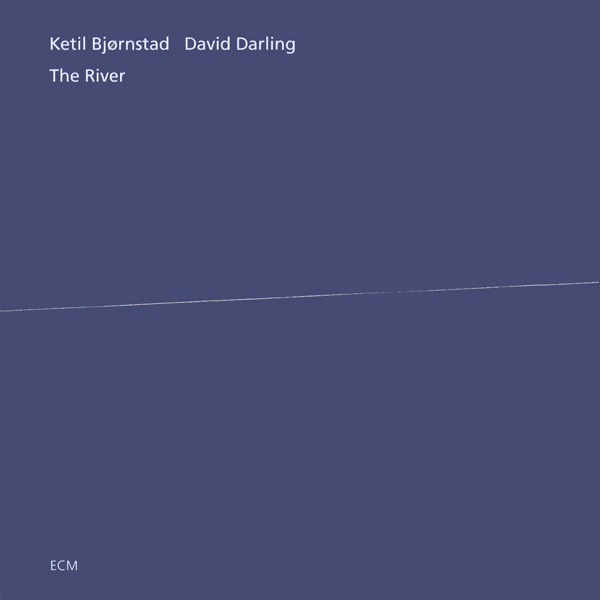
If ever there was a seed beating like a shaded heart in The Sea, it was the twined musical filaments of Ketil Bjørnstad and David Darling. The Norwegian pianist and American cellist spoke on that session like siblings, at points giving us a foretaste of the droning flavors we encounter at the edge of The River. The size and scope of the water have changed in name only, for here is the former’s other half, spreading its finger paint across twelve parallel sections. If we note anything different this time around, it’s that the horizon feels so close that we could just close our eyes and reach out and there would be the sun.

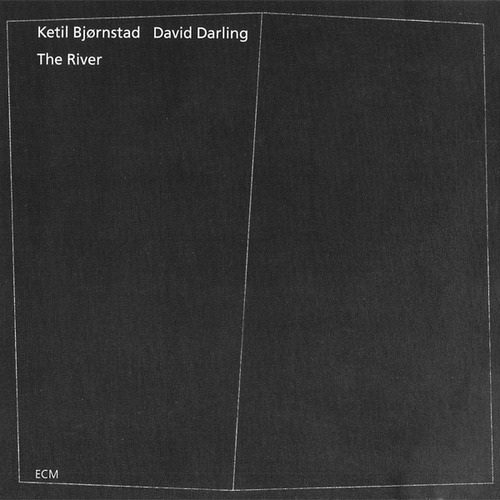
Bjørnstad’s love of aquatic themes stretches an ideal surface tension across which Darling may unfurl his sails. The delicate ostinato of one becomes the leviathan drone of the other, drawing threads through opaque expanse (just as Swiss-born artist Mayo Bucher has placed a white edge through this and select other ECM cover paintings). As cello keens and trembles through a pianistic hall of mirrors, it ladles shadow from the wells of solitude in which we all take shape before birth and to which we also return, lowered in buckets of light. So is The River as much about earth as it is about water, impossible to separate from the glitter of mineral deposits that marks its flow. Darling may paint the air as a salmon through the current, but he is also keenly aware of the sediment kicked up by his journey, of the molecular oneness that binds. Lost to the gazes of two figures crouched at the banks, lowering offering memories to an open fan of moonlight, he swims on.

These are pieces of subtle virtuosity, timbre, and emotional integrity, utterly devoid of self-interest. Their flowering symmetry is a living palindrome of surrender that shuns the pleasures of its philosophies in favor of feeling for its own sake. Though overwhelming at times, there is never a possibility of drowning when water is your air. In this reverie there can be no reveries, for the world is already a dream.


Alternate cover

<< Arvo Pärt: Litany (ECM 1592 NS)
>> Peter Erskine Trio: As It Is (ECM 1594)

Louis Sclavis Sextet: Les Violences de Rameau (ECM 1588)

Louis Sclavis Sextet
Les Violences de Rameau

Louis Sclavis clarinet, bass clarinet, soprano saxophone
Yves Robert trombone
Dominique Pifarély acoustic and electric violins
François Raulin piano, keyboards
Bruno Chevillon double-bass
Francis Lassus drums
Recorded September 1995 and January 1996 at Studios La Buissonne, Pernes-les-Fontaines
Engineer: Gérard de Haro
Assisted by Roger Amoros
Produced by the Louis Sclavis Sextet

The result of a 1994 French Ministry of Culture commission, Les Violences de Rameau is Louis Sclavis’s incisive study of its eponymous French galantist, drawing mostly from the operas Les Boréades, Les Indes Galantes, and Dardanus. The assembled sextet spins a web of textures, due in no small part to Sclavis mainstays Dominique Pifarély (violin) and Bruno Chevillon (bass). Trombonist Yves Robert, last heard on Heiner Goebbels’s Ou bien le débarquement désastreux, also joins the fray, adding a pliant undercurrent to the jagged oratories of the aforementioned. It is Pifarély who throws us into the swing of things, contorting his instrument with gymnastic variations in “le diable et son train,” a harrumphing romp of glee and fortitude that puts flaming tongue in cheek in anticipation of the jester’s soprano in “de ce trait enchanté.” The exhilarating bass work and gypsy violin twists make this one the joy that it is. “«venez punir son injustice»” is a dance at court and acts as a frame tale for the rhythm section’s unbridled enthusiasms, though one can hardly ignore Sclavis’s enchanting clarinet and the cosmic circular breathing that speaks through it. A few spins of the wheel, by turns lethargic and blasting, land us in the electric violin’s flailing purview as “réponses à Gavotte” whirls with the eclecticism of a John Zorn collaboration. The glittering murmurs thereafter incapacitate us with secrets, each a sketch bolder than the last, only to get lost in a “post-mésotonique” world. This sonic equivalent of a half-developed photograph stumbles into some of the band’s most evocative conjurations and ends in paroxysm, psychedelic and granular.

The dear listener can ignore the title. The only violence to be found in this treatment walks a sarcastic path, alone and laughing to itself. A blast and a half!

<< Michelle Makarski: Caoine (ECM 1587 NS)
>> Meredith Monk: Volcano Songs (ECM 1589 NS)

Egberto Gismonti: Meeting Point (ECM 1586)

Egberto Gismonti
Meeting Point

Egberto Gismonti piano
Gintaras Rinkevicius conductor
Lithuanian State Symphony Orchestra
Recorded June 1995, Vilnius
Engineer: Markus Heiland
Produced by Manfred Eicher

If any title could sum up the ECM aesthetic in two words, it is Meeting Point. This disc features the Lithuanian State Symphony Orchestra, under the direction of Gintaras Rinkevicius, playing the music of Egberto Gismonti, who also acts as soloist. Having studied under Jean Barraqué and Nadia Boulanger in Paris, the multitalented Brazilian musician and composer puts his conservatory training into effect on this program of seven pieces. Of these, the diptych “Strawa no Sertão” is the shortest, making for a rollicking introduction that bustles like a market square, threading between fruit stands and children’s laughter. The nocturnal dances of “Música para Cordas” provide much-needed contrast to its surroundings, setting up a lively arrangement of “Frevo” (first heard on Sanfona). Gismonti now appears at the keyboard, adding urgency to this orchestral milieu. Interjections from horns burst onto the page like punctuation marks, while the flutes draw erasable underlines. The piano’s function as percussion instrument is further emphasized in the romping “A Pedrinha Cai.” It runs through that same market with stall prize clutched in hand, ending with that first sweet bite. Yet the most personal voice emerges in “Eterna,” for which a romantic solo violin blows like a summer breeze and breaks the orchestra down into the intimacy of a string quartet. Thus prepared for the roiling sea of a re-imagined “Música de Sobrevivencia,” we puzzle our way through brine and wisps of cloud, each blind to the other except through Gismonti’s overwhelming desire to communicate.

Though I wouldn’t recommend Meeting Point as your first Gismonti experience, one should never bypass the lungs on the way to the heart, for here is a breath of ineluctable brilliance, teaching, and careful thought.

<< Jan Garbarek: Visible World (ECM 1585)
>> Michelle Makarski: Caoine (ECM 1587 NS)

Jan Garbarek: Visible World (ECM 1585)

Jan Garbarek
Visible World

Jan Garbarek soprano & tenor saxophone, keyboards, percussion
Rainer Brüninghaus piano, synthesizer
Eberhard Weber bass
Marilyn Mazur percussion, drums
Manu Katché drums
Trilok Gurtu tabla
Mari Boine vocals
Recorded June 1995 at Rainbow Studio, Oslo
Engineer: Jan Erik Kongshaug
Produced by Manfred Eicher

As one who started out with ECM’s New Series and only years later began branching out into ECM proper, how can I ever forget my first parent label experience: Visible World. Having heard Jan Garbarek only on Officium, I was curious to see what the saxophonist had to offer and was lucky enough to spot this disc in a used CD bin. The cover photograph pulled me in…yet how much more so when I pressed PLAY and let the waterwheel flow of “Red Wind” wash over me. Here was an artist, I now knew, who felt the deserts in the rains and vice versa, one who turned every lilting ornament into a ritual gesture. From the quiet strength of his themes and non-invasive synthesizer touches to the feathered synergy of his band mates, songs like “The Creek” gifted experiences from another life. And songs is exactly what these are, for in their precious adlibbing form crystals of hope, catching the drum-shocked catharsis of “The Survivor” on bassist Eberhard Weber’s thrumming comet tails like sunbeams in a prism. While Garbarek’s tribalism may ring a touch ingenuous to some folks, the maps of his travels come cased in loving care, so that no creases ever turn into tears. Take, for instance, the vivid skin Garbarek stretches over the skeleton of “The Healing Smoke.” By turns robust and willowy, it never backs down from its convictions, lays them bare for our scrutiny, if not also for the blindness of our souls. Pianist Rainer Brüninghaus makes a welcome return to the Garbarek fold, bringing his trademark touch to journeys over three “Desolate Mountains” and the moving portrait of one “Giulietta,” even as percussionists Marilyn Mazur and Manu Katché lay runes along the way. The cinematic bliss of the two-part title track, one scuro to the other’s chiaro, reminds us that much of the music featured on Visible World was written for video or film. Other moving pictures include a gorgeous, I daresay funky, rendition of “Pygmy Lullaby” (which I, like many I’m sure, first encountered through Deep Forest’s classic unearthing) and “The Arrow,” an evocative landscape of melodic steles and natural wonder. Yet all of this is just the smoke to the fire of “Evening Land.” Said saga of sound and sentiment blows like the exhalations of feature vocalist Mari Boine, who pulls up the calls leading up to this point on threads spun from Garbarek’s crescent-moon commentary, culminating in a seesawing of chords around which tumble the children of tomorrow.

This is the quintessential Garbarek album, the perfect synthesis of everything he and producer Manfred Eicher ever set out to achieve together from the start. Being the sculptors that they are, both artists saw the finished form in the slab, leaving us with a masterpiece we would never have known without their intervention.

<< Pierre Favre: Window Steps (ECM 1584)
>> Egberto Gismonti: Meeting Point (ECM 1586)