Keith Jarrett: Nude Ants (ECM 1171/72)

ECM 1171_72

Keith Jarrett
Nude Ants

Keith Jarrett piano, timbales, percussion
Jan Garbarek saxophones
Palle Danielsson bass
Jon Christensen drums, percussion
Recorded May 1979 at the Village Vanguard, New York
Engineer: Tom McKenney
Produced by Manfred Eicher

Something about Keith Jarrett’s very presence seems to draw out from even the most highly regarded musicians unexpected levels of performance, commitment, and above all faith in the musical moment. Nude Ants, easily one of his most uplifting live dates (this time at the Village Vanguard) on record and the pinnacle of his quartet activities, exemplifies this to the nth degree.

In its European incarnation, Jarrett’s menagerie of yesteryear opens its gates quietly and smoothly with “Chant Of The Soil.” Jarrett digs in alongside one of the most engaging rhythm sections one could ask for (Palle Danielsson and Jon Christensen). The liveness of the performance comes across early in “Innocence.” Amid clinking glasses and the even more cacophonous spirits of appreciation of those drinking from them, an enthralling intro from keys tosses Jan Garbarek’s exposition like a salad of bright energies. The moonlit “Processional” burrows beyond the trappings of a ballad and into a cavernous subconscious. Jarrett’s singing teases out a vivid pedal point as he punches chords like ecstasy’s time clock before floating off in reverie.

The second half of this heavy loaf slices much like the first: in slabs of wing-beats and half-words. Garbarek shines in “Oasis,” his reed shawm-like and opaque, as he wrenches out some of his most ecstatic high notes on record. Out of this measured catharsis Jarrett waters his colors in a solo tour de force. After the upbeat “New Dance,” the drawl that begins “Sunshine Song” is hardly enough to keep the band from pulling back a slingshot of dynamism and hurtling its contents skyward. Mounting intensities from Christensen underscore a fluttering resolution. And yet, as with everything in this set, it is tempered by an intense feeling of perpetuity that renders every potential end into a pathway of renewal.

In spite—if not because—of the idiosyncratic strengths of its performers, this is ensemble jazz at its freshest. Jarrett’s vocal leaps are nearly as adventurous as his fingers, proving once again that such passion cannot be contained in a vessel so modest as the human lung. Garbarek lets loose in ways seldom heard outside of Sart, while Danielsson and Christensen are so good together that I would be nearly as content listening to just the two of them for the entire set. Everyone here is aflame. Together, they light the world.

An indispensable classic.

<< Haden/Garbarek/Gismonti: Folk Songs (ECM 1170)
>> Ralph Towner: Solo Concert (ECM 1173)

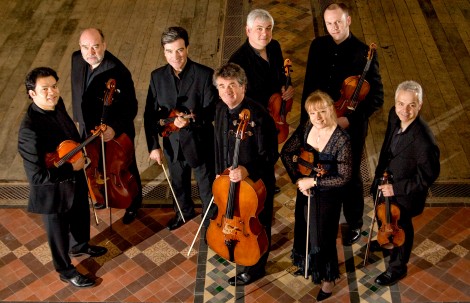
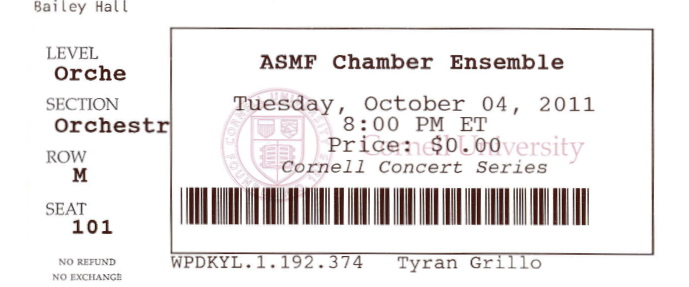
Lying in the Fields: An Evening with the ASMF Chamber Ensemble


Bailey Hall, Cornell University
October 4, 2011
8:00 pm

Since being founded in 1959 by Sir Neville Marriner, the Academy of St Martin in the Fields has flourished as one of the most renowned and most recognized orchestras in the world. The ASMF’s heritage traces back to its namesake church in London’s Trafalgar Square, where this conductorless collective was figuratively and literally instrumental in England’s renewed interest in Baroque music in the 1960s. Some 500 recordings later, the ASMF has now named violinist Joshua Bell as its new artistic director, thereby promising a fresh generation of adventurous programming and collaboration. On Tuesday night, Bailey Hall was presented with the ASMF in distilled form. Comprised of the orchestra’s principal players, the ASMF Chamber Ensemble continues to bring the legacy of its parent group to a broader international audience.

The results were a mixed bag of soaring catharses and unintended incidentals. These reputable musicians might have picked any number (or manner) of pieces for their performance. As it was, they played things relatively safely: two selections from the 19th century and one from the 20th made for an atmosphere that swung from quixotic to piquant at the draw of a bow. By fault of logistics, the program’s first half was flip-flopped at the last minute, thereby placing the Prelude and Scherzo of Shostakovich at the start, effectively bypassing the romanticism in which the rest of the concert would be steeped in favor of the neoclassical equivalent of a double espresso. While gorgeous in its own right—at the time of its composition (1925), Shostakovich declared the Scherzo the best thing he’d written—and filled with haunting moments, this diptych set an unsettling tone that I couldn’t quite shake.

Of the three composers represented, Brahms proved to be the most porous. His music breathes like a sponge. And yet, my heart still racing from the Shostakovich, I found difficulty in letting it soak up as much of my attention as I would have liked. Inked between 1864 and 1865, the String Sextet No. 2 is a farewell to a fiancée, Agathe von Siebold, from whom the composer had split. Traces from this emotional snap reverberate throughout the piece, which in its first movement obsessively spells Agathe’s name in hexachord. The addition of a second cello to the standard quintet seems to have opened Brahms’s sound to the symphonic possibilities of despondency, most especially in the Scherzo, which was the highlight of the performance. The Scherzo was so deeply realized, in fact, that I only found myself wondering why the rest of the piece seemed to waver on the surface of my interest. Thankfully, we had violist Robert Smissen, by far the brightest star of the evening, evoking a tremulous heartbeat, all the while underscoring the composer’s mid-range affinities and cutting some of the first violin’s incongruous glare.

Mendelssohn’s beloved Octet for Strings promised a costume change after the refreshing intermission. Composed in 1825 at the tender age of 16, it remains one of his most performed works and has been called “one of the miracles of nineteenth-century music.” That the ASMF has recorded this piece more than anyone showed in the delicacy with which the ensemble approached the dizzying Scherzo. And yet, like a Beethoven conductor who suspects that most in attendance are holding out for the Ode to Joy, the ensemble seemed to traverse the opening two movements as a courtesy toward getting there. The rousing finish did garner a standing ovation, however, so perhaps I was in the minority in feeling underwhelmed.

After thanking the audience and the many young faces populating it, Smissen lead the ensemble in a soulful rendition of Gershwin’s “Summertime,” which sounded like the Kronos Quartet, on a quiet day, in duplicate. I only wish such vibrancy had been on full display throughout.

Cold Suns and Warm Moons: The Music of Yelena Eckemoff

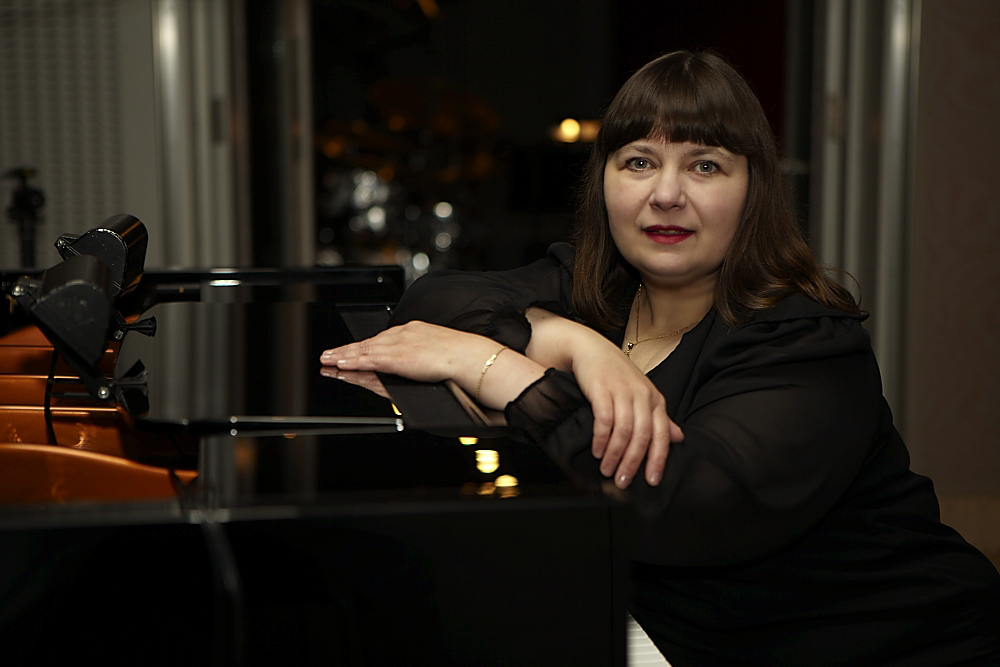
“Scenic” is the word that comes foremost to my mind when basking in the music of Yelena Eckemoff. Not only in the sense of being rural and picturesque, but also in the filmic sense, as if each album were a scene from an evolving motion picture. Snapshots of memory, flickers of time, and points of reflection: these are the nourishments on which Eckemoff’s sonic activities thrive. The Moscow-born, U.S.-based musician, composer, artist, and teacher brings her experiences of (re)location to bear upon each new project, and draws upon a deep spiritual awareness to give weight to the painterly melodies therein. Simultaneously, her music has an uncanny ability to manifest itself through feelings in lieu of images, conjuring instead a state of listening rather than a type of listening. With this in mind, I have set out to evoke four recent albums—of which Eckemoff has composed and produced every moment—and braid these reflections with an interview in which she was gracious enough to participate via e-mail. In the interest of starting our discussion, I begin with a rudimentary question…

Tyran Grillo: What role does music play in your life?

Yelena Eckemoff: Music has been a vital part of my whole existence since the first day of my life, as I was a daughter of a wonderful pianist—my dear mother Olga. My head has always been filled with music, and I started to play by ear and make up little tunes at the age of four, and then years of extensive professional training with some of the best teachers in the world, followed by decades of personal growth and never-ending evolution as a musician. I’ve been living and breathing music…this is pretty much all I care about, not counting of course my family.


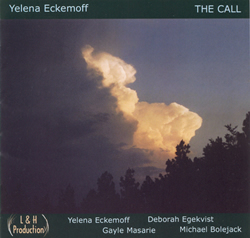
The Call
(2006)

The genesis of this album came with the unexpected passing of Eckemoff’s dog, Daisy, in October of 2004. The titular call was first a heartfelt reaction to this loss, sprung naturally from the realization that Daisy would never again answer it. Yet through the improvisations that emerged in the coming year, lovingly transcribed and rendered in the company of a few committed musicians, Eckemoff found another calling, knowing that the absence left behind by a loved one can always be filled with creation. This recording followed an exclusive period of solo work, and the addition of Gayle Masarie on cello, Deborah Egekvist on flutes, and Michael Bolejack on drums represents an embrace of togetherness that the mourning process had perhaps previously obscured.

TG: Now that five years separates you from The Call, can you reflect further on its title and on the period of loss that nurtured its coming into being?

YE: The Call was my first CD that I recorded with live musicians. Before that I was doing solo piano recitals and working with the synthesizer and sequencer, while raising my children and trying to make it with my husband in our new country. But in the end of 2005 I felt “the call” to go back to interacting with live musicians and found several local ones with whom I started my own band. I was so excited and encouraged with the new perspectives that my creativity peaked, and I composed a lot of new music for my new ensemble.

After the piano’s light opening touch, the grand thematic statement that soon takes shape is its own call, one that speaks to each listener in different ways. To these ears, it is a prompt to act upon one’s desires for fulfillment, an urging toward spiritual purpose, a shift beyond the blindness of temptation. The piece ends in a sprinkle of raindrops, resting at the edge of darkness.

TG: The combination of instruments is delightful, the flute adding an obvious touch of breath to the sonic palette. One hears this especially in “Daisy,” which so beautifully conveys your beloved pet. What made you decide to introduce a flute into the mix? 

YE: In the past I’ve written a lot of music for various instruments, and I have always been motivated by the prospect of my music being performed, so I gladly wrote for any instrumentalists who I had available at the moment. When I work with a certain musician, I try to adjust my music to his or her performing style to achieve the best musical outcome.

Whimsy abounds in The Call. In everything from the titles to the arrangements, there is revelry to be experienced in both the playing and listening; that in the simple gift of music-making, one can gift not only melody, but also memories. Much of this comes through in shorter pieces like “Strolling Towards Sunset,” “Sushi Dinner” (a tongue-in-cheek ode to the atmospherics of ingestion), and “Questions.” These tracks are a light jazz blend, contrasting vividly with the somber “Ripples on Water,” and are a testament to Yelena’s eclectic fluency.

Others like “Sunny Day in the Woods” (in which the flute glistens against the circular motions of the piano),  “Suspicions” (which includes a lovely cello solo against a Satie-like lattice), and “Garden in May” (one of the album’s finest) leave us in little doubt as to their associations. In this sense they are quite photographic.

TG: Do you approach your music and images in a particularly scenic way, or do you perhaps approach the images through the music?

YE: Any strong impressions and especially feelings result in music being born inside me. I never try to come up with melodies—they just flow out of me constantly…often even at night. In the morning I write them down and sort them later…or forget about them.

Like the symphony of windy hands that rake the “Ocean of Pine,” the album moves in circuitous progressions. From the cinematic (“Temptation”) to the wistful (“Windy Day in the Countryside”), we are treated to a feast of time and possibilities. And as the title of “My Cozy Bed” implies, Eckemoff is interested in the simpler pleasures in life, uncluttered by unnecessary intellectual trappings and bound instead to a direct moral compass. This track also gets up to some jazzier business, anchored by heavy double stops in the cello. Masarie stands out again in “Full Moon,” a revolving door of pizzicato and sustained notes. Eckemoff and company save the best for last with “Imaginary Lake,” capping off an 18-track album that is sure to please many with its variety.

TG: In the liner notes for The Call, drummer Michael Bolejack lists his favorite musicians: Peter Erskine, Jack DeJohnette, Paul Motian, Bobo Stenson, John Taylor, and Keith Jarrett. These peak my interest, of course, for having recorded extensively for ECM. How, if at all, has the music of ECM influenced your own work? Does it comprise any portion of your listening life?

YE: I am ashamed to admit that I did not even know about the very existence of ECM until Michael Bolejack introduced me to the label and its production in the course of 2006. I was happy to realize that there are other musicians out there whose approach to modern music is somewhat similar to mine, and it gave me this feeling of unity with other musicians, which I was happy about.
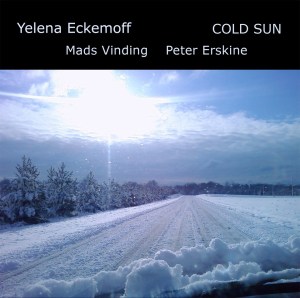

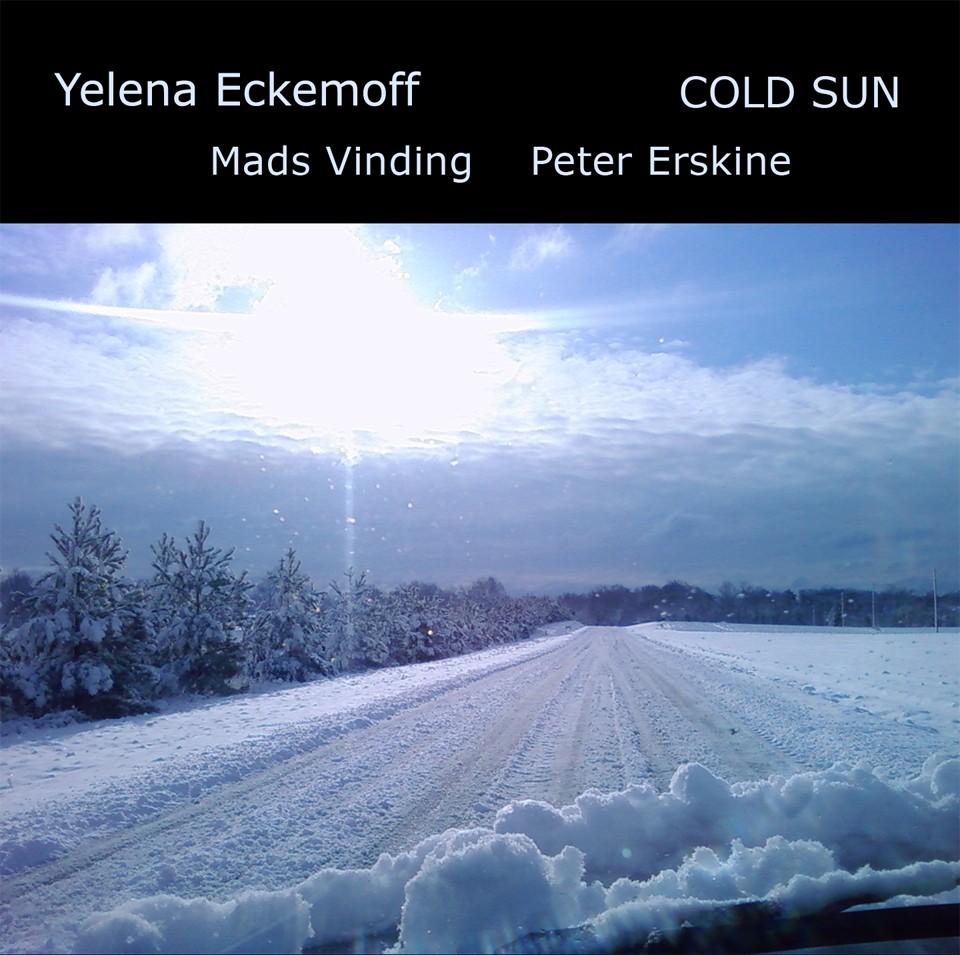
Cold Sun
(2009)

This album represents the most fruitful shift in Eckemoff’s career by joining her with bassist Mads Vinding and drummer Peter Erskine. Her relationship with the latter is particularly striking and achieves a clearly discernible balance of distance and intimacy throughout. Erskine’s profoundly subtle craft—sharing peerage with Jon Christensen especially in the use of cymbals—ever so delicately paints in those gaps that the piano leaves untouched in its abyss. His gestures swirl like snowdrifts, each the afterthought of something internally more dramatic. These wintry nuances crystallize in sonic postcards such as “Scents of Christmas,” “Romance by the Fireplace,” and “Freezing Point.”

TG: Cold Sun comes across to me as a distinctly airy album. Its feet touch the ground only occasionally, as in the gnarled groove of “Stubborn,” making for a, dare I say, mysterious experience. Did this album develop any differently than the rest?

YE: There was The Call as a starter. Then my group gained a double-bassist and an oboe/saxophone player, and we rehearsed actively as a band, played gigs, and performed many new compositions that actually did not get incorporated into any of the CDs yet. Then there was Advocate of Love (2008)—a mostly trio album, reflecting a somewhat jazzier feel. The Cold Sun material was formed out of my 4-year experience working actively with my ensemble. The material of this winter album required a more improvisatory approach. And I reached out to the musicians who I thought would work best for that project.

Other tracks are more abstract and prompt us into deeper listening. “Silence,” for example, is not a literal description but more an evocation of state and mind. Like fingers running through hair, Eckemoff’s notes comb the ether. “White Magic” is a subdued evocation, which blends effectively into the touching dissonances of “Snow Bliss.” Yet it is in the throes of “Winter” that we at last encounter the synthesis of the album’s many threads. Brimming with glorious leaps and bounds, as well as more subterranean reflections, it brings us delicate closure to a moody and free-flowing album that is sure to please fans of Tord Gustavsen and Marcin Wasilewski.

TG: The piano trio is clearly a comfortable format for you. What is it about the combination that appeals to you and how does it enliven your expressivity?

YE: I suspect the piano trio will always be my favorite format, because I am a skilled pianist and the piano has always been a dominating expressive source for me. However, I do like the variety of the sounds, and I get many ideas that call for different sets of instruments (that I hope to see through in the future). But the intimacy and perfect balance of timbres in the trio is the most comfortable setup that surely has my first love.


Grass Catching the Wind
(2010)

As the unnamed sequel to Cold Sun, Grass Catching the Wind picks up where the former left off with “Anticipation of Spring.” Its shaded bass solo, courtesy of Vinding, sets the tone for the album’s crepuscular seepage. Nocturnal gestures unfurl in “Night of the Fireflies & Crickets” and the masterful “Neverland,” while “Summer Heat,” “Harvest,” and “Sonnet for the Flowers” flap like laundry hanging in an afternoon breeze, intermittently revealing the vast countryside behind.

TG: You seem to be overflowing with musical ideas. What is your creative wellspring? What inspires you?

YE: Musical ideas and melodies constantly bubble up and accumulate inside me. Making music for me is the way to live and to cope with my life’s ups and downs. If I can’t express myself in music, I virtually suffocate. I hear music everywhere, especially in nature, but my feelings and emotions are still the greatest source of my inspiration and stimulant for my creativity.

We also find ourselves in the more upbeat stylings of drummer Morten Lund in “Somebody Likes Jogging,” “Rain Streams,” and “Emerald World,” the latter being the grooviest leg on this tour and the album’s crowning highlight. The distinctive bass line in the title track also pulls us forward in fluid motion, fanned along by card-deck riffles from snare. And where “Overcast” engages shadowy figures in a puppet show of opaque emotions, “Beautiful Destruction” actually bonds them with light. This is music unveiled to reveal a softly beating heart, where memory is the only present.

TG: I hear so many memories in your pieces, as if each were an autobiography in miniature, the reflection of a time and place long past but ever alive in your heart. How much of you resides in this music?

YE: My music is me, no question about it. If you listen to my music, you get to know me better than you would through talking or anything else. My soul is completely bare in what you hear! I never try to show off or please the listener. My only aspiration is to express my thoughts and feelings as accurately as only I can. I can’t resist this overwhelming desire—to pour out my soul in sounds and reach out to the people who would like to feel the same vibes.


Flying Steps
(2010)

Eckemoff’s latest trio album marks the return of Erskine into the fold, and with it the inaugural “Promise,” a languid journey through innocence into resignation and back again, with an isolated rest stop or two along the way. Darek Oleszkiewicz takes the helm at bass this time around, completing a trio of superb insight. His dexterity brings a gentle urge to the foreground and gilds Erskine’s already filigreed approach.

Here is an album that works particularly vividly in images. “A Smile” seems to paint itself one tooth at a time, opening the pathways of its own emotional distance, while “Good Morning” scintillates like sunlight on a kitchen table, glinting off coffee cups, illuminating a newspaper, shimmering outside the window—and all of it threaded by Erskine’s delicate rolls.

TG: You clearly share a deep musical connection with Erskine. You even dedicate the inviting title track of Flying Steps to him. How did that partnership come about and how do you feel it has changed the way you play, listen, and perform?

YE: As I mentioned before, I was searching for like-minded musicians who I thought would feel at ease with my music. Peter was on my mind for a long time, because as far as I could tell listening to his playing, I felt that we would likely have many things in common. This proved to be completely true when we met and played together—a complete mutual understanding! Of course, Peter is a genius, and surely all musicians would feel great having him on board. And I was flattered at how respectfully Peter treated my music, and it made me so happy that he really liked it and that he enjoyed working with me. Working with him was a fabulous and joyful experience. Everything comes easy and naturally to Peter, and making a record with him was a truly exciting journey.

“For Harry” is a dance of piano and cymbals, all threaded by Oleszkiewicz’s invisible stitching. A memorable color shift occurs when Erskine lays down rims over Eckemoff’s light-as-a-feather touch. “Isolated” seems to represent the album’s theme. There is something expository in its activity, finding profundity in the everyday.

TG: Following up on the question of memory, there is an unmistakable note of nostalgia in all of your music that is only intensified with each new listen. In what ways does the past influence the immediacy of your musical creation?

YE: Nostalgia…everybody feels it toward childhood, their younger years, lost friends and family members, beloved pets and places… In my case it got even more complicated by my immigration and living so far from my homeland… A lot of pain is hidden inside the souls of many people. And it only grows stronger when you age and experience new losses… But not only losses. I am also feeling nostalgic toward many happy memories and events. It is said that passionate love of all kinds is painful: how true!

“Isolated” also clues us in on the enigma of the album’s cover. Though isolated insofar as it is elevated above all social and civil signs, as such it is also connected to the vastness of the great beyond. In this liminal space one finds the aptitude of solitude.

“Where is Maxim?” forms a trilogy of sorts with “Tears Will Come” and “Insomnia,” for each evokes weighted emotions with equal lightness. For me, more overtly personal tracks like these reach deepest. Take, for example, “Mama,” which is a brilliant and sublime confluence of time, space, and technique that seems to constitute the very heart of what Eckemoff is capable of at her best. Oleszkiewicz shines again in “Steps,” especially in his captivating solo. We end with “Tomorrow,” a soft exercise in humility and the unpredictability of circumstance.

TG: Where do you see your music, and your life, going next?

YE: While new music keeps piling up, I have quite a few projects on hold, including a vast work with Old King James Biblical Psalms. At the moment I am getting ready to release a new CD, Forget-Me-Not, which I have just recorded with Marilyn Mazur and Mats Eilertsen this August in Copenhagen. And now I am truly looking forward to a couple of very exciting projects (in planning) for the next year: I cannot disclose the details yet, but it is shaping out to be the next important step in my musical journey.

To learn more about Yelena Eckemoff and purchase CDs, please visit her website.

Haden/Garbarek/Gismonti: Folk Songs (ECM 1170)

ECM 1170

Folk Songs

Charlie Haden bass
Jan Garbarek saxophones
Egberto Gismonti guitars, piano
Recorded November 1979 at Talent Studio, Oslo
Engineer: Jan Erik Kongshaug
Produced by Manfred Eicher

This scintillating follow-up album to Magico is yet another fine example of ECM’s progressive comings together. Uniting multi-instrumentalist Egberto Gismonti with the instantly recognizable stylings of saxophonist Jan Garbarek and bassist Charlie Haden seems at once a stroke of genius and an inevitable configuration. A blue “Folk Song” sets the tone for all tender considerations that follow, slowly working its motions into a helix of atmospheres. Gismonti stretches out a gorgeous drawl in “Bôdas De Prata.” Within the open bowl of Garbarek’s cupped tenor, he glows like a firefly. The rhythmic acuity of “Cego Aderaldo” is enough to sustain an otherwise languid album. There is something special about the 12-string/sax combination here that recalls the label’s Solstice days and pairs beautifully with “Veien,” which gives us the album’s most reactive moments. Gismonti’s perpetuity, Garbarek’s crystalline phrasings, and Haden’s heartening geometries unify, appropriately enough, in “Equilibrista.” This cradle of rolling piano and melodic overlays falls from its bough in a melodious tumble, landing on its feet for the final word, which comes in the form of “For Turiya,” another ballad-like seesaw of piano and bass resting on the fulcrum of Garbarek’s nocturnal whispers.

Each of these precious musicians has the ability to paint the grandest pictures with the subtlest gestures. This tension of method and effect is at the heart of ECM’s ethos. In such projects, one feels producer Manfred Eicher’s conversational presence and guiding hand, both of which can only illuminate the joys of creation and the sharing thereof.

<< Jan Garbarek/Kjell Johnsen: Aftenland (ECM 1169)
>> Keith Jarrett: Nude Ants (ECM 1171/72)

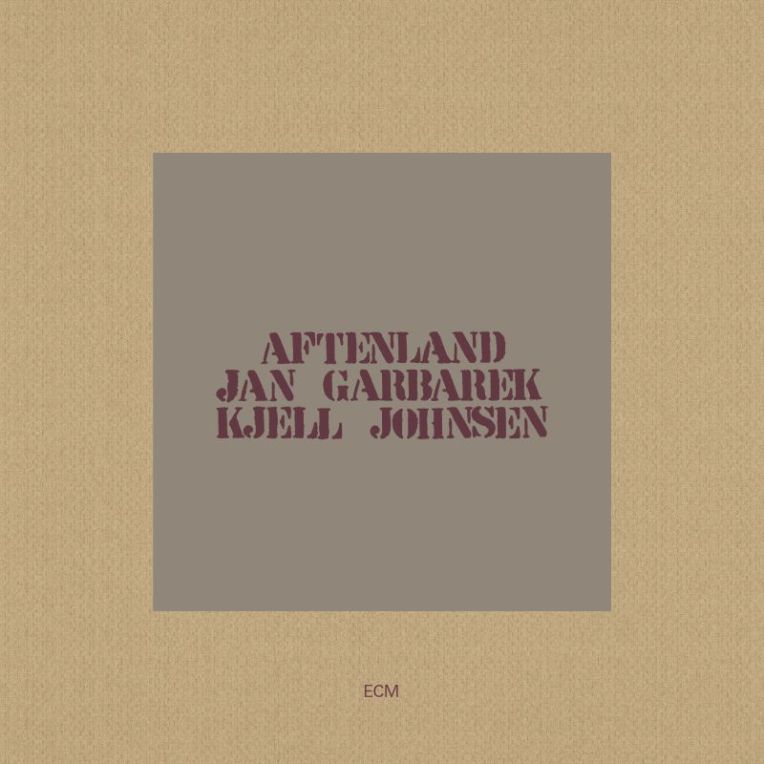
Jan Garbarek & Kjell Johnsen: Aftenland (ECM 1169)

ECM 1169 2

Aftenland

Jan Garbarek tenor and soprano saxophones, wood flute
Kjell Johnsen pipe organ
Recorded December 1979 at Engelbrektskyrkan, Stockholm
Engineer: Jan Erik Kongshaug
Produced by Manfred Eicher

If improvisation is a form of meditation, then meditation is also a form of improvisation. In being at peace with what one plays, one lives it.

Jan Garbarek is, of course, one of ECM’s longest standing composers and saxophonists, yet he is first and foremost a spectacular improviser who often manages to reach farther than (I imagine) even his own expectations in touching new melodic concepts. Paired with the Spheres-like church organ of Kjell Johnsen, he plumbs the depths of spiritual and physical awareness in a way that few of his albums have since. Here more than anywhere else, he shapes reverberation into its own spiritualism, exploring every curve of his surrounding architecture, every carved piece of wood and masonry.

The title track opens with a viscous solemnity, ever in shadow, while “Syn” reaps even more intense crops from the ethereal harvest it has sown. A trio of miniatures clustered around the session’s center reaches even more intimately into its heartbeat. “Kilden” seems to drip from the chapel ceiling like a weeping fresco. Garbarek unveils the rare recorders for a more playful exchange in “Spill.” “Iskirken” grips the heart with its piercing keen, dividing cloud and rain with the light of grief that shines like no other in times of greatest darkness. Lastly, the hurdy-gurdy drone of “Tegn” strings a delicate safety net for Garbarek’s robust defenestration.

This album predates his later Officium project by fourteen years, but is in parts just as effective in its vaulted evocations of hidden chants and invisible voices. At times, it also reminds me of the Licht/Haino/Hamilton/MLW one-off, Gerry Miles, only with less turbulent folds.

This is a pensive album, an unsung classic in the Garbarek oeuvre, filled with more than enough revelations to lodge a place in your musical heart.

<< Reich: Octet / Music for a Large Ensemble / Violin Phase (ECM 1168 NS)
>> Haden/Garbarek/Gismonti: Folk Songs (ECM 1170)

Art Ensemble of Chicago: Full Force (ECM 1167)

Art Ensemble of Chicago
Full Force

Lester Bowie trumpet
Joseph Jarman reeds, flute, gongs
Roscoe Mitchell reeds, percussion
Malachi Favors Maghostus bass, percussion, melodica, vocal
Famoudou Don Moye sun percussion
Recorded January 1980 at Columbia Recording Studios, New York
Engineer: David Baker
Produced by Manfred Eicher

Full Force begins in cool breath and ends in scalding heat, the inhalation and exhalation of its own mission. As one comes to expect from any AEC outing, tonal colors are on a mission to envelop us. Despite what the title would have you believe, this is an album of staggering subtlety and finesse. That being said, it is also an intense experience. The first such intimations appear early in “Magg Zelma,” which amid a delectable gamut of percussive signatures begins like an iteration of John Zorn’s Cobra—duck calls share the air with gongs, brass, and mysterious whistles—before the muddy bass of Malachi Favors is cross-hatched more regularly by cymbals and winds. Rhythmatist Don Moye keeps us in the loop as our reedmen crack a freedom egg. Big band horns carry us along through tight harmonies in “Care Free,” which lasts all of 51 seconds, prelude to the Mingus tribute “Charlie M.” Here, the mood and melody recall “A Sentimental Journey,” if through raunchier diction. An unhinged bass solo and some swanky sax from Roscoe Mitchell underline its narrative flow. “Old Time Southside Street Dance” christens itself with a bottle of fire. Laced with an incredible alto solo sustained by circular breathing and equally inexhaustible energy, this tune is perfectly programmed as the penultimate catharsis. A string of solos from trumpet, soprano, and bass skid into the finish line by the skin of their teeth.

These vagabond musicians prove their inventiveness at every turn, and nowhere more so than in via the Baroque chamber instruments woven into the prismatic title track. They hurtle forth with all the potential of a tornado compressed into a dot—a sweeping yet brief gesture, a calling out, a fluttering drum, a distorted voice, a bout of laughter, and a resolute twang running its fingernail around the edge of an enormous sonorous quarter.

Now occupying a well-earned place among ECM’s carefully chosen Touchstones series, this may just be the best entry point into the AEC’s fantastic ride.

<< Enrico Rava Quartet <<Ah>> (ECM 1166)
>> Reich: Octet / Music for a Large Ensemble / Violin Phase (ECM 1168 NS)

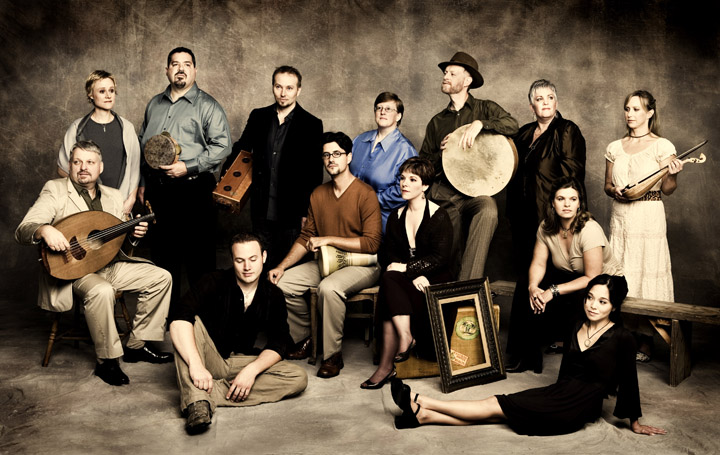
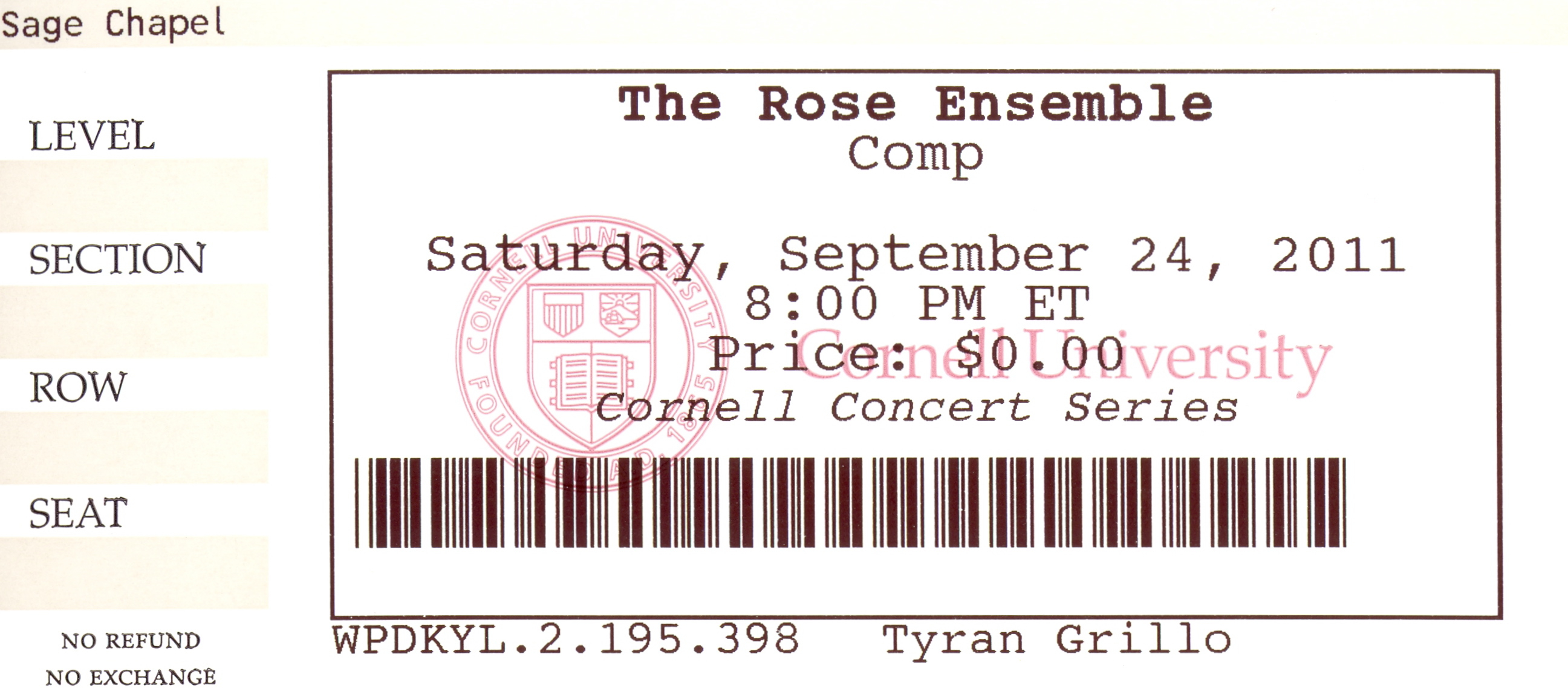
“For the fever of a song” – The Rose Ensemble Blossoms Before a Rapt Audience

(Ensemble photos by Michael Haug)

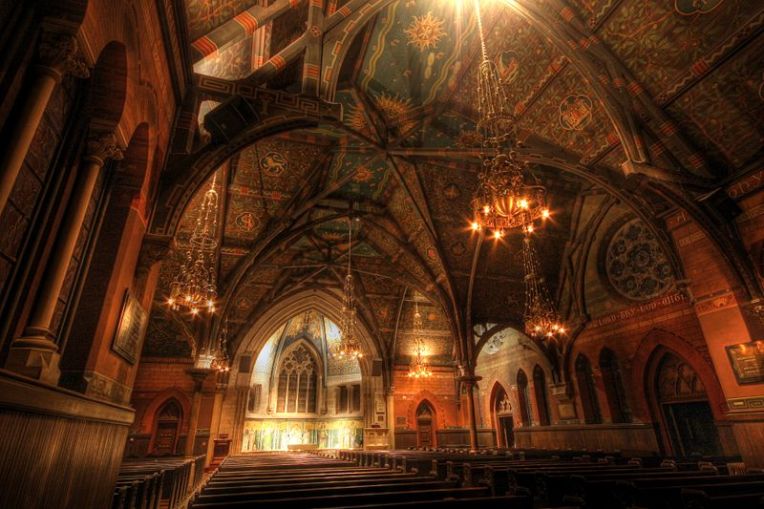
Sage Chapel, Cornell University
September 24, 2011
8:00 pm

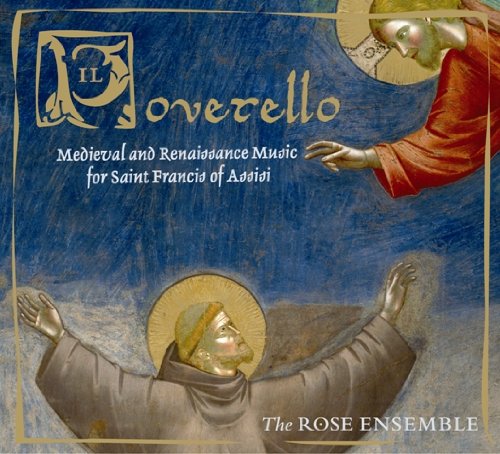
From its initial stirrings the human voice has sought to put the ineffable into words, to shape those words into melodies, and to pass those melodies on to posterity. Although the intrinsic value of this transmission has been irrevocably changed through the digitization of musical production, thankfully we still have groups like The Rose Ensemble willing to do things the old-fashioned way. And while of course their voices can also be found haunting the ever-refracting geographies of iTunes, in concert they plot an entirely different cartography, one that we wish to hold dear in that hermetic cave of memory where pores some nameless scribe who, by the candlelight of our awe, records that which moves us most. Now in its sixteenth year of activity, the Saint Paul, Minnesota-based collective of early music purveyors continues its mission of bringing vastly underrepresented repertoires from bygone eras to the ears of the living. To achieve this, members bring a wealth of scholarly legwork to every project. Over 1000 years and 25 languages infuse their nine recordings, the latest of which, Il Poverello, draws upon Italian Medieval and Renaissance sources in honor of Saint Francis of Assisi and which represents their performance at Cornell’s Sage Chapel on a still-humid Saturday night. If this opening concert was a sign of things to come, then the 2011-12 season promises to be an unforgettable one.

(Sage Chapel)

Before the concert even began, one couldn’t help but be impressed by the artfully crafted notes handed to us at the door. Numbering some 16 pages, they were exemplary in every respect and clearly manifested a steadfast dedication to craft, time, and care. Parallel texts, composer biographies, and a lovely essay that situated the program’s six-century purview in a vast web of miracles and politico-religious intrigue helped illuminate the life of a man so enigmatic that only through the ephemeral vagaries of music-making could such richness be revealed. In The Rose Ensemble’s meticulous tenure, Francis’s mysteries were distilled into a continuous circle of appreciation.

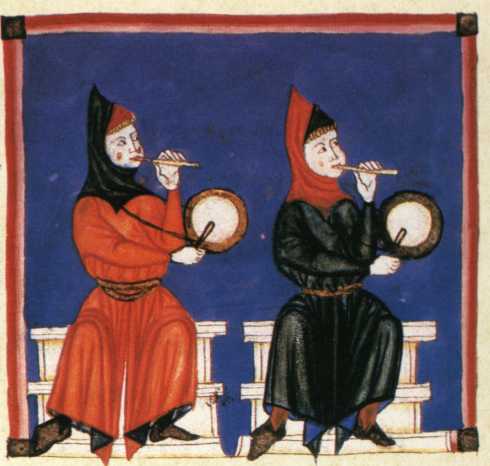
The music was as varied as its theme was unified. From enlivening dances and laude (non-liturgical spiritual songs) to no-less-stirring motets and plainchant, from composers well represented in early music circles (Johannes Ciconia) to those less familiar (Tomaso Graziani), this singular tribute was an unbroken string of hills and valleys. In addition to the seamless blend of voices, we were treated to a bevy of period instruments, including the paper-thin accents of the bowed vielle and rebec; the rounded edges of the recorder, shawm, double-flute; the shaded drones of bagpipes and hurdy-gurdy; and selected percussion, making for a collective sound that, not unlike the tongue of Francis himself, was “peaceable, fiery, and sharp.” These last brought an audible heartbeat to the instrumental interludes and inspired not a few feet to tap along on the chapel’s stone floor. Guest artist Isacco Colombo provided the evening’s most whimsical moments in Domenico da Piacenza’s 15th-century Ballo Anello, for which Colombo beat a tambor (slung drum) with his right hand while blowing a pipe (fife-like wind instrument with only three holes) in his left, looking like the one-man bands of yore.

(Pipe and taborers, as depicted in the 13th-century Cantigas de Santa Maria)

The narrative flow of the concert was further enhanced by readings at selected interstices. These ranged from firsthand accounts of Francis’s features and legendary stigmata to quieter theological reflections and even a recitation of Dante in Italian by Colombo evocative enough to elicit a smattering of applause upon its conclusion.

Among the tapestry of voices were many threads to tug at heart and mind, but in particular sopranos Kathy Lee and Kim Sueoka, whose filigreed loveliness soared above all in the motets’ more knotted passages and achieved a sonorous blend with the tenor lines and the notable anchorage of bass Mark Dietrich. Sueoka was especially arresting in her bird-like rendition of Radiante lumera, an anonymous 14th-century lauda that found her accompanied solely by Ginna Watson on harp. Yet the crowning jewel, if not the crown itself, of the concert was a sequential Stabat Mater sung in modal plainchant and also cradling the harp in its sonic breast. Its soul-piercing emotions leapt with the slow fire of Hildegard von Bingen at her most contemplative.

The blessing and the curse of early music is that we simply don’t know exactly how it sounded at the time of its creation. This sets before any aspiring interpreters the daunting task of reimagining atmospheres and places that exist for the most part on faded manuscripts and in forgotten alcoves. As a longtime listener, I have seen many such groups poke their head only briefly above the surface of obscurity, only to submerge back into it. Anyone who has heard The Rose Ensemble either live or on disc would surely flock to lift them from the waters should such an unlikely possibility ever present itself. Their deft blend of professionalism (there was not a single musical score in sight) and approachability (the musicians kindly offered demonstrations of their various instruments afterward) sets the bar beyond the reach of most. Not since the groundbreaking endeavors of Ensemble PAN or the Ferrara Ensemble have I been so profoundly affected.

(Jordan Sramek)

Ensemble founder Jordan Sramek couldn’t help but pay humble deference to the beauties and acoustics of Sage during his thanks to staff and audience before an exultant finish, but these paled in comparison to the invocations that animated them. In charting the paths that led to The Rose Ensemble’s name, Sramek has described elsewhere its fragrant namesake as, among other things, a mystical symbol denoting “a portal into celestial worlds.” Nothing could be closer to the truth.

(See this article in its original form at the Cornell Daily Sun.)

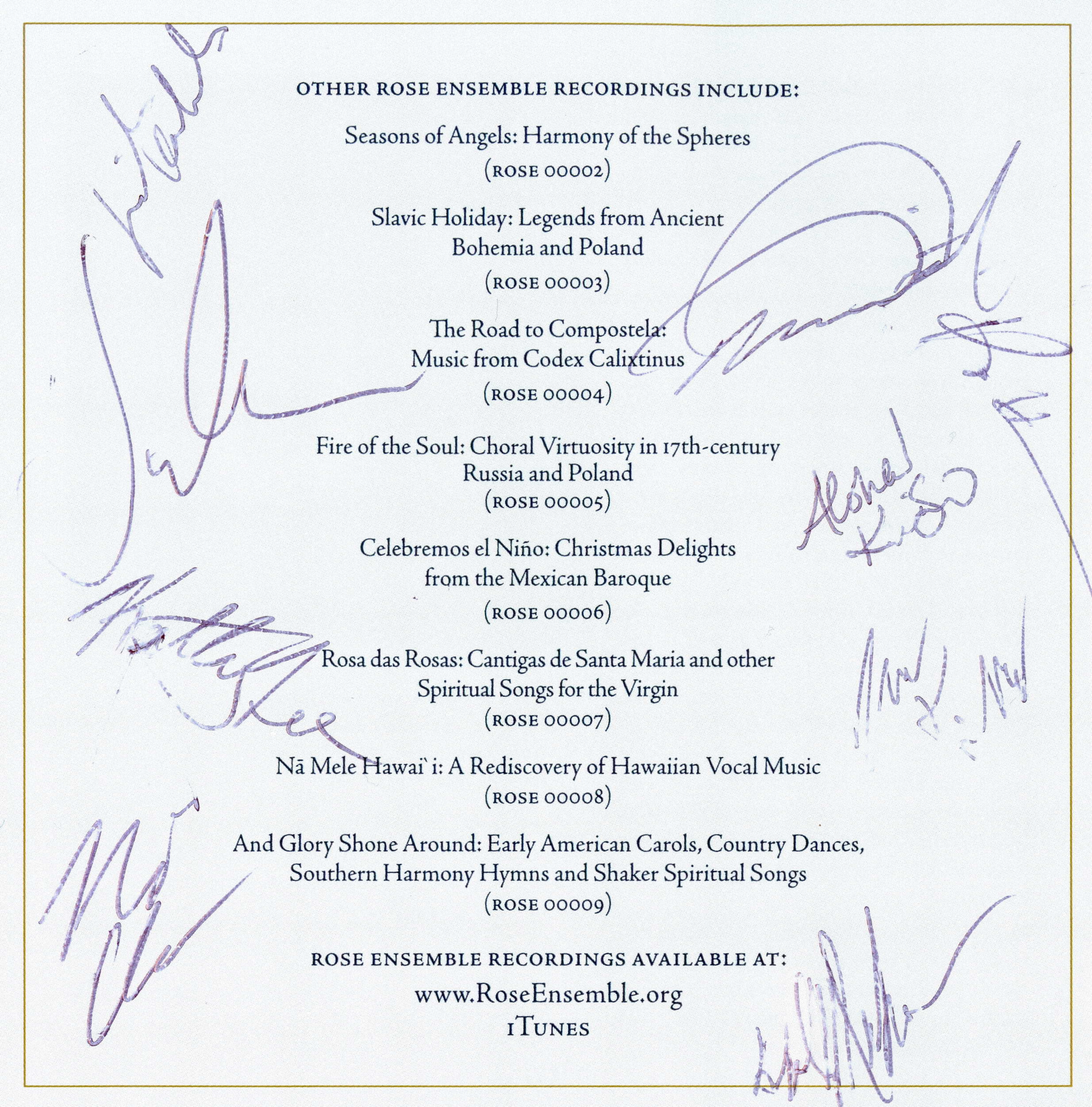
Signed CD Booklet

Turning Gold Into Life: A Live Report from Birdland

September 3, 2011
Birdland
8:30 pm

Gary Peacock bass
Marc Copland piano
Victor Lewis drums

Alchemy is defined as the process by which common substance is transmuted into something precious. This implies, however, that the base materials with which one starts are intrinsically of little or no value. On a humid Saturday night, enveloped in the singular space of New York City’s Birdland, a trio of uncompromising alchemists humbly turned this craft on its head, rendering the equivalent of sonic gold into something so immediate that we could sense only magic in what lies beneath our feet.

Although to the seasoned jazz enthusiast none in this trio configuration needed introduction, an introduction was exactly what this relative newcomer got the moment Copland laid his touch to the keyboard. Despite having played and recorded with a substantial handful of ECM greats over the years (including Ralph Towner, John Abercrombie, and Joe Lovano), his sounds had never before reached these ears. Lewis, of course, has intersected with Carla Bley’s unstoppable force on not a few occasions for Watt, but it wasn’t until I found myself in the closed quarters of tonight’s unforgettable set that his own alchemies became clear to me.

In any other company, Peacock might have seemed a tower among cabins, but with such graceful companions at his side his leaps of intuition were comfortably clothed. The trio’s loosely wound thread felt all the more consistent for having strung seven beads full circle. The lack of any announced set list showed that behind even the most burnished compositions there is only the lone heartbeat that animates them all, and it was in this circadian rhythm that we all shared. The aorta of that organ was Peacock’s bass, which thrummed, vast and sincere, in a phrase of welcoming. Like a bouquet of bronze-gilded morning glories, his notes unfolded and wilted at the slightest changes in light and air pressure. Copland’s unassuming presence and painterly asides added sheen to Lewis’s kit, as smooth as meringue. From the start, one could see just how much life experience Peacock compressed into every gesture.

The two tunes that followed were siphoned from the same font of wisdom, where Copland’s raw filigree and chromatic finger work sprouted wings and careered skyward. With a diving cymbal, we dripped into an even wider ocean. The cruise of Peacock’s bass emerged from the fog, morphing into a train as Lewis gained pace. Such were the seamless geographical transitions that made their interactions so special. With unpretentious sophistication, piano and bass laid out one carefully tied knot after another, each grafted by the occasional arresting snare hit.

The lone bass, dancing lithely between sky and earth, introduced a wintry mix of frozen truths and melting memories, all netted by unexpected classical flourishes from piano. Like Satie and Fauré walking hand-in-hand, these impressions found themselves conversing with an immeasurable peace. It was into this lull that we were all drawn before the darkness unleashed a dose of satori in a cathartic drum solo. Beginning at the periphery—rims, edges of cymbals, and the air around both—and working his way inward like a groundswell in reverse, Lewis mixed his ingredients with such precision that Peacock couldn’t help but smile. Copland, meanwhile, stood meditatively offstage, before both brought down a groove that, despite its light feet, left gravid remainders. With so much possibility before them, Copland’s defenestrations found all the kaleidoscopic thermals they needed to coast to solid ground.

For the penultimate number, as was true throughout, Peacock seemed to tell a story. Lewis, delicate as ever, caressed the drums with brushes or hands directly. Sliding easily from head-nodding goodness to somber turns, Copland swung from Peacock’s whimsical double-stops into his most inspired solo of the night.

Closing in the more familiar territory of Mile Davis’s “All Blues,” the set found narrative closure after rolling to the bottom of a most melodic flight of stairs. Lewis kicked the energy into the solar system with this one, and there we stayed.

As I write this I have the Peacock/Copland duo album Insight in the foreground. Seeming as accurate a distillation as any of the concoction brewed live (though I miss Lewis’s colorations), it reminds me that “insight” was indeed the operative word tonight. An insight aquatic, lush, and ecological; an insight circumscribed not by fences but by open doors; an insight as fleeting as its sharing, and all the more gorgeous for it.

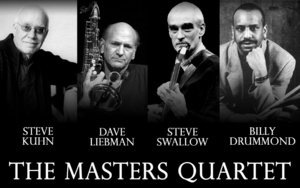
“Music We Order Our Lives To”: The Masters Quartet Live Report

August 20, 2011
Birdland
8:30 pm

Steve Kuhn piano
Dave Liebman saxes
Steve Swallow bass
Billy Drummond drums

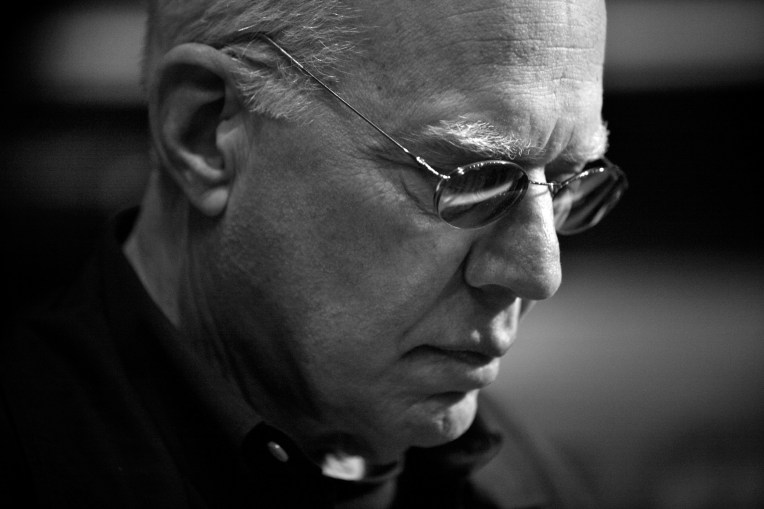
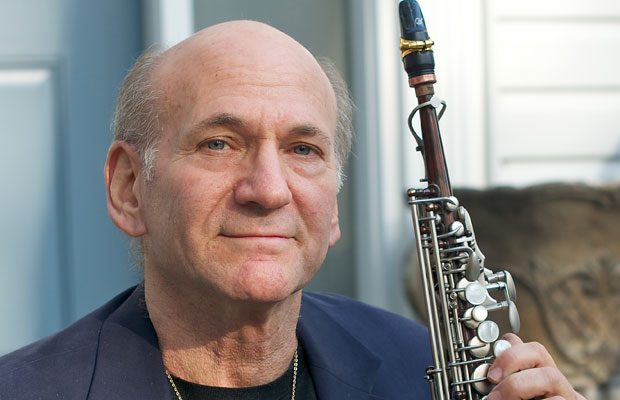
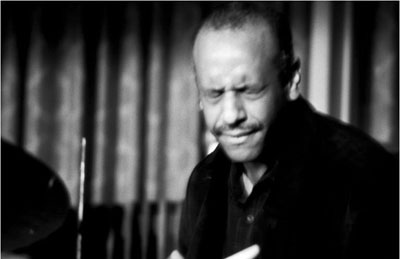
A brief dictionary perusal of the word master yields variations on a theme of dominance: one who uses, controls, even disposes of that which is mastered. It’s with this hierarchical vision of mastery in mind that I entered the hallowed doors of Birdland for a late-summer performance by The Masters Quartet. None could earn such a title, of course, without verifiable skills and the countless hours necessary to hone them. As longtime collaborators, Kuhn and Swallow are strangers to neither, having made their first recorded appearance alongside Liebman on the bassist’s 1979 debut, Home, with over a decade’s worth of friendship and gigging already between them. Listening with eyes closed, one could hardly guess that Carla Bley band regular Drummond is a relatively new addition to this veteran nexus. Their blend was so seamless that by the time I stepped out into the humid streets, dominance was farthest from my mind.

To be in the presence of all four was already an honor, but the venue made it exponentially more so. This being my first Birdland experience, I finally understood why Charlie Parker dubbed it “The Jazz Corner of the World.” From its candlelit murmur, non-invasive wait staff, and intermittent tick of silverware to its top-flight roster, carefully considered sightlines, and one-on-one feel, the setting was ambiance incarnate. Though nothing remains of Birdland’s original digs, one can glimpse those glory days in the monochrome gallery of talents that adorns its walls. All the more reason, then, to bask in the present, where four incomparable musicians filled our ears with concoctions both pungent and smooth—not unlike the French martini at my fingertips—as they took to the stage and eased us into the evening’s intensities with a pair of trios.

A lush opening surge as only Kuhn can elicit swept this heart away in the standard, “There is No Greater Love.” With a sigh and a smile, he made us feel part of the band, creating music simply by bearing witness to its spontaneous unfolding. Through peaks and valleys, Kuhn navigated every turn of Swallow’s unshakable bass lines and the cymbal-happy squint of an ecstatic Drummond. The latter’s locomotive rolls opened a lyrical path for Swallow before kicking up a bit of dust as he exchanged jabs with Kuhn. His increasingly frenzied snare, along with Swallow’s leapfrogging bass, wound us into a state of high expectations. Thus did these gentle beginnings feed a dancing conflagration which, rather than brazenly overstepping those expectations, passed lithely through them like ghosts.

A milky intro stirred us into the coffee-like consistency of “Dark Glasses” (S. Swallow), resolving itself into a galactic swirl. With organic care, the music loosed ribbons of bass amid Drummond’s delicate knocking. Kuhn’s Möbius strip of a solo titillated (as a tongue, it would have rolled every “r”) and brought us ever closer to the filmic imagery lurking therein. Like its titular accessory, this joint at once clarified and obfuscated, cutting out the glare while hiding choice secrets.

“All the Things That…” (D. Liebman) marked its composer’s entrance to the stage. Inspired by the standard “All the Things You Are,” this smooth excursion was a prime vehicle for that oh-so-sweet soprano. With the magic of a mirage shimmering into shape, it showed us a level of tonal acuity that one can only dream of producing. Drummond provided sympathetic response, matching each of Liebman’s calls with joyful paroxysms of his own. Such were the beauties that awaited us also in “Adagio” (S. Kuhn). Here, Liebman’s slide into resplendence fogged our view with a long exhalation. Meanwhile, Kuhn tumbled in careful somersaults, marking the swaying rhythm that caught this listener from the get-go. Swallow traced a wide embrace with an engaging solo turn that seemed to welcome us all into its arc.


(photo by Manuel Cristaldi)

We were then treated to an unfailing rendition of “Village Blues” by John Coltrane, a “mentor to us all” as Kuhn so respectfully noted before its trio intro buttered our bread like nobody’s business. This proved a solid launching pad for a dramatic color shift as Liebman’s tenor awoke from its slumber. It, too, spoke in wooden riddles and guttural dreams, but those gritty squeals layered on the sonic paint—Van Gogh to his soprano’s Monet—and added a new dimension to surrender. His blows were softened only somewhat by Kuhn’s detasseling pianism, diving instead into an epic exchange with Drummond.

For the standard, “My Funny Valentine” (the “romantic highlight” of the show, as Kuhn artfully quipped), we were back to the smoky grain of soprano. Here the pianist’s poetry shone at its brightest, dissolving into lute-like strains of bass, as if in watercolor.


(photo by Robert Lewis)

Liebman’s robust tenor then inscribed “A Likely Story” (S. Kuhn) onto the pages of our attention. Against a grounded bass line and deep piano digs, he was lively and on point. Kuhn held a steady clip across his tightropes, tethers to an inspiring synergy with Drummond, who dotted the sky with sparks as this log was cast onto the evening’s kindling. I couldn’t help but note how “keyed in” Liebman was as his fingers mimed on the sax during a sit-out before he dove back in for the final splash.


(photo courtesy of the Montréal Gazette)

Mastery revealed itself in many guises throughout the show, but chiefly by the adroit ways in which the group always held fast to the tightly wound spring that thrummed at the heart of every tune they played. Their thematic cohesion was due in no small part to Swallow, who electrified with his unparalleled anchorage and fluid anticipations. Kuhn, ever the picture of concentration, threaded each of his needles with mindful improvising, those unmistakable octave splits crying with such epic grace that captivation was our only option. With every run of his fingers he seemed to travel miles’ worth of emotional distance. Against such broad pointillism, Liebman’s richness came across as filamented, teetering on edge, and all the more visceral for it. He was every bit the vocal performer, untangling seemingly impossible knots in a fraction of the time it took to tie them. As for Drummond, he seemed to squeeze every last drop of soul from the most delicate gestures, treating each as a gig in and of itself. He positively stole the show in its final gasps.


(photo by Albert Brooks)

In short, the quartet put the “band” back in “abandon” and proved yet again what for me is the blessing of jazz, an art form that makes the immediate effects of improvisation feel as if they have been growing inside us all along.

Furthermore, I discovered that true mastery bleeds from art into one’s countenance, one’s approachability as a human being, one’s humility offstage. In other words, it is nothing without the light of graciousness that permeated each of these four men, their loved ones, and the fans in attendance. In the end, their performance might very well have been but a flash in New York City’s overcrowded pan, but their afterimages are safe with me.


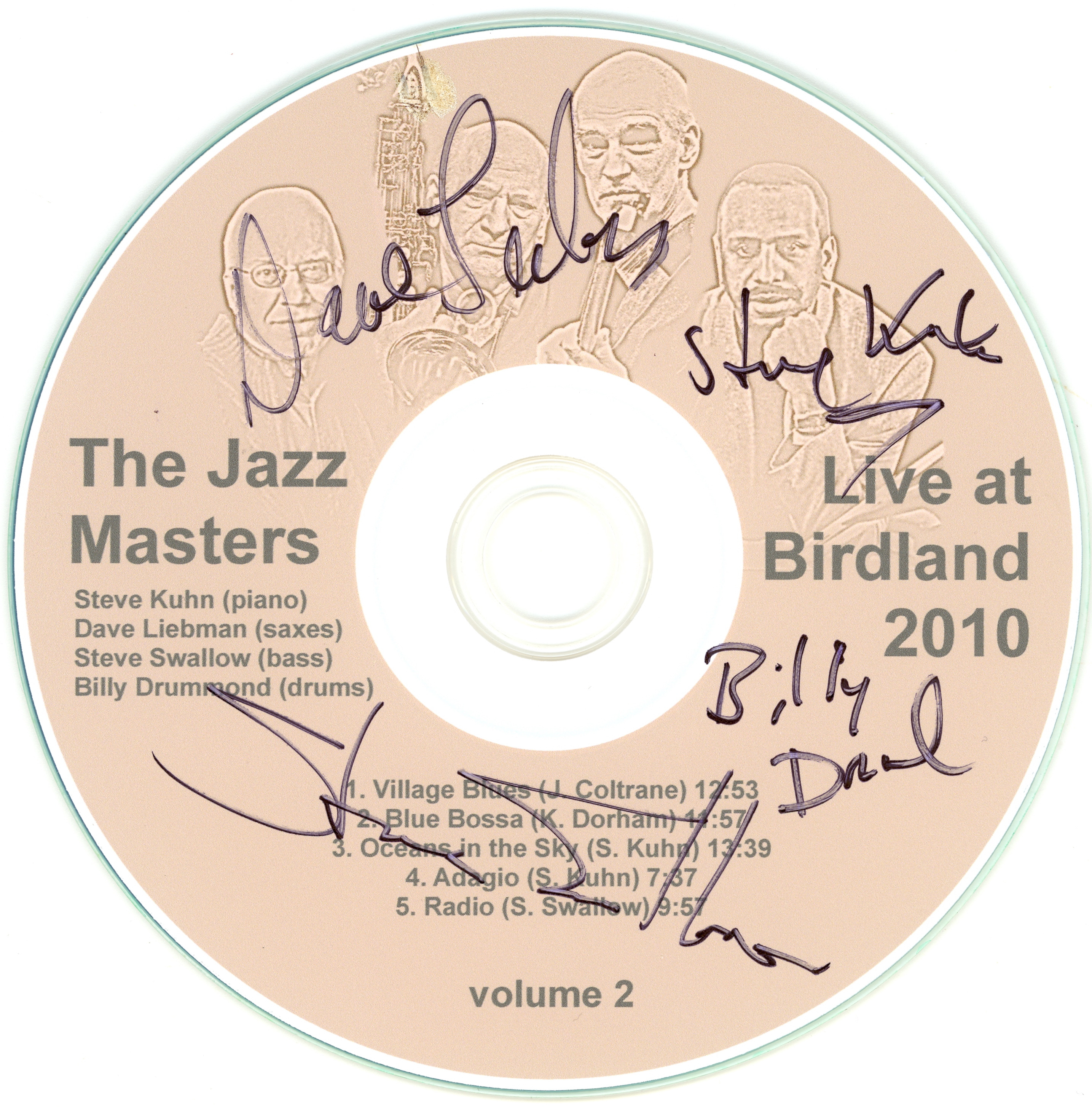
Autographed CD of last year’s gig, purchased at the club