Wadada Leo Smith: Divine Love (ECM 1143)

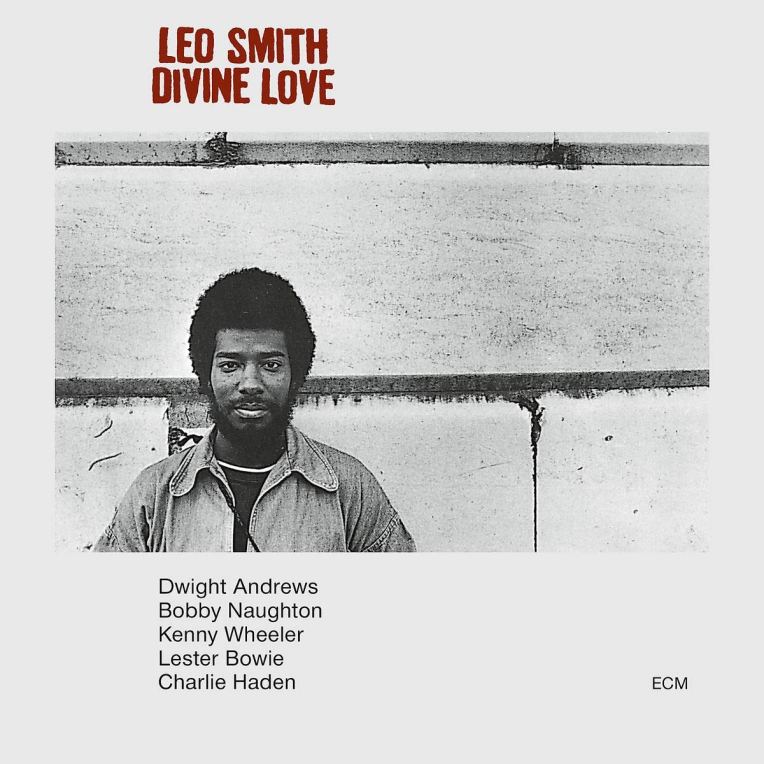
ECM 1143

Wadada Leo Smith
Divine Love

Wadada Leo Smith trumpet, fluegelhorn, steel-o-phone, gongs, percussion
Dwight Andrews alto flute, bass clarinet , tenor saxophone, triangles, mbira
Bobby Naughton vibraharp, marimba, bells
Charlie Haden double-bass
Lester Bowie trumpet
Kenny Wheeler trumpet
Recorded September 1978 at Tonstudio Bauer, Ludwigsburg
Engineer: Martin Wieland
Produced by Manfred Eicher

Wadada Leo Smith’s Divine Love is one of ECM’s most tantalizing jewels, the result of many years ignoring the label’s advances. I can only speculate this was because the immediacy of his craft might have been adversely affected by the interventions of any svelte postproduction. Thankfully, and not surprisingly, Eicher and company gave this effort all the space it needed to breathe, for breath is precisely what this imaginative session is all about.

Since 1970, Smith has been utilizing two systems of musical production: a) rhythm-units, which balance every note produced with an equivalent unit of silence, and b) ahkreanvention, an amalgamated method of “scored improvisation.” The album’s two bookends exemplify the former, while the latter animates the single piece at their center. This structure gilds the recording with a cyclical feel that deepens with every listen. Drifting through the waves of mallet percussion (courtesy of Bobby Naughton) of the title track, each cry materializes as a vessel of indeterminate origin until we lose ourselves in the eddy of “Tastalun,” where muted trumpets (Lester Bowie and Kenny Wheeler join in here) streak the music’s inner language with deep gashes of spontaneous intent. With “Spirituals: The Language Of Love,” we return to where the album began, sailing forth into waters at once opaque and teeming with unseen light.

0413512-R1-E002
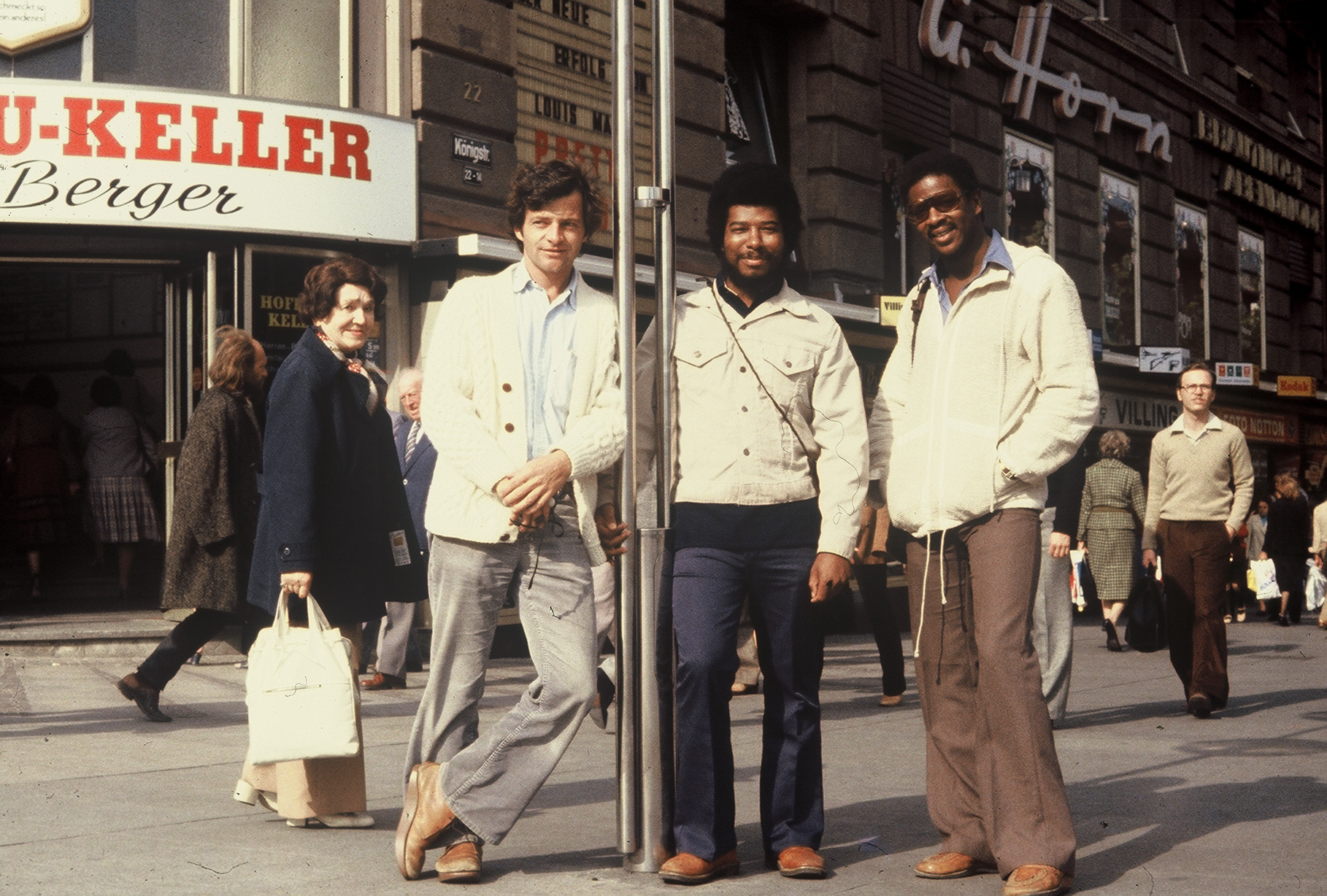
From left to right: Bobby Naughton, Wadada Leo Smith, Dwight Andrews
Stuttgart, West Germany, September 1978
(Photo by Fridel Pluff)

While Smith’s presence is felt throughout in his wavering horns and percussion, the alto flute of Dwight Andrews is for me the album’s soul. Smith’s pensive collaboration tries not to evoke beauty, but rather to find in the act of invocation an air of repose. Anyone expecting grooves and catchy tunes will find no foothold. This is a long confession spun from discomforting lucidity. In this trying melody called life, divine love is the truest note.

<< Richard Beirach: Elm (ECM 1142)
>> Terje Rypdal: Descendre (ECM 1144)

Richard Beirach: Elm (ECM 1142)

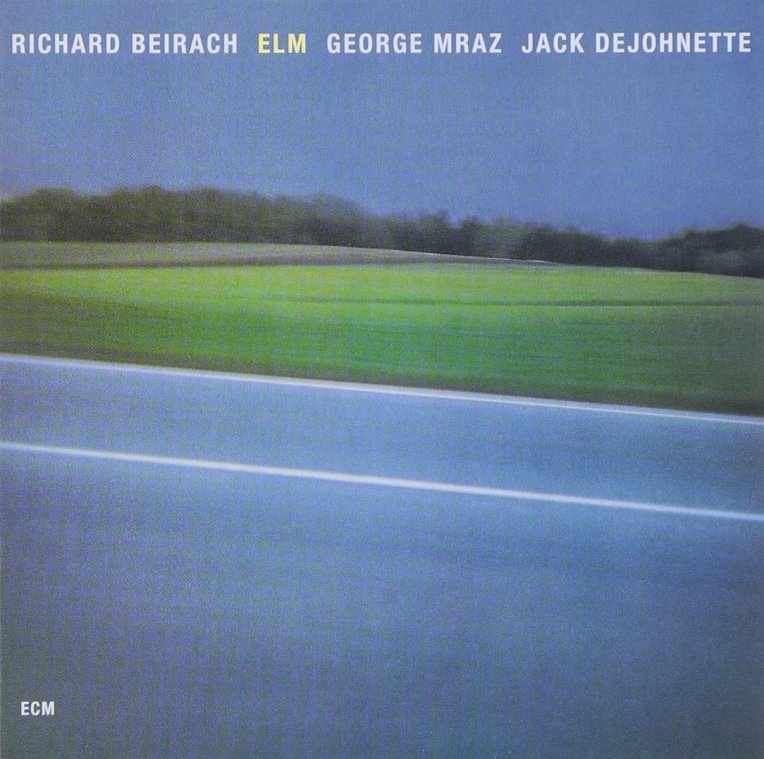
ECM 1142

Richard Beirach
Elm

Richard Beirach piano
George Mraz double-bass
Jack DeJohnette drums
Recorded May 1979 at Tonstudio Bauer, Ludwigsburg
Engineer: Martin Wieland
Produced by Manfred Eicher

Nearly five years after his headlining debut, Eon, pianist Richie Beirach stepped into the studio to leave behind his most indelible mark yet. The graceful momentum of the opening “Sea Priesters” is all we need to know exactly what kind of journey this will be. Beirach’s tone sweeps great distances even as it localizes in handfuls of ecstatic melancholy that manage to keep even the most random memories in peculiar order as the rhythm section of Jack DeJohnette and George Mraz ladles its intuition in modest, unquenchable spoonfuls. “Pendulum,” while more upbeat, is also the most reflective track of the set, if only because its contentment seems to stem from a place resigned to life’s iniquities. Its extroverted deployment only intensifies the depth behind it. Mraz brings a particular edge to the trio’s sound here. This is much in contrast to the compelling balladry of “Ki,” which delicately frames our rest before the effervescence of “Snow Leopard” drifts skyward. DeJohnette divines his cymbals like a man possessed, yet without ever losing sight of his surroundings. This leads us to the final, and title, track. An emotionally direct and majestic stroke of sonic brilliance, it resonates like time itself.

Elm has all the makings of a sleeper hit. It is a burnished kaleidoscope of sound: every turn reveals an unrepeatable flower of symmetry. The music is insightful, frank, and eschews any of the pyrotechnics that might have weighed it down. These are musicians of staunch melodic commitment who live their craft so deeply that they seem to know exactly where they are going at all times, waiting only for us to join them at the end of every path drawn. Beirach’s piano is superbly tuned (all hats off to the technicians on this one) and glows under his touch; the beauty of DeJohnette’s timekeeping abilities throughout (especially in “Snow Leopard”) can hardly be overstated, capping off (along with his New Directions European date) as they do a stellar decade in ECM’s hallowed halls; and John Abercrombie Quartet bassist Mraz brings it all home with loving attention.

This may just be Beirach’s best and represents one missed opportunity among many for the Touchstones series. Though only physically available as an expensive Japanese import, it’s worth every yen, and then some.

<< George Adams: Sound Suggestions (ECM 1141)
>> Leo Smith: Divine Love (ECM 1143)

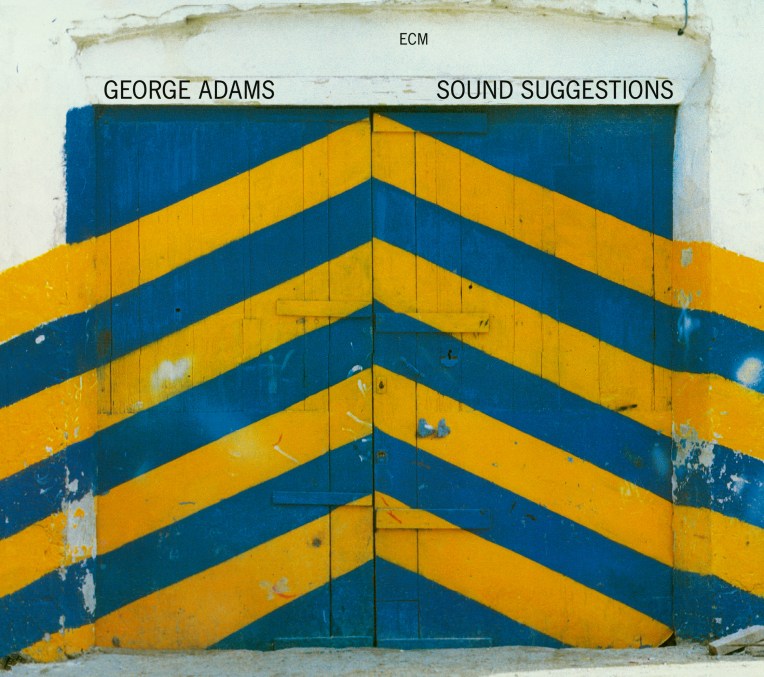
George Adams: Sound Suggestions (ECM 1141)

1141 X

George Adams
Sound Suggestions

George Adams tenor saxophone, vocal
Heinz Sauer tenor saxophone
Kenny Wheeler trumpet, fluegelhorn
Richard Beirach piano
Dave Holland bass
Jack DeJohnette drums
Recorded May 1979 at Tonstudio Bauer, Ludwigsburg
Engineer: Martin Wieland
Produced by Manfred Eicher

The intensities of Mingus veteran George Adams (1940-1992) took their only dip in the ECM pool with Sound Suggestions. Bringing characteristic fire to every lick, Adams was a force to be reckoned with, as evidenced in his later quartet recordings with Don Pullen for Blue Note. Joined by a stellar cast of label stalwarts, Adams sets alight the fringes of our expectations. His tenor is so luscious in the opener, “Baba,” that we swear we’ve heard it before, the lingering soundtrack to some dream or distant memory. Kenny Wheeler’s flugel paints a high-reaching arc under which Richie Beirach (piano) and Jack DeJohnette (drums) spread their blanket of sand. A lyrical solo from Wheeler bleeds into an equally robust turn from Adams, ending with an exclamation mark. Uplifting themes abound in “Imani’s Dance,” each linked by a mid-tempo groove of finely honed horns. Though head-nodding solos all around make this one a winner, it’s an especially glorious vehicle for DeJohnette’s mastery at the kit. Each of his gestures is one of a base pair, linking into the perfect helix that is “Stay Informed.” Here, a robust tenor gene manifests itself in the album’s most enthralling flight, rendered all the more intense by Beirach’s majestic trails. Segueing into “A Spire,” we find wider spaces, across which both Adams and German reedman Heinz Sauer level their weary songs, all the while backed by chattering cymbals and a rolling snare. The bluesy “Got Somethin’ Good For You” serves up a healthy portion of the voice behind the mouthpiece. Though a knot in the album’s smooth grain, the track is enlivened by a whirlwind of horns.

The musicianship on Sound Suggestions is as tight as the walls at Sacasyhuamán. Adams’s strokes are bold and direct, each a snowflake bronzed and offered to time with ceremonial care. And let us not forget the extraordinary talents of Sauer, whose tenor also graces Adelhard Roidinger’s underappreciated gem, Schattseite. Surely, this is one of ECM’s hottest joints.

<< Gary Burton/Chick Corea: Duet (ECM 1140)
>> Richard Beirach: Elm (ECM 1142)

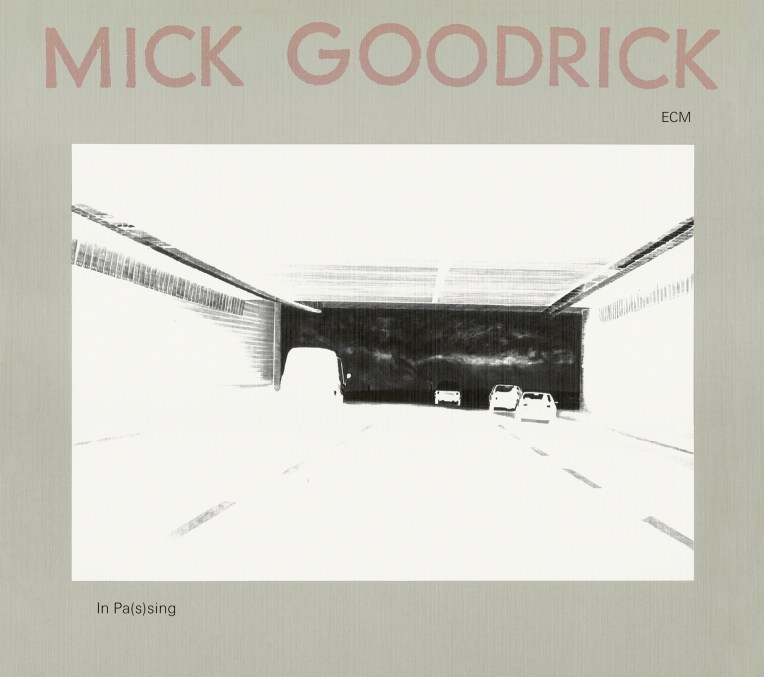
Mick Goodrick: In Pas(s)ing (ECM 1139)

1139 X

Mick Goodrick
In Pas(s)ing

Mick Goodrick guitar
John Surman soprano and baritone saxophones, bass clarinet
Eddie Gomez bass
Jack DeJohnette drums
Recorded November 1978 at Talent Studio, Oslo
Engineer: Jan Erik Kongshaug
Produced by Manfred Eicher

After guesting on three Gary Burton collaborations (The New Quartet, Ring, and Dreams So Real), guitarist Mick Goodrick broke out with his first album as leader—and what better place than ECM to open his art to its fullest, for this would be his last recording for the label. In Pas(s)ing consists entirely of Goodrick originals, save for the collectively improvised title cut, giving us an unassuming view of the thoroughly sanded figures that are his themes.

“Feebles, Fables And Ferns” is morning and dusk, a crepuscular confection wrapped in drums (DeJohnette), bass (Gomez), and tenor sax (Surman), and all tied with Goodrick’s sonic filaments. The latter’s airy, John Abercrombie-like tone is pensive and glows like embers. The bass is shallowly miked, making it seem an extension of the guitar. Its player often vocally anticipates his supporting lines, as in the lovely solo granted passage here. Surman’s equally mellifluous sound rolls off the tongue like a poem. “In The Tavern Of Ruin” continues the lush quartet sound, only this time with a brittle edge. Surman leads a slow procession of hooded figures before his soprano trails into Goodrick’s darkening clouds. Distant cries seize us as Surman again wraps his cosmic fabric around our ears. This makes “Summer Band Camp,” the album’s shortest track, all the brighter in its nostalgia. Surman smiles through his sound, as do all gathered, gently kissing the art into which they have grown. Gomez’s doublings add a chorused, rhythmic aphasia that foreshadows an ecstatic close. A tender bass clarinet lacquers “Pedalpusher” with molasses, sealing in an array of tactful changes which do nothing to obscure the phenomenal bass work therein. In closing, we find ourselves “In Passing,” which throbs with yielding yet intense sentiment. DeJohnette stitches a fine seam here, even as Surman cuts his thematic restraints in favor of more visceral forms of communication.

Goodrick’s elasticity throughout is a comforting presence, while Surman shines in what amounts to a starring role. These energies, buoyed by a plastic rhythm section, coalesce into what is easily one of my favorite ECM releases.

<< Paul Motian Trio: Le Voyage (ECM 1138)
>> Gary Burton/Chick Corea: Duet (ECM 1140)

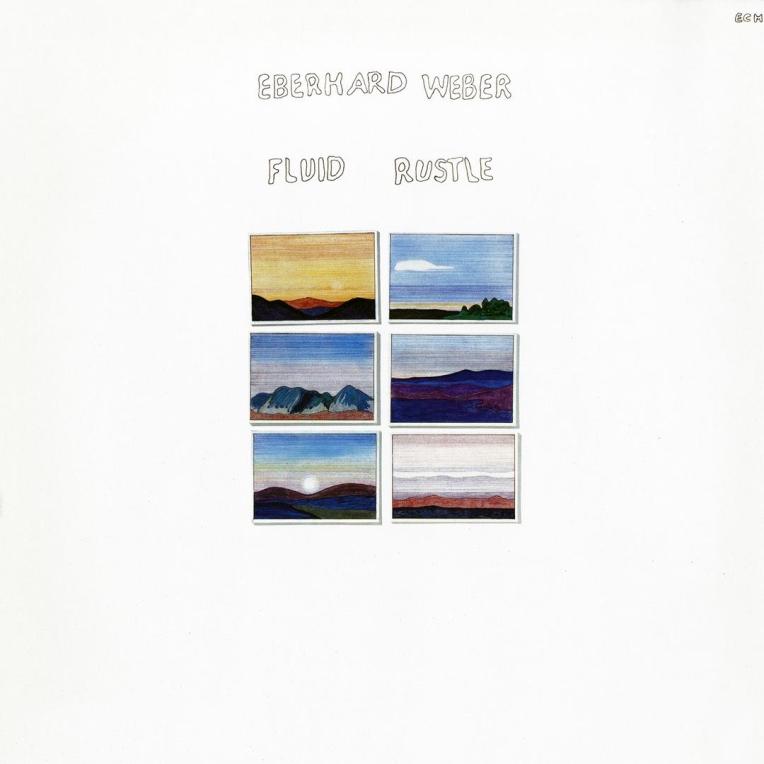
Eberhard Weber: Fluid Rustle (ECM 1137)

ECM 1137

Eberhard Weber
Fluid Rustle

Eberhard Weber bass, tarang
Bonnie Herman voice
Norma Winstone voice
Gary Burton vibraharp, marimba
Bill Frisell guitar, balalaika
Recorded January 1979 at Tonstudio Bauer, Ludwigsburg
Engineer: Martin Wieland
Produced by Manfred Eicher

As the wind freshened from the south, the red and yellow beech leaves rasped together with a brittle sound, harsher than the fluid rustle of earlier days. It was a time of quiet departures, of the sifting away of all that was not staunch against winter.
–Richard Adams, Watership Down

Although with Fluid Rustle, Eberhard Weber continued to draw upon the Watership Down references that cast 1977’s Silent Feet into such lovely relief, I hesitate to call it program music. Neither are the titles mere frames; they are also the open windows within those frames. Like the rabbits in Adams’s novel, each instrument in “Quiet Departures” is its own vivid personality in a vast warren of possibilities. Such strong metaphorical ties are there to be unraveled, one fiber at a time, by every strike of Gary Burton’s vibes. The introduction of Norma Winstone (in her first non-Azimuth ECM appearance) and Bonnie Herman represents an exciting tectonic shift in Weber’s geology, urging us through an atmospheric tunnel. At its end: a brightly lit solo from Burton, swaying comfortably in Weber’s hammock. This piece beguiles like déjà vu over a buoyant electric guitar (courtesy of Bill Frisell), voices returning on the syllable “Na” for a Tehillim-like consistency. Further textural detail is provided by the twang of the tarang, an Indian banjo played by Weber himself. As Burton switches to marimba, we find ourselves between two electric guitars, throwing sonic confetti from either side, before Weber plunges us into the depths of the title track and its ecstatic dreaming. “A Pale Smile” is a hallucinatory wash of guitars and vibes that works its magic with a Laurie Anderson feel. Weber also has a quiet, heartfelt solo here. “Visible Thoughts” carries us out on a bowed bass laced with percussive breathing and whispers. Painting syncopations with a broader brush, the group fades in an ever-tightening braid of wordless breathing until we are left dry.

The album’s title would seem to characterize the sound and effect of Eberhard Weber’s music in one fell swoop. His presence is felt here more melodically than instrumentally, as he chooses just the right moments to foreground his unfettered sound. And while the absence of keyboardist Rainer Brüninghaus marks a noticeable change in density, it also allows voices that have always been there to emerge from the woodwork and shine.

<< Egberto Gismonti: Solo (ECM 1136)
>> Paul Motian Trio: Le Voyage (ECM 1138)

Killing Pain, Not Time: Arild Andersen Trio Live Report

June 11, 2011
Xerox Rochester International Jazz Festival
Lutheran Church of the Reformation
7:30 pm

I find it difficult to begin any review about Arild Andersen without billing him simply as a “Norwegian bassist.” Succinct though the term may be, it hardly hints at the far reach of his fingertips, bow, and musical vision. A packed house felt some of that reach in the distance he’d so graciously traveled to bring his latest outfit to this year’s Rochester Jazz Fest as part of its “Nordic Jazz Now” series. While the cover of the Fest’s concert guide sported a collage of big names, headlined by Elvis Costello, Natalie Cole, k.d. lang and the like (ECM mainstay Bill Frisell could be found lurking among them), Andersen’s visage was nowhere to be found. Thankfully, this did nothing to deter an appreciative crowd from basking his warmth.

The trio is an intermittent format for Andersen, whose underrated early date with Bobo Stenson and Jon Christensen, 1971’s Underwear, gave listeners a foretaste of the propulsion that continues to strum the heartstrings of his playing. Thirty-two years later found him alongside Vassilis Tsabropoulos and John Marshall in The Triangle, a distinctly pianistic record of gentler pulses in slower motion. Though Andersen was the heart of these outliers, his compositional beauties were reserved for his influential quartet—and quintet, via Masqualero—outings throughout the seventies and eighties. Where the Tsabropoulos project was threefold, Andersen’s newest trio with saxophonist Tommy Smith and drummer Paolo Vinaccia is hexagonal, for each musician is doubled by a modest array of digital equipment. The latter, along with the glitter of Vinaccia’s golden Pearl kit, was the first to catch my eye as I settled into my pew at the lofty church where the concert was held. Andersen’s bass lay prone on the stage, its tiger-grained wood at once regal and humble. Stained glass icons seemed to fix their gazes upon it as they opened their arms, wept, and tended to the ailing—an emotional tableau not unlike the performance we were all about to experience.

On the morning of, I had awoken to the rather different tableau that is a pulled back muscle. Though it did little to squelch my anticipation for the day’s proceedings, it made getting there that much more uncomfortable. The muscle relaxants I took had rendered my body about as liquid as a phrase from Andersen’s bass. The effects had worn off by the time of his first evening set (sadly, financial constraints kept me from staying for the second), making sitting increasingly uncomfortable. It was in this state that I welcomed the sight of the trio ascending the stage.

Andersen offered a few words to start, openly lamenting the infrequency of European jazz acts in the U.S., before Smith launched into a rendition of a Gregorian chant. Fed through a microphone and expansively echoed, his Mark VI tenor blossomed with such gorgeous depth that, once Andersen joined with his arco strains, any pain I had felt was immediately blown to dust. Andersen and Vinaccia then shifted gears into an arid soundscape with Masada-like flavor, Andersen’s smile forming the perfect bridge into the beautifully realized Norwegian folk song that followed. Here, Vinaccia played with what appeared to be small wicker brooms without handles. Over this staccato backing, Smith plied his most soulful highs (which sounded like a soprano), going from sandy to cloudy and back again in a flash. Andersen’s echoed bass wavered like a receding mirage, leaving us to ponder a lone turn from Smith, an entire desert in his embouchure.

The cerebral groove of “Independency” (only Part 4 was played), written in 2005 for Norway’s centennial independence, unpeeled one of Andersen’s most captivating solos of the night and segued into his beloved “Hyperborean.” The title here refers to a mythical people with whom Apollo spent his winters in drunken revelry in a land without night—not unlike, Andersen quipped, Norwegians themselves. From the avian warbles of his bass to Vinaccia’s echoed brush-rolls, this piece sang of and through the heart. Smith’s exacting dynamic control was on full display, peaking in those soft, wooden highs. The band put us back on our feet with another folk song, “The Farm Girl,” even as it pulled the rug out from under them. Clouds of fire from each musician in turn delighted us before cooling with the vamp into fadeout. Last was “Dreamhorse,” a contemplative Andersen original with the watercolor bleed of a Kuára collaboration. The melodious exchanges thereof made for a fitting farewell.

The music of the Arild Andersen Trio is not about showing off. It is about mood, reflection, and living in the moment. The bass may be Andersen’s voice, but songcraft is his forte. The opening stretch of “Hyperborean” alone was enough to wipe clean anyone’s slate free of critique. Smith was the tail to his dove. His cleanness of tone paid clear homage to Jan Gabarek even as it forged into distinctly personal territories. Vinaccia’s drumming brought a sound as organic as the dried plants with which he elicited it and was also a joy to hear in close quarters.

With so many Fest events going on in succession, if not simultaneously, this evening show was a welcome respite from the day’s hurried atmosphere, and was a sonic gift of synergistic proportions.

Signed program

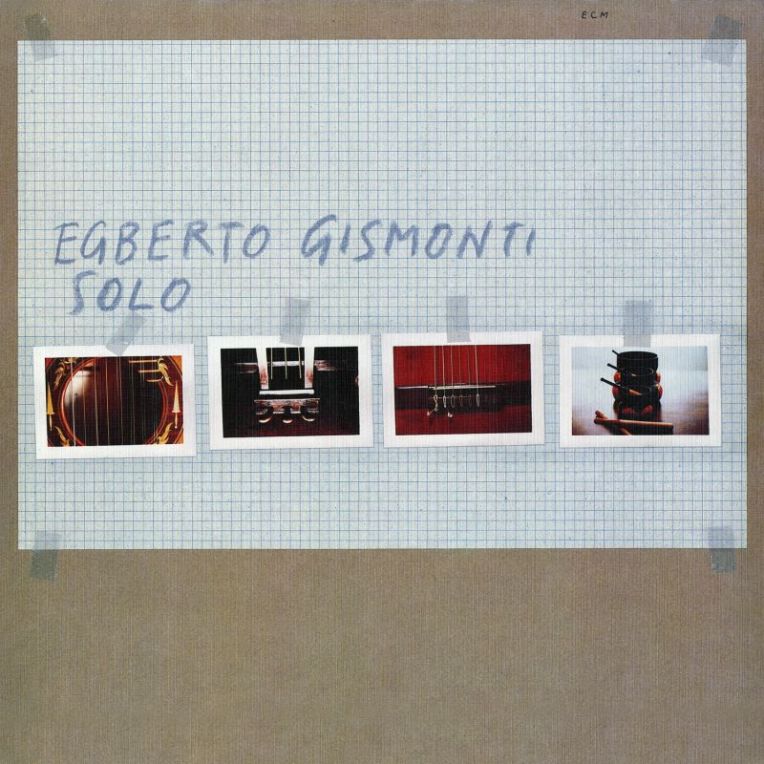
Egberto Gismonti: Solo (ECM 1136)

ECM 1136

Egberto Gismonti
Solo

Egberto Gismonti guitars, surdo, piano, cooking bells, voice
Recorded November 1978 at Talent Studio, Oslo
Engineer: Jan Erik Kongshaug
Produced by Manfred Eicher

The prolific output of Brazilian multi-instrumentalist Egberto Gismonti is only partially represented on ECM. Thankfully, what we do have on the label is among his most captivating work, and perhaps none more so than this adroit solo set from the late seventies. By the time he recorded Solo Gismonti had already honed his distinctions to a fine polish in smaller group settings, in particular with his longstanding partner, percussionist Nana Vasconcelos. Drawing from a wealth of inspirations ranging from Maurice Ravel and Django Reinhardt, Gismonti’s is an ever-morphing tapestry of melody and often modest virtuosity.

The sun rises on Solo through the 20-minute “Selva Amazonica, Pau Rolou,” by which Gismonti plants us into his fertile imagination. From that imagination we eventually depart with only the merest glimpses, despite the protracted track times. The opening suite is replete with resonant 8-string guitar and the floating charm of his wordless singing. Touches such as the latter add hints of remembrance, sealing a child’s proverbial innocence with an adult’s creative stamp. Across this steel-stringed landscape Gismonti imprints the tread of the surdo (a bass drum of African origin), then settles into a pre-dawn hymn against a wavering backdrop of cooking bells. A later track, “Salvador,” focuses these same energies into a single guitar, also tailed by a song to the skies. Two piano pieces along the way—“Ano Zero” and “Frevo”—showcase Gismonti’s melodic fragility in even more humbling terms. Through these, he works his augury by less persistent memories. The results fall barely shy of Keith Jarrett at his spirited best. Sunset arrives with the parabolic “Ciranda Nordestina.” After an introductory half-dream in bells, a gentle piano stains us with grand swaths of color, each an emotion in smoke. With every gemstone reaped from the earth, we pursue the rays of light passing through them to their cosmic ends.

As high as his group projects climb, I always prefer the earthiness of Gismonti alone. Perhaps the best place to start any musical journey is with a single guide at your side, and this role he seems more than willing to fulfill.

<< Jan Garbarek Group: Photo With… (ECM 1135)
>> Eberhard Weber: Fluid Rustle (ECM 1137)

Savion Glover: Feet First, a live review (February 28, 2011)

In 1996, a career-defining stint in the Broadway hit Bring in ’da Noise, Bring in ’da Funk established Newark-born Savion Glover as the true heir apparent to Gregory Hines and the so-called “Hooferz” tradition of tap. Fast forward to last Monday night, when Glover electrified Cornell’s Bailey Hall with his unstoppable feet, and one sees just how far he has come. One is hard pressed to name another dancer, tap or otherwise, alive today who has generated as much inspiration and appreciation. Rooted as he is in the solid surface beneath him, he paints pictures with body parts that normally get us from Point A to Point B, but which in his creative web take on an entirely new form of communicative power. Key to his sound is his sharp attack (what he calls “hitting”), and this he brought in full measure to a packed house for his latest project, “SoLo in TiME,” which draws upon the rhythms and emotional acuity of flamenco.

As one who continually engages with histories and modes, Glover is no stranger to the importance of an evocative moment. Flamenco, therefore, feels like a logical next “step” for one of his caliber and drive. With the group Flamenkina providing a fine mesh of tried-and-true sentiment and modern sensibility, not to mention a star turn from BARE SOUNDZ member Marshall Davis Jr., Glover was, to be sure, in intuitively minded company. His setup reflected the exacting nature of the hoofer’s craft: A raised square stage miked from within was surrounded by four speakers and flanked by the musicians. Of the latter, guitarist Gabriel Hermida was first to join in at stage left. Starting at the margins and working their way to the center, the percussive sounds of Hermida’s instrument provided a likely foil to the various snaps, slides, clicks, and cries from those loosed taps. With such a “vocal” range as Glover possesses, he spoke to his audience at every turn.

Flamenkina

Rather than start with a bang, he restrained himself at the back of the stage, as if warming to the spotlight he outshone. I could not help but compare the dexterity of his feet to that of fingers on castanets, as reflected in the superb dynamic control of his instrument. Beneath him, the stage was a taut drum, replete with tuned sections and a wide range of tones. Once bassist Francesco Beccaro and Carmen Estevez—who played the cajón (a Peruvian box drum that seems to be popping up everywhere these days) and graced us with her mellifluous voice—took to the stage, the musical elements of the show began to soar. With a smile of life-affirming joy, Glover negotiated a complex landscape of creative signatures with infectious passion for the material at hand. Like the sweat from his brow, it was a veritable shower of kinesis.

Estevez and Glover shared some of the concert’s most intimate exchanges, those tapping feet the metronomic tide to her sandy shores. Although the band was sometimes lost in the sound mix, if only because the hoofer’s sound rang with such conviction, things balanced out once he and Estevez closed the circle. Still, at its best, the band enacted a glorious unity.

Glover had some fun with the audience during a solo rendition of Queen’s “Another One Bites the Dust.” Feeding off our rhythmic clapping, he took the interaction as far as it would go before abandoning it in favor of a more complex unraveling, whereupon he was joined by Davis, whose synchronicity and more compact style made for some enthralling interactions. Both hoofers practically leaped from the raised stage whenever they were finished, as if the call of that resonant surface was too much to ignore.

Glover’s musical approach is anything but programmatic. Here is an artist who paints in feelings and not images, who dances with palms open, as if in supplication to the gifts with which he has been graced. Seeing him live, one experiences tap at its most essential. No matter how fast he gets, his feet ring through with clarity and immediacy. In this regard, the show’s title might as well have been flipped to read: “TiME in SoLo,” for no matter how far he abandoned himself to the spirit of the moment, he harbored a seemingly infinite inner peace, so that by the end most of us were sitting transfixed. It was the kind of show during which we almost dared not tap our feet, for we could add nothing to something so lushly realized.

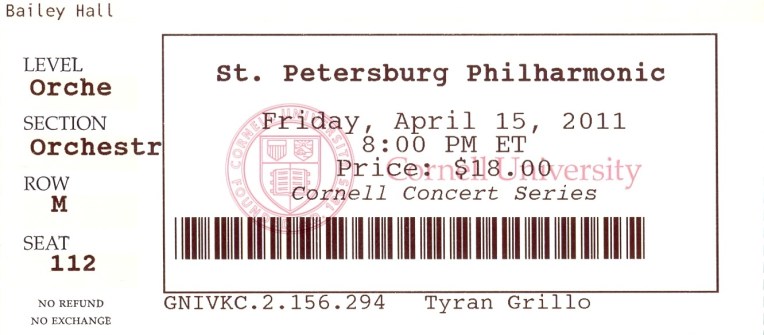
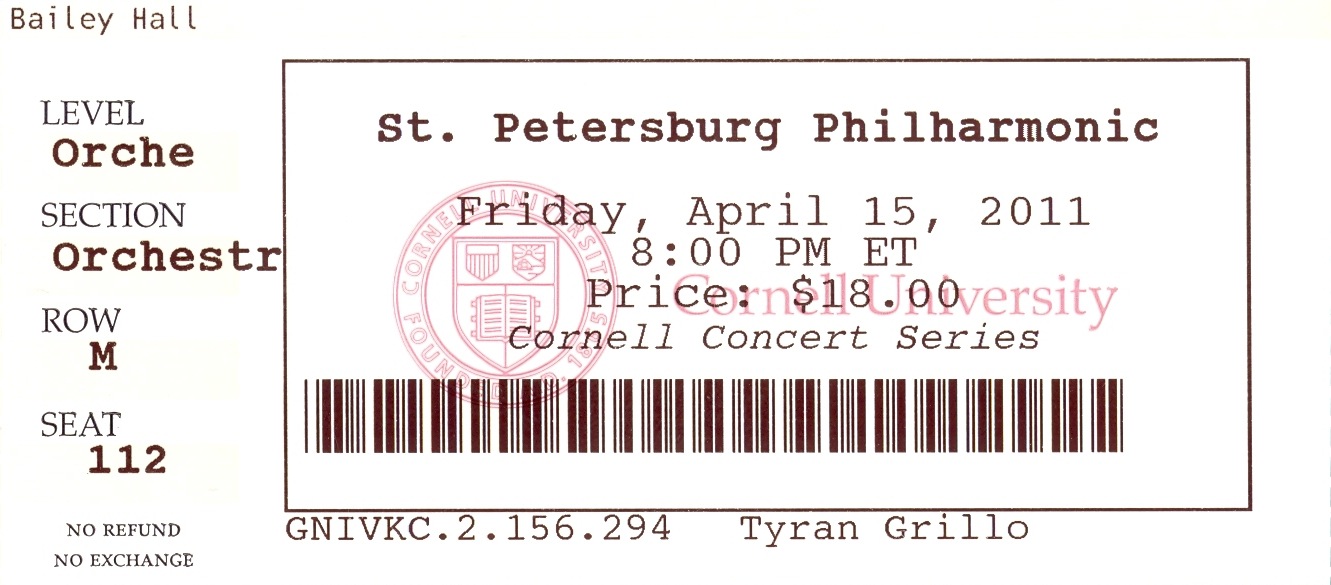
St. Petersburg Philharmonic live review (April 15, 2011)

St. Petersburg Philharmonic Shines at Bailey

Had gastronome Brillat-Savarin been a musician, he might have quipped, “Tell me what you play, I will tell you who you are,” which is to say that music is nothing without the instrument through which one expresses it. Therein lies the snag in Friday night’s performance by the St. Petersburg Philharmonic Orchestra, whose fabulous coruscations were tempered by a quiet shadow.

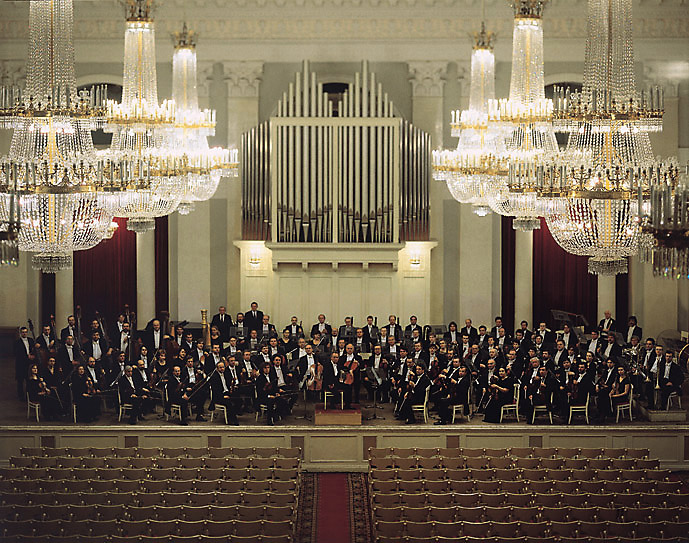
But first, the good. As Russia’s oldest symphonic ensemble, the SPPO exudes professionalism and the charisma to match. Before a sold-out Bailey Hall crowd, conductor Nikolai Alexeev led a hefty program comprising of two major works from his homeland.

Composed at the dawn the twentieth century, the Piano Concerto No. 2, Op. 18 of Sergei Rachmaninoff (1873-1943) stands as one of the most enduring testaments to pianistic craft. It marked the end of a depression brought about by the derision with which the composer’s first symphony was met at its 1897 premier. Though among the more difficult concertos to master, at the hands of soloist Nikolai Lugansky the concerto’s complexities melted into a vibrant wash of sound. Lugansky’s poise was a joy to witness firsthand. Sadly, at least from where I was sitting, one was hard-pressed to say the same about the Steinway at his fingertips. A beautiful instrument in its own right, yet with such a watery middle range that it simply wasn’t up to the task of netting an entire orchestra, it seemed to get lost in itself. Similar issues marred the recent Leonidas Kavakos performance, which was otherwise technically first rate.
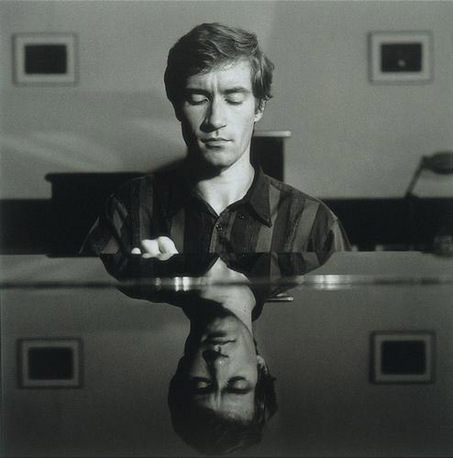
Lugansky

Rachmaninoff’s concerto is an epic, multilayered piece, but its vibrant colors seemed finger-painted in muddy passages with little separation. And while the piano’s lower and higher registers occasionally cut through the din with fortitude, for the most part Lugansky was lost in the orchestra’s massive sonic mazes. This was by no means the fault of the artists, who nevertheless wrenched out as visceral a performance as one could have hoped for. From the famous bell tolls that open the piece to the rapturous handsprings that close it, the music leapt from Lugansky’s hands almost as many times as he did from his seat when trying to wrench as much volume from the piano as he could. Along the way, he shared captivating little dialogues with winds, most clearly balanced in the second movement, where the quieter surroundings allowed the piano to breathe. As if from a deep slumber, its stepwise descent was awakened by the majestic runs of the final movement. The most heartfelt moments were to be found here, set off to captivating effect by Lugansky’s lithe trills and finger pedaling. And as the music’s Rhapsody in Blue-esque dramaturgy wound to a close, the crowd rose to its feet amid shouts of “Bravo!”
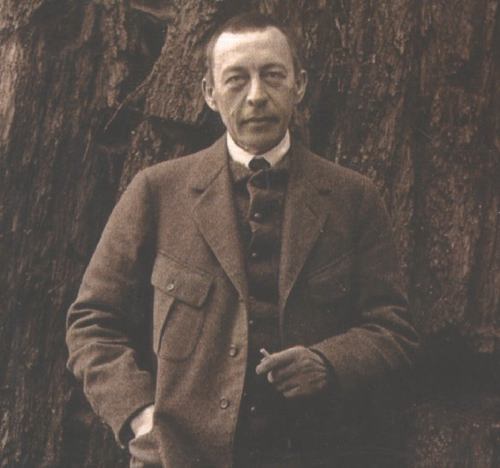
Rachmaninov

Nikolai Rimsky-Korsakov (1844-1908) composed his famed Scheherazade, Op. 35 in 1888. Based loosely on tales from The Arabian Nights, this symphonic suite depicts musically what the classic literary work does textually. The story, in the composer’s words: “The Sultan Schariar, convinced that all women are false and faithless, vowed to put to death each of his wives after the first nuptial night. But the Sultana Scheherazade saved her life by entertaining her lord with fascinating tales…for a thousand and one nights. The Sultan, consumed with curiosity, postponed from day to day the execution of his wife, and finally repudiated his bloody vow entirely.” And, surely, one can imagine the power of her storytelling in the music. Scheherazade herself makes frequent sonic cameos therein, represented by a leitmotif of violin and harp that runs like a golden thread. Thankfully, the piece has flourished beyond its Orientalist roots as a programmatic masterpiece that was a thrill to hear in such close quarters. Any acoustical issues were taken backstage with the piano, thereby allowing the SPPO to shine. Alexeev’s skillful direction was a pleasure and, at certain moments, brought the musicians to frenzied heights. Their strengths were found in what are often an orchestra’s most underappreciated sections: brass, winds and percussion. Like drummers or keyboardists in rock bands, their accents are the key to a seamless collective sound, and this they brought in full. Principal clarinetist Andrey Laukhin did a particularly fine job with his many rousing passages. Not to be outdone, however, were concertmaster Lev Klychkov and principal cellist Dmitry Khrychev, both of whom figured as leading voices. Klychkov’s bow made a few unintended noises, while Khrychev’s sound came off as flat at times, which perhaps explains the few boos they received during curtain call. Otherwise, they brought due passion and verve to the proceedings.
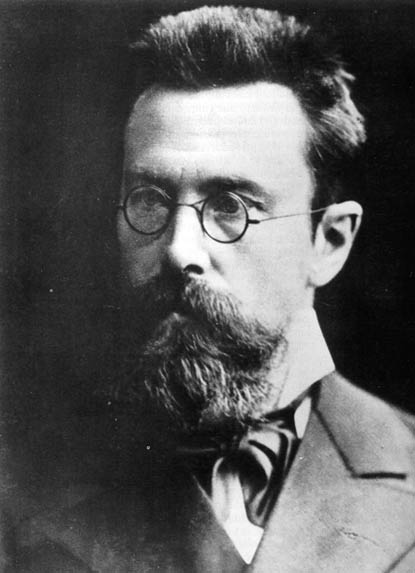
Rimsky-Korsakov

A humorous moment occurred when, as the audience was clapping after the first section, Alexeev took the opportunity to empty his nose into a handkerchief, encouraging further applause as he did so. This interaction was true to the free-spiritedness that pervaded the entire evening. These were performers who clearly enjoyed what they were doing and who invited us into that revelry at every turn, such that someone sitting in the audience sitting behind me couldn’t help but occasionally whistle along. The second standing ovation was met with a delectable finale in the form of the “Trepak,” or “Russian Dance,” from Tchaikovsky’s The Nutcracker — which, from the sound of it, they could have played in their sleep.

Quibbles aside, this was one of the finer of this season’s Bailey Concert Series performances here at Cornell, and left a satisfied house in its wake. The orchestra’s world-class reputation held its water, while Lugansky, who graciously signed CDs and programs after the show, brought a palpable inertia to the playing. All the more unfortunate, then, that the piano should have asserted an incongruent gravity of its own.

See this review in its original form here.