Bernard Wystraëte & Group: Strawa no Sertão (CARMO/15)

Strawa no Sertão

Bernard Wystraëte & Group
Strawa no Sertão

Véronique Briel piano
Philippe Berrod clarinet
Jean-Yves Casala guitar
Frédéric Guérouet accordion
Philippe Macé vibraphone
Pierre Strauch cello
Bernard Wystraëte flutes, musical and artistic direction
Guest artist:
Egberto Gismonti piano
Recorded by Philippe Labroue  at May, June, and September 2001 at Studio Labroue in May, June, and September 2001, Paris, and at Auditorium Magne in February 2002, Paris
Edited by Bernard Wystraëte and Philippe Labroue
Co-produced by Egberto Gismonti
Release date: May 9, 2005

Bernard Wystraëte enters the CARMO fold with an album recorded under the banner of his self-titled group. Throughout his career, the composer and flutist has dipped into a variety of fonts, including classical and free jazz, but has always held a special place in his heart for music of the Andes. Naturally, his interests intersected with the work of Egberto Gismonti, from whose work this program is entirely drawn and whose blending of traditional and futuristic streams yields a powerful river on which to invite other vessels strong enough to handle its current. Thankfully, Wystraëte is not only able to navigate those waters, but populates their surrounding ecosystem with flora of his own.

Gismonti gives his sonic seal of approval by joining at the piano for some of his most enduring (re)creations. They also feature the accordion of Frédéric Guérouet, lending his painterly touch to “Sanfona” (named for that very instrument) and the lesser-heard “O Amor Que Move o Sol e Outras Estrelas” (Love that Moves the Sun and Other Stars), a wordless poem that leaps in slow motion toward completion. Even without Gismonti in the studio, his presence is felt in renditions of such evergreens as “Baião Malandro” (Trickster Baião), which adds a jazzier sleight of hand through the vibraphone of Philippe Macé, and the almighty “Karatê,” which blossoms in a version for Bb clarinet (Philippe Berrod), guitar (Jean-Yves Casala), cello (Pierre Strauch), and alto flute. It deserves highest place in the pantheon of Gismonti interpretations. The lead flute makes it flow with even more legato grace than when played on the piano, showing the interconnectedness of every movement like time-lapse photography. Another standout is the album’s title suite, a humorous musical fantasy in five parts that imagines Igor Stravinsky living in the arid lands of Northeastern Brazil. Though two movements of it were featured on Gismonti’s 1997 ECM album Meeting Point, as far as I know this is its only complete performance on record. Dedicated to Wystraëte, it combines rhythms from that same region with others from Rio de Janeiro, dappled with the Russian composer’s fondness for angularity and childlike wonder. Wystraëte goes a step further by improvising on the section called “Cherubin I,” playing the unaccompanied bass flute as if it were the only message that mattered in the moment. Each note is a tender mercy, a memory captured as if by camera, a fire that burns to be remembered.

Rodney Waterman & Doug de Vries: Água e Vinho (CARMO/14)

CARMO-14-front

Rodney Waterman
Doug de Vries
Água e Vinho

Rodney Waterman recorders
Doug de Vries guitars
Recorded between November 1997 and March 1998 by Robin Gray at Allan Eaton Studios
Tracks 4, 17, 20, and 21 recorded by George Butrumlis at Adeney Studios (1999)
Mastering at Estúdio Tom Brasil, São Paulo
Sound engineer: Alberto Ranellucci
Produced by CARMO & Dulce Bressane
Release date: November 13, 2000

This collection of duets for recorder and guitar, played respectively by Rodney Waterman and Doug de Vries, comes two CARMO catalog numbers after the equally engaging duo of Ernesto Snajer and Palle Windfeldt. Breath and string are a natural combination that harks not only to the Renaissance but also to the many folk traditions that grew from such music’s spread throughout the colonized world. As melodies were taken up, transformed, embellished, and added to, they took on lives of their own, birthing entirely new cultures by melding into ancient ones. The duo’s ear for melody steeps us in these histories, lest we forget the pain and struggle often encoded into beauty.

“O ôvo” (The Egg) is one of two selections by Brazilian composer Hermeto Pascoal and references Pascoal’s beloved 1967 debut, Quarteto Novo, which was a harbinger of the very sort of jazz-folk hybrid for which Egberto Gismonti would soon become known. This is followed, appropriately enough, by “Bebê” (Baby). Both assume a refreshing form made evident by the baião rhythms around which they are structured.

Waterman himself is artfully represented by a handful of originals. His “Song of Reconciliation” was written in 1997 in response to the Australian government’s refusal to atone for aboriginal atrocities. Played on the tenor recorder for a more anguished sound, it nevertheless cups its hands around a pilot light of hope. The title of “Xanthorrhoea” comes from the Latin name of a grass tree species native to Australia and takes its cues from nature. Here the guitar is played like a drum, lending a bygone air. “Zana” pays homage to Australian virtuoso Zana Clarke on the very instrument she made famous: the “Ganassi” alto recorder. Accompanied by de Vries on egg-shaker, it is meant to evoke the sunlight of Brazil. “Ade” is inspired by Lazy Ade Monsbourgh’s 1956 album Recorder in Ragtime and incorporates further influences from Pascoal and Gismonti. It is played on soprano recorder and the cavaquinho (a Brazilian 4-string guitar) to effervescent effect.

Gismonti himself shines via six tunes, most of them touchstones of his compositional career. Of those, the duo’s rendering of “Frevo” is possessed of an especial fervor (hence the title) and sports some lively adlibbing in the middle section. The somber “Água e Vinho” (Water and Wine), after which this album is named, exhales without emotional compromise. Other highlights include “Parque Lage,” deepened by the bass recorder, “Lorô,” dancing with avian energy, and the omnipresent “Karatê.” The latter was actually what brought the duo together in the first place when de Vries introduced Waterman to Gismonti’s music via Alma. They even concluded their first concert in July of 1995 with the piece.

“Jorge do Fusa,” by the deeply venerated guitarist and composer Anibal Augusto Sardinha (a.k.a. “Garôto,” or “The Kid”), cleanses the proverbial palate as a prelude to four Catalan folksongs arranged by the duo. Of these, “La Nit de Nadal” (Christmas Night) is achingly nostalgic, while “El Noi de la Mare” (The Son of Mary) warms the heart. Two ricercars by Spanish Renaissance composer Diego Ortiz are just as lovely, along with of de Vries’s own, round out the scene. Where “Chorinho Toccatina” is a solo guitar piece inspired by a trip to Bali evoking forests and wildlife, “May” looks at it titular month from the southern hemisphere’s perspective, on the cusp of winter’s gaze. Let this be our hibernation.

Quaternaglia: Forrobodó (CARMO/13)

Forrobodó

Quaternaglia
Forrobodó

Eduardo Fleury guitar
Fabio Ramazzina guitar
Sidney Molina guitar
Paulo Porto Alegre guitar
Breno Chaves guitar (on “Baião de Gude,” “Lun-Duos,” “Uarekena,” “Quartetinho,” and “Forró”)
Egberto Gismonti synthesizer (on “Um Anjo”)
Recorded September 1998 (“Uarekena,” “Lun-Duos,” “Baião de Gude,” “Quartetinho,” and “Forró”) and December 1999 (“Forrobodó,” “Karatê,” “Escovado,” “Batuque,” “Furiosa,” and “Um Anjo”) at Estúdio Tom Brasil, São Paulo
Sound engineer: Alberto Ranellucci
Produced by CARMO & Dulce Bressane
Release date: November 13, 2000

Following a self-titled 1995 debut and 1996’s Antique (both released on other labels), the Quaternaglia Guitar Quartet intersected with Egberto Gismonti’s CARMO imprint for its third album. With a studied yet organic body language, this São Paulo-based ensemble guides us through its account of four distinct yet complementary composers, each of whom the QGC has worked with closely toward building a defining repertoire. Despite having undergone more than a few changes of roster since its inception in 1992, in this present iteration we have Eduardo Fleury, Fabio Ramazzina, Sidney Molina, and Paulo Porto Alegre. The guitarist whom Alegre replaced, Breno Chaves, joins as special guest on five pieces, adding a fifth layer of virtuosity.

Brazilian guitarist and composer Paulo Bellinati is represented by three pieces. Of these, “Baião de Gude” is one of his best known and, in this interpretation, moves with a filmic quality. I imagine someone on a frantic search for something, only to realize they’ve been in a dream all along once they find it. Before that, the session opens with “Furiosa (Maxixe).” This pleasing mélange of microtonal harmonies sports a robust sense of progression and muted rhythms. The latter impulses cross over into “Lun-Duos,” through which Chaves circulates with increasing fervor, spanning the gamut from shout to whisper and back again.

The pivot comes in “Uarekena.” Written by Sérgio Assad (of Duo Assad fame), it’s a weave of pulsing harmonics and dissonant chords around inviting linear melodies.

“Quartetinho” begins a traversal of works by Egberto Gismonti, whose writing is well-suited to the format of the quartet, who capture his litheness with gusto. Among the perennial classics of his oeuvre to make an appearance are the album’s title piece, which manages to scintillate while still making room for Gismonti’s inchoate shadows in a passage of astonishing detail, and “Um Anjo,” which features the composer on synthesizer. Chaves joins the quartet again for “Forró,” taking on some of Gismonti’s more cynical textures and chord voicings. But it’s in “Karatê” where the quartet’s virtuosity shines for handling such a constantly shifting composition with fluidity. It feels reborn here, played to the strengths of its dissonances.

The program ends with a twofer by Ernesto Nazareth, arranged by Gismonti and adapted by Alegre. Between the familial “Escovado” and the welcoming “Batuque,” a deep and joyous farewell is given in full knowledge that this isn’t goodbye.

Ernesto Snajer & Palle Windfeldt: Guitarreros (CARMO/12)

Guitarreros

Ernesto Snajer
Palle Windfeldt
Guitarreros

Ernesto Snajer 10-string, 6-string, and 12-string guitars
Palle Windfeldt 6-string guitar, 6-string Western guitar
Kristian Jørgensen violin
Flemming Nilsson udo drums, congas, caxixi, chimes
Kaare Munkholm vibraphone, marimba
Recorded at Sound Lab.Studio, Copenhagen
Sound engineer: P.H. Juul
Musical direction: Egberto Gismonti
Produced by Carmo Produções Artísticas Ltda
Release date: June 21, 1999

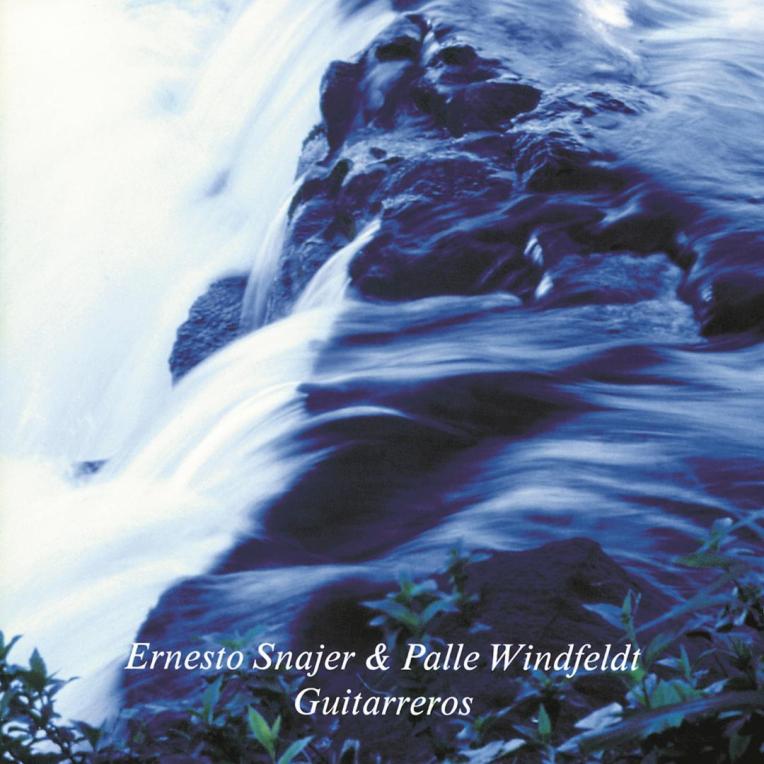
Guitarists Ernesto Snajer and Palle Windfeldt present their debut album as a duo. The title, Guitarreros, translates from the Spanish as “Guitar Makers,” and perhaps no more fitting a term could be used to describe them, as both build their repertoire in the most physical sense. Just as photographers must learn to think about light from the camera’s point of view, Snajer and Windfeldt think about music from the instrument’s point of view. Like the Delia Fischer album that preceded it in the CARMO sequence, its timeless qualities fit edge-to-edge into the Egberto Gismonti mosaic. Both guitarists clearly take inspiration from Brazilian master in their penchant for grace notes, fluttering finger work, and terrains footprinted by childhood.

Most of the composing credit goes to Snajer, whose brushstrokes, so to speak, leave circular patterns behind on their paths across each canvas. From the first blooms of “Algaby,” it’s clear that the travels we are about to embark on will be colorful and nostalgic. A quality bordering on effervescence, yet which keeps at least one root in the ground at all times, inspires a dance for the lost to follow under threat of silence. Tenderer climates await in “Éramos inocentes” (enhanced by a liquid metal 12-string), by which a dreamlike sensibility casts its spell. Snajer’s finest marriages of writing and performance are the skittering brilliance of “Qué hacé, pescau!!” and the folksier “Viento rojo.”

Windfeldt offers two originals of his own. “Abispa” is a Django Reinhardt-esque tune (and, in this regard, is the soulmate of Snajer’s “El poste”), made even more reminiscent by the appeal of violinist Kristian Jørgensen. “Chinese chacarera” is another clever fusion of styles, the title of which indicates its rhythmic form while also hinting at a pentatonic feel. Joined by Kaare Munkholm on marimba and vibraphone, it has a modern kick.

And then there’s the title track by both guitarists, which melds the best of their talents in hybrid form. Light percussion from Flemming Nilsson grounds the melody in local charm.

Two arrangements round out the set. Where “Recuerdo” by Danish fusion group Bagdad Dagblad) is an achingly lyrical song without words, “Maracatú” spins from the play of children a sublime take on the Gismonti evergreen: a gentle ode to this living treasure of inspiration.

Snajer and Windfeldt shimmer like skyscrapers in the distance, high enough to look both toward the future and the past, their glinting windows visible from the trees beyond, where animals continue to live untouched, far from the folly of human entanglements.

Delia Fischer: Antonio (CARMO/11)

Antonio Cover

Delia Fischer
Antonio

Delia Fischer piano, vocal
Ricardo Amado violin
Carlos Moreno violin
Débora Cheyne viola
Luciano Vaz violoncello
Cássio Cunha drums
Augusto Mattoso acoustic bass
Luiz Sobral drums
Nivaldo Ornelas soprano and tenor saxophones
Henrique Band baritone saxophone
Luciana Araujo vocal
Baticun’s Group percussion, choir
Marcelo Mariano bass
Carlos Bala Gomes drums
Nico Assumpção acoustic bass
Romero Lubambo guitar
Recorded at EG, Drum, and Fórum de Ciência e Cultura
Recording engineer: Fernando Guihon, Carlos Signoreli, Peninha, and Alexandre Hang
Mixing at Studio AR
Mixing engineer: Marcelo Sabóia
Musical direction by Delia Fischer
Produced by Carmo Produções Artísticas Ltda
Executive producer: Gustavo B. Santos
Release date: June 21, 1999

Voted as the top-ranked Brazilian artist of 2019 by DownBeat magazine, pianist Delia Fischer made her recording debut with Antonio two decades earlier. Welcoming a top-notch band as well as a string quartet along for the ride, she removes the rearview mirror without a scratch and keeps us attuned to what lies ahead. Fischer’s skills at the keyboard are not unlike those of Egberto Gismonti, under whose encouragement this album came to be. She moves with a kindred sense of purpose, draws from an equally broad color palette, and pays respect to heritage in her choices of rhythm and texture. But there’s also so much unique about her method that makes this a wonder to embrace with the ears as an experience of ongoing transformation. And experience really is the watchword here, as Fischer describes one fully fledged world after another.

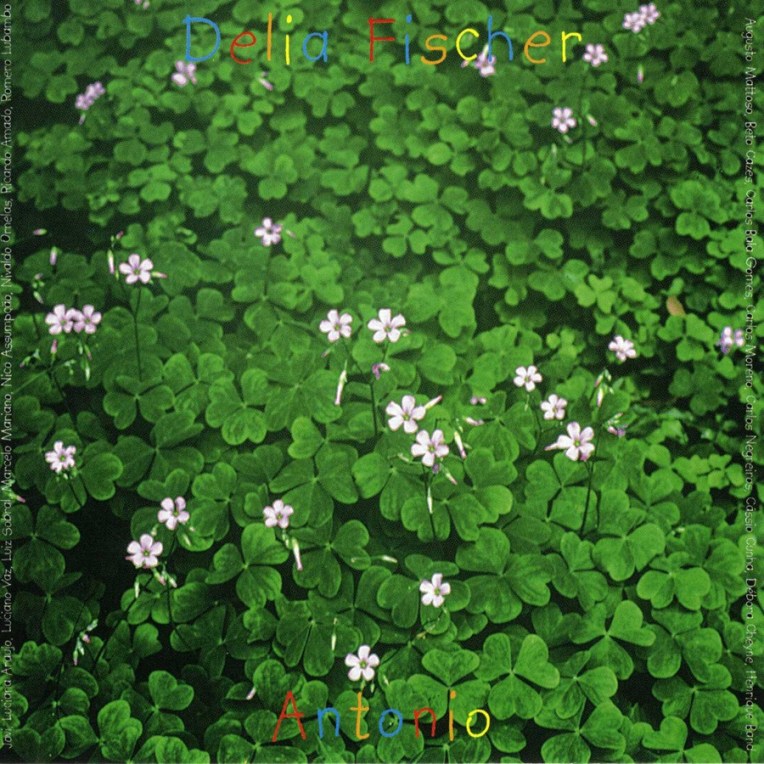
The string quartet fades us into “Abertura” by honing a metallic edge as piano and drums complete the picture with their complementary auras. Fischer’s voice joins them as an instrument in and of itself, foregoing words in favor of feeling as a seed of the greenery pictured on the album’s cover. Much of what follows falls into three categories. First are tunes that, like this opener, evoke specific weather conditions. Voices, as heard in “Ixejá” or via a field recording of children in “Tarde em Laranjeiras,” play occasional yet vital roles in reminding us of the human tapestry of which Fischer’s music represents a selfless thread. The latter track is noteworthy for the soprano saxophone of Nivaldo Ornelas, to whom it is dedicated, and who changes to tenor in “Post Meridien” in tandem with bassist Nico Assumpção. These brief spotlights on solo instruments allow different voices to be heard in a collective peace. Other instances to listen out for include the overdubbed cellos of Luciano Vaz in “Choro de Pai” and the guitar of Romero Lubambo, baritone saxophone of Henrique Band, and drums of Carlos Bala Gomes in “Dona Lia,” a grittier upward climb that never loses pace.

A second form, running slightly askew with relation to these wider expanses,  is the piano trio. “Øslo” finds Fischer sharing the room with bassist Augusto Mattoso and drummer Luiz Sobral. The nostalgia they create is touchable, shifting between places and times with that same easy sense of overlap that happens only in dreams. In “88,” Gomes hits the drums like a vessel to water while bassist Marcelo Mariano opens the river to whatever may come.

And then there are Fischer’s piano solos. “Araçagy” is complex in the most organic way, bouncing between metaphors at the drop of a hat yet holding on to a sense of integrity at all costs. Fischer proceeds as if catching a ride on a coastal train to meet a lover somewhere along the shore. The more elegiac qualities of “Velhos Tempos Lá em Casa” hint at the underside of nature, lamenting the very earth as a source of inherited trauma and pain. Here we see an artist who understands that our histories are all connected, and that we cannot just allow them to dictate our actions without encouraging some form of sacrifice. “Maio” bears dedication to the late pianist and composer Luiz Eça, echoes of whose humanity linger on. Finally, “Arcádia” balances mourning and invitation, shifting into architected spaces where sunlight always finds purchase.

An atmospheric gem very much in the Gismonti mode, and a high point of the CARMO catalogue.

Egberto Gismonti: Alma (CARMO/10)

Alma

Egberto Gismonti
Alma

Egberto Gismonti piano
(1) Steinway recorded at Sala Cecília Meireles by Jorge Teixeira, 1987
(2-8) Steinway recorded at Dreshsler Studio by Otto Dreshsler, 1987
(9-13) Bösendorfer recorded live at SESc Theatre São Paulo by Alberto Ranelluci, 1993
Synthesizers: Nando Carneiro and Egberto Gismonti
Recorded at Synth Studio by Edu Mello e Souza
Edited at Porão Studio by Egberto Gismonti
Production assistant: Dulce Bressane
Release date: October 1, 1996

Alma is Egberto Gismonti at his purest. Using the piano as his primary canvas (there are, in the background, ever-so-subtle hints of synthesizer played by him and Nando Carneiro throughout), he distills his most beloved compositions in a program of tender introspection. The album’s title means “Soul,” and is indeed what this odyssey through the Brazilian composer’s labyrinthine terrain represents.

Beginning with the forest-dense ecosystem of “Baião Malandro” (Trickster Baiao) and ending with the virtuosic costume changes of “7 Anéis” (7 Rings), this curation of performances serves as a primer for the Gismontian experience. Twisting and turning like a skilled dancer, he treats his fingers as legs with feet and runs across the keyboard as living soil. In addition to such classics as “Karatê” (the present interpretation of which takes on an even more self-disciplined quality than it did when first recorded on Circense) and “Frevo” (a vigorous example of his penchant for rhythm and color), he defines suppler developments in “Cigana” (Gypsy Woman), “Fala da Peixão” (Passion Talk), and the powerful “Realejo” (Hurdy-Gurdy).

One of his many gifts, that of illustration, is on full display in the evocatively titled “Palhaço” (Clown), which taps a memory so persistent it bleeds into the present; “Loro” (Parrot), which embodies its subject in a dance of unconditional joy; and “Sanfona” (Accordion), which sounds indeed like a bellowed instrument.

To my ears, the effervescence of “Maracatú” stands out in the collection. Balancing shadow and sparkle, and integrating synthesizers to seamless effect, it wanes into a field recording of the forest: an ode to the natural world. As is “Ruth.” First heard from his mother’s lips on Amazonia, it now opens its heart like a book yet to be inscribed. Like everything surrounding it, the melody is more than a skeleton, but part of the circulatory system of a cosmic body through which the listener can wander without the slightest fear of arterial blockage.

Egberto Gismonti: Amazonia (CARMO/9)

Amazonia CD

Egberto Gismonti
Amazonia

Egberto Gismonti 12-string guitar, acoustic guitar, Indian organ, conductor
Orquestra Transarmônica D’Alma D’Omrac
Bianca Gismonti voice
Alexandre Gismonti laughter, voice
Jaques Morelenbaum cello
Nando Carneiro acoustic guitar
Edu Mello e Souza synthesizer
Zeca Assumpção bass
Ruth Gismonti Amim voice
Recorded, mixed, and edited (digitally) at Porão Studio, except “Sertão/Forrobodó” (recorded like at Fabrik, Hamburg, 1990)
Artistic production: Carmo Produções Artísticas Ltda
Production assistant: Dulce Bressane
Release date: June 1, 1993

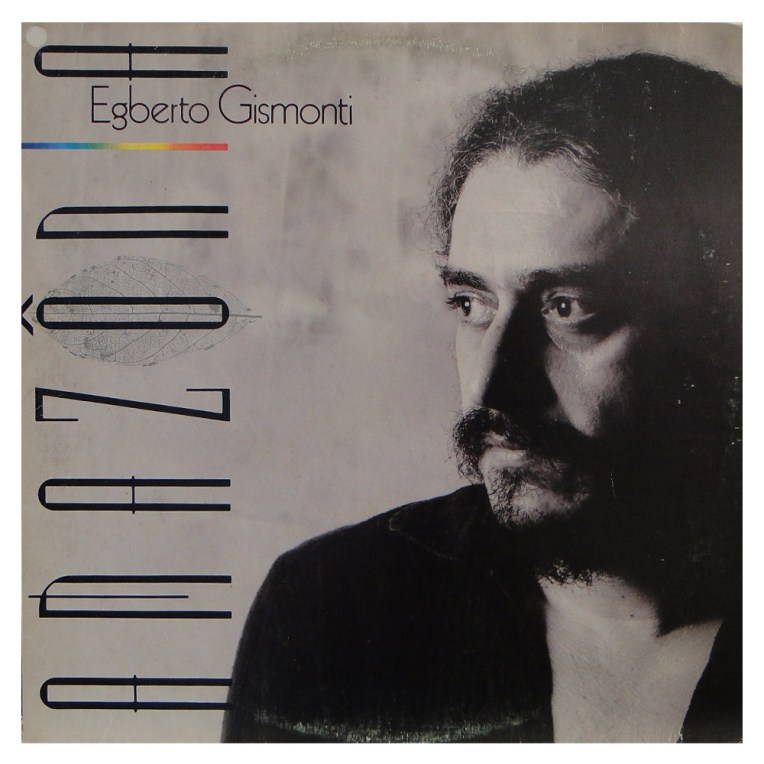
Here we have Egberto Gismonti’s original soundtrack for the film Amazonia: Voices from the Rainforest. The 1991 film, directed by Monti Aguirre and Glenn Switkes, gives a voice to indigenous peoples of the Amazon. Gismonti, as someone who knows the rainforest intimately and understands the film’s cause, was an organic choice to translate that broken silence into music. Originally released in 1991 on EMI, this CARMO reissue stands as a testament to Gismonti’s invention as a composer and gives credence to the maturation of his electronic experiments.

From tracks such as “Dois Curumins na Floresta,” we can hear that his integration of electronic and acoustic instruments is fuller, richer than before. Whether in “O Senor dos Caminhos,” a melding of synth flutes and strings dedicated to environmentalist Ailton Krenak, or “Forró na Beira da Mata,” which folds in the liquid metal of 12-string guitar, the feeling is of connective tissue between worlds: technology and nature, the “civilized” and the “untouched.” Even the most overtly synthesized passages only serve to emphasize the natural settings of the filmmakers’ interest. And while some (e.g., “Turma do Mercado” and “Fuga & Destruição”) are less successful without their images, the album works far better as a whole than Trem Caipira and yields such beauties as the blended chords of “Floresta (Amazônia).”

That said, as a standalone experience the highlights for me are overtly instrumental. The folksong “Sertão,” in Gismonti’s adaptation, glows under the bow of cellist Jaques Morelenbaum, who lends further beauty to “Ao Redor da Fogueira” alongside the lithe bassing of Zeca Assumpção and Gismonti’s own guitar. Both take in warmth from the heart as solar center, turning empathy into orbiting planets. Overseeing them all is “Ruth.” Written by Gismonti’s grandfather Antonio and sung by his mother (for whom it is named), it is the ultimate expression of heritage. Let us never forget where we come from, she seems to say, to remind ourselves of how little we have traveled.

Original vinyl cover:

Amazonia VINYL

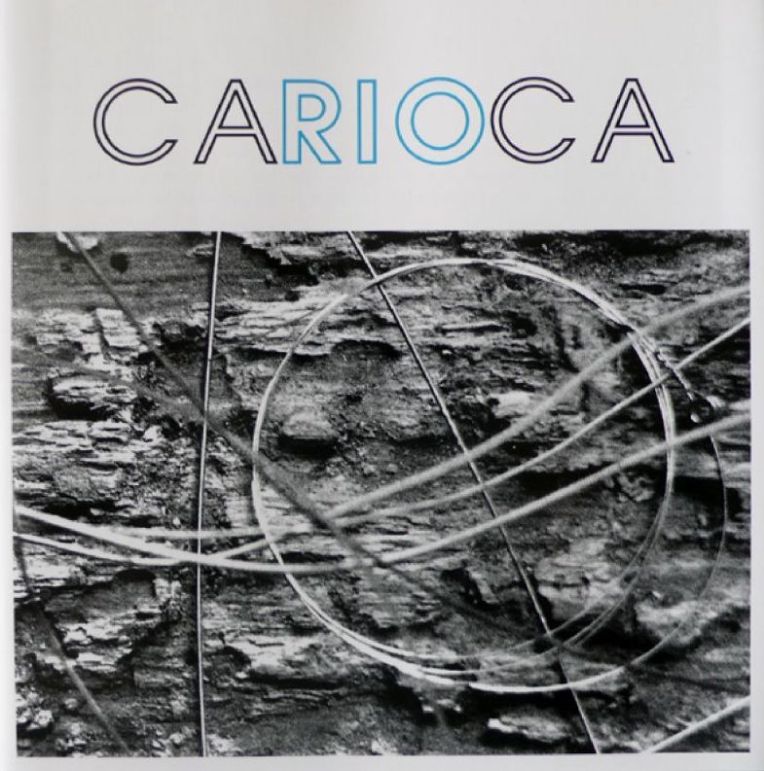
CARIOCA: s/t (CARMO/8)

CARIOCA

CARIOCA

CARIOCA 12-string guitar, mandolin (3 strings), acoustic guitars (6, 8 and 10 strings), clay pot, kalimba, northeastern sitar I and II
Egberto Gismonti flute (on “Revoada Final”)
Rosaly voice (on “Caminho do Sol”)
Recorded and mixed March 1984 and June 1991 at Porão Studio by Egberto Gismonti
Engineers: Eduardo Costa and Edú Mello e Souza
Produced by Carmo Produções Artísticas Ltda.
Production assistant: Dulce Bressane
Release date: June 1, 1993

This far-reaching CARMO satellite—reissued on CD in 1993, nine years after its initial release—features the music of Ronaldo Leite de Freitas (a.k.a. CARIOCA). Because the comparison is too obvious not to make, let me say that devoted listeners of ECM’s multi-instrumental traveler Stephan Micus will feel right at home in CARIOCA’s continental drift. The album begins and ends with sitar. In “Revoada,” it clears the mist from the base of mountain where his wordless singing stands at a path of reason. By “Revoada Final” (for which he is joined Egberto Gismonti on flute), he has completed a circuit of that path like a chain link to the next. Before that, he runs through the brush of “Pitanga” (6-string acoustic guitar, kalimba and clay pot). As flowers tickle the very feet of the soul, he sheds every worldly thing that has a talon in him. Throughout the course of “Alvorada” (12-string acoustic guitar), he guides us along that same winding vein, which by virtue of its resonant grace unlocks the temple standing at its end. In the face of fluid action and percussive details, we understand that the architecture before us is a representation of our own bodies separated into base components and restructured as a place of worship.

Once inside, we hear the single melody of “Briza” (3-string mandolin), the first of many whose spirits linger in place of the bodies that once rendered themselves in real time. Only now they have stepped beyond the curled grip of chronology and learned to dance of their own volition, repeating like echoes of the past. “Branca” (8-string acoustic guitar) likewise, but now spinning the final rays of sunset into a blanket for our slumber. “Despertar” (10-string acoustic guitar) pulls us into a vision, wherein the body ceases to differentiate itself from its surroundings, and the heart is no longer an internal organ. As energy mounts, and our flight from waking grows desperate, we feel ourselves pulled back into reality by “Brilho” (10-string viola), only to find that the world itself has been reborn as a fragrant sparkle. Finally, in “Bemteví” (8-string acoustic guitar), we step back into home. Thus renewed, we see all that we might have lost and hold it close like a found child.

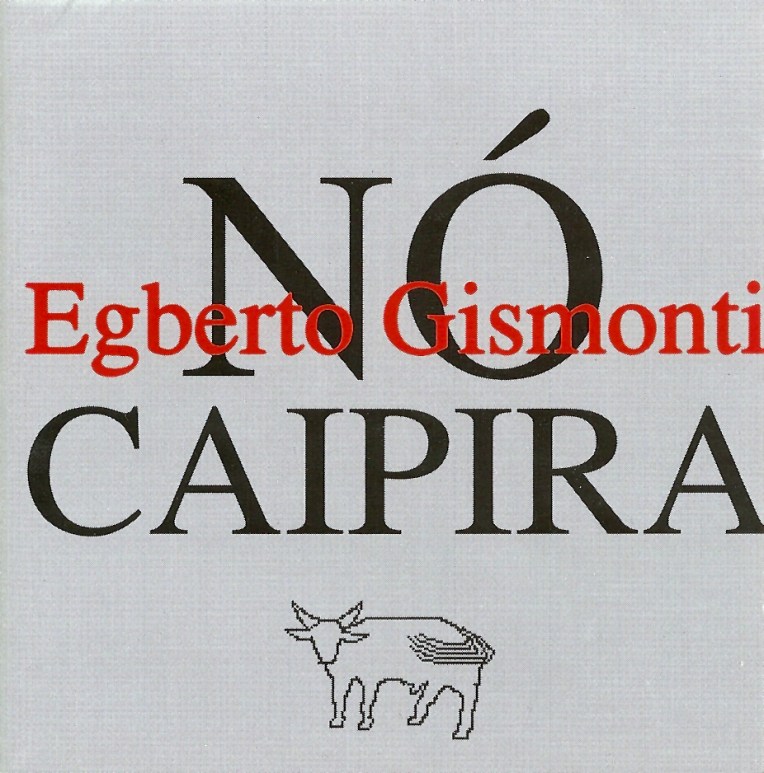
Egberto Gismonti: Nó Caipira (CARMO/7)

CARMO-7-front-2

Egberto Gismonti
Nó Caipira

Egberto Gismonti piano, acoustic guitar, 12-string guitar (thanks to Ralph Towner), bottle, pífano, bambuzal, mouth berimbau, whistles, music box, kalimbas (thanks to Airto Moreira), cathedral (thanks to Pete Engelhart), accordion, piccolo guitar, comb, voice
Mauro Senise soprano and alto saxophones, flutes (C, G and piccolo), pífano, bambuzal, bottle
Zé Eduardo Nazário drums, percussion, tabla, zabumba, bambuzal, bottle, voice
Zeca Assumpção bass, bottle
Special guests:
Roberto Silva pandeiro, wood block, talk-drums, xequeré on all songs
Zezé Motta voice (on Canção da Espera”)
Campinas Orchestra (recorded 1979 at the Centro de Convivência Cultural Theater)
Benito Juarez conductor
Recorded and engineered by Nivaldo Duarte
Mixed at Synth Studios by Edú Mello e Souza
Artistic and executive production: Carmo Produções Artísticas Ltda
Production assistant: Dulce Bressane
Release date: June 1, 1993

Let’s celebrate
Nothing is like coming back to our place
To our home…

So begins this Nó Caipira, an album originally released in 1978 on EMI and reissued as the seventh CARMO release in 1993. The words are multivalent, a love song for a muse not present but also a promise to the listener. After the experimental derailing that was Trem Caipira, here we have an album that blessedly shares nothing more than a titular word. If anything, it’s a stylistic return to form we encounter in “Saudações,” the opening bossa nova written in the style of its dedicatee, João Gilberto. With just a guitar and voice (and no pesky electronics) to guide us, we can bask in the organic richness of everything that unravels from here.

Gismonti’s Academia de Danças group plays the entire album, save for the closing “Dança das Sombras,” performed by the Campinas Orchestra and soprano saxophonist Mauro Senise. As one of his more complex creations, it renders a dark yet undeniably enchanting climate that admirers of Keith Jarrett’s classical forays are sure to enjoy with even greater appreciation for depth. As for everything leading up to it, we encounter one overcast touchpoint after another, each alive with hints of the sunlit clearings we have left behind.

Filling in the gaps of memory are some shorter pieces with a folky vibe. The standout among these is “Maracatú, Sapo, Queimada & Grilo” for recreating the sounds of a forest. The human voice is a distant traveler in this instance, but makes an especially vivid appearance via Zezé Motta in “Canção da Espera.” Accompanied only by Gismonti on piano, Motta expresses her desires for nothing so grand as whirlwind romances and material riches but only a love that fulfills its promises. Other necessary stops along the way include “Pira & Bambuzal,” a strange and surreal blast of church organ that spills into “Palácio de Pinturas,” where a string orchestra flows close enough to touch. This sojourn belongs in a museum case alongside Gismonti’s most ethereal creations. But the biggest surprise for me is “Selva Amazônica.” As a splendid tribute to Heitor Villa-Lobos, its combination of 12-string guitar and percussion floats down a river dividing the lands of Ralph Towner (who, incidentally, loaned the guitar being played) and Steve Tibbetts. Its beauties are sagacious.

This album is a masterpiece that digs frantically into the ground in search of treasure, only to find a mirror to see that it was the treasure all along. An ideal place to plant your first step on the CARMO plateau.

Original vinyl cover:

Nó Caipira VINYL