Egberto Gismonti: Trem Caipira (CARMO/6)

Trem Caipira

Egberto Gismonti
Caipira

Egberto Gismonti piano, synthesizers (Oberheim Ob-xa, Korg Poly-800, Korg Ex800, Casio Cz-101, Yamaha Dx7, Roland Sh-101, Arp Odyssey 2), electronics (Oberheim Dsx Sequencer, Roland Msq-700 Sequencer, Roland Tr-808 Rhythm Computer, Korg Ddm 220 Rhythm Computer, Garfield Electronics Mini Doc Synthesizer Synchronizer), vocoder (Roland Svc 350)
Nivaldo Ornelas soprano saxophone
Bernard Wistraete flutes
Jaques Morelenbaum cello
Gungaô kalimba
Pita Filmena whistling
Alexandre do Bico flautinha do chaplin
Ge Mima xylophone
Bibi Roca drums
Orquestra Transarmônica D’Alma D’Omrac
Otineb Zerauj, Oriam Seravat
direction
Recorded September 1985 by Egberto Gismonti at Porão Studio and Jorge Teixeira (piano) at Sala Cecília Meireles
Recording supervisor: Dulce Bressane
Engineer: Bira Dantas
Mixed by Egberto Gismonti and Jorge Teixeira
Produced for Carmo Produções Artísticas Ltda
Production assistant: Dulce Bressane
Release date: January 1, 1992

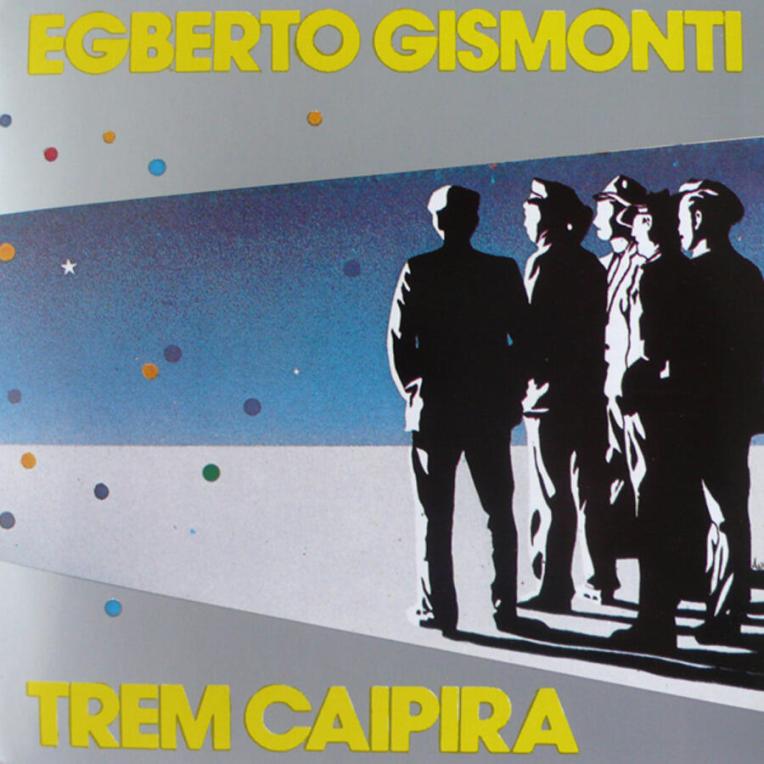
Trem Caipira is a deep dig into the Egberto Gismonti archive. Originally released in 1985 on EMI and reissued as the sixth CARMO release in 1992, it boasts Gismonti’s unusual arrangements of music by Heitor Villa-Lobos. And yet, despite being approved by the composer’s widow, Mindinha, and the participation of Orquestra Transarmônica D’Alma D’Omrac (the names of whose members are, oddly enough, spelled backwards on the original LP), the sounds are almost entirely produced by a bank of synthesizers (Oberheim Ob-xa, Korg Poly-800, Korg Ex800, Casio Cz-101, Yamaha Dx7, Roland Sh-101, Arp Odyssey 2), electronics (Oberheim Dsx Sequencer, Roland Msq-700 Sequencer, Roland Tr-808 Rhythm Computer, Korg Ddm 220 Rhythm Computer, Garfield Electronics Mini Doc Synthesizer Synchronizer), and vocoder (Roland Svc 350).

The results leave much to be desired. Even the participation of cellist Jaques Morelenbaum in “Trenzinho do Caipira” does nothing to disguise the fact that Gismonti’s arsenal has gone threadbare with age. But if some tracks manage to eke by, then “Dansa” (from Bachiana No. 4) feels stuck in time and unable to escape from its own impulses. How wonderful to hear Gismonti’s acoustic piano in “Bachiana No. 5,” which anchors relatively tasteful qualities! But then the flaccid horns and drum machine of “Desejo” take over, and all is once again lost. Like the meager attempts of “Pobre Cega” to add percussion and flute, it meanders into non-action.

Having said all that, a few tracks work bizarrely well. These include “Cantiga” (from Bachiana No. 4) for its lively rhythms, chord changes, and a certain consistency of sound (not to mention the soprano saxophone of Nivaldo Ornelas) and “Preludio” (from Bachiana No. 4) for its harpsichord-like bite. The same cannot be said for “Canção de Carreiro,” which despite a melodic beauty (entirely to Villa-Lobos’s credit) feels like the opening credits to a subpar TV movie.

A fun hypothesis, but on the whole not worthy of becoming a theory. It will, however, have its place in the completist’s collection.

Egberto Gismonti: Academia de Danças (CARMO/5)

Academia CD

Egberto Gismonti
Academia de Danças

Egberto Gismonti piano, electric piano, guitar, Indian flute, synthesizer, organ, whistles, voice
Roberto Silva drums
Luís Alves bass
Nivaldo Ornelas soprano saxophone, flute
Tenório Jr. electric piano
Mauro Senise flute
Paulo Guimarães flute
Dulce Bressane voice
Aninha voice
Marya voice
Joyce voice
Lizzie voice
Dulce voice
Novelli voice
Mauricio Maestro voice
Marcio Montarroyos flugelhorn
Darcy da Cruz trumpet
Ed Maciel trombone
Mario Tavares conductor
Recorded at Porão Studio
Engineer: Filipe Cavalieri
Mixed by Egberto Gismonti and Filipe Cavalieri
Produced by Carmo Produções Artísticas Ltda
Production assistant: Dulce Bressane
Release date: January 1, 1992

Academia de Danças is one of Egberto Gismonti’s most personal hybrids and, along with Circense, represents so much of what he would become as an internationally renowned auteur. Originally released in 1974 on EMI and reissued as the fifth CARMO release in 1992, the present record was a watershed moment in his career and inspired an entire generation of listeners and future musicians growing up under his influence.

All of the music, save for the final piece, is delivered by way of Gismonti’s pen, and compels the composer to emote through guitar, Indian flute, keyboards (plugged and unplugged), and his own voice. In addition to some constant musical companions, he welcomes the spread of a string orchestra for “Corações Futuristas,” the first of two epic suites that comprise the program. From the very beginning, we can tell that the production values have stepped up to accommodate the breadth of imagery being rendered for our ears (as eyes). Traversing five parts, from the waterwheel guitar, voice (Dulce Bressane), and charming electronics of “Palácio de Pinturas” to the electric unraveling of “Scheherazade” (in which the sounds of a cheering crowd make for an intriguing effect), Gismonti and company embody the concept of variegation to wide extent. “Jardim de Prazeres” is more rhythmically nimble and features a self-divided guitar, along with Gismonti’s singing, for a rock-ish vibe. In the wake of that explosion, we get the tender salve of “Celebração de Núpcias,” in which Gismonti’s guitar, strings, and Bressane’s wordlessness paint a forest of dreams for us to wander in until we arrive at “A Porta Encantada.” Only this enchanted door is rife with mischief and deception, as if tainted by a spell to ward off any who might presume to venture through it.

The album’s title song cycle is a microcosm of painterly abilities. The lovelorn “Bodas de Prata” walks paths of uncertainty into “Quatro Cantos,” throughout which electronic imitations of crickets and birds populate a space peripherally haunted by Bressane. Wandering in slow motion through the thickness of night, it takes us into the depths of “Vila Rica 1720.” Here Gismonti evokes the riot of that same year, when Portuguese descendants fought against the Brazilian metropole. Following an energetic lullaby and a couple of free dives into jazzier gradations, we navigate the forest once more in “Polichinelo” (steering clear of animal-like rustlings in the piano) until we hop on the “Trem Noturno” (Night Train). What begins with piano and voice turns into a sequencer extravaganza, contrasted by chanting children. “Baião do Acordar” is the only non-Gismonti piece. Written by Djair de Barros e Silva (a.k.a. Novelli), it links a small chorus of voices into a chain that pulls us toward a fiery soprano saxophone solo by Nivaldo Ornelas. Thus transported, we arrive at our station, renewed and resilient to whatever may come.

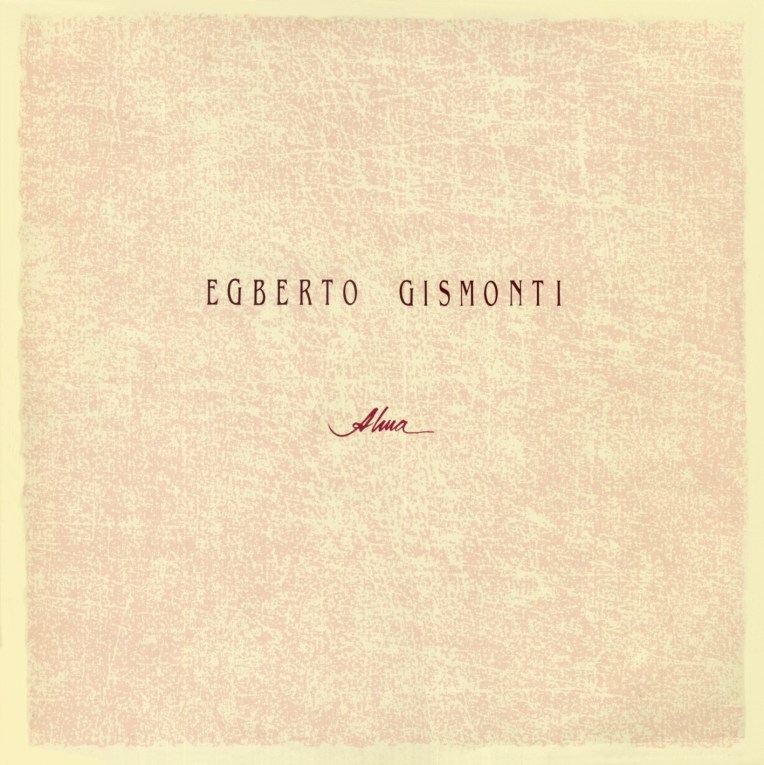
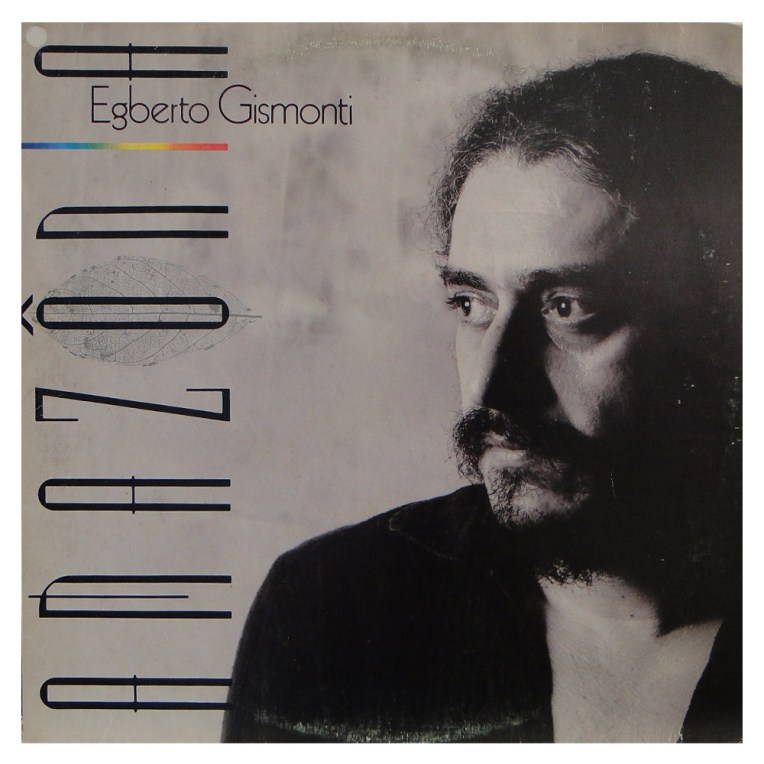
Original vinyl cover:

Academia VINYL

Egberto Gismonti: Kuarup (CARMO/4)

Kuarup

Egberto Gismonti
Kuarup

Egberto Gismonti piano, guitar, bamboo flute, bambuzal, conductor
Dulce Bressane voice (on “Sônia”)
Jaques Morelenbaum cello (on “Sônia”), conductor
Recorded at Transmérica Studios
Engineers: Eduardo Costa and Edú Mello e Souza
Mixed at Synth Studios by Edú Mello e Souza
Produced by Carmo and Grapho Produções Artísticas Ltda
Release date: May 1, 1991

This obscure movie soundtrack was written by Egberto Gismonti for the 1989 film Kuarup (dir. Ruy Guerra). Based on the novel by Antonio Callado, it tells the story of a Jesuit Priest named Taumaturgo Ferreira, who forsook the life he knew to be among the Xingu Indians. The music is as tense as it is subdued, looming like a spirit calling from within the very landscape Ferreira falls in love with. Two orchestras—the first conducted by cellist Jaques Morelenbaum, the second (Transarmônica D’Alma D’Omrac) by Gismonti—add verdant expansion, providing a pillowed berth for Gismonti’s guitar in such tracks as “Valsa de Francisca I.”

Gismonti blends textures with artisanal subtlety. His bamboo flute adds decorative integrity to the segues (e.g., “Anta”), while his synthesizer begs for filmic context in some cases (especially in “A Dança da Floresta”) and in others stands on its own (“O Som da Floresta”). Either way, I much prefer the orchestral writing of “A Morte da Floresta,” which draws a thread of commonality through piano, arco strings, and pizzicato stippling. The soundtrack’s centerpiece is the moodier “Sônia,” which features the voice of Gismonti’s longtime production assistant, Dulce Bressane and Morelenbaum’s legato cello. A tender brush with love in an unloving world.

It would probably be better to hear this music along with the film, as it doesn’t quite hold form by its own skin. Still, it’s a lovely archival curio to have in one’s Gismonti cabinet.

Nando Carneiro: Violão (CARMO/3)

CARMO-3-front

Egberto Gismonti
Violão

Nando Carneiro acoustic guitars, piano, voice
Egberto Gismonti synthesizers, percussion, flute
Andre Geraissati guitar (solo on “Juliana” and “Paranóia”)
Beth Goulart voice (on “João Gabriel”)
Recorded February 1983 at Studio Porão
Engineer: Filipe Cavalieri
Mixed by Egberto Gismonti and Filipe Cavalieri
Produced by Carmo Produções Artísticas Ltda
Production assistant: Dulce Bressane
Release date: May 1, 1991

Though the CARMO label is primarily an Egberto Gismonti showcase, he occasionally welcomes other, equally authentic talents to share their experiences. Hence CARMO’s third 1991 reissue, this of a classic 1983 album by Nando Carneiro. As the first of two solo albums by the venerated Brazilian guitarist, it draws from a unassumingly different palette than Gismonti (who joins him on synthesizers, percussion, and flute) and paints a wide range of original material.

The title suite, over the course of three sections, centers on the classical guitar for which it is named. In spite of the nylon that welcomes us into “Espelho” (Mirror), which to my ears evokes swarms of gnats in morning sunlight, the sound of a drum machine breaks the mood. Thankfully, that feeling is minimal and gives way to relatively organic renderings. In Carneiro’s hands, the guitar opens its loving arms, especially in “Companheiro,” for which Gismonti’s hands are put to more effective use on a warmer synthesizer. On “João Gabriel,” actress Beth Goulart (married that year to Carneiro) stitches her vocal thread into the backdrop.

In the wake of “Charada,” a brief excursion for two guitars, the album’s highest achievement—“Poromim”—paints a cosmic portrait of time. Replete with the sounds of a cooing infant, it expresses the mystery of life without pretense. And in “Juliana,” a nocturnal undertone gives guest guitarist Andre Geraissati more than enough room to solo, as also in the two-part “As Gralhas” that follows.

Things turn sour when the kitschy drum machine returns in “G.R.E.S. Luxo: Artezenal,” but the guitar playing is so exquisite that one barely notices it. This blends into “O Campones,” in which Carneiro sings over synth lines and fluttering guitar with redemption close at hand. In the final “Liza,” he shows us that our waking dream has only just begun.

Original vinyl cover:

CARMO-3-front-LP

Egberto Gismonti: Circense (CARMO/2)

CARMO-2-front

Egberto Gismonti
Circense

Egberto Gismonti piano, electric piano, organ, guitar, flute, voice
Mauro Senise saxophones, flute
Roberto Silva drums, percussion
Luiz Alvez acoustic bass
L. Shankar violin
Silvio Mehry piano
Piry Reys guitar
Aleuda voice, percussion
Dulce Bressane voice
Pepe Castro Neves voice
Conductor: Benito Juarez
Engineers: Serginho and Toninho
Mixing: Nivaldo Duarte
Producer: Mariozinho Rocha
Executive producer: Egberto Gismonti
Release date: May 1, 1991

Circense may just be to Egberto Gismonti what The Köln Concert is to Keith Jarrett. Not in any stylistic sense, but only insofar as it has come to define the career of its singular creator. Originally released in 1980 on EMI and reissued as the second CARMO release in 1991, this circus-themed extravaganza features some of Brazil’s most highly regarded musicians and was included in Rolling Stone Brazil’s Top 100 Brazilian albums of all time.

In light of the above, it’s only natural that the session should kick off with one of the leader’s most enduring compositions, “Karatê,” which in its first recorded iteration shows off studied moves with close-eyed conviction. Roberto Silva’s drumming is a flurry of deftly executed kicks and punches, each of which Gismonti blocks and parries with his guitar. Mauro Senise on soprano saxophone elicits sheer joy as Gismonti switches from electric piano to acoustic. It’s the sonic equivalent of watching a circus tent being set up in fast-forward. It’s also genius.

“Cego Aderaldo” switches things up with an unexpected cameo by classical Indian violinist L. Shankar, who had a remarkable decade-long run on ECM. This song tells the story of the titular blind poet (1878-1967), who legendarily roamed the northeastern hinterlands of Brazil armed only with a guitar and his gift for rhyme. Not that one would know this backstory from the music itself, which combines guitars, electric violin, and tabla to raga-like effect. Shankar’s solo is a thoughtful dive inward, grabbing a thread of worldly concern as a lifeline back to reality should this fantasy prove too much to handle. His virtuosity is self-generating and magical. The latter comes out in the vocal-enhanced watercolors of “Mágico,” another touchstone of Gismonti’s oeuvre that awakens like a dreamer into another dream and hints at his groundbreaking project with saxophonist Jan Garbarek and bassist Charlie Haden.

Piano, soprano saxophone, and drums join forces in “Palhaço.” Nestled in the sounds of children at play, it luxuriates in sunshine. Even brighter is the romping “Tá Boa, Santa?” Flutes give it a youthful and folk-ish sound, while bassist Luiz Alvez makes good on every last minute of daylight. The party continues in “Equilibrista.” Here soprano saxophone and bass court each other like birds of the rainforest. After the twilit ballad of “Ciranda,” which drips like rain from those same leaves, “Mais Que Paixão” (More Than Passion) expands and contracts the lungs in farewell.

There’s really nothing else quite like this album. It must be heard to be believed.

Egberto Gismonti: Arvore (CARMO/1)

CARMO-1-front

Egberto Gismonti
Arvore

Egberto Gismonti piano, guitars, wood flutes, percussion, voice
Paolo Moura saxophone
Novelli Lobo bass
Edson Lobo bass
Tenório Jr. electric piano
Ion Muniz flute
Engineers: Dacy and Toninho
Produced by Geraldo Eduardo Carneiro
Release date: May 1, 1991

Because the dream was ending
When the day was breaking
On the mirror
One felt the dread of this dead taste
Of the past
Sunk into memory

And with that, let us throw open a curtain to the fantastical world of Brazilian composer/multi-instrumentalist Egberto Gismonti (and associated acts), as documented on the ECM-distributed CARMO label. CARMO is named after the small Brazilian town where he was born in 1947. Gismonti grew up classically trained and studied in Paris with Nadia Boulanger and Jean Barraqué. It was Boulanger who famously encouraged him to look deep into the soul of the musical traditions he grew up with, and with that endorsement he returned home, where he taught himself guitar and built augmented guitars of his own design with more than the standard six strings.

Originally released as a self-titled album in 1973 on the Odeon label and reissued here as the inaugural CARMO release in 1991, Arvore (Portuguese for “tree,” hence the cover) sets precedent for an idiosyncratic blend of folk, classical, and jazz influences. This ambitious early project meshes Gismonti’s talents on piano, guitar, wood flutes, percussion, and voice with those of a small core ensemble, a string orchestra conducted by Mario Tavares, and a choir conducted by Gismonti himself.

Something of a theatrical song cycle sans stage, its initial stirrings flip between spoken word and singing, chambered regressions and expansive extroversions. Like everything that follows, this music creates as much context as it describes. Encounters of anthropological idealism share borders with colonial prophecies and the physical (yet voiceless) landscapes that predate all human contact. Encounters with cannibalism and other perceived injustices to the human spirit engage in subtle warfare with Judeo-Christian morality, as if the outcome might determine the direction of global tides.

So begins a mosaiced examination of fertile ideas, as each track delineates its own continent of psychosomatic activity. In “Memória E Fado” (Memory and Fate), one of Gismonti’s most beautiful constructions to date, we encounter a song of shouting skin and the heritages whispering within it. The two-part “Academia De Dança” (a name he would later adopt for his core ensemble of musicians) sets up a haunting composition for strings and soprano saxophone that bleeds into the dream of “Tango,” a swirling piano solo of shining three-dimensionality.

The album’s remainder spins an emotional color wheel. Its first stop is on the bossa nova of “Encontro No Bar” (Meeting in the Bar), in which Gismonti sings of the bar as “a funeral parlor” where candles flicker and forgotten spirits seek respite from their fate. Wooden flutes and women’s voices imply an immaterial world that overlaps with our downtrodden own. Next is the swath of cinematic joy that is “Adágio,” which at first sounds like something out of Michael Nyman’s soundtrack for The Piano, then executes a distinctly Brazilian change of costume. The dreamier journey of “Variações Sobre Um Tema De Léo Brouwer” crashes on the shores of its own disinterest in destinations, while the guitar and percussion of “Salvador” presage Gismonti’s collaboration with Nana Vasconcelos a decade later.

In addition to his technical and compositional abilities, Gismonti is a master craftsman of atmosphere. Such variety, connected by an unwavering commitment to the moment, is rare and makes Gismonti worthy of occupying this orbit in the ECM solar system, satellites and all.

The Watt Works Family Album (WATT/22)

The Watt Works Family Album

The Watt Works Family Album

Having now traversed the entire WATT and XtraWATT catalogs, I feel it’s only appropriate to take a step back and admire the sheer variety of fish caught in this musical net. Thankfully, label owners Michael Mantler and Carla Bley assembled this compilation album to give us a representative selection. As noted in the CD booklet, WATT grew well beyond its nominal status as a record label into “a complete support system dedicated to the independent production of their music without compromise.” And while it may have been released on April 1, 1990, The Watt Works Family Album is no joke, but rather the thoughtful state of a union unlike any other.

Key artists from both labels are equitably represented. Bley gets first blush in her ravishing “Fleur Carnivore.” This 11-minute seduction isn’t without its elbows to the ribs, and pays worthy respect to her work for larger ensembles. “Walking Batteriewoman” jumps goes intimate in a duo version with bassist Steve Swallow, showing the breadth of her palette. Somewhere between the two in scope is the moonlit walk of “Talking Hearts,” left behind like a memory we hope will never end once the cringe of “I Hate To Sing” (from the brilliant vaudevillian album of the same name) takes over. “Ad Infinitum” (as it appears on 1977’s Dinner Music) expands Bley’s sound into even warmer climates, where the spirit of the age glows in our remembrance. The final Bley selection is “Funnybird Song,” which features a seven-year-old Karen Mantler. Fourteen years after that first appearance on record, she would make her leader debut, My Cat Arnold, from which we are treated to “Best Of Friends,” a delightful song about her love for mother Carla. As for father Michael, we are given deep, dark glimpses into a world of text and incidental soundtracks quite unlike anything else out there. From the genuine voices of Robert Wyatt in “A L’Abattoir” and Jack Bruce in “When I Run” to the orchestrally inflected powerhouses of “Twenty” and “Movie Six”—passing through Part 2 of Alien, which pairs Mantler’s trumpet with the synths of Don Preston, along the way—one can feel the stories aching to be told, even when no words are being sung. The two standalones are Swallow’s “Crab Alley” (a master class in fuzak) and Steve Weisberg’s “I Can’t Stand Another Night Alone (In Bed With You),” which for me is the sleeper hit of the XtraWatt portfolio.

After the pleasure of journeying through both labels, I can only thank you for joining me. I hope you took some pictures along the way.

Steve Swallow with Robert Creeley: So There (XtraWATT/12)

So There

Steve Swallow with Robert Creeley
So There

Steve Swallow bass
Robert Creeley voice
Steve Kuhn
piano
The Cikada Quartet
Henrik Hannisdal violin
Odd Hannisdal violin
Marek Konstantynowicz viola
Morten Hannisdal cello
Recorded August 25, 2001 at The Make Believe Ballroom, West Shokan, NY (Engineer: Tom Mark) and August 27/28, 2005 at the Kunsthogskolen, Oslo (Engineer: Jan Erik Kongshaug)
Edited at Flymax Studio, West Hurley, NY (Engineer: Pete Caigan)
Mixed at The Make Believe Ballroom, West Shokan, NY (Engineer: Tom Mark)
Produced by Steve Swallow
Release date: November 7, 2006

If you wander far enough
you will come to it
and when you get there
they will give you a place to sit…

These words, borne by a vessel of strings, begin a transportive musical experience meshing the music of Steve Swallow with the poetry of Robert Creeley (1926-2005). Though the latter’s readings were recorded in 2001, it took Swallow four years to gather momentum for the project, by which time Creeley had passed. This left Swallow no choice but to construct his playing around the words, by which time what started out as a dedication had turned into an elegy. Fans will know this not to be Swallow’s first brush with Creeley, as he had already set the poet’s words to music on 1980’s Home. As on that ECM project, he is joined here by pianist Steve Kuhn, but adds to themselves the metallic whispers of the Cikada Quartet.

Creeley’s aphoristic observations go down like sweet tea, and linger in the mouth all the same. For the most part, Swallow takes his time to set up each with an intimate context forged in bass and piano, the Cikadas breathing life into the periphery only when necessary. In this manner, the simple explorations of scenes like those described in “Indians,” “Return,” and “Blue Moon” take full shape before a single word is articulated. Only in tracks like “Later,” in which Kuhn rhapsodizes ever so subtly through sentiments of emotional delay, and the closing “A Valentine For Pen,” do instruments and words cross paths more continuously.

Swallow’s lyricism is suitably matched to Creeley’s. In the anthemic undertones of “Sufi Sam Christian,” the bassist evokes the very uplift of which the poet speaks; in “Miles,” he adds a jazzy nuance to a title that, in this context, has more to do with distance than with the elusive trumpeter; and in an excerpt from “Wellington, New Zealand” (which blends into “Eight Plus”), he personifies saintly patience. Interestingly enough, the music almost never belies a conscious attempt to match the rhythm of speech (as, for instance, in composer Scott Johnson’s settings of I. F. Stone, How It Happens). Such freedom compels the listener to fill in the gaps with personal histories, moments of reflection, and quiet appreciation.

…for yourself only, in a nice chair,
and all your friends will be there
with smiles on their faces
and they will likewise all have places.

Steve Swallow: Damaged In Transit (XtraWATT/11)

Damaged In Transit

Steve Swallow
Damaged In Transit

Steve Swallow bass
Chris Potter tenor saxophone
Adam Nussbaum
drums
Recorded December 2001 by Bill Strode
Mixed by Tom Mark and Steve Swallow at The Make Believe Ballroom, West Shokan, NY
Mastered by Greg Calbi at Sterling Sound, New York City
Produced by Steve Swallow
Release date: October 7, 2003

Following two successful quintet outings, bassist Steve Swallow pared down his traveling show to a trio with tenor saxophonist Chris Potter and drummer Adam Nussbaum. Recorded live during a December 2001 tour in France, the present tunes are numbered as a series of nine “Items,” each marked “D.I.T.” (per the album’s title), allowing listeners more than the usual freedom to interpret them as they will. The same holds true of the performers themselves, who answer the call to interpretation with layer upon layer of phenomenal exposition. Not to say that such impulses weren’t already there in the larger band, but like a finely distilled spirit the clarity of notes speaks to the palate more directly.

The shedding of guitar and trumpet means Potter is left to bear that much more weight as melodic and improvisational leader, and he takes to the role without so much as a hiccup. The verve of “Item 1” is duly representative of all to follow, organically mixing the studious and the unchained. That same creative spirit abounds in “Item 5,” for which he unravels two knots for each one tied. And while Potter is known for his ability to navigate the most kinetic environments, he really stretches his wings in the blues of “Item 2” and downhome sweetness of “Item 7.” Nussbaum’s breadth of coloration ranges from the incendiary (“Item 5”) to the delicately supportive (“Item 6”), and indicates a deeply listening ear behind every choice at the kit. As for Swallow, he shows depth of character as setter of boundaries (cf. “Item 8”), soloist (“Item 4”), and painter of dreams (“Item 3”). In each capacity, and beyond, he proves the value of preparing for one’s journey to ensure that nothing gets damaged along the way.