Gary Burton/Kirill Gerstein: The Visitors (ECM 2853)

Gary Burton
Kirill Gerstein
The Visitors

Kirill Gerstein piano
Gary Burton vibraphone
Recorded May 2012 at Chenery Auditorium, Kalamazoo
Release date: June 12, 2025

Vibraphonist Gary Burton first met pianist Kirill Gerstein in Saint Petersburg, Russia, in the early 1990s and almost immediately recognized his talent. So began a logistical saga that culminated two years later in brokering passage for Gerstein and his mother to come to America, where the young prodigy enrolled as a 14-year-old at Berklee College of Music under Burton’s mentorship. Although Gerstein has since pursued a career in his first love of classical music, he has worked increasingly with improvisers such as Brad Mehldau and, in the present recording, none other than Burton himself. After winning the prestigious Gilmore Artist Award in 2010, Gerstein used his prize money to commission a series of pieces and immediately thought of Chick Corea. Gerstein proposed that Corea write a piece for him and Burton that combined both through-composed and partially improvised sections. The result was “The Visitors,” a 12-minute masterpiece that premiered at the 2012 Gilmore International Piano Festival. This recording was their second live performance of it and had only been made known to the musicians recently. Now, we have it released via ECM as a digital-only single.

Grounded in a Latin ostinato in 7/4 with a “looping groove” as Gerstein calls it, it gives organic flight to the musicians’ most uplifting impulses. As Burton makes his entrance, the duo aligns in staccato gestures before giving way to fluid diversions. The transition between what’s on and off the page is seamless, giving way to a beautiful modalism that transcends genre and time. Hearing Burton, now retired, in a relatively new recording is a joy in itself, and one can feel his history with Gerstein in their dialogue. The pianist’s solo turns are as playful as they are on point, never wavering from the dream of what the instrument can achieve when cut from the ties of expectation. His abilities are more than apparent and lend themselves to ecstatic interpretations. Burton’s occasional stretches of pedal mesh with Gerstein’s stippled approach perfectly, allowing the breath of life to animate their music making. The pianist’s rare acuity in both classical and jazz gives him the credibility to channel Corea, whose own history with Burton is also palpably evident. What a gift to behold in these times of darkness, a lighthouse for our wayward seafaring souls.

The Visitors is available for streaming and download here.

Chick Corea: Selected Recordings (:rarum 3)

Corea

Chick Corea
Selected Recordings
Release date: April 29, 2002

Following Keith Jarrett and Jan Garbarek’s own selected recordings, both of which were two-disc epics, pianist Chick Corea is represented via the third :rarum release in a single CD packed to the gills with material. The projects, and tracks culled from them, should be no surprise to even the fair-weather Corea listener. The 1972 classic Return To Forever is effortlessly represented by two songs. “Sometime Ago” introduces one of the most iconic bands in the ECM spectrum, with Corea on electric piano, Joe Farrell on flute, Flora Purim on vocals, Stanley Clarke on bass, and Airto Moreira on drums. Purim’s voice is a charm in and of itself, and Farrell’s flute sunshine incarnate. “La Fiesta” opens the door to another realm of infinite daylight, and comprises as brilliant an introduction as one could hope to find for Corea’s quasi-mystical warmth.

The obvious next step is 1973’s Crystal Silence, for which he joined forces with vibraphonist Gary Burton. Whether reading each other’s minds in “Desert Air” or unpacking deeper wisdom from the RTF staple “What Game Shall We Play Today,” they are like two halves of a deck perfectly riffle-shuffled together. But for me their 1980 live album In Concert, Zürich holds up to our ears the clearest lens into their rapport. In “Tweak,” for instance, their sound is even more expansive than in the studio, and in “Mirror, Mirror” they treat virtuosity not as a means of showing off but as a confirmation of life itself.

For an even deeper mind meld, one need only dive into 1982’s Trio Music. Alongside bassist Miroslav Vitous and drummer Roy Haynes, Corea committed some of my favorite music by him to record. Though I thoroughly enjoy this studio session, including the wonderful collective improvisations, and ranging from the lyrical embrace of “Eronel” to the controlled fire of “Rhythm-A-Ning,” it’s in 1986’s Trio Music, Live In Europe (one of my all-time favorites of the entire ECM catalog) that his highest potential is reached. “I Hear A Rhapsody” stops and starts with ease, then ushers in the rhythm section with delight into a bright and open dynamic surpassed perhaps only by Keith Jarrett’s perennial trio. “Summer Night / Night And Day” is another riff on circadian rhythms and finds Corea activating Haynes (or is it the other way around?) as night renders stars visible. In this context, Corea was capable of eliciting vibrational truths, leaping temporarily beyond the grasp of Earth’s gravity. Such was his genius during this golden age to take small elements and draw connections between them that others would either miss or never even consider possible.

Chick Corea: Works

Corea

Chick Corea
Works
Release date: April 1, 1985

In contrast to the pianism of Keith Jarrett, which always seems to be moving, Chick Corea’s (at least during this particular period, on this particular label) is marked a sensation of profound stasis, especially in his solo work. In “Where Are You Now?” (Piano Improvisations, Vol. 1, 1971), from which we hear the first of eight “Pictures,” a slow-motion twirl ensues, while “Noon Song” from the same album undermines its own brightness with a forlorn heart, as if we were the only ones privileged to hear it, dissociated form the time and location in which it was recorded. “A New Place (Scenery)” (Piano Improvisations, Vol. 2, 1972) even more deeply highlights our own separation from the creative act, which we can only regard from afar. The otherwise solo program of 1984’s Children’s Songs yields the buoyant “Addendum” with cellist Fred Sherry and violinist Ida Kavafian, which epitomizes Corea’s penchant for sudden changes, dissonant surprises, and cuttings against the grain—all designed to hold us in place. The latter album is further referenced in the cyclical “Childrens Song” from 1973’s Crystal Silence with vibraphonist Gary Burton. The duo shares more spotlight with string quartet in the cinematically inflected “Brasilia” (Lyric Suite for Sextet, 1983).

For other ensemble configurations, we look first to “Slippery When Wet” (Trio Music, 1982). Alongside bassist Miroslav Vitous (with whom she shares a “Duet Improvisation” as well) and drummer Roy Haynes, Corea unleashes an aphoristic style of rhythming, treating bursts of energy as their own compositions in miniature over the fantastic interplay of his sidemen. From trio to quintet, Corea offers us the joys of “La Fiesta” (Return To Forever, 1972) with Joe Farrell (soprano saxophone), Stanley Clarke (bass), Airto Moreira (drums and percussion), and Flora Purim (percussion). This montuno jewel fronts Farrell’s lithe soprano and Corea’s electric piano, bubbling like hope to the surface of every life that crosses its path.

Chick Corea/Stefano Bollani: Orvieto (ECM 2222)

Chick Corea
Stefano Bollani
Orvieto

Chick Corea piano
Stefano Bollani piano
Recorded live at Umbria Jazz, December 2010-January 2011
Recording engineer: Bernie Kirsh
Assistant engineer: Roberto Lioli
Album produced by Manfred Eicher

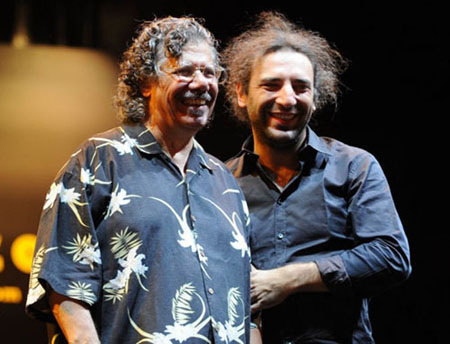
It’s impressive enough that untouchables like Keith Jarrett have taken the art of solo piano improvisation to the depths they have. To maintain comparable wonder and cohesion with the addition of another 88 keys is another feat entirely. For Chick Corea the prospect has flung open the windows of creativity out onto exciting new landscapes. Having already realized this vision with greats old and new (Herbie Hancock an Gonzalo Rubalcaba among them), Corea takes an instrument already so full at his fingers and uses it as an invitation to Italian virtuoso Stefano Bollani. Of their eponymous performances, Corea remarks, “Orvieto was winter-cold. The experience was summer-warm.” The analogy of temperature proves salient, for throughout these spontaneous gigs audiences surely felt tingly all over from the crystalline precision of these two powerful talents: one a legend, the other perhaps someday to be.

Were it not for Corea’s unmistakable pointillism and the softness of Bollani’s release, the two might be nearly impossible to distinguish. Which is not to say these qualities don’t switch places at any given moment, telling us that such parsing is arbitrary. An “Orvieto Improvisation” begins Parts I and II, clearing the air of any pollutants and diving into the thick of things with a synergy of purpose that betrays far more than the two years Corea and Bollani spent playing together before the present recording. The second of these dovetails into the Miles Davis classic, “Nardis,” in which the closeness of contact is wondrous. It is a twisted music box come to life, a look back through forward means. The duo continues to lay the nostalgia on thick along a select handful of standards. Of these, “Doralice” feels most like childhood, sprinkled with life and love and everything in between. Its freshness breathes like wind through autumn leaves and imbues these timeless tunes with clear and present animation. The interweaving of “If I Should Lose You” and bygone ambiance of “Darn That Dream” show humility to the music at hands. And the piano’s percussion instrument status is nowhere more obvious than in “Tirititran,” for which Corea and Bollani take their syncopation to its greatest heights. Similarly astonishing exchanges abound in their rendering of Fats Waller’s “Jitterbug Waltz.”

The soundtrack quality of Jobim’s “Retrato Em Branco E Preto” sparks all of these feelings and more, as does the rounded edge of “Este Seu Olhar,” the latter unwinding with the precision of a player piano yet with the abandon of a frolic. These are of a piece with the pianists’ own compositions. Bollani gives us a breath of the city streets in his “A Valsa Da Paula,” turning philosophies into rattled change in the pocket, a new spring in the step, and the force of opportunity on the horizon. Corea counters with “Armando’s Rhumba,” wherein he clothes the program’s most transcendent moments with “La Fiesta”-like exuberance. It is the pinnacle of what these two can achieve, and a whimsical lead-in to the resolute “Blues In F.”

The music of Orvieto is about nothing if not detail. Had Corea and Bollani become visual artists (and who’s to say they are not), they would be engravers, drawing out from cold metal canvases a fully rendered world of ideas. Their art is their stylus, their touch the acid that turns contact to shading and dimension, our ears the paper on which the final images are printed.

(To hear samples of Orvieto, click here.)

Chick Corea: Septet (ECM 1297)

SEPTET

Chick Corea
Septet

Chick Corea piano
Ida Kavafian violin
Theodore Arm violin
Steven Tenenbom viola
Fred Sherry cello
Steve Kujala flute
Peter Gordon French horn
Recorded October 1984 at Mad Hatter Studios, Los Angeles
Engineer: Bernie Kirsh
Produced by Chick Corea

Chick Corea is a musician who plays with X-ray vision, which is to say he’s highly adept at animating skeletons through his improvisatory prowess. And yet, whenever those bones are fleshed out into full-grown compositional organisms, one tends to lose sight of their anatomy. With the exception of Children’s Songs, Corea excels where there is at least a combination of the prescribed and the free. On Septet he is joined by a string quartet, flutist Steve Kujala, and Peter Gordon on French horn. Already in the First Movement, we are confronted with the quartet’s somewhat pedantic role, which is at pains to blend with the otherwise lovely sound forged by Corea and Kujala (not suprising, given that they’d just cut the effervescent Voyage not three months before). That being said, there is a wistful vitality to be had in those occasional moments that said forces do sync, as in the Second Movement. Some gorgeous, abstract pianism distinguishes the opening waves of the Third, which, despite exploring the album’s more fascinating ideas, are quickly curtained by the horn. Things fare far better in the Fourth, with its Bartókian sense of rhythmic acuity, and in the richly varied Fifth. At 10 minutes in length, the latter is also the most fully formed. Tacked on to this picturesque finale is portrait of “The Temple of Isfahan” that could easily soundtrack a documentary about the temple in question, a sacred site to the Zoroastrians who saw its attributive fire as a purifying agent. Like a well-edited film, this piece builds itself through vignettes, which despite never quite connecting as organically as they might have had they been left to speak among themselves, form a larger chain of ideas that must be taken in deep breaths before they can be exhaled as one.

It’s hard to know what to make of this album. What it lacks at the start, it certainly makes up for by the end, but it doesn’t necessarily beg for repeated listening. The musicianship is also top flight, especially the lovely playing of Gordon, who wrenches a gutsy and artful sound from his horn, and in the peerless virtuosity of Kujala. A lovely jewel for the completest, to be sure, but its absence would make Corea’s crown no less bright.

<< Lester Bowie’s Brass Fantasy: I Only Have Eyes For You (ECM 1296)
>> Azimuth: Azimuth ’85 (ECM 1298)

Chick Corea: Voyage (ECM 1282)

Chick Corea
Voyage

Chick Corea piano
Steve Kujala flute
Recorded July 1984 at Tonstudio Bauer, Ludwigsburg
Engineer: Martin Wieland
Produced by Manfred Eicher

Steve Kujala is a flutist of exceptional ability known for his “bending” and other extended techniques, which immediately distinguish his sound from anyone else’s. After touring with Chick Corea in the early eighties, the two of them stepped into the studio to record Voyage, a shuffled yet modest deck of three Corea originals and two freely improvised interludes. Though a suitable companion to Red Lanta, this duo session could hardly be more different. As musicians both well versed in the avant-garde, Kujala and Corea forge an undeniably cerebral brand of magic. The lushness of “Mallorca,” for example might easily blind us to the microscopic approach of “Star Island,” for where the former dances like some ethereal Flamenco reflection, threaded by birdsong and fast-forwarded tongue fluttering, the latter is a piano solo that indeed takes form like a dollop of land in an oceanic expanse. It is also the deeply beating heart of the album, a stunning piece of wizardry that could easily run its entire course without ever growing fatigued. Corea continues this subdued brilliance in his intro to “Free Fall” before Kujala makes his theatrical entrance, singing to us of days and years gone by. This is much in contrast to “Diversions,” a far more abstract intertwining of airy improvisations which, even after their rousing finish, leave us scrambling for narrative traction. “Hong Kong” is also very abstract, but by way of its title at least gives us a place to hold on to. Like that city’s bustling streets, connections come and go as they please, sometimes utterly unaware of one another in the constant blur of lights, faces, and smells.

This is a highlight in the Corea discography on any label and an ideal opportunity to discover, as I did, a flutist of outstanding innovation along the way.

<< Michael Fahres: piano. harfe (ECM 1281 NS)
>> Paul Motian Trio: it should’ve happened a long time ago (ECM 1283)

Chick Corea/Gary Burton: Lyric Suite For Sextet (ECM 1260)

Chick Corea
Gary Burton
Lyric Suite For Sextet

Chick Corea piano
Gary Burton vibraharp
Ikwhan Bae violin
Carol Shive violin
Karen Dreyfus viola
Fred Sherry cello
Recorded September 1982 at Mad Hatter Studios, Los Angeles
Engineer: Bernie Kirsh
Produced by Manfred Eicher

The Lyric Suite for Sextet joins the unparalleled duo of Chick Corea and Gary Burton with string quartet for a combination soon to be repeated with the release of Hot House. Through an erratic and sometimes disjointed hall of mirrors, it explores a series of never quite fully formed ideas. The opening notes of this then unique collaboration create a thriving and exuberant sound that permeates every moment that follows. Burton’s liquid runs, especially in “Waltz” and in “Dreams,” bring forth all the music’s chambered revelry as Corea weaves nimbly through every sprung carnation left in his footfall. From the brief yet enthralling “Rollercoaster” to the ebullient “Finale,” feelings sweep us away, and are swept away by, their own intensity. But the album’s true colors come out in “Brasilia,” which opens with the gorgeous unfolding of Corea’s piano, slowly introducing water droplets of vibes and the firmer grounding of strings, which at last become a vital presence, interacting with the piano lines in a deeply internal conversation for the album’s tenderest moments. Corea’s delicacy is a wonder here.

As a concept album, the Lyric Suite is a classic to be sure, albeit one that’s difficult to put a finger on. Then again, perhaps that’s the point. And while the strings may seem a superfluous stroke alongside musicians already so lush (seeming to unify only in the album’s latter half), it is the expansiveness of vision and the infectious exuberance of the playing that may keep you returning on occasion to this curious little experiment.

<< Jan Garbarek Group: Wayfarer (ECM 1259)
>> Shankar: Vision (ECM 1261)

Chick Corea: Trio Music (ECM 1232/33)

ECM 1232_33

Chick Corea
Trio Music

Chick Corea piano
Miroslav Vitous bass
Roy Haynes drums
Recorded November 1981 at Mad Hatter Studios, Los Angeles
Engineer: Bernie Kirsh
Produced by Manfred Eicher

Trio Music boasts the same formidable lineup—pianist Chick Corea, bassist Miroslav Vitous, and drummer Roy Haynes—as on the seminal Now He Sings, Now He Sobs. Yet formidable is not a word I would use to describe this curious double album, for as many peaks as there are, it is in the valleys where the most potent combinations occur. Half of this diptych is painted by improvisations: five for trio and two for duo. The trios are intense and from the first chart themselves through engaging, if wayward, territory via Haynes’s astute “cymbalism” and Vitous’s determined phonics, all the while enlivened by Corea’s full-on sound. From the thick to the thin of things, the second trio sounds like an infirmed train dreaming in spats of its onetime locomotive glory, while even more fractured affairs await us on the horizon of the third. Some of the more effective comings together can be found on the fourth, as when pointillist pianism sews itself into snare with lightning-fast kinship. The final trio, on the other hand, features a looser, perhaps prepared, piano and amplified arco bass and drums, which after a bit of running around are mixed together in a staccato brew. The two duets between Corea and Vitous are fascinating in and of themselves, winding down their personal rabbit holes with multifarious conviction. The last tune of first disc, “Slippery When Wet,” is exactly that, this one penned by Corea. After some lithe snare work it slides effortlessly into an upbeat swing.

For the second disc, we are treated to a hunk of Monk. Thelonious lives and breathes (he would pass away not three months after this album was recorded) in these hip arrangements. And certainly in “Rhythm-A-Ning” we get to see what this trio is truly capable of, for as intriguing as the improvisations are, there is something transcendent about the ring of their swing in Monk’s world. From these hot threads is spun a lasso that holds our attention with excitement and joy. Haynes, reason enough to buy this album, steals the show here, as also in the ascending quality of “Think Of One” and throughout the inescapable groove of “Hackensack.” Not to be outdone, however, are Vitous, who adds piles of jazz club beauty to “Eronel” and enhances every playful step of “Little Rootie Tootie” with his nimble fingerwork, and the unforgettable Corea, who, as he does in each of these, spreads his warmth and sparkle in turn over the gently burned toast of “’Round Midnight” and “Reflections” with a lushness all his own.

One need hardly expound at such length upon this album. The music speaks with far more eloquence. Highly recommend for the lovely Monk set alone, but give the improvisations a chance, and you will surely find a wealth of colors to explore again and again.

<< Eberhard Weber: Later That Evening (ECM 1231)
>> Everyman Band: s/t (ECM 1234)

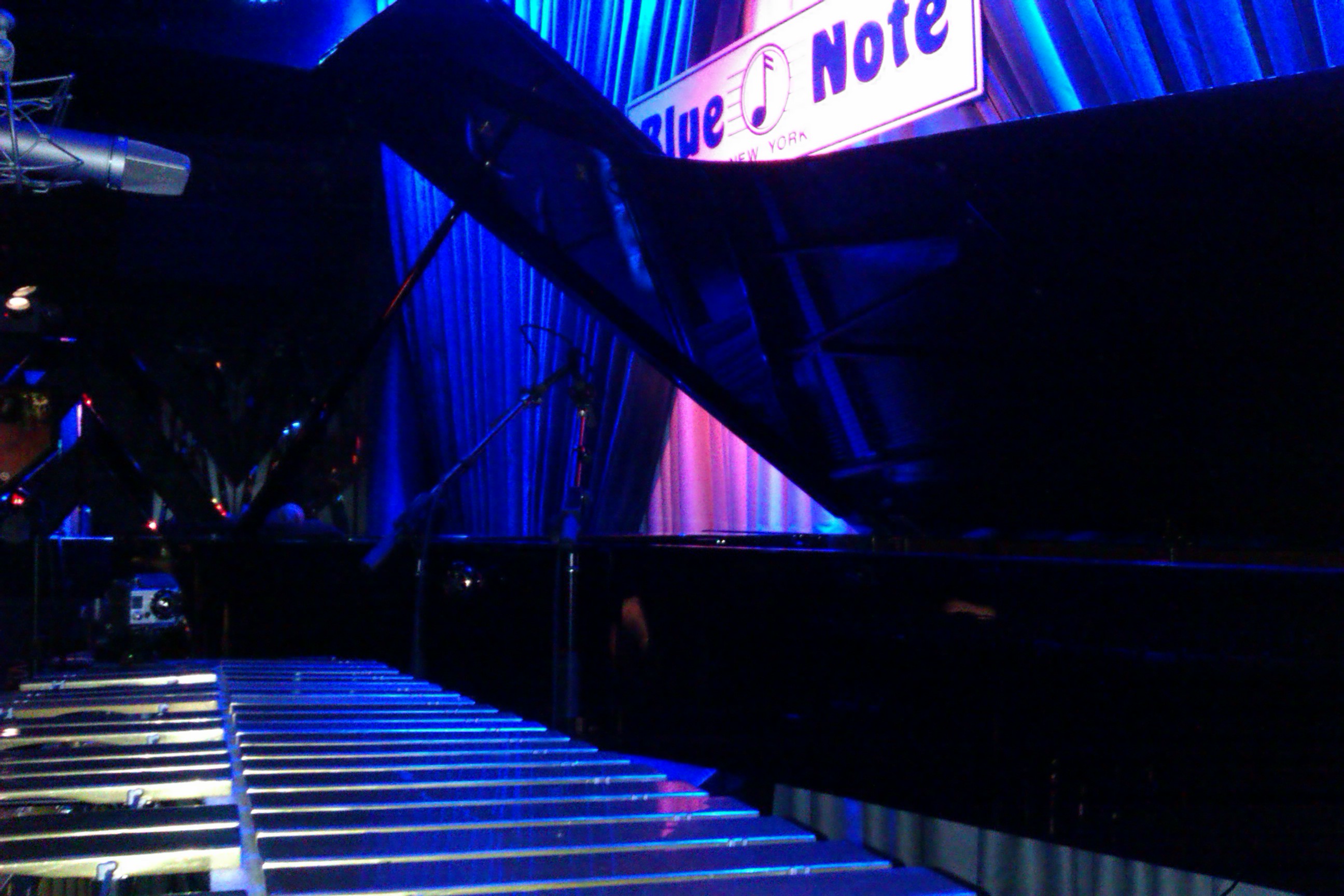
“A Confusion of Fusions” – Chick Corea/Gary Burton Live at Blue Note

Chick Corea and Gary Burton with the Harlem Quartet
Blue Note Jazz Club, New York City
Sunday, November 13
8:00 pm

Chick Corea piano
Gary Burton vibraphone
The Harlem Quartet
Ilmar Gavilan violin
Melissa White violin
Juan Miguel Hernandez viola
Paul Wiancko cello
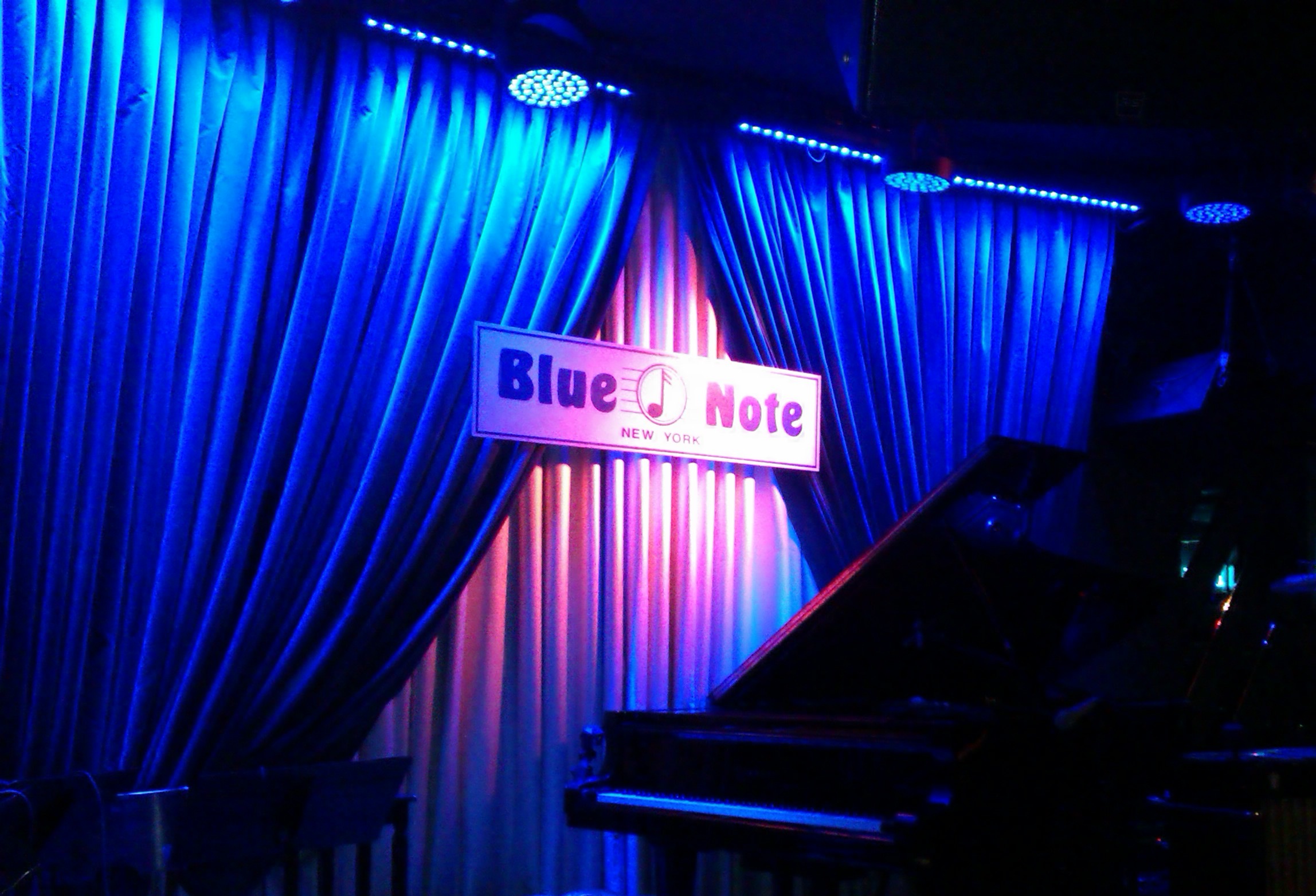
Setting the stage

The year is 1959. A young Chick Corea, just out of high school and newly arrived in New York City, quits Columbia University after only one month and immerses himself in the City’s sixties Jazz scene, its second golden age. In the coming years he makes a name for himself, and his exuberant playing soon catches the ears of Miles Davis, Stan Getz, and many others. Jump to the 1972 Berlin Jazz Festival, where his fingers join the mallets of Gary Burton on record for the first time. So begins a musical partnership that has spun nothing but gloriousness ever since and brings us to 2011.

Burton and Corea

“The vibe is just conducive to making music,” says Corea of the Blue Note, a venue of personal choice for years, and where he now celebrates his 70th birthday with a month-long series of concerts. If anything, his flames burn brighter, bringing characteristic verve to every shade of his pianism: dynamic, utterly precise, and sparkling to the last drop. The Corea/Burton alignment is world-renowned, a boon to ECM and to the field as a whole for decades, and hopefully for decades yet.

The energy here at Blue Note is kept to a soft boil, every laugh seemingly exaggerated by anticipation. Tables are tightly packed, and one shares them with strangers, who by the end of the night leave their mark for having shared in such bliss. Our six-seat arrangement abuts the very front of the stage. It is my first time to this hallowed institution, and being in proximity to such avid Jazz fans, and to the music we’ve all come to witness, it feels good to be alive.

Tonight, Corea and Burton are joined by the Harlem (String) Quartet for a concert preview of their new Chamber Jazz collaboration, Hot House (due out on CD in February 2012). While on the surface this may seem like an unusual combination, in fact both Burton and Corea have already explored such crossovers. Burton was the first to do so when, after he and composer Samuel Barber had been toying with the idea for some time, he refashioned the mold with his Seven Songs For Quartet And Chamber Orchestra in 1973, then later with Corea himself on 1983’s Lyric Suite For Sextet and again on The New Crystal Silence (released 2008 on Concord). With such a varied palette from which to choose, the results promise to be extraordinary.

And indeed, extraordinary hardly begins to describe the sounds that wash over us once Corea and Burton take to the stage, made all the more so by the tasteful amplification and reverb. “Love Castle” kicks off the first of three duets, each a different glint from the same well-polished jewel. From chord one, we find ourselves wrapped in an expansive intimacy that only decades of collaborative playing can bring to bear. Burton is downright acrobatic on those gradated strips of metal and brings a cool fire to every lick he elicits from them. The duo takes a cue from Art Tatum in “Can’t We Be Friends.” Lush syncopations that would provide hours of head-scratching for many a frustrated player only give Burton further excuse to stretch his arms before applying his lightning runs to a crowd-pleasing rendition of “Eleanor Rigby,” in which Corea digs deep over a lithe ostinato.
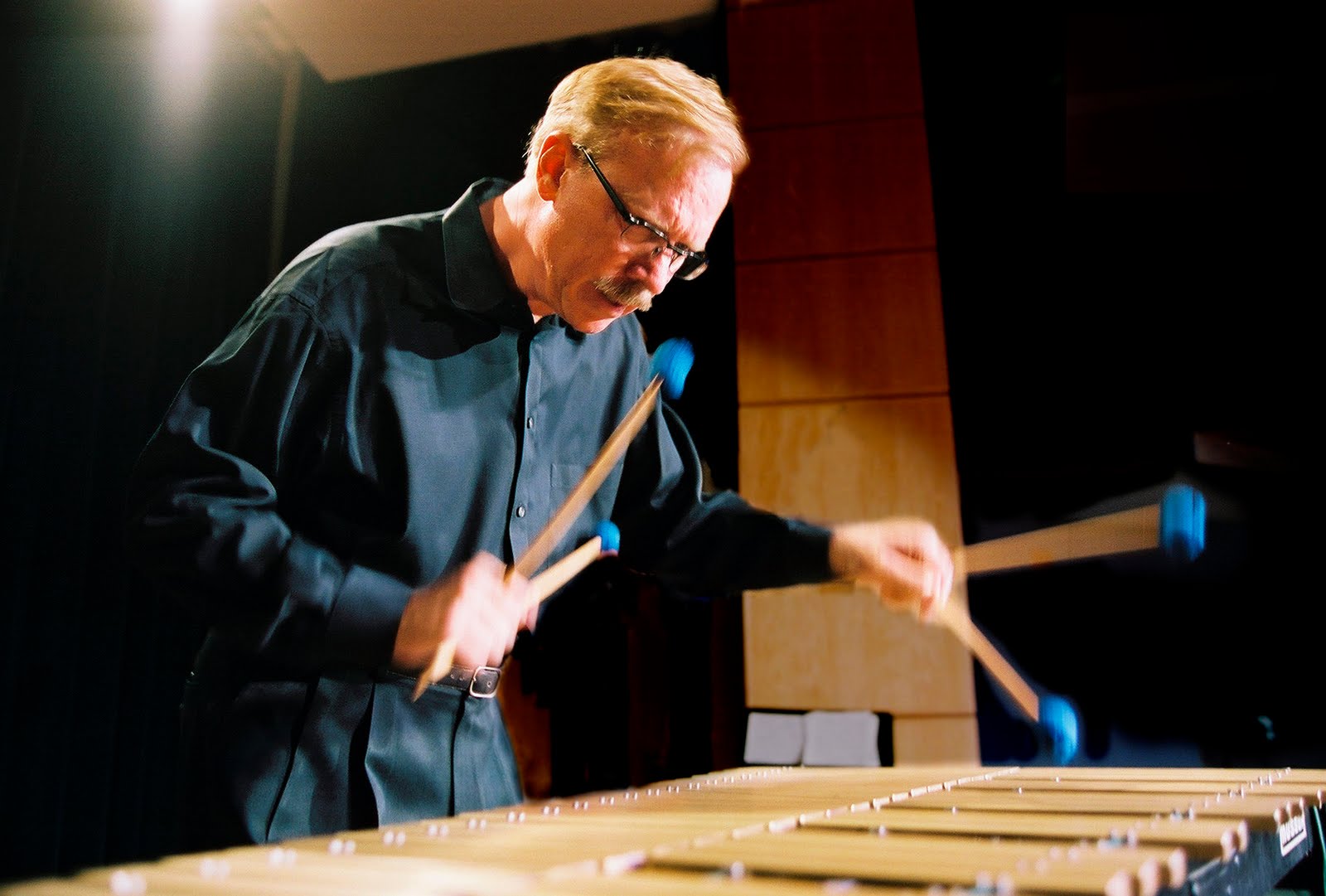
Corea and Burton are both very personable, doing their utmost to make the crowd feel right at home between songs. Corea quips requisitely about cell phones and bids us to talk freely during the show as the Harlem Quartet makes its entrance. It is something of a dramatic one, as cellist Paul Wiancko navigates the narrow human corridor with his charge held carefully above our heads.

After a bit of tuning (more on this below), we’re off on two adventures from the aforementioned Lyric Suite. The quartet seems like a trampoline in “Overture,” sending piano and vibes flying into the neoclassical shades of “Waltz.” Here, Wiancko provides some welcome pizzicato on the way to a rosy finish. The quartet intros a shapely version of “’Round Midnight” as Corea jumps into the thematic deep end, leaving his partner to walk along the surface above. Last is a new Corea original entitled “Mozart Goes Dancing.” Burton’s flights are particularly noteworthy in this economical dialogue.

When both of these players perform, they appear so utterly focused on their task that one wonders how they connect so seamlessly. Corea’s answer: one need only serve the music and style will “take care of itself.” (This is exemplified in his penchant for conducting or clapping along from the bench whenever his hands aren’t on the keys.) Whatever the method behind their brilliance, it is the compatibility of their intentionality—the simple yet profound choice of where to place a note—that brands their synergy into the brain. They don’t so much trade places as constantly flit in and out of time, turning on a dime from supremely lyrical, almost elegiac passages, to head-nodding grooves. Such contrasts are like big bangs in miniature, each the potential for a new solar system of sound.
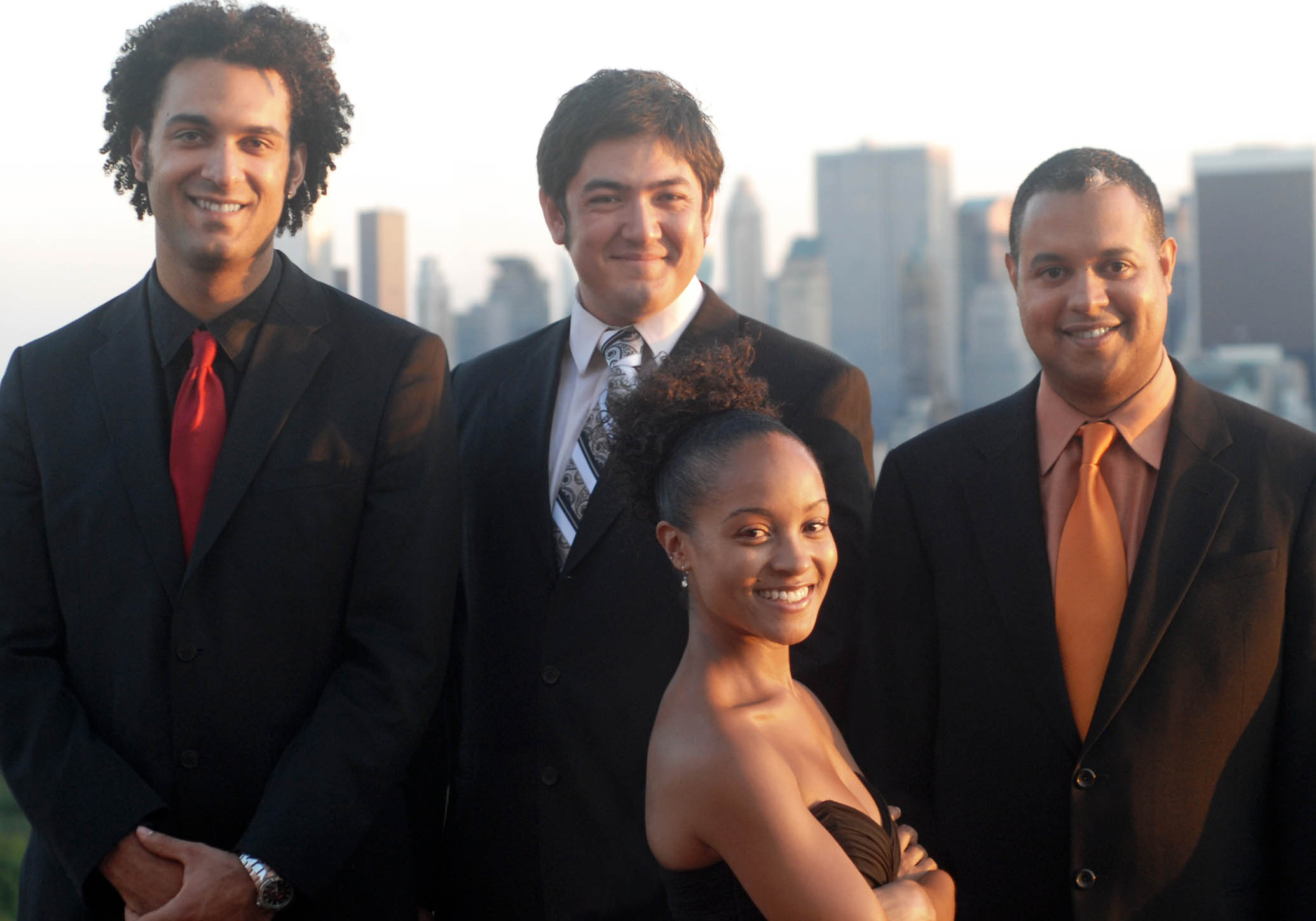

Harlem Quartet

And what of the Harlem Quartet? This seems to be the question of the night, for while these fresh-faced and spirited musicians clearly bring oodles of passion to the table, they are given little to work with in Corea’s often stilted arrangements. They are also, I feel, unfairly slighted by Corea and Burton’s last-minute encoring of the classic “La Fiesta,” which, though a powerful conclusion, keeps the faithful foursome on stage awkwardly for a good ten minutes while the two old-timers everyone has come to see weave their spell. (On that note, I strongly urge readers to hop on over to the Harlem Quartet’s homepage and take a gander at their many projects and inspiring commitment to outreach.)

There was, however, an unforgettable moment before the Lyric Suite selections commenced when, after taking their seats, the quartet took a minute or two for a tuning session. During this, Corea and strings spun some free improv that was, ironically, the most fruitful connection displayed between the two halves of the stage during the show, and perhaps territory they might explore in the future beyond the otherwise peripheral role assigned to them. Burton and Corea are such fully minded players already that one is hard-pressed to find any gaps in need of filling. How does one add more wind to a tempest?

In the end, the Corea/Burton experience, regardless of its augmentations, has never been at heart about blending idioms, but rather about exchanging them. In that exchange, one hears an ever-changing conversation, and we are lucky to have been a part of it on this balmy spring night. To walk through their sonic forests is to feel one’s feet on the earth, where soundtracks flitter through dusty, cobwebbed pathways of memory like Corea’s famous mouse. In traveling through these spaces, one finds the windows still crystal and silent, wiped clean from years of pressing our ears up against them.